Middle East and North Africa
Where to go in the Middle East in August: Turkey's coast and Essaouira
August suits two of our six countries: Turkey, on its Turquoise Coast, and Morocco, on the Atlantic and in the High Atlas. Almost everywhere else it is the hottest stretch of the year: Dubai's afternoons average 40.4°C, Luxor and Aswan reach 41°C, and Amman has its hottest month. This page covers the UAE, Oman, Jordan, Egypt, Morocco and Turkey. It sets out the three trips we would book in August, what they cost, the holidays that fall in the month, three places that work on one condition each, and the places to leave for a cooler season.
In this guide
The short answer
In August, book the sea or the mountains. Our first choice is Turkey's Turquoise Coast, with three nights in Fethiye and three in Kaş: the Mediterranean averages 28.1°C, its warmest month. The second is Morocco's Atlantic coast, with two nights in Essaouira, where the average summer maximum is 21.9°C, a night in Rabat and a Toubkal climb from Imlil. Turkey's seven-day route costs about EUR 180 per person a day mid-range; Morocco's ten-day route costs about MAD 11,200, about EUR 1,020. Book rooms first: July and August are Turkey's busiest months, and Morocco has public holidays on 14, 20 and 21 August. Skip the UAE, where Dubai averages 40.4°C by day, Oman's lowlands, Luxor and Aswan at 41°C, Petra's long walks and inland Morocco.
- Key point
- One country for 7-10 days.
- Where it applies
- Fethiye and Kaş on Turkey's Turquoise Coast; Essaouira, Rabat and Imlil in Morocco.
- Timing
- August is high summer everywhere: the sea season on Turkey's coasts and Morocco's Atlantic shore in the north and west, and the hottest weeks of the year in the Gulf, Upper Egypt, Jordan and inland Morocco.
August at a glance
Only two of the six countries are in season in August, and for the same reason: the sea or the altitude takes the edge off the heat. The table compares the three trips we would book, with the holidays that fall in the month and the mid-range cost.
| Trip | August weather | Holidays and events | Mid-range day, per person |
|---|---|---|---|
| Turkey: the Turquoise Coast from Fethiye to Kaş | Sea 28.1°C; Antalya 34.1°C by day | Victory Day on 30 August; Turkish school holidays | EUR 180 (seven-day route) |
| Morocco: Essaouira and Rabat on the Atlantic | Average summer maximum 21.9°C in Essaouira and 26.9°C in Rabat | Public holidays on 14, 20 and 21 August | MAD 11,200 for ten days (about EUR 1,020) |
| Morocco: Toubkal from Imlil | The summit route is clear of snow | The same three holidays | The same ten-day total |
The Turkish figure is the mid-range total of our Turkey trip-cost guide for seven days, per person for two people sharing a room, converted at that guide's rate and rounded to EUR 5. It covers rooms, three meals a day, the route's two domestic flights, local transport, site tickets, a SIM and a 10% buffer; only the international flight is extra. Our Morocco trip-cost guide gives a ten-day total before flights, which includes a three-day desert tour. Both show the level of the country, not the price of a coast or mountain trip.
Turkey: the Turquoise Coast from Fethiye to Kaş
August is the month when the Mediterranean is warmest. The Turkish State Meteorological Service's long-term averages put the sea at 28.1°C on the coast between Fethiye and Antalya, against 24.6°C in the Aegean. The air is hot: Antalya averages 34.1°C by day. Spend the middle of the day on a boat or a beach, and keep ruins for the early morning.
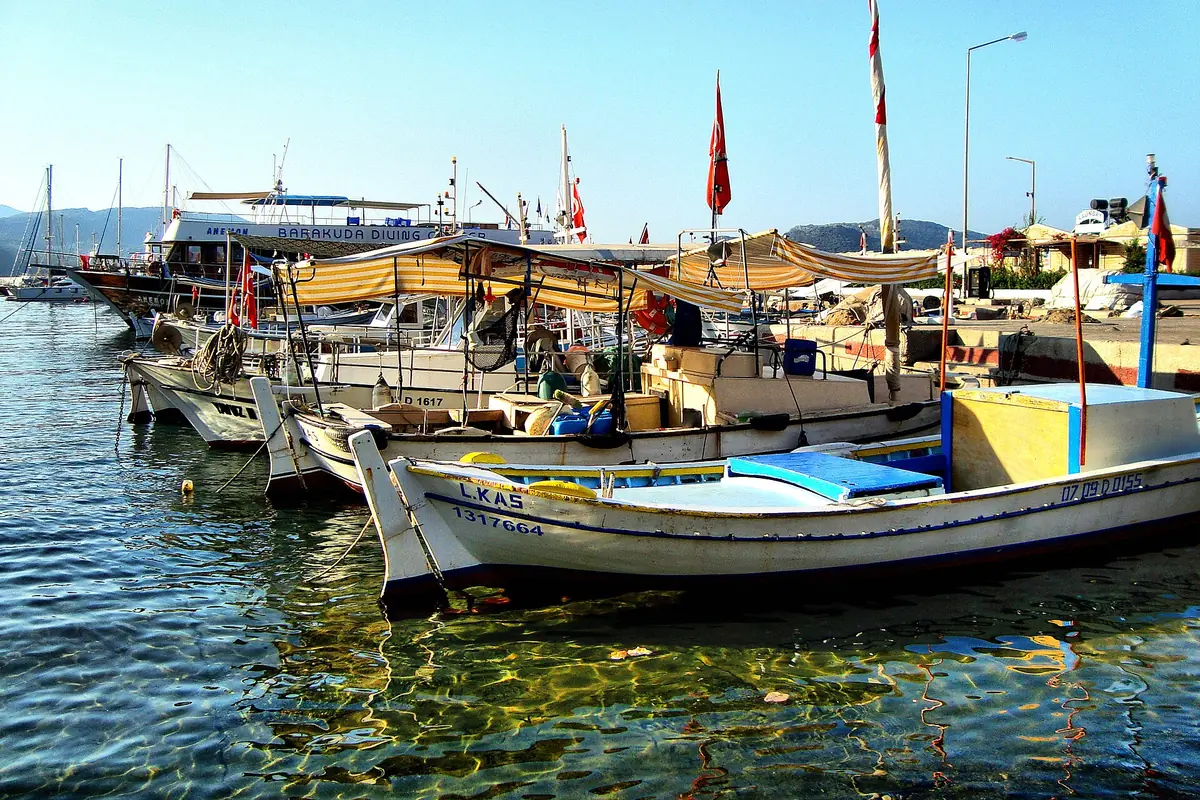
This is a trip for the water. Fethiye lies on a gulf of pine-clad hills, with the calm lagoon of Ölüdeniz close by, and its 12-island boat trip runs through the summer. Kaş, further east, has no big resorts; its boat day, which also runs through the summer, passes the sunken city off Kekova island, where swimming is prohibited and the ruins are seen from the boat.
None of our itineraries is a week on the coast alone, so this one is our suggestion, built from the two destination guides: three nights in Fethiye and three in Kaş, the stay each guide recommends, flying into Dalaman. Pamukkale Turizm's coach links the two towns in about 2 h 15.
On a first visit, our Turkey in 10 days itinerary reaches Fethiye after Istanbul, Cappadocia, Ephesus and Pamukkale.
In Turkey, a day costs about EUR 180 per person mid-range, all-in, from our Turkey trip-cost guide. That figure prices the seven-day route, not the ten-day one or a coast week.
Book the rooms before anything else. The coast fills after Turkish schools break up in late June, and July and August are the year's busiest months: 7.0 million foreign visitors arrived in August 2025. On Victory Day, 30 August, government offices close; the Turkey festivals guide has the calendar. Wildfires are frequent in summer, and some beaches have strong undercurrents: follow the directions of local authorities and the beach flags, and swim where there is a lifeguard.
The UK, German and Canadian governments advise against travel only to parts of the far south-east, not to Turkey as a whole, and this coast is far from those areas. Our health and safety guide for Turkey sets out each government's line.
Prices and times checked 28 November 2026
Morocco: Essaouira and Rabat on the Atlantic
Inland Morocco is very hot in August, but the Atlantic coast is not. On the 1991–2020 normals of the Direction Générale de la Météorologie, Morocco's weather service, the average summer maximum is 21.9°C in Essaouira and 26.9°C in Rabat.
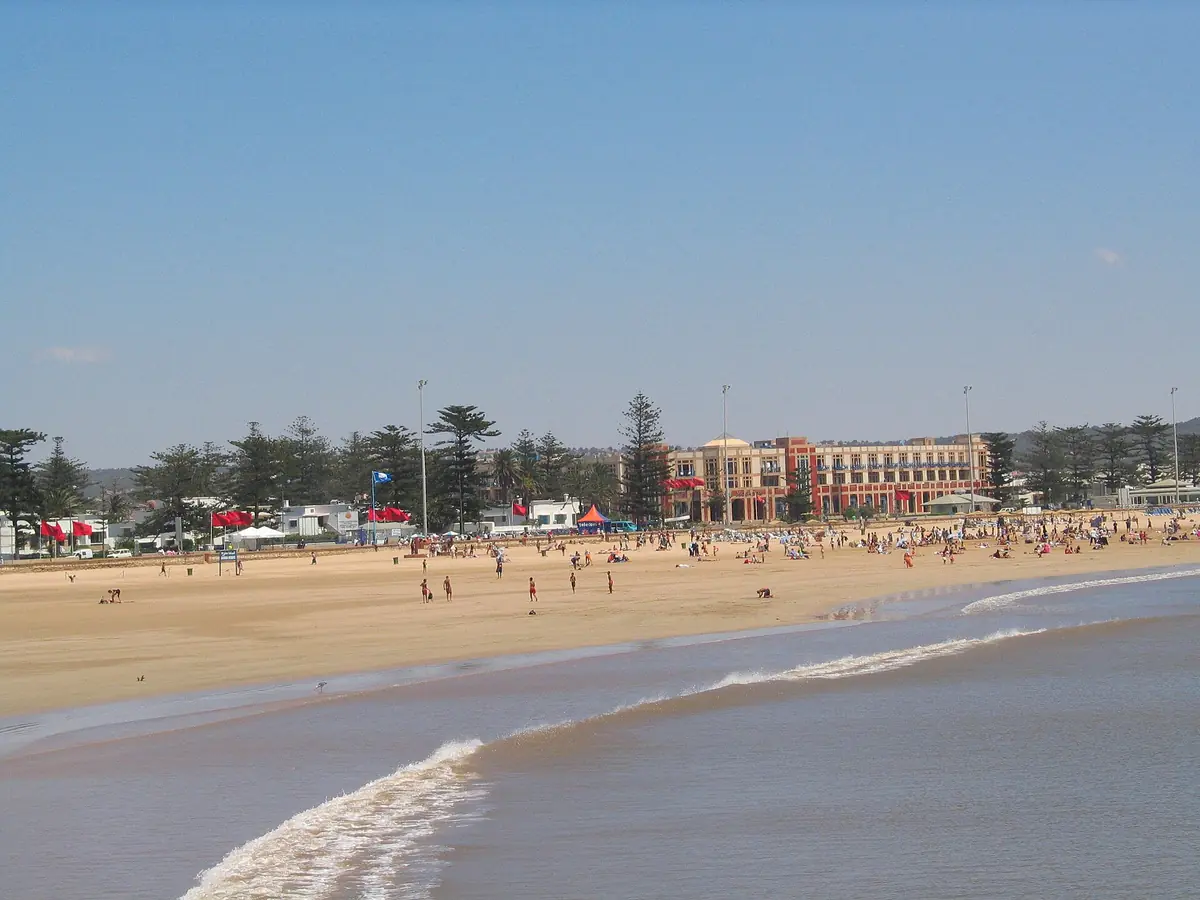
Essaouira is a walled port with a medina of white and blue houses, a fishing harbour and a long beach known for surfing and kitesurfing; the wind keeps the beach cool, so bring a layer. Summer is the liveliest season on this coast. Rabat, the capital, adds the Kasbah of the Udayas, the Hassan Tower and the Chellah.
No itinerary of ours covers a summer trip on the coast, so this one is our suggestion, built from the destination guides: give Essaouira two nights and Rabat one, or two with its museums. CTM runs about five coaches a day from Marrakech to Essaouira, and the road takes about two and a half hours by car. Our Morocco in 10 days itinerary starts in Rabat. In August, drop its Sahara nights, because the desert season at Merzouga runs from October to April, and see Fes and Marrakech in the early morning and the evening.
Our Morocco trip-cost guide puts ten days at about MAD 11,200 per person mid-range (about EUR 1,020), before flights.
Three public holidays fall in the month: the Allegiance of Oued Eddahab on 14 August, the Revolution of the King and the People on 20 August and Youth Day on 21 August. Al Mawlid, the Prophet's birthday, follows the moon: it is calculated for about 14 August 2027 and can move by a day or two; the Morocco festivals guide follows the date. Book the Essaouira riad first, then the coach.
The UK, Canadian, German and French governments do not advise against travel to Morocco as a whole. Their lines cover Western Sahara and the borders with Algeria and Mauritania, away from the coast and the High Atlas. The UK warns of wildfire risk in the summer season; our health and safety guide for Morocco has the rest.
Prices and times checked 28 November 2026
Morocco: Toubkal and the High Atlas from Imlil
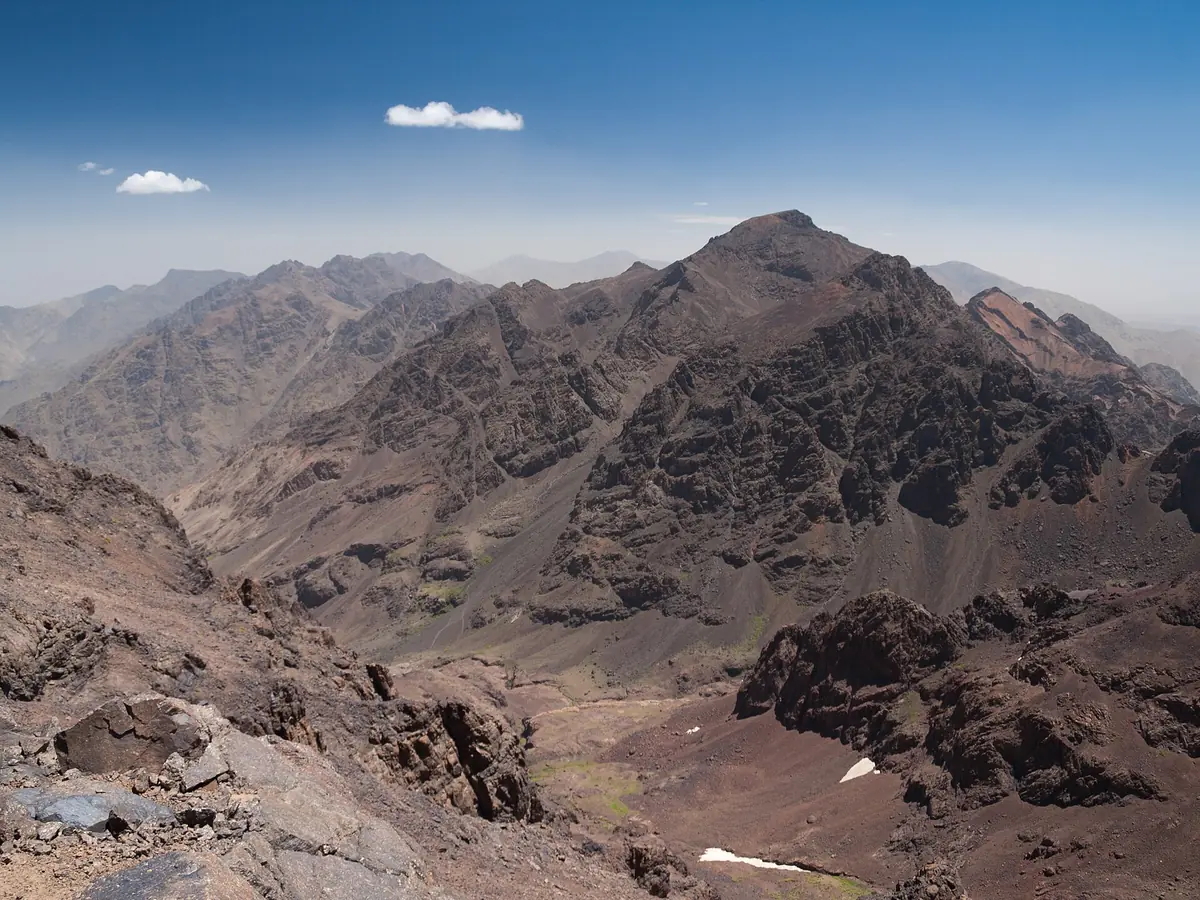
The High Atlas is Morocco's other way out of the heat. Imlil is the village at the end of the road below Jbel Toubkal, at 4,167 metres the highest mountain in North Africa. Summer is the season for the summit, because the snow has gone from the route. The refuge below the peak stands at 3,207 m, so even in summer pack warm layers, a hat and gloves.
The climb takes two days from Imlil: up to the refuge on the first, the summit and the walk down on the second. In summer the route has no major technical difficulty, but it is a long climb at altitude. For the valleys without the summit, a day trip or one night in Imlil is enough; our Imlil and Toubkal guide compares the three.
Imlil is reached by road from Marrakech, where our Morocco in 7 days itinerary begins; in August, our suggestion is to replace its desert crossing with the mountains and the coast.
Kasbah du Toubkal, which offers the ascent from April to October, charges EUR 310 per person for a fully supported climb for a minimum of two, plus a EUR 50 trekking supplement for climbers who are not staying there.
Book a professional guide before you leave Marrakech, and take travel insurance that covers the climb: the UK's travel advice asks for both in the Atlas.
Prices and times checked 28 November 2026
Also possible in August
Three more places work in August, each with a condition.
- Hurghada and the Red Sea, as a beach week. The sea is at its warmest of the year, 29.8°C on the satellite averages of NOAA's Coral Reef Watch for Egypt's Red Sea reefs, and the Egyptian Meteorological Authority's averages give Hurghada 27.1–35.1°C. The condition: plan a week by the water and leave Luxor's temples for October to April. Our Hurghada guide covers the bases and the boat days.
- Amman for the Jerash Festival. The festival usually takes place in the Roman city at the end of July and the beginning of August. The condition: it reaches only into the first days of August (the 2026 edition ran from 22 July to 2 August), so it suits a trip at the very start of the month. The Jordan festivals guide explains how the tickets are sold. Sleep in Amman, which the Jordan Meteorological Department's averages put at 18.6–32.4°C in August, its hottest month. Germany advises against non-essential travel to all of Jordan; governments differ, and our health and safety guide for Jordan sets out each one's line.
- A night on Jebel Akhdar in Oman. At Saiq, on the plateau, August averages 30°C by day and 20°C at night on the averages of Oman's weather service, and the pomegranates are harvested in August and September. The conditions: July and August are the wettest months up there, the checkpoint at Birkat Al Mouz admits only four-wheel-drive and electric cars, and the lowlands below are too hot for the rest of the loop. Canada advises against non-essential travel to Oman as a whole; governments differ, and our health and safety guide for Oman sets out what each says. The Jebel Akhdar guide has the road and the villages.
Prices and times checked 28 November 2026
Where not to go in August, and why
In these places the heat decides the day, and a cooler month gives a better trip.
- The UAE. The National Center of Meteorology's averages give Dubai highs of 40.4°C and nights of 29.3°C in August, Abu Dhabi's daytime temperatures reach around 45°C with humidity of 80–90%, and outdoor work stops by law from 12:30 to 15:00 until 15 September. Germany advises against non-essential travel to the UAE; governments differ, and our health and safety guide for the UAE sets out each one's line. Go between November and March; see the best time to visit the UAE guide.
- Oman's northern loop. Muscat averages 36°C by day and 28°C at night in August and Nizwa 42°C by day, too hot for wadi walks or a night in a desert camp. In the far south the khareef, the summer monsoon, turns Dhofar green from mid-June to September, but France advises against travel to the Salalah region except for an imperative reason, so our itineraries do not include Salalah. Go between November and March; see the best time to visit Oman guide.
- Luxor and Aswan. Both average 41°C in the afternoon from June to August. Choose October to April; the best time to visit Egypt guide rates each month.
- Petra, Wadi Rum and the Dead Sea. August is Jordan's hottest month. Wadi Rum's summer highs reach about 34°C, and the Dead Sea shore, far below the plateau, is hotter than Amman. Keep Petra's long walks and the desert camp for April, May or October, the months our best time to visit Jordan guide rates best.
- Marrakech, Fes and the desert in Morocco. The average summer maximum is 36.3°C in Marrakech, 33.8°C in Fes, 37.3°C in Ouarzazate and 37.7°C in Errachidia, the town on the road to Merzouga. Go in March to May or September to November for the cities and October to April for the dunes; the best time to visit Morocco guide has the seasons.
- Ephesus and Pamukkale at midday. Izmir, the nearest city to Ephesus, averages 33.0°C by day in August, and both sites have little shade. Arrive at opening time, or come in April, May, late September or October, when the best time to visit Turkey guide rates the whole route best.
Prices and times checked 28 November 2026
Practical questions
Where is the best place to go in the Middle East in August?
Turkey's Turquoise Coast, with Fethiye and Kaş as bases, and Morocco's Atlantic coast at Essaouira and Rabat, with the High Atlas for walkers. The other four countries are in their hottest weeks.
Is the Middle East too hot in August?
In most of it, yes. Dubai averages 40.4°C by day and Luxor and Aswan 41°C. The exceptions are places with sea wind or altitude: Essaouira's average summer maximum is 21.9°C, and on Oman's Jebel Akhdar the days average 30°C.
Where is the sea warmest in August?
The Red Sea off Egypt averages 29.8°C in August, its warmest month, and Turkey's Mediterranean coast 28.1°C, also its warmest. The Aegean is cooler, at 24.6°C.
Is Dubai worth visiting in August?
Only as a short stay spent mostly indoors. Days average 40.4°C and nights 29.3°C, and Dubai Summer Surprises brings hotel and attraction offers. Our UAE in 7 days itinerary works as written from November to March.
Which public holidays fall in August?
Morocco has three, on 14, 20 and 21 August, and Turkey has Victory Day on 30 August. The Prophet's birthday is a public holiday in the UAE, Oman, Jordan, Egypt and Morocco; it follows the moon and is expected about 14 August 2027.
Keep planning your trip
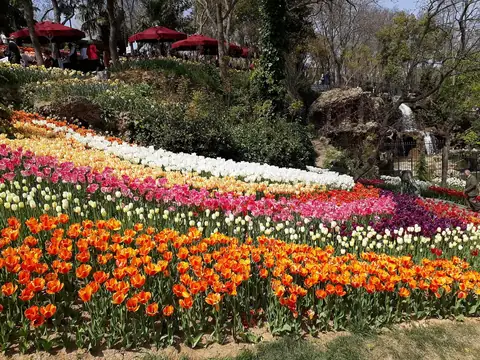
Best time to visit Turkey
When to go to Turkey: spring and autumn for Istanbul, Cappadocia and Ephesus, June to October for the sea, snow and balloon mornings in winter, and the 2027 holidays.
Read the guide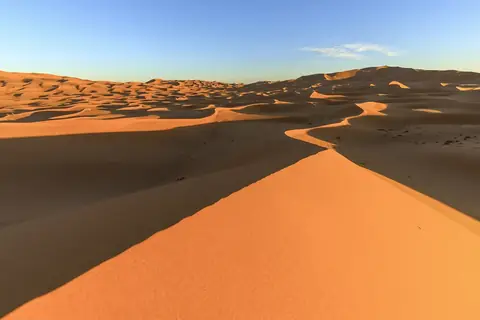
Best time to visit Morocco
When to go to Morocco: spring and autumn for Marrakech and Fes, the desert season at Merzouga, summer heat inland, cool coast, winter nights, Ramadan and holidays.
Read the guide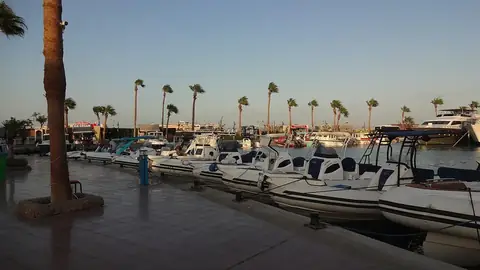
Hurghada
Plan a Red Sea week from Hurghada: town, El Gouna, Sahl Hasheesh or Makadi, the Giftun boat day, first dives and wrecks, HRG flights and Luxor.
Read the guide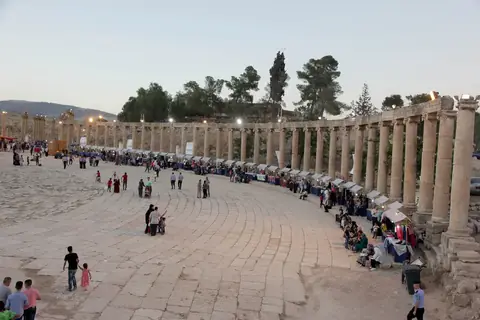
Jordan festivals and events 2027
Jordan's 2027 calendar: Ramadan and the two Eids, Independence Day, the Dead Sea Ultra Marathon, the Jerash Festival, two marathons, Petra by Night and Christmas.
Read the guide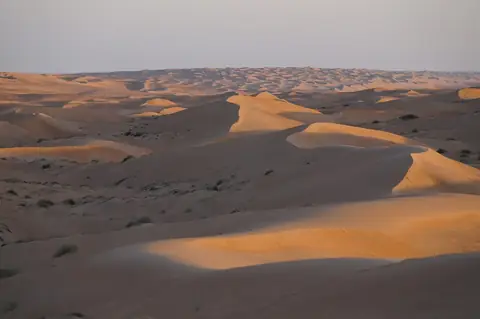
Best time to visit Oman
Choose your Oman dates: the cool months from November to March, summer heat in the north, the Dhofar khareef, wadi floods, rose season, turtles and Ramadan.
Read the guide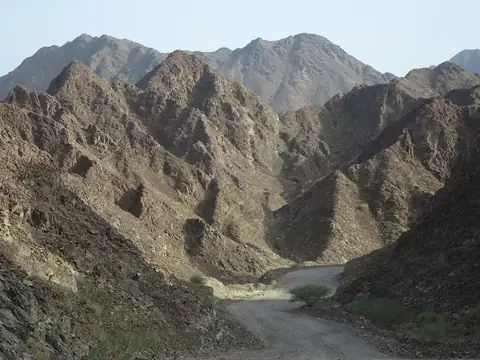
Best time to visit the UAE
Choose your UAE dates by month: Dubai's average highs, the cool months from November to March, summer heat, Ramadan and the Eids in 2027, school breaks and the mountains.
Read the guideSources and checks before you travel
(69)
- Turkish State Meteorological Service (MGM): Mediterranean sea temperature analysis 2025 (PDF, Turkish) ↗ — opens in a new tab
- Turkish State Meteorological Service (MGM): Aegean sea temperature analysis 2025 (PDF, Turkish) ↗ — opens in a new tab
- Turkish State Meteorological Service (MGM): Antalya climate statistics ↗ — opens in a new tab
- Turkish State Meteorological Service (MGM): Izmir climate statistics ↗ — opens in a new tab
- Ministry of Culture and Tourism: 2025 annual border statistics bulletin (XLSX, Turkish) ↗ — opens in a new tab
- Ministry of National Education (MEB): 2026–2027 school calendar, 13 June 2026 (Turkish) ↗ — opens in a new tab
- Germany's Foreign Office (Auswärtiges Amt): Turkey travel and safety advice ↗ — opens in a new tab
- UK FCDO: Turkey safety and security ↗ — opens in a new tab
- Vigo Tours: Fethiye 12 Islands boat trip ↗ — opens in a new tab
- Vigo Tours: Kekova boat trip from Kaş ↗ — opens in a new tab
- Law 2429 on national and general holidays (text on Diyanet's site, Turkish) ↗ — opens in a new tab
- GoTürkiye: Fethiye ↗ — opens in a new tab
- GoTürkiye: Ölüdeniz ↗ — opens in a new tab
- Turkish Museums: Amynthas Archaeological Site ↗ — opens in a new tab
- Muttaş: line 48-25 Fethiye bus station – Dalaman Airport ↗ — opens in a new tab
- GoTürkiye: Heart of the Turkish Riviera ↗ — opens in a new tab
- GoTürkiye: 3-day beach route on the Turkish Riviera ↗ — opens in a new tab
- Pamukkale Turizm: Fethiye–Kaş bus (Turkish) ↗ — opens in a new tab
- UK Foreign Office (GOV.UK): Turkey warnings and insurance ↗ — opens in a new tab
- Auswärtiges Amt: Türkei Reise- und Sicherheitshinweise ↗ — opens in a new tab
- Government of Canada: Travel advice for Türkiye ↗ — opens in a new tab
- Direction Générale de la Météorologie: summer maximum temperature normals 1991–2020 (map) ↗ — opens in a new tab
- Visit Morocco (Moroccan National Tourist Office): Climate and seasons; Time zone and calendar ↗ — opens in a new tab
- Visit Morocco: Errachidia-Midelt-Merzouga ↗ — opens in a new tab
- Visit Morocco: Marrakech ↗ — opens in a new tab
- Visit Morocco: Fez ↗ — opens in a new tab
- UK FCDO: Morocco travel advice, safety and security ↗ — opens in a new tab
- Visit Morocco (Moroccan National Tourism Office): Essaouira-Mogador ↗ — opens in a new tab
- Visit Morocco: medina of Essaouira-Mogador ↗ — opens in a new tab
- CTM: Marrakech–Essaouira by coach ↗ — opens in a new tab
- Visit Morocco: medinas in Morocco ↗ — opens in a new tab
- Visit Morocco: UNESCO heritage ↗ — opens in a new tab
- Visit Morocco (Moroccan National Tourist Office): Rabat ↗ — opens in a new tab
- Kasbah du Toubkal: home page ↗ — opens in a new tab
- Refuge Les Mouflons: Toubkal ↗ — opens in a new tab
- Refuge Les Mouflons (Refuge du Toubkal) ↗ — opens in a new tab
- Kasbah du Toubkal: strolls and day treks ↗ — opens in a new tab
- Visit Morocco (Moroccan National Tourism Office): nature around Marrakech ↗ — opens in a new tab
- Kasbah du Toubkal: overnight and multi-day treks ↗ — opens in a new tab
- Kasbah du Toubkal: accommodation and trekking prices 1 November 2026 - 31 October 2027 ↗ — opens in a new tab
- UK Foreign Office: Morocco safety and security ↗ — opens in a new tab
- UK Foreign Office (GOV.UK): Morocco regional risks ↗ — opens in a new tab
- German Federal Foreign Office: Marokko, Reise- und Sicherheitshinweise ↗ — opens in a new tab
- France Diplomatie: Maroc, sécurité ↗ — opens in a new tab
- Government of Canada (travel.gc.ca): Morocco travel advice ↗ — opens in a new tab
- NOAA Coral Reef Watch: Egypt regional virtual station data ↗ — opens in a new tab
- WMO World Weather Information Service: Hurghada (Egyptian Meteorological Authority) ↗ — opens in a new tab
- WMO World Weather Information Service: Luxor (Egyptian Meteorological Authority) ↗ — opens in a new tab
- WMO World Weather Information Service: Aswan (Egyptian Meteorological Authority) ↗ — opens in a new tab
- Egypt Ministry of Tourism and Antiquities: Valley of the Kings ↗ — opens in a new tab
- WMO World Weather Information Service: Amman (Jordan Meteorological Department) ↗ — opens in a new tab
- Jordan Tourism Board: Jerash ↗ — opens in a new tab
- Jordan News Agency (Petra): Jerash Festival marks its 40th edition, 24 June 2026 ↗ — opens in a new tab
- Jordan News Agency (Petra): 40th Jerash Festival concludes, 2 August 2026 ↗ — opens in a new tab
- Visit Aqaba (ASEZA): Wadi Rum ↗ — opens in a new tab
- Auswärtiges Amt: Jordanien, Reise- und Sicherheitshinweise (German) ↗ — opens in a new tab
- World Meteorological Organization, World Weather Information Service: Saiq ↗ — opens in a new tab
- World Meteorological Organization, World Weather Information Service: Muscat (Seeb) ↗ — opens in a new tab
- World Meteorological Organization, World Weather Information Service: Nizwa ↗ — opens in a new tab
- Experience Oman (Ministry of Heritage and Tourism): Weather ↗ — opens in a new tab
- France Diplomatie: Oman, conseils aux voyageurs ↗ — opens in a new tab
- Government of Canada: Travel advice for Oman ↗ — opens in a new tab
- Oman Observer: Can you drive an EV up Jabal Akhdhar, without a 4WD? (13 October 2026) ↗ — opens in a new tab
- WMO World Weather Information Service: Dubai climate (data from the National Center of Meteorology) ↗ — opens in a new tab
- Visit Abu Dhabi (DCT): weather in Abu Dhabi ↗ — opens in a new tab
- MOHRE: the midday break ↗ — opens in a new tab
- Dubai Festivals and Retail Establishment: Dubai Summer Surprises 2026 (via Zawya) ↗ — opens in a new tab
- Auswärtiges Amt: Vereinigte Arabische Emirate, Reise- und Sicherheitshinweise ↗ — opens in a new tab
- Diyanet (Turkey): 2027 religious days ↗ — opens in a new tab
Reference sources for the version dated 28 November 2026. Confirm opening times, access, transport and conditions for your travel dates.
Photo credits
(4)
Boats at the quay in Kaş harbour in August
Photograph: HALUK COMERTEL — opens in a new tab · CC BY 3.0 — opens in a new tab
Changes: Resized and converted to WebP; displayed with responsive crops. · Original photograph and licence details ↗ — opens in a new tab
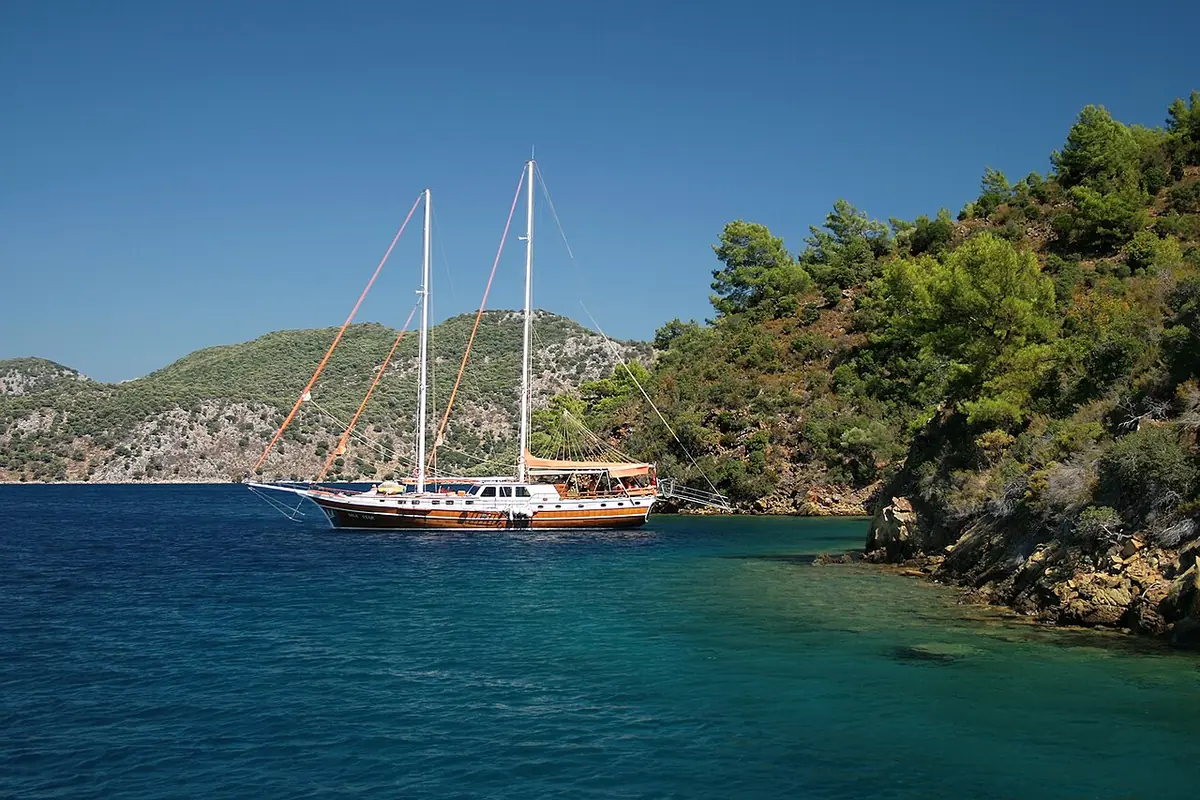
A gulet at anchor off Domuz Island in the Gulf of Fethiye
Photograph: Jorge Franganillo — opens in a new tab · CC BY 3.0 — opens in a new tab
Changes: Resized and converted to WebP; displayed with responsive crops. · Original photograph and licence details ↗ — opens in a new tab
Essaouira beach in summer
Photograph: Daniel*D — opens in a new tab · CC BY-SA 3.0 — opens in a new tab
Changes: Resized and converted to WebP; displayed with responsive crops. · Original photograph and licence details ↗ — opens in a new tab
Jbel Toubkal in August, seen from Afella
Photograph: Rafał Kozubek — opens in a new tab · CC BY-SA 3.0 — opens in a new tab
Changes: Resized and converted to WebP; displayed with responsive crops. · Original photograph and licence details ↗ — opens in a new tab