Plan your trip
Best time to visit Morocco: weather, desert season and Ramadan
Morocco's weather question is less about rain than about heat and cold. In July Marrakech and the desert towns bake while Essaouira stays fresh in the Atlantic wind; in January the coast is mild and the High Atlas and the desert nights are cold. Below, each month is rated for a first trip through Marrakech, the Sahara and Fes. Each season is described for the coast, the imperial cities and the south, followed by the dates of Ramadan and the public holidays.
In this guide
Find the location ↗ — opens in a new tabThe short answer
Go in March–May or September–November, the best months for Marrakech, Fes and Ouarzazate. The desert season at Merzouga runs from October to April, so March, April, October and November suit a route through Marrakech, the Sahara and Fes. Book six nights (two in Marrakech, two on the way to and at Merzouga, two in Fes) or nine with Chefchaouen and Rabat added, and reserve the desert crossing first. A shared three-day desert tour from Fes to Marrakech is listed from USD 274 per person on TourRadar, and a CTM coach from Rabat to Chefchaouen starts at MAD 135. Ramadan is expected to begin on or around 8 February 2027.
- Key point
- 7 to 10 days through Marrakech, the Sahara and Fes, with Chefchaouen and Rabat on the longer route
- Where it applies
- Marrakech and Fes, with a night at the Merzouga dunes and, on ten days, Chefchaouen and Rabat
- Timing
- March–May and September–November for the cities; October–April for the desert. Summer is very hot inland and winter nights are cold in the Atlas and the south.
Spring and autumn: the months that suit the whole route
Morocco sits between the Mediterranean, the Atlantic and the Sahara, with the Rif and Atlas mountains in between, so one trip can cross several climates. The coast has sunshine all year; inland the climate turns continental, and the desert is at its best in spring and autumn. Marrakech, Fes and Ouarzazate are at their best from March to May and September to November. Rabat, Tangier and Chefchaouen are best from April to June and September to October, when the weather is mild.
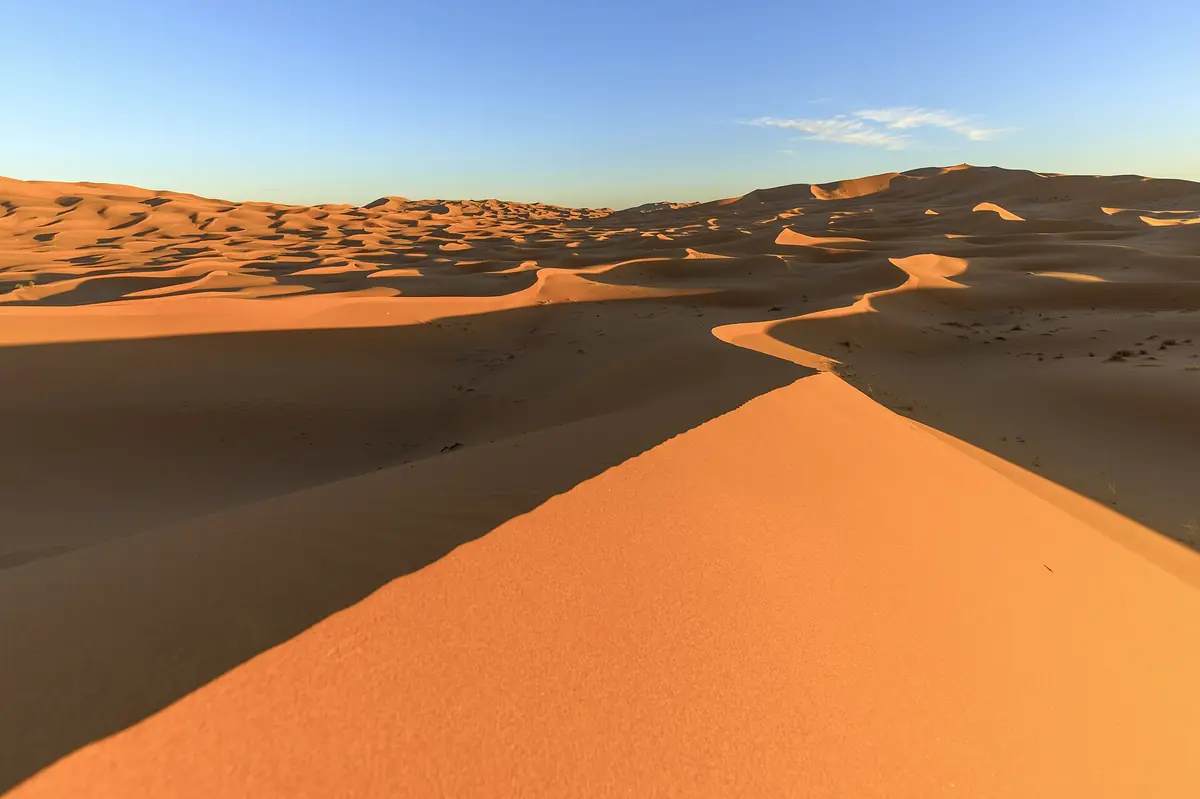
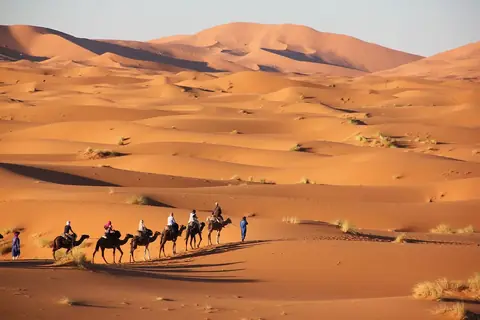
The desert has a longer season: October to April at Merzouga and the Erg Chebbi dunes, as summer there is extremely hot. March, April, October and November fall in both the city season and the desert season. They are the easiest months for a route that combines Marrakech, the Sahara and Fes. In April and October, Rabat, Tangier and Chefchaouen are in season as well.
In 2027 two family holidays are expected inside the spring season: Eid al-Fitr in early March, at the end of Ramadan, and Eid al-Adha in mid-May. The dates are in the Ramadan section below.
Summer: hot inland, fresh on the Atlantic
From June to August the inland cities and the south are hot. On the national weather service's 1991–2020 normals, the average summer maximum is 36.3°C in Marrakech, 33.8°C in Fes, 37.3°C in Ouarzazate and 37.7°C in Errachidia, the town on the road to Merzouga. Summer is very hot in Marrakech and Fes and extremely hot in the desert. A desert night in July or August is possible, but the camel ride and the walk on the dunes belong to the hour after sunrise and before sunset. The High Atlas is the exception: summer is the best season to climb Toubkal from Imlil, because the snow has gone from the route.
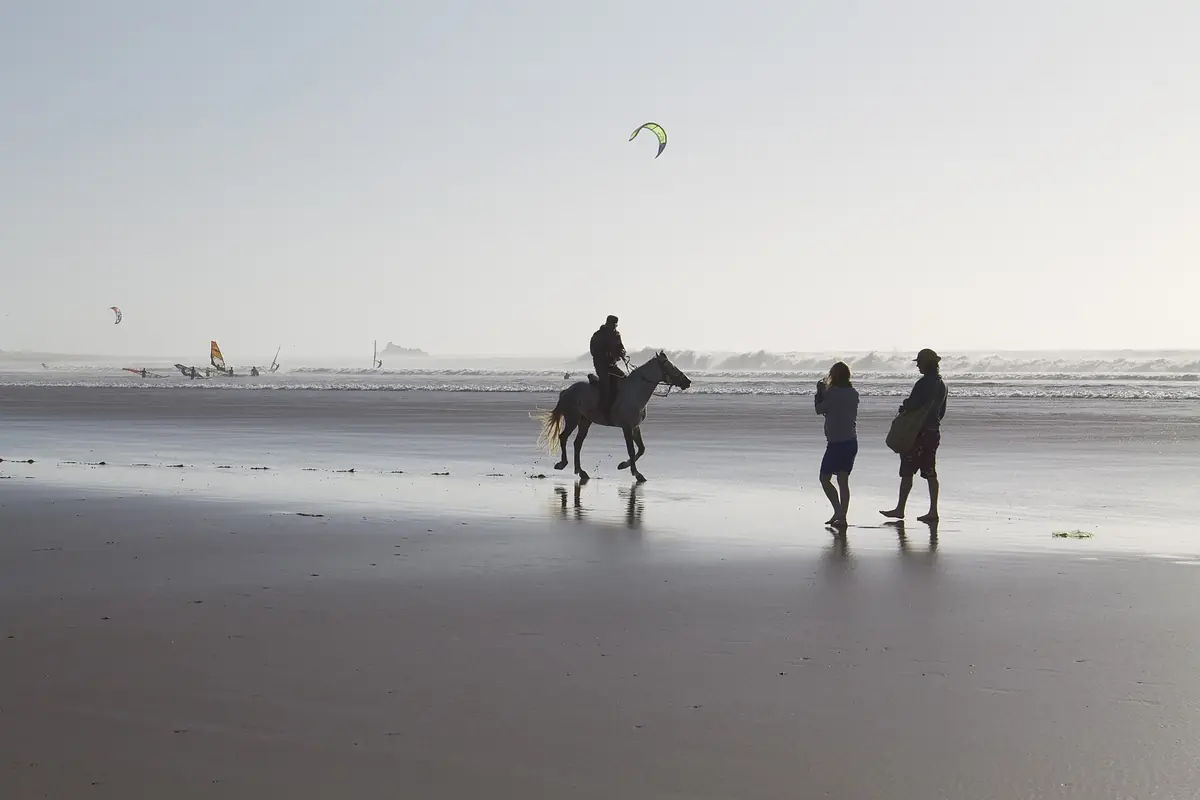
The Atlantic coast is the place to be in summer. Essaouira's average summer maximum is 21.9°C, Casablanca's 25.8°C and Rabat's 26.9°C, with Tangier at 28.6°C. A summer trip works best as a coastal one, with Essaouira, Rabat and Tangier, and Marrakech kept to early mornings and evenings. The UK government warns of wildfire risk in the summer season.
Throne Day on 30 July and three August holidays (14, 20 and 21 August) are national public holidays.
Prices and times checked 28 November 2026
Winter: mild coast, cold nights in the Atlas and the desert
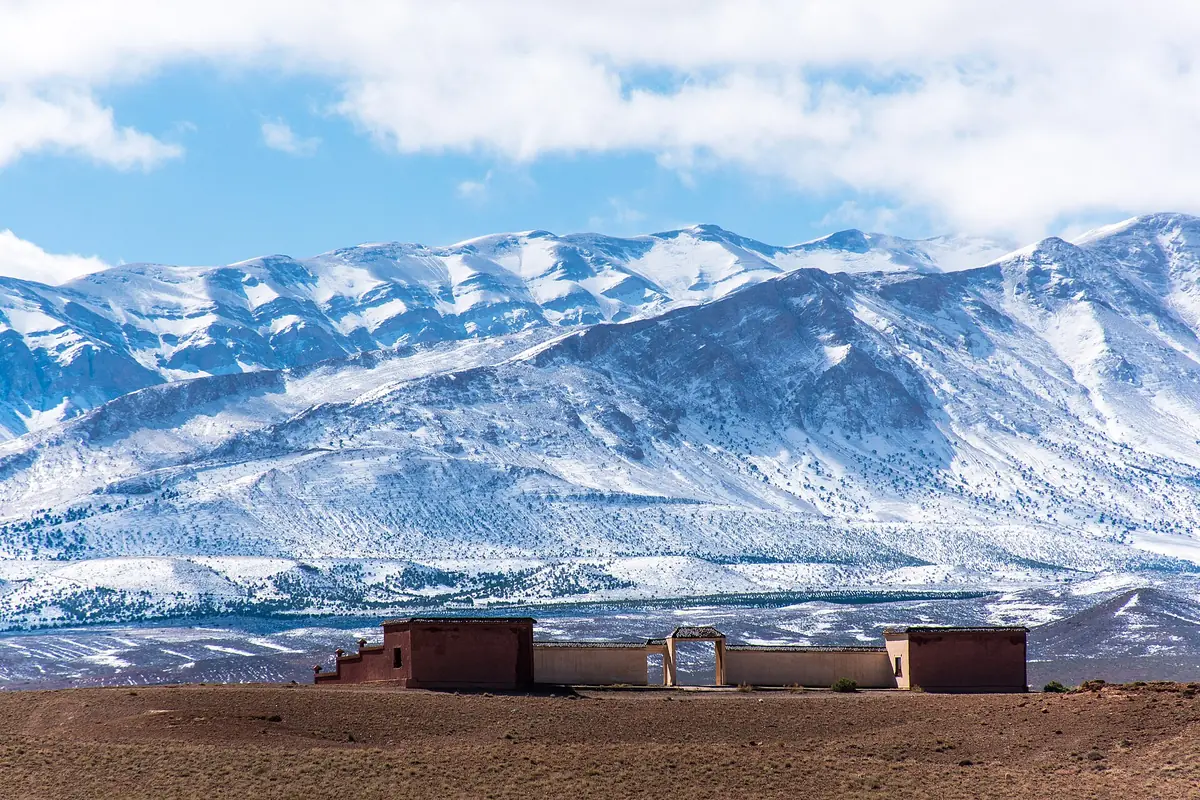
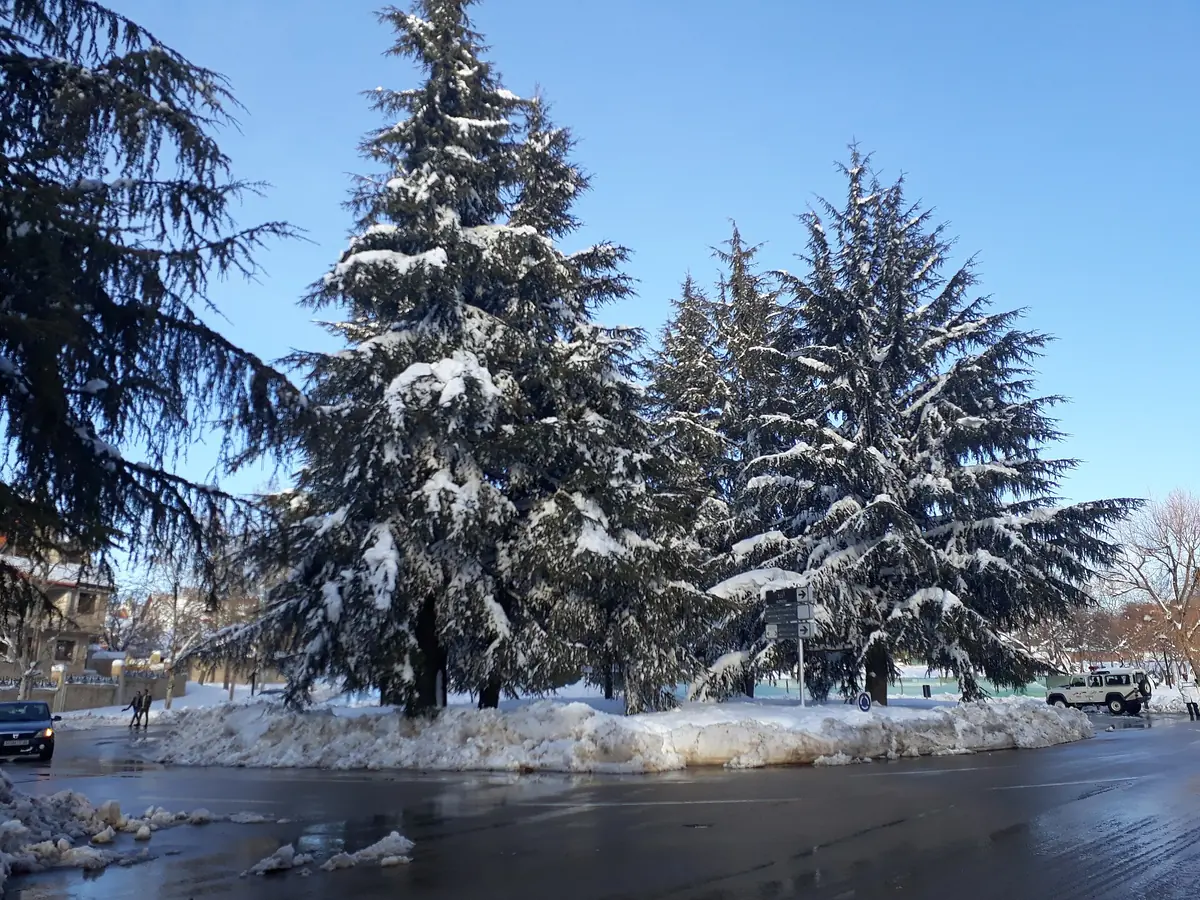
Winter days inland are mild and the evenings cool, but the nights are cold. On the 1991–2020 normals the average winter minimum is 6.9°C in Marrakech, 4.4°C in Fes, 3.1°C in Ouarzazate and 3.4°C in Errachidia, and the Middle Atlas is colder still: 1.7°C in Midelt, on the road from Fes to the desert, and −0.3°C in Ifrane. Riads around an open courtyard feel the cold, so ask whether the room has heating when you book.
The desert is in season but its nights are cold, so pack warm layers for the camp at Merzouga. On the coast the winter minimum is 9.7°C in Casablanca and 11.9°C in Essaouira. Further north, Rabat, Tangier and Chefchaouen can be rainy. In the winter months, heavy rain can cause flash floods in the mountains and near rivers. This matters on the High Atlas road between Marrakech and Ouarzazate, so leave a spare day in a winter itinerary that crosses the Atlas by road.
New Year's Day, the Independence Manifesto on 11 January and the Amazigh New Year on 14 January are public holidays.
Prices and times checked 28 November 2026
Ramadan, the Eids and the public holidays
Ramadan follows the lunar calendar and starts 10 to 11 days earlier each year. Ramadan 1448 is expected to begin on or around 8 February 2027. Eid al-Fitr is expected around 9 March and Eid al-Adha around 16 May 2027. Morocco fixes each date after the new crescent moon is sighted. In 2026 Morocco's Eid al-Fitr fell on 20 March and Eid al-Adha on 27 May.
Ramadan changes the rhythm of the day. Eating, drinking, smoking or chewing gum in public in daytime may cause offence. Opening hours of shops and restaurants can differ. Hotels and restaurants that serve food during fasting hours may seat non-fasting guests apart. Morocco also changes its clocks: the country keeps GMT+1 for most of the year and GMT during Ramadan, so check train and flight times against the clock change. ONCF runs a Ramadan timetable, described in our transport guide.
The fixed public holidays are 1 January, 11 January (Independence Manifesto), 14 January (Amazigh New Year), 1 May (Labour Day), 30 July (Throne Day), 14 August (Allegiance of Oued Eddahab), 20 August (Revolution of the King and the People), 21 August (Youth Day), 31 October (Unity Day), 6 November (Green March) and 18 November (Independence Day). The Islamic New Year and Al Mawlid move with the moon like the Eids (17 June and 26 August in 2026; expected around 6 June and 14 August in 2027). Our festivals and events guide has the festivals and moussems by month.
Prices and times checked 28 November 2026
Month by month
January (fair): mild days and cold nights inland; the desert is in season but the camp nights are cold.
February (fair): still cool, with Ramadan expected to begin on or around 8 February 2027.
March (best): spring opens in Marrakech, Fes and Ouarzazate; Ramadan ends and Eid al-Fitr is expected about 9 March 2027.
April (best): in season in the cities, the north and the desert; October is the only other month that suits every part of the route.
May (best): in season in Marrakech, Fes and the north, with Labour Day on 1 May and Eid al-Adha about 16 May 2027; the desert season has ended.
June (good): still the season in Rabat, Tangier and Chefchaouen, but summer has begun inland, and Marrakech and the south are hot.
July (hard): the middle of the hot inland summer (June to August); spend it on the coast, which stays cool, or on a Toubkal climb in the High Atlas.
August (hard): still the hot inland summer, with three public holidays (14, 20 and 21 August).
September (good): the autumn season begins in the cities.
October (best): autumn in the cities and the start of the desert season, with Unity Day on 31 October.
November (best): the last month of the autumn season in Marrakech and Fes, with the Green March (6 November) and Independence Day (18 November).
December (fair): mild coast and desert days, cold nights in the Atlas and the south, rain in the north.
What to book first
Start with the desert crossing, because it fixes the dates of everything else: a shared tour or a private driver over three days, from Marrakech to Merzouga and on to Fes or back. Our Merzouga and Sahara guide compares the options. Merzouga and its desert camps lie inside the 20 km band along the Algerian border where Canada advises against all travel; other governments differ, so check your own government's advice and your travel insurance before you book. A shared three-day tour from Fes to Marrakech is listed from USD 274 per person on TourRadar.
Then book the riads in Marrakech and Fes, early if you travel in March–May or September–November, and the train legs on oncf-voyages.ma. Many Moroccans travel around Eid al-Fitr and Eid al-Adha, and ONCF adds extra trains for those weeks, so book seats early if your dates fall near an Eid. Monument tickets are sold on the Ministry of Culture's e-ticket site: the Bahia Palace and the Saadian Tombs in Marrakech cost foreign adults MAD 100 and children aged 7 to 13 MAD 50. For the north, a CTM coach from Rabat to Chefchaouen costs from MAD 135. Our trip-cost guide has the full budget.
Prices and times checked 28 November 2026
Practical questions
What is the best month to visit Morocco?
April and October suit the whole route: Visit Morocco, the national tourist office, gives March to May and September to November for Marrakech and Fes, April to June and September to October for Rabat and Chefchaouen, and October to April for the desert.
Is Morocco too hot in summer?
Inland, yes for most visitors: the average summer maximum is 36.3°C in Marrakech and 37.3°C in Ouarzazate on the weather service's 1991–2020 normals. The Atlantic coast stays cool, with an average summer maximum of 21.9°C in Essaouira.
When is the best time to visit the Sahara at Merzouga?
From October to April. Summer in the desert is extremely hot, and winter nights are cold, so pack warm layers for the camp from December to February.
Is winter a good time to visit Morocco?
Winter works for the cities and the desert by day, with mild days and cold nights: the average winter minimum is 4.4°C in Fes and 6.9°C in Marrakech. The north can be rainy, and flash floods are a risk in the mountains.
When is Ramadan in 2027 and does it affect a trip?
Ramadan is expected to begin on or around 8 February 2027, with Eid al-Fitr about 9 March. Morocco fixes the dates after the new crescent moon is sighted. During the month, opening hours of shops and restaurants can differ and eating in public in daytime may cause offence. Morocco also switches from GMT+1 to GMT for the month.
Keep planning your trip
First trip to Morocco
Choose seven days or ten for Marrakech, the Sahara at Merzouga and Fes: the order of the cities, the desert road, the season, entry, cash and the medina basics.
Read the guide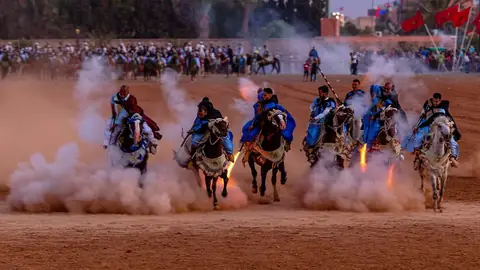
Morocco festivals and events 2027
Morocco's year by month: Ramadan and the Eids, public holidays, the Fes sacred music festival, Gnaoua in Essaouira, Mawazine, the rose festival and Imilchil.
Read the guide
Morocco trip cost
Ten days from Rabat through Chefchaouen and Fes to the Sahara and Marrakech: about MAD 9,600 per person on a budget, 11,200 mid-range or 18,400 in comfort.
Read the guide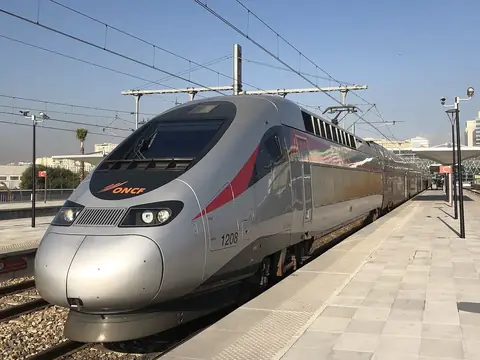
Transport in Morocco
How to get around Morocco: Al Boraq and ONCF trains, CTM coaches to Chefchaouen and the south, grands taxis, drivers, car hire, flights and city trams.
Read the guide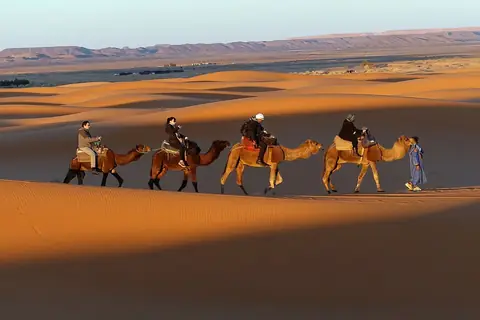
Merzouga and the Sahara
How to plan a night in the dunes of Erg Chebbi: tours from Marrakech or Fes, desert camps, the camel ride, Khamlia, Rissani and the best months for the Sahara.
Read the guide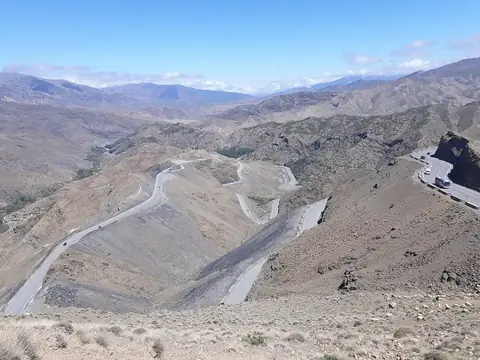
Morocco in 7 days
Seven days and six nights from Marrakech over the High Atlas to a desert camp at Merzouga and on to Fes: the nights, the desert tour and the riads.
Read the guideSources and checks before you travel
(23)
- Visit Morocco (Moroccan National Tourist Office): Climate and seasons; Time zone and calendar ↗ — opens in a new tab
- Visit Morocco: Marrakech ↗ — opens in a new tab
- Visit Morocco: Fez ↗ — opens in a new tab
- Visit Morocco: Ouarzazate-Zagora-Tinghir ↗ — opens in a new tab
- Visit Morocco: Errachidia-Midelt-Merzouga ↗ — opens in a new tab
- Visit Morocco: Rabat ↗ — opens in a new tab
- Visit Morocco: Chefchaouen ↗ — opens in a new tab
- Visit Morocco: Tangier ↗ — opens in a new tab
- Direction Générale de la Météorologie: summer maximum temperature normals 1991–2020 (map) ↗ — opens in a new tab
- Direction Générale de la Météorologie: winter minimum temperature normals 1991–2020 (map) ↗ — opens in a new tab
- Diyanet (Turkey): 2027 religious days ↗ — opens in a new tab
- UK FCDO: Morocco travel advice, safety and security ↗ — opens in a new tab
- CTM: Rabat–Chefchaouen by coach ↗ — opens in a new tab
- TourRadar: 3 Days from Fes to Marrakech through the Erg Chebbi Dunes (shared group tour) ↗ — opens in a new tab
- Ministry of Culture e-tickets: Saadian Tombs ↗ — opens in a new tab
- Government of Canada: Morocco travel advice (Ramadan) ↗ — opens in a new tab
- Diyanet (Turkey): 2026 religious days ↗ — opens in a new tab
- Diyanet (Turkey): 2025 religious days ↗ — opens in a new tab
- Refuge Les Mouflons (Toubkal refuge): Toubkal ↗ — opens in a new tab
- Maroc.ma (MAP, 21 May 2026): ONCF special plan for Eid al-Adha ↗ — opens in a new tab
- Maroc.ma (MAP, 17 March 2026): ONCF special plan for Eid al-Fitr ↗ — opens in a new tab
- Ministry of Culture e-tickets: Bahia Palace ↗ — opens in a new tab
- ONCF: Al Atlas travel guide (Guide Al Atlas) ↗ — opens in a new tab
Reference sources for the version dated 29 November 2026. Confirm opening times, access, transport and conditions for your travel dates.
Photo credits
(6)
The Erg Chebbi dunes near Merzouga in the evening light
Photograph: Thomas Fuhrmann — opens in a new tab · CC BY-SA 4.0 — opens in a new tab
Changes: Resized and converted to WebP; displayed with responsive crops. · Original photograph and licence details ↗ — opens in a new tab
Snow on the Atlas on the road between Midelt and Fes in winter
Photograph: Ralf Steinberger — opens in a new tab · CC BY 2.0 — opens in a new tab
Changes: Resized and converted to WebP; displayed with responsive crops. · Original photograph and licence details ↗ — opens in a new tab
Ifrane in the Middle Atlas after a winter snowfall
Photograph: KatyZita — opens in a new tab · CC BY-SA 4.0 — opens in a new tab
Changes: Resized and converted to WebP; displayed with responsive crops. · Original photograph and licence details ↗ — opens in a new tab
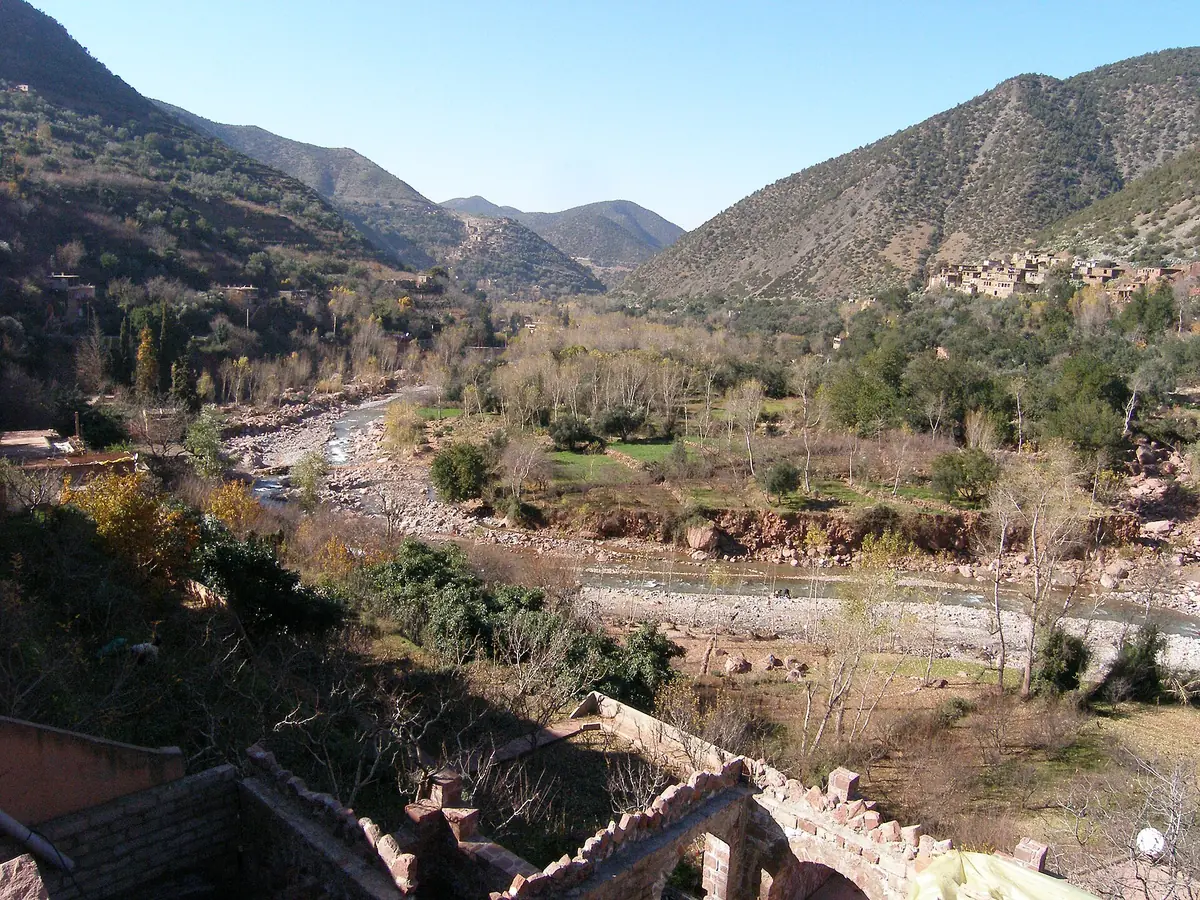
The Ourika valley in the High Atlas south of Marrakech
Photograph: User:China_Crisis — opens in a new tab · CC BY-SA 2.5 — opens in a new tab
Changes: Resized and converted to WebP; displayed with responsive crops. · Original photograph and licence details ↗ — opens in a new tab
Essaouira's beach, where the Atlantic wind keeps summer cool
Photograph: Patrick Nouhailler — opens in a new tab · CC BY-SA 2.0 — opens in a new tab
Changes: Resized and converted to WebP; displayed with responsive crops. · Original photograph and licence details ↗ — opens in a new tab
The sun rising over the dark outline of the dunes near Merzouga
Photo: Yuki Ikemori