Marrakech-Safi
Essaouira: two nights on the ramparts, the port and the windy beach
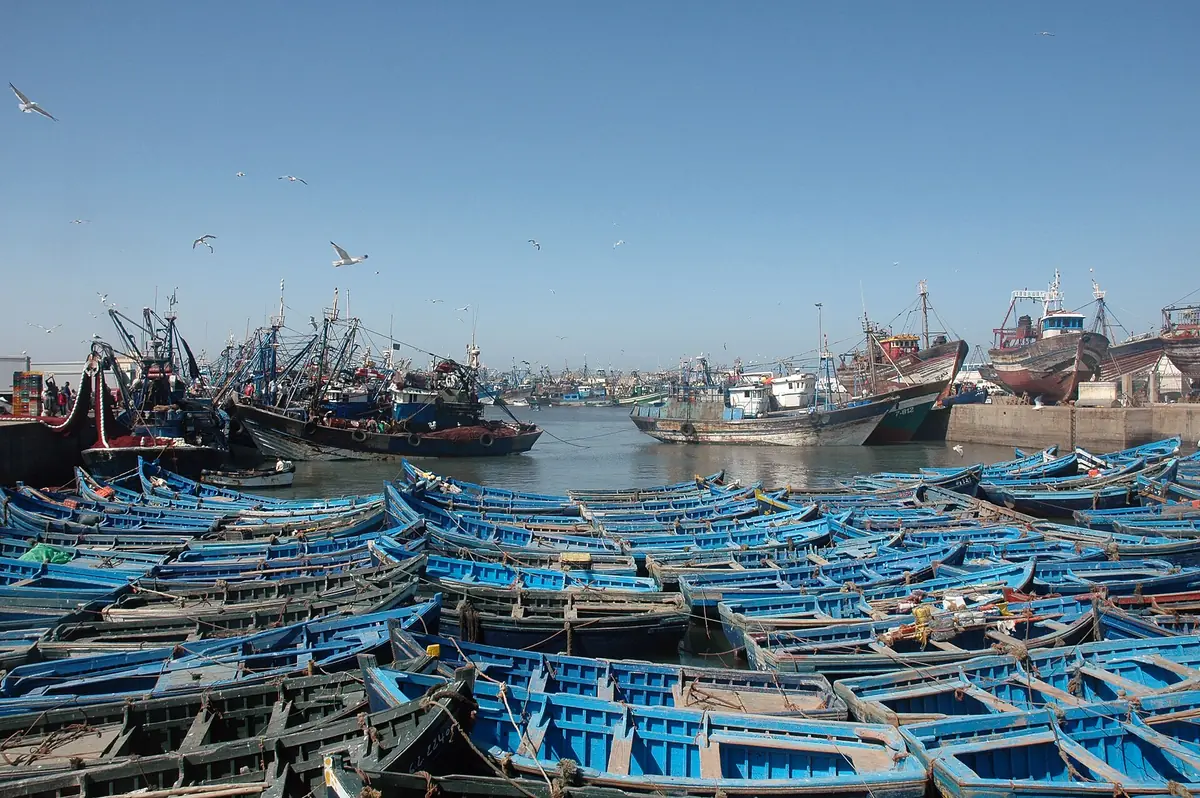
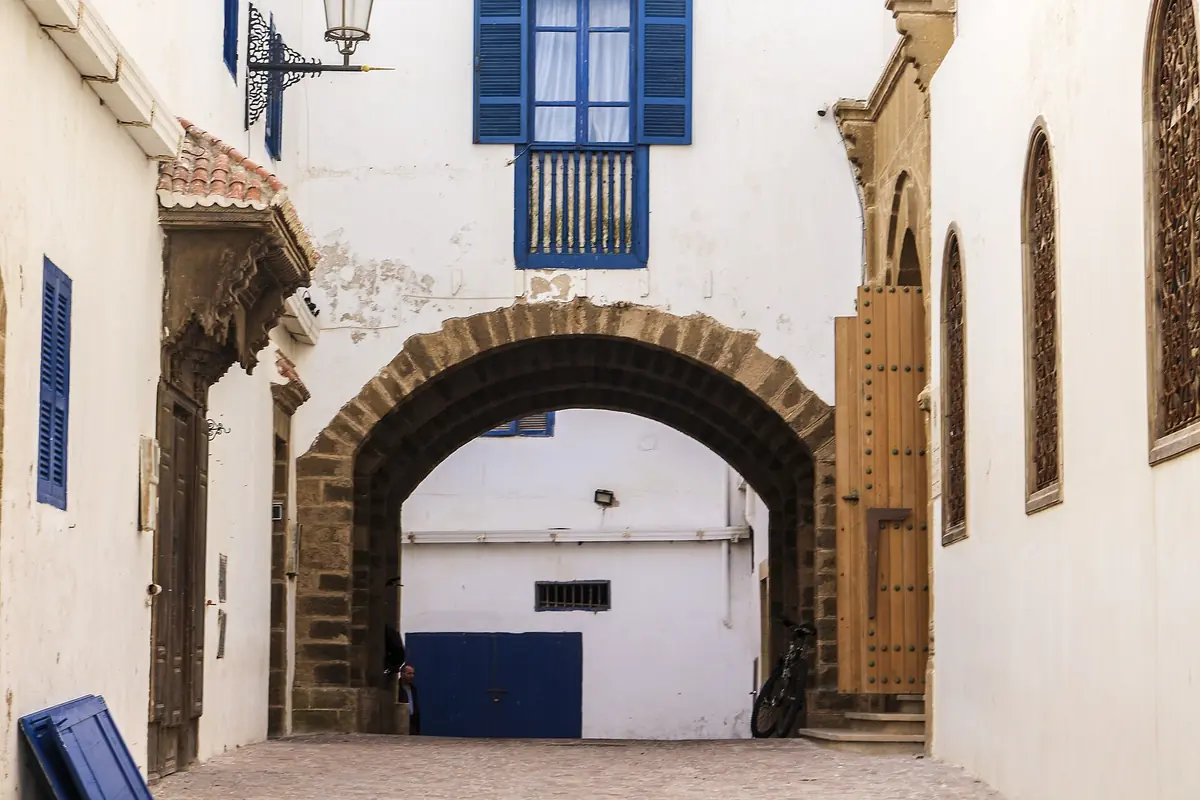
Essaouira is the walled port on the Atlantic that most Morocco trips reach from Marrakech, and it works best as a pause after the heat and crowds of the inland cities. Its old name is Mogador, and its ramparts end at the harbour in the Skala of the port, a bastion built to protect the port from attack by sea. Inside them, the medina of white and blue houses is listed by UNESCO as a World Heritage site. Outside them, blue fishing boats crowd the harbour, the catch is grilled a few steps from where it is landed, and a long beach curves south under a wind that draws surfers and kitesurfers. Two nights let you see the port early in the morning and the walls at sunset.
In this guide
Find the location ↗ — opens in a new tabThe short answer
Book two nights in a riad inside the medina, near the Skala de la Ville, and book the CTM coach from Marrakech with it: CTM runs about five a day over the 191 km, from MAD 205 one way. By car the road takes about two and a half hours each way, so a day trip is possible but short. The Skala of the port, the bastion over the harbour, costs MAD 60 for foreign adults. Spend the first afternoon on the ramparts and the second morning at the port when the boats come in.
- Suggested time
- 2 nights in Essaouira
- Where to stay
- Medina riad near the Skala de la Ville and the main street
- Season and timing
- Essaouira can be visited all year thanks to its mild, sunny climate; spring and autumn are ideal, and summer is the liveliest season on the coast.
Two nights in a riad by the sea wall
Stay inside the walls. The medina is small, so from almost any riad you can walk to the ramparts, the port and the beach, and the evenings are yours once the day tours have driven back to Marrakech. Our Morocco where-to-stay guide compares Essaouira with the other bases on a longer trip.
The booking box below searches the two medina areas this guide recommends: near the Skala de la Ville and near the port. Compare riads there for your own dates.
Cars stop at the medina gates. Ask your riad to meet you at the gate closest to it when you arrive. The lanes are easy to follow by day but hard with luggage after dark.
The Skala de la Ville and the lanes of the medina
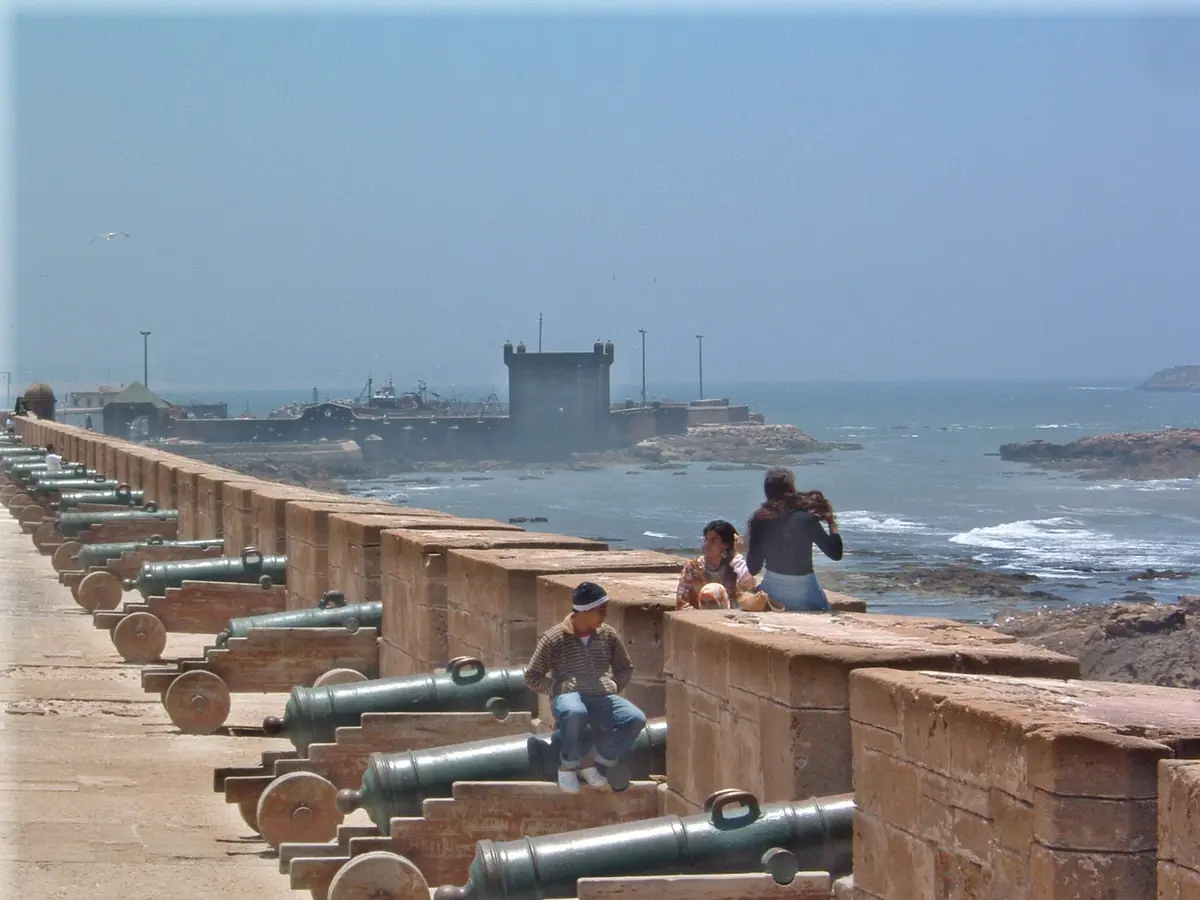
Begin on the Skala de la Ville, the long sea bastion on the medina's ramparts. From the parapet walk along the top you can see the Purpuraires islands offshore, a nature reserve where falcons and gulls circle above the water. These walls stood in for Astapor, the red city of *Game of Thrones*. Under the Skala, in the old casemates of the fort, cabinetmakers inlay thuja wood with silver and copper wire, mother-of-pearl and camel bone, and the shops of the medina are full of their boxes and chessboards.
The fortified walls are pierced by monumental gates and flanked by two citadels, the Skala of the Kasbah and the Skala of the port. Inside, the medina mixes eastern and western influences: the minaret of the Ben Youssef mosque rises over the lanes, and old consular houses line the narrow streets.
The Sidi Mohammed Ben Abdallah Museum preserves the crafts and popular traditions of the region. Galleries and artists' cafés are scattered through the town. Give the medina an unhurried afternoon: the ramparts are at their best when the sun sets over the islands.
The fishing port, the fish grills and the beach
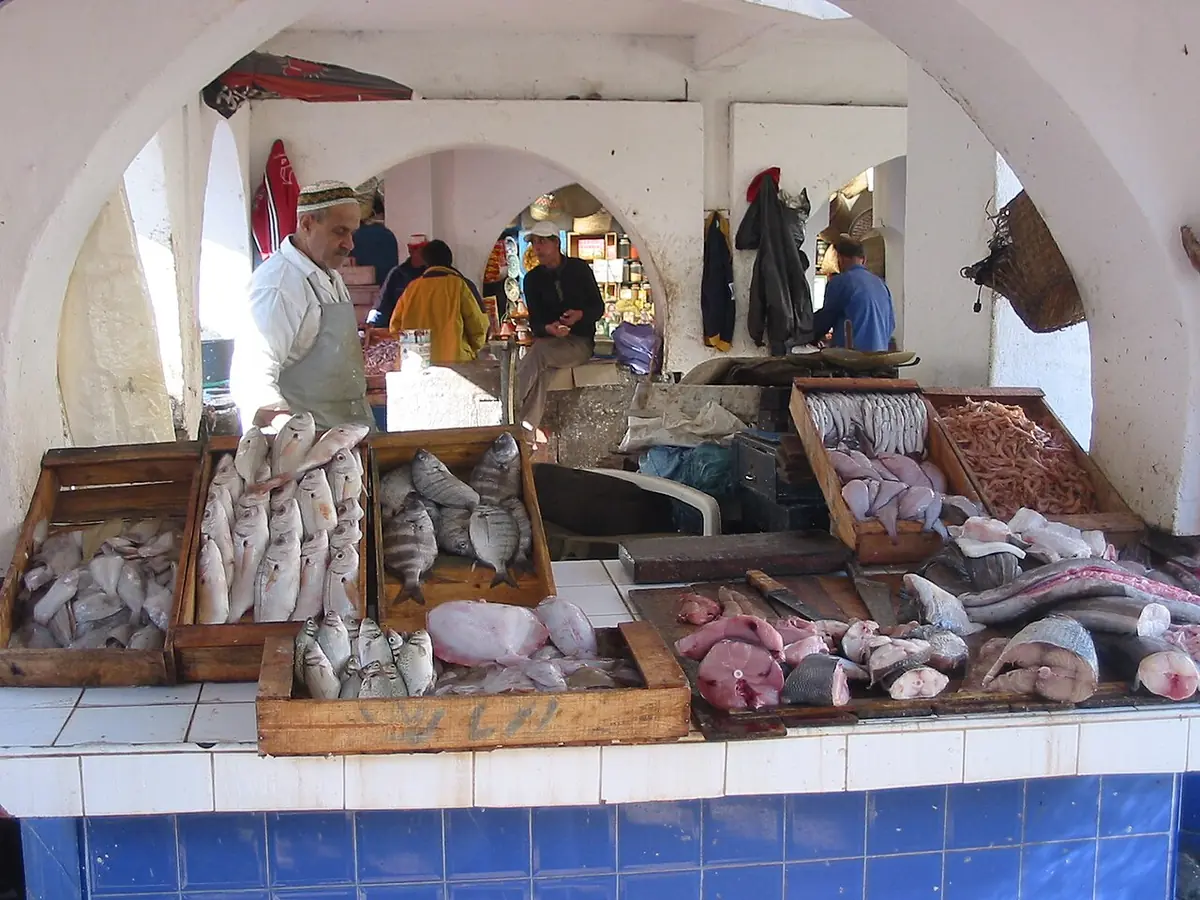
The port lies at the edge of the medina, below the Skala of the port, a monument you enter with a ticket. Foreign adults pay MAD 60 and foreign children aged 7 to 13 pay MAD 30. Moroccans and residents pay MAD 30 for adults and MAD 10 for children, and Moroccans enter free on Fridays and on the first days of national and religious holidays. Come in the morning, when the fishing boats return with the night's catch and the harbour is full of blue-painted wooden boats, nets and gulls. At the fish market you can taste fish and seafood caught during the night. Grilled sardines, sea bream and red mullet are the port's meal, often cooked by the fishermen themselves.
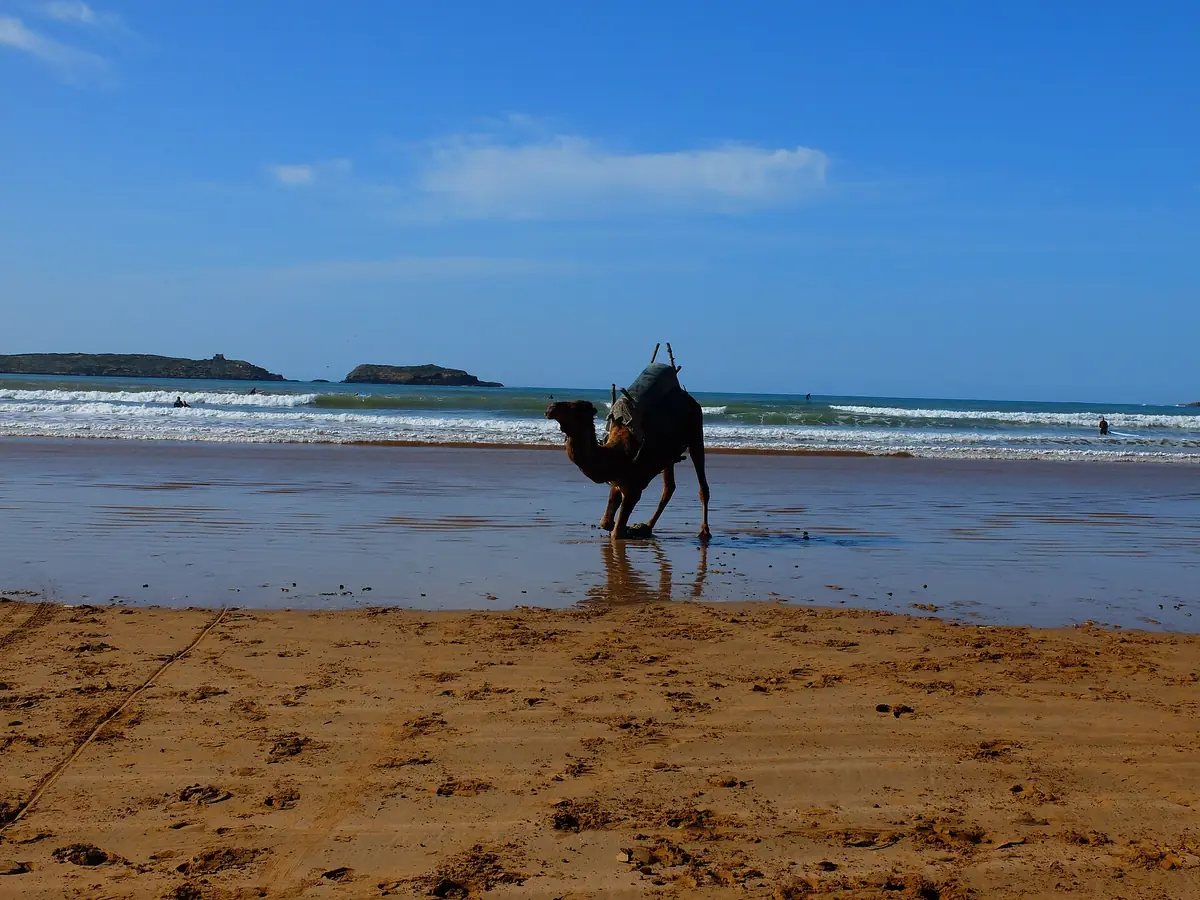
South of the port, Essaouira beach curves around the bay. The Atlantic wind and waves make it one of Morocco's best-known spots for surfing, kitesurfing and windsurfing, and you can also hire a sand yacht and ride the wind along the sand. Bring a layer even on a sunny day, because the wind keeps the beach cool.
With a third night, the coast south of the town is worth a day. Sidi Kaouki, about 30 minutes away, has a long beach and strong waves for surfers, and walks on horseback or by camel across the sand; Cap Sim, closer to Essaouira, is a quieter beach cut off from the rest of the region by a strip of dunes.
Prices and times checked 28 November 2026
What to eat and where to look
Grilled sardines and fish at the port
The town's own meal: sardines, sea bream or red mullet landed that night, often grilled by the fishermen themselves a few metres from the boats.
- Where to look
- The fish market and the grills at the fishing port.
- Fit it into your day
- Lunch on the second day, after the morning at the port.
Fish tagine with chermoula
A tagine of fish such as sea bream, marinated in chermoula, a paste of parsley, coriander, garlic, paprika, cumin and lemon, and cooked on carrots, potatoes, tomatoes and courgettes with preserved lemon and olives.
- Where to look
- The small restaurants in the lanes of the medina near the main square.
- Fit it into your day
- Dinner on the first evening, after sunset on the Skala.
Most dishes at the port and in the medina are fish or seafood; say so early if you are allergic to shellfish.
Fish pastilla
Layers of thin pastry around a fish filling, the coastal version of Morocco's pastilla, which is also made with chicken, pigeon or almonds.
- Where to look
- The small restaurants in the lanes of the medina.
- Fit it into your day
- Dinner on the second evening, after a day on the beach.
Amlou
A thick spread of argan oil, honey and almonds, the most common recipe of the south. Argan oil is a speciality of the Essaouira region.
- Where to look
- Riad breakfasts and the grocers in the medina, which sell it by the jar.
- Fit it into your day
- Breakfast on any morning.
Getting there from Marrakech, and why a day trip is short
Essaouira has no railway. CTM runs about five coaches a day from Marrakech over the 191 km to the coast, with one-way fares from MAD 205. Buy tickets on ctm.ma or at a CTM station; they can be changed up to 12 hours before departure but are not refunded. By car the road takes about two and a half hours, and CTM's search on ctm.ma shows each coach's arrival time. Supratours also runs coaches: search its timetable on supratours.ma/recherche-horaires for departures and fares. Our transport guide covers the coaches, grands taxis and drivers across the country.
A day trip therefore means about five hours on the road for a few hours in town. You arrive after the morning catch at the port and leave before sunset on the ramparts. Many tours from Marrakech offer Essaouira as a long day out; book one if you have only a day, but two nights let you see the town at its best. If you are driving the coast, Safi is about 2 hours 5 minutes north by road and Agadir about two and a half hours south.
Inside the walls you walk everywhere; the port and the beach are a few minutes on foot from any medina riad.
Prices and times checked 28 November 2026
The Gnaoua festival and the seasons
Every summer the Gnaoua and World Music Festival fills the town with Gnawa musicians and their Afro-Maghrebi rhythms, alongside world-music guests. The 28th edition runs from 24 to 26 June 2027. If your dates fall on the festival, book your riad early.
You can visit all year: the climate is mild and sunny. Spring and autumn are the best months; summer is the busiest and liveliest on the coast. For the months across the country, see our best-time guide.
What the coach and the sights cost
The CTM coach from Marrakech is from MAD 205 one way. In town you walk. The Skala of the port charges foreign adults MAD 60 and foreign children aged 7 to 13 MAD 30.
For rooms, use the booking box above and our where-to-stay guide; for a budget of the whole trip, see our Morocco trip-cost guide.
Prices and times checked 28 November 2026
Practical questions
Is Essaouira worth a day trip from Marrakech?
Yes, but the day is short: about five hours on the road for a few hours in town. Two nights let you see the port in the morning and the ramparts at sunset.
How do I get from Marrakech to Essaouira?
By CTM coach over the 191 km road, with one-way fares from MAD 205, or with a tour or a private driver; by car the road takes about two and a half hours. There is no train.
Where should I stay in Essaouira?
In a riad inside the medina walls, near the Skala de la Ville or the port, so the ramparts, the port and the beach are all on foot.
When is the Gnaoua festival in 2027?
From 24 to 26 June 2027, the festival's 28th edition. Book a medina room early for those dates.
Can I swim in Essaouira?
The bay has a long sandy beach. The strong Atlantic wind makes the bay better known for surfing, kitesurfing and windsurfing than for sunbathing.
What should I eat in Essaouira?
Fish grilled at the port, often by the fishermen themselves, and a fish tagine with chermoula in the medina. Amlou, the argan, honey and almond spread, is the most common recipe of the south.
Keep planning your trip
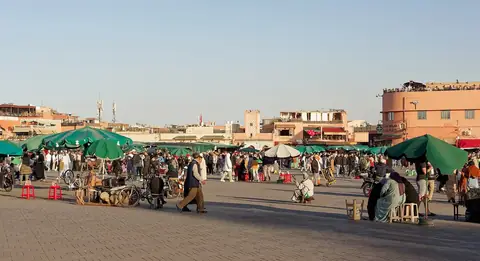
Marrakech
How many nights Marrakech needs, where to sleep in the medina, Jemaa el-Fnaa, the palaces and Majorelle, ticket prices and hours, and the day trips.
Read the guide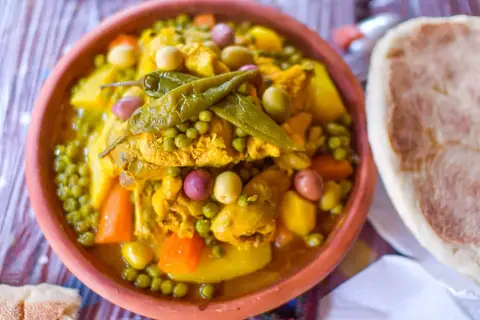
Morocco food
What to eat in Morocco and where: tagine, Friday couscous, Fes pastilla, Marrakech tanjia, Essaouira's grilled fish, harira and mint tea, with menu prices.
Read the guide
Transport in Morocco
How to get around Morocco: Al Boraq and ONCF trains, CTM coaches to Chefchaouen and the south, grands taxis, drivers, car hire, flights and city trams.
Read the guide
Where to stay in Morocco
Riad or hotel, which quarter of Marrakech, Fes and Chefchaouen to sleep in, nights per base, and three hotels per base from budget to upper.
Read the guide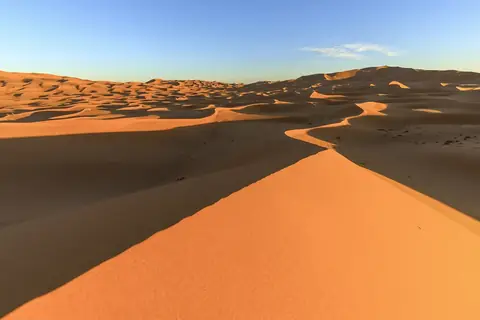
Best time to visit Morocco
When to go to Morocco: spring and autumn for Marrakech and Fes, the desert season at Merzouga, summer heat inland, cool coast, winter nights, Ramadan and holidays.
Read the guide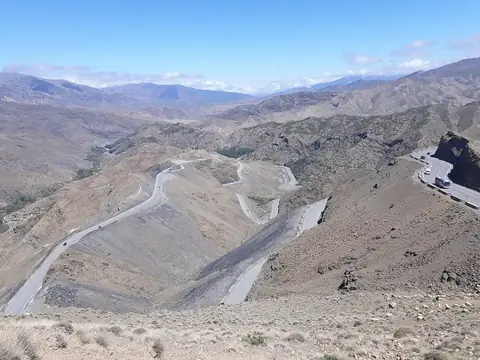
Morocco in 7 days
Seven days and six nights from Marrakech over the High Atlas to a desert camp at Merzouga and on to Fes: the nights, the desert tour and the riads.
Read the guideSources and checks before you travel
(14)
- Visit Morocco (Moroccan National Tourism Office): Essaouira-Mogador ↗ — opens in a new tab
- Visit Morocco: medina of Essaouira-Mogador ↗ — opens in a new tab
- Visit Morocco: beaches of Essaouira-Mogador ↗ — opens in a new tab
- Visit Morocco: sport in Essaouira-Mogador ↗ — opens in a new tab
- Visit Morocco: Morocco through gastronomy (brochure) ↗ — opens in a new tab
- Visit Morocco: Moroccan gastronomy ↗ — opens in a new tab
- CTM: Marrakech–Essaouira by coach ↗ — opens in a new tab
- CTM: help and FAQ ↗ — opens in a new tab
- Festival Gnaoua et Musiques du Monde d'Essaouira ↗ — opens in a new tab
- Ministry of Youth, Culture and Sports e-services: La Sqala du Port, Essaouira ↗ — opens in a new tab
- Visit Morocco: shopping in Essaouira-Mogador ↗ — opens in a new tab
- Visit Morocco: UNESCO World Heritage in Morocco ↗ — opens in a new tab
- Visit Morocco (Moroccan National Tourism Office): Marrakech ↗ — opens in a new tab
- Visit Morocco (Moroccan National Tourism Office): food and drinks ↗ — opens in a new tab
Reference sources for the version dated 29 November 2026. Confirm opening times, access, transport and conditions for your travel dates.
Photo credits
(5)
Blue fishing boats in Essaouira's port, where the night's catch is landed each morning
Photograph: DimiTalen — opens in a new tab · CC0 — opens in a new tab
Changes: Resized and converted to WebP; displayed with responsive crops. · Original photograph and licence details ↗ — opens in a new tab
The cannons of the Skala de la Ville, the sea bastion on the medina's ramparts
Photograph: Asina Aurea — opens in a new tab · CC BY-SA 4.0 — opens in a new tab
Changes: Resized and converted to WebP; displayed with responsive crops. · Original photograph and licence details ↗ — opens in a new tab
A lane in Essaouira's medina: white walls, blue shutters and stone arches
Photograph: Mounir Neddi — opens in a new tab · CC0 — opens in a new tab
Changes: Resized and converted to WebP; displayed with responsive crops. · Original photograph and licence details ↗ — opens in a new tab
Fish on the counter at Essaouira's fish market
Photograph: Donar Reiskoffer — opens in a new tab · CC BY 3.0 — opens in a new tab
Changes: Resized and converted to WebP; displayed with responsive crops. · Original photograph and licence details ↗ — opens in a new tab
A camel on Essaouira beach, with the islands offshore
Photograph: Goldfinchshuffle — opens in a new tab · CC BY-SA 4.0 — opens in a new tab
Changes: Resized and converted to WebP; displayed with responsive crops. · Original photograph and licence details ↗ — opens in a new tab