Itineraries
Morocco in 14 days: imperial cities, the Sahara and Essaouira
Two weeks is enough to cross Morocco once without rushing its best parts. This route keeps the line of our ten-day trip, from the Atlantic capital through the blue town of Chefchaouen and Fes to the Sahara and Marrakech, and spends the four extra days where they change the trip most: a third night in Fes for the Roman city of Volubilis and imperial Meknes, two nights on the Atlantic in Essaouira, and a last night in Marrakech before the flight. Fly in to Casablanca and out of Marrakech. Days 7 to 9 are the long drive across the Atlas, by desert tour from Fes, with a driver or in a hire car.
In this guide
Find the location ↗ — opens in a new tabThe short answer
Book thirteen nights: Rabat one, Chefchaouen two, Fes three, two on a three-day desert tour from Fes to Marrakech, Marrakech two, Essaouira two and Marrakech one more before the flight. The tour covers nights 7 and 8: a camp in the Erg Chebbi dunes at Merzouga, then a night on the road west at the stop the operator sets. Merzouga and its desert camps lie inside the 20 km band along the Algerian border where Canada advises against all travel; other governments differ, so check your own government's advice, your travel insurance and the camp's exact location before you book. Fly in to Casablanca (CMN) and home from Marrakech (RAK) on day 14. Book the tour first; a shared one is listed from about USD 274 per person on TourRadar. The CTM coach from Marrakech to Essaouira starts at MAD 205 one way. For two people sharing, the trip costs about MAD 30,000 before flights, about MAD 15,000 per person, with mid-range rooms, the shared tour, the coaches, tickets, meals, a SIM card each and a 10% buffer. The car or tour for the Volubilis day, the meals in Essaouira, the airport train to Rabat and the Chefchaouen–Fes leg are extra.
- Suggested time
- 14 days / 13 nights: Rabat 1, Chefchaouen 2, Fes 3, desert tour 2 (Merzouga camp, then a night on the road), Marrakech 2, Essaouira 2, Marrakech 1
- Where to stay
- Rabat night 1; Chefchaouen nights 2–3; Fes nights 4–6; desert tour nights 7–8 (a camp at Merzouga, then a night on the road at the stop the operator sets); Marrakech nights 9–10; Essaouira nights 11–12; Marrakech night 13.
- Season and timing
- Spring and autumn suit the whole route: Visit Morocco, the national tourist office, gives April to June and September to October for Rabat and Chefchaouen, and March to May and September to November for Marrakech. Summers in Marrakech and the desert are very hot, and winter can be rainy in the north. Essaouira can be visited all year, with a mild, sunny climate.
- Day by day
- The fourteen days at a glance ↓
The fourteen days at a glance
One line per day, with where you sleep each night. Times and bookings are in the day sections above.
- Day 1
Arrive at Casablanca, on to Rabat
the Kasbah of the Udayas. Night: Rabat.
- Day 2
Rabat, then north
Hassan Tower, then the road to the Rif. Night: Chefchaouen.
- Day 3
Chefchaouen
the blue medina, the Kasbah, and Akchour or the hillside mosque at sunset. Night: Chefchaouen.
- Day 4
South to Fes
Bab Boujloud at dusk. Night: Fes.
- Day 5
Fes el-Bali
the al-Qarawiyyin, the madrasas and the tanneries with a licensed guide. Night: Fes.
- Day 6
Volubilis and Meknes
Roman mosaics, Bab Mansour and Dar Jamai. Night: Fes.
- Day 7
To the Sahara
the Middle Atlas, then a camel ride into Erg Chebbi. Night: the tour's desert camp at Merzouga.
- Day 8
Todra Gorge
the gorge and the road of the kasbahs. Night: on the road, at the stop the operator sets.
- Day 9
Over the High Atlas
Ait Ben Haddou, then the Tizi n'Tichka. Night: Marrakech.
- Day 10
Marrakech
Majorelle, the palaces and Jemaa el-Fnaa. Night: Marrakech.
- Day 11
To the coast
the coach to Essaouira and the ramparts at sunset. Night: Essaouira.
- Day 12
Essaouira
the port, the medina and the beach. Night: Essaouira.
- Day 13
Back to Marrakech
the coach, then a last evening in the medina. Night: Marrakech.
- Day 14
Fly home
from Marrakech Menara.
Book the thirteen nights in order
The route runs one way: from the Atlantic to the Rif, inland to Fes, across the Middle Atlas to the Sahara, back over the High Atlas to Marrakech, and out to the ocean again at Essaouira. That makes six hotel bookings and one tour for thirteen nights: Rabat for one night (day 1), Chefchaouen for two (days 2–3), Fes for three (days 4–6), the desert tour for two (days 7–8), Marrakech for two (days 9–10), Essaouira for two (days 11–12) and Marrakech again for the last night (day 13). Fly in to Casablanca and home from Marrakech, so the only road you travel twice is the one to the coast.
Book the desert first. Days 7 to 9 are the hardest to arrange alone: the drive south to Merzouga, a camel ride and a night in a camp among the dunes, the Todra Gorge and the road over the High Atlas. A three-day tour from Fes to Marrakech covers them. Its operator sets both night stops, the sights on the way and what the price includes, so read them before you book. A car with a driver is the private alternative.
Compared with our ten-day route, the extra days go to three things. Fes gets a third night, for a day among the Roman mosaics of Volubilis and the gates of Meknes. Essaouira gets two nights, enough for the port in the morning and the ramparts at sunset. And the trip ends with a night in Marrakech, so the flight home does not depend on a morning coach from the coast.
The example rooms are Riad Dar Soufa in the Rabat medina, Dar Chefchaouen in Chefchaouen, Algilà Fes Medina Charme Hotel on the edge of the Fes medina, Riad of The Light in Marrakech and Riad Baladin in the Essaouira medina. On booking sites the lowest rates of the first four run from about USD 57 to 100 a night for two, and Riad Baladin lists double rooms from EUR 78 a night on its own site; each base below gives its own figure. Ask Riad of The Light to hold your large bags while you are in Essaouira, and book the same riad for night 13. Our where-to-stay guide compares riads and hotels in each town.
Prices and times checked 28 November 2026
Days 1–2: Casablanca airport and a night in Rabat
Day 1 — arrive and go straight to Rabat: Land at Casablanca Mohammed V (CMN) and go north to the capital rather than into Casablanca itself. Take ONCF's shuttle train from the airport's own station to Casablanca and change there for Rabat, or a pre-booked car: Rabat is 86.9 km and about an hour by road from Casablanca. Look up the train times and fares for your date on oncf-voyages.ma. Check in to the riad, then walk to the Kasbah of the Udayas while the light is long. Andalusians expelled from Spain by Philip III settled this quarter. Its bluish lanes recall Chefchaouen, and gardens surround its walls. Sleep in Rabat.
Day 2 — Hassan Tower and the Chellah, then north to the Rif: Start early at the Hassan Tower, the 44-metre minaret of what the Almohad sultan Yacoub al-Mansour meant to be the largest mosque in the Muslim world; the work stopped when he died in 1199. On its esplanade stands the Mausoleum of Mohammed V, the royal tomb of white marble under a green-tiled roof. If time allows, add the Chellah, the necropolis the Marinids built in the 14th century over the ruins of the Roman town of Sala Colonia, where gardens and storks share the site; carry dirhams for its entrance ticket. Leave Rabat by late morning for the Rif. CTM coaches cover the 254 km to Chefchaouen in about 6 hours, with 11 departures a day and tickets from MAD 135. Apart from a car, the coach is the only way there without a change. Sleep in Chefchaouen.
Prices and times checked 28 November 2026
Days 3–6: the blue town, then Fes, Volubilis and Meknes
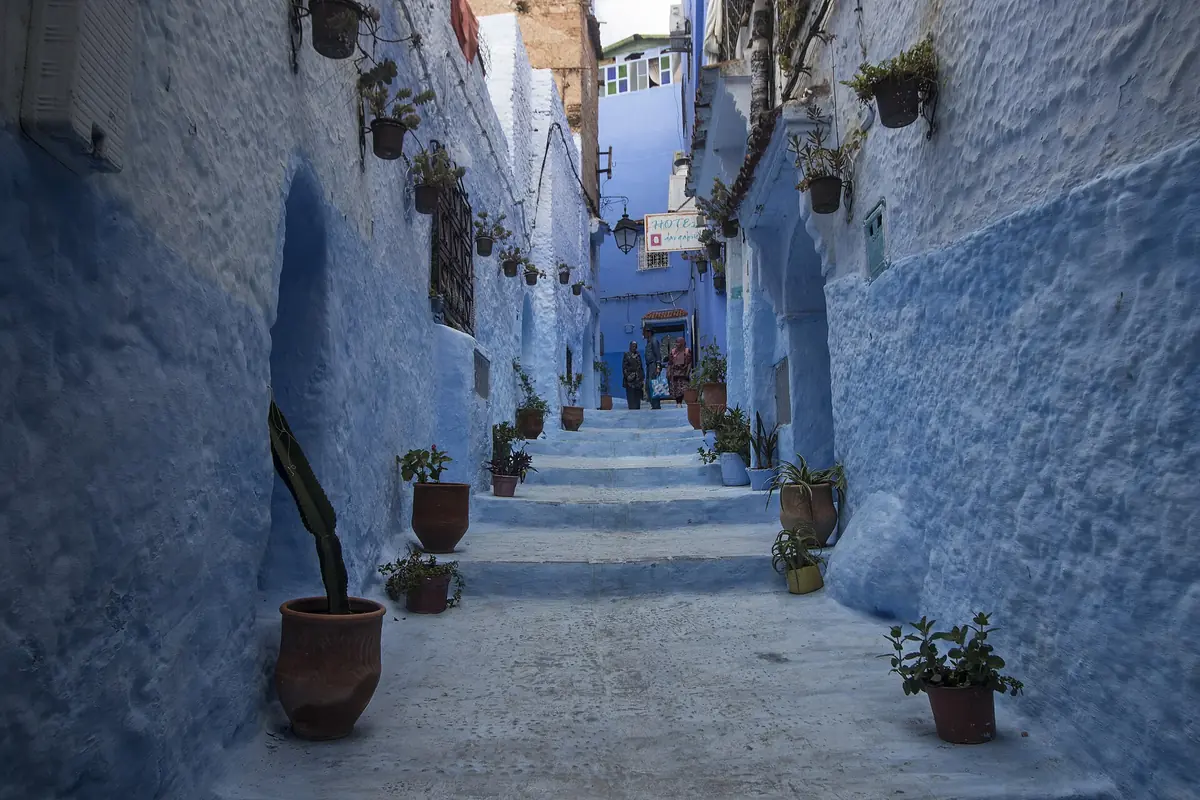
Day 3 — Chefchaouen: The medina climbs a mountainside in shades of blue. Walk it early, before the day visitors arrive. Begin at the Kasbah in the middle of the old quarter, set among lush gardens; its museum keeps old weapons, photographs of the town and textiles. The Grand Mosque stands close by. In the afternoon, take a taxi to the Akchour waterfalls, about 45 minutes away, or stay in town and climb at sunset from the spring of Ras el Ma to the small white mosque on the hillside opposite, for the view back over the roofs. Sleep in Chefchaouen.
Day 4 — south to Fes: Take a morning coach or a private car south through the Rif foothills: 194 km and about 3 h 24 by road. Arrive in time to drop your bags and enter the medina by Bab Boujloud, the easiest gate into Fes el-Bali. Sleep in Fes.
Day 5 — Fes el-Bali with a guide: Fes el-Bali is the car-free medina founded by the Idrissids. Its lanes are easy to get lost in, so a first day goes better with a licensed guide. Use only a guide who carries an official badge: people posing as official guides are common. A walk usually takes in the al-Qarawiyyin, which Visit Morocco, the national tourist office, calls the oldest university in the world, the Bou Inania and Attarine madrasas, which sell their tickets at the door, the Nejjarine Museum and the leather tanneries. Near Bab Boujloud, the Batha museum of Islamic arts charges foreign visitors MAD 60 and closes on Tuesdays. Sleep in Fes.
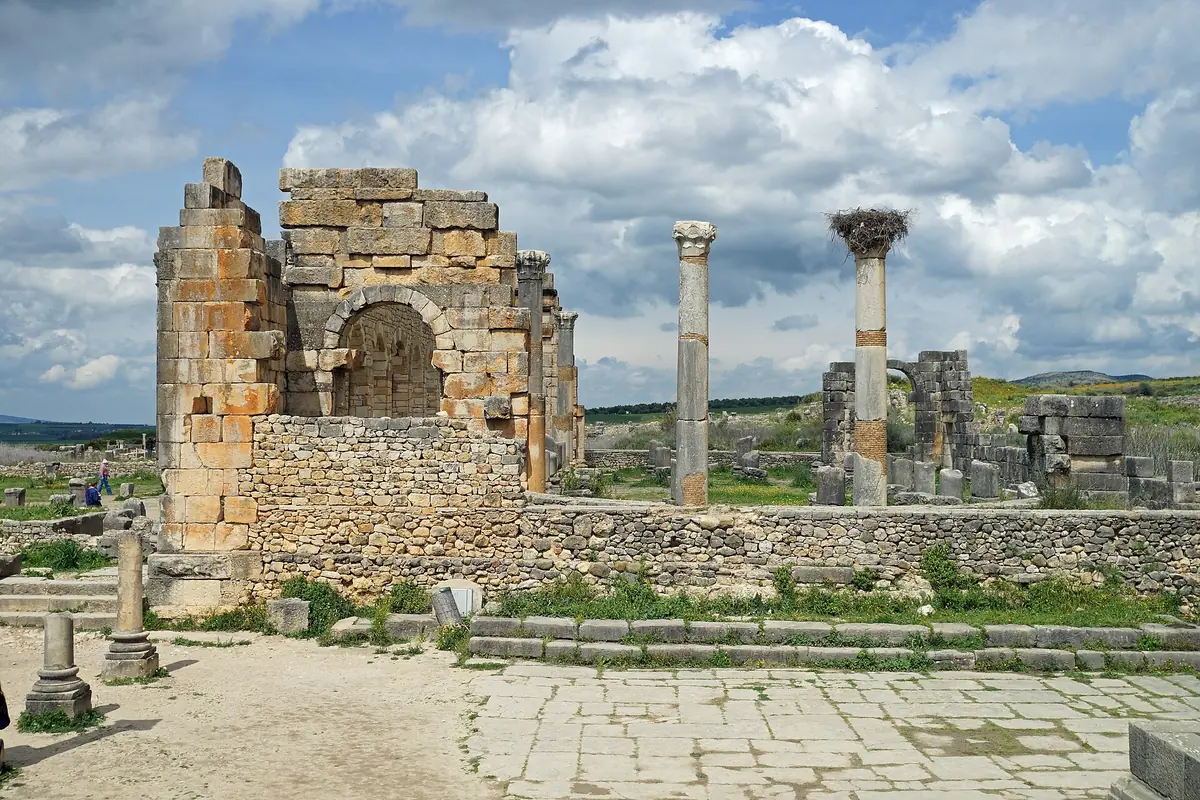
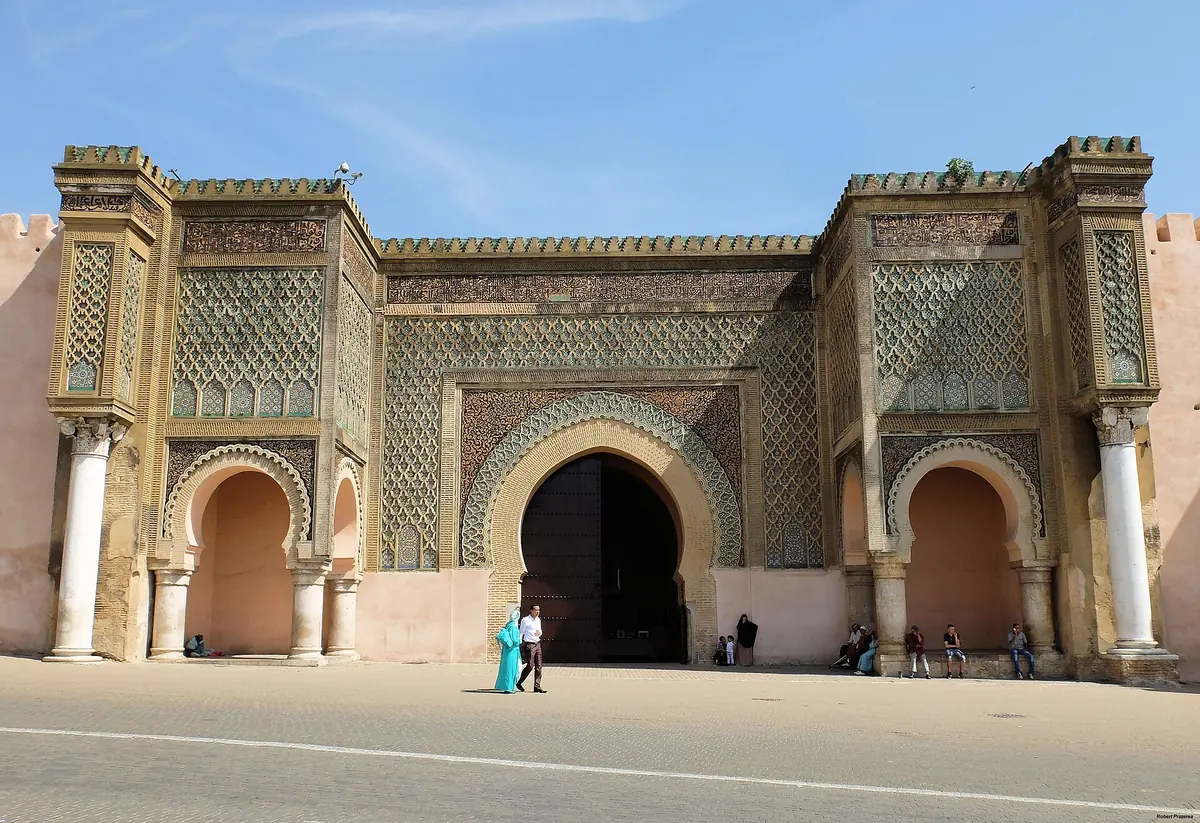
Day 6 — Volubilis and Meknes: Spend the extra day outside the walls. Volubilis, about an hour and a half from Fes, is the largest Roman site in Morocco and a UNESCO World Heritage site: on a plateau below the Zerhoun hills you walk past the triumphal arch, the capitol and the basilica, olive presses and houses such as the House of Bacchus with their floor mosaics still in place. Foreign adults pay MAD 100. Meknes, about 30 minutes further, was the capital of Sultan Moulay Ismail, who built an imperial city of high walls, enormous stables and granaries beside the old town. Bab Mansour, on El Hedim square, is the gate everyone photographs, and across the square Dar Jamai, the national museum of music, opens daily except Tuesday from 10:00 to 18:00 for MAD 30. A day tour from Fes collects you from your riad and covers Volubilis, the hill town of Moulay Idriss and Meknes; the offer below fits this day. On your own, take a train or a grand taxi from Fes to Meknes and a grand taxi from there to Volubilis, and agree the price with the waiting time before you leave. Bring water and a hat: the ruins have little shade. Sleep in Fes. Our Fes guide covers the medina and this day in more depth.
Prices and times checked 28 November 2026
Days 7–9: across the Middle Atlas to the Sahara and back over the High Atlas
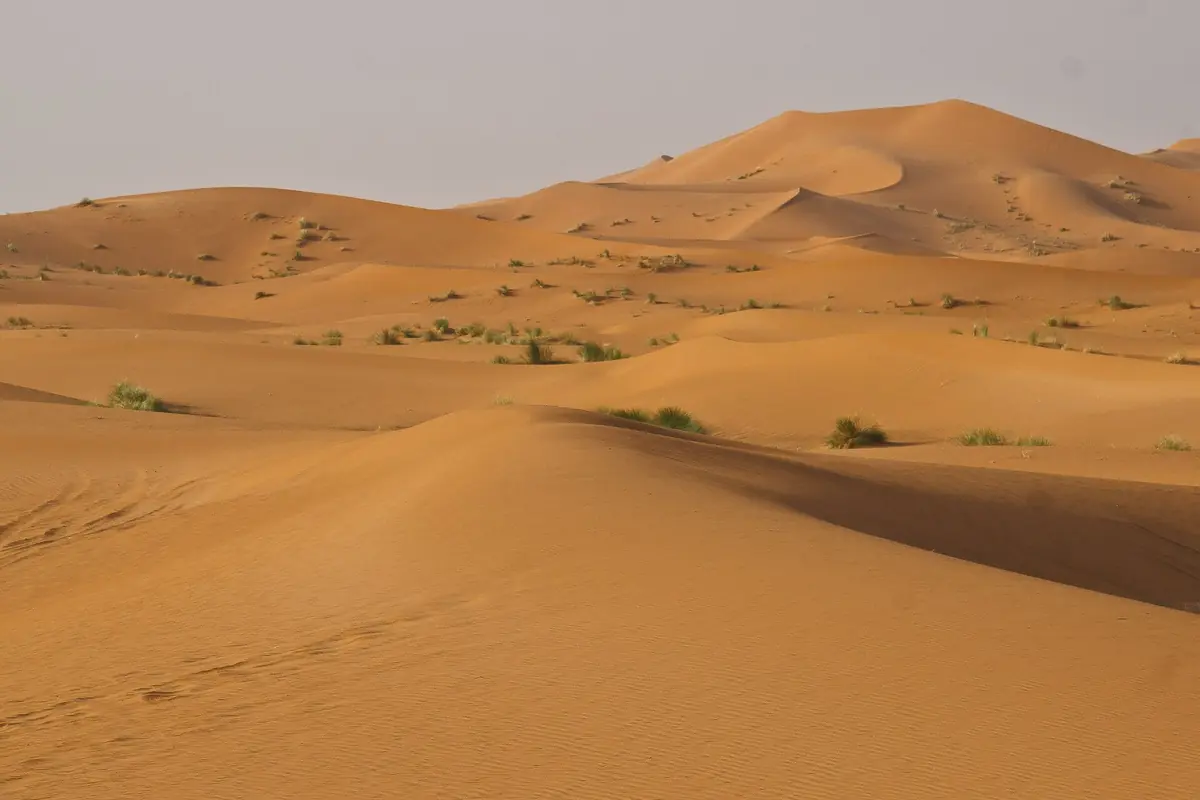
Day 7 — Fes to the dunes: The tour leaves Fes in the morning and drives south over the Middle Atlas, past Ifrane and its cedar forest. The road crosses the Talghemt pass and comes down through the oases of the Tafilalet to Merzouga. Visit Morocco gives 341.8 km and about 5 h 21 by road between Fes and its Errachidia-Midelt-Merzouga region, so this is the longest day of the trip. At the edge of Erg Chebbi you swap the vehicle for a camel and ride into the dunes for sunset. Night 7 is in the tour's desert camp.
Day 8 — the Todra Gorge and the road of the kasbahs: Climb a dune for sunrise, ride back, and drive west. The Todra Gorge cuts into the High Atlas above the palm grove of Tinghir, and a short walk into it is the morning's stop. The road then follows the Kasbah Road west, past palm groves, rose gardens and fortified villages. Visit Morocco lists the Todra as a day trip of about 2 hours from Errachidia-Merzouga, so with the drive on west this is a full day on the road; ask the operator for the day's stops and driving time when you book. Night 8 is the tour's second night, on the road at the stop the operator sets.
Day 9 — Ait Ben Haddou and over the High Atlas: The last day runs west past Ouarzazate and over the Tizi n'Tichka pass to Marrakech, which is 194 km and about 3 h 45 by road from Ouarzazate. Ait Ben Haddou, about 30 minutes from Ouarzazate, is a ksar: a fortified village of adobe houses and granaries inside a defensive wall, and an outstanding example of the traditional architecture of southern Morocco on UNESCO's World Heritage List. If your tour stops there, walk up through its lanes to the terrace at the top for the view. Drive this mountain road in daylight. The UK FCDO warns that poor lighting makes night driving dangerous and that mountain roads are especially hazardous in bad weather. Sleep in Marrakech.
Without a tour: hire a car in Fes and drive the same route, or take a driver, and book your own rooms for nights 7 and 8. Our Merzouga and Sahara guide covers camps, camel rides and the buses that reach Merzouga, and our Ouarzazate and Ait Ben Haddou guide covers a night by the ksar.
Prices and times checked 28 November 2026
Days 10–11: Marrakech, then the road to the ocean
Day 10 — gardens, palaces and the square: Be at the Jardin Majorelle when it opens at 08:00, before the queue. The French painter Jacques Majorelle began planting this walled garden of 9,000 m² in 1922, and its boldly coloured buildings in Majorelle blue stand among bamboos, palms and cacti. The garden is open daily until 17:30, with last entry at 17:00. Tickets are sold only online, on the garden's own ticket site: standard admission is MAD 170, MAD 75 for Moroccan citizens and residents, and free for children under 10 with an adult. The Musée Yves Saint Laurent, on the same ticket site, closes on Wednesdays, and its permanent gallery is shut from 29 November to 18 December 2026. Then walk to the Koutoubia, the mosque built under the Almohads near Jemaa el-Fnaa, and on to the Bahia Palace and the El Badi Palace of the Saadians, each MAD 100 for a foreign adult. End at Jemaa el-Fnaa, the main square. As night falls it turns into an open-air theatre of musicians, charmers and street food. Sleep in Marrakech. Our Marrakech guide has the medina, the gardens and day trips into the Atlas.
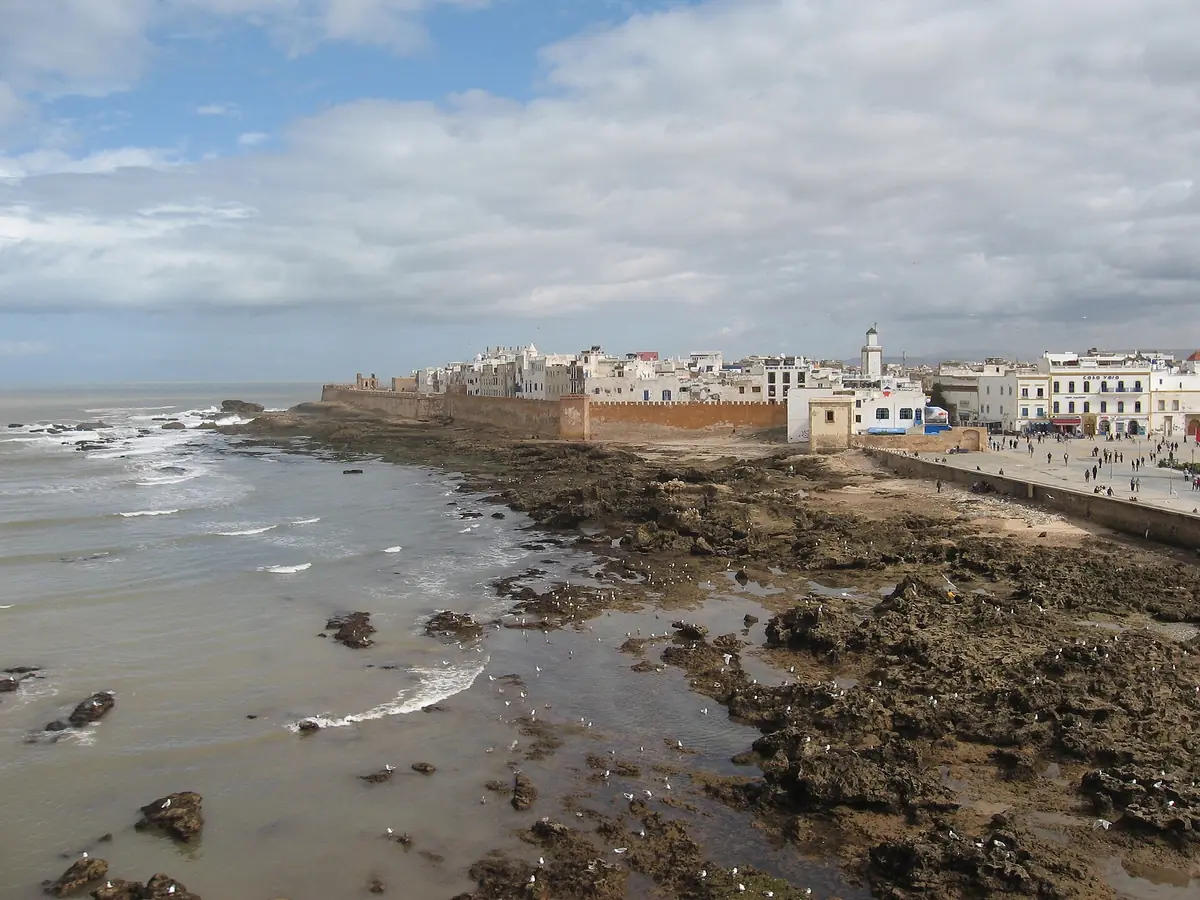
Day 11 — to Essaouira: Have a last morning in the souks north of Jemaa el-Fnaa, then cross the plain to the Atlantic. Essaouira has no railway. CTM runs about five coaches a day over the 191 km, with one-way fares from MAD 205; buy tickets on ctm.ma or at a CTM station. By car the road takes about two and a half hours. CTM's search on ctm.ma shows each departure's arrival time; choose a morning or midday coach so that you arrive in daylight. Supratours also runs coaches: search its timetable on supratours.ma/recherche-horaires. Cars stop at the medina gates, so ask your riad which gate is closest and to meet you there. Walk the ramparts of the Skala de la Ville before dinner, when the sun sets over the Purpuraires islands. Sleep in Essaouira.
Prices and times checked 28 November 2026
Days 12–14: Essaouira, a last night in Marrakech and the flight home
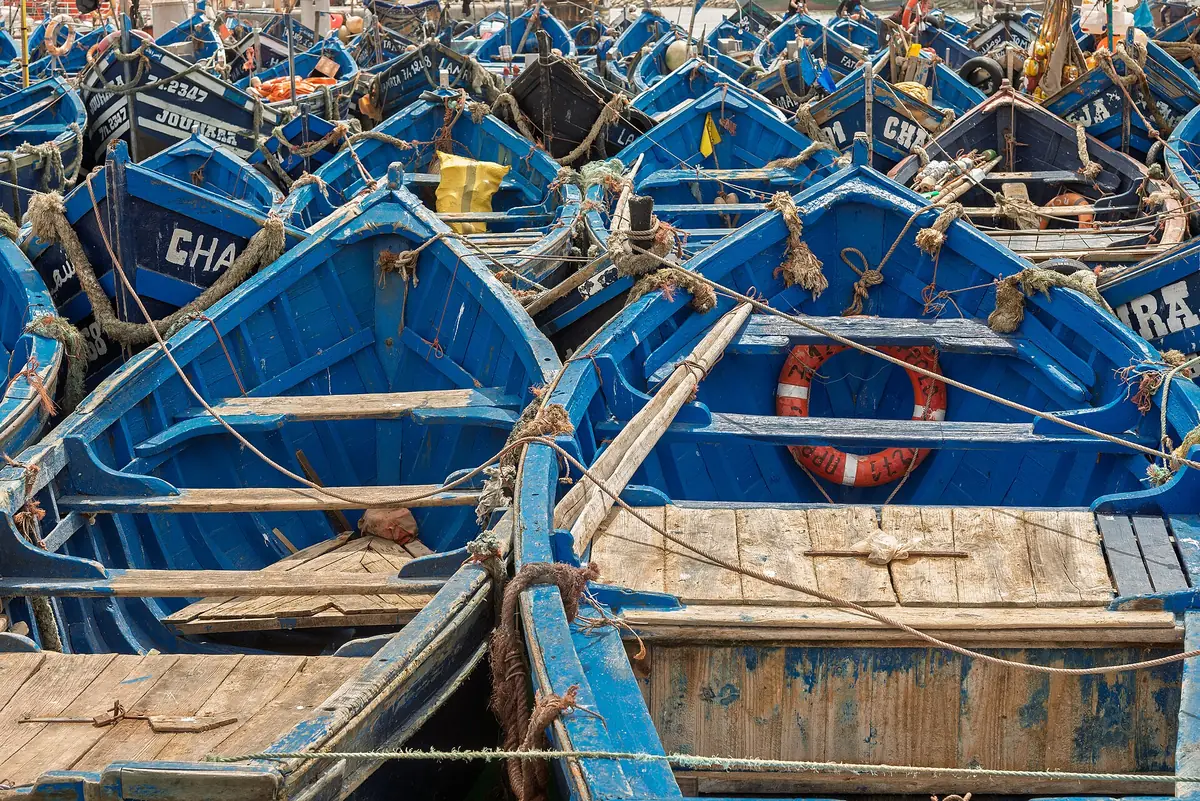
Day 12 — the port, the medina and the beach: Go to the port in the morning, when the fishing boats return with the night's catch and the harbour fills with blue-painted wooden boats, nets and gulls. The Skala of the port, the bastion over the harbour, costs MAD 60 for foreign adults. Grilled sardines, sea bream and red mullet from the fish market are the port's meal. Spend the afternoon in the medina, where cabinetmakers under the sea wall inlay thuja wood with mother-of-pearl, or on the long beach south of the port, where the Atlantic wind draws kitesurfers and windsurfers. Bring a layer even on a sunny day. Sleep in Essaouira. Our Essaouira guide has the town in more depth.
Day 13 — back to Marrakech: Take a late-morning coach or a car back to Marrakech, check in to the riad again and keep the evening for whatever you missed on day 10: the Saadian Tombs, Le Jardin Secret or one more dusk on Jemaa el-Fnaa. Sleep in Marrakech.
Day 14 — fly home from Marrakech: Take a taxi to Marrakech Menara (RAK): the regulated fare between the city centre and the airport is MAD 70 by day and MAD 100 at night. With an afternoon flight, the morning is free for the souks around Jemaa el-Fnaa.
Prices and times checked 28 November 2026
What to eat and where to look
Chicken pastilla
A pie of thin pastry around spiced chicken, sweet and savoury at once; Visit Morocco, the national tourist office, calls it Fes's most popular dish.
- Where to look
- Restaurants in Fes el-Bali.
- Fit it into your day
- Dinner on day 4 or 5 in Fes.
Tagine
Meat, chicken, fish or vegetables slow-steamed with spices, and sometimes plums or apricots, in the conical clay dish that gives it its name.
- Where to look
- Cafés around Outa el-Hammam, Chefchaouen.
- Fit it into your day
- Lunch on day 3 in Chefchaouen.
Couscous
Steamed semolina with meat or vegetables and a broth, traditionally the Friday lunch.
- Where to look
- Family-run restaurants in the Rabat or Fes medina.
- Fit it into your day
- Any Friday lunch on the route.
Grilled sardines
Sardines, sea bream and red mullet straight from the boats, grilled at the port, often by the fishermen themselves.
- Where to look
- The fish market at the port of Essaouira.
- Fit it into your day
- Lunch on day 12 in Essaouira.
Tanjia
Marrakech's own dish: meat marinated in spices and slow-cooked for hours in an urn-shaped terracotta pot of the same name.
- Where to look
- The food stalls and small restaurants around Jemaa el-Fnaa, Marrakech.
- Fit it into your day
- Dinner on day 9, 10 or 13 in Marrakech.
Other ways to spend the extra days
The fourteen days above favour history and the sea. Two swaps change the balance without changing the flights.
More mountains: give up one Essaouira night, or the Volubilis day, for the High Atlas. Imlil, the village below Jbel Toubkal, is 65 km south of Marrakech, and a day there is a walk through orchards and walnut groves between the valley's villages, with the peaks overhead. Kasbah du Toubkal's published rate for a private car from Marrakech is EUR 90 per car one way. Our Imlil and High Atlas guide covers the walks and a night in the mountains.
More desert: a single camp night gives you the sunset, the stars and the sunrise. For a second night at Merzouga, in a kasbah hotel at the edge of the dunes, take a private tour or a driver for the crossing and move the Volubilis day to the desert. That adds a day at the dunes with the villages of Khamlia and Rissani.
The route keeps to the imperial cities, the Rif town of Chefchaouen, the main roads to Merzouga and the Atlantic coast. It does not go to Western Sahara, where the UK, Canada and Germany advise against travel to all or part of the territory. At Merzouga it does come close to the Algerian border: the village and its desert camps lie inside the 20 km band where Canada advises against all travel, and Germany, which strongly advises against the immediate border region, says desert tours to Erg Chebbi south of Merzouga can be done with a local tour operator, preferably in a group. France asks for extra vigilance in both areas. Other governments differ, so check your own government's advice and your travel insurance before you book. Our health and safety guide gives each government's wording.
Prices and times checked 28 November 2026
What the fourteen days cost
For two people sharing, the fourteen days cost about MAD 30,000 before flights, or about MAD 15,000 per person. Rooms come to about MAD 8,900 for the eleven nights you book. Nine of them are priced at KAYAK's lowest rates with fees: Riad Dar Soufa USD 91 for one night, Dar Chefchaouen USD 57, Algilà Fes USD 100 and Riad of The Light USD 70 a night for two. The two nights in Essaouira are priced at Riad Baladin's own rate for a double room, from EUR 78 a night. The shared desert tour comes to about MAD 5,500 for two (listed from about USD 274 per person on TourRadar). Getting around comes to about MAD 1,200: the CTM coach to Chefchaouen (from MAD 135 each), the coach to Essaouira and back (from MAD 205 each way), the daytime taxi to Marrakech airport (MAD 70) and an Orange SIM card each (MAD 20). Tickets come to about MAD 1,400 (MAD 700 each for the Kasbah in Chefchaouen, the Batha museum, Volubilis, Dar Jamai, the Bahia and El Badi palaces, the Jardin Majorelle and the Skala of the port).
Food comes to about MAD 10,300 for two: a light dinner in Rabat (MAD 250 each), about MAD 550 each for a day of sit-down meals on eight days in Chefchaouen, Fes and Marrakech, priced from Le Jardin's menu in the Marrakech medina, and a lunch of about MAD 170 each on the three tour days. A 10% buffer for snacks, tips, petits taxis and mobile data adds about MAD 2,700. Two costs are not in the total. The first is the car or tour for the Volubilis and Meknes day: tours set their own prices, and a grand taxi fare is agreed on the day. The second is the meals on the two Essaouira days, where grilled fish at the port is the usual lunch. Dollar and euro prices are converted at Bank Al-Maghrib's average transfer rates of 27 November 2026 (USD 1 = MAD 10.03, EUR 1 = MAD 10.99).
Return economy flights from London to Casablanca on Royal Air Maroc start at about GBP 155 to 375, about MAD 2,000 to 4,900 each. Add two more fares for your date: the train from Casablanca airport to Rabat, from oncf-voyages.ma, and the Chefchaouen–Fes coach or car. Our Morocco trip-cost guide prices the ten-day route at three levels.
Prices and times checked 28 November 2026
Practical questions
How many nights does each place get?
Rabat one, Chefchaouen two, Fes three, two on the desert tour (a camp at Merzouga, then a night on the road at the stop the operator sets), Marrakech two, Essaouira two and Marrakech one more: thirteen nights in all, with the flight home on day 14.
What do fourteen days add to the ten-day route?
A third night in Fes for a day at Volubilis and Meknes, two nights in Essaouira on the Atlantic, and a last night in Marrakech before the flight. The first five days and the desert crossing are the same.
Should I take a tour for the desert?
For days 7 to 9, yes, unless you want to drive. A three-day tour from Fes to Marrakech takes care of the driving, the camel ride and the camp, and its operator sets both nights, so you book no rooms for nights 7 and 8.
Why go back to Marrakech for the last night?
So that the flight home does not depend on a coach from the coast on the same morning. Essaouira is 191 km from Marrakech, about two and a half hours by car.
What do I book first?
The desert tour for days 7 to 9 first, or a car with a driver. Then book the rooms in Fes and Marrakech, then Essaouira, Chefchaouen and Rabat, and the Essaouira coaches on ctm.ma. Buy the Jardin Majorelle ticket online once your Marrakech day is fixed.
Can I add the High Atlas?
Yes, by swapping one Essaouira night or the Volubilis day for a day or a night at Imlil, 65 km south of Marrakech.
Can I do it in the other direction?
Yes: fly in to Marrakech, go to Essaouira first, take a desert tour from Marrakech that ends in Fes, and finish in Rabat for a flight from Casablanca. The nights stay the same.
Keep planning your trip
Morocco in ten days
Ten days and nine nights from Rabat through Chefchaouen and Fes to the Merzouga dunes, Ait Ben Haddou and Marrakech, with named rooms and the desert days.
Read the guide
Morocco trip cost
Ten days from Rabat through Chefchaouen and Fes to the Sahara and Marrakech: about MAD 9,600 per person on a budget, 11,200 mid-range or 18,400 in comfort.
Read the guide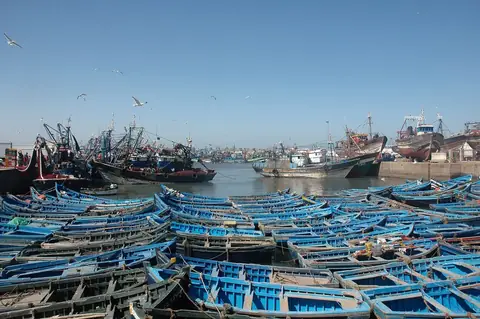
Essaouira
Day trip or two nights in Essaouira: the Skala ramparts, the port and its fish grills, the beach, the CTM coach from Marrakech, riads and costs.
Read the guide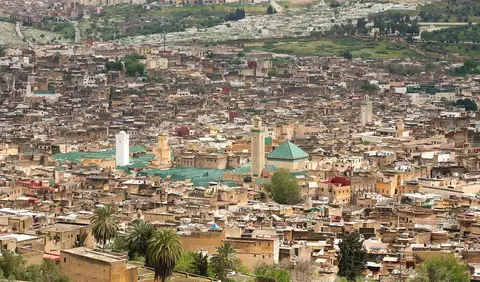
Fes
How many nights Fes needs: Fes el-Bali on foot, the madrasas and tanneries, the Batha museum, and a day trip to Meknes and Volubilis, with tickets and riads.
Read the guide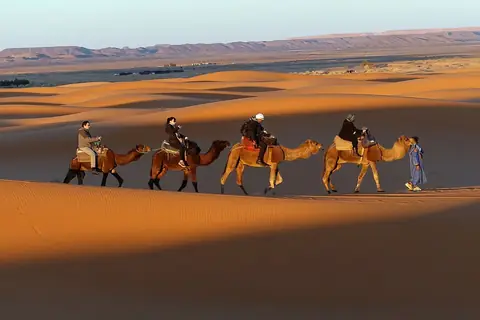
Merzouga and the Sahara
How to plan a night in the dunes of Erg Chebbi: tours from Marrakech or Fes, desert camps, the camel ride, Khamlia, Rissani and the best months for the Sahara.
Read the guide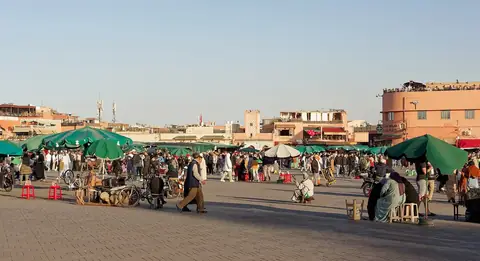
Marrakech
How many nights Marrakech needs, where to sleep in the medina, Jemaa el-Fnaa, the palaces and Majorelle, ticket prices and hours, and the day trips.
Read the guideSources and checks before you travel
(58)
- Visit Morocco (ONMT): Rabat ↗ — opens in a new tab
- Visit Morocco (ONMT): Chefchaouen ↗ — opens in a new tab
- Visit Morocco (ONMT): Marrakech ↗ — opens in a new tab
- Jardin Majorelle: official site ↗ — opens in a new tab
- Jardin Majorelle: official ticket office ↗ — opens in a new tab
- UK FCDO: Morocco safety and security ↗ — opens in a new tab
- UK FCDO: Morocco entry requirements ↗ — opens in a new tab
- Bank Al-Maghrib: transfer exchange rate ↗ — opens in a new tab
- KAYAK: Riad Dar Soufa, Rabat ↗ — opens in a new tab
- KAYAK: Dar Chefchaouen ↗ — opens in a new tab
- KAYAK: Algilà Fes Riad Medina Charme Hotel ↗ — opens in a new tab
- KAYAK: Riad of The Light, Marrakech ↗ — opens in a new tab
- Visit Morocco (ONMT): Light on a kingdom of delights (gastronomy brochure) ↗ — opens in a new tab
- CTM: Rabat to Chefchaouen by coach ↗ — opens in a new tab
- Visit Morocco (ONMT): Fez ↗ — opens in a new tab
- Visit Morocco (ONMT): Medinas in Morocco ↗ — opens in a new tab
- Visit Morocco (ONMT): Historic sites ↗ — opens in a new tab
- Visit Morocco (ONMT): Ouarzazate, Zagora, Tinghir ↗ — opens in a new tab
- Visit Morocco (ONMT): Ifrane ↗ — opens in a new tab
- Visit Morocco (ONMT): Desert break ↗ — opens in a new tab
- Visit Morocco (ONMT): The Kasbah Road ↗ — opens in a new tab
- Visit Morocco (ONMT): Moroccan gardens ↗ — opens in a new tab
- Visit Morocco (ONMT): UNESCO heritage ↗ — opens in a new tab
- Visit Morocco (ONMT): Dynastic history ↗ — opens in a new tab
- Jardin Majorelle: the garden ↗ — opens in a new tab
- Visit Rabat & Region: Riad Dar Soufa ↗ — opens in a new tab
- Algilà Fès Medina Charme Hotel: home page ↗ — opens in a new tab
- TourRadar: 3 Days from Fes to Marrakech through the Erg Chebbi Dunes ↗ — opens in a new tab
- Visit Morocco (ONMT): Errachidia, Midelt and Merzouga (road times) ↗ — opens in a new tab
- Visit Morocco (ONMT): Casablanca (road times) ↗ — opens in a new tab
- Visit Rabat & Region: Hassan Tower ↗ — opens in a new tab
- Visit Rabat & Region: the Chellah ↗ — opens in a new tab
- Fondation Nationale des Musées: Al Batha Museum of Islamic Arts ↗ — opens in a new tab
- Ministry of Culture e-services: Bahia Palace tickets ↗ — opens in a new tab
- Ministry of Culture e-services: El Badi Palace tickets ↗ — opens in a new tab
- CTM: tourism in Ouarzazate ↗ — opens in a new tab
- Le Matin (21 June 2026): ONCF summer 2026 plan ↗ — opens in a new tab
- Visit Marrakech (Marrakech-Safi Regional Tourism Council): transport ↗ — opens in a new tab
- Royal Air Maroc: flights to Casablanca (UK) ↗ — opens in a new tab
- Orange Maroc: prepaid SIM card ↗ — opens in a new tab
- Le Jardin Marrakech: menu ↗ — opens in a new tab
- ONCF: Al Atlas passenger guide ↗ — opens in a new tab
- Visit Morocco (ONMT): Essaouira-Mogador ↗ — opens in a new tab
- Visit Morocco (ONMT): shopping in Essaouira-Mogador ↗ — opens in a new tab
- CTM: Marrakech–Essaouira by coach ↗ — opens in a new tab
- Ministry of Youth, Culture and Sports e-services: La Sqala du Port, Essaouira ↗ — opens in a new tab
- Ministry of Youth, Culture and Communication e-services: Volubilis archaeological site tickets ↗ — opens in a new tab
- Ministry of Culture e-services: The Qasba of Chefchaouen ↗ — opens in a new tab
- Visit Morocco (ONMT): Meknes ↗ — opens in a new tab
- Visit Morocco (ONMT): archaeological treasures ↗ — opens in a new tab
- Fondation Nationale des Musées: Dar Jamaï, national museum of music ↗ — opens in a new tab
- ICOMOS evaluation for the World Heritage nomination of the historic city of Meknes (1996) ↗ — opens in a new tab
- Kasbah du Toubkal: prices ↗ — opens in a new tab
- Government of Canada (travel.gc.ca): Morocco travel advice ↗ — opens in a new tab
- Riad Baladin, Essaouira: home page ↗ — opens in a new tab
- Riad Baladin: rooms and suites ↗ — opens in a new tab
- Museum With No Frontiers (Discover Islamic Art): Kutubiya Mosque ↗ — opens in a new tab
- German Federal Foreign Office: Marokko, Reise- und Sicherheitshinweise ↗ — opens in a new tab
Reference sources for the version dated 29 November 2026. Confirm opening times, access, transport and conditions for your travel dates.
Photo credits
(6)
The dunes of Erg Chebbi near Merzouga, where the desert tour spends its camp night.
Photograph: Mike Prince from Bangalore, India — opens in a new tab · CC BY 2.0 — opens in a new tab
Changes: Resized and converted to WebP; displayed with responsive crops. · Original photograph and licence details ↗ — opens in a new tab
The Roman basilica at Volubilis, on the day trip from Fes.
Photograph: Mhobl — opens in a new tab · CC BY-SA 4.0 — opens in a new tab
Changes: Resized and converted to WebP; displayed with responsive crops. · Original photograph and licence details ↗ — opens in a new tab
Bab Mansour in Meknes, the second stop of the Volubilis day.
Photograph: Robert Prazeres — opens in a new tab · CC BY-SA 4.0 — opens in a new tab
Changes: Resized and converted to WebP; displayed with responsive crops. · Original photograph and licence details ↗ — opens in a new tab
Blue fishing boats in the port of Essaouira.
Photograph: Mustang Joe — opens in a new tab · CC0 — opens in a new tab
Changes: Resized and converted to WebP; displayed with responsive crops. · Original photograph and licence details ↗ — opens in a new tab
A street in the medina of Chefchaouen.
Photograph: Buiobuione — opens in a new tab · CC BY-SA 4.0 — opens in a new tab
Changes: Resized and converted to WebP; displayed with responsive crops. · Original photograph and licence details ↗ — opens in a new tab
Essaouira and its sea ramparts at low tide.
Photograph: Kayaky — opens in a new tab · CC BY 3.0 — opens in a new tab
Changes: Resized and converted to WebP; displayed with responsive crops. · Original photograph and licence details ↗ — opens in a new tab