Fès-Meknès
Fes: the medina, Bou Inania, the tanneries and a Meknes day trip
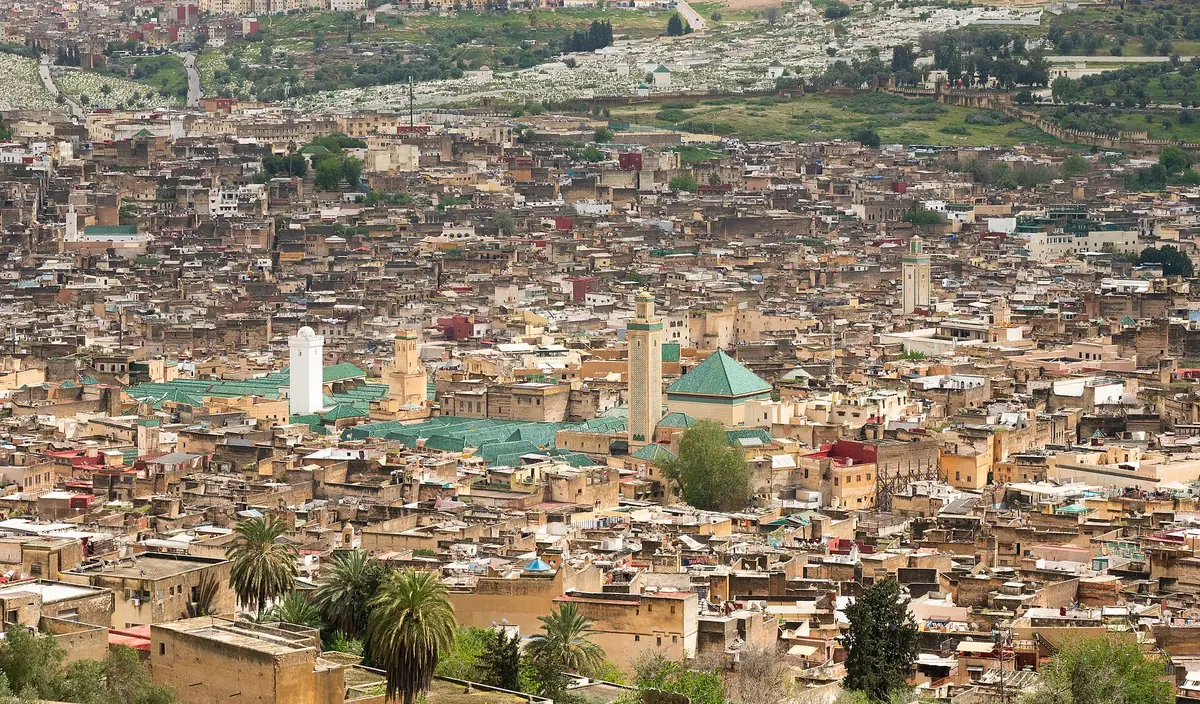
Fes el-Bali is a medina to get lost in, and it rewards a slow pace more than a checklist. Its lanes run downhill from the blue-tiled Bab Boujloud gate towards the al-Qarawiyyin mosque and the river quarter, past madrasas carved in cedar and stucco, workshops of coppersmiths and weavers, and the dye pits of the tanneries. Three nights give you two full days in the medina and a third for Meknes, Moulay Ismail's imperial city, and the Roman ruins of Volubilis.
In this guide
Find the location ↗ — opens in a new tabThe short answer
Book three nights in a riad inside Fes el-Bali, near Bab Boujloud, Batha or the Seffarine square, and ask it to meet you at the airport; then book the Meknes and Volubilis day tour for day three. Spend the first day on the upper medina (Bab Boujloud, the Bou Inania madrasa, the Batha museum), the second on the al-Qarawiyyin quarter, the Attarine madrasa and the Chouara tannery, and the third on Meknes and Volubilis, as a tour or by train and taxi. The Batha museum charges foreign visitors MAD 60, and Volubilis, a Ministry of Culture site, charges foreign adults MAD 100.
- Suggested time
- 3 nights in Fes, one day for Meknes and Volubilis
- Where to stay
- A riad inside Fes el-Bali, near Bab Boujloud, Batha or Seffarine
- Season and timing
- March to May and September to November are the best months; summer is very hot, and winter days are mild with cool evenings.
Three nights in a riad inside the medina
Fes has two very different halves. Fes el-Bali, the walled medina, keeps the plan of the capital that Idriss II founded in 808: an Andalusian quarter on the right bank of the river and the quarter of settlers from Kairouan on the left, each grouped around its great mosque. Fes el-Jdid, the royal town the Marinid sultan Abu Yusuf founded just to the west in 1276, holds the palace walls and the Mellah, the Jewish quarter added in the 14th century. The modern Ville Nouvelle, with the railway station, lies further out.
Sleep inside Fes el-Bali. Cars stop at the gates, so a riad near a gate saves a long walk with luggage: Bab Boujloud and Batha at the top of the medina, or the Seffarine square lower down, close to the al-Qarawiyyin and the tanneries. Most riads are old courtyard houses with a handful of rooms around a fountain and a roof terrace, and they arrange airport pickups and guides. Our where-to-stay guide for Morocco names riads in Fes el-Bali in each price band.
Prices and times checked 28 November 2026
Day one: Bab Boujloud, Bou Inania and the Batha museum
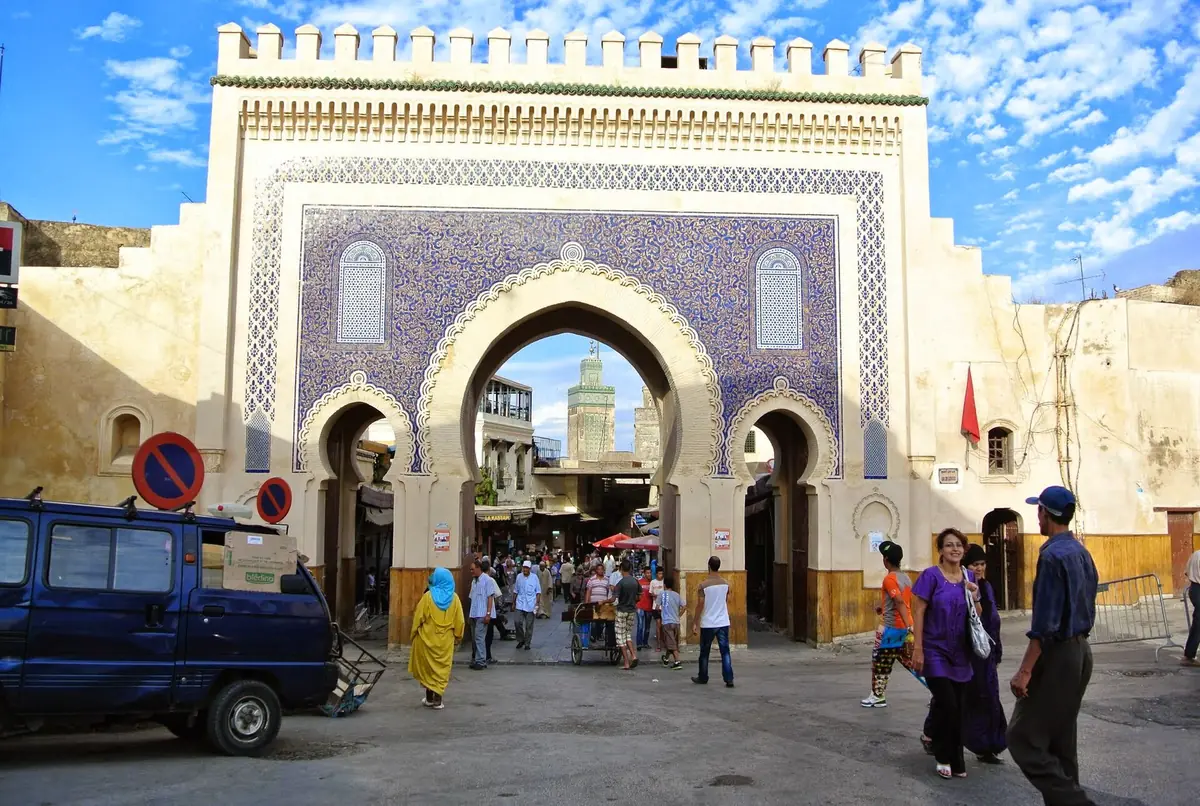
Enter by Bab Boujloud, the gate faced in blue and green zellige tilework that is the easiest way into the medina. Through its arches you already see the minarets of the old town. Two lanes run downhill from here towards the al-Qarawiyyin: Talaa Kebira and Talaa Sghira. Follow one down and the other back, and you have the spine of the medina.
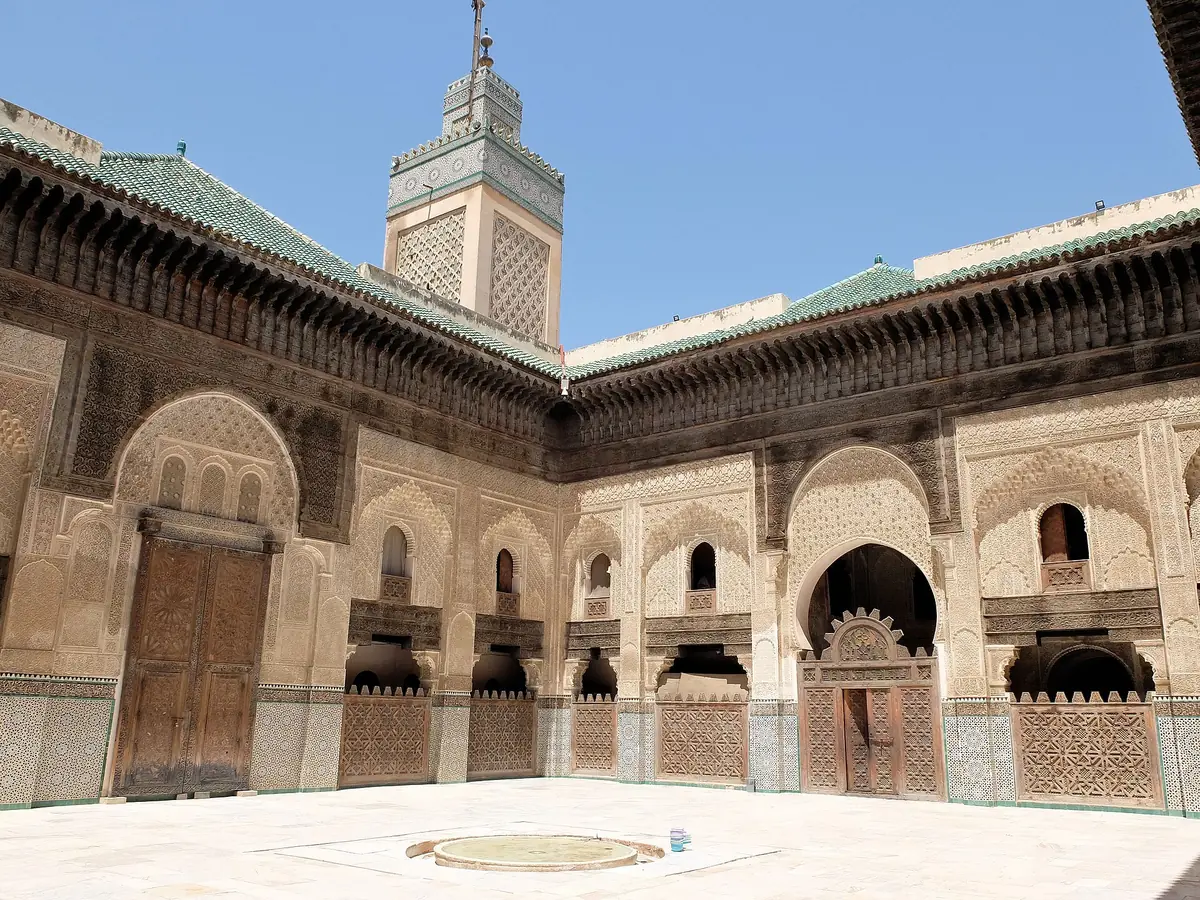
The Bou Inania madrasa stands a few steps down Talaa Kebira. It is a 14th-century Marinid college built around a marble courtyard, its walls rising from tile to carved stucco to cedar, with a minaret over the prayer hall.
The Batha museum fills a palace near Bab Boujloud. After restoration it reopened in February 2025 as the Al Batha Museum of Islamic Arts, showing Quran manuscripts, carpets and textiles, ceramics and engraved metalwork. Its Andalusian garden takes up more than half the site and is shaded by a great holm oak. It opens daily from 10:00 to 18:00 except Tuesday; foreign visitors pay MAD 60, Moroccans MAD 30 and children MAD 15. From Batha, Fes el-Jdid lies directly to the west: the royal town the Marinids founded in 1276, with the gates of the royal palace and the Mellah, the Jewish quarter added in the 14th century. Walk its main street in the afternoon.
End the day on a roof terrace. From the riads around Batha and Bab Boujloud the medina spreads downhill as a sea of flat roofs, and at dusk the calls to prayer pass from minaret to minaret across the valley. The ruined Marinid tombs on the hill to the north give the classic view over the whole of Fes el-Bali; go by taxi and come back before dark.
Prices and times checked 28 November 2026
Day two: the al-Qarawiyyin quarter, Attarine and the tanneries
Walk down to the heart of the medina, where the minaret of the al-Qarawiyyin rises over the rooftops. The mosque is a monument of the Idrissids, the dynasty that founded Fes, and home to one of the oldest universities in the world. It stands at the centre of the quarter that settlers from Kairouan built on the left bank of the river. It is a working mosque, so visitors see it from the lane: its great doors open onto the street, and through them you can look into the courtyard.
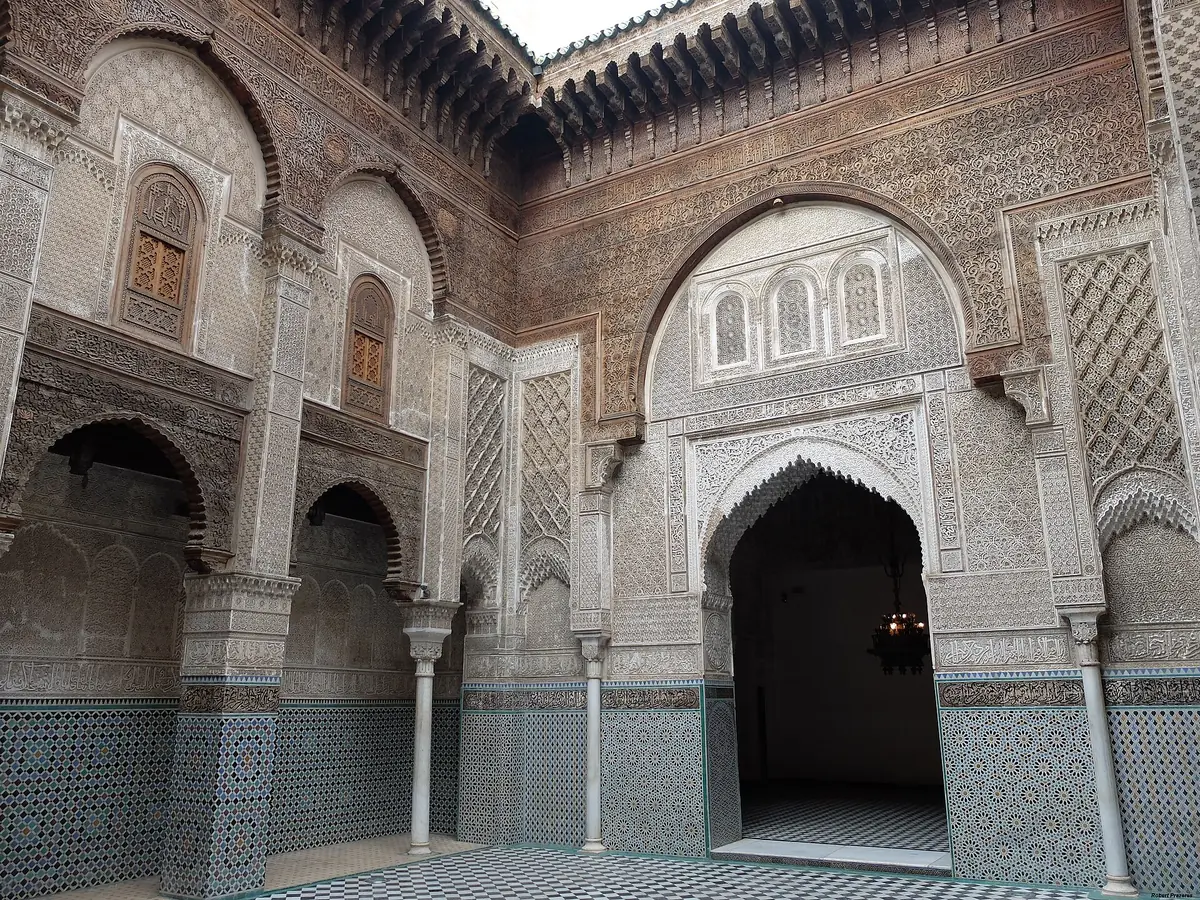
Next to it is the Attarine madrasa, a smaller Marinid college on the spice market, with a courtyard of zellige, carved plaster and cedar that many prefer to Bou Inania for its finish. The Nejjarine square nearby has a tiled fountain and the Nejjarine museum of woodwork in a former caravanserai.
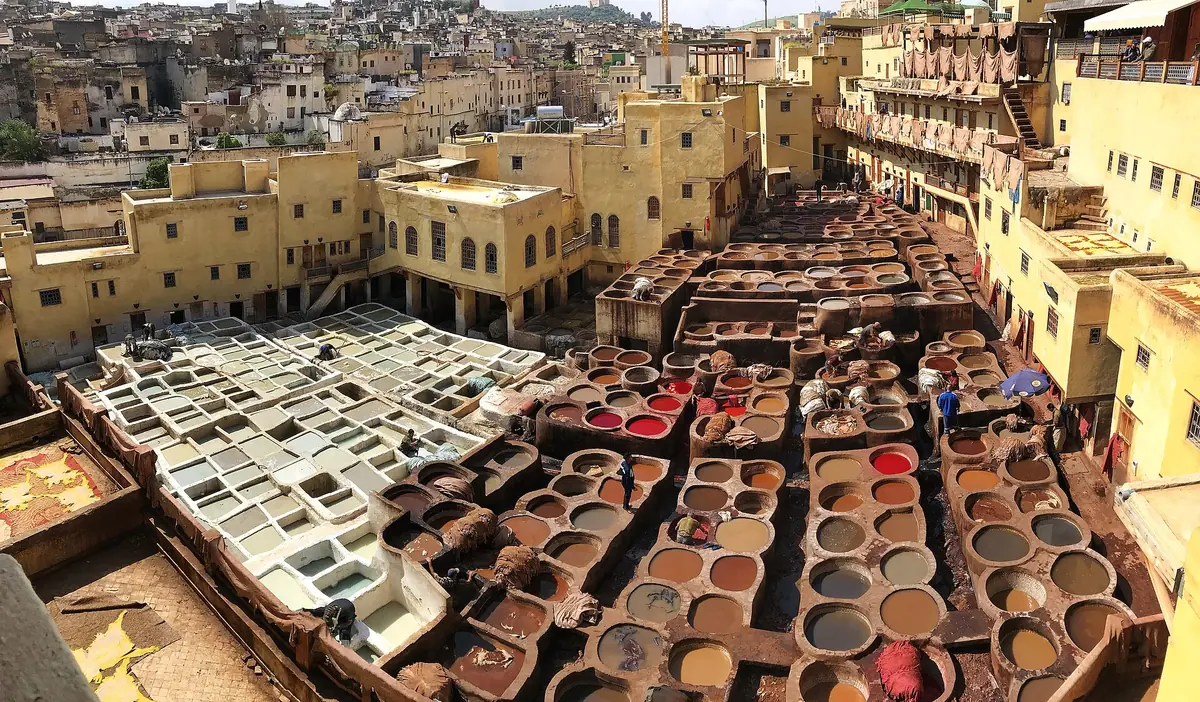
The Seffarine square rings with the hammers of the coppersmiths, and from there a short walk brings you to the Chouara tannery, where hides soak in round stone vats of lime and dye. You see it from the terraces of the leather shops around it; staff hand out a sprig of mint for the smell and expect you to look at the bags and jackets on the way out. Go in the morning, when the vats are full of colour and the workers are busiest.
The lanes are steep, unsigned in places and crowded with handcarts and donkeys. People posing as official guides harass visitors in the medina. The UK Foreign Office advises that a medina guide should carry an official badge and permission from the local authority. Book a guide through your riad or the walking tour below; on a first morning, a guide saves a lot of wrong turns.
Day three: Meknes and Volubilis
Meknes is about an hour from Fes. Sultan Moulay Ismail (1672–1727) made it his capital and built a new imperial city beside the old town: high walls with monumental gates, a palace with enormous stables, vast granaries and water cisterns. Bab Mansour, on El Hedim square, is the gate everyone photographs, a masterpiece of Hispano-Moorish tile and carving. Across the square, Dar Jamai is now the national museum of music, with more than a hundred instruments in a 19th-century palace and its garden. The museum opens daily from 10:00 to 18:00 except Tuesday, and adults over 18 pay MAD 30. The royal stables and granaries and the mausoleum of Moulay Ismail lie inside the imperial walls.
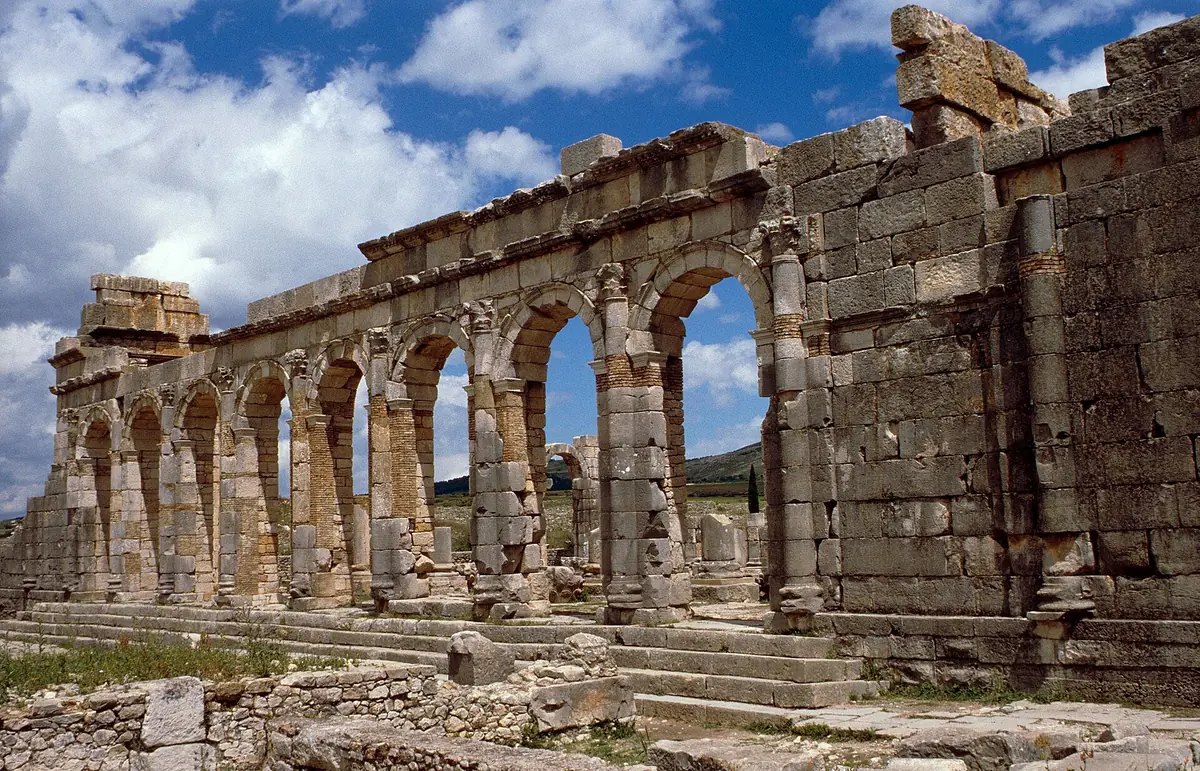
Volubilis, about 30 minutes north of Meknes and about an hour and a half from Fes, is the largest Roman site in Morocco and a UNESCO World Heritage site. On a plateau below the Zerhoun hills you walk past the triumphal arch, the capitol and the basilica, olive presses, carved columns and houses such as the House of Bacchus with their floor mosaics still in place. The hill town of Moulay Idriss Zerhoun, a pilgrimage town of white houses, stands across the valley.
The easiest way to see both in a day is a tour from Fes, which collects you from your riad and covers Volubilis, Moulay Idriss and Meknes; the offer below fits this day. Independently, take a train or a grand taxi from Fes to Meknes, and look up the train times and fares for your date on oncf-voyages.ma. In Meknes, hire a grand taxi for the round trip to Volubilis, about 30 minutes each way, and agree the price, waiting time at the site included, before you leave. Bring water and a hat: the ruins have little shade.
Volubilis is a Ministry of Culture site. Foreign adults pay MAD 100 and foreign children aged 7 to 13 MAD 50, at the gate or online on the ministry's e-services platform.
Prices and times checked 28 November 2026
What to eat and where to look
Harira
A soup of tomatoes, lentils, chickpeas and fine noodles, thickened and scented with herbs. It is eaten all year and is the dish that breaks the fast at sunset during Ramadan, often with dates and honeyed pastries.
- Where to look
- Small eateries and stalls around Bab Boujloud and along Talaa Kebira.
- Fit it into your day
- A cheap lunch between the madrasas on day one.
Pastilla
A round pie of very thin warqa pastry filled with spiced poultry, eggs and almonds and finished with cinnamon and sugar: sweet and savoury in one bite. It is a dish for celebrations and a good reason for one riad dinner.
- Where to look
- Riad dining rooms and the palace restaurants of the medina; most riads cook it for dinner if you ask in the morning.
- Fit it into your day
- One dinner in your riad.
Tagine
Meat or chicken slow-cooked with vegetables, preserved lemon, olives or prunes in the conical clay pot that gives the dish its name, eaten with bread instead of cutlery.
- Where to look
- Family restaurants near the Seffarine square and around Rcif.
- Fit it into your day
- Lunch on the day of the al-Qarawiyyin quarter and the tanneries.
Rfissa
Shredded msemen flatbread soaked in a broth of chicken, lentils and fenugreek, a home dish served at family gatherings.
- Where to look
- Ask your riad; it appears on some medina menus at lunch.
- Fit it into your day
- A slow lunch on a day without a long walk.
Couscous
Steamed semolina with meat, vegetables or fish and a broth, traditionally the Friday meal.
- Where to look
- Family restaurants in the medina on a Friday; riads also cook it if you ask in the morning.
- Fit it into your day
- Lunch on whichever day of your stay is a Friday.
Getting to Fes and around the medina
Fes–Saïss Airport (FEZ) lies south of the city. Most riads arrange a pickup to the nearest gate: ask for its price when you book the room. Otherwise take a taxi from outside the terminal and agree the fare to the medina gate before you set off. ONCF trains reach Fes station in the Ville Nouvelle from Casablanca, Rabat, Tangier and Meknes; from Tangier, the fastest way combines the Al Boraq high-speed train with a connection. Look up train times and fares for your date on oncf-voyages.ma or in the ONCF Voyages app. By road, Rabat is 207.1 km away, about 2 h 16. CTM and Supratours buses cover the same cities. Our transport guide compares the options.
From the station, a petit taxi takes you to the nearest medina gate, where your riad's staff or a porter with a handcart meets you. Inside the medina you walk everywhere. Petits taxis wait at Bab Boujloud, Batha and Rcif for trips outside the walls, and grands taxis run to Meknes and other towns.
Fes is also the usual start for the road to the Sahara: tours and drivers leave for Merzouga and the Sahara over the Middle Atlas, and the blue town of Chefchaouen lies to the north-west in the Rif.
What three days cost on the ground
The tickets for two foreign adults come to MAD 380: the Batha museum MAD 60 each, Dar Jamai in Meknes MAD 30 each and Volubilis MAD 100 each. The Bou Inania and Attarine madrasas sell their tickets at the door and are not in this total, so keep some dirhams in cash for them.
Add the Meknes and Volubilis day (the tour, or the train to Meknes and a taxi from there), the petits taxis between the station, the gates and the Marinid tombs, and meals, from a bowl of harira at a stall to a set dinner in a palace restaurant. Rooms are compared in our where-to-stay guide, and our Morocco trip-cost guide prices a full trip, meals and transport included.
Prices and times checked 28 November 2026
Practical questions
How many nights should I spend in Fes?
Three nights: one day for Bab Boujloud, the Bou Inania madrasa and the Batha museum, one for the al-Qarawiyyin quarter, the Attarine madrasa and the Chouara tannery, and one for the day trip to Meknes and Volubilis.
Where should I stay in Fes?
In a riad inside Fes el-Bali, near Bab Boujloud, Batha or the Seffarine square, so that you walk to the sights and are close to a gate where taxis stop.
Can I visit Meknes and Volubilis in one day from Fes?
Yes. Meknes is about an hour from Fes and Volubilis about half an hour beyond it. A day tour from Fes covers both and usually Moulay Idriss too; on your own, go to Meknes by train or grand taxi and hire a taxi there for Volubilis.
How much are the tickets in Fes?
The Batha museum charges foreign visitors MAD 60. Volubilis charges foreign adults MAD 100 and foreign children aged 7 to 13 MAD 50, at the site or on the Ministry of Culture's online platform. The Bou Inania and Attarine madrasas sell their tickets at the door.
Do I need a guide in the Fes medina?
Not to enjoy it, but a guide for the first morning saves time in the steep, unsigned lanes. Book through your riad or a tour, and make sure a medina guide carries an official badge.
Can I go inside the al-Qarawiyyin mosque?
It is a working mosque, so visitors see it from the lane, looking into the courtyard through the doors. The Bou Inania and Attarine madrasas show the same carved stucco, cedar and tilework from inside.
Keep planning your trip
First trip to Morocco
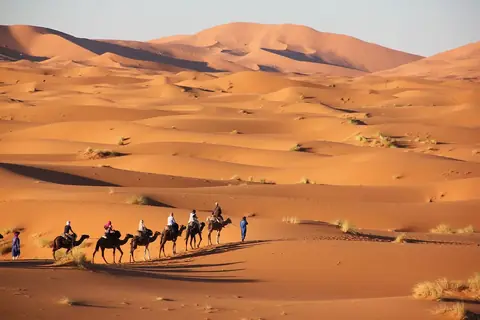
Choose seven days or ten for Marrakech, the Sahara at Merzouga and Fes: the order of the cities, the desert road, the season, entry, cash and the medina basics.
Read the guide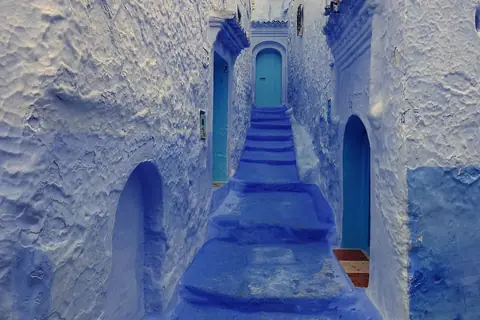
Chefchaouen
Whether Chefchaouen is worth a night: the blue medina, the kasbah and Outa el Hammam square, the walk to the hillside mosque, Akchour, and the road from Fes and Tangier.
Read the guide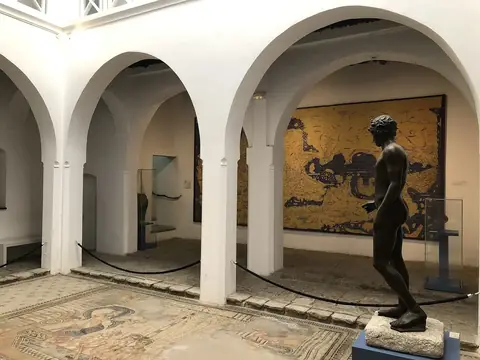
Northern Morocco in 7 days
Seven days and six nights from Tangier to the blue town of Chefchaouen, the Fes medina, Volubilis and Meknes, ending in Rabat: the nights, the coach and the road days.
Read the guide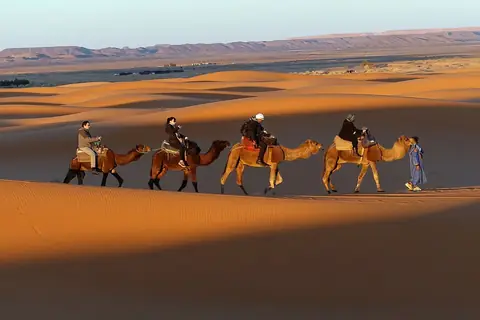
Merzouga and the Sahara
How to plan a night in the dunes of Erg Chebbi: tours from Marrakech or Fes, desert camps, the camel ride, Khamlia, Rissani and the best months for the Sahara.
Read the guide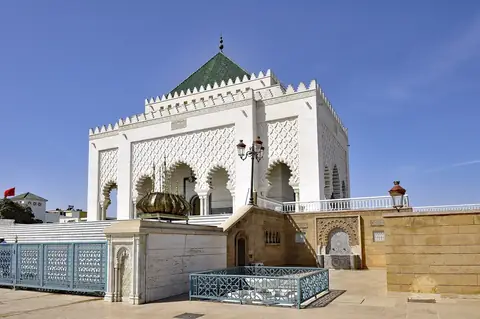
Rabat
Whether Rabat is a one-night stop or worth two: the Kasbah of the Udayas, Hassan Tower, the Chellah, the medina, Salé by boat, the tram, the train and riads.
Read the guide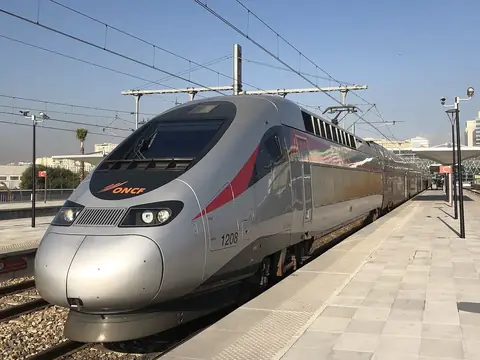
Transport in Morocco
How to get around Morocco: Al Boraq and ONCF trains, CTM coaches to Chefchaouen and the south, grands taxis, drivers, car hire, flights and city trams.
Read the guideSources and checks before you travel
(14)
- Visit Morocco (ONMT): Fez ↗ — opens in a new tab
- Visit Morocco (ONMT): Fez medina ↗ — opens in a new tab
- ICOMOS evaluation for the World Heritage nomination of the Medina of Fez (1980) ↗ — opens in a new tab
- Fondation Nationale des Musées: Al Batha Museum of Islamic Arts ↗ — opens in a new tab
- Fondation Nationale des Musées: Dar Jamaï, national museum of music ↗ — opens in a new tab
- Visit Morocco (ONMT): Meknes ↗ — opens in a new tab
- ICOMOS evaluation for the World Heritage nomination of the historic city of Meknes (1996) ↗ — opens in a new tab
- Visit Morocco (ONMT): archaeological treasures ↗ — opens in a new tab
- Maroc.ma: launch of the online ticket platform for historic monuments ↗ — opens in a new tab
- Ministry of Youth, Culture and Communication e-services: Volubilis archaeological site tickets ↗ — opens in a new tab
- UK Foreign Office: Morocco safety and security ↗ — opens in a new tab
- Visit Morocco (ONMT): dynastic history of Morocco ↗ — opens in a new tab
- Visit Morocco (ONMT): food and drinks ↗ — opens in a new tab
- ONCF: Al Atlas travel guide (Guide Al Atlas) ↗ — opens in a new tab
Reference sources for the version dated 28 November 2026. Confirm opening times, access, transport and conditions for your travel dates.
Photo credits
(6)
The medina of Fes el-Bali seen from the hills above it
Photograph: Petar Milošević — opens in a new tab · CC BY-SA 4.0 — opens in a new tab
Changes: Resized and converted to WebP; displayed with responsive crops. · Original photograph and licence details ↗ — opens in a new tab
The courtyard and minaret of the Bou Inania madrasa
Photograph: R Prazeres — opens in a new tab · CC BY-SA 4.0 — opens in a new tab
Changes: Resized and converted to WebP; displayed with responsive crops. · Original photograph and licence details ↗ — opens in a new tab
The Chouara tannery from one of the terraces around it
Photograph: Uwe Brodrecht — opens in a new tab · CC BY-SA 2.0 — opens in a new tab
Changes: Resized and converted to WebP; displayed with responsive crops. · Original photograph and licence details ↗ — opens in a new tab
Bab Boujloud, the main gate into the upper medina
Photograph: Ben Bender — opens in a new tab · CC BY-SA 3.0 — opens in a new tab
Changes: Resized and converted to WebP; displayed with responsive crops. · Original photograph and licence details ↗ — opens in a new tab
The Attarine madrasa beside the spice market
Photograph: Robert Prazeres — opens in a new tab · CC BY-SA 4.0 — opens in a new tab
Changes: Resized and converted to WebP; displayed with responsive crops. · Original photograph and licence details ↗ — opens in a new tab
The basilica at Volubilis, the Roman city north of Meknes
Photograph: Chrisi1964 — opens in a new tab · CC BY-SA 4.0 — opens in a new tab
Changes: Resized and converted to WebP; displayed with responsive crops. · Original photograph and licence details ↗ — opens in a new tab