Tanger-Tétouan-Al Hoceïma
Chefchaouen: one or two nights in the blue town of the Rif
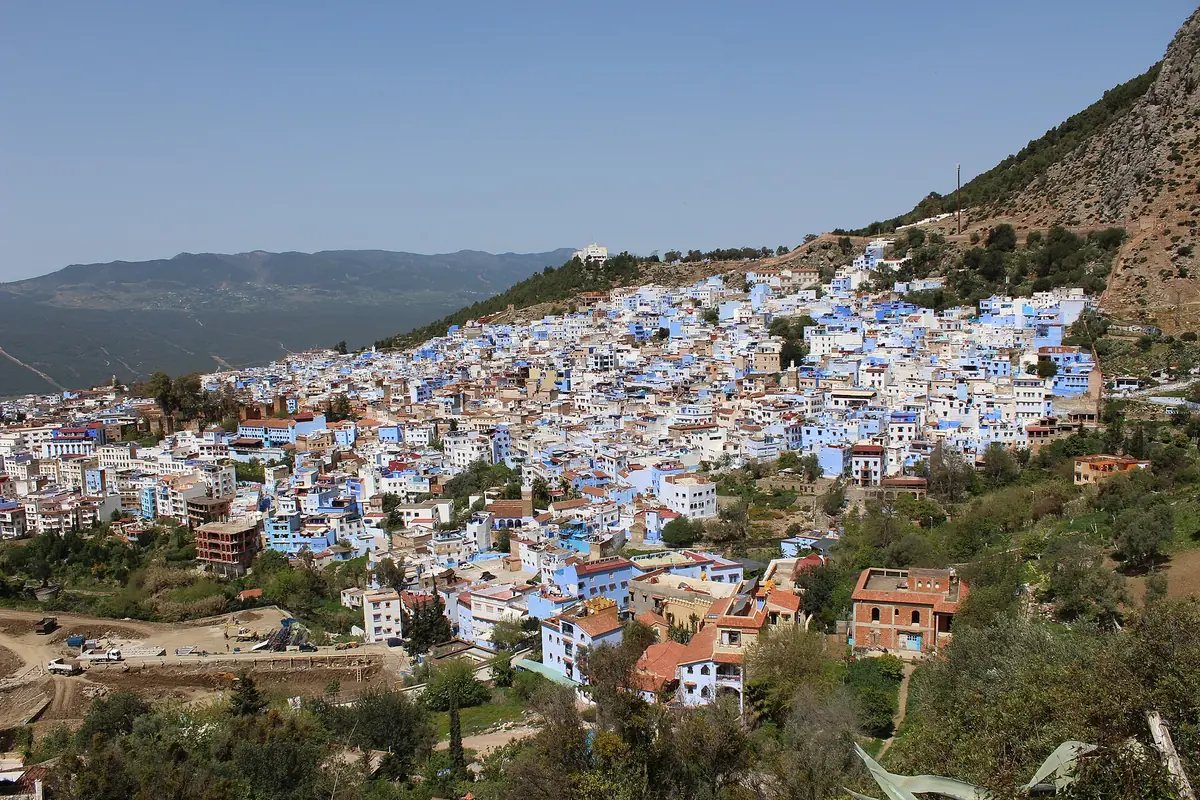
Chefchaouen is the small mountain town whose medina is washed in every shade of blue, from pale sky to deep indigo, on the slope of the Rif. Its pleasures are slow ones: lanes of steps and painted doors, the red-walled kasbah on the main square, a walk up to the white Spanish Mosque on the hillside at sunset, and the Rif forests and waterfalls beyond. A day trip shows you the colour; a night lets you see the lanes in the early morning, before the day visitors arrive.
In this guide
Find the location ↗ — opens in a new tabThe short answer
Stay two nights inside the medina, near Outa el Hammam square or Bab Souk, and book that room first. Spend one day on the blue lanes, the kasbah (MAD 80 for foreign adults) and the walk up to the Spanish Mosque at sunset. Spend the other on a hike to the Akchour waterfalls in Talassemtane National Park, about 45 minutes away by road. With only one night, arrive by early afternoon and leave the next day after a morning walk. CTM coaches come from Tangier, 112 km and about 2 h 30, with fares from MAD 50, and from Rabat, 11 departures a day taking about 6 hours, with fares from MAD 135. Fes is 194 km away, about 3 h 24 by road, by coach or a private car: search Fes to Chefchaouen on ctm.ma for the coach times and fares, or book a day tour or a two-day transfer from Fes, the easiest booked option.
- Suggested time
- 1–2 nights in Chefchaouen
- Where to stay
- The medina, near Outa el Hammam square or Bab Souk
- Season and timing
- April to June and September to October are the best months, with mild weather; winter can be rainy.
Two nights in the blue medina
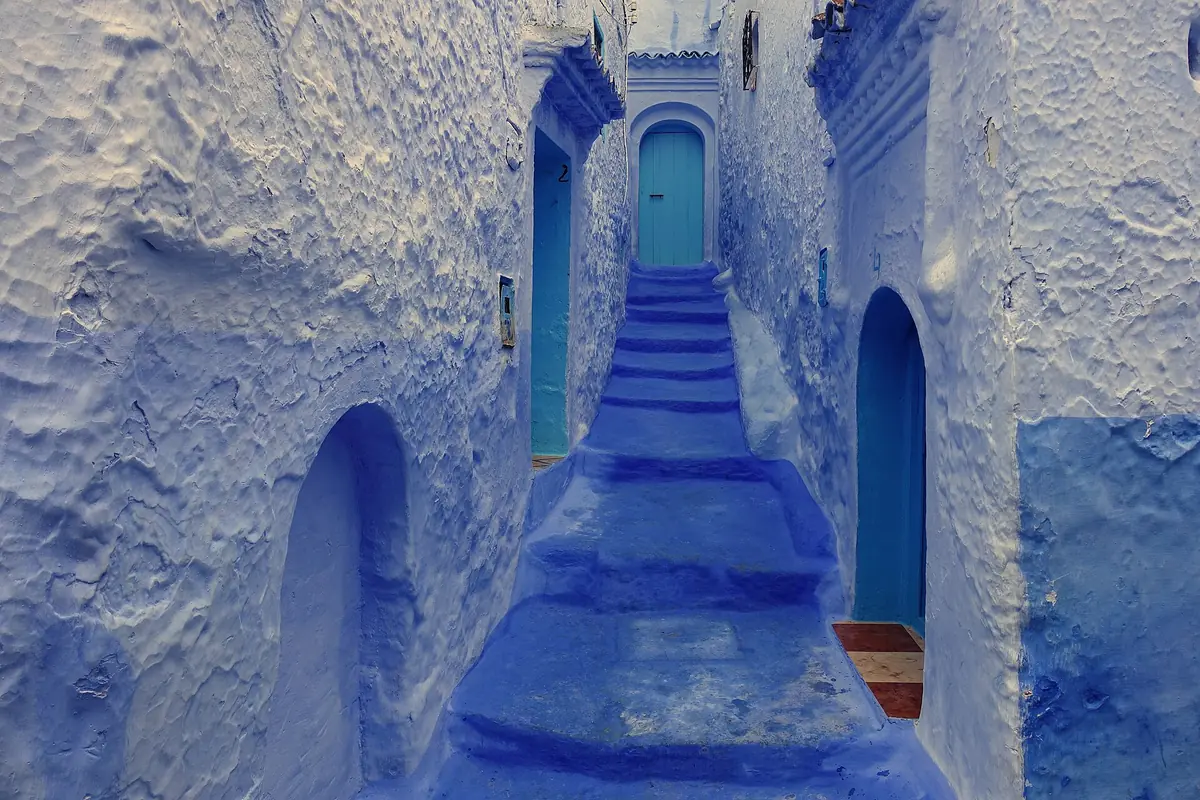
The medina is small but steep: lanes climb in steps from the main square towards the gate of Bab Souk and the spring of Ras el Ma. Sleep inside it, so that you can walk the lanes before breakfast, when only the townspeople are out, and come back for a nap in the heat of the afternoon.
Three parts of the medina make good bases, shown in the stay box: Outa el Hammam, the main square by the kasbah, with cafés and restaurants on the doorstep; Bab Souk, a gate on the upper side of the medina, a short climb from the square; and Ras el Ma, by the spring at the top of town, with the best views and the most steps. Our where-to-stay guide for Morocco names hotels in Chefchaouen and shows where the town fits in a longer trip.
The lanes, the kasbah and Outa el Hammam
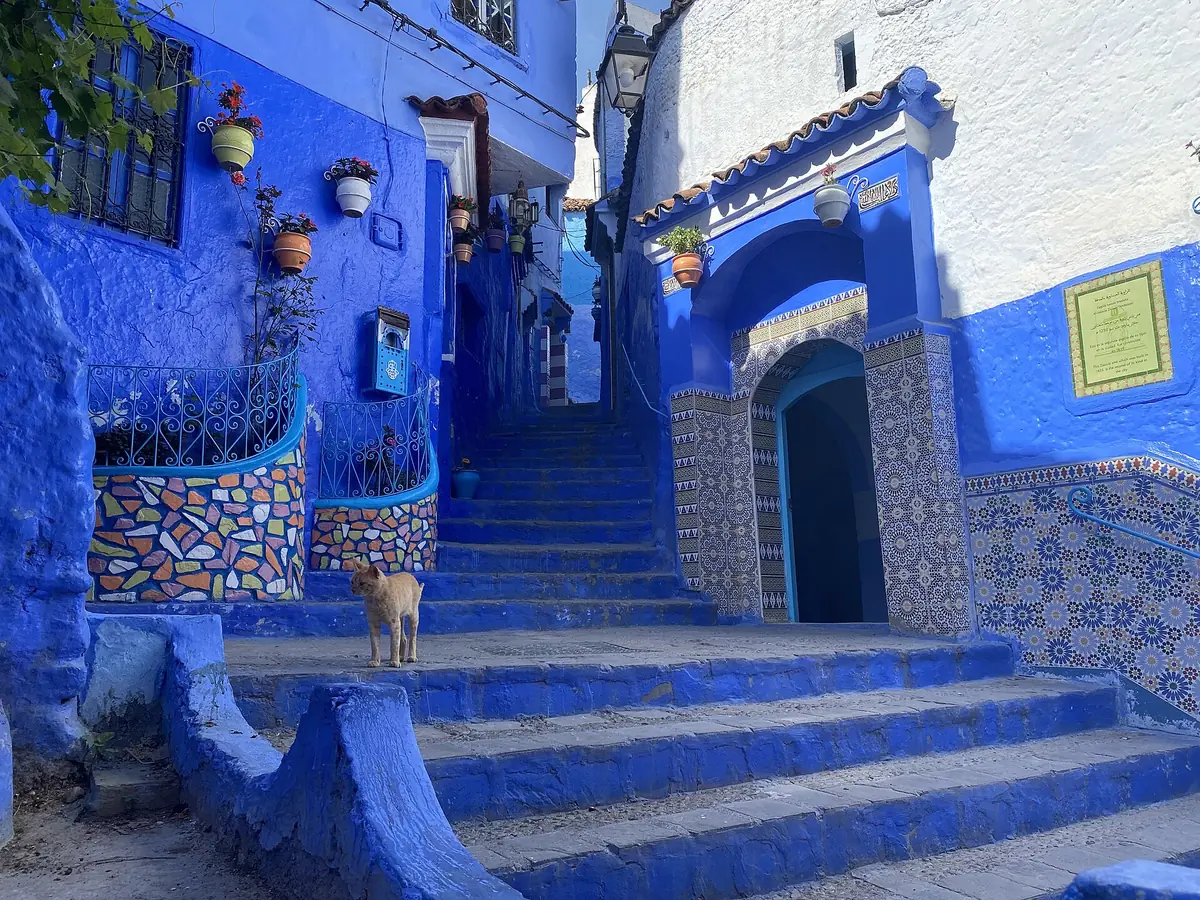
Start early in the medina, when the light is soft and the steps are empty. The houses are rinsed in blue up to the eaves; doors, window grilles and flowerpots are painted to match, and in the narrow lanes you smell bread from the communal ovens. Bab Souk, Bab el Ain and the lanes below Ras el Ma are the most photographed corners, and the quieter quarters off them are just as blue.
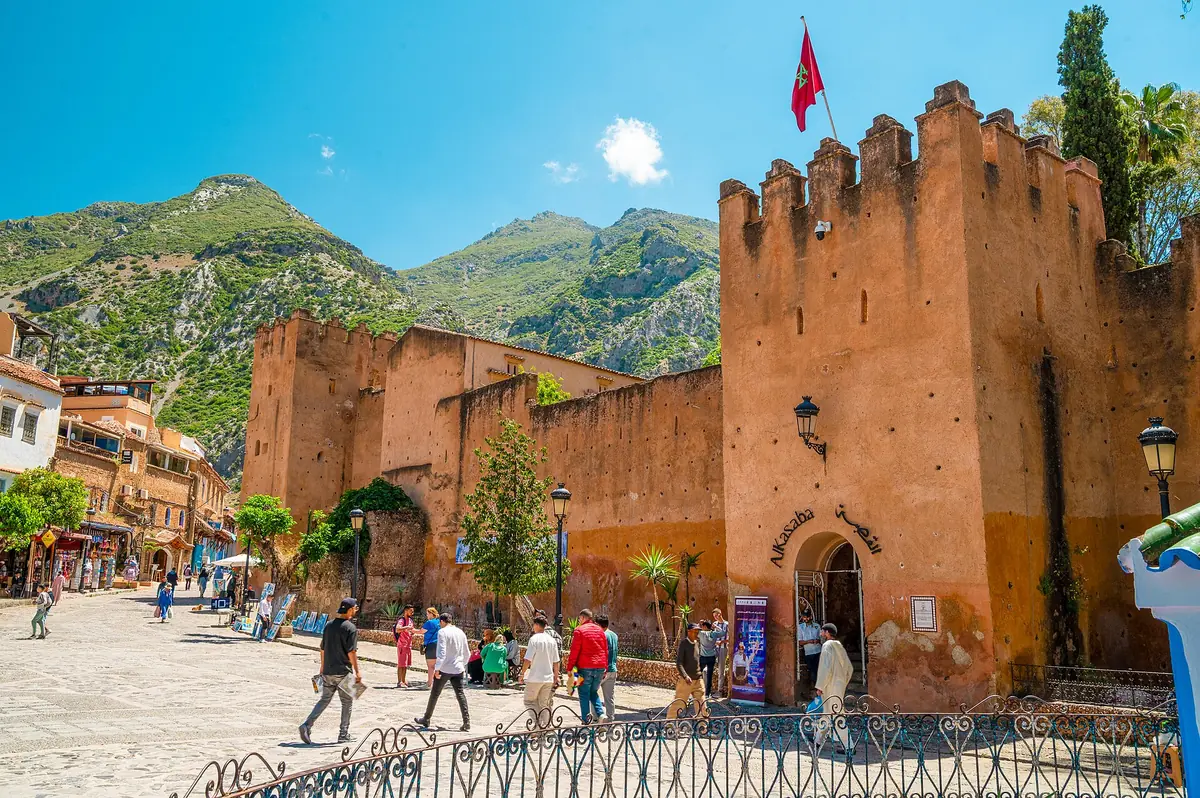
The lanes lead down to Outa el Hammam, the main square, lined with café terraces. On one side stands the kasbah, built in 1471 under Emir Ali Ben Rached as a fortress and as his residence. A mudbrick wall with thirteen towers encloses the old residence, a small mosque, a prison and a large Andalusian garden of 2,300 m². The kasbah's museum shows old weapons, photographs of the town and textiles. Next to the kasbah stands the Grand Mosque.
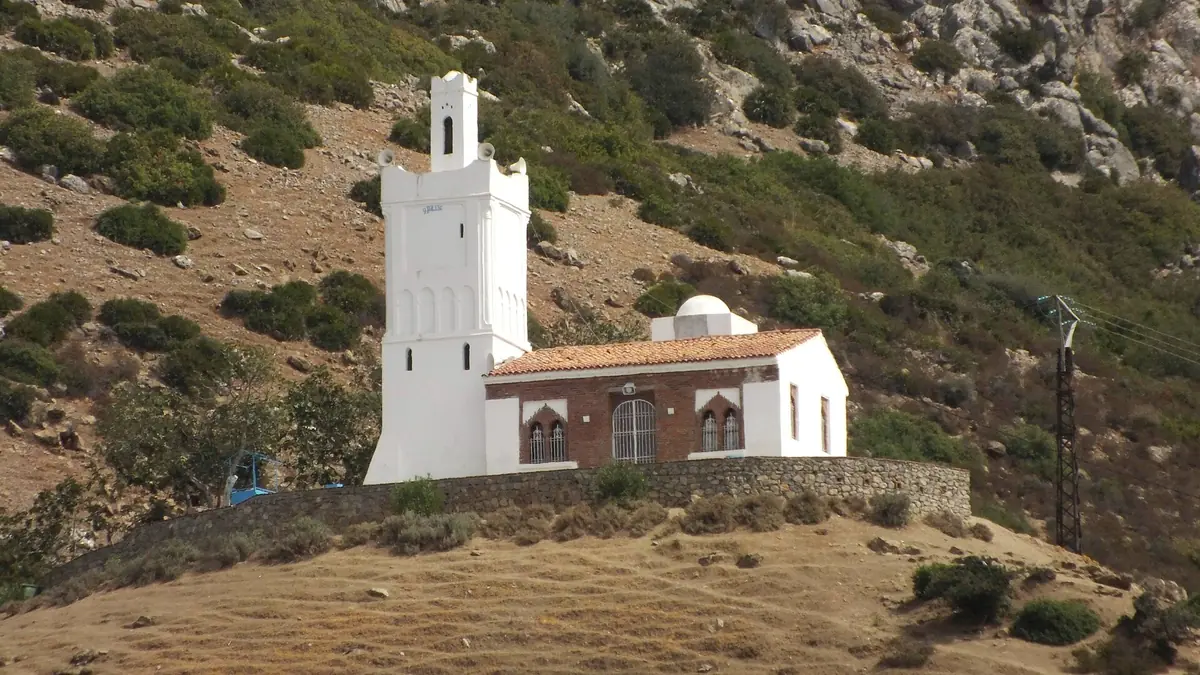
Above the medina, the spring of Ras el Ma rises at the top of town. From there a path crosses the stream and climbs to the Spanish Mosque, the small white mosque on the hillside opposite. From there you can watch the town turn gold and then blue as the sun goes down. Bring a torch for the walk back in the dark.
What to eat and where to look
Rif goat's cheese
Fresh white cheese made from goat's milk in the villages around Chefchaouen, sold wrapped in palm leaves and served with olive oil and bread.
- Where to look
- The market lanes near Bab Souk and riad breakfast tables.
- Fit it into your day
- At breakfast on your roof terrace.
Tagine
Chicken, lamb or kefta meatballs cooked slowly with vegetables in the clay pot, often with egg on top, eaten with bread.
- Where to look
- The restaurants and café terraces around Outa el Hammam square.
- Fit it into your day
- Dinner on the square after the sunset walk.
Harira
A tomato, lentil and chickpea soup with herbs and fine noodles, the soup that breaks the fast during Ramadan and a warming lunch on a cool mountain day.
- Where to look
- Small eateries in the medina lanes below the kasbah.
- Fit it into your day
- A light lunch between the medina walk and the hillside mosque.
Bissara
A thick soup of dried fava beans with olive oil and cumin, a cheap and filling breakfast of northern Morocco.
- Where to look
- Workers' cafés near the market and the bus station.
- Fit it into your day
- Breakfast before the drive to Akchour.
Mint tea
Green tea with fresh mint and sugar, poured from a height and offered everywhere as a welcome.
- Where to look
- The café terraces on Outa el Hammam square, facing the kasbah.
- Fit it into your day
- In the late afternoon, before the walk up to the mosque.
Akchour and the Rif mountains
Chefchaouen sits at the foot of the Kelaa and Meggou mountains in the Rif, and its paths make the town a good base for walkers. Talassemtane National Park covers the mountains beyond the town, with forests of cedar, fir and pine. A walk in the park leads to the Akchour waterfalls, about 45 minutes by road from Chefchaouen. One path follows the river to the falls. Another leads to God's Bridge, a natural rock arch 25 metres high. You can hire a driver or share a taxi from town to the trailhead; agree the price for the return trip, waiting time included, and the pickup time before you set off.
The paths to the falls are rough, so wear proper walking shoes. Avoid the walk after heavy rain, when the river rises.
Getting to Chefchaouen from Fes and Tangier
CTM coaches come from Tangier: 112 km, about 2 h 30 on average, with fares from MAD 50. From Rabat, CTM lists 11 departures a day over 254 km, about 6 hours, with fares from MAD 135. Tetouan is about an hour and a quarter away by road. Our transport guide covers the bus companies and how to book.
From Fes the road is longer and winds through the hills: 194 km, about 3 h 24, by coach or a private car. For the coach, search Fes to Chefchaouen on ctm.ma, which shows the day's departures and fares. A booked trip is the easiest option: a small-group day tour from Fes if you only want to see the town, or a two-day transfer that drives you from Fes, gives you a night in Chefchaouen and brings you back. Both trips are in the offers below. A private driver or a grand taxi also makes the journey.
Chefchaouen fits between Fes and Tangier on a northern loop, as in our 10-day itinerary: arrive from Tangier or Rabat, spend one or two nights here, then continue to Fes.
Prices and times checked 28 November 2026
What Chefchaouen costs
The kasbah charges foreign adults MAD 80 and foreign children aged 7 to 13 MAD 40. Moroccan or resident adults pay MAD 30, and their children aged 7 to 13 pay MAD 10. Entry is free for people with reduced mobility, and for Moroccan nationals on Fridays and on the first day of national and religious holidays. Tickets are sold online on the Ministry of Culture's e-services site. For rooms, our where-to-stay guide for Morocco gives hotels in Chefchaouen.
Add the bus or the transfer from Fes or Tangier, the taxi to Akchour and back, and meals: the cafés of Outa el Hammam serve tagines, harira and grilled meat, and goat's cheese from the Rif hills turns up at breakfast. Our Morocco trip-cost guide prices a whole trip.
Prices and times checked 28 November 2026
Practical questions
Is Chefchaouen worth an overnight stay?
Yes. A night lets you walk the blue lanes early in the morning before the day visitors arrive and watch the sunset from the hillside mosque. Two nights add a day for the Akchour waterfalls.
How do I get from Fes to Chefchaouen?
The road from Fes is long and winding: 194 km, about 3 h 24, by coach or a private car; search the coach times and fares on ctm.ma. The easiest booked options are a day tour from Fes or a two-day transfer with a night in Chefchaouen.
How far is Chefchaouen from Tangier?
About 2 hours by car. CTM coaches cover the 112 km in about 2 h 30 on average, with fares from MAD 50. Tetouan is about an hour and a quarter away.
Where should I stay in Chefchaouen?
Inside the medina, near Outa el Hammam square or Bab Souk, so that you can walk everywhere. Places higher up near Ras el Ma have the best views but more steps.
When is the best time to visit Chefchaouen?
April to June and September to October, when the weather is mild. Winter in the Rif can be rainy and cold.
Keep planning your trip
Fes
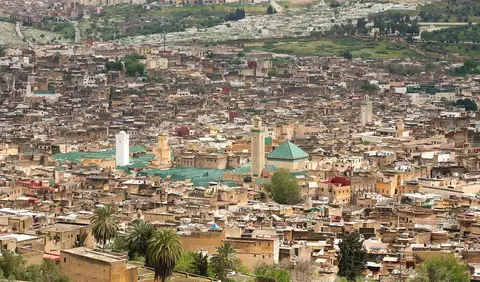
How many nights Fes needs: Fes el-Bali on foot, the madrasas and tanneries, the Batha museum, and a day trip to Meknes and Volubilis, with tickets and riads.
Read the guide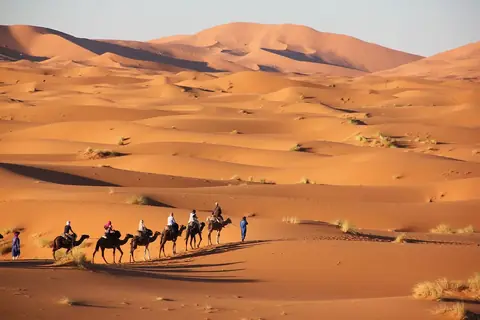
First trip to Morocco
Choose seven days or ten for Marrakech, the Sahara at Merzouga and Fes: the order of the cities, the desert road, the season, entry, cash and the medina basics.
Read the guide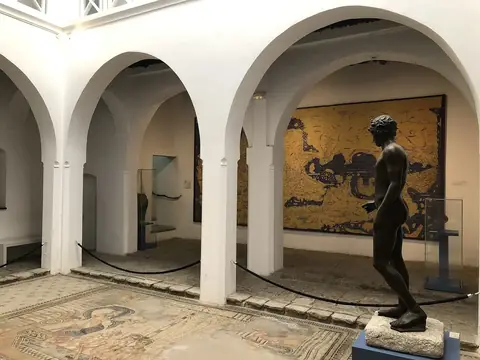
Northern Morocco in 7 days
Seven days and six nights from Tangier to the blue town of Chefchaouen, the Fes medina, Volubilis and Meknes, ending in Rabat: the nights, the coach and the road days.
Read the guide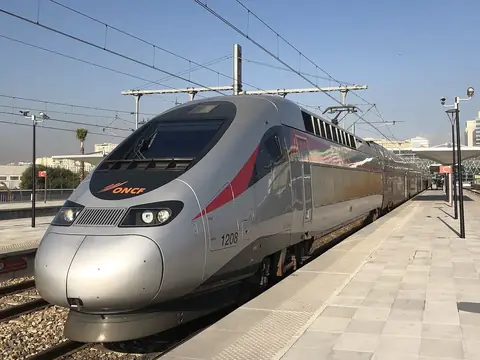
Transport in Morocco
How to get around Morocco: Al Boraq and ONCF trains, CTM coaches to Chefchaouen and the south, grands taxis, drivers, car hire, flights and city trams.
Read the guide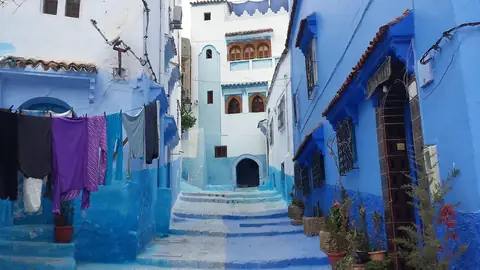
Morocco in ten days
Ten days and nine nights from Rabat through Chefchaouen and Fes to the Merzouga dunes, Ait Ben Haddou and Marrakech, with named rooms and the desert days.
Read the guide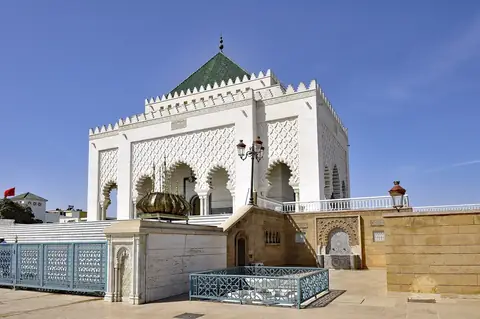
Rabat
Whether Rabat is a one-night stop or worth two: the Kasbah of the Udayas, Hassan Tower, the Chellah, the medina, Salé by boat, the tram, the train and riads.
Read the guideSources and checks before you travel
(8)
- Visit Morocco (ONMT): Chefchaouen ↗ — opens in a new tab
- Visit Morocco (ONMT): Chefchaouen, the most Instagrammable city in Morocco ↗ — opens in a new tab
- CTM: home page ↗ — opens in a new tab
- Ministry of Culture e-services: The Qasba of Chefchaouen ↗ — opens in a new tab
- CTM: Tangier–Chefchaouen by coach ↗ — opens in a new tab
- CTM: Rabat–Chefchaouen by coach ↗ — opens in a new tab
- Visit Morocco (ONMT): Chefchaouen, nature ↗ — opens in a new tab
- Visit Morocco (ONMT): Chefchaouen, sport ↗ — opens in a new tab
Reference sources for the version dated 28 November 2026. Confirm opening times, access, transport and conditions for your travel dates.
Photo credits
(6)
Chefchaouen seen from the hill of the Spanish mosque
Photograph: William John Gauthier from Denmark ( [1] ) — opens in a new tab · CC BY-SA 2.0 — opens in a new tab
Changes: Resized and converted to WebP; displayed with responsive crops. · Original photograph and licence details ↗ — opens in a new tab
Steps through a blue lane of the medina
Photograph: Fbrandao.1963 — opens in a new tab · CC BY-SA 4.0 — opens in a new tab
Changes: Resized and converted to WebP; displayed with responsive crops. · Original photograph and licence details ↗ — opens in a new tab
The kasbah on Outa el Hammam square
Photograph: Badr Rachadi — opens in a new tab · CC BY-SA 4.0 — opens in a new tab
Changes: Resized and converted to WebP; displayed with responsive crops. · Original photograph and licence details ↗ — opens in a new tab
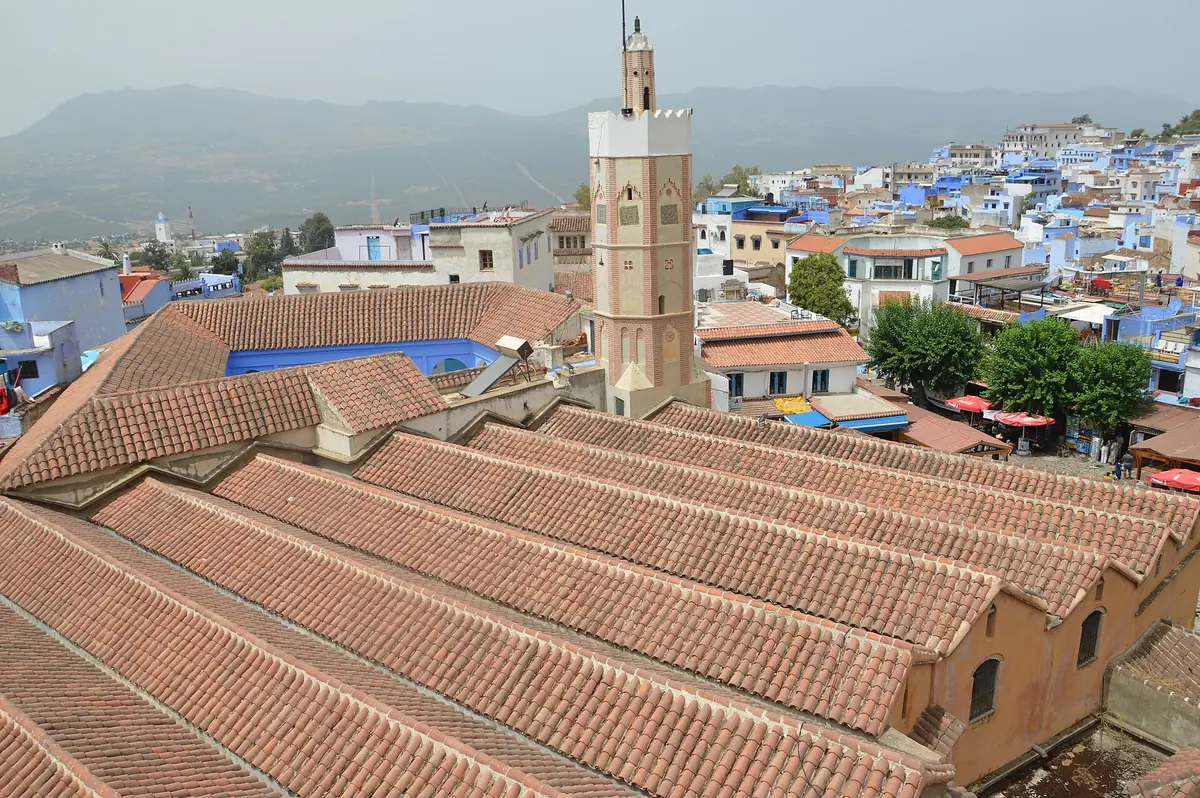
The octagonal minaret of the Grand Mosque
Photograph: Oumaima Loudini — opens in a new tab · CC BY-SA 4.0 — opens in a new tab
Changes: Resized and converted to WebP; displayed with responsive crops. · Original photograph and licence details ↗ — opens in a new tab
The Spanish Mosque on the hillside facing the town
Photograph: Emilien Lebourgeois — opens in a new tab · Public domain — opens in a new tab
Changes: Resized and converted to WebP; displayed with responsive crops. · Original photograph and licence details ↗ — opens in a new tab
Steps climbing through a blue alley
Photograph: Galanda23 — opens in a new tab · CC BY-SA 4.0 — opens in a new tab
Changes: Resized and converted to WebP; displayed with responsive crops. · Original photograph and licence details ↗ — opens in a new tab