Plan your trip
Is Morocco safe? Advisories, guides, scams, doctors and the laws
Most trips to Morocco go wrong in small, ordinary ways: a phone snatched from a moped in a medina lane, a friendly stranger who turns into an unpaid guide, a stomach upset after a buffet, a stray dog on a quiet path, a late petit taxi with a stranger already in the back. Most of the areas governments warn about lie far from the usual route, in Western Sahara and along the closed Algerian border; the exception is the desert at Merzouga, which lies inside the 20 km band along that border where Canada advises against all travel. This guide covers those lines, terrorism, insurance and clinics, the numbers to save, vaccines, food and water, the High Atlas and the desert, the roads and the laws.
In this guide
Find the location ↗ — opens in a new tabThe short answer
Buy travel insurance before you book anything else. It should cover all medical costs, including surgery and hospital stays, and medical evacuation. Public hospitals give limited care, good private clinics are found in Rabat, Casablanca, Marrakech, Tangier and Fes, and hospitals may ask for full payment before they discharge you. Save 150 for an ambulance or the fire service, 190 for the police and 177 for the Gendarmerie. Hepatitis A, tetanus and typhoid vaccines are recommended for most travellers, and there is no malaria. The UK, Canadian, German and French governments do not advise against travel to Morocco as a whole; their lines cover Western Sahara and the Algerian border, where Canada advises against all travel within 20 km. Merzouga and its desert camps lie inside that 20 km band; other governments differ, so check your own government's advice and your travel insurance before you book. In the medinas, take only a guide with an official badge. Book Toubkal treks and desert tours through registered guides and operators.
- Key point
- Start at least 8 weeks before you fly: travel clinic, insurance with medical evacuation and the numbers saved in your phone
- Where it applies
- No base is needed; the advice applies in Marrakech, Fes, Rabat, Chefchaouen, Essaouira, the High Atlas and the south, and on the roads between them
- Timing
- Summer brings heat and the risk of wildfires; from about November to March heavy snow and floods can seriously disrupt road travel in the High Atlas; Ramadan, expected to begin in February 2027, changes opening hours
Travel advice, and the areas these guides leave out
The UK, Canadian, German and French governments do not advise against travel to Morocco as a whole; Canada asks for a high degree of caution because of the threat of terrorism. Germany describes the political situation as fundamentally stable and calm. Their lines cover Western Sahara and the borders with Algeria and Mauritania, away from the imperial cities, Marrakech, the High Atlas and the coast.
Each government draws its own line. Canada advises against all travel within 20 km of the Algerian border, within 30 km west of the Berm, the militarised boundary in Western Sahara, and between the Berm and the neighbouring countries, and against non-essential travel to the rest of Western Sahara. The UK advises against all travel to the areas of Western Sahara within 40 km north and west of the Berm, including the city of Es Semara, and to the territory south and east of the Berm. Germany strongly advises against travel to Western Sahara and to the immediate border region with Algeria. France advises firmly against any travel along the Mauritanian border and asks for enhanced vigilance on the southern part of the Algerian border and in Western Sahara, where any route off the paved coastal road needs prior agreement from the Royal Gendarmerie or the armed forces. The Algerian land border has been closed since 1994 and is closely watched, crossing it without authorisation is illegal, and boats and jet skis must stay in Moroccan waters.
Merzouga and the Erg Chebbi dunes, on the usual route, lie inside the band Canada draws. Measured in a straight line on a map, Merzouga village is about 17 km from the Algerian border and the high dunes of Erg Chebbi about 12 to 15 km, so the village and its camps are within the 20 km where Canada advises against all travel. Germany says desert tours to Erg Chebbi south of Merzouga, and to Erg Chegaga south of Zagora, can be done with a local tour operator, preferably in a group, and asks travellers to check the security situation with the operator before each trip. It strongly advises against leaving the main roads towards Algeria. Other governments differ, so check your own government's advice and your travel insurance before you book. Our Merzouga and Sahara guide covers the camps and the road there.
The Rif is a hashish-growing region, and France advises particular caution there. At night, keep off the secondary roads. By day, do not stop on them, because dealers may provoke you. According to France, the east–west road from Al Hoceima through Chefchaouen to Tétouan flows easily and causes fewer problems. Germany advises not to travel in the Rif mountains alone.
Prices and times checked 28 November 2026
Terrorism, protests and the security you will see
The UK says terrorists are likely to try to carry out attacks in Morocco, and that attacks could be indiscriminate, including at transport hubs, places popular with tourists, government buildings, crowded places and businesses with Western interests. The authorities regularly break up terrorist cells, and you will see security guards at many hotels and sights. The last bomb attack, on Jemaa el-Fnaa square in Marrakech in April 2011, killed 17 people. In December 2018 two European women were murdered in an isolated part of the High Atlas. In January 2022 a French tourist was killed in an attack at the market in Tiznit, south of Agadir.
For that reason Germany advises against travelling alone and off the roads, and recommends trekking in the mountains and off-road trips in the desert around Zagora and Merzouga only in a group and with registered local guides. Stay alert in public places and crowds, and avoid isolated spots on your own.
Protests can happen across the country, especially in large cities, often without warning. Authorised protests are generally peaceful, but unauthorised ones have led to clashes with the police; avoid political gatherings and demonstrations.
Prices and times checked 28 November 2026
Insurance, clinics and paying for treatment
Public health facilities give limited care, while private clinics work to a higher standard, and good private clinics are found in Rabat, Casablanca, Marrakech, Tangier and Fes. In the countryside, emergency and general care is limited in access, trained staff, equipment, medicines and sometimes hygiene, which matters on a trek near Toubkal or a night in the dunes.
Choose a policy that covers all medical costs, including surgery and hospital stays, and medical evacuation: without it you may not get care even in a life-threatening emergency, and hospitals may ask for the full bill to be paid before a patient leaves. Make sure the policy covers your itinerary and planned activities. Some policies exclude water sports, boat trips, quad biking and trekking, so read the activity list before a Toubkal climb or a dune ride. Carry a card or cash for a first payment, and keep the policy number and the insurer's emergency line in your phone. Call the insurer as soon as a doctor refers you to a clinic.
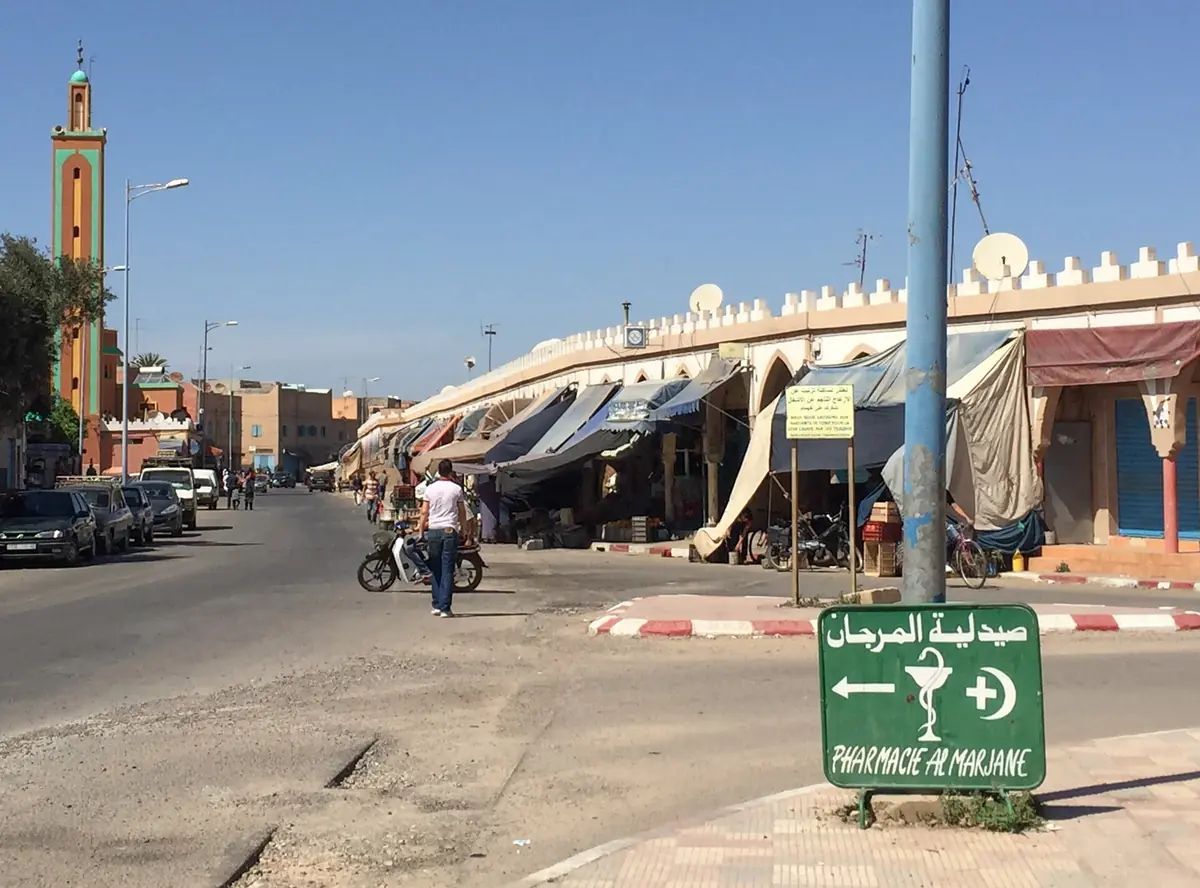
The UK government keeps a list of medical providers where some staff speak English, and France's six consulates-general publish a yearly list of reference hospitals and French-speaking doctors for their areas. Visit Morocco, the national tourist office, runs an online service to find the pharmacy on duty in each city and district; every city and district has a pharmacy open around the clock.
Prices and times checked 28 November 2026
Emergency numbers to save before you land
Save these numbers in your phone before you arrive:
| Service | Number |
|---|---|
| Ambulance | 150 |
| Fire | 150 |
| Police | 190 |
| Gendarmerie (Royal Gendarmerie) | 177 |
| Medical emergencies (national toll-free number given by Visit Morocco, the national tourist office) | 141 |
After calling an ambulance, call your insurer's emergency line. If something happens to a British traveller, friends or relatives in the UK can call the Foreign Office in London around the clock on +44 20 7008 5000. Report any theft to the police: if your passport is lost or stolen, you need a police report, a déclaration de perte or déclaration de vol, made in the city where it happened, before you can leave the country on an emergency travel document.
Prices and times checked 28 November 2026
Vaccines, rabies and the medicines you bring
Check vaccine recommendations at least 8 weeks before the trip. No yellow fever certificate is required under the International Health Regulations. If you arrive from a country affected by polio, you need a certificate proving polio vaccination. Besides routine vaccines, hepatitis A, tetanus and typhoid are recommended for most travellers. Hepatitis B, rabies and tuberculosis (BCG) are for some travellers, depending on the length of the stay and what you do. Everyone should be up to date with the measles, mumps and rubella (MMR) vaccine. Measles is either endemic in Morocco or the risk there is higher than in the UK.
There is no malaria: the WHO certified Morocco malaria-free in 2010. Sandflies, active at dusk and at night, can transmit leishmaniasis, and a few cases of West Nile fever have been reported, so use repellent and cover up in the evening. Schistosomiasis has been reported in the past and the risk is very low, but avoid wading or swimming in fresh water.
Rabies is present. Stray dogs are common in towns and cities. Packs often gather in parks, on waste ground and in quieter areas, where they can be aggressive. Dog packs are a recurring threat to pedestrians, especially in the south, towns and resorts included, so do not run or walk on waste ground or remote land, particularly alone. Do not approach, touch or feed any animal. After a bite, a scratch or a lick on broken skin, wash the wound at once with soap and water and see a doctor urgently, even if you are vaccinated. Rabies vaccine and immunoglobulin may be unavailable or only very limited in the country. Consider the vaccine before a long trip, a rural stay, a run or a cycling trip.
Bring enough of your prescription medicines for the whole trip, in their original packaging with the labels, and the prescription naming each drug by its international non-proprietary name; a doctor's note in English helps. Some medicines legal at home are regulated differently in Morocco. If a pharmacy does not stock your medicine, it will ask you to get a new prescription from a Moroccan doctor for an alternative. Never buy medicines in the street, where they may be counterfeit. Henna tattoos can cause a painful allergic reaction, with swelling and an itchy rash, in some people.
Prices and times checked 28 November 2026
Food, water, heat and the sea
Drink bottled or sealed drinks, or water made safe by filtering or boiling. Eat food that is well cooked and hot; avoid raw or undercooked meat, fish and milk, raw vegetables, shellfish, reheated dishes and cold buffets, and peel fruit. Travellers' diarrhoea is common; if vomiting and diarrhoea do not improve after a few days, see a doctor. Allergen information is not given consistently and cross-contamination is more likely than at home, so state your allergy clearly and skip dishes you are unsure about.
Deaths and serious illness have been caused by alcoholic drinks containing methanol, which cannot be detected by taste or smell. Drink in licensed bars, hotels and restaurants only, and get urgent medical help if anyone shows signs of poisoning after drinking.
Protect yourself from the heat and the sun: drink often, cover up and stay out of the hottest hours. In large cities, air pollution can cause problems for people with breathing conditions. On the coast, most beaches have no lifeguard and drownings are frequent. Strong tides, currents and unexpected waves catch out swimmers even on supervised beaches, so swim only where there is supervision and avoid isolated beaches. Rivers and dam lakes are dangerous too: deep mud and steep underwater slopes can trap swimmers.
Prices and times checked 28 November 2026
Toubkal, the desert and earthquakes
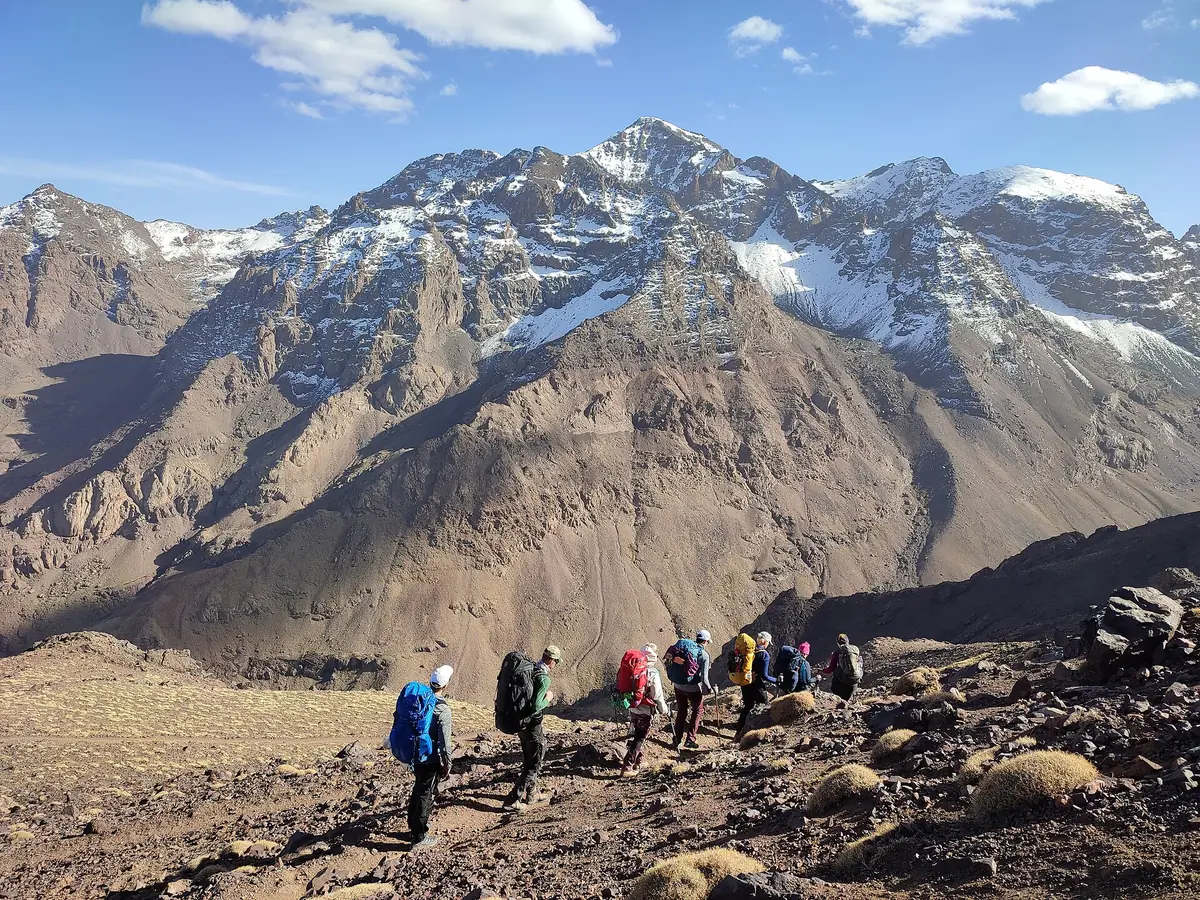
Jbel Toubkal, at 4,167 m, is a serious high-mountain climb, not a stroll from Imlil. The ascent needs proper preparation and equipment: a helmet in every season, and ice axe, crampons and avalanche gear in winter conditions. Some passages are technical, the weather changes very fast and accidents happen regularly. Climb only with a qualified high-mountain guide. Altitude sickness is a risk from 2,500 m upwards. Where you can, spend a few days below 3,000 m first, avoid going from below 1,200 m to above 3,500 m in a single day, and descend at once if severe symptoms appear. Our Imlil and High Atlas guide covers the villages, the refuge and the routes.
From about November to March, heavy snow and floods can hit the High Atlas in particular and seriously disrupt road travel, and heavy rain can cause flash floods in the mountains and near rivers in winter; follow closures and local instructions. In summer there is a risk of wildfires. Book hot-air balloon flights only through licensed operators, wear a helmet on a quad bike, and remember that rescue capacity at sea, in the mountains and in remote areas is often limited.
Morocco lies in an active seismic zone. On 8 September 2023 an earthquake of magnitude 6.8 struck the High Atlas about 70 km south-west of Marrakech, between the provinces of Chichaoua and Al Haouz, and killed almost 3,000 people. In a quake, keep away from walls, windows, trees and signs, and stand in the open or shelter under heavy furniture.
Prices and times checked 28 November 2026
Roads, taxis and getting back at night
Road accidents are frequent. National roads are generally well kept but sometimes narrow, and traffic on them is heavy. Traffic rules are often broken, by drivers of grands taxis, coaches and lorries among others. Animals and unlit vehicles stand on the road, even on motorways. The national roads from Casablanca to Marrakech and to El Jadida are the most dangerous, and the mountain motorway from Marrakech to Agadir is very dangerous, especially on the descent into Agadir. Avoid driving at night, and plan every road transfer to end in daylight. Wear a seatbelt. Pedestrians account for a quarter of road deaths, so take care crossing.
To drive yourself, UK licence holders need the 1968 international driving permit, bought before departure, and a green card from the insurer. Any alcohol in your blood at a check brings a fine and possibly prison. If you are involved in a fatal accident and the authorities think you are responsible, you may be detained before trial. Our transport guide covers the trains, buses and drivers that spare you the wheel.
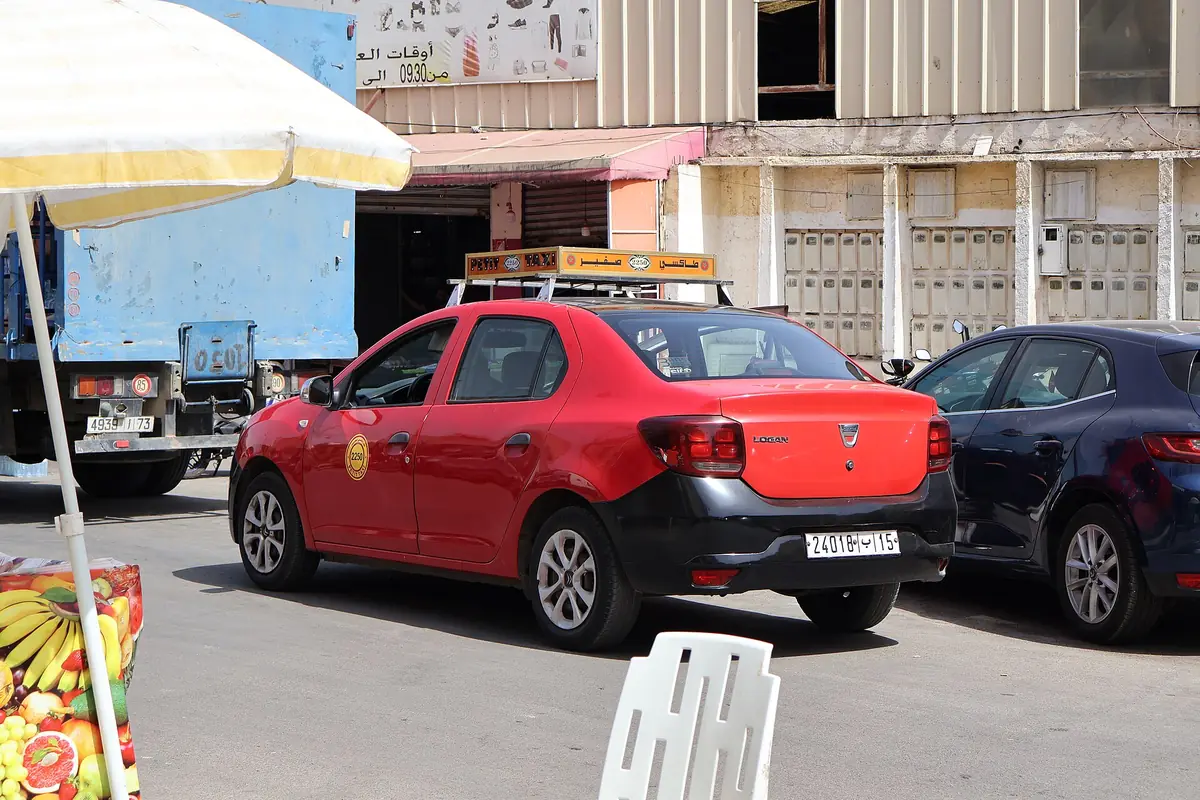
In town, prefer the official petits taxis, which generally pose no security problems. Ask for the meter or agree the fare first, and expect the driver to pick up other passengers on the way. On a late ride, if you feel uncomfortable, end the journey as soon as it is safe, somewhere well lit. Cars booked through ride-hailing apps may be unregulated and unlicensed, and may not be insured to carry passengers, so take care if you use them. The police may stop such a car and tell you to get out.
Prices and times checked 28 November 2026
Medina crime, false guides and scams
Petty crime is common in tourist areas, especially in the medinas and on beaches. It includes pickpocketing, bag-snatching, and thieves on motorbikes who ride along the pavement to grab bags, phones and visible jewellery. These motorbike thefts are most common in Casablanca and Marrakech. Robberies near sights and in the old centres occasionally involve violence or knives. Carry only the cash you need for the day, keep your phone out of reach of the street, avoid quiet areas and deserted beaches and parks after dark, and do not resist if someone tries to rob you. Leave the passport in the hotel safe and carry a colour copy. Thefts from rented flats have risen in the big tourist cities, so do not leave documents in a flat without a safe.
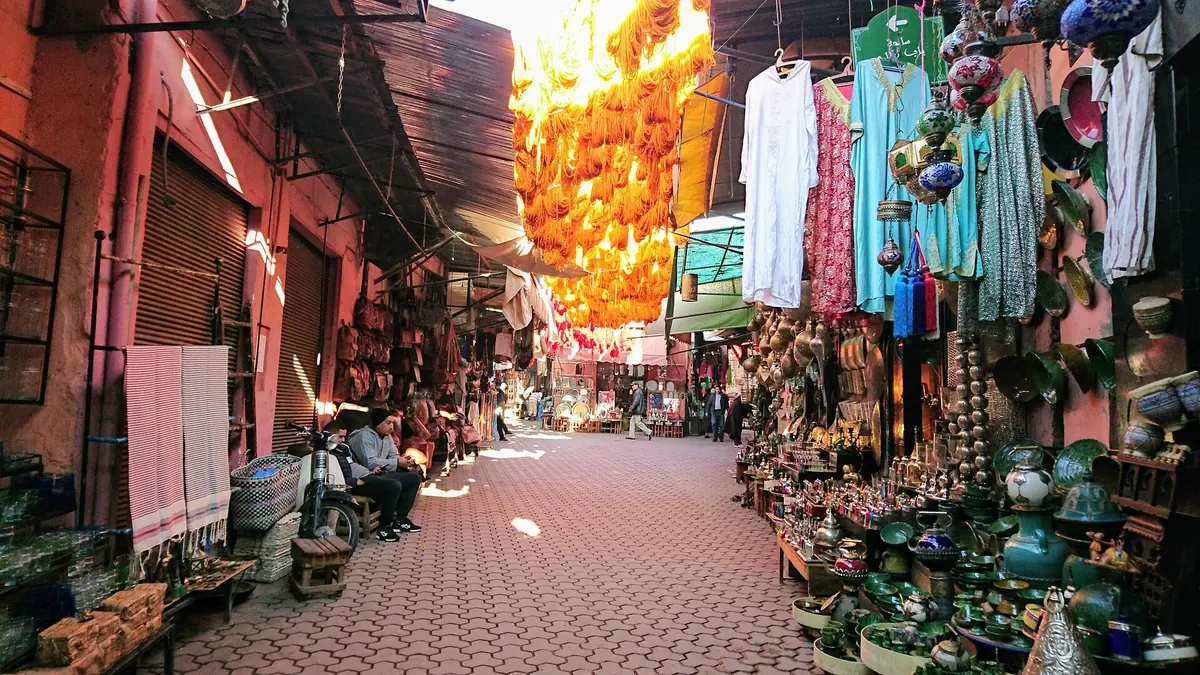
Men posing as official guides are common in the medinas, and so is aggressive begging, especially when you ask for directions or use a cash machine. A medina guide should have an official badge and authorisation from the local authority: ask your riad or a tourist office to book one, agree the price and the length of the walk before you start, and politely refuse anyone who attaches himself to you in the lanes, even if he says the way ahead is closed or offers to show you a tannery. Card fraud and confidence tricks are common, and some sellers swap the goods you chose for poorer ones, so watch your card at payment and keep your purchase in sight while it is wrapped.
Be sceptical of unusual emails, calls and requests for help from supposed acquaintances, and of anyone who quickly proposes a relationship online: marriage fraud and attempted extortion have affected British nationals. Report every crime to the police.
Prices and times checked 28 November 2026
Laws and customs that catch visitors out
Alcohol is sold in licensed shops, bars, hotels and restaurants. Drinking in the street, or anywhere other than a licensed bar or restaurant, is illegal and can lead to arrest. Morocco has zero tolerance of drugs, cannabis included: even the smallest amount is an offence, and Germany notes prison terms of up to ten years and heavy fines. Do not accept items from strangers or leave your bags unattended. Airports have equipment to detect items that customs prohibits, in transit passengers' baggage too.
Sex outside marriage is illegal for Moroccan nationals, and that includes sharing a hotel room. The UK says the rule does not generally apply to visiting foreigners, especially in tourist areas, but Germany notes that hotels quite often ask couples for a marriage certificate and insist on separate rooms without one. Same-sex relations are illegal and foreigners can be prosecuted, with fines and up to three years in prison; avoid any public display of affection, and be aware that dating apps carry legal, safety and privacy risks.
Trying to convert a Muslim to another faith is illegal and can bring up to three years in prison, and public criticism of Islam can bring heavy fines and up to two years. During Ramadan, eating, drinking or smoking in public during the day may cause offence outside places that serve food; restaurants may close by day away from the tourist centres, and traffic can be erratic near dusk. Dress modestly: loose clothing that covers the arms, legs and chest draws less attention, and our solo female travel guide covers the rest for women travelling alone.
Do not photograph political or military sites, and always ask before you photograph people, especially children. Flying a drone needs permission from the Directorate General of Civil Aviation; without it the drone can be confiscated and you can be fined. Possessing pornographic material, printed or digital, is illegal. Do not deface banknotes.
Prices and times checked 28 November 2026
Practical questions
Is Morocco safe for tourists?
For most visitors, yes. The UK, Canadian, German and French governments do not advise against travel to Morocco as a whole. The common risks are bag-snatching and false guides in the medinas, road accidents, stray dogs, stomach upsets and the high mountains. Because of the threat of terrorism, stay alert in crowds.
Which areas of Morocco should I avoid?
Western Sahara and the border with Algeria. Canada advises against all travel within 20 km of the Algerian border and in the border regions around the Berm, and against non-essential travel to the rest of Western Sahara. The UK advises against all travel within 40 km north and west of the Berm, including Es Semara, and south and east of it. Germany strongly advises against travel to Western Sahara and the immediate border region with Algeria, and France against any travel along the Mauritanian border. Marrakech, Fes, Rabat, Chefchaouen and the High Atlas are far from these areas, but Merzouga and its desert camps lie inside Canada's 20 km band along the Algerian border; other governments differ, so check your own government's advice and your travel insurance before you book.
What is the emergency number in Morocco?
Dial 150 for an ambulance or the fire service, 190 for the police and 177 for the Gendarmerie. Visit Morocco, the national tourist office, also gives 141 as the national toll-free number for medical emergencies.
Which vaccinations do I need for Morocco?
No certificate is required unless you arrive from a polio-affected country. Hepatitis A, tetanus and typhoid are recommended for most travellers, with routine vaccines, measles included; hepatitis B, rabies and tuberculosis are for some travellers.
Is there malaria in Morocco?
No. The WHO certified Morocco malaria-free in 2010, so no tablets are needed, but sandflies can transmit leishmaniasis, so use repellent at dusk and at night.
Can you drink tap water in Morocco?
Stick to bottled or sealed drinks, or water made safe by filtering or boiling, and avoid raw vegetables, shellfish, reheated dishes and cold buffets.
Do I need a guide in the medina or on Toubkal?
Not in the medina, but if you take one, choose a guide with an official badge, ideally booked by your riad. For Toubkal, take a qualified mountain guide, and do treks and desert trips in a group with registered guides.
Keep planning your trip
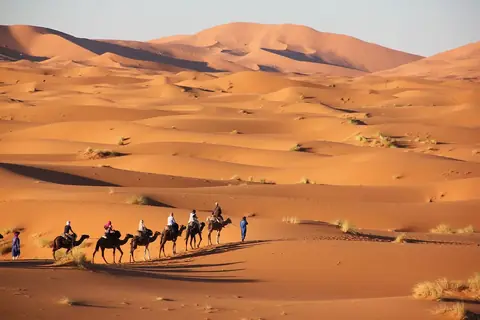
First trip to Morocco
Choose seven days or ten for Marrakech, the Sahara at Merzouga and Fes: the order of the cities, the desert road, the season, entry, cash and the medina basics.
Read the guide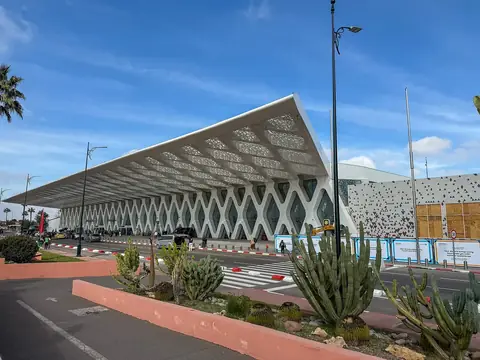
Entry to Morocco
Who enters Morocco visa-free for 90 days, passport validity, the MAD 2,000 cash limit, what to declare, drones, vaccines, and arriving by air or by ferry.
Read the guide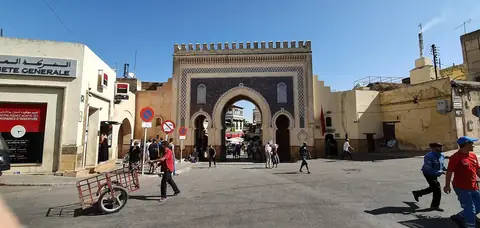
Solo female travel in Morocco
Travelling alone as a woman in Morocco: what the UK, German and French advice says, medina attention, what to wear, trains and taxis, riads, desert camps and help.
Read the guide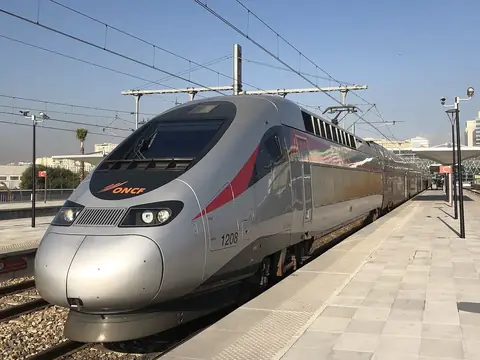
Transport in Morocco
How to get around Morocco: Al Boraq and ONCF trains, CTM coaches to Chefchaouen and the south, grands taxis, drivers, car hire, flights and city trams.
Read the guide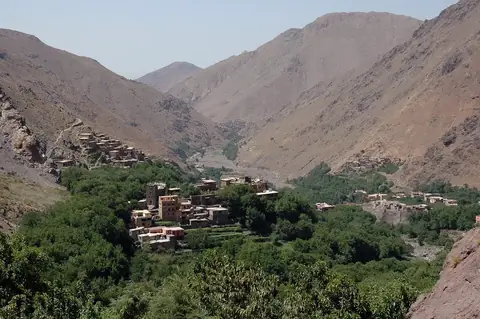
Imlil and the High Atlas
Whether Imlil is a day trip from Marrakech or worth a night, how to climb Toubkal with a guide in two days, the refuge, transfers, prices and seasons.
Read the guide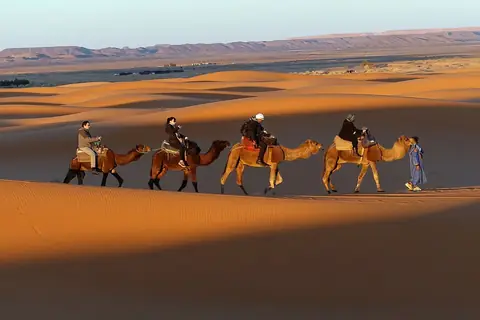
Merzouga and the Sahara
How to plan a night in the dunes of Erg Chebbi: tours from Marrakech or Fes, desert camps, the camel ride, Khamlia, Rissani and the best months for the Sahara.
Read the guideSources and checks before you travel
(14)
- UK Foreign Office (GOV.UK): Morocco travel advice ↗ — opens in a new tab
- UK Foreign Office (GOV.UK): Morocco safety and security ↗ — opens in a new tab
- UK Foreign Office (GOV.UK): Morocco regional risks ↗ — opens in a new tab
- UK Foreign Office (GOV.UK): Western Sahara travel advice ↗ — opens in a new tab
- UK Foreign Office (GOV.UK): Morocco health ↗ — opens in a new tab
- UK Foreign Office (GOV.UK): Morocco getting help ↗ — opens in a new tab
- UK Foreign Office (GOV.UK): Morocco entry requirements ↗ — opens in a new tab
- UK Health Security Agency (TravelHealthPro): Morocco ↗ — opens in a new tab
- World Health Organization: countries and territories certified malaria-free ↗ — opens in a new tab
- France Diplomatie: Maroc, sécurité ↗ — opens in a new tab
- France Diplomatie: Maroc, santé ↗ — opens in a new tab
- German Federal Foreign Office: Marokko, Reise- und Sicherheitshinweise ↗ — opens in a new tab
- Moroccan National Tourist Office (Visit Morocco): useful information ↗ — opens in a new tab
- Government of Canada (travel.gc.ca): Morocco travel advice ↗ — opens in a new tab
Reference sources for the version dated 28 November 2026. Confirm opening times, access, transport and conditions for your travel dates.
Photo credits
(4)
Hikers below Jebel Toubkal: France and the UK both advise a qualified guide for the climb
Photograph: Kurinurm — opens in a new tab · CC BY-SA 4.0 — opens in a new tab
Changes: Resized and converted to WebP; displayed with responsive crops. · Original photograph and licence details ↗ — opens in a new tab
A red petit taxi in Fes: ask for the meter or agree the fare before you get in
Photograph: Melyousfi — opens in a new tab · CC BY-SA 4.0 — opens in a new tab
Changes: Resized and converted to WebP; displayed with responsive crops. · Original photograph and licence details ↗ — opens in a new tab
A souk lane in the Marrakech medina, where pickpockets and false guides work the crowds
Photograph: Edviges — opens in a new tab · CC BY-SA 4.0 — opens in a new tab
Changes: Resized and converted to WebP; displayed with responsive crops. · Original photograph and licence details ↗ — opens in a new tab
A pharmacy sign in Tiznit: every city and district has a pharmacy open around the clock
Photograph: Bernhard Holub — opens in a new tab · CC BY-SA 4.0 — opens in a new tab
Changes: Resized and converted to WebP; displayed with responsive crops. · Original photograph and licence details ↗ — opens in a new tab