Plan your trip
Solo female travel in Morocco: attention, dress, taxis, riads and help
Women travel alone through Morocco every day, by train from Tangier to Marrakech, through the lanes of Fes and out to the dunes at Merzouga. The difference from many trips is the attention: comments, offers of help that turn into guiding, men who walk alongside you in the medina. This guide covers what the UK, German and French governments say about it, how to arrive and move between cities, what to wear, how to choose a riad and a desert camp, drinks and evenings, and who to call if something goes wrong.
In this guide
Find the location ↗ — opens in a new tabThe short answer
Expect unwanted attention, especially in the medinas, and prepare for it before you fly. Book your first night in a riad that arranges an airport pickup and meets you at the nearest medina gate; at Marrakech Menara, the regulated taxi fare to the city centre is MAD 70 by day and MAD 100 at night, and airport bus 19 costs MAD 30. Travel between cities by ONCF train (Al Boraq between Tangier, Rabat and Casablanca) or CTM coach (Marrakech to Essaouira, about five a day, from MAD 205 one way). In town, use official petits taxis and agree the fare or ask for the meter. Loose clothes that cover your arms, legs and chest draw less attention, and a light scarf helps. Take desert trips and treks in a group with a registered guide: a shared three-day desert tour from Fes to Marrakech is listed from USD 274 per person on TourRadar. Save 190 for the police and 150 for an ambulance; British travellers can reach consular staff at the British Embassy at any hour on +212 537 633333.
- Key point
- Set up before you fly: a booked first night with a pickup, the train legs, insurance, saved numbers and loose clothes for the medinas
- Where it applies
- No base is needed; the advice applies wherever you stay, from the medinas of Marrakech and Fes to Chefchaouen, Rabat and the desert camps
- Timing
- The same all year; during Ramadan, eating, drinking, smoking or chewing gum in public in the daytime may cause offence, and driving may be erratic around dusk
What the UK, German and French advice says about women
All three governments ask women to take care in Morocco, especially when they travel alone. Expect unwanted attention: it is often insistent, sometimes with an eye on your money, and it can go as far as harassment. Loose-fitting clothing that covers the arms, legs and chest draws less of it, and dress and behaviour that follow local customs help. Most of Moroccan society holds conservative values and traditional roles, so be reserved with strangers and keep a healthy mistrust.
In practice that means comments as you pass, men offering to show you the way, and sometimes someone walking alongside you for a while. A short, firm "no, thank you" (la, shukran) and walking on without stopping usually ends it; you owe nobody a conversation or a reason. If someone follows or touches you, step into a shop, a café or your riad, and call 190 for the police if you need to.
The general risks apply to everyone and are covered in our health and safety guide: bag and phone snatching in the medinas, false guides, the areas governments warn about and the laws. This guide adds what changes when you travel alone as a woman.
Prices and times checked 28 November 2026
Arriving: the first night, the airport and the riad gate
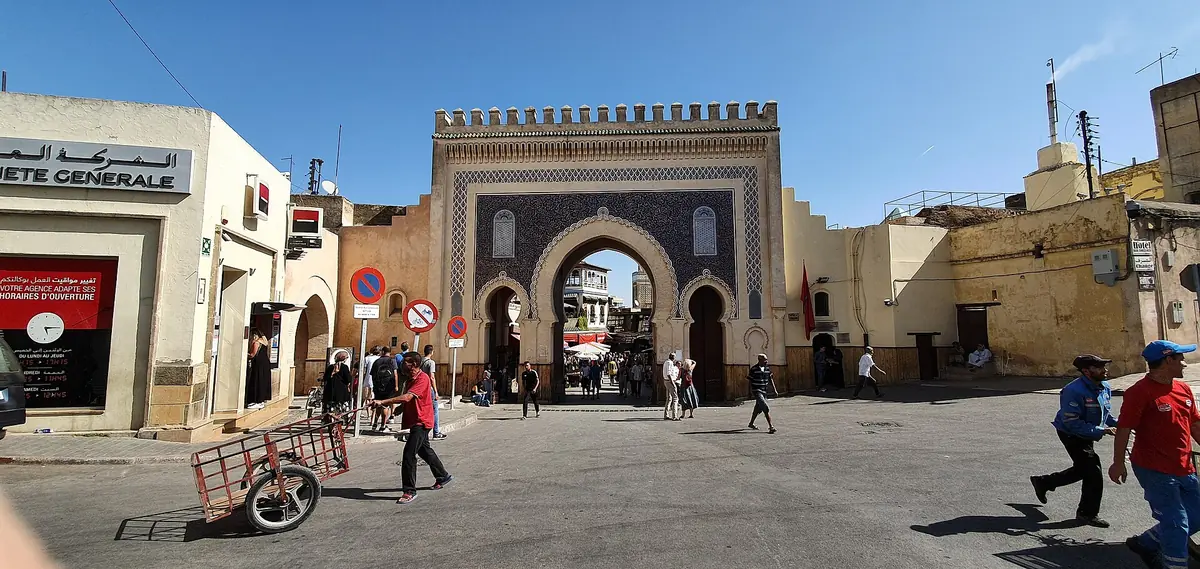
The first evening is when you are most tired and least sure of the way, so arrange it before you land. Book the first night in a riad or hotel that offers an airport pickup, and ask the riad to meet you at the gate of the medina nearest to it: people posing as official guides commonly harass tourists in the medinas. Try to land in daylight.
If you take a taxi, use an official petit taxi from the rank; from Marrakech Menara the regulated fare to the city centre is MAD 70 by day and MAD 100 at night. Agree the fare before you set off or ask for the meter, and expect the driver to pick up other passengers on the way. Take care in petits taxis, especially late at night: if you feel uncomfortable at any point, end the journey as soon as it is safe and move to a well-lit area. Many cars booked through ride-hailing apps may be unlicensed and may not be insured to carry passengers, and police may order you out of one.
Keep the passport in the riad's safe and carry a colour copy. If you rent an apartment rather than a riad room, leave documents there only if it has a safe: France reports a rise in thefts from rented flats in the big tourist cities.
Prices and times checked 28 November 2026
Trains, coaches and grands taxis between cities
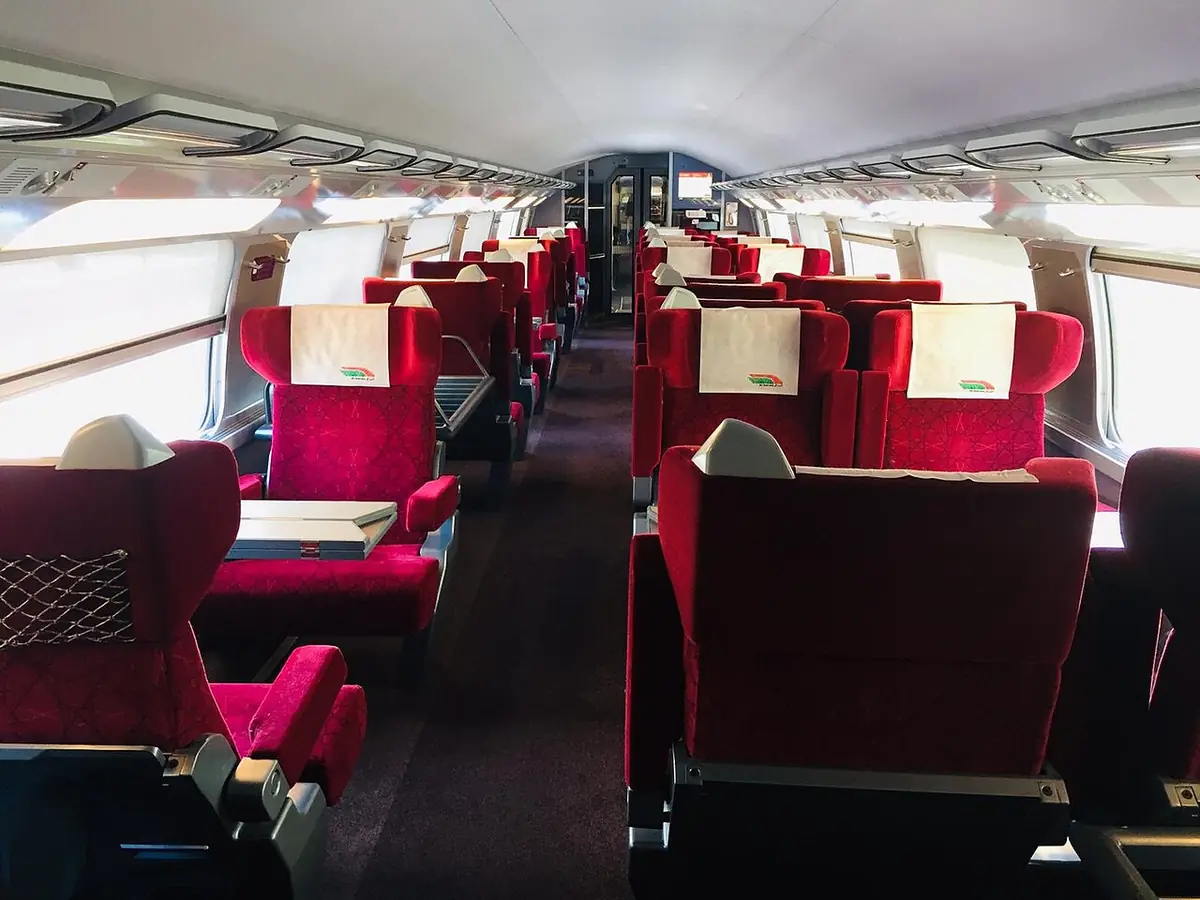
Between the big cities, the train is the easiest way to travel alone. Al Boraq, ONCF's high-speed train, runs between Tangier, Kenitra, Rabat and Casablanca, and ONCF's Al Atlas trains run on to Marrakech and Fes. Buy your seat ahead on oncf-voyages.ma or in the ONCF Voyages app, so you do not queue at a ticket window with your luggage.
Where the rails stop, CTM coaches take over: CTM runs to Chefchaouen from Tangier and Rabat and from Marrakech to Essaouira (from MAD 205 one way), and sells seats on ctm.ma and at its own stations. Arriving at a CTM station rather than a roadside stop puts you among other travellers and close to a taxi rank.
Grands taxis, the shared long-distance cars that leave when they are full, are cheap but cramped: you may share the back seat with strangers. Their drivers sometimes speed and ignore other driving rules. Paying for the empty seats beside you gives you more space; a private car with a driver, booked through your riad, gives you the whole car. Germany and France both advise against driving at night, so plan every road transfer to end in daylight. Our transport guide has the routes, times and fares.
Prices and times checked 28 November 2026
What to wear in the medinas and the countryside
None of the three governments sets out a dress code you must follow, but what you wear changes how much attention you get. Loose clothing that covers the arms, legs and chest draws less attention, and it is cooler in the sun than it sounds. In the old medinas, small towns and mountain villages, choose the more covered option.
Carry a light scarf for the sun, the dust on a desert drive and the occasional moment when you would rather cover your hair. During Ramadan, clothing that does not meet local dress codes may cause more offence than usual. Hotels and restaurants that serve food in fasting hours may seat you apart from Muslim guests, for example behind screens. For a hammam, the steam bath where you are scrubbed with black soap and a kessa glove, choose between a traditional collective hammam and the spa hammams of riads and hotels in the big cities; a hammam in your riad or a spa is the easier first visit alone.
Prices and times checked 28 November 2026
Choosing a riad, a guide and a desert camp
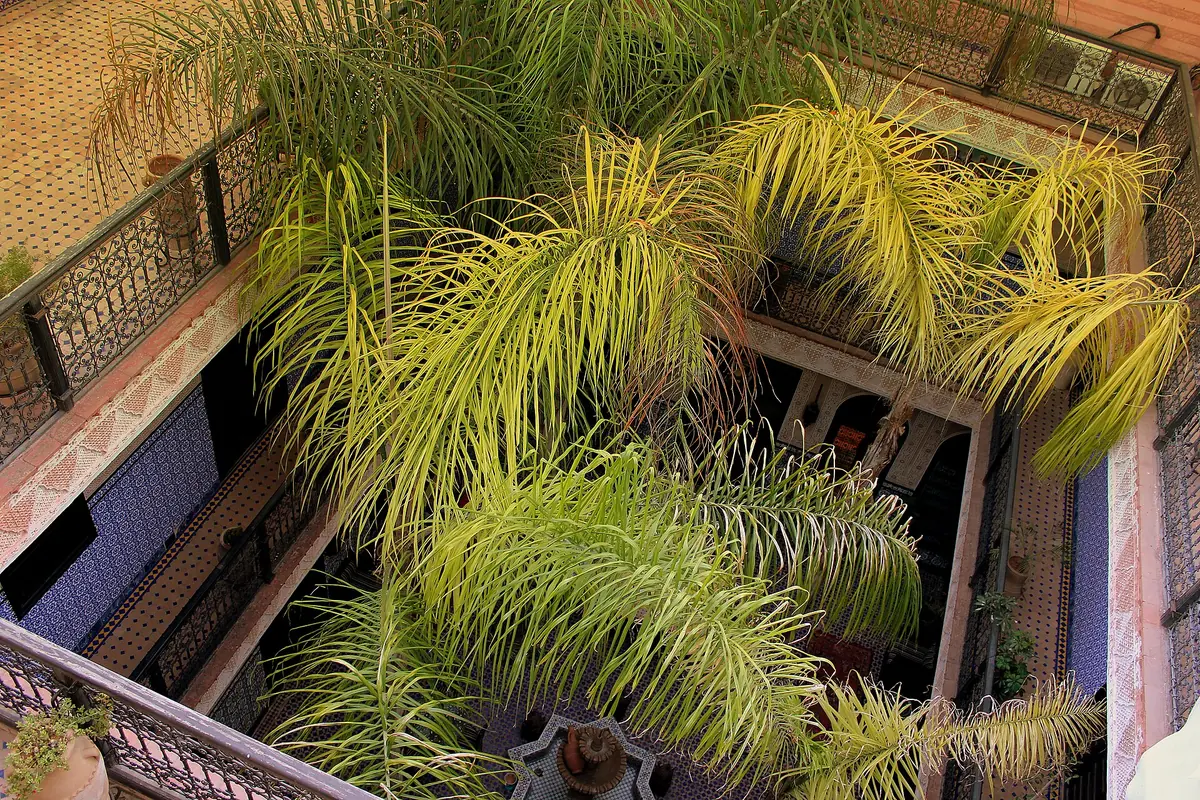
A riad, a traditional house built around a courtyard, suits a woman alone well: the door is usually locked and staffed, and the host knows the lanes and can advise you over breakfast. When you book, look for a reception or a host who is there around the clock, a location a short walk from a medina gate or taxi rank, and a room with its own lock and a safe. A riad that can book a licensed guide for your first morning saves you from the men who offer their services in the street: the UK advises that a medina guide should carry an official badge and permission from the local authority.
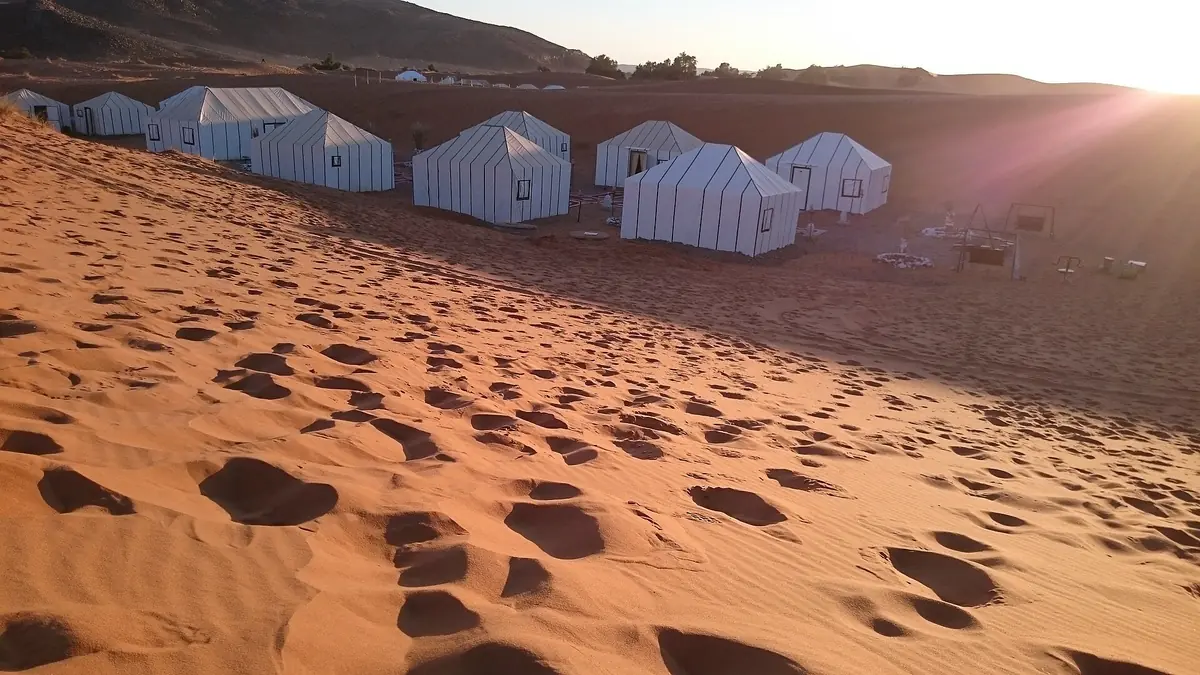
For the desert and the mountains, Germany recommends mountain treks, and off-road tours in the desert areas around Zagora and Merzouga, only in a group with registered local guides. Germany also advises against travelling alone and away from roads. A shared tour from Marrakech or Fes, or a camp booked through a reputable operator, follows that advice; a shared three-day tour from Fes to Marrakech is listed from USD 274 per person on TourRadar. A private tent within a shared camp gives you your own space without leaving you alone in the dunes. Merzouga and its desert camps lie inside the 20 km band along the Algerian border where Canada advises against all travel; other governments differ, so check your own government's advice and your travel insurance before you book. Our Merzouga and Sahara guide compares the camps and how to get there.
Be wary of anyone who quickly proposes a romance, in person or through an app. Meeting people through dating apps carries legal, safety and privacy risks in Morocco. Marriage fraud and attempted extortion have affected British nationals, so keep your return ticket, passport and belongings safe.
Prices and times checked 28 November 2026
Evenings, bars and drinks
Alcohol is served in licensed bars, hotels and restaurants, and drinking anywhere else, in the street included, is illegal. Methanol in alcoholic drinks has caused deaths in Morocco, another reason to drink only in licensed places. Drinks can be spiked, alcoholic or not: drugs used in rape also work in coffee and tea. They are normally colourless and tasteless, and you will not normally be able to detect them. Do not leave a drink unattended or accept one from a stranger, and get help at once if you feel strange or drunk after very little.
After dark, the busy squares, such as Jemaa el-Fnaa in Marrakech, stay lively, but the lanes around them empty quickly. France advises against walking in deserted places such as beaches and public parks, especially at night. Ask your riad to walk you back or send someone to meet you, or take an official taxi to the nearest gate.
Prices and times checked 28 November 2026
If something happens: the numbers and the help
German travellers can register on the Federal Foreign Office's Elefand crisis list, and French travellers on Fil d'Ariane to receive alerts. Save these numbers before you arrive:
| Who | Number |
|---|---|
| Police | 190 |
| Ambulance and fire | 150 |
| Gendarmerie (Royal Gendarmerie) | 177 |
| British Embassy in Rabat, for British nationals (24 hours) | +212 537 633333 |
| French Embassy in Rabat | +212 5 37 68 97 00 |
| German Embassy in Rabat, legal and consular section | +212 537 63 54 00 |
If you are assaulted, you can report it to the police on 190 or at the nearest police station. You can ask the police to inform the British Embassy, which can send a consular officer where timing and location allow. If you prefer, a female consular officer can speak to you. Report it as soon as you can, so forensic evidence can be kept: washing yourself or your clothes can make that harder, and if you change your clothes, take the ones you were wearing to the police. Tell the police if you think you were drugged. You can ask to speak to a female police officer, although one may not always be available. Police reports are usually in Arabic. You do not have to give up your passport, though the police may copy it.
See a doctor even if you do not report the attack. Victims are usually seen by gynaecologists, and you can ask for a female member of staff to be present. Go as soon as you can. HIV post-exposure medication must be started within 72 hours to work. Emergency contraception works best the sooner it is taken, but the WHO says it can still be used up to five days after, so ask a doctor even if more than three days have passed. The UK government says emergency contraceptive pills are sold over the counter, without a prescription, in almost all pharmacies. Hospitals may ask for full payment before they discharge you, and public hospitals and some private ones may not take cards, so carry cash. Call your insurer's emergency line as well; our health and safety guide explains what the policy should cover.
Prices and times checked 29 November 2026
Practical questions
Is Morocco safe for women travelling alone?
Women do travel alone in Morocco; the UK, German and French advice asks them to take care, especially when travelling alone. Unwanted attention is common, though, especially in the medinas. Trains, official taxis, a well-run riad and group tours to the desert reduce the risks.
What should a woman wear in Morocco?
None of the government advice sets a dress code for visitors. Loose clothes that cover the arms, legs and chest draw less attention, especially in the medinas and villages; a light scarf is useful but not required.
Is it safe to take a taxi alone in Morocco?
Use official petits taxis, agree the fare or ask for the meter, and expect other passengers to be picked up on the way. Be wary of cars booked through ride-hailing apps, which may be unlicensed and uninsured, and end a ride somewhere well lit if you feel uncomfortable.
Can I go to the desert alone as a woman?
Go with a group and a registered guide, especially for desert trips around Merzouga and Zagora. A shared tour or a reputable camp with a private tent gives you company on the road and your own space at night.
What number do I call in an emergency in Morocco?
Call 190 for the police and 150 for an ambulance. British nationals can also call the British Embassy on +212 537 633333 at any hour.
Keep planning your trip
Health and safety in Morocco
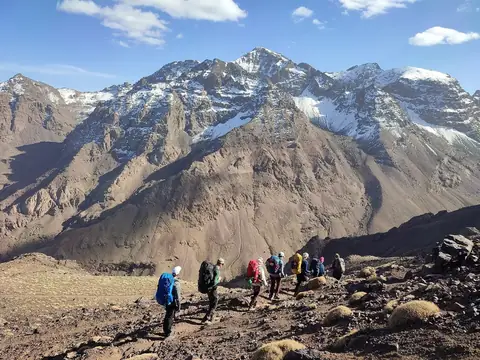
Where governments draw lines in Morocco, false guides and scams, the numbers to save, clinics and insurance, vaccines, stray dogs, Toubkal, heat and the laws.
Read the guide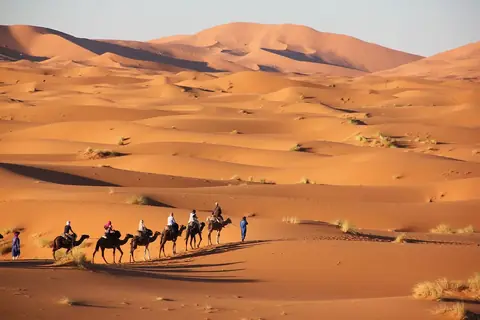
First trip to Morocco
Choose seven days or ten for Marrakech, the Sahara at Merzouga and Fes: the order of the cities, the desert road, the season, entry, cash and the medina basics.
Read the guide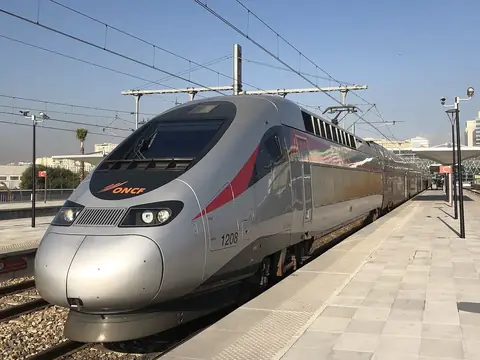
Transport in Morocco
How to get around Morocco: Al Boraq and ONCF trains, CTM coaches to Chefchaouen and the south, grands taxis, drivers, car hire, flights and city trams.
Read the guide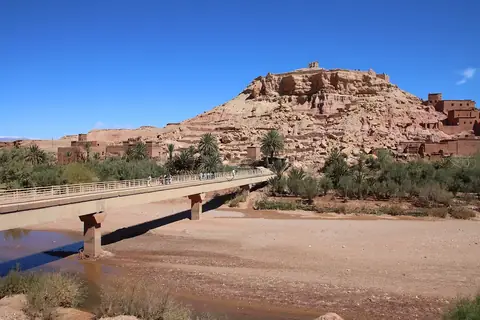
Where to stay in Morocco
Riad or hotel, which quarter of Marrakech, Fes and Chefchaouen to sleep in, nights per base, and three hotels per base from budget to upper.
Read the guide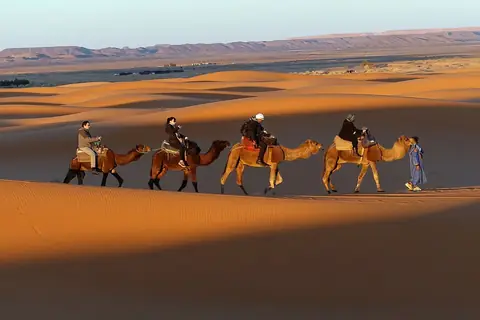
Merzouga and the Sahara
How to plan a night in the dunes of Erg Chebbi: tours from Marrakech or Fes, desert camps, the camel ride, Khamlia, Rissani and the best months for the Sahara.
Read the guide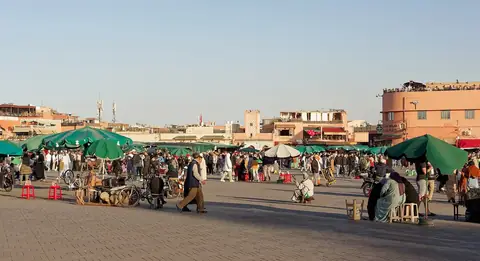
Marrakech
How many nights Marrakech needs, where to sleep in the medina, Jemaa el-Fnaa, the palaces and Majorelle, ticket prices and hours, and the day trips.
Read the guideSources and checks before you travel
(21)
- UK Foreign Office (GOV.UK): Morocco safety and security ↗ — opens in a new tab
- UK Foreign Office (GOV.UK): advice for women travelling abroad ↗ — opens in a new tab
- UK Foreign Office (GOV.UK): Morocco, information for victims of rape and sexual assault ↗ — opens in a new tab
- UK Foreign Office (GOV.UK): Morocco getting help ↗ — opens in a new tab
- France Diplomatie: Maroc, sécurité ↗ — opens in a new tab
- France Diplomatie: Maroc, santé ↗ — opens in a new tab
- German Federal Foreign Office: Marokko, Reise- und Sicherheitshinweise ↗ — opens in a new tab
- Visit Morocco (Moroccan National Tourism Office): getting around ↗ — opens in a new tab
- Le360 (17 February 2026): ONCF adjusts its timetable for Ramadan 2026 ↗ — opens in a new tab
- Le Matin (21 June 2026): ONCF's summer 2026 plan ↗ — opens in a new tab
- CTM: Tangier–Chefchaouen coach ↗ — opens in a new tab
- CTM: Rabat–Chefchaouen coach ↗ — opens in a new tab
- CTM: Marrakech–Essaouira coach ↗ — opens in a new tab
- CTM: help and FAQ ↗ — opens in a new tab
- TourRadar: 3 Days from Fes to Marrakech through the Erg Chebbi Dunes (shared group tour) ↗ — opens in a new tab
- Visit Morocco: wellness ↗ — opens in a new tab
- Visit Marrakech (Marrakech-Safi Regional Tourism Council): transport ↗ — opens in a new tab
- German Embassy Rabat (Auswärtiges Amt) ↗ — opens in a new tab
- ONCF: Al Atlas passenger guide ↗ — opens in a new tab
- Government of Canada (travel.gc.ca): Morocco travel advice ↗ — opens in a new tab
- World Health Organization: emergency contraception fact sheet ↗ — opens in a new tab
Reference sources for the version dated 29 November 2026. Confirm opening times, access, transport and conditions for your travel dates.
Photo credits
(4)
Bab Boujloud in Fes: a medina gate is the easiest place for a riad to meet you
Photograph: Yair Haklai — opens in a new tab · CC BY-SA 4.0 — opens in a new tab
Changes: Resized and converted to WebP; displayed with responsive crops. · Original photograph and licence details ↗ — opens in a new tab
First class on Al Boraq, the high-speed train between Tangier, Rabat and Casablanca
Photograph: David Scheibler / Zugreiseblog.de — opens in a new tab · CC BY-SA 4.0 — opens in a new tab
Changes: Resized and converted to WebP; displayed with responsive crops. · Original photograph and licence details ↗ — opens in a new tab
The courtyard of a riad in Marrakech, a locked and staffed house around a garden
Photograph: calflier001 — opens in a new tab · CC BY-SA 2.0 — opens in a new tab
Changes: Resized and converted to WebP; displayed with responsive crops. · Original photograph and licence details ↗ — opens in a new tab
A desert camp in the dunes near Merzouga
Photograph: Isabeldianamadrid — opens in a new tab · CC BY-SA 4.0 — opens in a new tab
Changes: Resized and converted to WebP; displayed with responsive crops. · Original photograph and licence details ↗ — opens in a new tab