Itineraries
Morocco in 7 days: Marrakech, the Sahara at Merzouga and Fes
Seven days is enough for Morocco's two great medinas and a night in the Sahara, if you travel in one direction. You land in Marrakech, cross the High Atlas by the Tizi n'Tichka pass to the kasbahs of the south, sleep a night on the road, at the stop the operator sets, and then in a camp among the dunes of Erg Chebbi at Merzouga, and finish in Fes, flying home from there. The three days on the road are the heart of the trip, and they are easiest booked as one tour.
In this guide
Find the location ↗ — opens in a new tabThe short answer
Book six nights: two in Marrakech, two on a three-day desert tour from Marrakech to Fes, and two in Fes, then fly home from Fes on day 7. The tour covers nights 3 and 4: a night on the road at the stop the operator sets and a night in a desert camp at Merzouga. Merzouga and its desert camps lie inside the 20 km band along the Algerian border where Canada advises against all travel; other governments differ, so check your own government's advice, your travel insurance and the camp's exact location before you book. First book an open-jaw flight into Marrakech (RAK) and out of Fes (FEZ), then the tour; a shared three-day tour from Marrakech to Fes is listed from about USD 312 per person on TourRadar. In Marrakech, the Jardin Majorelle costs MAD 170 for standard admission and sells its tickets only online. For two people sharing, the seven days cost about MAD 20,900 on the ground, about MAD 10,500 per person: the tour, four riad nights, the airport taxi in Marrakech, the Marrakech tickets, meals on every day, a SIM card each and a 10% buffer. Flights and the transfer to Fes airport are extra.
- Suggested time
- 7 days / 6 nights: Marrakech 2, desert tour 2 (a night on the road, then a Merzouga desert camp), Fes 2
- Route
- Marrakech 2 nights
- Night on the road 1 night
- Merzouga 1 night
- Fes 2 nights
- Season and timing
- Best from March to May and from September to November. Summer days are very hot in the desert, and winter nights in the camp are cold, with snow possible on the Tizi n'Tichka.
- Day by day
- The seven days at a glance ↓
The seven days at a glance
One line per day, with where you sleep.
- Day 1
Arrive in Marrakech
Jemaa el-Fnaa at dusk. Night: Marrakech.
- Day 2
Marrakech
the Majorelle Garden, the souks and the palaces. Night: Marrakech.
- Day 3
Tizi n'Tichka, Ait Ben Haddou and the Dades Valley
Night: on the road, at the stop the operator sets.
- Day 4
The Todra Gorge and the dunes of Erg Chebbi
Night: desert camp at Merzouga.
- Day 5
Sunrise in the dunes, the road north to Fes
Night: Fes.
- Day 6
Fes
Bab Boujloud, the madrasas, the tanneries and the Marinid tombs. Night: Fes.
- Day 7
Fly home from Fes
Book the six nights as one journey east and north
Sleep in Marrakech for nights 1–2, on the road for night 3, at the stop the operator sets, in a desert camp at Merzouga for night 4 and in Fes for nights 5–6. Days 3, 4 and 5 are road days, and day 7 is the flight home from Fes, not another night. Fly into Marrakech Menara (RAK) and home from Fes–Saïss (FEZ); the reverse, Fes to Marrakech, works just as well with the same nights.
The three road days are easiest as a shared tour from Marrakech that ends in Fes. The operator sets the night stops and what the price includes, so read both before you book. A private driver follows the same road at your own pace and lets you stop where you like. The transport guide covers buses and car hire if you want to do it yourself.
Choose a riad inside the medina in both cities, close to a gate a taxi can reach. Ask the riad to send someone to meet you at the airport. Medina lanes are too narrow for cars, and the first walk in with luggage is the hardest. The where-to-stay guide compares the quarters.
Days 1–2: Marrakech, Jemaa el-Fnaa and the souks
Day 1 — arrive in Marrakech. Take a regulated taxi (MAD 70 by day, MAD 100 at night), airport bus 19 (MAD 30) or your riad's transfer into the medina. You may bring at most MAD 2,000 in dirham banknotes into Morocco, so take dirhams from an ATM when you land. Leave your bags and walk to Jemaa el-Fnaa, the great square at the centre of the medina, for the evening: as night falls it fills with food stalls, musicians, charmers and storytellers, and the Koutoubia mosque stands nearby. Sleep in Marrakech, night 1.
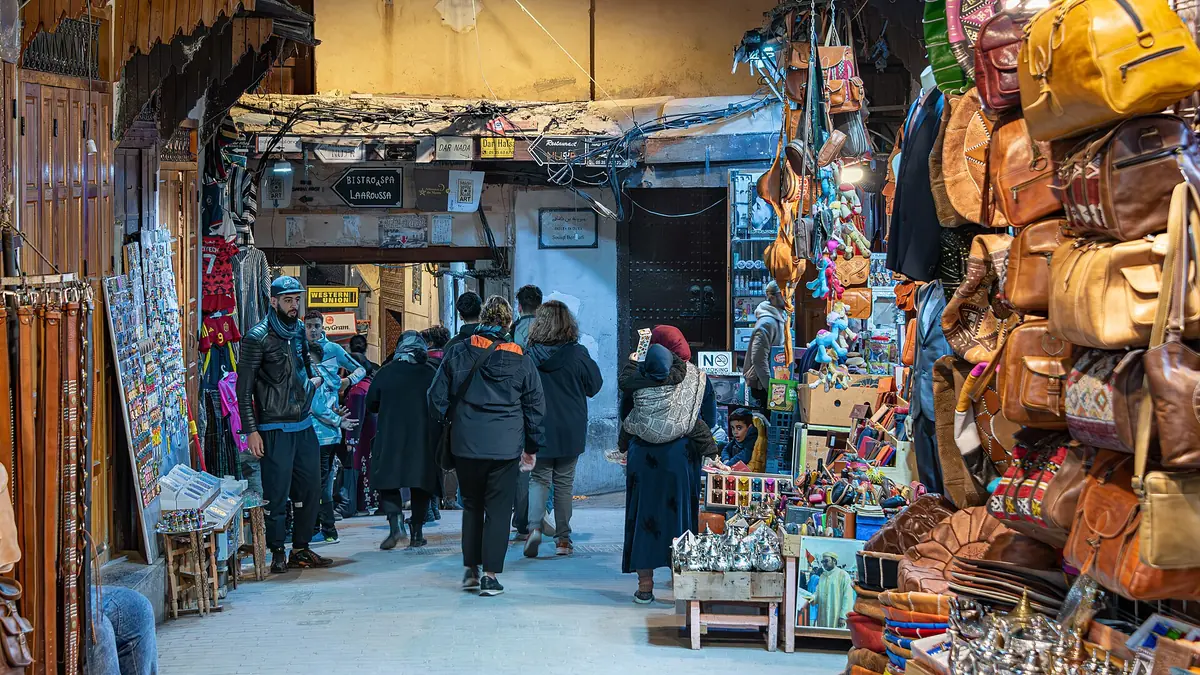
Day 2 — a garden, the souks and the palaces. Be at the Majorelle Garden, the blue-walled garden with its cacti and bamboo, when it opens at 08:00. It sells tickets only online, on its own ticket site, and standard admission is MAD 170. Back in the medina, walk north from the square into the souks, the covered lanes of leather, metal, spices and carpets; getting a little lost is part of it. In the afternoon go south to the Bahia Palace, the Saadian Tombs and the ruined El Badi Palace, each MAD 100 for a foreign adult. Sleep in Marrakech, night 2.
If you would rather see the medina with a guide on day 2, choose one with an official badge, through your riad or one of the tours below, and agree the length of the walk first. Day trips from Marrakech to Essaouira or the High Atlas need a longer trip; the Marrakech guide covers them.
Prices and times checked 28 November 2026
Day 3: over the Tizi n'Tichka to Ait Ben Haddou and the Dades
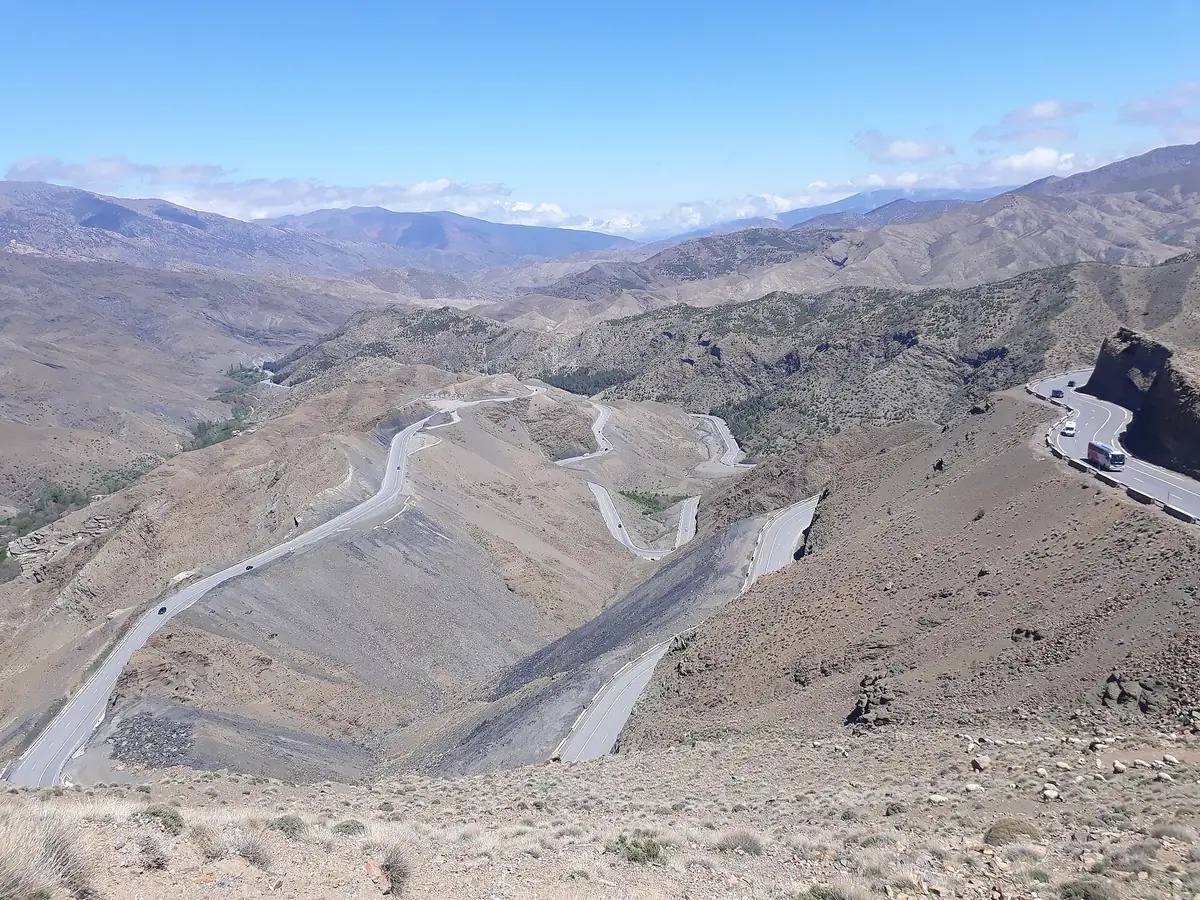
Tours leave Marrakech early in the morning and climb into the High Atlas to the Tizi n'Tichka pass, the high road between Marrakech and the south. On the far side the road comes down towards Ouarzazate, 194 km and about 3 h 45 of driving from Marrakech. The first long stop is Ait Ben Haddou, about 30 minutes before Ouarzazate. It is a ksar, a fortified village of adobe houses and granaries inside a defensive wall, and UNESCO lists it as World Heritage, an outstanding example of the traditional architecture of southern Morocco. Films from Lawrence of Arabia to Gladiator were shot around Ouarzazate. Walk up through its lanes to the terrace at the top for the view.
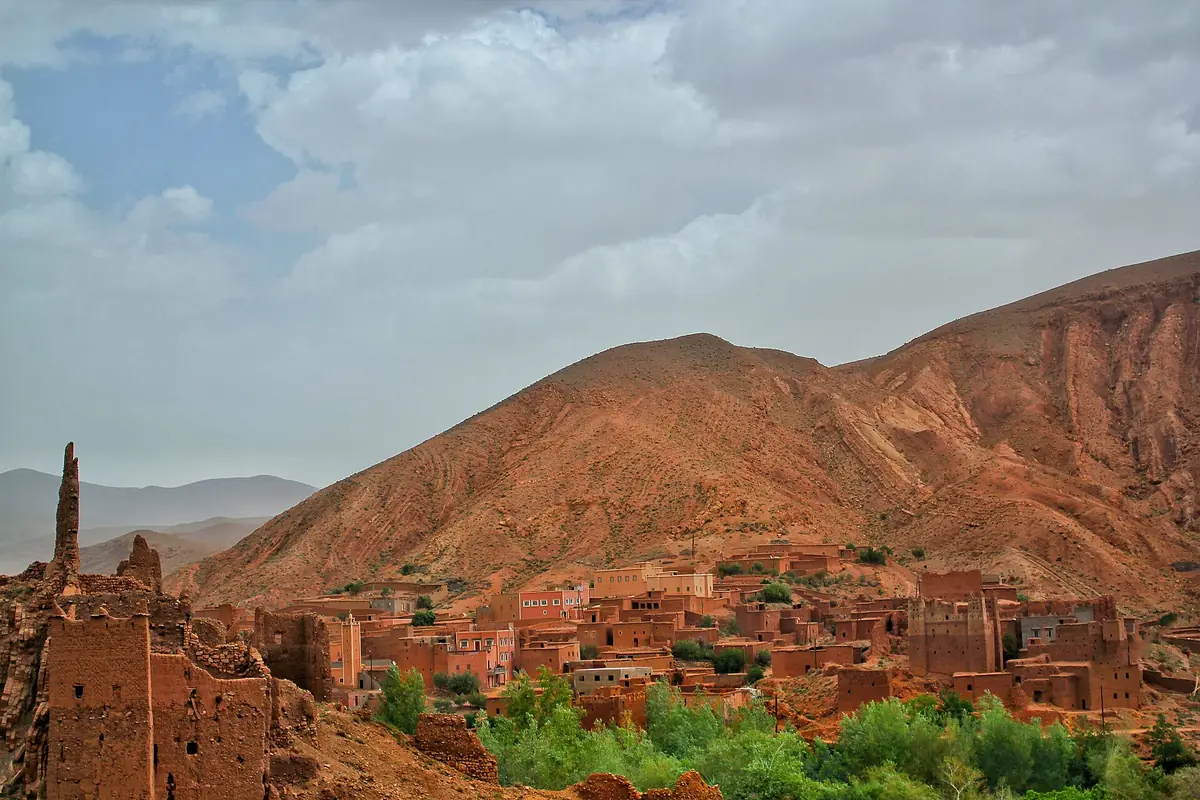
From Ouarzazate the road runs east through the Dades Valley, about two hours further, past palm groves and old kasbahs. Night 3 is the tour's first night, on the road at the stop the operator sets.
Day 4: the Todra Gorge and a night in the dunes
Start with a walk into the Todra Gorge, which cuts into the High Atlas above the palm grove of Tinghir; the walls close in to a narrow passage with a stream at the bottom. The road then crosses the stony plain east to Erfoud and on to Merzouga, where the dunes of Erg Chebbi rise suddenly out of the flat ground. Visit Morocco lists the Todra as a day trip of about 2 hours from Errachidia-Merzouga, so with the morning walk this is a full day on the road; ask the operator for the day's stops and driving time when you book. Merzouga and its desert camps lie inside the 20 km band along the Algerian border where Canada advises against all travel; other governments differ, so check your own government's advice and your travel insurance before you book. Our Merzouga and Sahara guide explains the advice.
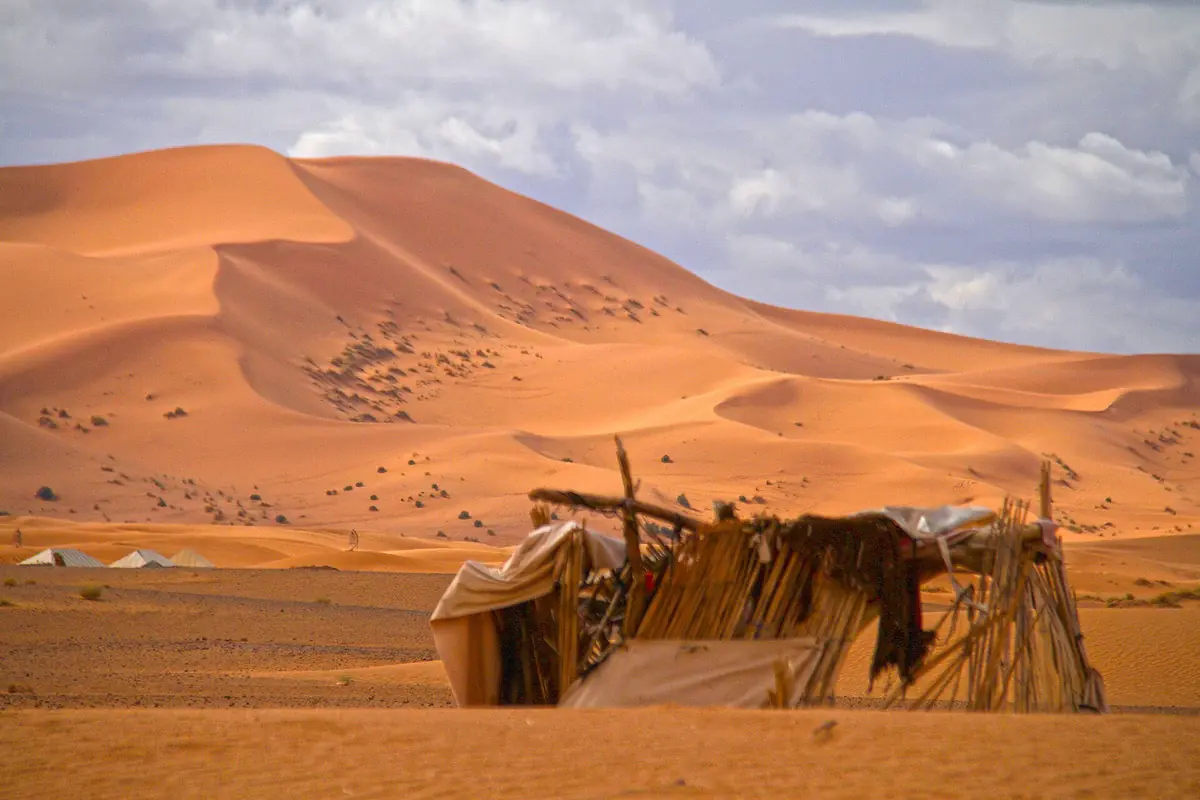
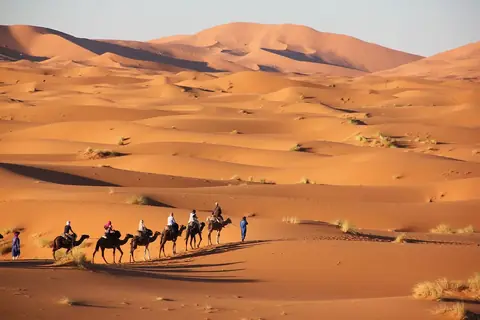
In the late afternoon you ride a camel, or drive by four-wheel drive, out to a camp in the dunes, in time to climb a dune for the sunset. Dinner is in the camp, and the stars are the reason to come. Sleep in the desert camp, night 4. Pack a small bag for the night, a warm layer for the evening even in spring and autumn, and a scarf against the sand.
Day 5: sunrise over Erg Chebbi and the road north to Fes
Wake before dawn and climb the dune behind the camp for the sunrise, then ride back to Merzouga for breakfast and a shower. The day is the long drive north to Fes, through Errachidia, over the Middle Atlas at Midelt and past Ifrane and its cedar forest, arriving in the evening. Visit Morocco gives 341.8 km and about 5 h 21 by road between Fes and its Errachidia-Midelt-Merzouga region, so plan the whole day on the road.
Tours drop you at your riad or the nearest medina gate. Sleep in Fes, night 5.
Day 6: the Fes medina, the madrasas and the Marinid tombs
Enter Fes el-Bali by Bab Boujloud, the tiled blue gate, and walk down the Talaa Kebira, the main lane, towards the centre. Fes el-Bali was founded by the Idrissids, and no cars enter it. Its lanes are easy to get lost in, so a guide with an official badge is worth it for the morning.
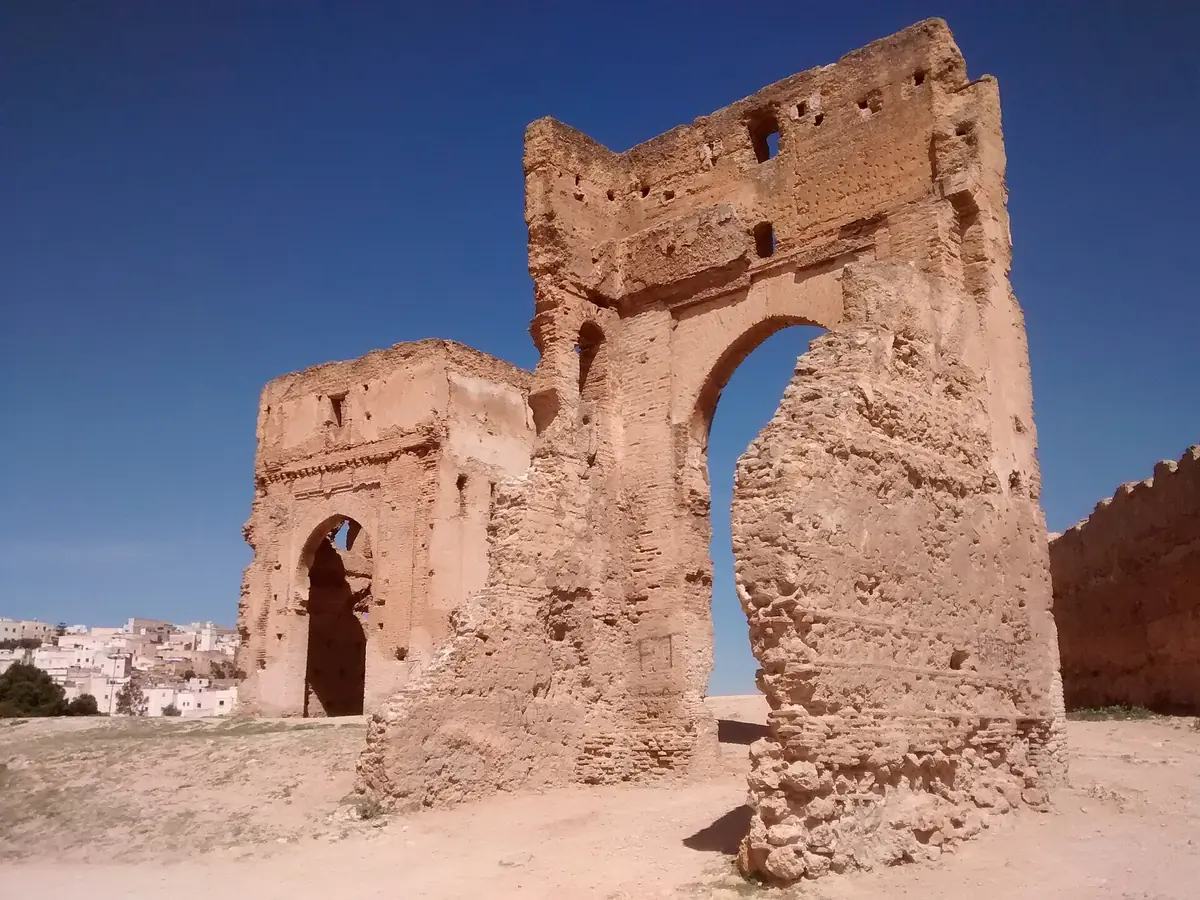
Pass the al-Qarawiyyin Mosque, home to what Visit Morocco, the national tourist office, calls the oldest university in the world; it is a working mosque, so visitors see it from the lane, looking into the courtyard through the doors. Step into the Bou Inania and Attarine madrasas, two Marinid colleges of tile, carved stucco and cedar, which sell their tickets at the door. Then visit the Nejjarine Museum and the leather tanneries. In the late afternoon take a taxi up to the Marinid tombs on the hill to the north for the view over the whole medina at sunset. Sleep in Fes, night 6.
With a seventh night, add a day trip to Meknes, about an hour away, and the Roman city of Volubilis, about an hour and a half; our Fes guide plans that day.
Day 7: fly home from Fes
Have breakfast in the riad, spend the morning in the medina if your flight allows, and take a taxi or your riad's transfer to Fes–Saïss airport (FEZ). If your flight home leaves from Casablanca instead, take an ONCF Al Atlas train from Fes to Casablanca on day 7 and book an evening flight; look up the train times and fares for your date on oncf-voyages.ma. If you want to fly home from Marrakech, start the route in Fes and run it the other way. The transport guide covers the trains.
What the seven days cost
For two people sharing, the seven days cost about MAD 20,900 on the ground, or about MAD 10,500 per person (about EUR 1,900 for two). Rooms come to about MAD 6,300: two nights at Riyad El Cadi in Marrakech, about USD 180 a night for two on KAYAK, and two at Riad Laaroussa in Fes, from MAD 1,300 a night for two with breakfast, plus a tourism tax of MAD 30 per guest aged 12 and over per night. The shared desert tour comes to about MAD 6,300 for two: a three-day group tour from Marrakech to Fes is listed from about USD 312 per person on TourRadar on 28 November 2026. Tickets come to about MAD 900 for two: the Jardin Majorelle (MAD 170) and the Bahia Palace, the Saadian Tombs and El Badi (MAD 100 each). Food comes to about MAD 5,400 for two: four days of sit-down meals in Marrakech and Fes at about MAD 550 each a day, priced from Le Jardin's menu in the Marrakech medina with its 7% service charge, and a lunch of about MAD 170 each, a chicken tagine and a large water there, on each of the three tour days. The regulated taxi fare between Marrakech airport and the city centre is MAD 70 by day (MAD 100 at night), and an Orange SIM card costs MAD 20 each. A 10% buffer for snacks, tips, petits taxis, mobile data and small extras adds about MAD 1,900. Dollar and euro figures use Bank Al-Maghrib's average transfer rates of 27 November 2026: USD 1 = MAD 10.03 and EUR 1 = MAD 10.99. The flights and the transfer to Fes airport are extra: ask your Fes riad the price of its airport transfer when you book. The trip-cost guide prices the ten-day route at three levels.
Prices and times checked 28 November 2026
What to eat and where to look
Tanjia
Lamb or veal cooked for hours in a terracotta jar, the dish of Marrakech.
- Where to look
- Grill and tanjia stalls around Jemaa el-Fnaa and the lanes off it, Marrakech.
- Fit it into your day
- Dinner on day 1 or 2.
Tagine
Meat, chicken, fish or vegetables steamed slowly with spices in a conical clay pot, sometimes with prunes, apricots or nuts.
- Where to look
- On every road-stop menu and at the desert camp.
- Fit it into your day
- Lunch on day 3 and dinner on day 4.
Couscous
Steamed semolina with meat, vegetables or fish and a vegetable broth, traditionally eaten on Fridays.
- Where to look
- Family restaurants in either medina on a Friday.
- Fit it into your day
- Whichever day of the trip is a Friday.
Pastilla
Thin, flaky pastry filled with chicken, pigeon or fish, or with almonds, sweet and savoury at once.
- Where to look
- Restaurants in the Fes medina.
- Fit it into your day
- Dinner on day 5 or 6.
Harira
A soup of pulses, tomato, pasta and flour, served in most restaurants and traditionally eaten during Ramadan.
- Where to look
- Soup stalls and cafés in both medinas.
- Fit it into your day
- A light lunch on day 2 or 6.
Practical questions
Does seven days mean six nights?
Yes. You sleep two nights in Marrakech, one on the road at the stop the operator sets, one in the desert camp and two in Fes, and fly home on day 7.
Can I do the route the other way, from Fes to Marrakech?
Yes. Tours run in both directions with the same nights; fly into Fes and home from Marrakech.
Do I need to book the desert tour in advance?
Yes, because it fixes nights 3 and 4 and the day you reach Fes. Book it as soon as your flights are fixed.
Is one night in the desert enough?
For a first trip, yes: you get the sunset, a night in camp and the sunrise. A second night at Merzouga needs an eighth day.
How cold is the desert camp?
Desert nights are cool in spring and autumn and cold in winter.
Can I drive the route myself?
Yes, but the mountain roads and the long day 5 are tiring, and you cannot drive into the medinas. A shared tour or a private driver is easier.
Keep planning your trip
First trip to Morocco
Choose seven days or ten for Marrakech, the Sahara at Merzouga and Fes: the order of the cities, the desert road, the season, entry, cash and the medina basics.
Read the guide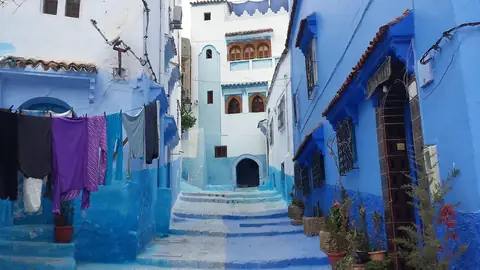
Morocco in ten days
Ten days and nine nights from Rabat through Chefchaouen and Fes to the Merzouga dunes, Ait Ben Haddou and Marrakech, with named rooms and the desert days.
Read the guide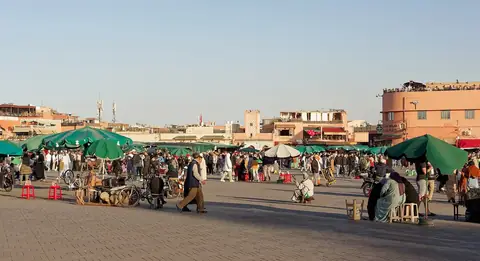
Marrakech
How many nights Marrakech needs, where to sleep in the medina, Jemaa el-Fnaa, the palaces and Majorelle, ticket prices and hours, and the day trips.
Read the guide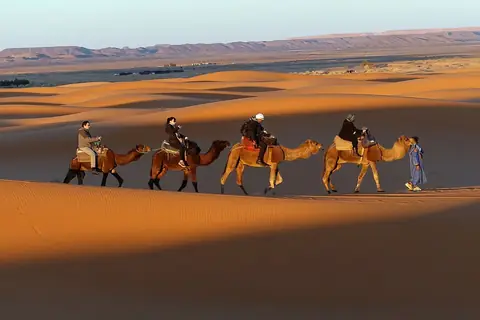
Merzouga and the Sahara
How to plan a night in the dunes of Erg Chebbi: tours from Marrakech or Fes, desert camps, the camel ride, Khamlia, Rissani and the best months for the Sahara.
Read the guide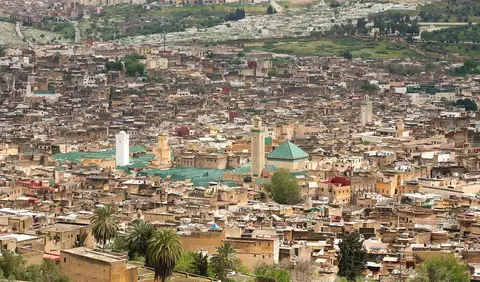
Fes
How many nights Fes needs: Fes el-Bali on foot, the madrasas and tanneries, the Batha museum, and a day trip to Meknes and Volubilis, with tickets and riads.
Read the guide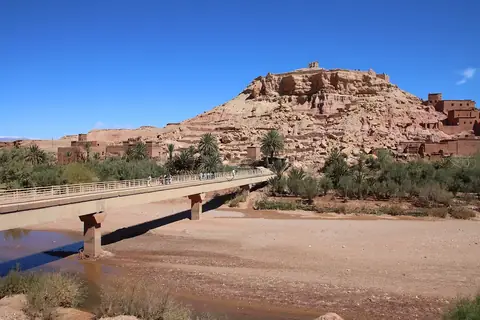
Ouarzazate and Ait Ben Haddou
Whether Ait Ben Haddou and Ouarzazate are a day trip from Marrakech or a night on the road to the Sahara: the ksar, the kasbahs, the film studios, buses and hotels.
Read the guideSources and checks before you travel
(30)
- Visit Morocco (Moroccan National Tourist Office): Marrakech ↗ — opens in a new tab
- Visit Morocco: Ouarzazate-Zagora-Tinghir ↗ — opens in a new tab
- Visit Morocco: Errachidia-Midelt-Merzouga ↗ — opens in a new tab
- Visit Morocco: Fez ↗ — opens in a new tab
- Visit Morocco: food and drinks ↗ — opens in a new tab
- Riyad El Cadi ↗ — opens in a new tab
- Riad Laaroussa ↗ — opens in a new tab
- UK FCDO: Morocco safety and security ↗ — opens in a new tab
- German Federal Foreign Office: Morocco travel and safety advice ↗ — opens in a new tab
- Office des Changes: travel allowances ↗ — opens in a new tab
- Jardin Majorelle: the garden ↗ — opens in a new tab
- Ministry of Culture ticket platform: El Badi Palace ↗ — opens in a new tab
- Visit Morocco: medinas of Morocco ↗ — opens in a new tab
- Visit Morocco: human heritage recognised by UNESCO ↗ — opens in a new tab
- Visit Morocco: historic sites ↗ — opens in a new tab
- Visit Morocco: Ifrane ↗ — opens in a new tab
- Le360 (February 2026): ONCF Ramadan timetable ↗ — opens in a new tab
- Riad Laaroussa: rates ↗ — opens in a new tab
- KAYAK: Riyad El Cadi ↗ — opens in a new tab
- TourRadar: Shared Group 3 Day Desert Tour Marrakesh To Fes (Travel Morocco Vacation) ↗ — opens in a new tab
- Bank Al-Maghrib: transfer exchange rate ↗ — opens in a new tab
- Jardin Majorelle: official site ↗ — opens in a new tab
- Ministry of Culture e-services: Bahia Palace tickets ↗ — opens in a new tab
- Ministry of Culture e-services: Saadian Tombs tickets ↗ — opens in a new tab
- CTM: tourism in Ouarzazate ↗ — opens in a new tab
- Le Jardin Marrakech: menu ↗ — opens in a new tab
- Visit Marrakech (Marrakech-Safi Regional Tourism Council): transport ↗ — opens in a new tab
- Orange Maroc: prepaid SIM card ↗ — opens in a new tab
- ONCF: Al Atlas passenger guide ↗ — opens in a new tab
- Government of Canada (travel.gc.ca): Morocco travel advice ↗ — opens in a new tab
Reference sources for the version dated 29 November 2026. Confirm opening times, access, transport and conditions for your travel dates.
Photo credits
(5)
The hairpin road to the Tizi n'Tichka pass
Photograph: Demonius42 — opens in a new tab · CC BY-SA 4.0 — opens in a new tab
Changes: Resized and converted to WebP; displayed with responsive crops. · Original photograph and licence details ↗ — opens in a new tab
A camp at the foot of the Erg Chebbi dunes, Merzouga
Photograph: cattan2011 — opens in a new tab · CC BY 2.0 — opens in a new tab
Changes: Resized and converted to WebP; displayed with responsive crops. · Original photograph and licence details ↗ — opens in a new tab
A village in the Dades gorges
Photograph: Nawfal Kharbach — opens in a new tab · CC BY-SA 4.0 — opens in a new tab
Changes: Resized and converted to WebP; displayed with responsive crops. · Original photograph and licence details ↗ — opens in a new tab
The Marinid Tombs on the hill above Fes el-Bali
Photograph: Mx. Granger — opens in a new tab · CC0 — opens in a new tab
Changes: Resized and converted to WebP; displayed with responsive crops. · Original photograph and licence details ↗ — opens in a new tab
Talaa Kebira, the main lane down through Fes el-Bali
Photograph: Jorge Franganillo — opens in a new tab · CC BY 2.0 — opens in a new tab
Changes: Resized and converted to WebP; displayed with responsive crops. · Original photograph and licence details ↗ — opens in a new tab