Dhofar
Salalah: the khareef coast, frankincense sites and the travel advice
Salalah lies in Dhofar, the southernmost region of Oman, a long way from Muscat by air: a coastal city of sandy beaches below green mountains, with the ancient frankincense city of Al Baleed at its edge and, from June to September, the khareef, when mist and light showers cover the plains and mountains. It is not part of our Oman routes. This guide is for readers who travel there all the same, for family, work or another reason of their own.
In this guide
Find the location ↗ — opens in a new tabThe short answer
France advises against travel to the Salalah region except for an imperative reason, and Canada against non-essential travel to all of Oman; read your own government’s advice first. If you still go, fly from Muscat to Salalah International Airport (SLL): Oman Air and SalamAir fly the route nonstop, with return fares on KAYAK from about USD 111. Book three nights on the coast near Al Baleed: one day for the town and Al Baleed, one east to Taqah, Wadi Darbat and Mirbat, one west to the blowholes at Mughsail. Discover Cars lists hire cars at the airport from about USD 14 a day, but they average about USD 56 a day in August. In the khareef, from June to September, book the room and the car first: it is Dhofar’s busiest season.
- Suggested time
- 3 nights in Salalah, flying in and out from Muscat
- Where to stay
- Salalah, on the coastal strip near Al Baleed
- Season and timing
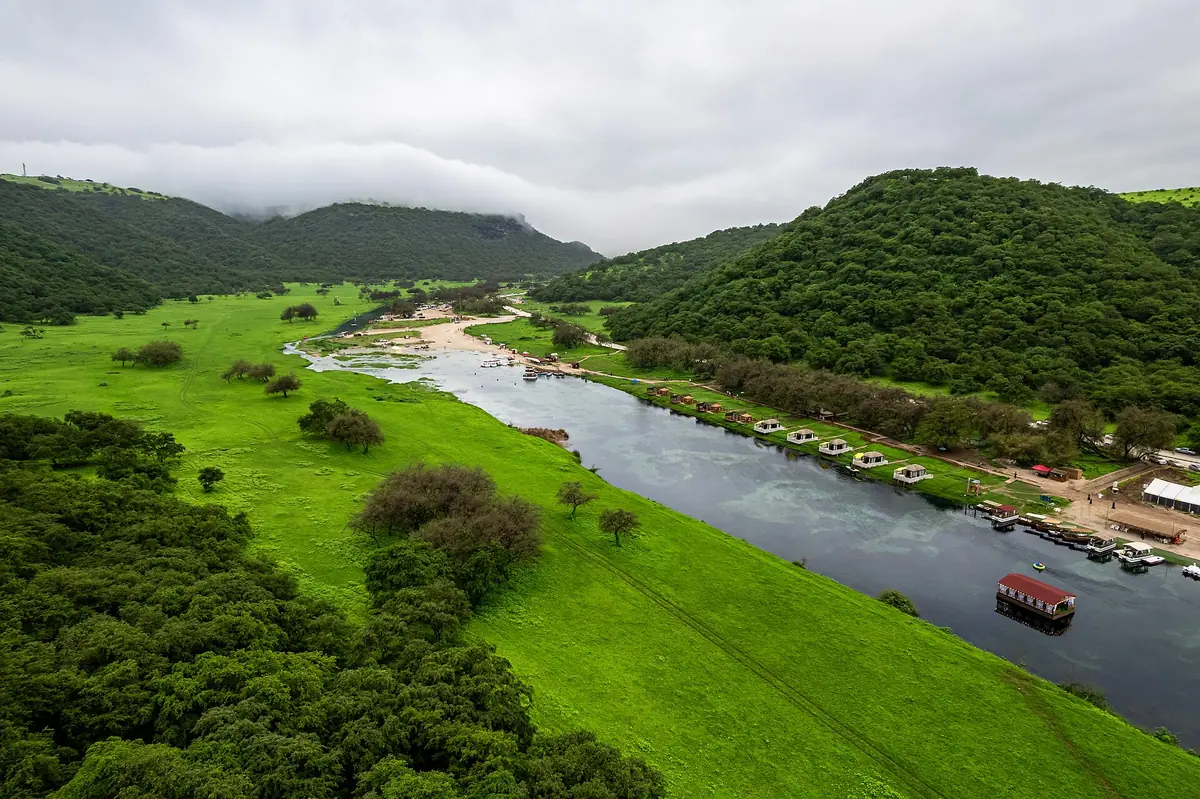
- The khareef, Dhofar's monsoon season, runs from June to September and brings mist, light showers, green hills, full waterfalls and the year's busiest weeks. The Dhofar Municipality's 2026 events season ran from 21 June to 21 September. From October to April Salalah is dry, with average highs of 28–32°C and fewer than two rain days a month.
The travel advice for the Salalah region
France advises against travel to the Salalah region, Duqm, Musandam and the Yemen border except for an imperative reason, and its advice covers the whole Salalah region. Canada advises against non-essential travel to all of Oman. Salalah is therefore not a stop in our seven- and ten-day routes. Read our health and safety guide and your own government’s advice before you book.
If you go, stay in Salalah and on the coast and mountain roads close to it described below. Do not drive west towards the Yemen border, which Canada also tells travellers not to approach. Book flights you can change and insurance that covers Dhofar, because the UK warns that airspace across the region can close at short notice.
Khareef or the cool months
Dhofar has two seasons for visitors, and they are very different trips. The khareef, from June to September, is the summer monsoon: mist and light showers cover the plains and mountains, the hills turn green, and Wadi Darbat's waterfalls run. Visitors from Oman and abroad come for the mist, the rain and the green hills. Khareef Dhofar received 1,070,738 visitors in 2025, according to the National Centre for Statistics and Information. The Dhofar Municipality ran its 2026 khareef events season from 21 June to 21 September, with 125 cultural, artistic, sporting and entertainment events. In the khareef the sea is rough: the Royal Oman Police warns beachgoers to stay out of the water and away from the rocky edges by the beaches because of high waves. Fog lies on the mountain roads, so drive slowly with your headlights on and keep a safe distance. It is also the busiest season for Dhofar’s hotels, and hire cars at the airport average about USD 56 a day in August against about USD 21 in May.
From October to April Salalah is dry, with average highs of 28–32°C and fewer than two rain days a month. These are good months for the beaches and the frankincense sites, with fewer visitors than in the khareef. The festivals and events guide has the khareef festival, and the best-time guide compares the months across Oman.
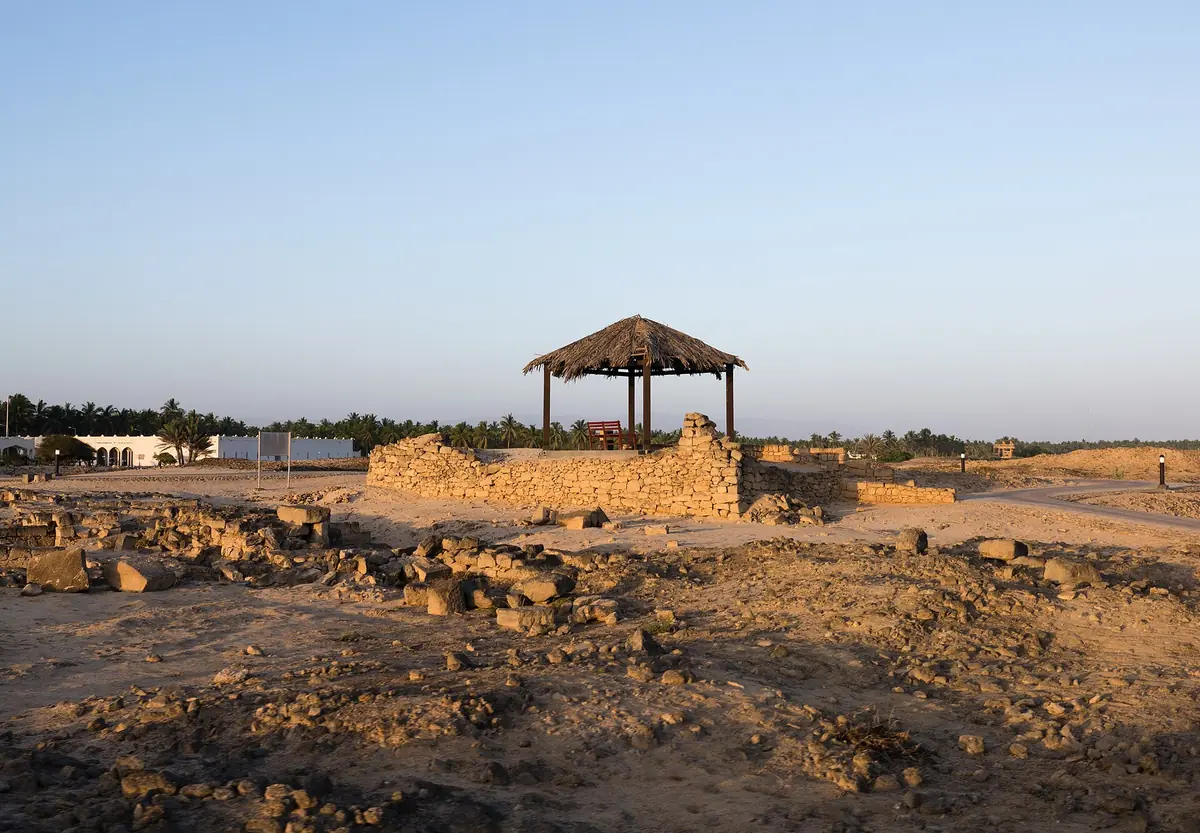
Salalah town and the frankincense port of Al Baleed
Dhofar calls itself the Land of Frankincense, and the trade in the resin built its old cities. Two of them, Al Baleed and Sumhuram, are UNESCO World Heritage sites. Al Baleed lies on the coastal strip of Salalah, about 5 km from the city centre, where the excavated ruins of the ancient city stand in an archaeological park by the sea.
The Frankincense Land Museum inside the park is the place to start. Its History Hall walks through Oman's geography, its ancient past, the Land of Frankincense, the coming of Islam and the country's modern history; its Maritime Hall tells of Oman's seafaring, trade by sea and the building of ships. Check the entry fees and opening hours of the park, the museum and Sumhuram with your hotel or at the gate before you set out. Give the museum and the ruins a morning, then spend the afternoon on the beach and in the town's markets.
Ain Sahalnoot, a perennial spring near central Salalah, is an easy short trip if you have a car.
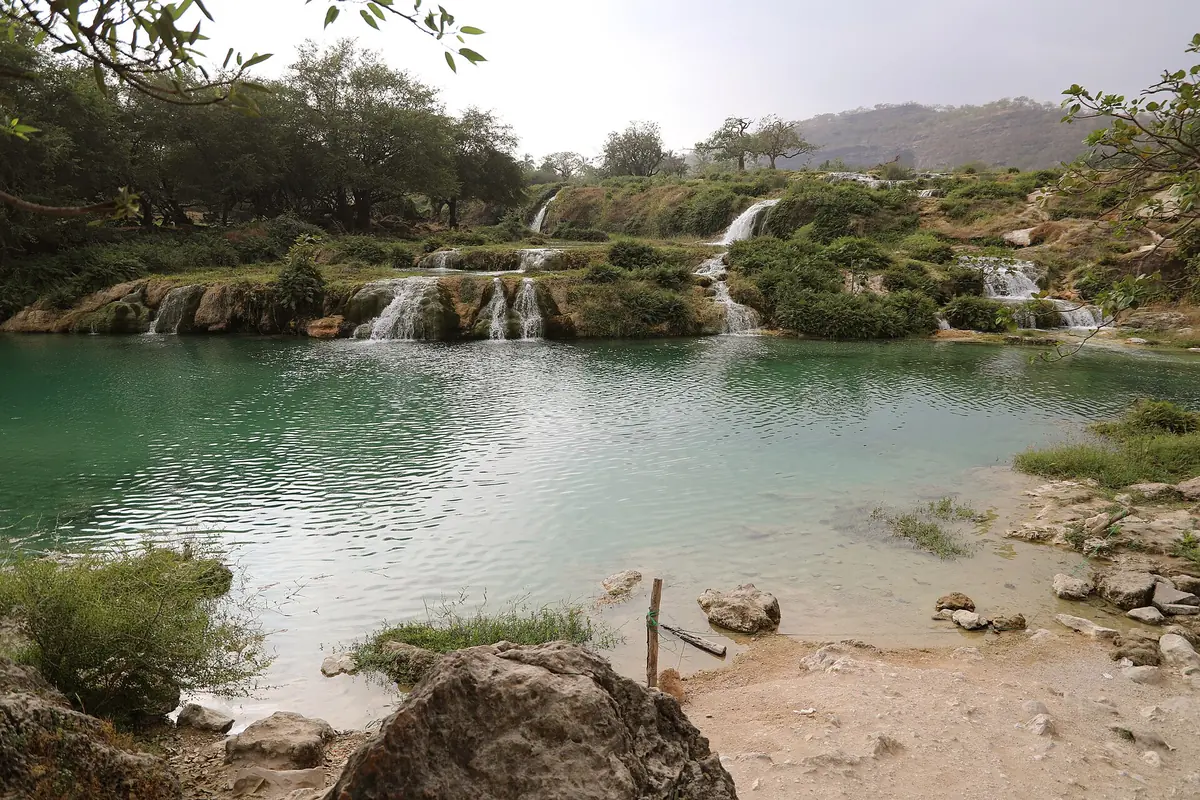
East of Salalah: Wadi Darbat, Sumhuram and Mirbat
The day east follows the coast through Taqah. Just beyond Taqah, Wadi Darbat lies hidden in the mountains above the archaeological site of Khor Rori. The valley holds a ribbon of small freshwater lakes, deep caves and, in the khareef, waterfalls that drop more than 100 metres over the cliffs. The khareef rains refill the lakes, and some of them may last through the year. Ghadya Heights gives a view down over the whole valley, and at its northern edge the spring of Ain Aan flows all year.
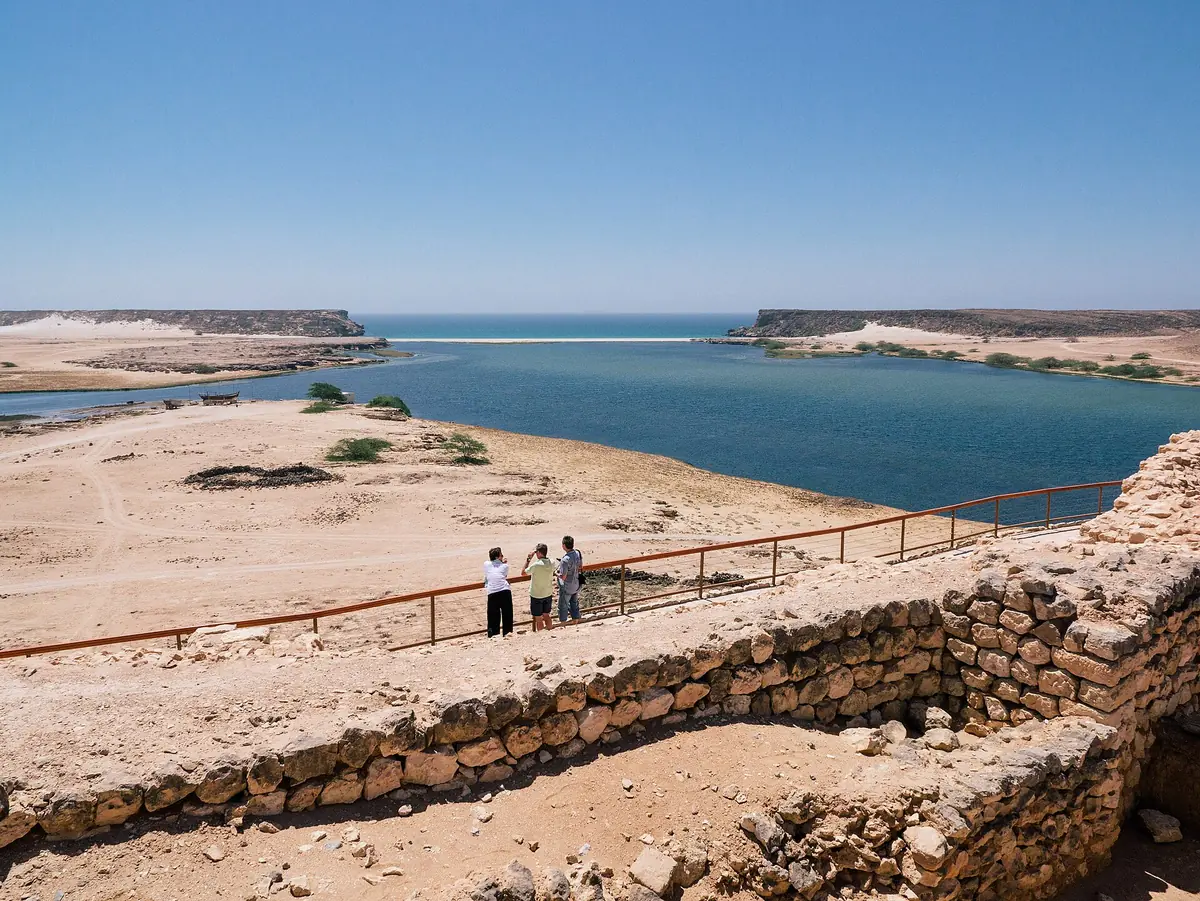
Below Darbat lie the ruins of Sumhuram, a town built in the area of Khor Rori and lived in from the 3rd century BC to the 5th century AD. It was the most important pre-Islamic settlement in Dhofar and a frankincense port. Excavations have uncovered streets of houses, storerooms for frankincense, temples, a market square with a door to the port, and a well 25 metres deep. With Al Baleed, Sumhuram is one of Dhofar's two UNESCO-listed ancient cities. Further east, Mirbat Castle overlooks the old seaport and the traditional market of Mirbat, the end of the day's drive before you turn back to Salalah.
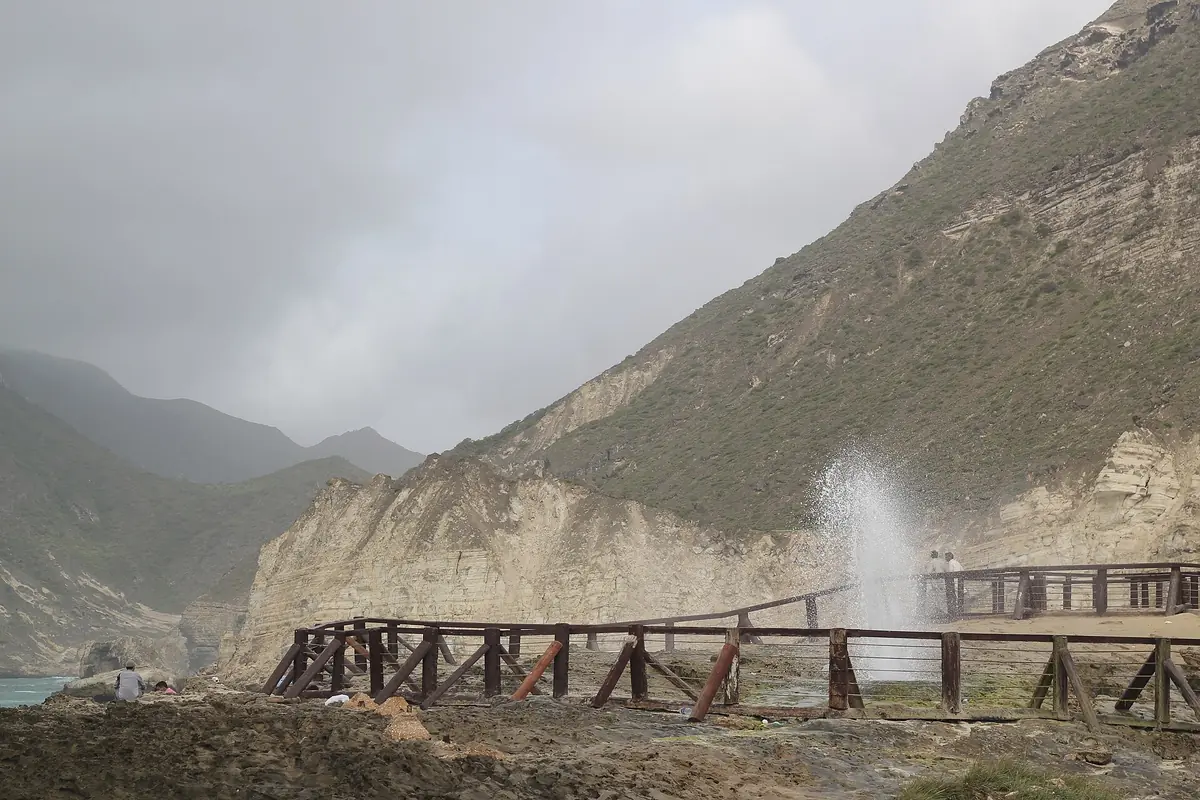
West of Salalah: the blowholes at Mughsail
Mughsail, west of Salalah, is the coast's best-known sight. Small holes in the rock just above the sea send fountains of seawater high into the air when the sea is a little rough, with a roar like something rising from below. Al Marnif Cave, above the blowholes, gives shade and a view of the sea.
Mughsail Beach runs for six kilometres of white sand, with shelters along it for a picnic. The Mughsail area also has some of the most accessible frankincense trees in Dhofar, and when they flower, bees make frankincense honey. Mughsail is the end of the day west: turn back to Salalah here, because the road beyond it leads towards the Yemen border.
Flights from Muscat and where to sleep in Salalah
Salalah International Airport (SLL) is about 1 hour 40 minutes from Muscat by air. Oman Air’s winter 2026/27 schedule, from 25 October 2026, has up to five flights a day between Muscat and Salalah, and SalamAir also flies Muscat–Salalah. KAYAK showed return fares from about USD 111 on SalamAir and USD 179 on Oman Air. By road, Muscat is about 1,000 km away, much of it through empty desert. Hire a car at the airport for the two day trips; the transport guide covers the flights and the hire cars.
Stay all three nights in one place on the coast near Al Baleed, so both day trips start on the coast road; check the driving time for each on a map app the evening before. The khareef is the commercial season for Dhofar’s hotels, so book early for June to September.
What to eat and where to look
Mirbat abalone
Wild abalone gathered seasonally by local divers off Mirbat, among the most prized seafood in Oman.
- Where to look
- Tasting menus at the Alila Hinu Bay resort, in season.
- Fit it into your day
- Dinner after the day east to Mirbat.
Madhbi
A Bedouin way of cooking: lamb or camel meat laid directly on heated stones, which seal in the juices and give it a smoky crust.
- Where to look
- Restaurants and grills in Salalah that serve Dhofari meat.
- Fit it into your day
- Dinner after the day at Mughsail.
Mishkak
Charcoal-grilled skewers seasoned in Dhofar with cloves, cardamom, cinnamon and pepper, a reminder of the old trade with India and East Africa.
- Where to look
- Roadside grills in Salalah in the evening.
- Fit it into your day
- An evening snack in town.
Frankincense ice cream and sweets
Chefs in Dhofar flavour ice cream, desserts and chocolates with frankincense, the resin that made the region rich, for a light citrus and floral note.
- Where to look
- Cafés and dessert shops in Salalah.
- Fit it into your day
- After the Frankincense Land Museum.
Lahooh and regag breads
Traditional flatbreads baked in clay ovens or on hot griddles, still made the old way and served with almost every meal.
- Where to look
- Traditional Omani restaurants in Salalah.
- Fit it into your day
- With lunch on the town day.
Practical questions
Is it safe to travel to Salalah?
France advises against travel to the Salalah region except for an imperative reason, and Canada against non-essential travel to all of Oman. Read your own government's advice before you book; if you go, stay away from the Yemen border.
When is the khareef in Salalah?
From June to September. The Dhofar Municipality's 2026 events season ran from 21 June to 21 September. The khareef brings mist, light showers, green hills and Dhofar's busiest weeks.
How many nights do I need in Salalah?
Three: one day for the town and Al Baleed, one east to Wadi Darbat, Sumhuram and Mirbat, and one west to Mughsail.
What is at Al Baleed?
The ruins of an ancient frankincense city, a UNESCO World Heritage site, and the Frankincense Land Museum with its History Hall and Maritime Hall, about 5 km from the city centre.
Is Salalah on your Oman itineraries?
No. Our seven- and ten-day routes stay in northern Oman, starting and ending in Muscat; the health and safety guide explains why.
Keep planning your trip
First trip to Oman
Choose seven days or ten for Muscat, Nizwa, the mountains, the Wahiba Sands and Sur: the nights, the hire car, the season, entry and an all-in budget.
Read the guide
Health and safety in Oman
Where governments draw lines in Oman, what regional tension means for flights, flash floods in the wadis, camels and night roads, insurance, vaccines, 9999 and the laws.
Read the guide
Transport in Oman
Get around Oman: a hire car from Muscat airport, when you need a 4x4, driving the Nizwa–Wahiba–Sur loop, Mwasalat buses, taxis, and flights to Salalah and Khasab.
Read the guide
Best time to visit Oman
Choose your Oman dates: the cool months from November to March, summer heat in the north, the Dhofar khareef, wadi floods, rose season, turtles and Ramadan.
Read the guide
Oman festivals and events 2027
Oman's 2027 calendar: Muscat Nights in January, Ramadan and the Eids, the Dhofar khareef season, National Day in November, and how each affects a trip.
Read the guideMusandam
Khasab, the dhow cruise to Khor Ash Sham and Telegraph Island, Khasab Castle, the Jebel Harim road, how to get there, and France's travel advice.
Read the guideSources and checks before you travel
(19)
- France Diplomatie: Oman, Dernières minutes et alertes ↗ — opens in a new tab
- Government of Canada: Travel advice for Oman ↗ — opens in a new tab
- UK FCDO: Oman travel advice ↗ — opens in a new tab
- Auswärtiges Amt: Oman, Reise- und Sicherheitshinweise ↗ — opens in a new tab
- Experience Oman (Ministry of Heritage and Tourism): Dhofar ↗ — opens in a new tab
- Experience Oman (Ministry of Heritage and Tourism): Al Mughsail Beach ↗ — opens in a new tab
- Oman Observer: As Khareef begins today, Dhofar gears up for visitors ↗ — opens in a new tab
- Oman Observer: Frankincense Land Museum, a prominent cultural landmark in Dhofar ↗ — opens in a new tab
- Oman Observer: Darbat, Salalah's must-see gem ↗ — opens in a new tab
- Oman Observer: Dhofar's real attraction is on the plate ↗ — opens in a new tab
- Times of Oman: Over 125 cultural and artistic events scheduled for Khareef Dhofar Season 2026 ↗ — opens in a new tab
- World Meteorological Organization, World Weather Information Service: Salalah ↗ — opens in a new tab
- Experience Oman (Ministry of Heritage and Tourism): Wadi Darbat ↗ — opens in a new tab
- Oman Observer (18 August 2019): Sumhuram, frankincense port of yesteryear ↗ — opens in a new tab
- Oman Observer: Oman Air launches winter schedule (14 October 2026) ↗ — opens in a new tab
- KAYAK: flights from Muscat to Salalah ↗ — opens in a new tab
- Discover Cars: car rental at Salalah Airport ↗ — opens in a new tab
- Oman Observer: ROP warns beachgoers of dangers during Khareef (16 July 2023) ↗ — opens in a new tab
- Oman Observer: Drive safely, caution advised in foggy conditions (14 July 2024) ↗ — opens in a new tab
Reference sources for the version dated 28 November 2026. Confirm opening times, access, transport and conditions for your travel dates.
Photo credits
(5)
Wadi Darbat, green in the khareef
Photograph: Muiad123 — opens in a new tab · CC BY-SA 4.0 — opens in a new tab
Changes: Resized and converted to WebP; displayed with responsive crops. · Original photograph and licence details ↗ — opens in a new tab
The ruins of Al Baleed, Salalah's medieval frankincense port
Photograph: Juozas Šalna — opens in a new tab · CC BY 2.0 — opens in a new tab
Changes: Resized and converted to WebP; displayed with responsive crops. · Original photograph and licence details ↗ — opens in a new tab
Cascades and pools in Wadi Darbat
Photograph: Francesco Bini — opens in a new tab · CC BY-SA 4.0 — opens in a new tab
Changes: Resized and converted to WebP; displayed with responsive crops. · Original photograph and licence details ↗ — opens in a new tab
A blowhole at Mughsail, west of Salalah
Photograph: https://www.flickr.com/photos/130649623@N05/ — opens in a new tab · CC BY-SA 2.0 — opens in a new tab
Changes: Resized and converted to WebP; displayed with responsive crops. · Original photograph and licence details ↗ — opens in a new tab
The lagoon of Khor Rori from the ruins of Sumhuram, east of Salalah
Photograph: Juozas Šalna — opens in a new tab · CC BY 2.0 — opens in a new tab
Changes: Resized and converted to WebP; displayed with responsive crops. · Original photograph and licence details ↗ — opens in a new tab