Plan your trip
Where to stay in Oman: Muscat, Nizwa, the mountains, the desert and Sur
A first trip to Oman is a loop by hire car from Muscat: inland to the fort town of Nizwa and the Hajar Mountains, east into the dunes of the Wahiba Sands, down to the coast at Sur and back along the sea to the capital. You change beds four or five times, and each base is a different kind of night: a corniche hotel in Muscat, a town hotel or old courtyard house in Nizwa, a cool mountain hotel on Jebel Akhdar, a tent in the sand and a seafront room in Sur. This guide gives the area for each base, the nights it needs and three hotels in each, from budget to upper. The seven-day itinerary puts the same bases in order, day by day.
In this guide
Find the location ↗ — opens in a new tabThe short answer
Book two nights in Muscat, in Mutrah by the souq and the harbour or in Qurum by the beach. Then book two nights in Nizwa, one in a Wahiba Sands camp and one in Sur, and drive back to Muscat for your flight on day 7. On a ten-day trip, add a night on Jebel Akhdar before Nizwa and two more nights in Muscat at the end, and hire a four-wheel-drive or electric car, because the Birkat Al Mouz checkpoint admits only those. Book the desert camp and the mountain hotel first, then fit the town hotels around them. On KAYAK's hotel pages, rooms for two start from USD 24 a night at Qurum Beach Hotel and from USD 106 in a Wahiba Sands camp.
- Key point
- Five bases: Muscat 2 nights, Nizwa 2, Wahiba Sands 1, Sur 1; on ten days add Jebel Akhdar 1 and Muscat 2 more
- Where it applies
- Mutrah or Qurum in Muscat; Nizwa near the fort; Saiq on Jebel Akhdar; a camp near Al Wasil and Bidiyah in the Wahiba Sands; Sur or Ras al Jinz
- Timing
- The loop is a winter trip: Experience Oman gives Oman's winter as November to early March, ideal for trekking and camping. Jebel Akhdar and Jebel Shams are up to 15°C colder than the lowlands.
One loop from Muscat, four or five beds
Both of our routes start and end at Muscat International Airport (MCT) with a hire car. The seven-day itinerary gives two nights to Muscat and two to Nizwa, with a day trip to Jebel Shams. It then spends one night in a Wahiba Sands camp, with Wadi Bani Khalid on the way, and one night in Sur for the turtles at Ras al Jinz. On the last day you drive back to Muscat by the coast road, past Wadi Shab and the Bimmah Sinkhole. The ten-day route adds a night on Jebel Akhdar before Nizwa and two more nights in Muscat at the end.
Because the loop never doubles back, each town is one booking. Experience Oman puts Nizwa about a 1.5-hour drive from Muscat and Wadi Shab, on the coast road back, about 170 km from the airport. Its self-drive plans give Nizwa to the Wahiba Sands as about 231 km, the sands to Ras al Jinz, past Sur, as about 194 km, and Ras al Jinz to Muscat as about 248 km. The nights that shape the route are the desert camp and, on ten days, the mountain hotel, so book those two first and fit the town hotels around them.
The bases compare like this:
| Base | Nights (7 days / 10 days) | Where to sleep | Best for |
|---|---|---|---|
| Muscat | 2 / 2 + 2 | Mutrah and Old Muscat, or Qurum and Shatti al Qurum | The souq, the Grand Mosque, the corniche and the beach |
| Jebel Akhdar | 0 / 1 | Saiq, on the plateau | Terraced villages, cool air and the canyon view |
| Nizwa | 2 / 2 | Near the fort and souq | The fort, the Friday market and day trips to Jebel Shams, Bahla and Jabrin |
| Wahiba Sands | 1 / 1 | A camp off the road between Al Wasil and Bidiyah | Sunset on the dunes and a night under the stars |
| Sur | 1 / 1 | Sur town, or the reserve at Ras al Jinz | The dhow factory and the evening turtle visit |
The trip-cost guide prices the six nights of rooms together with the car, meals and tickets. The rates below are the lowest nightly rates that KAYAK listed for each hotel on 28 November 2026, so compare your own dates in the hotel box.
Muscat: Mutrah's harbour or Qurum's beach
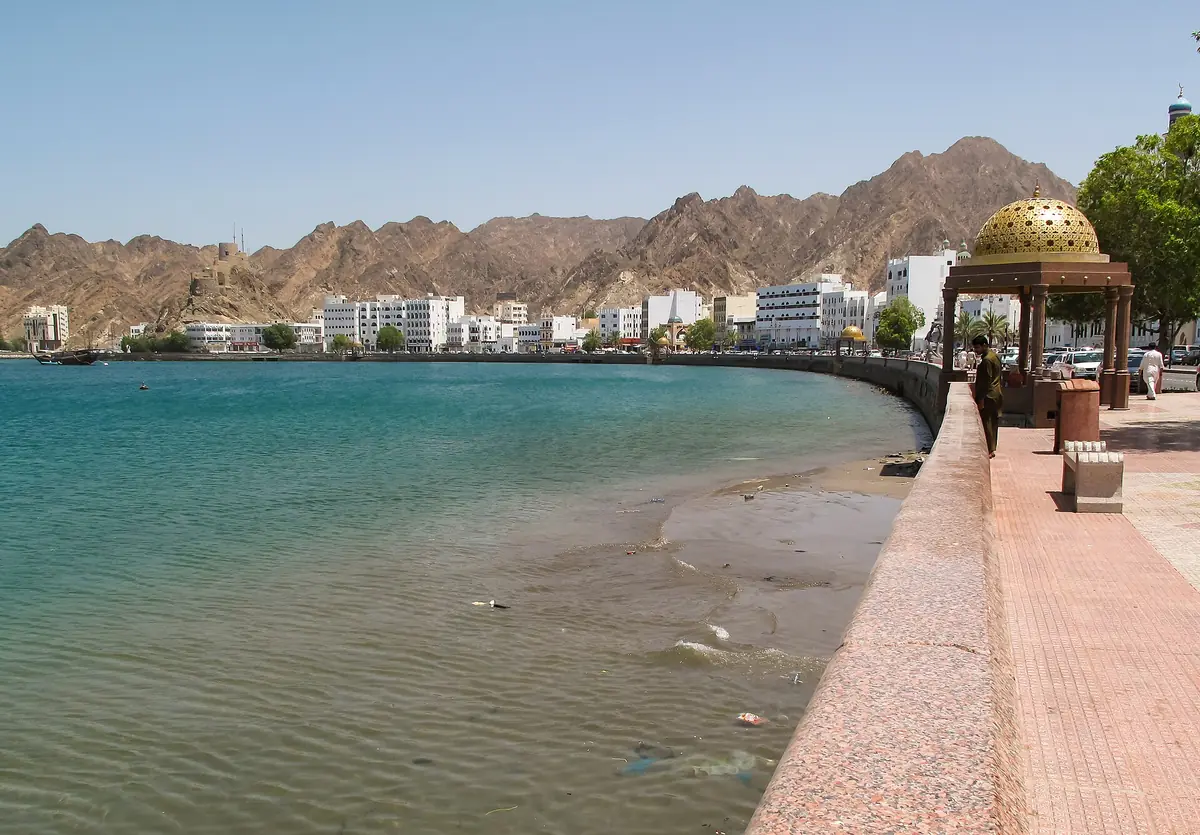
Muscat is a long city strung along the coast between the mountains and the sea, so pick your end of it. Mutrah is the old port: the corniche curves around the harbour, with Mutrah Souq opening off it and Mutrah Fort on the rock above. Old Muscat, with the Al Alam Palace and Al Mirani Fort, is about 4 km further east. Sleep here if you want to walk out to the souq in the evening and see the harbour at sunrise. Qurum and Shatti al Qurum, to the west, are the beach end of the city, with a long sandy beach, and they are closer to the airport and the Sultan Qaboos Grand Mosque.
In Mutrah, Mutrah Hotel is the plain budget choice and Marina Hotel the mid-range step up. For an upper-band room past Old Muscat, Al Bustan Palace, A Ritz-Carlton Hotel has its own beach below the mountains.
At the Qurum end, Qurum Beach Hotel is the low-cost choice and Crowne Plaza Muscat the mid-range one. InterContinental Muscat, in Shatti al Qurum, is the upper choice. The Muscat guide covers the city's sights, the beaches and the Daymaniyat Islands boat day.
From the airport, take a taxi or collect the hire car on arrival; the transport guide covers hire cars, the Mwasalat buses and the driving rules.
Nizwa: two nights by the fort and the souq
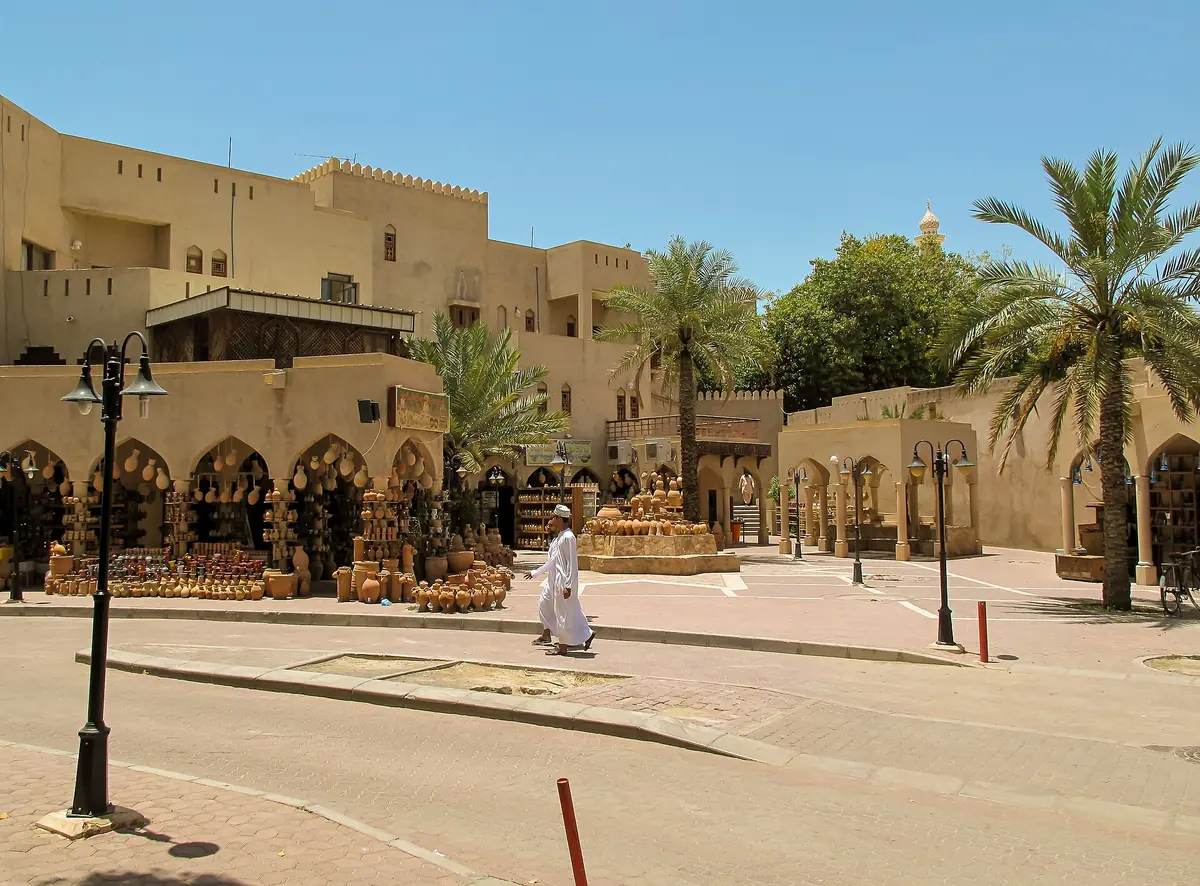
Nizwa's centre is still the round tower of the fort, with the souq beside it. In the souq, air-conditioned date shops let you taste before you buy. On Friday mornings the livestock market fills a circular pavilion: farmers walk goats and cattle round it while buyers shout their bids. Two nights give you a full day in town plus a day out, either to Jebel Shams and the canyon rim or to the forts of Bahla and Jabrin.
Al Diyar Hotel is the budget choice and Golden Tulip Nizwa the mid-range one. To be on foot from the fort, book Antique Inn, the upper choice: it is 200 metres from Nizwa Fort and 400 metres from the souq, with a garden, a pool and free parking. The Nizwa guide covers the fort, the souq and the Friday market.
Both routes visit Jebel Shams as a day trip from Nizwa, so you need no night on that mountain.
Jebel Akhdar: a night on the plateau at Saiq
Jebel Akhdar, the Green Mountain, is a high plateau above Nizwa, with villages of stone houses above terraces of pomegranates, walnuts and the damask roses that are picked for rose water in spring. A night here lets you walk the terrace path between the villages in the cool of the morning and see the canyon at sunset, which a day trip from Nizwa rushes.
The hotels sit on the plateau around Saiq. Jabal Akhdar Hotel is the budget choice and Sama Hotel in Saiq the mid-range one. Anantara Al Jabal Al Akhdar Resort is the upper choice, at several times the price of the other two.
The checkpoint at Birkat Al Mouz admits only four-wheel-drive and electric cars to Jebel Akhdar. Hire a four-wheel-drive or electric car for the trip; the transport guide has the rule. The Jebel Akhdar guide has the villages and the walks.
Wahiba Sands: one night in a desert camp
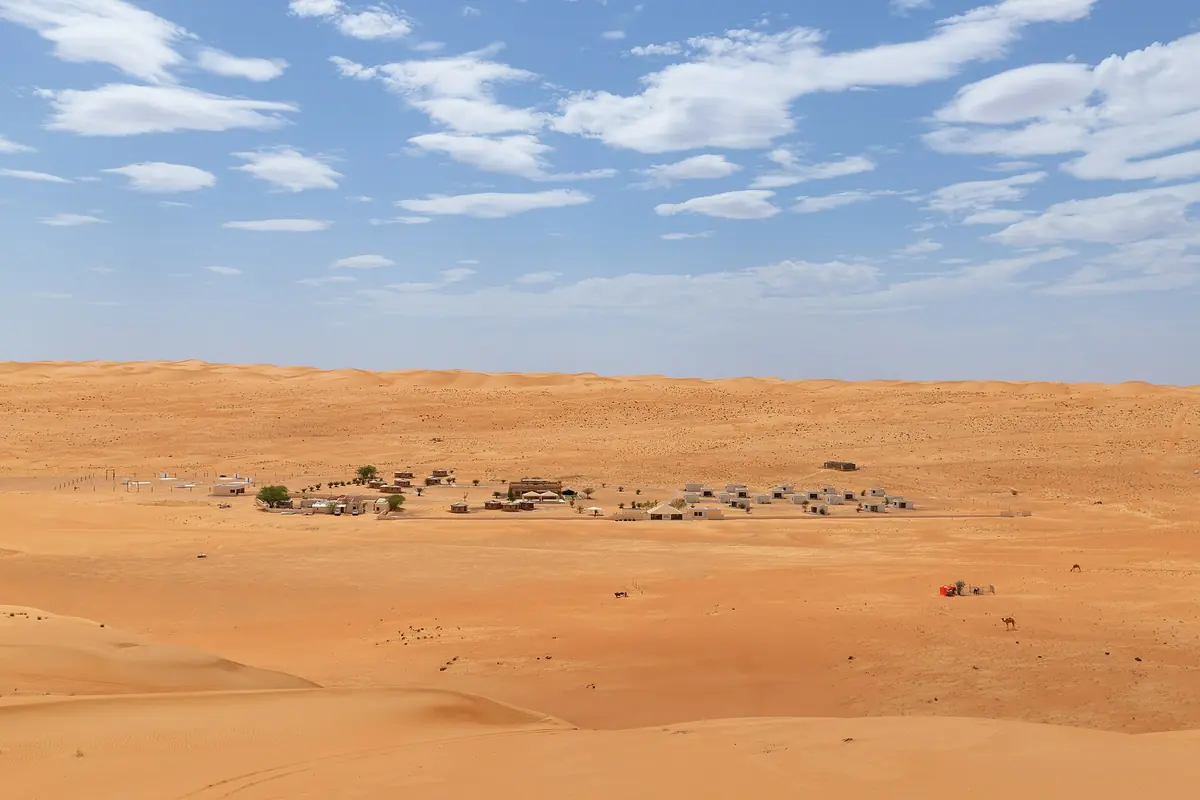
The Wahiba Sands, also called the Sharqiyah Sands, are a sea of orange dunes south of the road from Ibra to Sur. A night in a camp is the reason to come: the drive in over the sand, a climb up a dune for the sunset, dinner and a fire in camp, and the stars. One night is enough on both routes, with Wadi Bani Khalid and its green pools as the stop on the way.
Al Wasil and Bidiyah lie on the highway between Ibra and Sur, and the camps turn off it onto sand tracks. Sand Delight Camp, the low-cost choice, has Bedouin tents a 10-minute drive from Al Wasil and 180 km from Muscat International Airport, with tea and coffee all day and breakfast and dinner buffets; camel rides and desert drives cost extra. Arabian Oryx Camp, the mid-range one, has 112 air-conditioned rooms with balconies and a free buffet breakfast. 1000 Nights Camp, the upper one, has 65 air-conditioned units with showers, an outdoor pool and a free full breakfast. KAYAK lists no dinner in the Arabian Oryx and 1000 Nights rates, so budget for dinner in camp there.
The last stretch to the camps is on sand. Book the camp's transfer from the highway when you book the night, because the last stretch is on sand; the UK advises a four-wheel drive for desert driving. The Wahiba Sands guide covers the drive, the dunes and the camel farms.
Sur and Ras al Jinz: the dhow town or the turtle beach
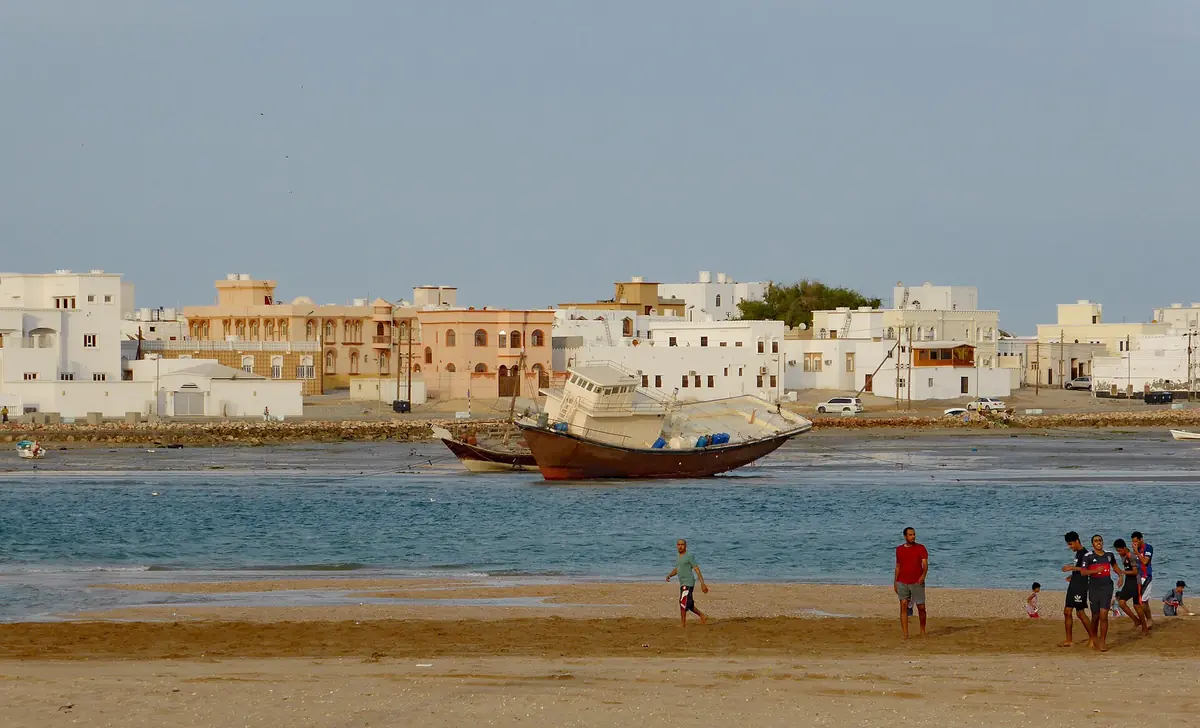
Sur is the old shipbuilding town of the east coast: the dhow factory with its gallery of the craft, and the lanes and lighthouse of Al Ayjah. The night here is about the green turtles that nest at Ras al Jinz, past Ras al Hadd; Experience Oman puts Ras al Jinz about 35 km from the centre of Sur, so choose between a town room and a room at the reserve itself. A room at the reserve also saves the drive back to Sur in the dark after the 21:00 walk; Germany advises against driving outside Muscat in darkness.
In town, Sur Hotel is the budget choice and Best Western Sur (the former Sur Plaza Hotel) the mid-range one. Ras Al Jinz Turtle Reserve has its own rooms at the reserve, so after the evening tour you walk back to bed instead of driving back to Sur in the dark. Its rate includes buffet breakfast, the evening and dawn turtle walks and the visitor centre, so a reserve room from USD 84 a night for two compares well with a Sur room plus the walk at OMR 12 per tourist adult. The Sur and Ras al Jinz guide has the turtle visit, the tickets and the times.
On day 7 the coast road takes you from Sur back to Muscat past Wadi Shab and the Bimmah Sinkhole, so no night is needed between them.
Salalah and Musandam: separate trips under travel advice
Salalah, in Dhofar on the south coast, and Musandam, the peninsula on the Strait of Hormuz, are reached by air from Muscat and sit apart from the northern loop. Neither is a base in our routes, because of the travel advice for both. Governments differ: Canada advises against non-essential travel to Oman as a whole; France advises against the Salalah region, Duqm, Musandam and the Yemen border except for an imperative reason; Germany advises against travel to Musandam and the immediate Yemen border region; the UK warns of regional tensions that can close airspace at short notice. Read health and safety and your own government's advice before you book.
If you travel there for an imperative reason, the Salalah guide and the Musandam guide cover the bases and the season.
Practical questions
How many nights should I book at each base?
On seven days, two in Muscat, two in Nizwa, one in a Wahiba Sands camp and one in Sur: six nights, with the flight home on day 7. On ten days, add one night on Jebel Akhdar before Nizwa and two more in Muscat at the end, for nine nights.
Should I stay in Mutrah or Qurum in Muscat?
Mutrah if you want to walk to the souq and the corniche in the evening; Qurum if you want the beach, the beach-hotel restaurants and a shorter drive to the airport and the Grand Mosque.
Do I need a 4x4 to reach the hotels on Jebel Akhdar?
Yes, or an electric car. The checkpoint at Birkat Al Mouz admits only four-wheel-drive and electric cars to Jebel Akhdar.
Can I drive an ordinary car to a Wahiba Sands camp?
The camps lie off the highway on sand tracks; Sand Delight Camp, for example, is a 10-minute drive from Al Wasil. Book the camp's transfer from the highway when you book the night.
Should I sleep in Sur or at Ras al Jinz?
At Ras al Jinz if you want to walk back to your room after the evening turtle visit; in Sur if you want the town, the dhow yard and a cheaper room, with a drive of about 35 km each way from the centre of Sur, past Ras al Hadd, to the reserve.
Are Salalah and Musandam on the first-trip loop?
No. They are reached by air from Muscat; France advises against travel to the Salalah region and Musandam except for an imperative reason, and Germany against travel to Musandam.
Keep planning your trip
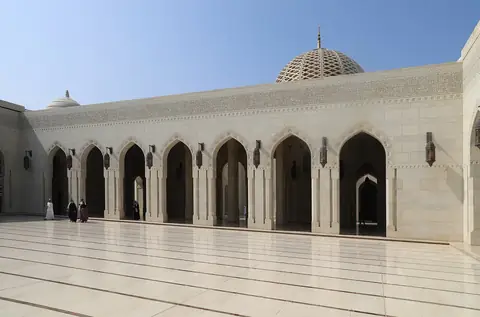
Oman in seven days
A seven-day Oman loop by hire car: Muscat, Nizwa for the fort and Jebel Shams, a desert camp, Sur, a night at the Ras al Jinz turtle reserve and the coast road.
Read the guide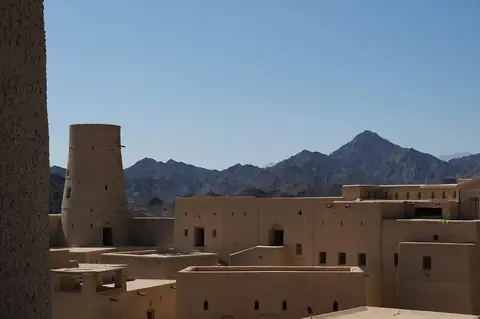
Oman in ten days
Ten days by hire car: Muscat, a night on Jebel Akhdar, Nizwa with Bahla and Jebel Shams, a desert camp, a night at the Ras al Jinz turtle reserve and Muscat again.
Read the guide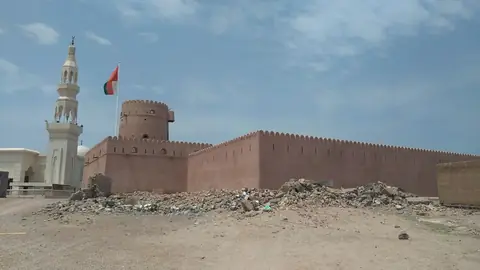
Oman trip cost
A week on Oman's loop by hire car: about OMR 215 per person on a budget, OMR 275 mid-range or OMR 480 in comfort for two sharing, plus about OMR 12 each for fuel.
Read the guide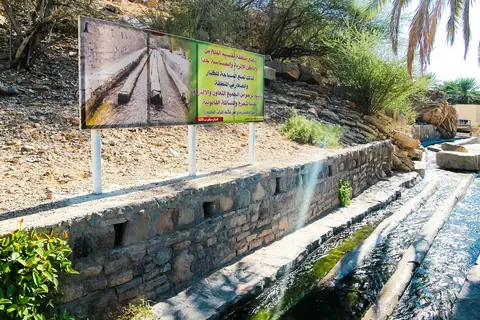
First trip to Oman
Choose seven days or ten for Muscat, Nizwa, the mountains, the Wahiba Sands and Sur: the nights, the hire car, the season, entry and an all-in budget.
Read the guide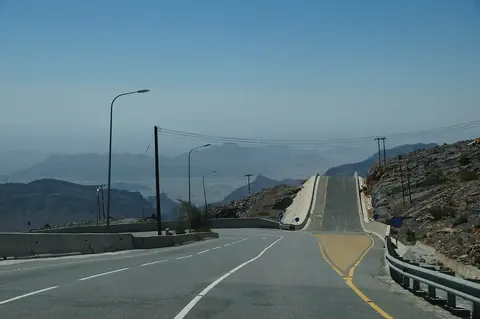
Transport in Oman
Get around Oman: a hire car from Muscat airport, when you need a 4x4, driving the Nizwa–Wahiba–Sur loop, Mwasalat buses, taxis, and flights to Salalah and Khasab.
Read the guide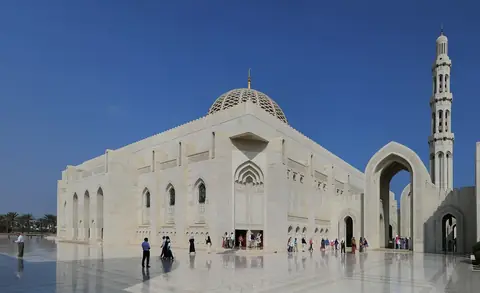
Muscat
Plan two nights in Muscat: the Grand Mosque's morning visiting hours, Mutrah's souq and corniche, Old Muscat's forts and museum, Qurum, and where to stay.
Read the guideSources and checks before you travel
(39)
- France Diplomatie: Oman, Dernières minutes et alertes ↗ — opens in a new tab
- Government of Canada: Travel advice for Oman ↗ — opens in a new tab
- UK FCDO: Oman travel advice ↗ — opens in a new tab
- Auswärtiges Amt: Oman, Reise- und Sicherheitshinweise ↗ — opens in a new tab
- Oman Observer: Can you drive an EV up Jabal Akhdhar, without a 4WD? ↗ — opens in a new tab
- Antique Inn, Nizwa ↗ — opens in a new tab
- KAYAK: Mutrah Hotel ↗ — opens in a new tab
- KAYAK: Marina Hotel ↗ — opens in a new tab
- KAYAK: Qurum Beach Hotel ↗ — opens in a new tab
- KAYAK: Crowne Plaza Muscat ↗ — opens in a new tab
- KAYAK: InterContinental Muscat ↗ — opens in a new tab
- KAYAK: Al Diyar Hotel ↗ — opens in a new tab
- KAYAK: Golden Tulip Nizwa ↗ — opens in a new tab
- KAYAK: Antique Inn ↗ — opens in a new tab
- KAYAK: Jabal Akhdar Hotel ↗ — opens in a new tab
- KAYAK: Sama Hotel ↗ — opens in a new tab
- KAYAK: Anantara Al Jabal Al Akhdar Resort ↗ — opens in a new tab
- KAYAK: Sand Delight Camp ↗ — opens in a new tab
- KAYAK: Arabian Oryx Camp ↗ — opens in a new tab
- KAYAK: 1000 Nights Camp ↗ — opens in a new tab
- KAYAK: Sur Hotel ↗ — opens in a new tab
- KAYAK: Best Western Sur ↗ — opens in a new tab
- KAYAK: Ras Al Jinz Turtle Reserve ↗ — opens in a new tab
- Experience Oman: Weather ↗ — opens in a new tab
- Ras Al Jinz Turtle Reserve: Accommodation ↗ — opens in a new tab
- Ras Al Jinz Turtle Reserve: About us ↗ — opens in a new tab
- Oman Observer: Nizwa goat market ↗ — opens in a new tab
- Oman Observer: Goats, bulls and karak tea ↗ — opens in a new tab
- Nizwa Fort: About the fort ↗ — opens in a new tab
- Oman Observer: Sweet spell of Sur ↗ — opens in a new tab
- UK FCDO: Oman safety and security ↗ — opens in a new tab
- Experience Oman (Ministry of Heritage and Tourism): Overnight trip to Nizwa ↗ — opens in a new tab
- Experience Oman (Ministry of Heritage and Tourism): Wadi Shab ↗ — opens in a new tab
- Experience Oman (Ministry of Heritage and Tourism): Ras Al Hadd Castle ↗ — opens in a new tab
- Ras Al Jinz Turtle Reserve: Turtle Viewing ↗ — opens in a new tab
- European Central Bank: euro foreign exchange reference rates ↗ — opens in a new tab
- Experience Oman (Ministry of Heritage and Tourism): Wonders of cities, beaches, deserts and mountains (self-drive plan) ↗ — opens in a new tab
- KAYAK: Al Bustan Palace, A Ritz-Carlton Hotel ↗ — opens in a new tab
- German Federal Foreign Office: Oman travel and safety advice (German) ↗ — opens in a new tab
Reference sources for the version dated 29 November 2026. Confirm opening times, access, transport and conditions for your travel dates.
Photo credits
(4)
Mutrah Corniche, Muscat's old port, with the Hajar Mountains behind
Photograph: Francisco Anzola — opens in a new tab · CC BY 2.0 — opens in a new tab
Changes: Resized and converted to WebP; displayed with responsive crops. · Original photograph and licence details ↗ — opens in a new tab
A camp in the Wahiba Sands near Bidiyah
Photograph: "dronepicr" — opens in a new tab · CC BY 2.0 — opens in a new tab
Changes: Resized and converted to WebP; displayed with responsive crops. · Original photograph and licence details ↗ — opens in a new tab
A dhow in the lagoon at Al Ayjah, Sur
Photograph: Hans Birger Nilsen — opens in a new tab · CC BY-SA 2.0 — opens in a new tab
Changes: Resized and converted to WebP; displayed with responsive crops. · Original photograph and licence details ↗ — opens in a new tab
The souq square in Nizwa
Photograph: Francisco Anzola — opens in a new tab · CC BY 2.0 — opens in a new tab
Changes: Resized and converted to WebP; displayed with responsive crops. · Original photograph and licence details ↗ — opens in a new tab