Ad Dakhiliyah
Nizwa: the fort, the Friday market, Bahla and Jabrin
Nizwa was the seat of Oman’s imams, and its round fort still rises over the palm gardens and the souq that grew up beside it. It is the natural base for the interior: the mud-brick fort of Bahla and the decorated halls of Jabrin Castle are a short drive west, and the roads up to Jebel Akhdar and Jebel Shams start from its edge. Two nights let you see the fort in the evening light, the livestock market on a Friday morning and the two castles in between.
In this guide
Find the location ↗ — opens in a new tabThe short answer
Book two nights in Nizwa, ideally Thursday and Friday, so that you can be at the Friday livestock market by about 07:00 and still have a day for Bahla Fort and Jabrin Castle. Nizwa Fort is open 08:00–20:00, with a midday break on Fridays, and foreign adults pay OMR 5. The Oman Across Ages Museum charges OMR 5 to visitors from outside the GCC. Sleep near the fort and souq if you want to walk in the evening, or on the edge of town if you have a car. Book your hire car first, then the room.
- Suggested time
- 2 nights in Nizwa
- Where to stay
- Nizwa, near the fort and souq or on the Firq side of town
- Season and timing
- The Ministry of Heritage and Tourism gives October to April as the best time for Nizwa Fort, Bahla Fort and Jabrin Castle; summer days are hot, so start the castles early.
The round fort and the souq below it
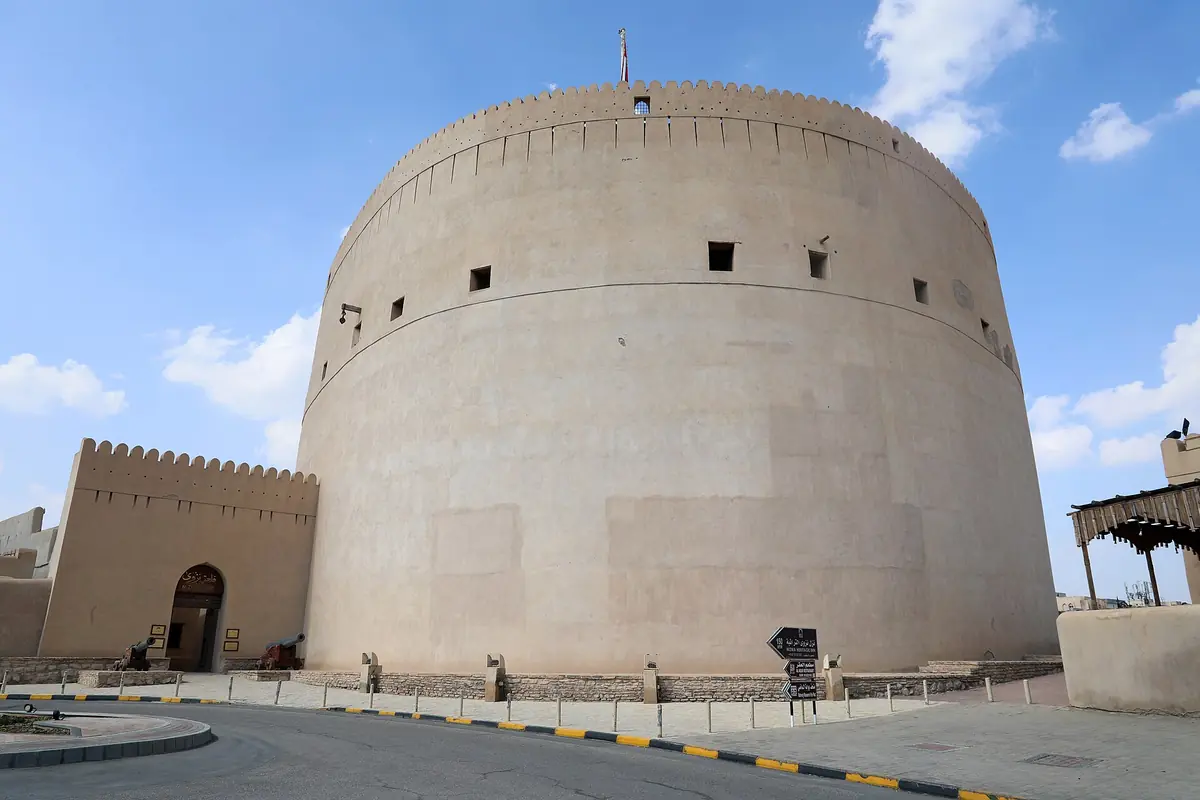
Nizwa Fort is a single drum of stone and sarooj, the traditional Omani mortar, 34 m high and 45 m across. Imam Sultan bin Saif bin Malik Al Ya’rubi, who ruled from 1649 to 1679, took twelve years to build the fort. The fort stands on a base filled with stones to a height of 15 m. You climb to the gun platform by a narrow staircase that turns through seven doors, each with openings above it for defenders. From the top the view runs over the palm gardens, the mosque’s minaret and the Hajar mountains. Beside the tower stands the older castle, built by Imam Salt bin Malik Al Kharusi in the late ninth century, with the Imam’s private rooms and library, a military room, coffee rooms and date stores.
The fort is open 08:00–20:00 from Saturday to Thursday, and on Friday 08:00–11:30 and 13:30–20:00. Tickets are sold at the reception desk on site, guides are available on request and photography is allowed. The late afternoon is the best time: the stone turns honey-coloured and the souq below wakes up after the midday lull.
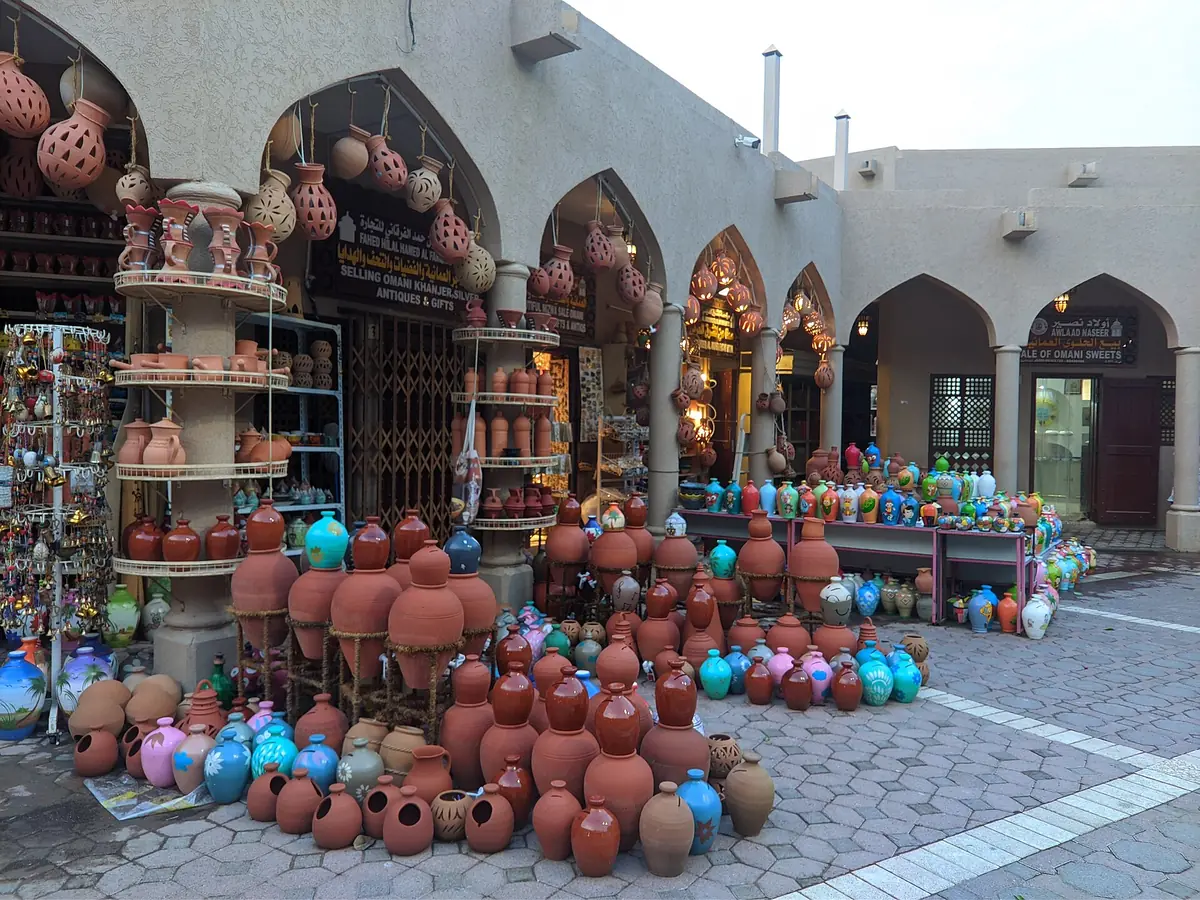
Nizwa Souq sits against the fort walls in a set of arcaded pavilions: pottery and clay incense burners, silver and khanjar daggers, spices and dried rose petals, and covered markets for vegetables, dates and meat. In the air-conditioned date shops you can taste dried and fresh dates of several varieties before you buy, and the halwa sellers hand out spoonfuls of the sweet, from plain rosewater to saffron and frankincense.
The Friday livestock market
Every Friday morning farmers from the surrounding villages bring goats and cattle to a circular arena beside the souq. Traders parade the animals round the ring and call out to buyers. Buyers inspect the animals and shout their bids, and the bidding lasts a couple of hours. Visitors stand or sit on the raised ledges at the edge, and the crowd steps back when the cattle come through. Around the arena, stalls sell everything from textiles to spices, and older sellers lay out silverware, antique rifles and daggers in the souq lanes.
The market starts early: trading is under way by 06:30, so be there by about 07:00. Finish with a karak tea as the trading winds down. Dress modestly, ask before you photograph people close up, and keep clear of the animals being walked round the ring. Before Eid al Fitr and Eid al Adha the market becomes the habta, the Eid fair. Families come to buy goats, sheep and cattle for the holiday, along with halwa, clothes and household goods.
Falaj Daris, the museums and the old quarters
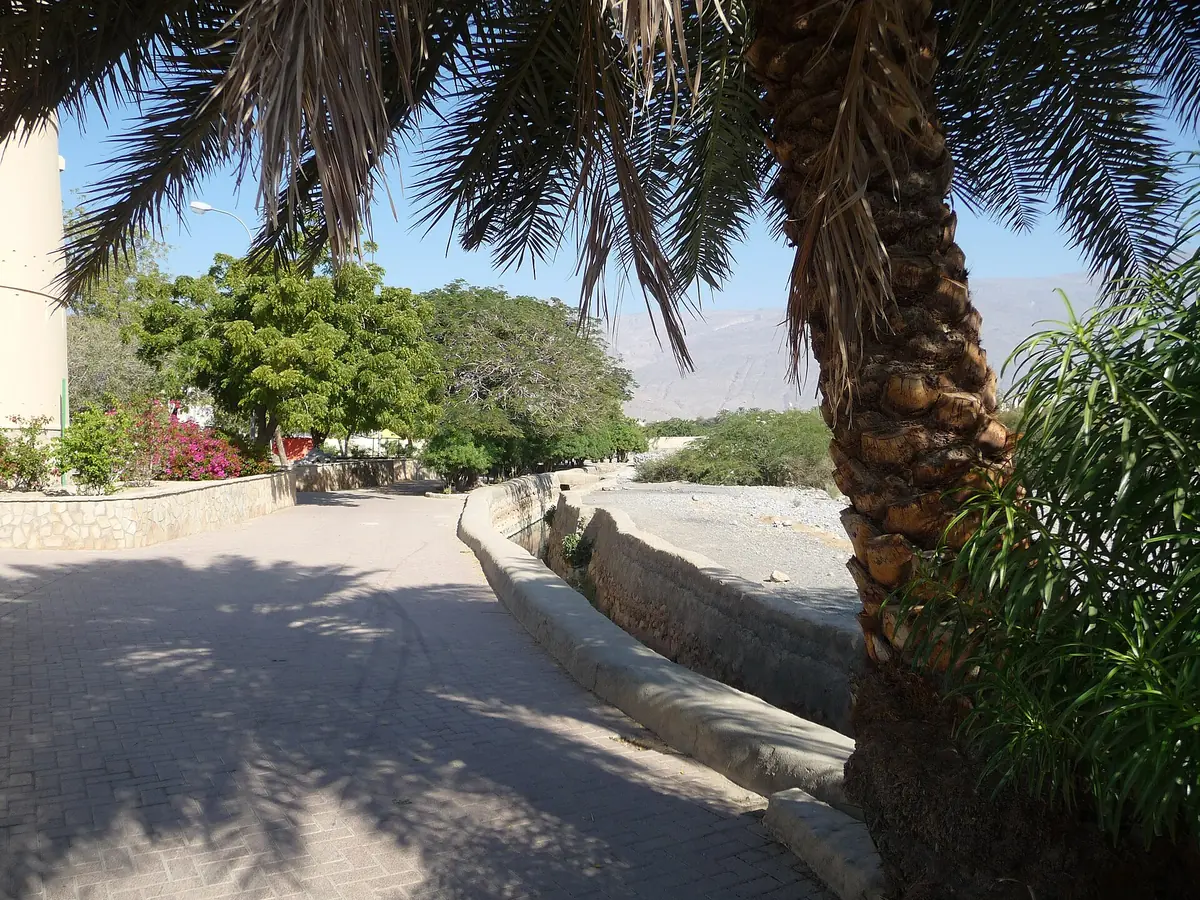
Nizwa’s gardens are watered by aflaj, the channels that bring water from the mountains by gravity and share it between families by a timetable. Falaj Daris, in Nizwa, is the largest falaj in Ad Dakhiliyah, with two arms and a total length of 7,990 m. Falaj Daris is one of five aflaj inscribed together on the UNESCO World Heritage List in 2006. Another of the five is Falaj al Khatmain at Birkat Al Mouz, on the road to Jebel Akhdar. The early evening is a good time to watch the water run.
Behind the souq, Harat al Aqr is the old residential quarter, with mud-brick houses, carved doors and narrow lanes; several houses have been restored as small heritage inns. The Nizwa Museum has nine halls of pottery, jewellery, copper, palm-frond work, woodwork and documents. The museum is open daily 08:00–22:00 (Fridays from 14:00), and foreign visitors pay OMR 2.
The Oman Across Ages Museum, in Manah south of Nizwa, is the country’s large new history museum, with interactive galleries from prehistory to the present. Its exhibition halls open 09:00–17:00 from Saturday to Thursday and 13:30–19:00 on Friday, and visitors from outside the GCC pay OMR 5. The museum fills a morning; pair it with an afternoon in town.
West of Birkat Al Mouz, about 24 km from the centre of Nizwa, Bait al Ridaydah is a 17th-century fort with painted ceilings, carved gypsum and the Falaj al Khatmain running through its courtyard. The fort opens daily 08:30–22:00 and makes a short stop on the way to or from Jebel Akhdar.
Prices and times checked 28 November 2026
Bahla Fort and Jabrin Castle
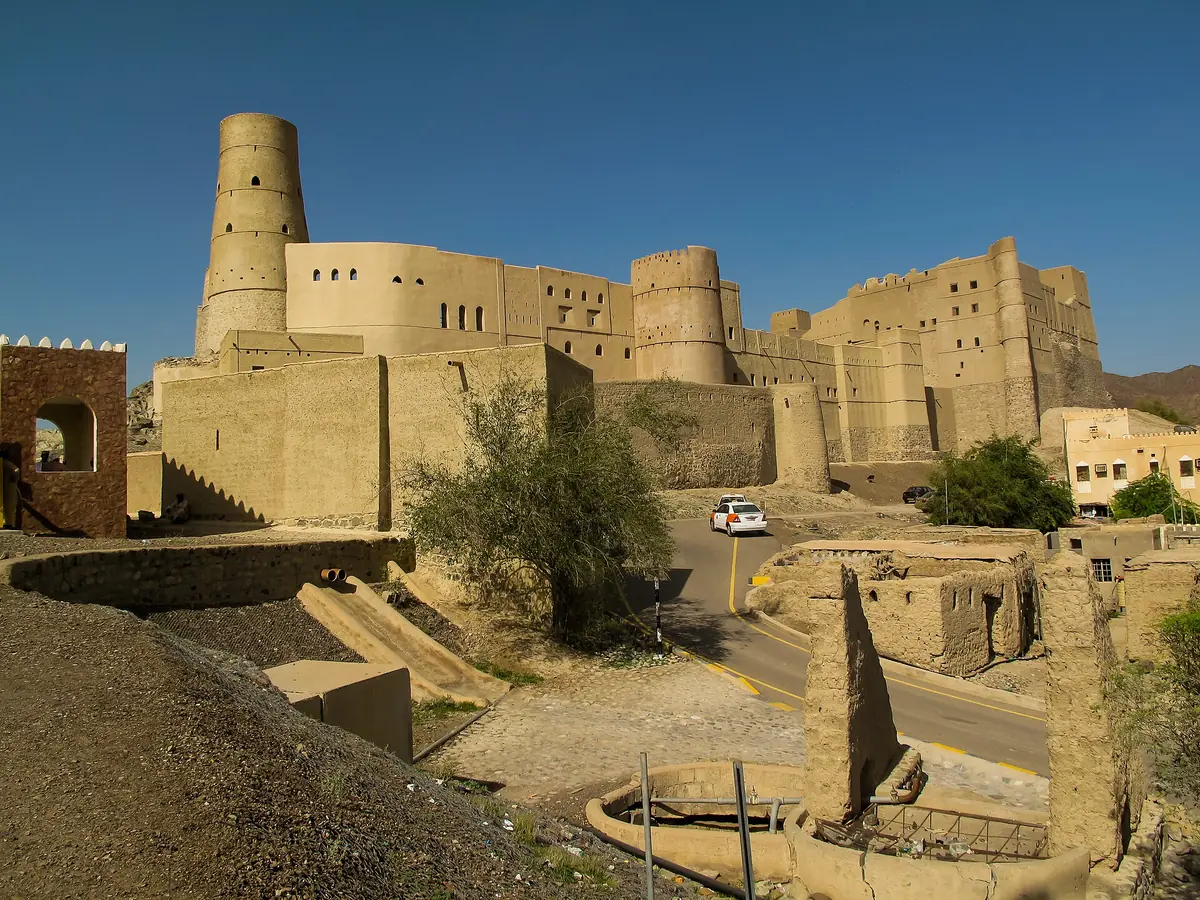
Bahla Fort was the first site in Oman on the UNESCO World Heritage List, in 1987. Its oldest parts are pre-Islamic, and the Nabhani dynasty made Bahla its capital for five centuries. The fort covers about 9,822 m² on a rise above the palm oasis, an irregular maze of mud-brick towers, courtyards and three main parts: the Qasbah, Bait al Jabal and the Bait al Hadith. The oasis wall around the town runs for more than 12 km, and Bahla is still known for its pottery workshops. The fort is open 08:00–19:00 daily.
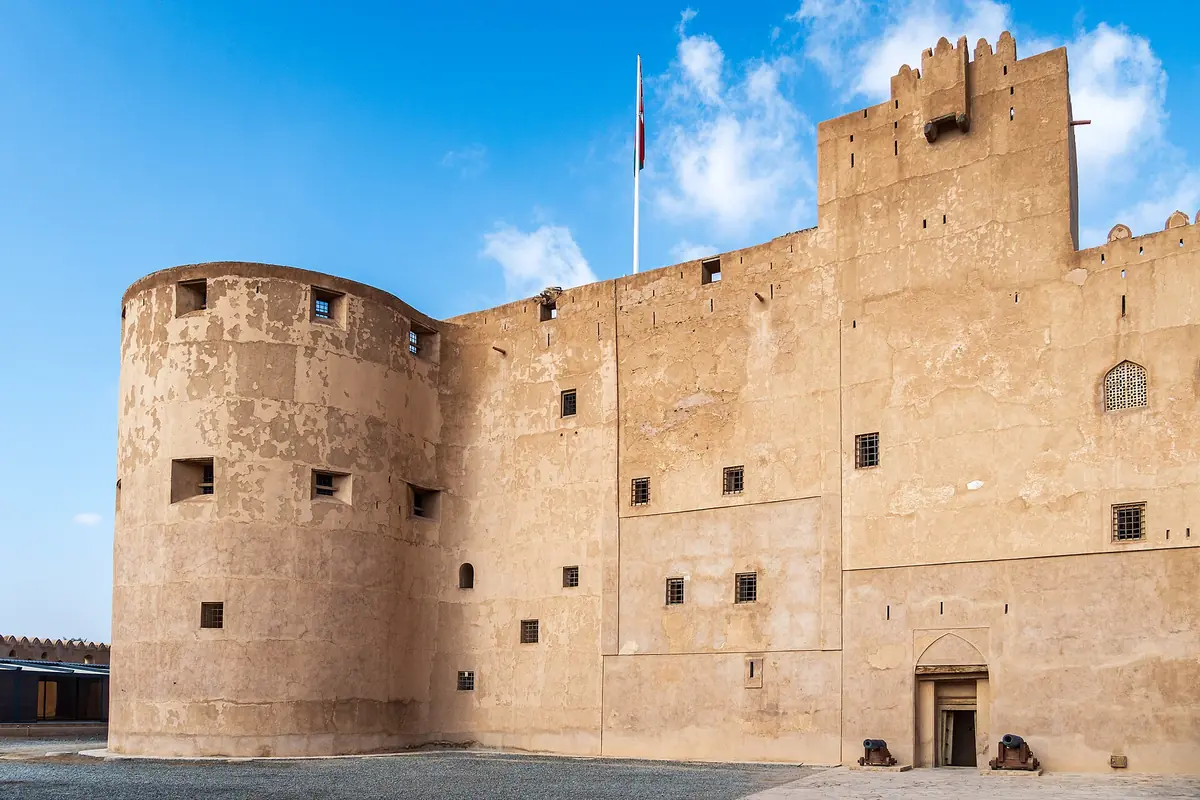
Jabrin Castle, 8 km from the centre of Bahla, was built in 1675 under Imam Bil’arab bin Sultan Al Ya’rubi as a palace and seat of learning as well as a fort. Behind its rectangular walls and a gate decorated with floral motifs are meeting halls, a courtroom, living rooms, date and gunpowder stores and separate prisons for men and women. Look for the Sun and Moon Room, where important consultations were held, and the openings for pouring boiling oil and date syrup on attackers. The castle opens 07:30–21:00 daily, with an automated guide and a café; lunch and dinner buffets need booking ahead.
Tickets for both are sold at the reception desk. Foreign adults pay OMR 5 at Nizwa Fort and OMR 3 at Bahla Fort; Jabrin Castle has been run by a private company since 2021 and charges its own fee at the desk. On a day without the market, drive to Jabrin at opening time, then Bahla, and you are back in Nizwa for lunch. Beyond Bahla, Al Hoota Cave near Al Hamra, about half an hour from Nizwa, runs some 5 km underground; visitors can enter 860 m of it, as far as the cave lake. No ticket prices or visiting times are published for it; ask your hotel for the day's times before you drive out. Our Jebel Shams guide continues west from Bahla to Al Hamra and the canyon.
Prices and times checked 28 November 2026
Two nights in Nizwa, day by day
This plan assumes you arrive by car from Muscat on a Thursday and leave on Saturday morning. With another arrival day, swap the market morning for the museums.
- Day 1, Thursday: drive from Muscat and check in. Walk through the souq in the late afternoon and climb Nizwa Fort for the evening light; dinner near the souq. Sleep in Nizwa.
- Day 2, Friday: the livestock market from about 07:00, karak tea, then the date and halwa shops. Drive to Jabrin Castle and Bahla Fort in the late morning, while Nizwa Fort closes for its Friday break from 11:30 to 13:30. Late afternoon at the Nizwa Museum or along Falaj Daris. Sleep in Nizwa.
- Day 3, departure: the Oman Across Ages Museum on the way south, or up to Jebel Akhdar or towards the Wahiba Sands.
Where to sleep in Nizwa
Nizwa has two kinds of stay. In Harat al Aqr and the streets around the souq, small heritage inns in restored mud-brick houses put you a short walk from the fort and the Friday market. Along the main roads on the edges of town, larger hotels with pools and parking suit a road trip, and the centre is a short drive away.
Choose the old centre if you want to walk to the fort in the evening and to the market at seven on Friday without moving the car; choose the edge of town if you arrive late, want a pool, or will leave early for Bahla or the mountains. The habta market draws large crowds just before Eid al Fitr, so book a room early for those days. Our where-to-stay guide names hotels in both areas and compares Nizwa with the mountain hotels.
Getting to Nizwa and what the sights cost
Nizwa is about a 1.5-hour drive from Muscat, according to Experience Oman. A hire car is the easy way to come, because Bahla, Jabrin and the mountains need one; without one, Mwasalat runs a Muscat–Nizwa bus line with about four trips a day in each direction; take the departure times and fares from Mwasalat's website before you travel, and our transport guide covers car hire and the buses.
Canada advises against non-essential travel to the whole of Oman, and the UK warns that regional tensions can close airspace at short notice; the areas France and Germany advise against (the Salalah region, Duqm, Musandam and the Yemen border) are not on this route. Read health and safety and your own government's advice before you book.
For two adults, Nizwa Fort (OMR 5 each), Bahla Fort (OMR 3 each) and the Oman Across Ages Museum (OMR 5 each) come to OMR 26; Jabrin Castle’s own fee comes on top. Rooms, meals, fuel and the car come on top too; the trip cost guide prices them for the whole route.
Prices and times checked 28 November 2026
What to eat and where to look
Omani halwa
A dense, glossy sweet of sugar, starch, ghee, rosewater, saffron, cardamom and nuts, served by the spoonful with coffee; Nizwa’s sellers also make saffron, fig, walnut and frankincense versions.
- Where to look
- The halwa sellers in Nizwa Souq, who offer tastings.
- Fit it into your day
- With kahwa after the fort.
Kahwa with dates
Light Omani coffee spiced with cardamom, poured in small cups and always served with dates.
- Where to look
- The date shops of the souq, where you can taste several varieties, and any café near the fort.
- Fit it into your day
- Mid-morning, after the market.
Dates dipped in fresh tahini
Dried dates dipped in sesame paste ground on the spot, a sweet and nutty pairing that Omanis serve with coffee.
- Where to look
- The date shops in Nizwa Souq, some of which grind tahini on the premises.
- Fit it into your day
- A snack between the souq and the fort.
Shuwa
Meat rubbed with spices such as coriander, cumin and nutmeg, wrapped in palm fronds and banana leaves and slow-cooked for a day or more in an underground pit; Nizwa is known for the communal pits opened on the second or third day of Eid.
- Where to look
- At Eid, in family homes; at other times, Omani restaurants in Nizwa that list shuwa on the menu.
- Fit it into your day
- Lunch, or dinner during Eid.
Karak tea
Sweet, spiced milk tea, drunk all over Oman and a favourite way to end a morning at the livestock market.
- Where to look
- The tea stalls around the Friday market arena.
- Fit it into your day
- Breakfast on Friday.
Practical questions
How many nights should I spend in Nizwa?
Two nights. They give you an evening at the fort, a morning for the Friday market or the museums, and time for Bahla Fort and Jabrin Castle. Add a night on Jebel Akhdar or a day trip to Jebel Shams from the same base.
When is the Nizwa livestock market?
Every Friday morning. Arrive by about 07:00; the bidding lasts a couple of hours.
What are Nizwa Fort’s opening hours?
08:00–20:00 from Saturday to Thursday, and on Friday 08:00–11:30 and 13:30–20:00. Tickets are sold at the reception desk.
Is Bahla Fort worth the drive?
Yes. Bahla Fort is Oman’s first UNESCO World Heritage Site, a huge mud-brick fort above a walled palm oasis west of Nizwa. Jabrin Castle is 8 km from the centre of Bahla, so you can see both in one morning.
Can I visit Nizwa as a day trip from Muscat?
Yes, by car or with a tour, but Nizwa is about a 1.5-hour drive from Muscat each way. A day trip misses the evening light at the fort and, unless you leave very early, the Friday market. A night or two is the better plan.
Do I need a car in Nizwa?
Not for the fort and souq, which are next to each other. You need one, or a driver, for Bahla, Jabrin, the Oman Across Ages Museum and the mountains.
What should I eat in Nizwa?
Halwa and dates from the souq with a cup of kahwa, dates dipped in fresh tahini, karak tea at the Friday market, and shuwa, the pit-cooked meat of Eid, where you find it on a menu.
Keep planning your trip
Jebel Akhdar
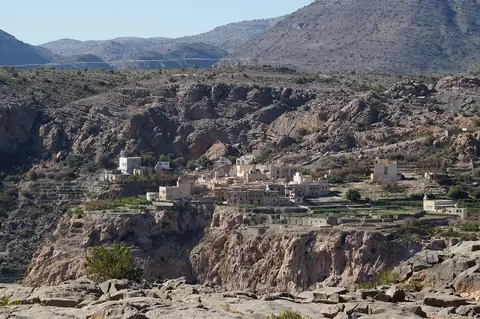
A night on Jebel Akhdar above Nizwa: the 4x4 checkpoint, the three-village terrace walk, Wadi Bani Habib, the spring rose harvest and where to sleep in Saiq.
Read the guide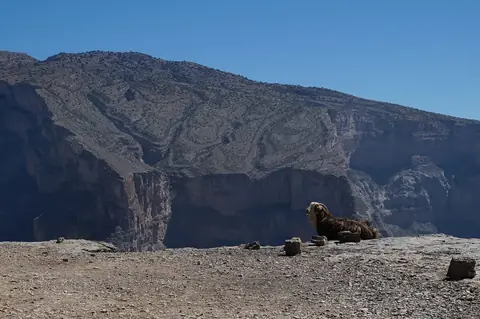
Jebel Shams
Jebel Shams from Nizwa: the drive to the canyon rim, the Balcony Walk to As Sab, Al Hamra and Misfat al Abriyeen, a day trip or a night on the mountain.
Read the guide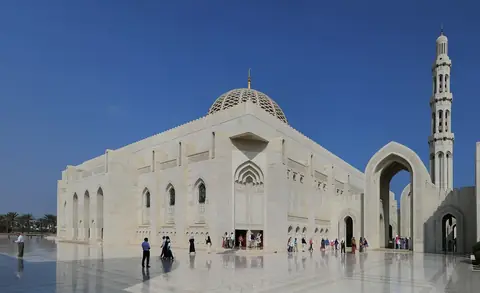
Muscat
Plan two nights in Muscat: the Grand Mosque's morning visiting hours, Mutrah's souq and corniche, Old Muscat's forts and museum, Qurum, and where to stay.
Read the guide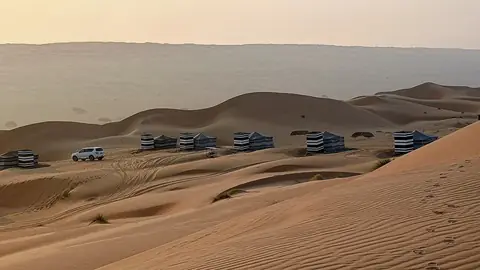
Wahiba Sands
A night in the Wahiba (Sharqiyah) Sands: choosing a camp, getting onto the sand from Al Wasil, Wadi Bani Khalid on the way, and how to plan the night.
Read the guide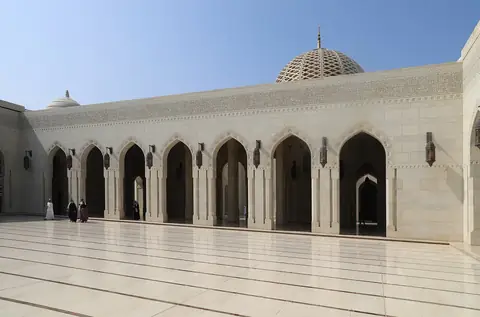
Oman in seven days
A seven-day Oman loop by hire car: Muscat, Nizwa for the fort and Jebel Shams, a desert camp, Sur, a night at the Ras al Jinz turtle reserve and the coast road.
Read the guide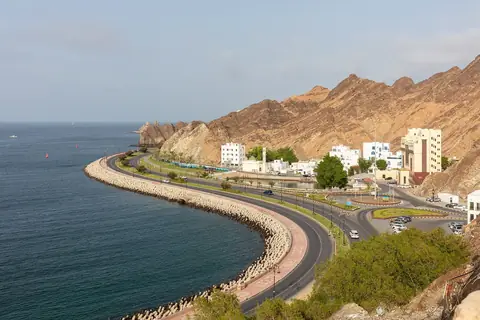
Where to stay in Oman
Which part of Muscat to sleep in, how many nights in Nizwa, on Jebel Akhdar, in a Wahiba Sands camp and in Sur, and three hotels at each base from budget to upper.
Read the guideSources and checks before you travel
(24)
- Ministry of Heritage and Tourism (Experience Oman): Nizwa Fort ↗ — opens in a new tab
- Nizwa Fort: official site (About Fort) ↗ — opens in a new tab
- Ministry of Heritage and Tourism (Experience Oman): Bahla Fort ↗ — opens in a new tab
- Ministry of Heritage and Tourism (Experience Oman): Jabrin Castle ↗ — opens in a new tab
- Ministry of Heritage and Tourism (Experience Oman): Nizwa Museum ↗ — opens in a new tab
- Ministry of Heritage and Tourism (Experience Oman): Oman Across Ages Museum ↗ — opens in a new tab
- Ministry of Heritage and Tourism (Experience Oman): Bayt Ar-Ridaydah ↗ — opens in a new tab
- Oman Observer: Now pay and enjoy Omani heritage at Nizwa Fort (10 December 2017) ↗ — opens in a new tab
- Experience Oman (Ministry of Heritage and Tourism): Overnight trip to Nizwa ↗ — opens in a new tab
- Times of Oman: entry fees for heritage sites (2023 decision) ↗ — opens in a new tab
- Oman Observer: the Nizwa goat market (4 February 2025) ↗ — opens in a new tab
- Oman Observer: Nizwa Market on Fridays (20 December 2023) ↗ — opens in a new tab
- Oman Observer: Nizwa Souq (24 October 2022) ↗ — opens in a new tab
- Oman Observer: shuwa (12 April 2024) ↗ — opens in a new tab
- Oman Observer: Nizwa habta market before Eid (24 June 2017) ↗ — opens in a new tab
- Oman Observer: Oman's aflaj on the World Heritage List (28 February 2017) ↗ — opens in a new tab
- Oman Observer: Nuzul Al-Dar heritage inn in Al-Aqr (11 August 2025) ↗ — opens in a new tab
- UK FCDO: Oman travel advice ↗ — opens in a new tab
- French Ministry for Europe and Foreign Affairs: Oman travel advice ↗ — opens in a new tab
- German Federal Foreign Office: Oman travel and safety advice (German) ↗ — opens in a new tab
- Government of Canada: Oman travel advice ↗ — opens in a new tab
- Oman Observer: Pact inked to manage, operate and utilize Jabreen Castle (14 June 2021) ↗ — opens in a new tab
- Nizwa Fort: Nearby landmarks ↗ — opens in a new tab
- Oman Observer: Mwasalat unveils plans for fleet modernisation 2026-28 (27 April 2026) ↗ — opens in a new tab
Reference sources for the version dated 28 November 2026. Confirm opening times, access, transport and conditions for your travel dates.
Photo credits
(5)
The circular tower of Nizwa Fort, 34 m high
Photograph: Francesco Bini — opens in a new tab · CC BY-SA 4.0 — opens in a new tab
Changes: Resized and converted to WebP; displayed with responsive crops. · Original photograph and licence details ↗ — opens in a new tab
Pottery stalls in the arcades of Nizwa Souq
Photograph: Taha Al-Hayali — opens in a new tab · CC BY-SA 4.0 — opens in a new tab
Changes: Resized and converted to WebP; displayed with responsive crops. · Original photograph and licence details ↗ — opens in a new tab
Bahla Fort, the first site in Oman on the UNESCO World Heritage List
Photograph: Francisco Anzola — opens in a new tab · CC BY 2.0 — opens in a new tab
Changes: Resized and converted to WebP; displayed with responsive crops. · Original photograph and licence details ↗ — opens in a new tab
Jabreen Castle, built in 1675 between Nizwa and Bahla
Photograph: dconvertini — opens in a new tab · CC BY-SA 2.0 — opens in a new tab
Changes: Resized and converted to WebP; displayed with responsive crops. · Original photograph and licence details ↗ — opens in a new tab
A shaded path in the Falaj Daris park, Nizwa
Photograph: lagerschaden — opens in a new tab · CC BY-SA 4.0 — opens in a new tab
Changes: Resized and converted to WebP; displayed with responsive crops. · Original photograph and licence details ↗ — opens in a new tab