Itineraries
Oman in 10 days: Muscat, the mountains, the desert and the coast
Ten days lets northern Oman breathe. The route is the classic loop of the seven-day plan with three things added: a night high on the plateau of Jebel Akhdar before Nizwa, a Nizwa day for the forts of Bahla and Jabrin as well as the canyon of Jebel Shams, and two last nights in Muscat with a boat day to the Daymaniyat Islands. You drive one hire car from the airport throughout, and it has to be a four-wheel-drive or electric car for the plateau road.
In this guide
Find the location ↗ — opens in a new tabThe short answer
Book nine nights: two in Muscat, one on Jebel Akhdar, two in Nizwa, one in a Wahiba Sands camp, one at the Ras al Jinz Turtle Reserve past Sur and two more in Muscat, with a four-wheel-drive or electric hire car from Muscat airport for the whole trip. Book the car, the desert camp and the room at the Ras al Jinz Turtle Reserve first. The Sultan Qaboos Grand Mosque charges an admission fee of OMR 8, and the reserve's room includes the evening and dawn turtle walks, which cost other visitors OMR 12 per tourist adult (12 and over). On the ground, two adults sharing mid-range rooms pay from about OMR 420 per person, OMR 839 for two, with the Daymaniyat boat day. Fuel for the route adds about OMR 24 a car, and a return flight from London about OMR 280 per person, so the trip comes to about OMR 712 each with fuel and the flight. Jabrin Castle charges its own fee at the desk.
- Suggested time
- 10 days / 9 nights: Muscat 2, Jebel Akhdar 1, Nizwa 2, Wahiba Sands 1, Ras al Jinz 1, Muscat 2
- Route
- Muscat 2 nights
- Jebel Akhdar 1 night
- Nizwa 2 nights
- Wahiba Sands 1 night
- Sur 1 night
- Muscat 2 nights
- Season and timing
- Plan it between November and April: the desert and wadis are hard going in the summer heat, and from May to October boats still reach the Daymaniyat reefs but landing on the islands is prohibited. Wadis can flood after heavy rain between October and March, so watch the forecast before the Wadi Bani Khalid and Wadi Shab days. Jebel Akhdar is much cooler than the coast, so pack a warm layer for the plateau night.
Book the nine nights in order
Use one hotel per stop: Muscat for nights 1–2, Jebel Akhdar for night 3, Nizwa for nights 4–5, a desert camp for night 6, the Ras al Jinz Turtle Reserve for night 7, after a day in Sur, and Muscat again for nights 8–9. Days 3, 4, 6, 7 and 8 are driving days; day 10 is departure from Muscat International Airport (MCT), not another night.
Hire the car at the airport for all nine days and make it a four-wheel-drive or electric car; the SUV in the budget below may not be four-wheel drive, so book a car listed as 4x4. The checkpoint at Birkat Al Mouz lets only four-wheel-drive and electric cars up to Jebel Akhdar. Book the camp's transfer from the highway when you book the night, because the last stretch is on sand; the UK advises a four-wheel drive for desert driving. The Oman transport guide covers hire and licences. Outside Muscat, watch for camels and goats on the road. Any alcohol in your system counts as drink-driving.
One hotel for each stop: Crowne Plaza Muscat, Jabal Akhdar Hotel near Saiq, Golden Tulip Nizwa, Arabian Oryx Camp in the sands, the Ras al Jinz Turtle Reserve's own rooms, and InterContinental Muscat at Shatti al Qurum for the last two nights. The budget below uses the lowest nightly rate with fees that KAYAK listed for each of them.
Canada advises against non-essential travel to the whole of Oman, and the UK warns that regional tensions can close airspace at short notice; the areas France and Germany advise against (the Salalah region, Duqm, Musandam and the Yemen border) are not on this route. Read health and safety and your own government's advice before you book.
Prices and times checked 29 November 2026
The ten days at a glance
One line per day, with where you sleep each night. Times, prices and bookings are in the day sections below.
- Day 1
Arrive at Muscat airport,
pick up the 4x4 or electric car, evening on the Mutrah Corniche. Night: Muscat.
- Day 2
Muscat
the Grand Mosque, Old Muscat, the National Museum and Bait Al Zubair. Night: Muscat.
- Day 3
Up to Jebel Akhdar
the checkpoint, the plateau and the terraced villages. Night: Jebel Akhdar.
- Day 4
Down to Nizwa
the fort and the souq. Night: Nizwa.
- Day 5
Jebel Shams, Bahla and Jabrin
the canyon rim and the Balcony Walk in the cool of the morning, the two forts on the way back. Night: Nizwa.
- Day 6
Wadi Bani Khalid and the Wahiba Sands
Night: desert camp.
- Day 7
Sur, and the turtles at Ras al Jinz in the evening
Night: Ras al Jinz Turtle Reserve.
- Day 8
Coast road to Muscat
Wadi Shab and Bimmah Sinkhole. Night: Muscat.
- Day 9
Daymaniyat Islands boat day
(November to April), or Qurum and the Royal Opera House. Night: Muscat.
- Day 10
Fly home from MCT
Days 1–2: Muscat, Mutrah and the Grand Mosque
Day 1 — arrive at MCT. Collect the car and drive to your hotel in Muscat. In the late afternoon go on to Mutrah, where the corniche curves around the harbour below the hills and the covered souq sells frankincense, silver, textiles and halwa. Sleep in Muscat, night 1.
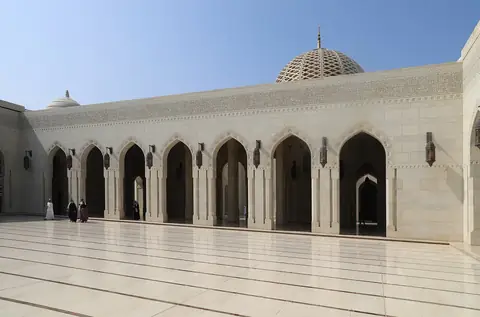
Day 2 — the Grand Mosque and Old Muscat. Start at the Sultan Qaboos Grand Mosque, opened in 2001, with a 50-metre dome, five minarets and the world's second-largest hand-woven Persian carpet. Non-Muslim visitors are welcome from Saturday to Thursday between 08:30 and 11:00, and the admission fee is OMR 8. Cover shoulders and knees; women also cover their hair, and abayas and headscarves are available at the entrance. Then drive to Old Muscat. The National Museum holds more than 7,000 objects. The museum is open daily from 10:00 to 18:00, tickets are sold until 17:30, and tourists pay OMR 5 by card. Bait Al Zubair shows Omani weapons, jewellery and dress; this museum is open Saturday to Thursday from 09:30 to 18:00, and foreign visitors pay OMR 3. The Muscat guide has the rest of the city. Sleep in Muscat, night 2.
Prices and times checked 28 November 2026
Day 3: Up to Jebel Akhdar
Experience Oman puts Jebel Akhdar roughly a two-hour drive from Muscat. Leave after breakfast on the Nizwa road and turn off at Birkat Al Mouz, where the checkpoint lets only four-wheel-drive and electric cars through. The steep, winding road climbs to Saiq on the plateau, where temperatures are moderate and terraced farms grow pomegranates, figs, almonds and the roses of Jabal rosewater. In the late afternoon, walk the path that links the terraced villages of Al Aqr, Al Ayn and Ash Shirayjah along the canyon edge, past hanging terraces, falaj channels and rose farms, then watch the sunset from the rim near your hotel.
Jabal Akhdar Hotel, near Saiq, is the stop for night 3. The rose harvest runs from the end of March to mid-April, and during the harvest you can watch rose water being distilled. Before you drive down next morning, take the natural rock steps into Wadi Bani Habib, where orchards grow below an abandoned quarter of clay houses. The Jebel Akhdar guide has the season, the walks and the other hotels. Sleep on Jebel Akhdar, night 3.
Prices and times checked 28 November 2026
Days 4–5: Nizwa, Bahla, Jabrin and Jebel Shams
Day 4 — down to Nizwa. Drive back down past the checkpoint and on to Nizwa; check the time for the descent on a map app. Spend the afternoon at Nizwa Fort, built in the mid-17th century under Imam Sultan bin Saif al-Ya'rubi. Its round tower is 34 metres high and 45 metres across, and a narrow staircase through seven defended doors leads up to the top. The fort is open Saturday to Thursday from 08:00 to 20:00, and on Fridays from 08:00 to 11:30 and from 13:30 to 20:00. Tickets are sold at the reception desk, and foreign adults pay OMR 5. The souq beside the fort sells pottery, silver, dates and halwa. The Nizwa guide covers the souq and the Friday market. Sleep in Nizwa, night 4.
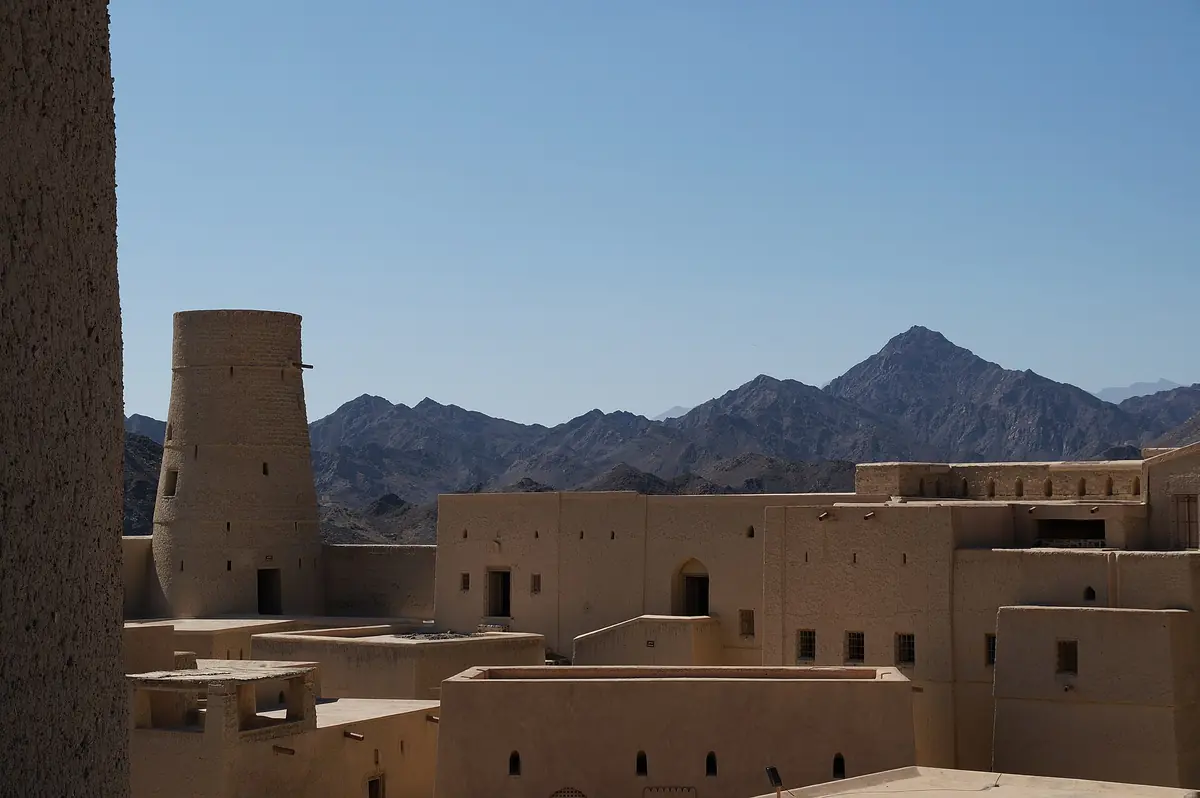
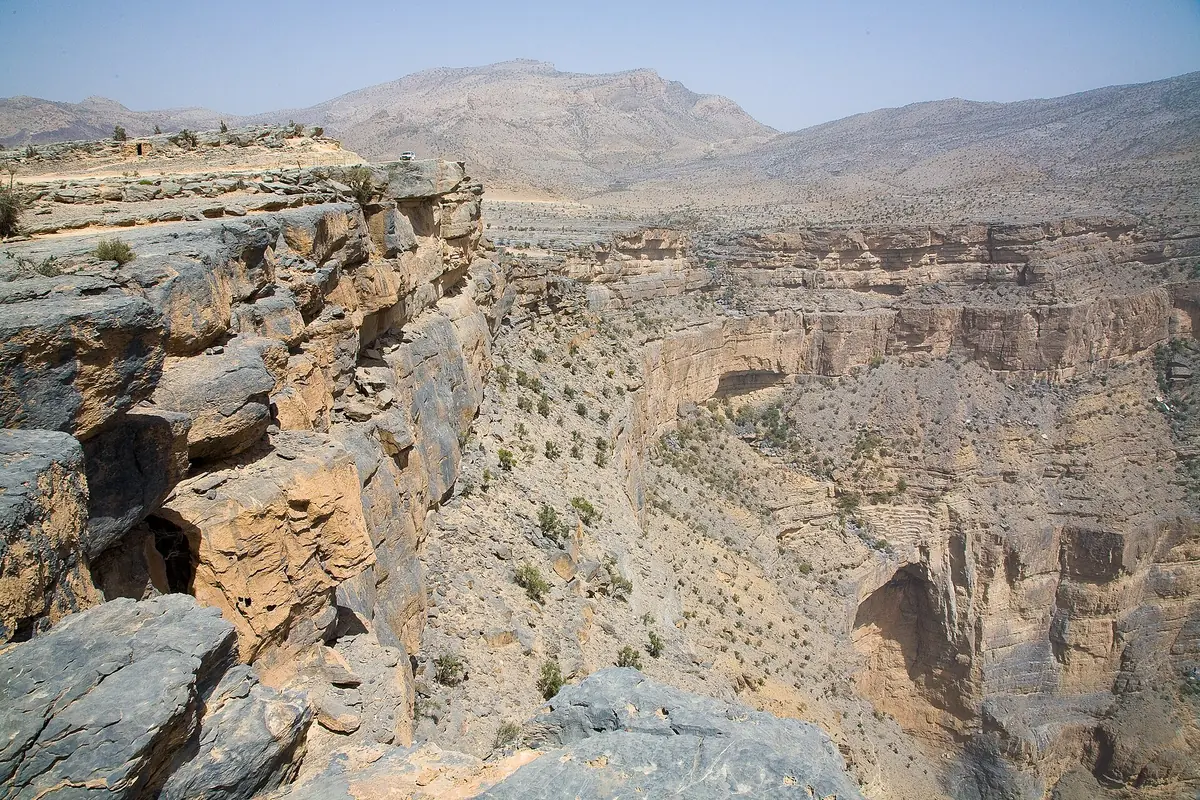
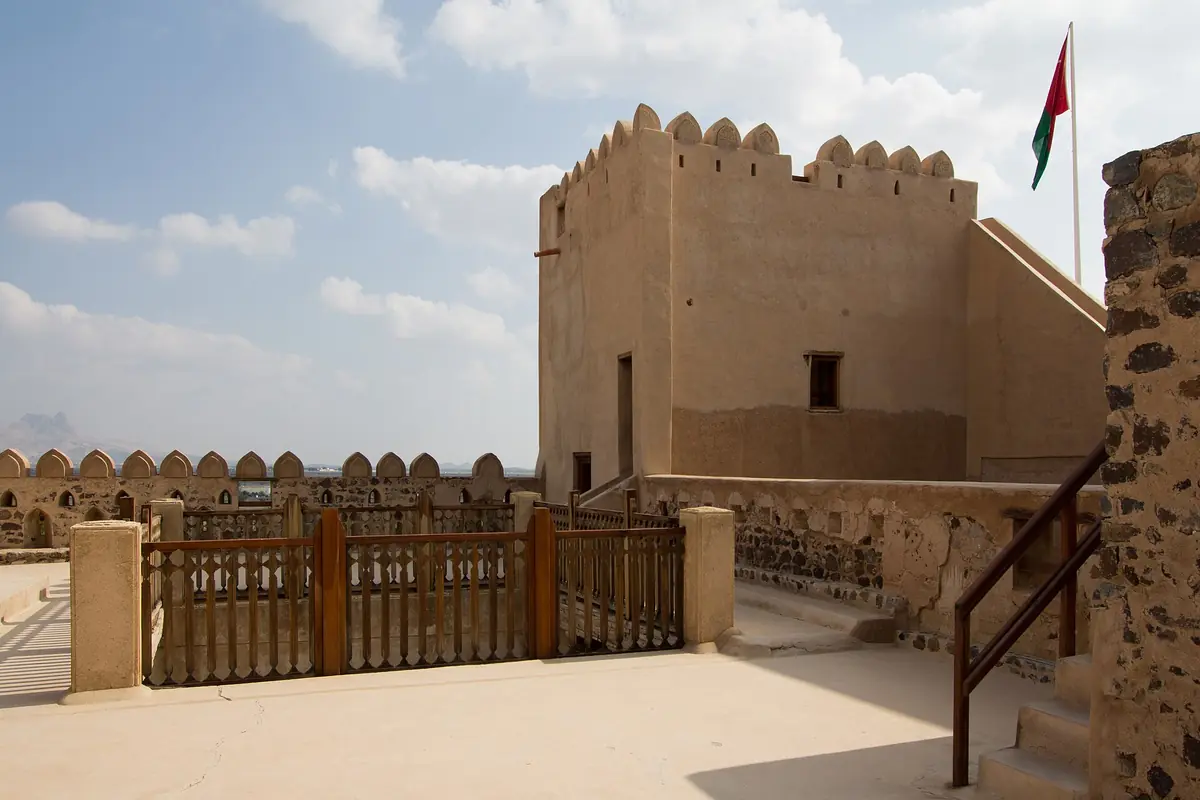
Day 5 — a canyon and two forts. Leave Nizwa by about 06:30 with a full tank and drive west through Al Hamra to Jebel Shams, whose canyon is more than a kilometre deep: Experience Oman gives Nizwa to Jebel Shams as about 85 km and 1 hour 54 minutes. Start the Balcony Walk from Al Khitaym in the cool of the morning; it takes about three to four hours, so turn back from As Sab before noon and avoid the midday heat. On the way back, Al Hamra to Bahla is about 22 km and Bahla to Nizwa about 49 km. Stop at Bahla Fort, the first site in Oman on the UNESCO World Heritage List (1987). The mud-brick fort covers about 9,822 square metres on a high hill amid a palm oasis. Bahla was the capital of the Nabhani rulers for five centuries, and its oasis wall runs for more than 12 km around the town and its potters. Bahla Fort is open daily from 08:00 to 19:00. Eight kilometres from Bahla stands Jabrin Castle, built in 1675 as a palace of learning as much as a fort. Its great gate is carved with floral motifs and studs. Inside are decorated halls and the Sun and Moon Room, used for important consultations, and the roof has wide views of the Hajar Mountains. Jabrin Castle is open daily from 07:30 to 21:00. Foreign adults pay OMR 3 at Bahla Fort; Jabrin Castle has been run by a private company since 2021 and charges its own fee at the desk.
Jabrin stays open later than Bahla, so if the walk runs long, see Bahla first and Jabrin last. Drive back to Nizwa before dark. Sleep in Nizwa, night 5.
Prices and times checked 28 November 2026
Days 6–7: Wadi Bani Khalid, the sands and Sur
Day 6. Wadi Bani Khalid, in the Eastern Hajar Mountains, is one of the most fertile valleys in Oman: waterfalls form natural pools, and a path leads on to Muqal and its cave. Experience Oman gives the drive between Nizwa and the Wahiba Sands as about 231 km and 4 hours 44 minutes, without the wadi stop, so leave early to have time for a swim in the main pools, dressed modestly. Then drive on to Al Wasil, at the edge of the Wahiba Sands, and to Arabian Oryx Camp nearby. The dunes run over about 10,000 square kilometres and turn from pale yellow to red and orange as the day goes on. The Wahiba Sands guide compares the camps. Night 6 is in the camp.
Day 7. After the sunrise, drive to Sur, on the way to Ras al Jinz, which Experience Oman puts about 194 km and 4 hours 41 minutes from the Wahiba Sands. Sur is long one of the great shipbuilding ports of Arabia. The Fath Al Khair maritime museum keeps the last traditional ghanjah ship in Oman, and the watchtower in Al Ayjah looks over the marina and the dhow factory. In the late afternoon drive on, in daylight, to Ras al Jinz Turtle Reserve, just past Ras al Hadd, where you sleep; Experience Oman puts it about 35 km from the centre of Sur. It is the only legal place to watch turtles in Oman, and its guides lead a walk every night: most turtles nest from June to October, with fewer coming ashore in winter, and May to September are the reserve's best months for hatchlings. Your room includes both walks: the night viewing starts at 21:00 and the dawn viewing at 05:00. Visitors who are not staying at the reserve pay OMR 12 per tourist adult (12 and over) and OMR 6 per child, children under 6 go free, and they must arrive by 20:30 or 04:45. The reserve says timings may change with the season. Book the room through the reserve's reservations office by phone or e-mail as soon as your dates are fixed, because the rest of the trip is planned around it. The reserve's restaurant serves a set dinner, and its visitor centre is open until 20:30. Sleeping at the reserve means no drive after dark: Germany advises against driving outside Muscat in darkness, when camels wander onto unlit roads. If the reserve is full, take a room in Sur and see the Sur and Ras al Jinz guide: the walk then ends with a 35 km drive back in the dark, so either drive very slowly or leave the walk out. Sleep at the reserve, night 7.
Prices and times checked 29 November 2026
Days 8–10: Wadi Shab, the Daymaniyat Islands and home
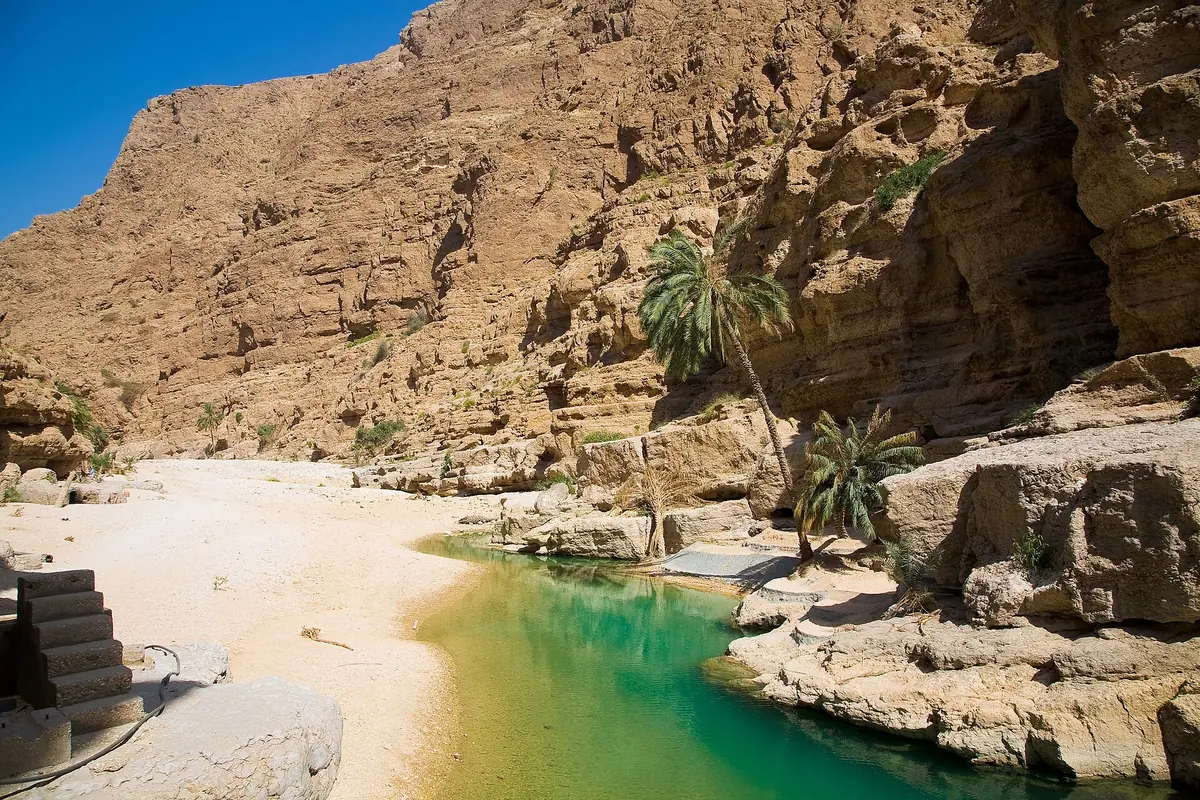
Day 8 — the coast road. Drive back through Sur and north to Wadi Shab. A small boat crosses the river at the mouth (a small fare that includes the trip back; carry cash for it), and a trail leads between the mountains past natural pools to a cave with a waterfall inside. You reach the waterfall by swimming through a narrow gap, so you need basic swimming skills and shoes you can walk and swim in. Wadi Shab is about 170 km from Muscat International Airport, and Experience Oman gives Ras al Jinz, 35 km beyond Sur, as about 248 km and 3 hours 11 minutes from Muscat. Stop for a swim at Bimmah Sinkhole, then continue to Muscat; with the two stops this is a full day. Check in at InterContinental Muscat. Sleep in Muscat, night 8.
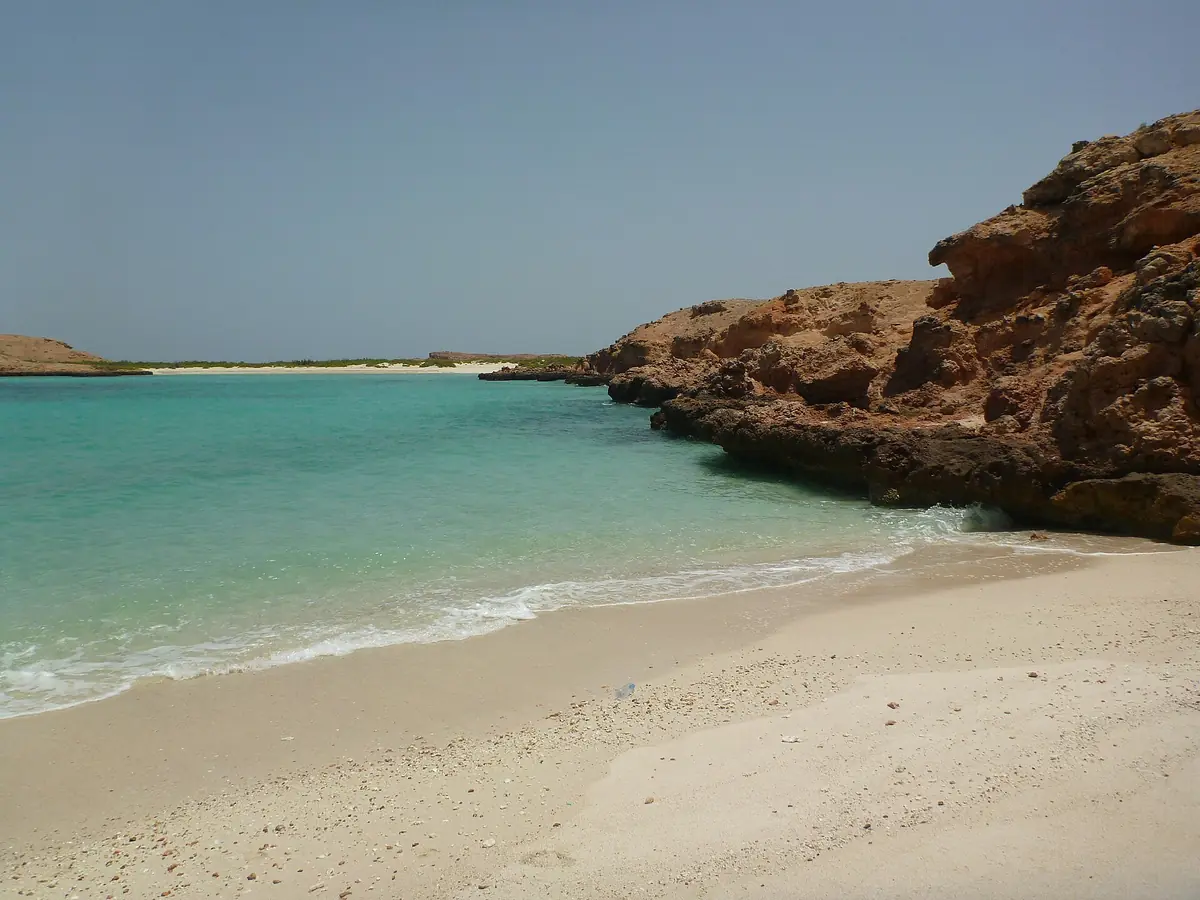
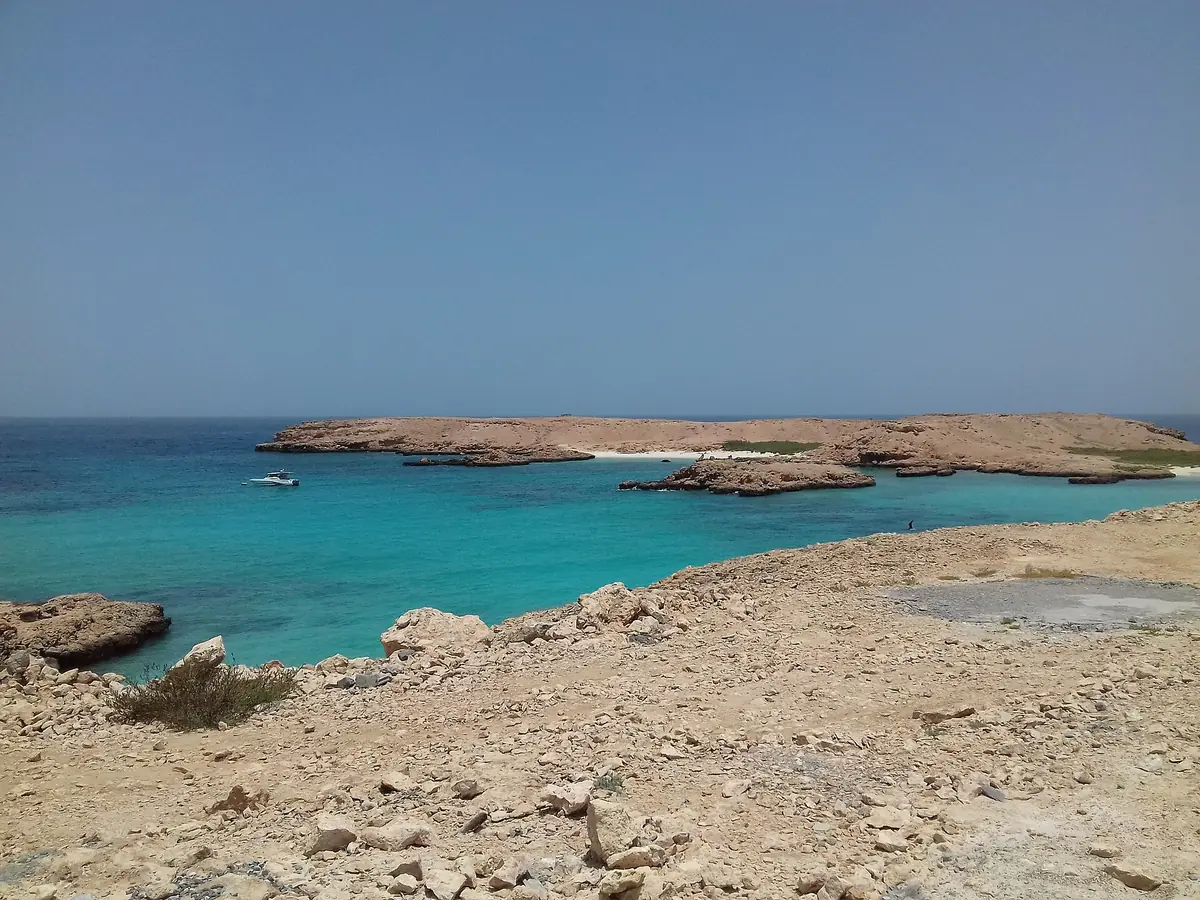
Day 9 — the Daymaniyat Islands. The Daymaniyat Islands Nature Reserve is a group of nine islands 16–18 km off the coast between Seeb and Barka, protected since 1996. Seabirds breed on the islands, sea turtles nest on their beaches, and coral reefs ring them. SeaOman's shared snorkelling trip leaves Al Mouj Marina at 08:30 and is back at 13:00: about 45 minutes by boat each way and two reef stops of about an hour. It costs OMR 27 per adult and OMR 19 per child, plus the Environment Authority's permit for each guest (OMR 3 for a foreign adult, OMR 1 for a child under 16), which is added when you book, at least 15 hours ahead. Landing on the islands is prohibited from the beginning of May to the end of October; boats still take snorkellers to the reefs then. If the sea is too rough or you would rather stay ashore, spend the day on Qurum Beach and at the Royal Opera House instead; ask SeaOman when you book what happens to a trip cancelled for the weather. Sleep in Muscat, night 9.
Day 10 — fly home. Shatti al Qurum is on the airport side of the city, so a morning or midday flight is easy; return the car at MCT.
Prices and times checked 28 November 2026
What ten days in Oman cost, all in
From about OMR 420 per person, OMR 839 for two, for ten days and nine nights at mid-range. That covers the nine nights, three meals a day, the hire car, the admissions named in the plan, the Daymaniyat boat day and a 10% buffer for snacks, tips, the Wadi Shab boat (a small fare that includes the trip back; carry cash for it) and a SIM card; Jabrin Castle charges its own fee on top. Fuel is about OMR 24 a car: Experience Oman's distances for the driving days add up to about 1,060 km, plus the Jebel Akhdar climb, which at 10 litres per 100 km, our estimate for an SUV, takes about 106 litres of M91 petrol at OMR 0.229 a litre. With fuel, the trip costs about OMR 432 per person, OMR 863 for two. A return flight from London averaged about GBP 550 per person on KAYAK over the past 12 months, about OMR 280, so the total with the flight is about OMR 712 each.
The model is two adults sharing a double or twin room. Room rates are the lowest nightly rate with fees that KAYAK listed for each hotel on 28 November 2026, so your dates will differ. The car is priced from Discover Cars' listings at Muscat Airport the same day. Dollar prices are converted at about USD 2.60 to the rial, the value Experience Oman gives.
For two: rooms OMR 270; food OMR 240; car hire OMR 145; sights and the boat day OMR 108; 10% buffer OMR 76.
Rooms: Crowne Plaza Muscat from USD 58 a night, Jabal Akhdar Hotel from USD 55, Golden Tulip Nizwa from USD 61, Arabian Oryx Camp from USD 144 (KAYAK lists a buffet breakfast in the rate), the Ras al Jinz Turtle Reserve from USD 84 (with breakfast and both turtle walks) and InterContinental Muscat from USD 90, about USD 701 for the nine nights. Food is about OMR 12 a day each, our estimate for a café breakfast, a local lunch and a sit-down dinner; on the camp night the breakfast money pays towards dinner in camp. The car is an intermediate SUV such as a Peugeot 3008 at about USD 42 a day, as Discover Cars listed it at the airport, for nine days (about USD 378). The same page gives the average daily rate for all cars there as USD 42 in January and USD 50 in December, its dearest month. These SUVs need not be four-wheel drive. This route needs a four-wheel-drive or electric car, which may cost more, so book one and read the car line and the totals as minimums. Sights per person are the Grand Mosque (OMR 8), the National Museum (OMR 5), Bait Al Zubair (OMR 3), Nizwa Fort (OMR 5 for foreign adults) and Bahla Fort (OMR 3), OMR 24 each, with the turtle walks in the reserve's room rate; Jabrin Castle is run by a private company and charges its own fee at the desk, which comes on top. The Daymaniyat day is SeaOman's shared snorkelling trip at OMR 27 per adult plus the OMR 3 permit, OMR 60 for two. The Oman trip cost guide prices the seven-day loop at three levels.
Prices and times checked 29 November 2026
What to eat and where to look
Shuwa
Marinated meat slow-roasted in an underground firepit and served with qabuli rice, Oman's festive dish; Bait Al Luban on the Mutrah Corniche keeps it on its menu.
- Where to look
- Bait Al Luban, Mutrah Corniche, Muscat.
- Fit it into your day
- Dinner on day 2 or day 8.
Mishkak
Skewers of marinated grilled meat, sold by vendors along the beaches and in parks with bread and a hot sauce, and as small plates in Omani restaurants.
- Where to look
- Bait Al Luban on the Mutrah Corniche, which lists mini mishkaks on its menu.
- Fit it into your day
- Dinner in Muscat on day 2 or day 8.
Omani halwa
A dense sweet of starch, sugar, ghee and rose water with saffron, cardamom and nuts, in flavours from date to frankincense.
- Where to look
- The halwa shops of Nizwa souq beside the fort.
- Fit it into your day
- Day 4, after the fort.
Kahwa and dates
Omani coffee served with dates, the country's sign of hospitality; in Nizwa souq men sit on rugs in front of the meat market drinking kahwa.
- Where to look
- Nizwa souq in the morning, and cafés and hotels across the route.
- Fit it into your day
- Morning of day 5 in Nizwa.
Qabuli
Rice cooked with meat and whole spices; Bait Al Luban lists it with lamb as qabouli laham.
- Where to look
- Bait Al Luban, Mutrah Corniche, Muscat.
- Fit it into your day
- Lunch in Muscat on day 2.
Fresh fish in Sur
The catch landed at Sur's fish market each morning, grilled or fried in the town's restaurants.
- Where to look
- Sur's fish market in the morning, then a restaurant in town.
- Fit it into your day
- Lunch on day 7 after Fath Al Khair.
Practical questions
Does ten days in Oman mean nine nights?
Yes: two in Muscat, one on Jebel Akhdar, two in Nizwa, one in a desert camp, one at the Ras al Jinz Turtle Reserve and two more in Muscat. You fly home on day 10.
Do I really need a four-wheel drive?
Yes for this route, or an electric car. The checkpoint at Birkat Al Mouz lets only four-wheel-drive and electric cars up to Jebel Akhdar. For the sand track into the camp, book the camp's transfer from the highway when you book the night.
Can I do the Daymaniyat Islands in summer?
Partly. Landing on the islands is prohibited from the beginning of May to the end of October, but boats still take snorkellers to the reefs then. If you would rather stay ashore, spend day 9 on Qurum Beach and at the Royal Opera House instead.
How is this different from the seven-day route?
It adds a night on Jebel Akhdar, a day for Bahla and Jabrin, and two last nights in Muscat with a boat day. The seven-day route keeps the same loop with a single mountain day from Nizwa.
Can I add Salalah or Musandam?
Only as a separate trip, by air or by a long transfer, and both lie in areas that some governments advise against. Read health and safety and your own government's advice first.
Do I need a visa for Oman?
Citizens of the more than 100 countries and regions that Oman lists can stay up to 14 days without a visa. For a longer stay, apply before you fly for the unsponsored tourist e-visa at evisa.rop.gov.om: OMR 20 for a stay of up to 30 days. If your country is not listed, answer the eligibility questions on that site first, because some nationalities need a sponsored visa. Check the Oman entry guide before you book the flight.
Keep planning your trip
Oman in seven days
A seven-day Oman loop by hire car: Muscat, Nizwa for the fort and Jebel Shams, a desert camp, Sur, a night at the Ras al Jinz turtle reserve and the coast road.
Read the guide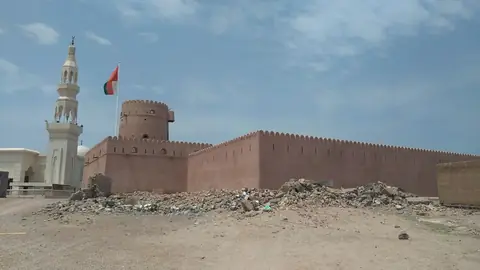
Oman trip cost
A week on Oman's loop by hire car: about OMR 215 per person on a budget, OMR 275 mid-range or OMR 480 in comfort for two sharing, plus about OMR 12 each for fuel.
Read the guide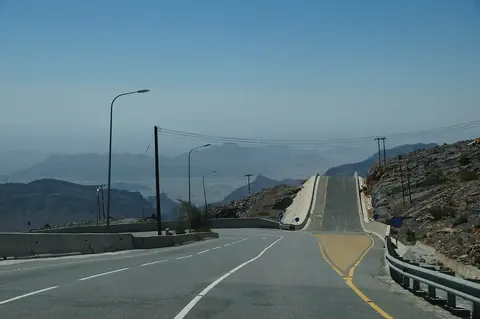
Transport in Oman
Get around Oman: a hire car from Muscat airport, when you need a 4x4, driving the Nizwa–Wahiba–Sur loop, Mwasalat buses, taxis, and flights to Salalah and Khasab.
Read the guide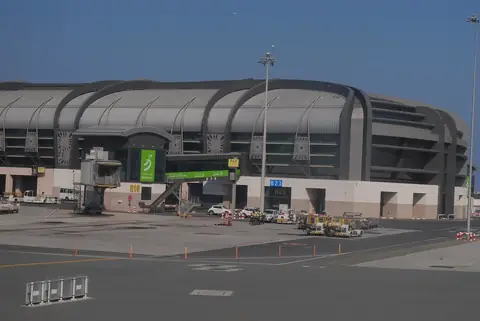
Entering Oman
Which passports enter Oman visa-free for 14 days, what to show at the border, when you need the OMR 20 e-visa, what customs allows, and the road crossings from the UAE.
Read the guide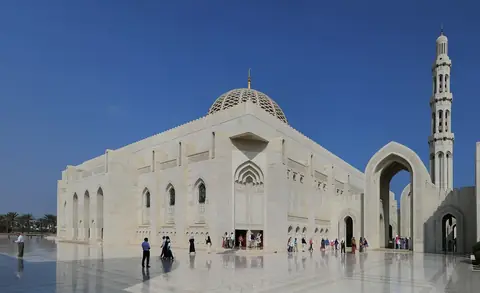
Muscat
Plan two nights in Muscat: the Grand Mosque's morning visiting hours, Mutrah's souq and corniche, Old Muscat's forts and museum, Qurum, and where to stay.
Read the guide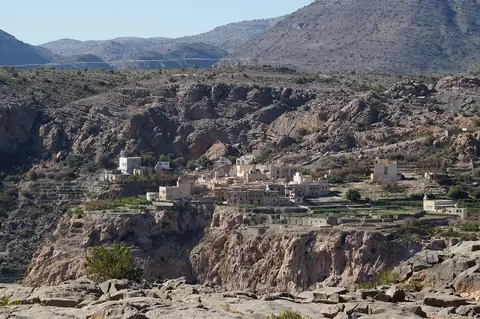
Jebel Akhdar
A night on Jebel Akhdar above Nizwa: the 4x4 checkpoint, the three-village terrace walk, Wadi Bani Habib, the spring rose harvest and where to sleep in Saiq.
Read the guideSources and checks before you travel
(59)
- Experience Oman (Ministry of Heritage and Tourism): Sultan Qaboos Grand Mosque ↗ — opens in a new tab
- Experience Oman: National Museum ↗ — opens in a new tab
- The National Museum: ticket fees ↗ — opens in a new tab
- Experience Oman: Bait Al Zubair Museum ↗ — opens in a new tab
- Experience Oman: Nizwa Fort ↗ — opens in a new tab
- Oman Observer: Now pay and enjoy Omani heritage at Nizwa Fort ↗ — opens in a new tab
- Experience Oman: Wadi Bani Khalid ↗ — opens in a new tab
- Experience Oman: A'Sharqiyah Sands ↗ — opens in a new tab
- Experience Oman: Wadi Shab ↗ — opens in a new tab
- Ras Al Jinz Turtle Reserve: Turtle Viewing ↗ — opens in a new tab
- Ras Al Jinz Turtle Reserve: Facilities ↗ — opens in a new tab
- KAYAK: Crowne Plaza Muscat ↗ — opens in a new tab
- KAYAK: Golden Tulip Nizwa Hotel ↗ — opens in a new tab
- KAYAK: Arabian Oryx Camp ↗ — opens in a new tab
- KAYAK: Best Western Sur ↗ — opens in a new tab
- Discover Cars: car hire at Muscat Airport ↗ — opens in a new tab
- Bait Al Luban: menu ↗ — opens in a new tab
- GOV.UK (FCDO): Oman travel advice, safety and security ↗ — opens in a new tab
- France Diplomatie: Oman, conseils aux voyageurs ↗ — opens in a new tab
- Government of Canada: Oman travel advice ↗ — opens in a new tab
- Experience Oman: Bahla Fort ↗ — opens in a new tab
- Experience Oman: Jabreen Castle ↗ — opens in a new tab
- Oman Observer: Delights of Daymaniyat ↗ — opens in a new tab
- KAYAK: Jabal Akhdar Hotel ↗ — opens in a new tab
- KAYAK: InterContinental Muscat ↗ — opens in a new tab
- Khaleej Times: Oman temporarily caps fuel top-up near border crossings (29 October 2026) ↗ — opens in a new tab
- Oman Observer: Can you drive an EV up Jabal Akhdhar, without a 4WD? (13 October 2026) ↗ — opens in a new tab
- Experience Oman: Oman at a glance ↗ — opens in a new tab
- The National Museum: working hours ↗ — opens in a new tab
- Experience Oman: Ad Dakhiliyah ↗ — opens in a new tab
- Oman Observer: 6 things you didn't know you could do in Jabal Akhdar (2017) ↗ — opens in a new tab
- Oman Observer: Rose harvest season begins in Al Jabal Al Akhdhar (2025) ↗ — opens in a new tab
- Oman Observer: Jabal Shams ↗ — opens in a new tab
- Experience Oman: Fath Al Khair Center ↗ — opens in a new tab
- Oman Observer: Sweet spell of Sur (2024) ↗ — opens in a new tab
- Times of Oman: entry fees for heritage sites (2023 decision) ↗ — opens in a new tab
- France Diplomatie: Oman, entrée et séjour ↗ — opens in a new tab
- Ministry of Foreign Affairs of Oman: entry visas ↗ — opens in a new tab
- Auswärtiges Amt: Oman, Reise- und Sicherheitshinweise ↗ — opens in a new tab
- Experience Oman: About Oman ↗ — opens in a new tab
- Oman Observer: Omani halwa most sought after during Eid (2024) ↗ — opens in a new tab
- Oman Observer: Discovering Oman's gems at Nizwa Souq (2022) ↗ — opens in a new tab
- Oman Observer: Omani street food (2018) ↗ — opens in a new tab
- Diwan of Royal Court: Sultan Qaboos Grand Mosque ↗ — opens in a new tab
- SeaOman (Oman Sail): Daymaniyat Islands snorkelling trip ↗ — opens in a new tab
- Environment Authority: paid entry permit to the Dimaniyat Islands Nature Reserve ↗ — opens in a new tab
- Environment Authority: field visit to the Daymaniyat Islands Nature Reserve ↗ — opens in a new tab
- Oman Observer: Pact inked to manage, operate and utilize Jabreen Castle (14 June 2021) ↗ — opens in a new tab
- KAYAK: flights from London to Muscat ↗ — opens in a new tab
- Ras Al Jinz Turtle Reserve: About us ↗ — opens in a new tab
- dusitD2 Naseem Resort: Three Village Hike ↗ — opens in a new tab
- Experience Oman: Ras Al Hadd Castle ↗ — opens in a new tab
- Oman Observer: Ras al Hadd, a safe bet for turtles (22 August 2023) ↗ — opens in a new tab
- Experience Oman (Ministry of Heritage and Tourism): Wonders of cities, beaches, deserts and mountains (self-drive plan) ↗ — opens in a new tab
- Experience Oman (Ministry of Heritage and Tourism): Al Hajar route adventure trail (self-drive plan) ↗ — opens in a new tab
- Experience Oman (Ministry of Heritage and Tourism): Weather ↗ — opens in a new tab
- Oman Observer: Wadi Shab tourist area, what visitors can expect now (25 October 2023) ↗ — opens in a new tab
- German Federal Foreign Office: Oman travel and safety advice (German) ↗ — opens in a new tab
- KAYAK: Ras Al Jinz Turtle Reserve ↗ — opens in a new tab
Reference sources for the version dated 29 November 2026. Confirm opening times, access, transport and conditions for your travel dates.
Photo credits
(6)
Bahla Fort, the morning of day 5
Photograph: Albinfo — opens in a new tab · CC BY 4.0 — opens in a new tab
Changes: Resized and converted to WebP; displayed with responsive crops. · Original photograph and licence details ↗ — opens in a new tab
The canyon rim at Jebel Shams, day 5
Photograph: Andries Oudshoorn — opens in a new tab · CC BY-SA 2.0 — opens in a new tab
Changes: Resized and converted to WebP; displayed with responsive crops. · Original photograph and licence details ↗ — opens in a new tab
Jabrin Castle, eight kilometres from Bahla
Photograph: Muck — opens in a new tab · CC BY-SA 4.0 — opens in a new tab
Changes: Resized and converted to WebP; displayed with responsive crops. · Original photograph and licence details ↗ — opens in a new tab
The Daymaniyat Islands, the boat day on day 9
Photograph: Wusel007 — opens in a new tab · CC BY-SA 4.0 — opens in a new tab
Changes: Resized and converted to WebP; displayed with responsive crops. · Original photograph and licence details ↗ — opens in a new tab
Snorkelling waters of the Daymaniyat Islands
Photograph: Wusel007 — opens in a new tab · CC BY-SA 4.0 — opens in a new tab
Changes: Resized and converted to WebP; displayed with responsive crops. · Original photograph and licence details ↗ — opens in a new tab
Wadi Shab, on the coast road on day 8
Photograph: Andries Oudshoorn — opens in a new tab · CC BY-SA 2.0 — opens in a new tab
Changes: Resized and converted to WebP; displayed with responsive crops. · Original photograph and licence details ↗ — opens in a new tab