Muscat in two days: the Grand Mosque, Mutrah and Old Muscat
Muscat is a string of bays between bare brown mountains and the Sea of Oman, and the city's sights sit in three of them. The Sultan Qaboos Grand Mosque stands inland beside the main road into the capital, built of Indian sandstone under a 50-metre dome. Mutrah is the old port, a curving corniche with a souq behind it and a fort above. Old Muscat, a short drive further east, is a small walled cove with the Al Alam Palace, two Portuguese-era forts and the National Museum. Two nights give each of them time and leave the evenings for the corniche, before you head inland to Nizwa or down the coast to Sur.
In this guide
Find the location ↗ — opens in a new tabThe short answer
Book two nights in Mutrah, for the souq and the corniche on foot, or in Qurum, for the beach and the Opera House. Keep one morning for the Grand Mosque: non-Muslim visitors are admitted Saturday to Thursday from 08:30 to 11:00, and entry costs OMR 8. Spend the other day in Mutrah and Old Muscat, where the National Museum opens from 10:00 (from 14:00 on Fridays, by its own FAQ) and charges tourists OMR 5. Use taxis in the city and pick up the hire car for the rest of Oman when you leave. From November to April, add a third night for a boat day to the Daymaniyat Islands.
- Suggested time
- 2 nights in Muscat
- Where to stay
- Mutrah, by the corniche and the souq, or Qurum, by the beach and the Royal Opera House
- Season and timing
- November to early March is the mild season, with Muscat averaging around 26°C, and the best time to walk the corniche and the old town; from June to August lowland temperatures generally reach 35–45°C, so keep sightseeing to the early morning and the evening.
Two nights in Mutrah or Qurum
Muscat is long and thin: the airport lies about 35 km from Old Muscat, and the city's sights are strung along the coast between them, so choose a base by what you want to walk to. Mutrah puts the souq, the corniche and Mutrah Fort at your door, with Old Muscat about 4 km further east. Qurum, between Mutrah and the Grand Mosque, has a long public beach and the Royal Opera House. Keep the same room for both nights.
For hotels in Mutrah and Qurum, and for the bases on the rest of the route, see our where-to-stay guide.
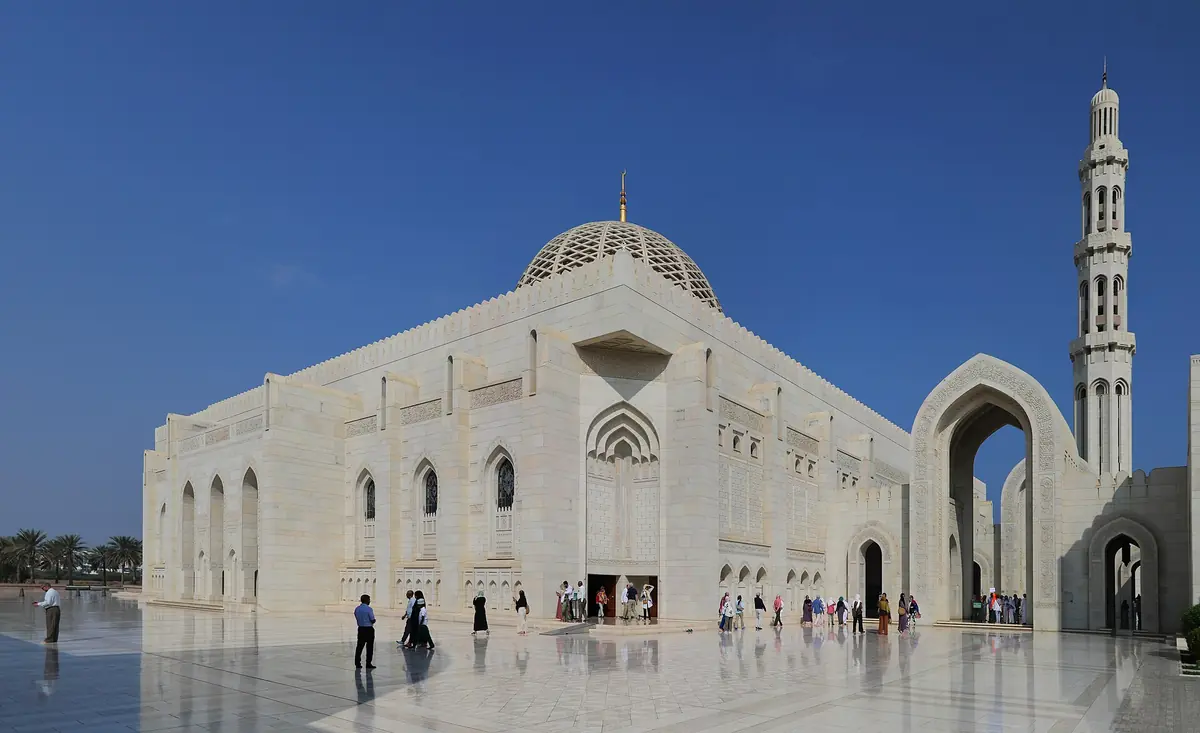
The Sultan Qaboos Grand Mosque before 11:00
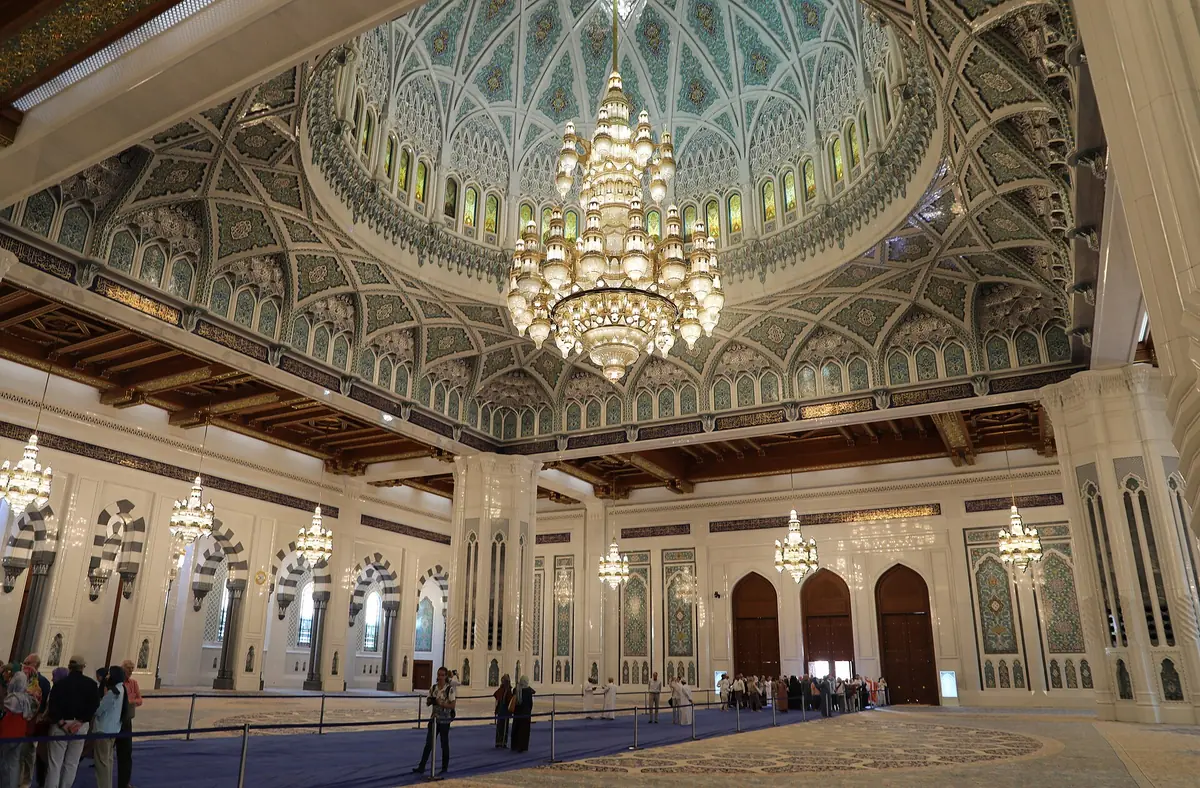
The Sultan Qaboos Grand Mosque was inaugurated in 2001. It is built from nearly 300,000 tonnes of Indian sandstone, its dome rises 50 metres, and its five minarets stand for the five pillars of Islam. The main prayer hall holds about 6,500 worshippers. It is laid with the world's second-largest hand-woven Persian carpet, a single piece of 4,200 square metres that took about 27 months to make. Corridors 240 metres long run along the north and south sides of the mosque. They are divided into halls, and each hall is decorated in the style of a different Islamic culture. The whole complex holds about 20,000 people.
Non-Muslim visitors are admitted from Saturday to Thursday between 08:30 and 11:00, and the admission fee is OMR 8. Visitors are asked to cover their shoulders and knees, and women must also cover their hair; abayas and headscarves are available at the entrance. Shoes come off before the prayer hall, and food and drink stay outside. The mosque lies on the airport side of the city, so it fits the morning you arrive or the morning you drive out towards Nizwa.
Mutrah: the corniche, the souq and the fort
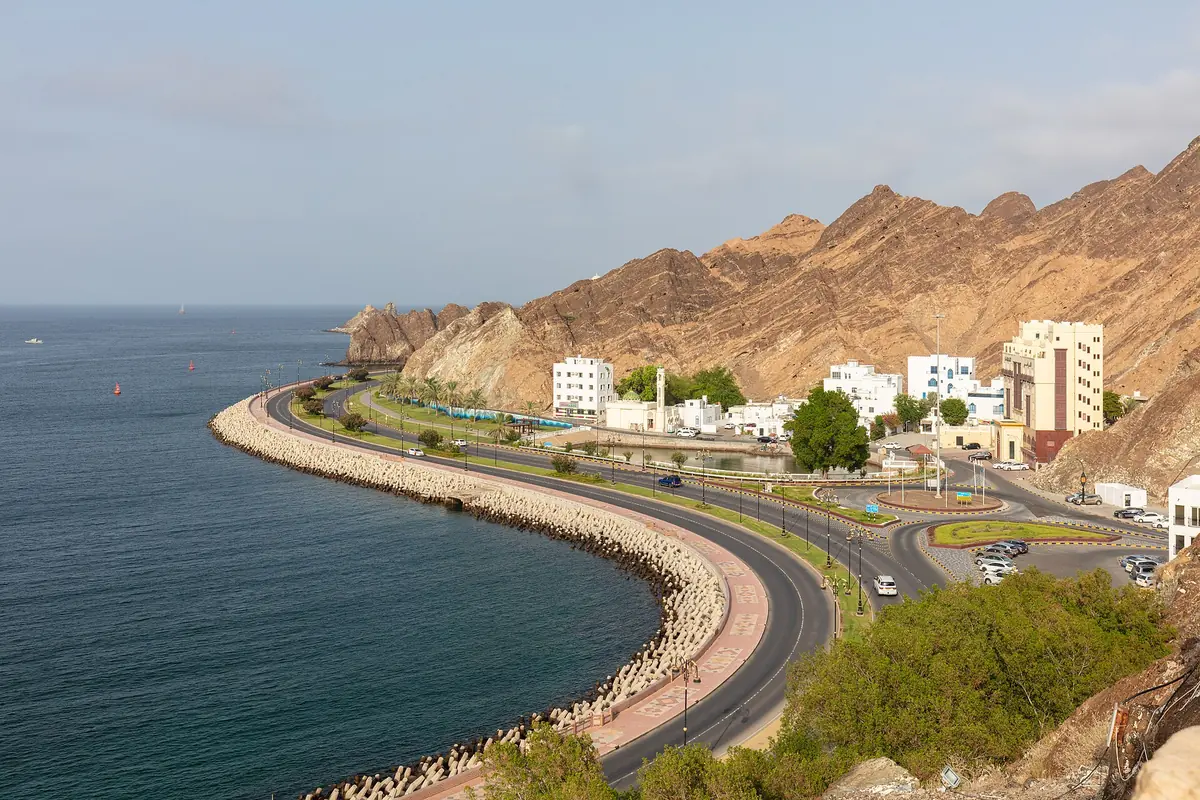
Mutrah Corniche curves around the old harbour, with whitewashed houses and mosques on one side, the sea wall on the other and brown mountains behind. It is the place to walk at dusk, when the heat goes out of the day and families come out along the promenade.
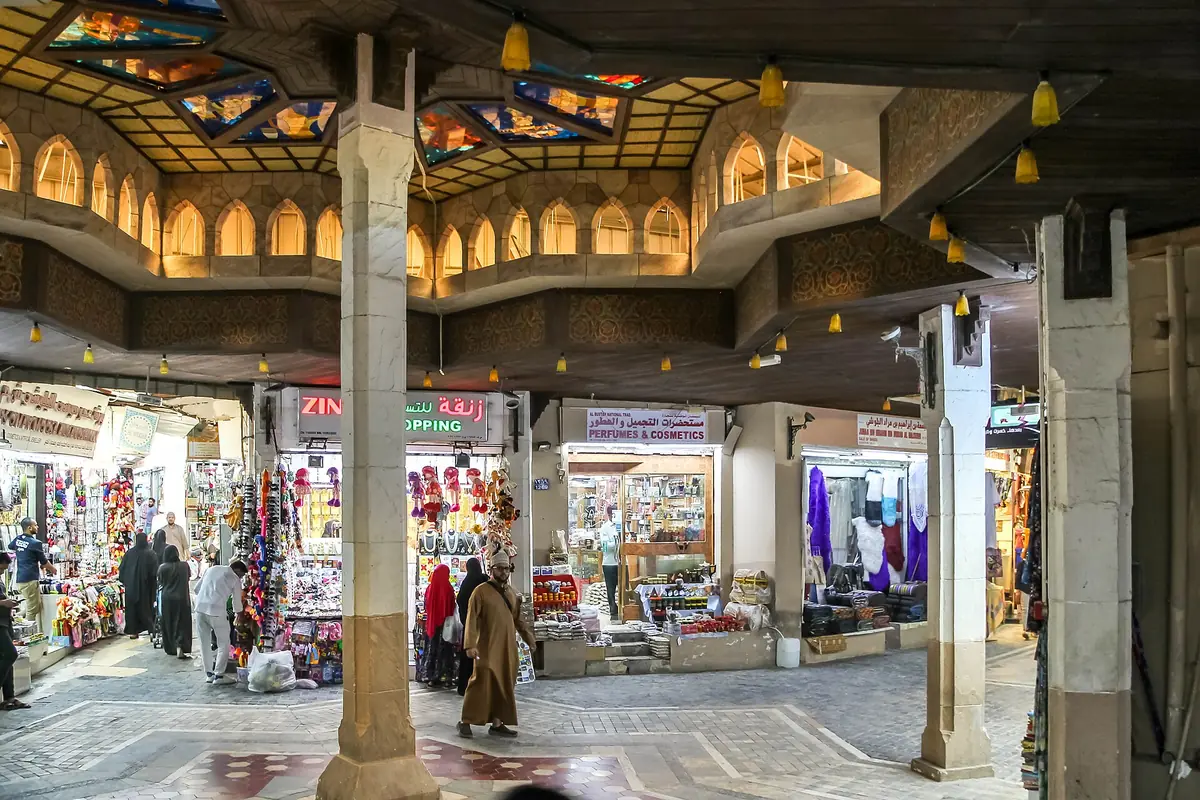
Mutrah Souq opens off the corniche, a covered maze of lanes where shops of the same kind cluster together. It was a trading point between Muscat, India, China and Europe in the age of sail. Today it sells textiles, spices, Omani silver, khanjar daggers and frankincense from Dhofar, which is used in Omani homes.
Mutrah Fort stands on the rock above the corniche. The Portuguese built it in the 1580s, and the Ya'arubah rulers rebuilt it between 1624 and 1742. A large round tower crowns the summit, with two smaller towers to the west and north. From the walls you look straight down on the harbour and the souq. The fort opens daily from 08:00 to 23:00; non-resident adults pay OMR 3 and non-resident children OMR 2.
What to eat and where to look
Shuwa
Oman's celebration dish: meat marinated in spices, wrapped in leaves and slow-cooked in an underground oven, then served with rice. Families make it at Eid; restaurants serve it all year.
- Where to look
- Bait Al Luban, an Omani restaurant on Al Mina Street, Mutrah Corniche.
- Fit it into your day
- Dinner after the evening walk along the corniche.
Paplo
A coastal fish soup with tomato and turmeric, often made with tuna and served over rice with lime.
- Where to look
- Bait Al Luban on Mutrah Corniche, which lists it among its soups.
- Fit it into your day
- A lighter lunch on the Mutrah and Old Muscat day.
Mishkak
Skewers of marinated meat or seafood grilled over charcoal and eaten with tamarind or chilli sauce, Oman's best-known street snack.
- Where to look
- Grill vendors along Muscat's beaches and parks in the evening, such as the Qurum seafront.
- Fit it into your day
- An evening snack on the Qurum day.
Omani halwa
A dense, glossy sweet cooked from starch, sugar, ghee, rose water, saffron, cardamom and nuts, served with coffee to guests and sold in dark, date and frankincense versions.
- Where to look
- Halwa shops across Muscat; they are busiest in the days before Eid.
- Fit it into your day
- Buy a small tub to take on the road to Nizwa or Sur.
Halwa contains nuts and ghee.
Kahwa and dates
Light Omani coffee spiced with cardamom, poured in small cups and served with dates, the sign of Omani hospitality.
- Where to look
- Hotel lobbies and the coffee shops in the lanes of Mutrah Souq.
- Fit it into your day
- A break during the souq walk.
Old Muscat: the palace, the forts and the National Museum
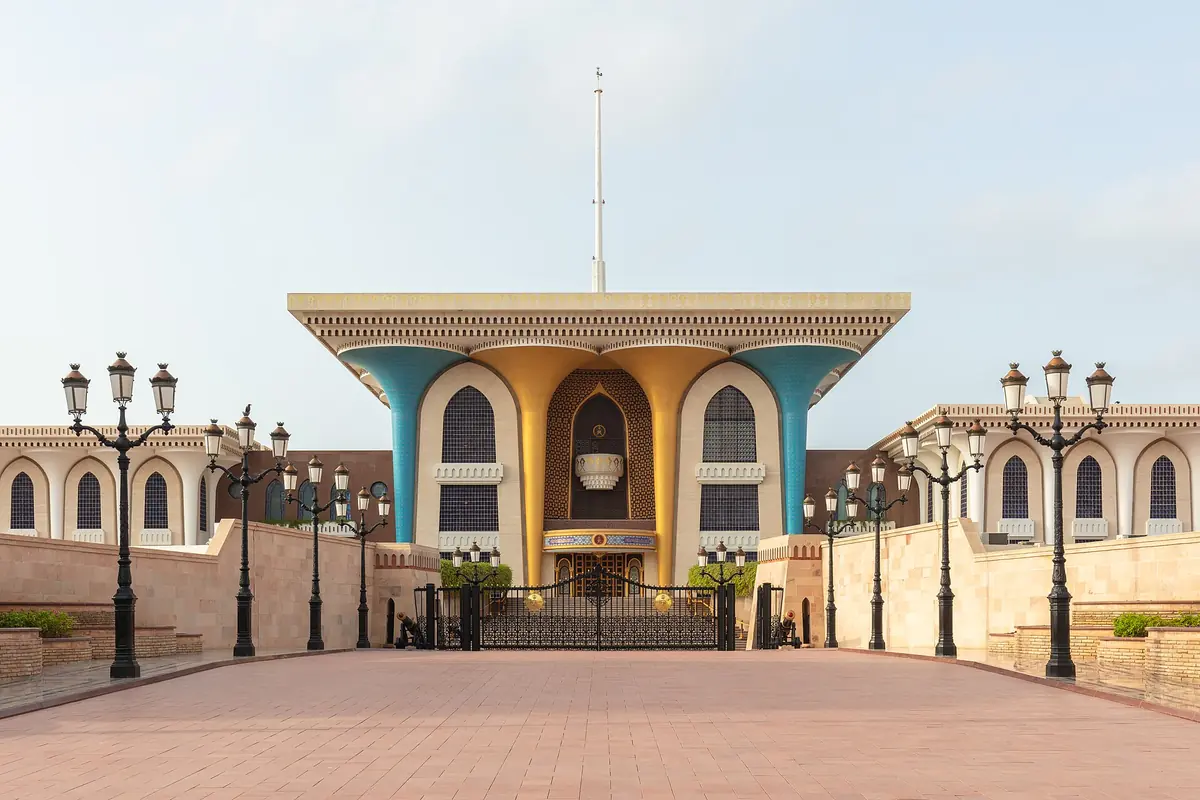
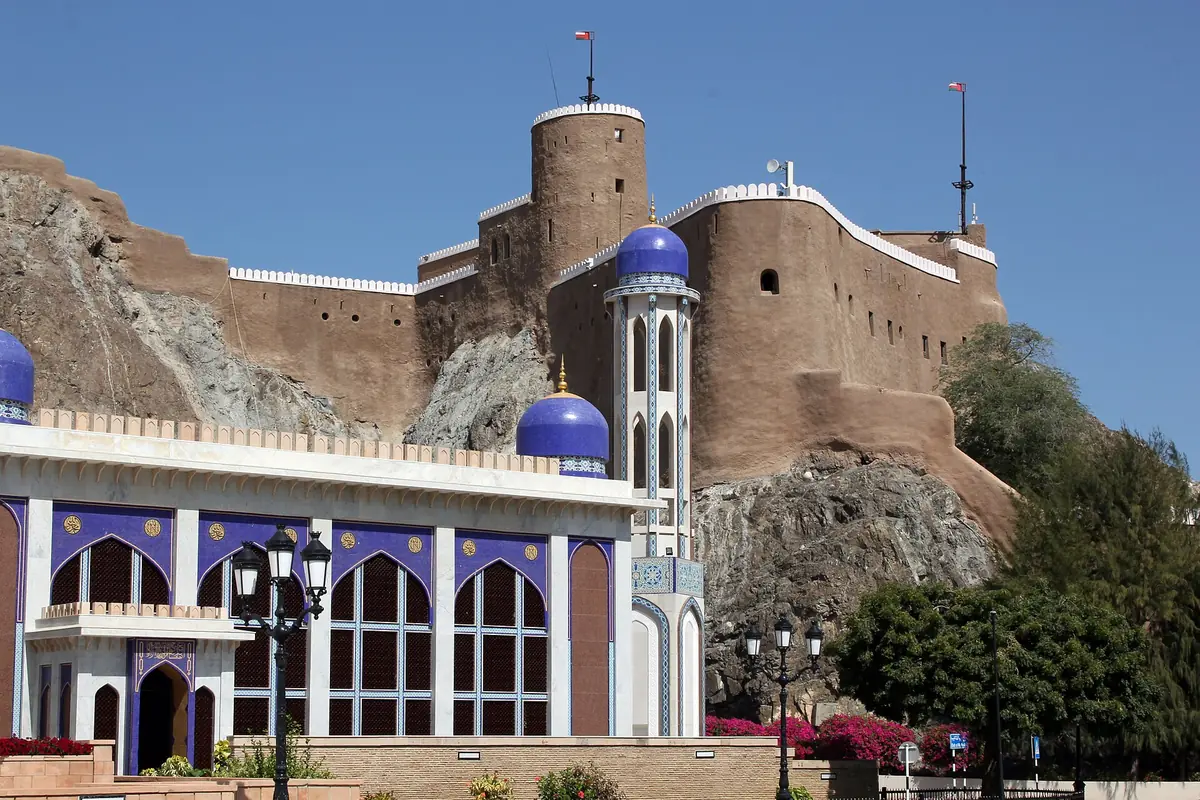
Old Muscat sits around a small harbour. The Al Alam Palace, the ceremonial palace with its blue and gold front, faces a broad paved square. Al Mirani Fort stands on the rocks above the harbour. It began as a tower, which the Portuguese rebuilt in 1588 into a fortress with gun platforms. Today the fort holds a weapons museum, an open-air theatre and telescopes trained on the ships carved into the rocks. It opens daily from 08:00 to midnight; tickets are sold at the reception desk, and no fee is published, so carry a few rials. Al Jalali Fort, the second Portuguese-era fort, also guards the cove; it is best seen from the water, and the sunset dhow cruises sail past both forts and the palace.
The National Museum, opposite the palace, tells Oman's story from the earliest settlements onwards in 14 galleries with more than 7,000 objects, from maritime instruments to early Islamic manuscripts. The museum opens every day from 10:00 to 18:00, and the ticket desk closes at 17:30. Its own FAQ gives Friday hours of 14:00 to 18:00, so do not plan a Friday morning visit. The museum is closed on the first and second days of Eid al-Fitr and Eid al-Adha. Tourists pay OMR 5 by Visa or Mastercard only (no cash), and need ID.
Bait Al Zubair, a family museum opened in 1998, fills several traditional houses with Omani weapons, jewellery, clothing and household objects. It opens Saturday to Thursday from 09:30 to 18:00, and foreign visitors pay OMR 3. Together, the National Museum, the palace square, Al Mirani and Bait Al Zubair fill an afternoon. Old Muscat is about 4 km from Mutrah; take a taxi between the two.
Qurum, the Opera House and the Daymaniyat Islands
Qurum Beach is a long sandy beach with a promenade. The Royal Opera House Muscat opened in 2011 as the first opera house in the Gulf; its programme runs from opera and ballet to Arabic and Omani music, and its gardens hold restaurants and a small souq. Visitors can tour the building Saturday to Thursday between 08:30 and 17:30; entry costs OMR 3.15 for an adult, or OMR 4.2 including its museum. From October to April, Sidab Sea Tours runs a two-hour sunset cruise on a traditional dhow from Marina Bandar Al Rowdha past Old Muscat, at OMR 21 per adult with hotel transfers in Muscat, for groups of at least 10. Its two-hour dolphin-watching trips leave at 07:45 and 09:45 and cost OMR 18 per adult.
The Daymaniyat Islands Nature Reserve is an archipelago of nine islands off the coast of Seeb and Barka, declared a nature reserve in 1996. Seabirds breed on the islands, sea turtles nest on their beaches every year, and coral reefs ring them. SeaOman's shared snorkelling trip leaves Al Mouj Marina at 08:30 and is back at 13:00: about 45 minutes by boat each way and two reef stops of about an hour. It costs OMR 27 per adult and OMR 19 per child, plus the Environment Authority's permit for each guest (OMR 3 for a foreign adult, OMR 1 for a child under 16), which is added when you book, at least 15 hours ahead. Landing on the islands is prohibited from the beginning of May to the end of October; boats still take snorkellers to the reefs then. For a boat day with time on the beaches, come between November and April and add a third night in Muscat.
Arriving, getting around and moving on
Muscat International Airport (MCT) is about 35 km from Old Muscat. Airport taxis, booked at the taxi office in the arrivals hall and run on the meter, go straight to the hotels; through the licensed OTaxi and Oman Taxi apps the fare is OMR 1.5 plus 250 baisa a kilometre, about OMR 9.5 to Ruwi, and Mwasalat buses connect the airport with the city (route 1B, then route 4 to Old Muscat; Mwasalat's website has the times and fares). Within the city, taxis are the easiest way between Mutrah, Old Muscat, Qurum and the mosque; our transport guide covers fares, car hire and the buses. The Ministry of Heritage and Tourism names Oman Taxi and Otaxi, alongside Mwasalat buses, among the local transport options.
Most readers hire a car for the rest of the trip. Nizwa and the mountains lie inland, the coast road runs south-east to Sur and the turtle beach, and our seven-day itinerary links them in a loop that starts and ends at the airport. If you pick the car up on the last city morning, the Grand Mosque is on the way out.
Canada advises against non-essential travel to the whole of Oman, and the UK warns that regional tensions can close airspace at short notice; the areas France and Germany advise against (the Salalah region, Duqm, Musandam and the Yemen border) are not on this route. Read health and safety and your own government's advice before you book.
Practical questions
How many nights should I spend in Muscat?
Two nights: one morning for the Grand Mosque and Qurum, one day for Mutrah and Old Muscat. Add a third night between November and April for a boat day to the Daymaniyat Islands.
When can non-Muslims visit the Sultan Qaboos Grand Mosque?
Saturday to Thursday from 08:30 to 11:00, for OMR 8. Cover shoulders and knees; women also cover their hair. Abayas and scarves are available at the entrance.
Is Mutrah or Qurum the better base?
Mutrah if you want the souq, the corniche and Old Muscat close by; Qurum if you prefer the beach, the Opera House and a shorter drive to the Grand Mosque.
How much is the National Museum in Muscat?
OMR 5 for tourists, by Visa or Mastercard only. It opens daily from 10:00 to 18:00, with the ticket desk closing at 17:30.
Can I visit the Daymaniyat Islands all year?
Boats go out all year, but landing on the islands is prohibited from the beginning of May to the end of October. Plan the boat day between November and April if you want to step ashore; SeaOman's shared snorkelling trip costs OMR 27 per adult plus the OMR 3 permit.
Do I need a car in Muscat?
Not in the city itself: taxis cover it. You will want one for Nizwa, the mountains, the desert and Sur, so many travellers pick up the car when they leave Muscat.
Keep planning your trip
First trip to Oman
Choose seven days or ten for Muscat, Nizwa, the mountains, the Wahiba Sands and Sur: the nights, the hire car, the season, entry and an all-in budget.
Read the guide
Where to stay in Oman
Which part of Muscat to sleep in, how many nights in Nizwa, on Jebel Akhdar, in a Wahiba Sands camp and in Sur, and three hotels at each base from budget to upper.
Read the guide
Transport in Oman
Get around Oman: a hire car from Muscat airport, when you need a 4x4, driving the Nizwa–Wahiba–Sur loop, Mwasalat buses, taxis, and flights to Salalah and Khasab.
Read the guide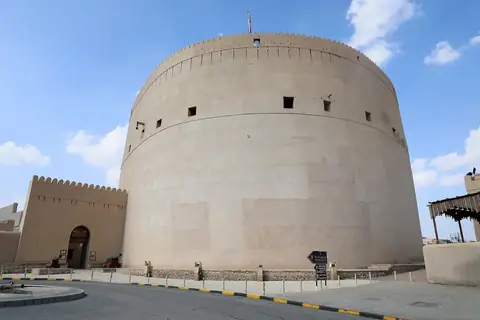
Nizwa
Two nights in Nizwa: the round fort and the souq, the Friday livestock market, Falaj Daris, Bahla Fort and Jabrin Castle, with opening hours, tickets and where to sleep.
Read the guide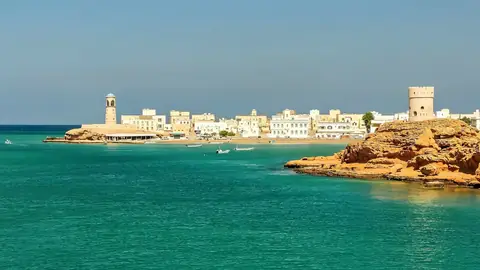
Sur and Ras al Jinz
Plan a night for the turtles at Ras al Jinz: walk tickets and times, the reserve or a Sur hotel, the dhow yard and Fath Al Khair, and Wadi Shab on the way.
Read the guide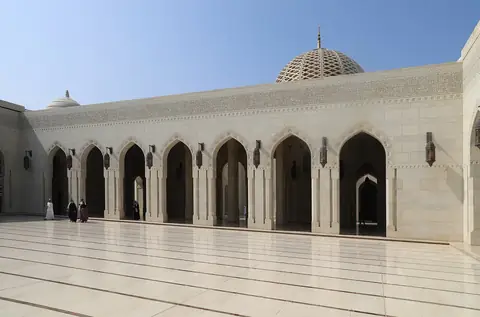
Oman in seven days
A seven-day Oman loop by hire car: Muscat, Nizwa for the fort and Jebel Shams, a desert camp, Sur, a night at the Ras al Jinz turtle reserve and the coast road.
Read the guideSources and checks before you travel
(32)
- Experience Oman (Ministry of Heritage and Tourism): Sultan Qaboos Grand Mosque ↗ — opens in a new tab
- The National Museum: working hours ↗ — opens in a new tab
- The National Museum: ticket fees ↗ — opens in a new tab
- The National Museum: FAQ ↗ — opens in a new tab
- Experience Oman: National Museum ↗ — opens in a new tab
- Experience Oman: Muttrah Fort ↗ — opens in a new tab
- Experience Oman: Al Mirani Fort ↗ — opens in a new tab
- Experience Oman: Bait Al Zubair Museum ↗ — opens in a new tab
- Experience Oman: Royal Opera House ↗ — opens in a new tab
- Experience Oman: Qurum Beach ↗ — opens in a new tab
- Oman Observer: Life at Muttrah Souq is slowly returning to normalcy (29 March 2026) ↗ — opens in a new tab
- Oman Observer: A complete guide to Muttrah Souq ↗ — opens in a new tab
- Bait Al Luban: menu ↗ — opens in a new tab
- Oman Observer: 6 foods to try in Oman ↗ — opens in a new tab
- Oman Observer: 5 street foods to try when in Oman ↗ — opens in a new tab
- Oman Observer: Omani halwa most sought after during Eid (8 April 2024) ↗ — opens in a new tab
- Diwan of Royal Court: Sultan Qaboos Grand Mosque ↗ — opens in a new tab
- Environment Authority: field visit to the Daymaniyat Islands Nature Reserve ↗ — opens in a new tab
- Experience Oman: Weather ↗ — opens in a new tab
- Experience Oman: Al Alam Palace ↗ — opens in a new tab
- Auswärtiges Amt: Oman, Reise- und Sicherheitshinweise ↗ — opens in a new tab
- Government of Canada: Oman travel advice ↗ — opens in a new tab
- France Diplomatie: Conseils aux voyageurs, Oman ↗ — opens in a new tab
- GOV.UK: Oman travel advice ↗ — opens in a new tab
- Experience Oman (Ministry of Heritage and Tourism): Ways to reach ↗ — opens in a new tab
- SeaOman (Oman Sail): Daymaniyat Islands snorkelling trip ↗ — opens in a new tab
- Environment Authority: paid entry permit to the Dimaniyat Islands Nature Reserve ↗ — opens in a new tab
- Sidab Sea Tours: Omani dhow cruise ↗ — opens in a new tab
- Sidab Sea Tours: dolphin watching ↗ — opens in a new tab
- Muscat International Airport: To and from the airport ↗ — opens in a new tab
- Experience Oman: About Oman ↗ — opens in a new tab
- Oman Observer: Taxi fares from Muscat Airport slashed (4 October 2023) ↗ — opens in a new tab
Reference sources for the version dated 29 November 2026. Confirm opening times, access, transport and conditions for your travel dates.
Photo credits
(6)
The Sultan Qaboos Grand Mosque, Muscat
Photograph: Francesco Bini — opens in a new tab · CC BY-SA 4.0 — opens in a new tab
Changes: Resized and converted to WebP; displayed with responsive crops. · Original photograph and licence details ↗ — opens in a new tab
The main prayer hall of the Grand Mosque
Photograph: Francesco Bini — opens in a new tab · CC BY-SA 4.0 — opens in a new tab
Changes: Resized and converted to WebP; displayed with responsive crops. · Original photograph and licence details ↗ — opens in a new tab
The corniche road at Mutrah
Photograph: Diego Delso — opens in a new tab · CC BY-SA 4.0 — opens in a new tab
Changes: Resized and converted to WebP; displayed with responsive crops. · Original photograph and licence details ↗ — opens in a new tab
Inside Muttrah Souq
Photograph: Dr. Thomas Liptak — opens in a new tab · CC BY-SA 4.0 — opens in a new tab
Changes: Resized and converted to WebP; displayed with responsive crops. · Original photograph and licence details ↗ — opens in a new tab
Al Alam Palace, Old Muscat
Photograph: Diego Delso — opens in a new tab · CC BY-SA 4.0 — opens in a new tab
Changes: Resized and converted to WebP; displayed with responsive crops. · Original photograph and licence details ↗ — opens in a new tab
Al Mirani Fort above Al Khor Mosque
Photograph: Eduard Marmet — opens in a new tab · CC BY-SA 2.0 — opens in a new tab
Changes: Resized and converted to WebP; displayed with responsive crops. · Original photograph and licence details ↗ — opens in a new tab