Itineraries
Dubai to Muscat overland in 3 days: buses, the border and Al Ain
Dubai and Muscat are about 450 km apart, with the Hajar Mountains and one land border between them. There is no train and no public bus from Dubai itself: Oman's national bus company, Mwasalat, crosses from Al Ain and from Sharjah, a private coach runs from Deira, and drivers use the border post beyond Hatta. This guide sets out each way across, what both countries ask for at the border and what it costs. It then plans the crossing as a short trip of its own: a night in the oasis city of Al Ain, the bus to Muscat next day, and a first morning in the Omani capital.
In this guide
Find the location ↗ — opens in a new tabThe short answer
Plan 3 days and 2 nights: one night in Al Ain and one in Muscat. Take RTA bus E201 from Al Ghubaiba in Dubai to Al Ain (AED 30), sleep there, and next day ride Mwasalat's route 202 from Al Ain Central Bus Station to Muscat (AED 80.75; six and a half hours on Mwasalat's 2023 timetable). In a hurry, Mwasalat's route 203 leaves Al Jubail Bus Station in Sharjah for Muscat at 06:30, 15:30 and 20:30 (AED 95). Leaving the UAE by road costs AED 35 per person at the border post, and most European, British and North American passports enter Oman free for 14 days. Europcar, for one, does not let its cars cross, so plan one hire car in each country. All in, the three days cost two people about OMR 240 (about AED 2,280). Book the Mwasalat seat first, then the two rooms.
- Suggested time
- 3 days / 2 nights: Al Ain 1, Muscat 1
- Where to stay
- Night 1 in Al Ain; night 2 in Muscat
- All-in budget on the ground
- About OMR 240 for two, OMR 120 each (about AED 2,280 for two) Full breakdown ↓
- Season and timing
- November to March is the comfortable time for the oasis walk in Al Ain and for Muscat. Between October and March heavy rain can flood the wadis that the Omani roads cross; if you drive, check the forecast before you set off.
Four ways across, and the three-day plan
The choice is between a public bus from Al Ain or Sharjah, the private coach from Deira, your own car, and a flight of just over an hour. The table compares them; the sections below give the detail for each.
| Way | From | Time | Who it suits |
|---|---|---|---|
| Mwasalat route 202 | Al Ain Central Bus Station (reached from Dubai by bus E201, from Abu Dhabi by CX90) | About 6½ hours from Al Ain (2023 timetable) | Travellers who want to see Al Ain on the way |
| Mwasalat route 203 | Al Jubail Bus Station, Sharjah | About 8 hours; three departures daily | The quickest public bus from the Dubai area |
| Al Khanjry Transport coach | Deira, Dubai | About six hours | Travellers who want to board in Dubai itself |
| Your own car | Any emirate, by the Al Wajajah post beyond Hatta | Four to five hours' driving plus the border | UAE residents with a car insured for Oman |
| Flight | Dubai (DXB) or Abu Dhabi (AUH) | About 1 hour 10 minutes in the air | Anyone short of time |
Our plan takes the first way and gives it three days. Day 1 is the bus from Dubai to Al Ain, the palm oasis and sunset on Jebel Hafeet. Day 2 is the Mwasalat bus through Buraimi and down the Batinah coast to Muscat. Day 3 is the Grand Mosque and Mutrah in Muscat, where our Oman routes begin. Coming from Abu Dhabi, the Capital Express bus CX90 to Al Ain replaces the E201; the Al Ain guide has its times.
Governments differ on both countries. For the UAE, Germany advises against non-essential travel and Canada asks travellers to exercise a high degree of caution. Canada also advises against non-essential travel to the surroundings of Al Minhad Air Base, south of Dubai; the E66, the highway from Dubai to Al Ain, runs along the north-eastern edge of that area. For Oman, Canada advises against non-essential travel to the whole country, and France and Germany advise against areas that are not on this route (Musandam and the Yemen border, and for France also the Salalah region and Duqm). The UK advises against neither country. Read health and safety in Oman, health and safety in the UAE and your own government's advice before you book.
- Day 1
bus E201 from Al Ghubaiba to Al Ain; Al Ain Oasis and Al Jahili Fort; Jebel Hafeet at sunset. Night: Al Ain.
- Day 2
Qasr Al Muwaiji in the morning, then Mwasalat route 202 from Al Ain Central Bus Station across the border to Muscat. Night: Muscat.
- Day 3
the Sultan Qaboos Grand Mosque before 11:00, then Mutrah's corniche and souq and a lunch of shuwa. The trip ends here.
Prices and times checked 28 November 2026
Day 1: Dubai to Al Ain
RTA route E201 runs from Al Ghubaiba bus station in old Dubai to Al Ain Main Bus Station, which Mwasalat calls Al Ain Central Bus Station. RTA's journey planner gives AED 30 and about 2 hours 15 minutes; departure times are in RTA's S'hail app. From Abu Dhabi, the Capital Express CX90 leaves the Main Bus Station every hour for AED 30. Take a morning bus, so that the afternoon is free.
Al Ain is the garden city of Abu Dhabi emirate, built around oases at the foot of the Hajar Mountains. Al Ain Oasis covers 1,200 hectares in the middle of the city: shaded paths run between about 147,000 date palms, and beside them flow the falaj channels that have brought water from the mountains for about 3,000 years. It opens from 09:00 to 19:00 and is free. Al Jahili Fort was built of sun-dried mud brick in the 1890s by Sheikh Zayed bin Khalifa Al Nahyan as a home for the ruling family. Inside is a permanent exhibition of photographs by Wilfred Thesiger, who crossed the Empty Quarter twice in the late 1940s. It is also free and open from 09:00 to 19:00.
At sunset take a taxi up Jebel Hafeet, the 1,249-metre mountain that stands on the border. Its paved, lit road climbs 11.7 km to a view over the city and into Oman, the country you cross into tomorrow. On Abu Dhabi's taxi meter the road up and back with an hour's wait adds about AED 73 to the fare from town. Sleep in Al Ain, night 1; Danat Al Ain Resort, five minutes from the centre, is the room priced in the budget.
Prices and times checked 28 November 2026
Day 2: the Mwasalat bus from Al Ain to Muscat
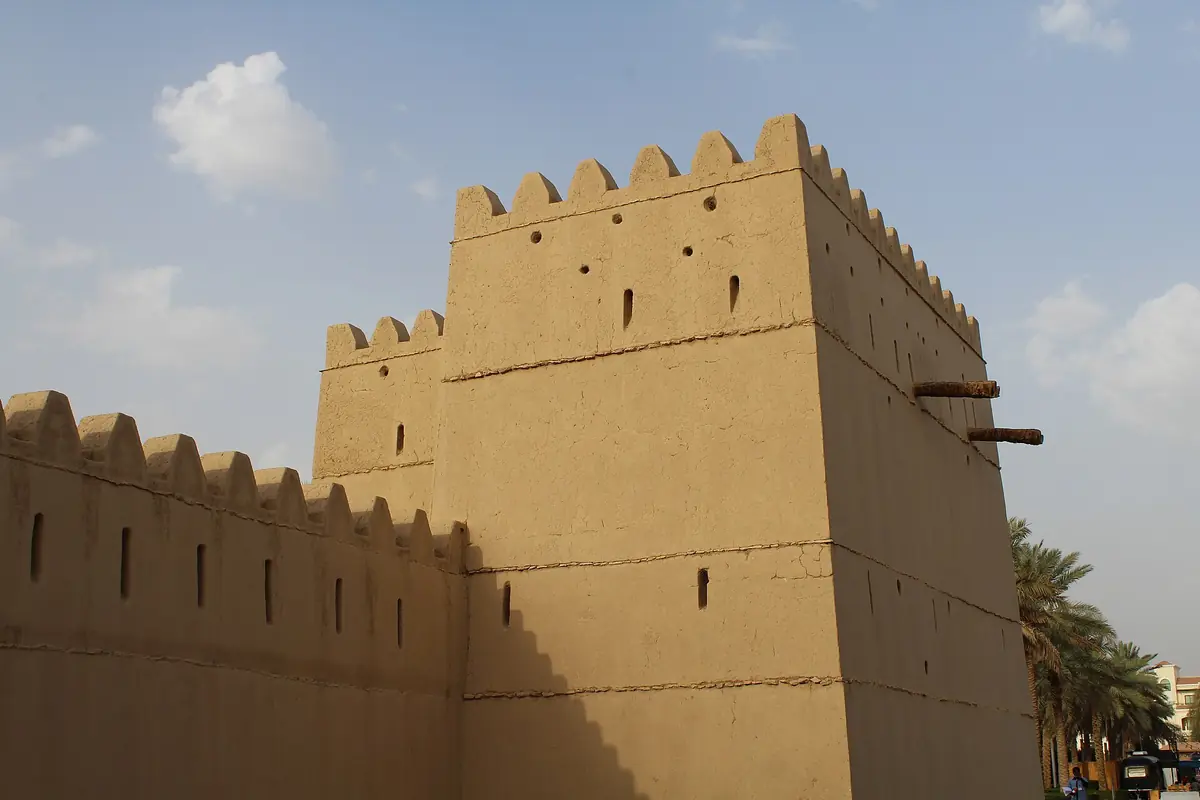
Mwasalat shows the departure time from Al Ain on its booking page. On its December 2023 timetable the bus left Abu Dhabi at 10:45 and reached Muscat at 20:35, which brought it through Al Ain in the early afternoon. If your bus leaves in the afternoon, check out, leave your bags at the hotel and spend the morning in town. Qasr Al Muwaiji, a short taxi ride from the centre, opens at 09:00 and is free. It was built in the early 1900s as a fortified home and meeting place of the ruling family, and from 1946 it was the residence of Sheikh Zayed bin Sultan Al Nahyan, later the founding president of the UAE; a glass pavilion inside the courtyard tells the story, and a visit takes about an hour.
Mwasalat's route 202 runs from Al Ain Central Bus Station through Buraimi, the Omani town that faces Al Ain across the border, to Muscat. On Mwasalat's 2023 timetable the ride between Muscat and Al Ain took six and a half hours, with the border and the breaks. A one-way seat from Al Ain costs AED 80.75, with one checked bag of up to 23 kg and 7 kg of hand luggage. Book it on Mwasalat's website (mwasalat.om), where you enter your passport details and see the departure time for your date. From Abu Dhabi, ride the CX90 to Al Ain and board there. Buy water and a snack in Al Ain for the ride.
At the border the bus stops at the UAE post, where you pay the exit fee (keep dirhams in cash and a bank card to hand), and at the Omani post, where your passport is stamped. Have your hotel booking, your onward or return ticket and your insurance certificate in your hand luggage, because these are the documents Oman can ask for.
Beyond Buraimi the oasis gardens end and the road crosses the bare brown ridges of the Hajar Mountains, then drops to the Batinah, the long coastal plain of northern Oman. The bus follows the plain south-east, with the mountains on the right all the way, and takes a break at Barka Bridge before Muscat.
The bus ends at the Al Mabelah pedestrian bridge, in the western suburbs of Muscat beyond the airport. Take a taxi from there to your hotel: the licensed apps OTaxi and Oman Taxi quote a fixed price before the ride. For a late dinner, grill vendors sell mishkak, skewers of marinated meat, on the Qurum seafront in the evening. Our Muscat guide compares Mutrah and Qurum as bases. Sleep in Muscat, night 2.
Prices and times checked 28 November 2026
Day 3: the Grand Mosque and Mutrah, and where the road goes next
Start at the Sultan Qaboos Grand Mosque, on the airport side of the city. A 50-metre dome rises over the main prayer hall, which is laid with the world's second-largest hand-woven Persian carpet, a single piece of 4,200 square metres that took about 27 months to make. Non-Muslim visitors are admitted from Saturday to Thursday between 08:30 and 11:00, and the admission fee is OMR 8. Cover shoulders and knees; women also cover their hair. If day 3 is a Friday, when the mosque is closed to visitors, go straight to Mutrah.
Then take a taxi to Mutrah, where the corniche curves around the old harbour below the hills and the covered souq, an old trading point with India, China and Europe, groups shops of the same kind together: frankincense from Dhofar, Omani silver, khanjar daggers, textiles and spices. Bait Al Luban, on the corniche, opens at noon: lunch there on shuwa is the last meal of the trip.
From here the Oman trip proper begins. Collect a hire car at Muscat International Airport, where the rental desks in the arrivals hall are open 24 hours, and join Oman in 7 days at its day 3, the drive to Nizwa, then go on through the Wahiba Sands and Sur. A visa-free stay in Oman lasts at most 14 days and cannot be extended, so Oman in 14 days after this crossing needs the e-visa, applied for before you travel.
Prices and times checked 28 November 2026
What to eat and where to look
Regag
Crisp, paper-thin Emirati bread, served with eggs, cheese or other fillings.
- Where to look
- Al Fanar Restaurant & Cafe, Al Jimi, Al Ain, open daily 09:00–22:00; from AED 24.
- Fit it into your day
- Lunch on day 1, when you arrive from Dubai.
Chicken machboos
Rice cooked in spiced stock with chicken, dried lime and onion, the everyday Emirati rice dish.
- Where to look
- Al Fanar Restaurant & Cafe, Al Jimi, Al Ain; AED 65 on its menu.
- Fit it into your day
- Dinner on day 1, after Jebel Hafeet.
Mishkak
Skewers of marinated meat or seafood grilled over charcoal and eaten with tamarind or chilli sauce.
- Where to look
- Grill vendors on the Qurum seafront in Muscat in the evening.
- Fit it into your day
- A late dinner on day 2, after the bus.
Shuwa
Marinated meat slow-roasted in an underground firepit and served with qabuli rice, Oman's festive dish.
- Where to look
- Bait Al Luban, Al Mina Street, Mutrah Corniche, Muscat, open from noon.
- Fit it into your day
- Lunch on day 3, after the souq.
Kahwa and dates
Light Omani coffee spiced with cardamom, poured in small cups and served with dates, the country's sign of hospitality.
- Where to look
- The coffee shops in the lanes of Mutrah Souq.
- Fit it into your day
- A break in the souq on day 3.
The direct bus from Sharjah, and the coach from Deira
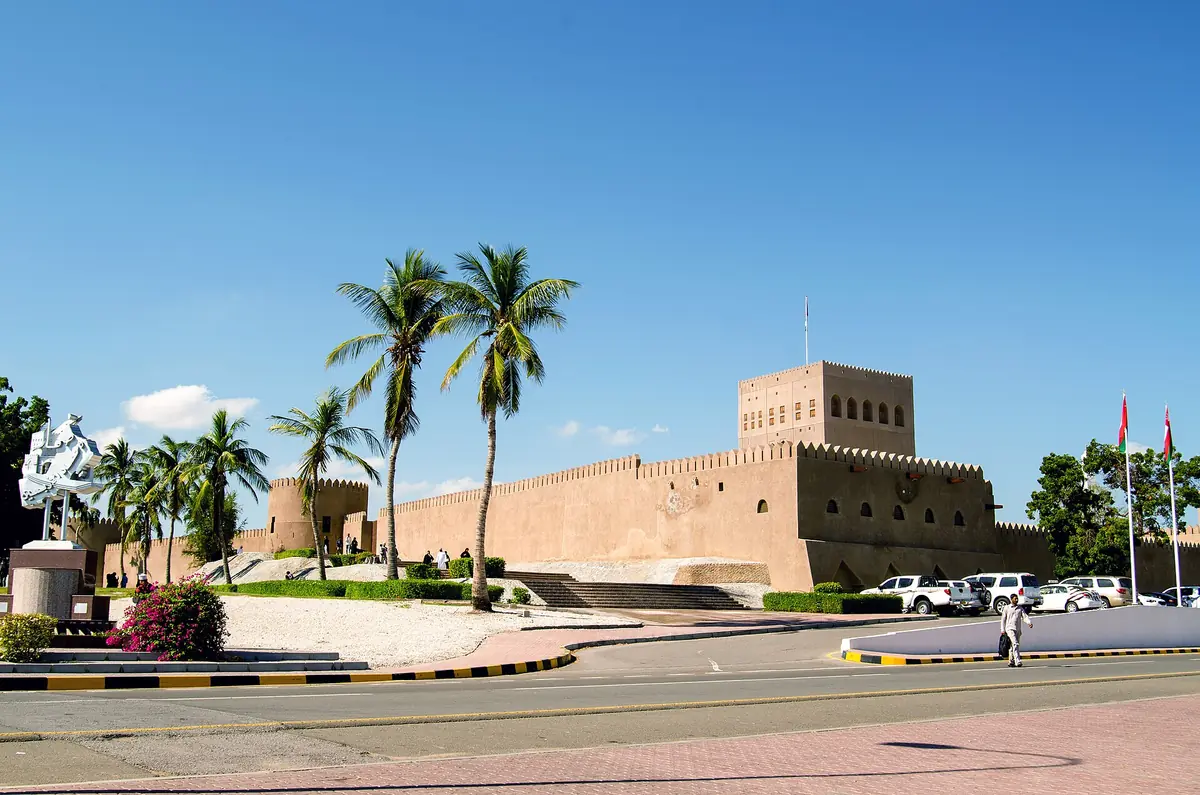
Route 203 is the public bus closest to Dubai. Mwasalat runs it with the Sharjah Roads and Transport Authority (SRTA) from Al Jubail Bus Station in Sharjah, the emirate next to Dubai, to Muscat by the coast: about 450 km through Fujairah, Kalba, Shinas and Sohar. It leaves Sharjah for Muscat three times a day, at 06:30, 15:30 and 20:30, and takes about eight hours: the 06:30 reaches Muscat at about 14:30, the 15:30 arrives late at night and the 20:30 before dawn, so take the morning bus if you can. Coming back, one bus leaves Muscat for Sharjah at 15:00, and two more leave Sohar at 07:00 and 13:30. In Muscat it serves the Al Mawaleh and Burj Al Sahwa stations, Muscat International Airport and the Azaiba bus station: get off at the airport for a hire car, or at Azaiba, the last stop, for a taxi to a hotel in Qurum or Mutrah.
A one-way seat costs AED 95, with the same 23 kg and 7 kg baggage allowance, and is booked on the same website. From Dubai, RTA bus E306 runs from Al Ghubaiba to Al Jubail Bus Station, and E308 runs from Stadium for AED 12 in 23 to 29 minutes. For the 06:30 departure take a taxi; a Dubai taxi that enters Sharjah adds AED 20 to the fare. Our UAE transport guide has the other Sharjah buses.
Both routes also run the other way: the bus for Al Ain leaves Muscat in the early morning, and the Sharjah bus at 15:00. Mwasalat suspends intercity routes when the authorities issue weather warnings, as it did in March 2026, so look at the forecast the day before.
Mwasalat's own Dubai–Muscat route ended during the pandemic. The coach that still leaves from Dubai is run by a private Omani company, Al Khanjry Transport, from Abu Hail metro station in Deira. In November 2025 The National listed departures at 07:00, 15:00 and 21:00, a journey of about six hours and a fare of AED 100. Tickets are sold only in person, at its offices.
Prices and times checked 28 November 2026
By car: which border post, and what hire firms allow
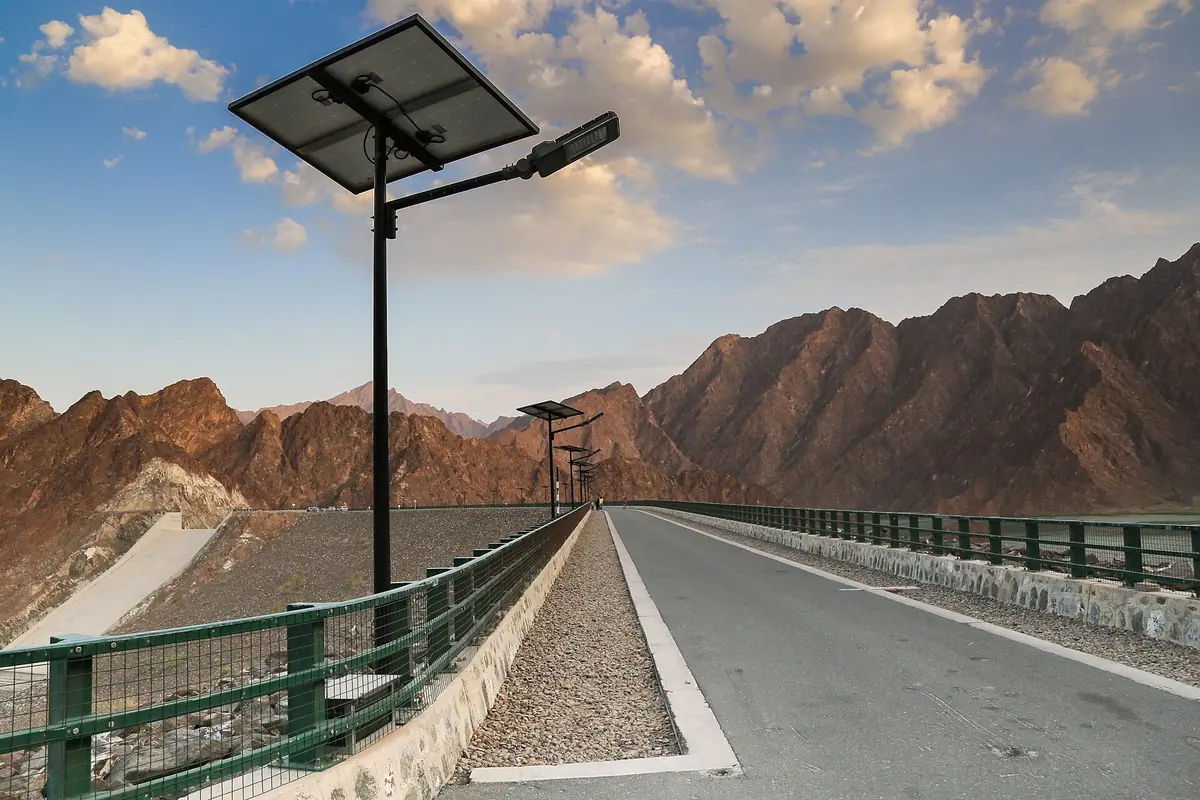
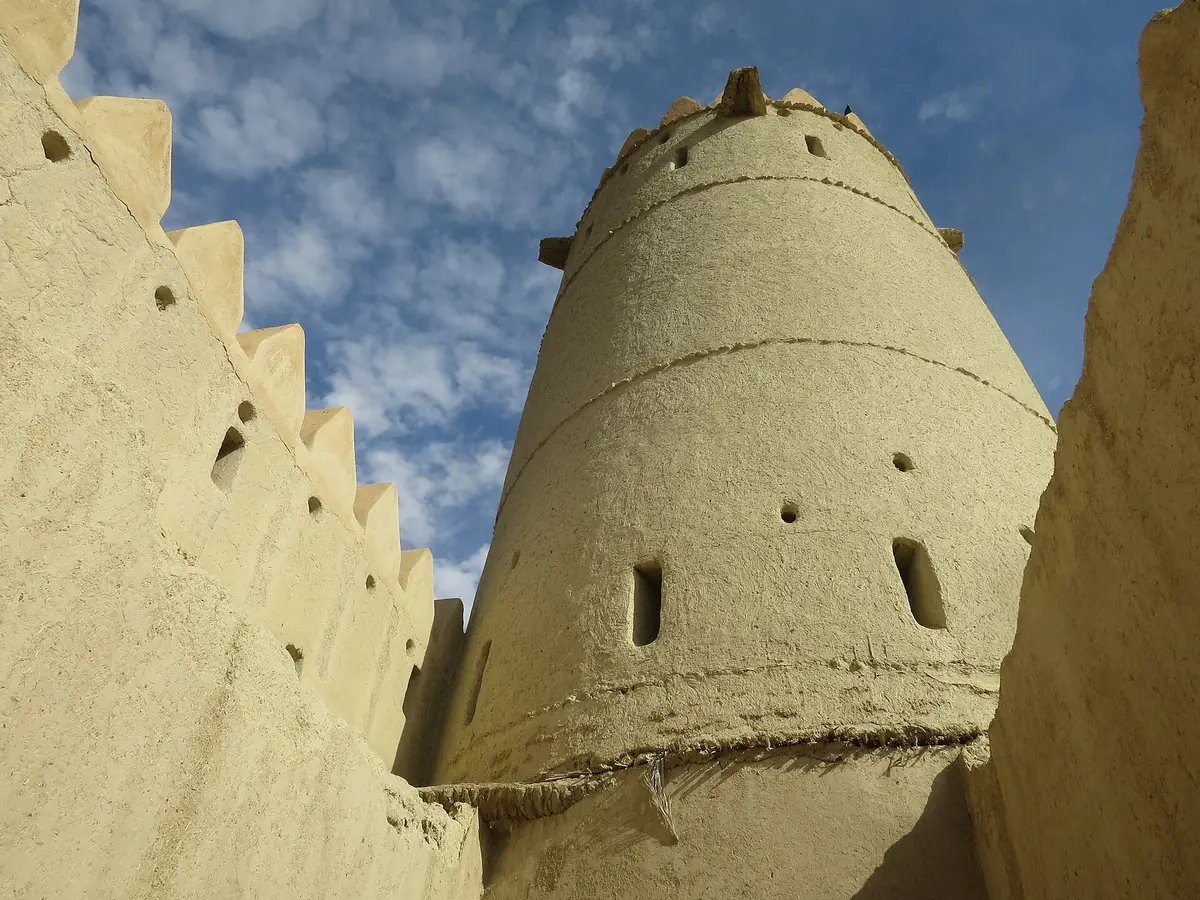
Several posts link the two countries, and the right one depends on where you start. Al Wajajah, on the E44 beyond Hatta, is the usual crossing from Dubai to Muscat. Khatmat Milaha, south of Kalba on the Fujairah coast road, leads to Sohar and Muscat along the coast. From Al Ain, the crossings into Buraimi serve travellers from Abu Dhabi and Al Ain, and Mezyad, also near Al Ain, is used for the road to central Oman. Dubai to Muscat is about 450 km, four to five hours of driving before the time spent at the border.
A hire car is the hard way to cross. Europcar forbids it in both directions: its Dubai terms do not allow its cars to be driven outside the UAE, and its Oman terms do not allow rented cars to cross Oman's borders. A firm that does allow it charges more for the extra insurance that covers Oman. For most trips the simple plan is one hire car in each country, with a bus or a flight between them.
With your own car, check that its insurance covers Oman. If it does not, third-party cover for Oman, the Orange Card, is sold at self-service kiosks at the border, from about AED 106 for the minimum five days; it does not cover damage to your own car. Bring the registration card, and a notarised letter from the owner if the car is not yours. After the UAE post and Omani immigration, Omani officers inspect the car before you drive on.
Two stops break the drive. Hatta, Dubai's mountain town, lies a few kilometres before the Al Wajajah post: a green dam lake among bare peaks, and a restored mud-brick village below it. On the Omani side, Sohar, the old port of the Batinah coast, has a restored fort with a museum of the town's seafaring past. Plan your fuel: since October 2026 Omani stations within 50 km of a border crossing temporarily sell at most 30 litres per fill. Our Oman transport guide covers the rules of the road.
Prices and times checked 28 November 2026
Border rules for both countries
Leaving the UAE. At the UAE border post you pay an exit fee of AED 35 per person; bus passengers pay it too, on top of the ticket. If you come back, you enter the UAE again under its usual rules: British citizens, for example, get a free visa on arrival that allows 90 days within 180 days of first entry. The UAE entry guide has the lists for other passports.
Entering Oman. The rules at a land border are the same as at the airport. Citizens of more than 100 countries, among them the UK, the US, Canada and most of Europe, may stay up to 14 days without a visa, stamped in the passport at the post, and that stay cannot be extended. You must be able to show a passport valid for at least six months, a return or onward ticket, a confirmed hotel booking and travel health insurance. For a longer stay, or with a passport that is not on the list, apply before you travel for the tourist e-visa at evisa.rop.gov.om. The Oman entry guide covers the visa fees, customs and medicines.
Coming back. A single-entry Omani visa ends when you leave: after a side trip into the UAE you need a new one to return. Photographing border posts, police and soldiers is not allowed, so keep your phone away at both posts.
Prices and times checked 28 November 2026
Musandam is a separate crossing
Musandam, the mountainous tip of Arabia on the Strait of Hormuz, belongs to Oman but is cut off from the rest of the country by the UAE. It is not on the way to Muscat, and it is one of the areas that France and Germany advise against, so this guide does not route you through it.
The rules there are stricter than on the Muscat road. Musandam is entered from Ras Al Khaimah at the Al Darah post or from Dibba at the Wam post, and each post charges AED 30, by bank card only. Only the holder of the car's own insurance may drive across, so no hire car may enter. A traveller who holds an Omani e-visa and enters Musandam from the rest of Oman needs a multiple-entry visa. Our Musandam guide has the rest.
Prices and times checked 28 November 2026
The flight instead
Flying takes about 1 hour 10 minutes from Dubai International (DXB) to Muscat International (MCT). Oman Air, flydubai and Emirates fly the route nonstop, and Etihad flies nonstop from Abu Dhabi (AUH). On KAYAK, return fares from Dubai typically ranged from USD 184 to USD 273, and one-way fares started at USD 83; returns from Abu Dhabi typically ranged from USD 154 to USD 275.
The flight suits a trip that starts with a hire car at Muscat airport, as our Oman routes do, and it avoids the question of taking a car across. The bus costs less and shows you the country between the two capitals. The UK warns that regional tensions can close airspace at short notice, so on either plan book a fare you can change.
Prices and times checked 28 November 2026
What the crossing costs for two
About OMR 240 for two, OMR 120 each (about AED 2,280 for two), for the three days by bus from Al Ghubaiba bus station: both rooms, every meal, the two bus fares, the exit fee, the taxis in Al Ain and Muscat, the Grand Mosque and a 10% buffer for snacks, tips and a SIM card.
| Item | For two |
|---|---|
| Bus E201, Dubai to Al Ain | AED 60 |
| Mwasalat route 202, Al Ain to Muscat | AED 162 |
| UAE exit fee | AED 70 |
| Danat Al Ain Resort, one night | from AED 260 |
| Food in Al Ain, to the bus on day 2 | about AED 360 |
| Taxis in Al Ain, with Jebel Hafeet | about AED 200 |
| In the UAE | about AED 1,110 (OMR 117) |
| Crowne Plaza Muscat, one night | about OMR 22 (from USD 58) |
| Food in Muscat, from the evening of day 2 | about OMR 36 |
| Taxi from Al Mabelah to the hotel | about OMR 12 |
| Taxis on day 3 | about OMR 17 |
| Grand Mosque | OMR 16 |
| In Oman | about OMR 103 |
| 10% buffer | about OMR 22 |
| Total | about OMR 240 |
The model is two adults sharing a room on an ordinary winter weekday. Dirham prices are converted at about AED 9.5 to the rial. Room rates are the lowest nightly rates that KAYAK listed for each hotel. Food in Al Ain is priced from Al Fanar's menu: regag and karak tea for lunch, about AED 80 for two, two chicken machboos and two teas for dinner, about AED 160, and about AED 120 for dates, water, and breakfast and a snack before the bus on day 2. Food in Muscat is about OMR 12 a day each, our estimate for a café breakfast, a local lunch and a sit-down dinner, as in our Oman routes.
The Al Ain taxis are four short rides at about AED 15 each, about AED 32 each way to the foot of Jebel Hafeet, and AED 73 on the meter for the mountain road with an hour's wait. The Muscat taxis are estimates on the apps' airport tariff of OMR 1.5 plus 250 baisa a kilometre.
By comparison, the Sharjah bus at AED 95 saves the Al Ain night, and a one-way flight from Dubai started at USD 83 per person on KAYAK. A driver with their own car pays the exit fee for each person and, if the policy does not cover Oman, about AED 106 for the Orange Card.
Prices and times checked 28 November 2026
Practical questions
Is there a direct bus from Dubai to Muscat?
Not a public one. Mwasalat's buses leave from Al Jubail Bus Station in Sharjah (route 203, at 06:30, 15:30 and 20:30, AED 95) and from Al Ain Central Bus Station (route 202, AED 80.75). From Dubai itself, the private Al Khanjry Transport coach leaves from Deira; its tickets are sold at its offices.
Which border crossing do I use from Dubai to Muscat?
By car, Al Wajajah, on the E44 beyond Hatta. Khatmat Milaha on the Fujairah coast road and the Al Ain crossings also lead to Muscat. The Al Darah and Wam posts lead only to Musandam, which is not on the way.
Do I need a visa to enter Oman by road?
The rules are the same as at the airport: citizens of more than 100 countries, including the UK, the US, Canada and most of Europe, may stay 14 days without a visa. You need a passport valid for six months, an onward ticket, a hotel booking and health insurance. Check your passport in our Oman entry guide.
Is there a fee to leave the UAE by land?
Yes. You pay an exit fee of AED 35 per person at the UAE border post, in a car or on a bus.
Can I drive a rental car from Dubai to Oman?
Not with Europcar, which forbids it in both its Dubai and its Oman terms. A firm that allows it charges more for the insurance that covers Oman. The simple plan is one hire car in each country, with a bus or a flight between them.
How long does Dubai to Muscat take?
By car, about 450 km and four to five hours of driving, plus the border. Mwasalat's bus takes about eight hours from Sharjah, and six and a half from Al Ain on its 2023 timetable. The flight takes about 1 hour 10 minutes.
Keep planning your trip
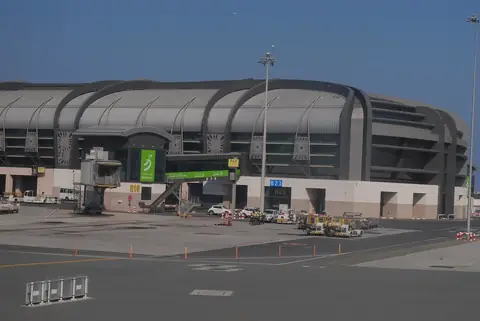
Entering Oman
Which passports enter Oman visa-free for 14 days, what to show at the border, when you need the OMR 20 e-visa, what customs allows, and the road crossings from the UAE.
Read the guide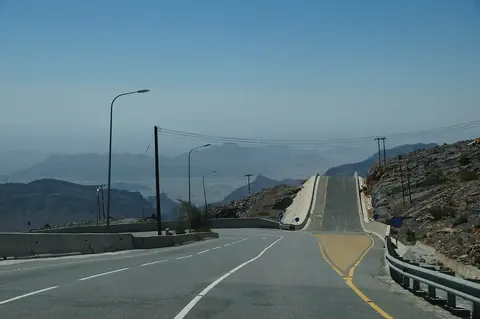
Transport in Oman
Get around Oman: a hire car from Muscat airport, when you need a 4x4, driving the Nizwa–Wahiba–Sur loop, Mwasalat buses, taxis, and flights to Salalah and Khasab.
Read the guide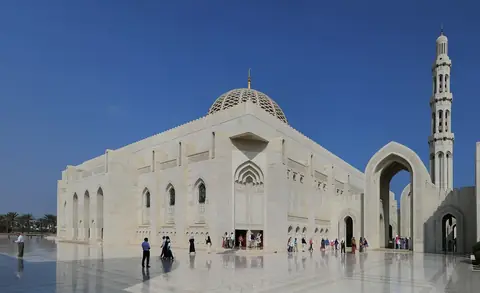
Muscat
Plan two nights in Muscat: the Grand Mosque's morning visiting hours, Mutrah's souq and corniche, Old Muscat's forts and museum, Qurum, and where to stay.
Read the guide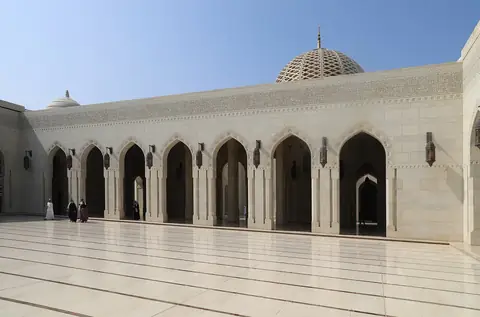
Oman in seven days
A seven-day Oman loop by hire car: Muscat, Nizwa for the fort and Jebel Shams, a desert camp, Sur, a night at the Ras al Jinz turtle reserve and the coast road.
Read the guide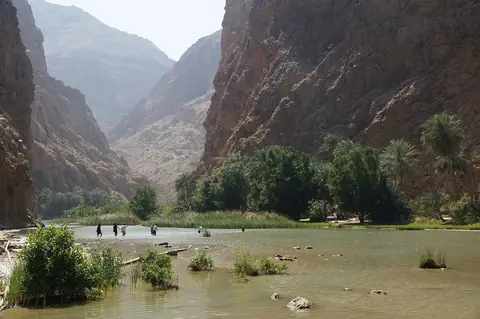
Oman in 14 days
Two weeks by hire car in northern Oman: Muscat, two nights on Jebel Akhdar, a night on the rim of Jebel Shams, Nizwa, a desert camp, Sur and the turtle reserve.
Read the guide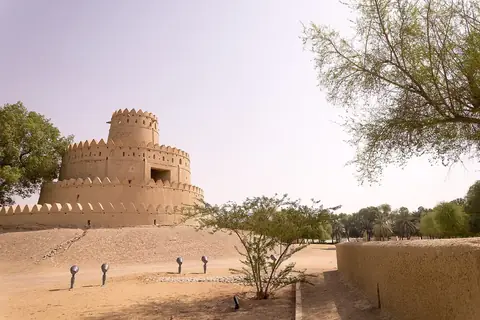
Al Ain
Al Ain as a day trip or one night: the UNESCO oasis, Al Jahili Fort, Qasr Al Muwaiji, Jebel Hafeet and the camel market, with buses from Abu Dhabi and Dubai.
Read the guideSources and checks before you travel
(59)
- Sharjah24 (Sharjah Government Media Bureau): SRTA updates Oman bus schedule (9 June 2026) ↗ — opens in a new tab
- Oman Observer: Mwasalat's Muscat and Sharjah bus service started (28 February 2024) ↗ — opens in a new tab
- Gulf News: New Muscat-Sharjah bus service starts from February 27 (25 February 2024) ↗ — opens in a new tab
- Oman Observer: Mwasalat announces Muscat-Abu Dhabi bus service (26 September 2023) ↗ — opens in a new tab
- Oman Observer: Over 7k passengers use the Mwasalat Abu Dhabi service (19 December 2023) ↗ — opens in a new tab
- Gulf News: How to travel from UAE to Oman by bus (updated 10 June 2026) ↗ — opens in a new tab
- Khaleej Times: Want to travel from UAE to Oman by bus? (3 March 2024) ↗ — opens in a new tab
- The National: Everything you need to know about driving to Oman (4 November 2025) ↗ — opens in a new tab
- Gulf News: UAE to Oman by road, visa, car insurance and border rules (updated 20 May 2026) ↗ — opens in a new tab
- Europcar Dubai: terms and conditions ↗ — opens in a new tab
- Europcar Oman: terms and conditions ↗ — opens in a new tab
- Oman's Foreign Ministry: entry visas ↗ — opens in a new tab
- UK FCDO: Oman entry requirements ↗ — opens in a new tab
- UK FCDO: United Arab Emirates entry requirements ↗ — opens in a new tab
- German Federal Foreign Office: Oman travel and safety advice (German) ↗ — opens in a new tab
- France Diplomatie: Oman entry and stay (French) ↗ — opens in a new tab
- France Diplomatie: Oman latest advice (French) ↗ — opens in a new tab
- Government of Canada: Oman travel advice ↗ — opens in a new tab
- Government of Canada: United Arab Emirates travel advice ↗ — opens in a new tab
- German Federal Foreign Office: United Arab Emirates travel and safety advice (German) ↗ — opens in a new tab
- UK FCDO: Oman travel advice ↗ — opens in a new tab
- RTA Wojhati: journey planner (intercity buses) ↗ — opens in a new tab
- Abu Dhabi Mobility: inter-city services ↗ — opens in a new tab
- Experience Abu Dhabi: Al Ain Oasis ↗ — opens in a new tab
- Abu Dhabi Culture (DCT): Al Ain Oases ↗ — opens in a new tab
- Abu Dhabi Culture (DCT): Al Jahili Fort ↗ — opens in a new tab
- Experience Abu Dhabi: Al Jahili Fort ↗ — opens in a new tab
- Experience Abu Dhabi: Jebel Hafit ↗ — opens in a new tab
- Abu Dhabi Mobility: taxi fares ↗ — opens in a new tab
- Visit Abu Dhabi: Danat Al Ain Resort ↗ — opens in a new tab
- KAYAK: Danat Al Ain Resort ↗ — opens in a new tab
- Al Fanar Restaurant & Cafe: Al Ain menu ↗ — opens in a new tab
- KAYAK: Crowne Plaza Muscat ↗ — opens in a new tab
- KAYAK: flights from Dubai to Muscat ↗ — opens in a new tab
- KAYAK: flights from Abu Dhabi to Muscat ↗ — opens in a new tab
- Khaleej Times: Oman temporarily caps fuel top-up near border crossings (29 October 2026) ↗ — opens in a new tab
- Experience Oman (Ministry of Heritage and Tourism): Ways to reach ↗ — opens in a new tab
- Experience Oman (Ministry of Heritage and Tourism): North Al Batinah ↗ — opens in a new tab
- Experience Oman (Ministry of Heritage and Tourism): Sultan Qaboos Grand Mosque ↗ — opens in a new tab
- Diwan of Royal Court: Sultan Qaboos Grand Mosque ↗ — opens in a new tab
- Muscat International Airport: To and from the airport ↗ — opens in a new tab
- Oman Observer: Taxi fares from Muscat Airport slashed (4 October 2023) ↗ — opens in a new tab
- Bait Al Luban: menu ↗ — opens in a new tab
- Experience Oman: About Oman ↗ — opens in a new tab
- Visit Hatta (Dubai Holding): plan your visit ↗ — opens in a new tab
- Dubai Municipality: Hatta Heritage Village ↗ — opens in a new tab
- Gulf News: UAE to Oman for less than Dh100? (updated 23 April 2025) ↗ — opens in a new tab
- Experience Abu Dhabi: Qasr Al Muwaiji ↗ — opens in a new tab
- Abu Dhabi Culture (DCT): Qasr Al Muwaiji ↗ — opens in a new tab
- Oman Observer: 5 street foods to try when in Oman ↗ — opens in a new tab
- Experience Abu Dhabi: the ancient world of Al Ain ↗ — opens in a new tab
- Oman Observer: Life at Muttrah Souq is slowly returning to normalcy (29 March 2026) ↗ — opens in a new tab
- Oman Observer: A complete guide to Muttrah Souq ↗ — opens in a new tab
- RTA: bus route list (PDF, November 2026) ↗ — opens in a new tab
- RTA: new bus route between Dubai and Sharjah (news, 2025) ↗ — opens in a new tab
- RTA: taxis in Dubai ↗ — opens in a new tab
- Oman Observer: Mwasalat suspends bus routes due to weather conditions (25 March 2026) ↗ — opens in a new tab
- Al Fanar Restaurant & Cafe: Al Ain branch ↗ — opens in a new tab
- Experience Abu Dhabi: best time to travel ↗ — opens in a new tab
Reference sources for the version dated 28 November 2026. Confirm opening times, access, transport and conditions for your travel dates.
Photo credits
(4)
Sohar Fort on the Batinah coast; the Sharjah bus stops in Sohar on its way to Muscat.
Photograph: Vilphy Pulickan from Sohar, Oman — opens in a new tab · CC BY 2.0 — opens in a new tab
Changes: Resized and converted to WebP; displayed with responsive crops. · Original photograph and licence details ↗ — opens in a new tab
The road over Hatta Dam, a few kilometres before the Al Wajajah border post.
Photograph: JSPhotography2016 — opens in a new tab · CC BY-SA 4.0 — opens in a new tab
Changes: Resized and converted to WebP; displayed with responsive crops. · Original photograph and licence details ↗ — opens in a new tab
A watchtower of Mezyad Fort, south of Al Ain near the Mezyad border post.
Photograph: Angela Manthorpe — opens in a new tab · CC BY-SA 4.0 — opens in a new tab
Changes: Resized and converted to WebP; displayed with responsive crops. · Original photograph and licence details ↗ — opens in a new tab
Qasr Al Muwaiji in Al Ain, a short taxi ride from the centre, for the morning before the Mwasalat bus.
Photograph: Ghania Fatima — opens in a new tab · CC BY-SA 4.0 — opens in a new tab
Changes: Resized and converted to WebP; displayed with responsive crops. · Original photograph and licence details ↗ — opens in a new tab