Plan your trip
UAE entry: visa on arrival, passport rules, customs and medicines
For most Western passports, entering the UAE takes no paperwork before you fly: the visa is stamped at the airport. What does need planning is the passport's expiry date, any prescription medicine you carry, and the customs limits on cash, alcohol and tobacco. This guide takes them in the order you meet them, then covers health requirements and the government travel advice that can change a booking.
In this guide
Find the location ↗ — opens in a new tabThe short answer
British, Canadian, US, German, French, Spanish and Dutch passport holders need nothing before they fly and may stay up to 90 days in any 180-day period. Irish citizens get a free 30-day visa on arrival, and Australians are eligible for a tourist visa on arrival; check its length for your passport on the UAE government's visa-on-arrival page. The UAE sorts other eligible nationalities into a 30-day group and a 90-day group, Mexican citizens get a visit visa of up to 180 days, and everyone else needs an entry permit, arranged through a sponsor before travel. Your passport must be valid for at least six months from the day you arrive. Declare cash, cheques, gold or gems worth more than AED 60,000 through the Afseh system. Through Dubai's airports, adults may bring in up to 4 litres of alcohol and 200 cigarettes duty-free, but alcohol is illegal in Sharjah. For narcotic or psychotropic medicines, carry the prescription and a stamped medical report; the UAE's drug authority makes advance approval optional for visitors, but the UK says to get it, so applying is the safe choice. Governments' travel advice differs, from Germany's advice against non-essential travel to the UK's warning of attacks at short notice, so read your own before you book.
- Key point
- Entry planning before you book; choose the length of stay in the first-trip guide
- Where it applies
- Arrive at Dubai International (DXB) or Zayed International (AUH) in Abu Dhabi; the visa on arrival is stamped at passport control
- Timing
- The rules apply all year; check passport validity and the papers for any controlled medicine before you choose dates
Compare country by country: Middle East entry requirements at a glance →
Who gets a visa on arrival, and for how long
The UAE government sorts visitors into groups. GCC citizens need no visa. Citizens of the countries on its 30-day list get a visa on arrival for 30 days, and those on its 90-day list a visa on arrival for 90 days, with no advance arrangements. Mexican citizens get a multiple-entry visit visa that allows up to 180 days. Everyone else needs an entry permit before arrival and someone in the UAE to sponsor it. The lists can change, so find your nationality on the government's visa-on-arrival page before you book.
Your own government's advice says how the rule applies to your passport. British citizens get a visitor or tourist visa free of charge on arrival. The visa is valid for up to 90 days over a 180-day period that begins on the day of first entry, and you can use the days in one stay or spread them across several visits. Canadians get a free visa on arrival on the same 90-in-180 terms. German citizens need no visa for tourist, business (without work) or family visits of up to 90 days within 180 days on a valid biometric passport. French, Spanish and Dutch citizens also get 90 days within 180, stamped free on arrival; France explains this as the UAE's reciprocal answer to the visa waiver the Schengen area signed for Emiratis in 2015. Irish citizens get a free 30-day visa on arrival, so other EU citizens should check their own foreign ministry's page. Australian passport holders are eligible for a tourist visa on arrival, and Emirates lists Australia in the 90-day group; check how long it allows on the UAE government's visa-on-arrival page before you book.
US citizens with a regular passport do not apply for a visa before travelling. A visa is issued on entry for a maximum stay of 90 days within 180 days of the first entry, in one stay or in several visits. This visa cannot be renewed. The UAE Embassy in Washington gives the overstay fine as AED 50 for each day beyond the 90.
A visit visa does not allow work. Overstay fines are charged for each extra day. To extend a stay, contact the General Directorate of Residency and Foreigners Affairs (GDRFA) in Dubai, or the Federal Authority for Identity, Citizenship, Customs and Port Security (ICP) for the other emirates. If you continue overland to Oman, by Hatta or Al Ain, Oman's own entry rules apply at its border post: British citizens, for example, may visit Oman for up to 14 days without a visa. Ask your rental company before you drive a hire car across.
Prices and times checked 29 November 2026
Passport, children and the arrival check
Your passport must be valid for at least six months from the date you enter the UAE. The UAE Embassy in Washington, the UK, Canada and Germany all give this rule, and the UAE refuses entry to travellers whose passport is not valid for long enough. Canadian temporary passports and emergency travel documents are accepted only for exit and transit, not for entry. German provisional passports are not accepted for entry either. The UAE admits only travellers whose passport shows the sex as M or F. Germany also warns that entry can be refused if the passport has no given name or surname, or shows XX in place of the day and month of birth.
Germany's advice says children under 18 may enter only with a parent or guardian. If a child will travel alone or with another adult, ask the airline about its rules and consent forms and check with the UAE authorities before you book. Dual nationals must leave on the passport they used to enter. If you only change planes and do not pass through immigration, no visa is needed, but the UK says the passport must then be valid for at least 3 months after the date of transit.
At passport control your iris is scanned on entry and exit. At Dubai's airports, Dubai Customs starts right after passport control. Walking through the green or the red channel counts as your customs declaration. An Israeli visa or stamp in your passport should cause no difficulties at entry, as long as you do not plan to work in the UAE.
Prices and times checked 29 November 2026
Customs: cash, alcohol, tobacco and banned goods
Every traveller aged 18 or over may carry cash, cheques and other negotiable instruments, precious metals and stones worth up to AED 60,000, or the equivalent in other currencies, without declaring them. The limit applies on entry and on departure. Above that amount, declare what you carry through Afseh, the ICP's online and smartphone system, before or during your trip. The declaration is free. What children under 18 carry counts towards the limit of the adult travelling with them.
Through Dubai's airports, travellers may bring in duty-free gifts worth up to AED 3,000. Adults may also bring in 200 cigarettes, or 50 cigars, or 500 grams of tobacco or shisha molasses. Their alcohol allowance is up to 4 litres, or two cartons of 24 cans of beer of no more than 355 ml each. Duty is charged on extra tobacco, and extra alcohol is confiscated. Travellers under 18 may bring in no tobacco or alcohol. These are Dubai Customs' limits. Drinking or possessing alcohol is illegal in the Emirate of Sharjah, so arrive at Sharjah airport (SHJ) without any.
Leave at home anything containing pork, and pornography of any kind: Germany warns that even a revealing magazine cover can count. Narcotics, CBD oil and hemp-flavoured food, betel leaves (paan) and naswar, gambling equipment and counterfeit goods are also banned. Customs can check books, films, phones, tablets and USB sticks. Some goods need a permit from the relevant authority, among them drones, plants, medicines and filming equipment for news, films or official events. Weapons and related items such as ammunition and body armour need permission from customs and the Ministry of Defence, even in transit.
Prices and times checked 28 November 2026
Medicines: the papers to carry and the approval
Some medicines sold freely at home are classed in the UAE as narcotic, psychotropic or controlled; Canada names codeine and some psychiatric medicines as examples. The Emirates Drug Establishment (EDE), which issues the UAE's permits for personal medicines, says visitors may bring such medicines for up to three months' treatment. Carry the prescription, issued within the last three months, and a medical report, issued within the last year. Both must give your full name, the medicine, its dose and the length of treatment, and be stamped by the clinic or hospital that treats you.
For visitors, the EDE calls its advance approval optional. The UK's advice still says that you must get approval before you travel, and that medicine arriving without it may be refused and you may be prosecuted, so applying is the safe choice. The application is online and free and takes about one working day; you log in with UAE PASS, the UAE's digital ID. Medicines that are not narcotic or psychotropic need no application. Carry everything in the original packaging in your hand luggage. If you have no approval, declare these medicines at customs on arrival and show the prescription and medical report. If you only change planes and do not leave the airport, no approval is needed.
Some skincare products and e-cigarette refills may contain CBD oil, which is illegal in the UAE. Such products are confiscated, and carrying them can lead to criminal charges. Canada's advice also says that entering the UAE with HIV antiretroviral medication for personal use is forbidden and can lead to detention or deportation.
Prices and times checked 29 November 2026
Vaccinations and health cover
No vaccination is compulsory for most visitors. If you arrive from a country with a risk of yellow fever transmission, you need a yellow fever vaccination certificate. Germany adds that the rule applies from the age of nine months, and also to travellers who spent more than 12 hours in transit in such a country. Hepatitis A vaccination is recommended, and hepatitis B depending on what you plan to do.
Private hospitals and clinics are well equipped, but treatment can be expensive, so take travel insurance that covers hospital treatment and medical evacuation. Our health and safety guide covers heat, the laws that catch visitors and emergency numbers.
Travel advice and flight disruption
Since the regional conflict began in early 2026, there have been strikes and retaliatory attacks across the Middle East, and flights can be cancelled at short notice. Governments draw the line differently: Germany advises against non-essential travel to the UAE, while the UK does not advise against travel but warns that the risk of sudden escalation is high. Our health and safety guide sets out each government's advice and the areas it names; check that your insurance covers the trip under your own government's advice.
Book flights and rooms you can change, keep your travel documents up to date, and follow the local authorities' instructions if you are told to take shelter. Do not photograph military sites, airports, ports, palaces, government buildings, bridges or any strike damage. Photo bans are not always signposted and are strictly enforced.
Prices and times checked 28 November 2026
Practical questions
Do I need a visa for Dubai as a British, Canadian, German or US citizen?
No visa is needed before you travel. British and Canadian citizens get a free visa on arrival, US citizens a visa on arrival, and German citizens a visa-free stay, for up to 90 days within 180 days.
Is the UAE visa on arrival 30 or 90 days?
It depends on your nationality: the UAE keeps a 30-day list and a 90-day list. British, Canadian, French, German, Spanish, Dutch and US citizens get 90 days within 180, Irish citizens 30 days, and Mexican citizens up to 180 days. Find your country on the government's visa-on-arrival page, or in your own government's travel advice.
How long must my passport be valid for the UAE?
At least six months from the day you arrive. Canadian temporary passports and emergency travel documents are not accepted for entry, and neither are German provisional passports.
How much cash can I bring into the UAE?
Up to AED 60,000 or its equivalent per traveller aged 18 or over without declaring it. Above that, declare it through the Afseh system before or during your trip; the declaration is free.
How much alcohol can I bring into Dubai?
Adults may bring up to 4 litres of alcohol or two cartons of 24 cans of beer through Dubai's airports. Extra alcohol is confiscated, and travellers under 18 may bring none.
Can I bring my prescription medicine to the UAE?
Yes: up to six months' supply of ordinary prescription medicines, and three months' of narcotic or psychotropic ones. For narcotic or psychotropic medicines such as codeine, carry the prescription and a medical report stamped by your clinic. Advance approval from the UAE's drug authority is optional for visitors, but the UK advises getting it. Keep medicines in their original packaging.
Is it safe to travel to the UAE now?
Governments differ: Germany advises against non-essential travel, while the UK does not advise against travel but warns that the risk of sudden escalation is high. Read your own government's advice and check your insurance before you book; our health and safety guide covers the other governments.
Keep planning your trip

First trip to the UAE
Choose seven days or ten for Dubai, Sharjah, Abu Dhabi, Ras Al Khaimah and Al Ain: nights, buses and the metro, season, entry, medicines, dress and the current advisory.
Read the guide
Health and safety in the UAE
The travel advice on regional tensions, the numbers to save, insurance and hospitals, the medicine permit, heat, the sea and desert, the roads and the laws.
Read the guide
Money and payments in the UAE
Paying in the UAE: the dirham's rate, cards and cash, Dubai's Tourism Dirham hotel fee, tipping, the nol card and the tourist VAT refund at the airport.
Read the guide
Transport in the UAE
The Dubai Metro and nol cards, the new Etihad Rail trains, the AED 25 buses between Dubai and Abu Dhabi, airport taxis, and what to know before you hire a car in the UAE.
Read the guide
Dubai
Three nights in Dubai: Al Fahidi and the creek abra, the Deira souks, the Burj Khalifa, the beach and Marina, a desert evening, the airport metro and costs.
Read the guide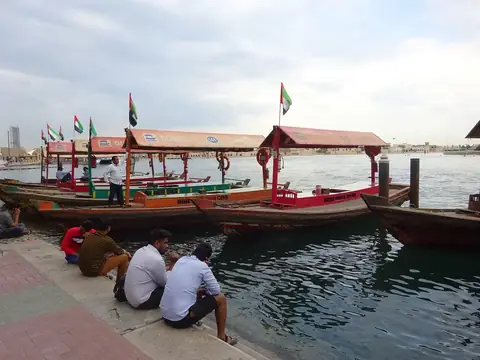
UAE in seven days
A seven-day UAE route with four nights in old Dubai, a Sharjah day trip and two nights in Abu Dhabi by bus, with the Grand Mosque, the Louvre and the costs.
Read the guideSources and checks before you travel
(21)
- UAE government portal: visa on arrival ↗ — opens in a new tab
- UAE government portal: do you need an entry permit or a visa ↗ — opens in a new tab
- UAE Embassy in Washington, DC: visas for US citizens ↗ — opens in a new tab
- UK FCDO: United Arab Emirates entry requirements ↗ — opens in a new tab
- UK FCDO: United Arab Emirates warnings and insurance ↗ — opens in a new tab
- UK FCDO: United Arab Emirates safety and security ↗ — opens in a new tab
- Travel.gc.ca: United Arab Emirates travel advice ↗ — opens in a new tab
- Germany's Foreign Office (Auswärtiges Amt): United Arab Emirates travel and safety advice (in German) ↗ — opens in a new tab
- Smartraveller (Australian Government): United Arab Emirates ↗ — opens in a new tab
- ICP: travellers instructed to disclose cash amounts ↗ — opens in a new tab
- Dubai Customs: Passenger Customs Guide (version 6, 2025, PDF) ↗ — opens in a new tab
- France Diplomatie: Émirats arabes unis, entrée et séjour (in French) ↗ — opens in a new tab
- Spain, Ministry of Foreign Affairs: travel recommendations, United Arab Emirates (in Spanish) ↗ — opens in a new tab
- Netherlands Worldwide: travel advice, United Arab Emirates (in Dutch) ↗ — opens in a new tab
- Ireland, Department of Foreign Affairs: United Arab Emirates travel advice ↗ — opens in a new tab
- UK FCDO: Oman entry requirements ↗ — opens in a new tab
- Emirates Drug Establishment: permit to import medicines for personal use ↗ — opens in a new tab
- Dubai government portal (dubai.ae): do you need a visa ↗ — opens in a new tab
- Emirates: UAE visa information ↗ — opens in a new tab
- Emirates: unaccompanied minors ↗ — opens in a new tab
- MOHAP: Issue of Permit to Import Medicines for Personal Use (service card, PDF) ↗ — opens in a new tab
Reference sources for the version dated 29 November 2026. Confirm opening times, access, transport and conditions for your travel dates.
Photo credits
(4)
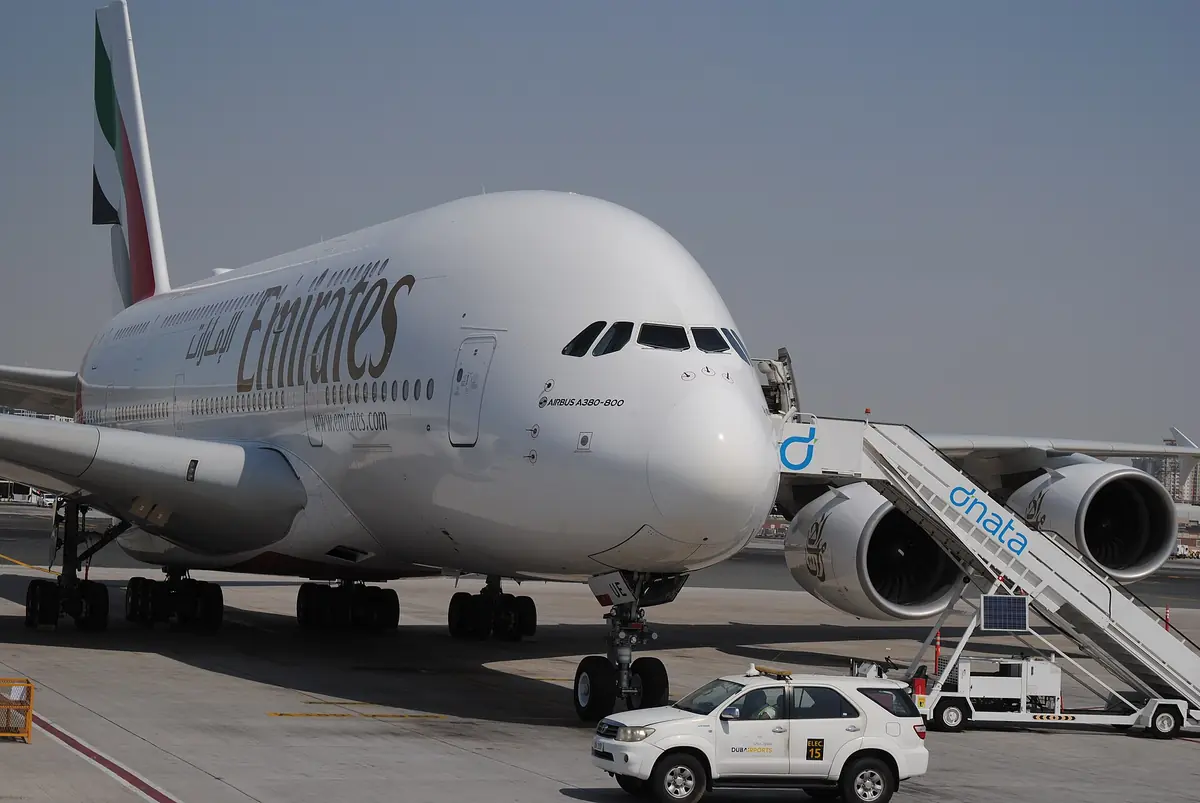
An Emirates A380 at a stand at Dubai International Airport
Photograph: Andy Mabbett — opens in a new tab · CC BY-SA 4.0 — opens in a new tab
Changes: Resized and converted to WebP; displayed with responsive crops. · Original photograph and licence details ↗ — opens in a new tab
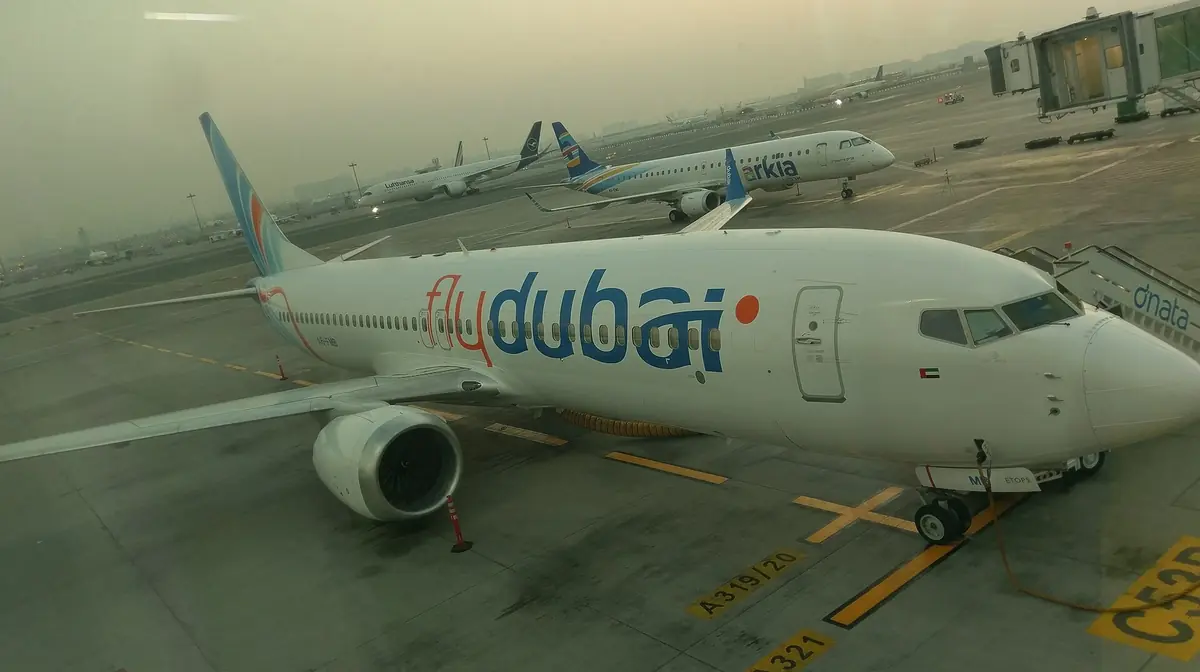
A flydubai Boeing 737 at Dubai International Airport
Photograph: N82khan — opens in a new tab · CC BY-SA 4.0 — opens in a new tab
Changes: Resized and converted to WebP; displayed with responsive crops. · Original photograph and licence details ↗ — opens in a new tab
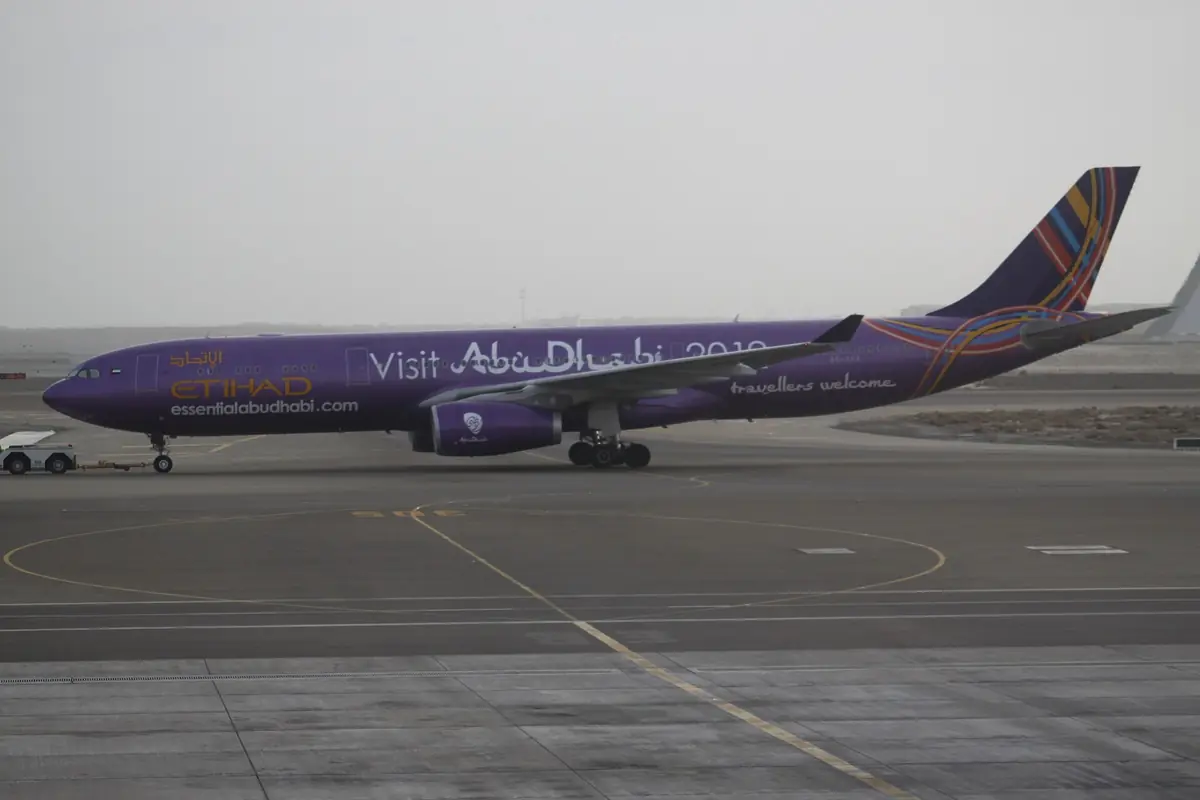
An Etihad Airways A330 at Abu Dhabi's airport, now Zayed International
Photograph: Aeroprints.com — opens in a new tab · CC BY-SA 3.0 — opens in a new tab
Changes: Resized and converted to WebP; displayed with responsive crops. · Original photograph and licence details ↗ — opens in a new tab
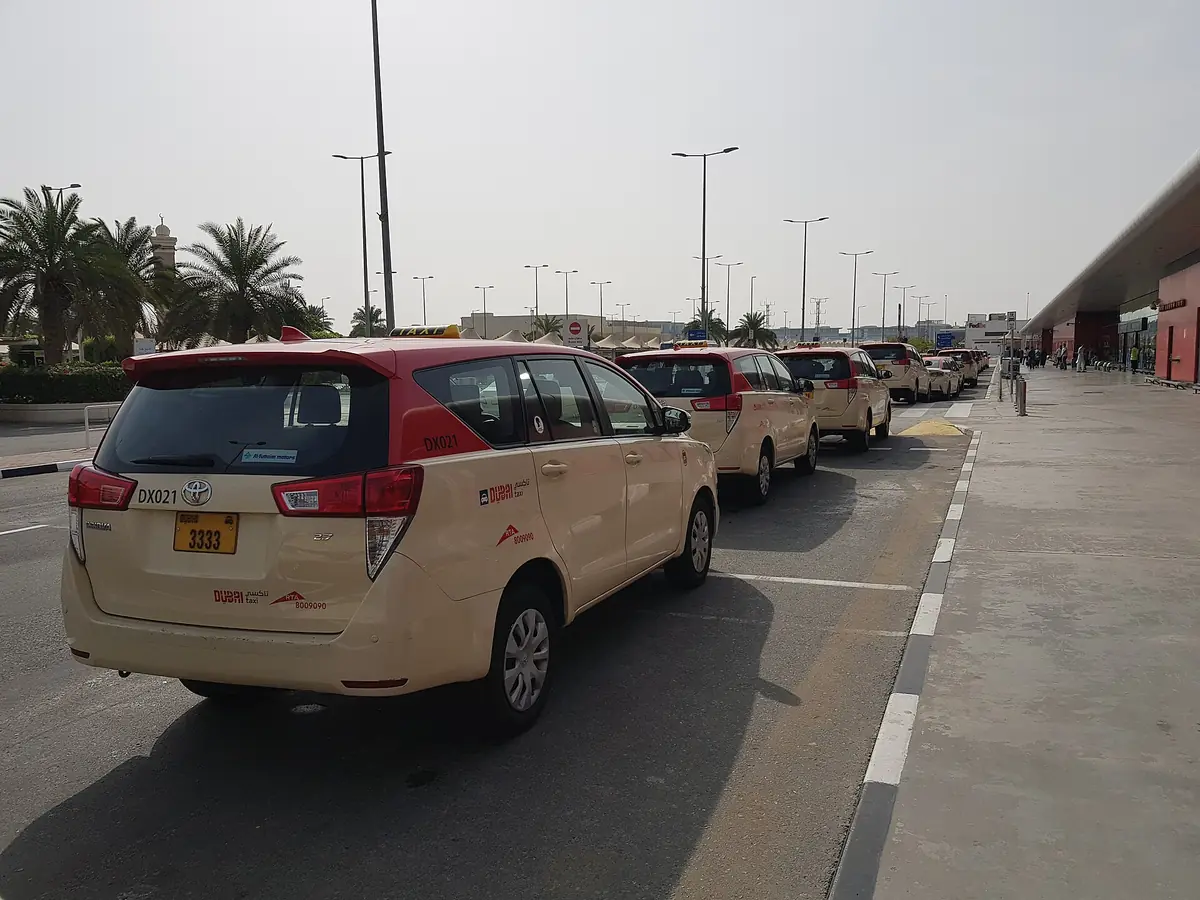
Taxis waiting outside Terminal 2 at Dubai International Airport
Photograph: Ravi Dwivedi — opens in a new tab · CC BY-SA 4.0 — opens in a new tab
Changes: Resized and converted to WebP; displayed with responsive crops. · Original photograph and licence details ↗ — opens in a new tab