Plan your trip
UAE transport: Dubai Metro, Etihad Rail, buses, taxis and hire cars
The UAE is small enough that every classic trip fits on one road: Dubai and Sharjah side by side on the Gulf, Abu Dhabi down the coast, Al Ain and Hatta inland, Ras Al Khaimah and Fujairah to the north and east. Inside Dubai the metro does most of the work, and between the emirates you choose between public buses that cost AED 12 to AED 50, the Etihad Rail passenger trains that began running in 2026, taxis and a hire car. This guide takes each in turn and ends with a booking order for the seven- and ten-day routes.
In this guide
Find the location ↗ — opens in a new tabThe short answer
Inside Dubai, buy a Silver nol card and ride the metro. The card costs AED 25 with AED 19 of credit, and a trip costs AED 3, AED 5 or AED 7.50 by distance. Between Dubai and Abu Dhabi, take intercity bus E101 from Ibn Battuta to Abu Dhabi Main Bus Station, AED 25 each way in about 1 hour 45 minutes, or the 57-minute Etihad Rail train, with fares from AED 39 in Comfort Class. Sharjah is an AED 12 bus ride from Dubai's Stadium bus station. Ras Al Khaimah is an AED 30 RAKTA bus from Dubai's Union Bus Station (AED 27 back to Dubai), and Al Ain is an hourly AED 30 bus from Abu Dhabi. Hire a car only for the mountains, the east coast or the Liwa desert. Book Etihad Rail seats first: its app and website sell tickets up to four weeks ahead.
- Key point
- Metro, buses, trains and taxis for a 7 to 10 day Dubai–Sharjah–Abu Dhabi–Al Ain–Ras Al Khaimah route
- Where it applies
- Dubai for arrival and the metro; Abu Dhabi, Al Ain and Ras Al Khaimah by bus or train
- Timing
- The routes run all year; the metro keeps longer hours on public holidays and city-wide celebrations.
Which way to travel each leg
Most trips here combine four modes: the metro inside Dubai, public buses or the train between the emirates, taxis for the last stretch, and a hire car only where buses do not reach. The table gives the public option for each leg of the classic route, its journey time and its one-way fare per person.
| Leg | Public option | One-way fare | Tickets |
|---|---|---|---|
| Around Dubai | Metro Red and Green Lines, tram, buses | AED 3–7.50 on a nol card | Metro ticket offices and machines |
| Dubai – Abu Dhabi | Bus E101 (Ibn Battuta, about 1 h 45 min) or E100 (Al Ghubaiba, about 2 h 10 min) to Abu Dhabi Main Bus Station | AED 25 on E101, AED 30 on E100 | RTA e-ticket or at the station |
| Dubai – Abu Dhabi, Al Dhaid, Fujairah | Etihad Rail from Dubai Station (Jumeirah Golf Estates): 57 min to Abu Dhabi, 69 min to Fujairah | From AED 39 (Comfort Class) | Etihad Rail app, website, station machines |
| Dubai – Sharjah | Bus E308 (Stadium, 23–29 min) and the other E300 routes to Al Jubail Bus Station | AED 12 on E308 | nol card |
| Dubai – Hatta | Bus H02 (Hatta Express) from Dubai Mall, about 1.5 h | AED 25 | nol card |
| Dubai – Fujairah | Bus E700 from the e& (Etisalat) bus station, about 2 h | AED 30 | nol card |
| Dubai – Ras Al Khaimah | RAKTA bus from Union Bus Station, about 2–2.5 h (about 2 h towards Dubai) | AED 30 (AED 27 towards Dubai) | Sayr app |
| Abu Dhabi – Al Ain | Capital Express CX90, hourly, about 160 km | AED 30 regular, AED 40 premium | At the bus station |
Etihad Rail's network is still growing. Liwa Station and Madinat Zayed Station open to passengers on 30 November 2026, and Abu Dhabi to Liwa takes about one hour and 20 minutes. From 9 December 2026 to 3 January 2027, four trains run each way a day on the Liwa line; for other dates, see the live schedule on Etihad Rail's website. The other Al Dhafra stations are due in early January 2027, and Sharjah Station on 30 March 2027. Until Sharjah Station opens, take the bus between Dubai and Sharjah.
Prices and times checked 28 November 2026
Dubai Metro, the tram and the nol card
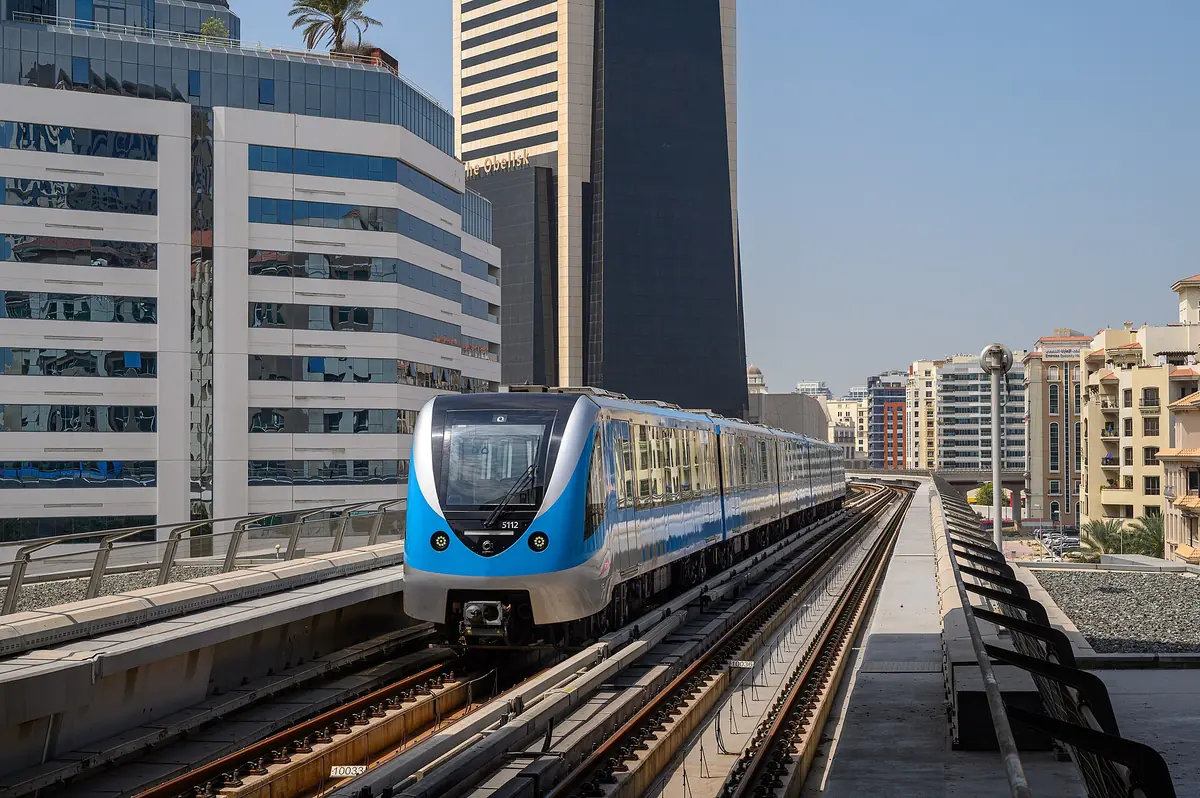
The Dubai Metro has two lines. The Red Line runs from Centrepoint through Terminals 1 and 3 of Dubai International (DXB) and then parallel to Sheikh Zayed Road to Expo 2020 Station; the Green Line runs through Deira and Bur Dubai, roughly parallel to the creek, and the two meet at Union and BurJuman. Trains run from 05:00 to midnight from Monday to Thursday and on Saturday, from 05:00 to 01:00 the next day on Friday, and from 08:00 to midnight on Sunday, with longer hours on public holidays and city-wide celebrations. Our Dubai guide maps the stations to the sights.
Every train has a Gold Class cabin with wider leather seats for Gold card and Gold ticket holders, cabins for women and children only, and general cabins. You may bring two suitcases, one large (up to 81 × 58 × 30 cm) and one small (up to 55 × 38 × 20 cm), stowed in the luggage area of the cabin. Eating and drinking on board carry a fine of AED 100. The same fine applies to sitting in a cabin designated for other passengers. Carrying alcohol is fined AED 500.
You tap in and out with a nol card or ticket. The fare depends on how many zones you cross, and a change between metro, tram and bus within 30 minutes counts as one journey. The Silver card suits almost every visitor. It costs AED 25 including AED 19 of credit, is valid for five years and also works on the buses and RTA's water buses; you need a balance of at least AED 7.50 to tap in. The paper Red ticket costs AED 2, is topped up trip by trip and is valid for 90 days. The Red ticket also comes as a one-day pass for AED 20 (AED 40 in Gold Class). Children under 5, or shorter than 90 cm, ride the metro and tram free.
| Ticket | One zone, or under 3 km across two (T1) | Into the next zone (T2) | Three zones or more (T3) |
|---|---|---|---|
| Silver card, regular class | AED 3 | AED 5 | AED 7.50 |
| Gold card, Gold Class | AED 6 | AED 10 | AED 15 |
| Red ticket, regular class | AED 4 | AED 6 | AED 8.50 |
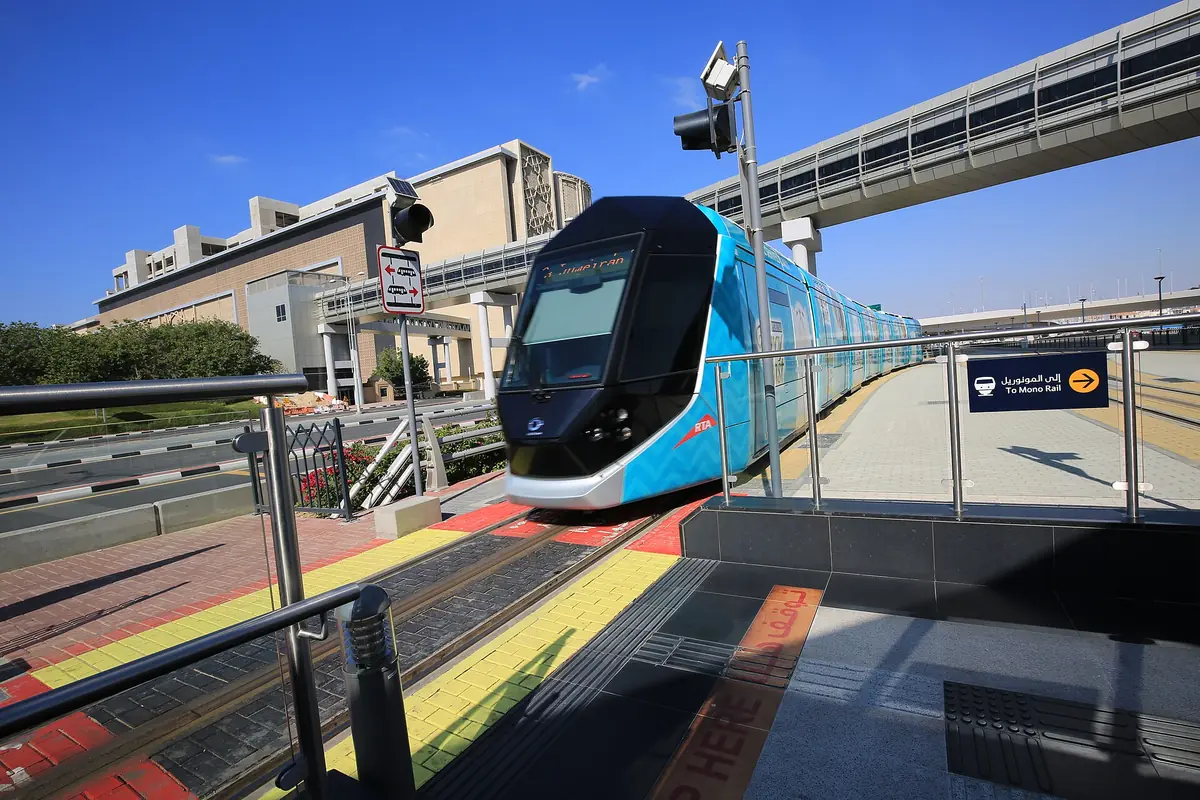
Buy the card at the metro ticket offices or machines at Terminals 1 and 3 when you land, and keep it for the whole trip. Dubai's buses do not take cash, so you pay for the H02 to Hatta and the Sharjah routes with the same card. The tram runs along the Marina and JBR and links to the Red Line. On the creek, the traditional abra between Bur Dubai and Deira Old Souq costs AED 1 in cash, and the heritage abras cost AED 2.
Prices and times checked 28 November 2026
Taxis and ride-hailing
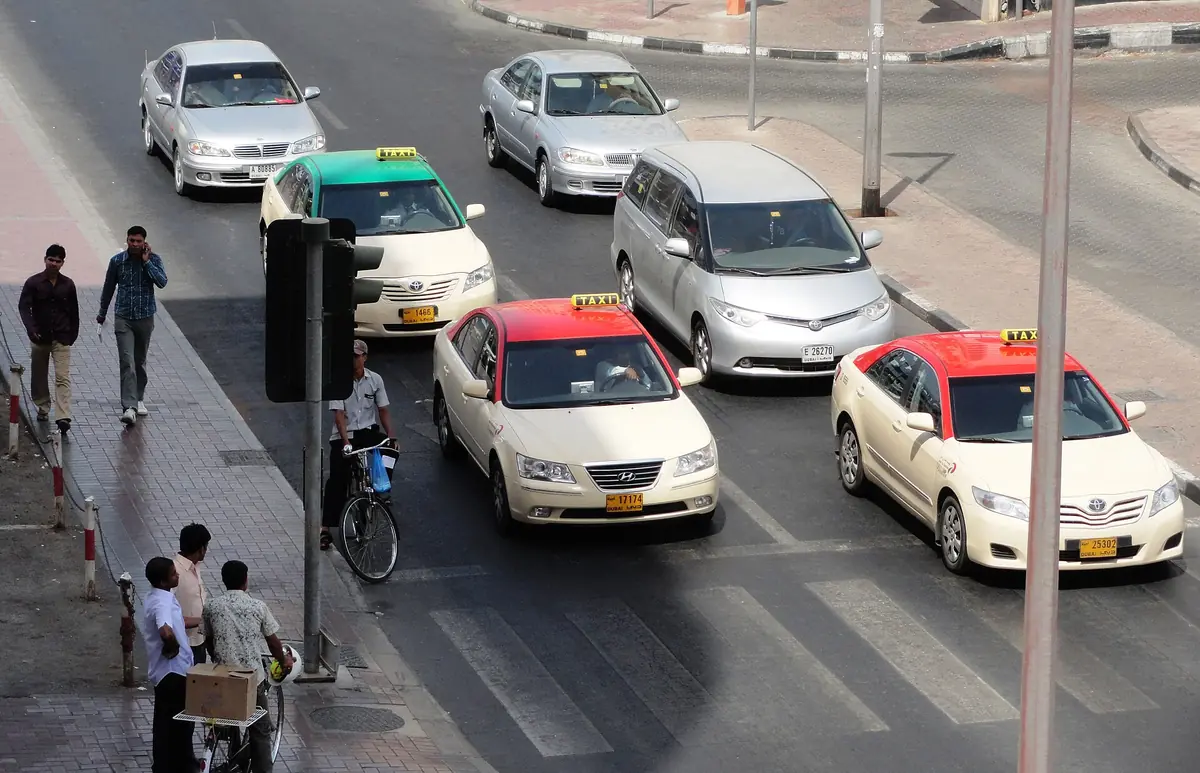
Dubai's metered taxis are cream with coloured roofs; those with pink roofs have female drivers. The minimum fare is AED 12 for a taxi hailed on the street and AED 13 for one booked by app. The meter starts at AED 5 for a street pickup (AED 5.50 from 22:00 to 06:00) and at AED 9 to AED 13 for an app booking, depending on the hour. The distance, waiting time and any Salik toll are added on the meter. A trip that passes through Sharjah costs AED 20 extra. You can book an RTA taxi in the S'hail app or through Careem (Hala Taxi), Bolt, Zed and Yango; Uber and Careem also send private cars.
Abu Dhabi's taxis are silver with a yellow roof sign. Flag one down, book it on the TransAD line (600 535 353) or in the Abu Dhabi Taxi app, or use Uber or Careem; family taxis for women and children under ten can be booked too. Between the emirates a taxi is metered like any other ride, so for Dubai–Abu Dhabi the bus or train costs far less. Our solo female travel guide covers the women's taxis and cabins in more detail.
Prices and times checked 28 November 2026
Etihad Rail, the new national train
The UAE's first national passenger trains began running between Abu Dhabi and Fujairah on 30 June 2026, a journey of 1 hour 45 minutes. Since 30 September 2026 they have also linked Abu Dhabi, Dubai, Al Dhaid and Fujairah. Abu Dhabi to Dubai takes 57 minutes, and Dubai to Fujairah 69 minutes. Every passenger gets a reserved seat, Wi-Fi, a power socket at each seat and room for luggage. Premium Class adds wider seats, more legroom and complimentary refreshments.
Across the network, fares start at AED 39 in Comfort Class and AED 109 in Premium Class, as announced at the Dubai Station opening on 28 September 2026. For Abu Dhabi–Fujairah, Etihad Rail's opening fares (23 June 2026) start at AED 55 in Comfort Class and AED 120 in Premium Class. Each class comes in three fares: Saver, Value and Flex. Saver is the cheapest, and it is sold only in the app, on the website and through the contact centre. Value lets you choose a seat and change the ticket, and Flex also allows refunds. Tickets go on sale up to four weeks ahead in the Etihad Rail app and on its website, and the station ticket machines sell them too. The website's journey planner and live schedule show each day's trains and fares between Dubai and Abu Dhabi.
Look at where the stations are before you choose between train and bus. Dubai Station is in the south of the city, joined by a footbridge to Jumeirah Golf Estates metro station. A single nol QR code can cover the train and the Dubai Metro, tram and buses. Abu Dhabi's station is not on the island but in Mohammed Bin Zayed City, opposite Dalma Mall and next to Musaffah bus station. From there, a hotel on the Corniche or Saadiyat is a taxi ride away. The intercity buses stop at Abu Dhabi Main Bus Station in the city.
Prices and times checked 28 November 2026
Intercity buses between the emirates
Four RTA routes link Dubai with Abu Dhabi and Al Ain: E101 from Ibn Battuta bus station and E100 from Al Ghubaiba bus station, both to Abu Dhabi Main Bus Station, E102 from Al Jafiliya to Musaffah and Abu Dhabi airport, and E201 from Al Ghubaiba to Al Ain. RTA's journey planner gives E101 as AED 25 and about 1 hour 45 minutes, E100 as AED 30 and about 2 hours 10 minutes, and E201 as AED 30 and about 2 hours 15 minutes. For the ride back to Dubai, Abu Dhabi Mobility's ticket offices at its bus stations list AED 25 on all four routes. An e-ticket from the RTA website reserves a seat and gives you a separate boarding lane; you can also buy at the station.
Sharjah is served from several Dubai stations: E303 from Union, E306 from Al Ghubaiba, E307 from Deira City Centre and E308 from Stadium, all to Al Jubail Bus Station in Sharjah, plus E307A from Abu Hail to Al Qasba. E308 costs AED 12 one way and takes 23 to 29 minutes. Our Sharjah guide says which stop suits the museums and the heritage area.
Hatta's H02 Hatta Express leaves Dubai Mall bus station every two hours from 07:00 to 19:00. The deluxe coaches cost AED 25 per journey and take about 1.5 hours. In Hatta, the H04 hop-on hop-off loop calls at Hatta Wadi Hub, Hatta Hill Park, the dam and the Heritage Village every 30 minutes from 07:00 to 21:00, for AED 2 a stop. E16 also runs from Union to Hatta. Details are in the Hatta guide.
RAKTA, Ras Al Khaimah's transport authority, runs 19 trips a day each way between the RAKTA bus station in Al Dhait and Union Bus Station in Dubai. Buses to Dubai leave every day from 05:00 to 21:00 for AED 27; some are direct, and most go via Sharjah. Buses back from Union run from 07:30 to 23:30 for AED 30. Visit Ras Al Khaimah gives about two to two and a half hours from Dubai and about two hours towards Dubai. Book them in RAKTA's Sayr app. RAKTA also runs three buses a day to Abu Dhabi (09:00, 13:00 and 17:00, AED 50) and a 14:00 bus to Al Ain from Friday to Sunday (AED 47). Fujairah is served by route E700 from the e& (Etisalat) bus station in Dubai, for AED 30 in about two hours, as well as by the train.
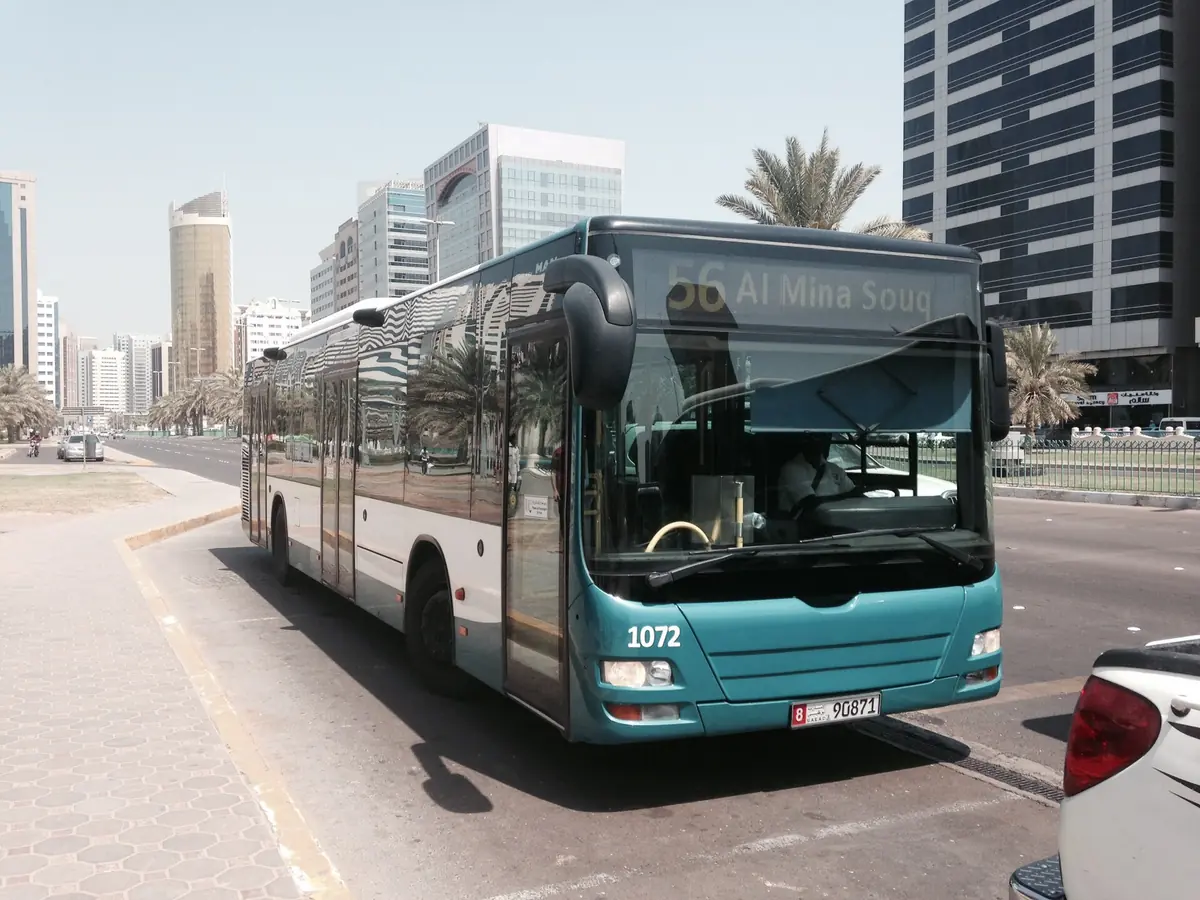
Abu Dhabi's Capital Express buses to Al Ain, route CX90, leave Abu Dhabi Main Bus Station every hour for AED 30, or AED 40 on the premium service; Al Ain is about 160 km away by road. Liwa costs AED 35 and Ruwais AED 37. City buses in Abu Dhabi and Al Ain charge AED 2 to board plus 5 fils a kilometre, up to AED 5 a journey. You pay with a Hafilat card (AED 10), sold at bus-station and airport customer offices, Lulu hypermarkets and the card machines. Our Al Ain guide covers the oasis buses.
Prices and times checked 28 November 2026
From the airports into town
At Dubai International (DXB), the Red Line stops at Terminals 1 and 3, and buses leave from stands at arrivals in Terminals 1, 2 and 3. Every terminal has a Dubai Taxi rank, open around the clock. Airport taxis start at AED 20 (AED 25 for a van) plus the distance, and Uber, Careem and Bolt pick up at signed points. Dubai World Central (DWC), the second airport, is reached by RTA bus or taxi from the Ibn Battuta and Expo 2020 metro stations.
At Zayed International (AUH) in Abu Dhabi, the taxi into town costs about AED 70–80 including the flag fall, and luxury taxis wait at the terminals day and night; buy a Hafilat card at the airport customer office if you will use the city buses. Bus E102 links the airport with Al Jafiliya in Dubai. Sharjah (SHJ), Ras Al Khaimah (RKT) and Fujairah (FJR) have their own airports; the first-trip guide compares them.
Prices and times checked 28 November 2026
Driving a hire car
A car pays off for Jebel Jais, the east coast, Hatta's mountain roads and the Liwa dunes, where buses are few. The UK government says a UK photocard licence is valid for driving in the UAE. Germany says EU licences are generally accepted for hiring a car on a short stay. Canada says Canadians need an international driving permit everywhere in the UAE except Dubai. Rental firms usually ask for a credit card rather than a debit card.
Roads are excellent, but speeding is common despite widespread speed cameras. The police can impound a car for offences that would be minor elsewhere, such as running a red light in Abu Dhabi or Dubai. Getting the car back costs AED 50,000 plus the fine. The alcohol limit is zero. After a crash, stop and call the police. Leaving before they arrive is illegal, and the rules on moving the car differ from one emirate to another.
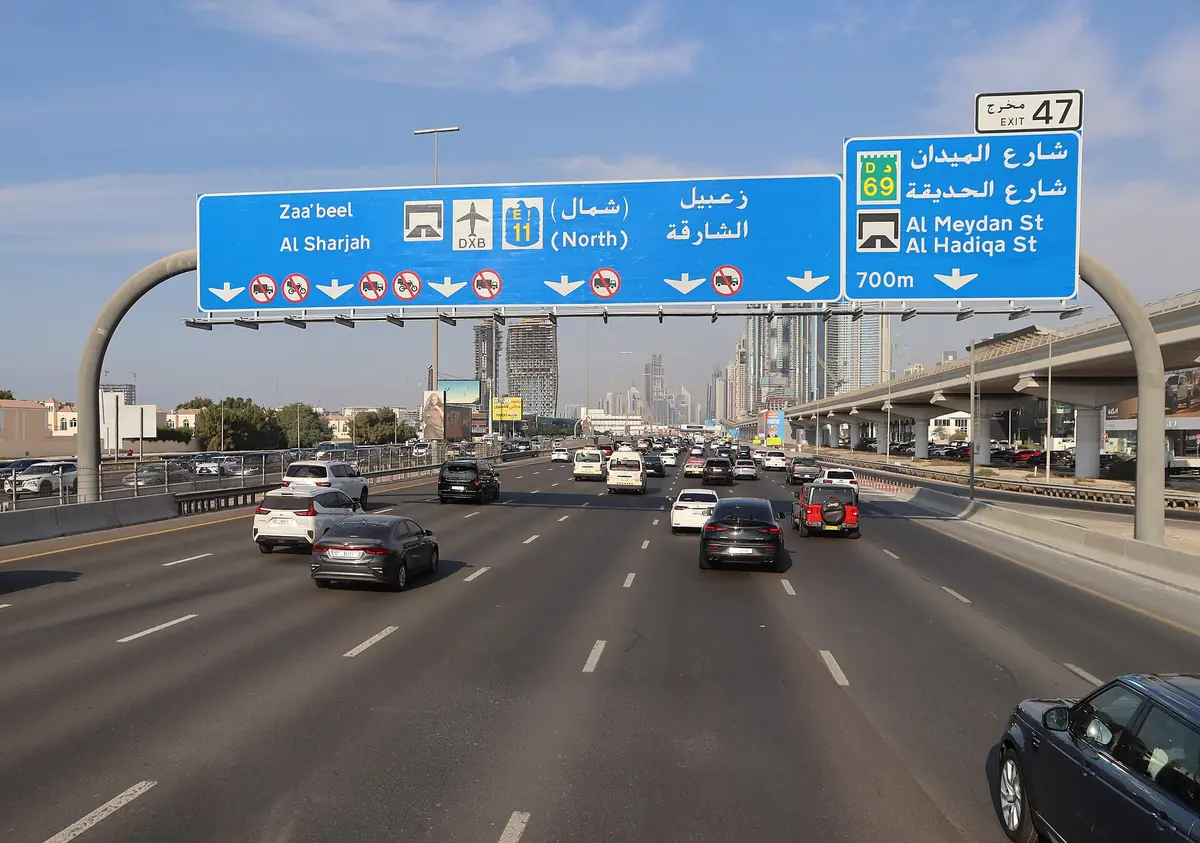
Dubai's roads have Salik toll gates, and Abu Dhabi's have Darb gates. On Darb, each crossing costs AED 4 from 07:00 to 09:00 and from 15:00 to 19:00, except on Sundays and public holidays. Sandstorms and winter fog can cut visibility. Drive off-road only in a convoy of four-wheel-drive vehicles; our health and safety guide covers the desert and the rules of the road.
Prices and times checked 28 November 2026
Booking order for the seven- and ten-day routes
The seven-day route spends four nights in Dubai with a day in Sharjah and two in Abu Dhabi; the ten-day route adds Ras Al Khaimah and Al Ain. Book the train first if you take it, then the rooms, and buy everything else on the day.
- Arrive at DXB: buy a Silver nol card at the metro station and take the Red Line, or a taxi from AED 20 plus the distance.
- Dubai to Sharjah and back (day trip): a bus from Stadium (E308, AED 12) or Union (E303) to Al Jubail, or a taxi with the AED 20 Sharjah charge.
- Dubai to Ras Al Khaimah (ten-day route): the RAKTA bus from Union Bus Station, AED 30, booked in the Sayr app.
- Ras Al Khaimah to Abu Dhabi (ten-day route): the RAKTA bus at 09:00, 13:00 or 17:00, AED 50.
- Dubai to Abu Dhabi (seven-day route): E101 from Ibn Battuta, AED 25 each way, or Etihad Rail from Dubai Station, from AED 39, then a taxi from Mohammed Bin Zayed City.
- Abu Dhabi to Al Ain (ten-day route): Capital Express CX90, hourly, AED 30.
- Flying home: from Zayed International, about AED 70–80 by taxi from town, or back to DXB by bus or train.
Practical questions
How do I get from Dubai to Abu Dhabi without a car?
Take bus E101 from Ibn Battuta to Abu Dhabi Main Bus Station, AED 25 each way in about 1 hour 45 minutes, or Etihad Rail from Dubai Station, 57 minutes, with fares from AED 39 in Comfort Class. E100 from Al Ghubaiba takes about 2 hours 10 minutes. The train reaches Abu Dhabi at Mohammed Bin Zayed City, off the island, so most visitors finish by taxi.
Which nol card should I buy in Dubai?
The Silver card: AED 25 including AED 19 of credit, valid on the metro, tram, buses and RTA's water buses. Trips cost AED 3, AED 5 or AED 7.50 by distance.
What are the Dubai Metro's hours?
From 05:00 to midnight from Monday to Thursday and on Saturday, from 05:00 to 01:00 the next day on Friday, and from 08:00 to midnight on Sunday, with longer hours on public holidays.
Is there a train between Dubai and Abu Dhabi?
Yes. Etihad Rail has run passenger trains between Abu Dhabi, Dubai, Al Dhaid and Fujairah since 30 September 2026. Tickets go on sale up to four weeks ahead in its app and on its website.
How do I get from Dubai to Ras Al Khaimah?
RAKTA buses run from Union Bus Station in Dubai from 07:30 to 23:30 for AED 30, and back from Ras Al Khaimah from 05:00 to 21:00 for AED 27. The ride takes about two to two and a half hours from Dubai. Book in the Sayr app.
Can I drive in the UAE on my own licence?
A UK photocard licence is valid, and EU licences are generally accepted for hiring a car on a short stay. Canada says its citizens need an international driving permit except in Dubai. The alcohol limit is zero.
Keep planning your trip
First trip to the UAE
Choose seven days or ten for Dubai, Sharjah, Abu Dhabi, Ras Al Khaimah and Al Ain: nights, buses and the metro, season, entry, medicines, dress and the current advisory.
Read the guide
UAE in seven days
A seven-day UAE route with four nights in old Dubai, a Sharjah day trip and two nights in Abu Dhabi by bus, with the Grand Mosque, the Louvre and the costs.
Read the guide
UAE in ten days
A ten-day UAE route by bus: four nights in Dubai, two in Ras Al Khaimah for Jebel Jais, two in Abu Dhabi and one in the oasis city of Al Ain.
Read the guide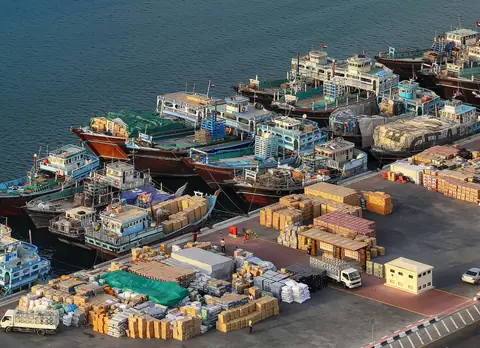
Dubai
Three nights in Dubai: Al Fahidi and the creek abra, the Deira souks, the Burj Khalifa, the beach and Marina, a desert evening, the airport metro and costs.
Read the guide
Abu Dhabi
Plan two nights in Abu Dhabi: Sheikh Zayed Grand Mosque, Louvre Abu Dhabi, Qasr Al Watan, Qasr Al Hosn and Saadiyat or Yas, with fees, hours and buses from Dubai.
Read the guide
Entering the UAE
Which passports get a free UAE visa on arrival and for how long, the six-month passport rule, the AED 60,000 cash limit, duty-free limits and medicine permits.
Read the guideSources and checks before you travel
(39)
- Dubai Airports: metro at DXB ↗ — opens in a new tab
- Dubai Airports: taxi at DXB ↗ — opens in a new tab
- Dubai Airports: bus at DXB ↗ — opens in a new tab
- Roads and Transport Authority (RTA): about Dubai Metro ↗ — opens in a new tab
- RTA: Dubai Metro and Tram fares, fines and etiquette (brochure, PDF) ↗ — opens in a new tab
- RTA: nol fares ↗ — opens in a new tab
- RTA: taxis in Dubai ↗ — opens in a new tab
- RTA: taxi fares ↗ — opens in a new tab
- RTA: bus route list (PDF, November 2026) ↗ — opens in a new tab
- RTA: intercity bus e-tickets ↗ — opens in a new tab
- RTA: new bus route between Dubai and Sharjah (news, 2025) ↗ — opens in a new tab
- Dubai Media Office: RTA launches express and tourist bus routes to Hatta (2023) ↗ — opens in a new tab
- RTA: Dubai Bus timetables, Hatta buses ↗ — opens in a new tab
- Visit Hatta: plan your visit ↗ — opens in a new tab
- Abu Dhabi Mobility: inter-emirates services ↗ — opens in a new tab
- Abu Dhabi Mobility: inter-city services ↗ — opens in a new tab
- Abu Dhabi Mobility: public transport fare ↗ — opens in a new tab
- Abu Dhabi Mobility: Hafilat smart cards ↗ — opens in a new tab
- Abu Dhabi Mobility: Darb fees ↗ — opens in a new tab
- Experience Abu Dhabi: taxis ↗ — opens in a new tab
- Experience Abu Dhabi: Etihad Rail ↗ — opens in a new tab
- Etihad Rail: passenger services ↗ — opens in a new tab
- Etihad Rail: first paying passengers (30 June 2026) ↗ — opens in a new tab
- Etihad Rail: MBZ City station opening ↗ — opens in a new tab
- Dubai Media Office: Etihad Rail's Dubai Station opens (28 September 2026) ↗ — opens in a new tab
- Etihad Rail: booking site ↗ — opens in a new tab
- RAK Transport Authority: public transport ↗ — opens in a new tab
- GOV.UK: United Arab Emirates travel advice ↗ — opens in a new tab
- Auswärtiges Amt: Vereinigte Arabische Emirate, Reise- und Sicherheitshinweise ↗ — opens in a new tab
- Government of Canada: United Arab Emirates travel advice ↗ — opens in a new tab
- Abu Dhabi Media Office: Etihad Rail's Liwa and Madinat Zayed stations (27 November 2026) ↗ — opens in a new tab
- RTA: Dubai Metro project (Red and Green lines) ↗ — opens in a new tab
- RTA: choose the right nol card ↗ — opens in a new tab
- RTA Wojhati: journey planner (intercity buses) ↗ — opens in a new tab
- Abu Dhabi Mobility: Capital Express timetable (PDF) ↗ — opens in a new tab
- Experience Abu Dhabi: the ancient world of Al Ain ↗ — opens in a new tab
- Roads and Transport Authority: marine transport ↗ — opens in a new tab
- Visit Ras Al Khaimah: intercity bus service ↗ — opens in a new tab
- Visit Ras Al Khaimah: travel information ↗ — opens in a new tab
Reference sources for the version dated 28 November 2026. Confirm opening times, access, transport and conditions for your travel dates.
Photo credits
(5)
A Dubai tram at a stop; signs point the way to the metro.
Photograph: Emcc83 — opens in a new tab · CC BY-SA 4.0 — opens in a new tab
Changes: Resized and converted to WebP; displayed with responsive crops. · Original photograph and licence details ↗ — opens in a new tab
A Dubai Metro train on the Green Line near Dubai Healthcare City station.
Photograph: Rob Dammers — opens in a new tab · CC BY 2.0 — opens in a new tab
Changes: Resized and converted to WebP; displayed with responsive crops. · Original photograph and licence details ↗ — opens in a new tab
Metered Dubai taxis in Bur Dubai.
Photograph: Fabio Achilli from Milano, Italy — opens in a new tab · CC BY 2.0 — opens in a new tab
Changes: Resized and converted to WebP; displayed with responsive crops. · Original photograph and licence details ↗ — opens in a new tab
A public bus in Abu Dhabi, paid with a Hafilat card.
Photograph: Ranged Enigma — opens in a new tab · CC BY-SA 4.0 — opens in a new tab
Changes: Resized and converted to WebP; displayed with responsive crops. · Original photograph and licence details ↗ — opens in a new tab
Sheikh Zayed Road (E11), Dubai's main highway, which runs on to Abu Dhabi.
Photograph: Coolcaesar — opens in a new tab · CC BY 4.0 — opens in a new tab
Changes: Resized and converted to WebP; displayed with responsive crops. · Original photograph and licence details ↗ — opens in a new tab