Sharjah from Dubai: the old fort, the museums and the souks
Sharjah sits about 30 km north of Dubai, near enough for a day trip. The Heart of Sharjah is a restored quarter of coral-stone houses, wind towers and old-style souks. The 1823 fort of the ruling family stands inside it, and the Museum of Islamic Civilization fills a former souk on the Al Majarrah waterfront. Most visitors come for one day from Dubai; a night here suits readers who want the museums at opening time and the lagoon-front mosques after dark. Unlike in Dubai, drinking or carrying alcohol is illegal in Sharjah.
In this guide
Find the location ↗ — opens in a new tabThe short answer
Give Sharjah one full day from Dubai, Saturday to Thursday, and keep your Dubai room: Al Hisn and the Museum of Islamic Civilization open at 08:00 on those days but not until 16:00 on Fridays. Take RTA bus E308 from Stadium Bus Station to Al Jubail Bus Station for AED 12 each way, or a Dubai taxi, which adds AED 20 for entering Sharjah. Buy the AED 20 Heritage Joint Ticket for the Heart of Sharjah museums (four are open while the Calligraphy Museum is closed), add the Museum of Islamic Civilization at AED 10, and book a Rain Room slot ahead if you want it. A bus day for two, with tickets and an Emirati lunch, comes to about AED 390.
- Suggested time
- One day from Dubai, Saturday to Thursday; one night only if you want an early museum start
- Where to stay
- Your Dubai hotel; for a night, the Heart of Sharjah
- Season and timing
- November to March, the cool season, is the time to walk between the souks and the museums; October and April are already warm, and from May to September, the summer, keep the outdoor stretches for early morning and after dark, since most of the day can be spent indoors in air-conditioned museums.
Al Hisn and the Heart of Sharjah
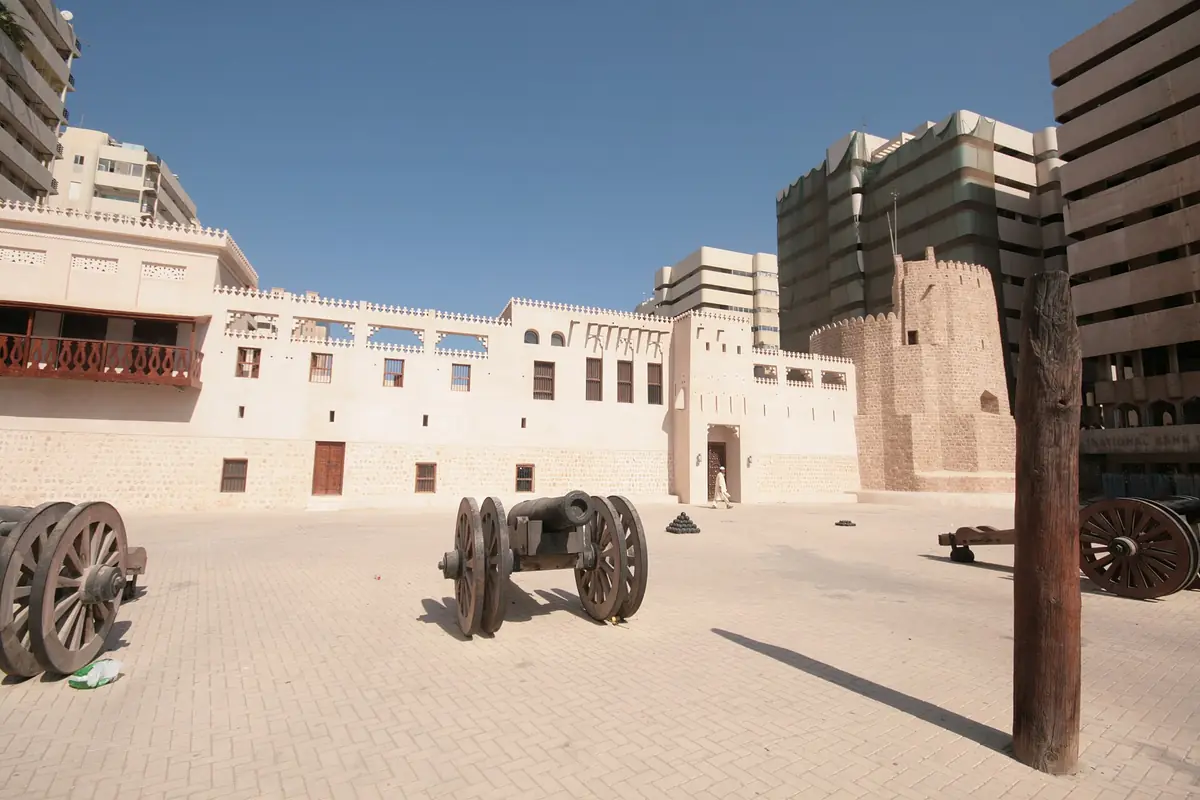
Sharjah Fort (Al Hisn), behind Souq Al Shanasiyah, is where the day starts. It was built in 1823 as the seat of government and the home of the ruling Al Qasimi family, and it was the largest building in Sharjah at the time. The fort is a square of coral stone from the Gulf, plastered light brown, with a central courtyard, two floors and three defensive towers, teak doors and ceilings of mangrove poles and stripped palm ribs. Its main gate was saved from demolition in 1969. The fort first opened as a museum in 1997 and reopened in 2015 after several phases of restoration. Inside are old photographs and finds, the Al Muhalwasa jail and a room on how dibs (date syrup) was made. In the courtyard stands Al Raggas, one of the largest original cannons, dating from around 1811.
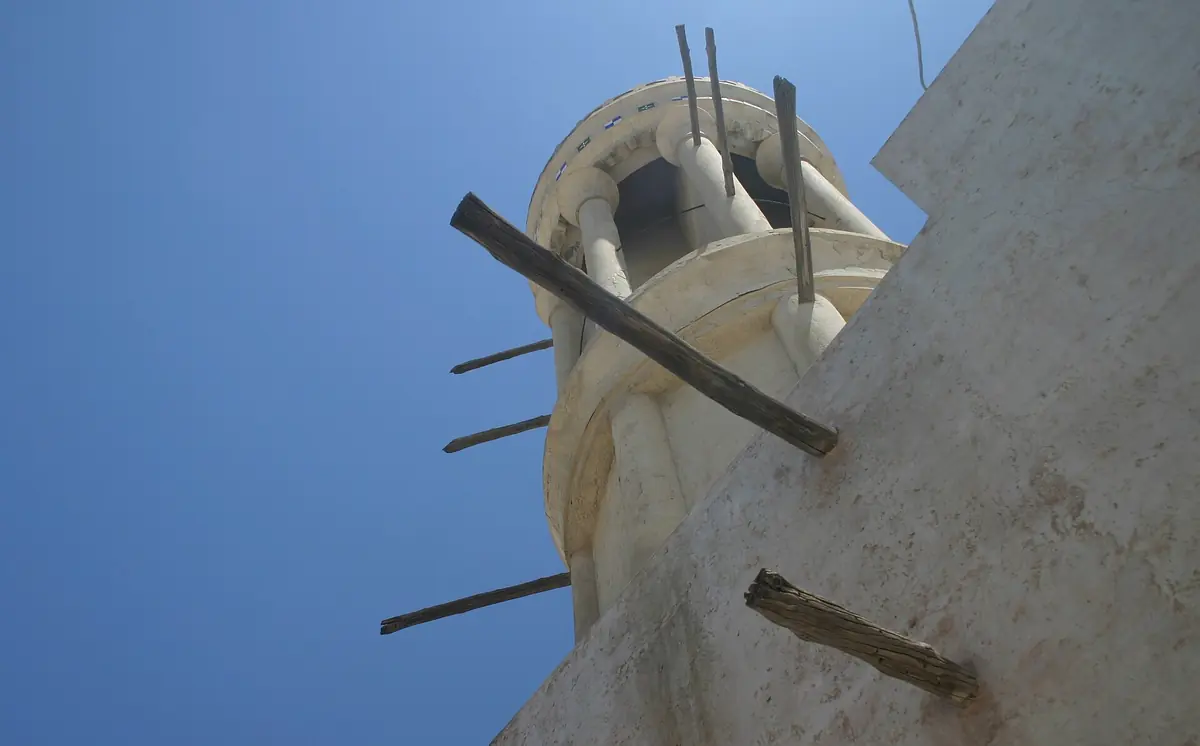
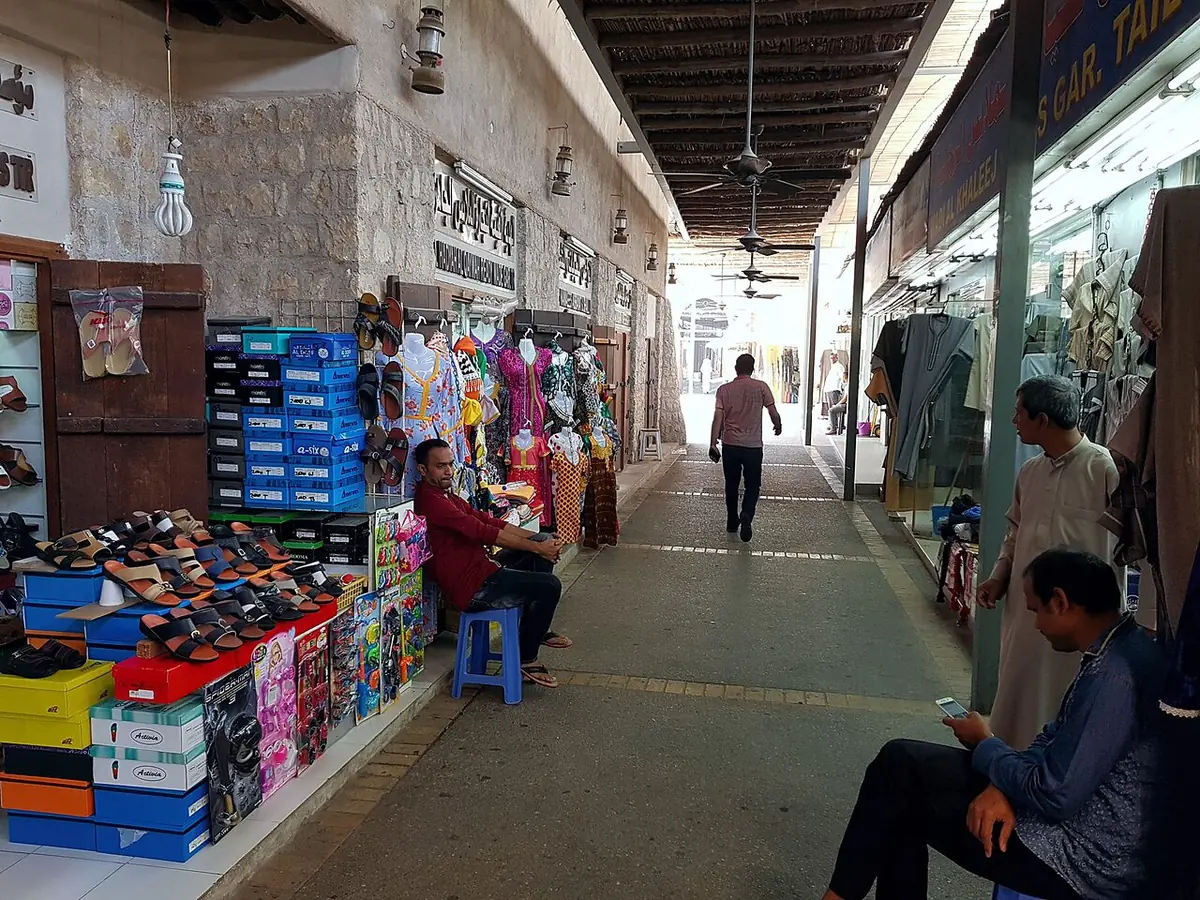
Behind the fort, the Heart of Sharjah is the old merchant town restored as a heritage and arts district: coral-walled houses with wind towers, narrow lanes along the creek and old-style souks, and the only round wind tower in the UAE. The area is listed as a potential UNESCO World Heritage Site, and it hosts the Sharjah Biennial and Sharjah Heritage Days.
Bait Al Naboodah, opposite Souq Al Arsah, is the house to see from the inside. The pearl merchant Obaid bin Eissa Al Shamsi, known as Al Naboodah, built it in 1845 and traded with India, Africa and France. It is a two-storey house around a large courtyard, with coral walls, teak columns, carved plaster and wood, and wind scoops (malaqaf) set into the walls instead of wind towers. Souq Al Arsah, across from the house, is one of the oldest markets in the UAE, with antique and spice shops and traditional tailors. The Sharjah Calligraphy Museum, in the house of Hamad Al Midfa on Calligraphy Square, is temporarily closed.
The Museum of Islamic Civilization and the art museum
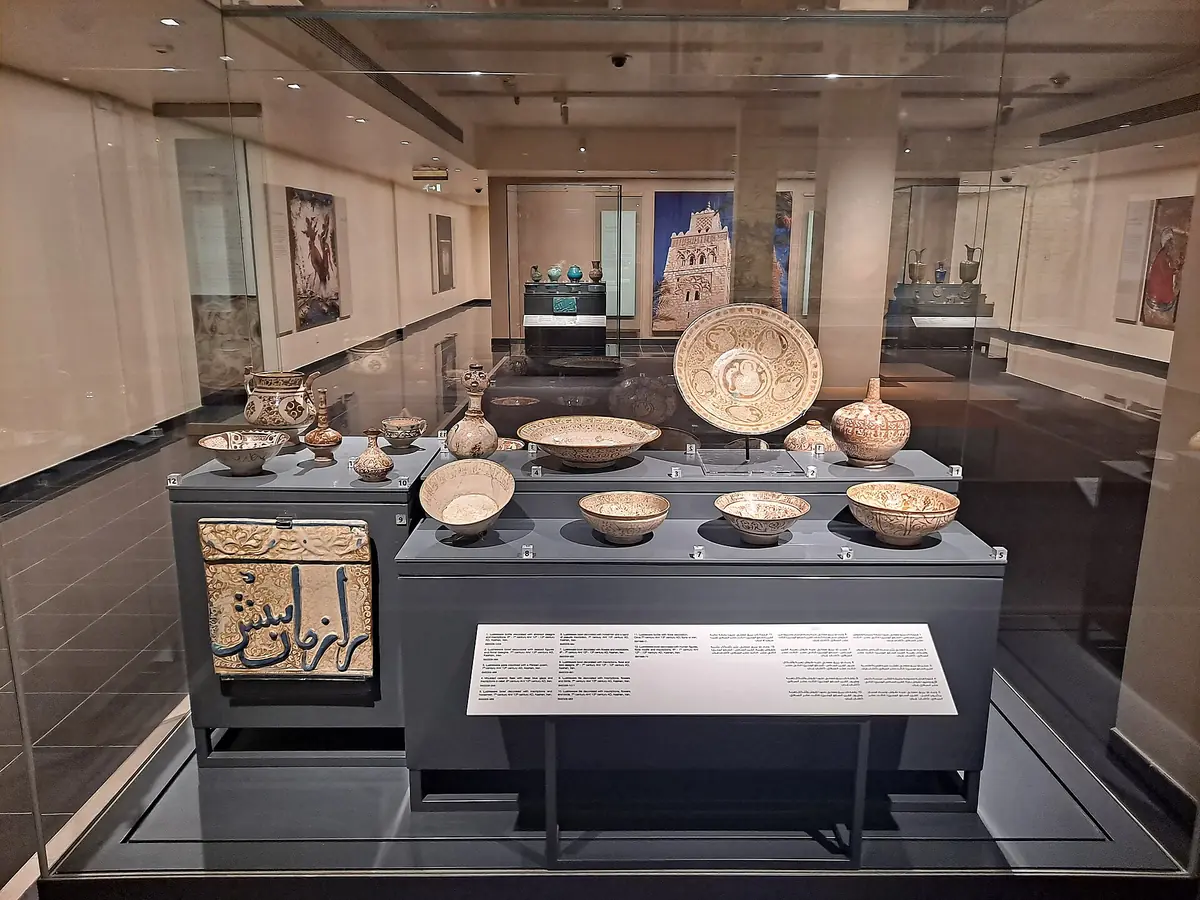
The Sharjah Museum of Islamic Civilization stands on the Al Majarrah waterfront in the old Souq Al Majarrah, which opened as a market in 1987 and became the museum in 2008. More than 5,000 objects from the 7th to the 20th century fill seven galleries and display areas. The Abu Bakr Gallery of Islamic Faith holds a model of the Kaaba, original pieces of the Kaaba's Kiswah cloth and rare Qur'an manuscripts. The Ibn Al Haitham Gallery shows models of astronomical, medical and navigational inventions by Muslim scholars. Numbered galleries hold pottery, metalwork, woodcarving, manuscripts, textiles and weapons, and one more gallery is kept for temporary exhibitions. Early Islamic coins, including Umayyad and Abbasid dinars, are shown in the atrium. Make this the longest stop of the day.
The Sharjah Art Museum, in the arts area of Al Shuwaihiyeen behind the Corniche, is free. Its permanent collection is modern and contemporary Arab art, with paintings and sculpture by artists such as Abdulqader Al Rais, Louay Kayali and Faiq Hassan, and it hosts temporary exhibitions through the year.
The Rain Room of the Sharjah Art Foundation, in Al Majarrah Park in the same district as the Museum of Islamic Civilization, is Random International's 2012 installation: a room of continuous rain that stops wherever you walk. It opens Saturday to Thursday 09:00–21:00 and Friday 16:00–22:00. Tickets are AED 25 for adults and AED 15 for students and teachers; children aged 5 and under go free. Up to seven visitors go in at a time for 10–15 minutes. Book a slot on the Rain Room's own site, especially for weekends and public holidays, when tickets can sell out, and arrive at least 15 minutes before your slot.
Mosques, the Blue Souk and the lagoon at dusk
Sharjah's newer face is around Khalid Lagoon. Al Noor Mosque, on the Buhaira Corniche, has cascading domes and two Ottoman-style minarets, and calligraphy of Qur'anic verses lines its interior. Non-Muslims can go inside on a guided tour, and traditional Emirati dress is offered at the entrance. Sharjah's tourism authority says the Sharjah Centre for Cultural Communication leads tours on Mondays at 10:00, lasting about an hour. Check before you go; on other days, see the mosque from the Corniche. After dark the mosque is lit up, which makes it one of the city's popular evening stops.
The Central Souk, also called the Blue Souk, lies between King Faisal Road and Khalid Lagoon. The blue-tiled building appears on the AED 5 note and holds more than 600 shops on two levels, selling everything from watches and clothing to souvenirs: carpets, kilims and crafts on the upper level, and a lagoon-side row of Bedouin jewellery and gold. It is open until 22:00 every day.
Al Qasba is a kilometre-long canal between Khalid Lagoon and Al Khan Lagoon, lined with cafés and restaurants and home to the Maraya Art Centre, with abra rides on the water. Al Noor Island, across the lagoon from the mosque, has a Butterfly House with more than 500 species, gardens and light installations in the evening.
Sharjah Mosque, the emirate's largest, opened in 2019 and holds more than 25,000 worshippers. It has spaces for non-Muslim visitors, a library and a walking track around the building. The mosque lies about 20 minutes' drive from the city, so it suits a taxi day better than a bus day.
Prices and times checked 29 November 2026
What to eat and where to look
Machboos
Rice cooked with chicken, lamb, shrimp or grouper and Gulf spices; the chicken version is AED 62 at Arabian Tea House.
- Where to look
- Arabian Tea House, Souq Al Shanasiyah, Corniche Street, Al Mareija, Heart of Sharjah (open daily 07:00–23:00).
- Fit it into your day
- Lunch between Al Hisn and the Islamic Civilization museum.
Harees
Wheat slow-cooked with meat until smooth; on the menu at Al Fanar, an Emirati restaurant chain whose Sharjah branch looks over Khalid Lagoon.
- Where to look
- Al Fanar, Al Majaz Waterfront, on Khalid Lagoon.
- Fit it into your day
- Dinner by the lagoon if you stay into the evening.
Balaleet and chebab
Breakfast plates: vermicelli with cardamom and cinnamon under an omelette (AED 36), and chebab bread with cheese and honey or date molasses (AED 34).
- Where to look
- Arabian Tea House, which opens at 07:00.
- Fit it into your day
- Breakfast if you stay the night in Sharjah.
Biryani and dal
Rice biryanis, dal (lentil stew) and chana (chickpea stew), cooked in big pots behind a small old café in one of the UAE's oldest souks, where local workers stop for tea.
- Where to look
- Al Arsa Cafe, Souq Al Arsah, Heart of Sharjah.
- Fit it into your day
- A simpler lunch after Bait Al Naboodah, instead of the Tea House.
Getting to Sharjah from Dubai
Sharjah is about 30 km from Dubai, so the ride itself is short and the traffic decides how long it takes. RTA's intercity buses from Dubai end at Al Jubail Bus Station in Sharjah. Route E308 runs from Stadium Bus Station in Dubai to Al Jubail for AED 12 one way, and route E303 runs from Union Metro Station to Al Jubail; check its fare in RTA's S'hail app before you go. Our UAE transport guide covers the Nol card and the metro to the bus stations.
A Dubai taxi is the easier way with luggage or if you want Sharjah Mosque in the same day. Dubai Taxi runs from Dubai to the other emirates around the clock, at AED 2.45 a kilometre after the starting fare, and adds AED 20 for passing into Sharjah, plus any Salik toll gates on the way. For about 30 km that is roughly AED 100 a car each way, more in heavy traffic.
Plan the day around the museum hours. From Saturday to Thursday Al Hisn, Bait Al Naboodah and the Museum of Islamic Civilization open 08:00–20:00 and the Art Museum 09:00–20:00; on Friday all four open only 16:00–20:00. They close on the 29th and 30th of Ramadan, the first day of Eid al-Fitr, the 9th of Dhul Hijjah and the first day of Eid al-Adha. In Ramadan all four open Saturday to Thursday from 09:00 to 14:00 and close on Fridays. The Islamic Civilization and Art museums also open from 21:00 to 23:00 in Ramadan, except in the last ten days of the month.
- 08:30, leave Dubai by bus E308 or taxi.
- 09:30, Al Hisn, then Bait Al Naboodah and Souq Al Arsah on the Heritage Joint Ticket.
- 12:30, lunch at Arabian Tea House in Souq Al Shanasiyah, the souk in front of the fort.
- 14:00, Museum of Islamic Civilization, on the Al Majarrah waterfront; if you booked the Rain Room, take a slot after the museum, since it is in Al Majarrah Park.
- 16:30, Central Souk, then Al Noor Mosque and the Corniche at sunset.
- 19:00, back to Dubai from Al Jubail Bus Station or by taxi.
Tickets, alcohol and dress
Single museum tickets are AED 10 for visitors aged 13 and over and AED 5 for children aged 2–12. Entry is free for children under 2, for visitors aged 60 and over with one companion, and for visitors with disabilities with one companion. The Heritage Joint Ticket, AED 20 for adults and AED 10 for children, covers Sharjah Fort, Bait Al Naboodah, the Sharjah Heritage Museum and Al Qasimia School, plus the Calligraphy Museum when it reopens, and is sold at those museums. The Museum of Islamic Civilization is separate at AED 10 and free during Ramadan; the Art Museum is free. Entry is free for everyone on International Museum Day (18 May) and on 2 and 3 December for National Day.
Drinking or possessing alcohol is illegal in the Emirate of Sharjah, unlike in Dubai, where licensed hotels and restaurants serve it. Keep any drink for your evening back in Dubai, and carry none in your bag. During Ramadan it may cause offence to eat, drink or smoke in public in daytime. Dress modestly in public, as in the rest of the UAE.
A night in Sharjah, and what the day costs
Most readers should sleep in Dubai: the buses and taxis make Sharjah an easy day, and the where-to-stay guide compares the Dubai areas. A night here makes sense if you want Al Hisn at 08:00 and an evening at Al Qasba without the drive back. One hotel is built into restored houses of the Heart of Sharjah, so you can sleep inside the old quarter.
| Option | Per person | For two |
|---|---|---|
| Bus day: metro, E308, museums, lunch | AED 190 | AED 390 |
| Taxi day: Dubai Taxi both ways, museums, lunch | AED 270 | AED 530 |
The model is two adults on a Saturday-to-Thursday day trip from a Dubai hotel they already have, so no room is counted. Each option includes the Heritage Joint Ticket (AED 40 for two), the Museum of Islamic Civilization (AED 20 for two), lunch at Arabian Tea House and a 10% buffer. Lunch is chicken machboos and karak tea each, plus water and one plate of luqaimat to share, about AED 225 for two. The bus day counts four E308 fares at AED 12 (AED 48) and four metro rides to and from Stadium at the two-zone Silver nol fare of AED 5 (AED 20). The taxi day counts about AED 100 a car each way, from Dubai Taxi's per-kilometre rate over about 30 km plus the AED 20 Sharjah fee. Only the Rain Room (AED 25 an adult), Salik tolls on the taxi route and any taxi hop to Al Noor Mosque come on top.
- Rooms: none extra. You sleep in your Dubai room.
- Food and drinks: about AED 225 for two.
- Getting around: AED 68 by metro and bus, or about AED 200 by taxi, for two.
- Sights: AED 60 for two.
- 10% buffer: about AED 35 by bus or AED 50 by taxi.
Practical questions
Is Sharjah worth a day trip from Dubai?
Yes, for heritage and museums. The 1823 fort, the restored Heart of Sharjah and the Museum of Islamic Civilization show the side of the Emirates that Dubai's towers hide, and they fill one day comfortably.
How do I get from Dubai to Sharjah without a car?
Take RTA bus E308 from Stadium Bus Station or E303 from Union Metro Station to Al Jubail Bus Station; E308 costs AED 12 one way. A Dubai taxi costs about AED 100 a car each way for about 30 km, including the AED 20 Sharjah fee, plus any Salik toll gates on the way.
Can I visit Sharjah on a Friday?
Only in the afternoon and evening. The museums open on Fridays from 16:00 to 20:00, so a Saturday-to-Thursday visit gives you the whole day.
Can I drink alcohol in Sharjah?
No. Drinking or possessing alcohol is illegal in the Emirate of Sharjah, including for visitors; Dubai's licensed venues are the place for a drink.
How much are museum tickets in Sharjah?
Most museums charge AED 10 for adults and AED 5 for children aged 2–12. The AED 20 Heritage Joint Ticket covers the four open museums in the Heart of Sharjah (the fifth, the Calligraphy Museum, is temporarily closed), and the Sharjah Art Museum is free.
Can non-Muslims visit Al Noor Mosque?
Yes, on a guided tour, which Sharjah's tourism authority lists on Mondays at 10:00 for about an hour; check before you go. Traditional Emirati dress is offered at the entrance, and the mosque stands on the Buhaira Corniche by Khalid Lagoon.
Keep planning your trip
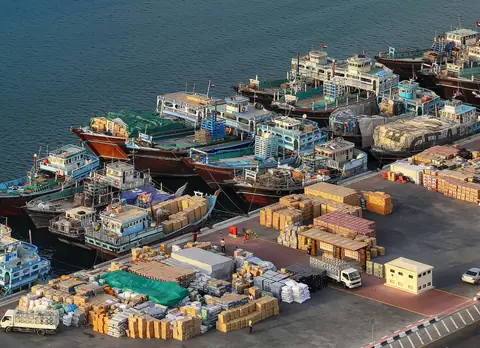
Dubai
Three nights in Dubai: Al Fahidi and the creek abra, the Deira souks, the Burj Khalifa, the beach and Marina, a desert evening, the airport metro and costs.
Read the guide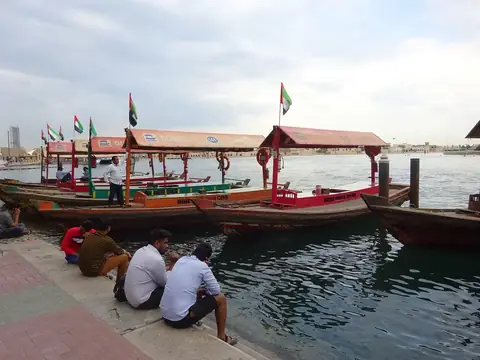
UAE in seven days
A seven-day UAE route with four nights in old Dubai, a Sharjah day trip and two nights in Abu Dhabi by bus, with the Grand Mosque, the Louvre and the costs.
Read the guide
Transport in the UAE
The Dubai Metro and nol cards, the new Etihad Rail trains, the AED 25 buses between Dubai and Abu Dhabi, airport taxis, and what to know before you hire a car in the UAE.
Read the guide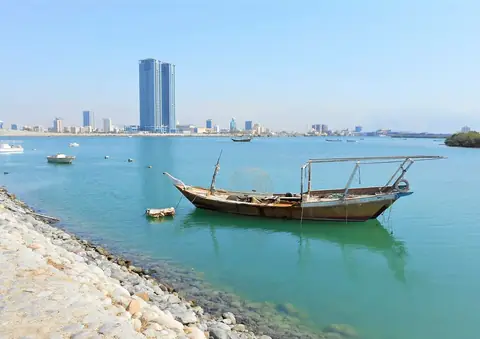
Where to stay in the UAE
Which part of Dubai to sleep in, the Abu Dhabi Corniche, the Ras Al Khaimah beach islands and Al Ain: nights for each and three hotels per area.
Read the guide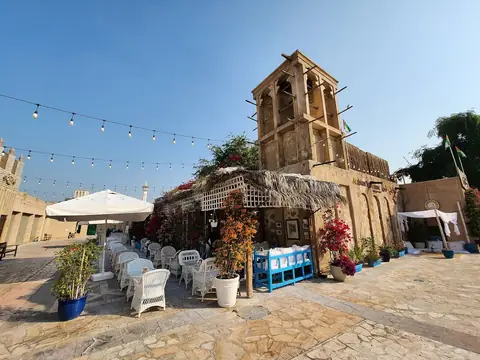
UAE food
Emirati machboos, harees and breakfast breads, Arabic coffee and dates, shawarma and karak: where to eat them in Dubai, Sharjah and Abu Dhabi, and what a day costs.
Read the guide
Health and safety in the UAE
The travel advice on regional tensions, the numbers to save, insurance and hospitals, the medicine permit, heat, the sea and desert, the roads and the laws.
Read the guideSources and checks before you travel
(23)
- UK FCDO: UAE safety and security ↗ — opens in a new tab
- Sharjah Museums Authority: Sharjah Fort (Al Hisn) ↗ — opens in a new tab
- Sharjah Museums Authority: Museum of Islamic Civilization ↗ — opens in a new tab
- Sharjah Museums Authority: Bait Al Naboodah ↗ — opens in a new tab
- Sharjah Museums Authority: Sharjah Art Museum ↗ — opens in a new tab
- Sharjah Museums Authority: Sharjah Calligraphy Museum ↗ — opens in a new tab
- Sharjah Museums Authority: Heritage Joint Ticket ↗ — opens in a new tab
- Visit Sharjah: Heart of Sharjah ↗ — opens in a new tab
- Visit Sharjah: Central Souk (Blue Souk) ↗ — opens in a new tab
- Visit Sharjah: Al Noor Mosque ↗ — opens in a new tab
- Visit Sharjah: Sharjah Mosque ↗ — opens in a new tab
- Visit Sharjah: Al Qasba ↗ — opens in a new tab
- Visit Sharjah: Al Noor Island ↗ — opens in a new tab
- Sharjah Art Foundation: Rain Room ↗ — opens in a new tab
- Dubai Media Office: RTA route E308 ↗ — opens in a new tab
- Dubai Media Office: RTA routes E303, E307A and E315 ↗ — opens in a new tab
- Dubai Taxi: regular taxi ↗ — opens in a new tab
- Arabian Tea House: Sharjah ↗ — opens in a new tab
- Sharjah Art Foundation: Rain Room tickets ↗ — opens in a new tab
- Visit Abu Dhabi (DCT): the best time to travel ↗ — opens in a new tab
- Sharjah Art Foundation: Rain Room (permanent installation) ↗ — opens in a new tab
- Visit Sharjah: a foodie's guide to Sharjah ↗ — opens in a new tab
- Visit Sharjah (Sharjah Commerce and Tourism Development Authority): frequently asked questions ↗ — opens in a new tab
Reference sources for the version dated 29 November 2026. Confirm opening times, access, transport and conditions for your travel dates.
Photo credits
(5)
The front of Al Hisn, the 1823 fort of the ruling family, with its old cannons
Photograph: Alexandermcnabb — opens in a new tab · CC BY-SA 4.0 — opens in a new tab
Changes: Resized and converted to WebP; displayed with responsive crops. · Original photograph and licence details ↗ — opens in a new tab
The round barjeel of the Al Midfa House in the Heart of Sharjah
Photograph: Alexandermcnabb — opens in a new tab · CC BY-SA 4.0 — opens in a new tab
Changes: Resized and converted to WebP; displayed with responsive crops. · Original photograph and licence details ↗ — opens in a new tab
A gallery of the Sharjah Museum of Islamic Civilization
Photograph: EditQ — opens in a new tab · CC0 — opens in a new tab
Changes: Resized and converted to WebP; displayed with responsive crops. · Original photograph and licence details ↗ — opens in a new tab
One of the covered souks in the Heart of Sharjah
Photograph: Alexandermcnabb — opens in a new tab · CC BY-SA 4.0 — opens in a new tab
Changes: Resized and converted to WebP; displayed with responsive crops. · Original photograph and licence details ↗ — opens in a new tab
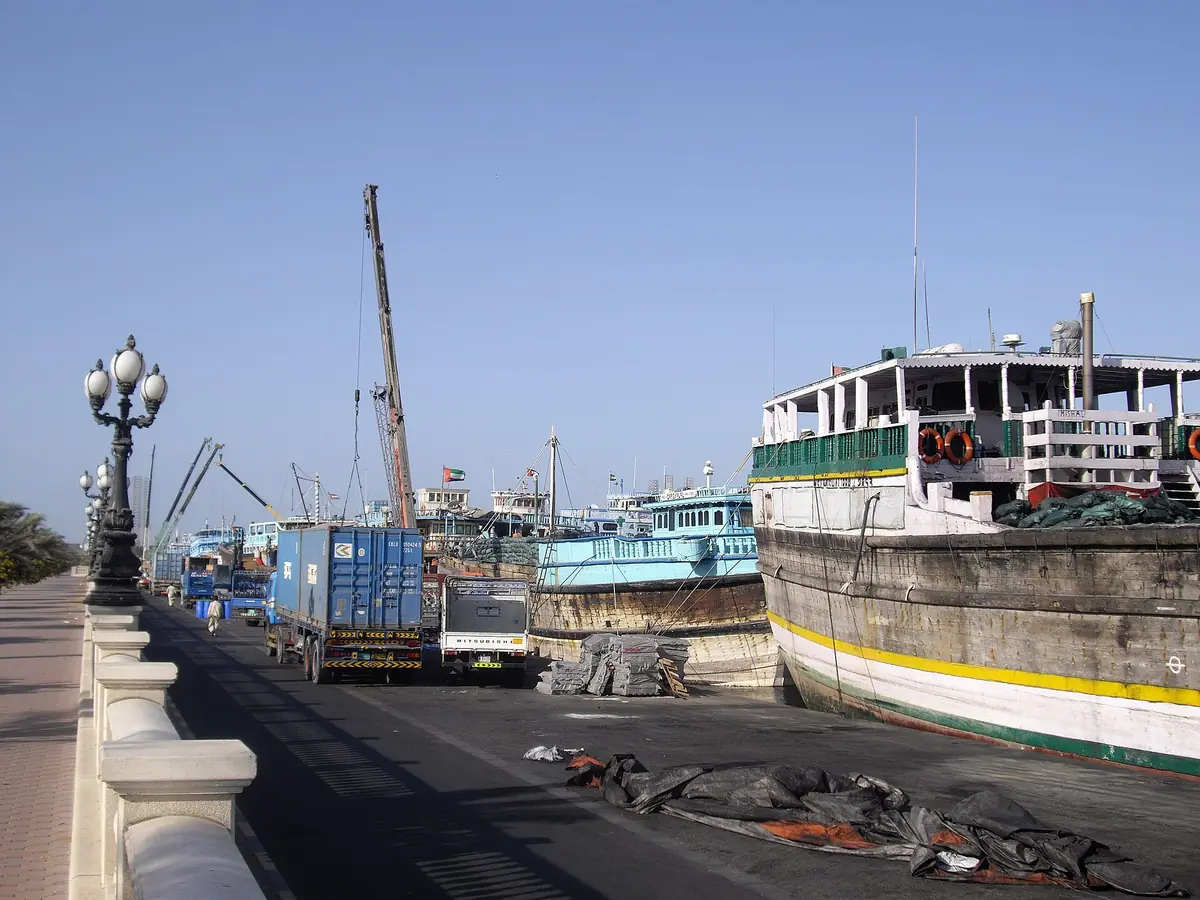
Cargo dhows moored along the Sharjah Corniche
Photograph: Thomas Dahlstrøm Nielsen — opens in a new tab · CC BY-SA 4.0 — opens in a new tab
Changes: Resized and converted to WebP; displayed with responsive crops. · Original photograph and licence details ↗ — opens in a new tab