Plan your trip
UAE food: machboos, harees, luqaimat, Arabic coffee and karak
Most restaurants in the UAE serve mezze and dishes from neighbouring cuisines, and even the Emirati restaurants list shawarma, biryani and spiced karak tea. The Emirati dishes are the ones to seek out: rice and meat or fish slow-cooked with dried lime, wheat porridges for Ramadan and weddings, breakfasts of thin breads and date syrup, and Arabic coffee poured with dates before anything else. This guide names each dish, a place on the usual route to try it, and what a day of meals costs from the restaurants' own menus.
In this guide
Find the location ↗ — opens in a new tabThe short answer
Book one table first: dinner at Al Fanar on Al Seef, on Dubai Creek, which opens at 13:00, or a cultural meal with an Emirati host at the Sheikh Mohammed Centre for Cultural Understanding (lunch AED 145). Have breakfast at Arabian Tea House in Al Fahidi, Dubai, which opens at 07:00, and lunch at its branch in the Heart of Sharjah on the Sharjah day. Order machboos (AED 62 for the chicken version in Sharjah, AED 65 at Al Fanar), harees, balaleet and luqaimat, with karak or Arabic coffee. From the restaurants' menus, a day of Emirati meals costs about AED 260 a person, and a lighter day of wraps and breakfast plates at the same cafés about AED 170.
- Key point
- Two or three Emirati meals over a Dubai stay, plus lunch on a Sharjah day trip
- Where it applies
- Al Fahidi and Al Seef on Dubai Creek; the Heart of Sharjah; Abu Dhabi's Mina Zayed for dates
- Timing
- In Ramadan, restaurants build iftar menus around harees after sunset, and thareed and freshly fried luqaimat appear at iftar. In daytime, eating or drinking in public may cause offence, and restaurant opening hours may change.
Machboos, harees and thareed: the Emirati table
Machboos is the dish to order first, and the one most often called the national dish. Rice cooks in a spiced broth with chicken, lamb, shrimp or fish. What sets it apart from a biryani is loomi, dried lime, which gives a sour, floral note; cinnamon, cardamom and saffron do the rest. Chicken and lamb are the everyday versions, and a fish machboos with hammour or kingfish shows the coastal side of the kitchen.
Harees is wheat and meat, usually chicken or lamb, slow-cooked for hours until they become one thick, smooth porridge with ghee on top. It is the dish of Ramadan, Eid and weddings, though restaurants serve it all year. Thareed is a stew of lamb, chicken or vegetables poured over thin regag bread, which soaks up the broth; it is eaten from one large dish at weddings, Eid and iftar. Madrooba, salted fish stirred into a thick spiced sauce, is the fish counterpart and another iftar dish.
Emirati food is spiced rather than hot: cardamom, saffron, turmeric, cinnamon and dried lime carry the flavour, and most dishes have no chilli. It is halal, with no pork and no alcohol in the cooking. The menu is heavy on meat and fish, so vegetarians should look to balaleet, the bread plates and the mezze that most restaurants serve alongside.
Emirati breakfast: balaleet, chebab, khameer and regag
Breakfast is the easiest Emirati meal for a visitor to find, because cafés in the heritage quarters serve it all day. Balaleet is vermicelli cooked with sugar, cardamom and saffron under a thin omelette, sweet and salty at once. Chebab are thin pancakes made with yeast, cardamom and turmeric, eaten with date syrup or cheese. Khameer is a soft, slightly sweet bread served with date syrup, honey or cream cheese, and regag (also spelled reqaq) a thin, crisp flatbread, eaten with egg and cheese at breakfast and broken into thareed at night.
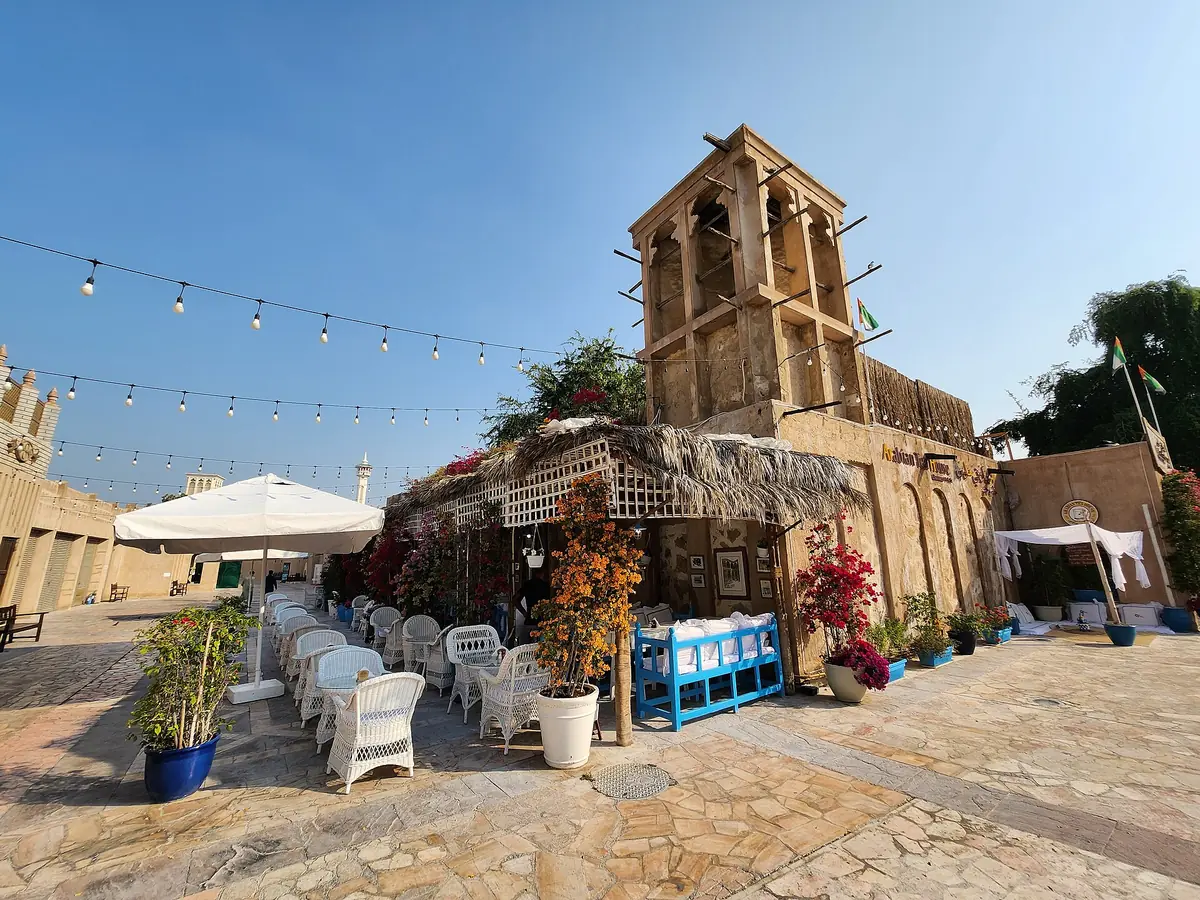
Arabian Tea House in Al Fahidi, Dubai, has served Emirati food since 1997 and opens every day from 07:00 to 23:00. Its balaleet with omelette is AED 36, chebab AED 34, a plate of three khameer AED 34 and regag with egg and cheese AED 35; the AED 87 Emirati breakfast tray puts balaleet, khameer, chebab, beans and date molasses on one tray.
Luqaimat, Arabic coffee and dates
Luqaimat are small fried dumplings, crisp outside and soft inside, soaked in date syrup (dibs). They are eaten hot, and in Ramadan stalls fry them fresh as the iftar crowd gathers. Al Fanar lists them as legaimat at AED 28, Arabian Tea House at AED 30.
Gahwa, Arabic coffee, is the welcome. It is light, almost golden, brewed with cardamom and sometimes saffron, and poured from a dallah into small handleless cups. UNESCO first inscribed Arabic coffee as a symbol of generosity in 2015, on a nomination from the UAE, Saudi Arabia, Oman and Qatar, and extended the listing to Jordan in 2024. The etiquette is simple: older people and guests are served first, the cup is filled only a little so it can be refilled, and you shake the cup gently when you have had enough. It always comes with dates.
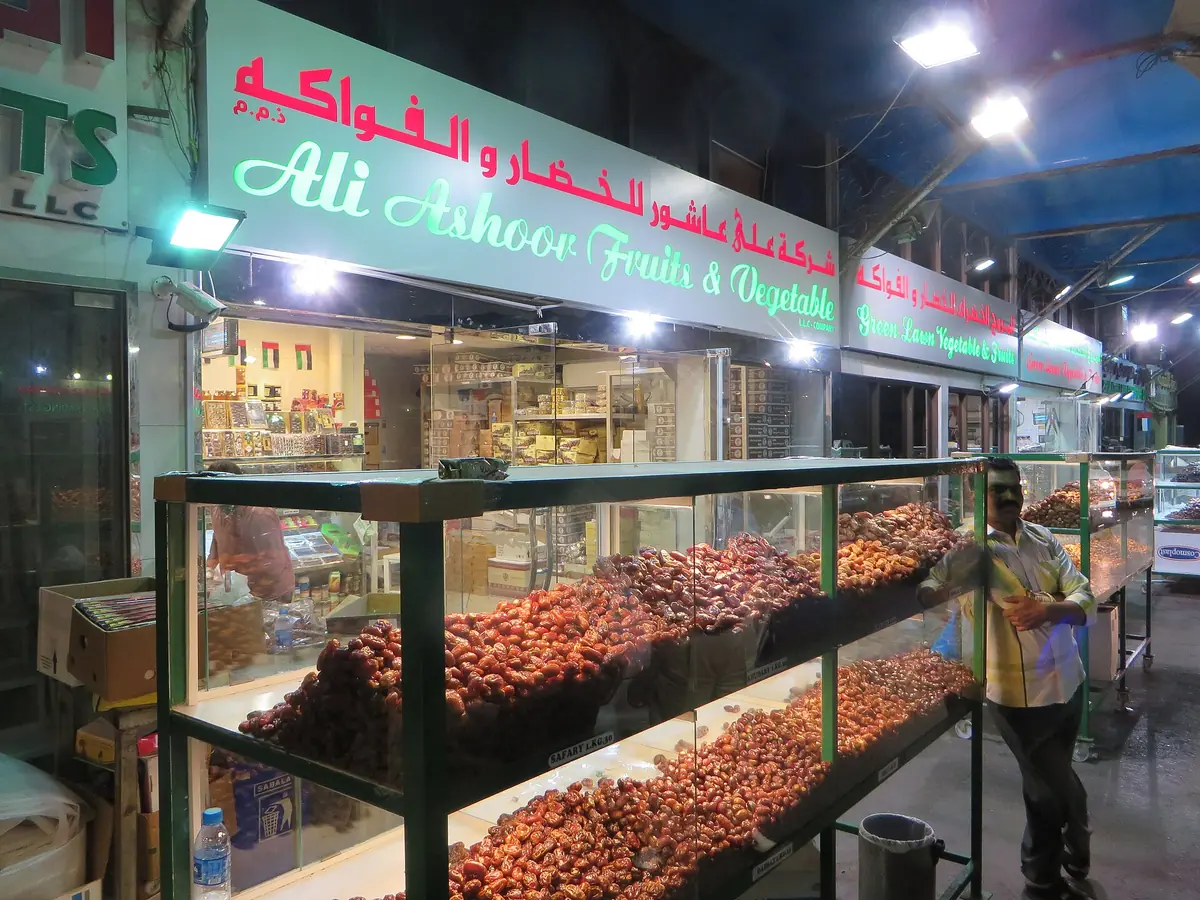
Dates are the souvenir that means something here. Khalas is the variety locals rate highest, smaller and less sweet than Medjool. In Abu Dhabi, the Dates Market at Mina Zayed sells them with bottled date syrup and loose gahwa spice blends. Bait Al Gahwa at Qasr Al Hosn serves gahwa and dates the ceremonial way; the Abu Dhabi guide has the rest of that day.
Shawarma, mezze, biryani and karak: what most visitors eat
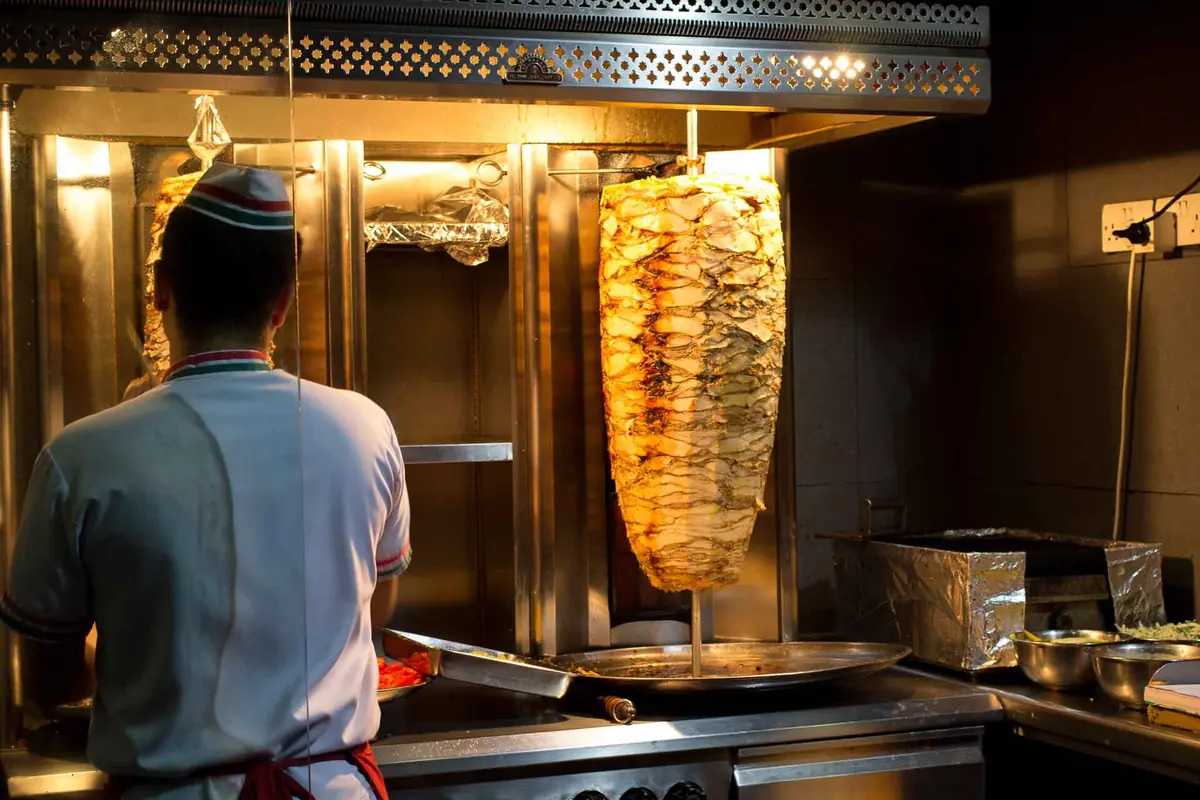
Between the Emirati meals, most visitors eat the food of the people who live here. Shawarma is the quick lunch: spiced roasted chicken wrapped in Arabic bread with garlic sauce and pickled cucumber. Arabic mezze plates of hummus, mutabal, fattoush and falafel come with almost every meal, and biryani sits on the same menus as machboos. Even the Emirati restaurants serve all three: Arabian Tea House lists a chicken shawarma at AED 48 and a falafel wrap at AED 38, and Al Fanar a chicken biryani at AED 65.
Karak is milk tea brewed slowly with spices, strong and sweet. It costs from AED 14 at Al Fanar and AED 30 at Arabian Tea House. Camel milk, slightly saltier than cow's milk, turns up in ice cream and in camel milk chocolate, a gift to take home.
Alcohol is served only in licensed venues, mostly hotel bars and restaurants, and it is illegal to drink in public anywhere in the UAE. In Sharjah drinking or possessing alcohol is illegal altogether, so the Sharjah lunch is a karak and fresh-juice meal.
Where to eat it in Dubai, Sharjah and Abu Dhabi
In Dubai, start in Al Fahidi. Arabian Tea House is in the Bastakiya quarter opposite the Musalla Post Office on Al Fahidi Street, Bur Dubai: come for breakfast before the museums of the Dubai guide. In the same quarter, the Sheikh Mohammed Centre for Cultural Understanding serves cultural meals in a restored wind-tower house, led by Emirati presenters who answer questions about local life and Islam: breakfast on Mondays and Wednesdays at 09:00 (AED 130), lunch from Monday to Thursday at 13:00 (AED 145), brunch from Friday to Sunday at 10:30 (AED 130) and dinner on Tuesdays (AED 160). Book each meal at least a day ahead. For dinner, stay on the Bur Dubai side of the Creek and go to Al Fanar on Al Seef Street, a restaurant that recreates the UAE of the 1960s. This Al Seef branch opens daily from 13:00 to 22:30 and is in the MICHELIN Guide Dubai 2026 selection; book a table on the restaurant's site.
On the Sharjah day, Arabian Tea House has a second branch in Souq Al Shanasiyah on Corniche Street, in the Heart of Sharjah, with the same menu and the same 07:00–23:00 hours; lunch there fits between the museums of the Sharjah guide, and it is the place to order harees (AED 37).
In Abu Dhabi, Al Mrzab on Airport Road is the no-frills Emirati restaurant for harees and machboos, and Al Fanar has a branch at Yas Mall. For gahwa and dates, go to Bait Al Gahwa at Qasr Al Hosn. For dates to buy, go to the Dates Market at Mina Zayed; the luqaimat stalls around Mina Zayed are at their freshest in the evening.
For fish, go to the Waterfront Market in Deira, which replaced the Deira Fish Market of 1958 in 2017. Its fish hall, with hundreds of seafood stalls selling hammour, kingfish and the rest of the Gulf catch, is open around the clock except for a cleaning break on Fridays from 12:00 to 14:00. Pick your fish, have it cleaned at the market's cleaning area, and one of the restaurants on the waterfront, open from 12:00 to midnight, cooks it for you.
What to eat and where to look
Machboos
Rice cooked in a spiced broth with chicken, lamb, shrimp or fish and dried lime (loomi); chicken machboos is AED 65 at Al Fanar.
- Where to look
- Al Fanar, Al Seef Street, Al Seef, Dubai (daily 13:00–22:30).
- Fit it into your day
- Dinner on a Dubai evening by the Creek; reserve the table.
Harees
Wheat and chicken or lamb slow-cooked to a smooth porridge, the dish of Ramadan and weddings; AED 37 at Arabian Tea House.
- Where to look
- Arabian Tea House, Souq Al Shanasiyah, Corniche Street, Heart of Sharjah.
- Fit it into your day
- Lunch on the Sharjah day, in the Heart of Sharjah.
Balaleet
Sweet vermicelli with cardamom and saffron under a thin omelette; AED 36 with the omelette at Arabian Tea House.
- Where to look
- Arabian Tea House, Al Fahidi Street, Bastakiya, Bur Dubai (daily 07:00–23:00).
- Fit it into your day
- Breakfast before the Al Fahidi museums.
Luqaimat
Fried dumplings soaked in date syrup, eaten hot; AED 28 a plate at Al Fanar, which spells them legaimat.
- Where to look
- Al Fanar, Al Seef, Dubai, or the iftar stalls in Ramadan.
- Fit it into your day
- Dessert after the machboos dinner.
Gahwa and dates
Light Arabic coffee with cardamom, poured into small cups and served with dates; a UNESCO-listed ritual.
- Where to look
- Bait Al Gahwa at Qasr Al Hosn, Abu Dhabi.
- Fit it into your day
- An afternoon stop on the Abu Dhabi day.
What a day of meals costs
These figures are per person per day, from the restaurants' own online menus; a hotel breakfast lowers each total, and the trip cost guide sets food inside a whole-trip budget. For a cheaper day, eat at the small cafeterias of Bur Dubai and Deira, and check the prices on the board at the counter before you order.
- Lighter day at the same cafés, about AED 170: balaleet with omelette and a karak at Arabian Tea House (AED 66), a falafel wrap and a large water for lunch (AED 48), and a chicken shawarma and water for dinner (AED 58).
- Emirati day, about AED 260: chebab and karak for breakfast (AED 64) and chicken machboos with water for lunch at Arabian Tea House (AED 72), then mutton machboos, legaimat and a laban ayran at Al Fanar for dinner (AED 125).
Practical questions
What is the national dish of the UAE?
Machboos, rice cooked in a spiced broth with chicken, lamb or fish and dried lime. Chicken machboos costs AED 62 to AED 65 in the Emirati restaurants named in this guide.
Is Emirati food spicy?
No. It is spiced with cardamom, saffron, turmeric, cinnamon and dried lime, and most dishes have no chilli.
Where can I try Emirati breakfast in Dubai?
Arabian Tea House in Al Fahidi opens at 07:00 every day and serves balaleet, chebab, khameer and regag, or a breakfast tray of balaleet, khameer and chebab for AED 87.
How much does a day of meals cost in the UAE?
About AED 260 a person for a day of Emirati meals, and about AED 170 for a lighter day of breakfast plates and wraps at the same heritage cafés, from the restaurants' own menus.
Can I drink alcohol with dinner?
Yes, in Dubai and Abu Dhabi, in licensed venues (mostly hotel restaurants and bars), from age 21. Drinking in public is illegal everywhere in the UAE. In Sharjah, drinking or possessing alcohol is illegal altogether.
How do I eat during Ramadan?
Eating, drinking or smoking in public in daytime may cause offence, and restaurant opening hours may change. After sunset the iftar menus bring out harees, thareed and fresh luqaimat.
Keep planning your trip
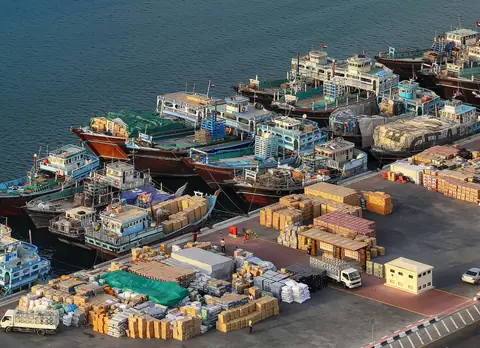
Dubai
Three nights in Dubai: Al Fahidi and the creek abra, the Deira souks, the Burj Khalifa, the beach and Marina, a desert evening, the airport metro and costs.
Read the guide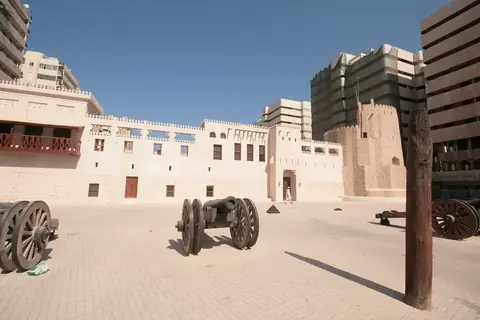
Sharjah
Sharjah as a day trip from Dubai: Al Hisn fort, the Islamic Civilization museum, the Heart of Sharjah souks, Al Noor Mosque, buses, taxis, tickets and the alcohol ban.
Read the guide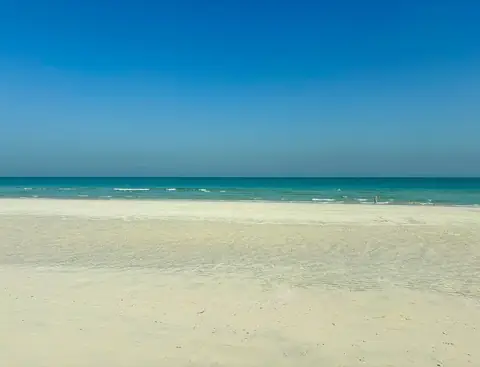
Abu Dhabi
Plan two nights in Abu Dhabi: Sheikh Zayed Grand Mosque, Louvre Abu Dhabi, Qasr Al Watan, Qasr Al Hosn and Saadiyat or Yas, with fees, hours and buses from Dubai.
Read the guide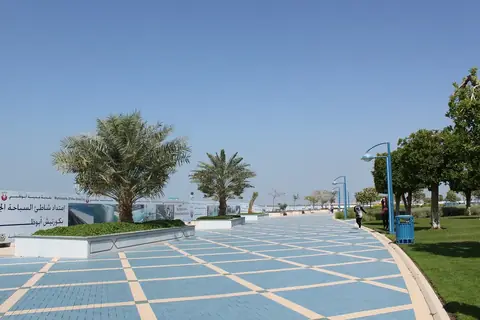
UAE trip cost
Seven days in Dubai, Sharjah and Abu Dhabi, all in: from about AED 1,840 per person on a budget, 2,910 mid-range or 6,060 in comfort, before the flight.
Read the guide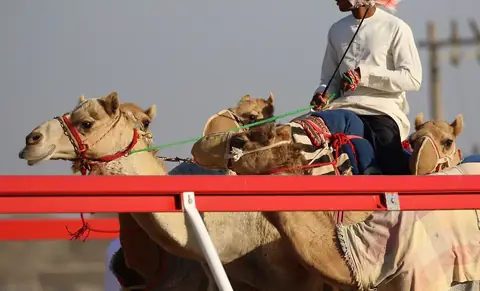
UAE festivals and events 2027
The UAE's 2027 holidays and big events by month: Ramadan, the Eids, the Dubai Shopping Festival, Liwa, Al Dhafra, Art Dubai and the Abu Dhabi Grand Prix.
Read the guide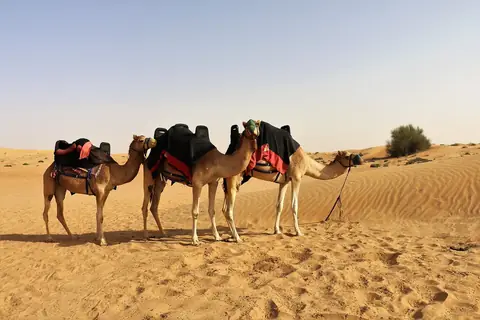
First trip to the UAE
Choose seven days or ten for Dubai, Sharjah, Abu Dhabi, Ras Al Khaimah and Al Ain: nights, buses and the metro, season, entry, medicines, dress and the current advisory.
Read the guideSources and checks before you travel
(16)
- Visit Abu Dhabi: Emirati dishes and where to try them ↗ — opens in a new tab
- Visit Abu Dhabi: Emirati food and coffee culture ↗ — opens in a new tab
- Visit Abu Dhabi: 7 Emirati dishes to try ↗ — opens in a new tab
- Visit Ras Al Khaimah: traditional Emirati food ↗ — opens in a new tab
- UNESCO: Arabic coffee, a symbol of generosity ↗ — opens in a new tab
- Arabian Tea House: Al Fahidi ↗ — opens in a new tab
- Arabian Tea House: Sharjah ↗ — opens in a new tab
- Al Fanar Restaurant & Cafe ↗ — opens in a new tab
- Al Fanar: Al Seef menu ↗ — opens in a new tab
- Al Fanar: Al Seef branch ↗ — opens in a new tab
- UK FCDO: UAE safety and security ↗ — opens in a new tab
- Al Seef Dubai (official site) ↗ — opens in a new tab
- Waterfront Market: about us and opening hours ↗ — opens in a new tab
- Waterfront Market: brochure (PDF) ↗ — opens in a new tab
- Gulf News: Emirati heritage in each emirate, 23 September 2026 ↗ — opens in a new tab
- Experience Abu Dhabi: Al Mrzab Restaurant ↗ — opens in a new tab
Reference sources for the version dated 29 November 2026. Confirm opening times, access, transport and conditions for your travel dates.
Photo credits
(5)
Arabian Tea House in the Al Fahidi quarter of Bur Dubai
Photograph: Saaremees — opens in a new tab · CC BY-SA 4.0 — opens in a new tab
Changes: Resized and converted to WebP; displayed with responsive crops. · Original photograph and licence details ↗ — opens in a new tab
A date shop at the Abu Dhabi Vegetable Market
Photograph: Jpbowen — opens in a new tab · CC BY-SA 4.0 — opens in a new tab
Changes: Resized and converted to WebP; displayed with responsive crops. · Original photograph and licence details ↗ — opens in a new tab
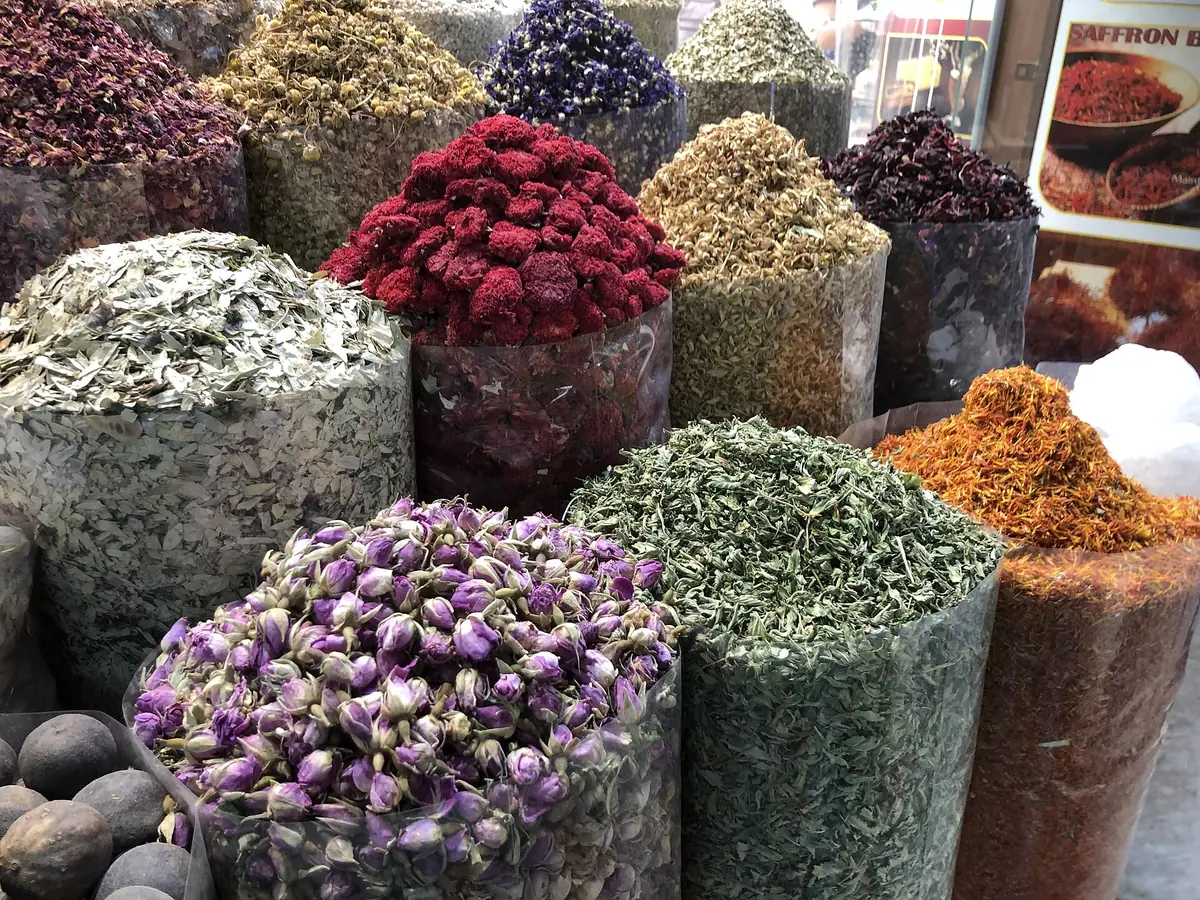
Spices and dried flowers in the Dubai Spice Souk
Photograph: Frodlekis — opens in a new tab · CC BY-SA 4.0 — opens in a new tab
Changes: Resized and converted to WebP; displayed with responsive crops. · Original photograph and licence details ↗ — opens in a new tab
Shawarma being cut at a restaurant in Dubai
Photograph: Krista — opens in a new tab · CC BY 2.0 — opens in a new tab
Changes: Resized and converted to WebP; displayed with responsive crops. · Original photograph and licence details ↗ — opens in a new tab
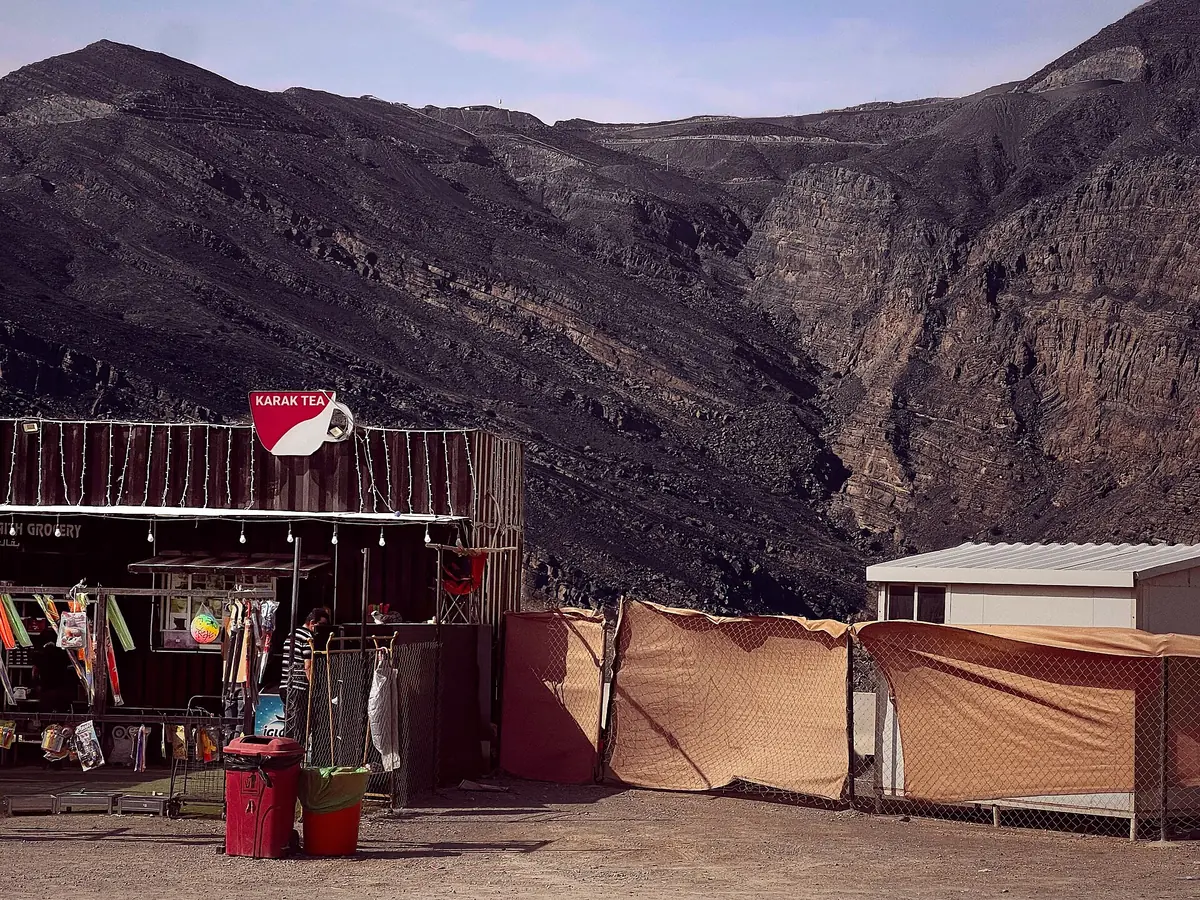
The Karak Chai Outpost on Jebel Jais, Ras Al Khaimah
Photograph: Goldberry23 — opens in a new tab · CC BY-SA 4.0 — opens in a new tab
Changes: Resized and converted to WebP; displayed with responsive crops. · Original photograph and licence details ↗ — opens in a new tab