Dubai: the creek, the souks, Downtown and the desert in three nights
Dubai is two cities along one coast. Old Dubai sits on the creek, where wooden abras still cross from the Bur Dubai abra station to the souks of Deira for AED 1. Further down the coast, Downtown and Dubai Marina are towers, malls and a long public beach, with the Burj Khalifa rising 828 metres over the fountain lake. The metro links the two, and the dunes of the Dubai Desert Conservation Reserve are an evening's drive inland. Three nights cover the creek, the towers, the beach and the desert without rushing; this guide shows which area to sleep in for each and what changed in 2026.
In this guide
Find the location ↗ — opens in a new tabThe short answer
Book three nights, in the old town around Al Fahidi if you came for the creek and the souks, or in Downtown if the towers and malls come first; the metro joins them. Spend one day on Al Fahidi, the abra and the Deira souks, one on the beach with a desert evening in the Dubai Desert Conservation Reserve, and the last on Downtown before a late flight. Book the Burj Khalifa deck first: tickets start from AED 199 for levels 124 and 125. The creek abra costs AED 1 in cash, and a metro ride on a red paper ticket costs AED 4 within one zone to AED 8.50 across more than two. The Museum of the Future is temporarily closed, so see the building from outside.
- Suggested time
- 3 nights in Dubai
- Where to stay
- Al Fahidi and the creek for old Dubai, or Downtown near the Burj Khalifa metro station
- Season and timing
- Dubai is hottest in summer, when the beach and the desert are hard work by day; our best-time guide has the months, and the night-swimming beaches open from sunset to sunrise.
Where to sleep: the creek, Downtown or the Marina
Choose the base by what you came for. Old Dubai, around Al Fahidi and the creek, has the wind-tower lanes, the abra stations and the souks on the far bank, and suits a first stay of three nights. Downtown puts the Burj Khalifa, the Dubai Mall and the fountain outside the door, on the Red Line of the metro. Dubai Marina, at the south-western end of the metro, has towers, a waterside promenade and the beach at JBR, and suits a longer stay with beach days. Keep one hotel for all three nights, because the metro links the three areas.
| Area | What is on the doorstep | Metro | Who it suits |
|---|---|---|---|
| Al Fahidi and the creek | Wind-tower lanes, the abra to Deira, the souks | Green Line | A first visit, history and markets |
| Downtown | Burj Khalifa, Dubai Mall, the fountain | Red Line | Towers, shopping, evening shows |
| Dubai Marina and JBR | Promenade, JBR beach, Marina ferries | Red Line and tram | Beach days, a longer stay |
Our where-to-stay guide compares hotels in Old Dubai, Downtown and Dubai Marina, with their rates.
Al Fahidi, the creek and the abra
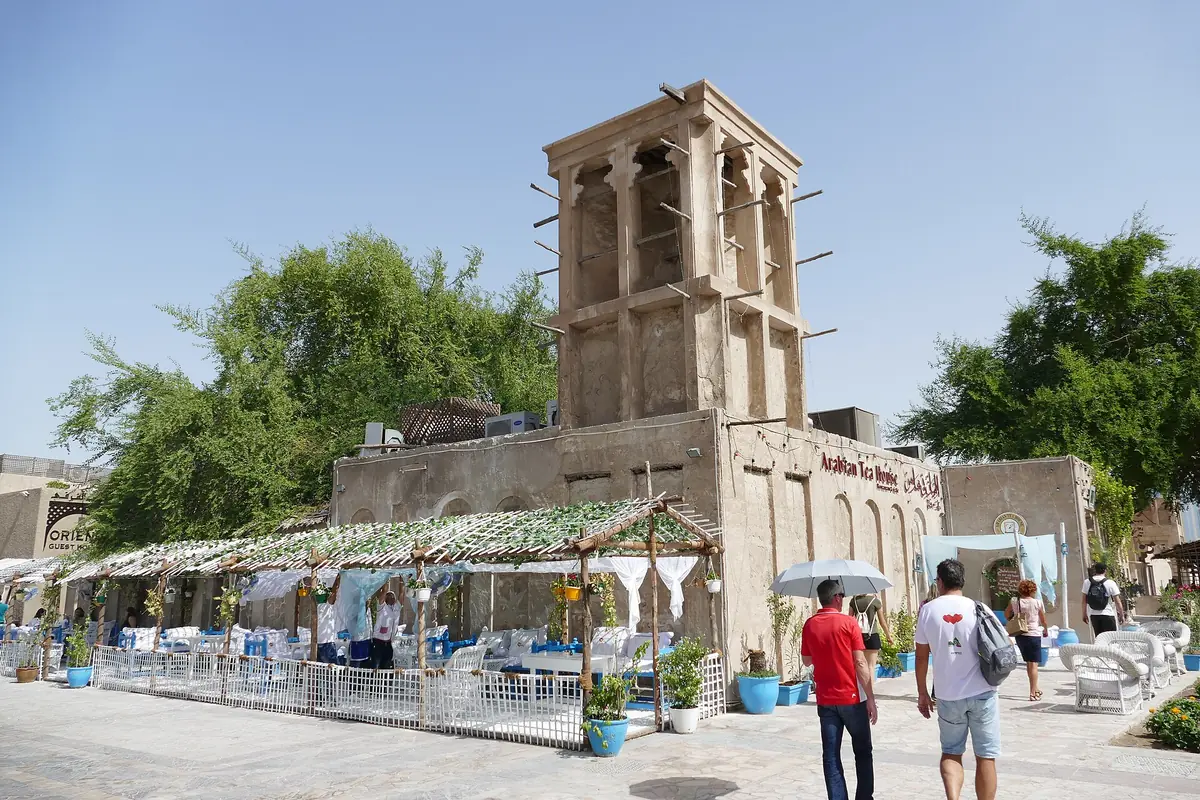
Start in the Al Fahidi Historical Neighbourhood on the Bur Dubai side of the creek: sand-coloured houses topped with square wind towers, narrow shaded lanes and courtyards turned into galleries, cafés and small museums. The Sheikh Mohammed Centre for Cultural Understanding, at work since 1998, is based in a restored wind-tower house here. Its cultural meals are led by Emirati presenters who answer questions about local life and Islam. Breakfast is on Mondays and Wednesdays at 09:00 (AED 130), lunch from Monday to Thursday at 13:00 (AED 145), brunch from Friday to Sunday at 10:30 (AED 130), and dinner on Tuesdays (AED 160). Book each meal at least a day ahead.
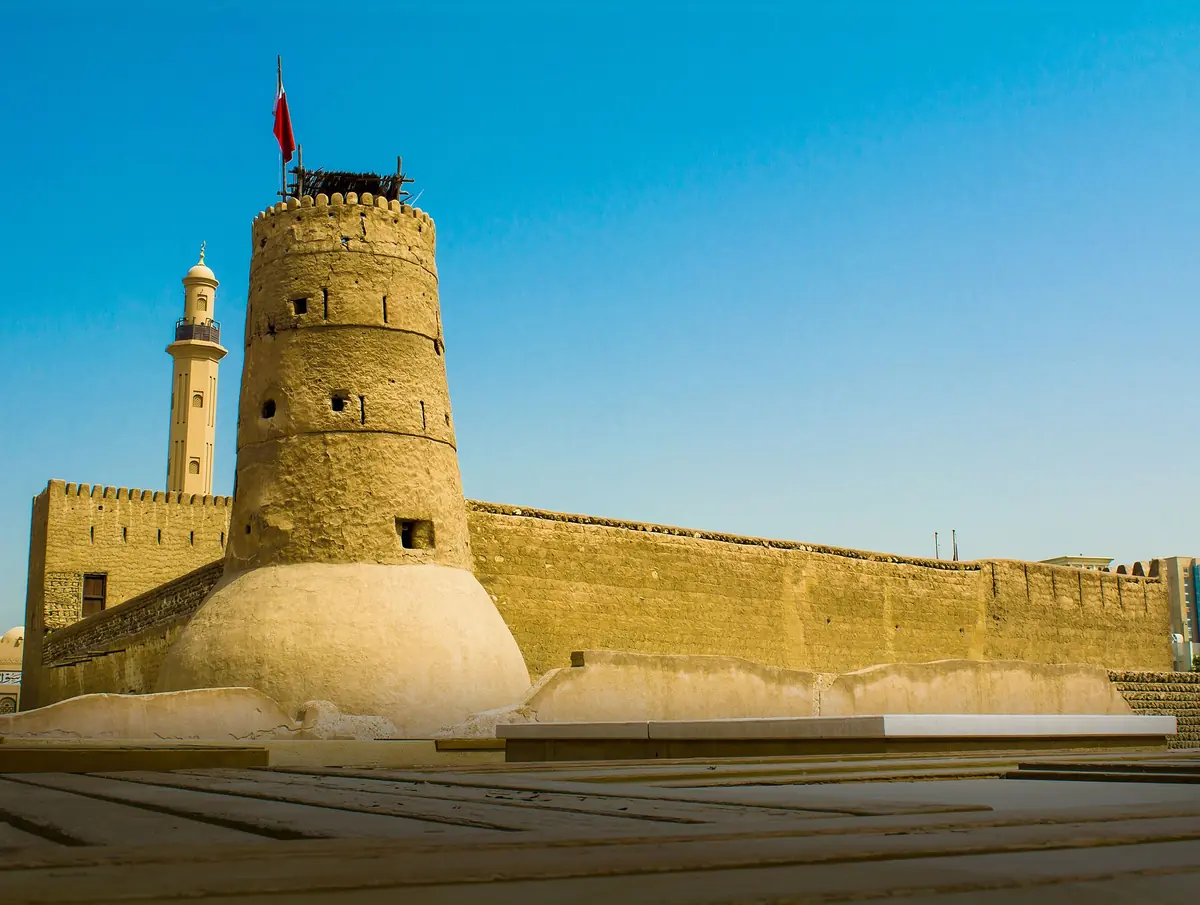
Al Fahidi Fort, built in 1787, is Dubai's oldest surviving building. It housed the emirate's rulers and served as a seat of government and justice. The fort is closed while it becomes a museum with six galleries on its history from 1787 to today, so see it from outside. For the story of old Dubai, walk up the creek to Al Shindagha Museum, where each restored house on the water covers one subject: the Al Maktoum residence, the creek and its trade, pearl diving and the sea, traditional jewellery, Emirati food and the Perfume House with its scented oils. The museum is open daily from 10:00 to 20:00, with last entry at 19:00. A ticket for two houses costs AED 15 for adults, and children enter free.
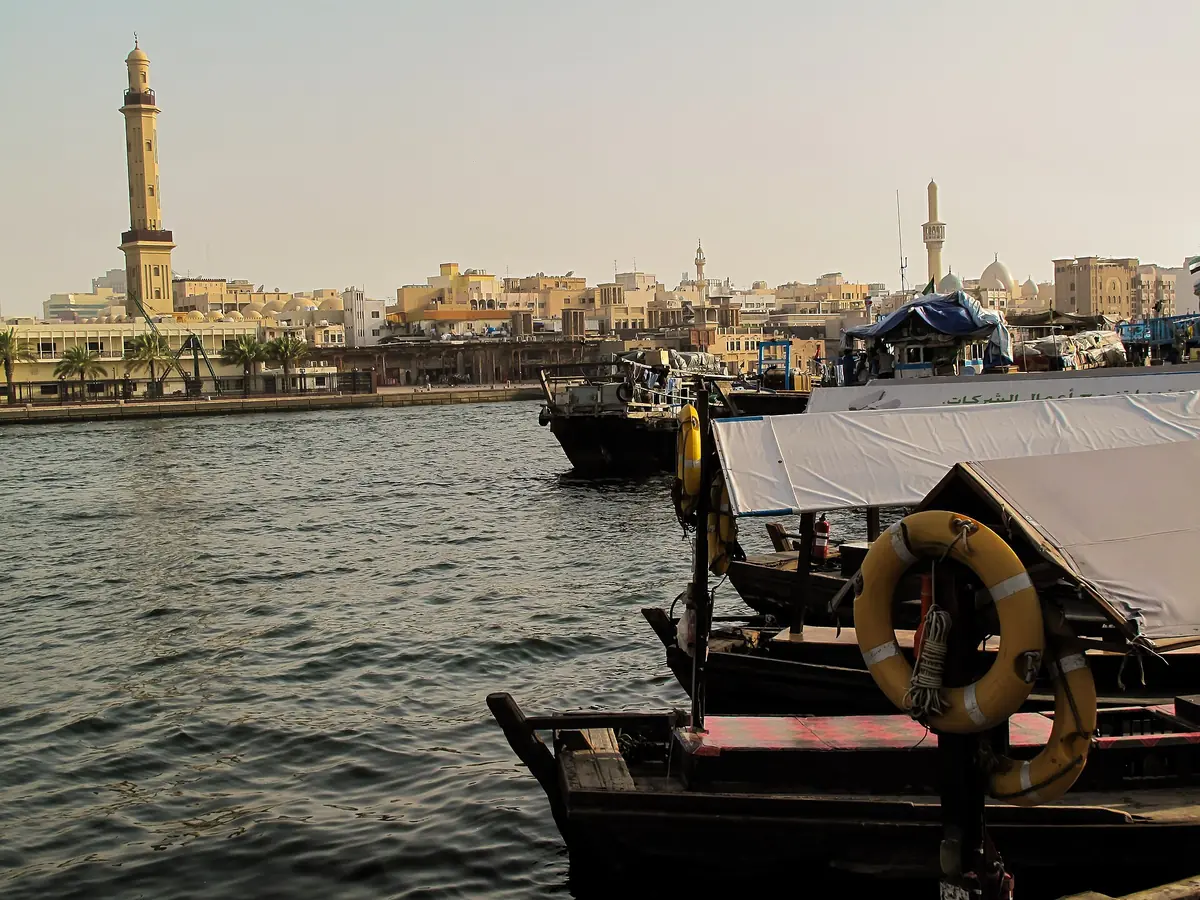
Walk down to the water at the Bur Dubai abra station. Dubai Creek runs for about 14 km between Bur Dubai and Deira, and the motorised wooden abras, half boat and half raft, cross it to Deira Old Souq station; another route links the Old Souq with Al Sabkha. The fare is AED 1 a passenger, paid in cash on board. A private abra for a creek cruise costs AED 120 an hour, and the petrol heritage abras between Al Fahidi, Al Seef, Baniyas, Al Sabkha and the Old Souq cost AED 2. Children under 12 must travel with an adult and wear a life jacket.
Our Sharjah guide covers the museums and old town of the next emirate up the coast, a day trip from here. RTA bus E308 runs from Stadium Bus Station in Dubai to Al Jubail Bus Station in Sharjah for AED 12 one way, in 23 to 29 minutes on RTA's journey planner, and the Dubai Ferry sails from Al Ghubaiba to the Sharjah Aquarium.
Prices and times checked 28 November 2026
Deira: the Gold Souk, the spice lanes and the old harbour
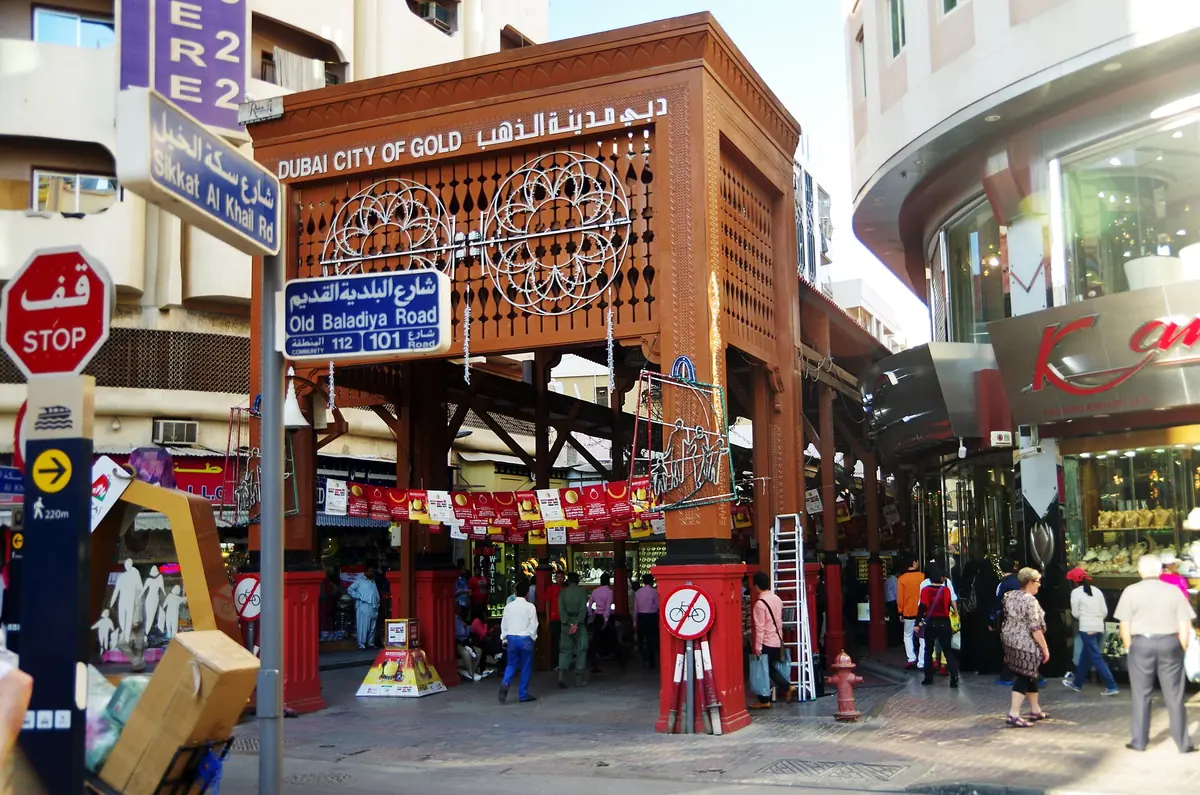
From Deira Old Souq station you step straight into the market streets on the north bank. The spice lanes come first, with sacks of dried limes, frankincense, saffron and dried flowers in front of small shops. Further in is the Gold Souk, its shop windows filled with necklaces, bangles and coins.
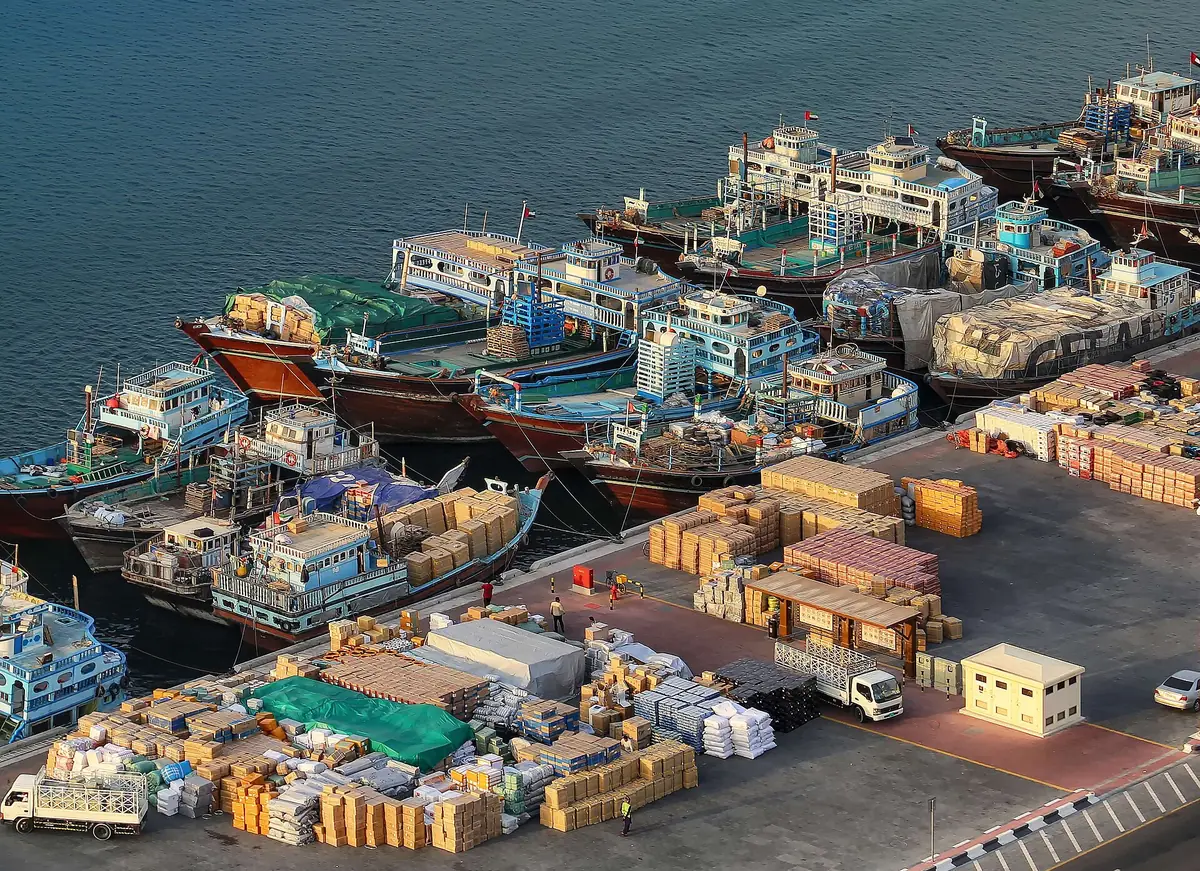
Along the creek wharves, wooden dhows still load and unload cargo. Come in the late afternoon, when the heat eases, then take the abra back across for sunset on the Bur Dubai side. Al Ras station on the metro Green Line is the nearest stop if you come by train.
Downtown: the Burj Khalifa, the fountain and the Museum of the Future
The Burj Khalifa, completed in 2010, is 828 metres tall to its architectural top and ranks as the world's tallest building; its highest occupied floor is at 584.5 metres. At the Top has public observation decks on levels 124 and 125, 452 metres up, and the world's highest observation deck on level 148, at 555 metres; it opens daily from 07:00 to 23:00. Tickets start from AED 199 for levels 124 and 125 and from AED 399 with level 148, depending on the date and time, so book the deck before you fly and build the Downtown day around your slot.
At the foot of the tower, the Dubai Fountain plays on Burj Lake to music and lights, with shows every evening from 18:00 to 23:00 and two afternoon shows, at 13:00 and 13:30 from Saturday to Thursday and at 14:00 and 14:30 on Friday. The Dubai Mall is the obvious place to cool off at midday.
The Museum of the Future, on Sheikh Zayed Road by the Emirates Towers, is a ring of stainless steel wrapped in Arabic calligraphy whose windows are formed by the letters, with no columns and no conventional facade. Gulf News reported on 26 August 2026 that its galleries would close on 1 September 2026 for a new generation of exhibitions, due to open in the first quarter of 2027 for the museum's fifth anniversary. Until then, see the building from the street or from the metro viaduct beside it.
The Burj Al Arab, the sail-shaped hotel on its own island off Jumeirah, is undergoing a phased restoration of about 18 months, announced by Jumeirah on 15 April 2026. Gulf News reported on 27 October 2026 that the hotel closed in April 2026 and is expected to reopen in October 2027. You can still see it from the public beaches nearby.
The beach, JBR and Dubai Marina
Dubai's public beaches run along the Jumeirah coast. Dubai Municipality has opened three of them, at Jumeirah 2, Jumeirah 3 and Umm Suqeim 1, for night swimming: 800 metres of floodlit sand where swimming is allowed from sunset to sunrise. A rescue team of 16 lifeguards watches these beaches, which also have floating chairs and a rest area for people of determination. Swim only where there are lifeguards and flags: rip currents occur on any beach, and a red flag means swimming is dangerous. Swimwear belongs on the beach and at pools; in malls and other public places, women should cover shoulders and knees.
Dubai Marina is a canal lined with towers at the south-western end of the city, with a waterside promenade, and JBR beach beyond it. The RTA water taxi links the Marina Mall with Marina Walk and the Marina Terrace for AED 7 a stop, and the Dubai Ferry runs from the Marina Mall to Bluewaters and round to Atlantis the Palm. Spend the late afternoon on the beach and the evening on the promenade.
A desert evening in the conservation reserve
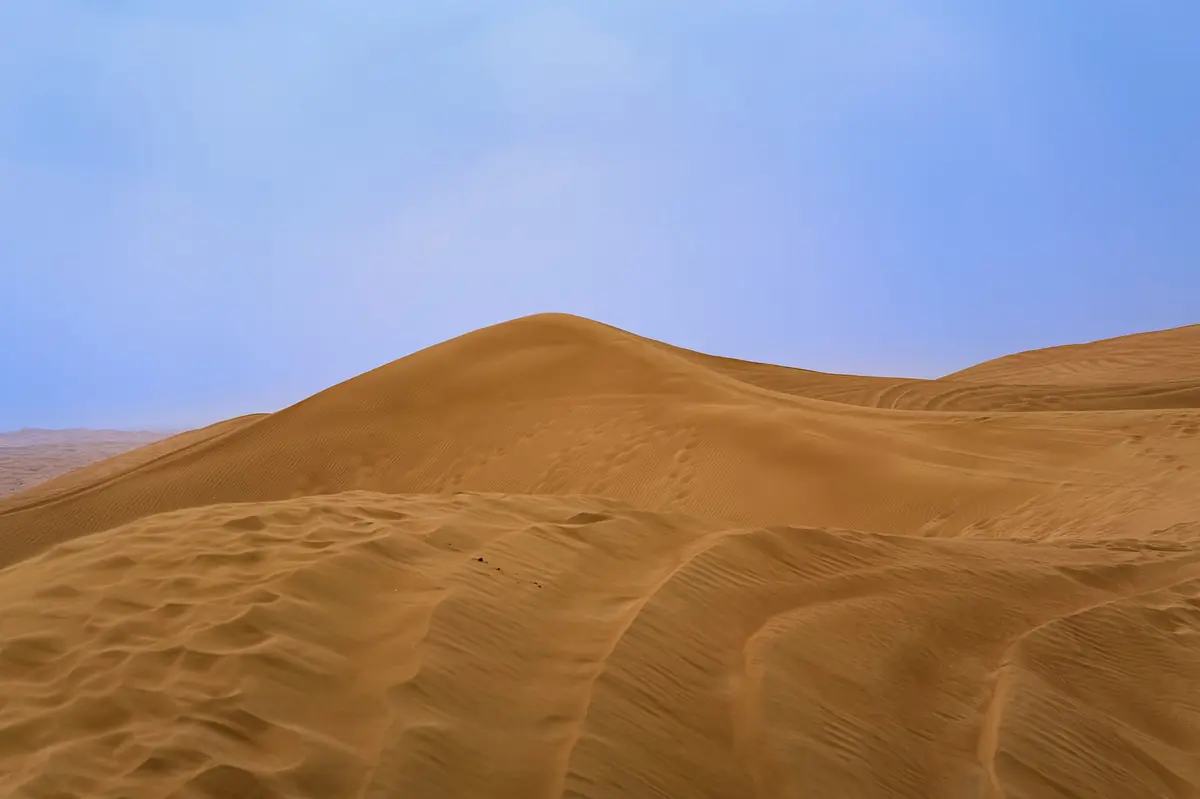
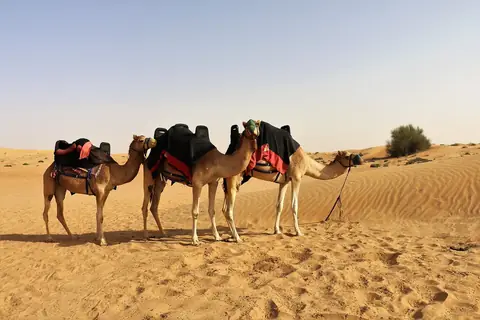
The Dubai Desert Conservation Reserve, created in 2003 over 225 km², 4.7% of Dubai's land area, is the UAE's first national park. Arabian oryx and gazelles graze between its dunes, and only approved operators may run dune drives and dinner camps inside it. Their guides are certified by the reserve, and their tours carry its seal. The reserve lists camel treks, falconry displays, wildlife drives, dune drives on fixed routes to a Bedouin camp, desert dinners of grilled meats, salads and Arabic sweets, night safaris and hot-air balloon flights.
Book with one of the operators the reserve lists, such as Arabian Adventures or Platinum Heritage, rather than driving yourself; each sets its own programme, price and pickup time, so check what your tour includes when you book. Platinum Heritage's evening Heritage Desert Safari, for example, starts from AED 795 per adult including VAT, picks you up from Dubai hotels between 14:00 and 16:30, depending on the season, and brings you back between 21:30 and 23:30. The UK Foreign Office warns that the desert is dangerous without a properly equipped four-wheel drive and another car, and that quad-biking and dune drives should be with a company that has adequate safety procedures. Check that your travel insurance covers dune driving before you book.
Prices and times checked 28 November 2026
The airport, the metro and getting around
Dubai International Airport (DXB) is on the Red Line of the metro, with stations at Terminals 1 and 3, where ticket offices and machines sell red tickets and nol cards. Trains run from 05:00 to midnight from Monday to Thursday and on Saturday, from 05:00 to 01:00 on Friday, and from 08:00 to midnight on Sunday. Take at most two pieces of luggage, hand luggage included. Taxis wait at ranks outside every terminal round the clock. Airport taxis start at AED 20 (AED 25 for a van) plus the distance, and Uber, Careem and Bolt pick up at signed points.
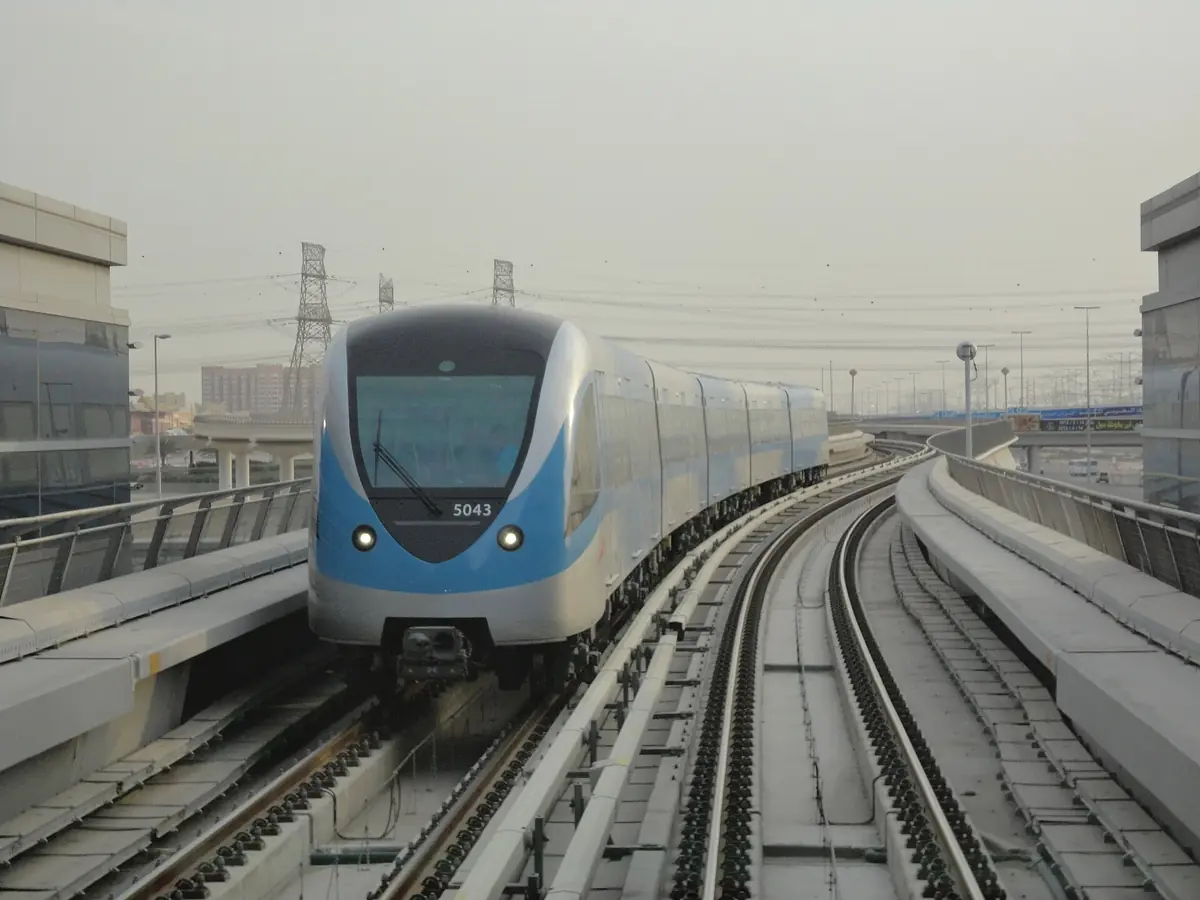
The Red Line runs along Sheikh Zayed Road from the airport to Downtown and Dubai Marina; the Green Line serves the creek, with Union and BurJuman as the interchanges, and the Dubai Tram meets the Red Line at Sobha Realty and DMCC for JBR. Fares depend on the zones you cross. A red paper ticket costs AED 2 and holds up to 10 trips, with each ride at AED 4 within one zone, AED 6 across two and AED 8.50 across more than two. A nol Silver card costs AED 25 including AED 19 of credit and cuts the rides to AED 3, AED 5 and AED 7.50; it also works on RTA's water buses. Keep at least AED 7.50 on the card to pass the gate, and tap out at the end of each ride. Gold class cabins cost double, and some cabins are for women and children only.
Within old Dubai, walk and take the abra. Between the areas, take the metro, and use a taxi for the beach or late at night. Since 30 September 2026, Etihad Rail's passenger trains have linked Dubai Station with Abu Dhabi and Fujairah, with fares from AED 39 in Comfort Class and AED 109 in Premium Class. The station is linked by a footbridge to Jumeirah Golf Estates metro station, and our transport guide covers the trains and the buses to the other emirates. Since the regional conflict that began in early 2026, Germany advises against non-essential travel to the UAE, and flights can be cancelled at short notice; our health and safety guide compares each government's advice.
Prices and times checked 28 November 2026
Three nights, day by day
The plan assumes you land by midday on day 1 and fly out late on day 4.
- Day 1: arrive, check in and walk up the creek to Al Shindagha Museum, open until 20:00. Sleep in Dubai.
- Day 2: a cultural breakfast or lunch at the Sheikh Mohammed Centre, the Al Fahidi lanes, the abra to Deira Old Souq, the spice lanes and the Gold Souk in the late afternoon, and the abra back for sunset. Sleep in Dubai.
- Day 3: the beach or Dubai Marina in the morning, a rest through the heat of the afternoon, then the desert evening with an approved operator. Sleep in Dubai.
- Day 4: the metro to Downtown, the Burj Khalifa observation deck at an early booked slot, the Museum of the Future from outside and an afternoon fountain show; fly out late, or add a fourth night and a day in Sharjah as in our seven-day itinerary.
What to eat and where to look
Chicken machboos
Rice cooked with chicken and the Gulf spice mix bezar, the dish most Emirati restaurants put first on the menu and the one guests are served at a cultural meal.
- Where to look
- The cultural lunch at the Sheikh Mohammed Centre for Cultural Understanding in Al Fahidi.
- Fit it into your day
- Lunch on day 2.
Luqaimat
Small fried dough balls, crisp outside and soft inside, drizzled with dibs, the date syrup.
- Where to look
- The Arabian Tea House on Al Fahidi Street (AED 30), or the Sheikh Mohammed Centre's meals.
- Fit it into your day
- With Arabic coffee after lunch.
Khameer
A soft, slightly sweet Emirati flatbread, eaten at breakfast with cream cheese and date syrup.
- Where to look
- The Arabian Tea House on Al Fahidi Street, open daily from 07:00 (AED 34).
- Fit it into your day
- Breakfast before the abra.
Saloona
A spiced stew of meat or fish with vegetables, the everyday home curry of the Gulf, scooped up with rice.
- Where to look
- The Arabian Tea House on Al Fahidi Street, where chicken saloona costs AED 60.
- Fit it into your day
- Dinner after the souks.
Machboos and saloona are cooked with meat or fish; ask for a vegetable dish if you need one.
Arabic coffee and dates
Light-roasted coffee brewed with cardamom, poured in small cups and served with sticky dates as the first sign of welcome.
- Where to look
- Al Fanar on Al Seef, by the creek, where a pot of Arabic coffee costs AED 21.
- Fit it into your day
- Any afternoon in old Dubai.
What three nights cost, before the room
From about AED 4,180 for two, AED 2,090 each, for three nights in Dubai before the room: every meal, the metro from the airport and back, abras and local rides, the Burj Khalifa deck on levels 124 and 125 at its starting price, the desert evening at an approved operator's starting price, and a 10% buffer. Our where-to-stay guide has the hotels and their rates.
The model is two adults for four days, from a midday arrival to a late flight. Getting around is two nol Silver cards at AED 25 each, about ten rides each at up to AED 7.50, and a few abra crossings at AED 1. The Burj Khalifa deck is the Silver ticket for levels 124 and 125 at its starting price of AED 199 each. Food is about AED 200 a day each: a café lunch at the Arabian Tea House on Al Fahidi Street, where chicken machboos costs AED 62, and dinner at an Emirati restaurant such as Al Fanar on Al Seef, where it costs AED 65. The desert evening is Platinum Heritage's Heritage Desert Safari at its starting price of AED 795 per adult.
Flights: a London return adds about GBP 400-800 per person.
- Food: about AED 1,600 for two. Four days at about AED 200 a day each, the cultural meal at the Sheikh Mohammed Centre included.
- Getting around, the Burj Khalifa deck and the desert evening: about AED 2,200 for two. About AED 210 for the metro and abras, from AED 400 for the deck and from AED 1,590 for the desert evening.
- 10% buffer: about AED 380 for two.
Prices and times checked 28 November 2026
Practical questions
How many nights should I spend in Dubai?
Three nights: one day for Al Fahidi, the abra and the Deira souks, one for the beach and a desert evening, and the last for Downtown and the Burj Khalifa before a late flight. Add a fourth night for a day trip to Sharjah.
Where should I stay in Dubai?
In the old town around Al Fahidi for the creek and the souks, or in Downtown for the Burj Khalifa and the mall. Dubai Marina suits beach days. The metro links all three.
How much is the abra across Dubai Creek?
AED 1 a passenger, in cash, on the traditional abra between Bur Dubai and Deira Old Souq. The petrol heritage abras on the other creek routes cost AED 2.
How do I get from Dubai airport to the city?
Take the metro Red Line from Terminal 1 or 3, with at most two pieces of luggage, or a taxi from the rank, which starts at AED 20 (AED 25 for a van) plus the distance.
Is the Museum of the Future open?
No. The museum is temporarily closed, but you can still see the building from outside.
Can I visit the desert from Dubai without a car?
Yes. Operators approved by the Dubai Desert Conservation Reserve, such as Arabian Adventures and Platinum Heritage, drive you into the dunes in a four-wheel drive; the reserve lists wildlife drives, dune drives, camel treks and desert dinners.
How much is the Burj Khalifa observation deck?
Tickets start from AED 199 for levels 124 and 125 and from AED 399 with level 148, depending on the date and time.
Keep planning your trip
First trip to the UAE
Choose seven days or ten for Dubai, Sharjah, Abu Dhabi, Ras Al Khaimah and Al Ain: nights, buses and the metro, season, entry, medicines, dress and the current advisory.
Read the guide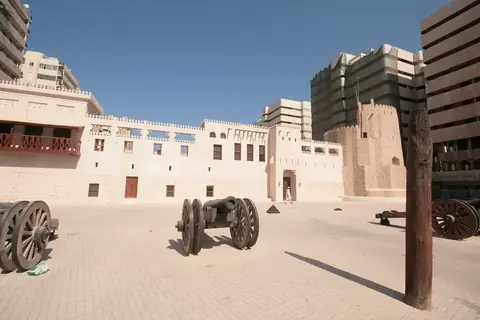
Sharjah
Sharjah as a day trip from Dubai: Al Hisn fort, the Islamic Civilization museum, the Heart of Sharjah souks, Al Noor Mosque, buses, taxis, tickets and the alcohol ban.
Read the guide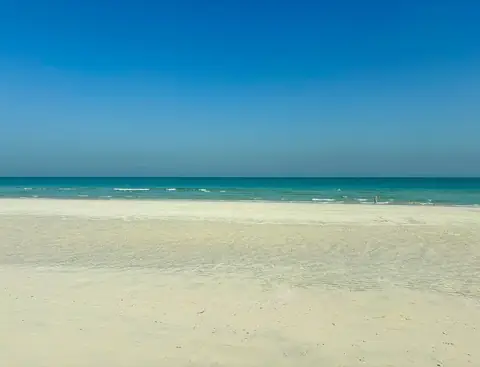
Abu Dhabi
Plan two nights in Abu Dhabi: Sheikh Zayed Grand Mosque, Louvre Abu Dhabi, Qasr Al Watan, Qasr Al Hosn and Saadiyat or Yas, with fees, hours and buses from Dubai.
Read the guide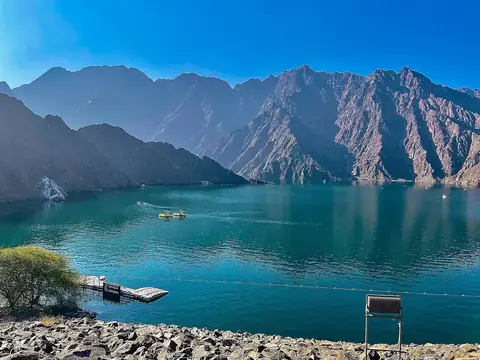
Hatta
Hatta as a day trip or a night from Dubai: the H02 express bus, kayaks on the dam lake, the heritage village and Wadi Hub, mountain lodges and what the day costs.
Read the guide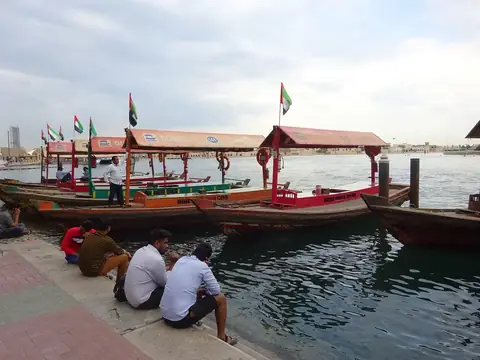
UAE in seven days
A seven-day UAE route with four nights in old Dubai, a Sharjah day trip and two nights in Abu Dhabi by bus, with the Grand Mosque, the Louvre and the costs.
Read the guide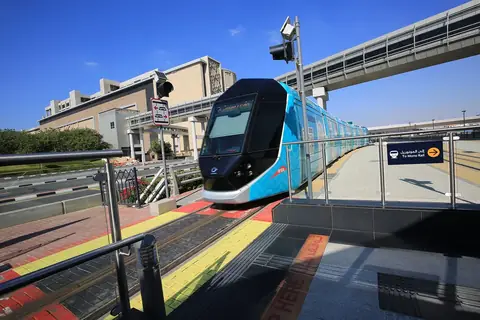
Transport in the UAE
The Dubai Metro and nol cards, the new Etihad Rail trains, the AED 25 buses between Dubai and Abu Dhabi, airport taxis, and what to know before you hire a car in the UAE.
Read the guideSources and checks before you travel
(34)
- Roads and Transport Authority: nol fares ↗ — opens in a new tab
- Roads and Transport Authority: choose a nol card ↗ — opens in a new tab
- Roads and Transport Authority: about nol cards ↗ — opens in a new tab
- Roads and Transport Authority: about Dubai Metro ↗ — opens in a new tab
- Roads and Transport Authority: public transport timetables ↗ — opens in a new tab
- Roads and Transport Authority: marine transport ↗ — opens in a new tab
- Dubai Airports: metro at DXB ↗ — opens in a new tab
- Dubai Airports: taxi at DXB ↗ — opens in a new tab
- Council on Vertical Urbanism (CTBUH): Burj Khalifa ↗ — opens in a new tab
- Government of Dubai Media Office: Al Fahidi Fort rehabilitation, 22 February 2026 ↗ — opens in a new tab
- Gulf News: Museum of the Future to shut temporarily from 1 September, 26 August 2026 ↗ — opens in a new tab
- Gulf News: Dubai landmarks reopening in 2027, 27 October 2026 ↗ — opens in a new tab
- Dubai Municipality: night-swimming beaches, 19 December 2024 ↗ — opens in a new tab
- Dubai Desert Conservation Reserve: about the reserve ↗ — opens in a new tab
- Dubai Desert Conservation Reserve: things to do ↗ — opens in a new tab
- UK Foreign Office: UAE travel advice, warnings and insurance ↗ — opens in a new tab
- UK Foreign Office: UAE safety and security ↗ — opens in a new tab
- Gulf News: Emirati heritage in each emirate, 23 September 2026 ↗ — opens in a new tab
- Lonely Planet: Emirati food in Dubai ↗ — opens in a new tab
- Emaar: At The Top, Burj Khalifa ↗ — opens in a new tab
- Museum of the Future: home page ↗ — opens in a new tab
- Jumeirah: Burj Al Arab restoration programme, 15 April 2026 ↗ — opens in a new tab
- RTA: taxi fares ↗ — opens in a new tab
- Government of Dubai Media Office: Etihad Rail Dubai Station opens, 28 September 2026 ↗ — opens in a new tab
- Dubai Culture: Al Shindagha Museum, plan your visit ↗ — opens in a new tab
- Dubai Culture: Al Shindagha Museum, pavilions ↗ — opens in a new tab
- Dubai Media Office: RTA route E308 ↗ — opens in a new tab
- Arabian Tea House: Al Fahidi ↗ — opens in a new tab
- Al Fanar: Al Seef branch ↗ — opens in a new tab
- Al Fanar: Al Seef menu ↗ — opens in a new tab
- Auswärtiges Amt: Vereinigte Arabische Emirate, Reise- und Sicherheitshinweise ↗ — opens in a new tab
- Cheapflights: London Heathrow to Dubai ↗ — opens in a new tab
- RTA Wojhati journey planner: Stadium to Al Jubail ↗ — opens in a new tab
- Platinum Heritage: Heritage Desert Safari ↗ — opens in a new tab
Reference sources for the version dated 29 November 2026. Confirm opening times, access, transport and conditions for your travel dates.
Photo credits
(7)
Dubai Creek: abras moored at the water's edge, with the old town across the creek.
Photograph: Francisco Anzola — opens in a new tab · CC BY 2.0 — opens in a new tab
Changes: Resized and converted to WebP; displayed with responsive crops. · Original photograph and licence details ↗ — opens in a new tab
A wind tower over the lanes of the Al Fahidi Historical Neighbourhood.
Photograph: Ankur Panchbudhe — opens in a new tab · CC BY 2.0 — opens in a new tab
Changes: Resized and converted to WebP; displayed with responsive crops. · Original photograph and licence details ↗ — opens in a new tab
Dhows loading cargo at the Deira dhow wharf, seen from above.
Photograph: Iwona Rege — opens in a new tab · CC BY-SA 4.0 — opens in a new tab
Changes: Resized and converted to WebP; displayed with responsive crops. · Original photograph and licence details ↗ — opens in a new tab
The entrance to the Gold Souk in Deira.
Photograph: Balou46 — opens in a new tab · CC BY-SA 3.0 — opens in a new tab
Changes: Resized and converted to WebP; displayed with responsive crops. · Original photograph and licence details ↗ — opens in a new tab
Al Fahidi Fort, built in 1787, Dubai's oldest surviving building.
Photograph: Jasonbalaba — opens in a new tab · CC BY-SA 4.0 — opens in a new tab
Changes: Resized and converted to WebP; displayed with responsive crops. · Original photograph and licence details ↗ — opens in a new tab
Sand dunes in the desert outside Dubai.
Photograph: Gfilip — opens in a new tab · CC BY-SA 4.0 — opens in a new tab
Changes: Resized and converted to WebP; displayed with responsive crops. · Original photograph and licence details ↗ — opens in a new tab
A train on the elevated track of the Dubai Metro.
Photograph: Shahroozporia — opens in a new tab · CC BY-SA 3.0 — opens in a new tab
Changes: Resized and converted to WebP; displayed with responsive crops. · Original photograph and licence details ↗ — opens in a new tab