Plan your trip
Is the UAE safe? Regional tensions, medicines, heat and the laws
Day to day, the UAE is one of the safest places to travel: crime is very low, the roads are excellent and the hospitals in the big cities are good. The risks that change a trip lie elsewhere: the conflict in the region, which has already closed airspace in 2026; medicines that are legal at home but controlled here; summer heat; rip currents and the desert; and laws on alcohol, drugs, dress and behaviour that are stricter than many visitors expect. This guide takes them in that order.
In this guide
Find the location ↗ — opens in a new tabThe short answer
Read your own government's advice before you book: since the regional conflict that began in early 2026, Germany advises against non-essential travel to the UAE, Canada asks travellers to exercise a high degree of caution, and the UK warns of strikes and airspace closures at short notice. Buy insurance that covers medical treatment and evacuation, and any activity you plan. Emergency departments must treat you whatever your cover, but other care can be refused without insurance or the means to pay. For a controlled medicine, carry the prescription and a stamped medical report, and apply for the free online approval a few days before you fly. Save 999 for the police and 998 for an ambulance. The laws on drugs, alcohol and driving are much stricter than most visitors expect, and the section on laws below lists the ones that catch people out.
- Key point
- See a travel clinic about vaccines at least 8 weeks before you fly; buy insurance when you book, and apply for any medicine approval a few days ahead
- Where it applies
- No base is needed; the advice applies in Dubai, Abu Dhabi, Sharjah and the other emirates and on the roads between them
- Timing
- Heat and humidity peak from June to September; heavy rain, flash floods in the wadis and fog are most likely from December to March
The travel advice and the regional conflict
The UAE itself is stable, but it sits in a region at war. Since the conflict that began in early 2026, Iran has stated its intention to target places linked to the US and Israel, and there have been strikes and retaliatory attacks against civilian and military infrastructure across the region. Missiles and drones have reached urban areas, military sites, oil facilities and airports in the UAE, or have been intercepted over the country. The greatest danger is falling debris from these interceptions. In spring 2026 the fighting closed airspace and cancelled flights, transit passengers included.
Governments draw the line differently, so read your own. Germany advises against non-essential travel to the UAE. Canada advises a high degree of caution across the country and against non-essential travel to the Al Minhad Air Base and its surroundings, the area bounded by the E611 highway to the north-west, the E66 to the north-east, the D63 to the south-west and the E77 to the south-east. France asks for heightened vigilance across the whole country and formally advises against going to or near the disputed islands of Abu Musa and the Greater and Lesser Tunb, where the Iranian navy regularly boards boats and makes arrests. The UK does not advise against travel but warns that the risk of sudden escalation is high and that further attacks across the region can come at short notice. Before you book, check that your insurance still covers the trip under your government's advice, and prefer flexible fares.
If an alert sounds, follow the local authorities: go indoors, into an interior stairwell or a room with few outside walls or windows, and stay away from doors and windows. Never approach or touch drone or missile fragments. Filming or photographing missile launches, impacts, fires or debris is strictly forbidden and prosecuted. Sharing such images online is forbidden and prosecuted too. Stay well away from military sites, and keep your phone charged and your travel documents up to date. Terrorists are also likely to try to carry out attacks in the UAE, and Jewish and Israeli sites are named as possible targets. Be alert in crowded places and at public events.
Prices and times checked 28 November 2026
Insurance, hospitals and paying for treatment
Healthcare in the big cities is of a high standard, and private clinics and hospitals are well equipped with English-speaking staff. It is also expensive. In an emergency, call 998. Hospital emergency departments must treat you whatever your insurance: Abu Dhabi forbids them to refuse emergency care, and in Dubai a seriously ill patient is stabilised before payment is sorted out. Other care is different. The UK warns that without travel insurance or the means to pay, you may be stopped from using hospitals and clinics. If you cannot settle a medical bill, you may be prevented from leaving the country. Buy a policy that covers treatment, hospital stays and medical evacuation, and every activity you plan, such as diving, dune driving or quad biking, ideally with helicopter rescue. Outside the large cities, care can vary from one facility to the next.
If you are referred to a hospital, call your insurer's assistance line at once. The UK government publishes a list of medical providers in the UAE where some staff speak English. Pregnancy outside marriage carries legal risk in the UAE, and insurance may not cover it. If this applies to you, speak to your insurer before you travel.
Prices and times checked 29 November 2026
Emergency numbers to save before you land
Three numbers cover emergencies across all seven emirates:
| Service | Number |
|---|---|
| Police | 999 |
| Ambulance | 998 |
| Fire (civil defence) | 997 |
If something happens to a British traveller, friends or family in the UK can call the Foreign Office in London around the clock on 020 7008 5000. Canadians can reach their government's emergency centre toll-free from the UAE on 800-014-0145. Other travellers should save their own embassy's emergency number before they fly.
Prices and times checked 28 November 2026
Medicines and vaccines
Check your medicines before anything else. Some medicines sold over the counter or on prescription at home, such as codeine and some psychiatric drugs, are narcotic, psychotropic or controlled in the UAE. Visitors may bring them for up to three months' treatment, with the prescription and a medical report stamped by the clinic that treats them. The UAE's drug authority, the Emirates Drug Establishment, calls its advance approval optional for visitors. The UK says to get approval before you travel, so apply: it is free and online and takes about one working day. Without approval, declare these medicines at customs on arrival and show the papers. Other prescription medicines may be brought for up to six months' treatment. Some CBD products and e-cigarette refills contain ingredients that are illegal in the UAE. Pack medicines in their original packaging with the prescription. If you only change planes without leaving the airport, no approval is needed. Canada also says that HIV antiretroviral medicine for personal use may not be brought in. Our entry guide covers the papers to carry and the rest of the customs rules.
See a travel-health professional at least 8 weeks before the trip. No vaccination certificate is needed when you fly from Europe or North America. A yellow fever certificate is required for travellers aged nine months or over who arrive from a country with yellow fever risk. The certificate is also required after more than 12 hours in transit at an airport in such a country. The UK's travel-health service says that travellers should have completed a tetanus vaccination course. It recommends hepatitis A, hepatitis B, rabies and typhoid vaccines only for some travellers, depending on the trip. Germany recommends hepatitis A vaccination. Be up to date with the MMR vaccine against measles. There is a risk of dengue, so avoid mosquito bites by day.
MERS is a coronavirus that can cause fever, cough and severe breathing difficulties. It occurs in the UAE and is carried by camels. Avoid touching camels and do not drink raw camel milk; keep this in mind on a visit to a desert camp. There is no vaccine. Rabies may be present, and bats can carry related viruses. If any animal bites or scratches you, clean the wound thoroughly and get medical help urgently.
Prices and times checked 29 November 2026
Heat, storms, the sea and the desert
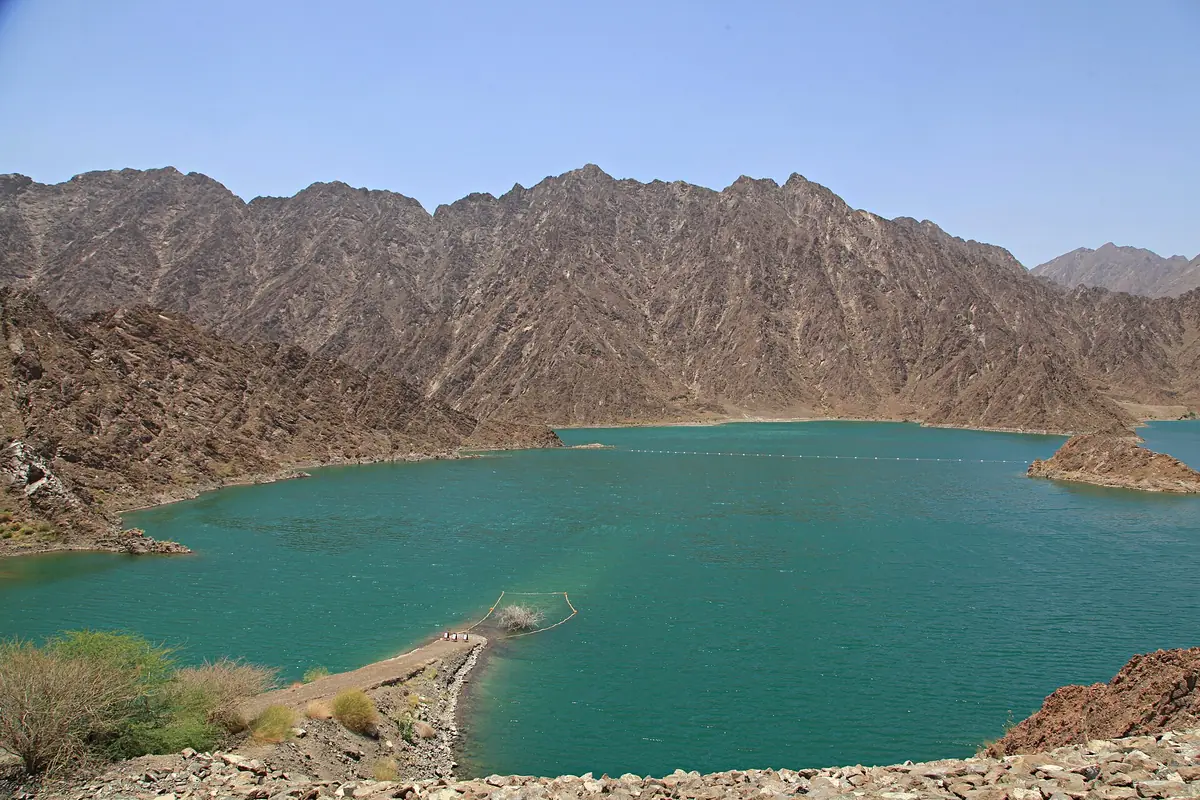
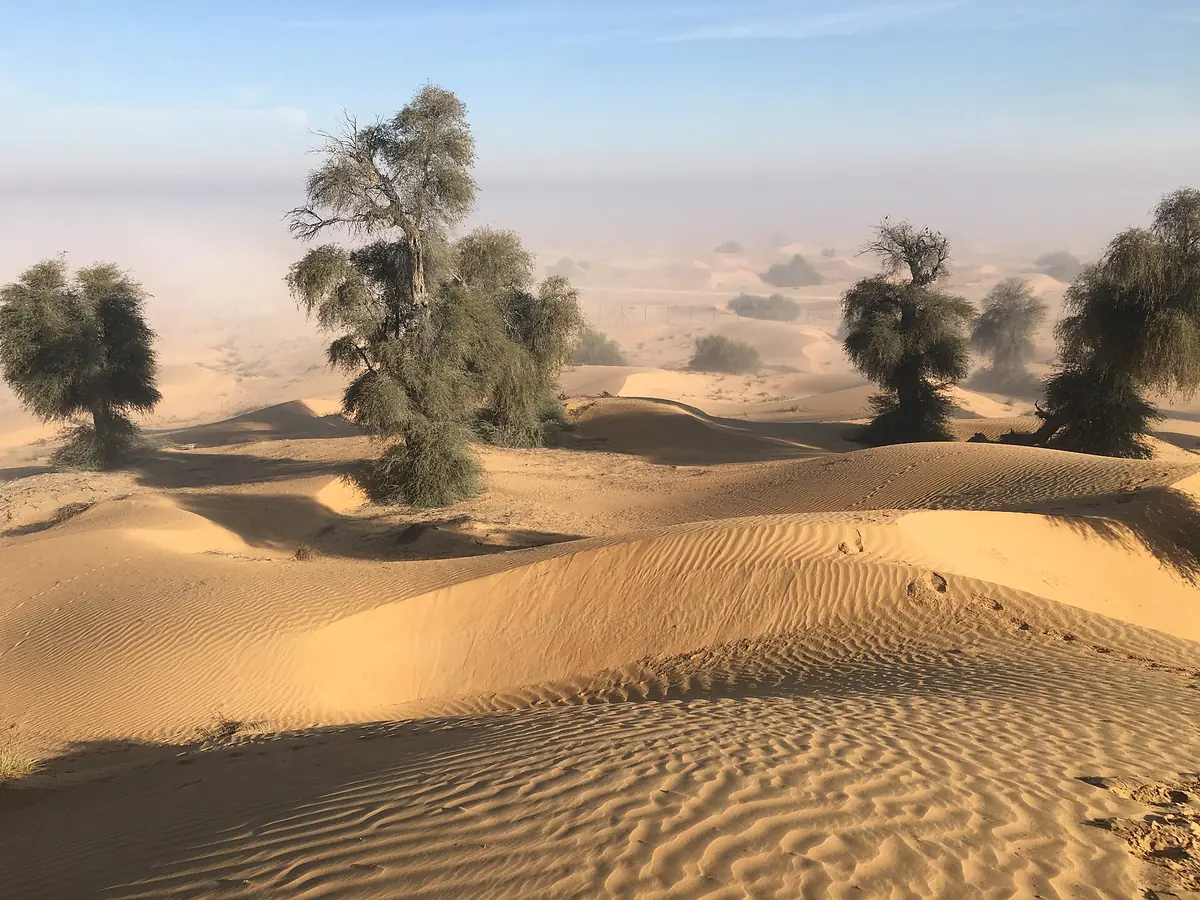
The climate is a dry, hot desert one, with high humidity on the coast in summer. Heat and humidity are most severe from June to September. From June to September, Dubai's average highs reach 38.8°C to 40.6°C, and nights stay at about 29°C in July and August. Heat stroke and dehydration can be fatal: drink plenty of water, keep the middle of the day indoors in summer and use strong sun protection. Sandstorms and dust storms can blow for days, especially in summer. They cut visibility on the roads, can affect flights and can cause breathing problems; stay indoors with the windows closed. From December to March, heavy rain can cause flooding and flash floods in the wadis, the dry valleys of the mountains, and severe fog slows traffic. If a storm warning is issued, leave a wadi at once. Follow the forecasts of the National Centre of Meteorology.
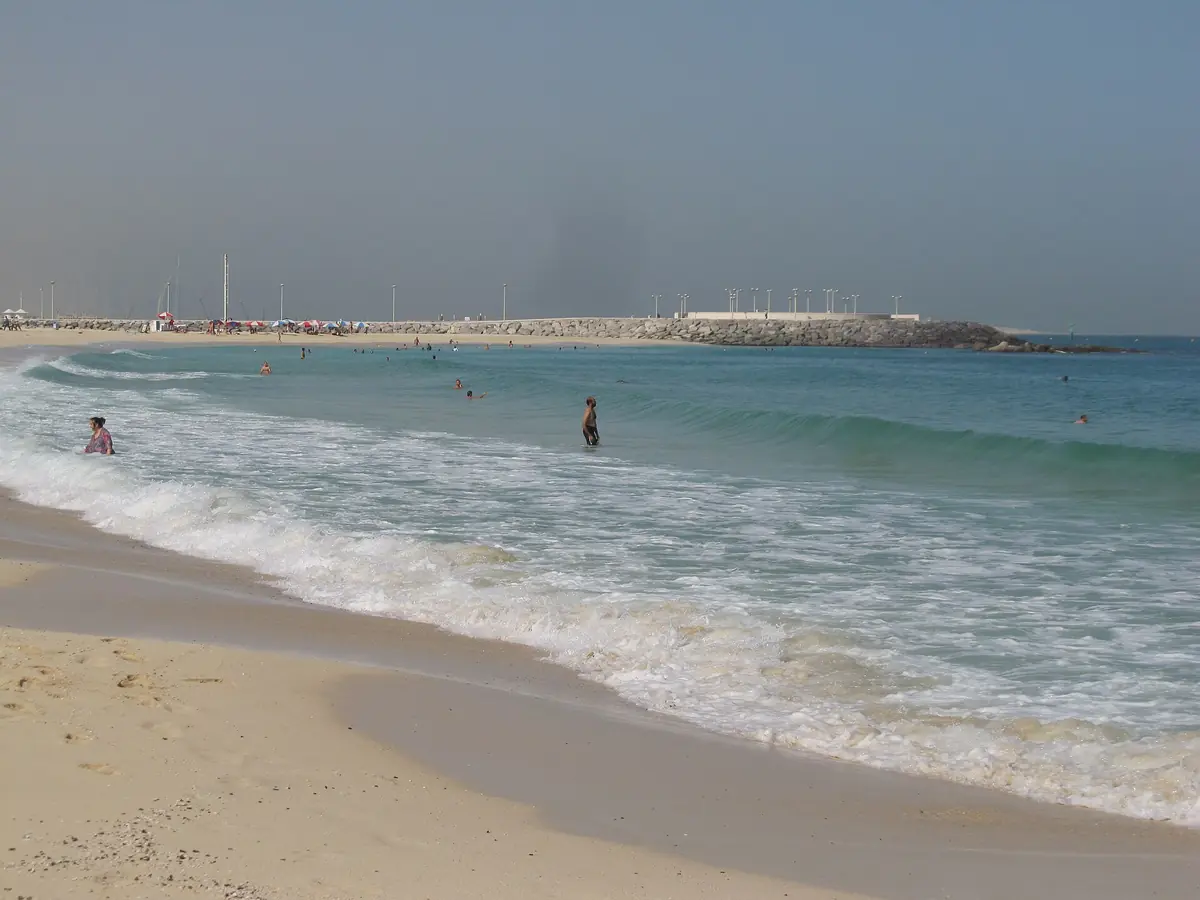
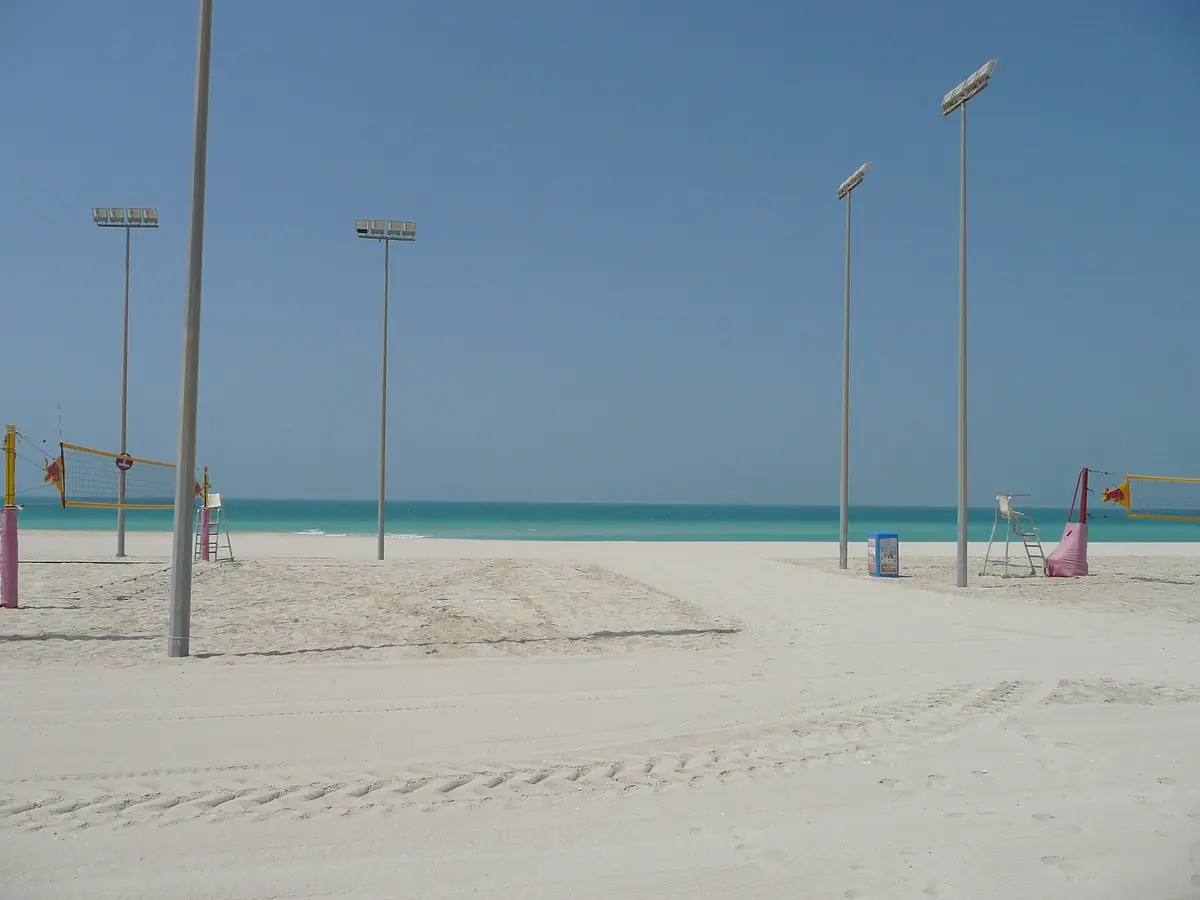
Rip currents can occur at any beach and can sweep even strong swimmers out to sea. Swim only at beaches with lifeguards and flags; some beaches have no lifeguards at all. Never swim when a red flag flies, never swim alone and never swim after hours. The Ministry of Climate Change and Environment has confirmed that oil leaking from a tanker closed some beaches in Umm Al Quwain, Sharjah, Ras Al Khaimah and Khor Fakkan. Sharjah's government reopened all of its beaches, Khor Fakkan's included, on 12 November 2026 after the clean-up. Germany's advice of 28 November 2026 says several beaches are still closed. Before a beach day in Umm Al Quwain or Ras Al Khaimah, follow the beach signs and the local authorities' announcements on reopening. On a tourist boat, check that there are life jackets for everyone.
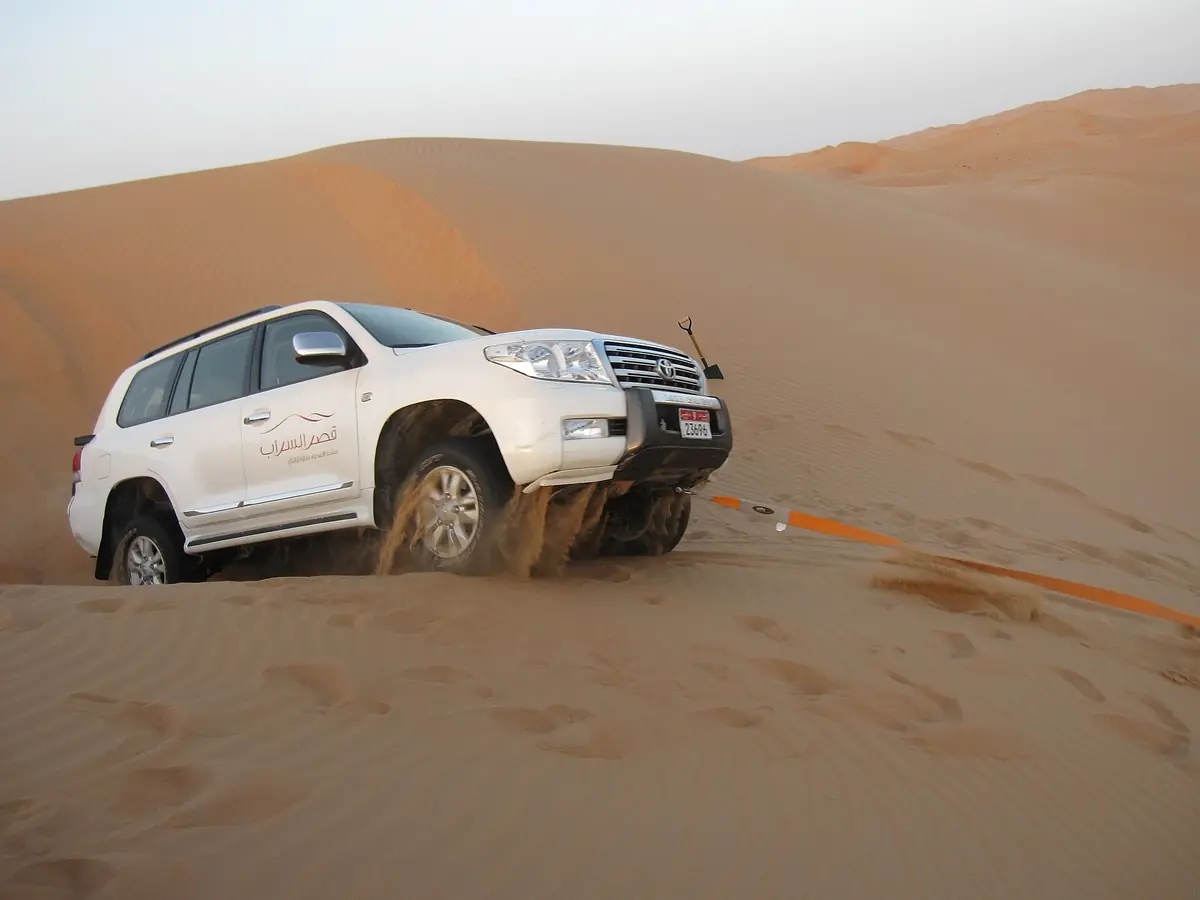
Desert trips are safe with a good operator and dangerous without one. Go only in a properly equipped four-wheel-drive vehicle, in convoy with other cars, and take water and a phone. Leave your plans with your hotel. For dune driving or quad biking, choose a reputable company with proper safety procedures, and make sure your policy covers it, as in the insurance section above.
Prices and times checked 29 November 2026
Roads, taxis and crossing the street
Roads are excellent, but driving is fast and fatal crashes are common. Speeding and tailgating are widespread despite speed cameras. A driver who flashes the headlights is coming through and is not giving way. Penalties are severe. The alcohol limit is zero. Drink-driving can mean prison, a fine of AED 20,000 to AED 100,000 and an insurance policy that no longer pays. Driving under the influence of drugs carries a fine of AED 30,000 to AED 200,000, with or without prison. If you drive through a red light in Abu Dhabi or Dubai, the car is confiscated, and you get it back only by paying AED 50,000 plus the fine. Rude gestures and bad language at other drivers can lead to a fine, jail and deportation. After any crash, stop and call the police. Leaving before the police arrive is illegal, and you may be prevented from leaving the country until injury claims are settled. Our transport guide covers licences, tolls and the bus and train alternatives.
Use licensed taxis or apps such as Careem, Uber and Abu Dhabi Taxi, and never accept a lift from a stranger. In Dubai the official taxis are cream with coloured roofs, and the taxis with pink roofs have women drivers. Abu Dhabi's official taxis are silver. Seat belts are compulsory for every passenger in Dubai taxis. On foot, cross only at designated pedestrian crossings. Crossing elsewhere is illegal and can bring a fine or even prison. Cars often do not stop at zebra crossings.
Prices and times checked 29 November 2026
The laws that catch visitors out
The UAE has zero tolerance for drugs. Possessing even the smallest amount, cannabis included, can bring at least three months in prison or a fine of AED 20,000 to 100,000. Drugs in your bloodstream count as possession. Residual traces in your luggage can lead to arrest, and the airports scan transit baggage too. Trafficking can carry the death penalty.
Alcohol is served in licensed hotel bars, restaurants and clubs; the legal age is 21. Drinking or being drunk in a public place is illegal everywhere, and British nationals have been arrested and charged under this law. In Sharjah, drinking or possessing any alcohol is illegal, so plan a Sharjah day without it. In Dubai, tourists need no licence to drink in licensed venues. To buy alcohol to take away, you need a temporary liquor licence from one of the two official distributors. The licence is valid for one month and only in Dubai. Carrying alcohol on the Dubai Metro is fined AED 500.
Dress modestly in public places such as malls: women should cover shoulders and knees, nothing should be see-through, and swimwear is for the beach and the pool. The dates of Ramadan change each year. During Ramadan, eating, drinking, smoking or chewing gum in public in the daytime may cause offence, even in your car. Restaurants serving in fasting hours may screen diners off. Public affection is frowned upon, and kissing in public can lead to arrest. Swearing and rude gestures are criminal offences, online too, and can bring jail or deportation. Same-sex sexual activity is illegal.
Do not photograph people without permission: men have been arrested for photographing women on beaches. Do not photograph government buildings, military sites or airports either, and remember that plane spotting can be misunderstood. Unpaid bills, hotel bills included, are financial crimes that can bring prison. Fundraising and charity collections need authorisation, online too. The authorities restrict the use of VPNs. Bringing pork or pornography into the country is illegal.
Prices and times checked 28 November 2026
Crime, scams and travelling as a woman
Crime is very low, and violent crime is rare. Pickpocketing can happen in large malls, at big events and at airports, so keep valuables close, and use ATMs in well-lit places or inside a bank. Scammers phone visitors claiming to be the authorities or a bank and ask for personal details or a money transfer: give no details and send no money. Never accept a drink from a stranger or leave yours unattended, because drink spiking happens.
Women can move freely and drive, and many travel alone without trouble. Harassment occasionally happens, so take extra care in taxis and when walking after dark. Sexual assault is rare, but the law places a high burden of proof on the victim, especially when alcohol was involved or the attacker was known to her. A victim can face prosecution for sex outside marriage if the relationship is found to be consensual. If you are assaulted, contact your embassy straight away. Our solo female travel guide covers the women's taxis, metro cabins and hotels.
Prices and times checked 28 November 2026
Practical questions
Is it safe to travel to the UAE now?
Crime is very low, but the regional conflict that began in early 2026 has brought missile and drone attacks and airspace closures. Germany advises against non-essential travel, Canada asks for a high degree of caution, and the UK warns of attacks at short notice. Read your own government's advice and check your insurance before you book.
What is the emergency number in the UAE?
Dial 999 for the police, 998 for an ambulance and 997 for the fire service.
Can I bring my prescription medicine to Dubai?
Prescription medicines, yes, up to six months' supply, and up to three months' for medicines the UAE classes as narcotic or psychotropic. For those, such as codeine, carry the prescription and a medical report stamped by your clinic. Advance approval from the UAE's drug authority is optional for visitors, but it is free and takes about one working day, and the UK advises getting it.
Do I need vaccinations for the UAE?
No vaccination certificate is needed unless you arrive from a country with yellow fever risk. Most travellers should have completed their tetanus vaccinations, and hepatitis A, hepatitis B, rabies and typhoid for some, depending on the trip.
Can tourists drink alcohol in Dubai?
Yes, in licensed hotel bars, restaurants and clubs, from the age of 21. Drinking or being drunk in public is illegal everywhere in the UAE, and in Sharjah drinking or possessing alcohol is illegal.
Is it safe to swim at the beaches?
At lifeguarded beaches with flags, yes. Rip currents can occur at any beach, so never swim when a red flag flies, alone or after hours.
Keep planning your trip
First trip to the UAE
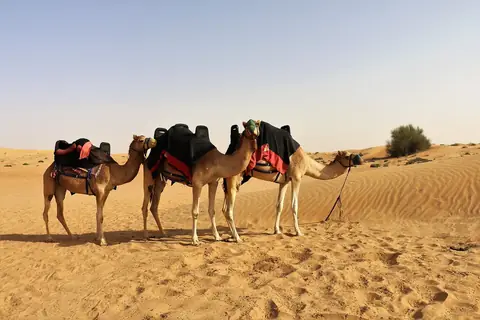
Choose seven days or ten for Dubai, Sharjah, Abu Dhabi, Ras Al Khaimah and Al Ain: nights, buses and the metro, season, entry, medicines, dress and the current advisory.
Read the guide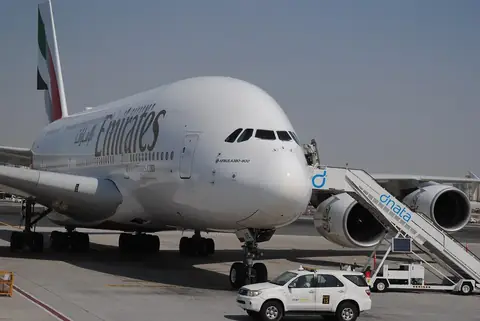
Entering the UAE
Which passports get a free UAE visa on arrival and for how long, the six-month passport rule, the AED 60,000 cash limit, duty-free limits and medicine permits.
Read the guide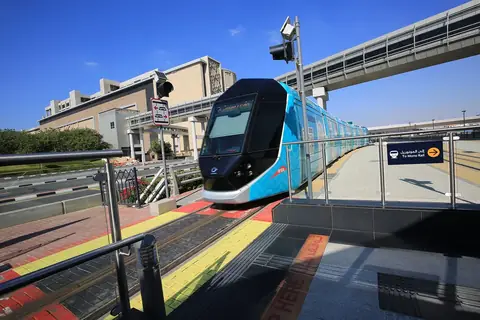
Transport in the UAE
The Dubai Metro and nol cards, the new Etihad Rail trains, the AED 25 buses between Dubai and Abu Dhabi, airport taxis, and what to know before you hire a car in the UAE.
Read the guide
Solo female travel in the UAE
Travelling alone as a woman in the UAE: pink-roofed taxis, the metro's women's cabins, where to stay, what to wear, nights out, the law and numbers to save.
Read the guide
Best time to visit the UAE
Choose your UAE dates by month: Dubai's average highs, the cool months from November to March, summer heat, Ramadan and the Eids in 2027, school breaks and the mountains.
Read the guide
Dubai
Three nights in Dubai: Al Fahidi and the creek abra, the Deira souks, the Burj Khalifa, the beach and Marina, a desert evening, the airport metro and costs.
Read the guideSources and checks before you travel
(18)
- GOV.UK: United Arab Emirates travel advice (whole guide) ↗ — opens in a new tab
- Government of Canada: United Arab Emirates travel advice ↗ — opens in a new tab
- Auswärtiges Amt: Vereinigte Arabische Emirate, Reise- und Sicherheitshinweise ↗ — opens in a new tab
- TravelHealthPro (NaTHNaC): United Arab Emirates ↗ — opens in a new tab
- Roads and Transport Authority (RTA): about Dubai Metro ↗ — opens in a new tab
- RTA: taxi fares ↗ — opens in a new tab
- France Diplomatie: Émirats arabes unis, conseils aux voyageurs, sécurité ↗ — opens in a new tab
- France Diplomatie: Émirats arabes unis, conseils aux voyageurs, santé ↗ — opens in a new tab
- Dubai Airports: to and from DXB ↗ — opens in a new tab
- Dubai Government Media Office: geographic location and climate ↗ — opens in a new tab
- WMO World Weather Information Service: Dubai climate (data from the National Center of Meteorology) ↗ — opens in a new tab
- Emirates Drug Establishment: permit to import medicines for personal use ↗ — opens in a new tab
- Dubai Health Authority: Standards for Urgent Care and Emergency Department Services (2022) ↗ — opens in a new tab
- Department of Health Abu Dhabi: all patients to receive emergency care regardless of insurance status (11 December 2019) ↗ — opens in a new tab
- UAE Federal Decree-Law No. 14 of 2024 on traffic, Article 35 ↗ — opens in a new tab
- Gulf News: UAE's new traffic law, penalties for drunk driving and narcotic substance use ↗ — opens in a new tab
- Sharjah24 (Sharjah Government Media Bureau): Sharjah reopens beaches after oil spill cleanup, 12 November 2026 ↗ — opens in a new tab
- MOHAP: Issue of Permit to Import Medicines for Personal Use (service card, PDF) ↗ — opens in a new tab
Reference sources for the version dated 29 November 2026. Confirm opening times, access, transport and conditions for your travel dates.
Photo credits
(5)
Jumeirah Public Beach in Dubai; swim where lifeguards and flags are posted.
Photograph: V0L0DYA — opens in a new tab · CC BY 3.0 — opens in a new tab
Changes: Resized and converted to WebP; displayed with responsive crops. · Original photograph and licence details ↗ — opens in a new tab
A lifeguard chair on Jumeirah Beach in Dubai.
Photograph: CT Cooper — opens in a new tab · Public domain — opens in a new tab
Changes: Resized and converted to WebP; displayed with responsive crops. · Original photograph and licence details ↗ — opens in a new tab
A four-wheel drive stuck in the soft sand of the Liwa dunes; go in convoy.
Photograph: Jc8136 — opens in a new tab · CC BY-SA 3.0 — opens in a new tab
Changes: Resized and converted to WebP; displayed with responsive crops. · Original photograph and licence details ↗ — opens in a new tab
Hatta Dam in the Hajar Mountains, where winter storms can bring flash floods to the wadis.
Photograph: KpokeJlJla — opens in a new tab · CC BY-SA 4.0 — opens in a new tab
Changes: Resized and converted to WebP; displayed with responsive crops. · Original photograph and licence details ↗ — opens in a new tab
Morning mist over the dunes at Margham; winter fog can slow traffic and flights.
Photograph: Uaehoverfly — opens in a new tab · CC BY-SA 4.0 — opens in a new tab
Changes: Resized and converted to WebP; displayed with responsive crops. · Original photograph and licence details ↗ — opens in a new tab