Itineraries
UAE and Oman in 10 days: Dubai, Abu Dhabi, Muscat and Nizwa
The Emirates and Oman share a border and a coast, and they could hardly feel more different. Dubai and Abu Dhabi are towers, museums and a white marble mosque; Oman, an hour away by air, is a low white capital between bare mountains, a round fort above a palm oasis and a canyon a kilometre deep. Ten days are enough for both if you fly the middle leg and go home from Muscat. You spend three nights in Dubai and two in Abu Dhabi by metro and bus, then two in Muscat and two in Nizwa with a hire car.
In this guide
Find the location ↗ — opens in a new tabThe short answer
Book nine nights: three in Dubai, two in Abu Dhabi, two in Muscat and two in Nizwa, on an open-jaw ticket into Dubai (DXB) and home from Muscat (MCT). Cross on day 6 by the nonstop flight from Abu Dhabi to Muscat, about 1 hour 10 minutes; the lowest one-way fare KAYAK found was about USD 136. Hire a car at Muscat airport only; hire cars do not usually cross the border. Book the Grand Mosque pass in Abu Dhabi (AED 10) for day 4 and keep day 7 off a Friday, when Muscat's Grand Mosque (OMR 8) is closed to visitors. Most European, North American, Australian and New Zealand passports need no visa for either country on this route. All in, two people spend about AED 7,290 in the Emirates and OMR 365 in Oman, about USD 3,210 with the flight between them.
- Suggested time
- 10 days / 9 nights: Dubai 3, Abu Dhabi 2, Muscat 2, Nizwa 2
- Route
- Dubai 3 nights
- Abu Dhabi 2 nights
- Muscat 2 nights
- Nizwa 2 nights
- All-in budget on the ground
- About AED 7,290 in the Emirates and OMR 365 in Oman for two, all in on the ground Full breakdown ↓
- Season and timing
- November to March is the cool season in both countries, and the route works as written then. October and April are already hot at midday on the coast. From June to August lowland Oman reaches 35–45°C, and the Emirates are as hot, so in summer walk early and late and keep the middle of the day for museums. Wadis in Oman can flood after heavy rain between October and March.
- Day by day
- The ten days at a glance ↓
The ten days at a glance
One line per day, with where you sleep each night.
- Day 1
Arrive at DXB
, metro or taxi to Bur Dubai. Night: Dubai.
- Day 2
Old Dubai
Al Fahidi, an abra across the Creek and the Deira souks. Night: Dubai.
- Day 3
Downtown and the desert
the Burj Khalifa, then an evening in the dunes. Night: Dubai.
- Day 4
E101 to Abu Dhabi
Qasr Al Hosn, then the Sheikh Zayed Grand Mosque until after sunset. Night: Abu Dhabi.
- Day 5
Abu Dhabi
the Louvre Abu Dhabi, then Qasr Al Watan and its light show at 20:00 if it runs that day. Night: Abu Dhabi.
- Day 6
Fly to Muscat
collect the car, then the Mutrah Corniche and souq. Night: Muscat.
- Day 7
Muscat
the Sultan Qaboos Grand Mosque before 11:00, then Old Muscat and the National Museum. Night: Muscat.
- Day 8
Drive to Nizwa
the round fort and the souq. Night: Nizwa.
- Day 9
Jebel Shams
the canyon rim and the Balcony Walk. Night: Nizwa.
- Day 10
Back to Muscat airport
and the evening flight home.
Book four stays: Dubai, Abu Dhabi, Muscat and Nizwa
The route has four hotels, one flight and one hire car. Sleep in Dubai for nights 1–3, in Abu Dhabi for nights 4–5, in Muscat for nights 6–7 and in Nizwa for nights 8–9, and fly home from Muscat on the evening of day 10. In the Emirates you travel by metro, bus and taxi. In Oman you drive: collect the car at Muscat International Airport when you land on day 6 and return it there on day 10.
Choose the weekday you land with care, because two sights have closing days and Nizwa's livestock market is held on Fridays. The Louvre Abu Dhabi is closed on Mondays (day 5), and Muscat's Grand Mosque admits non-Muslim visitors only from Saturday to Thursday (day 7). If you land in Dubai on a Wednesday, both days fall right, and day 10 is a Friday, when Nizwa's livestock market fills the arena beside the souq before you drive to the airport.
In Dubai the plan uses XVA Art Hotel, opened in 2003 in the former Seddiqi family house in the Al Fahidi Historical Neighbourhood, a short walk from the Creek. In Abu Dhabi it uses Al Ain Palace Hotel, a four-star hotel with an outdoor pool on Corniche Street. In Oman it uses Crowne Plaza Muscat and Golden Tulip Nizwa. The where-to-stay guides for the UAE and Oman give other hotels in each base.
Since the regional conflict that began in early 2026, Germany advises against non-essential travel to the UAE, and the UK warns of flight cancellations and airspace closures at short notice. Governments differ on Oman too: Canada advises against non-essential travel to Oman as a whole, and the UK warns that regional tensions can close airspace at short notice. France advises against the Salalah region, Duqm, Musandam and the Yemen border except for an imperative reason, and Germany advises against travel to Musandam and the immediate Yemen border region; none of those areas is on this route. Read the health and safety guides for the UAE and Oman and your own government's advice before you book, and check that your insurance covers both countries.
From the Emirates to Muscat: flight, bus or car
Muscat is about an hour from the Emirates by air and most of a day by road. The table compares the ways across; this plan flies, because the flight costs half a day where the bus costs a whole one.
| Way across | Route | Time | Published price | Who it suits |
|---|---|---|---|---|
| Flight | Abu Dhabi (AUH) to Muscat (MCT), nonstop on Etihad | About 1 h 10 min in the air | One way from about USD 136 | This plan, from Abu Dhabi |
| Flight | Dubai (DXB) to Muscat, nonstop on Oman Air, flydubai and others | About 1 h 10 min in the air | One way from about USD 83 | If you end the Emirates half in Dubai |
| Mwasalat bus 203 | Al Jubail Bus Station, Sharjah, to Muscat, three times a day | A full day on the road | About AED 95 one way, as Gulf News listed it in June 2026 | Travellers with time, starting from Dubai or Sharjah |
| Hire car | One car in each country | – | – | Almost everyone who wants to drive |
By air. Etihad flies nonstop from Zayed International Airport in Abu Dhabi to Muscat, and from Dubai International the nonstop airlines include Oman Air and flydubai. Both flights take about 1 hour 10 minutes. The fares in the table are the lowest one-way prices KAYAK listed in late November 2026; return fares typically run from USD 154 to USD 275 from Abu Dhabi and from USD 184 to USD 273 from Dubai. Book a morning departure so that you are in Muscat by lunch. A taxi from central Abu Dhabi to Zayed International costs about AED 70–80.
By bus. Mwasalat, Oman's public transport company, runs the cross-border coaches, and none of them starts in Dubai. Route 203, run with the Sharjah Roads and Transport Authority (SRTA), leaves Al Jubail Bus Station in Sharjah for Sohar and Muscat. In the timetable that SRTA announced in June 2026, it leaves Sharjah three times a day, at 06:30, 15:30 and 20:30, and one bus a day leaves Muscat for Sharjah at 15:00. Al Jubail is where RTA bus E308 from Dubai's Stadium Bus Station ends (AED 12, 23 to 29 minutes), so from Dubai you can reach the 15:30 coach the same day. Route 202 runs from Al Ain Central Bus Station to Muscat by way of Al Buraimi. Seats are sold on Mwasalat's website, mwasalat.om, which shows the times and the fare for your date. Carry your passport on board.
By car. Plan on one hire car in each country. Europcar, for one, forbids taking its cars across in both its Dubai and its Oman terms. A firm that does allow the crossing charges extra for insurance that covers Oman. If you do drive across, you pay an exit fee of AED 35 at the UAE border post. A car without Omani insurance also needs the third-party Orange Card, sold at the border from about AED 106 for the minimum five days. Al Wajajah, beyond Hatta, is the usual crossing for Muscat, and Mezyad, near Al Ain, is the other one on this side of the country.
This route leaves out the two crossings into Musandam, Al Darah from Ras Al Khaimah and Wam near Dibba: Germany advises against travel to Musandam and France against it except for an imperative reason, and no hire car may enter there. Our Oman entry guide covers every land crossing.
Prices and times checked 28 November 2026
Two countries, two sets of entry rules
You pass immigration twice, and neither country asks most Western passport holders for a visa in advance. The UAE stamps a visa on arrival at Dubai airport: British, Canadian, US, German, French, Spanish and Dutch citizens may stay up to 90 days in any 180, and Irish citizens 30 days. The UAE sorts other eligible nationalities into a 30-day and a 90-day list, so find yours in our UAE entry guide before you book.
Oman lets citizens of more than 100 countries, among them the UK, the US, Canada, Australia, New Zealand, Japan and most of Europe, stay up to 14 days without a visa, and the stay cannot be extended. This route spends five days there. At the desk in Muscat you must be able to show a return or onward ticket, a confirmed hotel booking and travel health insurance, so carry the flight home and the Muscat hotel confirmation in your hand luggage. If your passport is not on Oman's list, apply before you fly for the tourist e-visa at evisa.rop.gov.om, OMR 20 for a single entry of up to 30 days.
One passport rule covers both: it must be valid for at least six months. The UAE counts the six months from the day you arrive, and a passport valid for six months after you leave Oman satisfies every reading of Oman's rule.
Customs differ more than visas. Declare cash or valuables worth more than AED 60,000 in the UAE and more than OMR 6,000 in Oman. E-cigarettes and vapes are illegal to import or use in Oman, so do not carry one over from Dubai. Both countries treat some common medicines as controlled: the UAE asks for the prescription and a stamped medical report for controlled medicines, and the UK advises getting the UAE's free online approval before you fly, and Oman can treat sleeping pills, antidepressants and strong painkillers as narcotics without a prescription. Carry prescriptions for everything, and read the medicine sections of both entry guides if you take any of these.
Money and driving change at the border too. The UAE dirham is fixed at AED 3.6725 to the US dollar, and the Omani rial is worth about USD 2.60, so one rial is roughly nine and a half dirhams and prices in Oman look small. Visitors may drive in Oman on their home licence for up to three months; the UK tells British drivers that a photocard licence covers a hire car for the first six weeks.
Prices and times checked 29 November 2026
Days 1–3: old Dubai, Downtown and the dunes
Day 1 — arrive at DXB. The Dubai Metro Red Line stops at Terminals 1 and 3 of Dubai International, and the ticket offices and machines in both terminals sell Nol cards. With heavy bags, take a taxi from the rank instead: airport taxis start at AED 20 (AED 25 for a van) plus the distance. Check in at Al Fahidi and walk the Creek waterfront. Sleep in Dubai, night 1.
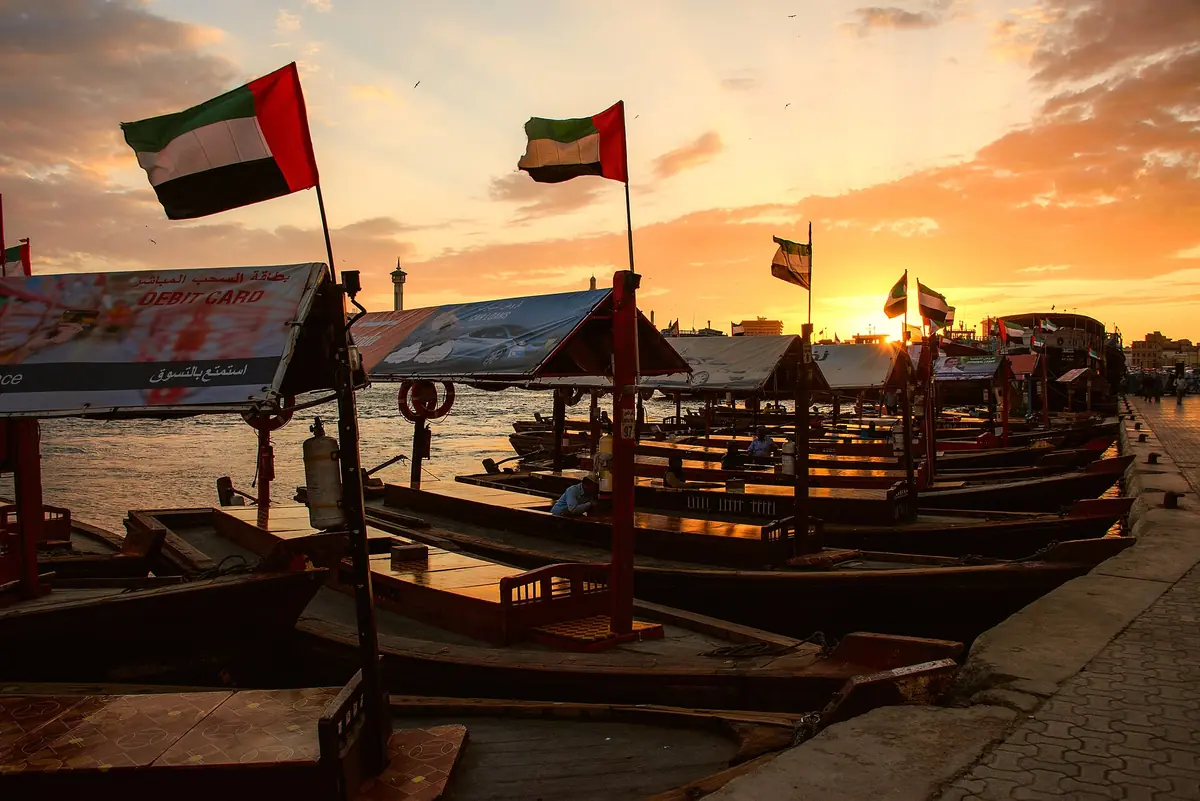
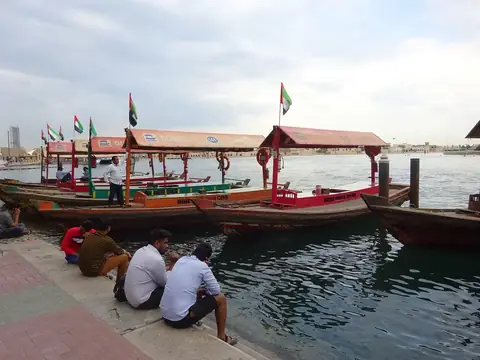
Day 2 — old Dubai on foot. Start early in the Al Fahidi Historical Neighbourhood, before the heat: sand-coloured houses with square wind towers, shaded lanes and courtyards turned into galleries and cafés. Then walk down to the Creek and cross to Deira by abra, the open wooden boats that carry passengers across the water. RTA's traditional abra from Bur Dubai Abra Station to Deira Old Souq costs AED 1 a crossing in cash. On the Deira bank, the spice lanes sell dried limes, frankincense and saffron from open sacks, and the Gold Souk's windows are full of necklaces and bangles. The Dubai guide covers the old town and the other districts. Night 2.
Day 3 — Downtown and the desert. Take the metro to the Burj Khalifa and the Dubai Mall in the morning. Tickets for At The Top, the observation deck, start from AED 199 for levels 124 and 125, and from AED 399 with level 148. Prices depend on the date and time, so book online before you travel. The evening is for the desert. In the Dubai Desert Conservation Reserve, only approved operators, such as Arabian Adventures or Platinum Heritage, drive four-wheel-drive vehicles over the dunes to a Bedouin camp, where the evening ends with a dinner of grilled meats, salads and Arabic sweets. Platinum Heritage's evening Heritage Desert Safari starts from AED 795 per adult, with pickup from Dubai hotels between 14:00 and 16:30, depending on the season. Night 3.
Prices and times checked 28 November 2026
Days 4–5: Abu Dhabi's mosque, fort, museum and palace
Day 4 — the bus to Abu Dhabi. Take the metro to Ibn Battuta and board route E101 at Ibn Battuta Bus Station for Abu Dhabi Main Bus Station; the ride costs AED 25 each way and takes about 1 hour 45 minutes. Etihad Rail's trains also link the two cities in 57 minutes, from AED 39, but both stations are far from this plan's hotels; the UAE transport guide compares them. From the bus station, a taxi takes you to the Corniche hotel.
After checking in, see Qasr Al Hosn, the fort Abu Dhabi grew from: a watchtower of 1790 that became the Inner Fort in 1795. The site opens from 09:00 to 20:00 from Saturday to Thursday and from 14:00 on Fridays; the fort's ticket is AED 31.5 for adults, and under-18s go free. Then take a taxi to the Sheikh Zayed Grand Mosque for about 16:00 with your online access pass, and stay until after sunset, when the white marble and its 82 domes turn gold and then blue. Visitors from outside the UAE pay AED 10. Visiting hours are 09:00–20:30 from Saturday to Thursday, and on Fridays 09:00–11:30 and 14:30–20:30; Ramadan has its own hours. Men and women wear long, loose clothes to the ankle, and women cover their hair. Sleep in Abu Dhabi, night 4.
Day 5 — the Louvre and Qasr Al Watan. Take a taxi to Saadiyat Island for the Louvre Abu Dhabi when it opens at 10:00. Jean Nouvel set its galleries under a silver dome 180 metres wide, made of 7,850 stars in eight layers, which lets moving patterns of sunlight fall on the rooms below. Under-18s enter free, and adult tickets are sold on the museum's own site. It is closed on Mondays. After lunch, take a taxi to Qasr Al Watan, the working presidential palace, for the Great Hall, the presidential gifts and the library. Tickets are AED 65 for adults and include the Palace in Motion light show, which usually runs from 20:00 for about 15 minutes; there is no show during Ramadan or on Islamic holidays. Knees and shoulders must be covered. Sleep in Abu Dhabi, night 5.
Prices and times checked 29 November 2026
Days 6–7: the flight, Mutrah and Old Muscat
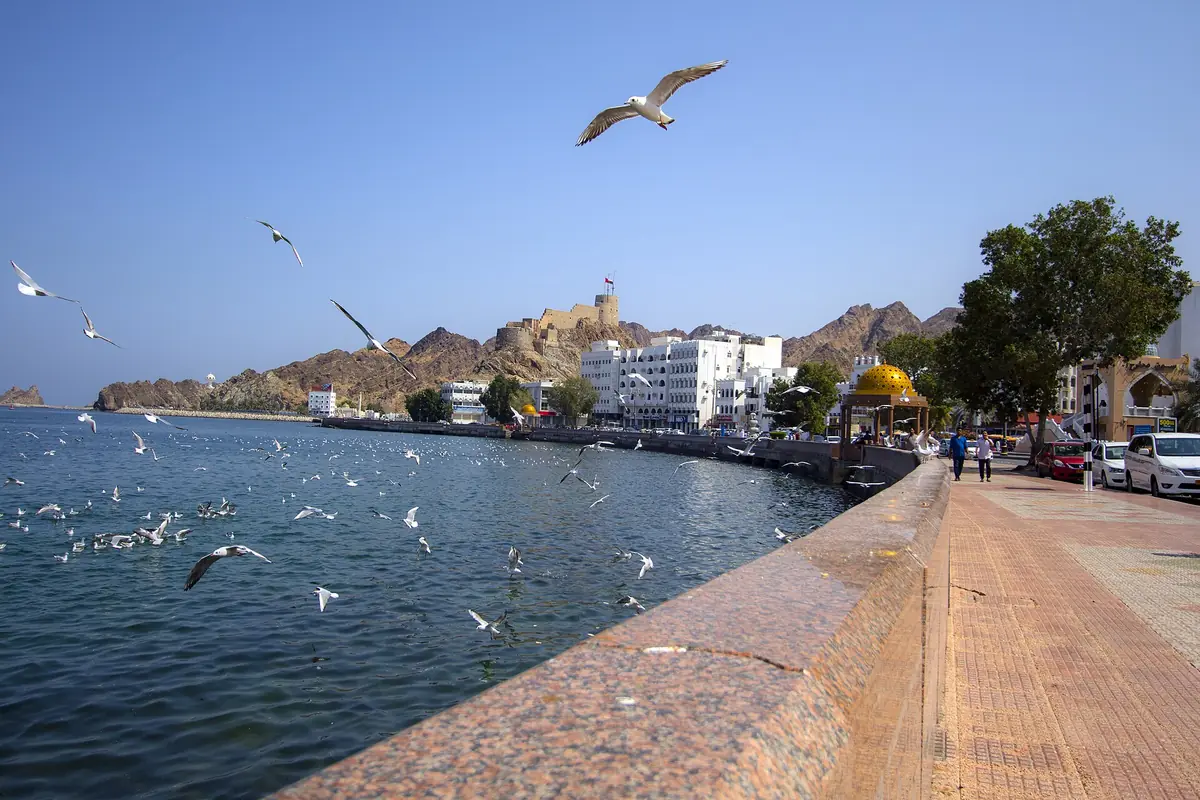
Day 6 — fly to Muscat. Take a taxi to Zayed International for a morning flight. You leave the UAE at passport control there and enter Oman an hour later at Muscat International, where the car-hire offices in the public arrivals hall are open 24 hours. Muscat is long and thin: the airport lies about 35 km from Old Muscat, with the city strung along the coast between them. Drive to the hotel, and in the late afternoon go on to Mutrah. The corniche curves round the old harbour under bare brown mountains, and the souq opens off the waterfront: a covered maze of lanes selling textiles, spices, Omani silver and frankincense. Sleep in Muscat, night 6.
Day 7 — the Grand Mosque and Old Muscat. Start early at the Sultan Qaboos Grand Mosque, built from nearly 300,000 tonnes of Indian sandstone, with a 50-metre dome, five minarets and the world's second-largest hand-woven Persian carpet. Non-Muslim visitors are admitted from Saturday to Thursday between 08:30 and 11:00, and the admission fee is OMR 8. Cover shoulders and knees; women also cover their hair, and abayas and scarves are available at the entrance.
Drive on to Old Muscat, a small walled cove. Al Mirani Fort, rebuilt by the Portuguese in 1588, overlooks the harbour, and Al Alam Palace, the Sultan's ceremonial palace with its blue and gold front, faces a broad paved square. The National Museum, opposite the palace, holds more than 7,000 objects, from early maritime instruments to Islamic manuscripts. It opens daily from 10:00 to 18:00, and its ticket desk closes at 17:30; tourists pay OMR 5 by Visa or Mastercard. Nearby, Bait Al Zubair shows Omani weapons, jewellery, clothing and household objects in a group of traditional houses; it opens Saturday to Thursday from 09:30 to 18:00, and foreign visitors pay OMR 3. The Muscat guide covers the beaches, the Royal Opera House and the islands. Sleep in Muscat, night 7.
Prices and times checked 28 November 2026
Days 8–9: Nizwa Fort and the canyon of Jebel Shams
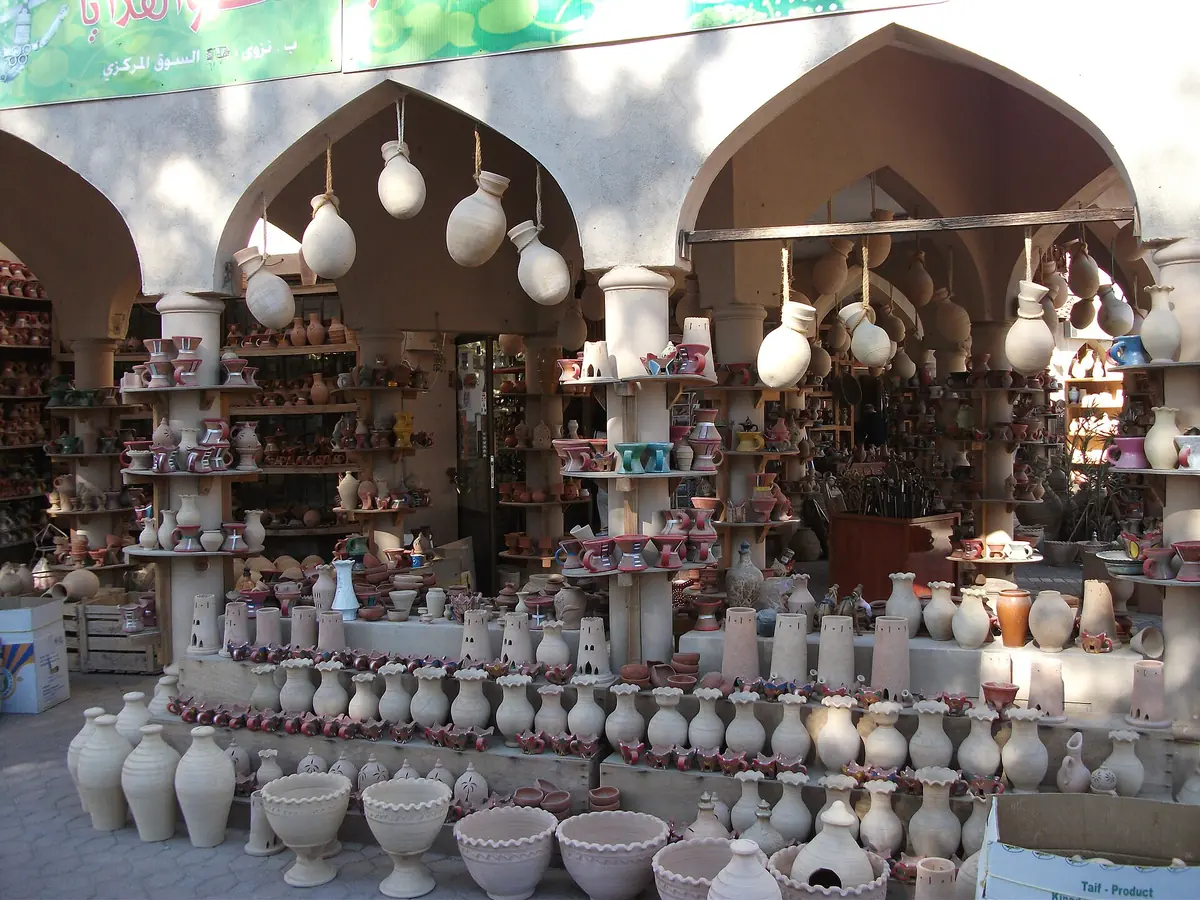
Day 8 — drive to Nizwa. Nizwa is about a 1.5-hour drive from Muscat, about 160 km on a fast highway through a gap in the Hajar Mountains. Check in, wait out the midday heat, then climb Nizwa Fort in the late afternoon. Its round tower, built in the mid-17th century, is 34 metres high and 45 metres across, and a narrow staircase turns up through seven fortified doors to a gun platform that looks over the palm gardens to the mountains. The fort is open Saturday to Thursday from 08:00 to 20:00, and on Fridays from 08:00 to 11:30 and from 13:30 to 20:00; foreign adults pay OMR 5 at the desk. The souq against its walls sells pottery, silver, khanjar daggers, dates and halwa. Sleep in Nizwa, night 8.
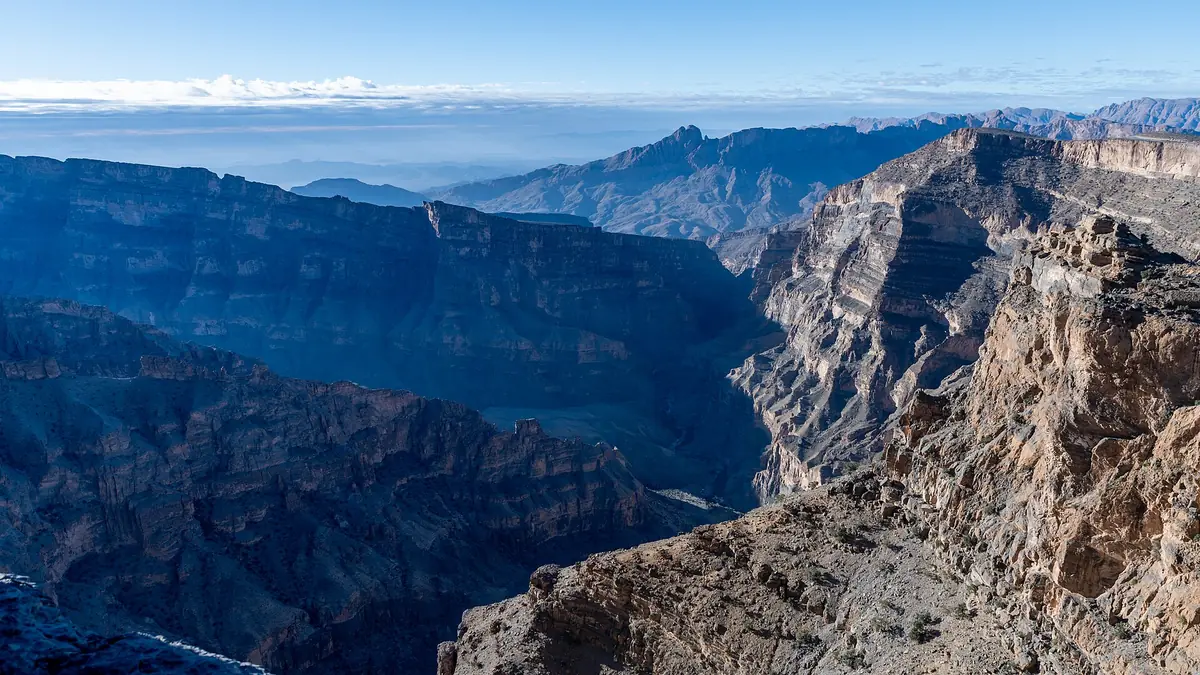
Day 9 — Jebel Shams. Leave by about 06:30 with a full tank and drive west through Al Hamra to Jebel Shams, at 3,009 metres the highest mountain in Oman; the drive from Nizwa is about 85 km and takes about 1 hour 54 minutes. The road ends at Al Khitaym on the rim of a canyon more than a kilometre deep, where grey and ochre cliffs drop to a thread of green at the bottom. From there the Balcony Walk runs along the edge of the canyon. It takes about three to four hours, so start in the cool of the morning. An ordinary car reaches the start of the walk, though the UK advises a four-wheel drive for mountain trips. Drive down before dark, because goats and camels wander onto the road. Sleep in Nizwa, night 9.
If you would rather not walk, spend day 9 at Bahla Fort and Jabrin Castle, a short drive west of Nizwa; the Nizwa guide has both. Jebel Akhdar, the other massif above Nizwa, admits only four-wheel-drive and electric cars at the Birkat Al Mouz checkpoint, so this plan leaves it out.
Prices and times checked 28 November 2026
Day 10: the Friday market and the flight home
If day 10 is a Friday, be at the livestock market beside Nizwa's souq by about 07:00, when farmers parade goats and cattle round the ring and buyers shout their bids. Then drive back to Muscat International Airport, about 160 km and an hour and a half, return the car to the marked area on level 0 of the P2 car park, and check in. Book an evening flight, so the morning in Nizwa is not a race. There is no tenth hotel night.
What the ten days cost, all in
About AED 7,290 in the Emirates and OMR 365 in Oman for two, all in on the ground, plus the flight between them: nine hotel nights, three meals a day, the metro, buses and taxis in the Emirates, the hire car and fuel in Oman, the desert evening, every admission named above and a 10% buffer. With two one-way seats from Abu Dhabi to Muscat at the lowest fare found, that is about USD 3,210 for two, USD 1,600 each. The one extra is the Louvre Abu Dhabi, whose adult tickets are sold on the museum's own site. Flights from home are separate. As a guide from London, Cheapflights listed returns to Dubai from GBP 408, with an average of GBP 547, in late November 2026, and KAYAK put the average return to Muscat at about GBP 520 over the past twelve months. Price the open-jaw route as a multi-city ticket.
| Part of the trip | For two | Per person |
|---|---|---|
| Emirates, days 1–5 | AED 7,290 | AED 3,645 |
| Flight Abu Dhabi–Muscat, one way | USD 272 | USD 136 |
| Oman, days 6–10 | OMR 365 | OMR 183 |
| Whole route | about USD 3,210 | about USD 1,600 |
The model is two adults sharing a room for nine nights in the cool season. Rooms are XVA Art Hotel's Standard Room at AED 495 a night on its own site, plus the Dubai Tourism Dirham at its top rate of AED 20, and the lowest nightly rates KAYAK listed for Al Ain Palace Hotel (from AED 181), Crowne Plaza Muscat (from USD 58) and Golden Tulip Nizwa (from USD 61). Food is about AED 200 a day each in the Emirates, where chicken machboos costs AED 62 at the Arabian Tea House in Al Fahidi and AED 65 at Al Fanar. In Oman it is about OMR 12 a day each, our estimate for a café breakfast, a lunch of rice and grilled meat at a local restaurant and a sit-down dinner. The car is an intermediate SUV at about USD 42 a day, as Discover Cars listed it at Muscat airport, for four days. Car hire is charged in 24-hour periods, so return the car by the hour you collected it or count a fifth day, about OMR 16.
- Rooms: about AED 1,910 and OMR 92 for two. XVA Art Hotel three nights (AED 1,545 with the Tourism Dirham) and Al Ain Palace Hotel two nights (from AED 362); Crowne Plaza Muscat two nights and Golden Tulip Nizwa two nights, about USD 238.
- Food: about AED 2,000 and OMR 120 for two. Five days in each country.
- Getting around: about AED 515 and OMR 79 for two. In the Emirates, two nol Silver cards, metro rides and abras about AED 210, the E101 bus AED 50, six taxis in Abu Dhabi at about AED 30 and the airport taxi at about AED 75. In Oman, four days of car hire, about OMR 65, and fuel, about OMR 14: roughly 600 km with the mountain day, at 10 litres per 100 km and OMR 0.229 a litre of M91 petrol.
- Sights: about AED 2,200 and OMR 42 for two. The Burj Khalifa deck from AED 199 each, the desert evening from AED 795 each, Qasr Al Hosn AED 31.5, the Grand Mosque AED 10 and Qasr Al Watan AED 65; in Oman the Grand Mosque OMR 8, the National Museum OMR 5, Bait Al Zubair OMR 3 and Nizwa Fort OMR 5.
- SIM and extras. The free e& Visitor Line eSIM, activated after immigration at Dubai airport, comes with 10 GB of data for one day. A data pack for the rest of the Emirates and a SIM in Oman come out of the buffer.
- 10% buffer: about AED 660 and OMR 33 for two.
Prices and times checked 28 November 2026
What to eat and where to look
Machboos
The Emirati rice dish: long-grain rice cooked with spices, dried lime and chicken, lamb or fish, served on a shared platter.
- Where to look
- Al Fanar on Al Seef Street by the Creek in Bur Dubai, open daily from 13:00 (chicken machboos AED 65).
- Fit it into your day
- Lunch on day 2, after the walk through Al Fahidi.
Luqaimat
Small fried dough balls, crisp outside and soft inside, drizzled with date syrup and sesame.
- Where to look
- The Arabian Tea House on Al Fahidi Street (AED 30).
- Fit it into your day
- With coffee on day 2.
Shuwa
Oman's celebration dish: meat marinated in spices, wrapped in leaves and slow-cooked in an underground oven, then served with rice.
- Where to look
- Bait Al Luban, an Omani restaurant on the Mutrah Corniche in Muscat.
- Fit it into your day
- Dinner on day 6, after the corniche walk.
Mishkak
Skewers of marinated grilled meat, Oman's street snack, sold from grills in the evening.
- Where to look
- The grills around Nizwa's souq in the evening.
- Fit it into your day
- Evening on day 8.
Omani halwa with kahwa
A dense, glossy sweet of starch, sugar, ghee, rose water, saffron, cardamom and nuts, eaten by the spoonful with light, cardamom-scented Omani coffee.
- Where to look
- The halwa shops of Nizwa souq beside the fort.
- Fit it into your day
- Day 8, after the fort.
Halwa contains nuts and ghee.
Practical questions
Does ten days mean nine nights?
Yes: three in Dubai, two in Abu Dhabi, two in Muscat and two in Nizwa. Day 10 is the departure day from Muscat.
How do I get from Dubai or Abu Dhabi to Muscat?
Fly: the nonstop flights from Abu Dhabi and from Dubai take about 1 hour 10 minutes. By road, Mwasalat's route 203 coach leaves Al Jubail Bus Station in Sharjah for Muscat three times a day and takes most of a day; the timetable announced in June 2026 gives 06:30, 15:30 and 20:30.
Can I take a hire car from the UAE into Oman?
Usually not. Europcar, for one, forbids it in both its Dubai and its Oman terms, and a firm that allows it charges extra for insurance that covers Oman. Hire one car in Muscat for the Oman half.
Do I need visas for the UAE and Oman?
Most European, North American, Australian and New Zealand passport holders need neither in advance: the UAE stamps a visa on arrival, and Oman allows 14 days without a visa if you can show an onward ticket, a hotel booking and health insurance. Check your nationality in the UAE entry guide and the Oman entry guide.
Can I do the route in the other direction?
Yes: fly into Muscat, drive to Nizwa first and return the car before the flight to Abu Dhabi. Keep the Muscat mosque day off a Friday and the Louvre day off a Monday.
What if I want more of one country?
For the Emirates alone, use the UAE ten-day route with Ras Al Khaimah and Al Ain. For Oman alone, the Oman seven-day loop adds the Wahiba Sands and the turtle beach near Sur.
Keep planning your trip
UAE in seven days
A seven-day UAE route with four nights in old Dubai, a Sharjah day trip and two nights in Abu Dhabi by bus, with the Grand Mosque, the Louvre and the costs.
Read the guide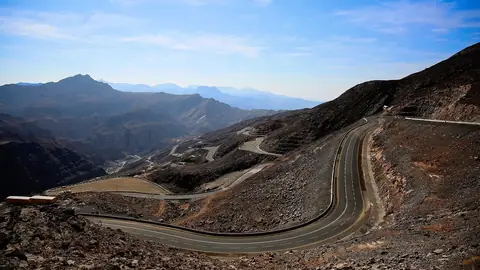
UAE in ten days
A ten-day UAE route by bus: four nights in Dubai, two in Ras Al Khaimah for Jebel Jais, two in Abu Dhabi and one in the oasis city of Al Ain.
Read the guide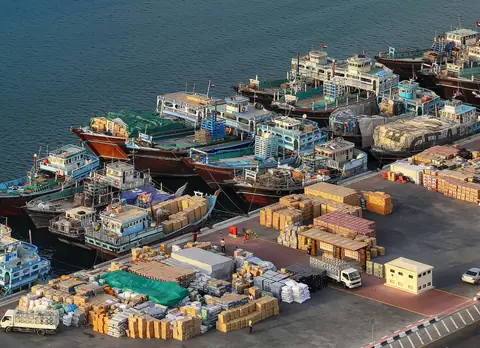
Dubai
Three nights in Dubai: Al Fahidi and the creek abra, the Deira souks, the Burj Khalifa, the beach and Marina, a desert evening, the airport metro and costs.
Read the guide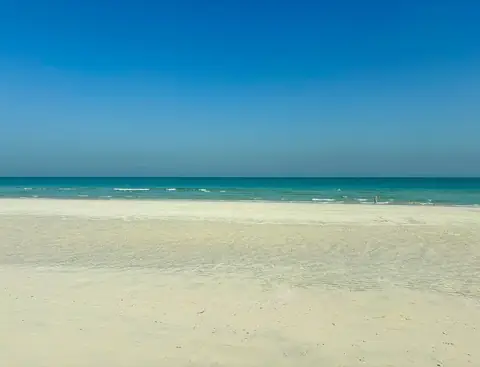
Abu Dhabi
Plan two nights in Abu Dhabi: Sheikh Zayed Grand Mosque, Louvre Abu Dhabi, Qasr Al Watan, Qasr Al Hosn and Saadiyat or Yas, with fees, hours and buses from Dubai.
Read the guide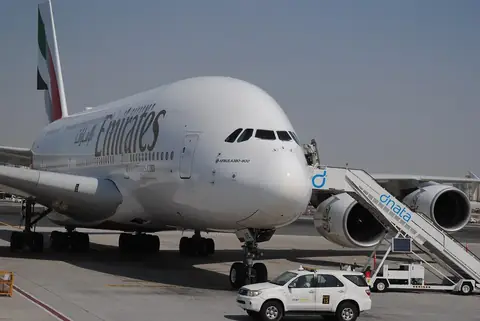
Entering the UAE
Which passports get a free UAE visa on arrival and for how long, the six-month passport rule, the AED 60,000 cash limit, duty-free limits and medicine permits.
Read the guide
Transport in the UAE
The Dubai Metro and nol cards, the new Etihad Rail trains, the AED 25 buses between Dubai and Abu Dhabi, airport taxis, and what to know before you hire a car in the UAE.
Read the guideSources and checks before you travel
(85)
- Dubai Airports: metro ↗ — opens in a new tab
- RTA: taxi fares ↗ — opens in a new tab
- RTA: abras and water transport ↗ — opens in a new tab
- Emaar: At The Top, Burj Khalifa ↗ — opens in a new tab
- Dubai Desert Conservation Reserve: things to do ↗ — opens in a new tab
- Dubai Desert Conservation Reserve: about ↗ — opens in a new tab
- Platinum Heritage: Heritage Desert Safari ↗ — opens in a new tab
- RTA Wojhati: journey planner (intercity buses) ↗ — opens in a new tab
- Dubai Media Office: Etihad Rail's Dubai Station opens (28 September 2026) ↗ — opens in a new tab
- Qasr Al Hosn: plan your visit ↗ — opens in a new tab
- Experience Abu Dhabi (DCT Abu Dhabi): Bait Al Gahwa at Qasr Al Hosn ↗ — opens in a new tab
- Sheikh Zayed Grand Mosque Centre: FAQs ↗ — opens in a new tab
- Sheikh Zayed Grand Mosque Centre: visitors ↗ — opens in a new tab
- Abu Dhabi Department of Culture and Tourism: Louvre Abu Dhabi ↗ — opens in a new tab
- Experience Abu Dhabi: Louvre Abu Dhabi (dome) ↗ — opens in a new tab
- Experience Abu Dhabi: Qasr Al Watan ↗ — opens in a new tab
- Experience Abu Dhabi: taxis ↗ — opens in a new tab
- Abu Dhabi Mobility: taxi fares ↗ — opens in a new tab
- XVA Art Hotel: rooms ↗ — opens in a new tab
- XVA Art Hotel: home page ↗ — opens in a new tab
- Al Ain Palace Hotel: home page ↗ — opens in a new tab
- KAYAK: Al Ain Palace Hotel, Abu Dhabi ↗ — opens in a new tab
- Arabian Tea House: Al Fahidi ↗ — opens in a new tab
- Al Fanar: Al Seef menu ↗ — opens in a new tab
- Al Fanar: Al Seef branch ↗ — opens in a new tab
- e& UAE (Zawya press release): free Visitor Line eSIM ↗ — opens in a new tab
- Cheapflights: London Heathrow to Dubai ↗ — opens in a new tab
- UK FCDO: United Arab Emirates entry requirements ↗ — opens in a new tab
- UAE government portal: visa on arrival ↗ — opens in a new tab
- Ireland, Department of Foreign Affairs: United Arab Emirates travel advice ↗ — opens in a new tab
- ICP: travellers instructed to disclose cash amounts ↗ — opens in a new tab
- Central Bank of the UAE: exchange rates ↗ — opens in a new tab
- Auswärtiges Amt: Vereinigte Arabische Emirate, Reise- und Sicherheitshinweise ↗ — opens in a new tab
- UK Foreign Office: UAE travel advice ↗ — opens in a new tab
- KAYAK: flights from Abu Dhabi to Muscat ↗ — opens in a new tab
- KAYAK: flights from Dubai to Muscat ↗ — opens in a new tab
- Sharjah24 (Sharjah Government Media Bureau): SRTA revises route 203 times (9 June 2026) ↗ — opens in a new tab
- Gulf News: how to travel from the UAE to Oman by bus (10 June 2026) ↗ — opens in a new tab
- Oman Observer: Mwasalat's Abu Dhabi service (19 December 2023) ↗ — opens in a new tab
- RTA: new bus route between Dubai and Sharjah (news, 2025) ↗ — opens in a new tab
- Europcar Dubai: rental terms (PDF) ↗ — opens in a new tab
- Europcar Oman: rental terms (PDF) ↗ — opens in a new tab
- Gulf News: driving from the UAE to Oman (news, updated 20 May 2026) ↗ — opens in a new tab
- Oman's Foreign Ministry: entry visas ↗ — opens in a new tab
- Royal Oman Police: eVisa portal ↗ — opens in a new tab
- UK FCDO: Oman entry requirements ↗ — opens in a new tab
- France Diplomatie: Oman entry and stay (French) ↗ — opens in a new tab
- Royal Oman Police, Directorate General of Customs: traveller services ↗ — opens in a new tab
- UK FCDO: Oman safety and security ↗ — opens in a new tab
- France Diplomatie: Oman practical information (French) ↗ — opens in a new tab
- Oman Observer: Foreign visitors can drive in Oman: ROP (29 November 2024) ↗ — opens in a new tab
- UK FCDO: Oman travel advice, safety and security ↗ — opens in a new tab
- Muscat International Airport: To and from the airport ↗ — opens in a new tab
- Experience Oman (Ministry of Heritage and Tourism): Sultan Qaboos Grand Mosque ↗ — opens in a new tab
- Sultan Qaboos Grand Mosque ↗ — opens in a new tab
- Experience Oman: National Museum ↗ — opens in a new tab
- The National Museum: ticket fees ↗ — opens in a new tab
- The National Museum: working hours ↗ — opens in a new tab
- Experience Oman: Bait Al Zubair Museum ↗ — opens in a new tab
- Experience Oman: Al Mirani Fort ↗ — opens in a new tab
- Oman Observer (29 March 2026): Life at Muttrah Souq is slowly returning to normalcy ↗ — opens in a new tab
- Experience Oman: Nizwa Fort ↗ — opens in a new tab
- Oman Observer (10 December 2017): Now pay and enjoy Omani heritage at Nizwa Fort ↗ — opens in a new tab
- Experience Oman booking: Overnight trip to Nizwa ↗ — opens in a new tab
- Experience Oman (Ministry of Heritage and Tourism): Wonders of cities, beaches, deserts and mountains (self-drive plan) ↗ — opens in a new tab
- Experience Oman (Ministry of Heritage and Tourism): Al Hajar route adventure trail (self-drive plan) ↗ — opens in a new tab
- Oman Observer (6 August 2025): Jabal Shams, Oman's overlooked gem ↗ — opens in a new tab
- Oman Observer (13 October 2026): Can you drive an EV up Jabal Akhdhar without a 4WD? ↗ — opens in a new tab
- KAYAK: Crowne Plaza Muscat ↗ — opens in a new tab
- KAYAK: Golden Tulip Nizwa Hotel ↗ — opens in a new tab
- Discover Cars: car hire at Muscat Airport ↗ — opens in a new tab
- Khaleej Times (29 October 2026): Oman caps fuel refills near border crossings ↗ — opens in a new tab
- Experience Oman: Oman at a glance ↗ — opens in a new tab
- Experience Oman: Weather ↗ — opens in a new tab
- Bait Al Luban: menu ↗ — opens in a new tab
- Oman Observer (8 April 2024): Omani halwa most sought after during Eid ↗ — opens in a new tab
- KAYAK: flights from London to Muscat ↗ — opens in a new tab
- France Diplomatie: Oman, conseils aux voyageurs ↗ — opens in a new tab
- Government of Canada: Oman travel advice ↗ — opens in a new tab
- Auswärtiges Amt: Oman, Reise- und Sicherheitshinweise ↗ — opens in a new tab
- UK FCDO: Oman travel advice, warnings and insurance ↗ — opens in a new tab
- Oman Observer: the Friday goat market in Nizwa ↗ — opens in a new tab
- Oman Observer: Jabal Shams walks ↗ — opens in a new tab
- Emirates Drug Establishment: permit to import medicines for personal use ↗ — opens in a new tab
- Qasr Al Watan: ticket terms ↗ — opens in a new tab
Reference sources for the version dated 29 November 2026. Confirm opening times, access, transport and conditions for your travel dates.
Photo credits
(5)
The canyon below Jebel Shams, the mountain day from Nizwa
Photograph: Christoph Strässler — opens in a new tab · CC BY-SA 2.0 — opens in a new tab
Changes: Resized and converted to WebP; displayed with responsive crops. · Original photograph and licence details ↗ — opens in a new tab
Abras moored on Dubai Creek at sunset
Photograph: Phil6007 — opens in a new tab · CC BY-SA 4.0 — opens in a new tab
Changes: Resized and converted to WebP; displayed with responsive crops. · Original photograph and licence details ↗ — opens in a new tab
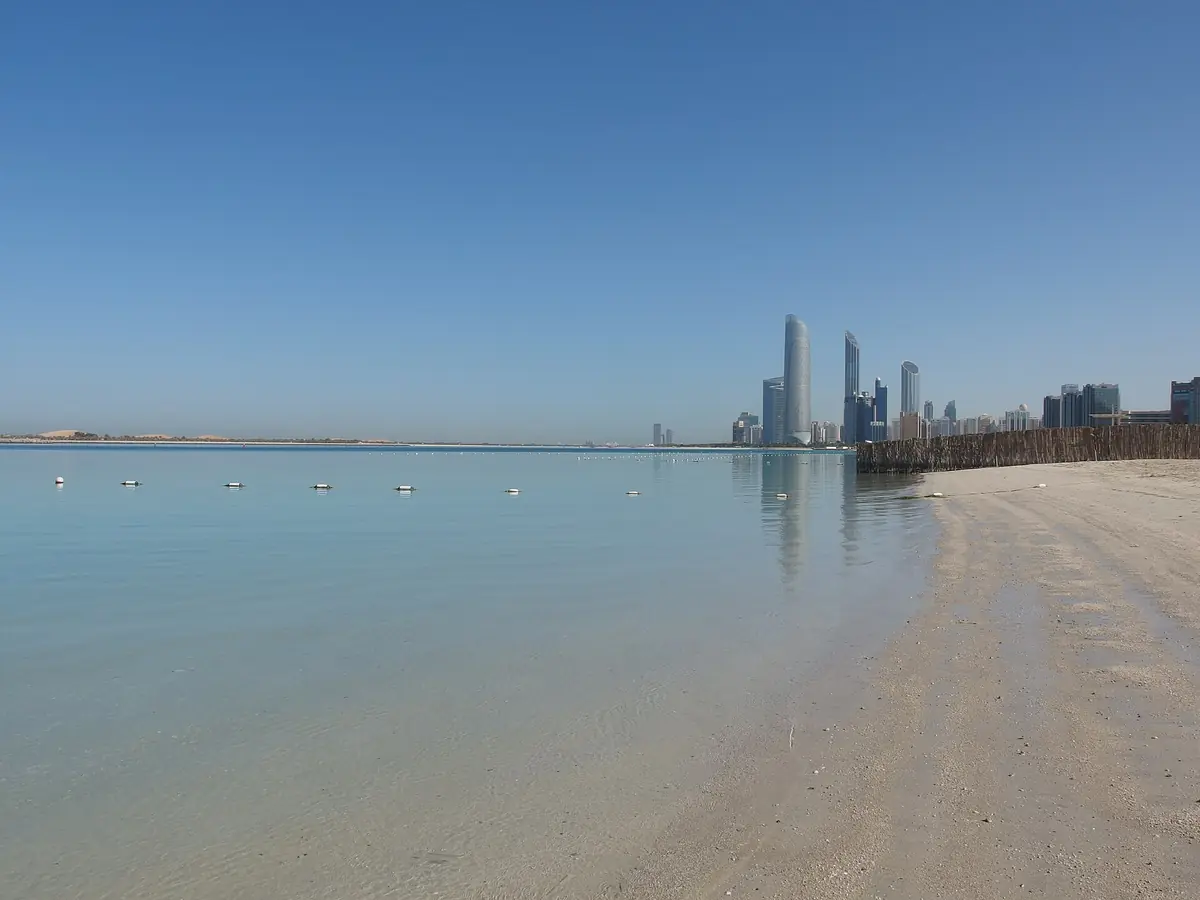
The public beach on the Abu Dhabi Corniche
Photograph: Guilhem Vellut from Annecy, France — opens in a new tab · CC BY 2.0 — opens in a new tab
Changes: Resized and converted to WebP; displayed with responsive crops. · Original photograph and licence details ↗ — opens in a new tab
The Mutrah Corniche in Muscat, below Mutrah Fort
Photograph: Mostafameraji — opens in a new tab · CC BY-SA 4.0 — opens in a new tab
Changes: Resized and converted to WebP; displayed with responsive crops. · Original photograph and licence details ↗ — opens in a new tab
Pottery outside the souq in Nizwa
Photograph: Paul IJpelaar — opens in a new tab · CC BY 3.0 — opens in a new tab
Changes: Resized and converted to WebP; displayed with responsive crops. · Original photograph and licence details ↗ — opens in a new tab