Plan your trip
Oman entry: 14 days visa-free, the e-visa and customs
For most European, North American and Australasian passports, Oman needs no visa for a stay of up to 14 days, only the right documents at the desk. If you stay longer than 14 days, or your passport is not on the list, you need a visa. The Royal Oman Police issues visas online as e-visas, and you apply before you fly. This guide takes the rules in the order you meet them: the visa-free list, the documents checked at the desk, the e-visa, customs and medicines, the airport, and the road crossings from the United Arab Emirates.
In this guide
Find the location ↗ — opens in a new tabThe short answer
UK, US, Canadian, Australian, New Zealand, Japanese and most European passport holders can visit Oman without a visa for up to 14 days; the stay cannot be extended. At the border you must be able to show a passport valid for at least six months, a return or onward ticket, a confirmed hotel booking and travel health insurance. For a trip longer than 14 days, apply before you fly for the unsponsored tourist e-visa at evisa.rop.gov.om: OMR 20 for a single-entry stay of up to 30 days. Overstaying costs OMR 10 a day, and cash or gold worth OMR 6,000 or more must be declared at customs. Leave e-cigarettes at home, carry prescriptions for your medicines, and book the first night before you land, because that booking is one of the documents checked.
- Key point
- Entry planning before you book: the visa-free stay is 14 days, the tourist e-visa up to 30
- Where it applies
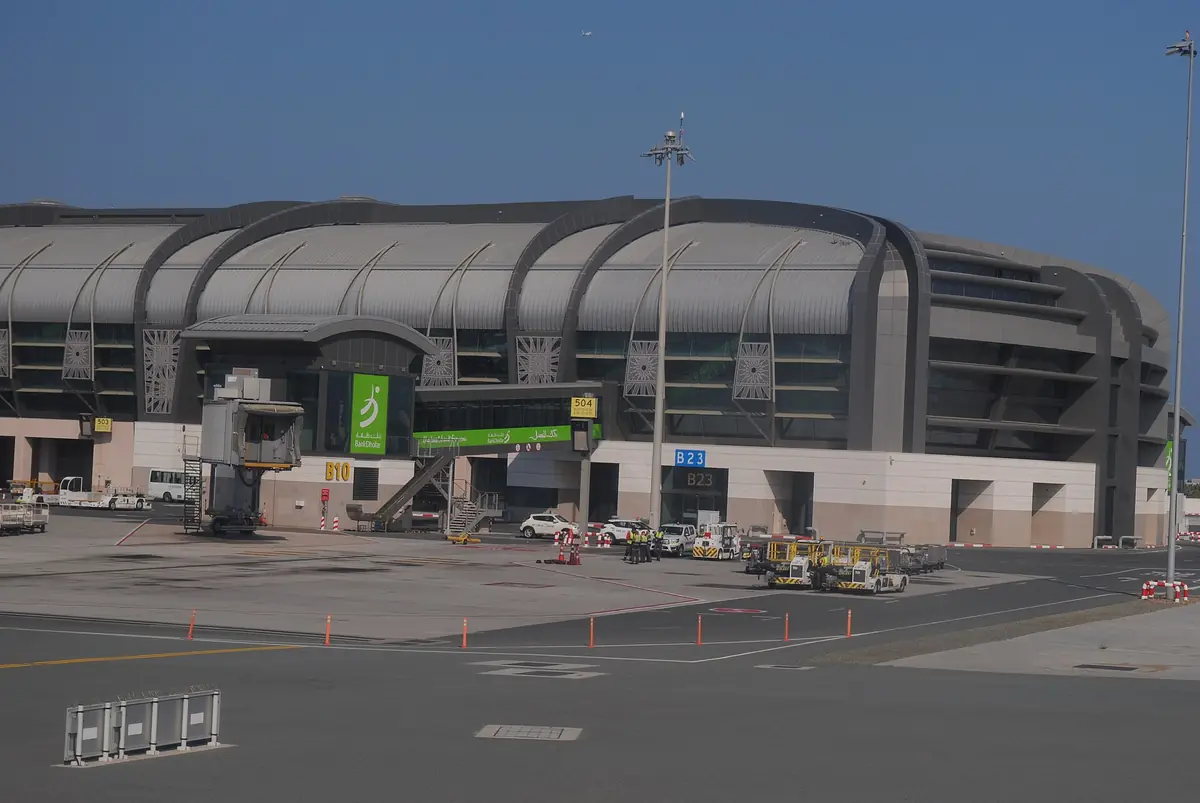
- Arrive at Muscat International Airport (MCT) with your first hotel booked
- Timing
- The rules apply all year; count your days before you choose a trip of more than two weeks
Compare country by country: Middle East entry requirements at a glance →
Who can visit without a visa, and for how long
Oman's Foreign Ministry lists more than 100 countries whose citizens may stay up to 14 days without an entry visa. The first group includes Australia, Austria, Belgium, Canada, Denmark, Finland, France, Germany, Ireland, Italy, Japan, the Netherlands, New Zealand, Norway, Poland, Portugal, Spain, Sweden, Switzerland, the United Kingdom and the United States, among many others; check your own country on the ministry's entry-visa page before you book.
A second group, including India, Egypt, Jordan, Morocco, Mexico and Vietnam, qualifies only under one condition. Its citizens need a valid visa or residence permit for the United States, Canada, Australia, the United Kingdom, a Schengen country or Japan, or residence in a Gulf Cooperation Council country in an eligible profession. A husband, wife and children travelling with an eligible visitor share the exemption even if they hold another nationality. Citizens of the Gulf states need no visa at all.
The 14 days cannot be extended or turned into a residence visa. A trip of 15 days or more therefore needs an e-visa from the start. The exemption is for visits only and does not allow work.
What the officer at the desk asks for
Have these ready at immigration: a passport valid for at least six months, a return or onward ticket, a confirmed hotel reservation, proof of travel health insurance, and enough money for your stay. The UK counts the six months from the day you arrive, and France from the day you leave. A passport valid for six months after your departure date meets both.
The visa-free stay is entered as a stamp in your passport. Oman's entry rules ask for no arrival card and no online pre-registration: unless you need an e-visa, the passport and the documents above are all you show. You also need a yellow fever vaccination certificate (from the age of nine months) in three cases: you arrive from a country with a risk of yellow fever, you arrive from Rwanda or Tanzania, or you spent more than 12 hours in transit at an airport in such a country.
Oman does not recognise dual nationality, and the authorities may keep one of the passports of a traveller who holds an Omani passport as well. Germany notes that airlines have in some cases refused to carry holders of temporary German passports to Oman. Canada warns that Oman may refuse entry if a passport shows an X in the sex field, or carries an observation to that effect. If yours does, ask an Omani embassy or consulate before you book. Canada also reports Canadians refused entry because their passport bore an Israeli visa or border stamp, or an Egyptian or Jordanian stamp from a crossing on the border with Israel.
Prices and times checked 29 November 2026

Staying longer: the tourist e-visa
For more than 14 days, apply online at the Royal Oman Police's site, evisa.rop.gov.om, and choose the unsponsored tourist visit visa. It costs OMR 20 for a single-entry stay of up to 30 days. If your passport is not on the exemption list, do not assume this visa is open to you: answer the eligibility questions on the same site first. Depending on your nationality, it may offer only a sponsored tourist visa, applied for through a licensed tourism company in Oman. A multiple-entry visit visa, valid for a year, costs OMR 50, but each stay on it is limited to a month, so it does not cover one long stay. The e-visa is valid for one month from issue, so apply within the month before you fly. On arrival at Muscat, go straight to an immigration counter and show your passport with the e-visa reference number. A visit visa can also be issued on arrival at the airport, at OMR 21 for up to 30 days, but the UK advises applying online before you travel to avoid the risk of refusal, so treat the e-visa as the safe choice. To stay more than 30 days in one go, extend the visa in Oman before it runs out: the government portal lists extensions of the unsponsored tourist visa for 10 days (OMR 5) or 30 days (OMR 20). The 14-day visa-free stay cannot be extended at all.
An overstay costs OMR 10 a day, up to OMR 500. The fine must be paid before you leave, and you can pay it at the airport. The authorities can also detain an overstayer.
If you transit through Muscat International Airport on a through ticket and stay in the international transit area, you need no visa. A transit passenger who leaves the airport needs an entry visa like any other visitor.
Prices and times checked 29 November 2026
Customs: cash, alcohol, medicines and banned items
Declare cash, bearer securities, precious metals or gemstones worth OMR 6,000 or more, or the same value in other currencies, when you arrive or leave. Walking through the green or red channel counts as your declaration, so with that amount take the red channel. Duty-free allowances are gifts worth up to OMR 300, up to 400 cigarettes and, for non-Muslim visitors, up to 2 litres of wine and 48 cans of beer. Every bag is X-rayed on arrival and can be searched, and pork products and fresh food may not be brought in.
Medicines need the most care. Some medicines prescribed or sold over the counter at home are illegal in Oman. Sleeping pills, antidepressants and painkillers can be treated as narcotics if they arrive without a prescription. France advises carrying a prescription translated into Arabic and less than three months old. Germany advises a doctor's certificate in several languages for painkillers and psychotropic medicines. Bring only the quantity your stay needs, and check with Oman's Ministry of Health well before you travel.
Leave e-cigarettes and vapes at home: importing or using them is illegal. Do not pack a drone unless you already hold a licence. Recreational licences are applied for through the Serb platform (flyserb.com), and drones without one are confiscated on arrival. Flying a drone without permission can bring a year in prison and a fine of OMR 10,000. On an international transit, a drone may stay in checked baggage.
Prices and times checked 29 November 2026
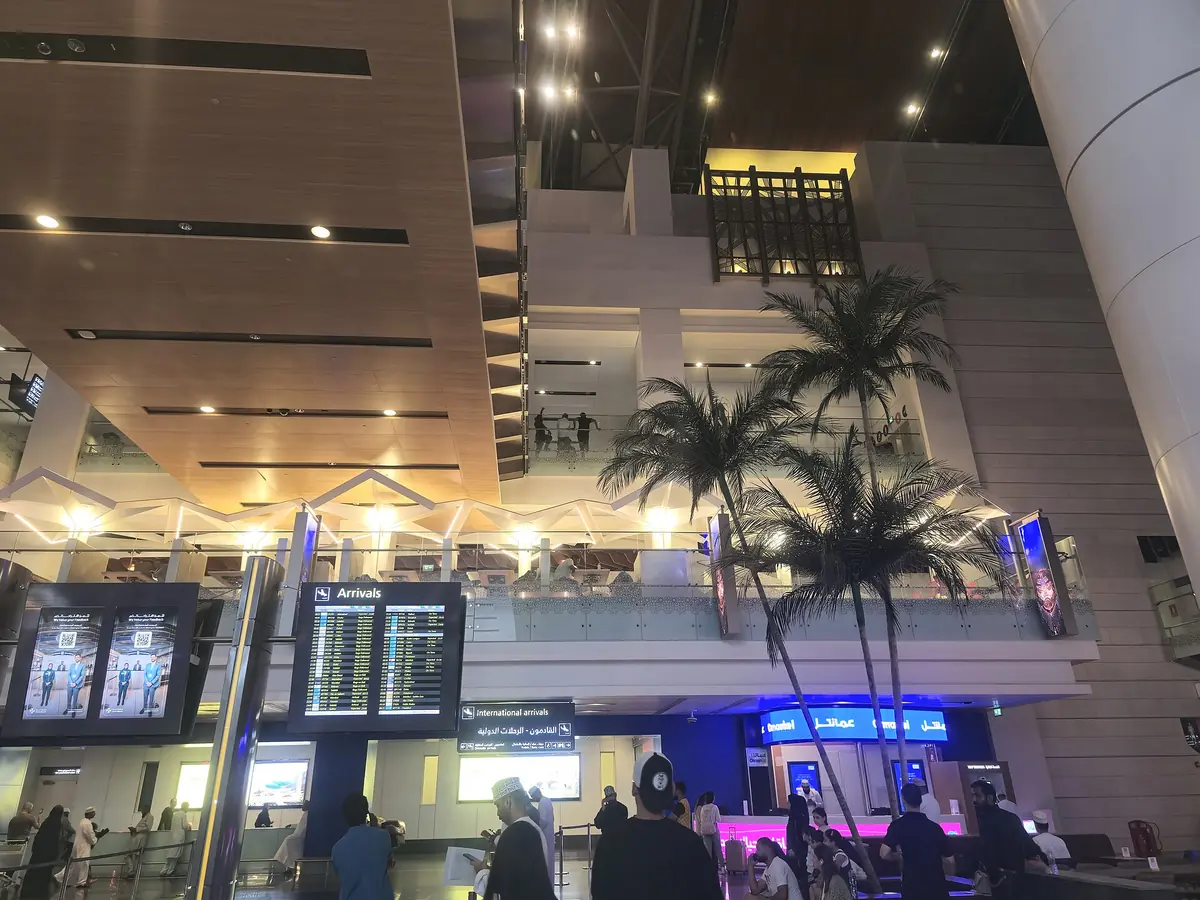
Arriving at Muscat International Airport
Muscat International Airport (MCT) is the gateway for almost every trip, and the itineraries in these guides start and end there. In the international arrivals hall you can get a visa if you need one, change money and clear immigration at the desks or the e-Gates, and then go through customs. The car-hire offices in the public arrivals hall are open 24 hours, and taxis leave from just outside the terminal. The transport guide covers the hire car, buses and taxis, and how to reach Salalah and Khasab by air.
Driving in from the United Arab Emirates
The same rules apply at a land border: a visa-free stamp for eligible passports, or your e-visa, and the same documents. Several crossings link the two countries, and which one you use depends on where you are heading: Al Wajajah, beyond Hatta, is the usual crossing for Muscat; Khatmat Milaha lies on the coast road through Fujairah; Mezyad is near Al Ain. Leaving the UAE by road, you pay an exit fee of AED 35 at the UAE border post. A car that is not insured for Oman also needs Omani cover: a third-party policy, the Orange Card, is sold at self-service kiosks at the border, from about AED 106 for the minimum five days. Have a bank card and some dirhams ready for both. A single-entry Omani visa does not let you back in after a side trip to the UAE: you need a new one, and the UAE's own visa rules apply on the other side.
An Omani hire car taken into the UAE must be insured there too, and hire firms charge more for cross-border cover, so ask about it when you book the car. The Musandam peninsula is reached from the UAE through two crossings: Al Darah, from Ras Al Khaimah, and Wam, near Dibba. No hire car, Omani or Emirati, may now enter Musandam through them: the driver must hold the car's own insurance, and a fee of AED 30 is charged at these two border posts, by bank card only. Without your own car, fly to Khasab or take the ferry from Shinas; the Musandam guide covers both. An e-visa holder who drives into Musandam from the rest of Oman needs a multiple-entry visa.
Prices and times checked 28 November 2026
Travel advice that changes where you can go
France advises against travel to Musandam except for an imperative reason, Germany advises against travel there at all, and Canada advises against non-essential travel to the whole of Oman. Our health and safety guide sets out each government's advice; read your own government's advice before you book.
Your travel insurance is also one of the documents Oman can ask to see, so check that the policy covers the whole trip and the places you plan to visit under your own government's advice.
Prices and times checked 28 November 2026
Practical questions
Do I need a visa for Oman as a British, American or EU citizen?
Not for a stay of up to 14 days. Oman's Foreign Ministry lists the United Kingdom, the United States, Canada, Australia, New Zealand, Japan and most European countries as visa-exempt, provided you show a return ticket, a hotel booking, health insurance and enough money for the stay.
Can I extend the 14-day visa-free stay?
No. The 14 days cannot be extended or converted into a residence visa. For a longer trip, apply before you fly for the unsponsored tourist e-visa at evisa.rop.gov.om, which costs OMR 20 for a stay of up to 30 days.
How long must my passport be valid for Oman?
At least six months. The UK counts them from your arrival and France from your departure, so a passport valid for six months after you leave meets both.
What happens if I overstay?
You pay OMR 10 a day, up to OMR 500, before you can leave, and the authorities can detain an overstayer. The fine can be paid at the airport.
How much cash can I bring into Oman?
Cash, bearer securities, precious metals or gemstones worth OMR 6,000 or more, or the same value in another currency, must be declared on arrival and on departure.
Can I bring alcohol into Oman?
Non-Muslim visitors may bring up to 2 litres of wine and 48 cans of beer duty-free. Drinking in public is illegal; visitors drink in licensed venues such as hotels, restaurants and clubs.
Can I drive into Oman from Dubai?
Yes, through the land crossings, of which Al Wajajah beyond Hatta is the usual one for Muscat. The same 14-day rule or e-visa applies. A single-entry visa does not let you back into Oman after a side trip into the UAE: you need a new visa.
Keep planning your trip
First trip to Oman
Choose seven days or ten for Muscat, Nizwa, the mountains, the Wahiba Sands and Sur: the nights, the hire car, the season, entry and an all-in budget.
Read the guide
Transport in Oman
Get around Oman: a hire car from Muscat airport, when you need a 4x4, driving the Nizwa–Wahiba–Sur loop, Mwasalat buses, taxis, and flights to Salalah and Khasab.
Read the guide
Money and payments in Oman
Paying in Oman: what a rial is worth, where cards and ATMs work, changing money at the airport, VAT and fuel, fines to pay before leaving, and old notes to leave at home.
Read the guide
Health and safety in Oman
Where governments draw lines in Oman, what regional tension means for flights, flash floods in the wadis, camels and night roads, insurance, vaccines, 9999 and the laws.
Read the guide
Muscat
Plan two nights in Muscat: the Grand Mosque's morning visiting hours, Mutrah's souq and corniche, Old Muscat's forts and museum, Qurum, and where to stay.
Read the guide
Oman in seven days
A seven-day Oman loop by hire car: Muscat, Nizwa for the fort and Jebel Shams, a desert camp, Sur, a night at the Ras al Jinz turtle reserve and the coast road.
Read the guideSources and checks before you travel
(20)
- Oman's Foreign Ministry: entry visas ↗ — opens in a new tab
- Royal Oman Police: eVisa portal ↗ — opens in a new tab
- UK FCDO: Oman travel advice, warnings and insurance ↗ — opens in a new tab
- UK FCDO: Oman entry requirements ↗ — opens in a new tab
- UK FCDO: Oman safety and security ↗ — opens in a new tab
- German Federal Foreign Office: Oman travel and safety advice (German) ↗ — opens in a new tab
- France Diplomatie: Oman entry and stay (French) ↗ — opens in a new tab
- France Diplomatie: Oman practical information (French) ↗ — opens in a new tab
- France Diplomatie: Oman latest advice (French) ↗ — opens in a new tab
- Government of Canada: Oman travel advice ↗ — opens in a new tab
- Royal Oman Police, Directorate General of Customs: traveller services ↗ — opens in a new tab
- TravelHealthPro: Oman ↗ — opens in a new tab
- Gulf News: driving from the UAE to Oman (news, updated 20 May 2026) ↗ — opens in a new tab
- Muscat International Airport: To and from the airport ↗ — opens in a new tab
- Muscat International Airport: Immigration and visa ↗ — opens in a new tab
- Experience Oman (Ministry of Heritage and Tourism): Ways to reach ↗ — opens in a new tab
- Gov.om (Royal Oman Police): submit a customs declaration request ↗ — opens in a new tab
- Royal Oman Police eVisa: visa eligibility wizard ↗ — opens in a new tab
- Gov.om (Royal Oman Police): extend unsponsored tourist visa ↗ — opens in a new tab
- Gov.om (Royal Oman Police): get sponsored tourist visa ↗ — opens in a new tab
Reference sources for the version dated 29 November 2026. Confirm opening times, access, transport and conditions for your travel dates.
Photo credits
(4)
The passenger terminal at Muscat International Airport, where most trips to Oman begin
Photograph: Andy Mabbett — opens in a new tab · CC BY-SA 4.0 — opens in a new tab
Changes: Resized and converted to WebP; displayed with responsive crops. · Original photograph and licence details ↗ — opens in a new tab
The Omani border post at Al Wajajah, the usual road crossing from Hatta in the UAE towards Muscat
Photograph: Bjoertvedt — opens in a new tab · CC BY-SA 3.0 — opens in a new tab
Changes: Resized and converted to WebP; displayed with responsive crops. · Original photograph and licence details ↗ — opens in a new tab
The arrivals hall at Muscat International Airport
Photograph: Mohammad hajeer — opens in a new tab · CC BY 4.0 — opens in a new tab
Changes: Resized and converted to WebP; displayed with responsive crops. · Original photograph and licence details ↗ — opens in a new tab
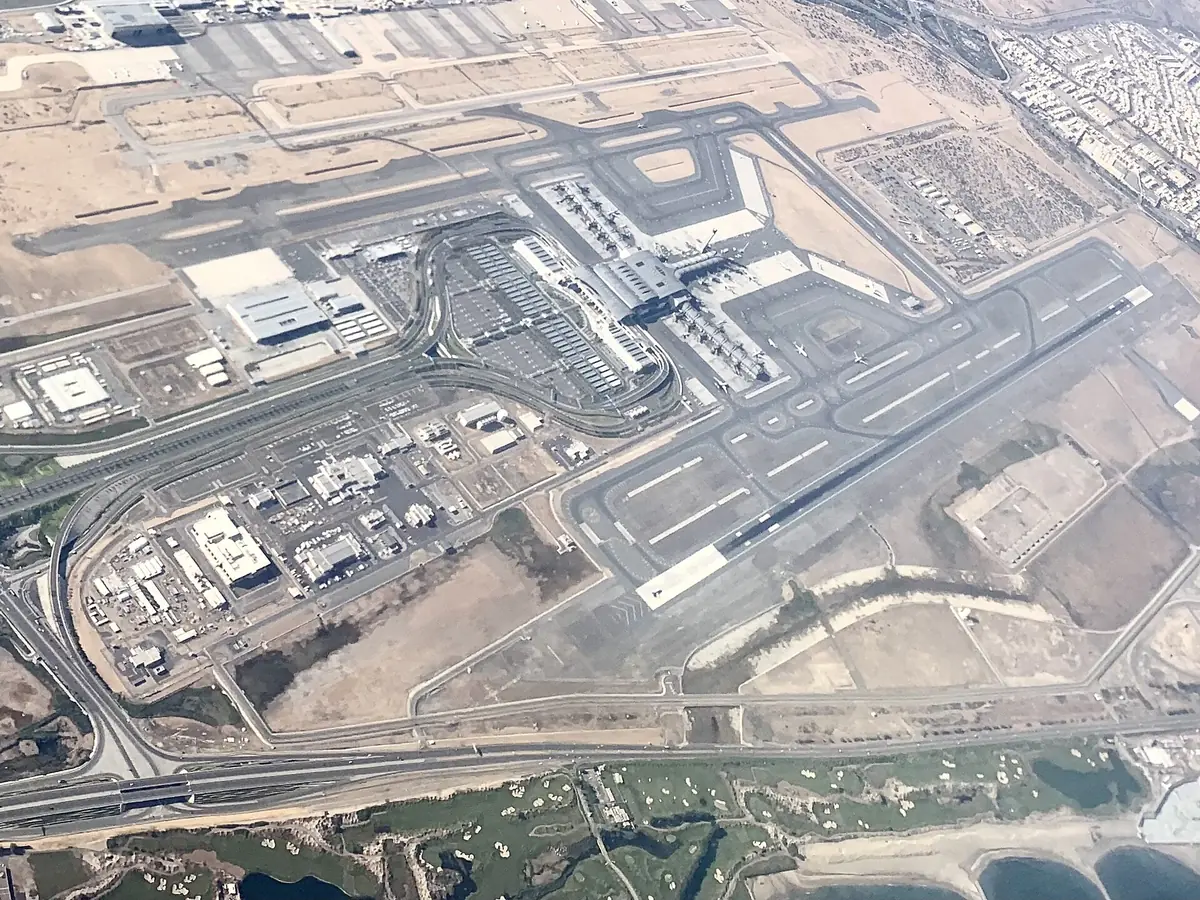
Muscat International Airport from the air
Photograph: Ank Kumar — opens in a new tab · CC BY-SA 4.0 — opens in a new tab
Changes: Resized and converted to WebP; displayed with responsive crops. · Original photograph and licence details ↗ — opens in a new tab