Plan your trip
Cash or card in Oman? Rials, baisa, ATMs and VAT
Oman is an easy country to pay your way through: credit cards are widely accepted, and ATMs at the airport and in the towns give rials. A few things catch visitors out. Prices are written to three decimal places, older banknotes are no longer legal tender, German girocard debit cards are not accepted, and unpaid traffic fines can stop you leaving. This guide covers the currency, cards and cash machines, where to change money, what a few everyday things cost, VAT, and what to settle before you fly home.
In this guide
Find the location ↗ — opens in a new tabThe short answer
Bring a Visa or Mastercard credit card and a second card as a back-up. Withdraw rials at an ATM in the arrivals hall at Muscat International Airport: Bank Muscat, Bank Dhofar, NBO and Bank Suhar have machines there, and the exchange counters are open around the clock. The Omani rial (OMR) is divided into 1,000 baisa and is worth about USD 2.60, so OMR 0.229 means 229 baisa. Two prices to get your bearings: M91 petrol costs OMR 0.229 a litre, the rate the government has held since October 2021, and the National Museum in Muscat charges foreign visitors OMR 5, payable by Visa or Mastercard. Carry some cash for village shops, souqs and small cafés. VAT is 5% and applies to hotel stays. Pay any traffic fines on a hire car before you leave the country.
- Key point
- Set up before you fly: a credit card with low foreign fees, a second card and a little cash for the first day
- Where it applies
- Applies everywhere in Oman
- Timing
- All year; the weekend is Friday and Saturday, so plan bank visits from Sunday to Thursday
The rial, the baisa and reading a price
Oman's currency is the Omani rial (OMR, also written RO), and one rial is divided into 1,000 baisa. Prices therefore carry three decimal places: OMR 1.100 is one rial and 100 baisa, and OMR 0.229 is 229 baisa. One rial is worth about USD 2.60, which makes it one of the strongest currencies you are likely to carry, so a price that looks small adds up quickly.
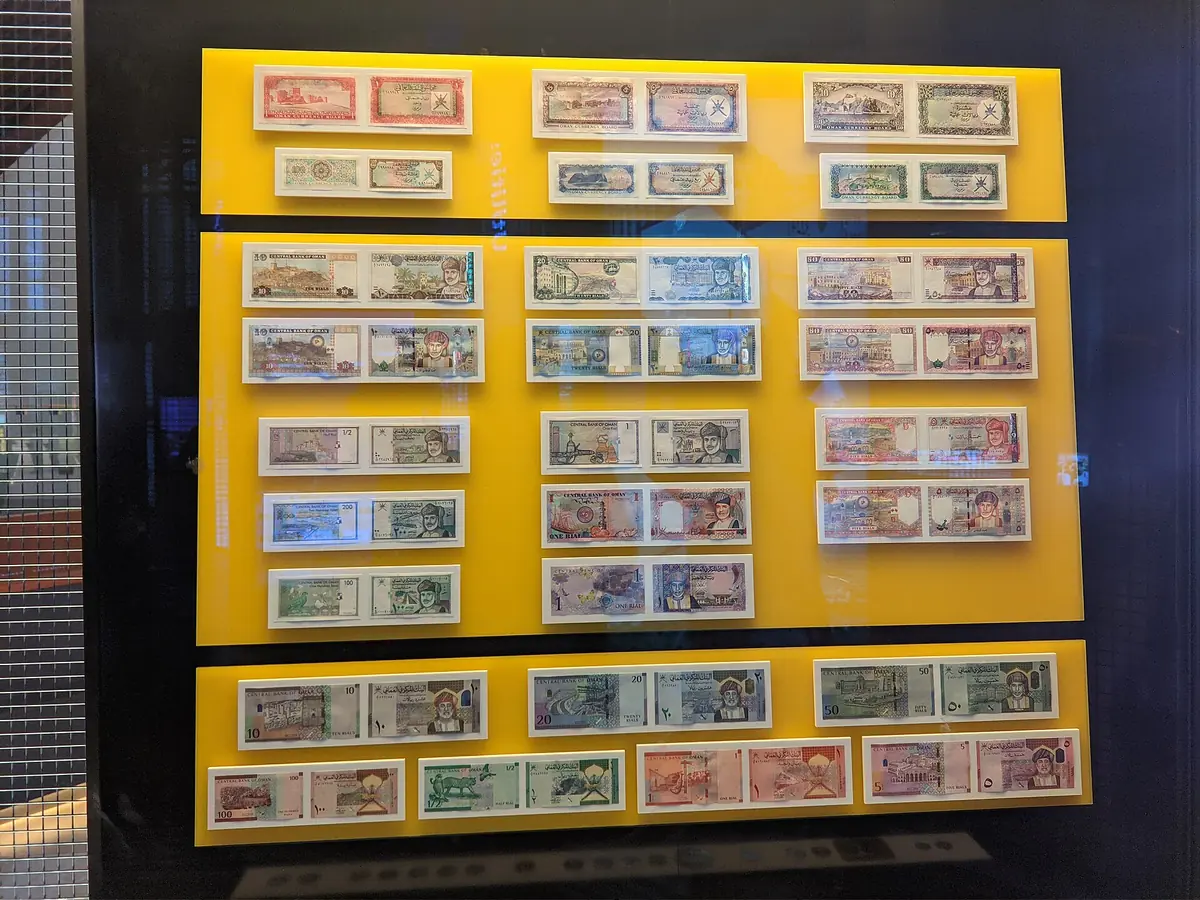
The Central Bank of Oman has withdrawn a list of banknotes issued before 2020 (before the sixth issue) as legal tender. The last date to exchange them at banks was 31 December 2024. The list covers the 1995 notes of 100 and 200 baisa, half a rial and one rial, the 5, 10, 20 and 50 rial notes of 2000, the 5, 10 and 50 rial notes of 2011 and 2012, the 50 rial note of 2019, and the commemorative notes of 2005, 2010 and 2015. If you have rials left from an earlier trip, check the year on each note before you pack it, and refuse an old note as change.
Prices and times checked 28 November 2026
Cards: what works and what does not
Credit cards are widely accepted, and you can pay by card or withdraw cash at an ATM in many places; you will usually be asked for your PIN. A credit card is the safer choice. The German Federal Foreign Office warns that German girocard debit cards are not accepted. Carry a Visa or Mastercard credit card, and a second card in case one is blocked.
Sights take cards too. The National Museum in Muscat charges OMR 5 for foreign visitors, OMR 2 for residents and OMR 1 for Omani and GCC citizens, and accepts Visa and Mastercard. Keep cash for souq stalls, village shops, small cafés and anything in the mountains or the desert, where a card machine is less likely.
If a card terminal or an ATM offers to charge you in your home currency, decline and pay in rials. Your own card issuer then does the conversion.
Prices and times checked 28 November 2026
ATMs and changing money
Start at Muscat International Airport. Bank Muscat, Bank Dhofar, NBO and Bank Suhar have ATMs in the arrivals public concourse, and Bank Muscat and Bank Dhofar have branches in the arrivals hall. Exchange counters run by Travelex and Global Money Exchange in the arrival and departure halls are open 24 hours, so you can change a first sum or withdraw rials before you pick up the hire car. Bank Muscat alone runs 645 ATMs and cash-deposit machines across the country.
Away from the airport, banks, hotels and exchange offices change money in Muscat and the larger towns, and paying in local currency avoids poor exchange rates at the till. Withdraw what you need for the mountains and the desert before you leave Muscat or Nizwa, because a desert camp or a village guesthouse may want cash. On a week's loop, cash goes on souq stalls, village cafés and grills, camp extras such as camel rides and desert drives, and the boat across the river at the entrance to Wadi Shab. For two people on a mid-range week, carry about OMR 50 in cash, the size of the buffer in our trip cost guide, and top up at a bank ATM in the towns. Before you go, check what your own bank charges for a cash withdrawal abroad, and withdraw larger sums less often. Our Oman trip-cost guide shows what a week costs in total.
Theft is rare, but robberies do happen at places that tourists frequent. Keep cards, cash and your passport in the hotel safe when you do not need them, and keep photos of your cards separate from the cards themselves.
Prices and times checked 28 November 2026
Fuel, meals and other everyday prices
Most visitors drive, so fuel is a cost you meet every day. M91 petrol costs OMR 0.229 a litre, M95 OMR 0.239, Ultimax 98 OMR 0.399 and diesel OMR 0.258; the government has held the M91, M95 and diesel prices since October 2021. Since October 2026, stations within 50 km of a border crossing limit each fill to 30 litres, as a temporary measure. The transport guide covers hire cars, taxis and buses.
Hotel restaurants publish their menus: at the Grand Hyatt Muscat's Mokha Cafe, chicken harees costs OMR 8 and a shuwa lamb shank OMR 15. Cafés, mishkak stalls and small Omani restaurants cost much less; carry cash for them. Our trip cost guide reckons food at about OMR 12 a day each at mid-range. An airport taxi booked through the licensed OTaxi or Oman Taxi apps costs OMR 1.5 plus 250 baisa a kilometre, about OMR 9.5 to Ruwi. Ooredoo's Tourist 5 pack, 8 GB of data for 10 days, costs OMR 5 plus 5% VAT. The Sultan Qaboos Grand Mosque charges an admission fee of OMR 8. Airport parking at Muscat costs OMR 0.600 for the first 30 minutes and OMR 2.100 for one to two hours, which matters if someone is meeting you. Visa fees and the rules for each nationality are in the entry guide.
Prices and times checked 28 November 2026
VAT, tax on your bill and tipping
Value Added Tax is 5% on most goods and services, and it applies to hotel stays, holiday rentals and short-term lets. Some basic foods and certain healthcare services are zero-rated. Hotel rates may also carry a service charge: the Ras Al Jinz Turtle Reserve, for example, quotes rates that include tax and service charge. Compare hotels on the total with tax and service charge.
Visitors pay VAT like everyone else. Oman's VAT rules allow tourists to claim a refund under certain conditions, such as the type of goods and a minimum purchase value. In February 2026, however, the Tax Authority said that the refund service would start only after it had agreed terms with the companies that will run it, and it gave no date. Budget on paying the 5%, and keep receipts for larger purchases in case the scheme has started by the time you shop.
Tipping is your choice in Oman; a small buffer in your budget covers tips for drivers, guides and camp staff.
Prices and times checked 28 November 2026
Before you fly home: fines, bills and customs
Settle everything before you leave. Foreign visitors must pay all debts and traffic fines before departure. You can check a hire car's fines through the Royal Oman Police app or its online traffic-offence payment service. Unpaid hotel or car-hire bills can lead to a fine, imprisonment or being stopped from leaving the country. Medical bills work the same way: private clinics usually ask for a substantial deposit or a guarantee before treatment, and a visitor who cannot pay can be stopped from leaving until the bill is settled. Carry your insurer's emergency number and a card with enough credit.
Cash, precious metals or gemstones worth OMR 6,000 or more, or the same value in other currencies, must be declared at customs, both on arrival and on departure. Spend or change leftover baisa coins and small notes at the airport before you go.
Prices and times checked 29 November 2026
Practical questions
Can I pay by card in Oman?
Yes. Credit cards are widely accepted, and the National Museum in Muscat is among the places that take them. Bring a Visa or Mastercard credit card, because German girocard debit cards are not accepted. Carry cash for souqs, villages and the desert.
What is the Omani rial worth?
About USD 2.60. One rial is 1,000 baisa, so prices are written with three decimals: OMR 0.500 is 500 baisa.
Can I get cash at Muscat airport?
Yes. Bank Muscat, Bank Dhofar, NBO and Bank Suhar have ATMs in the arrivals concourse, and exchange counters in the arrival and departure halls are open 24 hours.
Are my old Omani banknotes still valid?
A list of notes issued before 2020 has been withdrawn as legal tender, and the last date to exchange them at banks was 31 December 2024. Check the year on any rials left from an earlier trip.
How much is VAT in Oman, and can tourists get it back?
VAT is 5%, and it applies to hotel stays. The VAT rules provide for a tourist refund, but in February 2026 the Tax Authority gave no start date for the service, so budget on paying the VAT.
How much does petrol cost in Oman?
M91 petrol costs OMR 0.229 a litre and M95 OMR 0.239, the rates the government has held since October 2021. Since October 2026, stations within 50 km of a border crossing limit each fill to 30 litres, as a temporary measure.
Do I have to pay traffic fines before leaving Oman?
Yes. Visitors must pay all debts and traffic fines before departure. You can check a hire car's fines through the Royal Oman Police app or its online service.
Keep planning your trip
First trip to Oman
Choose seven days or ten for Muscat, Nizwa, the mountains, the Wahiba Sands and Sur: the nights, the hire car, the season, entry and an all-in budget.
Read the guide
Oman trip cost
A week on Oman's loop by hire car: about OMR 215 per person on a budget, OMR 275 mid-range or OMR 480 in comfort for two sharing, plus about OMR 12 each for fuel.
Read the guide
Entering Oman
Which passports enter Oman visa-free for 14 days, what to show at the border, when you need the OMR 20 e-visa, what customs allows, and the road crossings from the UAE.
Read the guide
Transport in Oman
Get around Oman: a hire car from Muscat airport, when you need a 4x4, driving the Nizwa–Wahiba–Sur loop, Mwasalat buses, taxis, and flights to Salalah and Khasab.
Read the guide
Where to stay in Oman
Which part of Muscat to sleep in, how many nights in Nizwa, on Jebel Akhdar, in a Wahiba Sands camp and in Sur, and three hotels at each base from budget to upper.
Read the guideHealth and safety in Oman
Where governments draw lines in Oman, what regional tension means for flights, flash floods in the wadis, camels and night roads, insurance, vaccines, 9999 and the laws.
Read the guideSources and checks before you travel
(25)
- Oman's Foreign Ministry: key facts ↗ — opens in a new tab
- Oman's Foreign Ministry: Central Bank of Oman to withdraw some banknotes from circulation (9 June 2024) ↗ — opens in a new tab
- Experience Oman (Ministry of Heritage and Tourism): Oman at a glance ↗ — opens in a new tab
- Experience Oman (Ministry of Heritage and Tourism): National Museum ↗ — opens in a new tab
- Muscat International Airport: currency exchange ↗ — opens in a new tab
- Muscat International Airport: banking services ↗ — opens in a new tab
- Muscat International Airport: to and from the airport ↗ — opens in a new tab
- Oman Tax Authority: VAT FAQs ↗ — opens in a new tab
- Oman Observer: Tax Authority unveils VAT refund plan for tourists (5 February 2026) ↗ — opens in a new tab
- Zawya: Oman tourist VAT refunds to be rolled out soon (February 2026) ↗ — opens in a new tab
- Khaleej Times: Oman temporarily caps fuel top-up near border crossings to 30 litres (29 October 2026) ↗ — opens in a new tab
- German Federal Foreign Office: Oman travel and safety advice (German) ↗ — opens in a new tab
- Government of Canada: Oman travel advice ↗ — opens in a new tab
- France Diplomatie: Oman entry and stay (French) ↗ — opens in a new tab
- UK FCDO: Oman safety and security ↗ — opens in a new tab
- UK FCDO: Oman entry requirements ↗ — opens in a new tab
- UK FCDO: Oman health ↗ — opens in a new tab
- Royal Oman Police, Directorate General of Customs: traveller services ↗ — opens in a new tab
- Oman Observer: Fuel prices in Oman set to continue at October 2021 rates (1 January 2024) ↗ — opens in a new tab
- Grand Hyatt Muscat: Mokha Cafe menu ↗ — opens in a new tab
- Experience Oman (Ministry of Heritage and Tourism): Sultan Qaboos Grand Mosque ↗ — opens in a new tab
- Ras Al Jinz Turtle Reserve: Accommodation ↗ — opens in a new tab
- Oman Observer: Taxi fares from Muscat Airport slashed (4 October 2023) ↗ — opens in a new tab
- Ooredoo Oman: Tourist Pack ↗ — opens in a new tab
- Gov.om (Royal Oman Police): submit a customs declaration request ↗ — opens in a new tab
Reference sources for the version dated 29 November 2026. Confirm opening times, access, transport and conditions for your travel dates.
Photo credits
(4)
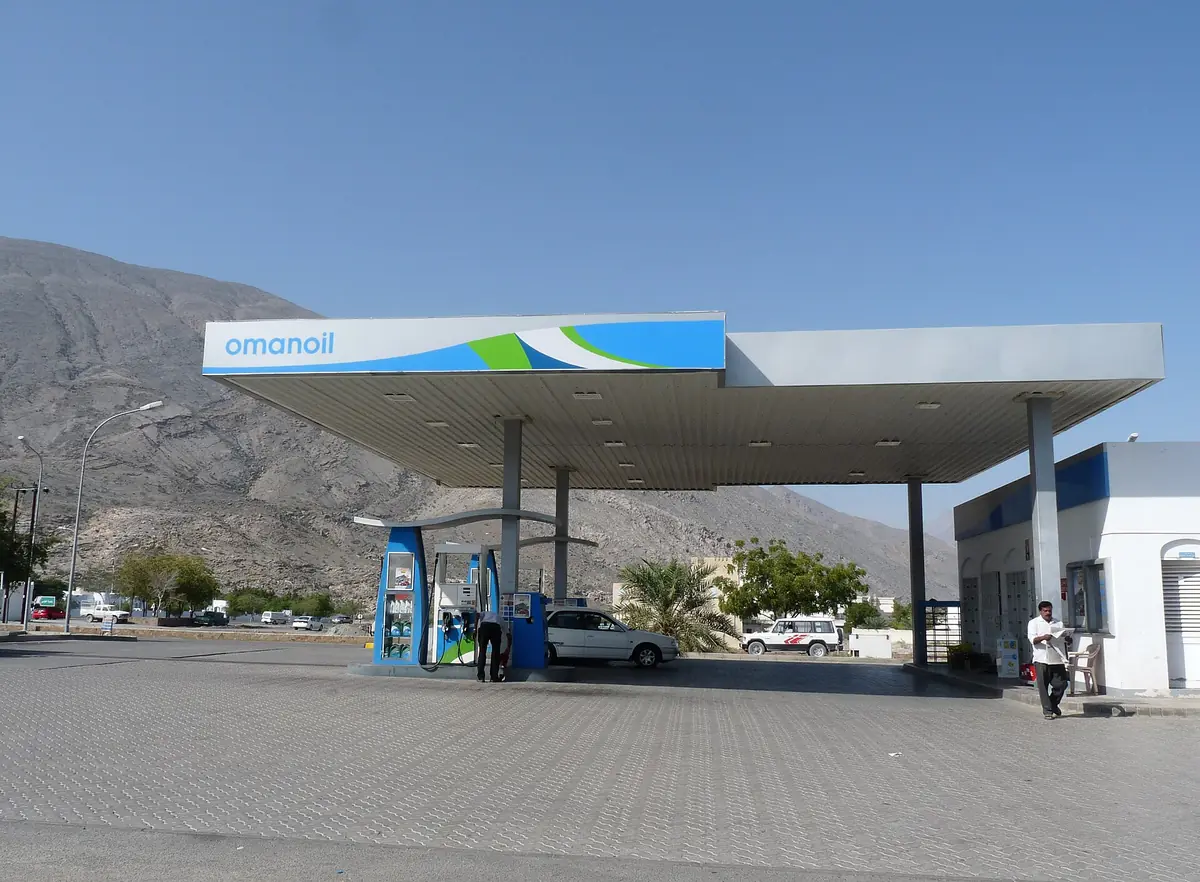
A petrol station in northern Oman: most visitors drive, and fuel is paid in rials
Photograph: Ji-Elle — opens in a new tab · CC BY-SA 3.0 — opens in a new tab
Changes: Resized and converted to WebP; displayed with responsive crops. · Original photograph and licence details ↗ — opens in a new tab
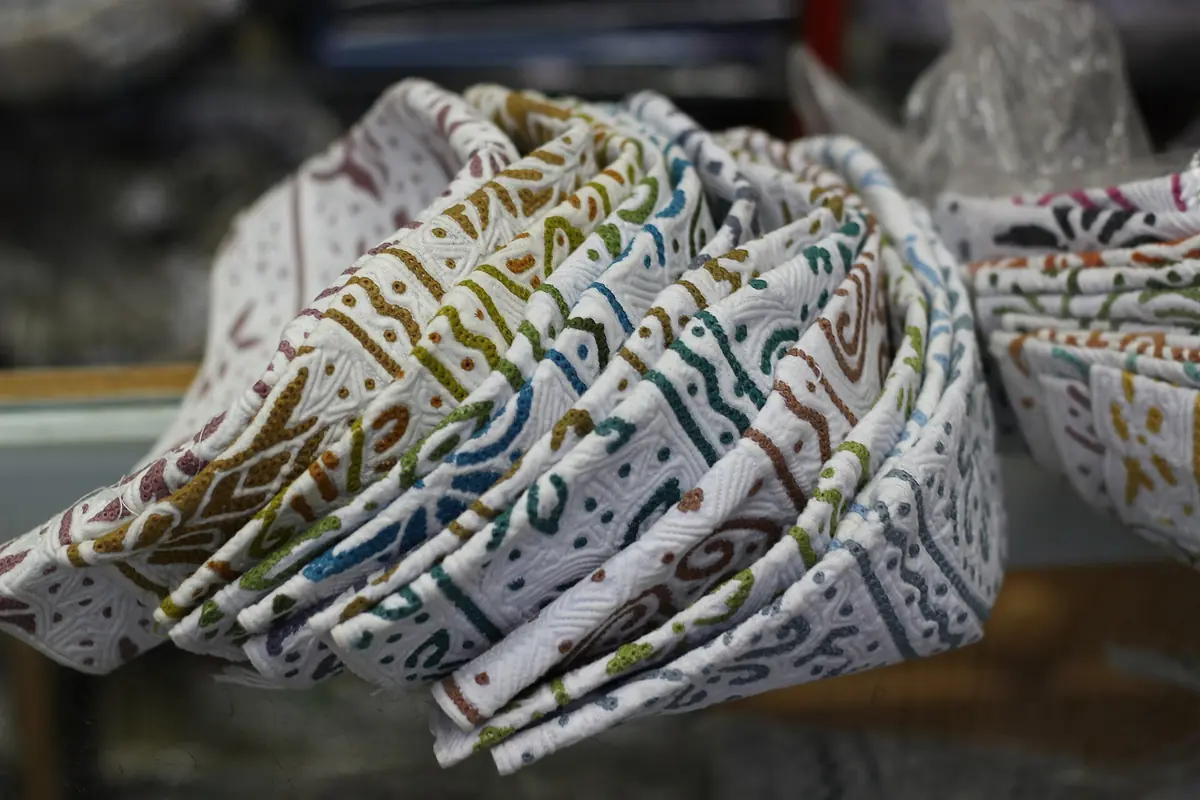
Embroidered kumma caps for sale in Souq Muttrah, Muscat; keep cash for small souq purchases
Photograph: Riyadh Al Balushi — opens in a new tab · CC BY 2.0 — opens in a new tab
Changes: Resized and converted to WebP; displayed with responsive crops. · Original photograph and licence details ↗ — opens in a new tab
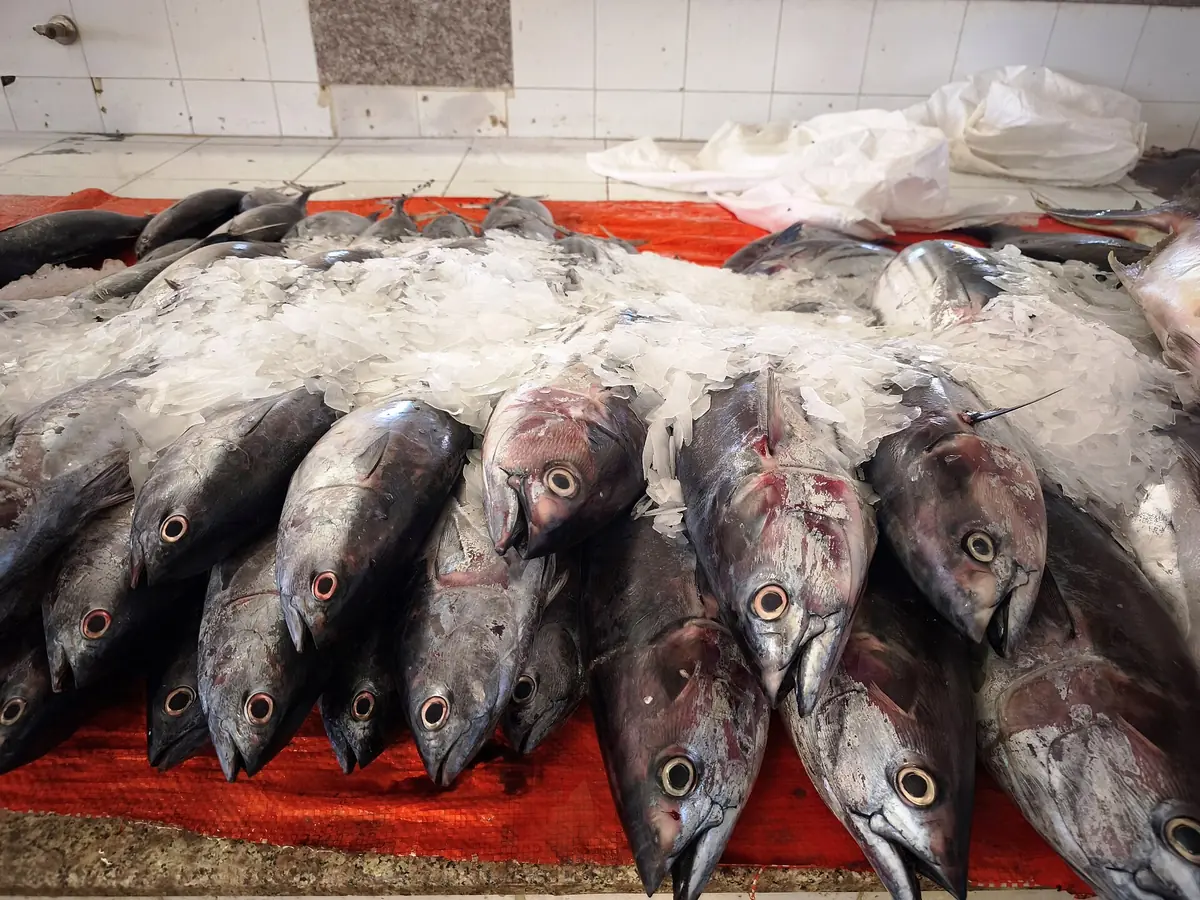
Fish on ice at a stall in Sinaw souq, a traditional market in the interior
Photograph: Simo.Albo80 — opens in a new tab · CC BY-SA 4.0 — opens in a new tab
Changes: Resized and converted to WebP; displayed with responsive crops. · Original photograph and licence details ↗ — opens in a new tab
Omani banknotes from different issues on display; a list of notes issued before 2020 is no longer legal tender
Photograph: Taha Al-Hayali — opens in a new tab · CC BY-SA 4.0 — opens in a new tab
Changes: Resized and converted to WebP; displayed with responsive crops. · Original photograph and licence details ↗ — opens in a new tab