Plan your trip
Best time to visit Oman: cool months, summer heat and turtles
In Oman, the time of year matters because of the heat. The road trip from Muscat to Nizwa, the mountains, the Wahiba Sands and Sur is made for the cool months, when the days are warm and sunny and the desert nights are fresh. From May to September, average highs are 36–40°C in Muscat and 40–44°C in Nizwa; only the mountain plateaus and the monsoon coast of Dhofar stay mild. This guide rates each month for the classic seven- or ten-day loop and describes the mountains, the desert, the wadis and the turtle beach through the year.
In this guide
Find the location ↗ — opens in a new tabThe short answer
Book six nights (Muscat 2, Nizwa 2, a Wahiba Sands camp 1, Sur 1), or nine with Jebel Akhdar and two more Muscat nights. Travel between November and March, when Muscat's average daily high is 25–30°C; December to February are the coolest months. Book the desert camp and the turtle viewing first. Bring a warm layer for the plateau, where January nights average 5°C. Avoid May to September for the loop, when Nizwa's average highs are 40–44°C. Admission to the Sultan Qaboos Grand Mosque is OMR 8. Tourist adults pay OMR 12 for the evening turtle walk at Ras al Jinz, where the reserve's guides lead a walk every night; most turtles nest from June to October, with fewer in winter, and hatchlings are best seen from May to September.
- Key point
- 7 to 10 days on the loop from Muscat
- Where it applies
- Muscat, Nizwa, a Wahiba Sands camp and Sur, with Jebel Akhdar on the ten-day route
- Timing
- November to March is the season for the loop, with December to February coolest. May to September is hot in the north (Nizwa 40–44°C); Experience Oman dates Dhofar's khareef from mid-June to September; wadis can flood after rain from October to March.
November to March: the season for the road trip
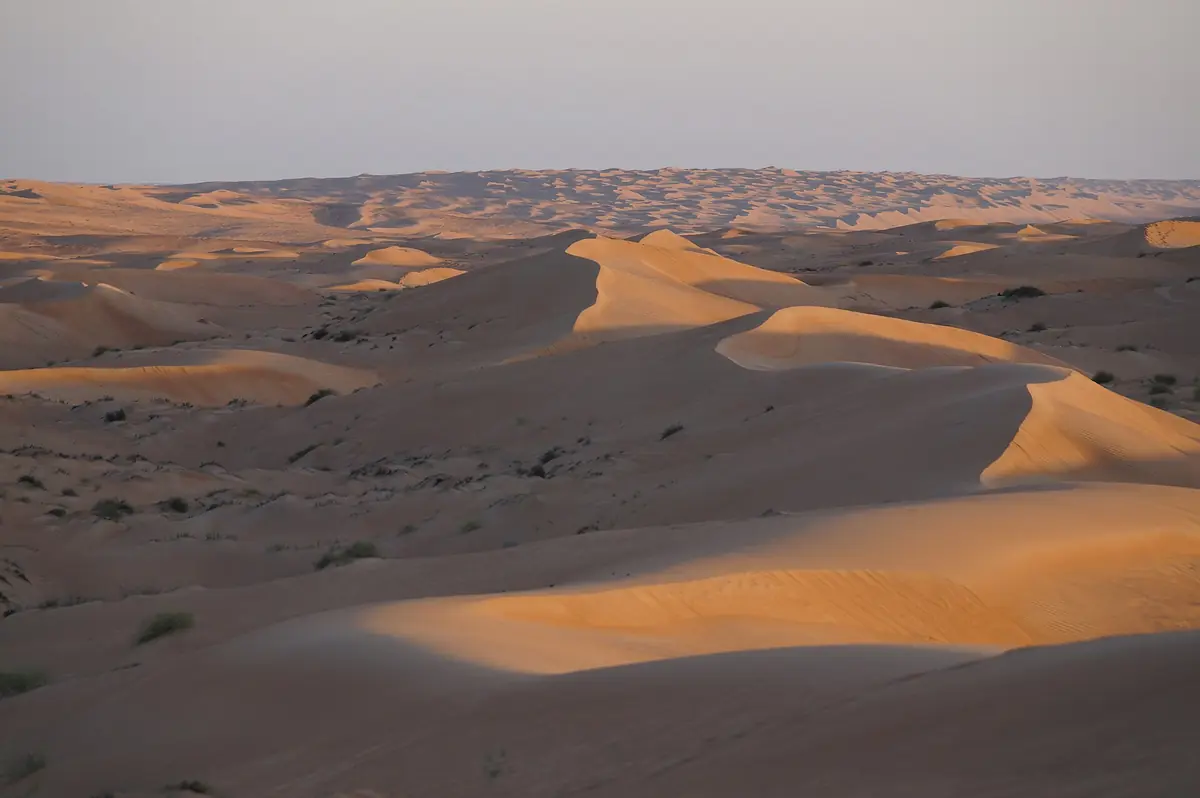
The cool season is short, and it is the best time to come. In Muscat the average daily high is 25°C in January, 26–27°C in February and December, and 30°C in March and November. Lows are 17–21°C, the days are sunny and the evenings are cool. This is the weather for walking the Mutrah souq at midday, hiking a wadi and sitting by a fire in the desert. Experience Oman gives September to April for the Sharqiyah (Wahiba) Sands, but September and October are still hot inland, so start the whole loop in November.
Inland it is a little warmer by day and cooler by night: Nizwa's average high is 26°C in January and 32°C in November. On the plateau of Jebel Akhdar, at Saiq, January averages 15°C by day and 5°C at night, so pack a fleece if you are sleeping up there. For winter dates, book the desert camp and any plateau hotel first. From November to April you can also add a boat day to the Daymaniyat Islands off Muscat; landing on the islands is prohibited from the beginning of May to the end of October.
April, May and October: the warm edges
April and October are possible, but they are hot inland. Muscat averages 35°C highs in both months and Nizwa 37–38°C. Start early, walk wadis in the morning, and spend the middle of the day in the car, a museum or the hotel pool. The mountains are pleasant in these months: Saiq averages 24°C in both.
Spring is rose season on Jebel Akhdar. From March to May the roses are distilled into rose water, and you can walk through the rose fields and visit the old distilleries. Late summer and autumn bring the harvests: pomegranates in August and September and olives from September to November. By May the lowlands are too hot for the loop: Muscat's average high is 40°C.
June to September: heat in the north, the khareef in the south
Oman's summer runs from June to August, with lowland temperatures between 35°C and 45°C, and September is only slightly cooler. Nizwa averages 43–44°C highs in June and July. In June and July, Muscat averages 38–40°C highs, with nights around 30°C. In this heat, wadi walks, dune climbs and evenings in the souq are all hard work, and a night in a desert camp is too hot to enjoy. The mountains are the escape: in summer, Saiq averages 30–31°C by day and about 20°C at night. July and August are also the wettest months there.
In the far south, the khareef (the summer monsoon) turns Dhofar green and misty from mid-June to September, according to Experience Oman. Salalah's average high falls to 27–29°C in July and August. For the 2026 season, the Civil Aviation Authority announced extra Muscat–Salalah flights, with Oman Air's seasonal operations from 1 July to 5 September. France advises against travel to the Salalah region except for an imperative reason, so our itineraries do not include Salalah.
Canada advises against non-essential travel to Oman as a whole; our health and safety guide sets out what each government says, so read it and your own government's advice before you book.
Rain and flash floods in the wadis
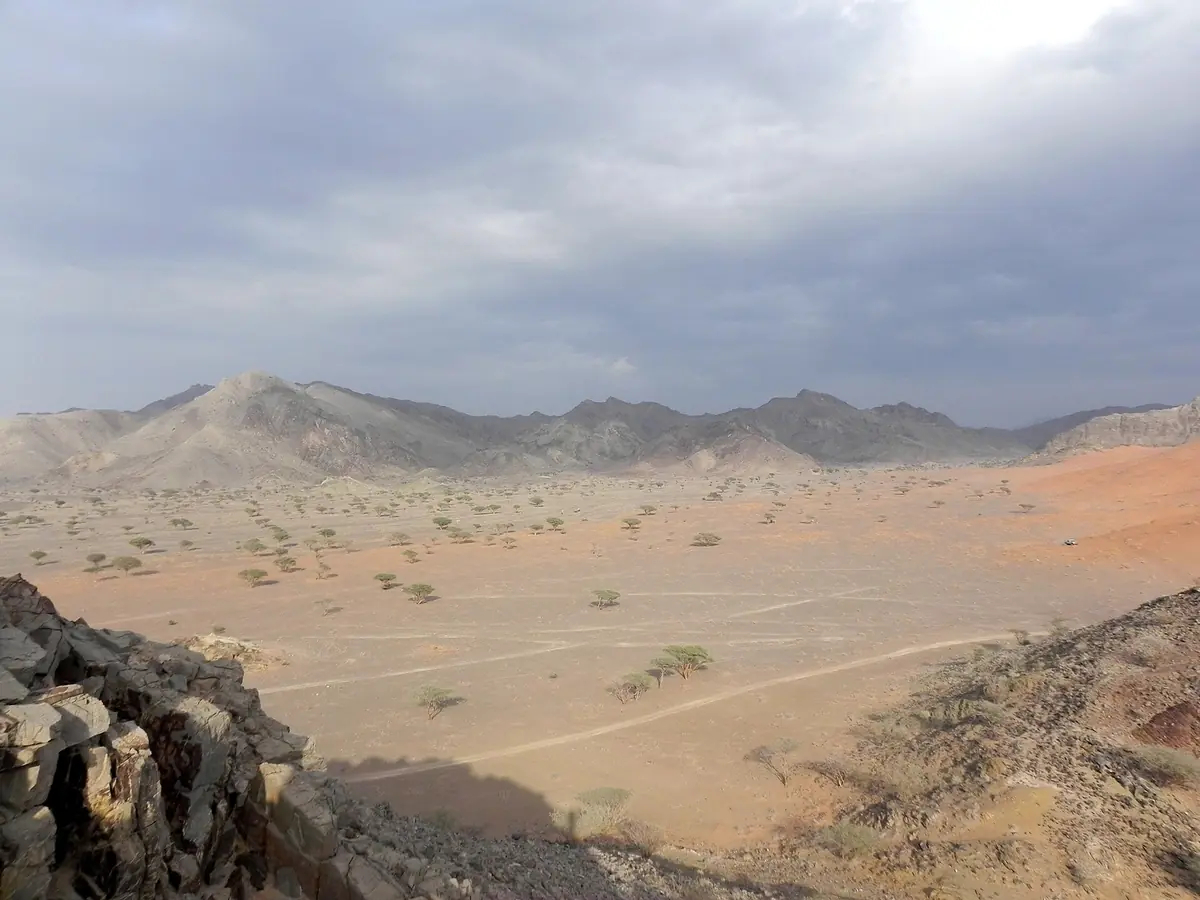
Rain is rare and comes in short bursts: even in Muscat's wettest months, December to March, the average is only 13–17 mm a month. When rain does fall, it matters, because the wadis are dry riverbeds that carry water down from the mountains. From October to March, heavy rain can send flash floods down a wadi and across the roads that cross it. Check the forecast before a wadi day, and stay away from wadis for at least a day after heavy rain.
Storms can also stop transport for a day: in March 2026 Mwasalat suspended several city and intercity bus routes during weather alerts. Keep one day of the trip free, and put Wadi Shab and Wadi Bani Khalid on days you can swap. Our transport guide covers driving after rain.
Turtles at Ras al Jinz through the year
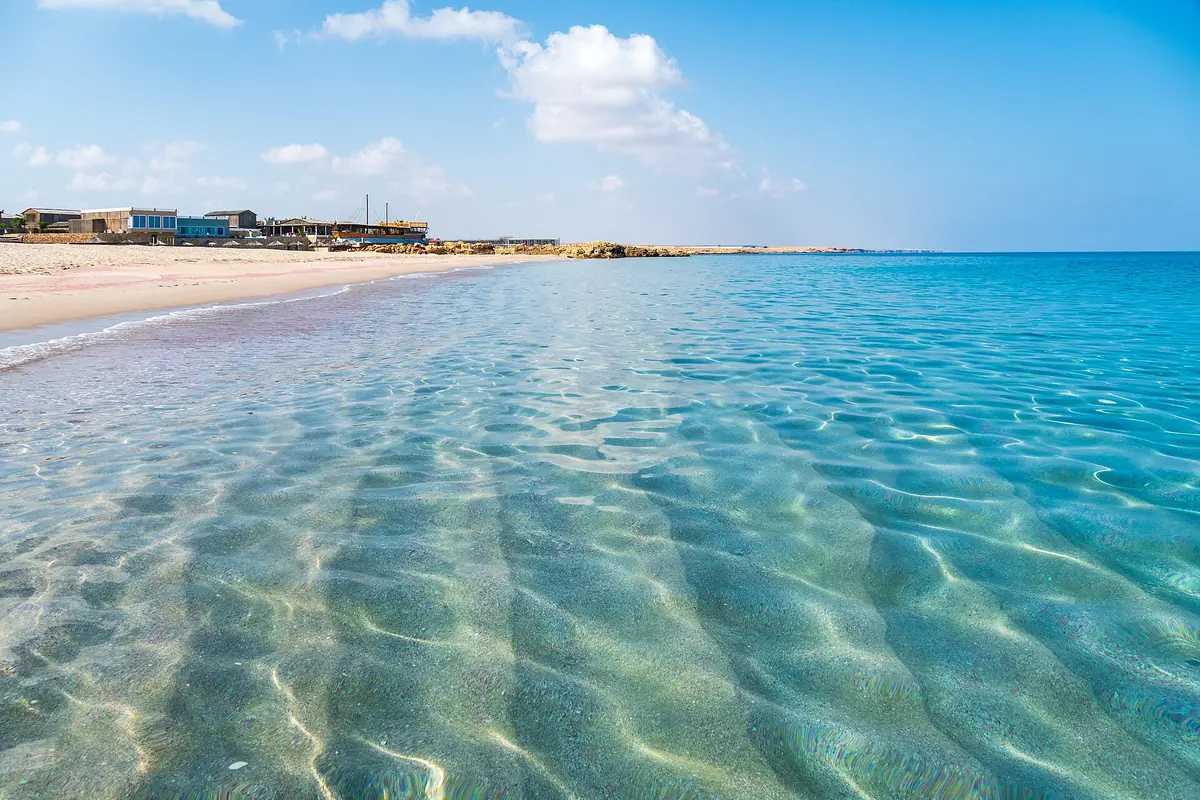
Endangered green turtles nest on the beach at Ras al Jinz Turtle Reserve, on the eastern shore of the Arabian Peninsula, and the reserve's guides take visitors out every night to watch the nesting. The night walk starts at 21:00 and the dawn walk at 05:00, at times that may change with the season. Visitors not staying at the reserve must arrive by 20:30 for the night walk. Tourist adults (12 and over) pay OMR 12. Most turtles nest from June to October, the season named by the reserve's head of guiding, and fewer come ashore through the winter; hatchlings are best seen from May to September. The reserve also says the coast at Ras al Hadd stays at about 25–36°C even in summer, cooler than the interior.
For most travellers, the turtle evening is part of a winter loop: a winter walk shows fewer nesting turtles than the June–October peak, and hatchlings are a summer sight. Book the walk for your date through the reserve's reservations office, or book a room at the reserve, whose rate includes the evening and dawn walks. If seeing hatchlings matters most, a short summer stay on the east coast works better than the full loop. Our Sur and Ras al Jinz guide has the tickets and times.
Prices and times checked 28 November 2026
Ramadan, Eid and the holidays
Ramadan follows the Islamic lunar calendar, so its dates move earlier each year. It is expected to begin on or around 8 February in 2027, so a February trip falls in Ramadan, inside the best months for the loop. During the holy month, visitors should not eat, drink, smoke or chew gum in public in the daytime, including in a car. The UK advises checking the opening hours of shops and restaurants. Eid and Oman's National Day bring public holidays, and residents use long weekends such as National Day for camping and trekking, so book the desert camp and any plateau hotel early for those dates; the dates are in our festivals and events guide.
At the Sultan Qaboos Grand Mosque, the mosque's own site admits non-Muslim visitors every day except Friday, from 08:30 to 11:00. Admission is OMR 8.
Prices and times checked 28 November 2026
Month by month
Average daily highs and lows from Oman's Directorate General of Meteorology, as published by the World Meteorological Organization (Muscat 1986–2009, Nizwa 1999–2009, Saiq 1998–2009), rounded to the nearest degree.
| Month | Muscat high / low | Nizwa high | Saiq (Jebel Akhdar) high / low | For the loop |
|---|---|---|---|---|
| January | 25 / 17°C | 26°C | 15 / 5°C | Best; cold nights on the plateau |
| February | 26 / 18°C | 30°C | 18 / 7°C | Best |
| March | 30 / 20°C | 33°C | 20 / 10°C | Good; rose season begins |
| April | 35 / 24°C | 38°C | 24 / 14°C | Hot inland; mountains pleasant |
| May | 40 / 29°C | 42°C | 29 / 18°C | Too hot for the loop |
| June | 40 / 30°C | 44°C | 31 / 20°C | Too hot; khareef starts in Dhofar |
| July | 38 / 30°C | 43°C | 31 / 21°C | Too hot; wettest month on the plateau |
| August | 36 / 28°C | 42°C | 30 / 20°C | Too hot; wettest month on the plateau |
| September | 36 / 27°C | 40°C | 28 / 17°C | Hot; turtle hatchlings |
| October | 35 / 24°C | 37°C | 24 / 13°C | Warm; season opens |
| November | 30 / 21°C | 32°C | 20 / 9°C | Good |
| December | 27 / 18°C | 28°C | 17 / 6°C | Best |
Sur, on the east coast, has temperatures similar to Muscat: highs of about 26°C in January and 31°C in November, and over 40°C from May to July.
What to book first for a winter trip
Fix your dates, then book the desert camp and, on the ten-day route, the hotel on Jebel Akhdar, then the Ras al Jinz turtle walk and the hire car. The checkpoint at Birkat Al Mouz admits only four-wheel-drive and electric cars to Jebel Akhdar, so book a 4x4 or an electric car for the ten-day route; a budget SUV may not be four-wheel drive. The seven-day itinerary and the first-trip guide give the nights and the budget.
Practical questions
What is the best month to visit Oman?
December to February are the coolest, with average highs of 25–27°C in Muscat; November and March are also good at about 30°C. Book the desert camp early for December.
Is Oman too hot in summer?
For the northern road trip, yes: from May to September Nizwa averages 40–44°C highs and Muscat 36–40°C. Only the mountain plateaus, around 30°C, and the khareef coast of Dhofar stay mild.
When is the khareef in Salalah?
From mid-June to September, according to Experience Oman. For the 2026 season, the Civil Aviation Authority announced extra Muscat–Salalah flights, with Oman Air's seasonal operations from 1 July to 5 September. Our itineraries do not include Salalah.
When can you see turtles hatching at Ras al Jinz?
The reserve says hatchlings are best seen from May to September. The walks run every night; most turtles nest from June to October, with fewer in winter. Night viewings start at 21:00 and cost OMR 12 for tourist adults (12 and over).
When is rose season on Jebel Akhdar?
From March to May, the rose-water distillation season, when you can walk through the rose fields and visit the old distilleries; the Jebel Akhdar guide gives the weeks of the harvest itself.
Keep planning your trip
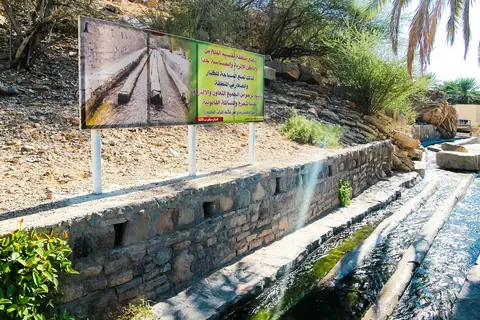
First trip to Oman
Choose seven days or ten for Muscat, Nizwa, the mountains, the Wahiba Sands and Sur: the nights, the hire car, the season, entry and an all-in budget.
Read the guide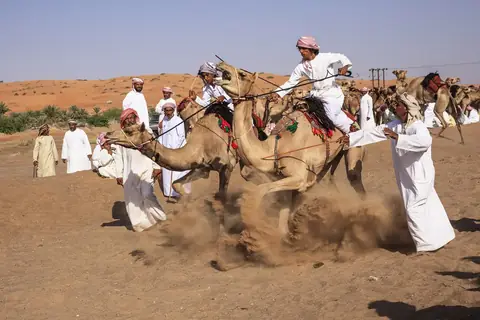
Oman festivals and events 2027
Oman's 2027 calendar: Muscat Nights in January, Ramadan and the Eids, the Dhofar khareef season, National Day in November, and how each affects a trip.
Read the guide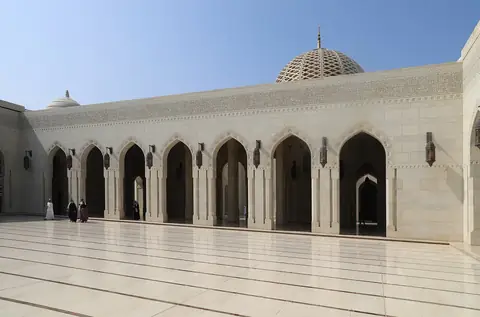
Oman in seven days
A seven-day Oman loop by hire car: Muscat, Nizwa for the fort and Jebel Shams, a desert camp, Sur, a night at the Ras al Jinz turtle reserve and the coast road.
Read the guide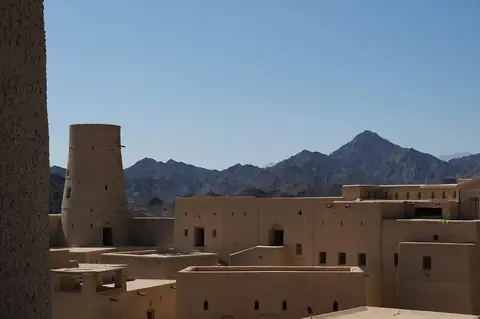
Oman in ten days
Ten days by hire car: Muscat, a night on Jebel Akhdar, Nizwa with Bahla and Jebel Shams, a desert camp, a night at the Ras al Jinz turtle reserve and Muscat again.
Read the guide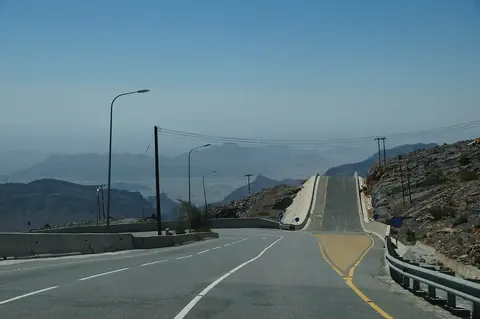
Transport in Oman
Get around Oman: a hire car from Muscat airport, when you need a 4x4, driving the Nizwa–Wahiba–Sur loop, Mwasalat buses, taxis, and flights to Salalah and Khasab.
Read the guide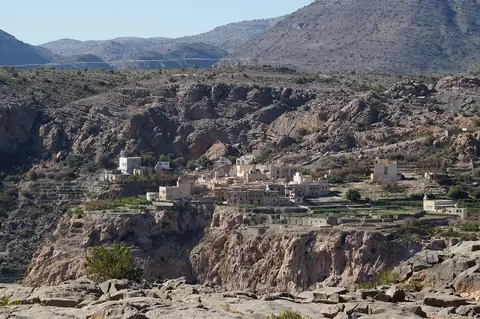
Jebel Akhdar
A night on Jebel Akhdar above Nizwa: the 4x4 checkpoint, the three-village terrace walk, Wadi Bani Habib, the spring rose harvest and where to sleep in Saiq.
Read the guideSources and checks before you travel
(22)
- Experience Oman (Ministry of Heritage and Tourism): Weather ↗ — opens in a new tab
- Experience Oman: A'Sharqiyah Sands ↗ — opens in a new tab
- World Meteorological Organization, World Weather Information Service: Muscat (Seeb) ↗ — opens in a new tab
- World Meteorological Organization, World Weather Information Service: Nizwa ↗ — opens in a new tab
- World Meteorological Organization, World Weather Information Service: Saiq ↗ — opens in a new tab
- World Meteorological Organization, World Weather Information Service: Sur ↗ — opens in a new tab
- World Meteorological Organization, World Weather Information Service: Salalah ↗ — opens in a new tab
- Civil Aviation Authority: CAA affirms readiness of the aviation system for Khareef Dhofar 2026 (15 June 2026) ↗ — opens in a new tab
- UK FCDO: Oman travel advice, safety and security ↗ — opens in a new tab
- Oman Observer: Mwasalat suspends bus routes due to weather conditions (25 March 2026) ↗ — opens in a new tab
- Ras Al Jinz Turtle Reserve: Turtle viewing ↗ — opens in a new tab
- Ras Al Jinz Turtle Reserve: About Ras Al Jinz ↗ — opens in a new tab
- Experience Oman: Sultan Qaboos Grand Mosque ↗ — opens in a new tab
- France Diplomatie: Oman, conseils aux voyageurs ↗ — opens in a new tab
- Government of Canada: Travel advice for Oman ↗ — opens in a new tab
- Diwan of Royal Court: Sultan Qaboos Grand Mosque ↗ — opens in a new tab
- Ras Al Jinz Turtle Reserve: Accommodation ↗ — opens in a new tab
- Environment Authority: field visit to the Daymaniyat Islands Nature Reserve ↗ — opens in a new tab
- Oman Observer: Oman's advance calendar gives you more time to plan holidays ↗ — opens in a new tab
- Oman Observer: Can you drive an EV up Jabal Akhdhar, without a 4WD? (13 October 2026) ↗ — opens in a new tab
- Oman Observer: Ras al Hadd, a safe bet for turtles (22 August 2023) ↗ — opens in a new tab
- Turkish Diyanet: religious days of 2027 (calculated) ↗ — opens in a new tab
Reference sources for the version dated 29 November 2026. Confirm opening times, access, transport and conditions for your travel dates.
Photo credits
(4)
The beach at Ras al Hadd, near the turtle reserve, on a clear day
Photograph: dconvertini — opens in a new tab · CC BY-SA 2.0 — opens in a new tab
Changes: Resized and converted to WebP; displayed with responsive crops. · Original photograph and licence details ↗ — opens in a new tab
The Wahiba Sands at sunset; September to April is the season for a camp night
Photograph: albinfo — opens in a new tab · CC BY-SA 4.0 — opens in a new tab
Changes: Resized and converted to WebP; displayed with responsive crops. · Original photograph and licence details ↗ — opens in a new tab
Rain clouds over the mountains: the sign to stay out of the wadis
Photograph: Peter Dowley from Dubai, United Arab Emirates — opens in a new tab · CC BY 2.0 — opens in a new tab
Changes: Resized and converted to WebP; displayed with responsive crops. · Original photograph and licence details ↗ — opens in a new tab
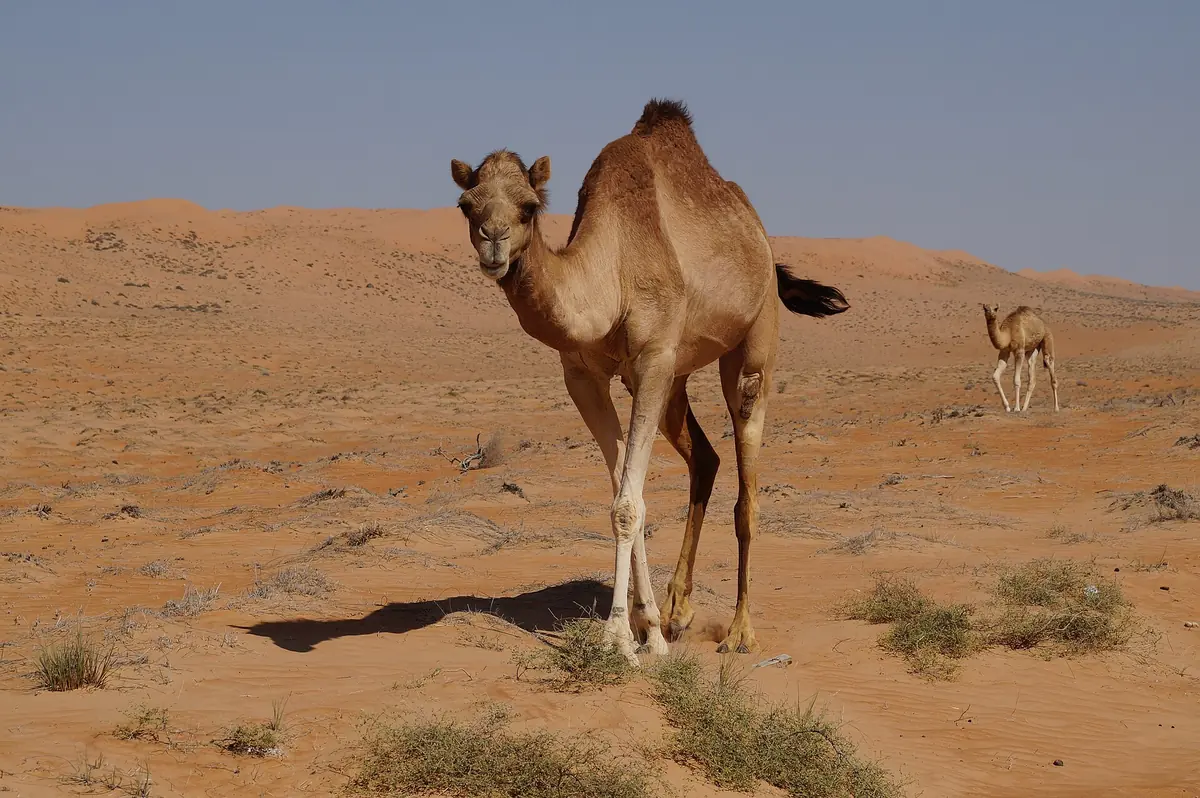
Camels in the Wahiba Sands
Photograph: albinfo — opens in a new tab · CC BY-SA 4.0 — opens in a new tab
Changes: Resized and converted to WebP; displayed with responsive crops. · Original photograph and licence details ↗ — opens in a new tab