South Al Sharqiyah
Sur and Ras al Jinz: a night for the turtles, the dhow town and Wadi Shab
Sur is the old shipbuilding town at the eastern end of Oman's coast road, where a dhow factory still works and an old lighthouse stands over the lanes of Al Ayjah. About 35 km beyond it, Ras al Hadd is the first place in the Arabian Peninsula to see the sunrise, and on the beach of Ras al Jinz just past it green turtles come ashore after dark to dig their nests. One night covers both: an afternoon in Sur, the turtle walk after 21:00, the dawn walk if you are sleeping at the reserve, and the coast road back to Muscat with a swim in Wadi Shab on the way.
In this guide
Find the location ↗ — opens in a new tabThe short answer
Book one night. Sleep in the reserve’s own rooms at Ras al Jinz if you can: breakfast, the evening and dawn turtle walks and the visitor centre are included, and you do not drive after dark. Sur town is the fallback; from there the evening walk means driving about 35 km each way past Ras al Hadd, back in the dark. Without a reserve room, the turtle walk costs OMR 12 for tourist adults (12 and over) and OMR 6 per child (6 to 12 on the reserve's price list); be at the reserve by 20:30 for the 21:00 walk. Fath Al Khair, Sur’s maritime museum, costs OMR 3 for non-Omani visitors aged 12 and over. Book the room or the walk first, through the reserve’s reservations office, because the evening is the reason for the night.
- Suggested time
- 1 night: an afternoon in Sur, the turtles after dark and at dawn
- Where to stay
- The Ras al Jinz Turtle Reserve's own rooms, or Sur town and a drive out past Ras al Hadd
- Season and timing
- The reserve runs guided turtle walks every night. Its head of guiding gives June to October as the nesting season, with fewer turtles coming ashore through the winter. The reserve names May to September as the best time to see hatchlings, and calls the weather at Ras al Hadd comfortable all year, averaging 25 °C to 36 °C in summer.
The turtle walks at Ras al Jinz
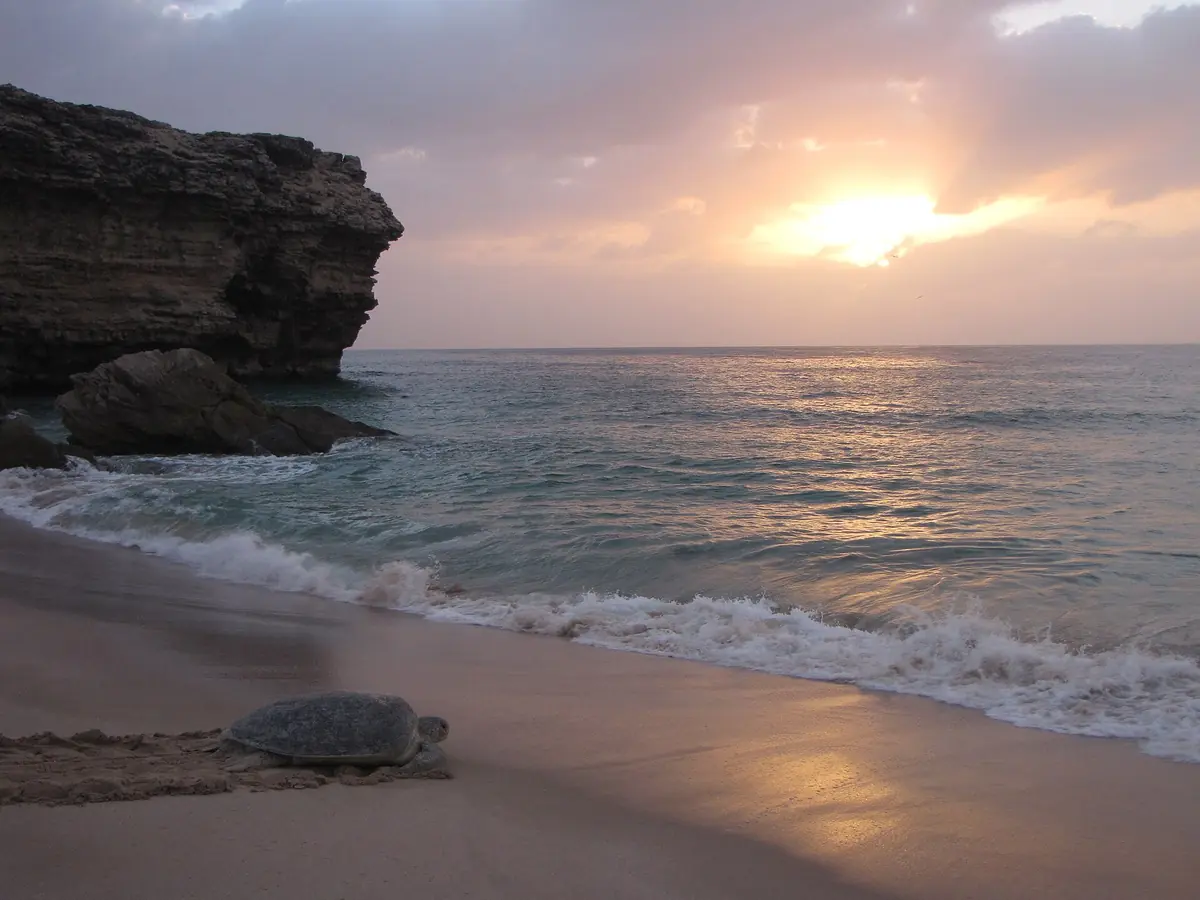
Ras al Jinz is a long, remote beach with mountains at both ends on the eastern shore of the Arabian Peninsula, and by the reserve's own account it is probably the most important nesting site of the endangered green turtle in the Indian Ocean. A Royal Decree made it a reserve in 1996, and the Ras al Jinz Turtle Centre opened in 2008; Omran, the Oman Tourism Development Company, manages it. Ras al Jinz is the only place in Oman where the public may watch turtles nest, and only on the reserve's guided walks. You walk with one of the reserve's guides and watch a turtle haul herself up the sand and dig her nest. Use no flash: the reserve counts camera flashes and car lights among the threats to the turtles.
There are two walks a day. The evening walk starts at 21:00, and visitors who are not staying at the reserve must arrive by 20:30. The dawn walk starts at 05:00, with arrival by 04:45 for visitors not staying at the reserve; at first light you see the last turtles returning to the sea, and in the hatching season the young making for the water. The reserve may shift these times with the season. Most turtles nest from June to October, the nesting season named by the reserve’s head of guiding, and their numbers fall through the winter, so a walk between November and April shows fewer nesting turtles.
On the reserve’s price list, walks for visitors not staying at the reserve cost OMR 12 for tourist adults (12 and over) and OMR 6 per child (6 to 12 on the reserve's price list); children under 6 go free. Oman residents pay OMR 8 and OMR 4, and Omani citizens OMR 3 and OMR 1, with an ID shown at check-in. Book the walk through the reserve’s reservations office by phone or e-mail. Guests in the reserve’s own rooms have both walks included. The reserve’s visitor centre, a museum of the turtle’s life cycle and the archaeology of Ras al Jinz, is open every day from 09:00 to 20:30 and charges a separate entry fee; the reserve publishes no figure, so ask when you book the walk.
The beach itself is closed from 17:00 to 08:00, and by day you enter only with the reserve's permission and on payment. On the coast from Ras al Hadd to Ruwais, you may camp only 200 metres back from the beach, and you may not watch turtles from a camp. The reserve's walks are the only way to see the nesting.
Prices and times checked 28 November 2026
Sleeping at the reserve or in Sur
Sleep at the reserve if the turtles are the reason for the trip. The Ras al Jinz Turtle Reserve has 17 air-conditioned twin or double rooms and two bunk-bed rooms of its own, and 15 air-conditioned eco-tents on a small hill nearby, all with their own bathroom. Their rates include the buffet breakfast, both turtle walks and the visitor centre, and they change with the season and the day of the week. The dawn walk is then a short walk from your room.
Sleep in Sur only if the reserve is full or you want the town and its restaurants. From Sur you drive past Ras al Hadd to the reserve, about 35 km from the town centre, for the 21:00 walk and back after it, in the dark. Germany advises against driving outside Muscat in darkness, and camels and goats wander onto these roads, so drive very slowly or leave the walk out; few readers will want to repeat the drive for the 05:00 walk as well.
Our where-to-stay guide names hotels in Sur with their rates, and the seven-day route puts this night between the Wahiba Sands and the coast road back to Muscat.
Prices and times checked 29 November 2026
Sur: dhow yards, Al Ayjah and Fath Al Khair
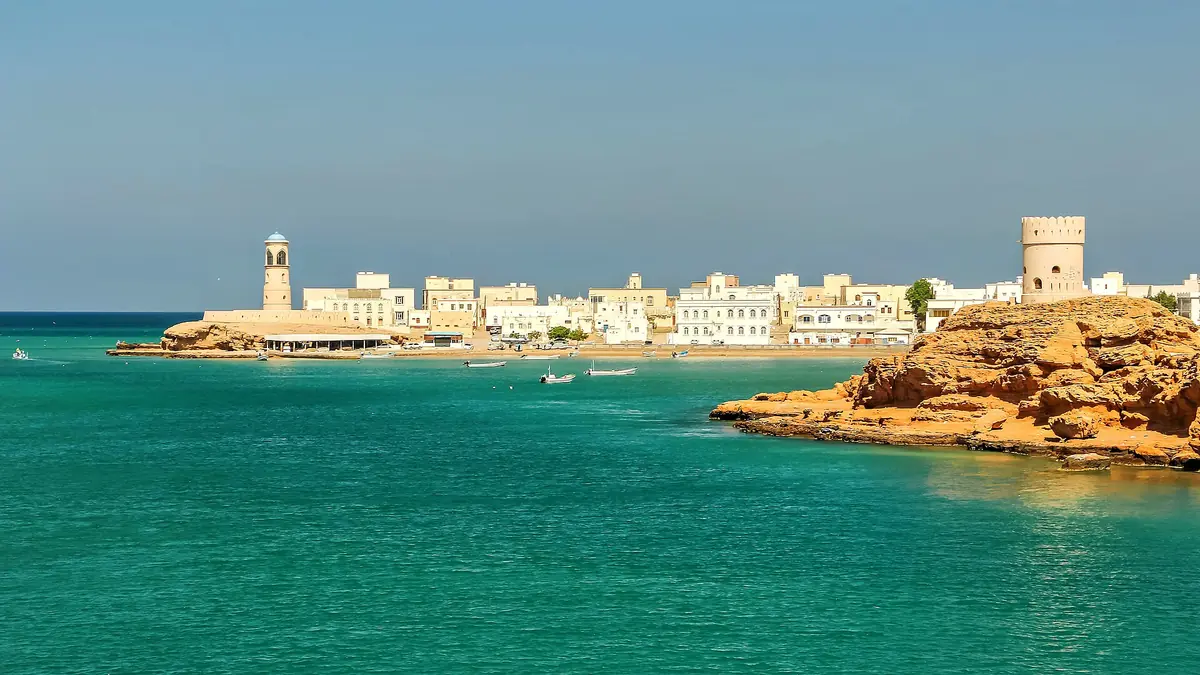
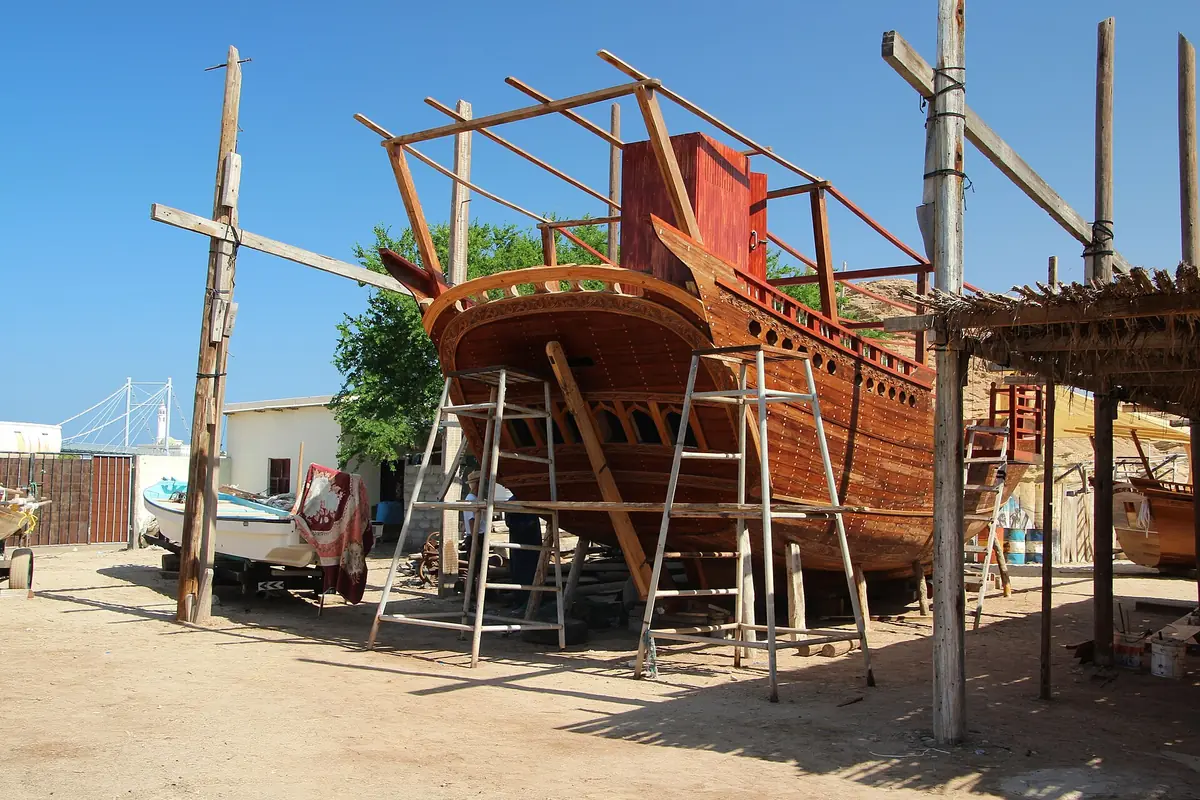
Sur was one of the great shipbuilding towns of Arabia, and the gallery of the Dhow Factory shows the craft that has shaped the town for generations. Al Ayjah is the old quarter of lanes, carved wooden doors and the lighthouse. Walk its lanes in the late afternoon, then climb the watchtower for the view over the marina, the suspension bridge and the dhow factory. Freshly caught fish arrive at the market each morning.
Fath Al Khair, Sur's maritime museum, opened in November 2021 under the Ministry of Heritage and Tourism. Its halls hold navigation instruments, manuscripts and finds, and in the courtyard stands the Fath Al Khair, the last traditional ghanjah ship in Oman, which Sur's merchants and residents brought home in the early 1990s. It is open Sunday to Thursday from 08:00 to 13:30 and Saturday from 09:00 to 17:00, and closed on Fridays and public holidays. Non-Omani visitors aged 12 and over pay OMR 3.
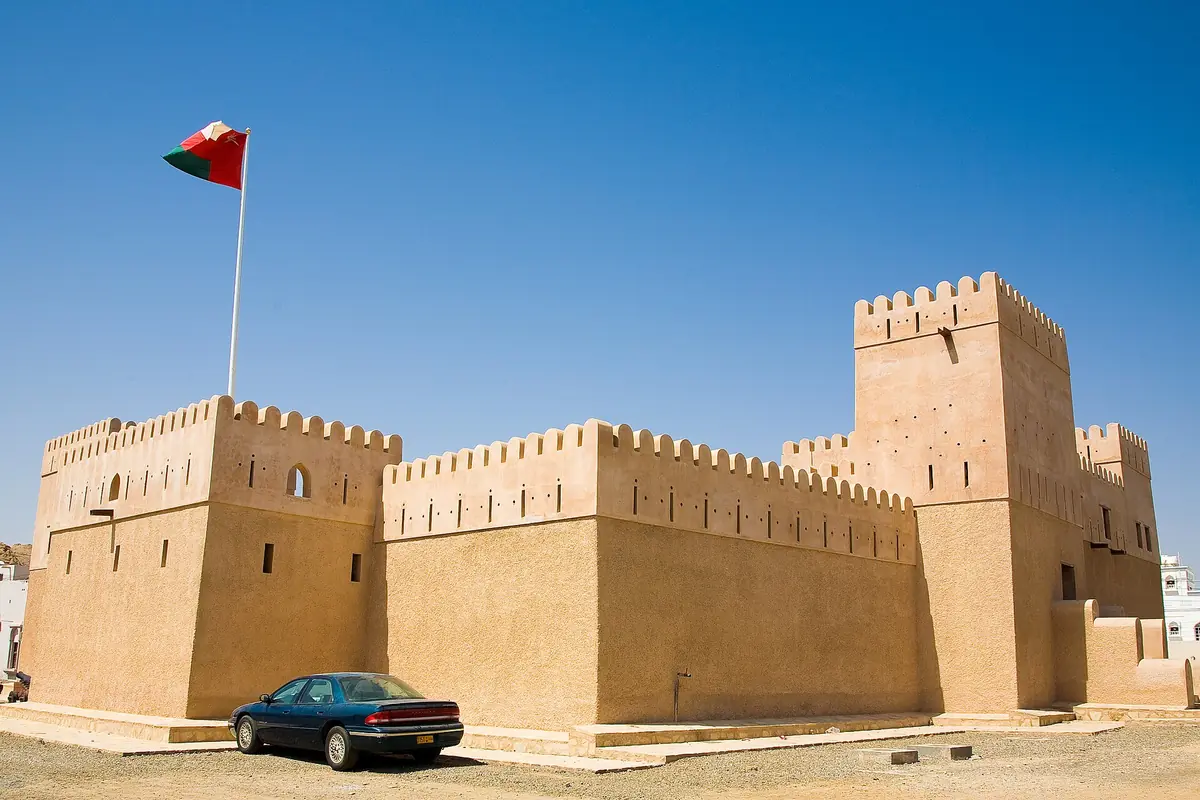
Sunaysilah Fort stands on a rocky plateau above the town. Its four towers, three round and one square, were built to take cannon fire, and inside are a mosque with two mihrabs, a Qur'an classroom, a prison and storerooms. Out at Ras al Hadd, about 35 km from the centre of Sur, Ras al Hadd Castle began in the 16th century and guards the entrance to Khor al Hajar, with teak ceilings from India; the cape is the first place in the Arabian Peninsula to see the sunrise.
Prices and times checked 28 November 2026
Wadi Shab, Qalhat and Bimmah on the coast road
The coast road between Muscat and Sur passes three stops worth fitting in on the way, in either direction. Wadi Shab, in the wilayat of Sur and about 170 km from Muscat International Airport, is a limestone canyon of turquoise pools. A short boat ride crosses the water from the car park, depending on the water level, for a small fare that includes the trip back; carry cash for it. From there, a modest climb on rough trails between cliffs and palms leads in about 45 minutes to pools for swimming, and at the end you swim through a narrow gap into a cave with a waterfall. Basic swimming is needed for the cave, and life jackets are advised. Wear hiking shoes or water sandals, not flip-flops, and carry water and food, as there are no shops in the wadi. Check the forecast before you go: the UK warns of flash floods in wadis between October and March and advises keeping out of them for at least a day after heavy rain.
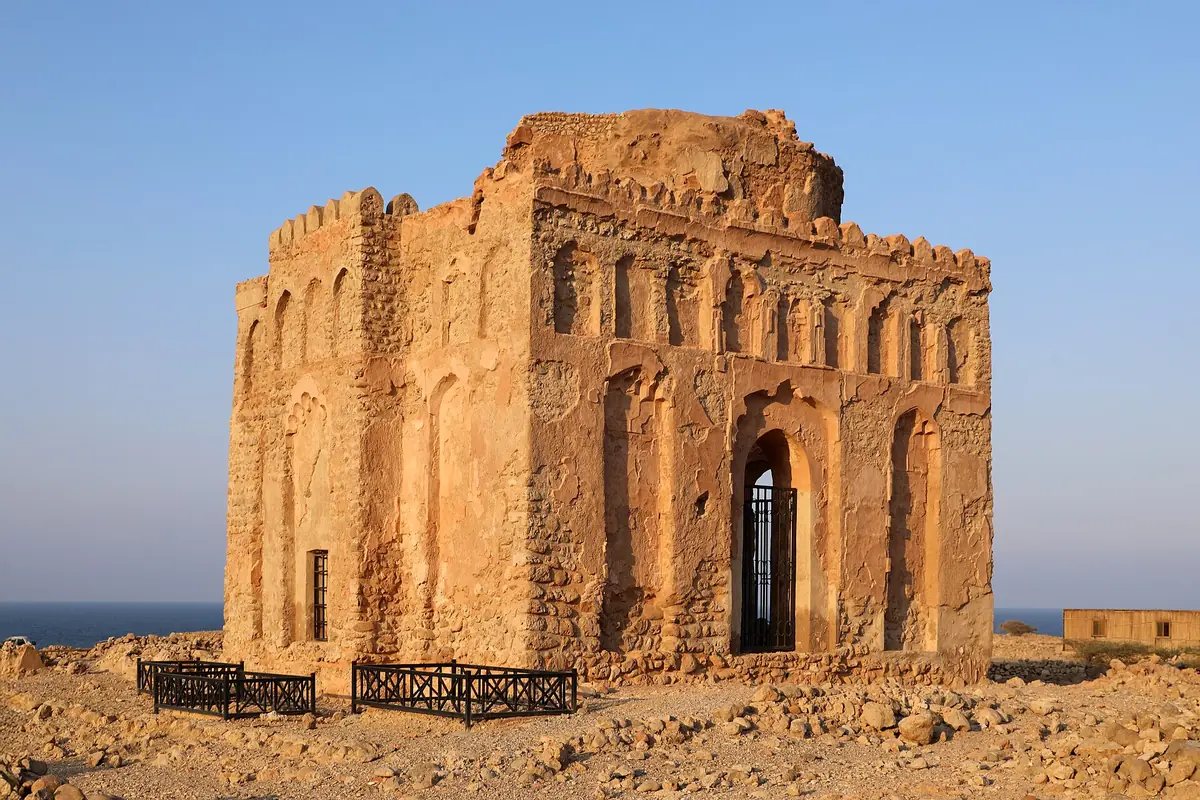
Above the town of Qalhat, an ancient city that is now a UNESCO World Heritage Site, stands the Bibi Maryam mausoleum: a cube of coral and limestone under a dome, named after Bibi Maryam, who built it. Her husband, governor of Qalhat and later Hormuz, died around 1311. It is a short stop beside the road.
Nearer Muscat, the Bimmah Sinkhole (Hawiyat Najm) lies in a municipal park between Bimmah and Dibab, about 120 km from Muscat International Airport. It is a deep crater of water that local legend says a fallen star made, and you can swim in it. Entry to the park is free, and Muscat Municipality is developing it, so parts may be fenced off for works.
One night, hour by hour
This plan arrives from the Wahiba Sands, as the seven-day route does, and returns to Muscat by the coast. Coming from Muscat instead, take Wadi Shab and Qalhat on the way out and the inland road back.
- Day 1, morning: leave the desert camp after breakfast and drive to Sur, to reach Fath Al Khair before it closes at 13:30 (Sunday to Thursday; on Saturdays it opens 09:00–17:00, and it is closed on Fridays). Our Wahiba Sands guide covers the camp.
- Day 1, afternoon: lunch, the dhow yard, then Al Ayjah’s lanes, lighthouse and watchtower in the late light. Check in at the reserve, or at your Sur hotel.
- Day 1, evening: dinner, then be at the reserve by 20:30 for the 21:00 walk.
- Day 2, dawn: if you are sleeping at the reserve, the 05:00 walk, then breakfast. Ras al Hadd Castle is on the way back towards Sur.
- Day 2, the coast road: Bibi Maryam at Qalhat, a long stop at Wadi Shab with time to swim to the cave, then the Bimmah Sinkhole before Muscat.
What to eat and where to look
Makbous
Rice cooked with meat and vegetables and coloured with saffron and cardamom, served on a shared tray with yoghurt or salad, bread and tomato sauce.
- Where to look
- Omani restaurants in Sur.
- Fit it into your day
- Day 1 lunch after Fath Al Khair.
Paplou
A fish or seafood soup of Oman's coast, often made with tuna and its roe, sharpened with lime and a paste of garlic, ginger and coriander, and served over rice.
- Where to look
- Omani restaurants in Sur; order it by name.
- Fit it into your day
- Day 1 dinner before the turtle walk.
Mishkak
Skewers of meat or seafood marinated in garlic, ginger and spices and grilled over charcoal, eaten with chilli or tamarind sauce.
- Where to look
- Omani restaurants and grills in Sur.
- Fit it into your day
- Day 1 dinner, if you prefer it to fish.
Fish from the Sur market
The catch landed at Sur’s fish market each morning, grilled or fried in the town’s restaurants: the everyday food of a fishing town.
- Where to look
- The fish market in the morning, then Omani restaurants in Sur.
- Fit it into your day
- Day 1 lunch, or dinner before the turtle walk.
Getting there: car, tour or bus
A hire car is the easy way. The coast road runs from Muscat by Qurayyat, Bimmah, Wadi Shab and Qalhat to Sur, and the expressway from Bidbid inland links Sur with the Wahiba Sands and Ibra. The Ras al Hadd road continues from Sur to the reserve. Experience Oman gives Muscat to Ras al Jinz as about 248 km and 3 hours 11 minutes, and the Wahiba Sands to Ras al Jinz as about 194 km and 4 hours 41 minutes; Sur is on both routes, about 35 km short of the reserve. Drive slowly after dark: the UK warns of camels and goats wandering onto roads outside Muscat, and the reserve counts car lights among the threats to the turtles. The transport guide covers hire cars, buses to Sur and the drive times.
Without a car, two-day tours from Muscat combine Wadi Shab with the turtle walk; the tour box below lists one. Read our health and safety guide and your own government's advice before you book.
What the turtles and the sights cost
Two adults sleeping in Sur pay OMR 30 for the evening turtle walk and Fath Al Khair. At the reserve the walks are in the room rate, so only the museum's OMR 6 for two remains.
| Ticket | Tourist adult | Child 6–11 | For two adults |
|---|---|---|---|
| Ras al Jinz turtle walk (not staying at the reserve) | OMR 12 | OMR 6 | OMR 24 |
| Fath Al Khair maritime museum (non-Omani, 12 and over) | OMR 3 | — | OMR 6 |
| Bimmah Sinkhole park | free | free | free |
Children under 6 walk free at Ras al Jinz. The reserve’s visitor centre charges its own fee for visitors who are not staying there, and the Wadi Shab boat is a small fare that includes the trip back; neither is in these tickets. Rooms, meals and fuel are priced in our trip cost guide.
Prices and times checked 28 November 2026
Practical questions
Do I need to book the Ras al Jinz turtle walk?
Yes. Book a room at the reserve, which includes both walks, or book the walk alone through the reserve's reservations office. Visitors not staying there pay OMR 12 per tourist adult and must arrive by 20:30 for the 21:00 walk.
When is the best time to see turtles at Ras al Jinz?
Walks run every night. Most turtles nest from June to October, and fewer come ashore in winter; the reserve names May to September as the best months to see hatchlings, and the dawn walk at 05:00 shows the last turtles returning to the sea.
Should I stay at the reserve or in Sur?
At the reserve, if the turtles are your reason for coming: breakfast and both walks are included and the dawn walk is on your doorstep. Stay in Sur for its restaurants and the town, but the evening walk then ends with a drive back in the dark, which Germany advises against outside Muscat.
Can I take photos of the turtles?
Not with a flash: the reserve counts camera flashes and car lights among the threats to the turtles.
Is Wadi Shab on the way to Sur?
Yes. It lies on the coast road from Muscat, about 170 km from the airport, with a short boat crossing at the entrance and a swim to the cave waterfall at the end.
How much does the Ras al Jinz turtle walk cost?
OMR 12 per tourist adult and OMR 6 per child (6 to 12 on the reserve's price list) if you are not staying at the reserve; children under 6 are free. Guests in the reserve’s own rooms have the evening and dawn walks included in the room rate.
Keep planning your trip
Wahiba Sands
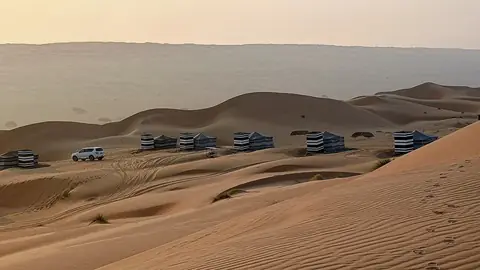
A night in the Wahiba (Sharqiyah) Sands: choosing a camp, getting onto the sand from Al Wasil, Wadi Bani Khalid on the way, and how to plan the night.
Read the guide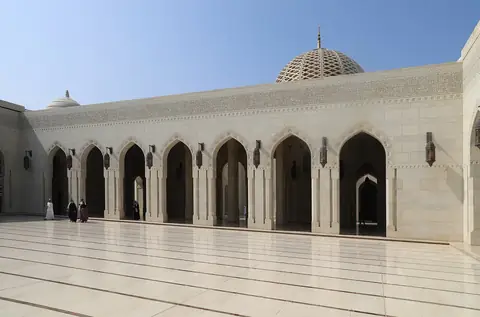
Oman in seven days
A seven-day Oman loop by hire car: Muscat, Nizwa for the fort and Jebel Shams, a desert camp, Sur, a night at the Ras al Jinz turtle reserve and the coast road.
Read the guide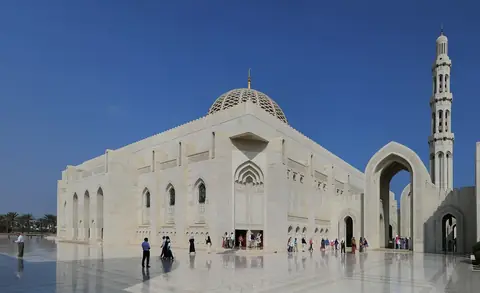
Muscat
Plan two nights in Muscat: the Grand Mosque's morning visiting hours, Mutrah's souq and corniche, Old Muscat's forts and museum, Qurum, and where to stay.
Read the guide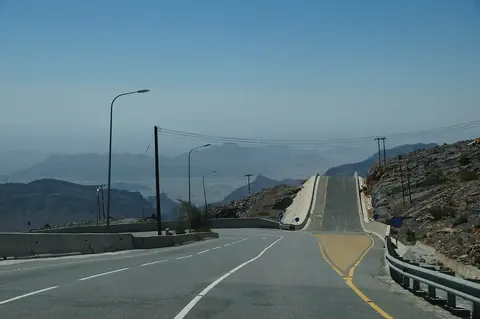
Transport in Oman
Get around Oman: a hire car from Muscat airport, when you need a 4x4, driving the Nizwa–Wahiba–Sur loop, Mwasalat buses, taxis, and flights to Salalah and Khasab.
Read the guide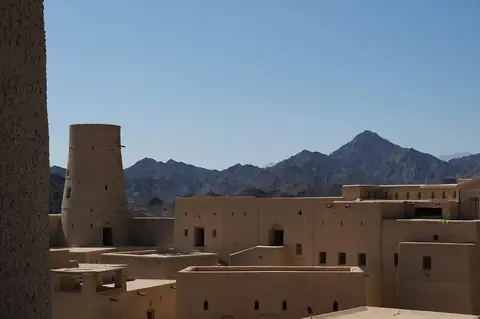
Oman in ten days
Ten days by hire car: Muscat, a night on Jebel Akhdar, Nizwa with Bahla and Jebel Shams, a desert camp, a night at the Ras al Jinz turtle reserve and Muscat again.
Read the guide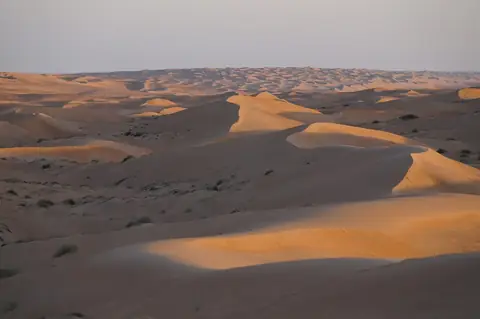
Best time to visit Oman
Choose your Oman dates: the cool months from November to March, summer heat in the north, the Dhofar khareef, wadi floods, rose season, turtles and Ramadan.
Read the guideSources and checks before you travel
(28)
- Ras Al Jinz Turtle Reserve: Turtle Viewing ↗ — opens in a new tab
- Ras Al Jinz Turtle Reserve: About Ras Al Jinz ↗ — opens in a new tab
- Ras Al Jinz Turtle Reserve: Accommodation ↗ — opens in a new tab
- Ras Al Jinz Turtle Reserve: Facilities ↗ — opens in a new tab
- OMRAN Group: Ras Al Jinz Turtle Reserve ↗ — opens in a new tab
- Oman Observer: Ras al Jinz, beyond the magic of sea turtles ↗ — opens in a new tab
- Experience Oman (Ministry of Heritage and Tourism): Archaeological site at Ras al Jinz ↗ — opens in a new tab
- Experience Oman (Ministry of Heritage and Tourism): South Al Sharqiyah ↗ — opens in a new tab
- Experience Oman (Ministry of Heritage and Tourism): Fath Al Khair Center ↗ — opens in a new tab
- Experience Oman (Ministry of Heritage and Tourism): Al Sunaysilah Fort ↗ — opens in a new tab
- Experience Oman (Ministry of Heritage and Tourism): Ras Al Hadd Castle ↗ — opens in a new tab
- Experience Oman (Ministry of Heritage and Tourism): Bibi Maryam Mausoleum ↗ — opens in a new tab
- Experience Oman (Ministry of Heritage and Tourism): Wadi Shab ↗ — opens in a new tab
- Oman Observer: Plans unveiled to develop Oman's Bimmah Sinkhole ↗ — opens in a new tab
- Oman Observer: Muscat Municipality temporarily closes Hawiyat Najm Park ↗ — opens in a new tab
- Oman Observer: Hawiyat Najm Park project to boost tourism potential ↗ — opens in a new tab
- Oman Observer: Sweet spell of Sur ↗ — opens in a new tab
- Oman Observer: 6 foods to try in Oman ↗ — opens in a new tab
- UK Foreign Office (FCDO): Oman safety and security ↗ — opens in a new tab
- Government of Canada: Oman travel advice ↗ — opens in a new tab
- France Diplomatie: Oman, conseils aux voyageurs ↗ — opens in a new tab
- German Federal Foreign Office: Oman travel and safety advice (German) ↗ — opens in a new tab
- Experience Oman (Ministry of Heritage and Tourism): About Oman ↗ — opens in a new tab
- Oman Observer: Ras al Hadd, a safe bet for turtles (22 August 2023) ↗ — opens in a new tab
- Oman Observer: Wadi Shab tourist area, what visitors can expect now (25 October 2023) ↗ — opens in a new tab
- Experience Oman (Ministry of Heritage and Tourism): Wonders of cities, beaches, deserts and mountains (self-drive plan) ↗ — opens in a new tab
- Experience Oman (Ministry of Heritage and Tourism): Sur and Wadi Shab tour package ↗ — opens in a new tab
- German Federal Foreign Office: Oman travel and safety advice (German) ↗ — opens in a new tab
Reference sources for the version dated 29 November 2026. Confirm opening times, access, transport and conditions for your travel dates.
Photo credits
(6)
The Al Ayjah lighthouse and old quarter across the lagoon in Sur
Photograph: Dr. Thomas Liptak — opens in a new tab · CC BY-SA 4.0 — opens in a new tab
Changes: Resized and converted to WebP; displayed with responsive crops. · Original photograph and licence details ↗ — opens in a new tab
Sunaysilah Fort in Sur
Photograph: Andries Oudshoorn — opens in a new tab · CC BY-SA 2.0 — opens in a new tab
Changes: Resized and converted to WebP; displayed with responsive crops. · Original photograph and licence details ↗ — opens in a new tab
A dhow taking shape at the dhow yard in Sur
Photograph: Dr. Thomas Liptak — opens in a new tab · CC BY-SA 4.0 — opens in a new tab
Changes: Resized and converted to WebP; displayed with responsive crops. · Original photograph and licence details ↗ — opens in a new tab
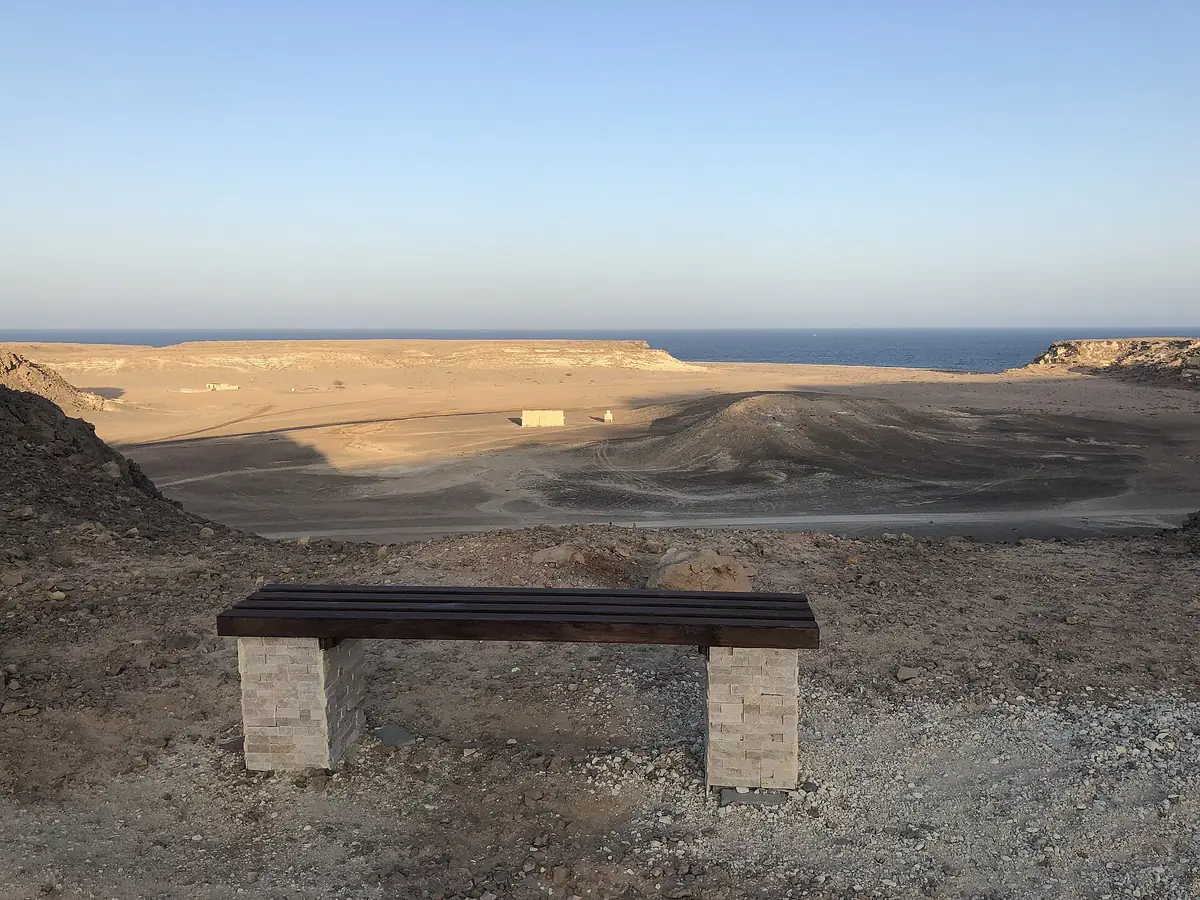
The coast at Ras al Jinz from the slope above the beach
Photograph: Albinfo — opens in a new tab · CC BY 4.0 — opens in a new tab
Changes: Resized and converted to WebP; displayed with responsive crops. · Original photograph and licence details ↗ — opens in a new tab
A green turtle on the beach at Ras al Jinz, with the sun low over the sea
Photograph: F igy — opens in a new tab · CC BY 3.0 — opens in a new tab
Changes: Resized and converted to WebP; displayed with responsive crops. · Original photograph and licence details ↗ — opens in a new tab
The Bibi Maryam mausoleum above Qalhat
Photograph: Francesco Bini — opens in a new tab · CC BY-SA 4.0 — opens in a new tab
Changes: Resized and converted to WebP; displayed with responsive crops. · Original photograph and licence details ↗ — opens in a new tab