North Al Sharqiyah
Wahiba Sands: one night in a desert camp, with Wadi Bani Khalid
South of the road from Ibra to Sur, the flat gravel plain at Al Mintarib gives way to the Wahiba Sands, also called the Sharqiyah Sands: some 10,000 square kilometres of dunes that change from pale yellow to rust and orange as the day goes on. Bedouin families still keep camels here, and Bidiyah is known for its camel and horse races. One night is the classic visit: the drive in over the sand, a climb up a dune for the sunset, dinner in camp, a sky full of stars and the sunrise before breakfast. Wadi Bani Khalid, a valley of waterfalls and natural pools in the Eastern Hajar Mountains to the north, is the stop on the way.
In this guide
Find the location ↗ — opens in a new tabThe short answer
Book one night in a camp near Al Wasil or Bidiyah first, because the camp night fixes your driving days. On KAYAK, rooms for two started from USD 106 a night at Sand Delight Camp, with breakfast and dinner buffets, USD 144 at Arabian Oryx Camp and USD 336 at 1000 Nights Camp, both with breakfast; our where-to-stay guide compares them. Book the camp's transfer from the highway when you book the night, because the last stretch is on sand; the UK advises a four-wheel drive for desert driving. Nizwa to the sands is about 231 km by Experience Oman's figure, so leave early, swim at Wadi Bani Khalid on the way and reach camp before dark. Next day, Sur lies further along the same highway. Camel rides and dune drives cost extra.
- Suggested time
- 1 night in a desert camp, arriving in the afternoon
- Where to stay
- A camp at the northern edge of the sands, south of Al Wasil and Bidiyah
- Season and timing
- September to April is the best time to visit the sands. Summer days are extremely hot, and the UK warns that extreme heat has caused deaths in Oman. In summer, keep the dunes for the early morning and the evening.
A night in the dunes
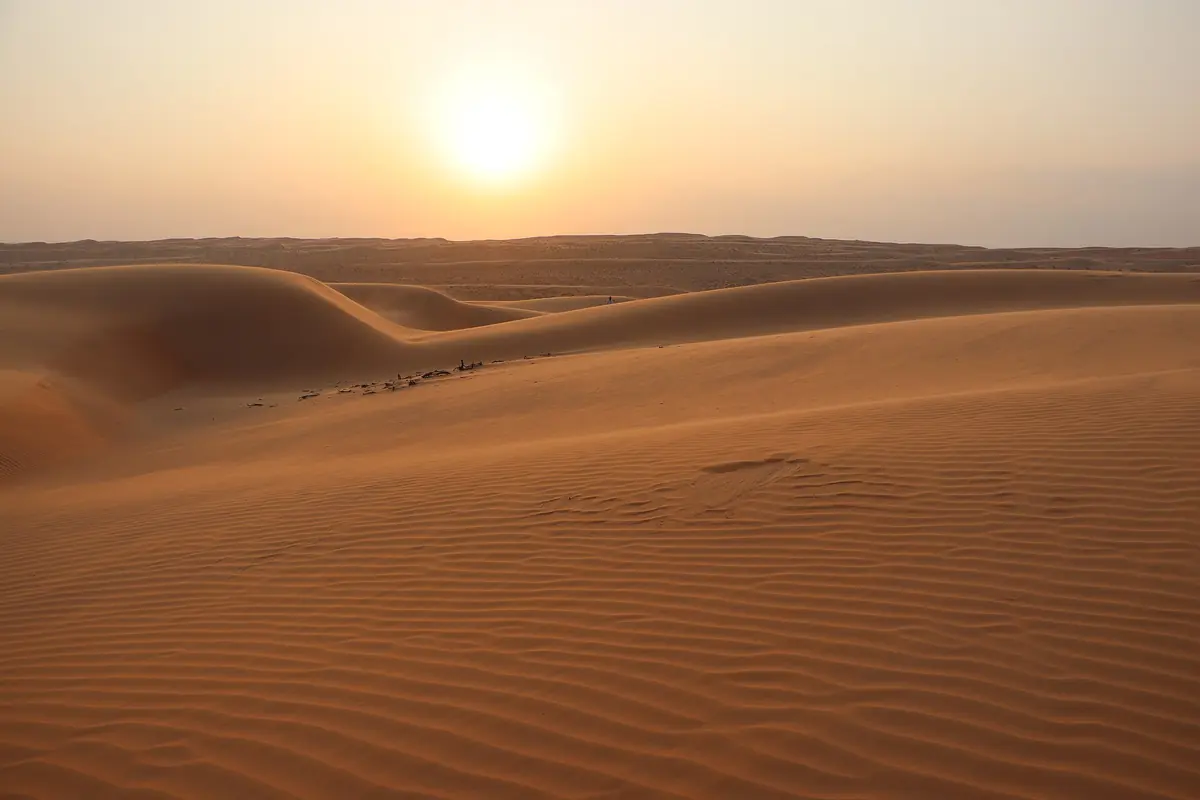
The Sharqiyah Sands are among the most beautiful places to camp in Oman, and they are easy to reach, with services close by. South of the road, the dunes turn from pale yellow in the morning to rust and orange at sunset. A night here is simple: drive in during the afternoon, climb the nearest dune for the sunset, eat in camp, look up at the stars once the lights go down, and walk out again at first light before the sand heats up.
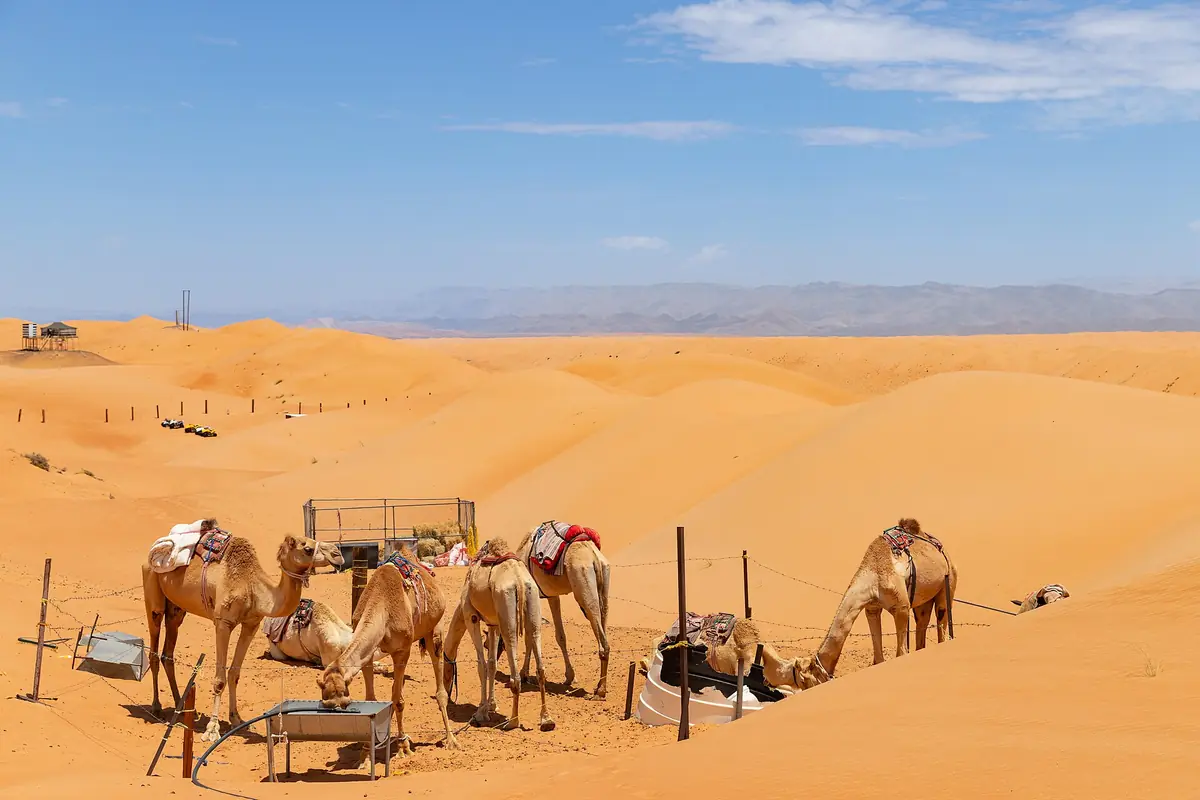
Camps sell the desert's other sides as extras: a camel ride, a drive over the dunes with a camp driver, quad bikes and sand-boarding. This is camel country, and you will pass herds and watering points by the tracks; in Bidiyah, the Bedouin tradition of camel and horse racing still draws crowds. Respect the customs of the Bedouin families whose land this is: ask before you photograph people, and keep to the camp's tracks.
Choosing where in the sands to sleep
The camps turn off the road between Al Wasil and Bidiyah into the northern edge of the sands. A camp close to the road keeps the drive in short and makes the next morning's departure easy. A camp further into the dunes is quieter, but the transfer over the sand takes longer.
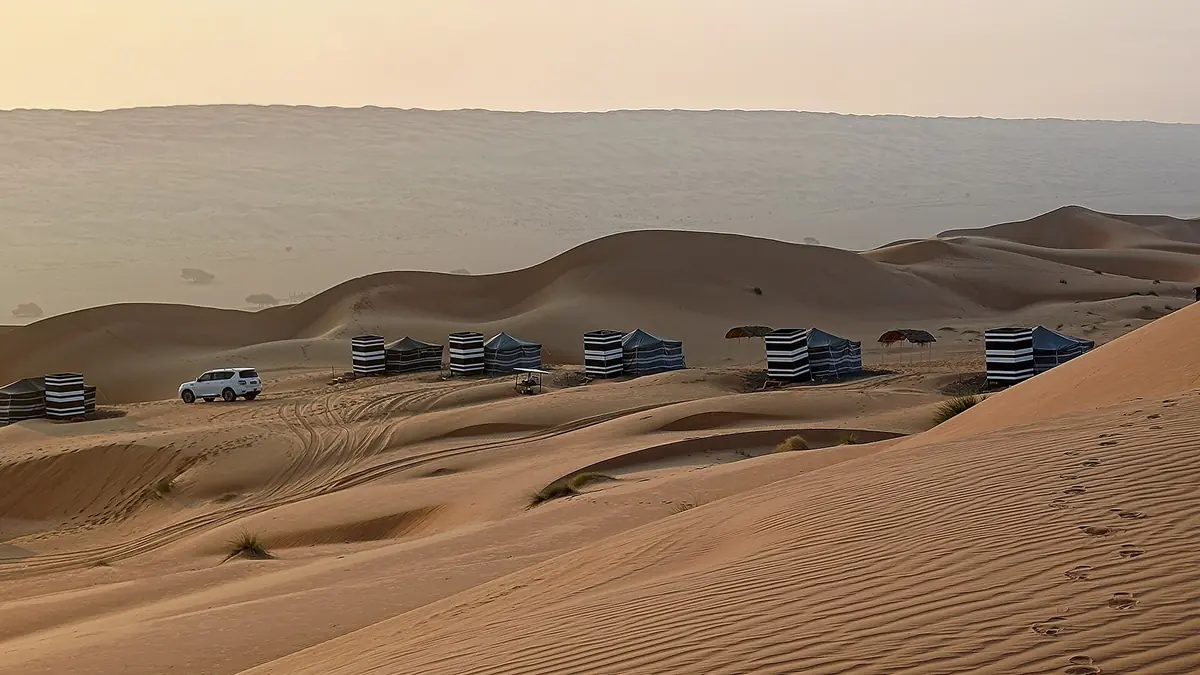
What the rate includes differs by camp. Sand Delight Camp has Bedouin tents with tea and coffee all day and breakfast and dinner buffets. Arabian Oryx Camp has 112 air-conditioned rooms with balconies and a buffet breakfast, and 1000 Nights Camp has 65 air-conditioned units with showers, a pool and a full breakfast; KAYAK lists no dinner in these two rates, so budget for dinner in camp. All three list free parking. Our where-to-stay guide names camps at each level with their rates.
Getting in: Al Wasil, Bidiyah and the sand track
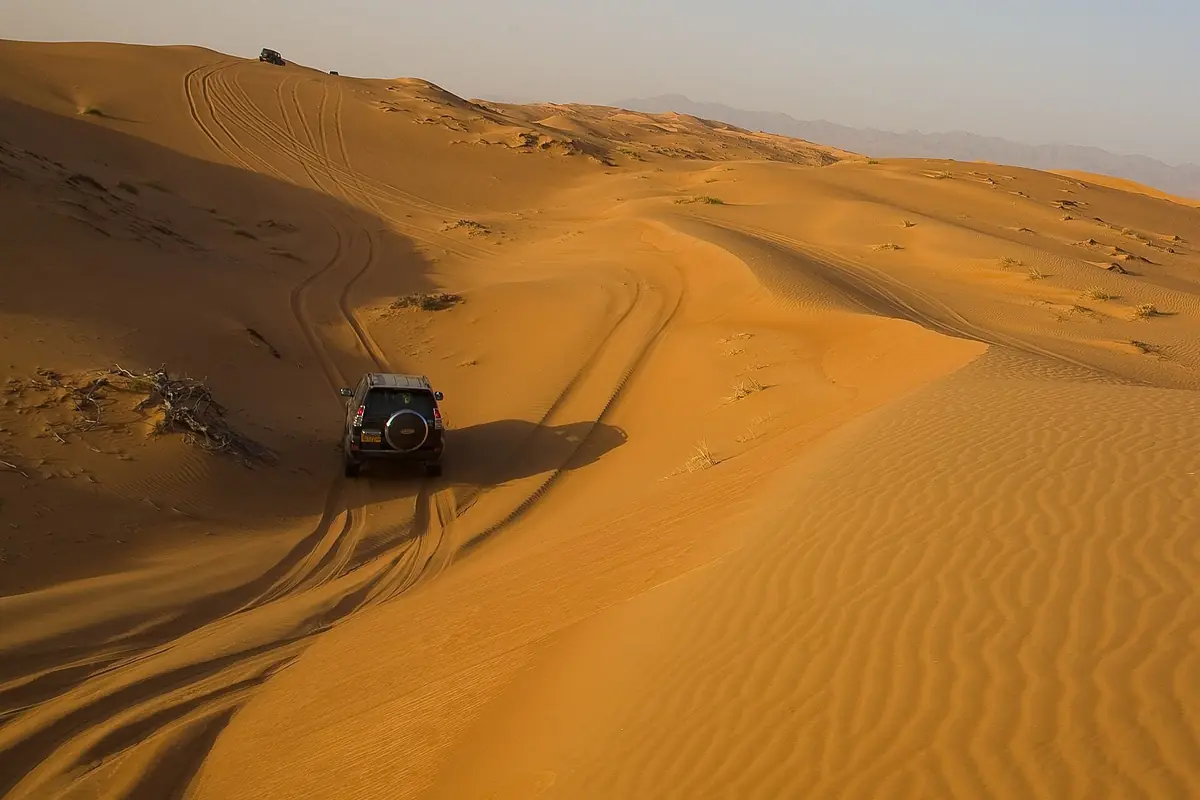
Al Wasil and Bidiyah lie on the highway between Ibra and Sur, and the camps turn off it onto sand tracks. Sand Delight Camp, for example, is a 10-minute drive from Al Wasil and 180 km from Muscat International Airport. Do not drive into the open dunes on your own: the UK advises travelling in convoy where possible, carrying water and a phone, and leaving your plans with someone.
Experience Oman gives the drive between Nizwa and the Wahiba Sands as about 231 km and 4 hours 44 minutes, without the stop at Wadi Bani Khalid, so leave Nizwa early. Germany advises against driving outside Muscat after dark, so plan to reach camp in daylight. Next morning, Sur lies further along the same highway, on the way to the turtles at Ras al Jinz, which Experience Oman puts about 194 km and 4 hours 41 minutes from the sands. The transport guide covers hire cars and the roads.
Read our health and safety guide and your own government's advice before you book.
Wadi Bani Khalid on the way
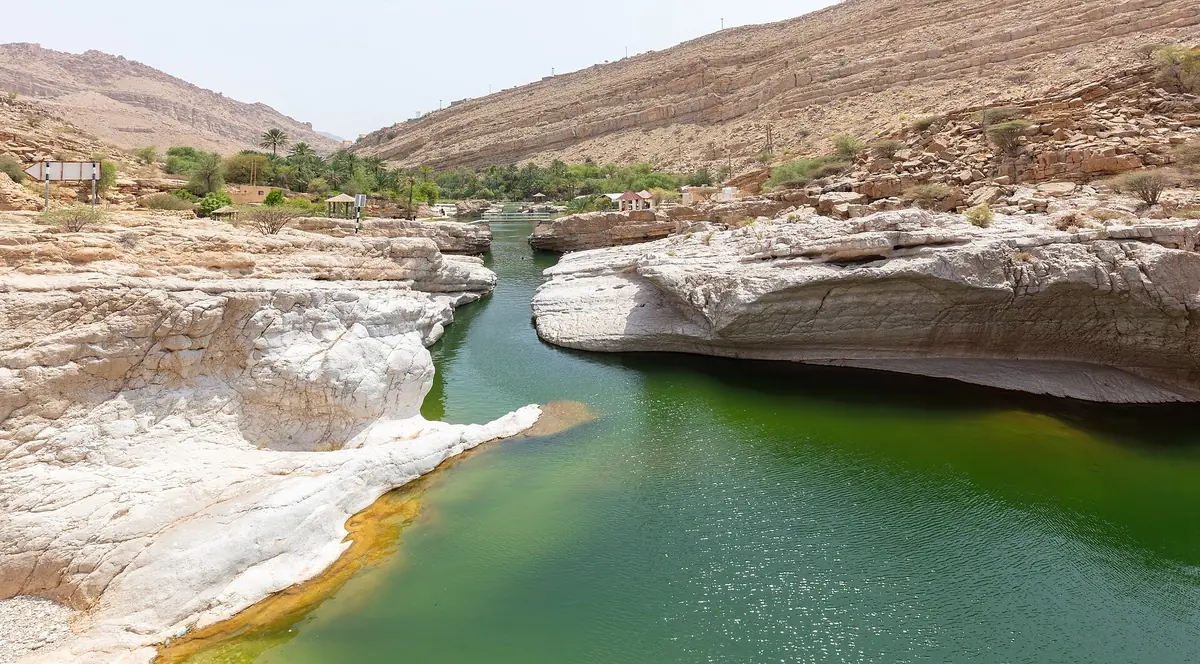
Wadi Bani Khalid winds down through the Eastern Hajar Mountains to the village of Bida. This is one of the most fertile valleys in Oman, with lush greenery and waterfalls that form natural pools. The water gathers in pools and small lakes, and the villagers have long used this water to fill three irrigation canals. Further up the valley, towards Muqal, the water rushes loudly through a cave; only people with the right equipment should explore the cave. Swim in the pools and walk a little way up the valley. Dress modestly for the village and swim in modest clothes.
Oman's wadis can flood suddenly after heavy rain between October and March. The UK advises checking the forecast first, keeping out of a wadi where heavy rain is expected, and staying out for at least a day afterwards.
One night or a day trip
Stay the night if you can: the sunset and the stars are the reason to come. Day tours from Muscat spend most of the day on the road. A day trip suits travellers who have no time for a night; the tour box below lists one.
- Day 1, morning: leave Nizwa by 08:00 and drive to Wadi Bani Khalid for a swim and lunch.
- Day 1, afternoon: drive on to Al Wasil and reach camp before dark.
- Day 1, evening: a dune for the sunset, dinner in camp and the stars.
- Day 2, morning: sunrise from the dunes, breakfast, then out to the road and on to Sur for Fath Al Khair, the dhow yard and the evening turtle walk at Ras al Jinz.
What to eat and where to look
Qahwa with dates
Omani coffee spiced with cardamom, saffron and rose water, poured in small cups and served with dates, fruit and sweets: the welcome Omani hosts offer every guest.
- Where to look
- Your camp's lounge tent on arrival.
- Fit it into your day
- Day 1 arrival in camp.
Camp dinner buffet
Traditional Bedouin cooking served as a buffet; Sand Delight Camp serves breakfast and dinner buffets every day, with tea and coffee all day.
- Where to look
- Sand Delight Camp, near Al Wasil.
- Fit it into your day
- Day 1 dinner in camp.
Shuwa
Meat marinated in Omani spices, wrapped in palm or banana leaves and slow-cooked in an underground sand oven for up to 48 hours, then served with rice; a dish for special occasions such as Eid.
- Where to look
- Bait Al Luban on the Mutrah Corniche in Muscat serves it all year, with qabuli rice.
- Fit it into your day
- A dinner in Muscat before or after the desert night.
Harees
Wheat and meat, often chicken, cooked slowly with ghee and pounded to a smooth porridge; one of the oldest dishes of the Gulf and a favourite at the Ramadan iftar.
- Where to look
- Camp buffets that serve Omani dishes.
- Fit it into your day
- Day 1 dinner, or at iftar in Ramadan.
Practical questions
Do I need a 4x4 for the Wahiba Sands?
Not if you book the camp's transfer from the highway with the night; the tracks into the camps are sand.
Is one night in the Wahiba Sands enough?
Yes, for most first trips. One night gives you the sunset, dinner and the stars in camp and the sunrise next morning, with Wadi Bani Khalid on the way in and Sur on the way out.
Where should I stay in the Wahiba Sands?
In a camp near Al Wasil or Bidiyah, at the northern edge of the sands. A camp near the road means a short drive in; a camp further into the dunes is quieter, with a longer transfer. Our where-to-stay guide names camps with their rates.
How long is the drive to the Wahiba Sands?
Experience Oman gives the drive between Nizwa and the Wahiba Sands as about 231 km and 4 hours 44 minutes, before the swim at Wadi Bani Khalid, so leave early and reach camp before dark. Sand Delight Camp, near Al Wasil, is 180 km from Muscat International Airport, and Ras al Jinz, past Sur, is about 194 km from the sands.
Can I swim in Wadi Bani Khalid?
Yes: waterfalls form natural pools along the valley. Swim in modest clothes, and keep out of the wadi when heavy rain is forecast and for a day afterwards.
Can I visit the Wahiba Sands as a day trip from Muscat?
Yes, on a day tour from Muscat, but most of the day is spent on the road and you miss the evening in the desert. A night in camp is the better choice.
Keep planning your trip
Sur and Ras al Jinz
Plan a night for the turtles at Ras al Jinz: walk tickets and times, the reserve or a Sur hotel, the dhow yard and Fath Al Khair, and Wadi Shab on the way.
Read the guide
Nizwa
Two nights in Nizwa: the round fort and the souq, the Friday livestock market, Falaj Daris, Bahla Fort and Jabrin Castle, with opening hours, tickets and where to sleep.
Read the guide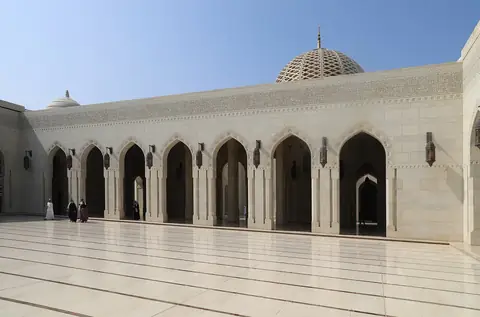
Oman in seven days
A seven-day Oman loop by hire car: Muscat, Nizwa for the fort and Jebel Shams, a desert camp, Sur, a night at the Ras al Jinz turtle reserve and the coast road.
Read the guide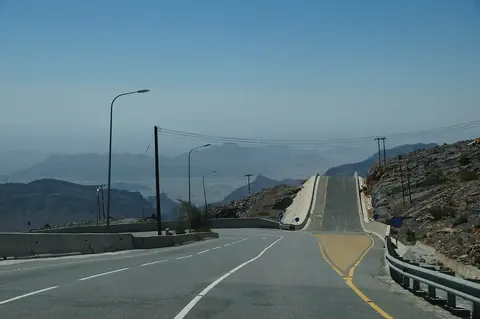
Transport in Oman
Get around Oman: a hire car from Muscat airport, when you need a 4x4, driving the Nizwa–Wahiba–Sur loop, Mwasalat buses, taxis, and flights to Salalah and Khasab.
Read the guide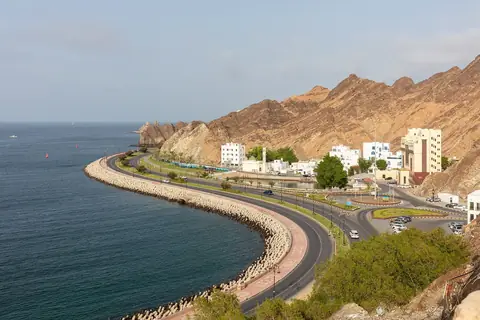
Where to stay in Oman
Which part of Muscat to sleep in, how many nights in Nizwa, on Jebel Akhdar, in a Wahiba Sands camp and in Sur, and three hotels at each base from budget to upper.
Read the guide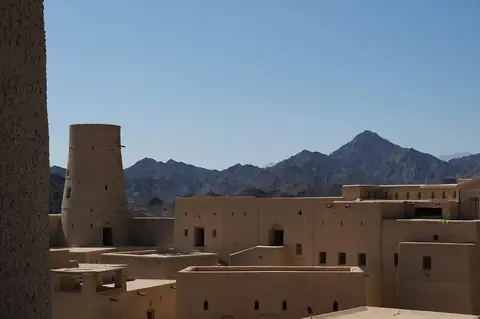
Oman in ten days
Ten days by hire car: Muscat, a night on Jebel Akhdar, Nizwa with Bahla and Jebel Shams, a desert camp, a night at the Ras al Jinz turtle reserve and Muscat again.
Read the guideSources and checks before you travel
(19)
- Experience Oman (Ministry of Heritage and Tourism): A'Sharqiyah Sands ↗ — opens in a new tab
- Experience Oman (Ministry of Heritage and Tourism): North Al Sharqiyah ↗ — opens in a new tab
- Experience Oman (Ministry of Heritage and Tourism): Wadi Bani Khalid ↗ — opens in a new tab
- Experience Oman / IRONMAN: A'Sharqiyah Sands ↗ — opens in a new tab
- UK Foreign Office (FCDO): Oman safety and security ↗ — opens in a new tab
- UK Foreign Office (FCDO): Oman health ↗ — opens in a new tab
- Government of Canada: Oman travel advice ↗ — opens in a new tab
- France Diplomatie: Oman, conseils aux voyageurs ↗ — opens in a new tab
- German Federal Foreign Office: Oman travel and safety advice (German) ↗ — opens in a new tab
- Oman Observer: Omani qahwa, the essence of Omani hospitality ↗ — opens in a new tab
- Oman Observer: 6 foods to try in Oman ↗ — opens in a new tab
- Experience Oman (Ministry of Heritage and Tourism): South Al Sharqiyah ↗ — opens in a new tab
- Ras Al Jinz Turtle Reserve: turtle viewing ↗ — opens in a new tab
- Experience Oman (Ministry of Heritage and Tourism): About Oman ↗ — opens in a new tab
- Experience Oman (Ministry of Heritage and Tourism): Wonders of cities, beaches, deserts and mountains (self-drive plan) ↗ — opens in a new tab
- KAYAK: Sand Delight Camp ↗ — opens in a new tab
- KAYAK: Arabian Oryx Camp ↗ — opens in a new tab
- KAYAK: 1000 Nights Camp ↗ — opens in a new tab
- Bait Al Luban: menu ↗ — opens in a new tab
Reference sources for the version dated 28 November 2026. Confirm opening times, access, transport and conditions for your travel dates.
Photo credits
(6)
Driving the sand tracks of the Wahiba Sands in a 4x4
Photograph: Andries Oudshoorn — opens in a new tab · CC BY-SA 2.0 — opens in a new tab
Changes: Resized and converted to WebP; displayed with responsive crops. · Original photograph and licence details ↗ — opens in a new tab
A desert camp among the dunes of the Sharqiya Sands
Photograph: Francesco Bini — opens in a new tab · CC BY-SA 4.0 — opens in a new tab
Changes: Resized and converted to WebP; displayed with responsive crops. · Original photograph and licence details ↗ — opens in a new tab
Sunset over the dunes of the Sharqiya Sands
Photograph: Francesco Bini — opens in a new tab · CC BY-SA 4.0 — opens in a new tab
Changes: Resized and converted to WebP; displayed with responsive crops. · Original photograph and licence details ↗ — opens in a new tab
Camels at a watering point in the Wahiba Sands near Bidiyah
Photograph: "dronepicr" — opens in a new tab · CC BY 2.0 — opens in a new tab
Changes: Resized and converted to WebP; displayed with responsive crops. · Original photograph and licence details ↗ — opens in a new tab
One of the pools of Wadi Bani Khalid
Photograph: Diego Delso — opens in a new tab · CC BY-SA 4.0 — opens in a new tab
Changes: Resized and converted to WebP; displayed with responsive crops. · Original photograph and licence details ↗ — opens in a new tab
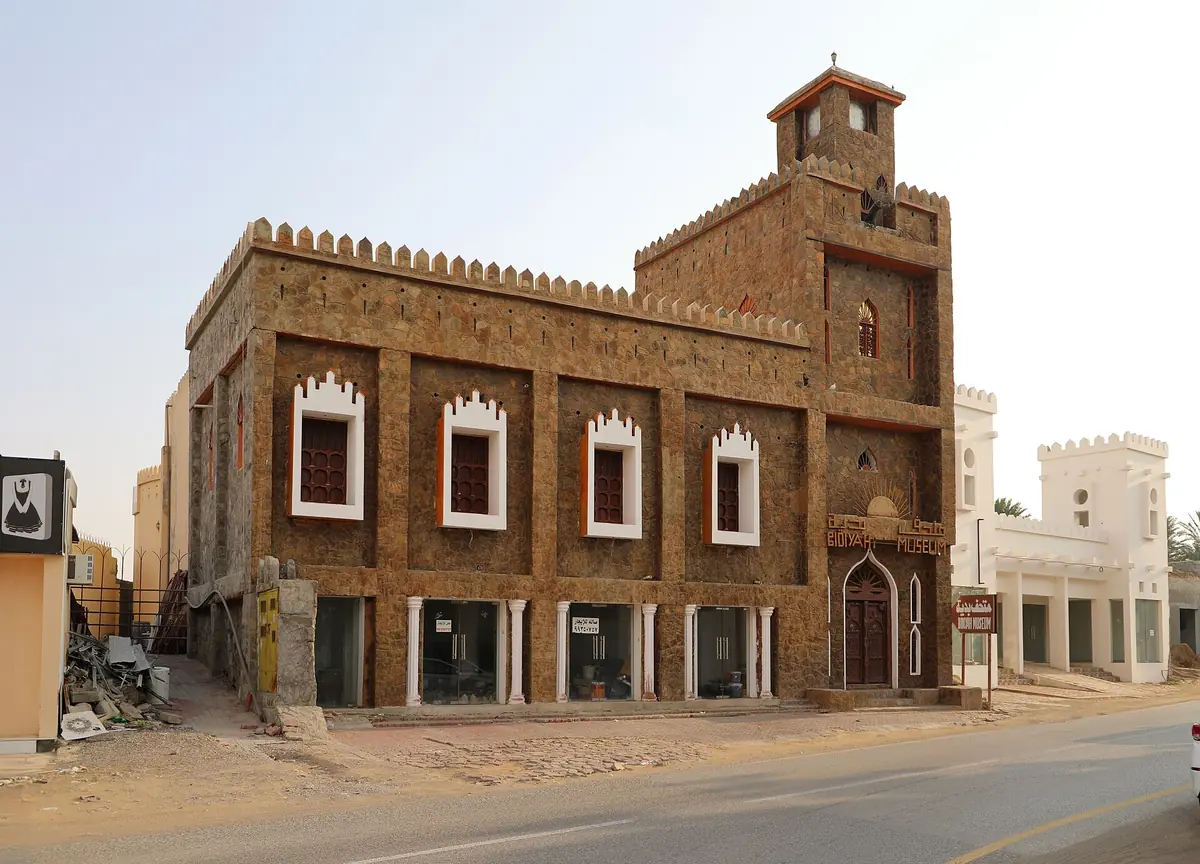
The museum building at Al Mintirib, on the road into the sands
Photograph: Francesco Bini — opens in a new tab · CC BY-SA 4.0 — opens in a new tab
Changes: Resized and converted to WebP; displayed with responsive crops. · Original photograph and licence details ↗ — opens in a new tab