Itineraries
Oman in 7 days: Muscat, Nizwa, the Wahiba Sands and Sur by car
Seven days is the classic first loop of northern Oman, and it works best as a road trip with one hire car from the airport. Two nights in Muscat give you the Grand Mosque, the old port of Mutrah and the museums of Old Muscat, and two nights in Nizwa put the round fort, the souq and a mountain day within reach. Then the route turns east through Wadi Bani Khalid to a camp in the Wahiba Sands, on to Sur and a night at Ras al Jinz with its nesting turtles, and back along the coast past Wadi Shab to the airport.
In this guide
Find the location ↗ — opens in a new tabThe short answer
Book six nights: two in Muscat, two in Nizwa, one in a Wahiba Sands desert camp and one at the Ras al Jinz Turtle Reserve past Sur, with a hire car from Muscat airport for the whole week and a flight home from Muscat on the evening of day 7. Book the camp and the room at the Ras al Jinz Turtle Reserve first, since they fix the driving days. The Sultan Qaboos Grand Mosque charges an admission fee of OMR 8, and the reserve's room includes the evening and dawn turtle walks, which cost other visitors OMR 12 per tourist adult (12 and over). On the ground, two adults sharing mid-range rooms pay about OMR 268 per person, OMR 535 for two. Fuel for the loop adds about OMR 24 a car, and a return flight from London about OMR 280 per person, so the week comes to about OMR 560 each with fuel and the flight.
- Suggested time
- 7 days / 6 nights: Muscat 2, Nizwa 2, Wahiba Sands 1, Ras al Jinz 1
- Route
- Muscat 2 nights
- Nizwa 2 nights
- Wahiba Sands 1 night
- Sur 1 night
- All-in budget on the ground
- About OMR 268 per person, OMR 535 for two Full breakdown ↓
- Season and timing
- The plan suits Oman's cool season, which Experience Oman gives as November to early March. From June to August, lowland temperatures reach 35–45°C, which is hard work in the desert and the wadis. Wadis can flood after heavy rain between October and March, so watch the forecast before the Wadi Bani Khalid and Wadi Shab days. Ras al Jinz runs its turtle viewings every evening and dawn; most turtles nest from June to October, with fewer in winter, and the reserve names May to September as the best time to see hatchlings.
Book the six nights as one loop by car
Use one hotel in each place: Muscat for nights 1–2, Nizwa for nights 3–4, a desert camp for night 5 and the Ras al Jinz Turtle Reserve for night 6, after an afternoon in Sur. Days 3, 5 and 6 are driving days, and day 7 ends at Muscat International Airport (MCT) with an evening flight, not another hotel night. The loop runs anticlockwise so that the long coast road falls on the last day, when you are heading for the airport anyway.
Pick up the car at the airport on day 1 and return it there on day 7, which makes six days of hire. Muscat is spread along the coast, and no practical public transport reaches the camps or the turtle beach, so the car is the trip. The Oman transport guide covers car hire and the 4x4 rules. Outside Muscat, watch for camels and goats on the road. Any alcohol in your system counts as drink-driving.
The hotels below are a mid-range set: Crowne Plaza Muscat, Golden Tulip Nizwa, Arabian Oryx Camp near Al Wasil and the Ras al Jinz Turtle Reserve's own rooms. Each hotel's note gives the lowest nightly rate with fees that KAYAK listed on 28 November 2026, and the budget at the end adds them up; rates for your dates will differ.
Canada advises against non-essential travel to the whole of Oman, and the UK warns that regional tensions can close airspace at short notice; the areas France and Germany advise against (the Salalah region, Duqm, Musandam and the Yemen border) are not on this route. Read health and safety and your own government's advice before you book.
Prices and times checked 29 November 2026
The seven days at a glance
Each line gives the day's plan and where you sleep. The day sections below give the times, prices and bookings.
- Day 1
Arrive at Muscat airport,
pick up the car, evening on the Mutrah Corniche and in the souq. Night: Muscat.
- Day 2
Muscat
the Sultan Qaboos Grand Mosque in the morning, then Old Muscat, the National Museum and Bait Al Zubair. Night: Muscat.
- Day 3
Drive to Nizwa
the fort and the souq. Night: Nizwa.
- Day 4
Mountain day
Jebel Shams, the canyon rim and the Balcony Walk. Night: Nizwa.
- Day 5
Wadi Bani Khalid and the Wahiba Sands
a swim in the wadi, then sunset on the dunes. Night: desert camp.
- Day 6
Sur
the dhow town by day, the turtle beach at Ras al Jinz in the evening. Night: Ras al Jinz Turtle Reserve.
- Day 7
Coast road to Muscat
Wadi Shab and Bimmah Sinkhole, then the evening flight from MCT.
Days 1–2: Muscat, Mutrah and the Grand Mosque
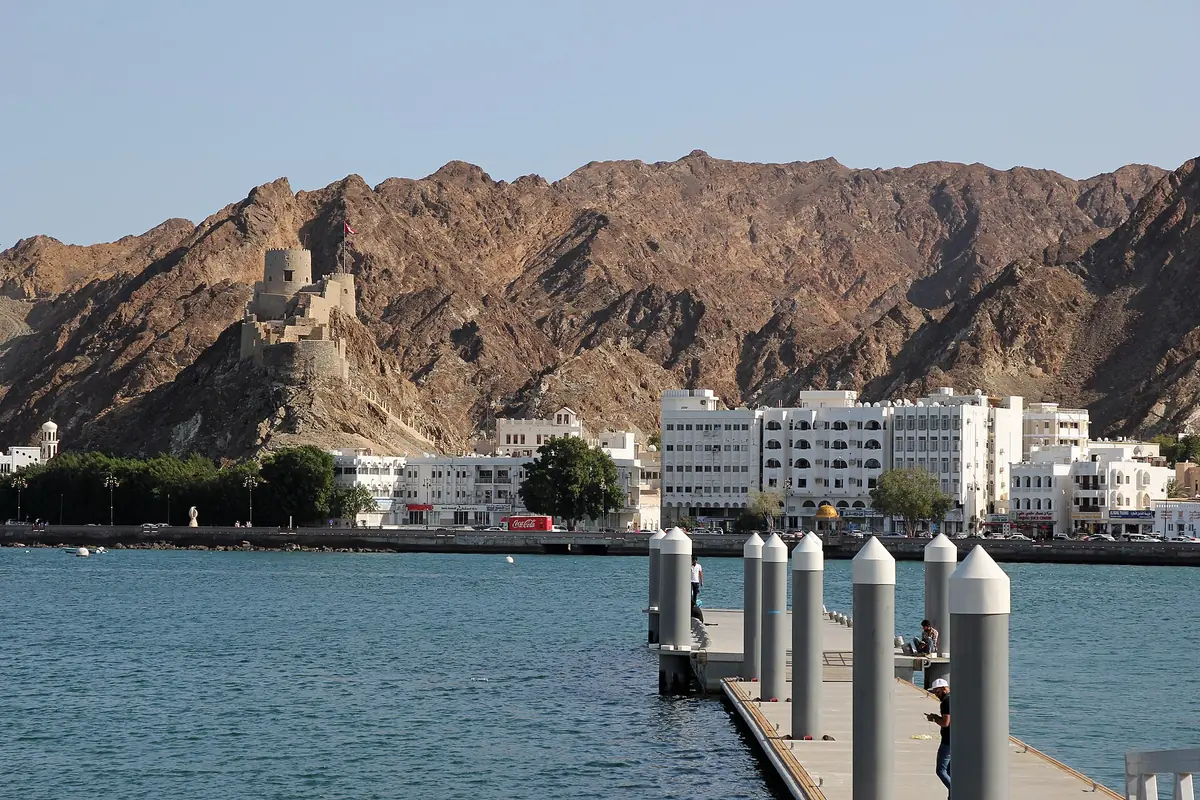
Day 1 — arrive at MCT. Collect the car and drive east along the coast to the hotel. In the late afternoon, drive on to Mutrah. There the corniche curves around the harbour, and the old souq opens off the waterfront: a covered maze of lanes selling textiles, spices, Omani silver and frankincense. Sleep in Muscat, night 1.
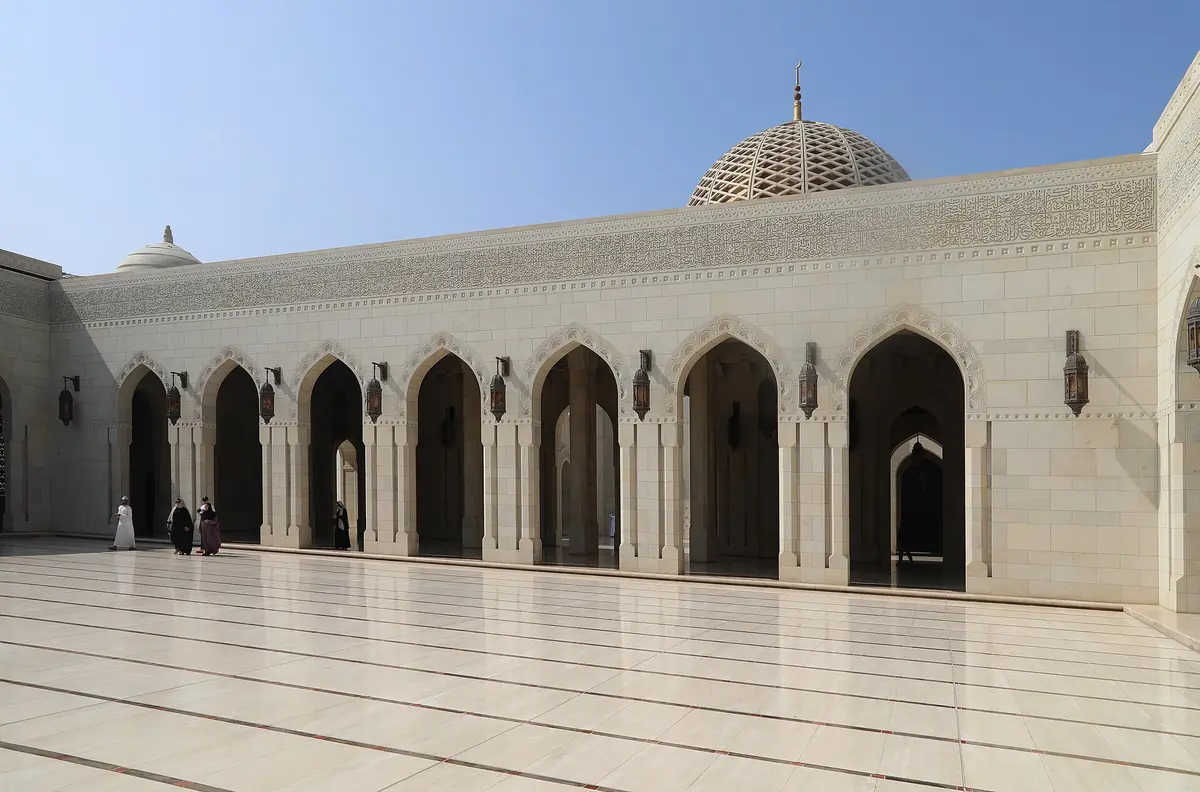
Day 2 — the Grand Mosque and Old Muscat. Start early at the Sultan Qaboos Grand Mosque. It opened in 2001 and is built from nearly 300,000 tonnes of Indian sandstone, with a 50-metre dome, five minarets and the world's second-largest hand-woven Persian carpet. Non-Muslim visitors are welcome from Saturday to Thursday between 08:30 and 11:00, so do not plan day 2 for a Friday. The admission fee is OMR 8. Cover shoulders and knees; women also cover their hair. Abayas and scarves are available at the entrance.
Drive on to Old Muscat. Al Mirani Fort, rebuilt by the Portuguese in 1588, overlooks the harbour, and Al Alam Palace, the Sultan's ceremonial palace, stands at the centre. The National Museum faces the palace and holds more than 7,000 objects, from early maritime instruments to Islamic manuscripts. The museum opens daily from 10:00 to 18:00, and its ticket desk closes at 17:30; tourists pay OMR 5 by Visa or Mastercard. Nearby, Bait Al Zubair is a family museum opened in 1998, with Omani weapons, jewellery, clothing and household objects. Bait Al Zubair opens Saturday to Thursday from 09:30 to 18:00, and foreign visitors pay OMR 3. The Muscat guide covers the beaches, the Royal Opera House and the islands. Sleep in Muscat, night 2.
Prices and times checked 28 November 2026
Days 3–4: Nizwa fort and a mountain day
Day 3 — drive to Nizwa. Experience Oman puts Nizwa about a 1.5-hour drive from Muscat, about 160 km, a morning's drive with a coffee stop. Check in, then spend the afternoon at Nizwa Fort, built in the mid-17th century under Imam Sultan bin Saif al-Ya'rubi. Its round tower is 34 metres high and 45 metres across, and a narrow staircase climbs it through seven fortified doors. The fort is open Saturday to Thursday from 08:00 to 20:00, and on Fridays from 08:00 to 11:30 and from 13:30 to 20:00. Tickets are sold at the desk, and foreign adults pay OMR 5. The souq beside the fort is famous for its handicrafts. Sleep in Nizwa, night 3.
Day 4 — Jebel Shams. Drive west through Al Hamra to Jebel Shams, Oman's highest mountain; Experience Oman gives Nizwa to Jebel Shams as about 85 km and 1 hour 54 minutes. The road climbs to the rim of the canyon, where the Balcony Walk runs along the edge of the cliff; with the walk, allow the whole day. On the way back, stop at Misfat al Abriyeen, an old village of stone houses above its falaj channels and farms. Jebel Akhdar, the other massif above Nizwa, needs a four-wheel-drive or electric car at the Birkat Al Mouz checkpoint, which this budget does not price; the ten-day route gives it a night. Sleep in Nizwa, night 4.
Prices and times checked 28 November 2026
Day 5: Wadi Bani Khalid and a night in the Wahiba Sands
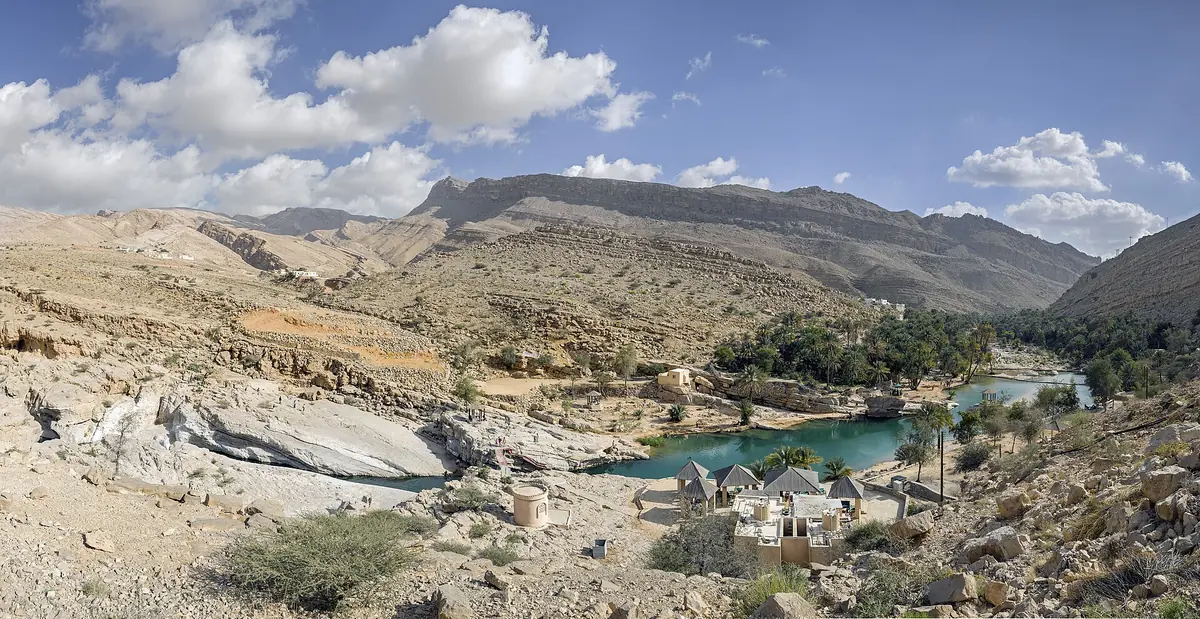
Wadi Bani Khalid lies in the Eastern Hajar Mountains. It is one of Oman's most fertile valleys, with lush greenery and waterfalls that form natural pools, and the path up the valley leads to Muqal and its cave. Leave Nizwa by 08:00 and drive east: Experience Oman gives the drive between Nizwa and the Wahiba Sands as about 231 km and 4 hours 44 minutes, without the wadi stop. With the wadi stop this is a long road day, and the early start leaves time for a swim before you reach the camp before dark. Swim in the pools dressed modestly.
Beyond Al Wasil, the Sharqiya (Wahiba) Sands begin: about 10,000 square kilometres of dunes that turn from pale yellow to rusty red and orange as the day goes on. Book the camp's transfer from the highway when you book the night, because the last stretch is on sand; the UK advises a four-wheel drive for desert driving. KAYAK lists a buffet breakfast in Arabian Oryx Camp's rate, so on this night the budget's breakfast money pays towards dinner in camp. Climb a dune for sunset; the sands are known for dune drives and camel trekking. Night 5 is in the camp; the Wahiba Sands guide compares the camps and the access.
Prices and times checked 28 November 2026
Day 6: Sur and the turtles at Ras al Jinz
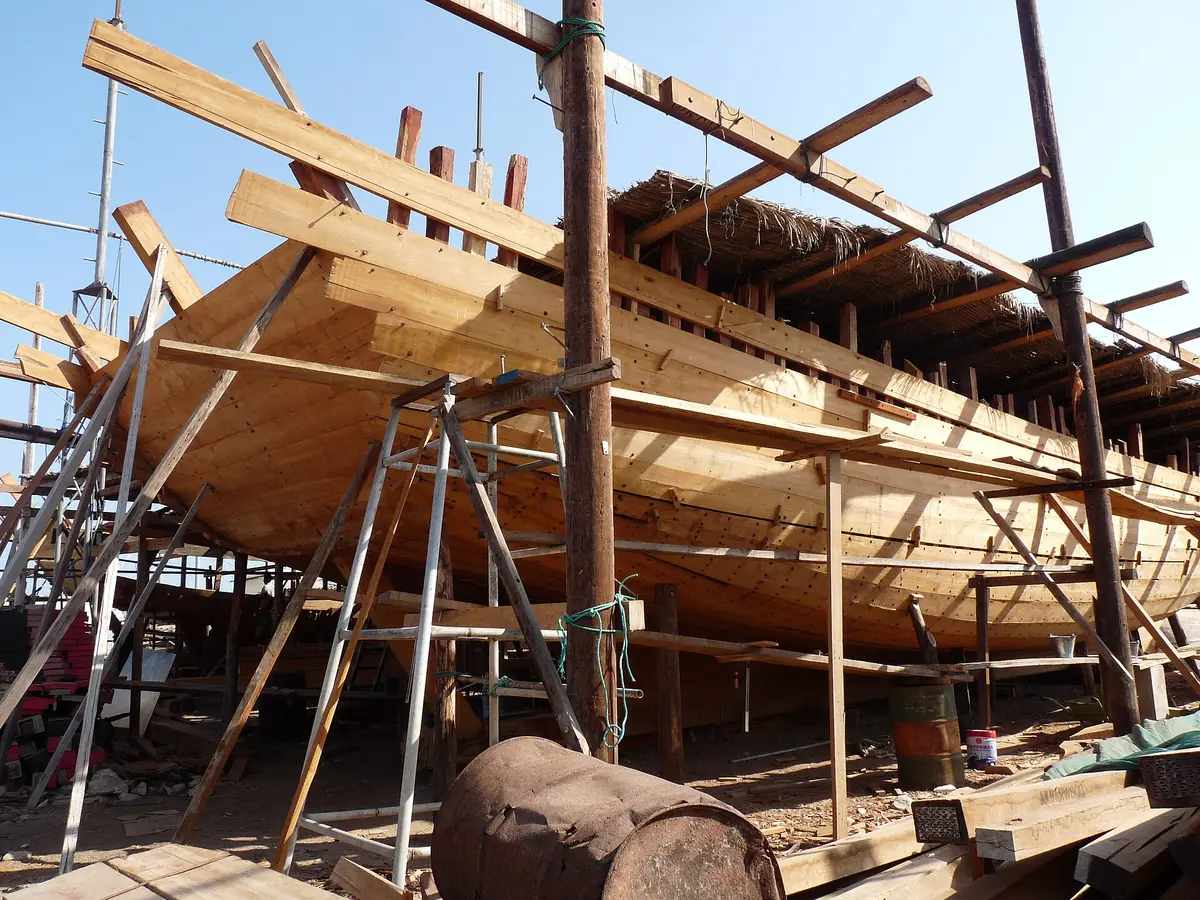
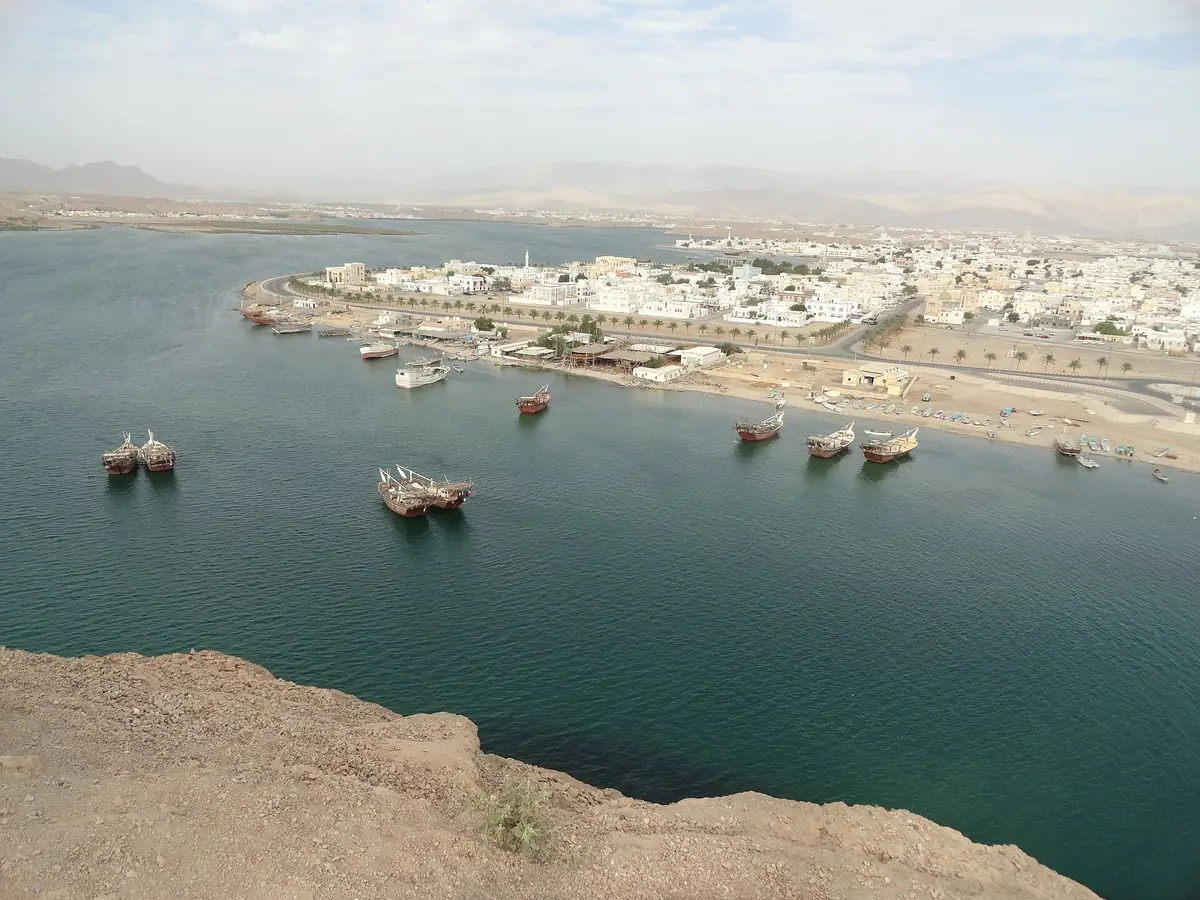
Watch the sunrise from the dunes, then drive out to the road and on to Sur, on the way to Ras al Jinz, which Experience Oman puts about 194 km and 4 hours 41 minutes from the Wahiba Sands. Sur is long one of the Arabian Peninsula's great shipbuilding ports. Walk the lanes of Al Ayjah to its lighthouse and watchtower, look across at the dhow factory, and see the Fath Al Khair, the last traditional ghanjah ship in Oman, at the Fath Al Khair maritime centre. Then drive the last 35 km to the reserve in daylight, check in and rest.
Tonight you sleep at Ras al Jinz Turtle Reserve, just past Ras al Hadd; Experience Oman puts the reserve about 35 km from the centre of Sur. It is the only place in Oman where you may legally watch turtles. Endangered green turtles nest on its beach, and the reserve's guides lead visitors onto the beach in the dark to watch a turtle dig her nest. Most turtles nest from June to October, and fewer come ashore in winter; from May to September, the reserve's best months for hatchlings, you may also see the young making for the sea. Your room includes both walks: the night viewing starts at 21:00 and the dawn viewing at 05:00. Visitors who are not staying at the reserve pay OMR 12 per tourist adult (12 and over) and OMR 6 per child, children under 6 go free, and they must arrive by 20:30 or 04:45. The reserve says timings may change with the season. Book the room through the reserve's reservations office by phone or e-mail as soon as your dates are fixed, because the rest of the trip is planned around it. The visitor centre covers the turtles' life cycle and the site's settlements, which are more than 4,300 years old; it is open daily until 20:30. The reserve's restaurant serves a set dinner, so you can eat there before the walk. Sleeping at the reserve means no drive after dark: Germany advises against driving outside Muscat in darkness, when camels wander onto unlit roads. If the reserve is full, take a room in Sur and see the Sur and Ras al Jinz guide: the walk then ends with a 35 km drive back in the dark, so either drive very slowly or leave the walk out. Sleep at the reserve, night 6.
Prices and times checked 29 November 2026
Day 7: Wadi Shab, Bimmah and the flight home
From the reserve, drive back through Sur and take the coast road north towards Muscat. Wadi Shab comes first, about 170 km from Muscat airport; Experience Oman gives Ras al Jinz, 35 km beyond Sur, as about 248 km and 3 hours 11 minutes from Muscat. A short boat ride crosses the river at the entrance (a small fare that includes the trip back; carry cash for it). From there, a trail climbs between limestone cliffs past turquoise pools to a cave with a waterfall inside, which you reach by swimming through a narrow gap. That stretch needs basic swimming; life jackets are optional but advised. Wear hiking shoes or water sandals rather than flip-flops. Carry water, because there are no shops in the wadi.
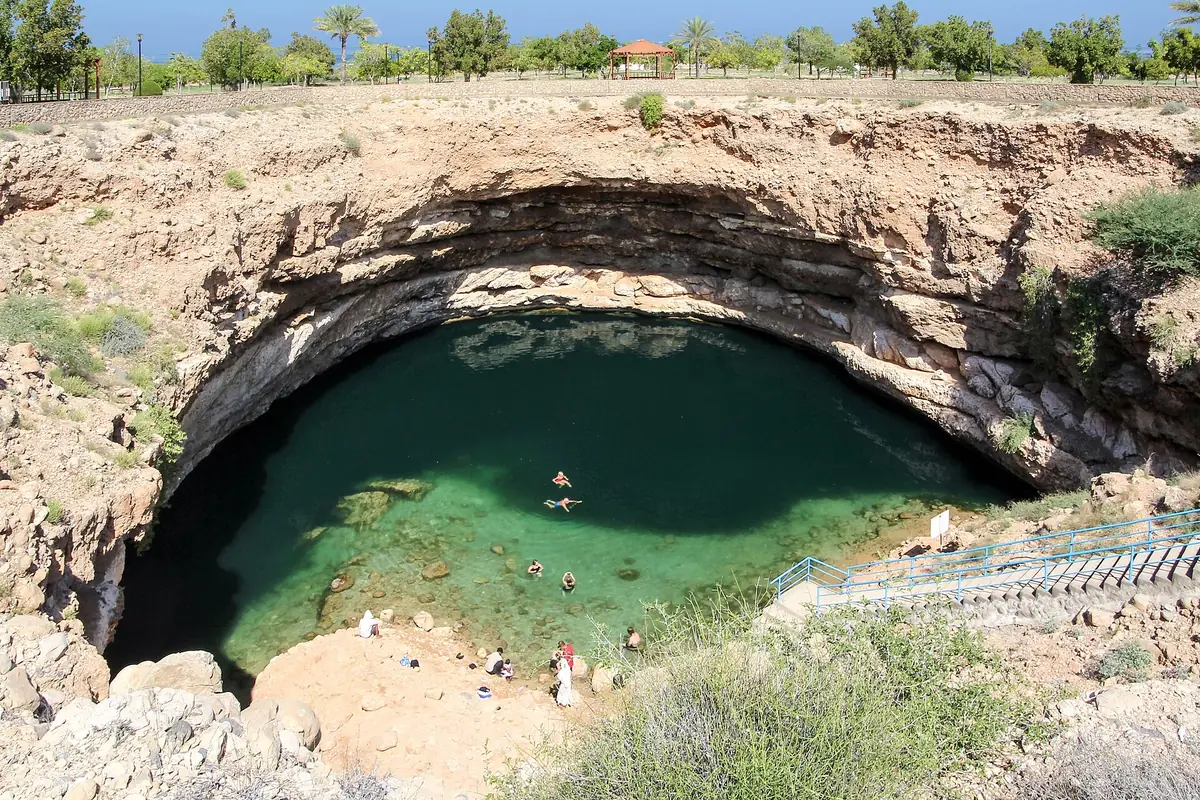
Further north, Bimmah Sinkhole (Hawiyat Najm) is a deep crater of water in a municipal park between Bimmah and Dibab, about 120 km from the airport. It makes an easy stop for a last swim, and the park charges no entrance fee. Leave the sinkhole by mid-afternoon to allow for the city's evening traffic, then return the car. Book a flight that leaves late in the evening, so the wadi gets its morning without a race. If you would rather not drive the coast road on departure day, spend a seventh night in Muscat.
Prices and times checked 28 November 2026
What seven days in Oman cost, all in
About OMR 268 per person, OMR 535 for two, for seven days and six nights at mid-range. That includes the six nights, three meals a day, the hire car, the admissions named above and a 10% buffer for snacks, tips, the Wadi Shab boat and a SIM card. Fuel is about OMR 24 a car: Experience Oman's distances for the driving days add up to about 1,040 km, which at 10 litres per 100 km, our estimate for an SUV, takes about 104 litres of M91 petrol at OMR 0.229 a litre. With fuel, the week costs about OMR 280 per person, OMR 559 for two. A return flight from London averaged about GBP 550 per person on KAYAK over the past 12 months, about OMR 280, so the total with the flight is about OMR 560 each.
| Level | Per person | For two |
|---|---|---|
| Budget | OMR 215 | OMR 430 |
| Mid-range (the hotels above) | OMR 268 | OMR 535 |
| Comfort | OMR 480 | OMR 960 |
The model is two adults sharing a double or twin room. Room rates are the lowest nightly rates with fees that KAYAK listed for each hotel on 28 November 2026; car prices are Discover Cars' listings for Muscat airport; dollar prices are converted at about USD 2.60 to the rial, the value Experience Oman gives.
For two, mid-range: rooms OMR 179; food OMR 170; car hire OMR 95; sights OMR 42; 10% buffer OMR 49.
Rooms: Crowne Plaza Muscat from USD 58 a night, Golden Tulip Nizwa from USD 61, Arabian Oryx Camp from USD 144 (KAYAK lists a buffet breakfast in the rate) and the Ras al Jinz Turtle Reserve from USD 84 (with breakfast and both turtle walks), about USD 466 for the six nights. Food is about OMR 12 a day each, our estimate for a café breakfast, a lunch of rice and grilled meat at a local restaurant and a sit-down dinner; on the camp night the breakfast money pays towards dinner in camp. The car is an intermediate SUV such as a Peugeot 3008 at about USD 42 a day, as Discover Cars listed it at the airport, for six days (about USD 250). That is enough for this route, which keeps to paved roads; its higher clearance helps on the steep last pass up Jebel Shams. Sights are the Grand Mosque (OMR 8), the National Museum (OMR 5), Bait Al Zubair (OMR 3) and Nizwa Fort (OMR 5 for foreign adults), OMR 21 per person; the turtle walks come with the reserve's room. The Oman trip cost guide prices the budget and comfort levels hotel by hotel.
Prices and times checked 29 November 2026
What to eat and where to look
Shuwa
Marinated meat slow-roasted in an underground firepit and served with qabuli rice, the dish of Omani holidays; Bait Al Luban on the Mutrah Corniche keeps it on its menu.
- Where to look
- Bait Al Luban, Mutrah Corniche, Muscat.
- Fit it into your day
- Dinner on day 1 or 2.
Mishkak
Skewers of marinated grilled meat, Oman's street snack, sold from grills in the evening and as small plates in Omani restaurants.
- Where to look
- Bait Al Luban, Mutrah Corniche, Muscat, or the grills around Nizwa's souq in the evening.
- Fit it into your day
- Evening on day 3.
Omani halwa
A dense, glossy sweet of starch, sugar, ghee, rose water, saffron, cardamom and nuts, which Omanis offer to guests with coffee.
- Where to look
- The halwa shops of Nizwa souq beside the fort.
- Fit it into your day
- Day 3, after the fort.
Kahwa and dates
Omani coffee, light and scented with cardamom, poured in small cups with a plate of dates, the welcome you are offered at camps, guesthouses and shops.
- Where to look
- Your desert camp on arrival, and Mutrah souq.
- Fit it into your day
- Day 5 at the camp.
Qabuli
Rice cooked with meat and whole spices; Bait Al Luban lists it with lamb as qabouli laham.
- Where to look
- Bait Al Luban, Mutrah Corniche, Muscat.
- Fit it into your day
- Lunch in Muscat on day 2.
Fresh fish in Sur
The catch landed at Sur's fish market each morning, grilled or fried in the town's restaurants.
- Where to look
- Sur's fish market in the morning, then a restaurant in town.
- Fit it into your day
- Lunch on day 6 in Sur.
Practical questions
Does seven days in Oman mean six nights?
Yes: two in Muscat, two in Nizwa, one in a Wahiba Sands camp and one at the Ras al Jinz Turtle Reserve. You land on day 1 and fly out from Muscat on the evening of day 7 after the coast road.
Do I need a four-wheel drive for this route?
No. The main roads are paved, and the camp's transfer takes you over the sand from the highway. The last stretch up Jebel Shams is a steep pass, for which Jebel Shams Resort recommends a four-wheel drive or a high-clearance car such as the SUV priced here. Jebel Akhdar needs a four-wheel-drive or electric car, so it is left to the ten-day route; the transport guide has the checkpoint rule.
Can I see the Grand Mosque on a Friday?
No. Non-Muslim visitors are welcome from Saturday to Thursday between 08:30 and 11:00, so plan day 2 for one of those mornings.
When are turtles at Ras al Jinz?
Every evening and dawn the reserve's guides lead a walk to watch green turtles nest; most turtles nest from June to October, with fewer in winter, and May to September are its best months for hatchlings. The night viewing starts at 21:00 and you must arrive by 20:30; timings may change with the season. Book through the reserve's reservations office by phone or e-mail. On this route you sleep at the reserve, so both walks are in the room rate and you do not drive after dark.
Can I add Salalah or Musandam to a week in Oman?
Not on this loop: both need a flight or a long transfer, and both lie in areas that some governments advise against. Read health and safety first; the ten-day route gives the north more time instead.
Do I need a visa for Oman?
Citizens of the more than 100 countries and regions that Oman lists can stay up to 14 days without a visa. For a longer stay, apply before you fly for the unsponsored tourist e-visa at evisa.rop.gov.om: OMR 20 for a stay of up to 30 days. If your country is not listed, answer the eligibility questions on that site first, because some nationalities need a sponsored visa. Check the Oman entry guide before you book the flight.
Keep planning your trip
Oman in ten days
Ten days by hire car: Muscat, a night on Jebel Akhdar, Nizwa with Bahla and Jebel Shams, a desert camp, a night at the Ras al Jinz turtle reserve and Muscat again.
Read the guide
Oman trip cost
A week on Oman's loop by hire car: about OMR 215 per person on a budget, OMR 275 mid-range or OMR 480 in comfort for two sharing, plus about OMR 12 each for fuel.
Read the guide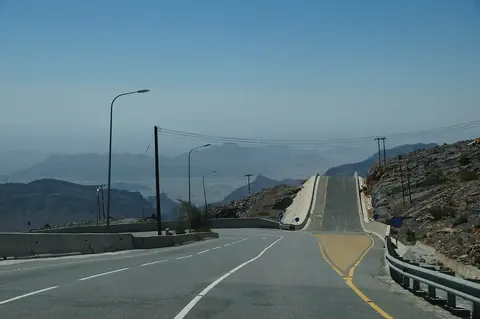
Transport in Oman
Get around Oman: a hire car from Muscat airport, when you need a 4x4, driving the Nizwa–Wahiba–Sur loop, Mwasalat buses, taxis, and flights to Salalah and Khasab.
Read the guide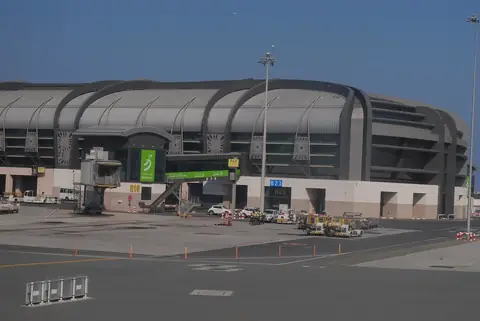
Entering Oman
Which passports enter Oman visa-free for 14 days, what to show at the border, when you need the OMR 20 e-visa, what customs allows, and the road crossings from the UAE.
Read the guide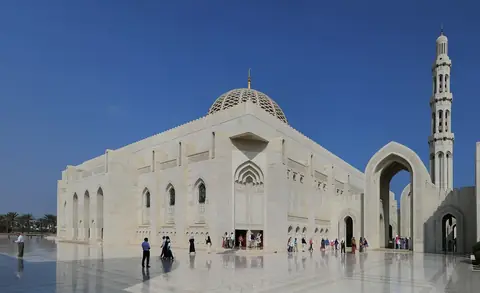
Muscat
Plan two nights in Muscat: the Grand Mosque's morning visiting hours, Mutrah's souq and corniche, Old Muscat's forts and museum, Qurum, and where to stay.
Read the guide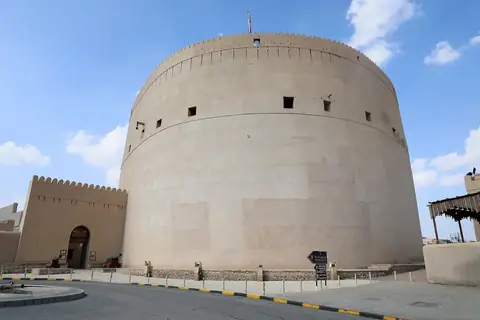
Nizwa
Two nights in Nizwa: the round fort and the souq, the Friday livestock market, Falaj Daris, Bahla Fort and Jabrin Castle, with opening hours, tickets and where to sleep.
Read the guideSources and checks before you travel
(51)
- Experience Oman (Ministry of Heritage and Tourism): Sultan Qaboos Grand Mosque ↗ — opens in a new tab
- Experience Oman: National Museum ↗ — opens in a new tab
- The National Museum: ticket fees ↗ — opens in a new tab
- Experience Oman: Bait Al Zubair Museum ↗ — opens in a new tab
- Experience Oman: Nizwa Fort ↗ — opens in a new tab
- Oman Observer (10 December 2017): Now pay and enjoy Omani heritage at Nizwa Fort ↗ — opens in a new tab
- Experience Oman: Wadi Bani Khalid ↗ — opens in a new tab
- Experience Oman: A'Sharqiyah Sands ↗ — opens in a new tab
- Experience Oman: Wadi Shab ↗ — opens in a new tab
- Ras Al Jinz Turtle Reserve: Turtle Viewing ↗ — opens in a new tab
- Ras Al Jinz Turtle Reserve: Facilities ↗ — opens in a new tab
- Experience Oman: Ras Al Jinz archaeological site ↗ — opens in a new tab
- Bait Al Luban: menu ↗ — opens in a new tab
- KAYAK: Crowne Plaza Muscat ↗ — opens in a new tab
- KAYAK: Golden Tulip Nizwa Hotel ↗ — opens in a new tab
- KAYAK: Arabian Oryx Camp ↗ — opens in a new tab
- KAYAK: Best Western Sur ↗ — opens in a new tab
- Discover Cars: car hire at Muscat Airport ↗ — opens in a new tab
- Khaleej Times (29 October 2026): Oman caps fuel refills near border crossings ↗ — opens in a new tab
- GOV.UK (FCDO): Oman travel advice, safety and security ↗ — opens in a new tab
- France Diplomatie: Oman, conseils aux voyageurs ↗ — opens in a new tab
- Government of Canada: Oman travel advice ↗ — opens in a new tab
- Experience Oman: Oman at a glance ↗ — opens in a new tab
- Experience Oman: Weather ↗ — opens in a new tab
- Experience Oman booking: Overnight trip to Nizwa ↗ — opens in a new tab
- Sultan Qaboos Grand Mosque ↗ — opens in a new tab
- The National Museum: working hours ↗ — opens in a new tab
- The National Museum: FAQ ↗ — opens in a new tab
- Experience Oman: Al Mirani Fort ↗ — opens in a new tab
- Oman Observer (29 March 2026): Life at Muttrah Souq is slowly returning to normalcy ↗ — opens in a new tab
- Experience Oman: Ad Dakhiliyah ↗ — opens in a new tab
- Oman Observer (6 August 2025): Jabal Shams, Oman's overlooked gem ↗ — opens in a new tab
- Oman Observer (13 October 2026): Can you drive an EV up Jabal Akhdhar without a 4WD? ↗ — opens in a new tab
- Oman Observer (28 July 2024): The timeless beauty of Misfat al Abriyeen ↗ — opens in a new tab
- Experience Oman: Fath Al Khair Center ↗ — opens in a new tab
- Oman Observer (18 October 2024): Sweet spell of Sur ↗ — opens in a new tab
- Experience Oman: Ras Al Hadd Castle ↗ — opens in a new tab
- Ras Al Jinz Turtle Reserve: About us ↗ — opens in a new tab
- Oman Observer (2 December 2024): Plans unveiled to develop Bimmah Sinkhole ↗ — opens in a new tab
- Oman Observer (7 December 2023): Muscat Municipality temporarily closes Hawiyat Najm Park ↗ — opens in a new tab
- Oman Observer (8 April 2024): Omani halwa most sought after during Eid ↗ — opens in a new tab
- Oman Ministry of Foreign Affairs: Entry visas ↗ — opens in a new tab
- Auswärtiges Amt: Oman, Reise- und Sicherheitshinweise ↗ — opens in a new tab
- KAYAK: flights from London to Muscat ↗ — opens in a new tab
- Oman Observer: Ras al Hadd, a safe bet for turtles (22 August 2023) ↗ — opens in a new tab
- Experience Oman (Ministry of Heritage and Tourism): Wonders of cities, beaches, deserts and mountains (self-drive plan) ↗ — opens in a new tab
- Experience Oman (Ministry of Heritage and Tourism): Al Hajar route adventure trail (self-drive plan) ↗ — opens in a new tab
- Oman Observer: Wadi Shab tourist area, what visitors can expect now (25 October 2023) ↗ — opens in a new tab
- German Federal Foreign Office: Oman travel and safety advice (German) ↗ — opens in a new tab
- KAYAK: Ras Al Jinz Turtle Reserve ↗ — opens in a new tab
- Jebel Shams Resort: getting to Jebel Shams ↗ — opens in a new tab
Reference sources for the version dated 29 November 2026. Confirm opening times, access, transport and conditions for your travel dates.
Photo credits
(6)
Wadi Bani Khalid, the day 5 swim on the way to the sands
Photograph: Richard Bartz — opens in a new tab · CC BY-SA 3.0 — opens in a new tab
Changes: Resized and converted to WebP; displayed with responsive crops. · Original photograph and licence details ↗ — opens in a new tab
The Mutrah waterfront and fort in Muscat, day 1
Photograph: Eduard Marmet — opens in a new tab · CC BY-SA 2.0 — opens in a new tab
Changes: Resized and converted to WebP; displayed with responsive crops. · Original photograph and licence details ↗ — opens in a new tab
The courtyard of the Sultan Qaboos Grand Mosque in Muscat, day 2
Photograph: Francesco Bini — opens in a new tab · CC BY-SA 4.0 — opens in a new tab
Changes: Resized and converted to WebP; displayed with responsive crops. · Original photograph and licence details ↗ — opens in a new tab
Bimmah Sinkhole, the last stop on day 7
Photograph: Dr. Thomas Liptak — opens in a new tab · CC BY-SA 4.0 — opens in a new tab
Changes: Resized and converted to WebP; displayed with responsive crops. · Original photograph and licence details ↗ — opens in a new tab
A dhow taking shape in a Sur boatyard, day 6
Photograph: Ji-Elle — opens in a new tab · CC BY-SA 3.0 — opens in a new tab
Changes: Resized and converted to WebP; displayed with responsive crops. · Original photograph and licence details ↗ — opens in a new tab
Dhows in the bay at Sur, day 6
Photograph: Fabio Achilli from Milano, Italy — opens in a new tab · CC BY 2.0 — opens in a new tab
Changes: Resized and converted to WebP; displayed with responsive crops. · Original photograph and licence details ↗ — opens in a new tab