Plan your trip
Oman transport: hire cars, the Jebel Akhdar checkpoint, buses and flights
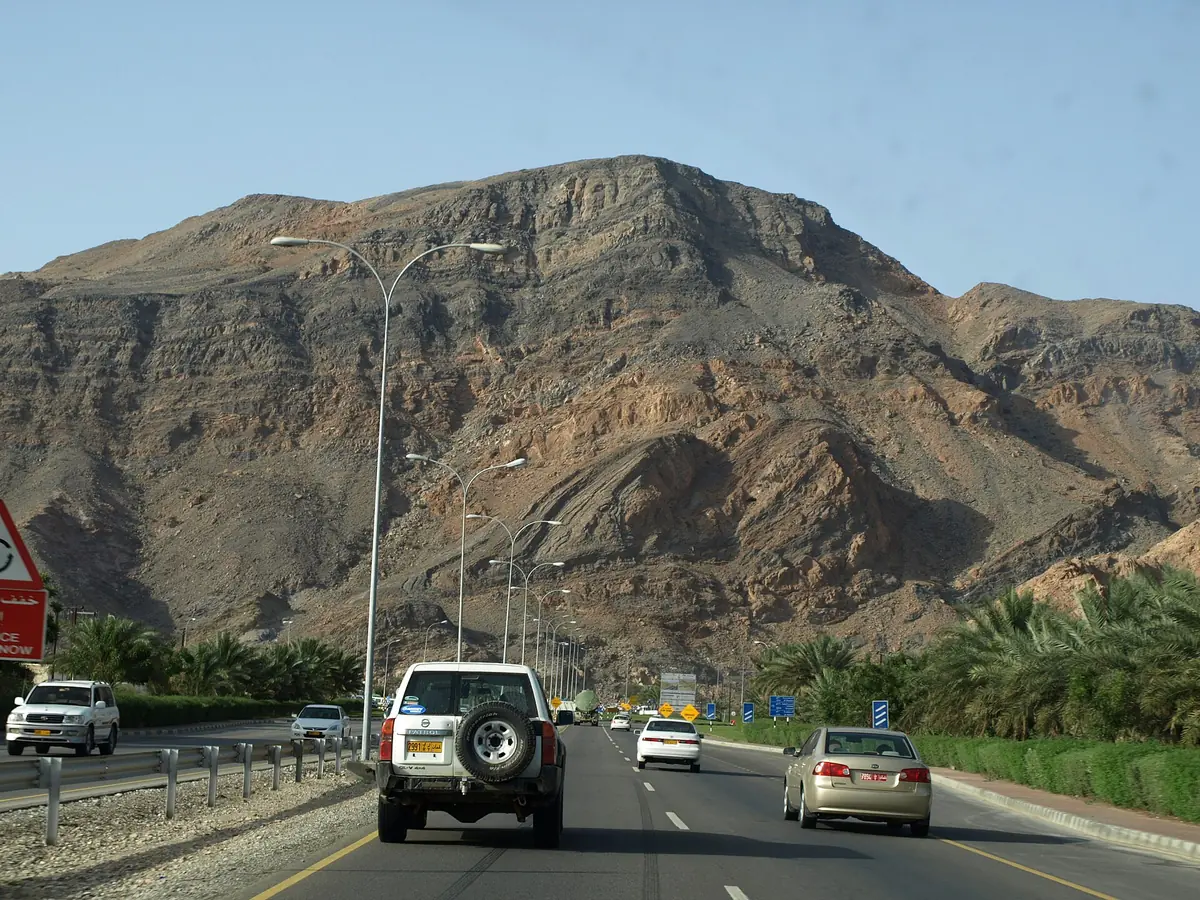
Northern Oman is a road trip. Muscat, Nizwa, the Wahiba Sands and Sur sit on a loop of fast, well-built highways, but the desert camps, the mountain plateaus and the wadis lie off the bus routes, so almost every first visit starts at a hire-car desk in Muscat's arrivals hall. The questions are which car to book, whether the route climbs Jebel Akhdar, where the checkpoint admits only four-wheel-drive and electric cars, and how to pace each driving day.
In this guide
Find the location ↗ — opens in a new tabThe short answer
Hire a car at Muscat International Airport for the whole trip: the seven-day loop runs through Nizwa, the Wahiba Sands and Sur and back to Muscat by the coast road. Book a four-wheel-drive or electric car if you will drive up Jebel Akhdar, because the checkpoint at Birkat Al Mouz turns other cars back. An ordinary car manages the rest of the loop; for the steep last pass up Jebel Shams, Jebel Shams Resort recommends a four-wheel drive or a high-clearance car. Discover Cars lists intermediate SUVs at Muscat Airport at about USD 42 a day, and M91 petrol costs OMR 0.229 a litre. Mwasalat buses link Muscat with Nizwa and other towns, but they do not reach the desert, the plateaus or the wadis.
- Key point
- Hire car, buses, taxis, flights and ferries for a 7 to 10 day trip in northern Oman
- Where it applies
- Muscat International Airport for the hire car; Nizwa, the Wahiba Sands and Sur on the loop
- Timing
- The cool season runs from November to early March, the Ministry of Heritage and Tourism says; wadis can flood after heavy rain from October to March.
Why a hire car is the usual choice
The classic first trip is a loop from Muscat: inland to the fort town of Nizwa below the Hajar Mountains, east to the orange dunes of the Wahiba Sands, down to the dhow port of Sur, and back to the capital along the coast past Wadi Shab and the Bimmah Sinkhole. The highways between these towns are good. What a bus cannot do is take you the last kilometres: up to the terraced villages of the plateau, into a desert camp or to the mouth of a wadi.
Driving yourself also sets the rhythm of the day. You can reach Nizwa's souq before the heat, stop for an hour in the palm-shaded pools of Wadi Bani Khalid on the way to the sands, and be at Sur in time for an evening turtle visit at Ras al Jinz. The seven-day itinerary follows exactly this loop with a hire car.
Hiring a car: licence, age and which car
Muscat International Airport has car-hire companies in the public arrivals hall, open 24 hours a day, and returned cars go to a marked area on level 0 of the P2 car park. The Royal Oman Police allow foreign visitors to drive on the licence of their home country for tourism or transit, for up to three months from entry. British drivers should follow the UK government's narrower advice: a UK photocard licence covers a hire car for the first six weeks after arrival. Hire firms often add their own conditions, such as a higher minimum age, a year of driving experience or an International Driving Permit.
An ordinary car covers Muscat, Nizwa, Bahla and Jabrin, the road to Sur and the coast road back. The road up Jebel Shams to the guesthouses at the start of the Balcony Walk ends with a steep pass: Jebel Shams Resort recommends a four-wheel drive or a high-clearance car for it, or a transfer it can arrange. Jebel Akhdar needs a four-wheel-drive or electric car (next section). Book the camp's transfer from the highway when you book the night, because the last stretch is on sand; the UK advises a four-wheel drive for desert driving. Our Wahiba Sands guide covers the camps.
For a price guide, Discover Cars lists SUVs at Muscat Airport from about USD 37 a day: an MG ZS at about USD 39, a Peugeot 3008 (intermediate SUV) at about USD 42 and a Nissan X-Trail at about USD 43. Its average daily rate for all cars there is USD 42 in January and USD 50 in December, its dearest month, against USD 37 over the year. These SUVs are not all four-wheel drive, so for Jebel Akhdar book a car listed as a 4x4, which may cost more. Fuel is cheap: M91 petrol costs OMR 0.229 a litre, M95 OMR 0.239 and diesel OMR 0.258, the rates the government has held since October 2021. In October 2026 the government temporarily limited stations within 50 km of a border crossing to 30 litres per fill, which matters only if you drive towards a border.
Prices and times checked 28 November 2026
Jebel Akhdar: the checkpoint at Birkat Al Mouz
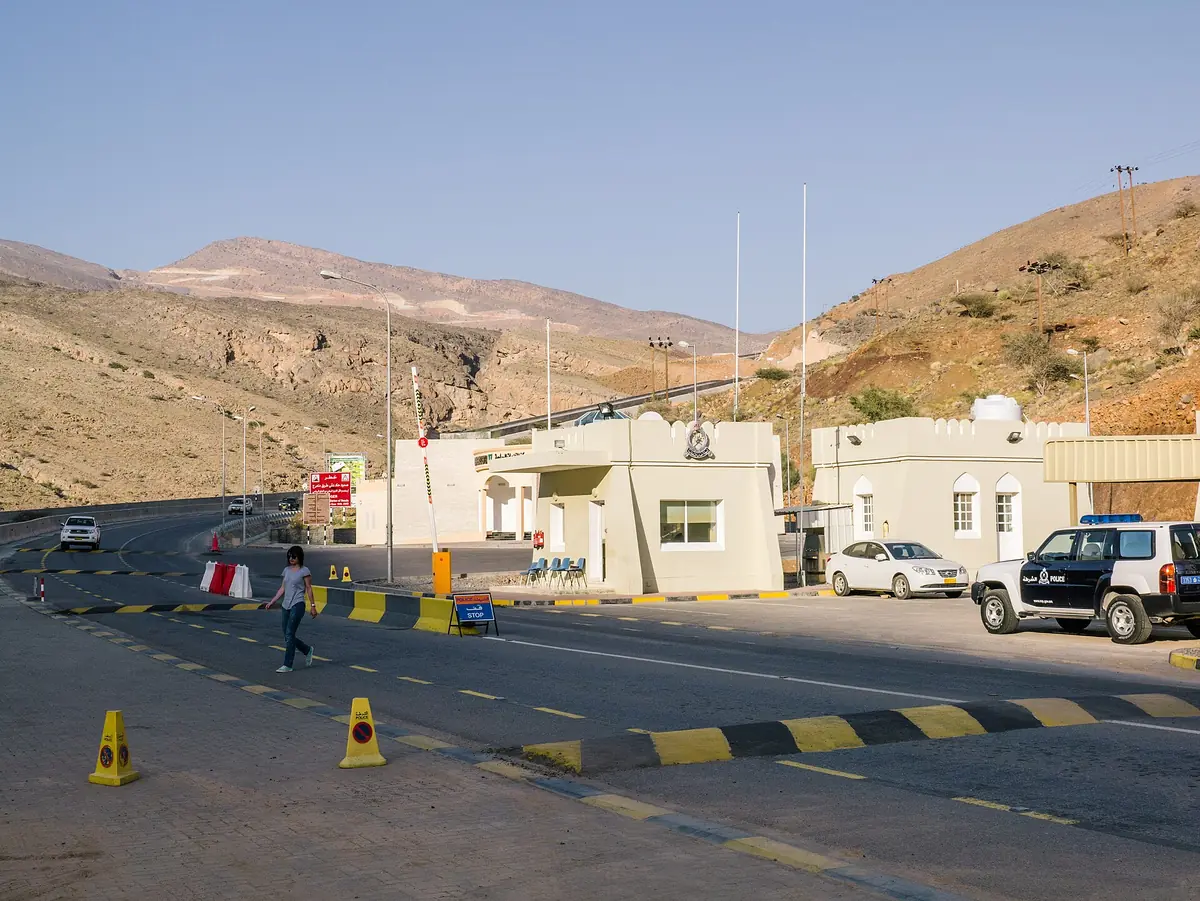
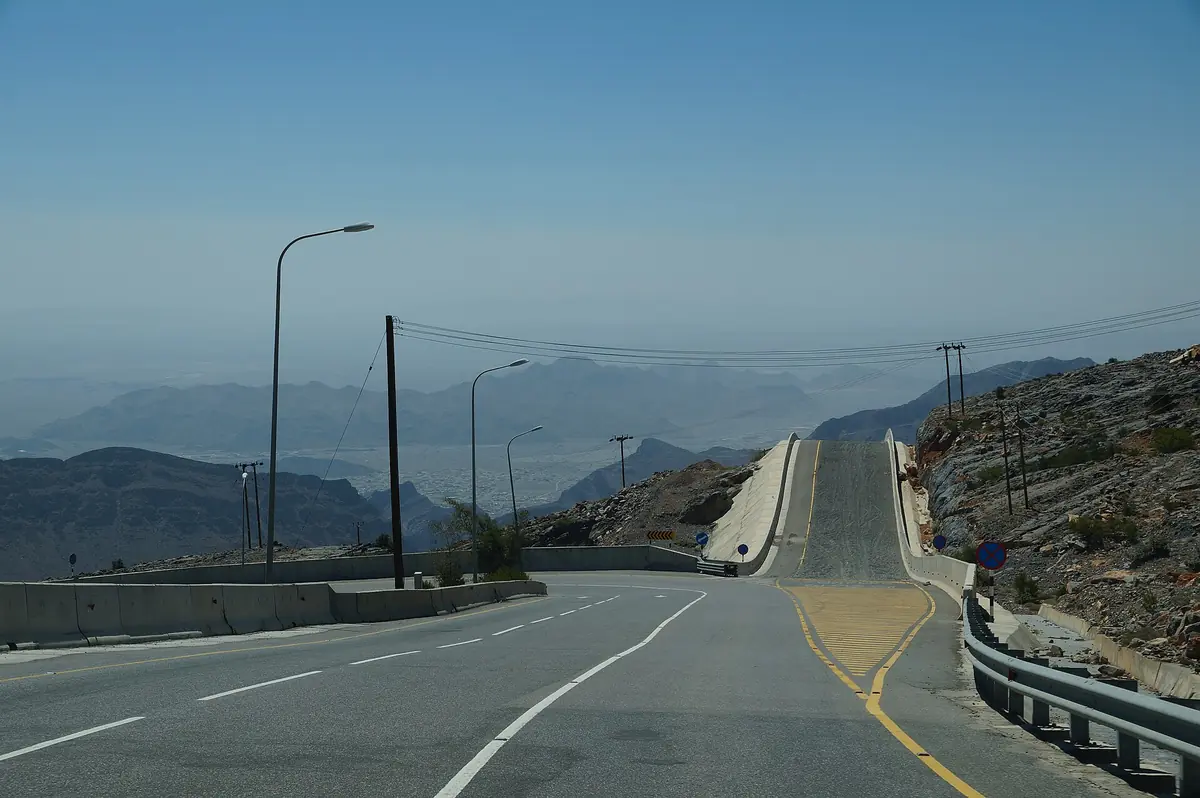
The road to Jebel Akhdar leaves the Nizwa road at Birkat Al Mouz and climbs steep, winding tarmac to Saiq on the plateau. The checkpoint at Birkat Al Mouz admits only four-wheel-drive and electric cars to Jebel Akhdar. Any other car is turned back, day trips included, so book the four-wheel-drive or electric car at the airport rather than hoping to swap cars in Nizwa.
On the ten-day route you drive up on day 3 and down to Nizwa the next morning, which is why that itinerary needs a four-wheel-drive or electric car for the whole hire; an SUV is not always four-wheel drive, so book a car listed as 4x4. The seven-day route can leave Jebel Akhdar out and visit Jebel Shams as a day trip from Nizwa instead, through Al Hamra to Al Khitaym near the canyon rim, best in a high-clearance car or a four-wheel drive for the steep last pass.
Driving the Nizwa–Wahiba–Sur loop
Experience Oman, the Ministry of Heritage and Tourism's booking site, puts Nizwa about a 1.5-hour drive from Muscat, so the first inland day leaves most of the day for the town. Experience Oman puts Jebel Akhdar roughly a two-hour drive from Muscat, and its self-drive plans give Nizwa to Jebel Shams as about 85 km and 1 hour 54 minutes, so the mountains make a long day trip from the capital and a shorter one from Nizwa. Bait al Ridaydah, just west of Birkat Al Mouz where the Jebel Akhdar road starts, is about 24 km from the centre of Nizwa.
From Sur, Ras al Hadd and the turtle reserve just beyond it are about 35 km out. On the coast road back to Muscat, Wadi Shab lies around 170 km from Muscat International Airport and the Bimmah Sinkhole about 120 km. On every driving day, allow extra for photographs, fuel and the wadis you visit, and expect slower going on mountain roads and in Muscat's busy traffic.
Day 5 of the seven-day route runs from Nizwa through Wadi Bani Khalid to the sands. Experience Oman gives the drive between Nizwa and the Wahiba Sands as about 231 km and 4 hours 44 minutes, without the wadi stop, so leave Nizwa early. Next day, it gives the Wahiba Sands to Ras al Jinz as about 194 km and 4 hours 41 minutes, with Sur on the way, about 35 km short of the reserve. The desert camps have their own tracks from Al Wasil, the village at the edge of the sands; the Wahiba Sands guide covers them.
Prices and times checked 28 November 2026
On the road: the rules that catch visitors
Oman's main roads are generally in good condition, but the UK government warns that driving outside Muscat can be dangerous: camels and goats wander onto the road, and the accident rate is much higher than in the UK. Using a mobile phone while driving is illegal, and traffic offences carry fines of up to OMR 3,000 or prison sentences of up to three years. Any alcohol in your blood while driving is an offence, so there is no safe amount before a drive. Highway lanes carry speed limits of up to 120 km/h, and Royal Oman Police radars also catch drivers who drive too slowly in the fast lanes, so keep to the slow lane if you want to take it easy. Unpaid traffic fines must be settled before you leave the country; the Royal Oman Police app and website show them.
Rain is rare but sudden. From October to March heavy rain can send flash floods down wadis and across the roads that cross them, so check the forecast before a wadi day and stay away for at least a day after heavy rain. After a serious accident, stay with the car and call the police on 9999; after a minor one you fill in an accident form, which hire companies keep in their cars. Our health and safety guide covers the rest.
Buses: Mwasalat in Muscat and between towns
Mwasalat, Oman's public transport company, runs 12 city bus routes in Muscat and two in Salalah. It also runs intercity coaches from Muscat to towns such as Ibri and Buraimi, and its Muscat–Nizwa line has about four trips a day in each direction. At the airport, Mwasalat buses leave from the bus station on the ground floor outside the terminal; for Old Muscat, take route 1B and then route 4. Check the current timetable and fares, including for Sur, on Mwasalat's website (mwasalat.om) before you travel.
Buses suit Muscat and a simple Muscat–Nizwa trip, not the classic loop: no route reaches the desert camps, the Jebel Akhdar plateau, the Jebel Shams rim or the wadis. Mwasalat suspends city and intercity routes when the authorities issue weather warnings, as it did in March 2026. Without a car, the realistic way to see the sands and the mountains is a guided day tour from Muscat or Nizwa.
Taxis and taxi apps
Taxis wait at the taxi area just outside Muscat airport's terminal, booked through the airport taxi office in the public arrivals hall, and they run to any address in Muscat or to other cities. The licensed airport apps, OTaxi and Oman Taxi, quote a fixed price before the trip; the transport ministry set their fare in 2023 at OMR 1.5 plus 250 baisa a kilometre, about OMR 9.5 from the airport to Ruwi. In the city you can hail a taxi on the road or take one from a hotel; drivers are required to use the meter.
A taxi is a good way to reach the hire-car desk on a later day, to spend your Muscat nights without driving, or to return to the airport after dropping the car. For longer trips, such as Muscat to Nizwa, compare the taxi fare with a private transfer or a day tour that includes the sights.
Flights and ferries to Salalah and Musandam
France advises against travel to the Salalah region and Musandam except for an imperative reason, and Germany advises against travel to Musandam. Read health and safety and your own government's advice before you book a flight there.
Oman Air's winter 2026/27 schedule, from 25 October 2026, has up to five flights a day between Muscat and Salalah. It also has up to four flights a week between Muscat and Khasab, the airport for the Musandam peninsula. SalamAir also flies Muscat–Salalah, and KAYAK showed return fares from about USD 111 on SalamAir and USD 179 on Oman Air. The Civil Aviation Authority dates the 2026 khareef season from 21 June to 20 September; at its peak, SalamAir planned up to 10 flights a day and Oman Air up to 13. Oman Air resumed its Khasab flights on 18 April 2026 after a suspension, so book a fare you can change. The Salalah and Musandam guides cover the ground arrangements.
By sea, the National Ferries Company runs high-speed catamarans between Shinas and Musandam, and its busiest season in Musandam is November to February. Check the sailing days, departure times and fare with the National Ferries Company (nfc.om) and book there before you drive to Shinas.
Prices and times checked 28 November 2026
What to book, in order
Book in the order the route depends on:
- The hire car, from Muscat airport for the whole trip, as a four-wheel-drive or electric car if you will drive up Jebel Akhdar. Read the rental terms for age, experience and the International Driving Permit.
- The desert camp, which sets the day you cross from Nizwa to the Wahiba Sands.
- The Ras al Jinz turtle visit for your Sur evening, covered in our Sur and Ras al Jinz guide.
- Flights to Salalah or Khasab, only after reading the travel advice above.
- Taxis need no booking; metered taxis wait just outside Muscat airport's terminal.
Practical questions
Do I need a 4x4 in Oman?
Only for Jebel Akhdar, where the checkpoint at Birkat Al Mouz lets up only four-wheel-drive and electric cars. An ordinary car covers Muscat, Nizwa, Sur and the coast road; for the steep last pass up Jebel Shams, Jebel Shams Resort recommends a four-wheel drive or a high-clearance car. For driving on the sand of the Wahiba Sands, the UK government warns that desert trips can be dangerous without a well-equipped 4x4.
Can I drive in Oman on my own licence?
Yes, for a visit: the Royal Oman Police allow visitors to drive on their home-country licence for tourism for up to three months from entry. British drivers should follow the UK government's advice, which gives a UK photocard licence six weeks. Hire firms may also ask for an International Driving Permit or a minimum age.
How long is the drive from Muscat to Nizwa?
Experience Oman, the Ministry of Heritage and Tourism's booking site, puts Nizwa about a 1.5-hour drive from Muscat. Add time for stops on the way.
Is there a bus from Muscat to Nizwa?
Yes. Mwasalat's Muscat–Nizwa line has about four trips a day in each direction. Buses do not reach the desert camps, the mountain plateaus or the wadis.
How much is petrol in Oman?
M91 costs OMR 0.229 a litre, M95 OMR 0.239 and diesel OMR 0.258, the rates the government has held since October 2021.
How do I get from Muscat to Salalah or Khasab?
By air: Oman Air flies Muscat–Salalah up to five times a day and Muscat–Khasab up to four times a week in winter 2026/27, and SalamAir also flies to Salalah. Several governments advise against travel to these regions, so read health and safety first.
Keep planning your trip
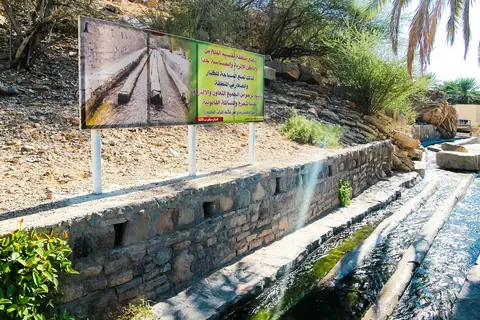
First trip to Oman
Choose seven days or ten for Muscat, Nizwa, the mountains, the Wahiba Sands and Sur: the nights, the hire car, the season, entry and an all-in budget.
Read the guide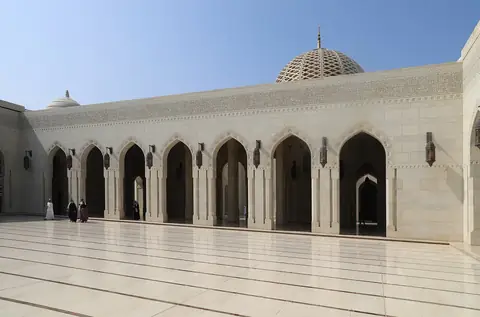
Oman in seven days
A seven-day Oman loop by hire car: Muscat, Nizwa for the fort and Jebel Shams, a desert camp, Sur, a night at the Ras al Jinz turtle reserve and the coast road.
Read the guide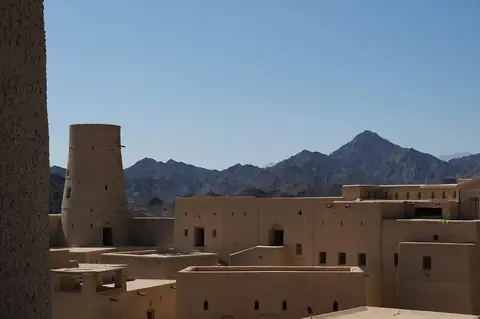
Oman in ten days
Ten days by hire car: Muscat, a night on Jebel Akhdar, Nizwa with Bahla and Jebel Shams, a desert camp, a night at the Ras al Jinz turtle reserve and Muscat again.
Read the guide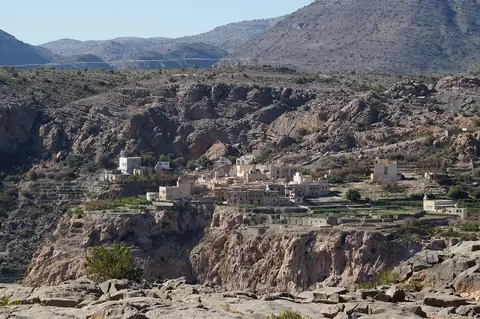
Jebel Akhdar
A night on Jebel Akhdar above Nizwa: the 4x4 checkpoint, the three-village terrace walk, Wadi Bani Habib, the spring rose harvest and where to sleep in Saiq.
Read the guide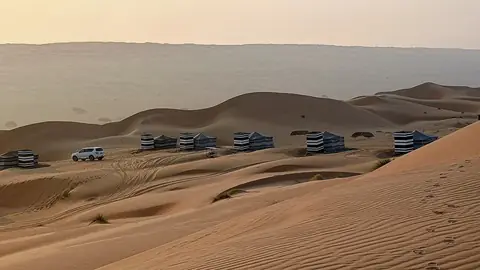
Wahiba Sands
A night in the Wahiba (Sharqiyah) Sands: choosing a camp, getting onto the sand from Al Wasil, Wadi Bani Khalid on the way, and how to plan the night.
Read the guide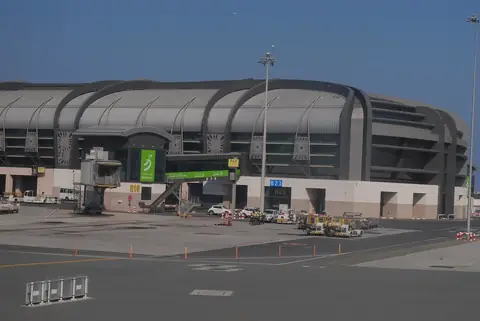
Entering Oman
Which passports enter Oman visa-free for 14 days, what to show at the border, when you need the OMR 20 e-visa, what customs allows, and the road crossings from the UAE.
Read the guideSources and checks before you travel
(34)
- Muscat International Airport: To and from the airport ↗ — opens in a new tab
- Oman Observer: Foreign visitors can drive in Oman: ROP (29 November 2024) ↗ — opens in a new tab
- UK FCDO: Oman travel advice, safety and security ↗ — opens in a new tab
- UK FCDO: Oman travel advice (latest update on regional tensions) ↗ — opens in a new tab
- Oman Observer: Can you drive an EV up Jabal Akhdhar, without a 4WD? (13 October 2026) ↗ — opens in a new tab
- Experience Oman (Ministry of Heritage and Tourism): Weather ↗ — opens in a new tab
- Experience Oman (Ministry of Heritage and Tourism): Overnight trip to Nizwa ↗ — opens in a new tab
- Experience Oman (Ministry of Heritage and Tourism): Wadi Shab ↗ — opens in a new tab
- Experience Oman (Ministry of Heritage and Tourism): Ways to reach ↗ — opens in a new tab
- Oman Observer: Fuel prices in Oman set to continue at October 2021 rates (1 January 2024) ↗ — opens in a new tab
- Khaleej Times: Oman temporarily caps fuel top-up near border crossings to 30 litres (29 October 2026) ↗ — opens in a new tab
- DiscoverCars: Car rental at Muscat Airport ↗ — opens in a new tab
- Oman Observer: Over 5 million passengers use Mwasalat buses (17 January 2026) ↗ — opens in a new tab
- Oman Observer: Mwasalat suspends bus routes due to weather conditions (25 March 2026) ↗ — opens in a new tab
- Oman Observer: Mwasalat unveils plans for fleet modernisation 2026-28 (27 April 2026) ↗ — opens in a new tab
- Oman Air: Oman Air resumes regional flights, expands frequencies to Salalah (18 April 2026) ↗ — opens in a new tab
- Oman Observer: Oman Air launches winter schedule (14 October 2026) ↗ — opens in a new tab
- Oman Observer: Oman Air, SalamAir add flights, seats for Khareef Dhofar 2026 (15 June 2026) ↗ — opens in a new tab
- Oman Observer: Oman ferries carry over 250,000 passengers in 2025 (10 June 2026) ↗ — opens in a new tab
- France Diplomatie: Oman, conseils aux voyageurs ↗ — opens in a new tab
- Government of Canada: Travel advice for Oman ↗ — opens in a new tab
- Ras Al Jinz Turtle Reserve: Turtle viewing ↗ — opens in a new tab
- German Federal Foreign Office: Oman travel and safety advice (German) ↗ — opens in a new tab
- Oman Observer: Jabal Shams, Oman’s overlooked gem (6 August 2025) ↗ — opens in a new tab
- Experience Oman: Bayt Al Ridaydah ↗ — opens in a new tab
- Experience Oman: Ras Al Hadd Castle ↗ — opens in a new tab
- Oman Observer: Hawiyat Najm (2 December 2024) ↗ — opens in a new tab
- Oman Observer: ROP warns against slow driving on highways (20 August 2025) ↗ — opens in a new tab
- National Museum of Oman: FAQ ↗ — opens in a new tab
- Oman Observer: Taxi fares from Muscat Airport slashed (4 October 2023) ↗ — opens in a new tab
- Experience Oman (Ministry of Heritage and Tourism): Wonders of cities, beaches, deserts and mountains (self-drive plan) ↗ — opens in a new tab
- Experience Oman (Ministry of Heritage and Tourism): Al Hajar route adventure trail (self-drive plan) ↗ — opens in a new tab
- KAYAK: flights from Muscat to Salalah ↗ — opens in a new tab
- Jebel Shams Resort: getting to Jebel Shams ↗ — opens in a new tab
Reference sources for the version dated 29 November 2026. Confirm opening times, access, transport and conditions for your travel dates.
Photo credits
(4)
Route 17, the road from Muscat towards Sur, passing through Al Amarat
Photograph: Trubble — opens in a new tab · CC BY-SA 2.0 — opens in a new tab
Changes: Resized and converted to WebP; displayed with responsive crops. · Original photograph and licence details ↗ — opens in a new tab
The police checkpoint on the road up to Jebel Akhdar
Photograph: Juozas Šalna — opens in a new tab · CC BY 2.0 — opens in a new tab
Changes: Resized and converted to WebP; displayed with responsive crops. · Original photograph and licence details ↗ — opens in a new tab
An emergency stopping lane on the steep Jebel Akhdar road
Photograph: albinfo — opens in a new tab · CC BY-SA 4.0 — opens in a new tab
Changes: Resized and converted to WebP; displayed with responsive crops. · Original photograph and licence details ↗ — opens in a new tab
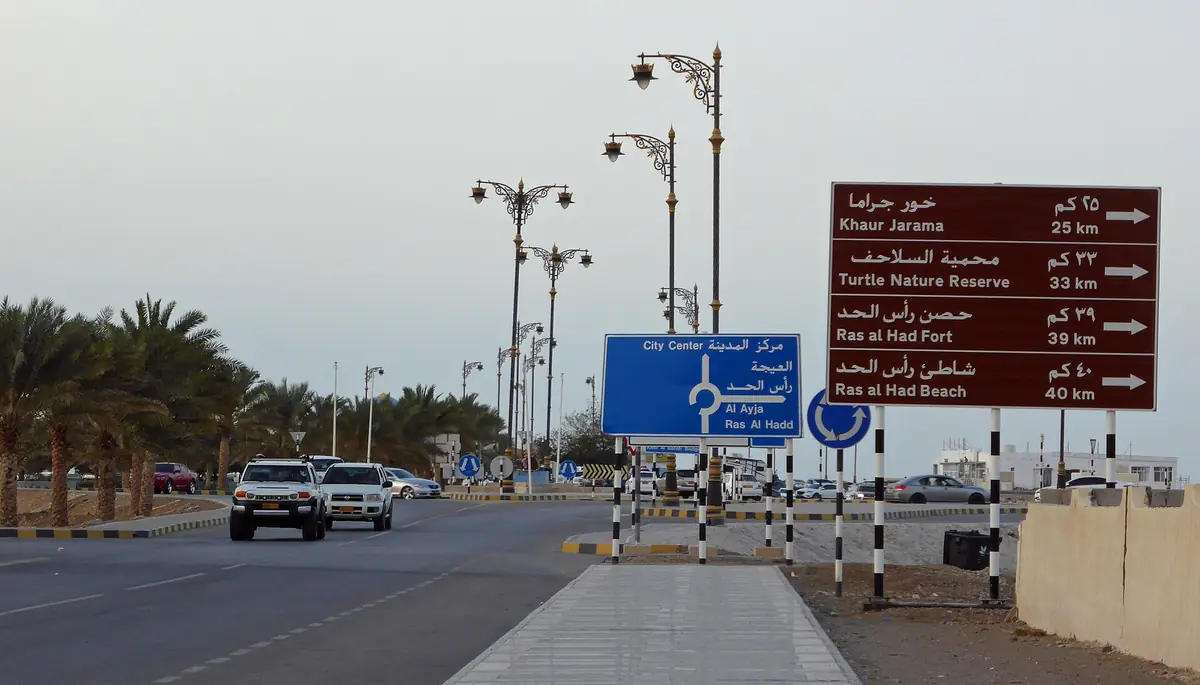
Signposts in Sur for Ras al Hadd and the turtle reserve
Photograph: Hans Birger Nilsen — opens in a new tab · CC BY-SA 2.0 — opens in a new tab
Changes: Resized and converted to WebP; displayed with responsive crops. · Original photograph and licence details ↗ — opens in a new tab