Ad Dakhiliyah
Jebel Akhdar: the 4x4 road, the terraced villages and the rose season
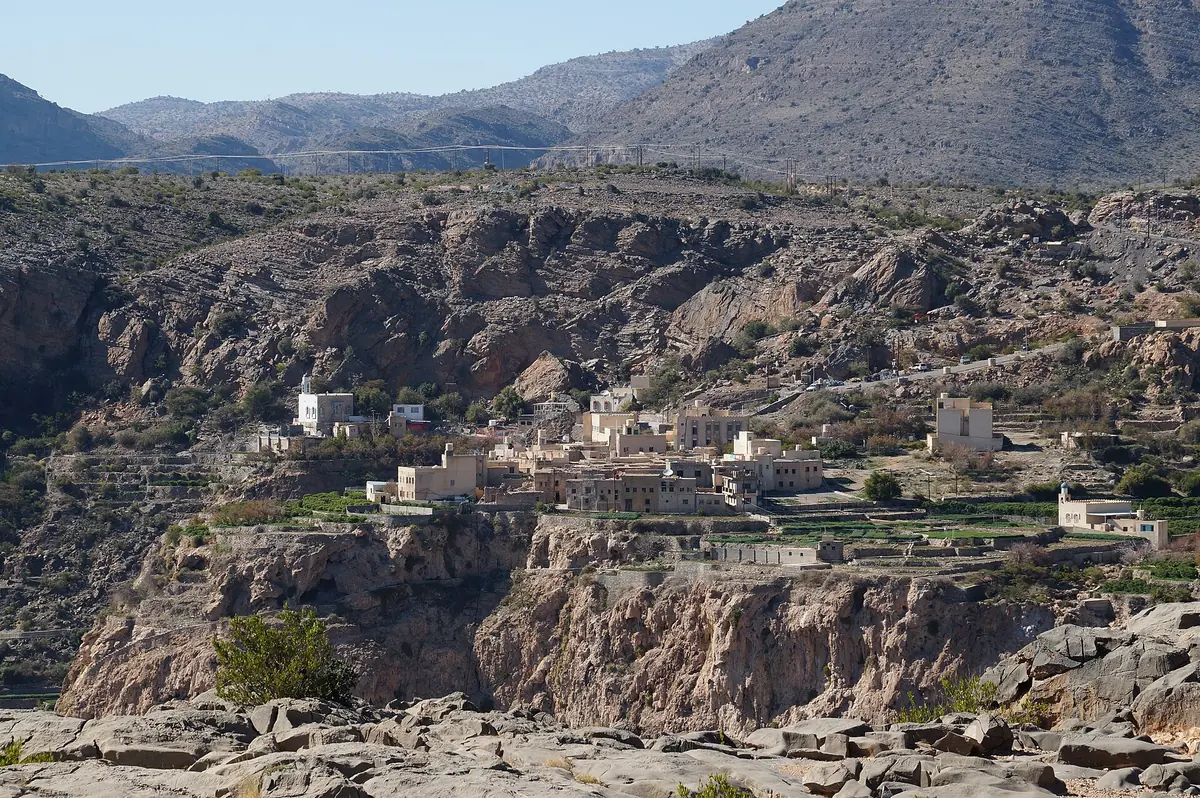
Jebel Akhdar, the Green Mountain, is the high plateau of the Hajar range above Nizwa, cooler than the plain and farmed for centuries on terraces cut into the canyon walls. From Saiq, the main settlement on top, a path links the villages of Al Aqr, Al Ayn and Ash Shirayjah along the edge of the gorge, past orchards, falaj channels and, in spring, the pink rose fields that are distilled into rose water. It makes a one-night trip from Nizwa.
In this guide
Find the location ↗ — opens in a new tabThe short answer
Book a four-wheel-drive or electric hire car first, then one night on the Saiq plateau: the checkpoint at Birkat Al Mouz admits only four-wheel-drive and electric cars. Jebel Akhdar is roughly two hours’ drive from Muscat. Walk the three terraced villages in the late afternoon and Wadi Bani Habib the next morning. The Bait Alsharaf Museum in Al Aqr charges foreign visitors OMR 2, and a permit for the Jabal Akhdar Nature Reserve costs a foreign adult OMR 5 a day. For the roses, come between the end of March and mid-April.
- Suggested time
- 1 night on the plateau
- Where to stay
- Saiq, on the Jebel Akhdar plateau
- Season and timing
- The plateau is up to 15°C cooler than the lowlands, so it is the summer escape from the plain, and its summer festival runs then. The rose harvest is from the end of March to mid-April. For Nizwa Fort below, the Ministry of Heritage and Tourism gives October to April as the best time to visit.
A green plateau above the canyons
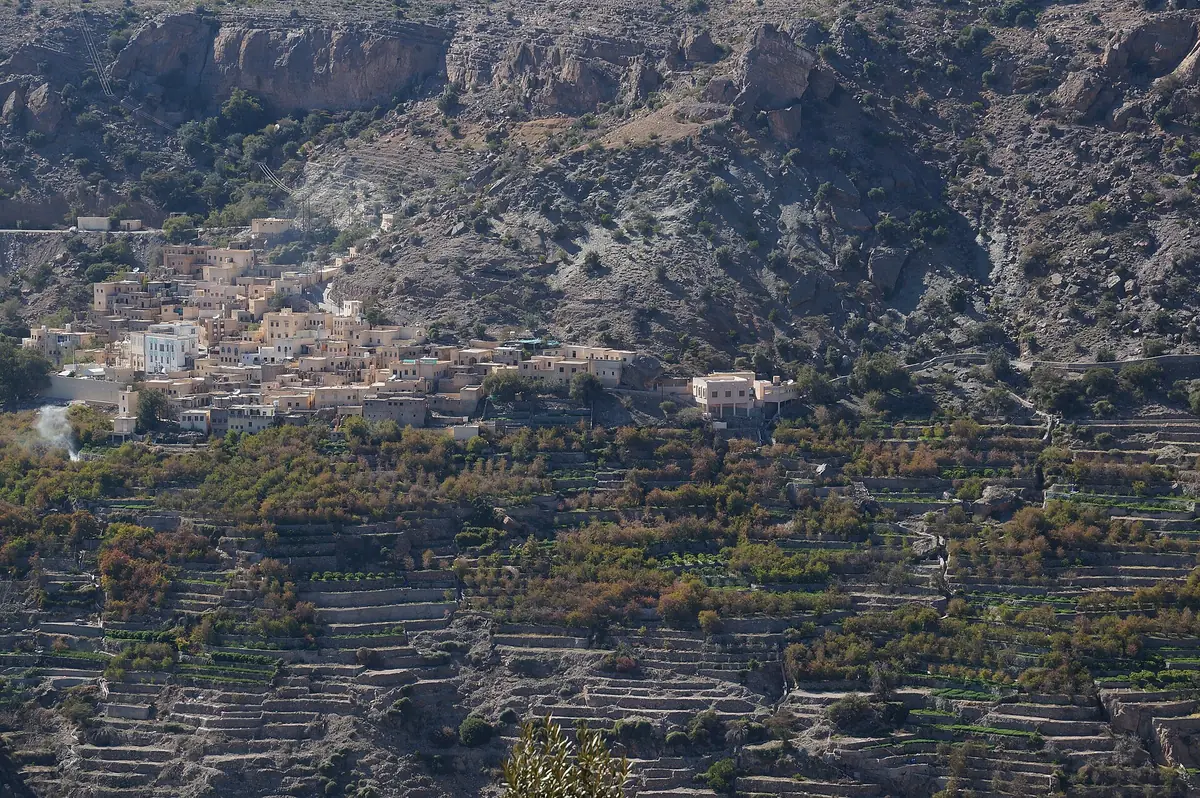
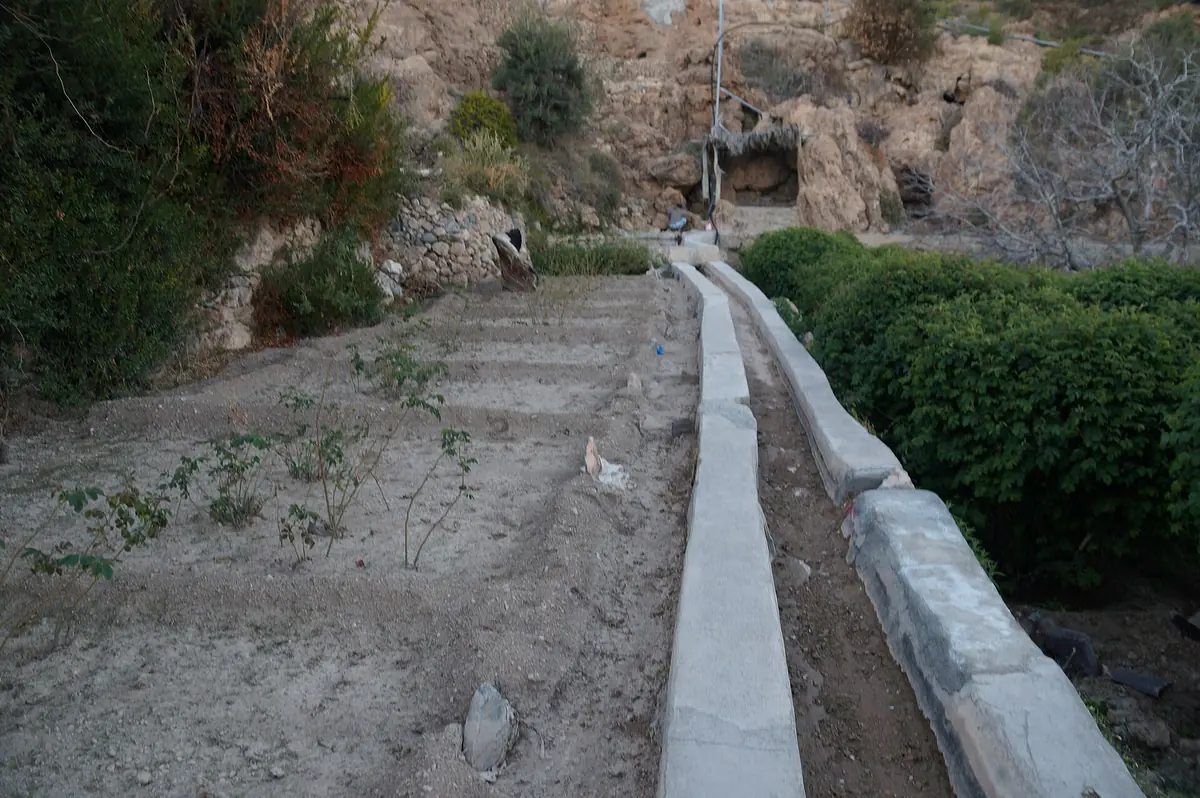
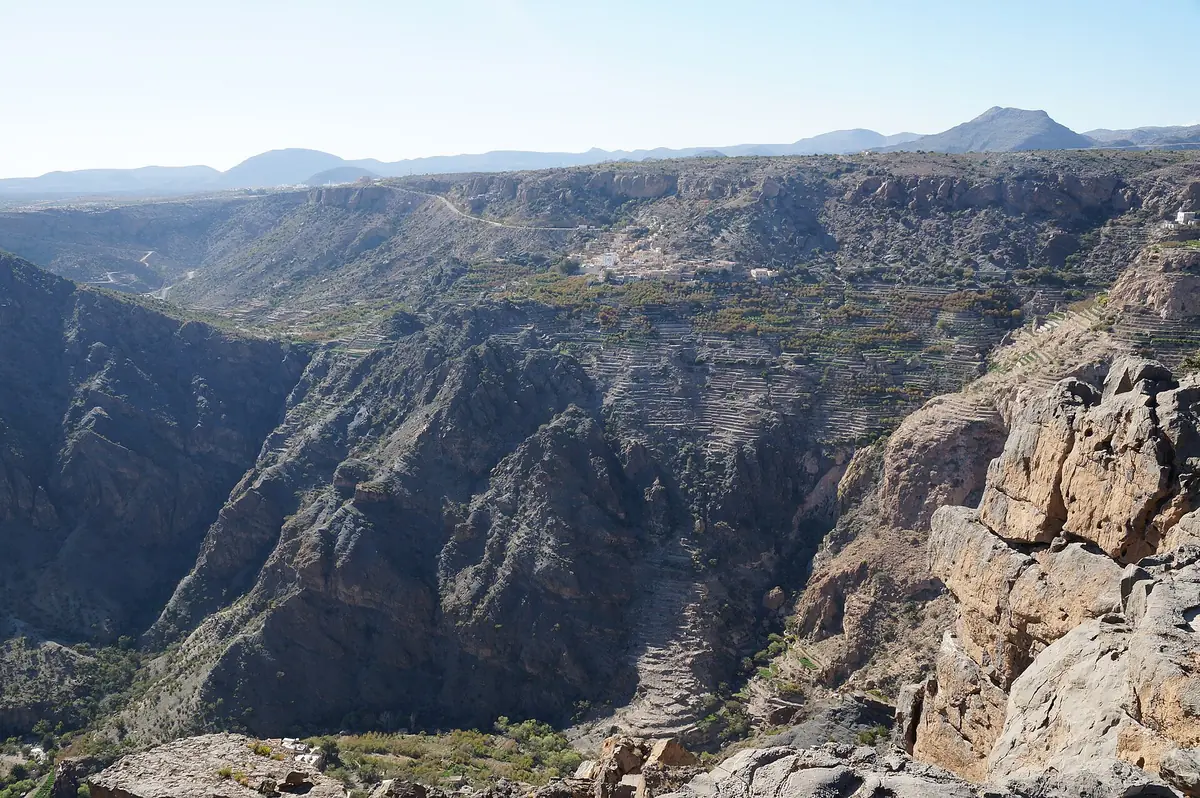
The road climbs out of the gravel plain at Birkat Al Mouz and ends on a plateau of juniper, rock and farms, with Saiq at its centre. What makes Jebel Akhdar different from the rest of Oman is the farming: villages hang on the rim of deep gorges, and below each one terraces drop down the cliff in steps, watered by falaj channels from mountain springs. The terraces grow fruit that the plain cannot, among them pomegranates, figs, peaches, walnuts and almonds, and roses for rose water.
The Ministry of Heritage and Tourism promotes the mountain for its moderate temperatures and its terraced farms, and that is the reason to sleep up here: the air is cooler in the evening, the canyon views are clearest early and late, and the walks are best before the sun is high. Bring a warm layer for the night in winter.
The road up and the Birkat Al Mouz checkpoint
The road to Jebel Akhdar leaves the Nizwa road at Birkat Al Mouz and climbs to Saiq on the plateau. At the police checkpoint at the foot of the climb, only four-wheel-drive and electric cars may pass, and any other car is turned back. Carry your driving licence and the car’s registration papers. Book the four-wheel-drive or electric car when you hire at the airport. Above the checkpoint the road is long, steep and winding: the Anantara's directions give 37.4 km from the checkpoint to the resort on the rim, past the Jabal Akhdar Hotel in Saiq. Use a low gear on the way down. Our transport guide covers hire cars.
Experience Oman, the Ministry of Heritage and Tourism’s site, puts Jebel Akhdar roughly two hours’ drive from Muscat; the Anantara resort on the canyon rim gives its own location as 172 km and about 2 hours 15 minutes from Muscat. From Nizwa, stop first at Bait al Ridaydah, just west of Birkat Al Mouz and about 24 km from the centre of Nizwa. This 17th-century fort has painted ceilings and carved gypsum, and the UNESCO-listed Falaj al Khatmain runs through its courtyard. The fort is open daily 08:30–22:00. The checkpoint is about 6 km beyond the fort’s turning. Without a four-wheel drive, book a guided day tour from Muscat that drives you up, or park near the checkpoint; the Anantara, for one, arranges a 4x4 transfer up for its guests.
Canada advises against non-essential travel to all of Oman, and other governments' advice differs: read our health and safety guide and your own government's advice before you book.
The three-village walk and Wadi Bani Habib
The classic walk joins Al Aqr, Al Ayn and Ash Shirayjah along the rim of the gorge below Saiq. You follow paths across the hanging terraces and beside the falaj channels, through Al Aqr’s winding lanes and past the stone houses of Al Ayn built out over the cliff, with Damask rose farms and canyon views all the way. Al Ayn is known for its springs and its large terraces of fruit, vegetables and roses. The dusitD2 Naseem Resort runs it as a guided four-hour trek; on your own, allow a morning or a late afternoon at an easy pace. Keep to the paths, because the terraces are working farms. In Al Aqr, the Bait Alsharaf Museum is an old heritage house with rooms of old doors, old photographs of the village and heritage items, and a room where you can see rose water made in spring. It opens daily 08:00–18:00, and on Fridays 08:00–11:30 and 13:00–18:00. Entry is OMR 2 for foreign visitors, and there is a coffee shop.
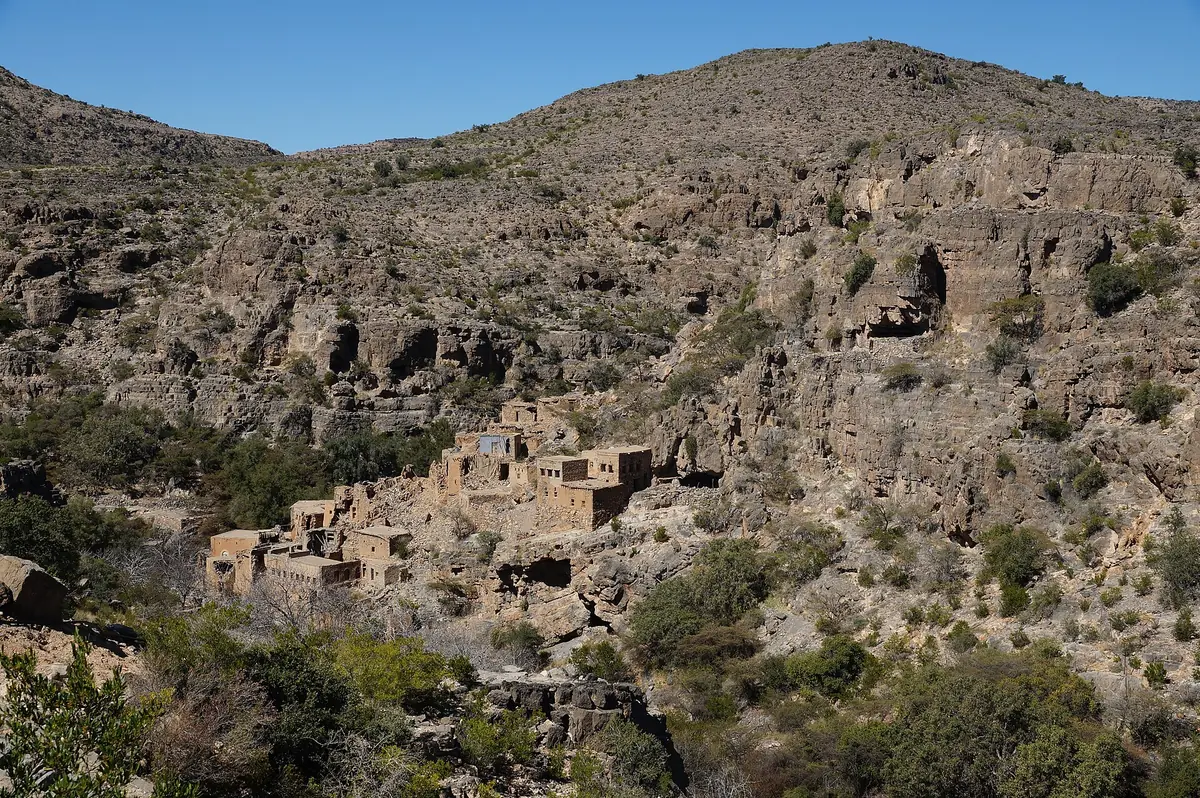
Wadi Bani Habib is the other short walk. Natural rock steps lead down into the wadi, where orchards of peach, almond, pomegranate, olive and walnut grow below an abandoned quarter of clay houses on the slope above. The UK government warns that wadis flood suddenly after heavy rain between October and March. Check the forecast, and stay out of the wadi for at least a day after heavy rain.
Further out, the plateau has fossil waterfalls of white calcite near Sayh Qatanah, and several caves. Go to those with a local guide. The Jabal Akhdar Nature Reserve is a landscape reserve of 122 km² on the mountain, between Wadi Bani Kharous to the north and Khab Hayl Mahlab to the south, crossed by mountain trails. Entry needs a permit from the Environment Authority, applied for and paid online. The authority’s service page lists OMR 5 a day for a foreign adult, OMR 10 for a foreign adult’s visit with an overnight stay and OMR 1 a day for a foreign child under 16. The Gov.om permit page lists lower rates for residents, such as OMR 3 for an adult’s visit, and OMR 1 for an adult Omani citizen. The authority publishes no boundary map, so before any walk beyond the village paths, the three-village walk or Wadi Bani Habib included, ask your hotel whether the route enters the reserve, and if it does, buy the permit online first. Camping or staying overnight in the reserve without permission is prohibited.
Prices and times checked 28 November 2026
Roses in spring, fruit in summer
Between the end of March and mid-April the terraces around Al Ayn and Ash Shirayjah turn pink with the Damask rose harvest. The 2025 harvest came from more than 5,000 rose trees on roughly 7 to 10 acres and gave an estimated 28,000 litres of rose water, used in sweets, perfumes and Omani coffee. During the season visitors can watch both traditional and modern rose-water distilling. The Tourist Services Centre on the Al Jabal Al Akhdar road gives advice on visiting in the rose season.
In summer, when the plain is at its hottest, the mountain holds two festivals. The Al Jabal Al Akhdar Festival ran from 15 July to 31 August in 2025. The pomegranate festival, held for the harvest, ran from July to September in 2025, with folk performances, local produce and horseback rides on the mountain trails. Dates change each year; the Ministry of Heritage and Tourism lists them on its events page.
Prices and times checked 28 November 2026
One night on the mountain
This plan starts and ends in Nizwa. Our ten-day route comes up from Muscat instead and goes down to Nizwa the next morning; the plan works the same with an earlier start.
- Day 1, afternoon: leave Nizwa after lunch, stop at Bait al Ridaydah near Birkat Al Mouz, pass the checkpoint and drive up to Saiq. Check in, then walk Al Aqr, Al Ayn and Ash Shirayjah in the late-afternoon light. Dinner at your hotel. Sleep on the plateau.
- Day 2, morning: sunrise over the canyon from the rim, breakfast, then Wadi Bani Habib before the heat. Drive down by late morning to Nizwa, or on to Jebel Shams by way of Nizwa and Al Hamra.
Where to sleep on the plateau
Every hotel on the mountain is on the plateau around Saiq, above the checkpoint, so any of them works for the village walk; the choice is between a room in or near Saiq, a short drive from the start of the walk, and a resort on the canyon rim with the view from your room. Book early for the rose season, which draws visitors to pick and distil the roses. Our where-to-stay guide names hotels at each price and compares the plateau with Nizwa.
What the visit costs
The Bait Alsharaf Museum is OMR 2 for foreign visitors. A walk into the nature reserve adds its Environment Authority permit, OMR 5 a day for a foreign adult. A guide for the caves or the longer walks is extra. The biggest extra is the four-wheel-drive or electric car, which you hire for the whole trip; no 4x4 day rate is listed for Muscat airport, so ask for one when you book. The trip cost guide prices the car, the room and the meals for the whole route; its SUV rates may not be for a four-wheel drive, so treat its totals as a minimum and book a 4x4 class.
Prices and times checked 28 November 2026
What to eat and where to look
Pomegranates
The mountain’s best-known fruit, grown on the terraces and celebrated with a festival at harvest time in late summer.
- Where to look
- Farm stalls and village shops on the plateau in season, and the pomegranate festival.
- Fit it into your day
- Fresh, or as juice at breakfast.
Kahwa with rose water
Omani coffee, spiced with cardamom and scented with the plateau’s own rose water, served with dates.
- Where to look
- The coffee shop at the Bait Alsharaf Museum in Al Aqr, hotel lobbies in Saiq, and the distilleries in rose season.
- Fit it into your day
- After the village walk.
Rose-water halwa
Omani halwa, the glossy sweet of sugar, ghee, starch and nuts, made with Jebel Akhdar rose water.
- Where to look
- Shops in Saiq and the rose distilleries, or the halwa shops of Nizwa Souq on the way.
- Fit it into your day
- With coffee in the afternoon.
Walnuts and almonds
Nuts from the terraced orchards of the plateau and of Wadi Bani Habib.
- Where to look
- Farm stalls and shops on the plateau.
- Fit it into your day
- A snack for the walk.
Practical questions
Do I need a 4x4 for Jebel Akhdar?
Yes, or an electric car. The checkpoint at Birkat Al Mouz admits only four-wheel-drive and electric cars, and other cars are turned back.
Is Jebel Akhdar worth a night?
Yes. One night lets you walk the terraced villages in the late-afternoon light and Wadi Bani Habib in the cool of the morning. A day trip from Muscat cannot fit both.
When is the rose season on Jebel Akhdar?
From the end of March to mid-April, when the Damask roses on the terraces around Al Ayn and Ash Shirayjah are picked and distilled into rose water.
How far is Jebel Akhdar from Muscat and Nizwa?
Experience Oman puts Jebel Akhdar roughly two hours’ drive from Muscat, and the Anantara resort on the rim gives 172 km and about 2 hours 15 minutes. From Nizwa, Bait al Ridaydah near Birkat Al Mouz is about 24 km away, and the checkpoint about 6 km beyond the fort’s turning. From there a long, steep, winding road climbs to Saiq.
Is there an entry fee?
The Bait Alsharaf Museum in Al Aqr is OMR 2 for foreign visitors. The Jabal Akhdar Nature Reserve needs an Environment Authority permit. The permit costs a foreign adult OMR 5 a day, or OMR 10 with an overnight stay. Residents pay less: the Gov.om permit page lists OMR 3 for an adult resident’s visit.
Jebel Akhdar or Jebel Shams?
Jebel Akhdar for terraced villages, roses and a night in a hotel; Jebel Shams for the canyon rim and the Balcony Walk, usually done as a day trip from Nizwa.
Keep planning your trip
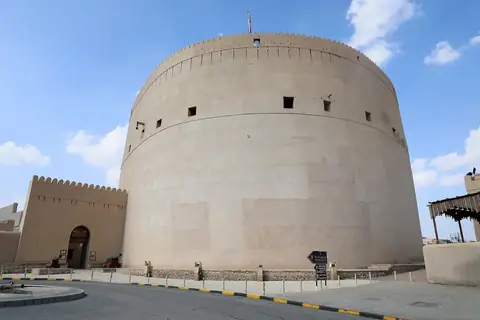
Nizwa
Two nights in Nizwa: the round fort and the souq, the Friday livestock market, Falaj Daris, Bahla Fort and Jabrin Castle, with opening hours, tickets and where to sleep.
Read the guide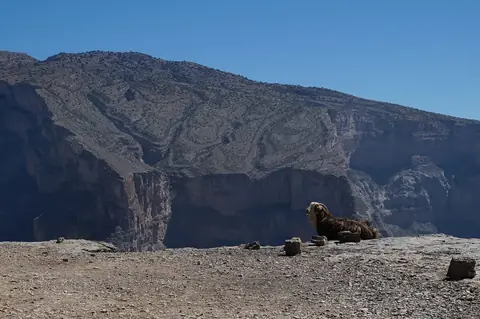
Jebel Shams
Jebel Shams from Nizwa: the drive to the canyon rim, the Balcony Walk to As Sab, Al Hamra and Misfat al Abriyeen, a day trip or a night on the mountain.
Read the guide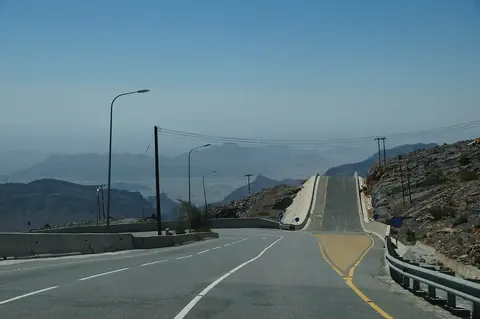
Transport in Oman
Get around Oman: a hire car from Muscat airport, when you need a 4x4, driving the Nizwa–Wahiba–Sur loop, Mwasalat buses, taxis, and flights to Salalah and Khasab.
Read the guide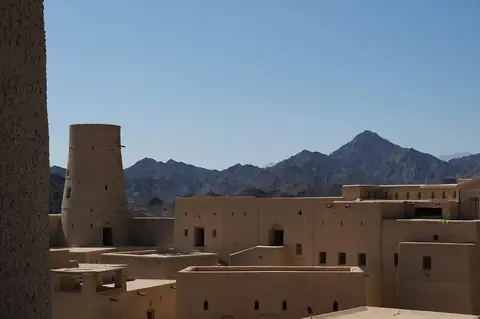
Oman in ten days
Ten days by hire car: Muscat, a night on Jebel Akhdar, Nizwa with Bahla and Jebel Shams, a desert camp, a night at the Ras al Jinz turtle reserve and Muscat again.
Read the guide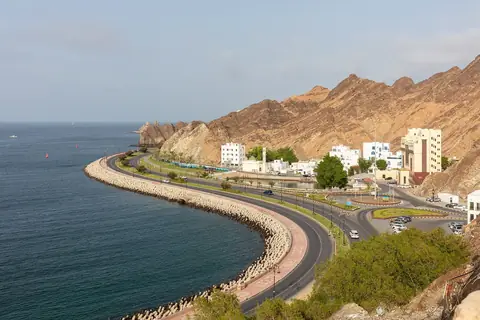
Where to stay in Oman
Which part of Muscat to sleep in, how many nights in Nizwa, on Jebel Akhdar, in a Wahiba Sands camp and in Sur, and three hotels at each base from budget to upper.
Read the guide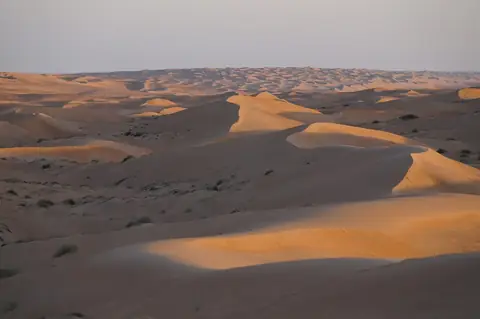
Best time to visit Oman
Choose your Oman dates: the cool months from November to March, summer heat in the north, the Dhofar khareef, wadi floods, rose season, turtles and Ramadan.
Read the guideSources and checks before you travel
(24)
- Ministry of Heritage and Tourism (Experience Oman): Al Dakhiliyah ↗ — opens in a new tab
- Oman Observer: Can you drive an EV up Jabal Akhdhar, without a 4WD? (13 October 2026) ↗ — opens in a new tab
- Ministry of Heritage and Tourism (Experience Oman): Weather ↗ — opens in a new tab
- Ministry of Heritage and Tourism (Experience Oman): The Bait Alsharaf Museum ↗ — opens in a new tab
- Ministry of Heritage and Tourism (Experience Oman): Bayt Ar-Ridaydah ↗ — opens in a new tab
- dusitD2 Naseem Resort: Three Village Hike ↗ — opens in a new tab
- Oman Observer: 6 things you didn't know you could do in Jabal Akhdar (2017) ↗ — opens in a new tab
- Oman Observer: Rose harvest season begins in Al Jabal Al Akhdhar (2 April 2025) ↗ — opens in a new tab
- Times of Oman: Rose harvest season kicks off in Al Jabal Al Akhdar (3 April 2023) ↗ — opens in a new tab
- Ministry of Heritage and Tourism (Experience Oman): Al Jabel Al Akhdar Festival ↗ — opens in a new tab
- Ministry of Heritage and Tourism (Experience Oman): Pomegranate Event ↗ — opens in a new tab
- UK FCDO: Oman safety and security ↗ — opens in a new tab
- French Ministry for Europe and Foreign Affairs: Oman travel advice ↗ — opens in a new tab
- German Federal Foreign Office: Oman travel and safety advice (German) ↗ — opens in a new tab
- Government of Canada: Oman travel advice ↗ — opens in a new tab
- Ministry of Heritage and Tourism (Experience Oman): Nizwa Fort ↗ — opens in a new tab
- Gov.om (Environment Authority service): Get permit for entering Al Jabal Al Akhdar Nature Reserve ↗ — opens in a new tab
- Environment Authority: Entry permit to Jabal Akhdar Scenic Reserve ↗ — opens in a new tab
- UK FCDO: Oman travel advice ↗ — opens in a new tab
- Times of Oman: Bait Al Sharaf Museum ↗ — opens in a new tab
- Oman Observer: Five Omani aflaj on the World Heritage List ↗ — opens in a new tab
- Anantara Al Jabal Al Akhdar Resort: destination information (PDF) ↗ — opens in a new tab
- dusitD2 Naseem Resort: Three Village Hike Tour ↗ — opens in a new tab
- Ministry of Heritage and Tourism: Al-Hajar Geopark booklet (PDF) ↗ — opens in a new tab
Reference sources for the version dated 28 November 2026. Confirm opening times, access, transport and conditions for your travel dates.
Photo credits
(5)
Al Ayn village above its terraces on Jebel Akhdar
Photograph: albinfo — opens in a new tab · CC BY-SA 4.0 — opens in a new tab
Changes: Resized and converted to WebP; displayed with responsive crops. · Original photograph and licence details ↗ — opens in a new tab
Ash Shirayjah and its terraces on the Saiq plateau
Photograph: albinfo — opens in a new tab · CC BY-SA 4.0 — opens in a new tab
Changes: Resized and converted to WebP; displayed with responsive crops. · Original photograph and licence details ↗ — opens in a new tab
A falaj channel watering the terraces of Al Ayn
Photograph: albinfo — opens in a new tab · CC BY-SA 4.0 — opens in a new tab
Changes: Resized and converted to WebP; displayed with responsive crops. · Original photograph and licence details ↗ — opens in a new tab
The abandoned village of Wadi Bani Habib
Photograph: albinfo — opens in a new tab · CC BY-SA 4.0 — opens in a new tab
Changes: Resized and converted to WebP; displayed with responsive crops. · Original photograph and licence details ↗ — opens in a new tab
Wadi Muaydin from the rim of the Jebel Akhdar plateau
Photograph: albinfo — opens in a new tab · CC BY-SA 4.0 — opens in a new tab
Changes: Resized and converted to WebP; displayed with responsive crops. · Original photograph and licence details ↗ — opens in a new tab