Plan your trip
Is Oman safe? Travel advice, wadis, roads, health and the law
Day to day, Oman is calm and crime is very low. The main risks for visitors are the roads, the wadis after rain and the midday heat. The bigger question in 2026 is the region: conflict that began early in the year has closed airspace and struck targets around the Gulf, and governments now draw different lines on the map of Oman. This guide sets out those lines first, then the emergency number, insurance and hospitals, vaccines, the weather, the roads and the desert, and the laws that catch visitors out.
In this guide
Find the location ↗ — opens in a new tabThe short answer
Governments differ, so read your own government's advice before you book. Canada advises against non-essential travel to the whole of Oman. France advises against the Salalah region, Duqm, Musandam and the Yemen border except for an imperative reason. Germany advises against travel to Musandam and the immediate Yemen border region. The UK names no area to avoid but warns that regional tensions can close airspace at short notice. The routes in these guides stay in the north, between Muscat, Nizwa, the mountains, the Wahiba Sands and Sur. Save 9999, the Royal Oman Police emergency number, for ambulance, fire and police. Buy insurance that covers medical treatment and repatriation: private clinics usually expect a deposit, and an unpaid bill can stop you leaving. Outside Muscat, plan drives to end before dark. Keep out of wadis when heavy rain is forecast and for at least a day afterwards. On the road, any alcohol in your system can bring a fine and prison, and traffic fines go up to OMR 3,000.
- Key point
- Start about 8 weeks before you fly: travel clinic, insurance with repatriation, and your government's advice
- Where it applies
- No base is needed; the advice covers Muscat, the Hajar mountains, the Wahiba Sands, the east coast and the roads between them
- Timing
- Wadis flash-flood mostly from October to March; tropical cyclones are active from May to July and in October and November; extreme heat has caused deaths
Where governments draw the lines
Governments differ, and the differences decide where you can go with insurance cover. Canada advises against non-essential travel to Oman as a whole because of the volatile security situation in the region; it reports that missile and drone attacks have struck targets in Oman and could disrupt flights, and tells travellers to avoid approaching the Yemeni border.
France advises against travel to the regions of Salalah, Duqm and Musandam and to the Yemen border zone, except for an imperative reason, and treats the rest of the country as an area of heightened vigilance. Anyone travelling in Dhofar beyond the coastal strip should take particular care and leave a precise route and timetable with someone.
Germany advises against travel to the Musandam exclave on the Strait of Hormuz and to the immediate border region with Yemen, where violent incidents can occur and police and military road checks are stepped up. It says the situation in the region remains extremely volatile and that renewed fighting could again cause severe flight restrictions, up to complete airspace closures, as in spring 2026.
The UK names no area of Oman to avoid. It warns that further attacks across the region remain possible at short notice, and that British nationals should be prepared for flight cancellations, airspace closures and travel disruption.
Because the advice differs, the seven-day and ten-day routes in these guides stay in northern Oman.
The Salalah and Musandam guides open with the advice that applies to them. Read your own government's advice before you book, and check that your insurance covers the places you plan to visit.
Prices and times checked 28 November 2026
If tension rises while you are there
Germany advises keeping well away from military sites, critical infrastructure such as oil and gas plants, desalination plants and substations, and from US facilities and places associated with the US or visibly used by US security forces, such as some hotels, companies, banks and universities. The UK and France both say to stay away from security and military facilities and never to approach drone or missile debris. If the authorities tell you to shelter, stay indoors in a secure building, away from windows.
Keep your phone and a power bank charged, keep your departure plans under review, register with your government's travel alert service, and follow official messages from the Royal Oman Police and Oman's Government Communication Centre. Terrorist attacks cannot be ruled out: in July 2024 a shooting near a mosque in the Wadi Al Kabir area of Muscat killed six people. Demonstrations in Oman have been small and rare; avoid any large gathering.
Prices and times checked 28 November 2026
Emergencies, insurance and hospitals
Call 9999, the Royal Oman Police emergency number, for an ambulance, the fire service or the police; it is also the number to report a serious road accident. Then call your insurer's emergency line.
Visitors use the private healthcare system. In Muscat its standard is high and all specialities are available, usually at a very high price. In remote parts of the country care is more basic, and an ambulance can take several hours to arrive. Private clinics usually ask for a substantial deposit or a guarantee before treatment. A visitor without insurance or the means to pay can be stopped from leaving Oman until the bill is settled. Buy insurance that covers all medical costs and medical repatriation before you book anything else. At Omani border control you must be able to show proof of travel health insurance.
In Muscat, private hospitals with English-speaking staff include Muscat Private Hospital and Burjeel Hospital in Al Khuwair, both JCI-accredited, and the public Royal Hospital and Khoula Hospital in Wattaya. On the loop, the private Badr Al Samaa group has branches in Nizwa and Sur. Buy medicines from a pharmacy, carry your own in their original packaging with the prescription, and keep them out of the heat in the car. The entry guide explains which medicines need a prescription at customs.
Prices and times checked 28 November 2026
Vaccines, mosquitoes and camels
See a travel clinic at least 8 weeks before you fly. Routine vaccines should be up to date, especially measles. Tetanus is advised for most travellers, with a booster if your last dose was more than ten years ago. Hepatitis A is the usual travel vaccine; hepatitis B, rabies, typhoid and dengue vaccines are for some travellers, such as long stays or close contact with animals. Oman has no yellow fever, but you need a vaccination certificate if you arrive from a country with yellow fever risk.
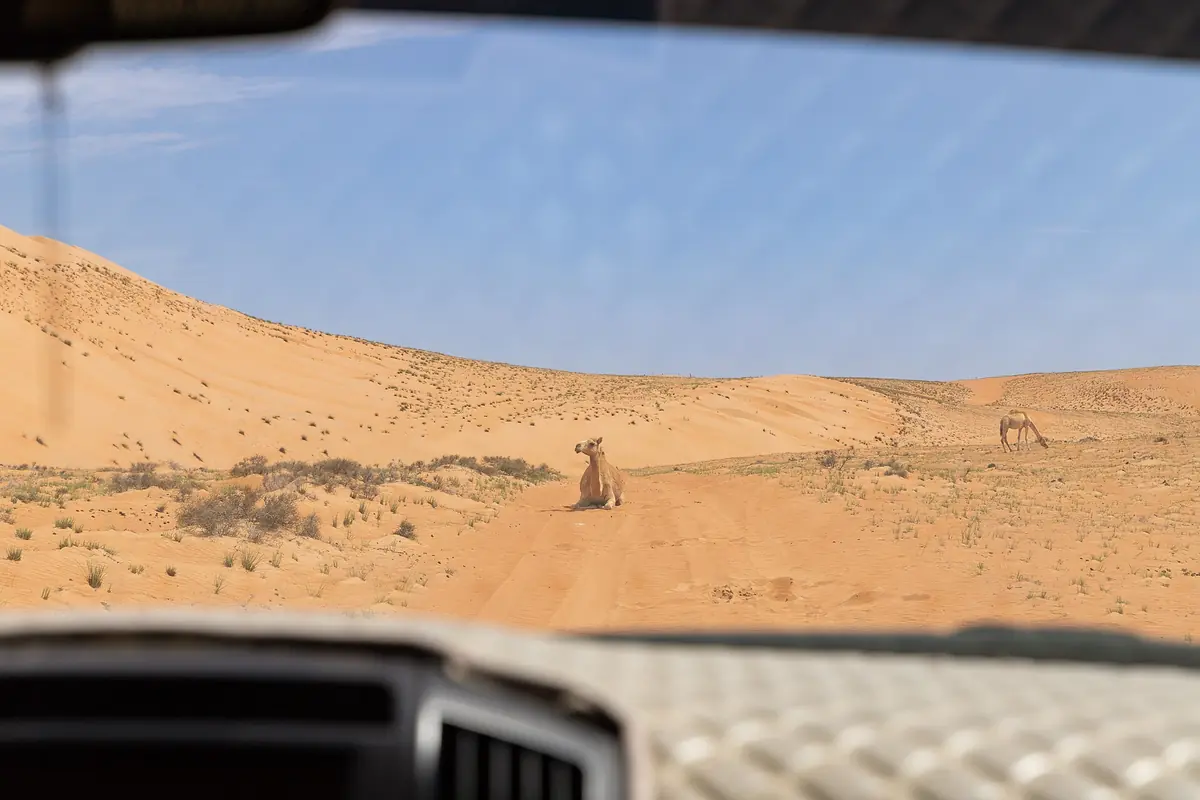
Dengue fever has been reported rarely around Muscat in recent years; the mosquitoes that spread it bite by day, so use repellent and cover up. Malaria transmission is limited and the risk to travellers is very low, so antimalarial tablets are not recommended for most travellers; keep using repellent after dark too. MERS, a respiratory virus, is linked to camels, so avoid unnecessary contact with them and do not eat camel meat or drink camel milk.
Rabies was unknown in Oman until 1990. Since then, sporadic cases have been reported, mostly in foxes and wild animals. Avoid contact with all animals, and see a doctor at once after any bite, scratch or lick on broken skin. Drink bottled or treated water, and cook or peel fruit and vegetables yourself.
Prices and times checked 28 November 2026
Heat, wadis, storms and the sea
Extreme heat has killed people in Oman through dehydration and heat exhaustion. The sun is intense, especially at midday, and the UV index can be very high even under cloud, so carry far more water than you think you need, especially on a hike or a long drive, and do the walking in the early morning.
Wadis, the dry riverbeds that hold Oman's swimming pools and canyon walks, flash-flood after heavy rain, mostly from October to March; floods killed people several times in 2024. Check the forecast before you go. Avoid any wadi where heavy rain is expected and for at least one day afterwards, and leave at once if a warning is issued. If you are caught in a flood, climb to high ground. Never try to cross the water, on foot or by car. At popular wadis such as Wadi Shab and Wadi Bani Khalid, some paths cross ground so steep that one careless step can be fatal, so keep to marked trails.
Tropical cyclones from the Arabian Sea are active from May to July and from October to November, and the UK notes that they sometimes affect Oman in July and August. They bring storms, heavy rain, floods and landslides that disrupt roads and services. The coasts of Al Sharqiyah South, Al Wusta and Dhofar are the most exposed, but cyclones such as Gonu and Shaheen have also struck the north. Follow the warnings of the Civil Aviation Authority's weather service. On the coast, dangerous currents have drowned swimmers: swim at supervised beaches, never after drinking, and keep children in sight. On a boat trip, make sure there are life jackets for everyone.
Prices and times checked 28 November 2026
Roads, camels and the desert
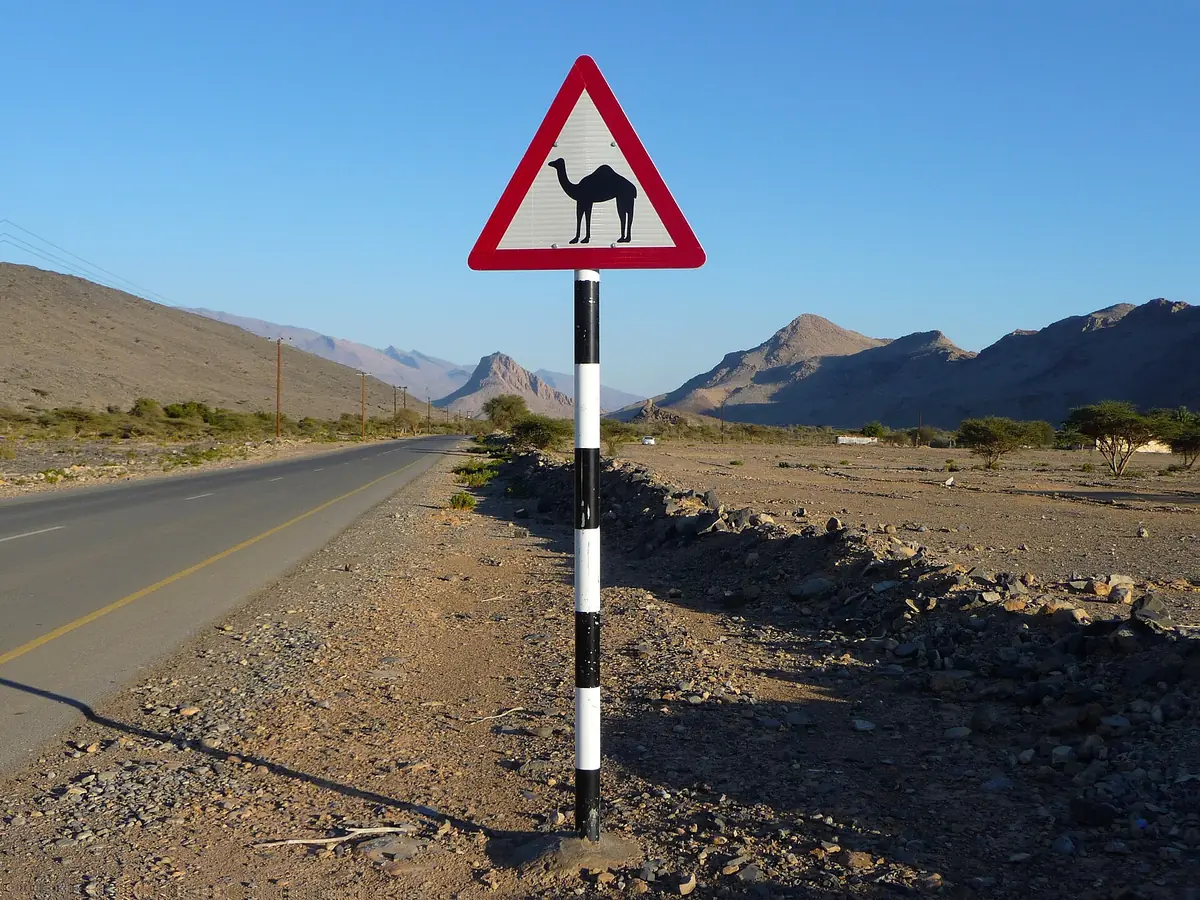
The roads are mostly good, but the accident rate is high, fatal crashes included. Speeding is common outside the towns, and distances are easy to underestimate. After dark, wandering camels and goats, unlit roads and minors driving without a licence make driving outside Muscat dangerous. Germany advises against driving outside Muscat after dark, and France against driving at night, so plan every transfer to end in daylight. Rain can flood any road that crosses a wadi bed. Expect police checkpoints across the country.
Road rules are strictly enforced, with fines of up to OMR 3,000 or prison sentences of up to 3 years. Everyone must wear a seatbelt, children aged 3 and under need a child seat, and using a phone while driving is illegal. Driving with any alcohol in your system can bring a fine and prison. Insurers do not cover a driver found to be drunk. In a serious accident, stay with the car and call 9999. After any accident with injuries, the police arrest the driver and keep the passport until fault is settled; a court case to settle fault can take some time. After a minor accident, fill in the accident form that hire companies keep in their cars. Choose fully comprehensive cover on a hire car. The transport guide covers licences, hire cars and the four-wheel-drive rule on Jebel Akhdar.
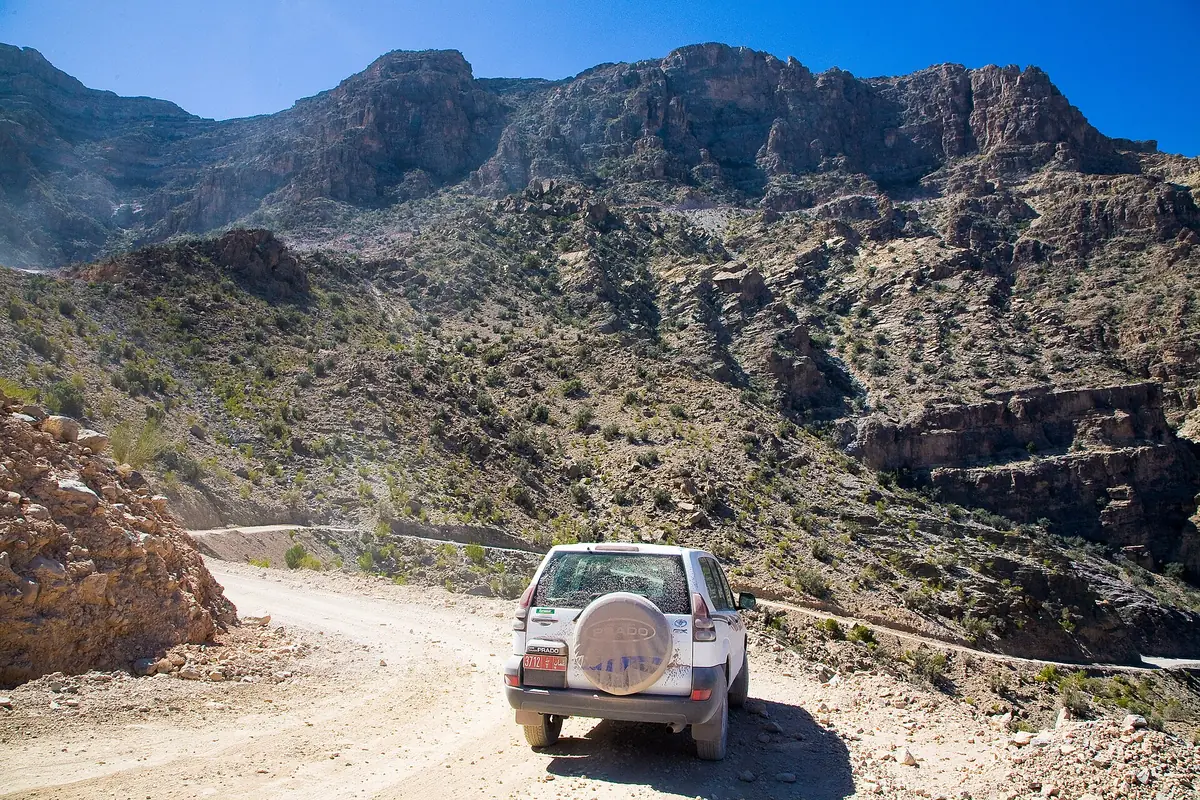
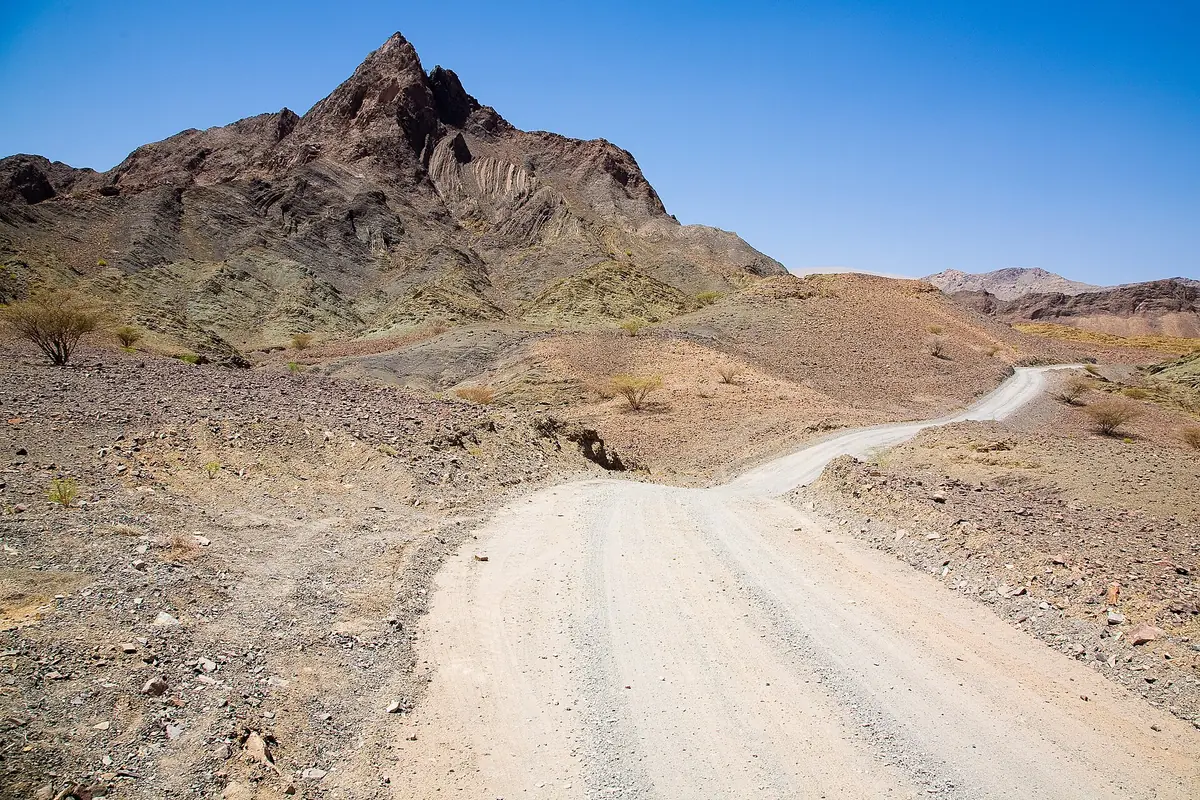
The mountains and the desert need a well-equipped four-wheel drive. Go off-road with a tour operator if you can. Always travel in a convoy of at least two vehicles, and carry plenty of fuel and water and a charged phone. Mobile coverage is missing in large areas, so leave your route and expected return time with your hotel or camp. Altitude sickness is a risk in parts of Oman.
Prices and times checked 28 November 2026
Laws and customs that catch visitors out
Alcohol is served only in licensed hotels, restaurants and clubs, and the legal drinking age is 21. Drinking in public, beaches included, or being drunk in public is illegal, and border police may arrest passengers who arrive drunk. Drug offences carry severe penalties, even for residual amounts, and trafficking can carry the death penalty.
It is illegal to live with or share a hotel room with someone of the opposite sex to whom you are not married or closely related. Sex outside marriage is a crime. Same-sex sexual activity is illegal, and cross-dressing is punishable by prison and a fine. Public displays of affection are frowned upon. Swearing and rude gestures are offences, including while driving, and social media posts can bring an obscenity charge.
Dress modestly in public, malls included: cover shoulders and knees, and keep swimwear for tourist beaches and pools. During Ramadan, whose dates change each year, do not eat, drink, smoke or chew gum in public in the daytime, including in your car, and expect restaurants outside hotels to close by day.
Do not photograph police, military or border installations, soldiers or police officers, or people without their permission. Importing or using e-cigarettes and vapes is illegal, flying a drone needs a licence, and the use of VPNs is monitored and can lead to prosecution. Carry a copy of your passport's photo page and keep the original somewhere safe. Women travelling alone may face harassment, and women who report a sexual assault have been detained; our solo female travel guide covers dress, taxis and stays.
Prices and times checked 28 November 2026
Practical questions
Is Oman safe for tourists?
Crime is very low, and the main dangers are the roads at night, wadis after rain and the heat. The regional situation is the open question. Canada advises against non-essential travel to the whole country, France and Germany against certain areas, and the UK warns of disruption.
Which areas of Oman should I avoid?
Canada, France and Germany all advise staying away from the Yemen border. France also advises against the Salalah region, Duqm and Musandam except for an imperative reason, and Germany against Musandam. Canada advises against non-essential travel to all of Oman.
What is the emergency number in Oman?
9999, the Royal Oman Police emergency number, for ambulance, fire and police, including serious road accidents.
Do I need travel insurance for Oman?
Yes. Private clinics usually ask for a deposit, an unpaid medical bill can stop you leaving, and border control can ask you to show proof of travel health insurance. Choose a policy that covers all medical costs and repatriation.
Which vaccinations do I need for Oman?
No vaccine is compulsory, except a yellow fever certificate if you arrive from a country with yellow fever risk. Keep routine vaccines up to date, especially measles; TravelHealthPro lists tetanus for most travellers. Germany recommends hepatitis A as a travel vaccine. TravelHealthPro lists hepatitis A, hepatitis B, rabies, typhoid and dengue vaccines for some travellers, depending on the trip.
Is it safe to swim in the wadis?
In settled weather, yes, with care on steep paths. Flash floods follow heavy rain, mostly from October to March: avoid any wadi when heavy rain is forecast and for at least a day afterwards.
Can unmarried couples share a hotel room in Oman?
No. It is illegal to share a hotel room with someone of the opposite sex to whom you are not married or closely related.
Keep planning your trip
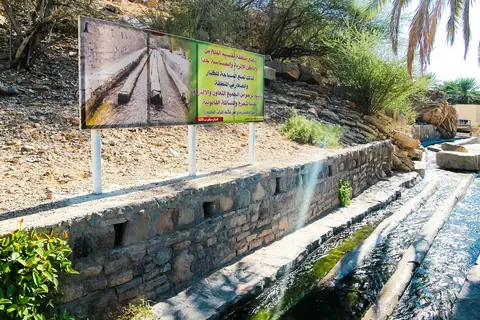
First trip to Oman
Choose seven days or ten for Muscat, Nizwa, the mountains, the Wahiba Sands and Sur: the nights, the hire car, the season, entry and an all-in budget.
Read the guide
Entering Oman
Which passports enter Oman visa-free for 14 days, what to show at the border, when you need the OMR 20 e-visa, what customs allows, and the road crossings from the UAE.
Read the guide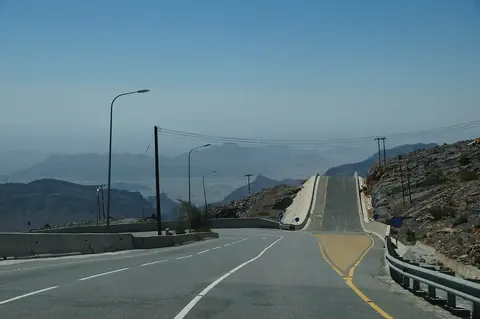
Transport in Oman
Get around Oman: a hire car from Muscat airport, when you need a 4x4, driving the Nizwa–Wahiba–Sur loop, Mwasalat buses, taxis, and flights to Salalah and Khasab.
Read the guide
Solo female travel in Oman
Travelling alone as a woman in Oman: what the UK, Canada and France say, the late taxi from Muscat airport, driving and desert camps alone, dress, wadis and 9999.
Read the guide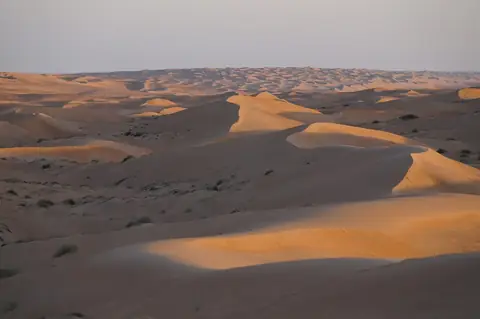
Best time to visit Oman
Choose your Oman dates: the cool months from November to March, summer heat in the north, the Dhofar khareef, wadi floods, rose season, turtles and Ramadan.
Read the guide
Oman in seven days
A seven-day Oman loop by hire car: Muscat, Nizwa for the fort and Jebel Shams, a desert camp, Sur, a night at the Ras al Jinz turtle reserve and the coast road.
Read the guideSources and checks before you travel
(16)
- UK FCDO: Oman warnings and insurance ↗ — opens in a new tab
- UK FCDO: Oman safety and security ↗ — opens in a new tab
- UK FCDO: Oman health ↗ — opens in a new tab
- German Federal Foreign Office: Oman travel and safety advice (German) ↗ — opens in a new tab
- France Diplomatie: Oman latest advice (French) ↗ — opens in a new tab
- France Diplomatie: Oman security (French) ↗ — opens in a new tab
- France Diplomatie: Oman health (French) ↗ — opens in a new tab
- France Diplomatie: Oman practical information (French) ↗ — opens in a new tab
- Government of Canada: Oman travel advice ↗ — opens in a new tab
- TravelHealthPro: Oman ↗ — opens in a new tab
- Experience Oman (Ministry of Heritage and Tourism): key contacts ↗ — opens in a new tab
- Royal Oman Police: contact us ↗ — opens in a new tab
- UK FCDO: Oman entry requirements ↗ — opens in a new tab
- UK Foreign Office (FCDO): Oman getting help ↗ — opens in a new tab
- UK FCDO: List of medical facilities in Oman (updated 1 June 2026) ↗ — opens in a new tab
- Oman Observer: In the eye of storms (17 July 2022) ↗ — opens in a new tab
Reference sources for the version dated 28 November 2026. Confirm opening times, access, transport and conditions for your travel dates.
Photo credits
(4)
A camel warning sign on the road to Nizwa: camels and goats wander onto roads outside the towns
Photograph: Ondřej Žváček — opens in a new tab · CC BY 2.5 — opens in a new tab
Changes: Resized and converted to WebP; displayed with responsive crops. · Original photograph and licence details ↗ — opens in a new tab
A camel on the track in the Wahiba Sands near Bidiya
Photograph: "dronepicr" — opens in a new tab · CC BY 2.0 — opens in a new tab
Changes: Resized and converted to WebP; displayed with responsive crops. · Original photograph and licence details ↗ — opens in a new tab
A four-wheel drive on the mountain track from Nizwa towards Wadi Bani Awf
Photograph: Andries Oudshoorn — opens in a new tab · CC BY-SA 2.0 — opens in a new tab
Changes: Resized and converted to WebP; displayed with responsive crops. · Original photograph and licence details ↗ — opens in a new tab
A gravel road on Oman's east coast: carry water and fuel and leave your route with someone
Photograph: Andries Oudshoorn — opens in a new tab · CC BY-SA 2.0 — opens in a new tab
Changes: Resized and converted to WebP; displayed with responsive crops. · Original photograph and licence details ↗ — opens in a new tab