Abu Dhabi
Al Ain: the oasis, Al Jahili Fort and Jebel Hafeet in a day or a night
Al Ain is the inland garden city of Abu Dhabi emirate, on the Omani border against the Hajar Mountains, and the place where Sheikh Zayed grew up. It holds the UAE's first UNESCO World Heritage Site: an oasis of 147,000 date palms still watered by falaj channels, Bronze Age tombs at Hili, older beehive tombs on the slopes of Jebel Hafeet, and mudbrick forts built to guard the water. Most of it is free to enter. A long day from Abu Dhabi covers the oasis and the forts; a night lets you add the camel market at dawn and the drive up Jebel Hafeet at sunset.
In this guide
Find the location ↗ — opens in a new tabThe short answer
Stay one night in central Al Ain if you can, so the camel market at about 07:00 and Jebel Hafeet at sunset both fit. Otherwise make it a long day trip and start by 08:00. The Capital Express bus from Abu Dhabi Main Bus Station costs AED 30 (premium AED 40), runs every hour and takes just over two hours. From Dubai, RTA bus E201 leaves Al Ghubaiba bus station (AED 30, about 2 hours 15 minutes), and the E201 back from Al Ain costs AED 25. Al Ain Oasis, Al Jahili Fort, Qasr Al Muwaiji and Hili are free to enter; the oasis and the two forts open from 09:00 to 19:00; before a public holiday or in Ramadan, check the day's hours on abudhabiculture.ae. Arrange a camel market visit ahead, since the market staff supervise every visit. The free Al Ain Shuttle Bus links the oasis, the fort, the zoo and the camel market; Jebel Hafeet needs a taxi or a car.
- Suggested time
- A long day trip, or 1 night in Al Ain
- Where to stay
- Central Al Ain, near the oasis and Al Jahili Fort
- Season and timing
- November to March, when the cooler days suit the outdoor sights; in October and from April to September see the oasis and the forts early and keep the hot hours for the museums.
A day trip or one night
From Abu Dhabi or Dubai, Al Ain is about 1.5 to 2 hours by road. A day trip is enough for the oasis, Al Jahili Fort and Qasr Al Muwaiji. Stay a night and the day changes: the camel market trades early in the morning, Jebel Hafeet is at its best in the evening light, and you can walk the oasis while it is still cool.
For a night in central Al Ain, our where-to-stay guide names hotels near the oasis and compares Al Ain with the other bases.
Al Ain Oasis
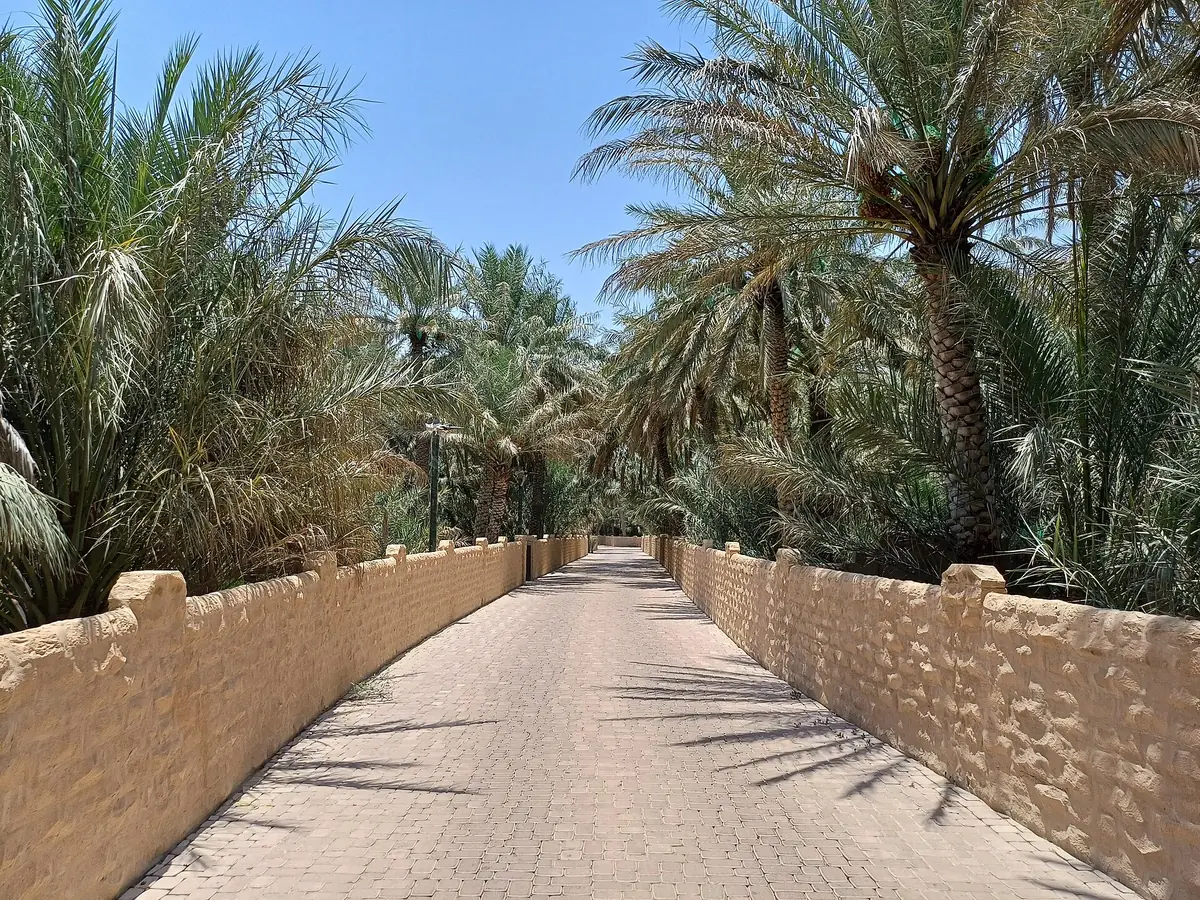
The oasis is 1,200 hectares of working date gardens in the middle of the city, with about 147,000 date palms and some 100 other kinds of plant. Shaded paths lead through it, and beside them run the falaj channels, Al Aini and Dawood, which have brought water from the mountains by gravity for about 3,000 years. The water level changes with the season, so a channel may be dry when you pass. Under the palms it is noticeably cooler than in the streets outside.
The oasis opens from 09:00 to 19:00. Entry is free, as is the Eco-Centre, whose interactive exhibits explain the oasis's history. Bicycle hire, golf buggies and private guided tours cost extra. Allow up to two hours, and come in the morning, when the paths are quietest.
The oasis is one of the Cultural Sites of Al Ain, inscribed by UNESCO in 2011 with Hafit, Hili and Bidaa Bint Saud: together they record one of the oldest continuously inhabited landscapes in Arabia. Al Ain Palace Museum, built in 1937 and Sheikh Zayed's home until 1966, has been closed for renovation since 1 July 2024.
Prices and times checked 28 November 2026
Al Jahili Fort and Qasr Al Muwaiji
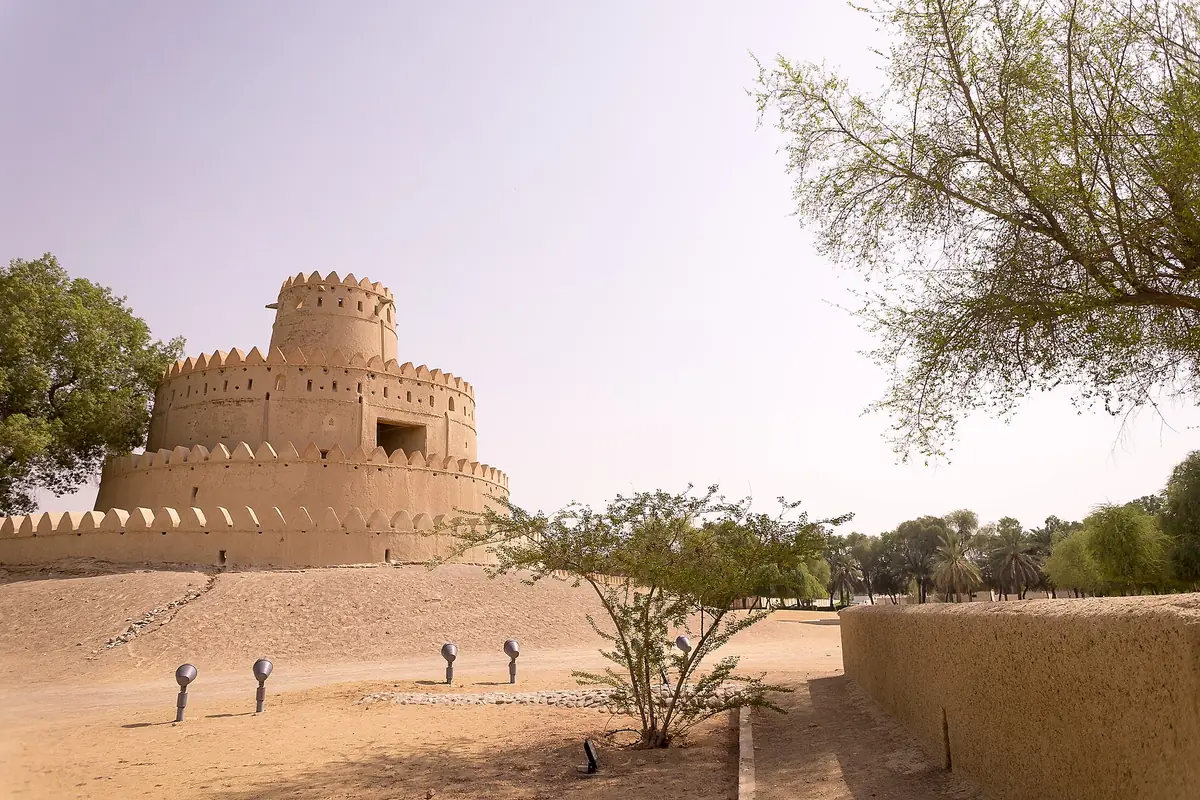
Al Jahili Fort was built in the 1890s by Sheikh Zayed bin Khalifa Al Nahyan, Zayed the First, as a home for the ruling family and to guard the oasis: mudbrick and lime plaster around a cool, quiet courtyard. Inside is a permanent exhibition of photographs by Wilfred Thesiger, who crossed the Empty Quarter twice in the late 1940s with local companions. His photographs are among the fullest records of Arabia before oil. It opens from 09:00 to 19:00 and entry is free; allow about an hour.
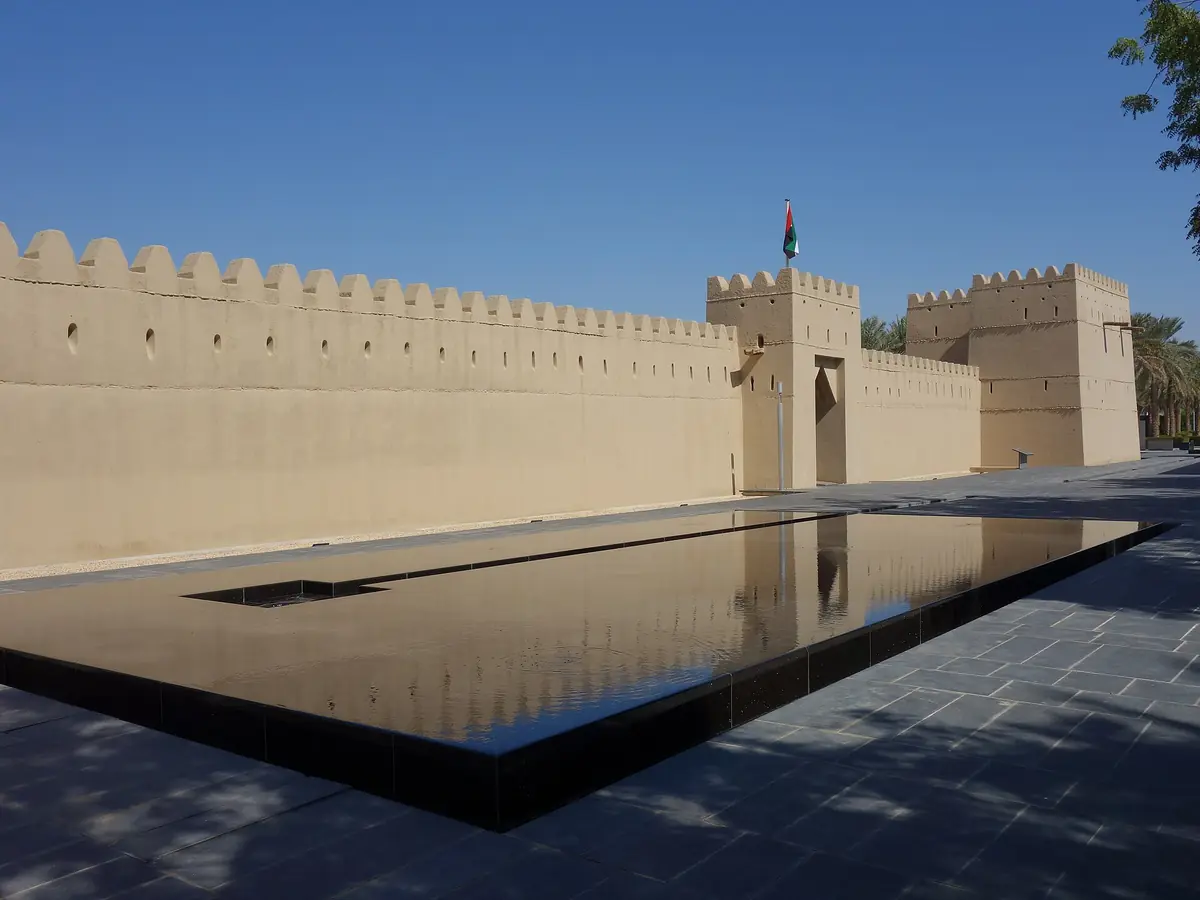
Qasr Al Muwaiji was built in the early 1900s as a fortified home and meeting place of the ruling family. From 1946 it was the residence of Sheikh Zayed bin Sultan Al Nahyan, then the ruler's representative in Al Ain. His son Sheikh Khalifa, later President of the UAE, was born in its north-west tower in 1948. Restored and reopened in 2015, the fort now has a glass exhibition pavilion inside its mudbrick walls. It opens from 09:00 to 19:00. Entry and the guided or multimedia tours are free, and a visit takes about an hour. Beside the fort, Al Muwaiji Oasis, the smallest and most westerly of Al Ain's oases, has some 21,000 palms.
Prices and times checked 28 November 2026
Hili and the camel market
Hili Archaeological Park is a Bronze Age settlement around the Grand Tomb, whose carved figures are still visible on the stone. The tomb is more than 4,000 years old and 12 metres across, and it was restored without its roof in the mid-1970s. Beside it lie the foundations of Hili 1, a mud-brick tower built around a central well, and Hili 10, a similar stronghold inside a circular wall three metres wide. Entry is free; go in daylight, and it is rarely busy; you can walk right up to the stonework.
Al Ain Camel Market, the largest in the UAE, lies on Zayed Bin Sultan Street, about 15 km from downtown Al Ain. It is a working market where hundreds of camels are inspected, bargained over in Arabic and walked between buyers. Visits must be arranged ahead and are supervised by the market staff: call the market on +971 3 784 0185 to plan a guided visit. Most of the trading is done before 09:00, so arrive around 07:00; the market winds down by mid-morning. Ask before photographing people.
Prices and times checked 28 November 2026
Jebel Hafeet and Green Mubazzarah
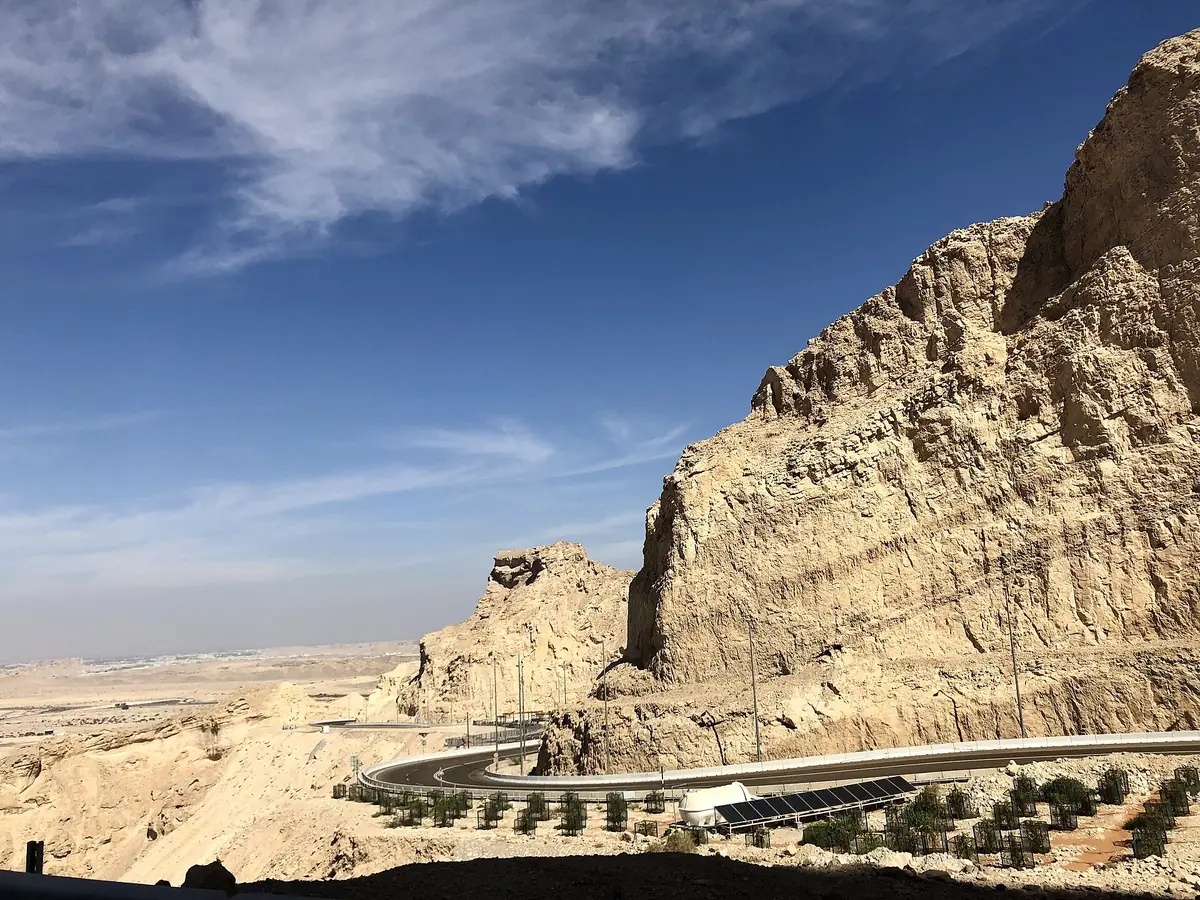
Jebel Hafeet (also written Jebel Hafit) rises to 1,249 metres on the border with Oman, the highest peak in Abu Dhabi emirate and the second highest in the UAE. The Jebel Hafeet Mountain Road, 11.7 km long, paved and lit, climbs in about 20 minutes to the top, from where you see over the city, the oasis and, on a clear winter day, deep into Oman. Go for sunset in winter, and early in summer.
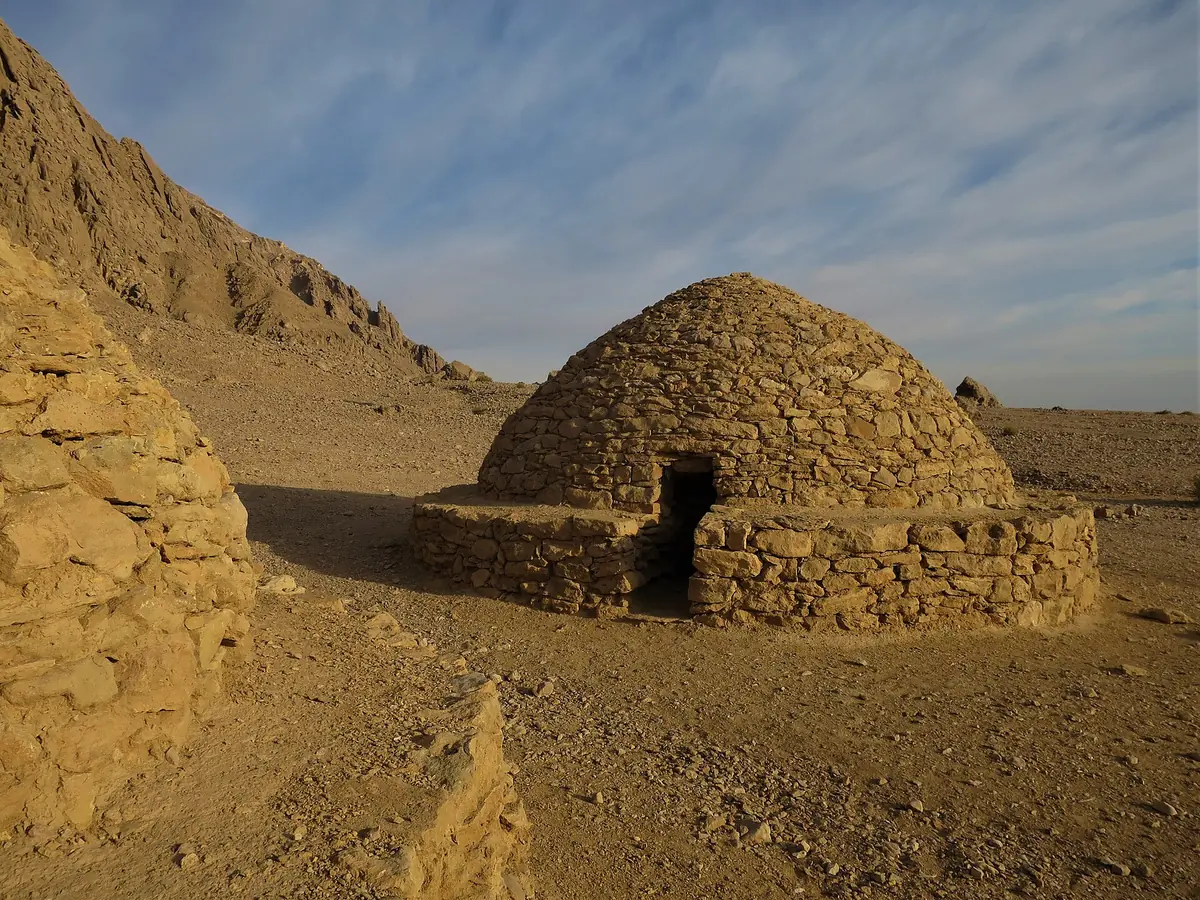
On the lower slopes lie about 500 beehive-shaped tombs, around 5,000 years old, part of the UNESCO site; reaching them takes a car and a short scramble. At the foot of the mountain, Green Mubazzarah has hot springs, lawns and picnic areas that fill with Emirati families at weekends. Nearby, the Jebel Hafit Desert Park offers basic camping, serviced Bedouin-style camps and air-conditioned glamping.
Drive or take a taxi up Jebel Hafeet, and ask the driver to wait at the top. Abu Dhabi taxis charge AED 5 to start, AED 1.82 a kilometre and AED 0.50 a minute of waiting by day, so the 11.7 km road up and back adds about AED 43 to the fare from town, and an hour at the top about AED 30. Our transport guide covers hire cars and driving between the emirates.
Prices and times checked 28 November 2026
A day in Al Ain, in order
This order keeps the outdoor sights for the cooler hours. A bus day from Abu Dhabi costs two people about AED 370: four CX90 fares (AED 120), lunch at Al Fanar Al Ain (two chicken machboos, two karak teas and one plate of luqaimat, AED 186), two short taxi rides at about AED 15 each and a 10% buffer. The sights and the shuttle are free. With one night, two people spend from about AED 930: add a room in central Al Ain from about AED 260 (our where-to-stay guide names the hotels), dinner at Al Fanar of about AED 160 (two chicken machboos and two karak teas), the Jebel Hafeet taxi of about AED 73 for the road up and back and an hour's wait, and two taxis to the camel market, about 15 km each way, at about AED 32 a ride. The taxi to the foot of the mountain comes on top.
- Day trip: an early-morning Capital Express from Abu Dhabi Main Bus Station; the first leaves at 06:45 and reaches Al Ain at 09:20. The oasis first, then Al Jahili Fort and Qasr Al Muwaiji, a late lunch in the centre, Hili Archaeological Park, and an evening bus back; the last leaves Al Ain at 23:30.
- With one night: the camel market at about 07:00 on the second morning, arranged ahead with the market, the oasis while it is cool, the forts around midday, and Jebel Hafeet by taxi for sunset on the first or second evening.
- Zoo instead: Al Ain Zoo has more than 4,000 animals, Arabian oryx among them; tickets start at AED 31.5 for adults and AED 10.5 for children, and it is a full day on its own.
Prices and times checked 28 November 2026
What to eat and where to look
Dates of the oasis
Al Ain's oasis grows about 147,000 date palms; eat them fresh or dried with Arabic coffee.
- Where to look
- Date shops and supermarkets in the city centre.
- Fit it into your day
- With coffee after the oasis walk.
Regag
Crisp, thin Emirati bread from a waterless dough, served with eggs, cheese or other fillings, mostly at breakfast and dinner.
- Where to look
- Al Fanar Al Ain, an Emirati restaurant in Al Jimi near Souq Al Zafarana (open daily 09:00–22:00), lists regag from AED 24.
- Fit it into your day
- Breakfast before the camel market, if you stay the night.
Lamb ouzi (khuzi)
Spiced rice with lamb, topped with toasted almonds and pine nuts; a sharing dish for family lunches and celebrations.
- Where to look
- Emirati restaurants in the centre, near the oasis and Al Jahili Fort.
- Fit it into your day
- A late lunch after the forts.
Madrooba
Salted fish cooked with spices in a thick sauce, from a cuisine with a deep-rooted love of fish; a popular iftar dish in Ramadan.
- Where to look
- Emirati restaurants and Ramadan iftar menus.
- Fit it into your day
- Dinner on the night you stay.
Luqaimat
Deep-fried dough balls, crisp outside and soft inside, coated in sweet syrup.
- Where to look
- Al Fanar Al Ain lists luqaimat at AED 28 a plate.
- Fit it into your day
- After lunch, with karak.
Ouzi and madrooba are meat and fish dishes; vegetarians should ask for regag with cheese or eggs.
Buses from Abu Dhabi and Dubai, and getting around
From Abu Dhabi, Capital Express route CX90 runs every hour between Abu Dhabi Main Bus Station and Al Ain Main Bus Station, about 160 km by road. Abu Dhabi Mobility's timetable allows 2 hours 5 minutes to 2 hours 45 minutes, with buses leaving Abu Dhabi from 06:45 to 23:45 and Al Ain from 06:30 to 23:30. The fare is AED 30, or AED 40 premium, bought at the Customer Happiness Office in the station.
From Dubai, RTA route E201 runs from Al Ghubaiba bus station in old Dubai to Al Ain Main Bus Station; RTA's journey planner gives AED 30 and about 2 hours 15 minutes; check the departure times in RTA's S'hail app before you go. RTA sells e-tickets for it online, and e-ticket holders use a dedicated boarding lane at the station. For the trip back, Abu Dhabi Mobility sells the E201 from Al Ain for AED 25. From Ras Al Khaimah, RAKTA runs one bus to Al Ain at 14:00 on Fridays, Saturdays and Sundays for AED 47. The bus back leaves Al Ain at 20:00 on the same days and costs AED 35. By car, the E22 and E66 highways take about 1.5 to 2 hours from either city.
In town, the free Al Ain Shuttle Bus links the oasis, Al Jahili Fort, Al Ain Zoo and the camel market, and runs out to the Telal and Al Bada resorts. City buses charge a AED 2 boarding fee plus 5 fils a kilometre, at most AED 5 a journey. Taxis cover the rest, including Jebel Hafeet. Al Ain International Airport has regional flights; Zayed International Airport (AUH) in Abu Dhabi is about 90 minutes away by car.
Prices and times checked 28 November 2026
Practical questions
Is Al Ain worth a day trip from Abu Dhabi or Dubai?
Yes. A long day covers the oasis, Al Jahili Fort and Qasr Al Muwaiji. Stay one night to add the camel market in the morning and Jebel Hafeet at sunset.
How do I get from Abu Dhabi to Al Ain by bus?
Take Capital Express CX90 from Abu Dhabi Main Bus Station to Al Ain Main Bus Station: AED 30, or AED 40 premium, every hour, and 2 hours 5 minutes to 2 hours 45 minutes for about 160 km by road.
How do I get from Dubai to Al Ain by bus?
Take RTA route E201 from Al Ghubaiba bus station to Al Ain Main Bus Station, with an RTA e-ticket booked online. The E201 back from Al Ain costs AED 25.
How much does it cost to visit Al Ain Oasis and Al Jahili Fort?
Nothing: both are free, as are Qasr Al Muwaiji and Hili Archaeological Park. The oasis and the two forts open from 09:00 to 19:00. Bicycles and golf buggies in the oasis cost extra.
How do I get up Jebel Hafeet?
By taxi or by car, up the 11.7 km mountain road, about 20 minutes to the top. Ask the taxi to wait: by day the meter adds AED 0.50 a minute.
When is the Al Ain camel market busiest?
Early: arrive around 07:00, since most trading is done before 09:00. Arrange the visit with the market staff ahead.
Keep planning your trip
Abu Dhabi
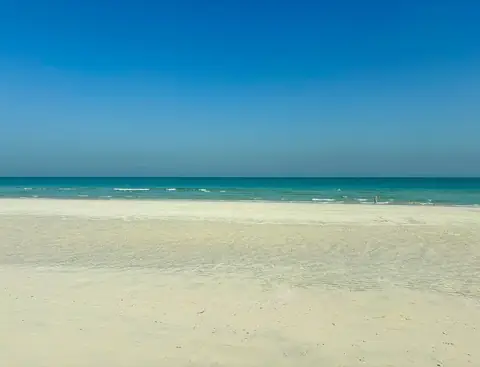
Plan two nights in Abu Dhabi: Sheikh Zayed Grand Mosque, Louvre Abu Dhabi, Qasr Al Watan, Qasr Al Hosn and Saadiyat or Yas, with fees, hours and buses from Dubai.
Read the guide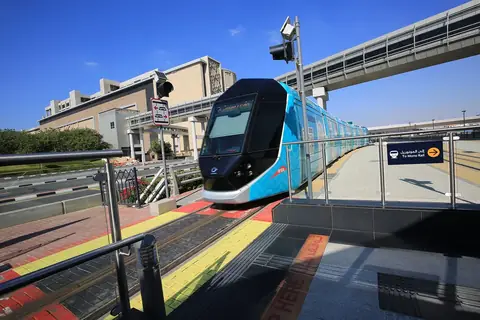
Transport in the UAE
The Dubai Metro and nol cards, the new Etihad Rail trains, the AED 25 buses between Dubai and Abu Dhabi, airport taxis, and what to know before you hire a car in the UAE.
Read the guide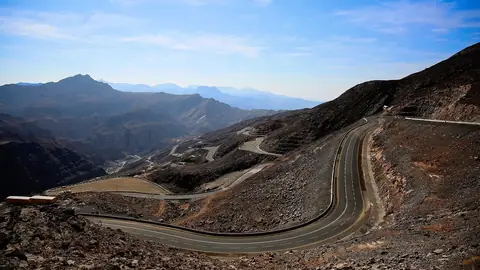
UAE in ten days
A ten-day UAE route by bus: four nights in Dubai, two in Ras Al Khaimah for Jebel Jais, two in Abu Dhabi and one in the oasis city of Al Ain.
Read the guide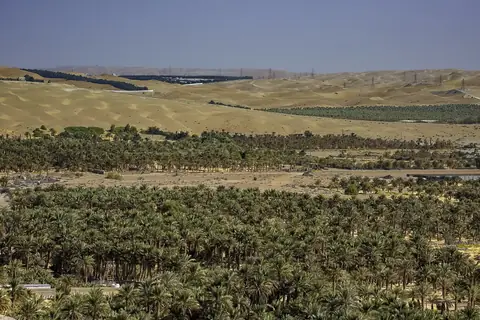
Liwa and the Empty Quarter
A night in Liwa from Abu Dhabi: the drive into Al Dhafra, Moreeb Dune's 50-degree face, the oasis forts and palm farms, where to sleep and the December festival.
Read the guide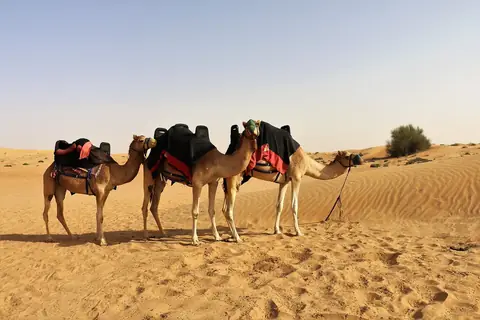
First trip to the UAE
Choose seven days or ten for Dubai, Sharjah, Abu Dhabi, Ras Al Khaimah and Al Ain: nights, buses and the metro, season, entry, medicines, dress and the current advisory.
Read the guide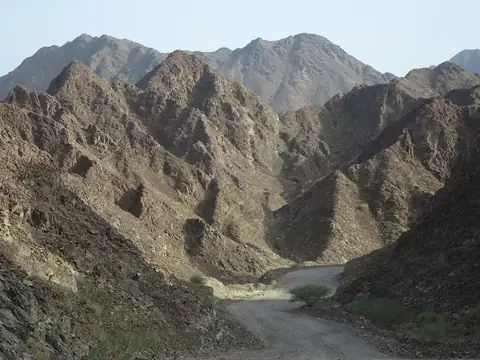
Best time to visit the UAE
Choose your UAE dates by month: Dubai's average highs, the cool months from November to March, summer heat, Ramadan and the Eids in 2027, school breaks and the mountains.
Read the guideSources and checks before you travel
(28)
- Experience Abu Dhabi (Department of Culture and Tourism): Al Ain ↗ — opens in a new tab
- Experience Abu Dhabi: the ancient world of Al Ain ↗ — opens in a new tab
- Experience Abu Dhabi: Al Ain Oasis ↗ — opens in a new tab
- Experience Abu Dhabi: Al Jahili Fort ↗ — opens in a new tab
- Experience Abu Dhabi: Qasr Al Muwaiji ↗ — opens in a new tab
- Experience Abu Dhabi: Jebel Hafit ↗ — opens in a new tab
- Experience Abu Dhabi: Al Ain Zoo ↗ — opens in a new tab
- Experience Abu Dhabi: shuttle bus ↗ — opens in a new tab
- Experience Abu Dhabi: 7 Emirati dishes ↗ — opens in a new tab
- Abu Dhabi Mobility: inter-city services ↗ — opens in a new tab
- Abu Dhabi Mobility: Capital Express timetable ↗ — opens in a new tab
- Abu Dhabi Mobility: inter-emirates services ↗ — opens in a new tab
- Abu Dhabi Mobility: public transport fare ↗ — opens in a new tab
- RTA: bus route list ↗ — opens in a new tab
- RTA: intercity bus tickets ↗ — opens in a new tab
- RAKTA: public transport ↗ — opens in a new tab
- Abu Dhabi Culture (DCT): Al Jahili Fort ↗ — opens in a new tab
- Abu Dhabi Culture (DCT): Qasr Al Muwaiji ↗ — opens in a new tab
- Abu Dhabi Culture (DCT): Al Ain Oases ↗ — opens in a new tab
- Abu Dhabi Culture (DCT): Al Ain Palace Museum ↗ — opens in a new tab
- Abu Dhabi Culture (DCT): Hili sites ↗ — opens in a new tab
- Experience Abu Dhabi: Al Ain Camel Market ↗ — opens in a new tab
- Visit Al Ain (DCT): Al Ain Camel Market ↗ — opens in a new tab
- Abu Dhabi Mobility: taxi fares ↗ — opens in a new tab
- Al Fanar Restaurant & Cafe: Al Ain ↗ — opens in a new tab
- Al Fanar Restaurant & Cafe: Al Ain menu ↗ — opens in a new tab
- RTA Wojhati: journey planner (intercity buses) ↗ — opens in a new tab
- RTA S'hail app (Visit Hatta: plan your visit) ↗ — opens in a new tab
Reference sources for the version dated 28 November 2026. Confirm opening times, access, transport and conditions for your travel dates.
Photo credits
(5)
A shaded path through Al Ain Oasis
Photograph: Radosław Botev — opens in a new tab · CC BY 3.0 pl — opens in a new tab
Changes: Resized and converted to WebP; displayed with responsive crops. · Original photograph and licence details ↗ — opens in a new tab
The round tower of Al Jahili Fort
Photograph: Glenn2477 — opens in a new tab · CC BY-SA 4.0 — opens in a new tab
Changes: Resized and converted to WebP; displayed with responsive crops. · Original photograph and licence details ↗ — opens in a new tab
Qasr Al Muwaiji and its reflecting pool
Photograph: Marko — opens in a new tab · CC BY-SA 4.0 — opens in a new tab
Changes: Resized and converted to WebP; displayed with responsive crops. · Original photograph and licence details ↗ — opens in a new tab
The road up Jebel Hafeet
Photograph: Colleen Jean — opens in a new tab · CC BY-SA 4.0 — opens in a new tab
Changes: Resized and converted to WebP; displayed with responsive crops. · Original photograph and licence details ↗ — opens in a new tab
One of the Bronze Age beehive tombs on Jebel Hafeet
Photograph: Angela Manthorpe — opens in a new tab · CC BY-SA 4.0 — opens in a new tab
Changes: Resized and converted to WebP; displayed with responsive crops. · Original photograph and licence details ↗ — opens in a new tab