Itineraries
Egypt in 14 days: Cairo, Alexandria, Abu Simbel, the Nile and the Red Sea
Two weeks is enough to see Egypt without choosing between its halves. Besides the pyramids, the river and the Red Sea, you get a day by the Mediterranean in Alexandria, the rock temples of Abu Simbel near the southern border, and a night in Luxor after the cruise instead of a drive straight from the gangway. The route still runs one way: south by air from Cairo to Aswan, north down the Nile to Luxor, then across the desert to the coast. You sleep four nights in Cairo, two in Aswan, three on the boat, one in Luxor and three in Hurghada. The cruise sails on fixed weekdays, so choose that day first.
In this guide
Find the location ↗ — opens in a new tabThe short answer
Book thirteen nights: Cairo four, Aswan two, a three-night cruise from Aswan to Luxor, Luxor one and Hurghada three, then fly home from Hurghada on day 14. The extra days in Cairo and Aswan are for Alexandria by train and Abu Simbel by air. Luxor and Aswan Travel's three-night cruise leaves Aswan on Mondays, Wednesdays and Fridays. A Wednesday or Friday sailing fits this plan best, so start on a Thursday or a Saturday. A standard double cabin costs USD 1,075 per person from September to April, and the same company's flying day to Abu Simbel costs USD 625 per adult when two book together, with the flights and the temple ticket. Book the cruise first, then the Cairo–Aswan flight, the Abu Simbel day and the Grand Egyptian Museum's timed ticket on tickets.gem.eg.
- Suggested time
- 14 days / 13 nights: Cairo 4, Aswan 2, Nile cruise from Aswan to Luxor 3, Luxor 1, Hurghada 3
- Route
- Cairo 4 nights
- Aswan 2 nights
- Nile cruise 3 nights
- Luxor 1 night
- Hurghada 3 nights
- All-in budget on the ground
- About EGP 167,000 per person, or about EGP 333,900 for two Full breakdown ↓
- Season and timing
- October to April is the season for this route. From June to August afternoons in Luxor average about 41°C, so the early visits matter most. The cruise prices below are Luxor and Aswan Travel's winter rates, which run from September to April; its summer rates, from May to August, are lower. Alexandria gets most of its rain between November and February.
Book the thirteen nights around the sailing day
The cruise sails on fixed weekdays, so it sets the calendar. Luxor and Aswan Travel runs the three-night Aswan–Luxor cruise priced in this plan on Mondays, Wednesdays and Fridays. You board on day 7, so day 1 is a Thursday for a Wednesday sailing or a Saturday for a Friday sailing. With either start the plan below works as written. Day 4 falls on a Sunday or a Tuesday, when the library in Alexandria keeps its full hours, and day 6 on a Tuesday or a Thursday, when EgyptAir flies to Abu Simbel. Sonesta's Sun Goddess and St. George 1 sail the same stretch every Friday, with their own programme and fares.
A Monday sailing means a Tuesday start and two changes. Day 4 is then a Friday, and the Bibliotheca Alexandrina is closed on Fridays and closes at 14:00 on Saturdays. Go to Alexandria on day 3 and keep old Cairo for day 4. Day 6 is then a Sunday, when EgyptAir does not fly between Aswan and Abu Simbel, so the Abu Simbel day goes by road in daylight; the day 6 section explains how.
Four hotels fill the nights off the ship. In downtown Cairo the example is Steigenberger Hotel El Tahrir for nights 1–4, from about USD 76 a night. In Aswan, Basma Hotel stands on the highest point of the town overlooking the Nile, with Nile-view rooms and pools; nights 5–6 there are from about USD 83 a night. In Luxor, Aracan Eatabe Luxor Hotel is on the east-bank Corniche near Luxor Temple, about USD 66 for night 10. In Hurghada, Hilton Hurghada Plaza is from about USD 84 a night for nights 11–13. These rates are per room, taken from a booking site's page for each hotel, and they change with the dates.
Book in this order: the cruise, the Cairo–Aswan flight on day 5, the Abu Simbel day on day 6, the Grand Egyptian Museum's timed ticket for day 2 on tickets.gem.eg, then the rooms and the car from Luxor to Hurghada. Fly home from Hurghada (HRG). The airport has around 60 flights a day by 80 airlines from 160 cities, and Europe's major capitals are about four hours away by air. If your airline flies only from Cairo, take a domestic flight from Hurghada to Cairo on day 14 and leave a wide gap before the long-haul flight. Our ten-day itinerary follows the same line without Alexandria, Abu Simbel and the night in Luxor.
The fourteen days at a glance
One line per day, with where you sleep. Times, prices and bookings follow in the day sections.
- Day 1
Arrive in Cairo
the taxi to the hotel near Tahrir Square. Night: Cairo.
- Day 2
Giza
the pyramids at opening time, then the Grand Egyptian Museum. Night: Cairo.
- Day 3
Old Cairo
the Egyptian Museum, Al-Muizz Street and Khan el-Khalili. Night: Cairo.
- Day 4
Alexandria
the 08:00 train, the catacombs, Qaitbay and the library, and the evening train back. Night: Cairo.
- Day 5
Fly to Aswan
a felucca on the river in the afternoon. Night: Aswan.
- Day 6
Abu Simbel
the morning flight to the temples, then the Nubia Museum. Night: Aswan.
- Day 7
Board the ship
the High Dam, Philae and the Unfinished Obelisk. Night: on board.
- Day 8
Down the river
Kom Ombo in the morning, Edfu in the afternoon. Night: on board.
- Day 9
Luxor's west bank
the Valley of the Kings, Hatshepsut's temple and the Colossi of Memnon. Night: on board.
- Day 10
Karnak and Luxor Temple
with the ship's guide, then the Luxor Museum in the evening. Night: Luxor.
- Day 11
Medinet Habu and the Red Sea
a last west-bank temple, then the drive to Hurghada. Night: Hurghada.
- Day 12
Giftun Islands
a boat day with snorkelling. Night: Hurghada.
- Day 13
A free day by the sea
the beach, a first dive or Dolphin House. Night: Hurghada.
- Day 14
Fly home
from Hurghada.
Days 1–4: Giza, old Cairo and a day in Alexandria
Day 1 — arrive: Take Uber, Careem, a white metered taxi or a hotel car from Cairo airport to the hotel in downtown Cairo and keep the evening for a short walk and a first plate of koshari. Sleep in Cairo: night 1.
Day 2 — Giza: The plateau opens at 07:00 or 08:00, depending on the official source, so check the time on egymonuments.com the day before and be at the gate at opening. The Great Pyramid was built for Khufu around 2589–2566 BC, and no building rose higher for another 3,800 years; the pyramids of his son Khafre and grandson Menkaure stand beside it, with the Great Sphinx below. Entry is EGP 700 for a foreign adult and EGP 350 for a foreign student; going inside Khufu's pyramid is a separate ticket of EGP 1,000.
In the afternoon cross to the Grand Egyptian Museum, about 2 km away. The ticket covers the Tutankhamun Galleries, the main galleries, the Grand Hall and Grand Stairs and Khufu's Boats Museum. The galleries are open 09:00–18:00, and until 21:00 on Wednesdays and Saturdays; last entry is an hour before closing. A foreign adult pays EGP 1,830 and a foreign student or child EGP 920. Every visitor books a timed entry in advance on tickets.gem.eg, the museum's only official ticket site. Sleep in Cairo: night 2. Our Giza guide covers the inside tickets and the rest of the plateau.
Day 3 — the Egyptian Museum and Islamic Cairo: Start at the Egyptian Museum in the city centre. It is open 09:00–17:00, the ticket window closes at 16:00, and a foreign adult pays EGP 550. In the afternoon take a taxi to Al-Muizz Street, which the ministry calls the largest open-air museum of Islamic monuments in the world; its ticket is EGP 220 for a foreign adult. End in the lanes of Khan el-Khalili, the bazaar on the same street, among markets and craft shops. Sleep in Cairo: night 3. Our Cairo guide has the citadel, Coptic Cairo and more.
Day 4 — Alexandria by train: Trains for Alexandria leave from Ramses Station in central Cairo, beside Al Shohadaa metro station. On Seat61's copy of the national railway timetable, Talgo 2025 leaves Ramses at 08:00 and reaches Alexandria at 10:30, and Talgo 2026 leaves Alexandria at 18:50 and reaches Ramses at 21:20. Seat61, an independent rail guide, lists foreigner fares of USD 50 in first class and USD 40 in second, one way. Foreigners buy at the station ticket office, where seats can be reserved up to seven days ahead, so buy the tickets on day 1 or day 2. If the office in Cairo does not sell the return, buy it at Misr Station when you arrive.
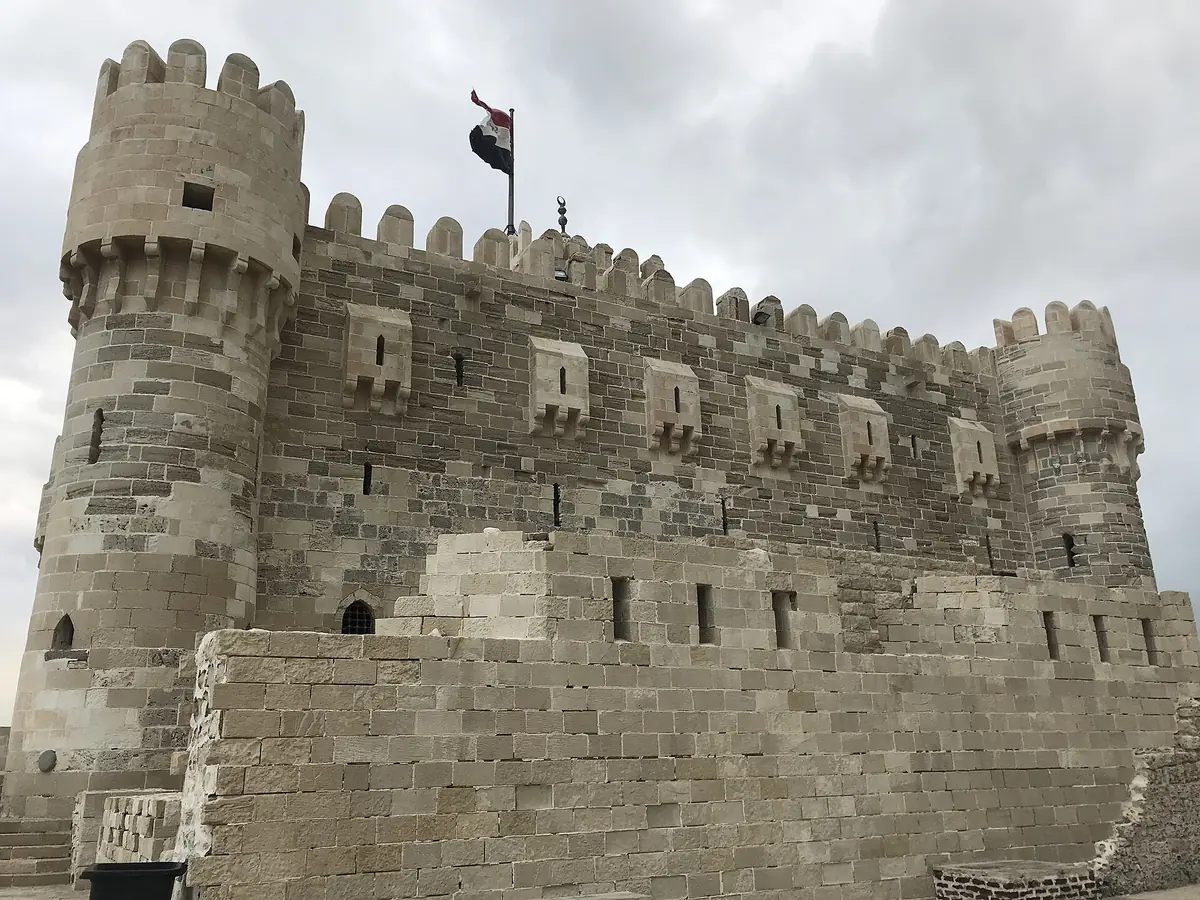
Alexander the Great founded the city in 331 BC, and what remains of it lies scattered across a long seafront town. From Misr Station take a taxi or a ride-hailing car to the Catacombs of Kom el-Shoqafa, a Roman-era tomb complex whose reliefs set Egyptian gods beside Greek ones, and walk on to Pompey's Pillar, the tall column put up for the emperor Diocletian on the hill of the Serapeum. Ride to the Citadel of Qaitbay, the fort a Mamluk sultan built between 1477 and 1479 on the ruins of the ancient lighthouse, then along the Corniche to the Bibliotheca Alexandrina, where the tours and museums close at 17:00. The three antiquities sites cost a foreign adult EGP 200 each and the Main Library ticket EGP 150. Sleep in Cairo: night 4. Our Alexandria guide has the opening hours and what a night there adds.
Prices and times checked 29 November 2026
Days 5–6: Aswan and Abu Simbel
Day 5 — fly south: EgyptAir's schedule shows daily flights between Cairo and Aswan, and the flight takes 1 h 20 to 1 h 25. KAYAK's route page lists typical one-way fares of USD 82–158. Take a morning departure to reach Aswan by lunchtime.
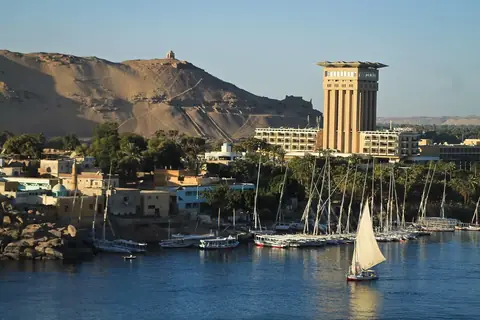
Aswan is the gentlest stop on the route: granite boulders in the river, the green of Elephantine Island and the desert hills on the west bank. Spend the late afternoon on a felucca, one of the white-sailed boats that wait along the Corniche. A felucca is hired as a whole boat at the landing, or booked ahead: Luxor and Aswan Travel's two-hour felucca trip, with hotel pick-up and about an hour on the water, costs USD 60 per adult when two book together. Go to bed early. Sleep in Aswan: night 5. Our Aswan guide covers the islands and the Nubian villages.
Day 6 — Abu Simbel: Fly there and back. EgyptAir's schedule shows three flights a day from Aswan, Monday to Saturday, at 06:55, 09:40 and 12:15, and the flight takes 45 minutes. Luxor and Aswan Travel's flying day takes about six hours and costs USD 625 per adult when two book together, with the flights, a private van between the airport and the temples, and the temple ticket.
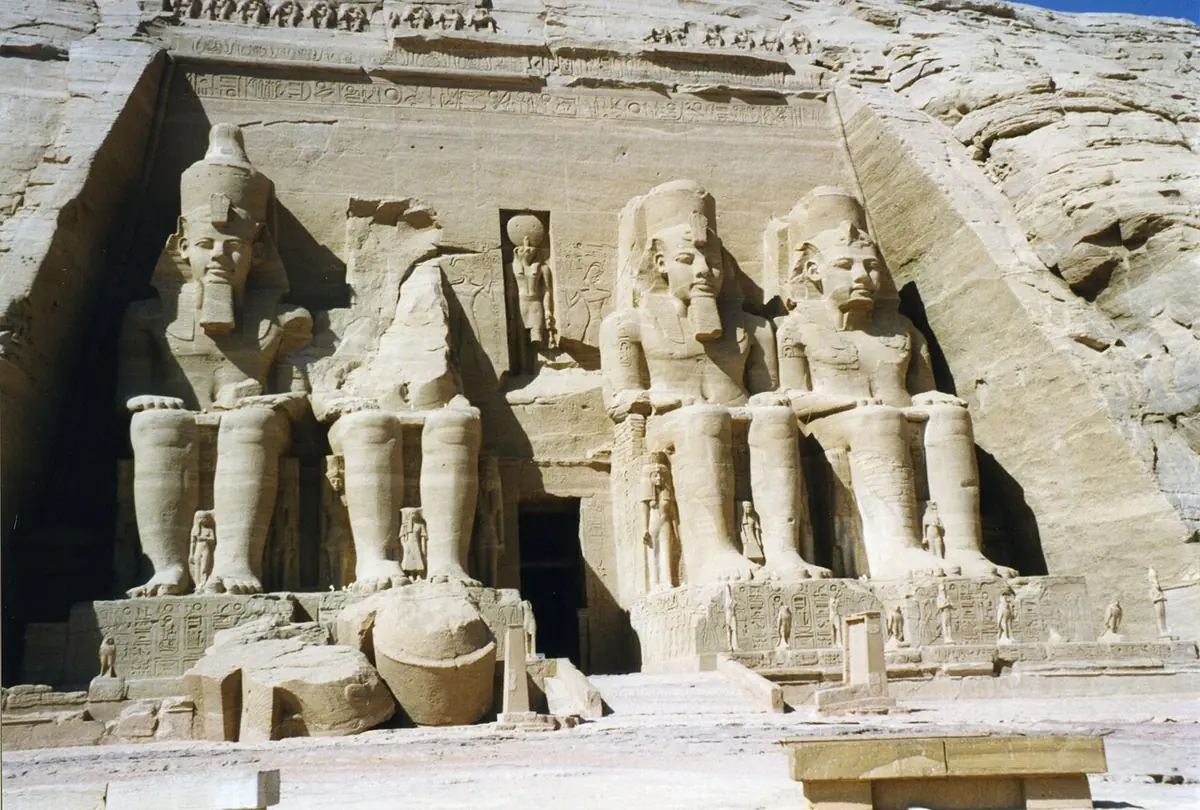
The Great Temple was cut into the living rock for Ramesses II around 1264 BC. Four seated colossi of the king fill its façade, and inside, standing statues of Ramesses line the hall that leads to the sanctuary. A short walk north, the Small Temple honours Hathor and Queen Nefertari, whose statues are as tall as the king's. Both were moved to higher ground in 1968, when the High Dam threatened to drown them. The site is open from 06:00 to 17:00, and the ticket alone costs a foreign adult EGP 750 (EGP 822 on the official booking site), or EGP 1,200 (EGP 1,272) on 22 February and 22 October, the two sun-festival days.
The road is the cheaper way. It runs about 280 km south from Aswan through the desert, a three-hour drive each way. Luxor and Aswan Travel's private road trip costs USD 200 per adult when two book together, with the temple ticket, but it leaves Aswan at 04:30 and drives the first part in the dark. The UK, French and German governments advise against road travel outside towns at night, and France says so even for a bus booked through a reputable agency. If you go by road, hire a private car and driver through your Aswan hotel, leave at first light and start back by early afternoon, so that both drives are in daylight. The temples stay open until 17:00. With a Monday sailing, day 6 is a Sunday, when EgyptAir does not fly the route, and this daylight drive is the way to go.
Rest after lunch, then see the Nubia Museum, which tells the story of the land the High Dam flooded: three floors of objects from Egyptian and Nubian history and a garden with a rebuilt Nubian house. It is open from 09:00 to 17:00, the ticket window closes at 16:00, and a foreign adult pays EGP 400. Sleep in Aswan: night 6. Our Abu Simbel guide compares the road, the flight and a night beside the temples.
Prices and times checked 29 November 2026
Days 7–9: three nights on the Nile from Aswan to Luxor
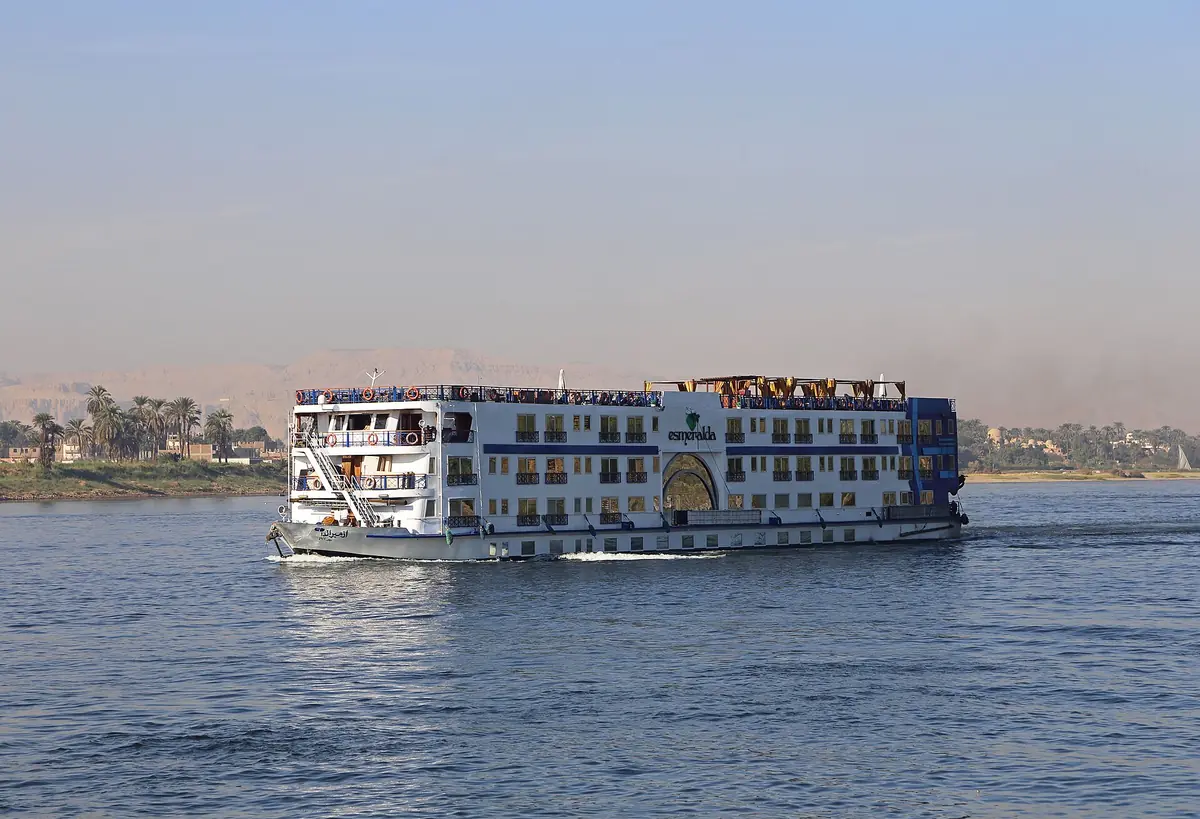
Day 7 — board, the High Dam and Philae: Luxor and Aswan Travel's guide takes you to the High Dam, then by motor boat to the Temple of Philae, and on to the Unfinished Obelisk before you check in on board. Philae's temple of Isis was begun by Ptolemy II and stayed in use until the sixth century AD; its last dated hieroglyphic inscription, from 394 AD, is the last known in Egypt. The whole island complex, with the roofless Kiosk of Trajan, was moved to Agilkia island in the 1960s when the High Dam was built. Lunch and dinner are on the ship. Night 7: on board.
Day 8 — Kom Ombo and Edfu: In the morning the guide takes you round Kom Ombo. The temple there serves two gods at once, the crocodile Sobek and Haroeris, with two parallel axes and two sanctuaries, and the Crocodile Museum beside it shows mummified Nile crocodiles. Lunch is on the sun deck as the ship sails on, and in the afternoon a horse-drawn carriage takes you to Edfu, one of the most complete of all ancient Egyptian temples, built for Horus between 237 and 57 BC; its two massive pylons show Ptolemy XII conquering his enemies, with granite statues of the falcon god Horus before them. Night 8: on board.
Day 9 — Luxor's west bank: After breakfast the guide takes you to the Valley of the Kings, where the New Kingdom pharaohs were buried in more than sixty tombs below a pyramid-shaped peak, then to Hatshepsut's terraced temple at Deir al-Bahari and the Colossi of Memnon. Lunch is back on board, and the afternoon is free. Night 9: on board in Luxor.
Luxor and Aswan Travel's fare includes the entry fees on its programme; not every cruise fare does. Tutankhamun's tomb (EGP 700) and Sety I's (EGP 2,000) are extra tickets on the ministry's list. Our Nile cruise guide compares ships, sailing directions and dahabiyas.
Prices and times checked 28 November 2026
Days 10–11: a night in Luxor, then the road to the Red Sea
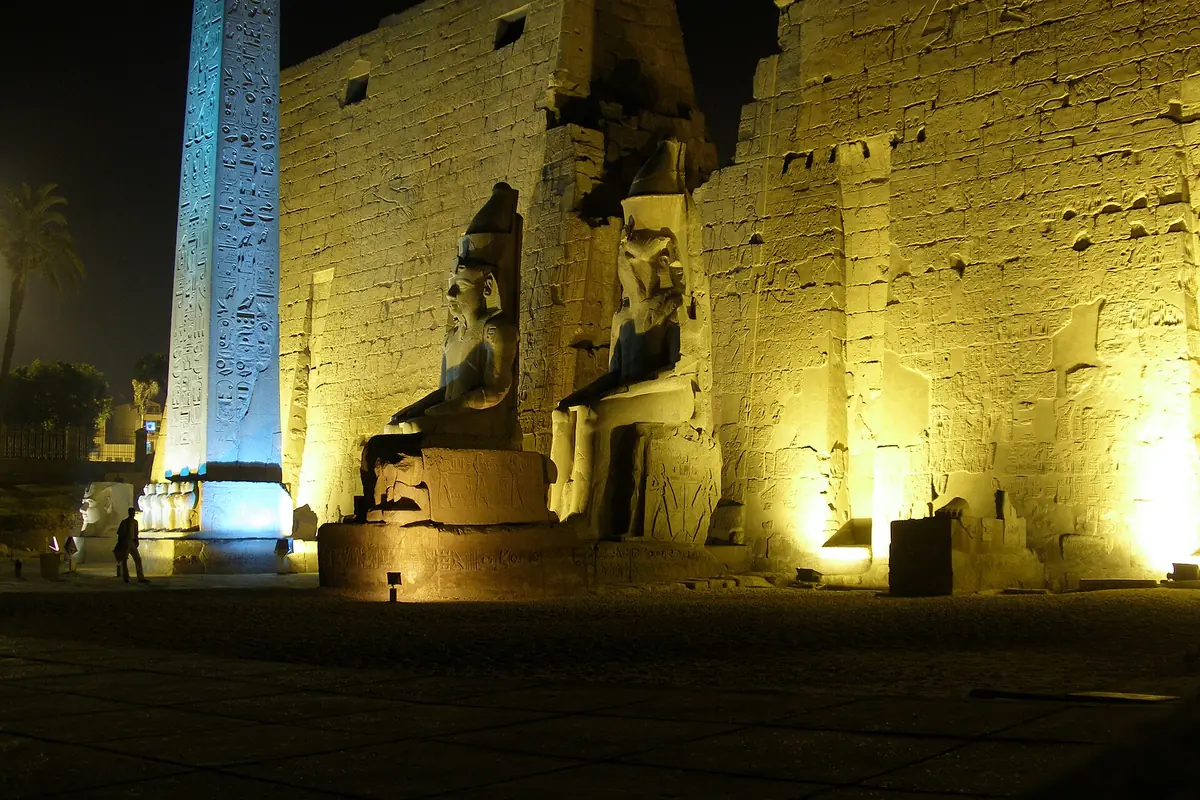
Day 10 — Karnak and Luxor Temple: You check out after breakfast, at 08:00, and the guide takes you to the east bank. At Karnak the Great Hypostyle Hall is a forest of 134 columns 15 metres high, with the central twelve rising to 21 metres; Luxor Temple, whose core Amenhotep III built, stands about 3 km south. Then check in to your hotel and rest through the heat. The Luxor Museum opens again at 17:00, with last entry at 20:00 in winter and 19:00 in summer, and costs a foreign adult EGP 400. Luxor Temple itself stays open until 20:00 and is lit after dark. Sleep in Luxor: night 10.
Day 11 — Medinet Habu, then the drive to Hurghada: The cruise programme leaves out Medinet Habu, the mortuary temple of Ramesses III, known for its good state of preservation. You enter through a fortified gatehouse and walk through two pylons and two courts lined with Osiris pillars, past walls that show the king's wars against the Libyans and the Sea Peoples. Cross the Nile early on the public ferry, paying the fare in cash at the landing, and hire a taxi on the west bank: agree the price for the morning, waiting time included, before you set off. The temple opens at 06:00 and costs a foreign adult EGP 230. Our Luxor guide covers the other tombs and temples a second morning can hold.
Be back on the east bank by late morning for the drive to Hurghada, about 310 km: the road runs north to Qena, then east across the Eastern Desert to Safaga on the coast and up to Hurghada. A private transfer takes about four hours; Daytrip lists one from USD 42 per person. Leave Luxor by early afternoon so the drive ends in daylight, because UK advice is not to drive outside the main cities and resorts at night. Sleep in Hurghada: night 11.
Prices and times checked 28 November 2026
Days 12–14: Hurghada and the Giftun Islands
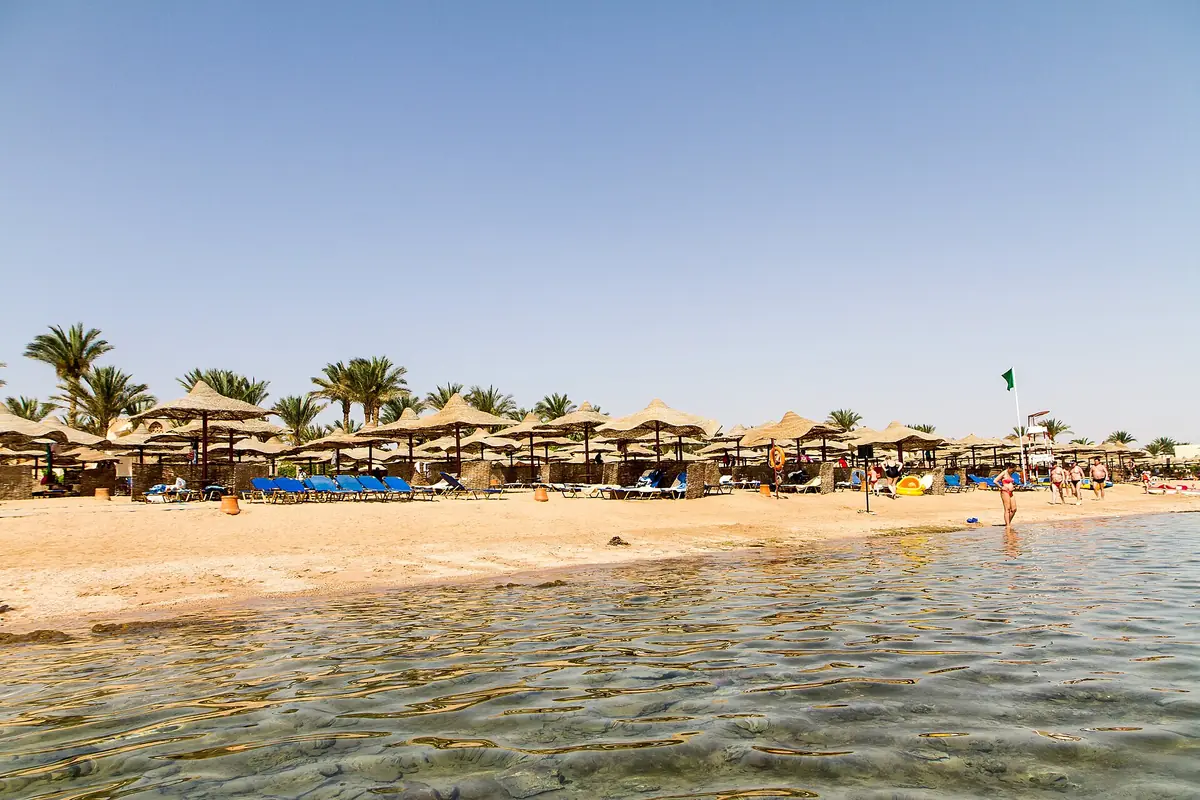
Day 12 — the Giftun Islands: Take the boat day to the Giftun Islands, Giftun Kebir and Giftun Sughayer, part of a marine national park about 45 minutes by boat from the port. Their coral reefs and drop-offs teem with fish: you snorkel from the boat, walk the white beach and have lunch on board. Luxor and Aswan Travel's trip, the one costed in this plan, collects you from your hotel, includes the snorkelling gear and lasts about 8 hours. The Red Sea protectorates charge each foreign visitor to the islands a daily visit fee, USD 5 under the current decree, with children under seven free, and due to rise to USD 10: ask the boat company which fee applies on your date and whether its price includes it. Sleep in Hurghada: night 12.
Day 13 — a free day: Boat days depend on the wind and the sea, and this day is the spare one: if the Giftun boats stayed in port on day 12, go today. Otherwise stay on the beach, or go back on the water. Diving Around Hurghada, one of the town's dive centres, lists a two-dive try dive for beginners at €55 and a two-dive boat day for certified divers at €50, and non-divers can join the boat to snorkel for €30. In the evening the Hurghada Museum, which shows antiquities from ancient to modern Egypt, opens from 17:00 to 23:00; a foreign adult pays EGP 300. Sleep in Hurghada: night 13. Our Hurghada guide compares the beaches, Dolphin House and the dive centres.
Day 14 — fly home: Take the morning by the sea, then leave for Hurghada International Airport in good time for your airline's check-in.
Prices and times checked 28 November 2026
What to eat and where to look
Koshari
Rice, pasta, lentils and chickpeas under a garlicky tomato sauce and crisp fried onions, Cairo's everyday lunch. Abou Tarek began with a cart in Downtown Cairo in 1963; his largest branch now fills a four-storey building on Champollion Street.
- Where to look
- Abou Tarek, Champollion Street, Downtown Cairo, a short walk from Tahrir Square.
- Fit it into your day
- Dinner on day 1 or lunch on day 3.
Ful and ta'ameya
Ful, slow-cooked fava beans eaten with baladi bread, is the most common Egyptian breakfast; ta'ameya is its partner, a fritter of ground fava beans and herbs, crisp outside and soft inside.
- Where to look
- Breakfast stalls and small cafés around Downtown Cairo.
- Fit it into your day
- Breakfast on day 2 or 3, before the plateau or the museum.
Kebda Iskandarani
Beef liver cut into small slices and fried with thyme, cumin, chilli and green pepper, finished with lemon and served in bread; hot and spicy.
- Where to look
- Awlad el Fallah in Alexandria, which started from a cart in Attarine in the 1920s and has branches in Bahari and at Raml Station.
- Fit it into your day
- A quick lunch on day 4, between the catacombs and Qaitbay.
Hamam mahshi
Young pigeon stuffed with freekeh, green durum wheat, and roasted: the festive dish of Egyptian home cooking.
- Where to look
- Al-Sahaby Lane, the rooftop restaurant of Nefertiti Hotel on Al-Sahaby Street, Luxor, where it is EGP 350.
- Fit it into your day
- Dinner on day 10, after the Luxor Museum.
Karkade
Hibiscus tea, served in Nubia since ancient times, hot in the evening or cold in the afternoon heat.
- Where to look
- Cafés on the Aswan Corniche.
- Fit it into your day
- Day 5 in Aswan, after the felucca.
Ways to change the route
Saqqara and Dahshur instead of Alexandria. If the older pyramids matter more to you than the Mediterranean, spend day 4 south of Giza with a car and driver. Saqqara has the Step Pyramid of Djoser, the first pyramid the Egyptians built, and Dahshur the Bent Pyramid and the Red Pyramid, which you can enter. The Saqqara site ticket is EGP 600 for a foreign adult and Dahshur EGP 200. Our guide to day trips from Cairo sets the two days side by side.
A night in Alexandria. Take one night from Hurghada and give it to Alexandria: travel there on day 4, sleep by Raml Station, and return to Cairo on the afternoon of day 5 for the flight south on day 6. The night adds Kom el-Dikka, the Graeco-Roman Museum and a fish dinner in Bahari, and everything after it moves one day later. You then board on day 8, so day 1 falls on the same weekday as your sailing, and Hurghada keeps two nights. See the library on whichever of the two Alexandria days falls between Sunday and Thursday.
Fewer moves. Readers who dislike one-night stops can drop the Luxor night, drive to Hurghada straight after Karnak on day 10 as the ten-day route does, and spend four nights by the sea.
What this route leaves out. Sinai, Siwa and the oases of the Western Desert are not on this route. Several governments advise against travel to parts of them, and each would take days that this plan gives to the Nile.
Prices and times checked 28 November 2026
What the fourteen days cost
About EGP 167,000 per person, or about EGP 333,900 for two, for two adults sharing a room and a cabin, all in on the ground. It covers ten hotel nights, the three-night cruise with its meals, guided visits and entry tickets, the Cairo–Aswan flight, the train to Alexandria, the Abu Simbel day, the car to Hurghada, the ride from Cairo airport, an eSIM each, every ticket in the day plan, the felucca, the Giftun boat day, meals off the ship and a 10% buffer for snacks, water and tips.
| Item | Per person | For two |
|---|---|---|
| Ten hotel nights: Cairo 4, Aswan 2, Luxor 1, Hurghada 3, one shared room | EGP 21,600 | EGP 43,300 |
| Three-night cruise, Aswan to Luxor, standard double cabin, September to April | EGP 59,000 | EGP 118,100 |
| Cairo–Aswan flight, one way | EGP 6,600 | EGP 13,200 |
| Alexandria day: Talgo return in first class and four sights | EGP 6,200 | EGP 12,500 |
| Abu Simbel flying day with the flights and the temple ticket | EGP 34,300 | EGP 68,600 |
| Felucca in Aswan and the Nubia Museum | EGP 3,700 | EGP 7,400 |
| Private car, Luxor to Hurghada | EGP 2,300 | EGP 4,600 |
| Uber from Cairo airport, one car | EGP 150 | EGP 300 |
| eSIM, 15 days, one each | EGP 2,700 | EGP 5,400 |
| Giza, the Grand Egyptian Museum, the Egyptian Museum and Al-Muizz Street | EGP 3,300 | EGP 6,600 |
| Luxor Museum, Medinet Habu and the Hurghada Museum | EGP 900 | EGP 1,900 |
| Giftun Islands boat day with lunch and hotel transfers | EGP 3,600 | EGP 7,200 |
| Buffer of 10% for snacks, water and tips | EGP 14,500 | EGP 28,900 |
| Meals off the ship, ten days | EGP 8,000 | EGP 16,000 |
| Total | EGP 167,000 | EGP 333,900 |
The model is two adults sharing a room and a cabin in the cooler season. The cruise is USD 1,075 per person in a standard double cabin from September to April, and USD 755 from May to August, at the Luxor and Aswan Travel company. Its fare includes all meals on board, the guided excursions, the entry fees on its programme, service charges and taxes, and the meeting at Aswan airport or your hotel. The same company's flying day to Abu Simbel is USD 625, its felucca trip USD 60 and its Giftun trip USD 66, each per adult when two book together. Rooms are the booking-site rates named above: USD 788 per room for the ten nights. The flight is about USD 120 per person, the middle of the typical one-way range of USD 82–158 on a booking site's Cairo–Aswan route page (KAYAK). The train is USD 100 per person, two Talgo tickets in first class at the fares Seat61 lists. The car is USD 42 per person, the starting fare for a private transfer from Luxor to Hurghada on a booking site (Daytrip). The airport ride is Uber's average fare from Cairo airport, EGP 293 per car, and the eSIM USD 49 per person for 15 days of unlimited data from an online eSIM seller.
Ticket prices are the Ministry of Tourism and Antiquities' foreign-adult rates, the Bibliotheca Alexandrina's own, and the Grand Egyptian Museum's price set by its board from 1 November 2026, as reported by Egyptian Streets. Meals off the ship are about EGP 800 a person a day for ten days, the estimate our seven-day itinerary uses for a street breakfast, a koshari lunch and a sit-down dinner. The 10% buffer is on everything except the meals. Dollars are converted at the Central Bank of Egypt's selling rate of 26 November 2026, USD 1 = EGP 54.91, and amounts are rounded, so the rows may not add up exactly.
Taxis in Cairo, Alexandria and Luxor, the Luxor ferry, the ride to Hurghada airport, drinks on board and tips for the crew and guides beyond the buffer come on top, and the visa is covered below. The flights to and from Egypt are extra. As a guide, return economy flights from London to Cairo were listed at about USD 400–700 on KAYAK's route page; at about USD 550 each, the trip comes to about EGP 197,200 per person, EGP 394,300 for two. Our trip-cost guide compares budget, mid-range and comfort versions of the ten-day route.
Prices and times checked 28 November 2026
Visa, safety and cash on this route
Check in our entry guide whether your passport needs a visa. A single-entry visa on arrival costs USD 30 in cash at the approved airports and is valid for up to 30 days, which covers the fourteen days. At Cairo International Airport, where this route lands, you can also buy a digital visa for USD 36, including a USD 6 service fee, paid by card at the machines. The e-visa from visa2egypt.gov.eg costs USD 30 for a single entry, paid by card before you fly. Press reports describe a change to Egypt's visa fees from January 2027 that no official Egyptian page has confirmed, so check the fee on visa2egypt.gov.eg before you pay.
The route stays in Cairo, Alexandria, the Nile Valley and the Red Sea resort of Hurghada. The UK government advises against all but essential travel to the area west of the Nile Valley and the Nile Delta, but names Luxor, Aswan, Abu Simbel and the Valley of the Kings among its exceptions, so this route stays outside its warnings. Canada advises against all travel to the Western Desert west of the Giza–Luxor–Aswan–Abu Simbel road; the Abu Simbel day uses that road and goes no further west. France and Germany advise against the border zone with Sudan, and France names the road south of Abu Simbel, which this route does not take. Read your own government's page before you book; our health and safety guide sets out the advice.
Carry Egyptian pounds in small notes for tips, taxis, the Luxor ferry and drinks on board. Ticket counters at the ministry's sites take Visa and Mastercard. Our money guide covers cash machines and tipping.
Prices and times checked 29 November 2026
Practical questions
How many nights does each stop get?
Cairo four, Aswan two, the cruise ship three, Luxor one and Hurghada three: thirteen nights, with the flight home on day 14.
Which day of the week should the trip start?
Count back six days from your cruise's sailing day. Luxor and Aswan Travel's cruise leaves Aswan on Mondays, Wednesdays and Fridays. Start on a Thursday or a Saturday for its Wednesday or Friday sailing; a Tuesday start for the Monday sailing needs the two changes described above. For Sonesta's Friday sailing, start on a Saturday.
What do 14 days add to the ten-day route?
A day trip to Alexandria by train, a second night in Aswan for Abu Simbel, a night in Luxor after the cruise with a morning at Medinet Habu, and a third night by the Red Sea.
Is Abu Simbel a day trip on this route?
Yes, from Aswan on day 6. The flight takes 45 minutes each way, and the flying day about six hours. The road takes three hours each way; go by road only in daylight.
Which day should I go to Alexandria?
Any day from Sunday to Thursday, because the Bibliotheca Alexandrina is closed on Fridays and closes at 14:00 on Saturdays. With a Tuesday start, go on day 3 instead of day 4.
Can I fly home from Hurghada?
Yes, from Hurghada International Airport (HRG). If your airline flies only from Cairo, add a domestic flight from Hurghada to Cairo on day 14 and leave a wide gap before the long-haul flight.
Keep planning your trip
Egypt in ten days
Nine nights: three in Cairo for Giza and the Grand Egyptian Museum, one in Aswan, three on a Nile cruise to Luxor and two in Hurghada, with sailing days and costs.
Read the guide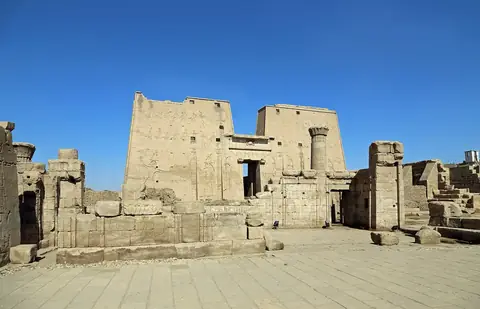
Nile cruise from Luxor to Aswan
Choose between a 3- or 4-night Nile cruise, a 4- or 5-night dahabiya and the train between Luxor and Aswan, with cabin fares, temple tickets and what the fare covers.
Read the guide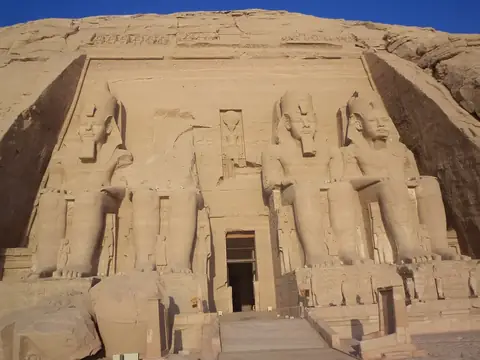
Abu Simbel
Whether to see Abu Simbel on a day trip from Aswan by road or air or stay a night: tickets, opening hours, the sound and light show and the sun festival.
Read the guide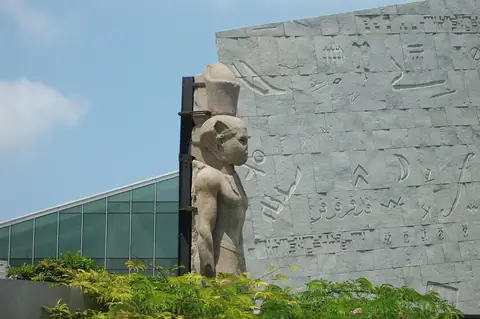
Alexandria
Alexandria as a day trip from Cairo or with one night: the catacombs, Pompey's Pillar, Qaitbay, the Bibliotheca Alexandrina, tickets, hours and trains.
Read the guide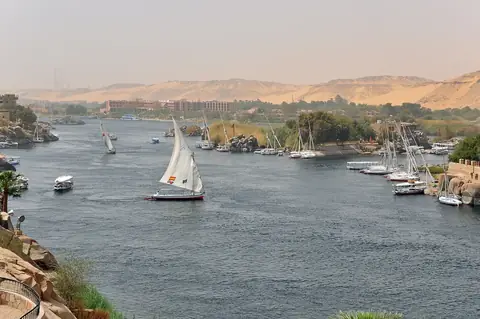
Aswan
Plan two nights in Aswan: Philae, the Nubia Museum, Elephantine, the west-bank tombs, a Nubian village and a felucca, with 2026 ticket prices and Abu Simbel.
Read the guide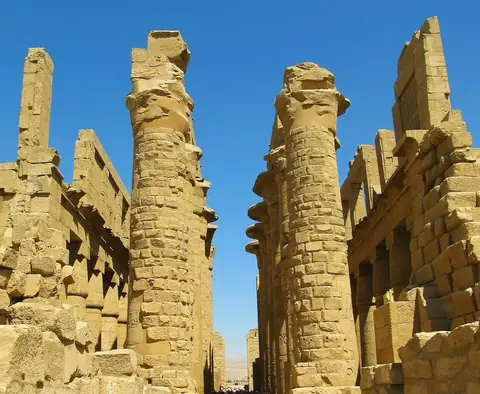
Luxor
How many nights Luxor needs: Karnak and Luxor Temple, the Valley of the Kings and its special tomb tickets, Hatshepsut, balloons at dawn and the sleeper train.
Read the guideSources and checks before you travel
(71)
- Sonesta Sun Goddess: itinerary ↗ — opens in a new tab
- Luxor and Aswan Travel: 4-day Aswan to Luxor Nile cruise ↗ — opens in a new tab
- Luxor and Aswan Travel: day trip to Abu Simbel from Aswan by road ↗ — opens in a new tab
- Luxor and Aswan Travel: day trip to Abu Simbel from Aswan by flight ↗ — opens in a new tab
- Luxor and Aswan Travel: felucca ride on the Nile in Aswan ↗ — opens in a new tab
- Luxor and Aswan Travel: snorkelling trip to Giftun Island ↗ — opens in a new tab
- Ministry of Tourism and Antiquities: Giza Plateau ↗ — opens in a new tab
- Ministry of Tourism and Antiquities: The Great Pyramid ↗ — opens in a new tab
- Grand Egyptian Museum: official ticketing website ↗ — opens in a new tab
- Egyptian Streets: Grand Egyptian Museum announces new ticket price increase (27 October 2026) ↗ — opens in a new tab
- Ministry of Tourism and Antiquities: The Egyptian Museum ↗ — opens in a new tab
- Ministry of Tourism and Antiquities: Al-Mu'izz Street ↗ — opens in a new tab
- Seat61 (independent rail guide): train travel in Egypt ↗ — opens in a new tab
- Egyptian National Railways: online ticketing ↗ — opens in a new tab
- Cairo Governorate: first Talgo train from Cairo to Alexandria ↗ — opens in a new tab
- Ministry of Tourism and Antiquities: Alexandria ↗ — opens in a new tab
- Ministry of Tourism and Antiquities: Qaitbay Fort ↗ — opens in a new tab
- Bibliotheca Alexandrina: working hours ↗ — opens in a new tab
- Bibliotheca Alexandrina: admission fees ↗ — opens in a new tab
- FlightMapper: EgyptAir Cairo to Aswan schedule ↗ — opens in a new tab
- KAYAK: Cairo to Aswan flights (booking site) ↗ — opens in a new tab
- Ministry of Tourism and Antiquities: Abu Simbel ↗ — opens in a new tab
- Misr Company for Sound, Light and Tourism Development: Abu Simbel show ↗ — opens in a new tab
- FlightMapper: Aswan to Abu Simbel flights ↗ — opens in a new tab
- Ministry of Tourism and Antiquities: Nubia Museum ↗ — opens in a new tab
- Ministry of Tourism and Antiquities: Philae ↗ — opens in a new tab
- Ministry of Tourism and Antiquities: Kom Ombo Temple ↗ — opens in a new tab
- Ministry of Tourism and Antiquities: Edfu Temple ↗ — opens in a new tab
- Ministry of Tourism and Antiquities: Valley of the Kings ↗ — opens in a new tab
- Ministry of Tourism and Antiquities: ticket prices for archaeological sites and museums (PDF, November 2024) ↗ — opens in a new tab
- Ministry of Tourism and Antiquities: Karnak ↗ — opens in a new tab
- Ministry of Tourism and Antiquities: Luxor Temple ↗ — opens in a new tab
- Ministry of Tourism and Antiquities (egymonuments.com, official ticket site): Luxor Museum ↗ — opens in a new tab
- Ministry of Tourism and Antiquities: Temple of Medinet Habu ↗ — opens in a new tab
- Daytrip: Luxor to Hurghada private transfer ↗ — opens in a new tab
- Egyptian Environmental Affairs Agency: Minister of Environment decree 204 of 2019 on visit fees for the South Sinai and Red Sea protectorates (Arabic, PDF) ↗ — opens in a new tab
- Egypt Telegraph: Red Sea protectorates postpone fee increase by six months (Arabic) ↗ — opens in a new tab
- Diving Around Hurghada: price guide ↗ — opens in a new tab
- Ministry of Tourism and Antiquities: Hurghada Museum ↗ — opens in a new tab
- El Gouna official website: destination and getting here ↗ — opens in a new tab
- KAYAK: Steigenberger Hotel El Tahrir ↗ — opens in a new tab
- KAYAK: Basma Hotel Aswan ↗ — opens in a new tab
- Kayak: Aracan Eatabe Luxor Hotel ↗ — opens in a new tab
- KAYAK: Hilton Hurghada Plaza ↗ — opens in a new tab
- Basma Hotel Aswan ↗ — opens in a new tab
- KAYAK: London to Cairo flights ↗ — opens in a new tab
- Uber: rides from Cairo International Airport (CAI) ↗ — opens in a new tab
- Airalo: Egypt eSIM (eSIM seller) ↗ — opens in a new tab
- Central Bank of Egypt: exchange rates ↗ — opens in a new tab
- Experience Egypt (Ministry of Tourism and Antiquities): Culture ↗ — opens in a new tab
- Egyptian Streets: How a cart in downtown Cairo became the ultimate koshari spot ↗ — opens in a new tab
- Bibliotheca Alexandrina, AlexMed: Awlad el Fallah ↗ — opens in a new tab
- Al-Sahaby Lane Restaurant (Nefertiti Hotel): menu ↗ — opens in a new tab
- Experience Egypt (Ministry of Tourism and Antiquities): Aswan and Abu Simbel ↗ — opens in a new tab
- UK Foreign Office (FCDO, GOV.UK): Egypt travel advice, warnings and insurance ↗ — opens in a new tab
- UK Foreign Office (FCDO, GOV.UK): Egypt safety and security ↗ — opens in a new tab
- UK Foreign, Commonwealth & Development Office: Egypt entry requirements ↗ — opens in a new tab
- Government of Canada: Travel advice and advisories, Egypt ↗ — opens in a new tab
- France Diplomatie: Égypte, sécurité ↗ — opens in a new tab
- German Federal Foreign Office (Auswärtiges Amt): Ägypten, Reise- und Sicherheitshinweise ↗ — opens in a new tab
- Egypt e-Visa Portal (Ministry of Interior): FAQ ↗ — opens in a new tab
- Ministry of Tourism and Antiquities (egymonuments.com): frequently asked questions ↗ — opens in a new tab
- World Meteorological Organization: climate of Luxor ↗ — opens in a new tab
- WMO World Weather Information Service: Alexandria ↗ — opens in a new tab
- Ministry of Tourism and Antiquities: Crocodile Museum ↗ — opens in a new tab
- Ministry of Tourism and Antiquities: Saqqara ↗ — opens in a new tab
- Ministry of Tourism and Antiquities: Dahshur ↗ — opens in a new tab
- Experience Egypt (Ministry of Tourism and Antiquities): useful information ↗ — opens in a new tab
- Adventure Travel Trade Association (trade press report): Egypt visa fee change from January 2027 ↗ — opens in a new tab
- Egymonuments (official ticket site): Giza Pyramids ↗ — opens in a new tab
- EgyMonuments (official ticket platform): Abu Simbel ↗ — opens in a new tab
Reference sources for the version dated 29 November 2026. Confirm opening times, access, transport and conditions for your travel dates.
Photo credits
(5)
The Great Temple of Abu Simbel: four seated colossi of Ramesses II cut into the rock, one of them broken since antiquity.
Photograph: Arian Zwegers from Brussels, Belgium — opens in a new tab · CC BY 2.0 — opens in a new tab
Changes: Resized and converted to WebP; displayed with responsive crops. · Original photograph and licence details ↗ — opens in a new tab
A cruise ship on the Nile at Luxor, the kind of boat that sails the three nights from Aswan.
Photograph: Marc Ryckaert — opens in a new tab · CC BY-SA 4.0 — opens in a new tab
Changes: Resized and converted to WebP; displayed with responsive crops. · Original photograph and licence details ↗ — opens in a new tab
Luxor Temple after dark, when the pylon of Ramesses II and its obelisk are floodlit.
Photograph: Vyacheslav Argenberg — opens in a new tab · CC BY 4.0 — opens in a new tab
Changes: Resized and converted to WebP; displayed with responsive crops. · Original photograph and licence details ↗ — opens in a new tab
A hotel beach at Hurghada, on the Red Sea coast.
Photograph: Максим Улитин — opens in a new tab · CC BY 3.0 — opens in a new tab
Changes: Resized and converted to WebP; displayed with responsive crops. · Original photograph and licence details ↗ — opens in a new tab
The Citadel of Qaitbay in Alexandria, built in the 1470s on the site of the ancient lighthouse.
Photograph: Marsupium — opens in a new tab · CC BY-SA 4.0 — opens in a new tab
Changes: Resized and converted to WebP; displayed with responsive crops. · Original photograph and licence details ↗ — opens in a new tab