Plan your trip
Is Egypt safe? Advisories, heat, water, scams and insurance
The classic Egypt route, Cairo and Giza, Luxor, Aswan, Abu Simbel and the Red Sea at Hurghada, lies outside the areas that governments warn about, which are North Sinai and the deserts towards Libya and Sudan. What spoils most trips here is closer to hand: a stomach upset from a salad, a hotel doctor's bill paid in advance, a night drive between cities, a camel ride whose price changes halfway, or a box of tramadol tablets in the luggage. This guide covers the advisory lines, insurance and hospitals, emergency numbers, vaccines and medicines, water, food and heat, transport, balloons and diving, touts and the laws.
In this guide
Find the location ↗ — opens in a new tabThe short answer
Egypt's sights are open to visitors: the UK Foreign Office's lines run along the Libyan border, through North Sinai and northern South Sinai, east of the Suez Canal in Ismailiyah and across the Western Desert, and they expressly leave out Luxor, Qina, the Valley of the Kings, Aswan and Abu Simbel. Buy insurance that pays for hospital treatment and medical evacuation before anything else: most clinics ask for payment or proof of cover before they treat you, and an air or sea rescue can cost more than USD 4,000 an hour, which the authorities want guaranteed before they start. Save 123 for an ambulance, 122 for the police and 126 for the tourist police. Drink bottled water, never tap water, skip raw salads and do not swim in the Nile or any fresh water. Plan road transfers between cities to end before dark, leave tramadol and CBD products at home, and bring no drone: flying one without Ministry of Defence permission can mean up to 7 years in prison or a fine of EGP 5,000 to 50,000.
- Key point
- Start about 8 weeks before you fly: travel clinic, insurance with medical evacuation, a doctor's letter for your medicines and saved numbers
- Where it applies
- No base is needed; the advice applies in Cairo and Giza, Alexandria, Luxor, Aswan, Abu Simbel and Hurghada and on the roads, rails and river between them
- Timing
- Upper Egypt is hottest from June to August, when average daily highs in Luxor and Aswan reach about 41 °C; sand storms (khamsin) come mainly in spring
Where governments draw lines, and why the classic route sits outside them
None of the British, Canadian, French or German governments advises against travel to Egypt as a whole. Canada asks visitors to exercise a high degree of caution across the country because of regional tensions, an unpredictable security situation and the threat of terrorism, and Germany describes the security situation as stable and calm overall. The lines that matter are drawn around specific regions, and none of our Egypt guides goes into them.
The UK Foreign Office (FCDO) advises against all travel within 20 km of the Libyan border, except the town of El Salloum, where it advises against all but essential travel, and against all travel to North Sinai Governorate. It advises against all but essential travel to the northern part of South Sinai beyond the St Catherine-Nuweiba road (the coasts excepted), to the part of Ismailiyah Governorate east of the Suez Canal, to the Hala'ib Triangle and Bir Tawil, and to the area west of the Nile Valley and the Nile Delta. The exceptions to that desert line include Luxor, Qina, the Valley of the Kings, Aswan and Abu Simbel, as well as Faiyum, Siwa, the White and Black Deserts and the main oases on their named roads. Travelling against FCDO advice can invalidate a travel insurance policy.
Other governments draw some lines wider, so read your own government's page before you book. Canada says to avoid all travel within 50 km of the Libyan border, rather than 20 km, and in the Western Desert west of the Giza-Luxor-Aswan-Abu Simbel road. France and Germany advise against the whole border zone with Sudan, and France names the road south of Abu Simbel. The temple town of Abu Simbel itself, reached by the road or flight from Aswan, is outside all these lines.
The Taba crossing to Israel can close at short notice, and the Rafah crossing from Gaza is closed. Renewed fighting in the region, as in spring 2026, can close airspace and cancel flights at any time, transit passengers included, so a flexible ticket and insurance that covers travel disruption are worth the extra.
The FCDO judges that terrorists are likely to try to carry out attacks in Egypt, possibly in places foreigners visit; the most recent attacks it lists were shootings in Alexandria in 2023, which killed two Israeli tourists and their Egyptian guide, and in 2024. Security is heavy, with extra measures at tourist sites and hotels and checkpoints on the roads. Canada's advice names higher-risk dates (25 January, the week of Orthodox Easter, 30 June to 3 July and 14 August) and says demonstrations are most likely on Fridays after the noon prayers. Keep away from demonstrations and large gatherings.
Prices and times checked 28 November 2026
Insurance, hospitals and paying for treatment
Medical care in Cairo is adequate, but outside the capital it often falls short of Western European standards, even in the main tourist centres. Most clinics ask for payment in advance, or for proof that an insurer will cover the cost, before they treat or operate. Some hospitals have held patients, and even their passports, until the bill was settled, and some have refused an insurer's guarantee. Hotel doctors have charged very high fees for minor treatment and medicines, and pharmacies outside the hotel usually sell the same medicines for less. The large pharmacies in Cairo sell basic medicines well below European prices, though shortages are common.
The British Embassy's list of English-speaking medical facilities names, among others, the Anglo-American Hospital in Zamalek, As-Salam International Hospital on the Nile Corniche in Maadi, which has an emergency room and ambulances, and Al-Shorouk Hospital in Mohandessin, all in Cairo; Luxor International Hospital; Aswan General Hospital; and Nile Hospital, El Gouna Hospital and the General Hospital in Hurghada. Call your insurer's assistance line first: it can tell you which hospital it works with and arrange the guarantee of payment.
Buy a policy that covers all medical costs, hospital stays and medical evacuation home, and keep its emergency number on your phone and on paper. Read the small print for your activities: an air or sea rescue can cost more than USD 4,000 an hour, and the Egyptian authorities start one only once payment is guaranteed, so diving, desert trips and balloon flights need to be covered, either by your policy or by the operator's. Divers lose their cover if they go below the depth limit in their policy.
Report a theft or assault to the tourist police before you leave Egypt: prosecution is difficult once you are home, and insurers usually want the police report. If you lose your passport, the police report is also what lets your visa stamp be moved to the replacement passport.
Prices and times checked 28 November 2026
Emergency numbers to save before you land
Save these four numbers; the tourist police can usually put you through to someone who speaks English.
| Service | Number |
|---|---|
| Ambulance | 123 |
| Police | 122 (112 also works) |
| Tourist police (also for reporting a crime) | 126 |
| Fire | 180 |
After calling 123, call your insurer's assistance line, especially if you are being taken to a hospital. British travellers can reach the British Embassy in Cairo on +20 2 2791 6000, and family in the UK can call the Foreign Office in London around the clock on 020 7008 5000.
Prices and times checked 28 November 2026
Vaccines, malaria and the medicines you pack
Check your vaccines at least 8 weeks before the trip, and book a travel-health appointment, ideally four to six weeks before you leave. Routine vaccines, including measles, mumps and rubella, should be up to date. Hepatitis A is recommended for most travellers, and a tetanus booster if your last dose was more than ten years ago. Hepatitis B, rabies and typhoid are for some travellers, depending on the length of the stay and what you will do, and a dengue vaccine can be discussed with a travel-health clinician.
There is no malaria: the WHO declared Egypt malaria-free in 2024. Dengue does occur, mainly along the Red Sea coast around Hurghada and occasionally in El Gouna and El Quseir, spread by mosquitoes that bite during the day, so use repellent on the beach as well as in the evening. There is no yellow fever in Egypt either, but Egypt asks for a yellow fever vaccination certificate from travellers aged nine months or older who arrive from a country with yellow fever risk or from Eritrea, Rwanda, Somalia, Tanzania or Zambia, or who spent more than 12 hours in transit there. Germany's travel advice asks travellers arriving from the Democratic Republic of the Congo, Kenya, Niger or Syria for a polio vaccination given between 12 months and four weeks before entry. The list changes, so if you have spent time in a country with polio cases, check the current rule with your airline. The entry guide covers the other rules at the border.
Rabies is present, carried mainly by dogs, so keep clear of stray dogs and cats however friendly they look. After a bite, a scratch or a lick on broken skin, wash the wound with soap and water for about 15 minutes and get medical help as soon as possible, even if you have been vaccinated. In Egypt only government hospitals and centres, 317 of them, give the post-exposure course of five injections over four weeks.
Medicines are where visitors most often get into trouble. Some prescription and over-the-counter medicines are controlled in Egypt and may need permission from the Ministry of Health before you arrive; narcotic and psychotropic medicines can be seized even with the original prescription. Tramadol is treated as a heroin substitute and is banned outright, and CBD products are prohibited too. Carry every other medicine in its original packaging with a letter from your doctor. The letter names the condition and the amount you carry, and states that the medicine is for your personal use. Medicines containing corticosteroids need a prescription in English or with an Arabic translation. If in doubt about a specific medicine, ask the Egyptian embassy or consulate in your country before you pack it.
Prices and times checked 29 November 2026
Water, food, heat and the Nile
Drink only bottled or otherwise safe water, never tap water, and use it for brushing your teeth too; sparkling water makes a refilled bottle easy to spot. Upset stomachs are the most common complaint. Infections with a dangerous strain of E. coli (EHEC) have been reported repeatedly in travellers returning from Hurghada and Marsa Alam, mainly from raw fruit and vegetables and undercooked beef and lamb, so choose food that is cooked through and served hot, peel fruit yourself and pass on salads, shellfish, reheated dishes and cold buffets. Wash your hands before every meal.
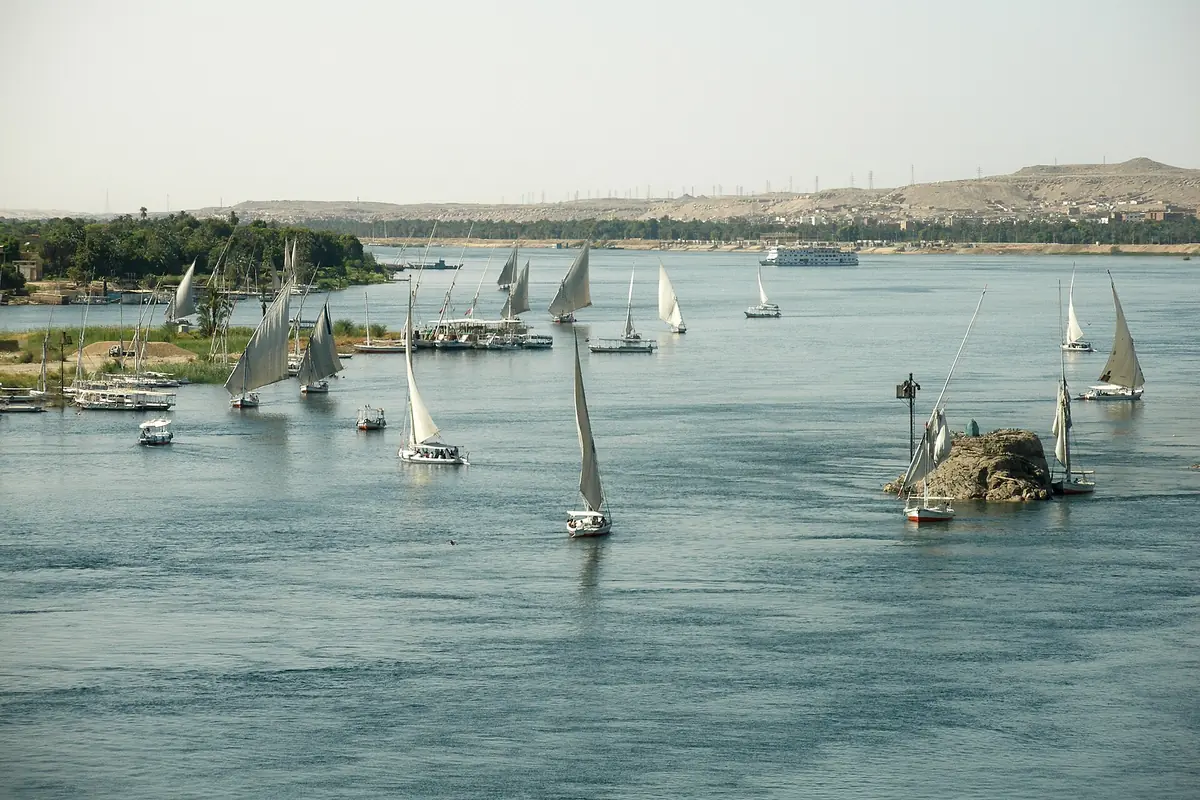
Do not swim, wade or bathe in the Nile, its canals or any fresh water, however clear it looks: schistosomiasis (bilharzia), a parasite that enters through the skin, is a risk in the Delta and the Nile Valley, and no vaccine or tablet prevents it. A felucca sail or a cruise on the river is fine, and the sea and chlorinated hotel pools are safe from this parasite. If you think you have been exposed, ask for a test when you are home.
Heat is the risk that is easiest to underestimate in Upper Egypt. The WMO's long-term averages put the daily high in Luxor and Aswan at about 41 °C from June to August and above 35 °C from April to October, against about 35 °C in Cairo in midsummer. In those months see the temples and tombs at opening time, rest through the middle of the day, drink often, and wear a hat and loose clothing that covers your skin; our best-time guide compares the months. Winter nights in Luxor can drop to about 6 °C in January, so pack a warm layer for a dawn balloon flight or an early start to Abu Simbel.
Sand storms, the khamsin, blow mainly in spring; they cut visibility on the roads and can delay flights, and those with asthma or heart problems should stay indoors while they last. Cairo's air pollution is particularly high, so if you have a breathing condition, bring enough of your usual medicine. In the hot months old wiring under heavy load has started fires in hotels, restaurants and boats, so on a Nile cruise or in an older hotel, find the emergency exits when you arrive.
Prices and times checked 28 November 2026
Roads, trains, boats, balloons and the Red Sea
Road accidents are the most serious everyday risk. Driving is often dangerous, traffic laws are loosely enforced, vehicles are poorly lit, and serious bus crashes in recent years have killed tourists among others. The UK and France both advise against road travel outside the towns at night, France even on a bus booked through a reputable agency. Plan every road transfer, including Luxor to Hurghada and Aswan to Abu Simbel, to arrive before sunset, and choose a car with a driver from a known agency rather than driving yourself or taking the small shared minibuses.
Trains have had fatal collisions and derailments, so keep long rail journeys to the two lines visitors use, Cairo-Alexandria and Cairo-Luxor-Aswan. Foreigners pay a higher train fare than Egyptians; our transport guide covers the sleeper, the day trains and the domestic flights that replace the longest rides.
In Cairo and the resorts, Uber and Careem show the fare in the app before you set off, which saves the haggling. Street taxis must by law have a working meter: make sure it is switched on when the ride starts, and where a taxi has no meter, agree the fare before you get in. Sit in the back; rear seatbelts are often missing. Overcrowding and poor safety standards have caused accidents on Red Sea ferries and on Nile cruises, so book an established cruise company rather than the cheapest boat at the quay.
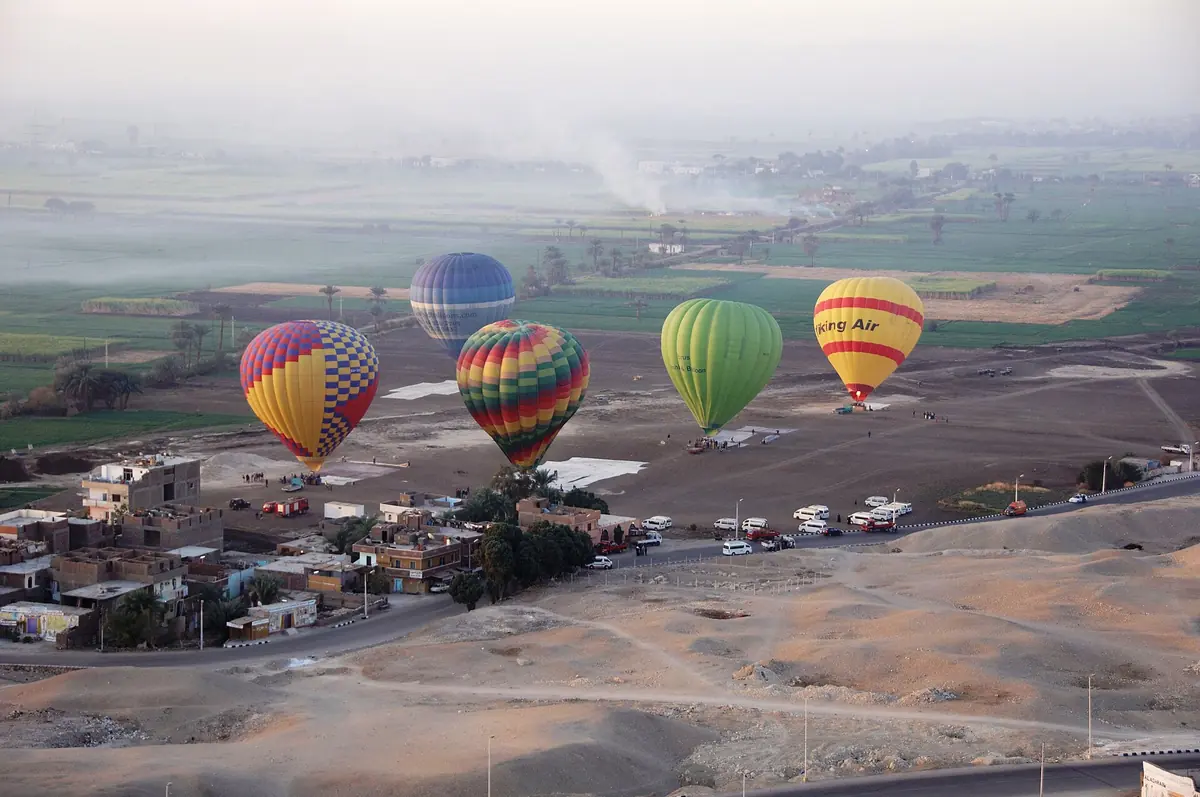
Luxor's dawn balloon flights over the west bank are one of the sights of Egypt, but safety is uneven: accidents with balloons, diving gear and quad bikes are relatively frequent because of poor maintenance, and some UK tour operators have stopped selling balloon flights because they could not assess the safety standards. If you fly, book through an established company or your tour operator, make sure your insurance covers the flight, and follow the crew's landing instructions. On quad bikes, always wear a helmet.
Diving is everywhere on the Red Sea coast, and diving boats have had fatal accidents. Book liveaboards and day boats through a reputable operator, ask for the safety briefing before you leave port, and dive within your experience. Recompression chambers serve the mainland coast at Hurghada (two), El Gouna, Safaga and Marsa Alam. Shark attacks are rare but have killed swimmers; follow the dive centre's and the local authorities' instructions, and treat coral cuts seriously, since they infect easily. Our Hurghada guide covers the coast itself.
Prices and times checked 28 November 2026
Touts, scams and harassment
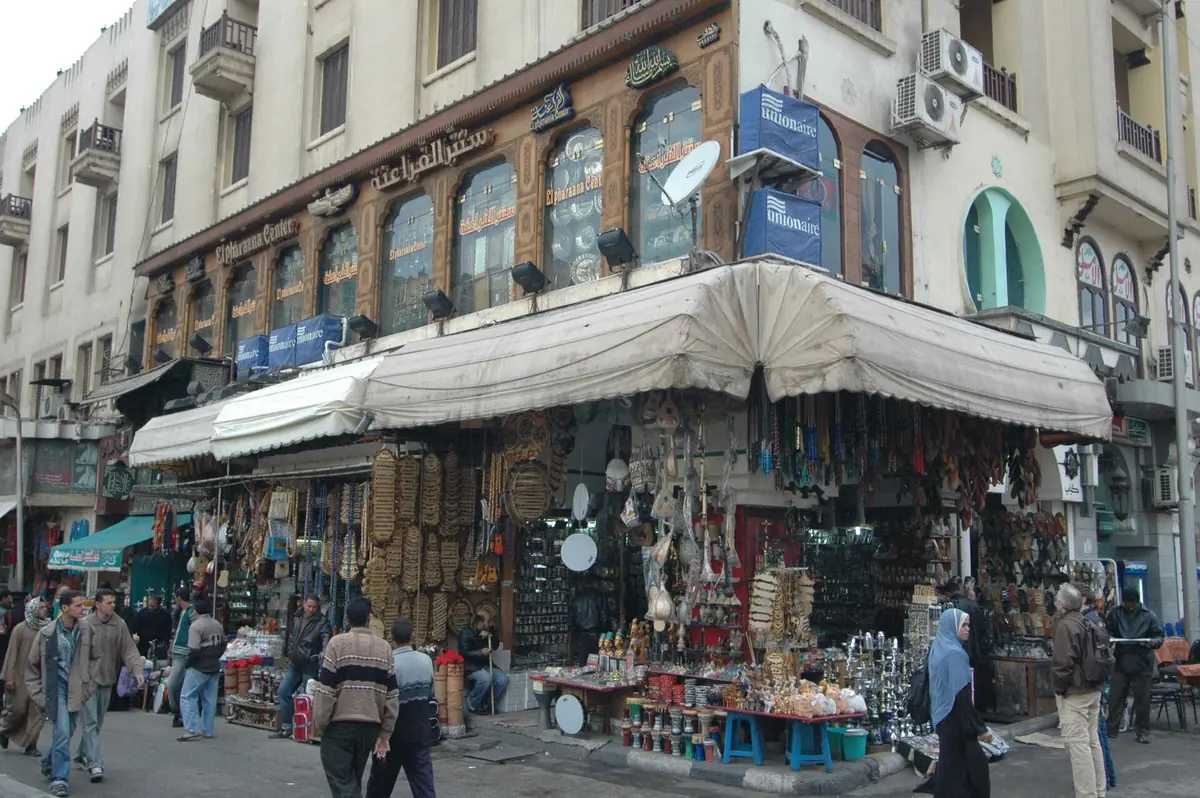
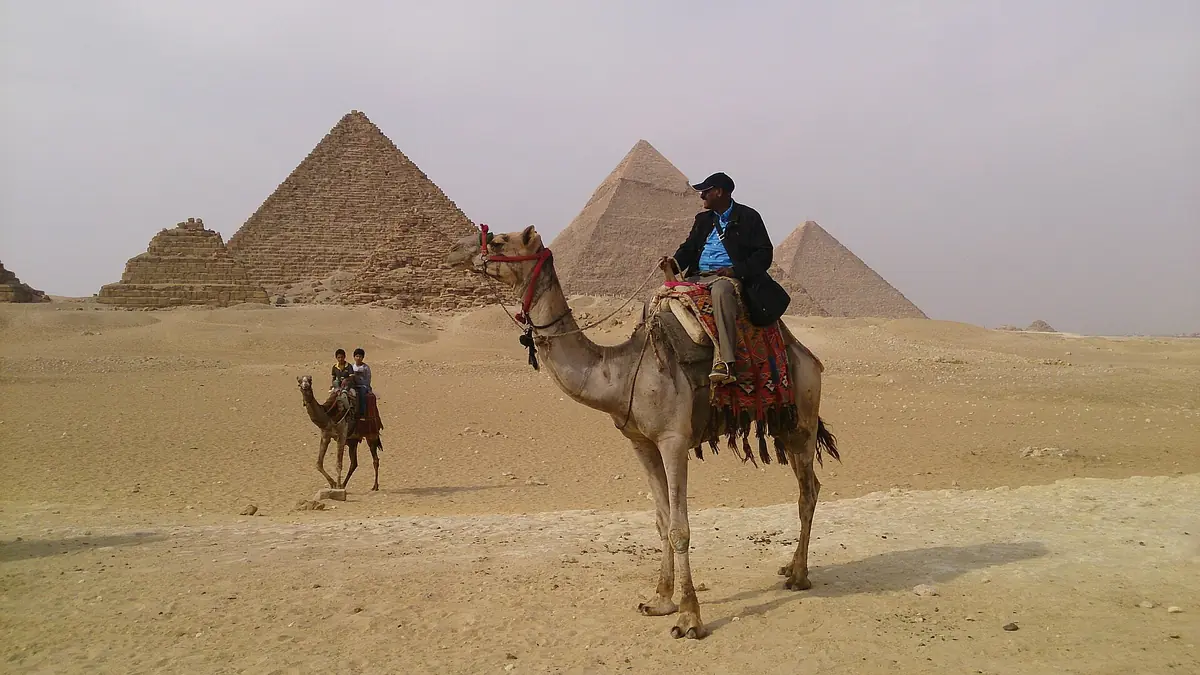
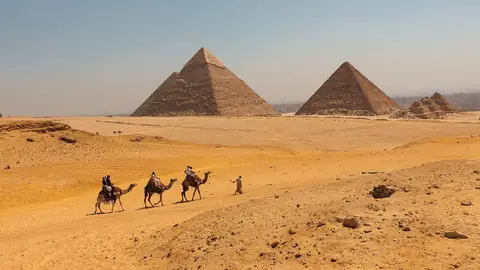
Crime rates are low and pickpocketing is rare, though bag snatching and pickpocketing happen most often at tourist sites and on the Cairo metro. What most visitors meet instead are touts and scammers, who work the tourist areas around the big sights and bazaars. At the Giza plateau they offer camel and horse rides and unofficial guiding: agree the full price, the currency and the route before you get on or set off, and pay only at the end. Buy entry tickets at the official ticket office or on egymonuments.com, and say a polite, firm no to what you do not want. If a stranger tells you a site is closed and offers to take you somewhere else, check with the ticket office or your hotel first; if a driver or guide stops at a papyrus, perfume or carpet shop you did not ask for, you can say no and ask to go on.
On trains, people posing as railway staff have demanded a 'fine' for a supposedly invalid ticket. Foreign passengers can pay train fares in euros or dollars. The ticket does not always show the amount paid, so an invoice comes with the ticket. Keep the ticket and the invoice together, show them to a real inspector and pay nothing to anyone else. At small shops, card payments are a known fraud risk, so pay cash there. If you must use a card, read the slip: the amount often appears in both EGP and euros, and you may be asked to choose. Keep your copy and the receipt. Our money guide covers cash, cards and tipping.
In the resorts, including Hurghada, some taxi drivers have used tricks and threats to raise the fare, which is another reason to book through an app or your hotel. Contacts made on dating apps have led to robberies and to blackmail with intimate videos; these cases are rare, and the police take complaints about them seriously.
Women, especially foreign women, often meet staring, remarks and sometimes touching, more so around public holidays when the streets are busy. Most sexual assaults reported to the British Embassy took place in Red Sea resorts, often by someone the victim had already met, hotel and excursion staff among them. Do not let hotel staff into your room when you are alone, share your driver's details and live location with a friend when you take a taxi alone, especially at night, and book excursions with known providers. Our solo female travel guide goes into dress, transport and stays.
Prices and times checked 28 November 2026
Laws and customs that catch visitors out
Carry your passport, or at least a paper or digital copy of it and your visa: police check ID regularly and can detain you without it. Drug offences are punished severely, even for small amounts, with long prison terms and in serious cases the death penalty; khat is illegal too. Alcohol is legal only in licensed hotels, restaurants and bars, private homes and some resorts; drinking anywhere else can lead to arrest, and you may not carry alcohol on public transport.
Leave the drone at home: importing or flying one without prior permission from the Ministry of Defence can bring up to 7 years in prison or a fine of EGP 5,000 to 50,000, and confiscated equipment is not returned. Binoculars also need prior permission and may be confiscated at customs. Professional photo or film equipment needs a permit. Never photograph soldiers, police, military sites or the Suez Canal; ask an adult's permission before you photograph them, and do not photograph children. Posing at a monument in a way that goes beyond a holiday picture, such as a religious ritual or a provocative pose, has led to arrests.
Buying or exporting antiquities is illegal, and objects sold as copies can cause the same trouble at customs as real ones: arrest, custody and expulsion. Criticism of the state or the president, on social media too, can be prosecuted, and phones are sometimes searched at checks; unauthorised demonstrations are banned. Same-sex relationships are not explicitly illegal, but the authorities have prosecuted LGBT+ people under debauchery laws, and dating apps have been used to identify them.
Dress modestly, especially in rural areas, mosques and markets: shoulders and knees covered suits men and women alike. During Ramadan, whose dates change each year, avoid eating, drinking or smoking in public in daylight, expect changed opening hours and more erratic driving around sunset, and see our festivals guide for the expected dates.
Prices and times checked 28 November 2026
Practical questions
Is Egypt safe for tourists?
For most visitors, yes. About one million British people visit each year and the FCDO says most visits are trouble-free. Cairo, Giza, Luxor, Aswan, Abu Simbel and Hurghada lie outside the areas governments warn about; the common risks are road accidents, stomach upsets, summer heat, touts and expensive private medical care.
Which areas of Egypt should I avoid?
The UK advises against all travel within 20 km of the Libyan border (El Salloum excepted, where it is all but essential travel) and to North Sinai, and against all but essential travel to northern South Sinai, Ismailiyah east of the Suez Canal, the Hala'ib Triangle and most of the Western Desert. Canada, France and Germany draw some of these lines wider; the first section of this guide gives them.
Is Abu Simbel safe to visit?
Yes. The temple town is expressly excluded from the UK's Western Desert advisory and lies outside the other governments' lines too. Go and come back by the road or the flight from Aswan, travel in daylight, and do not continue south towards Sudan.
What is the emergency number in Egypt?
Dial 123 for an ambulance, 122 for the police, 126 for the tourist police and 180 for the fire service. Then call your insurer's assistance line.
Can you drink tap water in Egypt?
No. Drink bottled water, use it for brushing your teeth, and avoid raw salads, unpeeled fruit and undercooked meat. Do not swim in the Nile or other fresh water because of schistosomiasis.
Which vaccinations do I need for Egypt?
No vaccine is required if you arrive from Europe or North America. Hepatitis A and an up-to-date tetanus are recommended for most travellers, with hepatitis B, rabies and typhoid for some. There is no malaria. A yellow fever certificate is needed only after a country with yellow fever risk or Eritrea, Rwanda, Somalia, Tanzania or Zambia, and polio proof for arrivals from countries with polio cases, which Germany's advice currently lists as the Democratic Republic of the Congo, Kenya, Niger and Syria; check the list with your airline.
Can I bring my medicines to Egypt?
Most, yes, in their original packaging with a doctor's letter. Tramadol and CBD products are banned, and narcotic or psychotropic medicines can be seized even with a prescription; some others need Ministry of Health permission before you travel.
Keep planning your trip
First trip to Egypt
Choose seven days or ten for Cairo, Giza, Luxor and Aswan: nights in each, the train or a Nile cruise, the season, the visa and what to book first.
Read the guide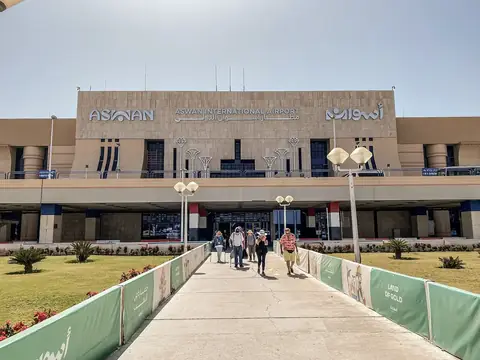
Entering Egypt
Whether to buy Egypt's e-visa before you fly or a visa on arrival, who gets the free Sinai-only stamp, passport validity, land and sea borders and customs.
Read the guide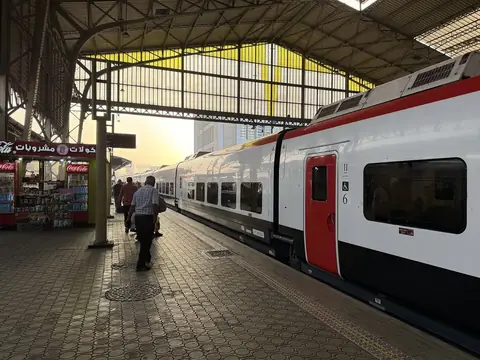
Transport in Egypt
How to travel Egypt: the sleeper train from Giza to Luxor and Aswan, day trains, domestic flights, buses, ride-hailing cars and the Cairo Metro, with journey times.
Read the guide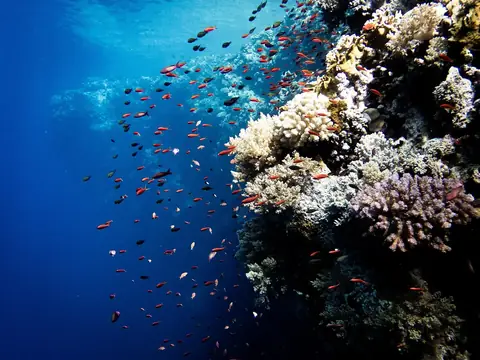
Red Sea diving in Egypt
Where to dive or snorkel on Egypt's Red Sea: Hurghada, El Gouna, Safaga and Marsa Alam, day boats or a liveaboard, water by month, park fees and courses.
Read the guide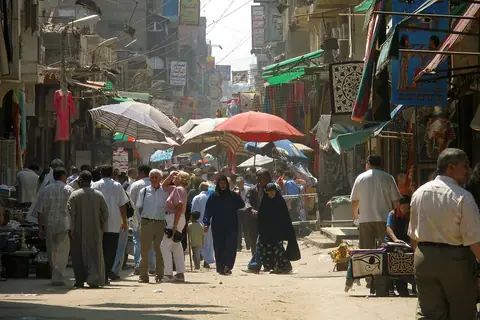
Solo female travel in Egypt
Travelling alone as a woman in Egypt: what to wear, handling harassment, Uber and taxis, Cairo's women-only metro cars, the sleeper train, hotels and the numbers to save.
Read the guide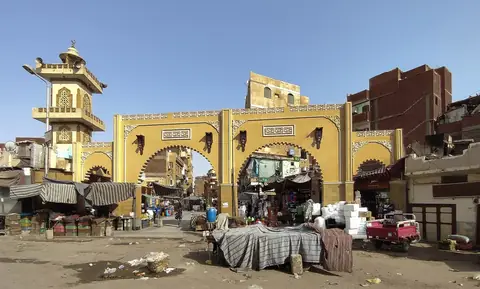
Money in Egypt
Paying in Egypt: the pound and its rate, which cash to bring, card payment at the big sites, ATMs, trains paid in dollars, baksheesh and the border cash limits.
Read the guideSources and checks before you travel
(22)
- UK Foreign Office (FCDO, GOV.UK): Egypt travel advice, warnings and insurance ↗ — opens in a new tab
- UK Foreign Office (FCDO, GOV.UK): Egypt regional risks ↗ — opens in a new tab
- UK Foreign Office (FCDO, GOV.UK): Egypt safety and security ↗ — opens in a new tab
- UK Foreign Office (FCDO, GOV.UK): Egypt health ↗ — opens in a new tab
- UK Foreign Office (FCDO, GOV.UK): Egypt getting help ↗ — opens in a new tab
- TravelHealthPro (UK Health Security Agency / NaTHNaC): Egypt ↗ — opens in a new tab
- German Federal Foreign Office (Auswärtiges Amt): Ägypten, Reise- und Sicherheitshinweise ↗ — opens in a new tab
- France Diplomatie: Égypte, sécurité ↗ — opens in a new tab
- France Diplomatie: Égypte, santé ↗ — opens in a new tab
- France Diplomatie: Égypte, informations utiles ↗ — opens in a new tab
- Government of Canada: Travel advice and advisories, Egypt ↗ — opens in a new tab
- World Meteorological Organization, World Weather Information Service: Luxor ↗ — opens in a new tab
- World Meteorological Organization, World Weather Information Service: Aswan ↗ — opens in a new tab
- World Meteorological Organization, World Weather Information Service: Cairo ↗ — opens in a new tab
- National Telecom Regulatory Authority of Egypt (NTRA), at ITU RSF 2019: Emergency numbers ↗ — opens in a new tab
- World Health Organization: Egypt is certified malaria-free by WHO (20 October 2024) ↗ — opens in a new tab
- UK government (British Embassy Cairo): Egypt doctors and medical facilities ↗ — opens in a new tab
- Careem Egypt: rides ↗ — opens in a new tab
- Uber: rides from Cairo International Airport (CAI) ↗ — opens in a new tab
- Experience Egypt (Egyptian Tourism Authority): useful information ↗ — opens in a new tab
- EgyMonuments (Ministry of Tourism and Antiquities): FAQ ↗ — opens in a new tab
- EgyptAir: health requirements for passengers (2024 notice) ↗ — opens in a new tab
Reference sources for the version dated 29 November 2026. Confirm opening times, access, transport and conditions for your travel dates.
Photo credits
(5)
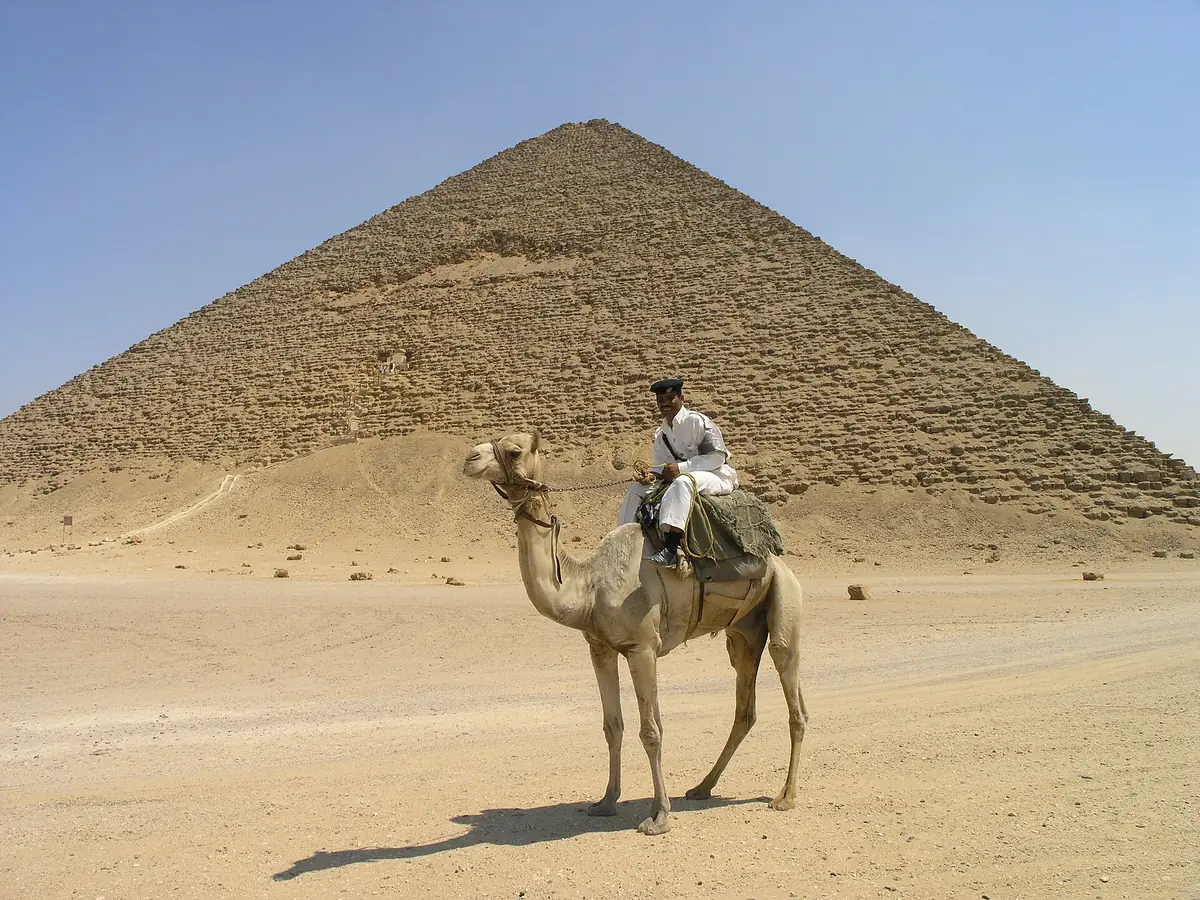
Tourist police on camel patrol below the Red Pyramid at Dahshur, south of Cairo
Photograph: Daniel Mayer — opens in a new tab · CC BY-SA 4.0 — opens in a new tab
Changes: Resized and converted to WebP; displayed with responsive crops. · Original photograph and licence details ↗ — opens in a new tab
A street corner at Khan el-Khalili, Cairo's old bazaar, where touts and shop guides work the crowds
Photograph: Francesco Gasparetti from Senigallia, Italy — opens in a new tab · CC BY 2.0 — opens in a new tab
Changes: Resized and converted to WebP; displayed with responsive crops. · Original photograph and licence details ↗ — opens in a new tab
Camel rides at Giza: agree the price and the route before you get on
Photograph: Dak15 — opens in a new tab · CC BY-SA 4.0 — opens in a new tab
Changes: Resized and converted to WebP; displayed with responsive crops. · Original photograph and licence details ↗ — opens in a new tab
Balloons over the west bank at Luxor at dawn
Photograph: Wouter Hagens — opens in a new tab · CC BY-SA 3.0 — opens in a new tab
Changes: Resized and converted to WebP; displayed with responsive crops. · Original photograph and licence details ↗ — opens in a new tab
Feluccas on the Nile at Aswan; sail on the river, but do not swim in it
Photograph: Vyacheslav Argenberg — opens in a new tab · CC BY 4.0 — opens in a new tab
Changes: Resized and converted to WebP; displayed with responsive crops. · Original photograph and licence details ↗ — opens in a new tab