Plan your trip
Egypt entry: e-visa, visa on arrival and the Sinai stamp
Most visitors to Egypt need a visa, but getting one is quick: an e-visa bought online before you fly, or a visa on arrival bought in the airport hall before the immigration desks. The choice depends on your passport, where you land and whether you will leave the Red Sea resorts of South Sinai. This guide takes the decisions in the order you meet them: which visa, how long your passport must run, how the airport purchase works at Cairo and elsewhere, the free Sinai-only stamp, the land and sea crossings from Israel, Jordan, Sudan and Libya, customs and the health rules at the border, and what to check before you leave.
In this guide
Find the location ↗ — opens in a new tabThe short answer
A single-entry visa on arrival costs USD 30 in cash and is valid for up to 30 days; British, EU, US, Canadian, Australian and many other passport holders can buy it at the counters before the immigration desks at Hurghada, Luxor, Aswan, Sharm el-Sheikh and Egypt's other international airports. At Cairo International Airport you can also buy a digital QR-code visa on arrival for USD 36, including a USD 6 service fee, by card at the self-service machines before passport control. The e-visa from visa2egypt.gov.eg costs USD 30 for a single entry or USD 65 for multiple entries, paid by card. Press reports describe a change to Egypt's visa fees from January 2027 that no official Egyptian page has confirmed, so check the fee on visa2egypt.gov.eg before you pay. It is open to the nationalities listed on the portal, and you apply at least 7 days before you fly. Take the e-visa if you want to skip the queue on arrival or if your nationality cannot buy a visa on arrival. The UK asks for a passport valid at least six months after the day you arrive, with one blank page, and Canada for six months beyond the day you expect to leave, so make sure yours is still valid six months after you leave Egypt. If you fly into Sharm el-Sheikh and stay under 15 days only in Sharm el-Sheikh, Dahab, Nuweiba or Taba, a free entry stamp replaces the visa. That stamp does not cover Cairo, Luxor or the Nile.
- Key point
- Entry planning before you book; choose the length of your trip in the first-trip guide
- Where it applies
- Arrive in Cairo, Luxor, Aswan or Hurghada with an e-visa or USD cash for the visa on arrival
- Timing
- The rules apply all year; check passport validity and the 30-day visa limit before you choose dates
Compare country by country: Middle East entry requirements at a glance →
E-visa or visa on arrival: which to choose
Egypt sells two tourist visas that do the same job. The e-visa is bought online from the Ministry of Interior's portal, visa2egypt.gov.eg, before you travel: USD 30 for a single entry or USD 65 for multiple entries, paid by Visa, Mastercard or another debit card. Press reports describe a change to Egypt's visa fees from January 2027 that no official Egyptian page has confirmed, so check the fee on visa2egypt.gov.eg before you pay. Create the application at least 7 days before your departure; the link to download the visa arrives by email, and you show the printout at the airport. The processing fee is not refunded if the application fails.
The e-visa is open only to the nationalities listed on the portal. They include the United Kingdom, Ireland, the United States, Canada, Australia, New Zealand, Japan, South Korea, India, China, Brazil, Mexico, South Africa, Switzerland, Norway and every member of the European Union. British passport holders from the British Overseas Territories and the Crown Dependencies cannot apply online. Each traveller needs an application in their own account; parents can apply for their children from the parent's account.
The visa on arrival is bought at the airport after you land, at kiosks or bank counters in the arrivals hall before you reach the immigration desks. It costs USD 30 in cash and is valid for up to 30 days. Egypt's consulate in London lists citizens of the UK, the EU, the United States, Canada, Australia, New Zealand, Norway, Japan, South Korea, Georgia and North Macedonia as able to buy it at any Egyptian port of entry; other passport holders should check with the Egyptian embassy and use the e-visa or an embassy visa if it is not offered to them.
Which to take: the e-visa saves a queue on arrival, and its multiple-entry version suits a trip that leaves Egypt and comes back, for example to Jordan. The visa on arrival needs no planning and costs the same, except at Cairo, where the digital version adds a USD 6 fee. A visa on arrival lets you stay up to 30 days. A tourist e-visa, single or multiple entry, is valid for up to three months; plan each stay on it for up to 30 days too, and for a longer stay in one go, ask the Egyptian consulate before you fly which visa covers it, or extend in Egypt. You can also get a visa from an Egyptian embassy or consulate: the embassy in Washington charges USD 27 for a single-entry tourist visa and USD 62 for a multiple-entry one, in person or by post.
You never need an agent. Touts in the arrivals hall sell the same USD 30 visa for more. Buy it at the official counter, and report anyone who harasses you to the tourist police in the terminal.
Prices and times checked 29 November 2026
Passport validity, the entry stamp and the 30 days
The UK says your passport must be valid for at least six months after the date you arrive and have at least one blank page; the e-visa portal also counts six months from arrival. Canada and Egypt's consulate in London count six months beyond the date you expect to leave Egypt. To meet every version, make sure your passport is still valid six months after the day you leave Egypt and has a blank page. Irish passport cards are not accepted. German citizens may enter with a national identity card and two biometric photos, but Germany recommends travelling with a passport.
At immigration, make sure the officer stamps your passport. You must show the entry stamp when you leave; without it you cannot get an exit stamp. If you replace a lost passport in Egypt, the Immigration Authority has to transfer the entry stamp to the new passport before you fly.
A visa on arrival lets you stay up to 30 days. To stay longer, apply for an extension at a Passport and Immigration office in Egypt before your visa runs out. If your visa expired more than 14 days before you leave, you can be fined, and overstays have led to deportation and long entry bans. Plan your dates inside the visa you hold.
Egypt's paper arrival and departure cards are being phased out as a digital entry system arrives; fill in a card only if staff hand you one. Travellers whose appearance does not match the sex marker or photo in their passport may be refused entry, and Egypt accepts only passports marked M or F.
Buying the visa at the airport: Cairo and the other gateways
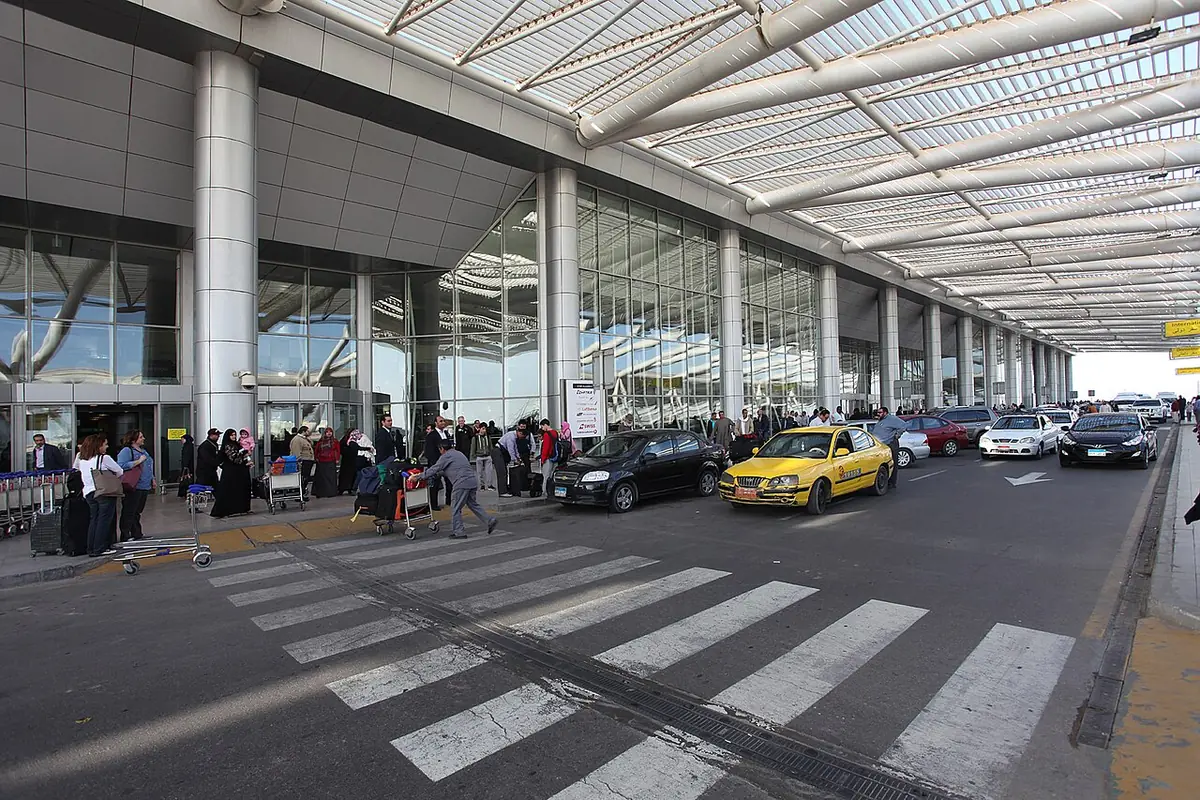
At Cairo International Airport (CAI) you can also buy a digital visa on arrival with a QR code, alongside the USD 30 visa on arrival. The UK government gives it as USD 36, including a USD 6 digital service fee, paid by card only at the self-service machines before passport control; Germany's Foreign Office adds that the bank counters sell it for USD 36 in cash. You can also buy the QR code before you fly through the official visa-on-arrival portal, visaonarrival.gov.eg, for the same USD 30 plus USD 6. Expect delays while the new system settles in.
At the other international airports, among them Hurghada, Luxor, Aswan, Marsa Alam and Sharm el-Sheikh, the visa on arrival is a sticker that costs USD 30 in cash, bought before the immigration desks. Bring the US dollars from home. A visa on arrival bought at Sharm el-Sheikh airport is valid for the whole of Egypt.
If you hold an e-visa, skip the kiosks and go straight to immigration with the printout. For the ride from the airport into Cairo, and for the trains and domestic flights to Luxor and Aswan, see the transport guide.
Egyptian rules allow a charter flight into or out of Egypt only as a package with both the outbound and the return flight. Travellers who arrived on a scheduled flight have been refused boarding on a charter home, especially after a stay of more than a month or when leaving from a different airport. Ask your airline whether your flights are scheduled or charter.
Prices and times checked 29 November 2026
The Sinai-only entry stamp
South Sinai has its own free entry permission, often called the Sinai visa. If you fly into Sharm el-Sheikh and stay less than 15 days only in the resorts of Sharm el-Sheikh, Dahab, Nuweiba and Taba, you do not need a visa: the stamp is put in your passport on arrival at no charge. Egypt's consulate in London names UK, EU and US citizens as eligible.
The stamp is valid only in those resorts. A day trip to Cairo, a flight to Luxor or a stay of more than 15 days needs a full visa, which you can buy at Sharm el-Sheikh airport for USD 30 or online as an e-visa. If you might travel beyond the coast, buy the full visa on arrival; it costs the same as at other airports outside Cairo.
The same 15-day stamp is given free at Nuweiba port, and at the Taba land crossing against a border tax (see below), for travellers who stay in South Sinai. For anyone heading inland from the coast, the UK advises against all but essential travel to the northern part of South Sinai beyond the St Catherine to Nuweiba road, except the coastal areas, and against all travel to North Sinai.
By land or sea: Israel, Jordan, Sudan and Libya
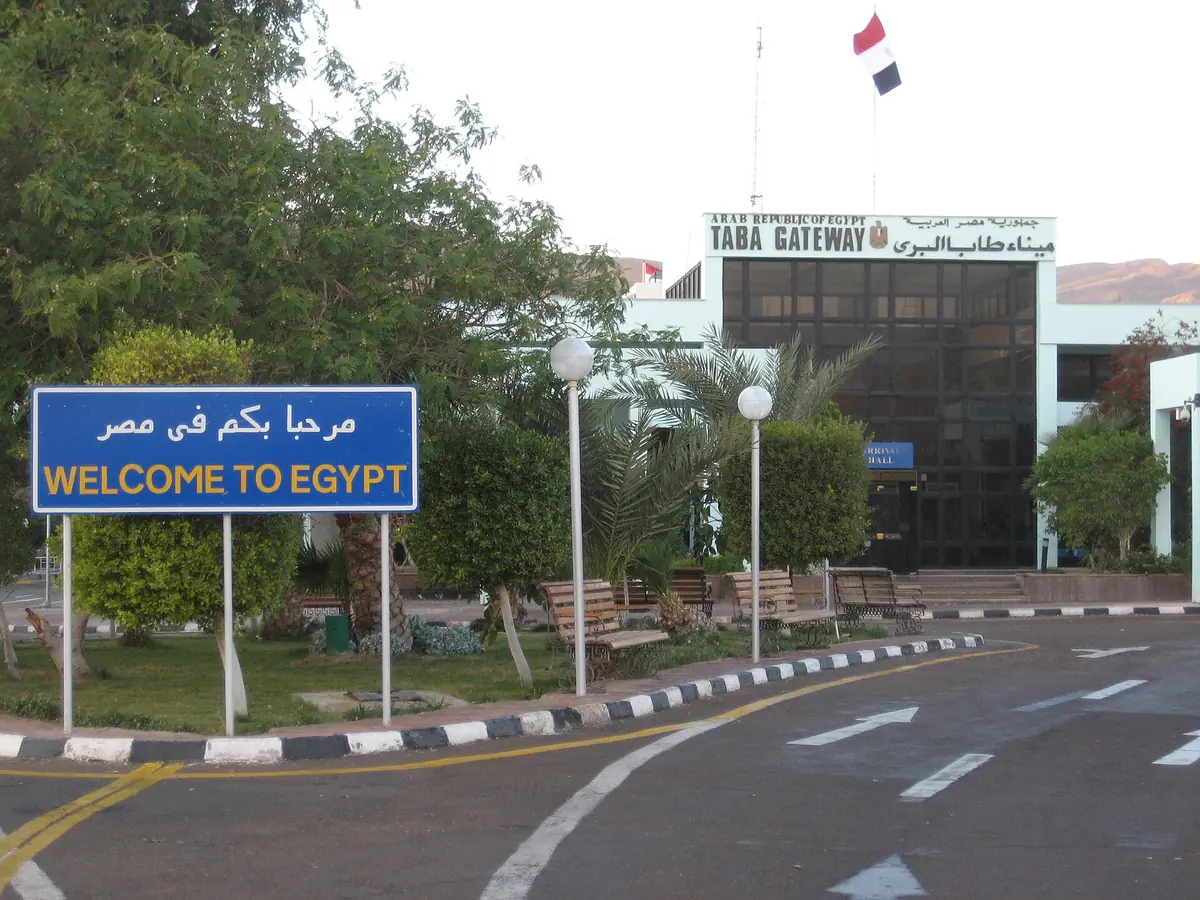
From Israel at Taba. The border tax at the crossing from Eilat depends on how far you go. Staying in Taba costs a USD 20 border tax for a stamp of up to 15 days. Going further into Sinai, Sharm el-Sheikh included, costs a USD 120 border tax for the same 15-day stamp. Travelling beyond Sinai, including flying on from Cairo or Hurghada, needs the USD 120 tax, a USD 30 visa and a letter of guarantee from a travel agent for about USD 20 to 25; all three are sold at the crossing. A car adds about USD 100 plus parking. Fees at Taba have risen at short notice since March 2026, so the UK suggests carrying at least USD 170 in cash per person, with extra for other costs. All payments are in cash, and the ATMs at the crossing are unreliable and give only Egyptian pounds. The crossing can close at short notice because of the conflict in Israel and Palestine.
From Jordan by ferry. Arab Bridge Maritime sails every day between Aqaba Passenger Terminal and Nuweiba port; the crossing takes 2.5 to 3.5 hours depending on the sea, and the operator asks passengers to be at the port three hours before departure. Fares depend on the passenger and ticket type: check them and the sailing on the operator's site 24 hours before you travel, and allow for Jordan's JOD 10 departure fee at Aqaba. Ferries also link Aqaba with Taba Heights, on a separate ticket. On arrival you get either the free 15-day South Sinai stamp or a full visa for the rest of Egypt, sold at the port terminal: USD 30 at Nuweiba and USD 35 at Taba Heights, often payable only in cash.
From Sudan. The two land crossings, Qustul and Argeen, have almost no facilities and no longer sell visas on arrival. Visas come from the Egyptian consulate in Wadi Halfa, and approval can take six months or more.
From Libya and Gaza. The UK advises against all travel within 20 km of the Libyan border, except the town of El Salloum, where it advises against all but essential travel. The Rafah crossing from Gaza is closed.
A stamp from Taba, Nuweiba or another crossing that borders Israel can show that you came from Israel. Some Arab countries have refused entry to travellers with such stamps. If your trip continues to other countries in the region, plan the order of the borders with that in mind.
Prices and times checked 28 November 2026

Customs: cash, cameras, drones and medicines
You may carry up to EGP 5,000 in Egyptian pounds into or out of the country. There is no limit on foreign currency, but you must declare more than USD 10,000, or the equivalent, on arrival; amounts above that can be taken out again only if they were declared. The money guide covers cards, ATMs and how much cash to carry.
Declare high-value electronics and recording equipment on arrival. Drones may not be brought in without prior approval from Egypt's Ministry of Defence. Since a customs circular of January 2026, customs release a drone to no one without it, private travellers included. Drones without approval are confiscated, and owners can be arrested and prosecuted. Flying one needs a separate permit from the civil aviation ministry, which you can apply for only after the Ministry of Defence has approved it. Without clearance from the telecommunications ministry, satellite phones, radio equipment and walkie-talkies are likely to be seized. The same applies to diving drones, telescopes and some GPS devices.
Carry prescription medicines in their original packaging with the original prescription, and no more than three months' supply. Egyptian authorities seize narcotic and psychotropic medicines even with a prescription, so ask your doctor about alternatives before you travel.
Leaving Egypt, you may not export antiquities, coral, shells or petrified wood, even if a shop sold them to you openly.
Prices and times checked 29 November 2026
Health rules at the border
Egypt asks for a yellow fever vaccination certificate from travellers aged nine months or older who arrive from a country with yellow fever risk or from Eritrea, Rwanda, Somalia, Tanzania or Zambia, or who spent more than 12 hours in transit there; without it you can be held in quarantine for up to six days. Arriving directly from Europe, you need no certificate.
Germany's travel advice says that travellers arriving from the Democratic Republic of the Congo, Kenya, Niger or Syria must show a polio vaccination given between 12 months and four weeks before entry, recorded in the international vaccination certificate. The list changes with polio outbreaks, and sources differ: an EgyptAir notice of 2024 also named Afghanistan, Pakistan, Malawi, Mozambique and Madagascar, for residents and for visitors who stayed more than four weeks. If you have spent time in a country with polio cases, check the current rule with your airline or an Egyptian embassy before you fly.
For recommended vaccinations, heat, water and travel insurance, see the health and safety guide.
Prices and times checked 29 November 2026
Before you fly: a short checklist
Check that your passport is valid for six months beyond the day you leave Egypt and has a blank page. Decide between the e-visa and the visa on arrival; if you take the visa on arrival, pack USD 30 per person in cash, or at Cairo carry a card for the digital visa machines.
If you fly into Sharm el-Sheikh and might travel beyond Sharm el-Sheikh, Dahab, Nuweiba and Taba, or stay 15 days or more, buy the full visa on arrival. Coming overland from Israel or by ferry from Jordan, carry US dollars in cash for the border tax and the visa.
Leave the drone at home, pack medicines with their prescription, and keep the passport page with your entry stamp safe until you have left the country.
Prices and times checked 29 November 2026
Practical questions
Do British, EU or US citizens need a visa for Egypt?
Yes. British, EU and US passport holders need a visa for a normal tourist trip. They can buy the e-visa online from visa2egypt.gov.eg before travelling; British, EU and US citizens can also buy a visa on arrival for USD 30 in cash, or USD 36 as a digital visa at Cairo airport. The exception is a stay of under 15 days in the South Sinai resorts after flying into Sharm el-Sheikh, which needs only a free stamp.
How much does the Egypt e-visa cost?
USD 30 for a single entry and USD 65 for multiple entries, paid by card on visa2egypt.gov.eg. Apply at least 7 days before departure; the fee is not refunded if the application is rejected.
Can I pay for the visa on arrival by card at Cairo airport?
Yes. At Cairo International Airport you can also buy a digital QR-code visa on arrival for USD 36, including a USD 6 service fee, by card at the self-service machines before passport control. The usual visa on arrival is USD 30 in cash.
Does the free Sinai stamp let me visit Cairo or Luxor?
No. The free entry stamp covers stays of under 15 days in Sharm el-Sheikh, Dahab, Nuweiba and Taba only. To travel anywhere else in Egypt, or to stay longer, buy a full visa at Sharm el-Sheikh airport or online.
How long must my passport be valid for Egypt?
The UK and the e-visa portal ask for six months from the day you arrive, and the UK also for one blank page; Canada and Egypt's consulate in London ask for six months beyond the day you expect to leave. To be safe, make sure it is valid six months after you leave Egypt and has a blank page.
How much cash can I bring into Egypt?
Up to EGP 5,000 in Egyptian pounds. Foreign currency has no limit, but amounts above USD 10,000 must be declared on arrival.
Keep planning your trip
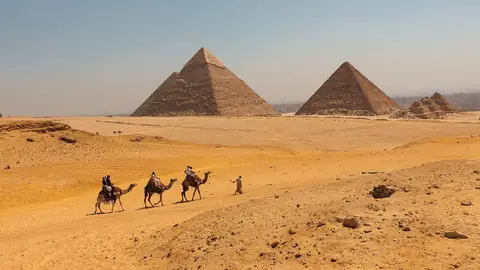
First trip to Egypt
Choose seven days or ten for Cairo, Giza, Luxor and Aswan: nights in each, the train or a Nile cruise, the season, the visa and what to book first.
Read the guide
Transport in Egypt
How to travel Egypt: the sleeper train from Giza to Luxor and Aswan, day trains, domestic flights, buses, ride-hailing cars and the Cairo Metro, with journey times.
Read the guide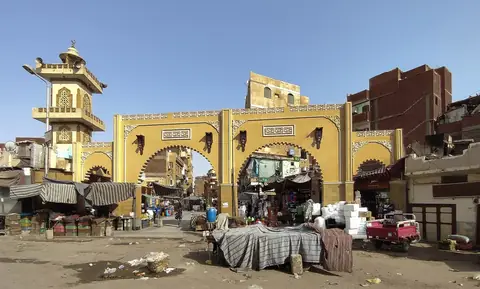
Money in Egypt
Paying in Egypt: the pound and its rate, which cash to bring, card payment at the big sites, ATMs, trains paid in dollars, baksheesh and the border cash limits.
Read the guide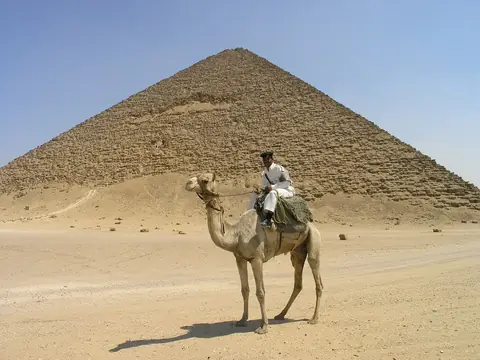
Health and safety in Egypt
Where the advisory lines run in Sinai and the deserts, emergency numbers, insurance, vaccines and medicines, tap water, heat, night roads, balloons, touts and the laws.
Read the guide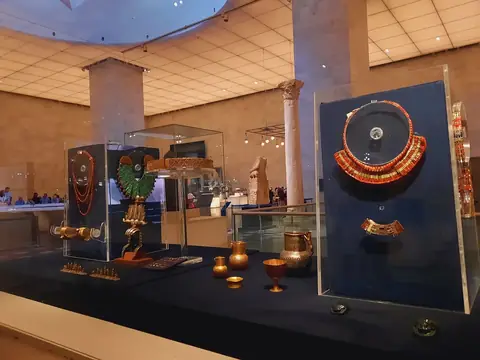
Cairo
Three nights in Cairo: Al-Muizz Street and Khan el-Khalili, the Citadel, Coptic Cairo, the Egyptian Museum and the royal mummies at NMEC, where to sleep and costs.
Read the guideSources and checks before you travel
(17)
- Egypt e-Visa Portal (Ministry of Interior): FAQ ↗ — opens in a new tab
- Egypt e-Visa Portal (Ministry of Interior): home page ↗ — opens in a new tab
- Egypt e-Visa Portal (Ministry of Interior): disclaimer ↗ — opens in a new tab
- UK Foreign, Commonwealth & Development Office: Egypt entry requirements ↗ — opens in a new tab
- Consulate General of Egypt in London: visas ↗ — opens in a new tab
- UK Foreign, Commonwealth & Development Office: Egypt warnings and insurance ↗ — opens in a new tab
- Government of Canada: Egypt travel advice, entry and exit requirements ↗ — opens in a new tab
- Ireland Department of Foreign Affairs: Egypt travel advice ↗ — opens in a new tab
- German Federal Foreign Office: Egypt travel and safety advice (German) ↗ — opens in a new tab
- Embassy of Egypt in Washington: visa ↗ — opens in a new tab
- Arab Bridge Maritime: Aqaba-Nuweiba sea line FAQ ↗ — opens in a new tab
- Experience Egypt (Egyptian Tourism Authority): useful information ↗ — opens in a new tab
- AB Maritime (Arab Bridge Maritime): home page (Arabic) ↗ — opens in a new tab
- Adventure Travel Trade Association (trade press report): Egypt visa fee change from January 2027 ↗ — opens in a new tab
- Egyptian Customs Authority: import control circular No. 2 of 2026 (Arabic) ↗ — opens in a new tab
- Ministry of Civil Aviation: FAQ (Arabic) ↗ — opens in a new tab
- EgyptAir: health requirements for passengers (2024 notice) ↗ — opens in a new tab
Reference sources for the version dated 29 November 2026. Confirm opening times, access, transport and conditions for your travel dates.
Photo credits
(5)
Terminal 3 at Cairo International Airport, where the visa on arrival is now sold as a digital QR code
Photograph: Roland Unger — opens in a new tab · CC BY-SA 3.0 — opens in a new tab
Changes: Resized and converted to WebP; displayed with responsive crops. · Original photograph and licence details ↗ — opens in a new tab
The Egyptian terminal at the Taba crossing from Israel
Photograph: NYC2TLV — opens in a new tab · CC BY 2.5 — opens in a new tab
Changes: Resized and converted to WebP; displayed with responsive crops. · Original photograph and licence details ↗ — opens in a new tab
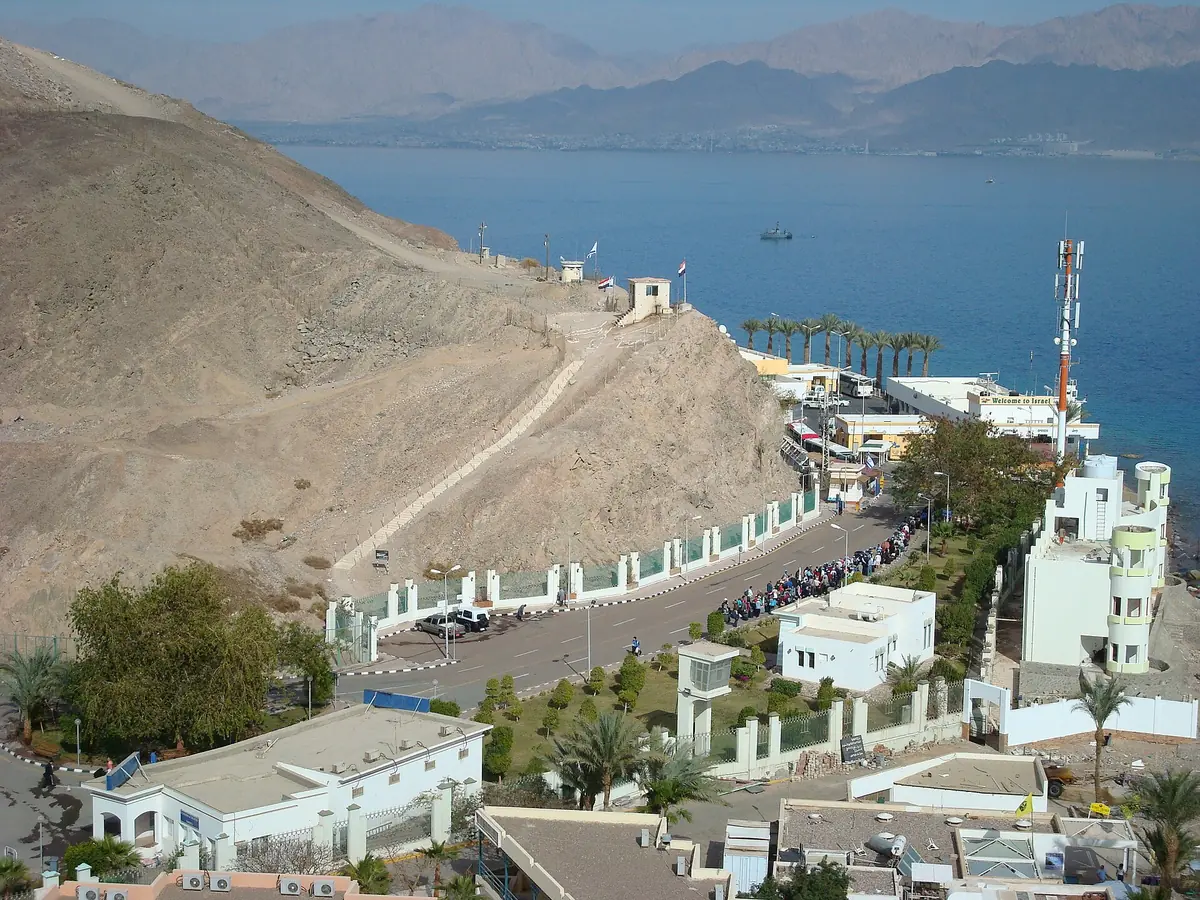
Taba on the Gulf of Aqaba, where the land border from Eilat enters South Sinai
Photograph: smr shalaby — opens in a new tab · CC BY 3.0 — opens in a new tab
Changes: Resized and converted to WebP; displayed with responsive crops. · Original photograph and licence details ↗ — opens in a new tab
The terminal at Luxor International Airport
Photograph: Olaf Tausch — opens in a new tab · CC BY 3.0 — opens in a new tab
Changes: Resized and converted to WebP; displayed with responsive crops. · Original photograph and licence details ↗ — opens in a new tab
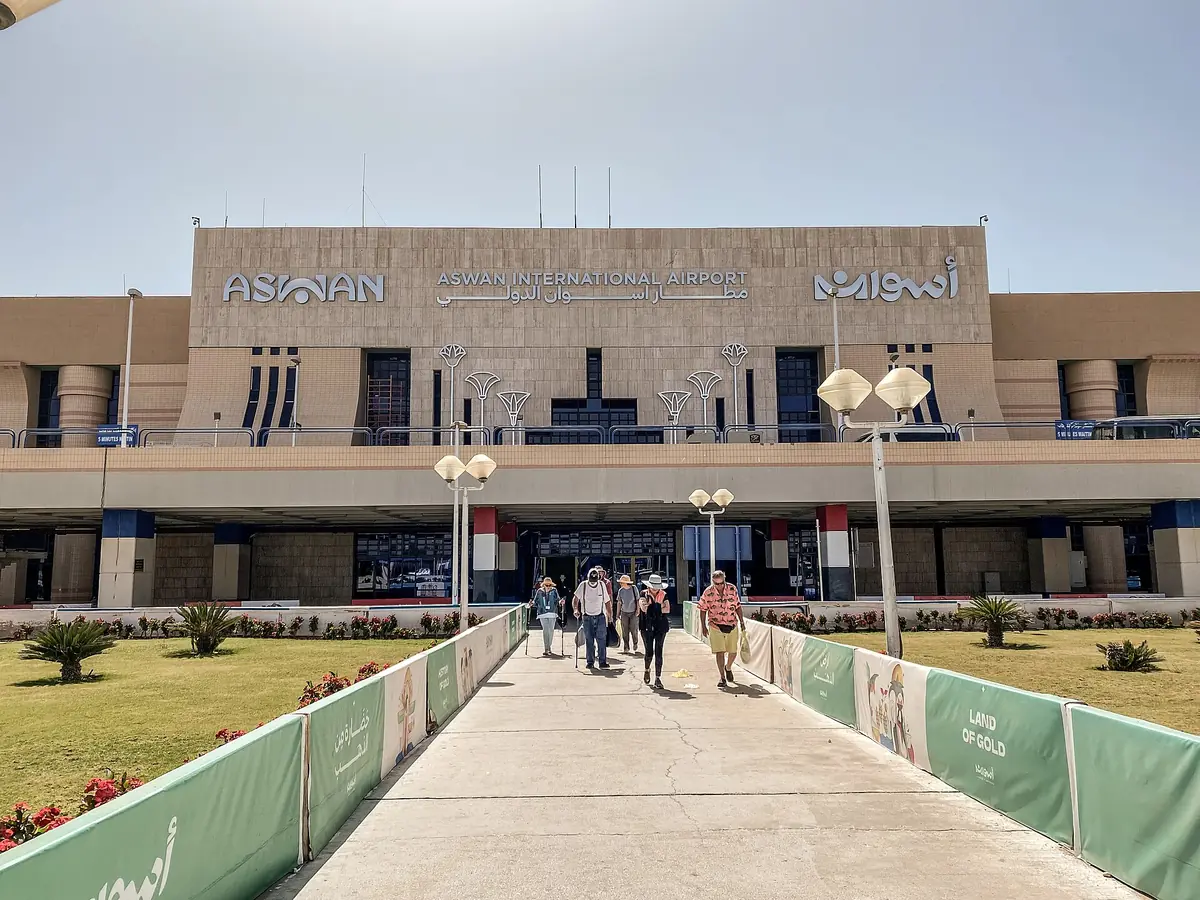
The entrance to Aswan International Airport
Photograph: Keith from Honolulu, United States — opens in a new tab · Public domain — opens in a new tab
Changes: Resized and converted to WebP; displayed with responsive crops. · Original photograph and licence details ↗ — opens in a new tab