Cairo: Islamic Cairo, Coptic Cairo and the museums in three nights
Cairo is two cities stacked on one riverbank. Medieval Cairo, founded in 969 as Al-Qahira, “the Victorious”, is a maze of Mamluk domes, carved gates and covered bazaars between Bab al-Futuh and Bab Zuwayla, with the Citadel on its hill above. Further south, Old Cairo keeps the churches, the synagogue and the first mosque of Fustat, and the National Museum of Egyptian Civilization now holds the royal mummies. Downtown, the Egyptian Museum on Tahrir Square still shows about 100,000 objects. This guide spends three nights on them; the Pyramids and the Grand Egyptian Museum at Giza have their own guide.
In this guide
Find the location ↗ — opens in a new tabThe short answer
Book three nights in Downtown Cairo near Tahrir Square. The Egyptian Museum is on your doorstep there, and Sadat metro station takes you to Coptic Cairo. Give one day to the museum and Downtown, one to Islamic Cairo from the Citadel to Khan el-Khalili, and one to Coptic Cairo and the royal mummies at NMEC. Add the Pyramids as a separate day or a night in Giza. Nothing needs booking ahead: pay at each site's counter, where Visa and Mastercard are accepted, or buy tickets on egymonuments.com. A foreign adult pays EGP 550 each at the Egyptian Museum, the Citadel and NMEC, and EGP 220 for the Al-Muizz Street ticket. A metro ride of up to nine stations costs EGP 10. For two foreign adults, the sights, the metro and three meals a day come to about EGP 10,400; rooms are compared in our where-to-stay guide.
- Suggested time
- 3 nights in Cairo
- Where to stay
- Downtown Cairo near Tahrir Square, or Zamalek and Garden City for a quieter riverside room
- Season and timing
- Most of Cairo's sights open from 09:00 to 17:00, so the season decides how hot the walking is rather than what you can see. Our best-time guide has the month-by-month picture, Ramadan included.
Where to sleep: Downtown by Tahrir, or Zamalek and Garden City
Downtown, with its nineteenth-century, French-inspired facades around Tahrir Square and Talaat Harb Street, is the base that saves the most time: the Egyptian Museum is a walk away and Sadat station, where metro lines 1 and 2 cross, lies under the square. Garden City, beside Tahrir on the Nile Corniche, is the quieter alternative within walking distance. Zamalek, on Gezira island in the river, is calmer still, but every trip to the old quarters starts with a taxi.
Our where-to-stay guide names hotels in Downtown, Garden City and Zamalek, with their rates. Compare your dates in the booking box below.
Prices and times checked 28 November 2026
Al-Muizz Street, Khan el-Khalili and Bab Zuwayla
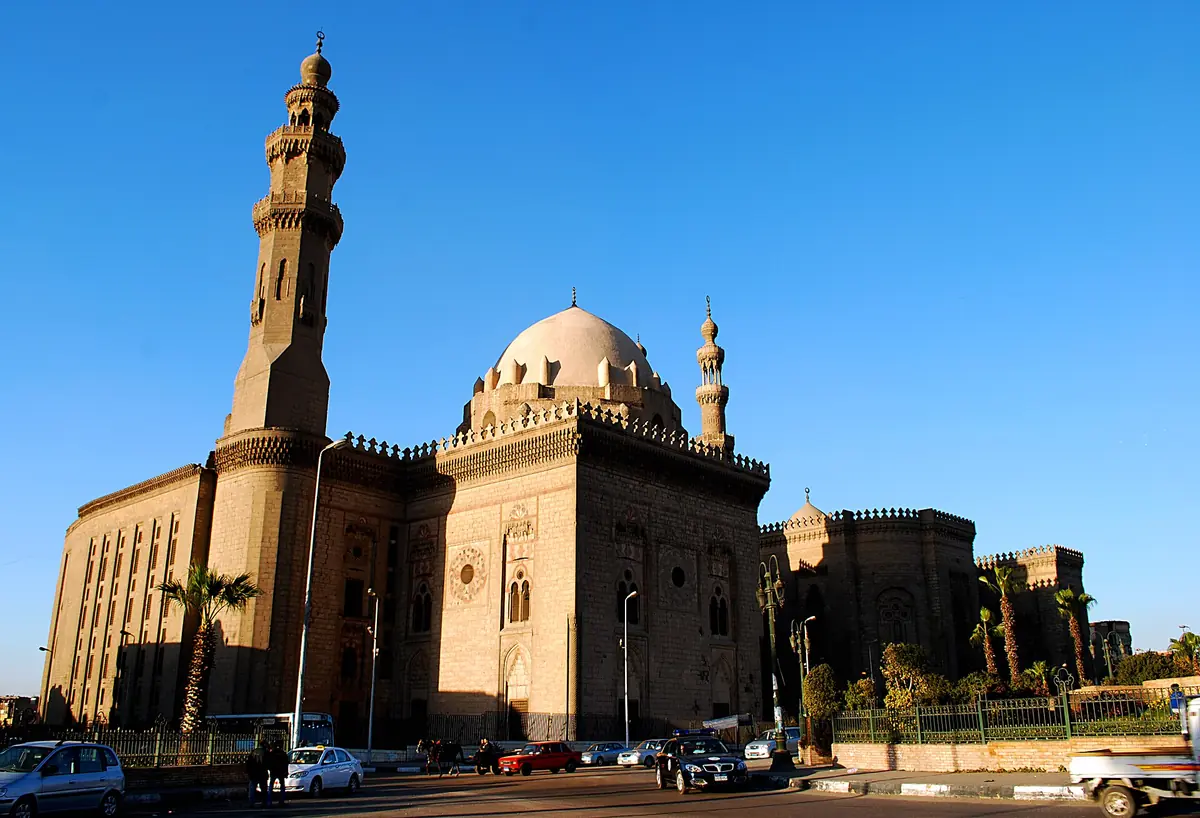
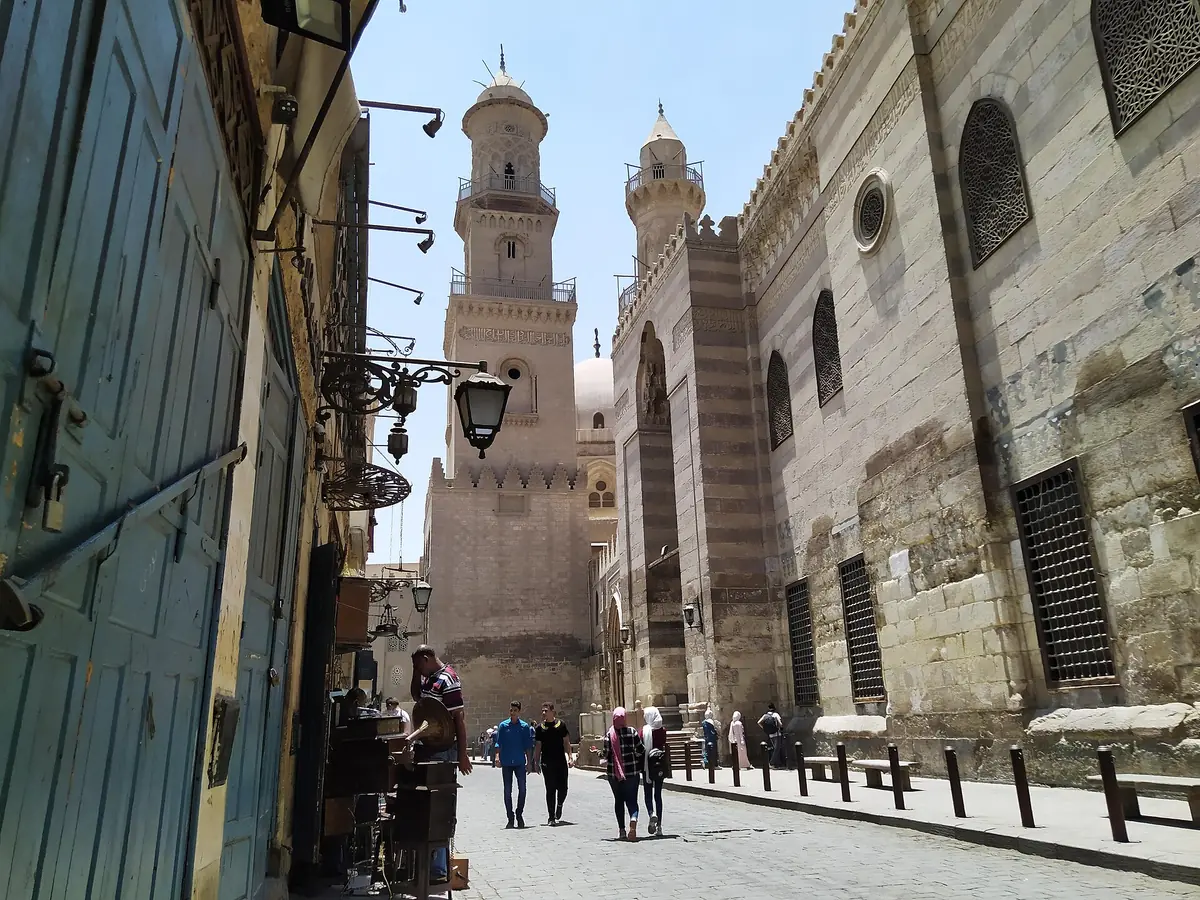
Al-Muizz Street is the spine of medieval Cairo. The Fatimid caliph al-Muizz li-Din Allah laid the street out between two gates of the old walls, from Bab al-Futuh in the north to Bab Zuwayla in the south. It passes twenty-nine monuments from the tenth to the nineteenth century, and the area has been on UNESCO's World Heritage List since 1979. The finest is the Qalawun complex of 1283–1284, a mosque, school, mausoleum and hospital (bimaristan) whose doorways are worked with gold and silver gilding and geometric and floral patterns. The street ticket costs EGP 220 for a foreign adult and EGP 110 for a student. It covers the Qalawun group, the mosque and madrasa of al-Nasir Muhammad, the mosque of Sultan Barquq, the Bishtak palace, the Inal bathhouse and the Maimonides synagogue, which are open daily from 09:00 to 17:00.
Bayt al-Suhaymi and the al-Ghuri complex are not on the street ticket. Bayt al-Suhaymi, in the Darb al-Asfar lane, is a scholar's family house built from 1648 and enlarged in 1796. Wooden mashrabiya screens look over a planted courtyard, a seated loggia and a reception hall. It costs EGP 220 for a foreign adult and is open from 09:00 to 17:00, to 16:00 on Fridays. Further south, the Sultan al-Ghuri complex of 1503–1504 stands on both sides of the street, joined by a wooden roof over a textile market. The mosque and madrasa are on one side, and the sultan's mausoleum, Sufi lodge and fountain on the other; the complex costs EGP 150.
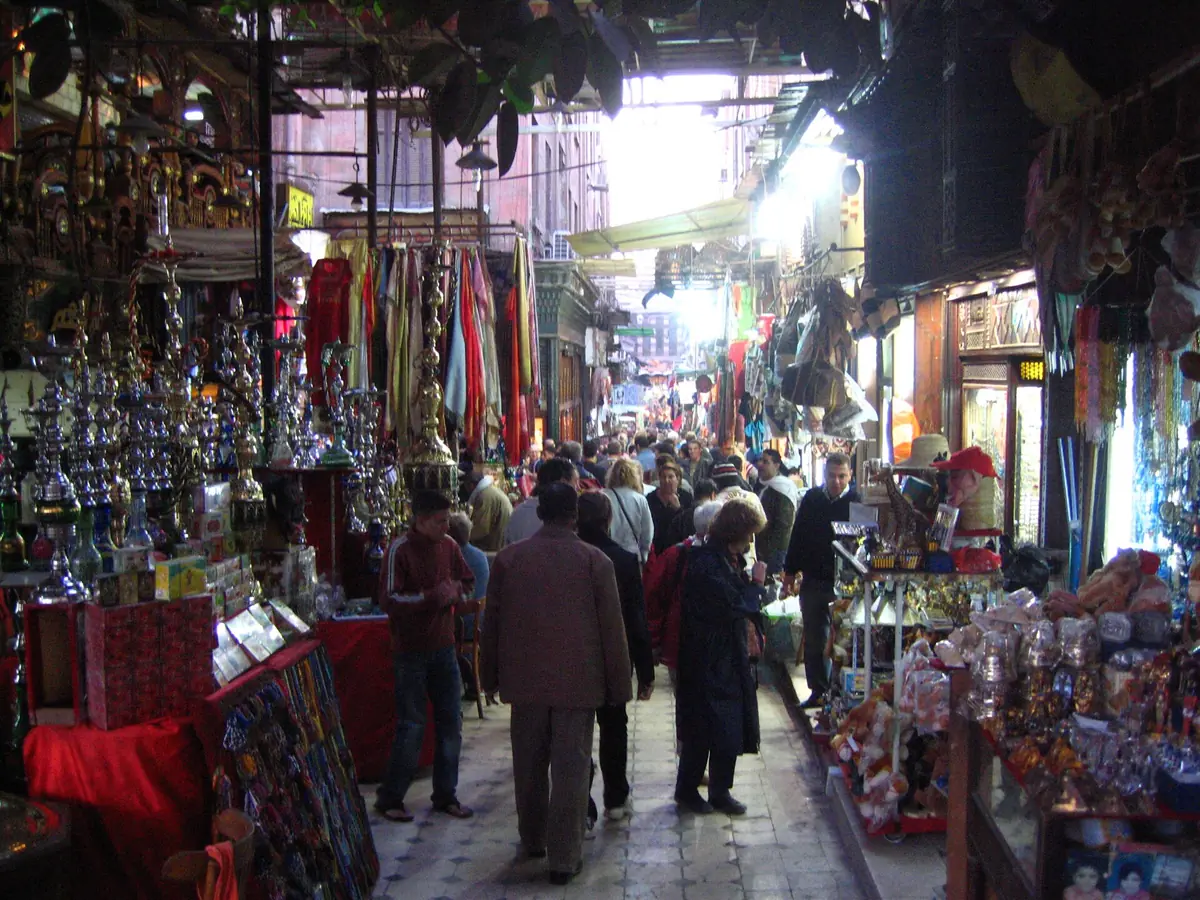
Khan el-Khalili, Cairo's medieval bazaar, lies on the same walk: a labyrinth of shops and lanes hung with lanterns, brass and textiles, where you can browse for hours. Beside the bazaar stands Al-Azhar Mosque, which the Fatimid general Gawhar commissioned in 970 as Cairo's first congregational mosque; dress modestly to go in. Walk south to finish at Bab Zuwayla, the southern gate built in 1092 by the vizier Badr al-Gamali. Three centuries later, the Mamluk sultan al-Mu'ayyad set the minarets of his mosque on its two round towers. The gate has its own ticket of EGP 100 and is open daily from 09:00 to 17:00. For colourful appliqué textiles, look for Al-Khayamiya, the tentmakers' market.
Prices and times checked 28 November 2026
The Citadel, Sultan Hassan and Ibn Tulun
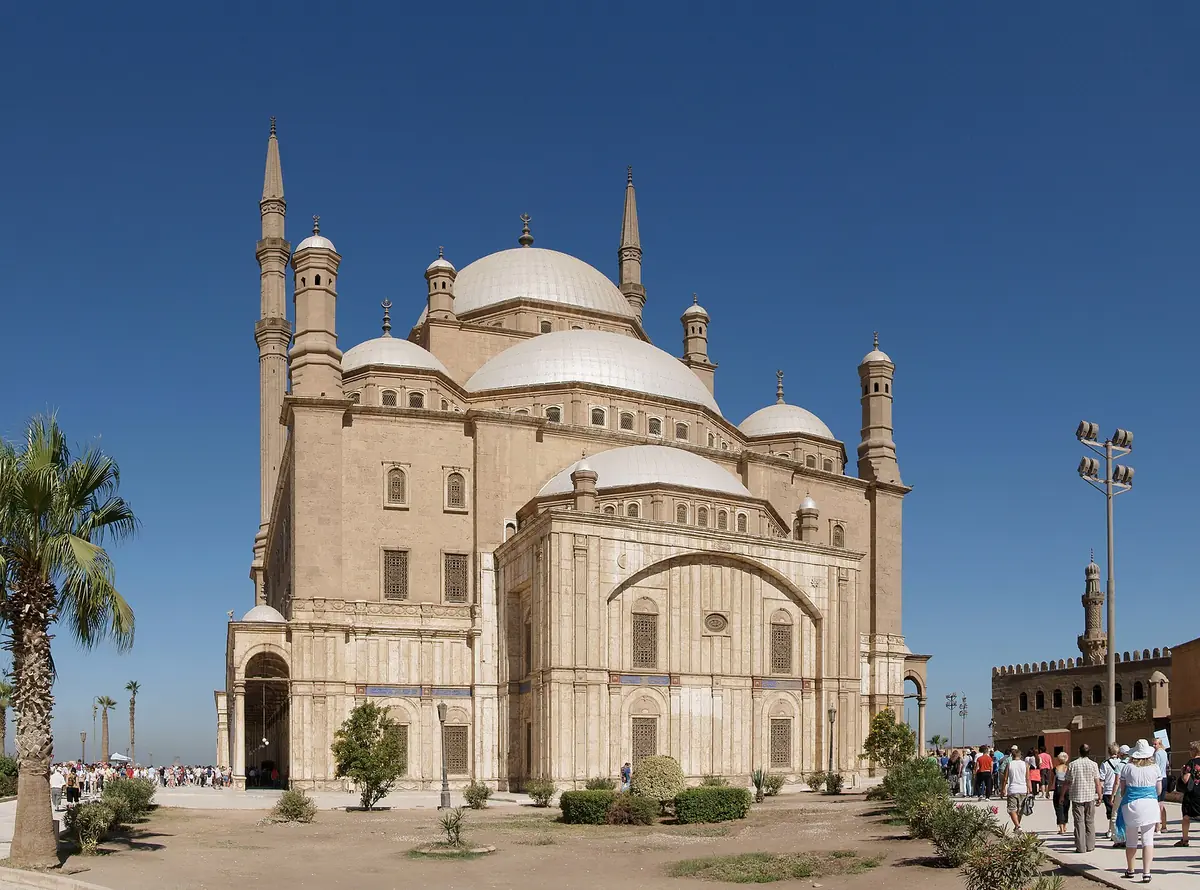
The Citadel of Salah al-Din stands on the Muqattam hills above the old city. Saladin began it in 1176, and it was the residence of Egypt's rulers until Khedive Ismail moved to Abdeen Palace in the nineteenth century. Its skyline belongs to the Mosque of Muhammad Ali, with its stacked grey domes and two pencil minarets; inside the walls are also the Mamluk mosque of al-Nasir Muhammad, the Ottoman mosque of Sulayman Pasha and the Police, Military and al-Gawhara Palace museums. The views over Cairo are the reason to go early. The site opens daily from 08:00 to 17:00, and the area ticket is EGP 550 for a foreign adult and EGP 275 for a student.
Below the Citadel, on Salah al-Din Square, stands the Mosque and Madrasa of Sultan Hassan, built between 1356 and 1362 and one of the largest mosques in Egypt. It has an open courtyard with a fountain, four iwans where the four Sunni schools of law were taught, carved stone and a marble mihrab. Its neighbour is the nineteenth-century Al-Rifa'i Mosque. One EGP 220 ticket covers both mosques, which are open daily from 09:00 to 17:00.
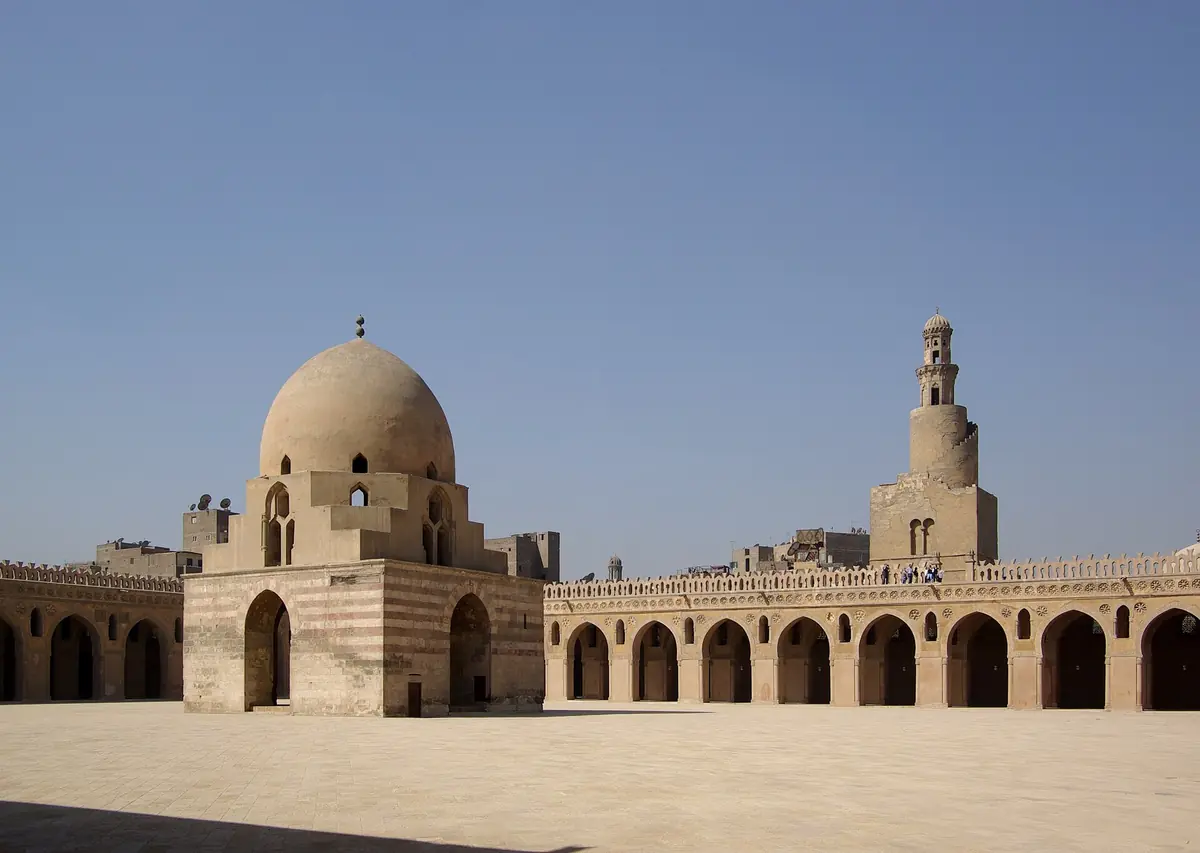
The Mosque of Ibn Tulun, built from 876 to 879 for the governor who made Egypt independent of the Abbasids, is the other great early mosque. A vast courtyard is ringed by arches with stucco ornament, with a domed fountain in the middle and a spiral minaret modelled on Samarra in Iraq. The mosque is open daily from 09:00 to 17:00. Next door, the Gayer-Anderson Museum joins two Ottoman houses of 1545 and 1631. A British army doctor furnished them with Pharaonic, Islamic and Asian pieces and lived there until 1942. The museum costs EGP 100. Dress modestly for the mosques and the bazaars.
Prices and times checked 28 November 2026
Coptic Cairo and the royal mummies at NMEC
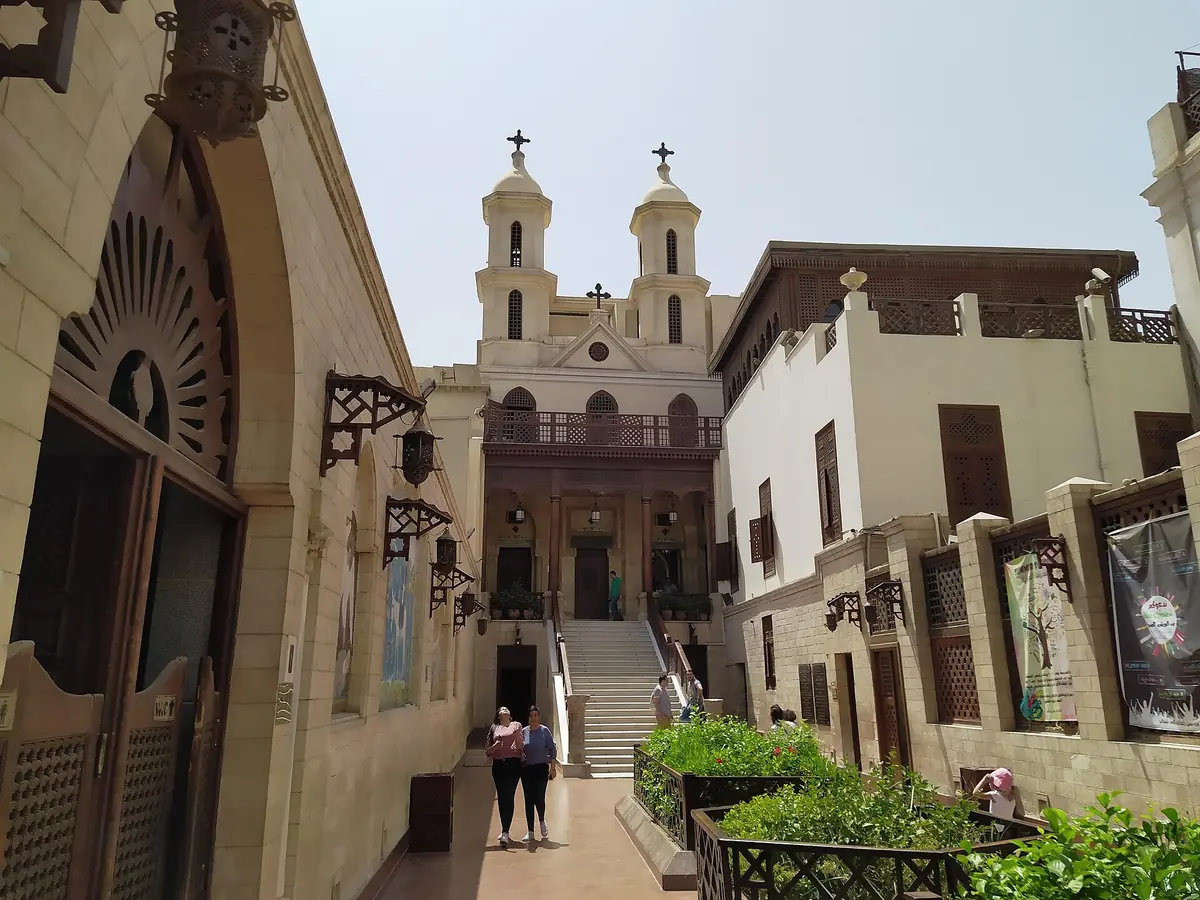
Old Cairo grew from Fustat, the first Islamic capital of Egypt, founded by ‘Amr ibn al-‘As after the conquest of 640–641. The metro takes you there: Mar Girgis station on line 1 is by the Hanging Church and the church of Saint George. The Hanging Church owes its name to its position, built over the ruins of Old Cairo's Roman fort. Inside, three rows of marble columns, a wooden roof shaped like Noah's Ark and an eleventh-century marble pulpit on ten columns frame walls of icons, the oldest from the fifteenth century. It is open daily from 09:00 to 16:00.
Near the church, the Coptic Museum, opened in 1910, holds the largest collection of Coptic art in the world: carved wood, icons, illuminated manuscripts and frescoes taken from monasteries and churches. Tickets are EGP 280 for a foreign adult and EGP 140 for a student. The museum is open daily from 09:00 to 17:00. Also in Old Cairo, the Ben Ezra Synagogue, the oldest in Egypt, has a hekhal inlaid with mother-of-pearl. Its storeroom, the Cairo Geniza, held documents from 850 years that are now in libraries around the world. The synagogue is open daily from 09:00 to 16:00. The Mosque of ‘Amr ibn al-‘As, the first building of Fustat, survives as a twentieth-century reconstruction.
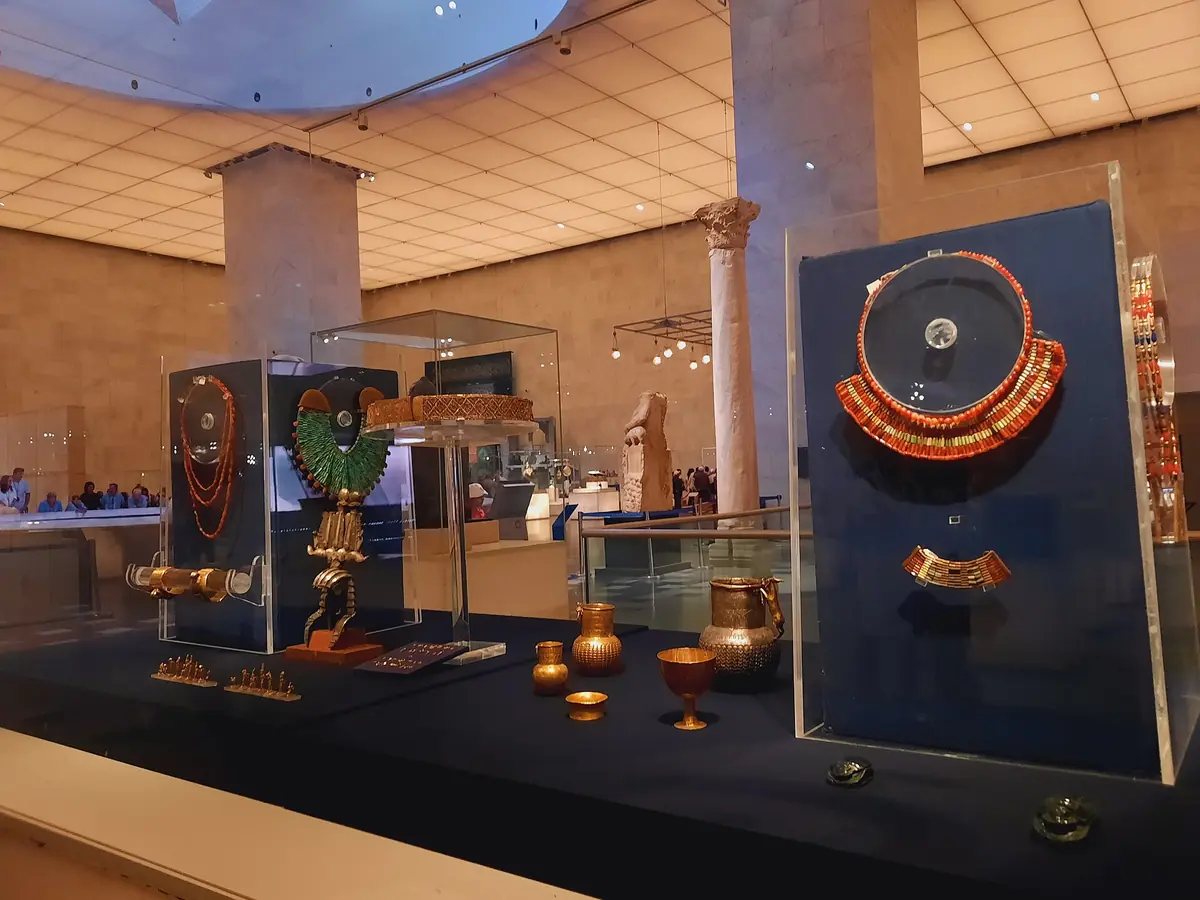
The National Museum of Egyptian Civilization (NMEC), also in Fustat, tells Egypt's story from prehistory to today. Its Royal Mummies Gallery shows the 22 royal mummies moved there from the Egyptian Museum in a televised procession in 2021. Tickets are EGP 550 for a foreign adult and EGP 300 for a student. The museum is open daily from 09:00 to 17:00, with last tickets at 16:00. On Fridays only, it opens again in the evening from 18:00 to 21:00, with last tickets at 20:00.
Prices and times checked 29 November 2026
The Egyptian Museum on Tahrir Square
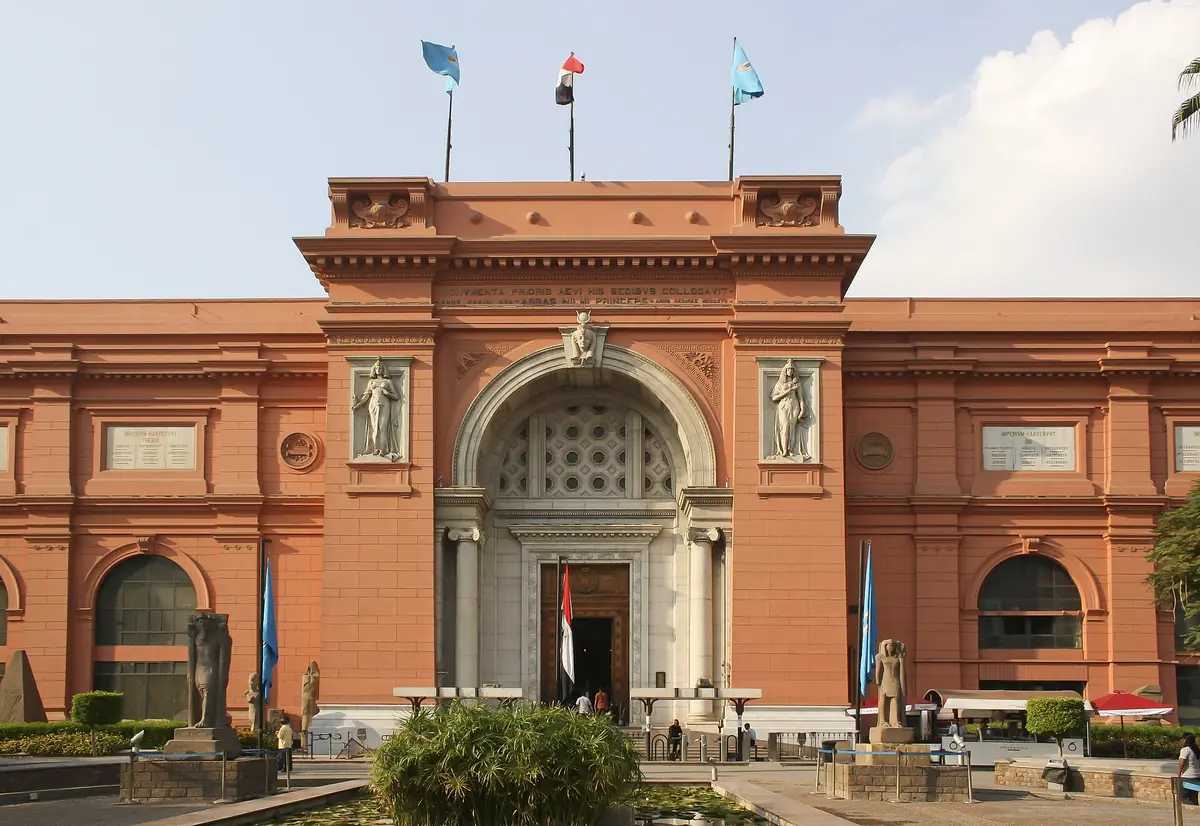
The Egyptian Museum on Tahrir Square opened in 1902 and is the oldest archaeological museum in the Middle East. Tutankhamun's treasures have moved to the Grand Egyptian Museum at Giza and the royal mummies to NMEC. About 100,000 objects remain on show: the Narmer Palette that records the unification of Upper and Lower Egypt, statues of the pyramid builders Khufu, Khafre and Menkaure, the complete burials of Yuya and Thuya, the treasures of Tanis, papyri and sarcophagi. With fewer visitors than before, its galleries are calmer.
Tickets are EGP 550 for a foreign adult and EGP 275 for a student, with an audio guide for EGP 75. It is open daily from 09:00 to 17:00. Phone photography is free; flash is not allowed.
If you have more time, the Museum of Islamic Art, opened in 1903 beside the National Library, covers every period of Islamic history: carved wood, ceramics, manuscripts, a Mamluk key to the Ka'ba and a textile with the oldest known Kufic inscription. It costs EGP 340 for a foreign adult and is open daily from 09:00 to 17:00.
Prices and times checked 28 November 2026
Evenings: Al-Azhar Park, the dervishes and the Nile
Al-Azhar Park is the place to watch the sun set over the old city. The Aga Khan Trust for Culture built the 30-hectare park beside Darb al-Ahmar on 500 years of accumulated debris, and the excavation uncovered a 1.5-kilometre stretch of the twelfth-century Ayyubid wall, with towers and battlements almost intact. From its lawns the domes and minarets of historic Cairo fill the view.
At Wikalat al-Ghuri, near the al-Ghuri complex on Al-Muizz Street, you can watch a whirling dervish performance, a good end to a day in the old city. On the Nile, feluccas, the traditional sailboats, glide past the riverside cafés; an hour on the water at sunset is the gentlest way to see the city.
Three nights, three days
Most sights open at 09:00 and close at 17:00, and their ticket windows close an hour earlier, at 16:00, so start each day in the morning. Leave day 4 for the Pyramids or the train south.
- Day 1: arrive and check in Downtown. Spend the afternoon at the Egyptian Museum, walk around Tahrir Square and Talaat Harb Street, and eat koshari at Abou Tarek on Champollion Street. Sleep in Cairo.
- Day 2: take a taxi to the Citadel at 08:00; a taxi pays EGP 25 to drive in. Walk down to Sultan Hassan and Al-Rifa'i, then on to Ibn Tulun and the Gayer-Anderson Museum. In the afternoon, go by taxi to Bab Zuwayla and walk north along Al-Muizz Street to the Qalawun complex and Bayt al-Suhaymi. Finish at Khan el-Khalili and Al-Azhar Mosque in the evening, or at Al-Azhar Park for the sunset. Sleep in Cairo.
- Day 3: metro from Sadat to Mar Girgis for the Hanging Church, the Coptic Museum and Ben Ezra in the morning, then a taxi to NMEC for the royal mummies. Back Downtown for a felucca at sunset. Sleep in Cairo.
- Day 4: the Pyramids and the Grand Egyptian Museum at Giza, or a train from Ramses Station to Alexandria, or south to Luxor.
What to eat and where to look
Koshari
Cairo's everyday plate: rice, pasta, lentils and chickpeas under a garlicky tomato sauce and crisp fried onions. Abou Tarek began selling it from a cart in Downtown in 1963; his old cart still stands outside the four-storey shop. Order the fried bread crumbs, aish mohammas, to go with it.
- Where to look
- Abou Tarek, Champollion Street, Downtown
- Fit it into your day
- Day 1 dinner, after the Egyptian Museum.
Ful wi ta'ameya
Slow-cooked, spiced fava beans with baladi bread, and ta'ameya, Egypt's fava-bean falafel, crisp outside and soft within: the most common breakfast in Egypt. At a Downtown cart an order costs EGP 10.
- Where to look
- Nasser Al Fayoumi, a cart and small shop in Downtown with tables on the street
- Fit it into your day
- Breakfast on each of the three days.
Molokhiya
A green soup of minced molokhiya leaves topped with fried garlic and coriander, served over rice or with bread; many Egyptians call it the national dish.
- Where to look
- Restaurants serving Egyptian home cooking Downtown and in Zamalek; most hotels serve Egyptian dishes too.
- Fit it into your day
- Day 2 lunch, between the Citadel and Al-Muizz Street.
Feteer meshaltet
Thin layers of pastry folded with plenty of butter and baked, eaten sweet with honey or savoury with cheese.
- Where to look
- Feteer bakeries around Khan el-Khalili and Downtown.
- Fit it into your day
- Day 2 evening, after Khan el-Khalili.
Hamam mahshi
Squab stuffed with freekeh, green wheat, and roasted, usually served as a pair; a dish for celebrations.
- Where to look
- Grill and Egyptian restaurants Downtown and in Zamalek.
- Fit it into your day
- Day 3 dinner, after the felucca.
Arriving, the metro and trains onward
From Cairo International Airport (CAI), arrange a pickup through your hotel or order a ride-hailing car to Downtown: Uber puts its average UberX ride from the airport at 35 minutes and EGP 293, and the app shows your fare before you confirm. The transport guide compares the ways in.
The Cairo Metro is the quickest way across the centre and avoids the traffic. A single ticket costs EGP 10 for a trip of up to nine stations, EGP 12 up to 16 stations, EGP 15 up to 23 and EGP 20 up to 39. For a visitor, three stations matter: Sadat, under Tahrir Square, where lines 1 and 2 cross, beside the Egyptian Museum and Garden City; Mar Girgis on line 1, for Coptic Cairo; and Al Shohadaa, also an interchange of lines 1 and 2, for Ramses (Misr) Station, where the trains to Alexandria leave. The Citadel, Islamic Cairo and NMEC are best reached by taxi.
For the next stop, the Giza guide covers the Pyramids and the Grand Egyptian Museum, and the Alexandria guide the train to the Mediterranean.
Prices and times checked 28 November 2026
What the sights, the metro and meals cost
About EGP 10,400 for two foreign adults, about EGP 5,200 each, covers the plan above: the sights, three meals a day, the metro rides to Coptic Cairo and the taxi's car ticket at the Citadel. Rooms are in our where-to-stay guide, and a whole-trip budget is in our Egypt trip-cost guide.
| Item | For two |
|---|---|
| Sights | EGP 5,580 |
| Food and drinks, three days | EGP 4,800 |
| Metro and the Citadel car ticket | EGP 65 |
| Total | EGP 10,445 |
The model is two foreign adults over three days. Food is about EGP 800 a person a day, the estimate our seven-day itinerary uses for a street breakfast, a koshari lunch and a sit-down dinner. As a guide, ful wi ta'ameya from a Downtown cart costs EGP 10 a person, and a large box of koshari costs EGP 40 in Cairo's koshari restaurants. Getting around is two metro rides each, Sadat to Mar Girgis and back, at EGP 10 a ride, plus the EGP 25 car ticket for the taxi at the Citadel on day 2. Sights are the foreign adult tickets for the Egyptian Museum, the Citadel and NMEC (EGP 550 each), Al-Muizz Street, Bayt al-Suhaymi and Sultan Hassan (EGP 220 each), the Coptic Museum (EGP 280), the Gayer-Anderson Museum and Bab Zuwayla (EGP 100 each): EGP 2,790 a person.
The five or so taxi rides of the plan come on top: Uber and Careem show each fare in the app before you confirm, and a street taxi must by law have a working meter, so check that it is switched on. The airport ride adds about EGP 293 per car by Uber, and the flight is extra. The Pyramids and the Grand Egyptian Museum are priced in the Giza guide.
Prices and times checked 28 November 2026
Practical questions
How many nights should I stay in Cairo?
Three nights give you three full days: the Egyptian Museum and Downtown, Islamic Cairo, and Coptic Cairo with NMEC. Add a fourth day, or a night in Giza, for the Pyramids and the Grand Egyptian Museum.
Where should I stay, Downtown or Zamalek?
Downtown near Tahrir Square for the shortest trips: the Egyptian Museum is a walk away and Sadat metro station is below the square. Zamalek and Garden City are quieter riverside bases, a taxi ride from Islamic Cairo.
Is Tutankhamun still in the Egyptian Museum?
No. His treasures are now at the Grand Egyptian Museum in Giza, and the royal mummies at NMEC in Fustat. The Egyptian Museum still shows the Narmer Palette, the statues of the pyramid builders and the treasure of Tanis.
How much are tickets for the main Cairo sights?
For a foreign adult: EGP 550 each for the Egyptian Museum, the Citadel and NMEC, EGP 280 for the Coptic Museum, EGP 220 each for the Al-Muizz Street ticket, Bayt al-Suhaymi and Sultan Hassan with Al-Rifa'i, and EGP 100 for Bab Zuwayla and the Gayer-Anderson Museum. Students pay half or a little more.
How do I get to Coptic Cairo?
Take metro line 1 to Mar Girgis station, by the Hanging Church and the church of Saint George; the Coptic Museum is next to the Hanging Church. From Sadat the ride costs EGP 10.
What should I wear to visit mosques?
Dress modestly, especially in mosques and the bazaars, as the UK government's travel advice also asks.
How much do the sights of three days in Cairo cost?
About EGP 10,400 for two foreign adults, or EGP 5,200 each, with the sights of the plan, three meals a day, the metro and the Citadel car ticket. Taxis, rooms and flights are extra; our where-to-stay guide compares rooms.
Keep planning your trip
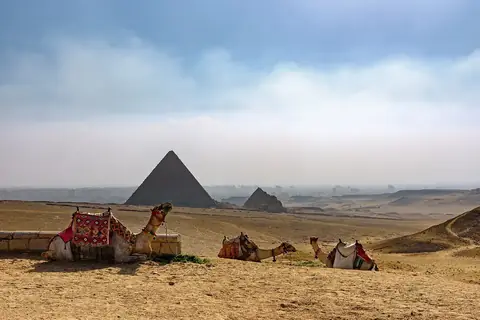
The Pyramids of Giza
Two days at Giza: plateau and inner-pyramid tickets, the Grand Egyptian Museum with timed entry, Saqqara and Dahshur, and sleeping by the Pyramids or in Cairo.
Read the guide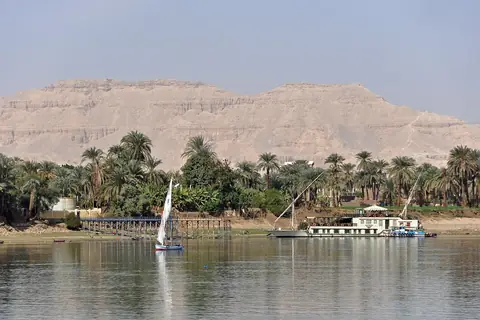
Where to stay in Egypt
Which area of Cairo, Giza, Luxor, Aswan, Hurghada and Alexandria to sleep in, how many nights each needs, and three hotels in each with their rates.
Read the guide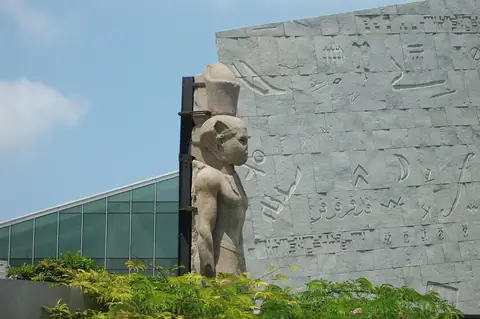
Alexandria
Alexandria as a day trip from Cairo or with one night: the catacombs, Pompey's Pillar, Qaitbay, the Bibliotheca Alexandrina, tickets, hours and trains.
Read the guide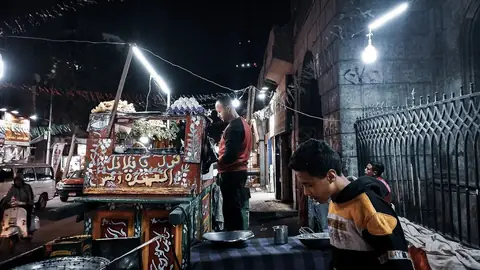
Egyptian food
Where to eat koshari, ful and ta’ameya in Cairo, molokhiya, mahshi and feteer, fish and liver in Alexandria and hibiscus tea in Aswan, and what a street-food day costs.
Read the guide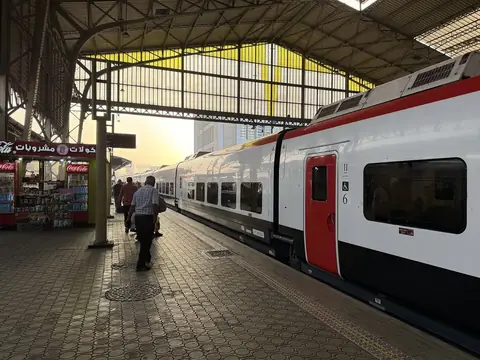
Transport in Egypt
How to travel Egypt: the sleeper train from Giza to Luxor and Aswan, day trains, domestic flights, buses, ride-hailing cars and the Cairo Metro, with journey times.
Read the guide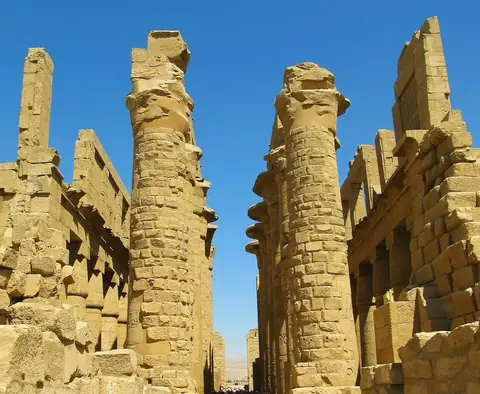
Luxor
How many nights Luxor needs: Karnak and Luxor Temple, the Valley of the Kings and its special tomb tickets, Hatshepsut, balloons at dawn and the sleeper train.
Read the guideSources and checks before you travel
(40)
- Ministry of Tourism and Antiquities: Al-Mu'izz Street ↗ — opens in a new tab
- Ministry of Tourism and Antiquities: Qalawun complex ↗ — opens in a new tab
- Ministry of Tourism and Antiquities: Bayt al-Suhaymi ↗ — opens in a new tab
- Ministry of Tourism and Antiquities: Sultan al-Ghuri complex ↗ — opens in a new tab
- Ministry of Tourism and Antiquities: Bab Zuwayla ↗ — opens in a new tab
- Ministry of Tourism and Antiquities: Cairo Citadel ↗ — opens in a new tab
- Ministry of Tourism and Antiquities: Sultan Hasan ↗ — opens in a new tab
- Ministry of Tourism and Antiquities: Ahmad Ibn Tulun Mosque ↗ — opens in a new tab
- Ministry of Tourism and Antiquities: Gayer-Anderson Museum ↗ — opens in a new tab
- Ministry of Tourism and Antiquities: Al-Fustat (Old Cairo) ↗ — opens in a new tab
- Ministry of Tourism and Antiquities: The Hanging Church ↗ — opens in a new tab
- Ministry of Tourism and Antiquities: The Coptic Museum ↗ — opens in a new tab
- Ministry of Tourism and Antiquities: Ben Ezra Synagogue ↗ — opens in a new tab
- Ministry of Tourism and Antiquities: Mosque of 'Amr ibn al-'As ↗ — opens in a new tab
- Ministry of Tourism and Antiquities: NMEC ↗ — opens in a new tab
- NMEC: home page ↗ — opens in a new tab
- Ministry of Tourism and Antiquities: The Egyptian Museum ↗ — opens in a new tab
- Al-Monitor: Beyond King Tut, Cairo's Egyptian Museum looks to reinvent itself (August 2026) ↗ — opens in a new tab
- Ministry of Tourism and Antiquities: Museum of Islamic Art ↗ — opens in a new tab
- Experience Egypt (Ministry of Tourism and Antiquities): Cairo and Giza ↗ — opens in a new tab
- Experience Egypt (Ministry of Tourism and Antiquities): Culture ↗ — opens in a new tab
- Aga Khan Development Network: Al-Azhar Park media advisory (February 2005) ↗ — opens in a new tab
- Cairo Metro: Sadat station ↗ — opens in a new tab
- Cairo Metro: Mar Girgis station ↗ — opens in a new tab
- Cairo Metro: Al Shohadaa station ↗ — opens in a new tab
- Egyptian Streets: Egypt raises train and metro ticket prices (27 March 2026) ↗ — opens in a new tab
- UK FCDO: Egypt safety and security ↗ — opens in a new tab
- NPR: Taamiya, Egypt's fava bean duo (30 August 2026) ↗ — opens in a new tab
- Egyptian Streets: How a cart in Downtown Cairo became the ultimate koshari spot ↗ — opens in a new tab
- Cairo Metro: ticket prices ↗ — opens in a new tab
- Cairo Metro: subscription zones ↗ — opens in a new tab
- Cairo Metro: line 1 ↗ — opens in a new tab
- Cairo Governorate: first Talgo train from Cairo to Alexandria ↗ — opens in a new tab
- Egymonuments (Ministry of Tourism and Antiquities ticket platform): FAQ ↗ — opens in a new tab
- Ministry of Tourism and Antiquities: Historical Cairo ↗ — opens in a new tab
- Egypt Telegraph: Koshari after the UNESCO listing, with restaurant prices (10 December 2025) ↗ — opens in a new tab
- Uber: rides from Cairo International Airport (CAI) ↗ — opens in a new tab
- Careem Egypt: rides ↗ — opens in a new tab
- Experience Egypt (Egyptian Tourism Authority): useful information ↗ — opens in a new tab
- NMEC: plan your visit (opening hours) ↗ — opens in a new tab
Reference sources for the version dated 29 November 2026. Confirm opening times, access, transport and conditions for your travel dates.
Photo credits
(9)
The Mosque-Madrasa of Sultan Hassan on Salah al-Din Square, below the Citadel
Photograph: Mohammed Moussa — opens in a new tab · CC BY-SA 3.0 — opens in a new tab
Changes: Resized and converted to WebP; displayed with responsive crops. · Original photograph and licence details ↗ — opens in a new tab
Al-Muizz Street: the Madrasa of al-Nasir Muhammad and the Qalawun complex beyond
Photograph: Radosław Botev — opens in a new tab · CC BY 3.0 pl — opens in a new tab
Changes: Resized and converted to WebP; displayed with responsive crops. · Original photograph and licence details ↗ — opens in a new tab
A covered lane of Khan el-Khalili, hung with lanterns and brassware
Photograph: V Manninen from Funland — opens in a new tab · CC BY 2.0 — opens in a new tab
Changes: Resized and converted to WebP; displayed with responsive crops. · Original photograph and licence details ↗ — opens in a new tab
The Egyptian Museum on Tahrir Square, opened in 1902
Photograph: Diego Delso — opens in a new tab · CC BY-SA 3.0 — opens in a new tab
Changes: Resized and converted to WebP; displayed with responsive crops. · Original photograph and licence details ↗ — opens in a new tab
The Hanging Church in Coptic Cairo, reached by a stair from the lane
Photograph: Radosław Botev — opens in a new tab · CC BY 3.0 pl — opens in a new tab
Changes: Resized and converted to WebP; displayed with responsive crops. · Original photograph and licence details ↗ — opens in a new tab
Jewellery in the main gallery of the National Museum of Egyptian Civilization in Fustat
Photograph: Rowyda elshaer — opens in a new tab · CC BY-SA 4.0 — opens in a new tab
Changes: Resized and converted to WebP; displayed with responsive crops. · Original photograph and licence details ↗ — opens in a new tab
The courtyard of the Mosque of Ibn Tulun, with its fountain and spiral minaret
Photograph: Berthold Werner — opens in a new tab · CC BY 3.0 — opens in a new tab
Changes: Resized and converted to WebP; displayed with responsive crops. · Original photograph and licence details ↗ — opens in a new tab
The Mosque of Muhammad Ali on the Citadel
Photograph: kallerna — opens in a new tab · CC BY-SA 3.0 — opens in a new tab
Changes: Resized and converted to WebP; displayed with responsive crops. · Original photograph and licence details ↗ — opens in a new tab
A street in Old Cairo with closed shops painted blue and men sitting outside a café
Photo: Yuki Ikemori