Alexandria: a day or a night for Qaitbay, the catacombs and the library
Alexandria was Alexander the Great's city and the capital of the Ptolemies, and almost nothing of that city is left above ground: the lighthouse and the ancient library are gone, and the royal harbour lies under the sea. What you see instead is Roman and later. A Roman catacomb mixes Egyptian gods with Greek art, one giant column stands over the ruins of the Serapeum, a small marble theatre sits in the middle of town, and a Mamluk fort stands on the site of the lighthouse. Add the Bibliotheca Alexandrina, the museums and a long seafront Corniche, and the question is whether a day from Cairo is enough or a night is worth it.
In this guide
Find the location ↗ — opens in a new tabThe short answer
Book one night by Raml Station and Saad Zaghloul Square on the Corniche, or come for a long day from Cairo by train: the Talgo leaves Ramses Station at 08:00 and reaches Alexandria at 10:30, and Seat61 lists foreigner fares of USD 50 in first class and USD 40 in second. A day covers the Catacombs of Kom el-Shoqafa, Pompey's Pillar, the Citadel of Qaitbay and the Bibliotheca Alexandrina; the night adds Kom el-Dikka, the Graeco-Roman Museum and a fish dinner in Bahari. Qaitbay costs a foreign adult EGP 200 and the library's Main Library ticket EGP 150. The library is closed on Fridays and closes at 14:00 on Saturdays, so plan a day trip from Sunday to Thursday.
- Suggested time
- A long day trip from Cairo, or one night
- Where to stay
- Raml Station and Saad Zaghloul Square on the Corniche
- Season and timing
- April to October is nearly dry, with under 8 mm of rain a month; most of the rain falls from November to February, and January is the wettest month (52.9 mm on average).
A long day from Cairo, or one night by the sea
Alexander the Great founded the city in 331 BC, and under Ptolemy I and his successors it became the seat of Egypt's rulers and the largest city of the eastern Mediterranean until Constantinople rose in the fifth century AD. Earthquakes in late antiquity and the Middle Ages took most of it. What remains is scattered across a long, crowded city: the catacombs and Pompey's Pillar close together, Kom el-Dikka and the museums in the centre, and Qaitbay and the library by the sea.
As a day trip, take the 08:00 Talgo from Cairo and see four places: the catacombs and Pompey's Pillar together in the morning, Qaitbay on the seafront, then the Bibliotheca Alexandrina, whose visitor tours and museums close at 17:00. Come from Sunday to Thursday, when the library keeps its full hours. With one night, add Kom el-Dikka and the Graeco-Roman Museum the next morning, walk the Corniche at dusk and eat fish in Bahari, the old Turkish town by the sea.
Sleep around Raml Station and Saad Zaghloul Square, on the Corniche in the centre, with old cafés and pastry shops around the square and the library a short ride away. Our where-to-stay guide names hotels there with their rates.
The Roman city: Kom el-Shoqafa, Pompey's Pillar and Kom el-Dikka
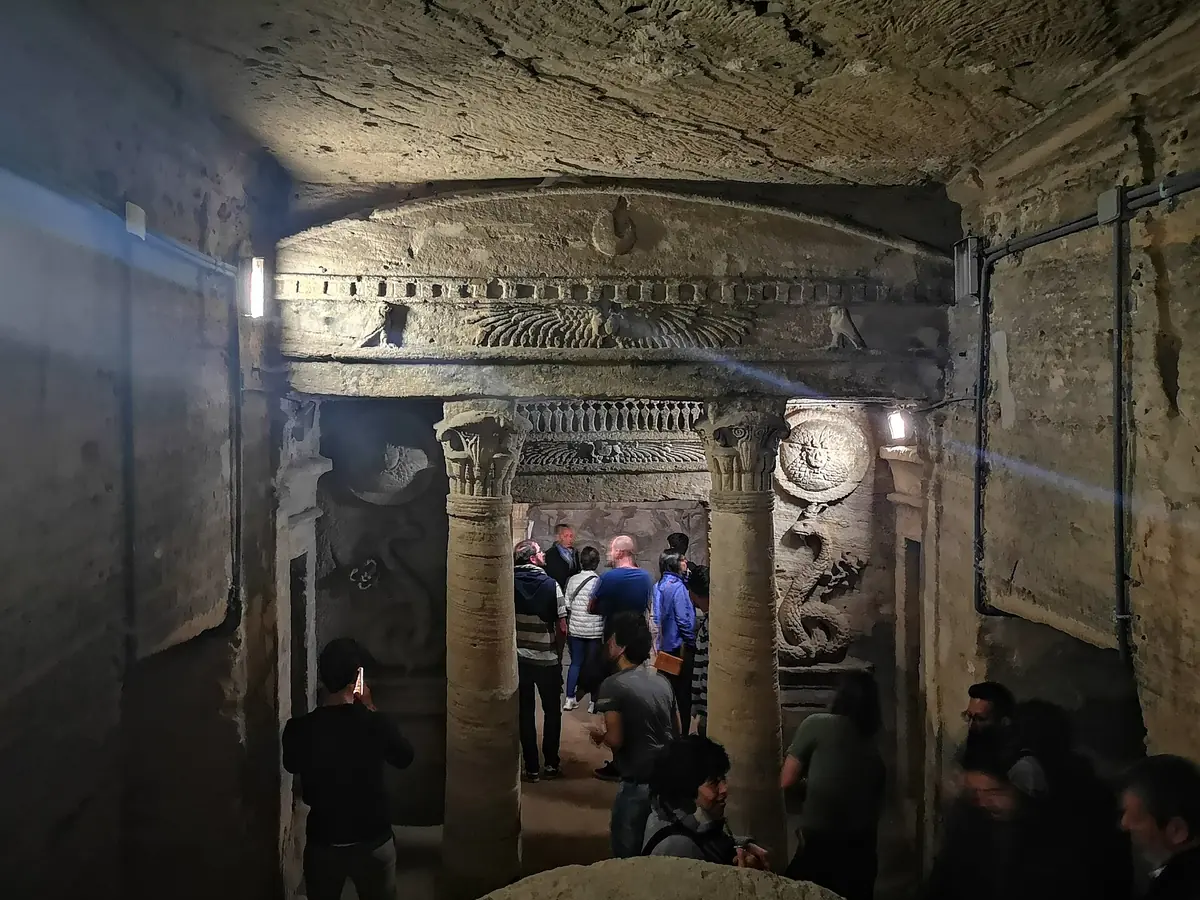
The Catacombs of Kom el-Shoqafa are the best known of the city's ancient cemeteries, which are most of what survives of ancient Alexandria. The Roman-era tomb complex holds Greek-style catacombs and burial couches, a chapel and a banqueting hall where families ate during funerals. Its paintings and reliefs set Egyptian gods and beliefs beside Greek ones in the same carved scenes. This mix of the two traditions is the reason to come.
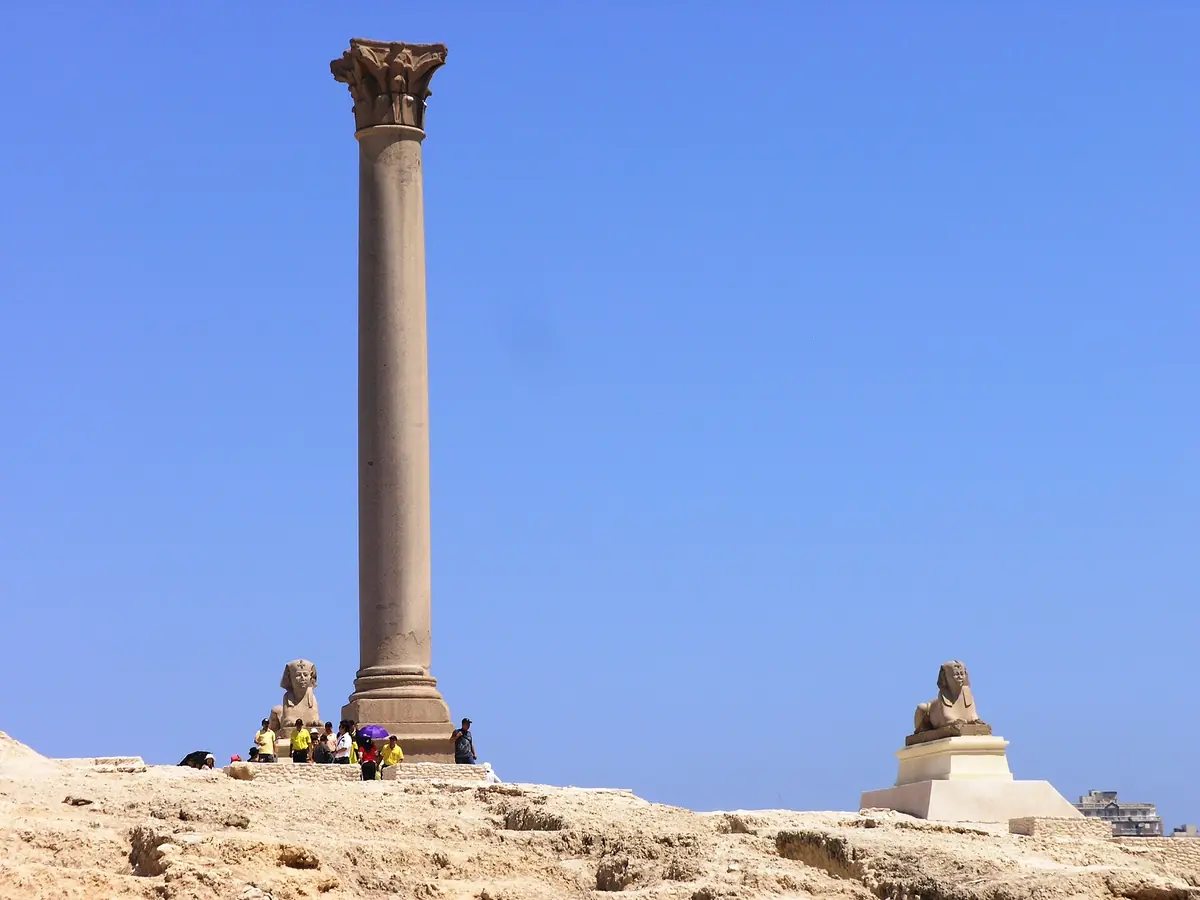
Pompey's Pillar is a short walk away on the hill of the Serapeum. The tall column was put up for the emperor Diocletian in the late 290s AD and has nothing to do with Pompey. Around it lie the remains of the Serapeum, the main temple of Serapis, Egypt's national god in that period. The temple was destroyed after the emperor Theodosius outlawed pagan worship in 391 AD.
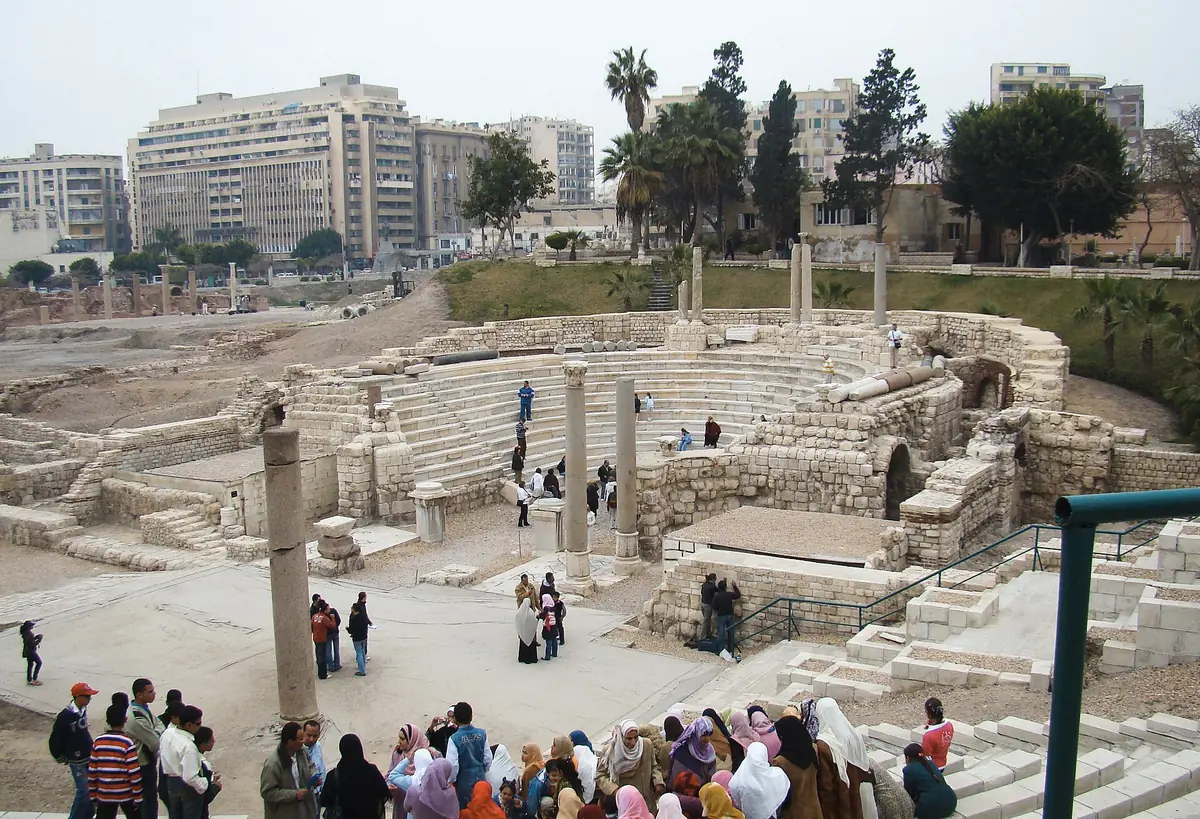
Kom el-Dikka, in the centre of the modern city, is the remains of a prestigious residential and civic quarter of the Roman and Byzantine periods, from the 2nd to the 6th century AD. Its centrepiece is a small theatre, an odeon with tiered marble seats, the only one of its kind in Egypt. Around it are the Villa of the Birds, with floor mosaics of birds and geometric patterns, Roman baths heated from under the floor, a row of lecture halls that may have belonged to a school, and sculptures raised from the sunken ruins of the ancient city.
The harbour: Qaitbay, the library and the museums
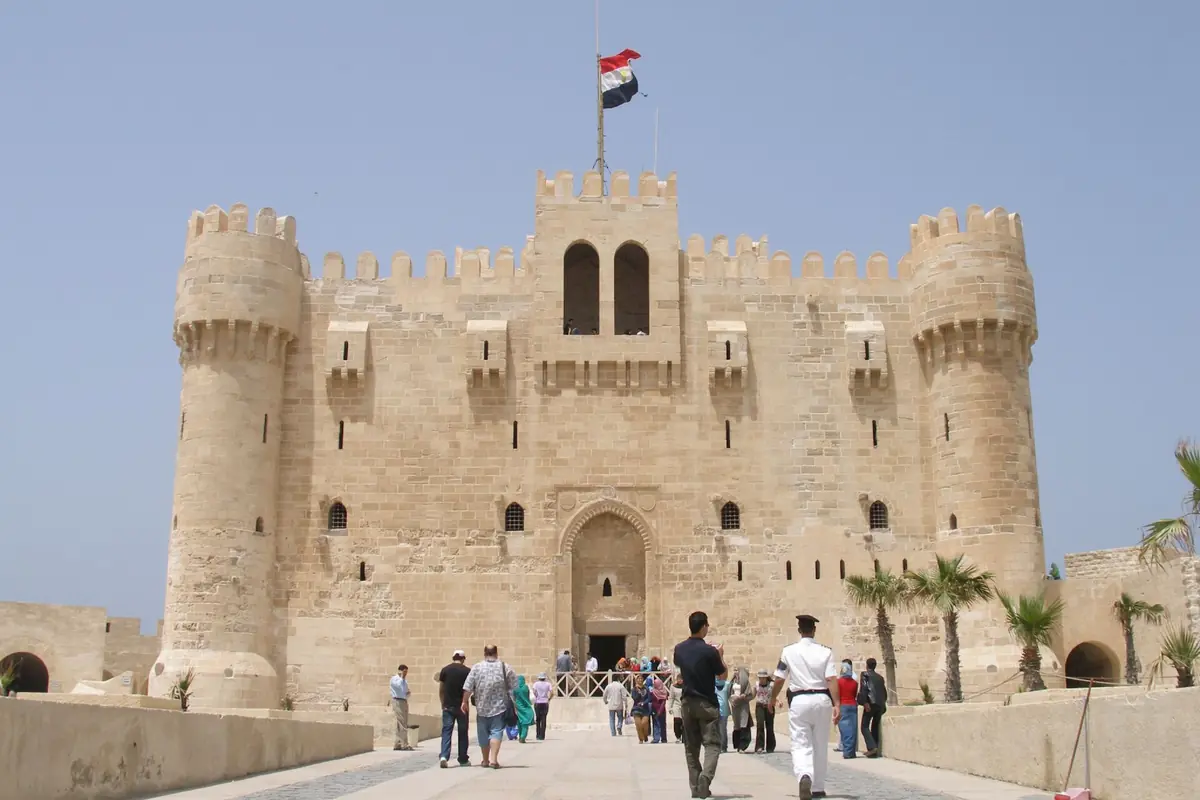
The Citadel of Qaitbay is the landmark of the seafront. The Mamluk sultan al-Ashraf Qaitbay built it between 1477 and 1479 on the ruins of the ancient lighthouse, as the city's defence against attack from the sea. An outer wall with towers encloses about 17,550 square metres; inside, a courtyard leads to the keep, a massive three-storey square tower with half-round towers at its corners.
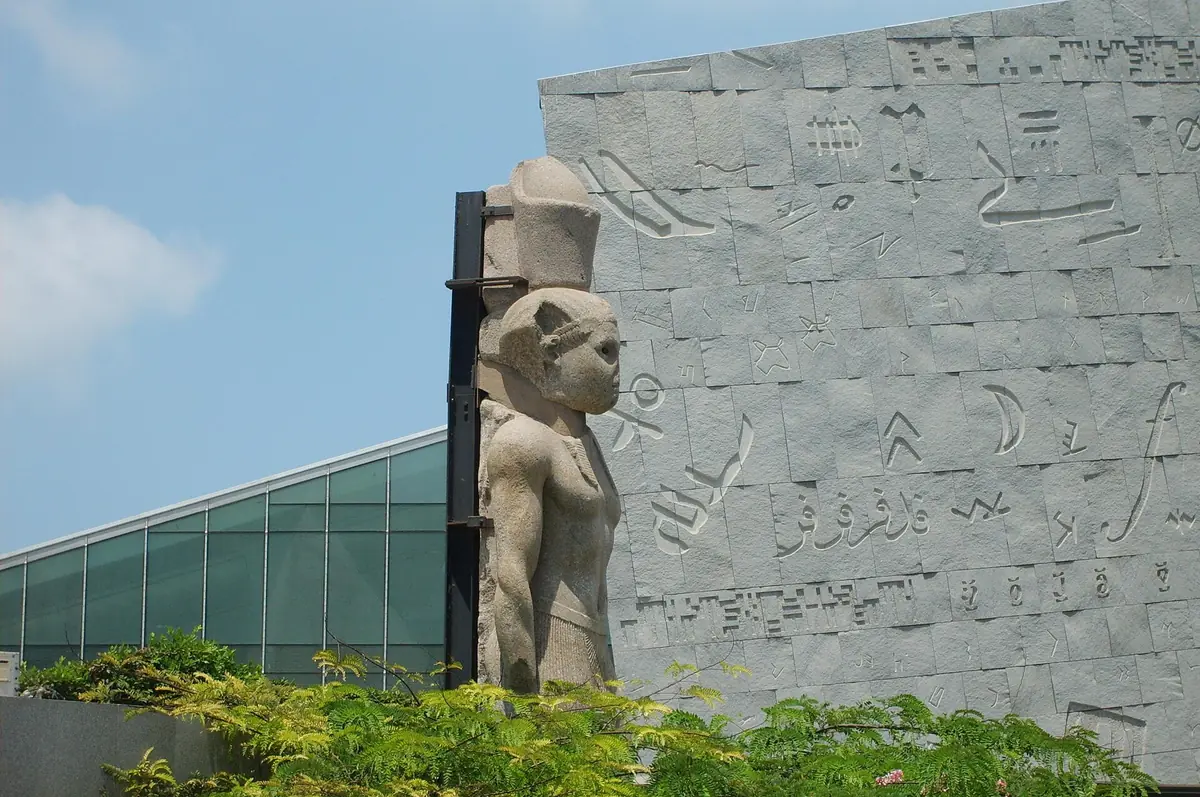
The Bibliotheca Alexandrina, the new Library of Alexandria, stands by the sea at Chatby, built to revive the spirit of the ancient library. The Main Library ticket includes a guided tour of about 30 minutes in Arabic, English or French, the permanent exhibitions, the Sadat Museum and the Culturama show. Book the tour and the Culturama show at the visits desk or online. The Antiquities Museum in the basement and the Manuscripts Museum have their own tickets, and the inclusive ticket covers both. The planetarium needs a separate ticket. Photography is allowed in most of the building but not in a few named art exhibitions, and food and drinks stay outside.
The Graeco-Roman Museum was founded in 1892 and moved in 1895 into a neoclassical building made for it, the first building in Egypt designed to display antiquities. It is still the only museum devoted to Egypt under the Greeks and Romans, and its long renovation added an upper floor and redesigned interiors. The Alexandria National Museum, in the Italianate palace of Asaad Basili Pasha, runs from prehistory to the modern era, with finds raised from Abu Qir Bay, coins, Islamic-era weapons and jewellery of the family of Muhammad Ali. The Royal Jewelry Museum, in a 1919 palace in Zizinya, shows that family's treasures, among them Muhammad Ali's diamond and emerald collar and a gold chessboard.
Tickets and opening hours
Each antiquities site and museum has its own ticket, and at the ministry's sites foreign students pay half. The table gives the foreign-visitor prices.
| Site | Foreign adult | Foreign student | Open |
|---|---|---|---|
| Catacombs of Kom el-Shoqafa | EGP 200 | EGP 100 | 09:00–17:00 |
| Pompey's Pillar | EGP 200 | EGP 100 | 09:00–17:00 |
| Kom el-Dikka | EGP 200 | EGP 100 | 09:00–17:00 daily |
| Citadel of Qaitbay | EGP 200 | EGP 100 | 09:00–18:00 daily |
| Graeco-Roman Museum | EGP 400 | EGP 200 | 09:00–17:00, Fridays and Saturdays to 20:00 |
| Alexandria National Museum | EGP 220 | EGP 110 | 09:00–17:00 daily |
| Royal Jewelry Museum | EGP 220 | EGP 110 | 09:00–17:00 daily |
| Bibliotheca Alexandrina, Main Library | EGP 150 | EGP 20 | Sunday–Thursday, Saturday mornings |
Ticket windows close before the gates. At the Graeco-Roman Museum they close at 16:30 from Sunday to Thursday and at 19:00 on its late-opening days; at the National Museum and the Royal Jewelry Museum they close at 16:00. In Ramadan the Graeco-Roman Museum opens from 09:00 to 16:00, with the last tickets at 15:00. The National Museum and the Royal Jewelry Museum then open from 09:00 to 15:00, with the last tickets at 14:00; our festivals guide has the Ramadan dates.
At the Bibliotheca Alexandrina, the reading area opens from Sunday to Thursday, 10:00–19:00, and the tours, museums and planetarium from 09:30 to 17:00; on Saturdays the library opens from 10:00 to 14:00, and on Fridays it is closed. Buy tickets at the office on Port Said Street, open Sunday to Thursday 09:30–18:30 and Saturday 09:45–13:45. The inclusive ticket, EGP 300 for a foreign adult and EGP 120 for a foreign student, adds the Antiquities and Manuscripts Museums to the Main Library. Bought on its own, the Antiquities Museum costs EGP 100 and the Manuscripts Museum EGP 60. Children under 4 are not admitted, and under-16s may enter only the Callimachus area, not the main reading area.
Prices and times checked 28 November 2026
Trains from Cairo, stations and getting around
Trains for Alexandria leave from Ramses Station in central Cairo (Al Shohadaa metro, as our Cairo guide explains). The express trains, the Spanish-built Talgo among them, stop at Sidi Gaber and end at Misr Station, in the old centre by the Attarine quarter. Misr Station is the closer of the two to the catacombs, Pompey's Pillar and Kom el-Dikka.
Egyptian National Railways' site, enr.gov.eg, and its app show timetables and free seats but sell tickets only at Egyptian fares, so foreigners buy at the station ticket office, where seats can be reserved up to seven days ahead. Return tickets are not always on sale at the station where your journey starts. For a day trip, plan around the Talgo: on Seat61's copy of the national railway timetable, Talgo 2025 leaves Ramses at 08:00 and reaches Alexandria at 10:30, and Talgo 2026 leaves Alexandria at 18:50 and reaches Ramses at 21:20. VIP express trains run through the day too, for example 09:00 to 11:30 out and 15:00 to 17:30 back. Seat61, an independent rail guide, lists early-2026 foreigner fares, one way, of USD 50 in first class or USD 40 in second on the Talgo, and USD 40 or USD 35 on the VIP and express trains. Our transport guide compares the train classes and the other ways around Egypt.
In Alexandria the sights are too far apart to walk between groups: take a taxi or a ride-hailing car from the station to the catacombs, walk to Pompey's Pillar, then ride to Qaitbay and on along the Corniche to the library. Ride-hailing apps are widely used in Alexandria: Careem shows the fare in the app before you confirm, and on inDrive you offer your own fare. If a street taxi has no meter running, agree the fare before you get in. Raml Station, Kom el-Dikka and the Graeco-Roman Museum are close enough to walk between on the second morning. Flights from abroad land at Cairo, or at Borg El Arab, Alexandria's own airport.
What the sightseeing costs
About EGP 750 for a foreign adult on a day trip, EGP 1,500 for two, for the four main sights: the catacombs, Pompey's Pillar and Qaitbay at EGP 200 each, and the Main Library at EGP 150.
With a night, add Kom el-Dikka (EGP 200) and the Graeco-Roman Museum (EGP 400), for EGP 1,350 a person. With the library's inclusive ticket instead of the Main Library one, which adds its Antiquities and Manuscripts Museums, the total is EGP 1,500. The train comes on top: USD 100 per person return on the Talgo in first class, or USD 70 in second class on a VIP express. So do the rides between the sights, about four on a day trip: check each fare in the app before you confirm. Our Egyptian food guide has more on the city's ful, liver and fish.
Prices and times checked 28 November 2026
What to eat and where to look
Ful Iskandarani
Alexandria's version of slow-cooked fava beans, with diced tomato, onion, parsley, green pepper and garlic under olive oil, eaten with falafel and bread.
- Where to look
- Mohamed Ahmed, 17 Shakour Street off Raml Station, a ful shop on this site since 1932.
- Fit it into your day
- Breakfast on the morning after your night, before Kom el-Dikka.
Kebda Iskandarani
Beef liver cut into small slices and fried with thyme, cumin, chilli and green pepper, finished with lemon and served in bread; hot and spicy.
- Where to look
- Awlad el Fallah, which started from a cart in Attarine in the 1920s and has branches in Bahari and at Raml Station.
- Fit it into your day
- A quick lunch between the catacombs and Qaitbay.
Fish from the ice
In Alexandria's fish restaurants the fish, crabs, shrimps and squid lie in boxes of crushed ice; you point at what you want and it comes back cooked.
- Where to look
- Qadura in Bahari, opened by a fisherman in 1950.
- Fit it into your day
- Dinner on the night you stay.
Grilled or stuffed pigeon
Pigeon, either grilled or stuffed with rice, is the treat on the menu of Alexandria's grill houses, alongside chicken, kofta and kebab.
- Where to look
- Ba'ash, a family grill in the heart of Bahari since 1950.
- Fit it into your day
- Lunch on the second day, or dinner instead of fish.
Délices pastries and chocolate dates
Greek-Alexandrian pastries such as mille-feuille, baba and profiteroles, and dates dipped in chocolate, from a tea room that has stood on the Corniche since the early 20th century.
- Where to look
- Délices at Raml Station, on the Corniche.
- Fit it into your day
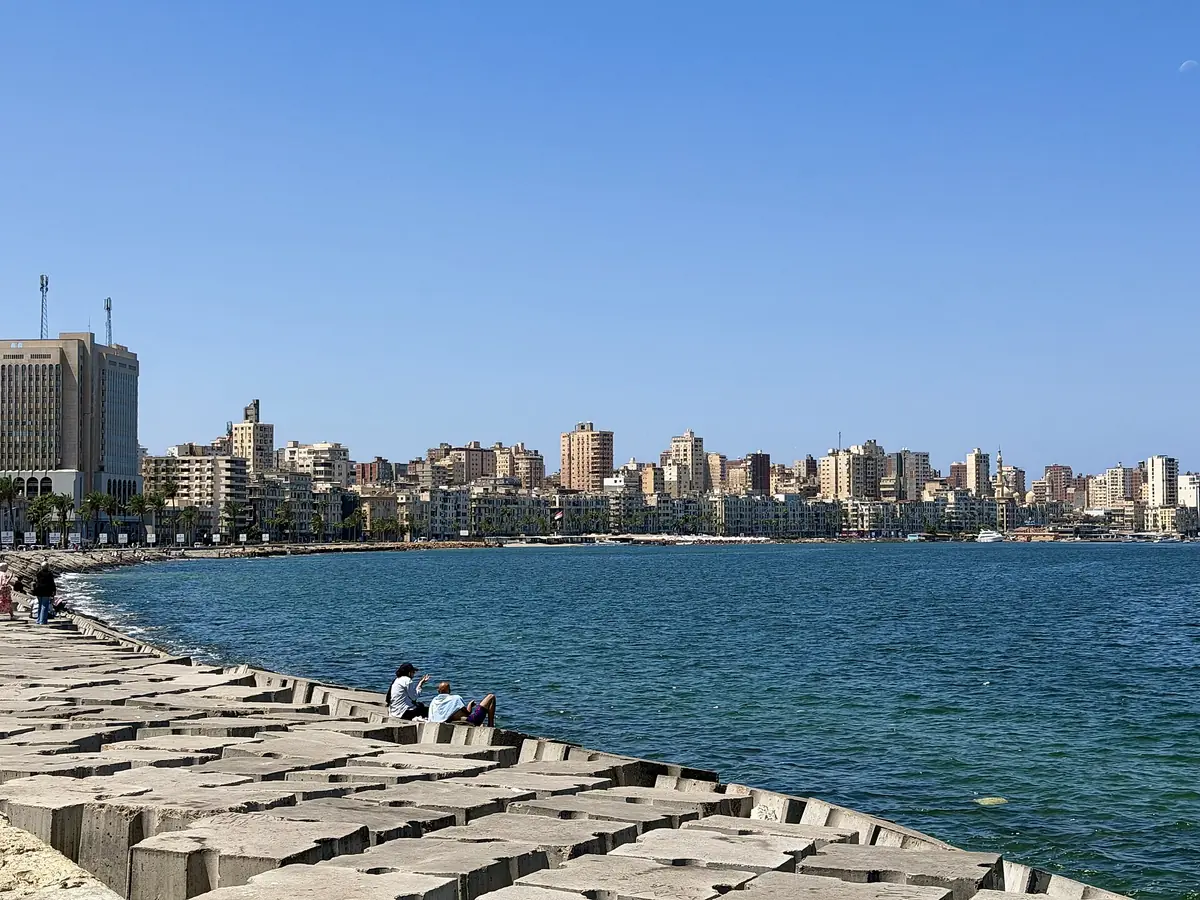
- Coffee and cake on the evening walk along the Corniche.
Practical questions
Is Alexandria worth a day trip from Cairo?
Yes, if you start early: a day covers the Catacombs of Kom el-Shoqafa, Pompey's Pillar, the Citadel of Qaitbay and the Bibliotheca Alexandrina. Stay one night to add Kom el-Dikka, the Graeco-Roman Museum and a fish dinner in Bahari.
Is the Bibliotheca Alexandrina open on Fridays?
No. It is closed on Fridays and opens only from 10:00 to 14:00 on Saturdays; from Sunday to Thursday the tours and museums run from 09:30 to 17:00.
How much are the tickets for foreign visitors?
The Catacombs of Kom el-Shoqafa, Pompey's Pillar, Kom el-Dikka and Qaitbay cost EGP 200 each for a foreign adult, the Graeco-Roman Museum EGP 400 and the library's Main Library ticket EGP 150. Foreign students pay half at the antiquities sites.
Which station should I use in Alexandria?
Misr Station, the end of the line in the old centre, is the closer one for the catacombs, Pompey's Pillar and Kom el-Dikka. Express trains also stop at Sidi Gaber before it.
When does it rain in Alexandria?
Between November and February; January is the wettest month, with about 53 mm over 11 days. From April to October it is almost dry.
Keep planning your trip
Cairo
Three nights in Cairo: Al-Muizz Street and Khan el-Khalili, the Citadel, Coptic Cairo, the Egyptian Museum and the royal mummies at NMEC, where to sleep and costs.
Read the guide
The Pyramids of Giza
Two days at Giza: plateau and inner-pyramid tickets, the Grand Egyptian Museum with timed entry, Saqqara and Dahshur, and sleeping by the Pyramids or in Cairo.
Read the guide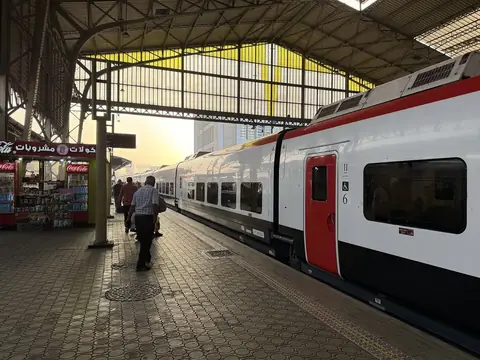
Transport in Egypt
How to travel Egypt: the sleeper train from Giza to Luxor and Aswan, day trains, domestic flights, buses, ride-hailing cars and the Cairo Metro, with journey times.
Read the guide
Where to stay in Egypt
Which area of Cairo, Giza, Luxor, Aswan, Hurghada and Alexandria to sleep in, how many nights each needs, and three hotels in each with their rates.
Read the guide
Egyptian food
Where to eat koshari, ful and ta’ameya in Cairo, molokhiya, mahshi and feteer, fish and liver in Alexandria and hibiscus tea in Aswan, and what a street-food day costs.
Read the guide
Best time to visit Egypt
When to go to Egypt: cool months for Luxor and Aswan, 41°C summers in the south, Alexandria's winter rain, Ramadan 2027 and Red Sea water by month.
Read the guideSources and checks before you travel
(27)
- Ministry of Tourism and Antiquities: Alexandria ↗ — opens in a new tab
- Ministry of Tourism and Antiquities: Qaitbay Fort ↗ — opens in a new tab
- Ministry of Tourism and Antiquities: Kom el-Dikka ↗ — opens in a new tab
- Ministry of Tourism and Antiquities: Graeco-Roman Museum ↗ — opens in a new tab
- Ministry of Tourism and Antiquities: Alexandria National Museum ↗ — opens in a new tab
- Ministry of Tourism and Antiquities: Royal Jewelry Museum ↗ — opens in a new tab
- Ministry of Tourism and Antiquities: ticket prices (5 November 2024) ↗ — opens in a new tab
- Bibliotheca Alexandrina: working hours ↗ — opens in a new tab
- Bibliotheca Alexandrina: admission fees ↗ — opens in a new tab
- Bibliotheca Alexandrina: general guidelines ↗ — opens in a new tab
- Bibliotheca Alexandrina: FAQ ↗ — opens in a new tab
- Bibliotheca Alexandrina, Antiquities Museum: admission ↗ — opens in a new tab
- Cairo Governorate: first Talgo train from Cairo to Alexandria ↗ — opens in a new tab
- Egyptian National Railways: online ticketing ↗ — opens in a new tab
- WMO World Weather Information Service: Alexandria ↗ — opens in a new tab
- Egyptian Tourism Authority, Experience Egypt: useful information ↗ — opens in a new tab
- France, Ministry for Europe and Foreign Affairs: Egypt, useful information ↗ — opens in a new tab
- Bibliotheca Alexandrina, AlexMed: Benjamin/Mohamed Ahmed ↗ — opens in a new tab
- Bibliotheca Alexandrina, AlexMed: Awlad el Fallah ↗ — opens in a new tab
- Bibliotheca Alexandrina, AlexMed: Seesa ↗ — opens in a new tab
- Bibliotheca Alexandrina, AlexMed: Fish restaurants ↗ — opens in a new tab
- Bibliotheca Alexandrina, AlexMed: Ba'ash and Hosni ↗ — opens in a new tab
- Bibliotheca Alexandrina, AlexMed: Délices ↗ — opens in a new tab
- Bibliotheca Alexandrina, AlexMed: El Biyassa ↗ — opens in a new tab
- Seat61 (independent rail guide): train travel in Egypt ↗ — opens in a new tab
- inDrive: home page ↗ — opens in a new tab
- Careem Egypt: rides ↗ — opens in a new tab
Reference sources for the version dated 28 November 2026. Confirm opening times, access, transport and conditions for your travel dates.
Photo credits
(6)
The Citadel of Qaitbay, built in the 1470s on the site of the ancient lighthouse
Photograph: Argenberg — opens in a new tab · CC BY 2.0 — opens in a new tab
Changes: Resized and converted to WebP; displayed with responsive crops. · Original photograph and licence details ↗ — opens in a new tab
The carved granite wall of the Bibliotheca Alexandrina, the city's modern library
Photograph: Ahmed Sherif — opens in a new tab · CC BY-SA 4.0 — opens in a new tab
Changes: Resized and converted to WebP; displayed with responsive crops. · Original photograph and licence details ↗ — opens in a new tab
The main tomb in the Catacombs of Kom el-Shoqafa, carved from the rock in the Roman period
Photograph: Following Hadrian — opens in a new tab · CC BY-SA 2.0 — opens in a new tab
Changes: Resized and converted to WebP; displayed with responsive crops. · Original photograph and licence details ↗ — opens in a new tab
Pompey's Pillar on the Serapeum hill, flanked by two sphinxes
Photograph: Daniel Mayer — opens in a new tab · CC BY-SA 4.0 — opens in a new tab
Changes: Resized and converted to WebP; displayed with responsive crops. · Original photograph and licence details ↗ — opens in a new tab
The Roman theatre at Kom el-Dikka in central Alexandria
Photograph: isawnyu — opens in a new tab · CC BY 2.0 — opens in a new tab
Changes: Resized and converted to WebP; displayed with responsive crops. · Original photograph and licence details ↗ — opens in a new tab
The Corniche sea wall, looking west along the bay
Photograph: Slyronit — opens in a new tab · CC BY-SA 4.0 — opens in a new tab
Changes: Resized and converted to WebP; displayed with responsive crops. · Original photograph and licence details ↗ — opens in a new tab