Giza
Pyramids of Giza: tickets, the Grand Egyptian Museum, Saqqara
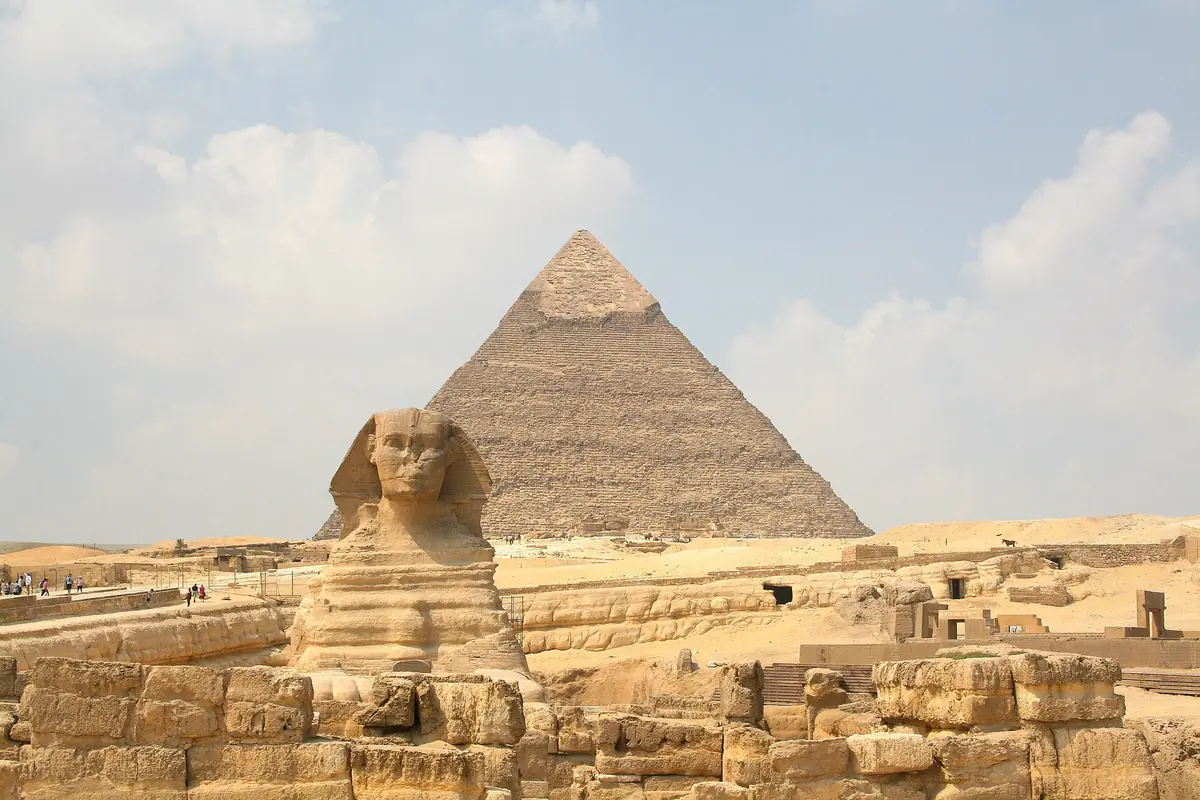
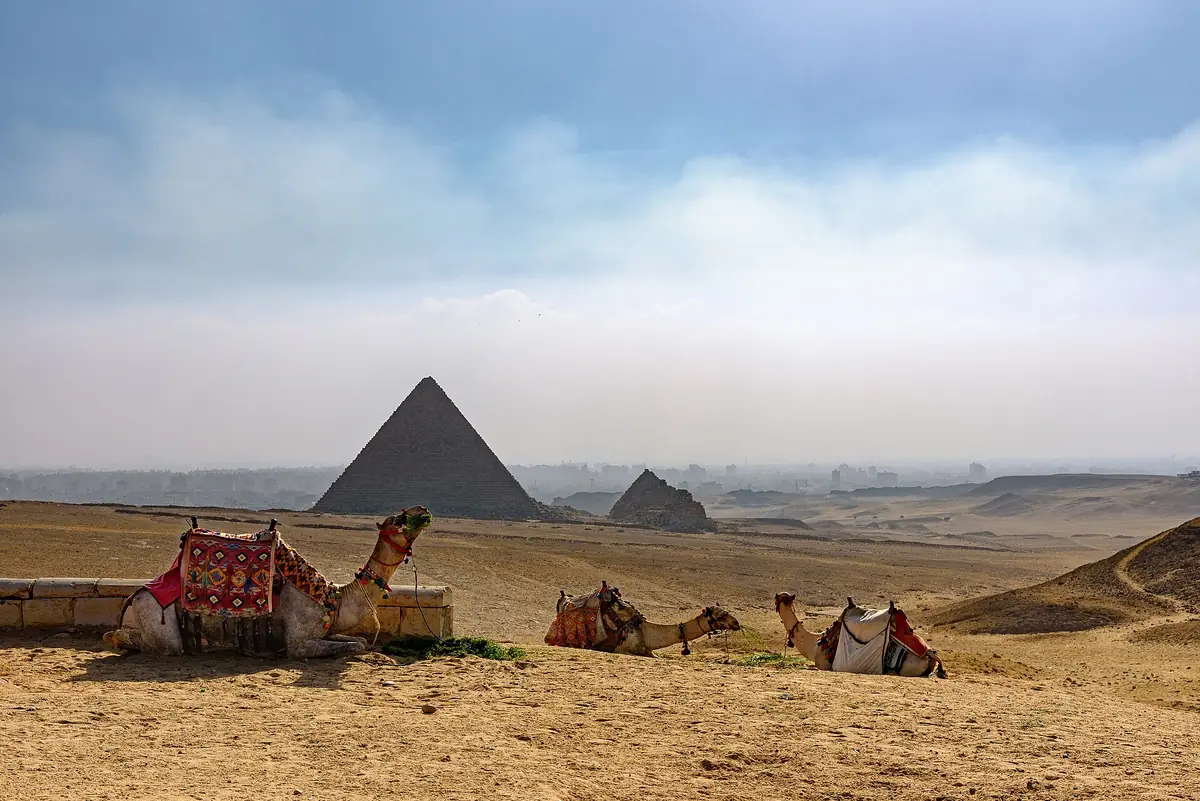
The three pyramids of Giza stand on a desert plateau at the western edge of greater Cairo, built for the kings Khufu, Khafre and Menkaure of the 4th Dynasty, with the Great Sphinx carved from the bedrock below them. A short drive away, the Grand Egyptian Museum shows Tutankhamun's treasures and Khufu's boat, and further south Saqqara and Dahshur hold the older pyramids that led up to Giza: Djoser's step pyramid, and Sneferu's Bent and Red Pyramids. Two days cover all of it without hurry: one for the plateau and the museum, one for Saqqara and Dahshur.
In this guide
Find the location ↗ — opens in a new tabThe short answer
Book two nights in Giza, close to the Pyramids, and buy the Grand Egyptian Museum ticket first on tickets.gem.eg, because entry is by timed slot and tickets cannot be refunded. Spend day one on the plateau from opening time (07:00 or 08:00 depending on the official source; check egymonuments.com the day before) with the museum in the afternoon, and day two at Saqqara and Dahshur with a driver or a guided day tour. Foreign adults pay EGP 700 for the Giza plateau and EGP 1,000 more to go inside the Great Pyramid; the Grand Egyptian Museum is EGP 1,830 for foreign adults. If you would rather stay among Cairo's cafés and the Nile, base yourself in central Cairo and treat Giza as two long day trips.
- Suggested time
- 2 nights at Giza
- Where to stay
- Giza, by the Pyramids (Nazlet El-Semman and Pyramids Road), or central Cairo for a longer stay
- Season and timing
- October to April is the comfortable season for the open plateau and the Saqqara and Dahshur desert sites; from May to September be at the gate when the plateau opens and spend the hot afternoon in the museum.
By the Pyramids or in central Cairo
Giza is part of greater Cairo, so the choice is between waking up beside the plateau and sleeping in the city centre with its restaurants, museums and Nile bridges. For two days given to the Pyramids, the Grand Egyptian Museum, Saqqara and Dahshur, sleep in Giza: the hotels of Nazlet El-Semman, the village below the Sphinx, and along Pyramids Road (Al Haram Street) are minutes from the plateau and the museum, and many rooms look out at the pyramids. The road south to Saqqara and Dahshur also starts on this side of the river.
Central Cairo (Downtown, Garden City and Zamalek) suits a longer stay that adds the Egyptian Museum in Tahrir Square, Islamic Cairo and Coptic Cairo; the drive out to Giza crosses the city and its traffic, so leave early. Our Cairo guide covers those days, and the Egypt where-to-stay guide compares the bases with hotels in each.
On a first trip, split the stay: two nights in Giza and two in central Cairo, in either order. That way you do not have to cross the city every day.
The plateau: three pyramids, the Sphinx and what you can enter
The Great Pyramid of Khufu (c. 2589–2566 BC) was 146.5 metres high when it was built and stayed the tallest structure on earth for 3,800 years; it is the last of the Seven Wonders of the Ancient World still standing. It is the only pyramid with chambers both in the bedrock and high in the masonry. Inside, the corbelled Grand Gallery, an ascending passage, climbs to the King's Chamber, where Khufu's sarcophagus still stands.
The Pyramid of Khafre, built for Khufu's son, stands next in line, with the Sphinx at the foot of its causeway. The Pyramid of Menkaure, built for Khufu's grandson, is by far the smallest at an original 65 metres, and the lower quarter of its casing was granite brought from Aswan, more than 800 km away. Each king's complex also had queens' pyramids, mastaba tombs of the nobility, boat pits and a pair of temples joined by a causeway.
The Great Sphinx, a lion with the king's head, was carved out of the bedrock during Khafre's reign, beside his valley temple and the foot of his causeway; between its paws stands the Dream Stela of Thutmose IV. You see it from beside Khafre's valley temple. The Sphinx enclosure itself opens only for private visits after official hours.
The plateau ticket does not include the interiors. Separate tickets open the Great Pyramid, the Tomb of Meresankh III, a queen's rock-cut tomb, and the Workers' Cemetery, where the builders were buried. The interiors of Khafre's and Menkaure's pyramids open in rotation, so which one, if either, is open on your day is decided at the site; ask at the ticket office. The passages are narrow, steep and hot, and the chambers are bare stone, so go inside one pyramid rather than several: the Great Pyramid for the Grand Gallery, or the smaller pyramid that is open that day for a cheaper, shorter climb down.
Prices and times checked 29 November 2026
Plateau tickets, hours and the new entrance
Foreign adults pay EGP 700 for the Giza plateau and students EGP 350; Egyptians pay EGP 60 and EGP 30. The plateau opens every day at 07:00 or 08:00, depending on the official source, and entry ends at 16:00; check the time on egymonuments.com the day before. Children under six enter the plateau free. Students need a valid student card and must be 24 or younger. Phone photography needs no permit.
| Ticket (foreign visitors) | Adult | Student |
|---|---|---|
| Giza plateau | EGP 700 | EGP 350 |
| Great Pyramid, inside | EGP 1,000 | EGP 500 |
| Pyramid of Khafre, inside (when open) | EGP 280 | EGP 140 |
| Pyramid of Menkaure, inside (when open) | EGP 280 | EGP 140 |
| Tomb of Meresankh III | EGP 200 | EGP 100 |
Each interior ticket also needs the plateau ticket. The Great Pyramid's passages close from 12:00 to 13:00, and the Workers' Cemetery (EGP 400) is sold only with a minimum of five tickets.
Buy online at egymonuments.com, the ministry's official ticket site, in the Experience Egypt app, or at the counters and self-service kiosks on site; Visa and Mastercard are accepted on every channel. Tickets are for one date and cannot be refunded or replaced if lost.
Since 2025 visitors enter through the visitor centre on the Cairo–Fayoum road, south of the pyramids, instead of the old gate by the Mena House hotel. Private cars and tour buses no longer drive across the plateau: electric buses run between the stops, and horse and camel rides are regulated. Ask at the visitor centre whether the bus is in your ticket. For a horse or camel ride, agree the full price, the currency and the route before you set off, and pay only at the end.
Prices and times checked 29 November 2026
The Grand Egyptian Museum
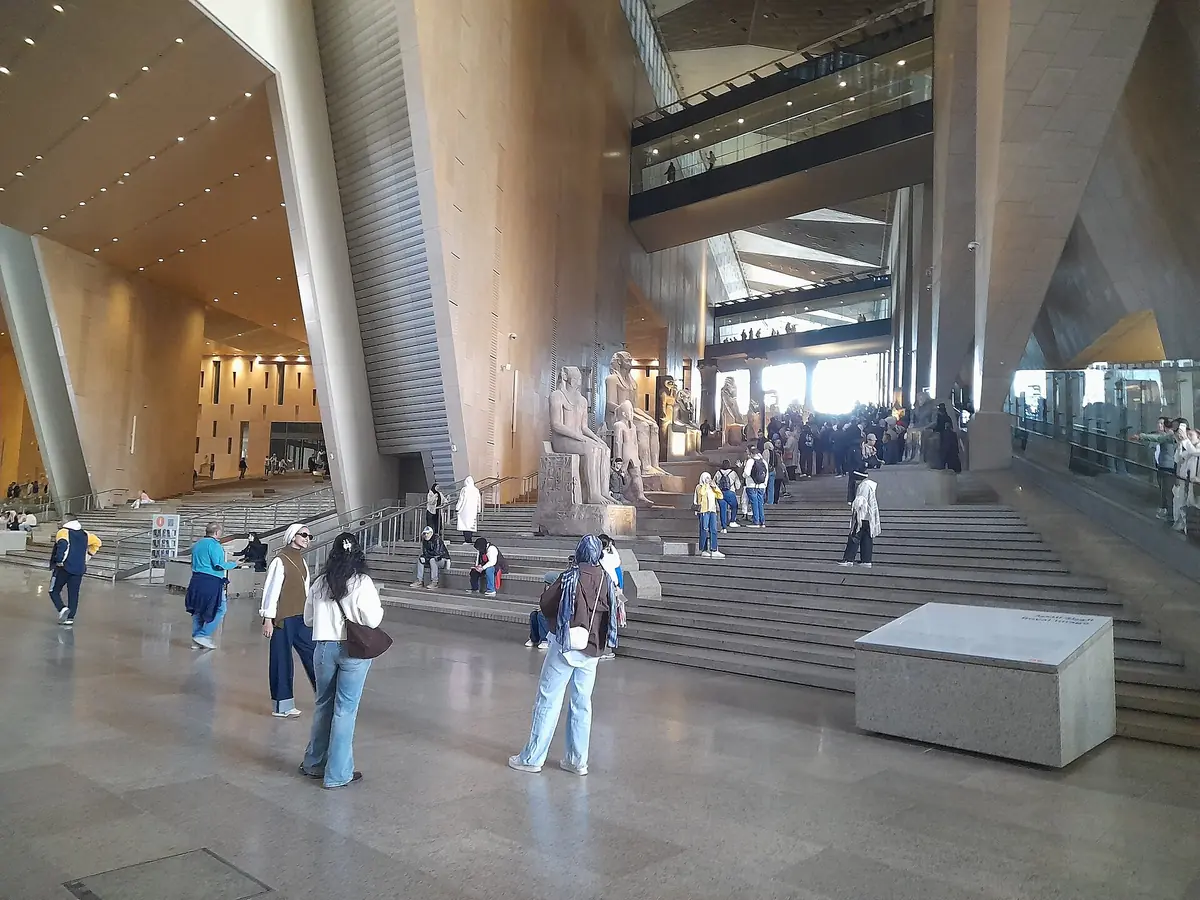
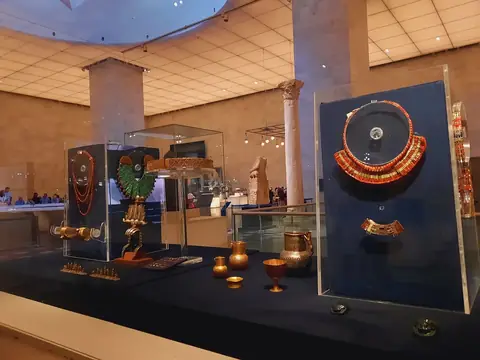
The Grand Egyptian Museum stands about two kilometres from the pyramids and is the largest museum in the world given to a single civilisation. It was inaugurated on 1 November 2025 and opened fully to the public on 4 November 2025. A ticket covers the Tutankhamun Galleries, with the treasures from the king's tomb, the Main Galleries, the Grand Hall, the Grand Stairs, and the Khufu's Boats Museum, home of the ship found dismantled in a pit beside the Great Pyramid.
Foreign adults pay EGP 1,830 and foreign students and children EGP 920; Arab and foreign residents of Egypt pay EGP 920 (students and children EGP 460), and Egyptians EGP 220. Children under six enter free.
Entry is by timed ticket: book a date and time at tickets.gem.eg, the museum's only official ticket site, and arrive within your slot. The museum's website, gem.eg, links there, and the older address visit-gem.com forwards to it. Tickets are personal, cannot be refunded or exchanged, and allow one entry only, so leaving for lunch outside ends the visit. A guided-tour ticket adds a group tour with other visitors in Arabic or English.
The complex opens at 08:30 and the galleries at 09:00. On Sundays, Mondays, Tuesdays, Thursdays and Fridays the galleries close at 18:00 and the complex at 19:00; on Wednesdays and Saturdays the galleries stay open to 21:00 and the complex to 22:00. Last entry is one hour before the galleries close. Photography for personal use is allowed except in marked parts of the Tutankhamun Galleries, and no outside food or drink is allowed in.
Prices and times checked 28 November 2026
Saqqara and Dahshur: the pyramids before Giza
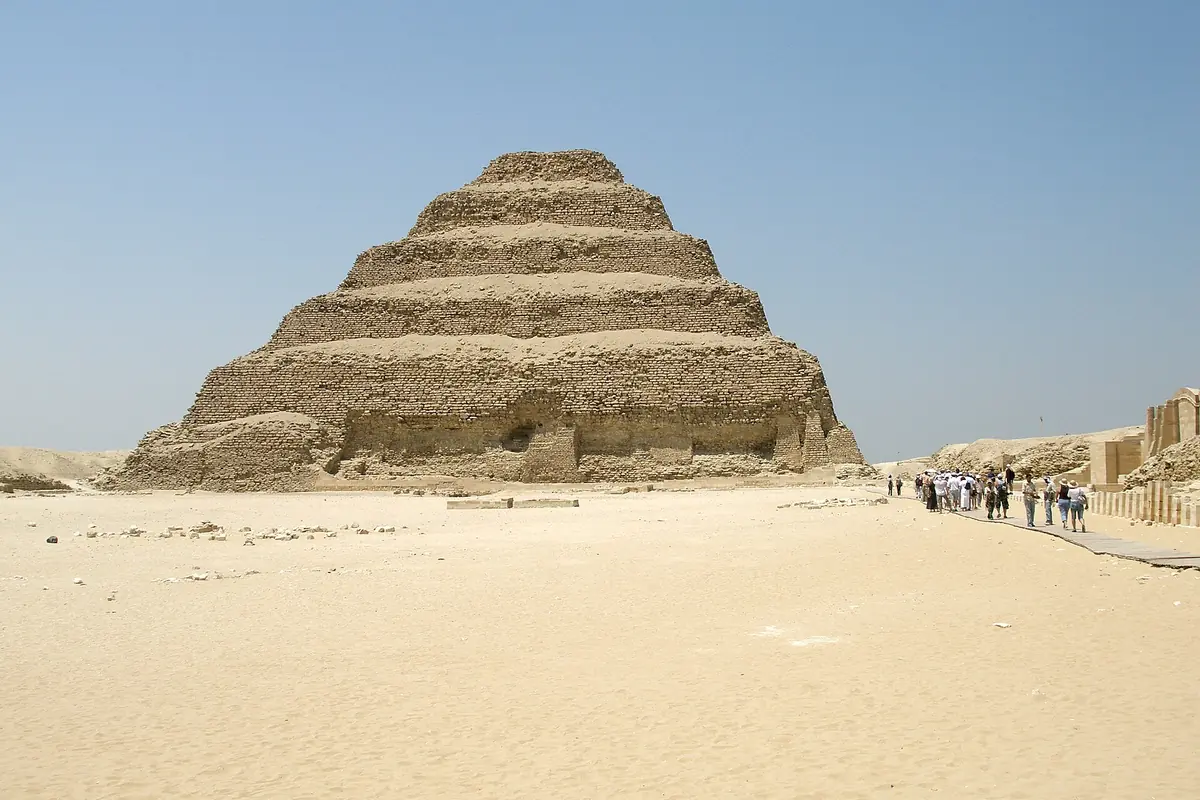
Saqqara, 40 km south-west of Cairo, was one of the most important cemeteries of Memphis, the ancient capital, and has burials from the first kings to the Ptolemies. Its centre is the Step Pyramid of Djoser (c. 2686–2667 BC), the first pyramid the Egyptians built, made of six stacked mastabas. The Pyramid of Unas has the oldest burial chamber carved with the Pyramid Texts, the nobles' tombs of the 5th and 6th Dynasties are decorated with scenes and texts, and the Serapeum is a pair of long underground corridors where the sacred Apis bulls were buried in sarcophagi. The Imhotep Museum shows finds from the site.
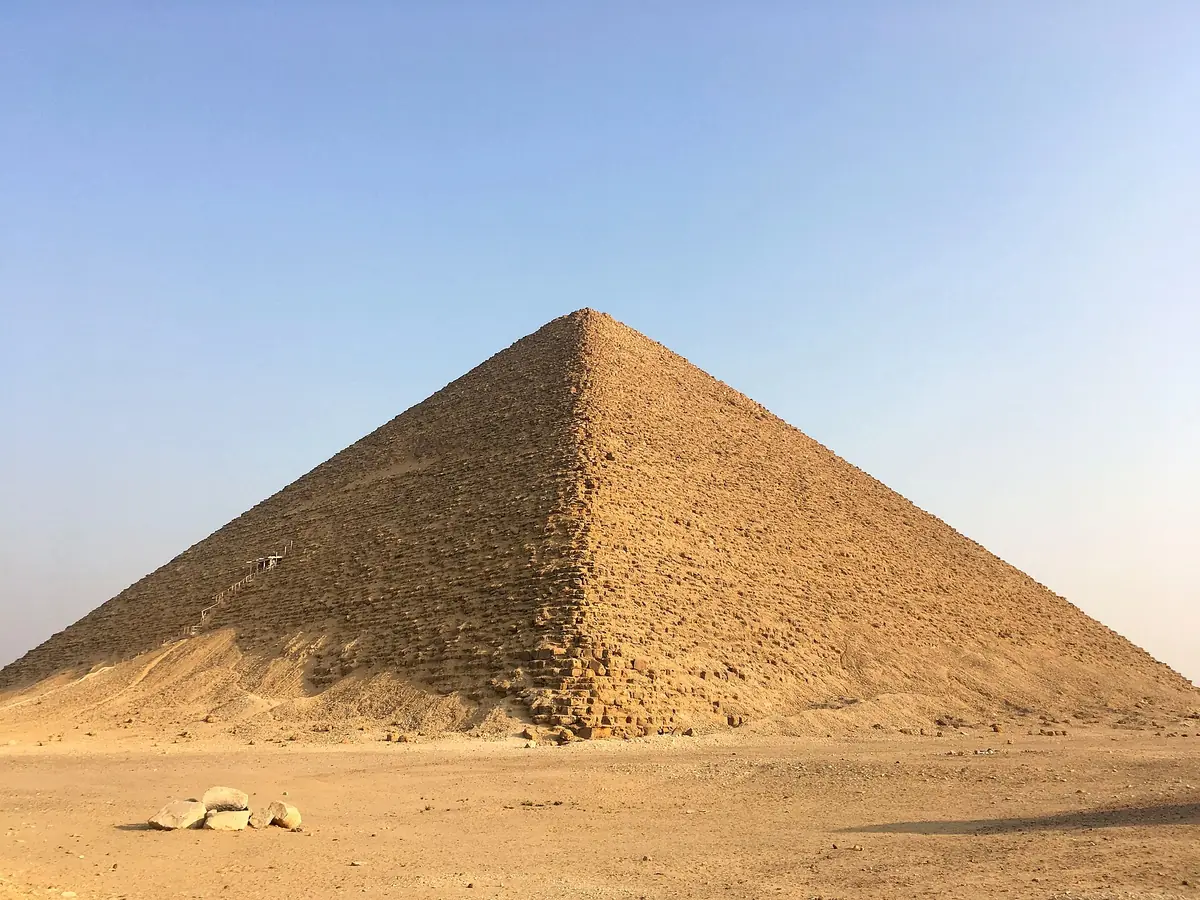
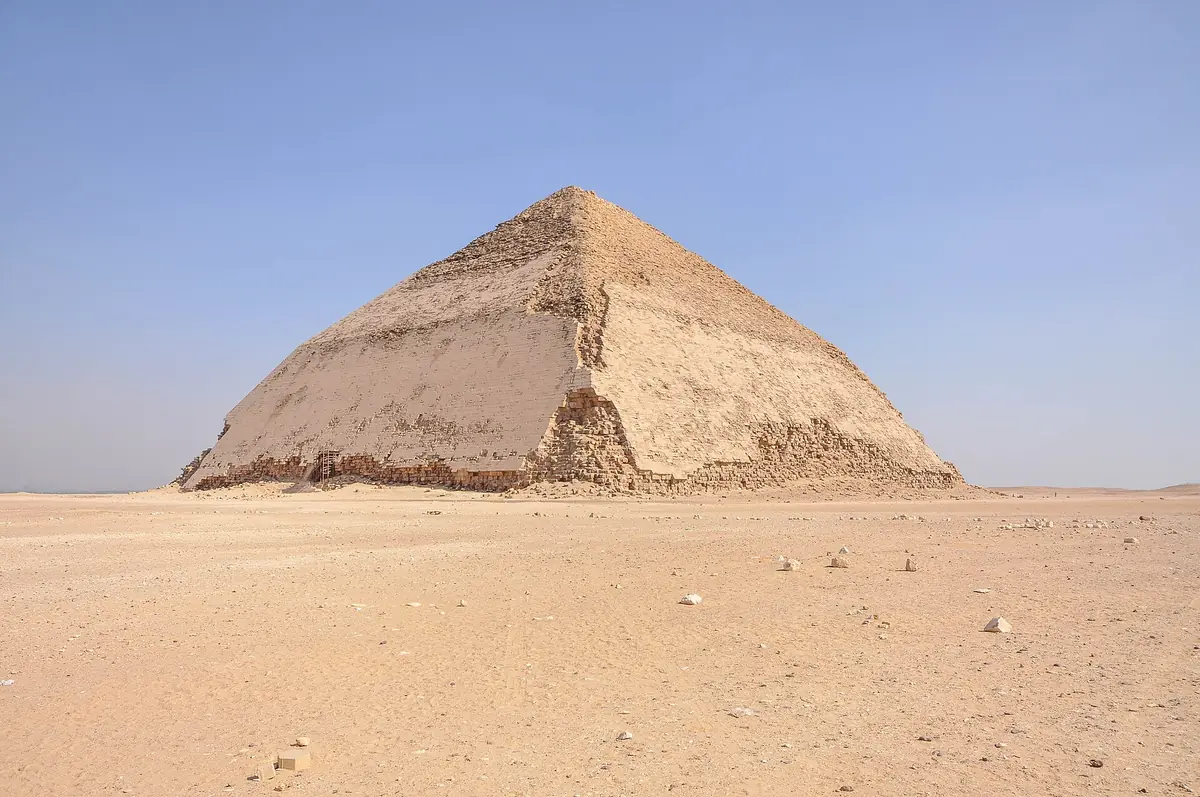
Dahshur, further south, is where Sneferu, Khufu's father, worked out how to build a true pyramid. The Bent Pyramid began at 55 degrees and changed to 43 degrees part of the way up, when the structure became unstable. His second attempt, the Red Pyramid, is the third-largest pyramid in Egypt, after Khufu's and Khafre's. Its name comes from the reddish, rusty colour of its blocks. You can go inside: an entrance on the north face leads down a passage about a metre high to three corbelled chambers.
| Ticket (foreign visitors) | Adult | Student |
|---|---|---|
| Saqqara site | EGP 600 | EGP 300 |
| Step Pyramid of Djoser, inside | EGP 280 | EGP 140 |
| Serapeum | EGP 340 | EGP 170 |
| Tomb of Mereruka | EGP 200 | EGP 100 |
| Saqqara inclusive ticket | EGP 1,400 | EGP 700 |
| Dahshur | EGP 200 | EGP 100 |
The Saqqara inclusive ticket covers the site, the Imhotep Museum, the nobles' tombs and New Kingdom tombs, and the tombs of Mereruka and Mehu; the Serapeum and the inside of the Step Pyramid are separate. The site ticket alone opens the Step Pyramid complex, the pyramids of Unas and Teti and decorated nobles' tombs such as those of Kagemni, Ankhmahor, Ptahhotep and Idut. Dahshur has a single ticket, with no separate one for the Red Pyramid's interior. Saqqara is open from 08:00 to 16:00 and Dahshur from 08:00 to 17:00, every day. Both lie out in the desert beyond the villages south of Giza, so go with a hired car and driver or a guided day tour that combines the two, often with the open-air museum at Memphis (Mit Rahina, EGP 200) on the way. As a guide to the price, Luxor and Aswan Travel's private day tour of Giza, Saqqara and Dahshur costs USD 169 per adult when two adults book together, with hotel pickup, the entrance fees and lunch, and lasts about 8 hours.
Prices and times checked 28 November 2026
Arriving, getting around and the evening show
Most flights land at Cairo International Airport (CAI), on the far eastern side of the city from Giza; the drive crosses all of Cairo, so book a hotel transfer or take Uber, Careem or a white metered taxi straight to your Giza hotel. UberX rides from Cairo airport average about 35 minutes and EGP 293 per car, and the app shows the fare to your Giza hotel before you confirm. Some airlines fly to Sphinx International Airport (SPX) instead. Trains from Alexandria, Luxor and Aswan arrive in central Cairo; our Egypt transport guide covers them.
Between your hotel, the plateau gate, the Grand Egyptian Museum and the restaurants on Pyramids Road, short taxi and ride-hailing trips are the easy way to move; on the plateau itself the electric buses take over. For Saqqara and Dahshur, agree the whole day with one driver or book a tour, so the car waits while you are inside the tombs.
After dark, the Pyramids Sound and Light Show lights up the Sphinx and the pyramids while the Pharaohs narrate their own story. Tickets cost USD 20, or USD 11 for children aged 6 to 12, on the official soundandlight.show site. The same site lists the show times and languages for each night.
Prices and times checked 28 November 2026
Two days at Giza, Saqqara and Dahshur
Day one: the plateau and the museum. Be at the visitor centre when the plateau opens, at 07:00 or 08:00 (check egymonuments.com the day before), and go inside the Great Pyramid first while the passages are cool (they close from 12:00 to 13:00). Walk on to Khafre's and Menkaure's pyramids, then down to the Sphinx and Khafre's valley temple. After lunch on Pyramids Road, take your timed slot at the Grand Egyptian Museum: two or three hours give the Grand Stairs, the Tutankhamun Galleries and Khufu's boat. On a Wednesday or Saturday, you can stay in the galleries until 21:00. On other days, end the evening with the Sound and Light Show.
Day two: Saqqara and Dahshur. Leave by 08:00 with your driver or tour. Spend the morning at Saqqara, at the Step Pyramid, the Pyramid of Unas, the nobles' tombs on the site ticket and the Serapeum, then continue to Dahshur for the Red Pyramid's interior and the Bent Pyramid, which see far fewer visitors than Giza. You are back at your hotel by late afternoon.
With a third day, see the Egyptian Museum in Tahrir Square and Islamic Cairo, or continue by train to Alexandria for a day by the Mediterranean.
Prices and times checked 29 November 2026
What to eat and where to look
Koshari
Rice, pasta, lentils and chickpeas under a garlicky tomato sauce and crisp fried onions, with vinegar, garlic and hot sauce added to taste. It is Egypt's everyday filling meal, served in restaurants and from street carts, and UNESCO added it to its list of intangible cultural heritage in 2025.
- Where to look
- The koshari shops on Pyramids Road and in Downtown Cairo, where a bowl comes in small, medium or large.
- Fit it into your day
- A quick lunch between the plateau and the museum on day one.
Koshari, ful and ta'ameya are vegetarian; ask for the sauces on the side if you do not eat chilli.
Ful medames
Fava beans stewed slowly and mashed with oil, cumin and lemon, eaten with baladi bread for breakfast across Egypt.
- Where to look
- The ful carts and small breakfast shops of Nazlet El-Semman and the side streets off Pyramids Road, busiest early in the morning.
- Fit it into your day
- Breakfast before the plateau opens, or a late breakfast after the plateau.
Ta'ameya
Egypt's falafel, made from fava beans rather than chickpeas, so it is green inside, fried to order and stuffed into baladi bread with salad and tahini.
- Where to look
- The same breakfast shops as ful, which fry it from early morning.
- Fit it into your day
- With ful at breakfast, or wrapped to take on the drive to Saqqara.
Feteer meshaltet
A flaky layered pastry brushed with ghee and baked in a hot oven, eaten plain with honey or cheese, or filled with meat.
- Where to look
- The feteer bakeries along the road between Giza and Saqqara, and the feteer houses on Pyramids Road.
- Fit it into your day
- A late lunch on the way back from Saqqara and Dahshur.
Hawawshi
Baladi bread stuffed with spiced minced meat, onions and peppers and baked until the bread is crisp.
- Where to look
- Grill and bakery shops on Pyramids Road and in the streets behind it.
- Fit it into your day
- An evening meal after the Sound and Light Show.
What the two days cost in tickets
For the two days above, a foreign adult pays EGP 4,670 in admissions, EGP 9,340 for two: the Giza plateau (EGP 700), the inside of the Great Pyramid (EGP 1,000), the Grand Egyptian Museum (EGP 1,830, the price its board set from 1 November 2026, as reported by Egyptian Streets), the Saqqara site (EGP 600), the Serapeum (EGP 340) and Dahshur (EGP 200). The Sound and Light Show adds USD 20 a person.
If you go inside Khafre's pyramid instead of the Great Pyramid, the total falls to EGP 3,950 a person. Students with a valid card pay half at the ministry's sites and EGP 920 at the museum: EGP 2,340 in all for the same two days.
Rooms, meals and the car for day two come on top. A guided day such as Luxor and Aswan Travel's private Giza, Saqqara and Dahshur tour, USD 169 per adult for two (about EGP 9,280 at the Central Bank of Egypt's selling rate of 26 November 2026, USD 1 = EGP 54.91), includes the car, the guide, these entrance fees and lunch. The Egypt trip-cost guide puts these tickets into a full budget with rooms, meals and transport.
Prices and times checked 28 November 2026
Practical questions
How many days do I need for the Pyramids of Giza?
Two days: one for the plateau and the Grand Egyptian Museum, one for Saqqara and Dahshur. Sleep two nights in Giza, near the Pyramids, so both days start early.
How much is the ticket to the Pyramids of Giza?
Foreign adults pay EGP 700 for the plateau and students EGP 350. Going inside the Great Pyramid costs EGP 1,000 more, and Khafre's or Menkaure's pyramid EGP 280, when open: their interiors open in rotation, so ask at the ticket office which one is open that day.
Is it worth going inside the Great Pyramid?
Yes, if you want to climb the Grand Gallery to the King's Chamber and do not mind narrow, steep and hot passages. The chambers are bare stone. Khafre's pyramid is a cheaper, shorter alternative.
Do I need to book the Grand Egyptian Museum in advance?
Yes. Entry is by timed ticket on tickets.gem.eg, the museum's only official ticket site, and tickets cannot be refunded or exchanged. Foreign adults pay EGP 1,830.
What time do the Pyramids open?
Every day; entry ends at 16:00. The plateau opens at 07:00 or 08:00, depending on the official source, so check the time on egymonuments.com the day before and be at the gate at opening.
Should I stay in Giza or central Cairo?
Stay in Giza for two days at the Pyramids, the museum, Saqqara and Dahshur. Choose central Cairo for a longer stay that adds the Egyptian Museum in Tahrir Square, Islamic Cairo and Coptic Cairo.
How do I get to Saqqara and Dahshur?
By hired car with a driver or on a guided day tour that combines the two. Saqqara is about 40 km south-west of Cairo, and Dahshur lies further south.
Keep planning your trip
Cairo
Three nights in Cairo: Al-Muizz Street and Khan el-Khalili, the Citadel, Coptic Cairo, the Egyptian Museum and the royal mummies at NMEC, where to sleep and costs.
Read the guide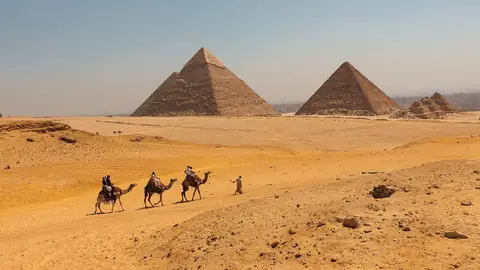
First trip to Egypt
Choose seven days or ten for Cairo, Giza, Luxor and Aswan: nights in each, the train or a Nile cruise, the season, the visa and what to book first.
Read the guide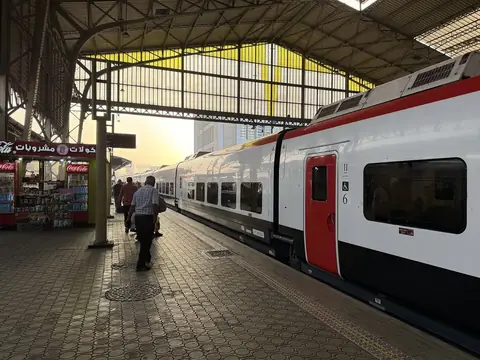
Transport in Egypt
How to travel Egypt: the sleeper train from Giza to Luxor and Aswan, day trains, domestic flights, buses, ride-hailing cars and the Cairo Metro, with journey times.
Read the guide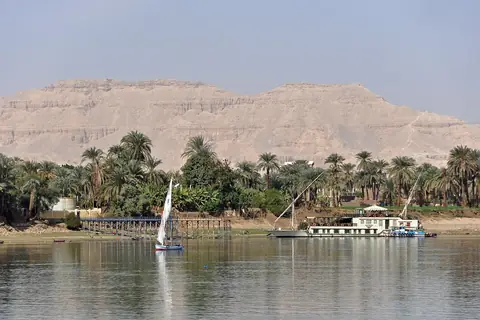
Where to stay in Egypt
Which area of Cairo, Giza, Luxor, Aswan, Hurghada and Alexandria to sleep in, how many nights each needs, and three hotels in each with their rates.
Read the guide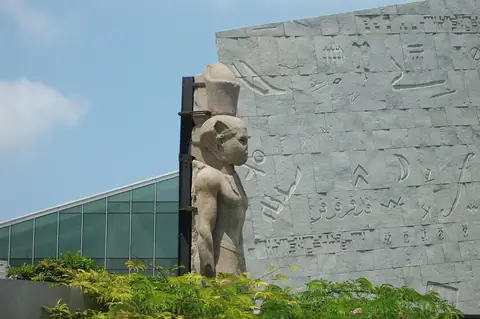
Alexandria
Alexandria as a day trip from Cairo or with one night: the catacombs, Pompey's Pillar, Qaitbay, the Bibliotheca Alexandrina, tickets, hours and trains.
Read the guide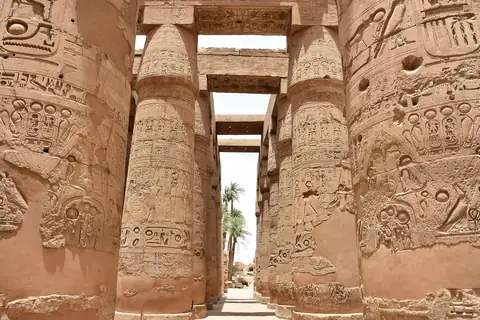
Egypt in 7 days
Seven days, two nights each at Giza, Luxor and Aswan: the Pyramids and the Grand Egyptian Museum, Karnak, the Valley of the Kings, Philae and the cost for two.
Read the guideSources and checks before you travel
(26)
- Ministry of Tourism and Antiquities: Giza Plateau ↗ — opens in a new tab
- Egymonuments (official ticket site): Giza plateau ↗ — opens in a new tab
- Egymonuments: frequently asked questions ↗ — opens in a new tab
- Ministry of Tourism and Antiquities: The Great Pyramid ↗ — opens in a new tab
- Ministry of Tourism and Antiquities: Pyramid Complex of Menkaure ↗ — opens in a new tab
- Ministry of Tourism and Antiquities: The Great Sphinx ↗ — opens in a new tab
- Ministry of Tourism and Antiquities: ticket prices for archaeological sites and museums (PDF, list of 5 November 2024) ↗ — opens in a new tab
- Ministry of Tourism and Antiquities: Saqqara ↗ — opens in a new tab
- Ministry of Tourism and Antiquities: Serapeum ↗ — opens in a new tab
- Ministry of Tourism and Antiquities: Dahshur ↗ — opens in a new tab
- Ministry of Tourism and Antiquities: The Bent Pyramid ↗ — opens in a new tab
- Ministry of Tourism and Antiquities: The Red Pyramid ↗ — opens in a new tab
- Grand Egyptian Museum: official ticketing website ↗ — opens in a new tab
- Egyptian Streets: Grand Egyptian Museum announces new ticket price increase (27 October 2026) ↗ — opens in a new tab
- Egyptian Streets: new Giza Pyramids entrance system (11 April 2025) ↗ — opens in a new tab
- Daily News Egypt: Giza Pyramids development (13 April 2025) ↗ — opens in a new tab
- Sound and Light Shows of Egypt: official site ↗ — opens in a new tab
- UNESCO: Koshari, everyday dish and associated practices ↗ — opens in a new tab
- Ministry of Tourism and Antiquities: The Step Pyramid Complex of Djoser ↗ — opens in a new tab
- Ministry of Tourism and Antiquities: Imhotep Museum ↗ — opens in a new tab
- Grand Egyptian Museum: official website ↗ — opens in a new tab
- Luxor and Aswan Travel: private tour to the Pyramids, Sakkara and Dahshur ↗ — opens in a new tab
- Central Bank of Egypt: exchange rates ↗ — opens in a new tab
- Uber: rides from Cairo International Airport (CAI) ↗ — opens in a new tab
- Careem Egypt: rides ↗ — opens in a new tab
- Egypt Independent (press report): Egypt announces closure of the Pyramid of Menkaure ↗ — opens in a new tab
Reference sources for the version dated 29 November 2026. Confirm opening times, access, transport and conditions for your travel dates.
Photo credits
(7)
The Great Sphinx with the Pyramid of Khafre behind it
Photograph: Diego Delso — opens in a new tab · CC BY-SA 3.0 — opens in a new tab
Changes: Resized and converted to WebP; displayed with responsive crops. · Original photograph and licence details ↗ — opens in a new tab
The Giza pyramids seen across the desert to the south-west of the plateau
Photograph: Mustang Joe — opens in a new tab · CC0 — opens in a new tab
Changes: Resized and converted to WebP; displayed with responsive crops. · Original photograph and licence details ↗ — opens in a new tab
The Grand Stairs of the Grand Egyptian Museum, lined with ancient statues
Photograph: Amr F.Nagy — opens in a new tab · CC BY-SA 4.0 — opens in a new tab
Changes: Resized and converted to WebP; displayed with responsive crops. · Original photograph and licence details ↗ — opens in a new tab
The Step Pyramid of Djoser at Saqqara
Photograph: Vyacheslav Argenberg — opens in a new tab · CC BY 4.0 — opens in a new tab
Changes: Resized and converted to WebP; displayed with responsive crops. · Original photograph and licence details ↗ — opens in a new tab
The Red Pyramid of Sneferu at Dahshur
Photograph: Middle East Minorities — opens in a new tab · CC BY 4.0 — opens in a new tab
Changes: Resized and converted to WebP; displayed with responsive crops. · Original photograph and licence details ↗ — opens in a new tab
The Bent Pyramid at Dahshur, where the slope changes part of the way up
Photograph: Jorge Láscar from Melbourne, Australia — opens in a new tab · CC BY 2.0 — opens in a new tab
Changes: Resized and converted to WebP; displayed with responsive crops. · Original photograph and licence details ↗ — opens in a new tab
Yuki Ikemori sitting on a low wall at the viewpoint over the Giza pyramids, with sand in the air
Photo: Yuki Ikemori