Plan your trip
Red Sea diving in Egypt: Hurghada, Safaga, Marsa Alam and liveaboards
Coral reefs line Egypt's mainland Red Sea coast. Hurghada and El Gouna send dive boats out each morning to the Giftun Islands and the wrecks of the Strait of Gubal; Safaga and Soma Bay are quieter bays to the south; and Marsa Alam, further south again, has mangroves, dolphins and a few of the Red Sea's last dugongs. Further out, liveaboards spend a week on the remote offshore reefs of the Brothers Islands and Daedalus, with Elphinstone on the same route. The choices are which stretch of coast to sleep on, whether to dive from a day boat or live on one for a week, and how to fit a course or a snorkel day around the flights home.
In this guide
Find the location ↗ — opens in a new tabThe short answer
Book five to seven nights in one base, then the first boat day. Hurghada or El Gouna suits a first dive, a course and the most boats: Diving Around Hurghada lists a two-dive boat day for certified divers at €50, and the PADI or SSI Open Water course at €350. Marsa Alam, with its own airport, suits divers and snorkellers who want quieter reefs, dolphins and a chance of a dugong. Each day in the Red Sea protectorates adds a visit fee of USD 5 for a foreign visitor. The warmest water, about 28–30°C, is from July to October. Experienced divers can spend a week on a liveaboard to the Brothers, Daedalus and Elphinstone; Master Liveaboards asks for Open Water certification and at least 30 logged dives. Keep the last day before your flight free of diving.
- Key point
- 5-7 nights in one base on the mainland coast; a liveaboard week is 7 nights on board
- Where it applies
- Hurghada town or El Gouna for the most dive boats and courses; Safaga or Soma Bay for quieter bays; Marsa Alam for the southern reefs, dolphins and dugongs
- Timing
- The sea stays between about 23°C and 30°C all year: warmest from July to October, coolest in February. Hurghada's winter afternoons reach only 22–23°C, while summer highs are about 34–35°C.
Which stretch of coast: Hurghada, Safaga or Marsa Alam
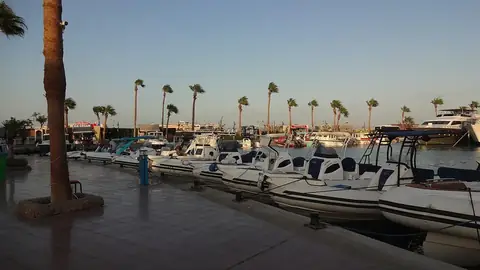
The mainland coast splits into three diving areas, and the choice decides how much of each day you spend on a boat. Hurghada and El Gouna are the busy north. Hurghada grew from a fishing village into one of Egypt's main beach destinations, with a marina and coral reefs offshore. El Gouna, 25 km to the north, is a lagoon town of canals and sandy beaches, and its boats reach the Abu Nahas wrecks in the Strait of Gubal on a day trip. This is where you find the most dive centres, the most courses and the most choice of boat days.
Safaga lies 53 km south of Hurghada: a quiet seaside town with an undisturbed beachfront and excellent dive sites. Next to it, Soma Bay is a resort peninsula of large hotels, golf courses and calm water, with reefs for snorkelling, a boat day to Utopia Island and excursions to Dolphin House. Both suit a slower week with a few boat days rather than diving every day.
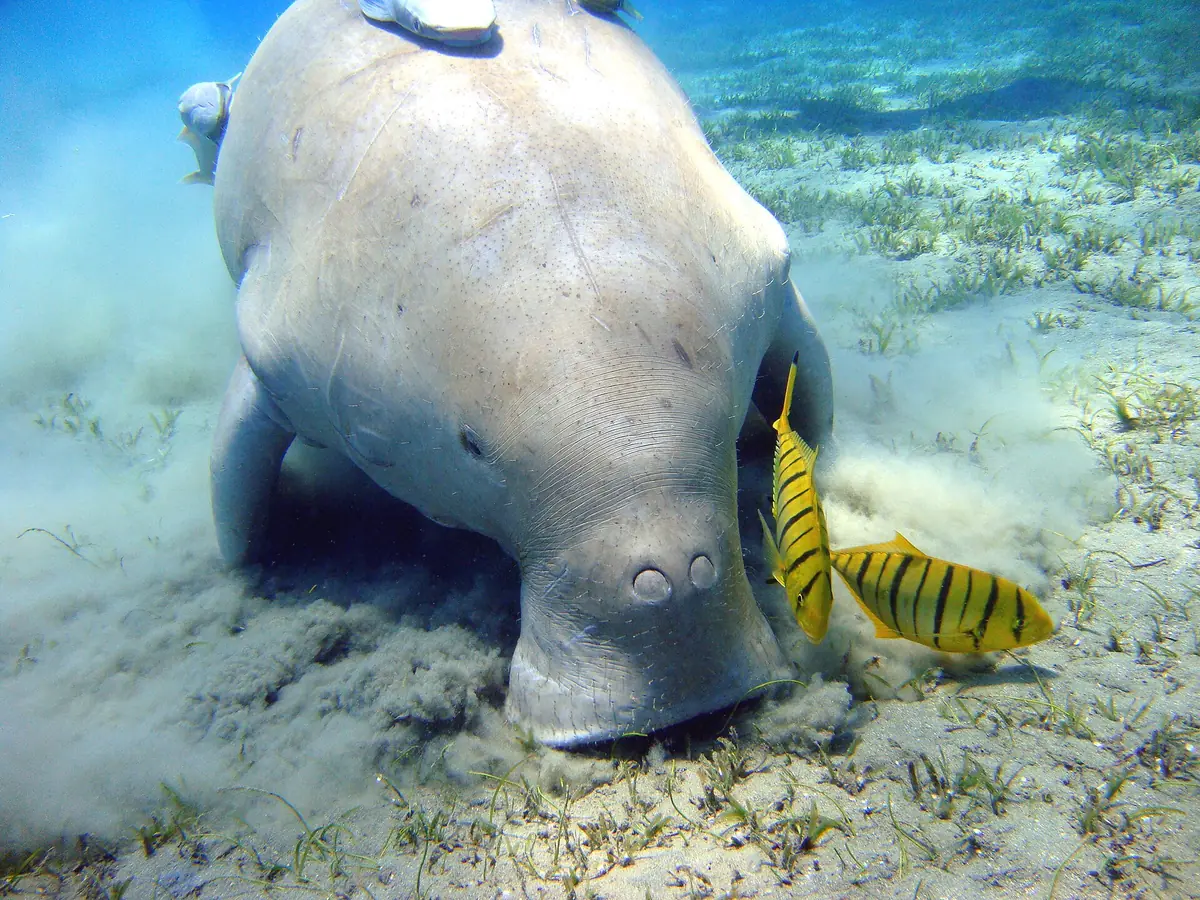
Marsa Alam is the wilder south. Mangroves grow in shallow turquoise pools, diving, snorkelling and kitesurfing are the main things to do, and boat trips run to islands where you can meet dolphins. Samadi Reef is a resting place for dolphins, with pods of up to 200 seen there, and divers at Marsa Mubarak go looking for dugongs, the sea cows of which only a handful remain in the Red Sea. Camel safaris cross the Wadi El Gemal protectorate. Marsa Alam has its own international airport, so you can fly straight there instead of transferring from Hurghada.
Choose Hurghada or El Gouna for a first dive, a course or a mixed beach week; Marsa Alam if diving and snorkelling are the point of the trip; Safaga or Soma Bay for something in between. Our Hurghada guide compares the town, El Gouna and the resort bays as places to stay.
A day on a dive boat from Hurghada
Most diving on this coast is from day boats. A dive centre's boat leaves the marina in the morning and normally makes two dives at different sites, with time on board between them. From Hurghada the classic trips are the Giftun Islands, Giftun Kebir and Giftun Saghir in the Northern Islands protectorate, with white sandy beaches and dolphins that often race the boats, and Dolphin House (Shaab El Erg), a large horseshoe-shaped reef about an hour and a half north by boat. Its shallow sandy lagoon is ringed by small coral pinnacles, and pods of spinner dolphins live there or visit. Dolphins are never guaranteed, but the reef has healthy corals, schools of reef fish, moray eels and rays either way.
Diving Around Hurghada lists a full day of two boat dives for certified divers at €50, a third dive at €15 and a full equipment set at €10. A five-day package brings the boat day down to €46. The centre says its €50 includes the guide, cylinders and weights; confirm lunch, hotel transfers, equipment and the protectorate fees below when you book.
Book through your hotel or an approved agent or operator. Safety standards on Red Sea boats vary, and some operators do not provide adequate safety and insurance cover. Check that your travel insurance, or the dive company, covers an air or sea rescue, which can cost more than USD 4,000 an hour; the Egyptian authorities start one only once payment is guaranteed.
Prices and times checked 28 November 2026
What a week of diving costs
For a certified diver on five boat days from Hurghada, Diving Around Hurghada's published prices add up like this, per person:
- Five-day package: €230 for ten dives, two a day.
- Equipment: €10 for a full rented set; the centre does not say whether that is per day, and charged daily it comes to €50 for the five days. Nothing if you bring your own.
- Protectorate fees: USD 5 for each day the boat visits a protectorate such as the Giftun Islands, or USD 10 at Dolphin House.
- A non-diving partner: €30 a day to come on the boat and snorkel.
- Total: about €280 with rented gear charged daily, or €230 with your own, plus the protectorate fee for each day spent in a protectorate; rooms and meals are extra, and our Hurghada guide prices the rooms.
Prices and times checked 28 November 2026
Snorkelling without diving
You do not need a certificate to see the reef. On Hurghada's daily dive boats non-divers can come along to snorkel: Diving Around Hurghada charges €30 for the place on board. A Giftun Islands boat day pairs snorkelling with time on the islands' white beaches. Dolphin House is a full day out: Diving Around Hurghada stops its boat short of the reef and takes snorkellers closer in slow inflatables, so as not to disturb the dolphins.
In Marsa Alam, snorkelling is one of the main reasons to come: you can swim in clear lagoons and over reefs, and boat trips run to islands where you can meet dolphins. A long snorkel in February, when the sea is at its coolest, is far more comfortable in a wetsuit.
Every boat trip into a protectorate adds the visitor fee in the section on park fees below, for snorkellers as much as for divers.
Prices and times checked 28 November 2026
Learning to dive: a try dive or the Open Water course
A try dive is a supervised first breath underwater with an instructor, with no course and no certificate. Diving Around Hurghada lists one from the shore at €40, a single try dive from the boat at €45 and a two-dive try dive at €55. Its Discover Scuba programme, with a theory session, a house-reef or pool session, a guided open-water dive and a certificate of completion, costs €150.
The Open Water course gives you a certificate to dive with a buddy to 18 m anywhere in the world. Diving Around Hurghada charges €350 for both the PADI and the SSI course, and says the PADI course takes about three days, depending on your progress. SSI's own standards for the course set a minimum age of 10, with six theory sessions, six pool or confined-water sessions and four open-water dives, a maximum training depth of 18 m and a suggested 16 to 32 hours. You need to be fit to swim, and before the open-water dives you pass a water-fitness check of a swim and a survival float.
Book the course for the start of the week, so that bad weather costs you a spare day and not the certificate. France's travel advice notes several fatal diving accidents in Egypt every year that come from divers misjudging their physical fitness. If you have a heart, lung or ear condition, see a doctor before you travel rather than after the first dive.
Prices and times checked 28 November 2026
Liveaboards: the offshore reefs in a week
A liveaboard is a dive boat you live on, usually for a week, that reaches Egypt's most remote offshore reefs. A classic route from the mainland coast visits the Brothers Islands and Daedalus, with dives at Elphinstone: steep walls and drop-offs in strong currents, known for sharks, among them hammerheads and oceanic whitetips.
Master Liveaboards sails this route in seven nights from Hurghada or Port Ghalib, near Marsa Alam, and lists its 2027 departures at USD 1,743 a place before discounts. It asks for Open Water certification and at least 30 logged dives, schedules up to four dives a day and up to 16 dives in all, and does not dive at night inside the marine parks. Shared airport transfers, full board, soft drinks, cylinders with air and weights are included; equipment rental, nitrox and tips are extra. Marine park and port fees of USD 200 per person for seven nights are paid on board, and the amount can change by government decree. Bad weather and rough seas can change the route, which includes several overnight sailings.
Tourist and dive boats in Egypt have had serious accidents with deaths, and British and German nationals have been among those affected. The UK's Marine Accident Investigation Branch advises booking a liveaboard only through a reputable vendor who can vouch for the boat's safety standards, and asking the crew for a full safety briefing before you leave port. Germany asks divers to find out about the boat's certification, maintenance and safety measures and to check them for themselves before departure, and France recommends checking that the boat and its passengers are insured. If you are new to diving, choose a few day boats first.
Prices and times checked 28 November 2026
Water temperature and the best months
The Red Sea is warm enough for diving all year. These are NOAA Coral Reef Watch's averages of the satellite sea-surface temperature for Egypt's Red Sea reefs as a whole, with Hurghada's average air temperatures, in °C.
| Month | Sea surface | Hurghada air, low–high |
|---|---|---|
| January | 23.6 | 11.2–21.7 |
| February | 22.8 | 11.7–22.7 |
| April | 24.3 | 18.3–29.3 |
| June | 27.3 | 25.5–33.9 |
| August | 29.8 | 27.1–35.1 |
| October | 28.0 | 21.5–31.3 |
| December | 25.0 | 13.0–23.2 |
From July to October the sea is at its warmest, at about 28–30°C, and a thin wetsuit is enough. In February the water is at its coolest, about 23°C, and Hurghada's afternoons reach only 22–23°C, so the boat ride home is chilly; a full-length wetsuit and a windproof layer for the deck make the difference. Spring and late autumn sit between the two. Boat days depend on the wind and the sea, so put the most important dive day early in the week and keep a spare day after it. Our best-time guide has the sea temperature for every month.
Prices and times checked 28 November 2026
Marine park fees
The Red Sea protectorates, among them the Northern Islands with Giftun, Wadi El Gemal and the far islands, charge a fee for each day's visit, and Dolphin House has its own. Under the environment minister's decree 204 of 2019:
- Day visit: USD 5 per foreign visitor, collected from 08:00 to sunset; children under seven are free.
- Overnight trips: for visits that continue after sunset, such as camping and land or sea safaris, the visit fee is doubled.
- Dolphin House (Shaab El Erg) and Shaab El Fanous: USD 10 per foreign visitor, with at most 300 visitors a day at each.
- Boats: dive and snorkel boats of 17 m or more pay their own entry fee by length, from USD 10 to USD 60; smaller boats are exempt.
- Payment: in US dollars, or the equivalent in euros or Egyptian pounds at the Central Bank of Egypt's daily rate.
Prices and times checked 28 November 2026
Fee changes, insurance and recompression chambers
A 2025 decree raises the fees to USD 10 for the Giftun Islands and USD 15 for Dolphin House, but its start has been postponed to mid-December 2026, so ask the boat company which fee applies on your date and whether its price includes it. A liveaboard may collect the park and port fees on board, as Master Liveaboards does.
Buy diving insurance as well as travel insurance with medical cover and repatriation, and do not dive below the depth limit in your policy: going deeper invalidates the cover. Recompression chambers serve the mainland coast at Hurghada (two), El Gouna, Safaga and Marsa Alam. Shark attacks are rare but have happened in the Red Sea, so follow the dive centre's instructions. Treat coral cuts seriously, since they infect easily, and never break or take coral: Egypt protects it and punishes damage. Our health and safety guide covers hospitals, insurance and the emergency numbers.
Plan the flight home around your last dive. For divers without symptoms, the Divers Alert Network recommends at least 12 hours between a single no-decompression dive and a flight. After more than one dive in a day, or several days of diving, it recommends at least 18 hours, and after dives that needed decompression stops at least 24 hours. A normal boat day has two dives, so count 18 hours. The simplest plan is a dry last day by the pool or a snorkel.
Prices and times checked 29 November 2026
Sharm el-Sheikh and Dahab: what the travel advice says
Across the Gulf of Suez, the South Sinai towns of Sharm el-Sheikh and Dahab are among the best-known dive centres in the Red Sea. Sharm el-Sheikh lies between Ras Mohammed National Park and the Nabq Protectorate and began as a divers' resort in the 1980s. Dahab, 90 km to the north, is a laid-back former Bedouin fishing village with dozens of dive centres and the Blue Hole, a hole in the reef 70 m wide and 80 m deep.
The governments' advice on South Sinai differs, so read your own before you book. The UK advises against all but essential travel to the northern part of South Sinai beyond the St Catherine-Nuweiba road, except the coastal areas, so neither town is inside its line. Canada advises against non-essential travel north of the St Catherine-Nuweiba-El Tor road, with the Dahab-Nuweiba-Taba road and the towns of Nuweiba and Taba excepted, and warns that Sharm el-Sheikh may be seen as a high-value target despite enhanced security. France formally advises against the part of Sinai north of a line from Suez to Taba, and on the South Sinai coast asks visitors to prefer hotels with security. Germany advises against unaccompanied, individual excursions and overland journeys anywhere in South Sinai, Sharm el-Sheikh and Dahab included, and asks that dive and snorkel trips there be booked only with licensed local guides.
That is why this guide plans the mainland coast. If your government's advice allows a Sinai trip, fly straight into Sharm el-Sheikh rather than travelling overland from the mainland, and book every dive and transfer through a licensed centre. If you fly into Sharm el-Sheikh, a free entry stamp covers stays of under 15 days in Sharm el-Sheikh, Dahab, Nuweiba and Taba only; our entry guide explains when you need the full visa.
Prices and times checked 28 November 2026
Getting to the coast, and Jordan's Red Sea
Hurghada International Airport (HRG), on the edge of the town, is Egypt's second-busiest airport and the gateway for Hurghada, El Gouna, Safaga and Soma Bay; El Gouna is less than 40 minutes away. Uber and Careem both pick up there and show the fare before you confirm, and most hotels and dive centres also offer a transfer. For a week in the south, fly into Marsa Alam International Airport instead. From Cairo the quick way there is a domestic flight; our transport guide covers the flights and the buses.
On the far side of Sinai, Jordan has its own short Red Sea coast at Aqaba, with reefs that begin almost at the beach. France advises against travel to Aqaba and its surroundings except for an imperative reason, so read the advice in our Aqaba guide before you plan it as an alternative.
Prices and times checked 28 November 2026
Practical questions
Is Hurghada or Marsa Alam better for diving?
Hurghada and El Gouna have the most dive centres, courses and boat days, and suit a first dive or a mixed beach week. Marsa Alam is quieter, with reefs, dolphins and a chance of a dugong, and has its own airport; it suits a week built around diving and snorkelling.
How much does a dive day cost in Hurghada?
Diving Around Hurghada lists a two-dive boat day for certified divers at €50 and full equipment at €10. Protectorate visit fees of USD 5 per foreign visitor a day, or USD 10 at Dolphin House, may be extra.
When is the Red Sea warmest?
From July to October, when the sea averages about 28–30°C. February is the coolest month, at about 23°C.
Can I learn to dive in Egypt?
Yes. Diving Around Hurghada charges €350 for the PADI or SSI Open Water course and says the PADI course takes about three days. SSI sets the minimum age at 10, and you need to be fit to swim.
What do I need for a liveaboard to the Brothers and Daedalus?
Experience: Master Liveaboards asks for Open Water certification and at least 30 logged dives for this route. Book through a reputable vendor, ask for the safety briefing before you leave port, and expect park and port fees on board: USD 200 for seven nights on Master Liveaboards' trips.
Is it safe to dive in Sharm el-Sheikh and Dahab?
The UK, Canada and France do not advise against the two towns themselves, but Canada warns about the threat to Sharm el-Sheikh, and Germany advises against unaccompanied excursions and overland journeys anywhere in South Sinai. Read your own government's advice, and fly in rather than travel overland.
How long should I wait to fly after diving?
If you have no symptoms, the Divers Alert Network recommends at least 12 hours after a single no-decompression dive, at least 18 hours after two or more dives in a day or several days of diving, and at least 24 hours after dives with decompression stops. A two-dive boat day needs 18 hours, so keep the last day before your flight free of dives.
Keep planning your trip
Hurghada
Plan a Red Sea week from Hurghada: town, El Gouna, Sahl Hasheesh or Makadi, the Giftun boat day, first dives and wrecks, HRG flights and Luxor.
Read the guide
Best time to visit Egypt
When to go to Egypt: cool months for Luxor and Aswan, 41°C summers in the south, Alexandria's winter rain, Ramadan 2027 and Red Sea water by month.
Read the guide
Health and safety in Egypt
Where the advisory lines run in Sinai and the deserts, emergency numbers, insurance, vaccines and medicines, tap water, heat, night roads, balloons, touts and the laws.
Read the guide
Transport in Egypt
How to travel Egypt: the sleeper train from Giza to Luxor and Aswan, day trains, domestic flights, buses, ride-hailing cars and the Cairo Metro, with journey times.
Read the guide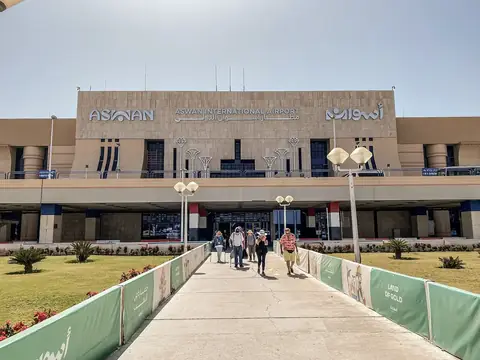
Entering Egypt
Whether to buy Egypt's e-visa before you fly or a visa on arrival, who gets the free Sinai-only stamp, passport validity, land and sea borders and customs.
Read the guide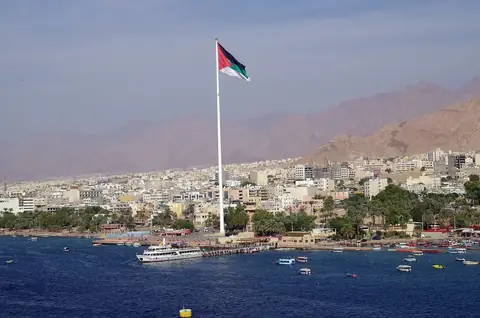
Aqaba
Before you plan Aqaba: the current government advice, the Red Sea reefs and dive sites, Aqaba Castle and Ayla, the special-zone visa and the drive from Petra.
Read the guideSources and checks before you travel
(29)
- Experience Egypt (Egyptian Tourism Authority): Hurghada ↗ — opens in a new tab
- Experience Egypt (Egyptian Tourism Authority): Al-Gouna ↗ — opens in a new tab
- Experience Egypt (Egyptian Tourism Authority): Safaga ↗ — opens in a new tab
- Experience Egypt (Egyptian Tourism Authority): Soma Bay ↗ — opens in a new tab
- Experience Egypt (Egyptian Tourism Authority): Marsa Alam ↗ — opens in a new tab
- Experience Egypt (Egyptian Tourism Authority): Sharm al-Sheikh ↗ — opens in a new tab
- Experience Egypt (Egyptian Tourism Authority): Dahab ↗ — opens in a new tab
- Diving Around Hurghada: price guide ↗ — opens in a new tab
- Diving Around Hurghada: Dolphin House (Shaab El Erg) ↗ — opens in a new tab
- SSI (Scuba Schools International): Open Water Diver ↗ — opens in a new tab
- Divers Alert Network: guidelines for flying after diving ↗ — opens in a new tab
- Master Liveaboards: Brothers, Daedalus and Elphinstone ↗ — opens in a new tab
- Egyptian Environmental Affairs Agency: Minister of Environment decree 204 of 2019 on visit fees for the South Sinai and Red Sea protectorates (Arabic, PDF) ↗ — opens in a new tab
- Egypt Telegraph: Red Sea protectorates postpone fee increase by six months (Arabic) ↗ — opens in a new tab
- NOAA Coral Reef Watch: Egypt regional virtual station data ↗ — opens in a new tab
- World Meteorological Organization (data from the Egyptian Meteorological Authority): Hurghada climate ↗ — opens in a new tab
- UK Foreign Office (FCDO, GOV.UK): Egypt travel advice, warnings and insurance ↗ — opens in a new tab
- UK Foreign Office (FCDO, GOV.UK): Egypt safety and security ↗ — opens in a new tab
- German Federal Foreign Office (Auswärtiges Amt): Ägypten, Reise- und Sicherheitshinweise ↗ — opens in a new tab
- France Diplomatie: Égypte, sécurité ↗ — opens in a new tab
- Government of Canada: Travel advice and advisories, Egypt ↗ — opens in a new tab
- UK Foreign Office (FCDO, GOV.UK): Egypt entry requirements ↗ — opens in a new tab
- El Gouna official website: destination and getting here ↗ — opens in a new tab
- El Gouna official website: flights to Hurghada ↗ — opens in a new tab
- Uber: rides from Hurghada International Airport (HRG) ↗ — opens in a new tab
- Careem Egypt: rides ↗ — opens in a new tab
- Experience Egypt (Egyptian Tourism Authority): useful information ↗ — opens in a new tab
- France Diplomatie: Jordanie, sécurité ↗ — opens in a new tab
- Divers Alert Network: traveler's medical guide, snorkeling and scuba diving ↗ — opens in a new tab
Reference sources for the version dated 29 November 2026. Confirm opening times, access, transport and conditions for your travel dates.
Photo credits
(5)
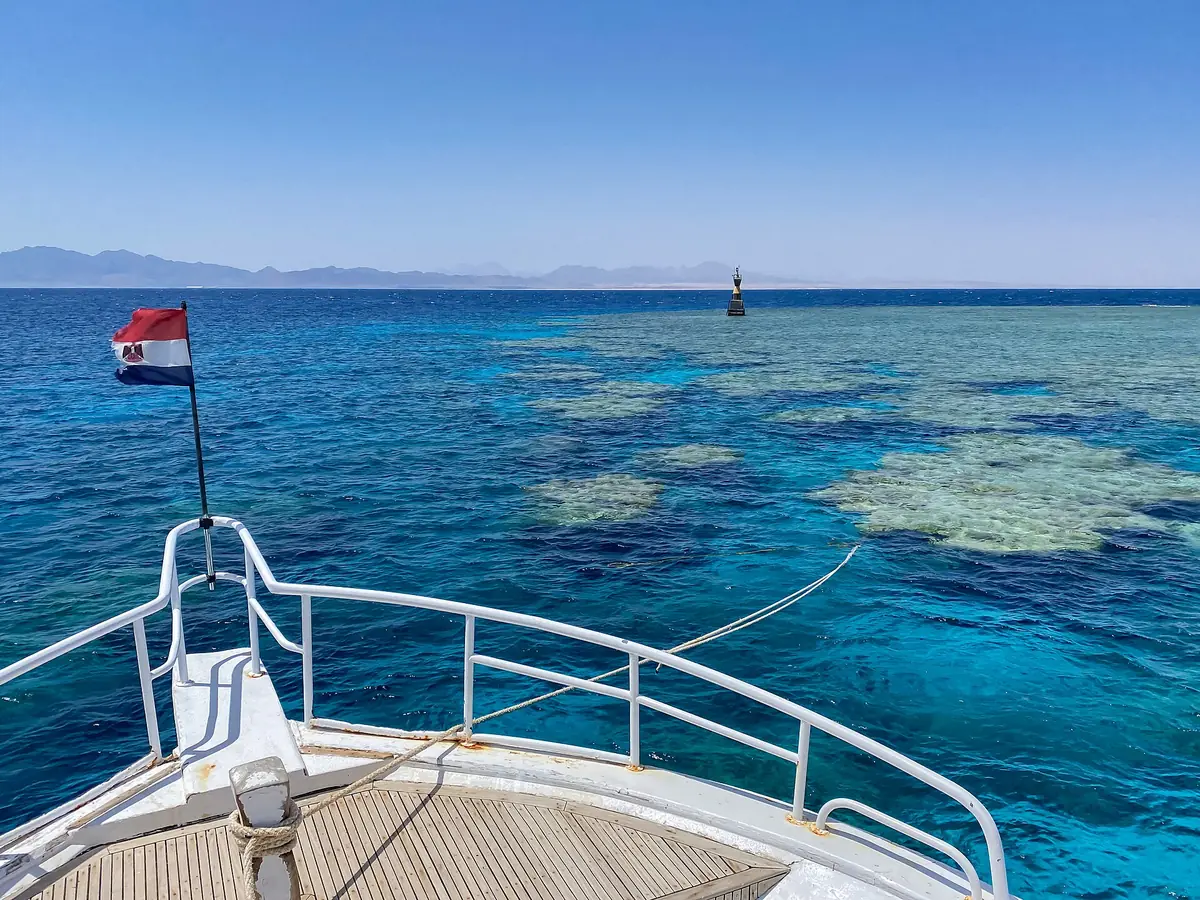
A boat anchored at Middle Reef, off Safaga, on Egypt's Red Sea coast
Photograph: dronepicr — opens in a new tab · CC BY 2.0 — opens in a new tab
Changes: Resized and converted to WebP; displayed with responsive crops. · Original photograph and licence details ↗ — opens in a new tab
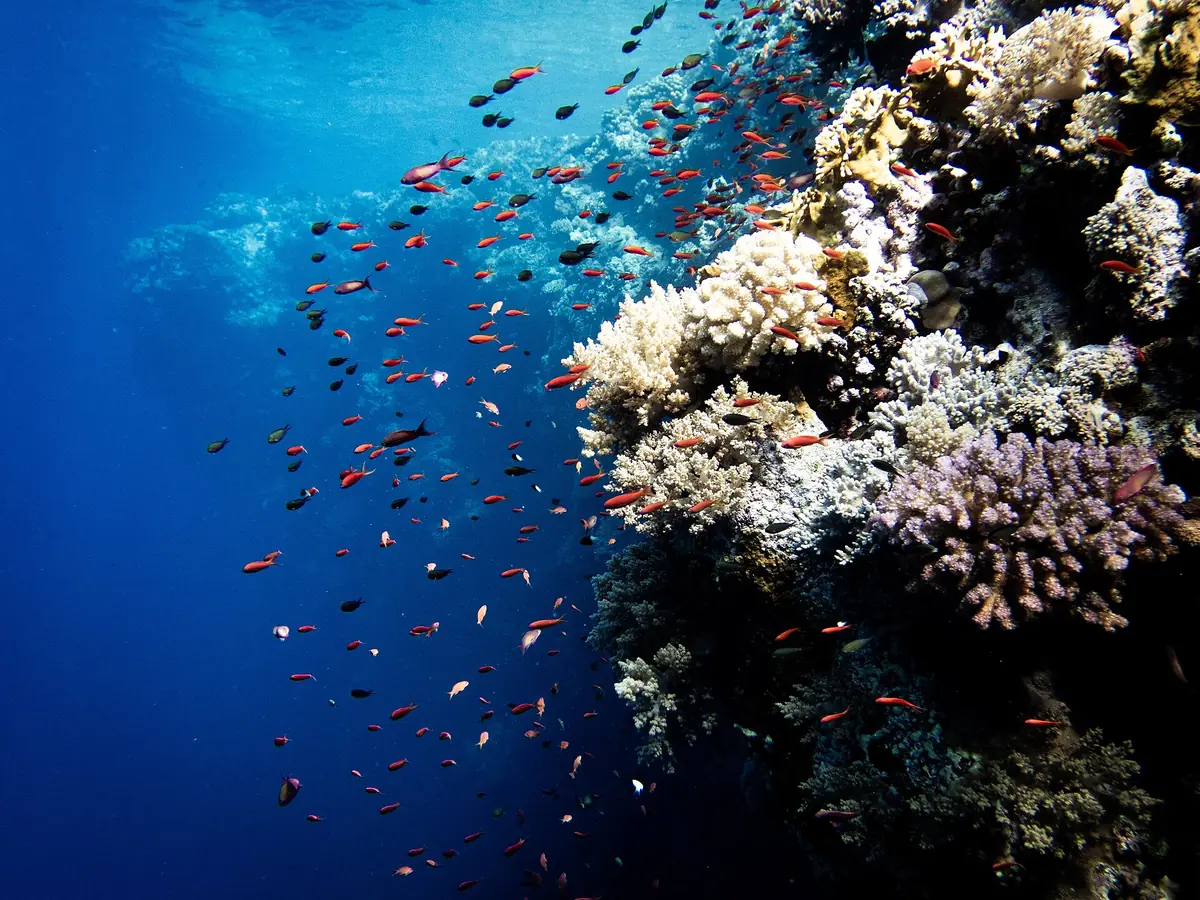
Anthias and hard corals on the drop-off at Elphinstone Reef, a liveaboard site off the southern coast
Photograph: Polygonia c-album — opens in a new tab · CC BY-SA 4.0 — opens in a new tab
Changes: Resized and converted to WebP; displayed with responsive crops. · Original photograph and licence details ↗ — opens in a new tab
A dugong on the seagrass near Marsa Alam, one of the few places in the Red Sea where they still live
Photograph: Julien Willem — opens in a new tab · CC BY-SA 3.0 — opens in a new tab
Changes: Resized and converted to WebP; displayed with responsive crops. · Original photograph and licence details ↗ — opens in a new tab
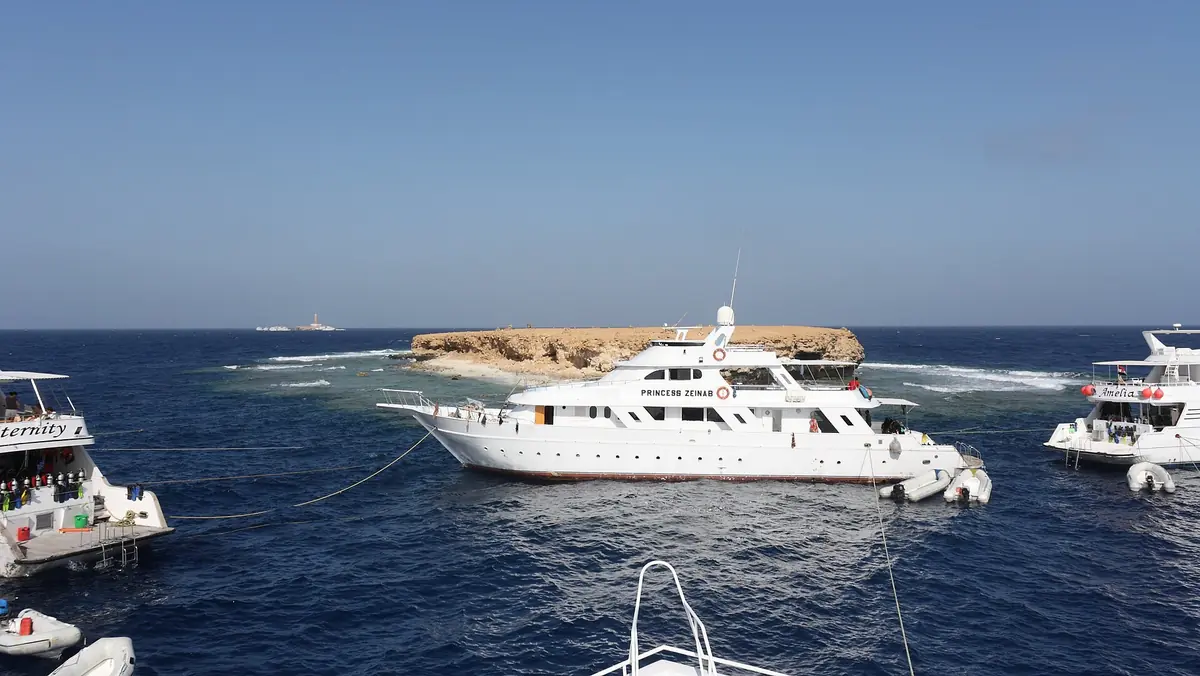
Liveaboard boats at Small Brother Island, one of the Brothers Islands
Photograph: Alexander Vasenin — opens in a new tab · CC BY-SA 3.0 — opens in a new tab
Changes: Resized and converted to WebP; displayed with responsive crops. · Original photograph and licence details ↗ — opens in a new tab
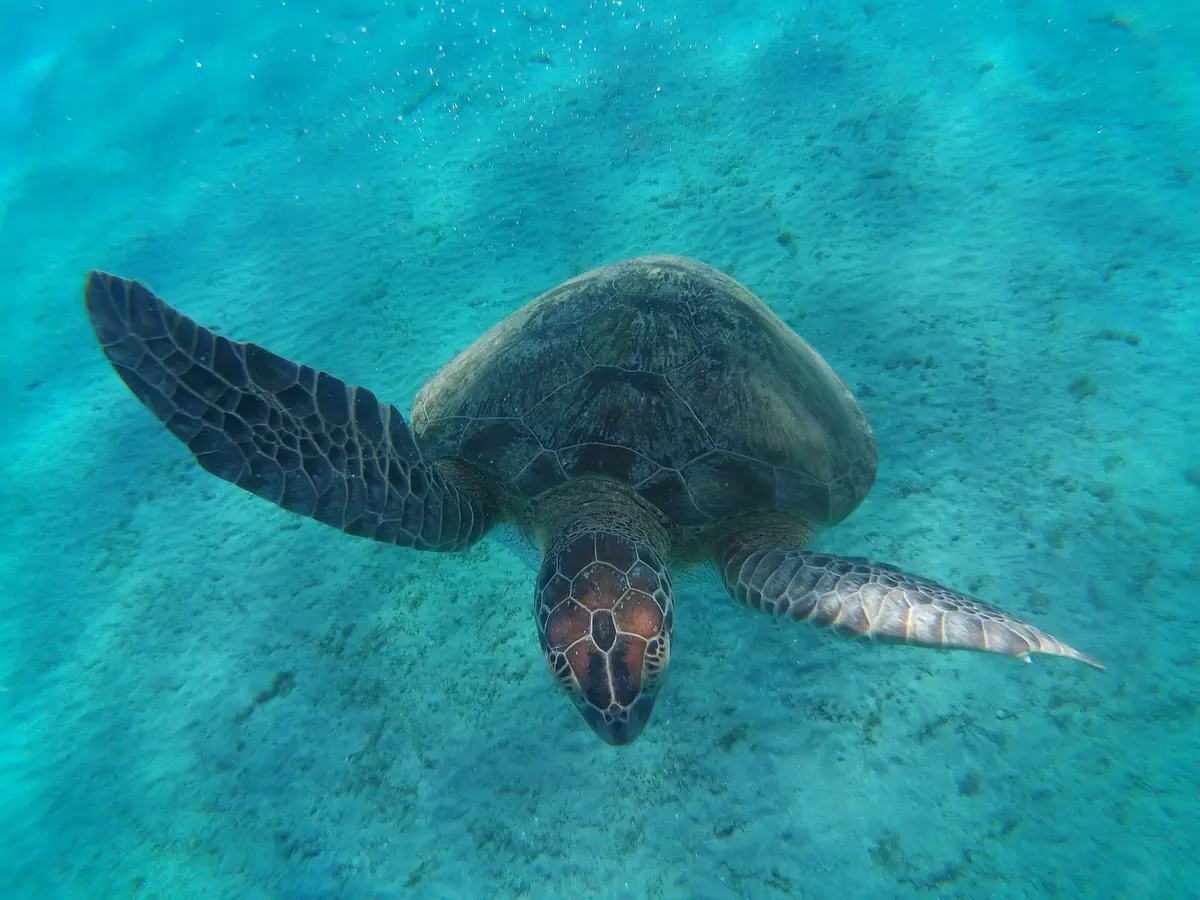
A turtle in the bay of Abu Dabbab, near Marsa Alam
Photograph: Jan Beránek — opens in a new tab · CC BY-SA 3.0 — opens in a new tab
Changes: Resized and converted to WebP; displayed with responsive crops. · Original photograph and licence details ↗ — opens in a new tab