Aqaba: the Red Sea, the reefs and the old fort, and the current advice
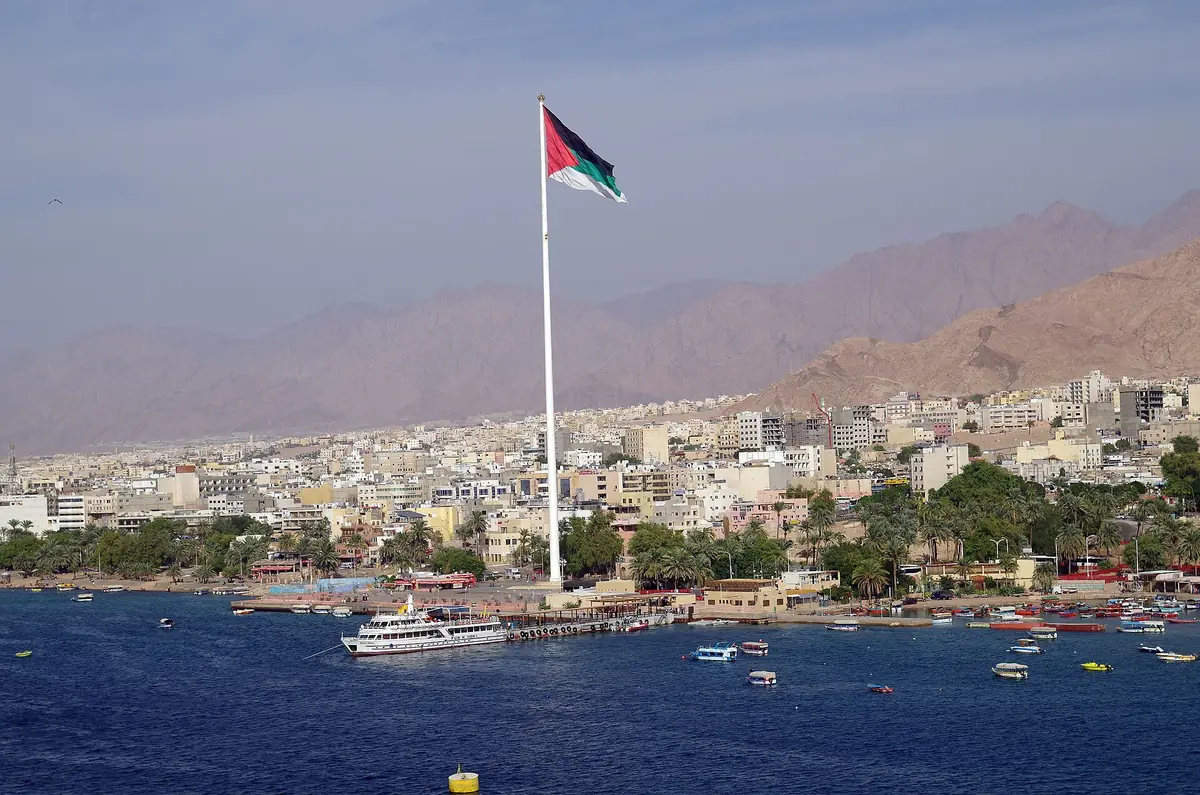
Aqaba is Jordan's port on the Red Sea, a town of palms and low buildings at the head of the Gulf of Aqaba, with the mountains of Sinai across the water. The reefs begin almost at the beach. Jordan's 26 km of coast hold more than 20 dive sites, most of them inside the Aqaba Marine Reserve, with corals, turtles and wrecks sunk on purpose for divers. In town, the Mamluk fort, the ruins of the early Islamic city of Ayla and a giant flag of the Arab Revolt tell the town's history. France advises against travel to Aqaba and its surroundings except for an imperative reason, so read the first section before you plan.
In this guide
Find the location ↗ — opens in a new tabThe short answer
If your own government's advice allows the trip, two nights are enough: stay in the town centre near the Corniche, or on the South Beach by the reefs. Spend one day on the fort, the museum and Ayla, and one on the water: shore snorkelling with Aqaba Adventure Divers costs JOD 10 with the gear, and Dive Aqaba's snorkelling boat trip USD 20 with lunch. Aqaba Castle costs JOD 3 for foreign visitors with its museum, and both are included in the Jordan Pass. Aqaba is about 120 km south of Petra by road.
- Suggested time
- 2 nights in Aqaba
- Where to stay
- The town centre by the Corniche, or the South Beach near the Marine Reserve
- Season and timing
- March to May and September to November are the most pleasant months; summer temperatures can pass 40°C. The sea averages about 22.5°C and drops to about 20°C in winter.
Read the government advice first
France advises against travel to the city of Aqaba and its surroundings except for an imperative reason, because of missile and drone fire towards Jordan since 17 July 2026 and the risk of falling debris from interceptions; its advice was last updated on 30 October 2026. France's text does not say whether Wadi Rum, about 66 km away, counts as Aqaba's surroundings, so French readers should check with France Diplomatie before booking. Canada asks travellers to stay vigilant around Aqaba port and King Hussein International Airport because of possible missile and drone activity. Other governments draw other lines: read health and safety and your own government's advice before you book.
Our seven- and ten-day Jordan routes start and end in Amman and reach Wadi Rum from Petra rather than through Aqaba. Travel insurance may not cover a trip against your government's advice, so check your policy too.
Prices and times checked 28 November 2026
Where to stay: the town centre or the South Beach
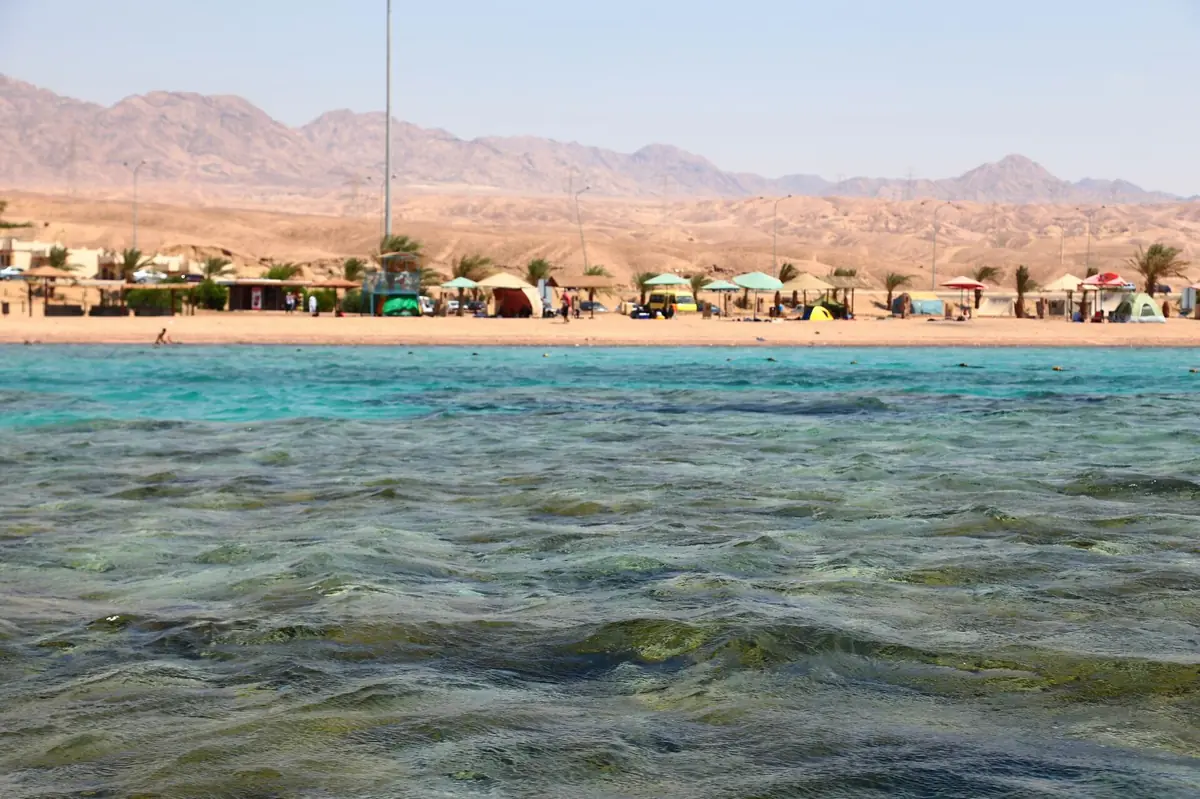
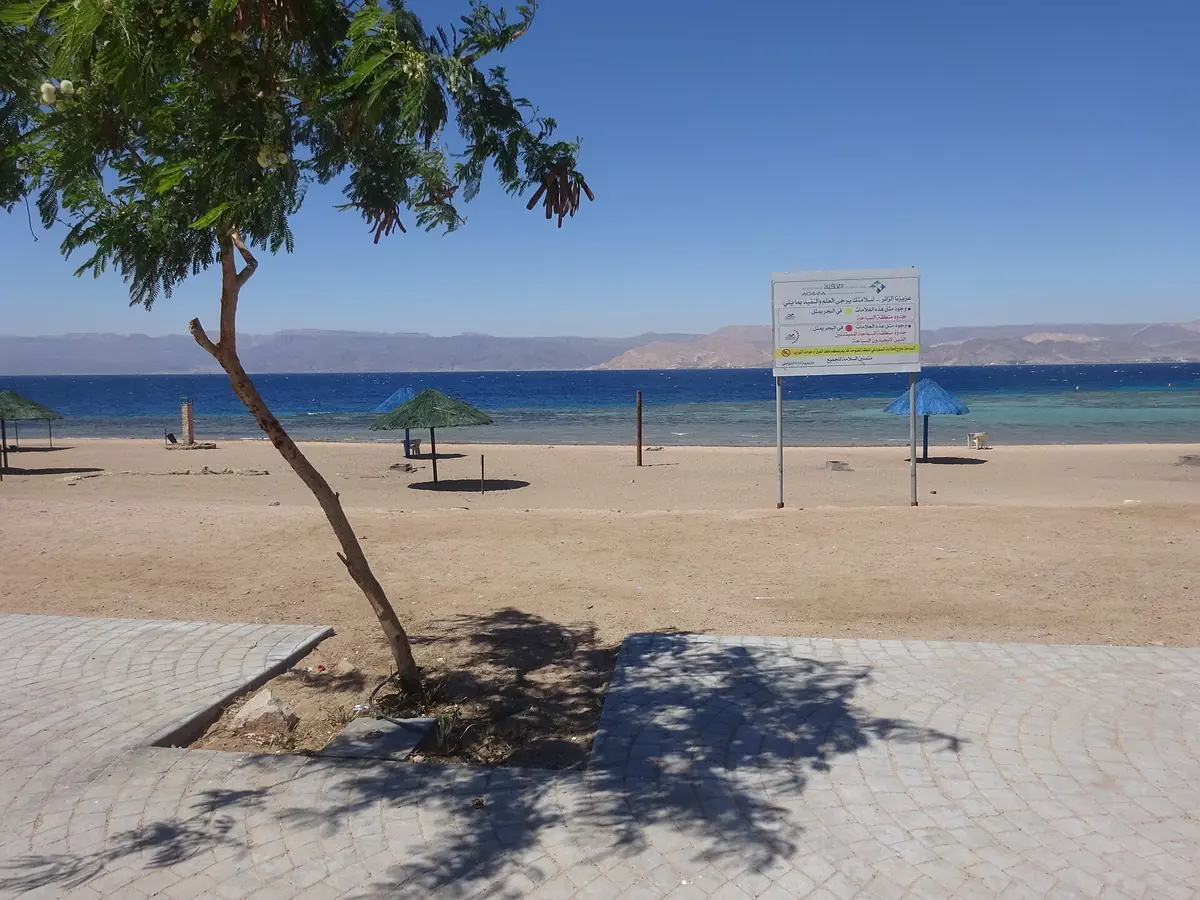
Aqaba has two bases. The town centre runs along the Corniche from the Great Arab Revolt Plaza past Al Hafayer Beach to the fort, with seafront cafés, the souk and the museum within walking distance. The South Beach, south of the port, runs along the Aqaba Marine Reserve, where many reefs start from the shore; it suits divers and snorkellers who want to be in the water before breakfast. Two nights give one day in town and one on the sea.
Hotels range from beach resorts and boutique hotels to guesthouses and furnished apartments; our where-to-stay guide covers Jordan's bases with named hotels.
The old town: Aqaba Castle, Ayla and the flag
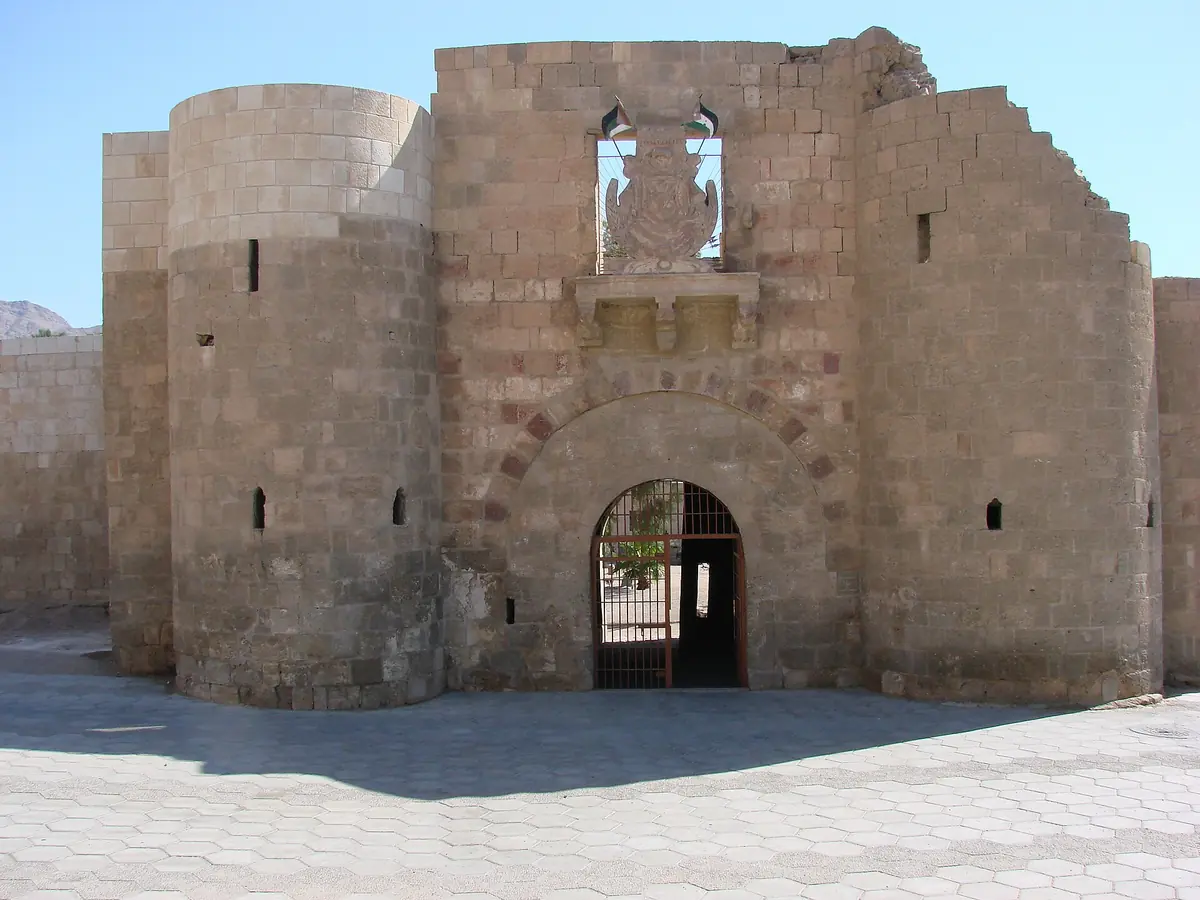
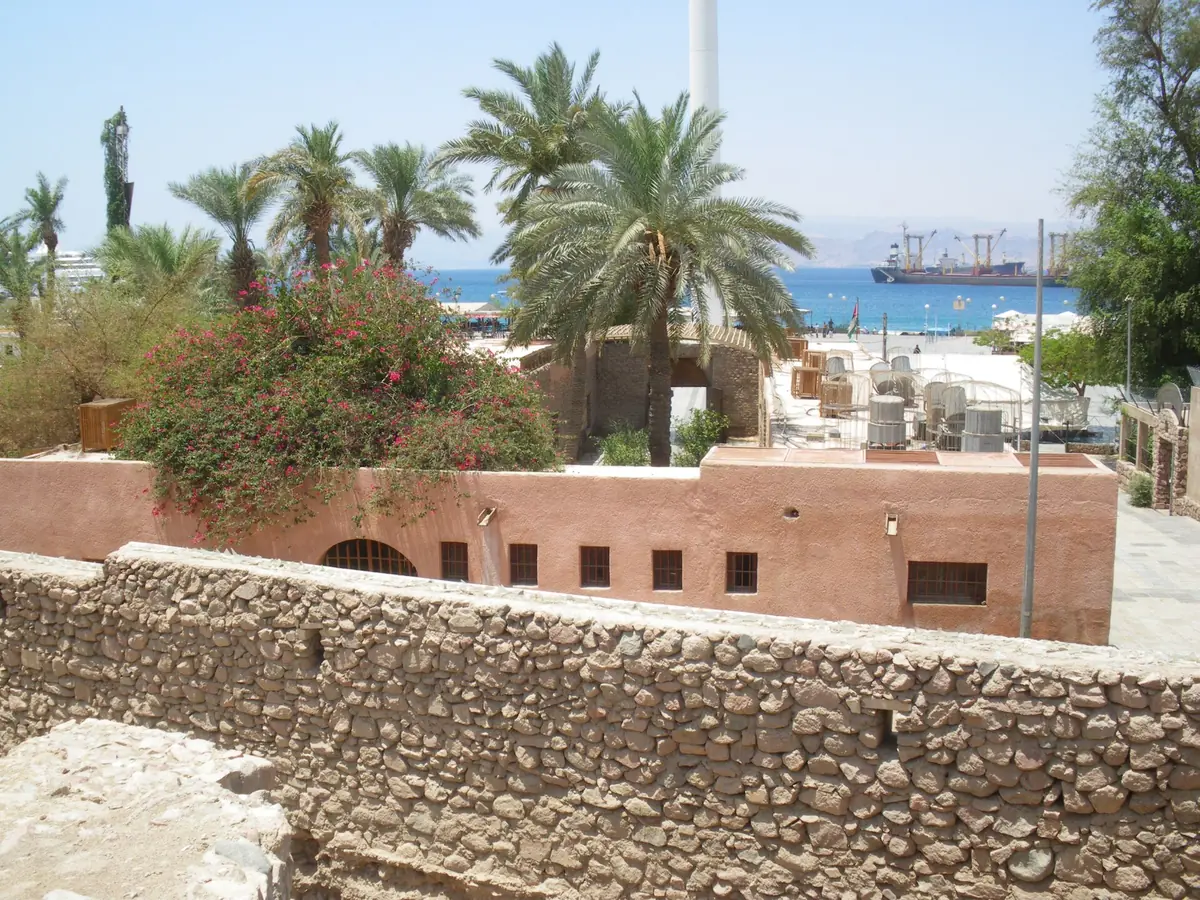
Aqaba Castle stands by the sea on the Corniche. Its origins go back to the early 16th century and the reign of the Mamluk sultan Qansuh al-Ghawri, and it was renovated under Mamluk and then Ottoman rule. It served as a caravanserai and as barracks, and it played its part in the Arab Revolt's capture of Aqaba from the Ottoman army. The Hashemite coat of arms is carved over its gate. Next to the castle stands the House of Sharif Hussein bin Ali, built in 1917 in the Hijazi style, where the leader of the Arab Revolt lived for six months. The house is now the Aqaba Archaeological Museum. One ticket covers both: JOD 3 for foreign visitors, and both are included in the Jordan Pass.
A short walk north, the Great Arab Revolt Plaza flies the flag of the Revolt over the bay from one of the world's tallest free-standing flagpoles. The plaza has an 800-seat theatre and cafés. The fish market and the glass-bottom boats are at the new seaport nearby. Early in the morning or before sunset, fishermen bring their catch into Fishermen Harbour.
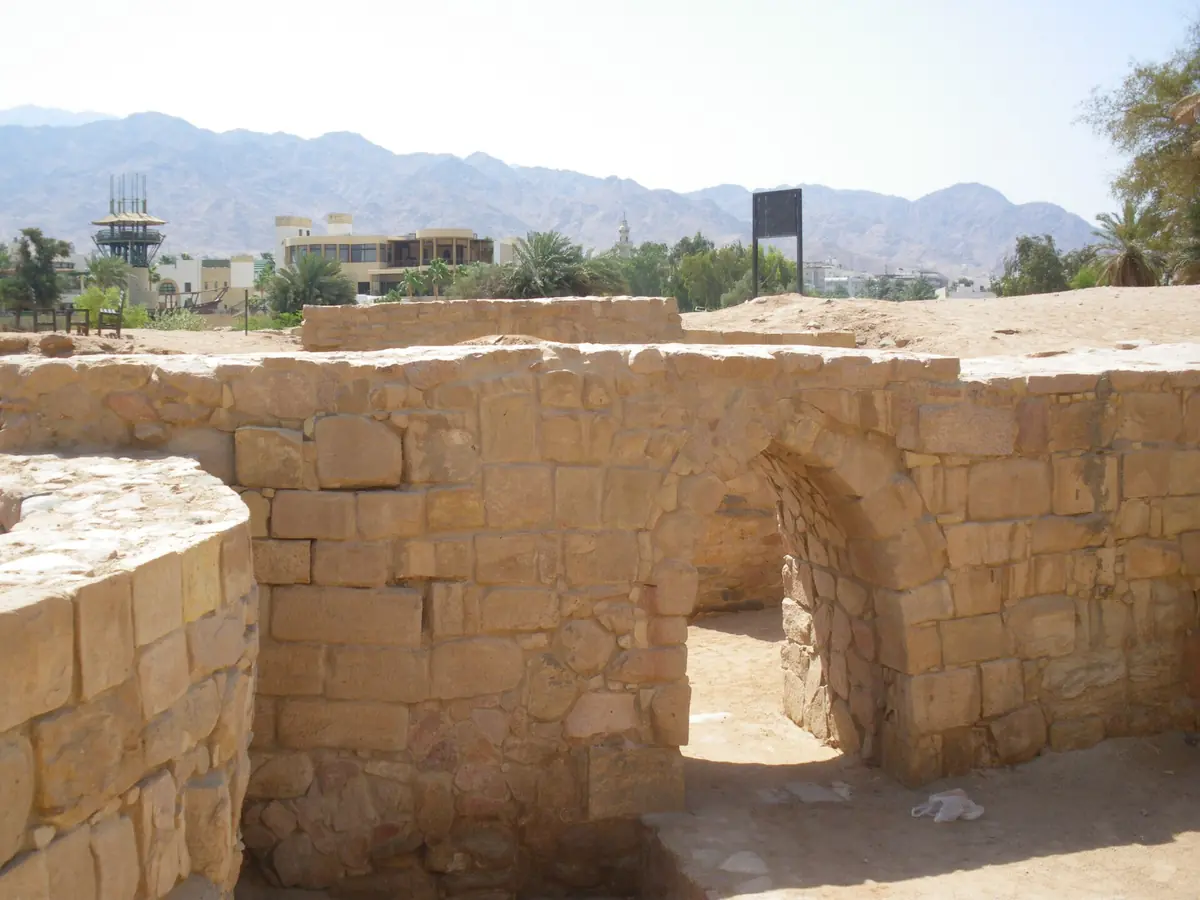
In the hotel district on the seafront lie the ruins of Ayla, the early Islamic town founded around AD 650. Ayla was one of the first Islamic cities built outside the Arabian Peninsula, and a stop for Egyptian pilgrims on the way to Mecca. You can walk among its walls, its gates and the outline of its large mosque. Nearby, in 1998, archaeologists found what they believe is the world's oldest known purpose-built church, from the late 3rd century AD. The church has been covered with earth again to protect it, so there is nothing to see above ground.
Prices and times checked 28 November 2026
The Red Sea: reefs, wrecks and boats
Most dive sites lie in the Aqaba Marine Reserve and can be reached from the shore or by boat. The gulf holds more than 300 kinds of hard and soft coral and over 500 species of fish, with dugongs and four species of sea turtle. Walls and drop-offs start at 10 metres, currents are slight and visibility is usually over 20 metres. The Japanese Garden is a shallow reef popular with snorkellers, where hawksbill turtles, barracuda and shoals of sergeant majors swim over the coral.
The wrecks were sunk for divers. The Cedar Pride, a cargo ship scuttled on 16 November 1985, lies on its side across two reefs with soft coral on its masts. A C-130 Hercules aircraft followed on 16 November 2017. The Underwater Military Museum lines up 19 pieces of old military hardware, tanks and a helicopter among them, in battle formation on the seabed. The UK Foreign Office notes that safety standards vary between dive operators, so book with a licensed dive centre with a long record. Prince Hashem bin Abdullah Hospital in Aqaba has a decompression chamber.
You can see the reef without diving: take a glass-bottom boat from the seaport by the plaza, snorkel from the shore, or visit the Aqaba Aquarium at the Marine Science Station. Two long-running dive centres publish their prices. Aqaba Adventure Divers, on the South Beach since 2004, charges JOD 10 for shore snorkelling with the gear, and JOD 30 to 130 for guided shore dives, from a single dive to a package, with full equipment and hotel pickup in Aqaba. Dive Aqaba, a PADI centre since 2002, charges USD 20 for a snorkelling boat trip with lunch, soft drinks, mask, snorkel and fins, and USD 75 for two guided boat dives with lunch; a full set of dive equipment is USD 35 a day. To swim, go to Al Hafayer Beach in town or to the public beaches of the South Beach, where organised shuttles run from town.
Prices and times checked 28 November 2026
Getting there, and the special-zone visa
Aqaba is about 120 km south of Petra and about 4 hours by road from Amman, at the end of the Desert Highway; Wadi Rum is 66 km to the north-east, about 55 minutes. JETT's coaches link Aqaba with Amman: from Abdali at 07:00 and 14:00 and from 7th Circle five times a day between 08:00 and 19:30, in 4 to 4.5 hours, for JOD 10 a standard seat; coaches return to Abdali at 01:00, 07:00, 14:00 and 16:30. JETT has no seats on sale from Aqaba to Petra or Wadi Rum. Public buses run to Petra in about 2 hours, and Wadi Rum Nomads gives JOD 25 a car for a taxi from Aqaba to Rum village. France advises against driving at night, notably on the Desert Highway, so end every drive before dark. Our transport guide covers buses and car hire.
King Hussein International Airport (AQJ) is the town's airport. Royal Jordanian and Turkish Airlines fly there all year, and easyJet, Wizz Air and Ryanair add winter routes. Aqaba is a special economic zone with its own visa rule. If you arrive at Aqaba's airport, its port or a land border other than Wadi Araba, the visa is free as long as you leave within one month through the same border. If you enter Jordan elsewhere and declare Aqaba as your destination, you can claim the free visa too, but you must register at the ASEZA visa office in Aqaba within 48 hours. The free zone visa does not apply at the Wadi Araba crossing from Eilat, so arrange your visa or Jordan Pass in advance if you enter there. Our entry guide explains who qualifies and how the Jordan Pass works.
AB Maritime sails every night from Aqaba port to Nuweiba on Egypt's Sinai coast: the ferry leaves at 23:30 and is due at 02:30, and a one-way ticket costs USD 85 (USD 150 return) for anyone over two. Be at the port three hours before departure, book ahead to avoid the extra fee for same-day tickets, and pay the Jordanian departure tax separately. British travellers normally need a visa for Egypt, and the UK government names two ways to get one: an e-visa online in advance, or a visa on arrival at approved airports. Nuweiba is a sea port, so get the e-visa before you sail and check your own government's Egypt advice. Keep your Egyptian entry and exit stamps, which Canada says Jordanian officers check. The land crossings to Israel and the West Bank, including Wadi Araba just north of Aqaba, can close without notice.
Prices and times checked 28 November 2026
What Aqaba's sights cost
Aqaba Castle with the Archaeological Museum costs JOD 3 for foreign visitors and is free with any Jordan Pass. Ayla, the Great Arab Revolt Plaza and the Corniche are open spaces you can walk into. On the water, shore snorkelling with Aqaba Adventure Divers costs JOD 10 and its guided shore dives JOD 30 to 130; Dive Aqaba charges USD 20 for a snorkelling boat trip and USD 75 for two guided boat dives. Rooms are not included here; see the where-to-stay guide.
Prices and times checked 28 November 2026
What to eat and where to look
Sayyadieh
Aqaba's own fish dish: spiced fish served on rice cooked with the fish stock.
- Where to look
- The seafood restaurants by the old port and the fish market near the Great Arab Revolt Plaza.
- Fit it into your day
- Dinner after the fort and the plaza.
Grilled Red Sea fish
Fresh hammour or sultan ibrahim from the gulf, grilled and served with a crisp salad.
- Where to look
- The fish market at the old port, where you choose the fish and a restaurant grills it.
- Fit it into your day
- Lunch on the day in town.
Al-hooh
The Aqabawi dessert: layers of pastry stuffed with nuts or dates, fried in ghee and dipped in sugar syrup.
- Where to look
- The sweet shops of the town centre.
- Fit it into your day
- After dinner, with tea.
Falafel and shawarma in shrak
Fried chickpea balls, or lamb or chicken from the spit, wrapped in thin Bedouin shrak bread.
- Where to look
- Sandwich stalls around the souk.
- Fit it into your day
- A quick lunch between the beach and the fort.
A Jordanian breakfast
Hummus, mutabbal, white cheese, labaneh, pickles, tomatoes and cucumbers with warm pitta bread and mint tea.
- Where to look
- The cafés and restaurants of the town centre.
- Fit it into your day
- Before a morning on the reef.
Many dishes and sweets here contain nuts; ask if you have an allergy.
Practical questions
Is it safe to visit Aqaba now?
Governments differ. France advises against Aqaba and its surroundings except for an imperative reason, and Canada asks for vigilance at Aqaba's port and airport. Read your own government's advice before you book.
How many nights should I spend in Aqaba?
Two nights: one day for the fort, the museum and Ayla, and one on the water.
How much is Aqaba Castle?
JOD 3 for foreign visitors, including the Aqaba Archaeological Museum next door; both are included in the Jordan Pass.
Can you snorkel from the beach in Aqaba?
Yes. Many reefs of the Aqaba Marine Reserve can be reached from the shore; the Japanese Garden is a shallow reef popular with snorkellers.
How far is Aqaba from Petra and Wadi Rum?
About 120 km from Petra, around 2 hours by public bus, and 66 km from Wadi Rum, about 55 minutes by car.
Do I need a visa for Aqaba?
Aqaba is a special economic zone: if you arrive at its airport, its port or a land border other than Wadi Araba, the visa is free as long as you leave within a month through the same border. The entry guide explains who qualifies.
Keep planning your trip
Health and safety in Jordan
Where the UK, German, French and Canadian advice draws its lines in Jordan, the numbers to save, hospitals and insurance, vaccines, flash floods, roads and laws.
Read the guide
Entering Jordan
Who gets Jordan's JOD 40 visa on arrival, when the Jordan Pass waives it, the free Aqaba zone visa, which land borders issue visas, and what customs asks.
Read the guide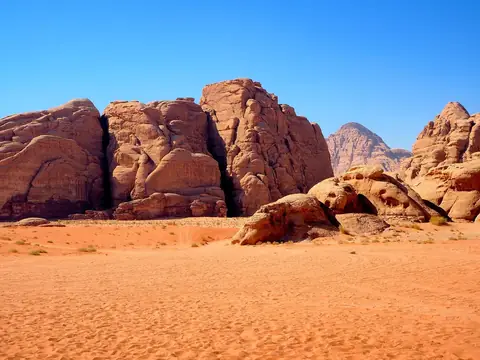
Wadi Rum
One night in a Wadi Rum camp after Petra: the jeep tour, Lawrence's Spring, Khazali Canyon and Burdah, with the entry fee, tour prices and the drive in daylight.
Read the guide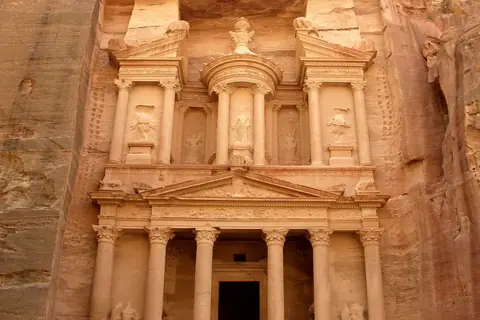
Petra
Two nights in Wadi Musa for Petra: the Siq, the Treasury, the Royal Tombs, the Monastery and the High Place, with ticket prices, hours, Petra by Night and buses.
Read the guideTransport in Jordan
Get around Jordan: the JETT bus to Petra, the Desert, King's and Dead Sea highways by hire car, airport buses and taxis, apps, and the places no bus reaches.
Read the guide
First trip to Jordan
How many days a first Jordan trip needs, the order of Amman, Petra, Wadi Rum and the Dead Sea, how to get between them, and what to book before you fly.
Read the guideSources and checks before you travel
(28)
- France, Conseils aux voyageurs: Jordanie, sécurité (French) ↗ — opens in a new tab
- Government of Canada: Jordan travel advice ↗ — opens in a new tab
- UK Foreign Office: Jordan safety and security ↗ — opens in a new tab
- Visit Aqaba (ASEZA): history and culture ↗ — opens in a new tab
- Jordan Tourism Board: Aqaba ↗ — opens in a new tab
- Visit Aqaba (ASEZA): diving ↗ — opens in a new tab
- Visit Aqaba (ASEZA): visa ↗ — opens in a new tab
- Visit Aqaba (ASEZA): by air ↗ — opens in a new tab
- Visit Aqaba (ASEZA): by land ↗ — opens in a new tab
- Visit Aqaba (ASEZA): essential information ↗ — opens in a new tab
- Visit Aqaba (ASEZA): eat and drink ↗ — opens in a new tab
- Visit Aqaba (ASEZA): Wadi Rum ↗ — opens in a new tab
- Visit Aqaba (ASEZA): Petra ↗ — opens in a new tab
- Visit Petra (PDTRA): getting to Petra ↗ — opens in a new tab
- Jordan Tourism Board: entrance fees ↗ — opens in a new tab
- Jordan Pass: included attractions ↗ — opens in a new tab
- Jordan Tourism Board: ports ↗ — opens in a new tab
- UK Foreign Office: Jordan travel advice ↗ — opens in a new tab
- France, Conseils aux voyageurs: Jordanie (French) ↗ — opens in a new tab
- JETT: live schedule ↗ — opens in a new tab
- Jordan Pass: prices ↗ — opens in a new tab
- AB Maritime (Arab Bridge Maritime): home page (Arabic) ↗ — opens in a new tab
- German Federal Foreign Office: Jordan, travel and safety advice ↗ — opens in a new tab
- Aqaba Adventure Divers: shore diving and snorkelling ↗ — opens in a new tab
- Dive Aqaba: prices ↗ — opens in a new tab
- Wadi Rum Nomads: how to get to Wadi Rum ↗ — opens in a new tab
- AB Maritime: passenger information ↗ — opens in a new tab
- UK government: Egypt travel advice, entry requirements ↗ — opens in a new tab
Reference sources for the version dated 28 November 2026. Confirm opening times, access, transport and conditions for your travel dates.
Photo credits
(6)
Aqaba and the flag of the Arab Revolt over the bay
Photograph: Balou46 — opens in a new tab · CC BY-SA 4.0 — opens in a new tab
Changes: Resized and converted to WebP; displayed with responsive crops. · Original photograph and licence details ↗ — opens in a new tab
Aqaba Castle on the Corniche
Photograph: watchsmart — opens in a new tab · CC BY 2.0 — opens in a new tab
Changes: Resized and converted to WebP; displayed with responsive crops. · Original photograph and licence details ↗ — opens in a new tab
The Egyptian Gate of Ayla
Photograph: fr:User:Bel Adone — opens in a new tab · Public domain — opens in a new tab
Changes: Resized and converted to WebP; displayed with responsive crops. · Original photograph and licence details ↗ — opens in a new tab
The Red Sea off Aqaba
Photograph: Adeeb Atwan — opens in a new tab · CC BY 3.0 — opens in a new tab
Changes: Resized and converted to WebP; displayed with responsive crops. · Original photograph and licence details ↗ — opens in a new tab
The South Beach
Photograph: Gerda Arendt — opens in a new tab · CC BY-SA 4.0 — opens in a new tab
Changes: Resized and converted to WebP; displayed with responsive crops. · Original photograph and licence details ↗ — opens in a new tab
The Aqaba Archaeological Museum
Photograph: Utilisateur:Bel Adone — opens in a new tab · Public domain — opens in a new tab
Changes: Resized and converted to WebP; displayed with responsive crops. · Original photograph and licence details ↗ — opens in a new tab