Luxor and Aswan governorates
Nile cruise from Luxor to Aswan: ship, dahabiya or train
Between Luxor and Aswan the Nile runs past palm groves and desert cliffs, and two great Ptolemaic temples stand on its banks: the Temple of Horus at Edfu, one of the most complete in Egypt, and the double temple of Kom Ombo. Most travellers see them from a cruise ship with full board, sailing three nights downstream from Aswan or four nights upstream from Luxor. A dahabiya, a sailing houseboat with a handful of cabins, takes four or five nights and moors at quiet banks and small sites the big ships pass by. The train covers the same stretch in about three hours, and leaves the temples to a day trip. The sections below set the three options side by side, then cover the stops and what you pay beyond the fare.
In this guide
Find the location ↗ — opens in a new tabThe short answer
For a first trip, book the 4-night cruise from Luxor to Aswan: it gives Luxor two half-days, Edfu and Kom Ombo on the way and a full day in Aswan. Short of time, take the 3-night sailing from Aswan, which fits Luxor’s two banks into one long day. At Luxor and Aswan Travel, a place in a standard double cabin costs USD 1,195 per person for the 4 nights and USD 1,075 for the 3 nights from September to April, with meals, an Egyptologist guide and the temple tickets. A dahabiya takes 4 or 5 nights from near Esna (Nour El Nil sails 5), and the train takes 2 h 40 to 3 h 25. Book the cabin first, then your nights in Luxor or Aswan around the sailing day.
- Suggested time
- 3 or 4 nights on a cruise ship, or 4 to 5 nights on a dahabiya
- Where to stay
- On board between Luxor and Aswan, with a night or more in Luxor or Aswan before and after
- Season and timing
- Sonesta’s cruise ships sail every week, but Upper Egypt is very hot in summer: Nour El Nil does not sail its dahabiyas from June to August because of the heat. October to April is the comfortable season for temple visits from the boat.
Cruise ship, dahabiya or train
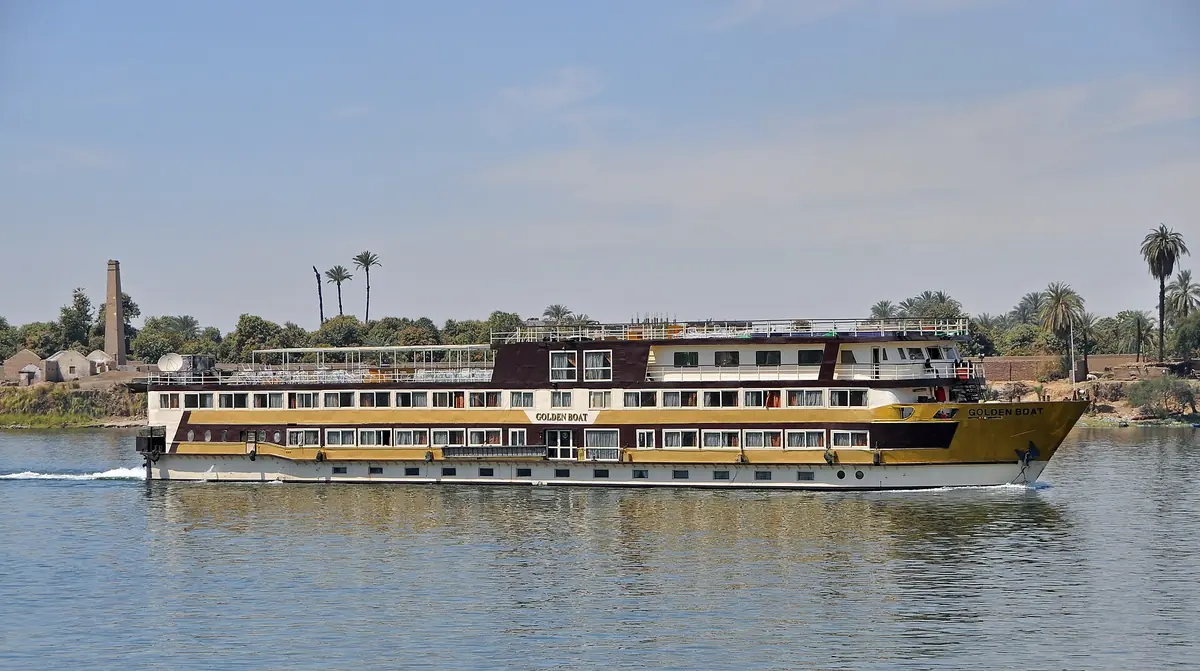
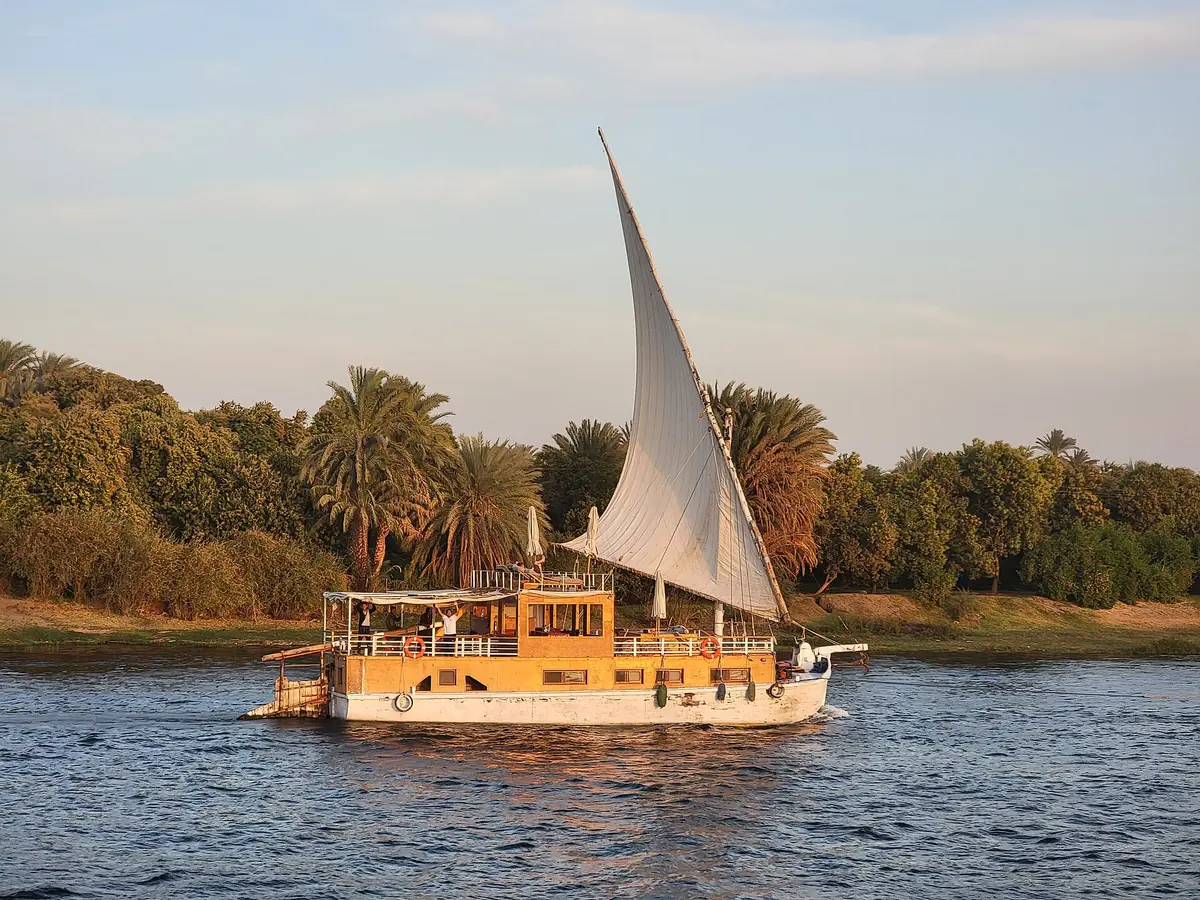
The three ways down this part of the Nile suit different trips. A cruise ship is a floating hotel of several decks, often with a pool on the sun deck, full board and guided visits timed around the sailing. A dahabiya is a two-masted sailing boat with a handful of cabins (ten on Nour El Nil’s Malouka) that takes longer and stops where the big ships do not. The train is fastest, and you see Edfu and Kom Ombo on a separate day trip or not at all.
| Option | Time between Luxor and Aswan | Temple stops | Who it suits |
|---|---|---|---|
| Cruise ship, Luxor to Aswan | 4 nights, Monday to Friday on Sonesta’s ships | Luxor, Edfu, Kom Ombo, Aswan | A first trip: guided visits at both ends, little planning |
| Cruise ship, Aswan to Luxor | 3 nights, Friday to Monday on Sonesta’s ships | Aswan, Kom Ombo, Edfu, Luxor | Short trips: the same stops in one night less |
| Dahabiya, Esna to Aswan | 4 or 5 nights (5 on Nour El Nil’s boats) | Esna, El Kab, Edfu, Gebel el-Silsila, Kom Ombo | Slow travel and small groups |
| Sleeper train | 2 h 40 to 3 h 25 | None on the way | Travellers who prefer hotel nights in Luxor and Aswan |
Our Luxor guide and Aswan guide cover the two ends in detail; this guide is about the stretch between them.
Which way to sail: 4 nights from Luxor or 3 from Aswan
Ships between Luxor and Aswan run a weekly rhythm. On Sonesta’s Sun Goddess and St. George 1, the 4-night cruise leaves Luxor every Monday and the 3-night cruise leaves Aswan every Friday; the two join into a 7-night round trip in either direction. Embarkation is at 12:00 before lunch and disembarkation at 08:00 after breakfast. Other ships keep other days: Luxor and Aswan Travel's standard ships leave Luxor for 4 nights on Saturdays, Mondays and Thursdays and Aswan for 3 nights on Mondays, Wednesdays and Fridays, and Oberoi's sail on Tuesdays and Saturdays. Sailing times can shift.
Upstream from Luxor (4 nights). Monday afternoon is Karnak and Luxor Temple; Tuesday starts at 06:00 on the West Bank with the Valley of the Kings, the Valley of the Queens, Hatshepsut’s temple at Deir al-Bahari and the Colossi of Memnon, and the ship sails for Esna at 13:00. Wednesday brings Edfu at 09:00 and Kom Ombo at 18:00, Thursday the High Dam and Philae in the morning and a felucca sail in the afternoon, and you leave the ship in Aswan on Friday morning.
Downstream from Aswan (3 nights). The High Dam and Philae fill Friday afternoon. The ship leaves for Kom Ombo at 05:00 on Saturday, visits the temple at 08:30 and Edfu at 14:30, and ties up at Esna. On Sunday it reaches Luxor for the West Bank at 07:00 and Karnak and Luxor Temple at 15:00, and you leave on Monday at 08:00.
The longer sailing is the easier one. Luxor is split over two days instead of one long day that starts at 07:00, and Aswan gets an afternoon felucca sail. The shorter one saves a night and suits a trip that continues from Luxor to the Red Sea. Neither programme includes Abu Simbel, so fit it into a night in Aswan before or after the boat, or continue south on a Lake Nasser cruise from Aswan to the temples.
Prices and times checked 28 November 2026
Edfu and the Temple of Horus
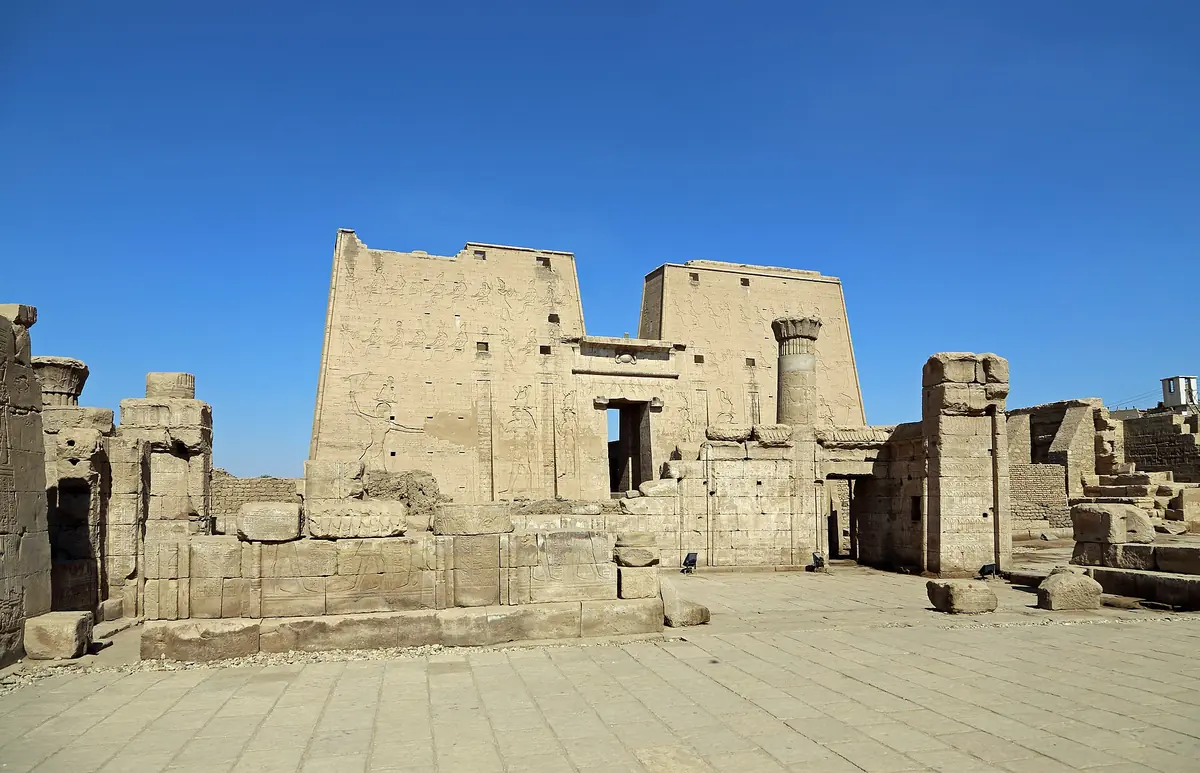
Edfu is one of the most complete temples in Egypt. It was built for the falcon god Horus between 237 and 57 BC, from Ptolemy III to Ptolemy XII, and lay buried under the debris of later settlement until Auguste Mariette cleared parts of it in 1860, which is why its walls are so intact. Two massive pylons carved with Ptolemy XII smiting his enemies face the forecourt, with granite statues of Horus as a falcon at the entrance. Beyond a colonnaded court come two hypostyle halls, one showing the founding of the temple and the other Horus’s journey in his sacred barque with Hathor, and then the sanctuary.
A restoration of the roof, begun in 2021 by the Supreme Council of Antiquities and the University of Würzburg, has brought out painted scenes and remains of the original colour on the carved reliefs. Entry is EGP 550 for foreign adults and EGP 275 for foreign students, and children under 6 enter free.
Sonesta’s upstream programme gives Edfu two hours, from 09:00 until the ship sails on at 11:00. That is enough for the courts and both halls. Nour El Nil’s guests ride to the temple by horse and carriage.
Prices and times checked 28 November 2026
Kom Ombo and the Crocodile Museum
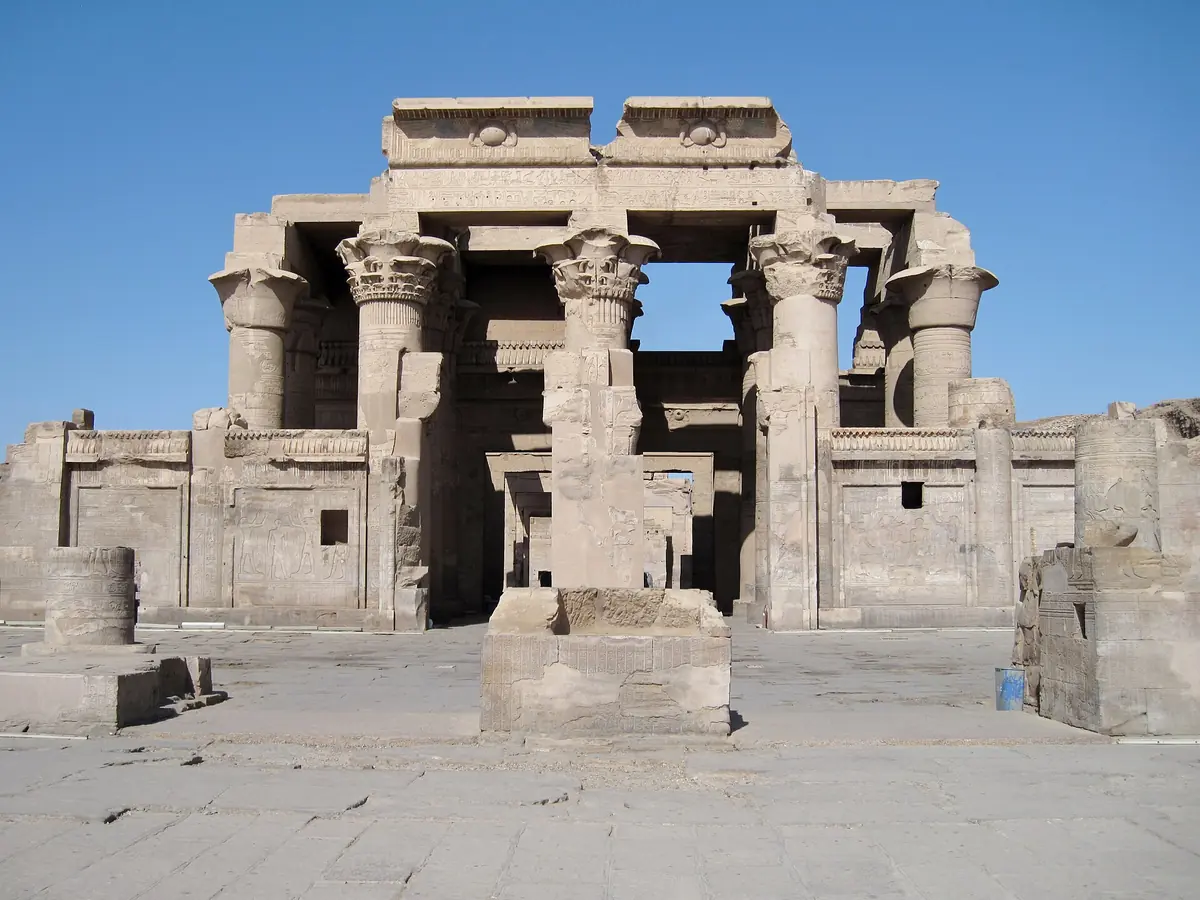
Kom Ombo is the temple on this route built for two gods at once: Sobek, the crocodile god, and Haroeris, Horus the Elder. Two parallel axes run through its columned halls to two sanctuaries, Sobek’s on the right and Haroeris’s on the left. The present building dates from the Ptolemaic and Roman periods, most of its decoration from Ptolemy XII, and its walls carry festival calendars and a Roman-era scene often read as a set of surgical instruments.
The Crocodile Museum beside the temple, opened in 2012, shows mummified Nile crocodiles between 2 m and 4.30 m long, with crocodile fetuses, eyes and golden and ivory teeth, and statues of Sobek. One ticket covers both: EGP 450 for foreign adults and EGP 225 for foreign students. The site opens daily at 07:00 and the ticket window closes at 20:00, late enough for Sonesta’s upstream ships to visit at 18:00, after the heat of the day.
Prices and times checked 28 November 2026
A dahabiya: Esna, El Kab and Gebel el-Silsila
A dahabiya trip starts at Esna, about 53 km (33 miles) south of Luxor, with a walk to the Temple of Khnum and the town’s textile streets. Nour El Nil, one of the operators, sails five nights from Esna to Aswan. Day 2 brings El Kab’s decorated rock tombs and Edfu, and day 3 is a day on the river with a stop to swim. On day 4 the boat reaches Gebel el-Silsila, where the Nile is at its narrowest between two ranges of hills, and the ancient sandstone quarries and the small temple of Horemheb stand on the bank. Nour El Nil says the big cruise ships are not allowed to stop there, so you often have the site to yourselves. Kom Ombo and its Crocodile Museum follow on day 5, and you leave in Aswan on day 6.
Nour El Nil’s boats are 43 to 60 m long. Malouka, one of them, has two suites and eight rooms, and each room takes at most two guests. The line does not sail from June to August. By government rule, its dahabiyas spend the last night at a dock beside the Aswan bridge. Esna’s temple costs EGP 200 for foreign adults if you visit it on your own.
Choose a dahabiya for slow days and small sites rather than for Luxor. Nour El Nil's trips start at Esna, so see Luxor’s temples during your nights in Luxor before you board. Shorter dahabiyas exist too: Princess Farida, a six-suite boat sold by Luxor and Aswan Travel, sails 4 nights from Luxor every Monday and 3 nights from Aswan every Friday, boarding before Esna, from USD 2,600 per person in a double suite for the 4 nights from September to December 2026.
Prices and times checked 28 November 2026
Luxor to Aswan by train, with or without the temples
Abela’s sleeper trains from Cairo continue from Luxor to Aswan in the morning and run back in the late afternoon and evening, taking 2 h 40 to 3 h 25 between the two cities. Southbound trains leave Luxor between 05:15 and 09:00, northbound trains leave Aswan between 16:20 and 20:20, and several stop at Edfu and Kom Ombo. Abela shows its sleeper fares, the Luxor–Aswan leg among them, only to signed-in users on abelatrains.com. Seat61 lists foreigner fares of USD 35 in second class or USD 40 in first on the VIP and express day trains between Luxor and Aswan. Our transport guide covers booking and the other trains between the two cities.
The train makes sense if you prefer hotel rooms to a cabin or have only two nights for the stretch. You then see Edfu and Kom Ombo on a private car tour between the two cities, which the offer below covers, or leave them out.
Prices and times checked 28 November 2026
What the fare covers and what you pay on top
On Sonesta’s ships full board is included in every booking, from the hot buffet breakfast to the meals in the ship's restaurant, with evening entertainment such as a Nubian show and a galabeya party. The programme also lists the temple visits and a felucca sail in Aswan. Nour El Nil’s dahabiya rates cover all expenses and services.
Fares change with the ship, the cabin and the week. At Luxor and Aswan Travel, a place in a standard double cabin costs USD 1,195 per person on the 4-night cruise from Luxor and USD 1,075 on the 3-night cruise from Aswan from September to April, and USD 841 and USD 755 from May to August; its deluxe ships cost USD 1,622 and USD 1,460 in winter. Both fares include all meals on board, an Egyptologist guide, the excursions on the programme with their entrance fees, and the transfers; the 4-night fare leaves out Tutankhamun's tomb. If your fare does not include the temples, they cost foreign adults EGP 550 at Edfu and EGP 450 at Kom Ombo, and Philae, on the Aswan day, also costs EGP 550.
Drinks and tips for the crew and guides are not in the fare. Tipping is not required, and our trip-cost guide keeps a 10% buffer for it. Booked directly with a line such as Sonesta, you also pay the taxi between the airport or station and the boat. Carry Egyptian pounds for small tips; our money guide covers cash and cards.
Prices and times checked 28 November 2026
Nights in Luxor and Aswan around the boat
Book at least one night at the start of the cruise, so a late flight or a sleeper train does not cost you the Monday or Friday embarkation at 12:00. In Luxor, a room on the East Bank Corniche keeps you close to Luxor Temple and the riverfront; in Aswan, the Corniche looks across the river to the islands.
Add a night at the end in Aswan for Abu Simbel or in Luxor for the tombs your ship skipped, then continue north. The 10-day itinerary shows how a cruise fits a full Egypt trip.
What to eat and where to look
Ful medames
Slow-cooked, spiced fava beans eaten with baladi flatbread, Egypt’s most common breakfast.
- Where to look
- Breakfast cafés in Luxor and Aswan, before you board or after you leave the ship.
- Fit it into your day
- The morning of embarkation or disembarkation.
Ta’ameya
Egypt’s falafel, made from ground fava beans and herbs, crisp outside and soft inside; it is vegan.
- Where to look
- Street stalls and cafés in Luxor and Aswan, often sold in baladi bread with ful.
- Fit it into your day
- A quick lunch on a night in town before or after the cruise.
Molokhiya
A soup of minced molokhiya leaves topped with fried garlic and coriander, served over rice or with bread; many call it the national dish.
- Where to look
- Egyptian restaurants in Luxor and Aswan.
- Fit it into your day
- Dinner on a night in Luxor or Aswan.
Karkade (hibiscus tea)
A deep-red hibiscus drink served hot or cold, drunk in Nubia since ancient times.
- Where to look
- Cafés and Nubian villages in Aswan.
- Fit it into your day
- The Aswan afternoon at the end of the upstream cruise.
Stuffed pigeon (hamam mahshi)
A traditional Egyptian dish: a grain-fed pigeon stuffed with freekeh, whole green wheat, for a long dinner on land.
- Where to look
- Al-Sahaby Lane, the rooftop restaurant of Nefertiti Hotel on Al-Sahaby Street near Luxor Temple, where it is EGP 350.
- Fit it into your day
- Dinner on a night in Luxor before or after the boat.
Practical questions
Is 3 or 4 nights better for a Nile cruise?
Four nights from Luxor to Aswan is easier: Luxor is split over two days and Aswan gets an afternoon felucca sail. Three nights from Aswan to Luxor covers the same stops but puts both banks of Luxor into one day.
Which day do Nile cruises leave?
On Sonesta’s ships, the 4-night cruise leaves Luxor every Monday and the 3-night cruise leaves Aswan every Friday, boarding at 12:00. Other ships keep their own days; Oberoi’s, for example, sail on Tuesdays and Saturdays.
What do the temples at Edfu and Kom Ombo cost?
Foreign adults pay EGP 550 at Edfu and EGP 450 at Kom Ombo, where the ticket includes the Crocodile Museum. Foreign students pay half, and children under 6 enter free.
Is a dahabiya worth it instead of a cruise ship?
Choose a dahabiya for four or five slow nights, small groups and stops such as El Kab and Gebel el-Silsila that the big ships do not make. Nour El Nil's start at Esna rather than Luxor and do not sail from June to August.
Can I go from Luxor to Aswan by train instead?
Yes. Abela’s sleeper trains take 2 h 40 to 3 h 25 between the two cities, southbound in the morning and northbound in the late afternoon and evening, and Seat61 lists USD 35 in second class or USD 40 in first on the VIP and express day trains. You see Edfu and Kom Ombo only on a separate tour.
Keep planning your trip
Luxor
How many nights Luxor needs: Karnak and Luxor Temple, the Valley of the Kings and its special tomb tickets, Hatshepsut, balloons at dawn and the sleeper train.
Read the guide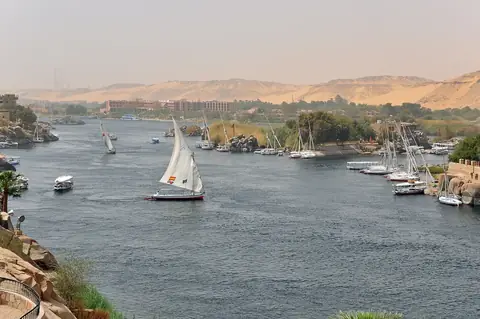
Aswan
Plan two nights in Aswan: Philae, the Nubia Museum, Elephantine, the west-bank tombs, a Nubian village and a felucca, with 2026 ticket prices and Abu Simbel.
Read the guide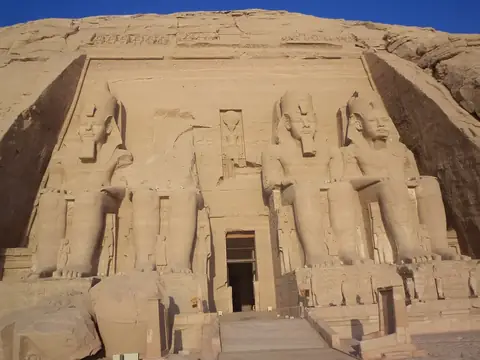
Abu Simbel
Whether to see Abu Simbel on a day trip from Aswan by road or air or stay a night: tickets, opening hours, the sound and light show and the sun festival.
Read the guide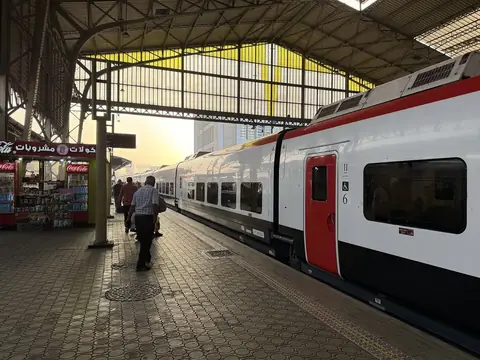
Transport in Egypt
How to travel Egypt: the sleeper train from Giza to Luxor and Aswan, day trains, domestic flights, buses, ride-hailing cars and the Cairo Metro, with journey times.
Read the guide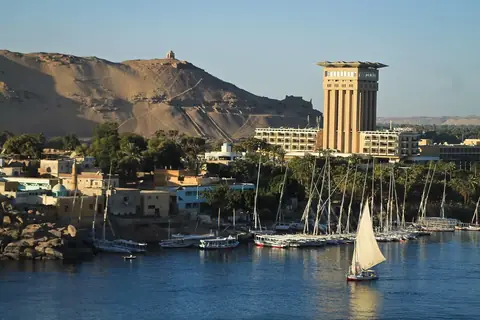
Egypt in ten days
Nine nights: three in Cairo for Giza and the Grand Egyptian Museum, one in Aswan, three on a Nile cruise to Luxor and two in Hurghada, with sailing days and costs.
Read the guide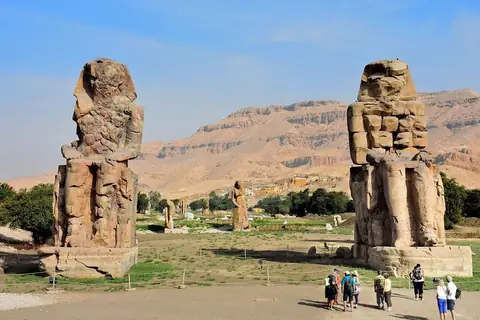
Best time to visit Egypt
When to go to Egypt: cool months for Luxor and Aswan, 41°C summers in the south, Alexandria's winter rain, Ramadan 2027 and Red Sea water by month.
Read the guideSources and checks before you travel
(24)
- Sonesta Sun Goddess: itinerary ↗ — opens in a new tab
- Sonesta Sun Goddess: day-by-day itinerary (PDF) ↗ — opens in a new tab
- Sonesta St. George 1: itinerary ↗ — opens in a new tab
- The Oberoi Philae: itineraries ↗ — opens in a new tab
- Nour El Nil: itinerary ↗ — opens in a new tab
- Nour El Nil: boats ↗ — opens in a new tab
- Nour El Nil: Malouka ↗ — opens in a new tab
- Ministry of Tourism and Antiquities: Edfu Temple ↗ — opens in a new tab
- Ministry of Tourism and Antiquities: Edfu roof restoration ↗ — opens in a new tab
- Egypt monuments tickets: Temple of Horus at Edfu ↗ — opens in a new tab
- Ministry of Tourism and Antiquities: Kom Ombo Temple ↗ — opens in a new tab
- Ministry of Tourism and Antiquities: Crocodile Museum ↗ — opens in a new tab
- Egypt monuments tickets: Esna Temple ↗ — opens in a new tab
- Ministry of Tourism and Antiquities: Philae ↗ — opens in a new tab
- Abela: sleeper train schedule ↗ — opens in a new tab
- Experience Egypt (Egyptian Tourism Authority): culture and food ↗ — opens in a new tab
- Experience Egypt: Aswan and Abu Simbel ↗ — opens in a new tab
- Experience Egypt: Luxor ↗ — opens in a new tab
- Luxor and Aswan Travel: 3-night cruise from Aswan to Luxor ↗ — opens in a new tab
- Luxor and Aswan Travel: 4-night cruise from Luxor to Aswan ↗ — opens in a new tab
- Luxor and Aswan Travel: Princess Farida dahabiya ↗ — opens in a new tab
- Seat61 (independent rail guide): train travel in Egypt ↗ — opens in a new tab
- Al-Sahaby Lane Restaurant (Nefertiti Hotel): menu ↗ — opens in a new tab
- Abela Trains: booking site ↗ — opens in a new tab
Reference sources for the version dated 29 November 2026. Confirm opening times, access, transport and conditions for your travel dates.
Photo credits
(7)
A cruise ship on the Nile at Luxor, where the upstream sailings to Aswan begin
Photograph: Marc Ryckaert ( MJJR ) — opens in a new tab · CC BY 3.0 — opens in a new tab
Changes: Resized and converted to WebP; displayed with responsive crops. · Original photograph and licence details ↗ — opens in a new tab
The Temple of Horus at Edfu, the main stop between Esna and Kom Ombo
Photograph: Marc Ryckaert — opens in a new tab · CC BY-SA 4.0 — opens in a new tab
Changes: Resized and converted to WebP; displayed with responsive crops. · Original photograph and licence details ↗ — opens in a new tab
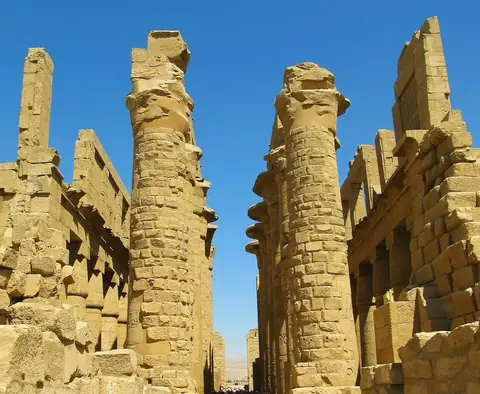
The double gateway of Kom Ombo, a temple shared by Sobek and Horus the Elder
Photograph: Olaf Tausch — opens in a new tab · CC BY 3.0 — opens in a new tab
Changes: Resized and converted to WebP; displayed with responsive crops. · Original photograph and licence details ↗ — opens in a new tab
A dahabiya under sail on the Nile
Photograph: Votpuske — opens in a new tab · CC BY-SA 4.0 — opens in a new tab
Changes: Resized and converted to WebP; displayed with responsive crops. · Original photograph and licence details ↗ — opens in a new tab
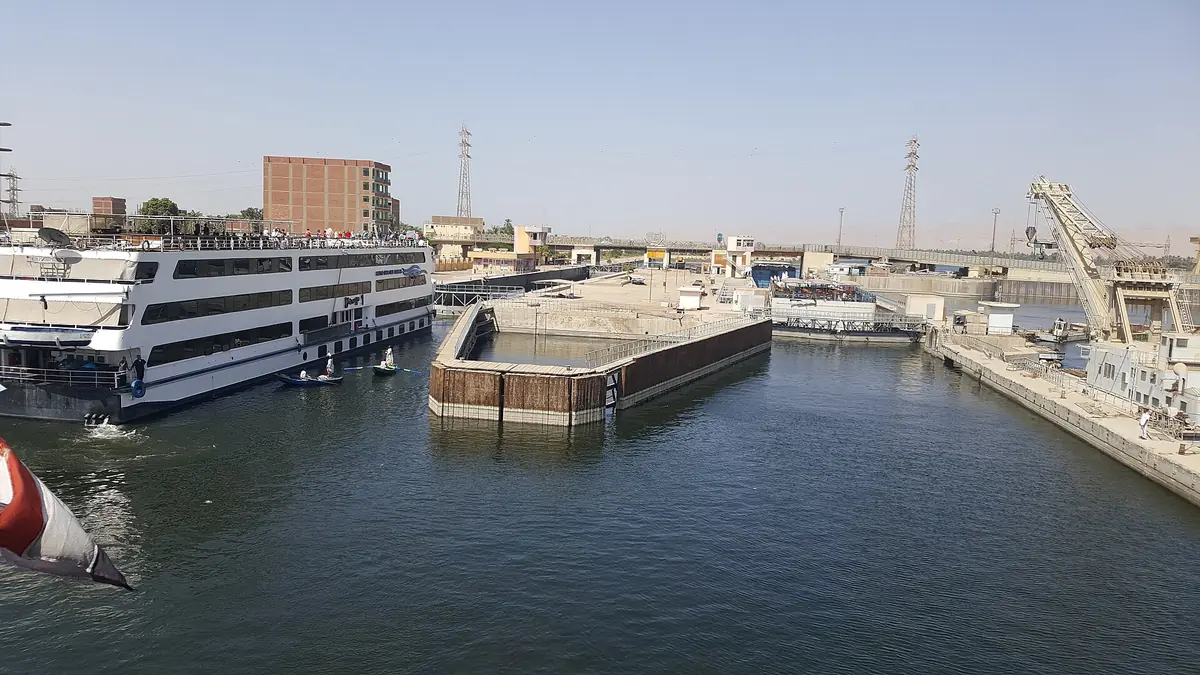
The new lock at Esna on the Nile, with a cruise ship alongside
Photograph: Ovedc — opens in a new tab · CC BY-SA 4.0 — opens in a new tab
Changes: Resized and converted to WebP; displayed with responsive crops. · Original photograph and licence details ↗ — opens in a new tab
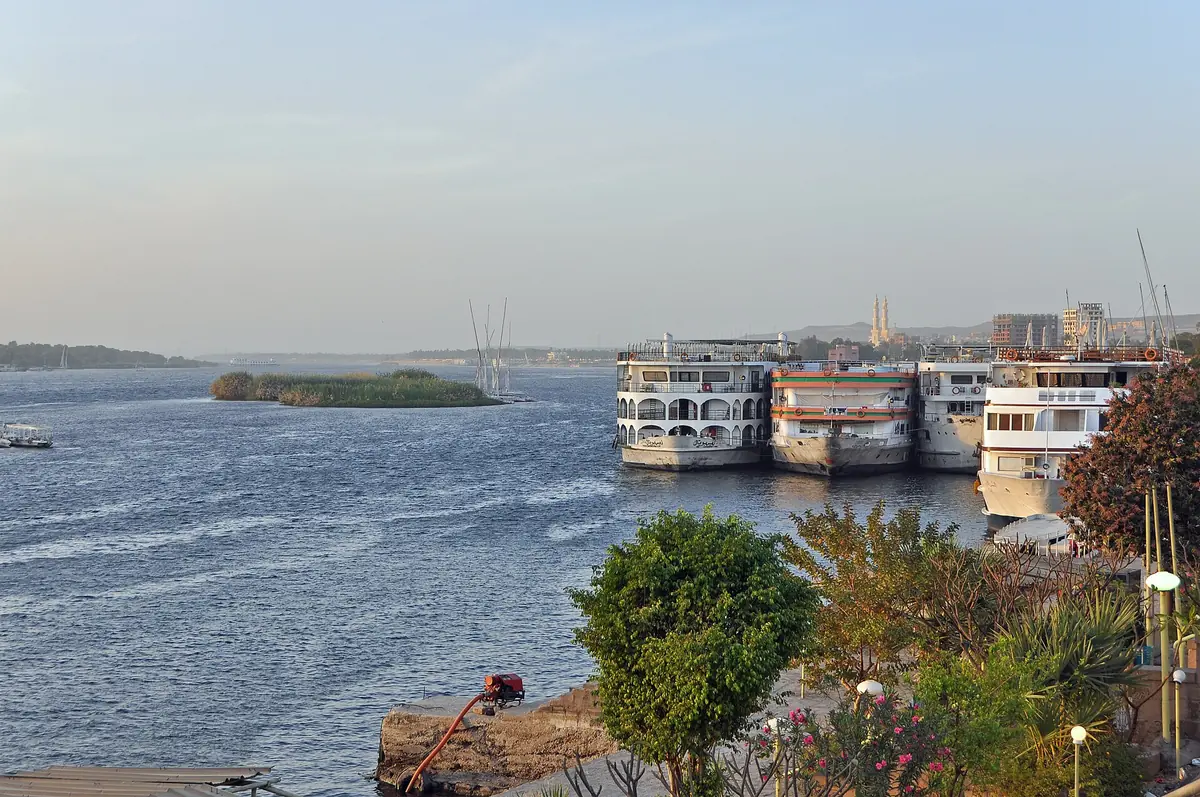
Cruise ships moored on the Nile at Aswan, the southern end of the run
Photograph: Marc Ryckaert — opens in a new tab · CC BY-SA 4.0 — opens in a new tab
Changes: Resized and converted to WebP; displayed with responsive crops. · Original photograph and licence details ↗ — opens in a new tab
Yuki Ikemori on a sunlounger on the roof deck of a Nile cruise ship, with the river bank behind
Photo: Yuki Ikemori