Aswan
Abu Simbel: day trip from Aswan or a night, tickets and sun festival
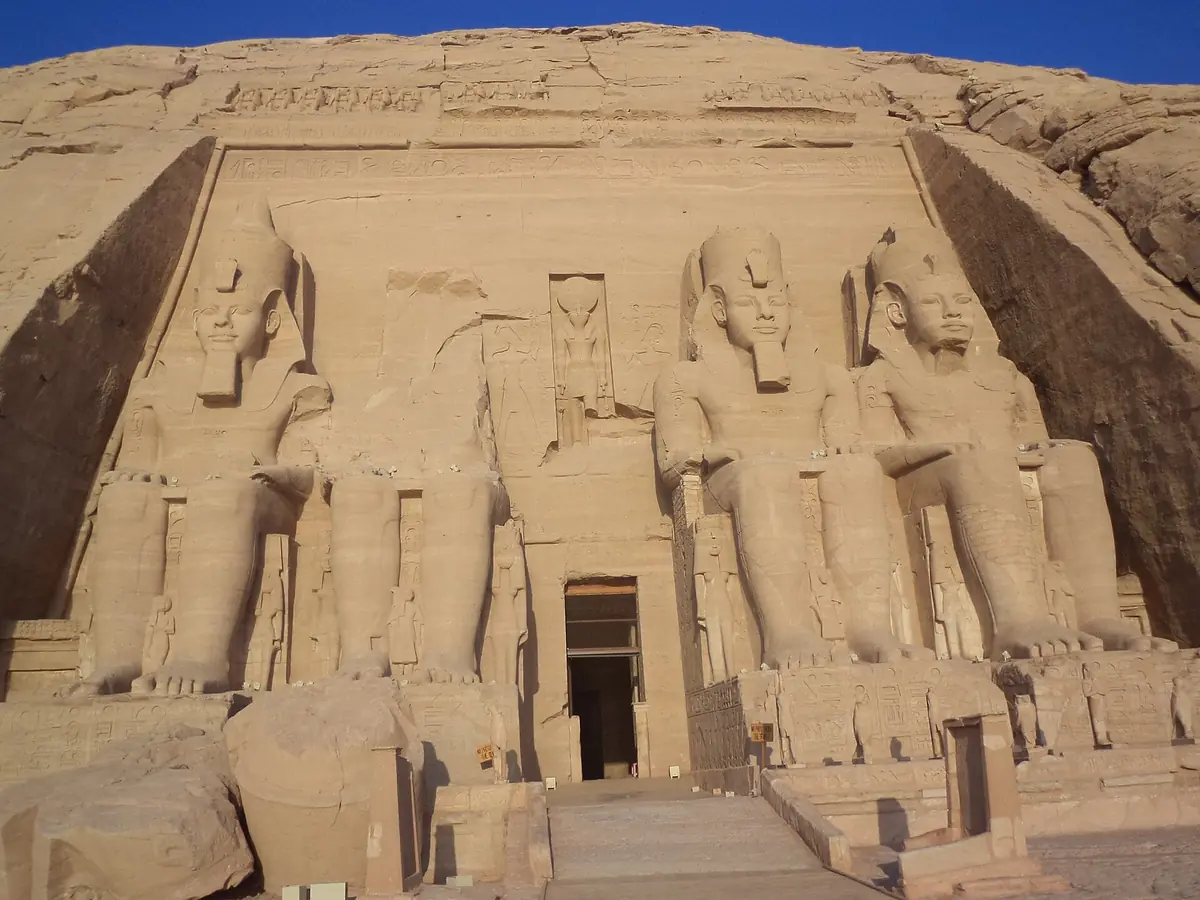
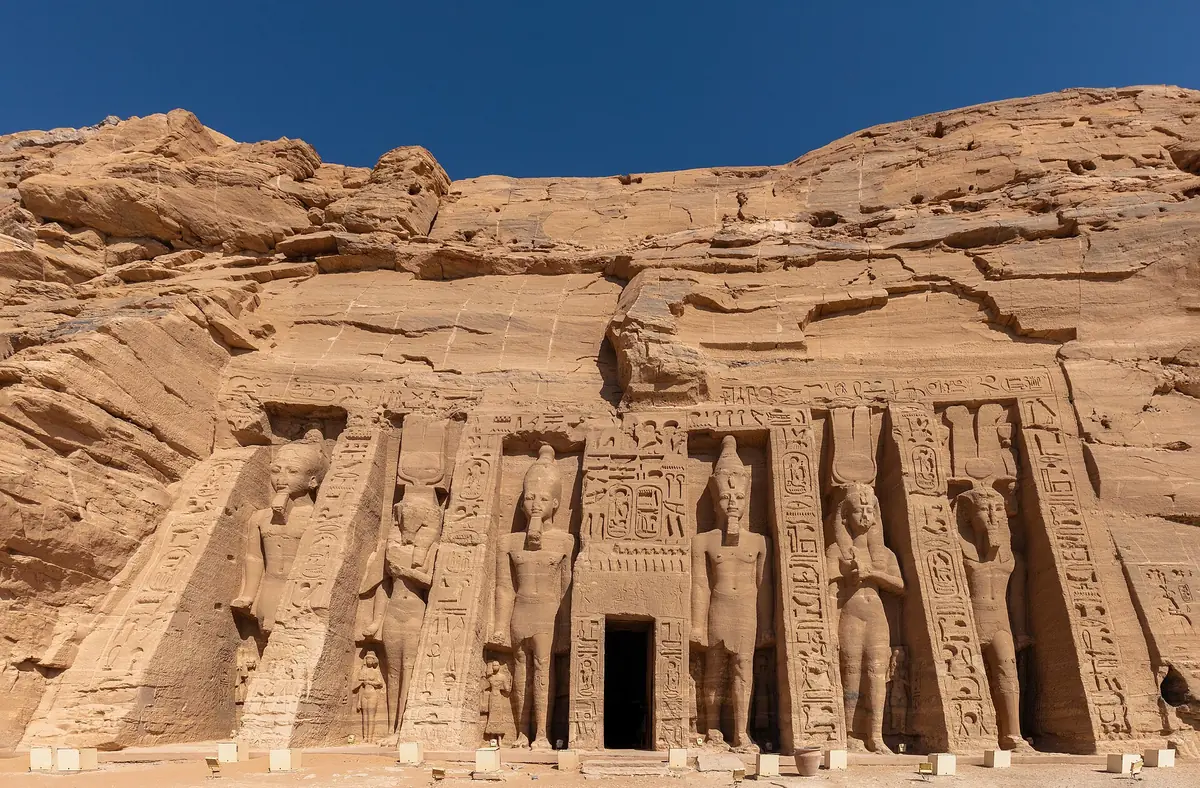
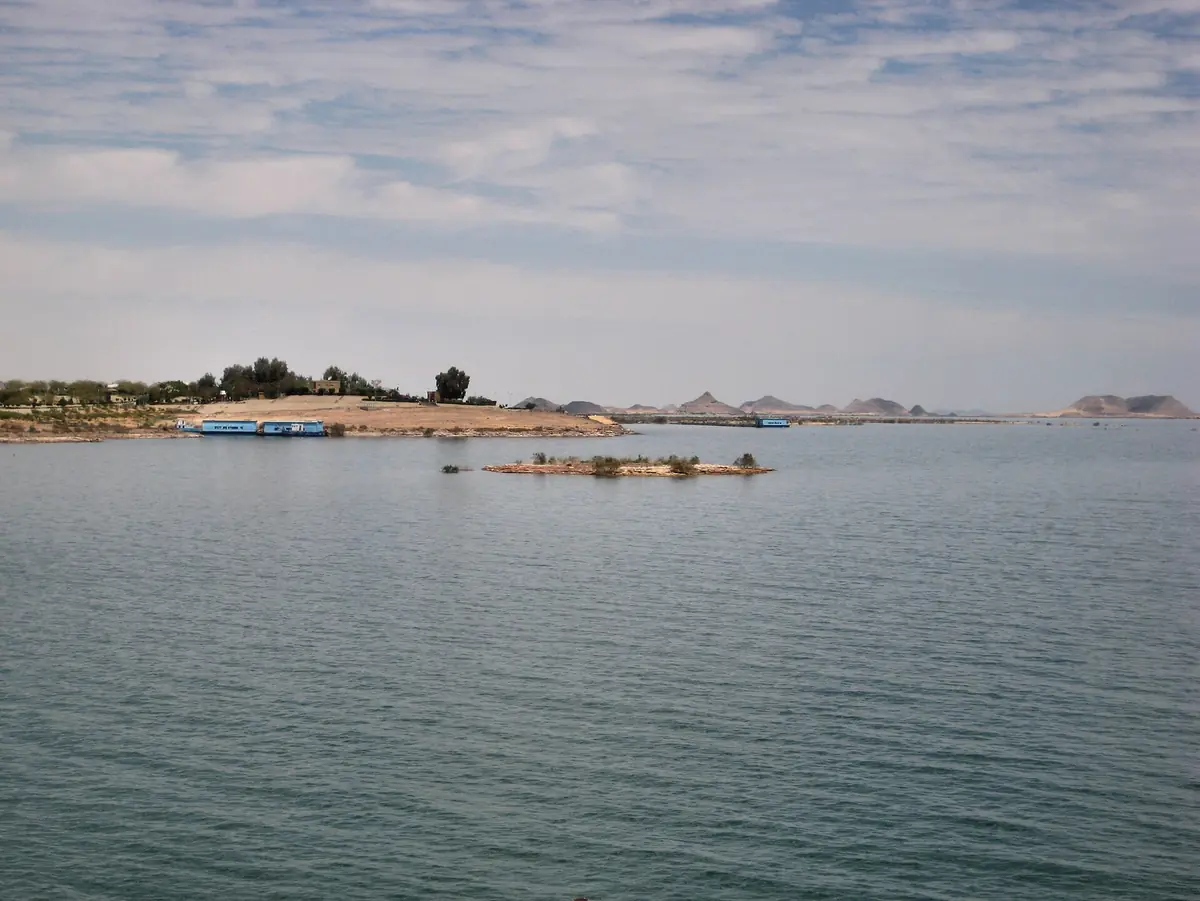
Ramesses II had his great temple cut into a sandstone cliff above the Nile in Nubia, close to what is now the Sudanese border, and set four seated colossi of himself across its front. Beside it, a smaller temple honours the goddess Hathor and his queen Nefertari. Both temples were moved from their original site in 1968, when the new Aswan High Dam threatened to submerge them. They sit about 280 km south of Aswan, so the real question is how you get there: a long day by road, a short flight, or a night in the small town. A night adds the sound and light show after dark and the temples at opening time.
In this guide
Find the location ↗ — opens in a new tabThe short answer
Most travellers see Abu Simbel on a day trip from Aswan: about 280 km each way by road, a three-hour drive that starts before dawn, or a short EgyptAir flight each way. The UK and French governments advise against road travel outside towns at night, so fly, or drive down by day and stay the night, if you want to avoid the dark start. Stay one night in Abu Simbel if you want the sound and light show at 19:00 or 20:00 and the temples when they open at 06:00. A foreign adult ticket is EGP 750 on the ministry's list, or EGP 822 on the official egymonuments.com booking site (EGP 1,200 or 1,272 on 22 February and 22 October, the two sun-festival days), and the show is USD 20. Book the tour, car or flight first: Luxor and Aswan Travel's private road trip costs USD 200 per adult when two book together, and its flying day USD 625, both with the temple ticket.
- Suggested time
- A day trip from Aswan, or 1 night in Abu Simbel
- Where to stay
- Aswan for a day trip; the town of Abu Simbel on Lake Nasser for a night
- Season and timing
- November to March is the mildest time, and there is almost no rain all year. Aswan's long-term average highs run from about 23 °C in January to about 29 °C in March and November. They rise to about 35 °C in April and October and reach about 41 °C from June to August. In summer, see the temples as early as you can.
Ramesses II's Great Temple
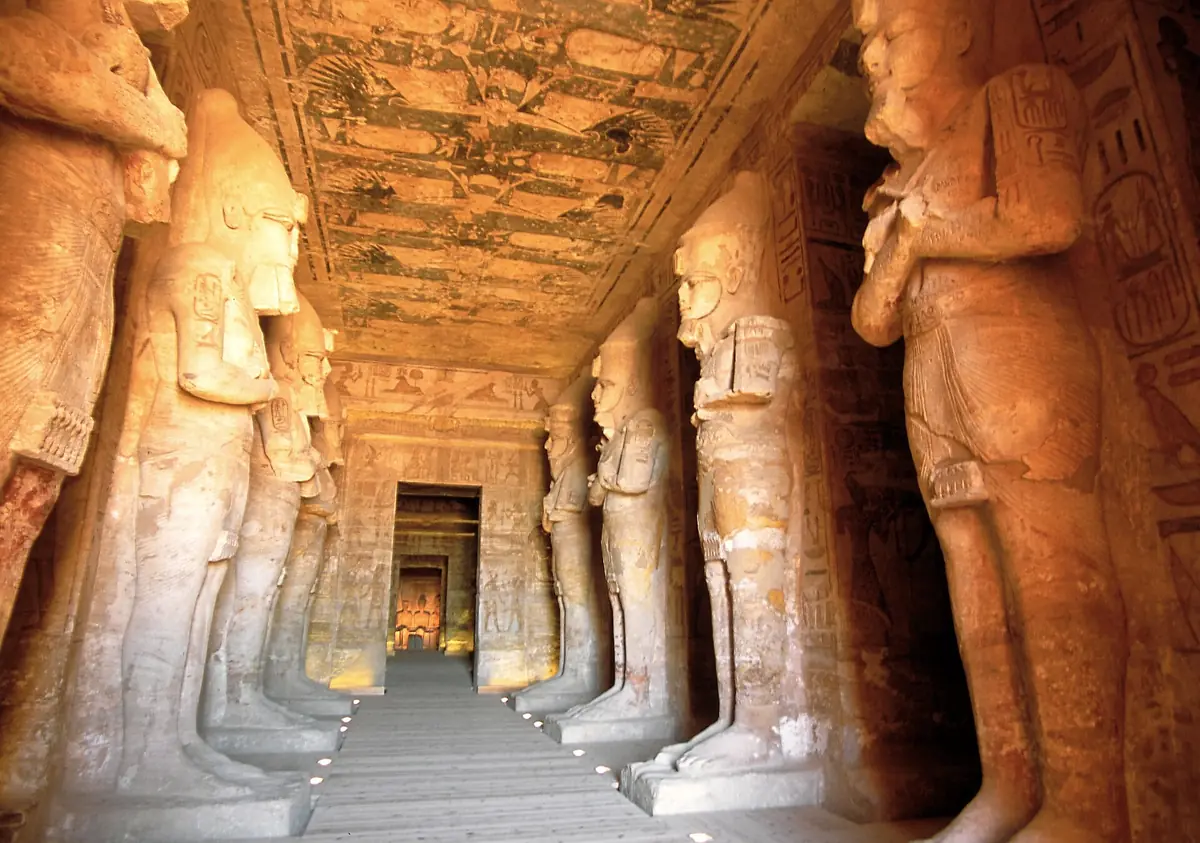
The Great Temple was cut into the living rock for Ramesses II around 1264 BC. Four seated colossi of the king fill its façade; one fell in an ancient earthquake, and the pieces still lie on the ground at its feet. Inside, standing statues of Ramesses line the main hall and lead the eye to the sanctuary, where four seated figures wait in the dark: Amun-Ra, Ra-Horakhty, Ptah and the king himself as a god.
The temple faces the sunrise across the water. On two mornings a year the first light travels down the axis of the hall and falls on the seated statues at the back; the sun-festival section below explains when and how crowded those mornings are. On any other day, step inside, let your eyes adjust and walk slowly to the sanctuary: the hall is deep, and the statues at the back sit in near darkness.
The Small Temple and the move above the lake
A short walk north, the Small Temple is dedicated to Hathor and to Nefertari, Ramesses' Great Royal Wife. On its façade her standing colossi are as tall as his, which is very rare in Egyptian art: a queen shown at the same size as the king.
Both temples stand where they do because of the Aswan High Dam. When the dam was built in the 1960s, Lake Nasser threatened to drown them, and an international campaign led by UNESCO moved them to higher ground in 1968. Abu Simbel joined the World Heritage List in 1979 with nine other Nubian sites between here and Aswan, among them Philae and Kalabsha.
A day trip by road from Aswan
The road runs about 280 km south from Aswan through the desert to Abu Simbel. Luxor and Aswan Travel's private road trip collects you from your Aswan hotel at 04:30 for the three-hour drive, gives you about two hours at the temples and has you back in Aswan at 12:30, so the first part of the drive is in the dark. It costs USD 200 per adult when two book together, with the temple ticket. The other booked options are a shared minivan tour or a private car with a driver, listed below. Book before you reach Aswan if your dates are fixed, and see whether the temple ticket is in the price.
If you prefer to arrange the trip yourself, a hotel or cruise boat in Aswan can book a car and driver. The car park charges EGP 25 for a car or taxi and EGP 50 for a microbus. The temples are open every day from 06:00 to 17:00, and the last entry is at 16:00. The UK and French governments advise against road travel outside towns at night, which is why a flight is the choice if you want to avoid the dark start; France also advises against the whole Sudan border zone, including the road south of Abu Simbel towards Sudan. Our health and safety guide covers the full advice, and our Aswan guide the nights before and after.
Prices and times checked 29 November 2026
Flying in from Aswan or Cairo
Abu Simbel has its own small domestic airport on the edge of the town. EgyptAir's schedule shows three flights a day from Aswan, Monday to Saturday, at 06:55, 09:40 and 12:15, and the flight takes 45 minutes; Air Cairo adds flights on Fridays. The first one starts in Cairo at 05:00 and reaches Abu Simbel at 07:40 after its stop in Aswan. KAYAK's route page lists typical Aswan–Abu Simbel return fares of USD 213–298. A flying visit fits the temples into a morning instead of a whole day on the road.
Book the flight first and plan the rest of the day around its times. The flight ticket alone does not take you to the temples: if you book only the flights, arrange the car between the airport and the temples with your Abu Simbel hotel or an Aswan agency before you fly, and pick a return flight that leaves you at least two hours at the site. Luxor and Aswan Travel's flying day from Aswan takes about six hours and costs USD 625 per adult when two book together, with the EgyptAir flights, a private van between the airport and the temples, and the temple ticket. A flight-and-tour day from Aswan, listed below, bundles the same. The transport guide covers EgyptAir's other domestic routes.
A night by the lake and the sound and light show
Staying one night changes the visit. You see the temples lit up during the sound and light show in the evening and come back at 06:00, when the morning sun is on the façades. The show runs every evening at 19:00 and 20:00 and is given in several languages; tickets cost USD 20 for an adult and USD 11 for a child aged 6 to 12. The first show needs at least 10 foreign visitors (or 50 Egyptians) to run, and the second is added only when the first is full.
The town is small, and the hotels sit on the shore of Lake Nasser. If you come by road, spend the night between the drive down from Aswan and the drive back. You can also arrive by water: Luxor and Aswan Travel sells cabins on the MS Nubian Sea, which sails four nights from Aswan to Abu Simbel every Monday and three nights back every Friday, stopping at Kalabsha, Wadi el-Sebua, Amada and Qasr Ibrim on the way. A place in a double cabin costs USD 1,115 per person for the four nights from September to April. Many travellers take a Nile cruise between Luxor and Aswan first; our Nile cruise guide covers the boats.
What to eat and where to look
Sakhena
A Nubian fish dish: the fish is fried, then baked in a clay pot in an onion and tomato sauce, to which Nubian cooks add apricots, and eaten with fresh bread. It is a dish for the Eid feast after Ramadan.
- Where to look
- Ask at the Nubian-style lodges and restaurants in the town of Abu Simbel.
- Fit it into your day
- Dinner on a night in Abu Simbel, ordered ahead.
Eish shamsi
Upper Egypt's 'sun bread': a round sourdough loaf left to rise on mud discs in the midday sun, with a thick, crunchy crust and a soft inside. It is common only in Upper Egypt.
- Where to look
- Bread baskets at breakfast and lunch in Abu Simbel and in Aswan's bakeries and restaurants.
- Fit it into your day
- With breakfast before the 06:00 visit, or with lunch on the road.
Karkade
A ruby-red drink made from dried hibiscus flowers, which are grown and peeled in the fields of Upper Egypt and are part of the Nubian heritage there.
- Where to look
- Cafés and hotel restaurants in Abu Simbel and Aswan.
- Fit it into your day
- After the walk back from the temples.
The sun festival on 22 February and 22 October
Twice a year, on 22 February and 22 October, the rays of the rising sun enter the Great Temple, cross the main hall and light the innermost statues in the sanctuary. The dates are believed to mark the king's accession and his birthday. On 22 October 2026, hundreds of visitors gathered at dawn, some after sleeping outside the temple, and filed through the hall in a single line to see it.
Tickets on the two festival days cost EGP 1,200 for a foreign adult and EGP 600 for a foreign student on the ministry's list. The official booking site charges EGP 1,272 and EGP 670.50. The alignment happens at sunrise, so you need to be at the gate before dawn, which in practice means a night in Abu Simbel. Book the room early, once your festival date is fixed. The festivals guide puts the two days in the year's calendar.
Prices and times checked 29 November 2026
Tickets and what the day costs
One ticket covers the site with both temples. The Ministry of Tourism and Antiquities lists these prices:
| Day | Foreign adult | Foreign student | Egyptian adult | Egyptian student |
|---|---|---|---|---|
| Any day except the festival days | EGP 750 (EGP 822 online) | EGP 375 (EGP 445.50 online) | EGP 30 | EGP 10 |
| 22 February and 22 October | EGP 1,200 (EGP 1,272 online) | EGP 600 (EGP 670.50 online) | EGP 60 | EGP 20 |
Two foreign adults therefore pay EGP 1,500 in tickets on an ordinary day at the ministry's listed price, or EGP 1,644 on the official booking site, egymonuments.com. Neither site explains the difference, so budget for the higher figure. Booked through Luxor and Aswan Travel with the tickets included, the day costs USD 400 for two by private car or USD 1,250 for two by air. A night with the sound and light show adds two show tickets at USD 20 each and the room. In the hot months, from May to September, arrive as early as you can and carry water.
Prices and times checked 29 November 2026
Practical questions
Is Abu Simbel worth a day trip from Aswan?
Yes, if you accept a long day. The road is about 280 km each way, a three-hour drive that starts before dawn, so a day by road is mostly driving, and the UK and French governments advise against road travel outside towns at night; a short flight each way fits the visit into a morning.
How much is the Abu Simbel ticket?
EGP 750 for a foreign adult and EGP 375 for a foreign student. On 22 February and 22 October, the sun-festival days, it is EGP 1,200 and EGP 600. The official booking site, egymonuments.com, charges more: EGP 822 and EGP 445.50, or EGP 1,272 and EGP 670.50 on the festival days.
What time does Abu Simbel open?
Every day from 06:00 to 17:00, with the last entry at 16:00. The sound and light show runs in the evening at 19:00 and 20:00.
Should I stay overnight in Abu Simbel?
Stay one night if you want the sound and light show and an early visit at 06:00, or if you come for the sun festival, when you need to be at the gate before sunrise.
When is the Abu Simbel sun festival?
On 22 February and 22 October each year. At sunrise the light crosses the main hall and reaches the statues in the sanctuary; tickets cost EGP 1,200 for a foreign adult on those two days, or EGP 1,272 on the official booking site.
Keep planning your trip

Aswan
Plan two nights in Aswan: Philae, the Nubia Museum, Elephantine, the west-bank tombs, a Nubian village and a felucca, with 2026 ticket prices and Abu Simbel.
Read the guide
Nile cruise from Luxor to Aswan
Choose between a 3- or 4-night Nile cruise, a 4- or 5-night dahabiya and the train between Luxor and Aswan, with cabin fares, temple tickets and what the fare covers.
Read the guide
Luxor
How many nights Luxor needs: Karnak and Luxor Temple, the Valley of the Kings and its special tomb tickets, Hatshepsut, balloons at dawn and the sleeper train.
Read the guide
Transport in Egypt
How to travel Egypt: the sleeper train from Giza to Luxor and Aswan, day trains, domestic flights, buses, ride-hailing cars and the Cairo Metro, with journey times.
Read the guide
Egypt festivals and holidays 2027
Egypt's 2027 dates: Ramadan and the Eids, Coptic Christmas, Sham el-Nessim, the Abu Simbel sun festival on 22 February and 22 October, and the public holidays.
Read the guide
Egypt in ten days
Nine nights: three in Cairo for Giza and the Grand Egyptian Museum, one in Aswan, three on a Nile cruise to Luxor and two in Hurghada, with sailing days and costs.
Read the guideSources and checks before you travel
(19)
- Ministry of Tourism and Antiquities: Abu Simbel ↗ — opens in a new tab
- Ministry of Tourism and Antiquities: Nubian Monuments from Abu Simbel to Philae ↗ — opens in a new tab
- Misr Company for Sound, Light and Tourism Development: Abu Simbel show ↗ — opens in a new tab
- UK Foreign Office (FCDO): Egypt warnings and insurance ↗ — opens in a new tab
- UK Foreign Office (FCDO): Egypt safety and security ↗ — opens in a new tab
- France Diplomatie: Égypte, sécurité ↗ — opens in a new tab
- Experience Egypt (Egyptian Tourism Authority): useful information ↗ — opens in a new tab
- The Associated Press (CP24): Twice a year, a golden sunbeam illuminates a 3,000-year-old Egyptian temple ↗ — opens in a new tab
- World Meteorological Organization (Egyptian Meteorological Authority): Aswan climate ↗ — opens in a new tab
- Nawaya (Google Arts & Culture): Sakhena, fish dish from Nuba ↗ — opens in a new tab
- Nawaya (Google Arts & Culture): Eish shamsi, Egypt's sun-kissed bread ↗ — opens in a new tab
- Bab Masr: Hibiscus harvest in Upper Egypt, a Nubian legacy ↗ — opens in a new tab
- Luxor and Aswan Travel: day trip to Abu Simbel from Aswan by road ↗ — opens in a new tab
- Luxor and Aswan Travel: day trip to Abu Simbel from Aswan by flight ↗ — opens in a new tab
- Luxor and Aswan Travel: MS Nubian Sea Lake Nasser cruise ↗ — opens in a new tab
- FlightMapper: Aswan to Abu Simbel flights ↗ — opens in a new tab
- FlightMapper: EgyptAir Cairo to Abu Simbel ↗ — opens in a new tab
- KAYAK: Aswan to Abu Simbel flights ↗ — opens in a new tab
- EgyMonuments (official ticket platform): Abu Simbel ↗ — opens in a new tab
Reference sources for the version dated 29 November 2026. Confirm opening times, access, transport and conditions for your travel dates.
Photo credits
(6)
The façade of the Great Temple, cut into the rock for Ramesses II
Photograph: Abumalek ahmed mohamed — opens in a new tab · CC BY-SA 4.0 — opens in a new tab
Changes: Resized and converted to WebP; displayed with responsive crops. · Original photograph and licence details ↗ — opens in a new tab
The Small Temple of Hathor and Nefertari
Photograph: Diego Delso — opens in a new tab · CC BY-SA 4.0 — opens in a new tab
Changes: Resized and converted to WebP; displayed with responsive crops. · Original photograph and licence details ↗ — opens in a new tab
The main hall of the Great Temple, with the sanctuary at the far end
Photograph: turizm-art — opens in a new tab · CC BY 3.0 — opens in a new tab
Changes: Resized and converted to WebP; displayed with responsive crops. · Original photograph and licence details ↗ — opens in a new tab
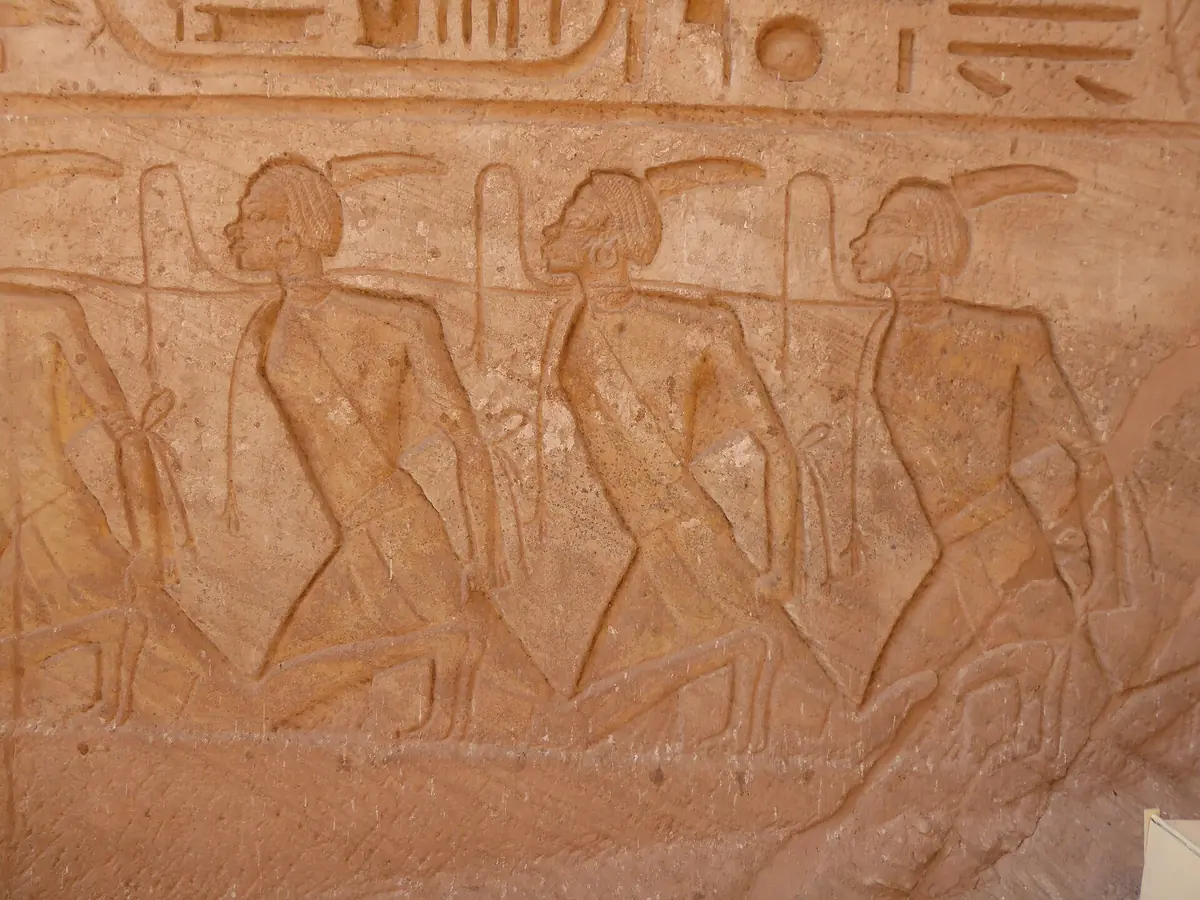
A relief of bound Nubian prisoners at Abu Simbel
Photograph: Aidan McRae Thomson — opens in a new tab · CC BY-SA 2.0 — opens in a new tab
Changes: Resized and converted to WebP; displayed with responsive crops. · Original photograph and licence details ↗ — opens in a new tab
Lake Nasser from the shore at Abu Simbel
Photograph: Francisco Anzola — opens in a new tab · CC BY 2.0 — opens in a new tab
Changes: Resized and converted to WebP; displayed with responsive crops. · Original photograph and licence details ↗ — opens in a new tab
Yuki Ikemori with arms spread on the walkway in front of the four seated statues of the Great Temple at Abu Simbel
Photo: Yuki Ikemori