Plan your trip
Oman food: shuwa, majboos, paplo, mishkak, halwa and kahwa
Omani cooking took its spices from the trade routes that ran from East Africa to India and its fish from the Sea of Oman. The result is a cuisine of slow-cooked meat over rice, fish soups sharpened with lime, garlic and ginger, and skewers off the grill. A hospitality ritual of coffee, dates and halwa greets every guest. This guide gives each dish a place to try it in Muscat and Nizwa, with prices from restaurants that publish them.
In this guide
Find the location ↗ — opens in a new tabThe short answer
Eat in two places: Muscat for shuwa, fish and mishkak, and Nizwa's souq for coffee, dates and halwa. In Muscat, book a dinner at Bait Al Luban on Mutrah Corniche for shuwa and harees, and look for mishkak grills along the beaches. At local restaurants and cafés, a day's meals come to about OMR 8 per person, the budget level of our Oman trip cost guide. In Nizwa, be at the Friday livestock market by about 07:00; the souq's date shop and halwa stalls offer tastings on other mornings too. At the top of the range, a shuwa lamb shank costs OMR 15 at the Grand Hyatt Muscat's Mokha Cafe, a hotel restaurant.
- Key point
- Two nights in Muscat and two in Nizwa cover every dish below.
- Where it applies
- Muscat (Mutrah and Qurum) for shuwa, fish and mishkak; Nizwa souq for kahwa, dates and halwa
- Timing
- Ramadan changes when and where you can eat in the daytime. In 2027 it is expected to begin on or around 8 February.
Shuwa, majboos and qabuli: meat over rice
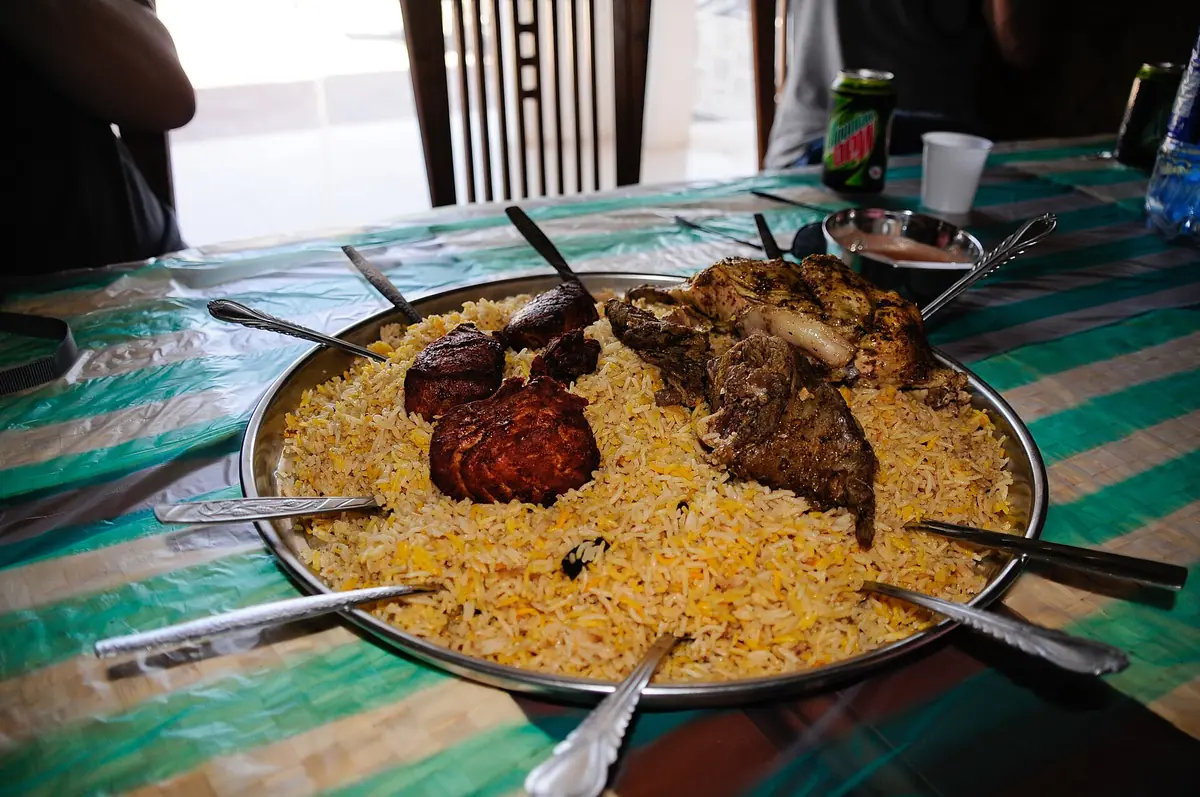
Shuwa is the dish Omanis cook for celebrations. Lamb or goat is rubbed with spices, wrapped in banana or palm leaves and lowered into an underground oven, where it cooks slowly for up to 48 hours. The meat comes out tender inside a crust of spice and is served with rice and a sauce. Families make shuwa for the Eids, and some Muscat restaurants serve it all year. Bait Al Luban on Mutrah Corniche serves it with qabuli rice and a lemon-garlic sauce.
The everyday meals are rice dishes. Majboos is spiced rice cooked with chicken or lamb, the dish Oman's tourism ministry names alongside shuwa as a national favourite. Qabuli is rice cooked in a meat broth with whole spices, and arsiya is rice and meat cooked slowly together, served with a date sauce. Expect generous portions; one plate is a full meal.
Paplo and fish from the Sea of Oman
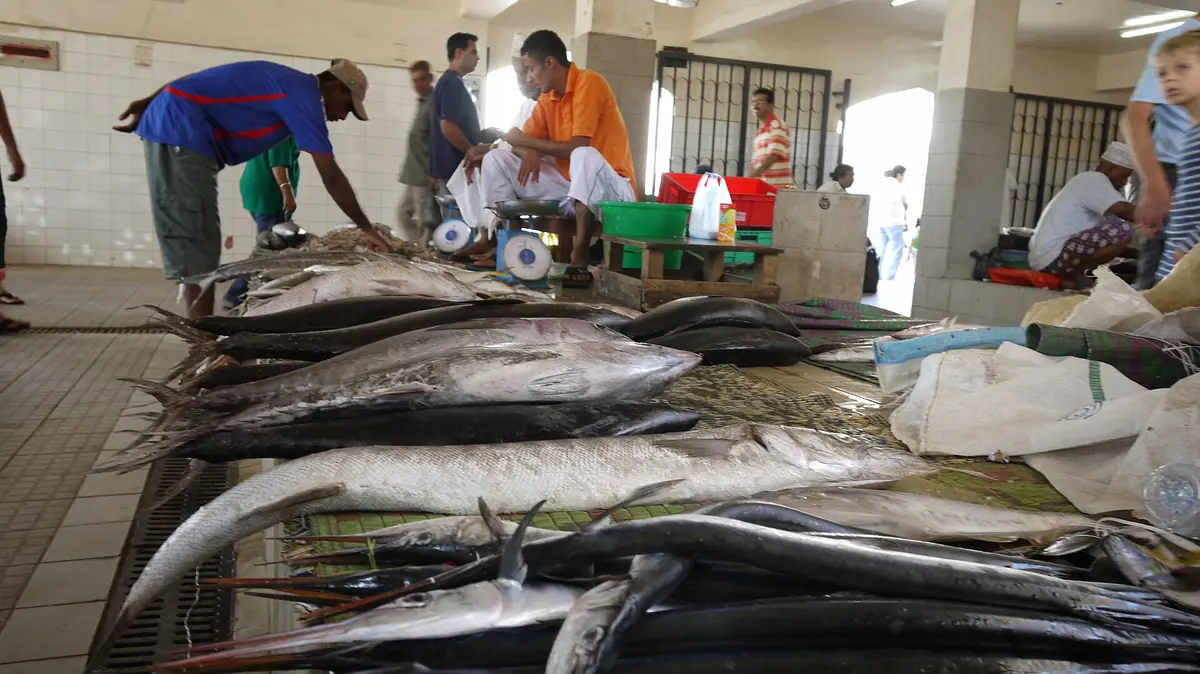
On the coast the meat gives way to fish. Paplo (also spelt paplou) is a fish soup, often made with tuna. It is sharpened with lime and a paste of garlic, ginger and coriander, and served over rice. The coastal towns love it most. Shuwa samak is the fish version of shuwa: a whole kingfish marinated with spices and date syrup and baked in banana leaves. Salted and cured shark and fish, softened again with lime and onion, go into malleh and awa'al, dishes still popular in Muscat.
In Muscat, Bait Al Luban lists paplo among its soups, and the Mokha Cafe at the Grand Hyatt makes it with kingfish, potato, tomato and saffron, served with steamed rice.
Mishkak and harees: from the grill and the iftar table
Mishkak are skewers of meat, chicken or fish marinated in garlic, ginger and spices and grilled over charcoal. They are eaten with tamarind or chilli sauce, off the stick or wrapped in bread. Vendors fan their grills along beaches and in parks, and families grill large batches for the Eids. Mishkak is Oman's best-known street food, and a cheap one.
Harees is a porridge of wheat pounded with meat, usually chicken, and ghee until smooth. It is one of the oldest dishes of the Gulf and a fixture of the iftar table in Ramadan, when it breaks the fast at sunset. Restaurants serve it all year; in Ramadan our festivals and holidays guide says what changes for visitors in the daytime.
Coffee, dates and halwa: how a guest is welcomed
No Omani meal is complete without coffee and dates. Kahwa, Omani coffee, is poured in small cups and served with fresh or dried dates, to guests at home and to visitors at the souq. In a date shop you can taste khalas, khunaizi, fardh and others side by side before buying; Omanis also dip dried dates in sesame paste.
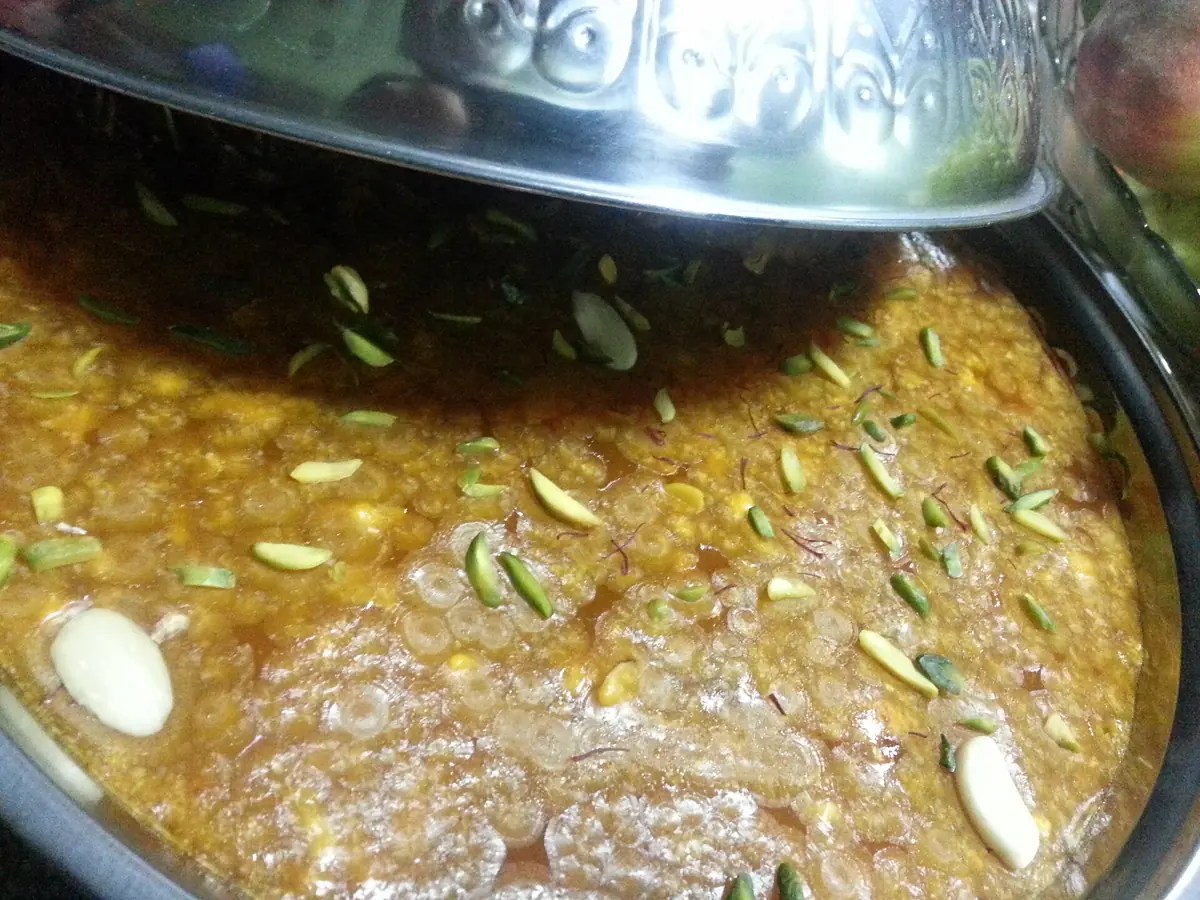
Omani halwa is the sweet that goes with the coffee: a dense, glossy, jelly-like block cooked from starch, sugar, ghee, rose water, saffron, cardamom and nuts. It comes dark, with dates, with honey, walnut or fig, and with frankincense, and shops sell it in tubs to take home. Demand peaks in the last days before Eid, when halwa is the gift to take to friends and relatives.
Where to eat on the loop: Muscat and Nizwa
In Muscat, book one dinner at Bait Al Luban, an Omani restaurant on Mutrah Corniche, open from noon to 23:00. Its menu runs from shuwa and qabuli to paplo, mini mishkak, chicken harees and a plate of Omani sweets (halwa, qashat, mahoo and madlouka), with Omani coffee to finish. Take a mishkak snack from a grill on another evening. The Muscat guide has the sights between meals.
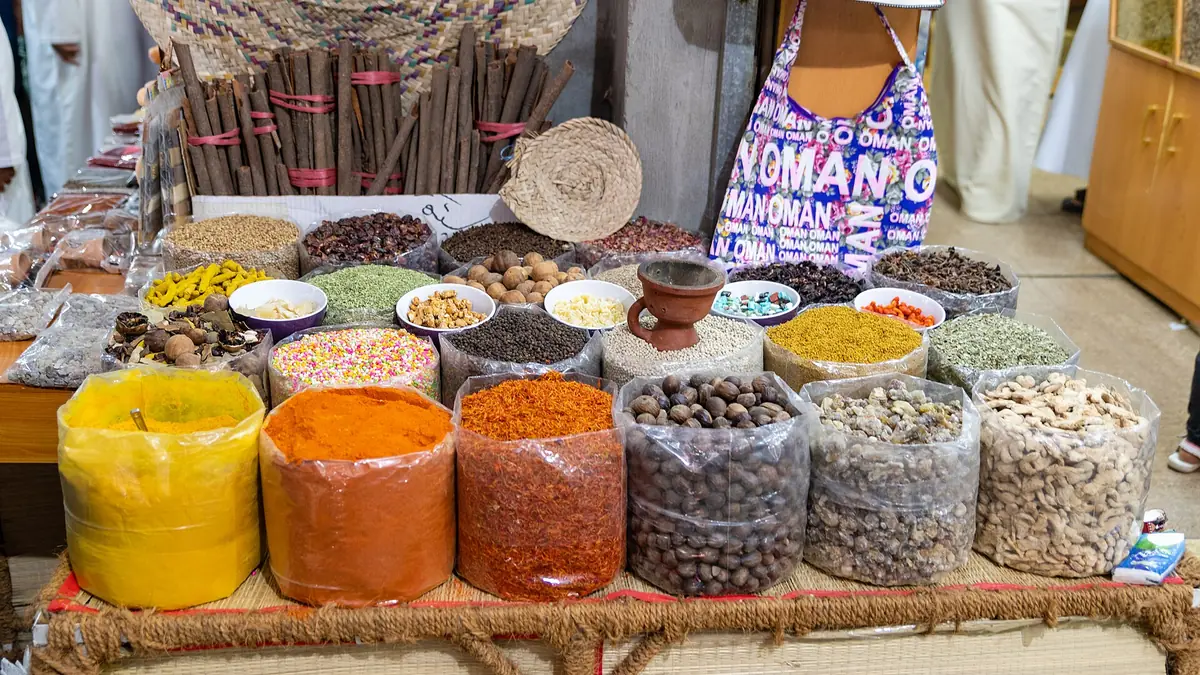
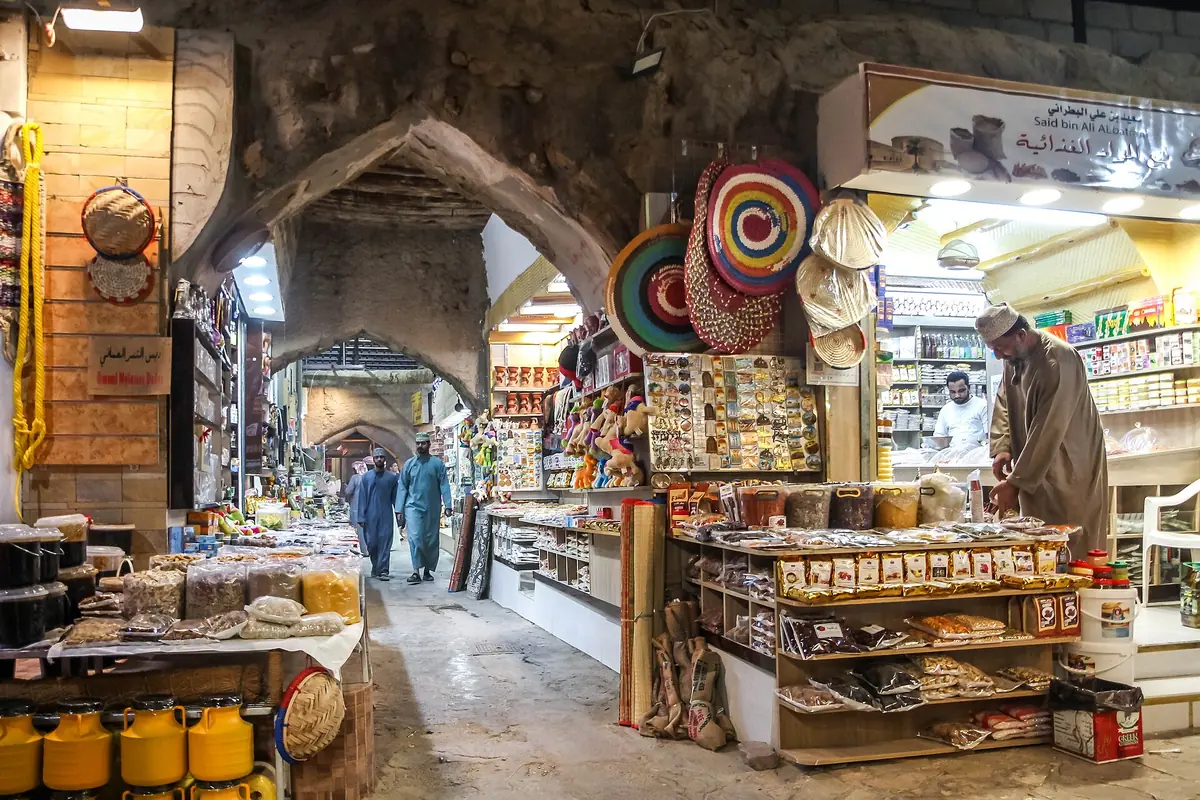
In Nizwa, the souq beside the fort is the place for coffee, dates and halwa. On Friday, be at the livestock market by about 07:00, when the bidding is under way; on other days the souq wakes at first light and grows quiet in the midday heat. Fruit and vegetable stalls and sellers of dried fish line the lanes, and at the covered market halwa sellers offer a spoonful to taste. In the air-conditioned date shop you can try the varieties before you buy, and older men pour kahwa and sell garlic from Jebel Akhdar. Our Nizwa guide covers the fort and the market.
What to eat and where to look
Shuwa
Spiced lamb or goat wrapped in leaves and cooked for up to two days in an underground oven, served with rice; the dish of the Eids.
- Where to look
- Bait Al Luban, Al Mina Street, Mutrah Corniche, Muscat.
- Fit it into your day
- A dinner in Muscat after the evening walk on the corniche.
Paplo
Fish soup, often with tuna or kingfish, sharpened with lime and a paste of garlic, ginger and coriander, poured over rice; a coastal favourite.
- Where to look
- Mokha Cafe, Grand Hyatt Muscat, Shatti Al Qurum (OMR 12).
- Fit it into your day
- Lunch on the Qurum day.
Mishkak
Charcoal-grilled skewers of marinated meat, chicken or fish with tamarind or chilli sauce.
- Where to look
- Grill vendors along Muscat's beaches and parks.
- Fit it into your day
- A light dinner or snack on a beach evening.
Harees
Wheat pounded with chicken and ghee into a smooth porridge; the classic iftar dish in Ramadan.
- Where to look
- Bait Al Luban, Al Mina Street, Mutrah Corniche, Muscat (harees dijaj, with chicken).
- Fit it into your day
- Lunch on the Mutrah day, or the evening meal at iftar during Ramadan.
Kahwa and dates
Omani coffee in small cups with fresh or dried dates, the welcome offered to every guest.
- Where to look
- Nizwa souq, beside Nizwa Fort, where the date shop lets you taste khalas, khunaizi and fardh.
- Fit it into your day
- A morning in Nizwa souq; on a Friday, after the livestock market.
Omani halwa
A dense, glossy sweet of starch, sugar, ghee, rose water, saffron and nuts, in dark, date, honey, walnut and frankincense versions.
- Where to look
- The halwa sellers at Nizwa souq's covered market.
- Fit it into your day
- Taste a spoonful in the souq and buy a tub for the road.
Halwa contains nuts and ghee.
Fresh fish in Sur
The catch landed at Sur's fish market each morning, grilled or fried in the town's restaurants.
- Where to look
- Sur's fish market in the morning, then a restaurant in town.
- Fit it into your day
- A lunch in Sur before the evening turtle walk at Ras al Jinz.
Camp dinner in the Wahiba Sands
Traditional Bedouin cooking served as a buffet in the desert camps.
- Where to look
- Sand Delight Camp, near Al Wasil, which serves breakfast and dinner buffets every day.
- Fit it into your day
- The night in the sands.
What Omani dishes cost
Few Omani restaurants publish their prices. For meals at local restaurants and cafés, our Oman trip cost guide budgets about OMR 8 a day per person, and about OMR 12 with a sit-down Omani dinner in Mutrah; mishkak stalls and small cafés cost less still, so carry some cash for them. At the top of the range, the Grand Hyatt Muscat's Mokha Cafe charges OMR 8 for chicken harees, OMR 12 for Omani paplo with kingfish, OMR 15 for a shuwa lamb shank with rice and OMR 5.6 for an Omani dates and saffron pudding. A day of hotel-restaurant meals like these, with breakfast in the room rate, comes to about OMR 30 per person, the figure the trip-cost guide uses for its comfort level.
Practical questions
What is the national dish of Oman?
Shuwa, spiced lamb or goat slow-cooked in an underground oven for up to 48 hours, is the celebration dish, and majboos, spiced rice with chicken or lamb, is the everyday favourite.
Where can I try shuwa if I am not in Oman for Eid?
Some Muscat restaurants serve it all year, among them Bait Al Luban on Mutrah Corniche.
What is Omani halwa made of?
Starch, sugar, ghee, rose water, saffron, cardamom and nuts, cooked into a dense, glossy sweet. It is served with coffee and dates, and the best place to taste several kinds is Nizwa souq.
How much does a meal cost in Oman?
At local restaurants and cafés, a day's meals come to about OMR 8 per person. At the Grand Hyatt Muscat's Mokha Cafe, a hotel restaurant, chicken harees is OMR 8 and a shuwa lamb shank OMR 15.
Can I eat in public during Ramadan?
No. In the daytime fasting hours, do not eat, drink or smoke in public, and that includes your car. Hotels and some restaurants serve non-fasting guests, sometimes behind screens.
Keep planning your trip
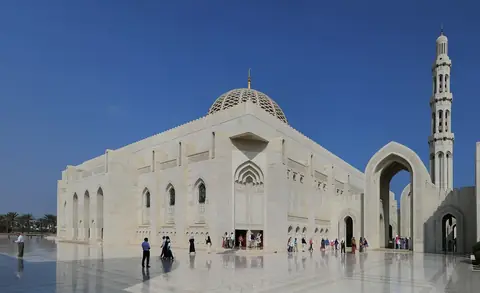
Muscat
Plan two nights in Muscat: the Grand Mosque's morning visiting hours, Mutrah's souq and corniche, Old Muscat's forts and museum, Qurum, and where to stay.
Read the guide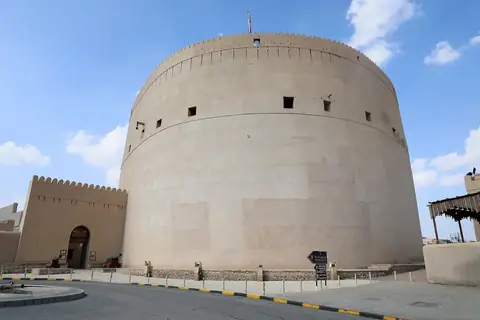
Nizwa
Two nights in Nizwa: the round fort and the souq, the Friday livestock market, Falaj Daris, Bahla Fort and Jabrin Castle, with opening hours, tickets and where to sleep.
Read the guide
Oman festivals and events 2027
Oman's 2027 calendar: Muscat Nights in January, Ramadan and the Eids, the Dhofar khareef season, National Day in November, and how each affects a trip.
Read the guide
First trip to Oman
Choose seven days or ten for Muscat, Nizwa, the mountains, the Wahiba Sands and Sur: the nights, the hire car, the season, entry and an all-in budget.
Read the guide
Oman trip cost
A week on Oman's loop by hire car: about OMR 215 per person on a budget, OMR 275 mid-range or OMR 480 in comfort for two sharing, plus about OMR 12 each for fuel.
Read the guide
Oman in seven days
A seven-day Oman loop by hire car: Muscat, Nizwa for the fort and Jebel Shams, a desert camp, Sur, a night at the Ras al Jinz turtle reserve and the coast road.
Read the guideSources and checks before you travel
(16)
- Experience Oman (Ministry of Heritage and Tourism): About Oman ↗ — opens in a new tab
- Bait Al Luban: menu ↗ — opens in a new tab
- Grand Hyatt Muscat: Mokha Cafe menu ↗ — opens in a new tab
- Oman Observer: 6 foods to try in Oman ↗ — opens in a new tab
- Oman Observer: 5 street foods to try when in Oman ↗ — opens in a new tab
- Oman Observer: Mishkak, Omanis' favourite snack ↗ — opens in a new tab
- Oman Observer: Omani culinary gems: shuwa samak and ginger halwa (5 December 2025) ↗ — opens in a new tab
- Oman Observer: Omani halwa most sought after during Eid (8 April 2024) ↗ — opens in a new tab
- Oman Observer: Discovering Oman's gems at Nizwa Souq (24 October 2022) ↗ — opens in a new tab
- Experience Oman: Nizwa Fort ↗ — opens in a new tab
- UK FCDO: Oman travel advice, safety and security ↗ — opens in a new tab
- Government of Canada: Travel advice for Oman ↗ — opens in a new tab
- Oman Observer: Nizwa Market on Fridays (20 December 2023) ↗ — opens in a new tab
- Oman Observer: Sweet spell of Sur ↗ — opens in a new tab
- KAYAK: Sand Delight Camp ↗ — opens in a new tab
- Turkish Diyanet: religious days of 2027 (calculated) ↗ — opens in a new tab
Reference sources for the version dated 29 November 2026. Confirm opening times, access, transport and conditions for your travel dates.
Photo credits
(5)
Rice and meat, the core of an Omani meal
Photograph: Erkan Pinar — opens in a new tab · CC BY 2.0 — opens in a new tab
Changes: Resized and converted to WebP; displayed with responsive crops. · Original photograph and licence details ↗ — opens in a new tab
Golden Omani halwa, the sweet served with coffee
Photograph: Meshal humaid Ali Almoqbali — opens in a new tab · CC BY-SA 4.0 — opens in a new tab
Changes: Resized and converted to WebP; displayed with responsive crops. · Original photograph and licence details ↗ — opens in a new tab
Spices for sale in Nizwa souq
Photograph: Christoph Strässler — opens in a new tab · CC BY-SA 2.0 — opens in a new tab
Changes: Resized and converted to WebP; displayed with responsive crops. · Original photograph and licence details ↗ — opens in a new tab
Inside Nizwa souq
Photograph: Dr. Thomas Liptak — opens in a new tab · CC BY-SA 4.0 — opens in a new tab
Changes: Resized and converted to WebP; displayed with responsive crops. · Original photograph and licence details ↗ — opens in a new tab
Muttrah fish market, Muscat
Photograph: JK Werner from London, England — opens in a new tab · CC BY 2.0 — opens in a new tab
Changes: Resized and converted to WebP; displayed with responsive crops. · Original photograph and licence details ↗ — opens in a new tab