Plan your trip
Riad stays in Morocco: what a riad is and what to check
A riad is the reason many people choose Morocco: a house with plain walls on a narrow lane and, behind a heavy door, a courtyard with a fountain, orange trees and rooms opening onto galleries. It is also an old building in a car-free quarter, and the things that make it beautiful decide how the stay goes: how far you carry your bags, how many stairs you climb, whether the room is warm in January. This guide explains the words riad and dar, then goes through what to ask before you book, with examples from riads that publish the answers on their own sites.
In this guide
Find the location ↗ — opens in a new tabThe short answer
Choose a riad inside the medina within a few minutes' walk of a gate or square that a taxi can reach, and ask the house to meet you there on the first evening. Before you pay, check four things: the walk from the taxi stop with luggage, the stairs to your room, whether the room has heating in winter and air conditioning in summer, and the tourist tax, which is paid per guest per night on top of the rate. Riad Laaroussa in Fes charges MAD 30 a day for each guest aged 12 and over; Riad O in Marrakech lists MAD 26 in two taxes. Rooms for two start at about USD 40 to 68 a night at the budget level and USD 79 to 104 at mid-range in the main bases. Book three nights in Marrakech, two or three in Fes, one or two in Chefchaouen and two in Essaouira.
- Key point
- Marrakech 3 nights, Fes 2 or 3, Chefchaouen 1 or 2, Essaouira 2, Rabat 1
- Where it applies
- A riad or dar inside the medina walls, close to a gate or square that a taxi can reach
- Timing
- Riads work all year. In winter, book a heated room: nights fall to an average of 4.4°C in Fes and 6.9°C in Marrakech. In summer, book air conditioning inland; Essaouira stays cool.
Riad, dar or hotel: what the words mean
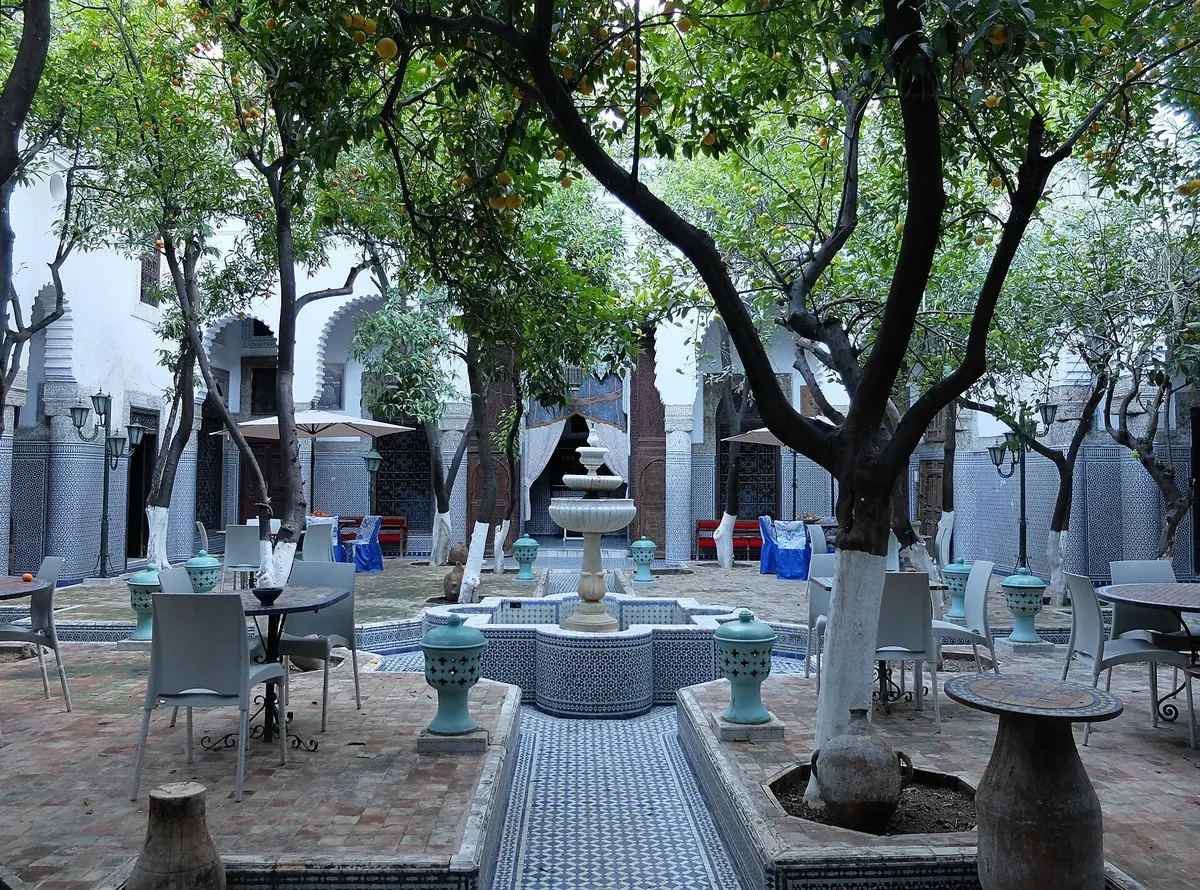
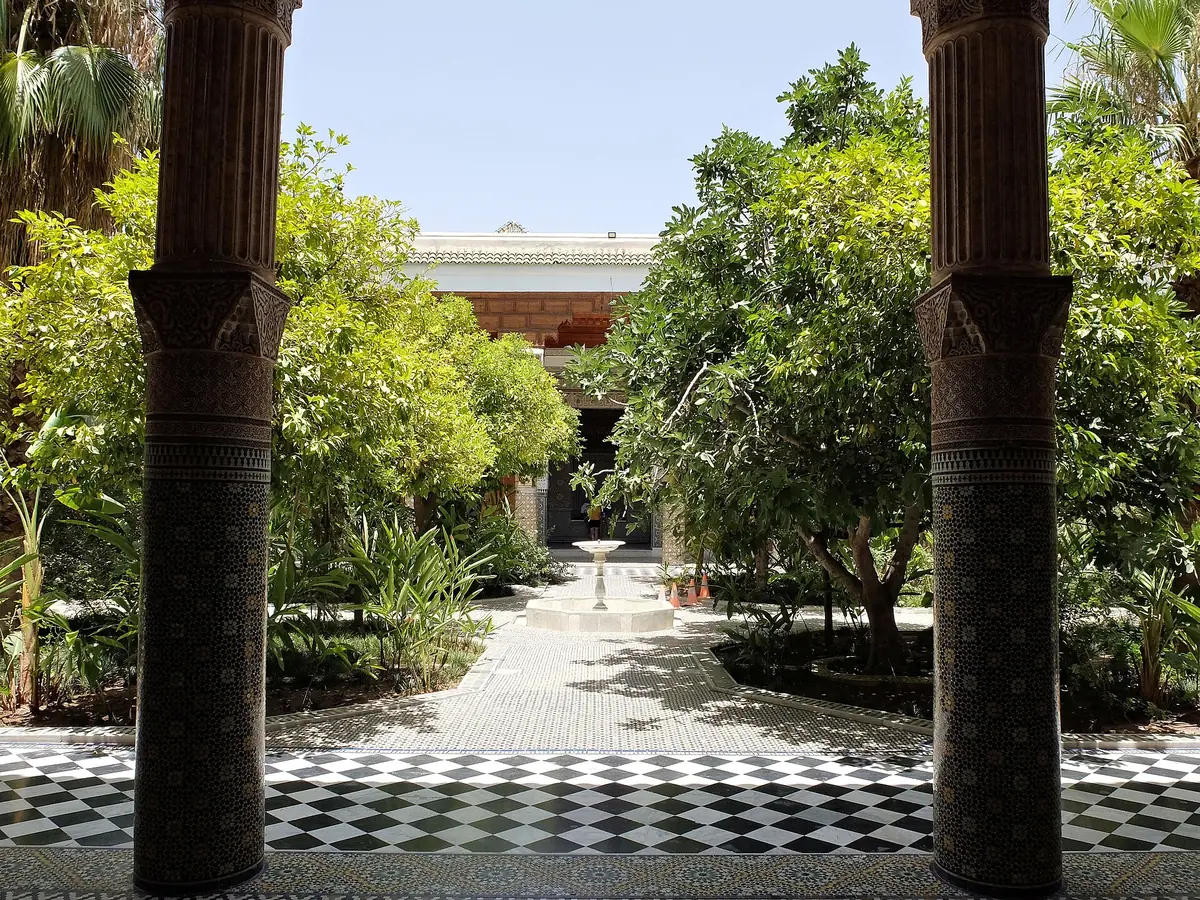
The word riad means garden in Arabic. A riad is a town house closed to the street, with no windows onto the lane, and built around an open-air courtyard, the patio, which is the heart of the house. Every room faces it. In the classic layout the patio holds a central fountain and four symmetrical planted beds, a division that stands for the four rivers of Paradise; alcoves open onto it for sitting in the shade, and a roof terrace looks over the medina. The plain outer wall is deliberate: the house keeps its wealth inside.
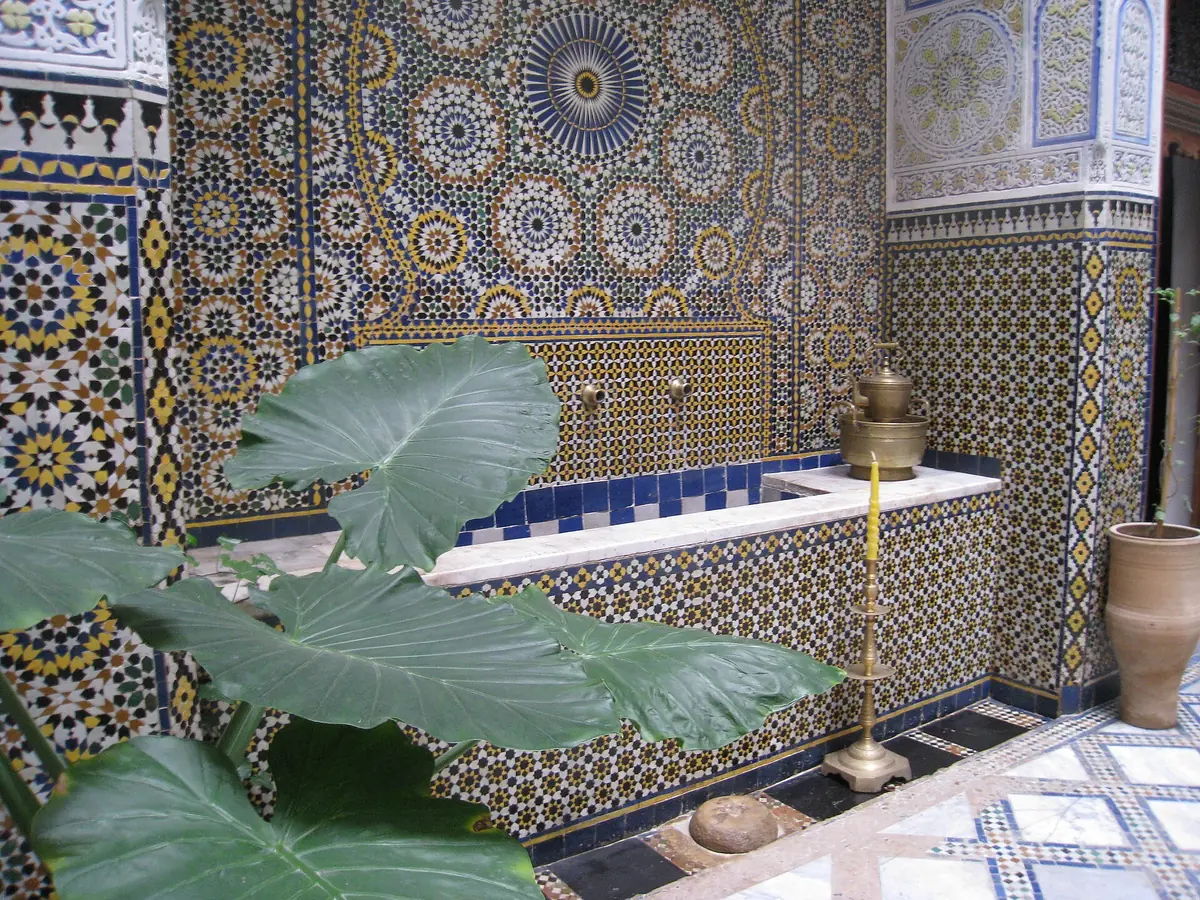
A dar is also a house built around a patio, but it does not necessarily have the planted garden with trees, and riads are generally the larger of the two. That is how Le Jardin Secret, a restored riad garden in the Marrakech medina, draws the line. In Fes the difference is easy to see in two houses that take guests. Riad Laaroussa is a former 17th-century palace whose rooms surround a courtyard garden of orange trees on four sides. Dar Seffarine, a house more than 600 years old near the coppersmiths' square, has a courtyard open to the sky, floored in zellige mosaic and marble, with carved plaster columns and cedar doors four metres high. When you compare houses, look at the photographs of the courtyard as well as the name.
Many of these houses now work as small guesthouses. Riad Laaroussa has thirteen rooms; Riyad El Cadi in Marrakech, several old town houses joined into one, has 17 rooms and suites. That is the real difference from a hotel. A riad gives you a house, a courtyard and staff who know your name, inside the old town where no car can go. A hotel in the modern districts gives you a lobby at the kerb, a lift, a large pool and parking, a taxi ride away from the souks. The table sets them side by side.
| | Riad or dar in the medina | Hotel in the new town | | --- | --- | --- | | Building | An old courtyard house, with a few rooms to about twenty | A purpose-built hotel | | Arrival | On foot from the nearest gate or taxi stop; the house can meet you | By car to the door | | Stairs | Steep and narrow, often with no lift | Lifts | | Climate | Varies by room: ask about heating and air conditioning | Standard in every room | | Evenings | The souks and squares on foot | A taxi to the old town | | Suits | Most first visits | Self-drivers, families who want a big pool, anyone who cannot manage stairs |
If you want to see what a restored riad garden looks like before choosing one, Le Jardin Secret in the Marrakech medina is open to visitors for MAD 100.
Prices and times checked 28 November 2026
The door, the walk and your bags
Medina lanes are too narrow for cars, so every riad stay begins and ends on foot. How far is the most useful thing to know before you book, and good riads say so on their own sites. Riyad El Cadi in Marrakech lies about ten minutes on foot from the edge of Jemaa el-Fnaa, where taxis stop for most of the day. Dar Seffarine in Fes is a four-minute walk from Bab Rcif, a gate that taxis and buses reach, and its site describes the route turn by turn. Dar Les Cigognes in Marrakech is one of the very few riads on a street, so guests come and go by car.
Ask the riad three things when you book: the gate or square where a taxi should drop you, how long the walk is from there, and whether someone will meet you. On a first evening, with luggage, in lanes whose names change at every turn, the meeting matters more than the distance. In Fes, the riad's staff or a porter with a handcart meets you at the gate. Send your arrival time the day before, and save a map pin on the door once you are in.
A walk of two or three minutes from a gate suits a short stay and heavy bags. A riad deeper in the lanes is quieter and often more atmospheric, and it is no hardship once you know the way; it only needs that first escort. Our where-to-stay guide compares the quarters of each medina by how close they are to a road.
Prices and times checked 28 November 2026
Stairs, ground-floor rooms and who a riad does not suit
These are historic houses, with rooms on several floors around the courtyard. Riad Laaroussa says plainly that it has many steep stairs and may not suit every guest, and that it serves meals on the ground floor or near the room for guests who find them hard. Riyad El Cadi describes itself as full of steps, narrow corridors, staircases and sharp corners, with narrow bathroom doors, and says it is not suitable for guests in wheelchairs; for guests who can manage a few steps it books a ground-floor room and serves breakfast in the courtyard.
So if stairs are a problem, book a ground-floor room by name and find out where breakfast is served. With small children, look in the photographs for open galleries, a fountain or plunge pool in the patio and the roof terrace. Every room opens onto the courtyard, so light sleepers can ask for a room away from the entrance.
Travellers who need step-free access, a lift or a car at the door are better served by a hotel in Gueliz or Hivernage in Marrakech, or in the Ville Nouvelle in Fes, with the medina a taxi ride away.
Prices and times checked 28 November 2026
Heating in winter, cooling in summer
A house built around an open courtyard is cool in the heat and cold in the cold. Winter days inland are mild, but the nights are not: the average winter minimum is 4.4°C in Fes and 6.9°C in Marrakech. In summer the average maximum reaches 36.3°C in Marrakech and 33.8°C in Fes. Whether your room copes depends on the room, not only on the riad.
Riyad El Cadi shows how much rooms differ inside one house. Its room finder lists each room's floor and whether it has air conditioning or a fireplace: most first-floor rooms have air conditioning, several ground-floor rooms have none, and a few rooms have a fireplace. Riad Laaroussa has fireplaces in its suites and salons for the winter and an enclosed dining room with a fireplace on the terrace. Dar Bensouda in Fes lists air conditioning in its standard rooms.
From December to February, book a room that lists heating or a fireplace, and pack something warm for breakfast on the terrace. From June to August, book a room with air conditioning in Marrakech and Fes. On the coast it matters less: Essaouira's average summer maximum is 21.9°C, and its average winter minimum 11.9°C. Our best-time guide has the seasons for each region.
Prices and times checked 28 November 2026
What the bill adds: tourist tax, card fees and the small print
The room rate is rarely the whole bill. Riads charge local taxes per guest per night, and the three below quote their rates without them. These are the figures they publish on their own sites:
| Riad | Town | Local taxes per guest, per night |
|---|---|---|
| Riad Laaroussa | Fes | MAD 30, for guests aged 12 and over |
| Riad O | Marrakech | MAD 26: tourism promotion tax MAD 11 and city tax MAD 15 |
| Riad EspritBleu | Essaouira | MAD 25: tourism promotion tax MAD 10 and city tax MAD 15 |
Riad O and Riad EspritBleu name the same two taxes: a tourism promotion tax, which goes to the Moroccan National Tourist Office, and a tax for the town. At these rates, two people pay MAD 150 to 180 for three nights. Ask the riad for its own figure when you book, and keep some dirhams for check-out.
Read three more lines of the terms. Breakfast: all three riads in the table include it in the rate. Card fees: some riads add a charge for paying by card, 4% at Riad O. Minimum stay and cancellation: Riad O asks for at least two nights, and Riad Laaroussa holds the booking with a credit card and charges only for a late cancellation. Riyad El Cadi matches a lower rate found on another booking site if you book direct, with breakfast included, so it is worth comparing the riad's own site with the booking sites before you choose.
An airport transfer is the other usual extra. Riads often arrange a driver; Dar Bensouda lists an airport shuttle or car service. In Marrakech you can compare the price with the regulated taxi fare between the airport and the city centre, MAD 70 by day and MAD 100 at night.
Prices and times checked 28 November 2026
Licensed riads, star ratings and the rules for guests
Riads, guesthouses (maisons d'hôtes) and kasbahs are official categories of tourist accommodation in Morocco, alongside hotels, hotel clubs and tourist residences. In June 2025 the tourism ministry announced new rules that classify them in stars, on the same scale as hotels, with service quality at the centre of the rating. Establishments were given 24 months to comply. The ministry also announced anonymous "mystery visits" by specialised auditors from May 2026, covering 2,500 establishments rated three stars and above. A classification is granted for seven years at first, then renewed every five.
For a traveller this means that a star rating on a riad is becoming comparable with a hotel's. During the transition, a house may still show its old category. France's travel advice also reports a rise in thefts from Airbnb-type rentals in the big tourist cities, and advises against leaving identity papers in one that has no safe.
Two rules surprise some guests. Sex outside marriage is illegal for Moroccan nationals, sharing a hotel room included; the UK says this does not generally apply to visiting foreigners, but Germany notes that hotels quite often ask couples for a marriage certificate and insist on separate rooms without one, so a couple with one Moroccan partner should ask the riad before booking. And when a riad books you a medina guide, check that he carries an official badge; our health and safety guide covers the false guides who wait near the gates.
Prices and times checked 28 November 2026
By city: where the riads are and what changes
Marrakech (three nights). The riads fill the whole medina. The southern half, between Jemaa el-Fnaa and the Kasbah quarter, keeps the square and the palaces on foot and has taxis at the edge of the quarter. The northern half, around Mouassine, Bab Doukala and Ben Youssef, is quieter and closer to the souks, at a longer walk from a road. Heat is the thing to plan for: a pool in the patio and air conditioning matter from June to August. Hotel Sherazade, in two old merchants' riads off the lane south of the square, has a small pool in its second courtyard.
Fes (two or three nights). Fes el-Bali is steeper, larger and harder to read than Marrakech, so the gate matters most here. Choose a house near Bab Boujloud or Batha at the top of the medina, or near Bab Rcif and Place Seffarine lower down, and let the riad meet you. Winters are colder than in Marrakech, so heating comes first from December to February.
Chefchaouen (one or two nights). The blue medina is small but climbs in steps from the square of Outa el-Hammam to the spring of Ras el Ma: the higher the house, the better the view and the more stairs before you reach the door. Winter can be rainy in the Rif, so a heated room matters here too.
Essaouira (two nights). The medina is small, cars stop at the gates, and from almost any riad you can walk to the ramparts, the port and the beach. The Atlantic wind keeps it cool all summer. Villa Maroc, at 10 Rue Abdellah Ben Yassine, is four restored riads joined into one house of 21 rooms with a roof terrace, minutes from the beach.
Rabat (one night). The riads are in the medina, a short walk from the Kasbah of the Udayas; a hotel near Rabat-Ville station suits a stop between trains. On the road to the desert the traditional house changes: in the south you sleep in kasbah hotels, and at Merzouga in a desert camp.
Our where-to-stay guide names three riads or hotels in each base, one at each price level, with a dated rate for each: rooms for two start at about USD 40 to 68 a night at the budget level and USD 79 to 104 at mid-range.
Prices and times checked 28 November 2026
Booking order and the first evening
Book the fixed parts of the trip first, then the riads in the order you reach them.
- Before you book: read the riad's own site for the address, the walk from the gate, the stairs and the tax, and compare its direct rate with the booking sites.
- When you book: ask for a ground-floor or upper-floor room as you need, a heated or air-conditioned room for the season, and the price of the airport transfer.
- The day before: send your arrival time and agree the meeting point.
- On arrival: have the riad's phone number to hand, follow the person who meets you, and save a map pin on the door.
- At check-out: pay the tourist tax and any extras, and leave time for the walk back to the taxi.
Prices and times checked 28 November 2026
Practical questions
What is the difference between a riad and a dar?
Both are old town houses built around an open courtyard. A riad has a planted garden in the courtyard, classically four beds around a fountain, and is generally larger; a dar does not necessarily have the garden.
Is a riad better than a hotel in Marrakech or Fes?
For most first visits, yes: you sleep inside the medina and walk to the souks and squares. Choose a hotel in the new town if you drive, cannot manage stairs or want a large pool.
How much is the tourist tax in a riad?
It is charged per guest per night on top of the rate and varies by town and house. Riad Laaroussa in Fes charges MAD 30 for guests aged 12 and over, Riad O in Marrakech lists MAD 26 and Riad EspritBleu in Essaouira MAD 25.
Can a taxi drive to the door of a riad?
Rarely. Cars stop at the medina gates and you walk the last lanes. The riad tells you which gate or square to use; a few riads, such as Dar Les Cigognes in Marrakech, stand on a street cars can reach.
Are riads cold in winter?
They can be: the courtyard is open to the sky, and winter nights average 4.4°C in Fes and 6.9°C in Marrakech. Book a room that lists heating or a fireplace.
Are riads suitable for people who cannot climb stairs?
Many are not. They have steep, narrow stairs and usually no lift. Some riads have ground-floor rooms and serve breakfast in the courtyard; ask for one by name, or choose a hotel with a lift.
Keep planning your trip
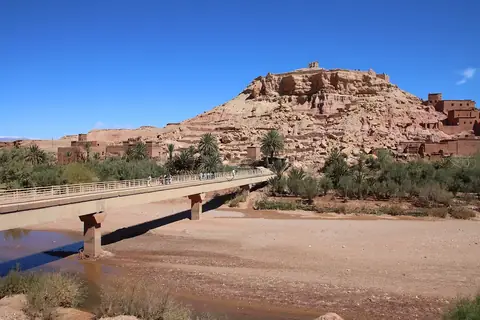
Where to stay in Morocco
Riad or hotel, which quarter of Marrakech, Fes and Chefchaouen to sleep in, nights per base, and three hotels per base from budget to upper.
Read the guide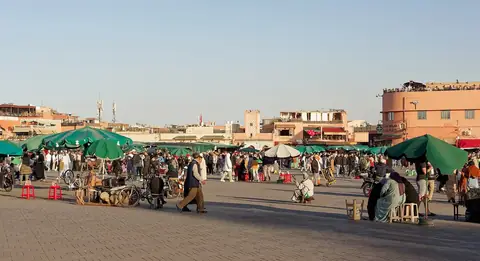
Marrakech
How many nights Marrakech needs, where to sleep in the medina, Jemaa el-Fnaa, the palaces and Majorelle, ticket prices and hours, and the day trips.
Read the guide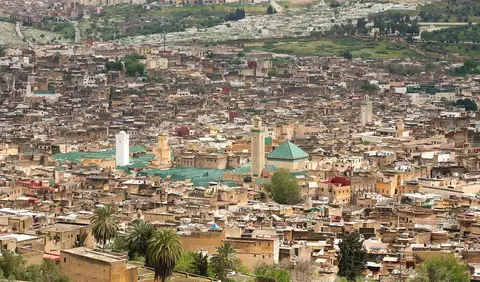
Fes
How many nights Fes needs: Fes el-Bali on foot, the madrasas and tanneries, the Batha museum, and a day trip to Meknes and Volubilis, with tickets and riads.
Read the guide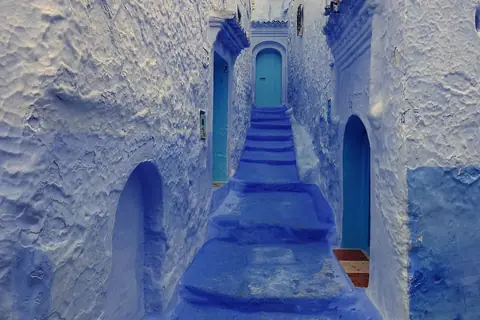
Chefchaouen
Whether Chefchaouen is worth a night: the blue medina, the kasbah and Outa el Hammam square, the walk to the hillside mosque, Akchour, and the road from Fes and Tangier.
Read the guide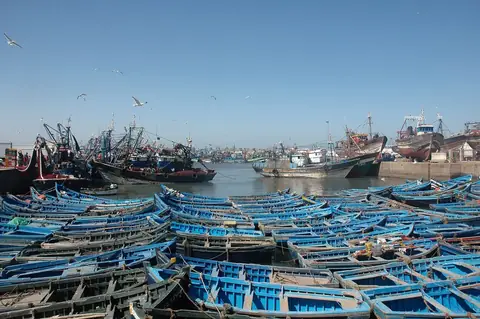
Essaouira
Day trip or two nights in Essaouira: the Skala ramparts, the port and its fish grills, the beach, the CTM coach from Marrakech, riads and costs.
Read the guide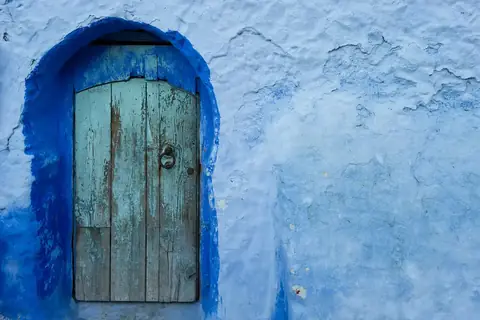
Morocco trip cost
Ten days from Rabat through Chefchaouen and Fes to the Sahara and Marrakech: about MAD 9,600 per person on a budget, 11,200 mid-range or 18,400 in comfort.
Read the guideSources and checks before you travel
(29)
- Le Jardin Secret Marrakech: the history of the historic riads of Marrakech (26 March 2026) ↗ — opens in a new tab
- Le Jardin Secret: visitor information ↗ — opens in a new tab
- Visit Morocco (Moroccan National Tourist Office): accommodation ↗ — opens in a new tab
- Riad Laaroussa: facilities and services ↗ — opens in a new tab
- Riad Laaroussa: home page ↗ — opens in a new tab
- Riad Laaroussa: rates ↗ — opens in a new tab
- Dar Seffarine: about the house ↗ — opens in a new tab
- Dar Seffarine: location ↗ — opens in a new tab
- Riyad El Cadi: home page ↗ — opens in a new tab
- Riyad El Cadi: accessibility ↗ — opens in a new tab
- Riyad El Cadi: find your room ↗ — opens in a new tab
- Dar Les Cigognes ↗ — opens in a new tab
- Riad Dar Bensouda: home page ↗ — opens in a new tab
- Hotel Sherazade: home page ↗ — opens in a new tab
- Villa Maroc, Essaouira ↗ — opens in a new tab
- Villa Maroc: rooms and suites ↗ — opens in a new tab
- Riad O Marrakech: terms and conditions ↗ — opens in a new tab
- Riad EspritBleu, Essaouira: terms and conditions ↗ — opens in a new tab
- Maroc.ma (MAP, 10 June 2025): five orders on tourist accommodation published ↗ — opens in a new tab
- Maroc.ma (MAP, 26 June 2025): a new quality standard for tourist accommodation ↗ — opens in a new tab
- Maroc.ma (MAP, 4 May 2026): 2,500 establishments under mystery visits from May 2026 ↗ — opens in a new tab
- Direction Générale de la Météorologie: winter minimum temperature normals 1991–2020 (map) ↗ — opens in a new tab
- Direction Générale de la Météorologie: summer maximum temperature normals 1991–2020 (map) ↗ — opens in a new tab
- UK Foreign Office: Morocco safety and security ↗ — opens in a new tab
- German Federal Foreign Office: Morocco travel and safety advice ↗ — opens in a new tab
- France Diplomatie: Maroc, sécurité ↗ — opens in a new tab
- Visit Marrakech (Marrakech-Safi Regional Tourism Council): transport ↗ — opens in a new tab
- Visit Morocco: Chefchaouen ↗ — opens in a new tab
- Visit Morocco: Essaouira-Mogador ↗ — opens in a new tab
Reference sources for the version dated 28 November 2026. Confirm opening times, access, transport and conditions for your travel dates.
Photo credits
(4)
The courtyard of Riad Belghazi in Fes el-Bali: the house faces inwards, onto its planted patio.
Photograph: R Prazeres — opens in a new tab · CC BY-SA 4.0 — opens in a new tab
Changes: Resized and converted to WebP; displayed with responsive crops. · Original photograph and licence details ↗ — opens in a new tab
The riad garden of Dar al-Basha in Marrakech: a true riad is a house built around a planted courtyard.
Photograph: R Prazeres — opens in a new tab · CC BY-SA 4.0 — opens in a new tab
Changes: Resized and converted to WebP; displayed with responsive crops. · Original photograph and licence details ↗ — opens in a new tab
A tiled courtyard fountain at Dar Attajali in the Fes medina.
Photograph: lin padgham — opens in a new tab · CC BY 2.0 — opens in a new tab
Changes: Resized and converted to WebP; displayed with responsive crops. · Original photograph and licence details ↗ — opens in a new tab
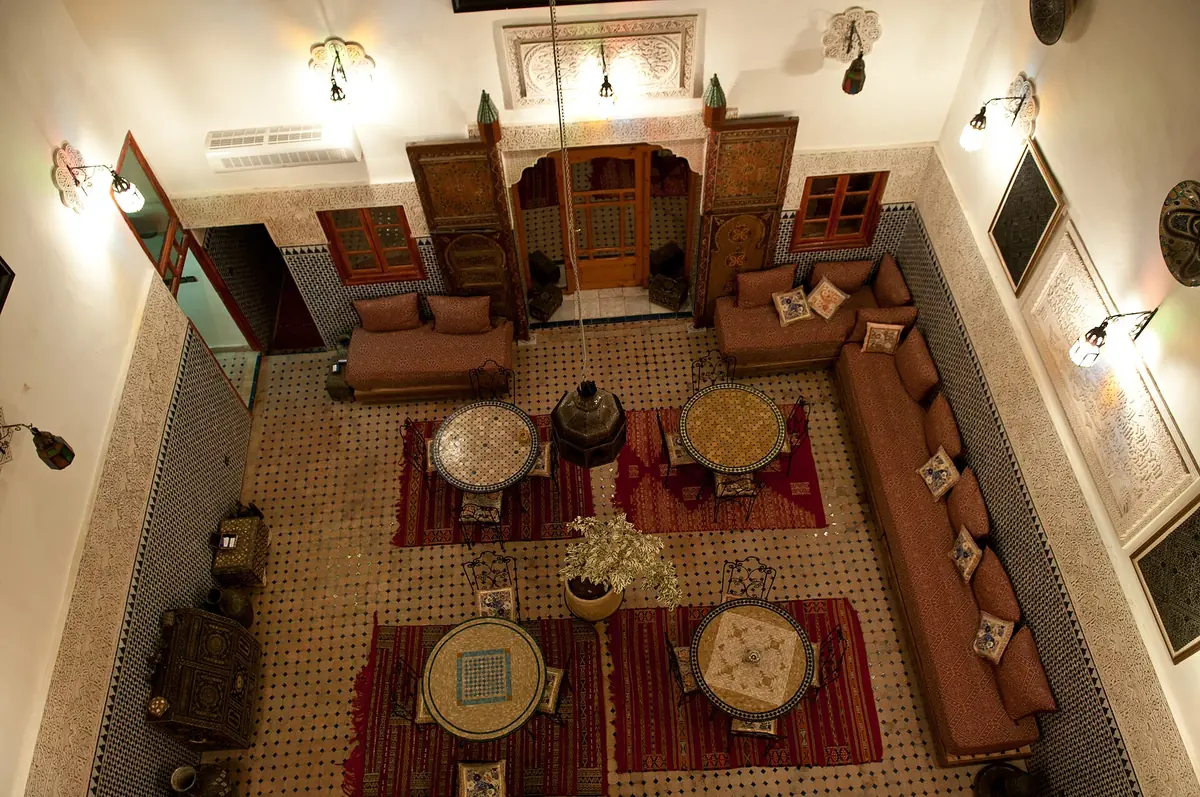
The courtyard salon of a riad in Fes, seen from the upper floor.
Photograph: Michal Osmenda from Brussels, Belgium — opens in a new tab · CC BY-SA 2.0 — opens in a new tab
Changes: Resized and converted to WebP; displayed with responsive crops. · Original photograph and licence details ↗ — opens in a new tab