Plan your trip
Day trips from Marrakech: Atlas, Agafay, Essaouira and Ouzoud
Marrakech sits on a plain with the High Atlas an hour to the south, a stony desert at its door and the Atlantic two and a half hours to the west, so a spare day can go in three very different directions. The mountain valleys of Imlil and Ourika and the Agafay desert are short drives and make easy days. Essaouira and the Ouzoud waterfalls are long days that still work. Ait Ben Haddou means most of a day in a car, and the Sahara dunes at Merzouga cannot be reached and seen in a day at all. The mountain valleys have no railway, so most of these trips go by tour, by a car with a driver or by shared taxi.
In this guide
Find the location ↗ — opens in a new tabThe short answer
With one spare day, go to the High Atlas: Imlil is 65 km south, and a private car from Marrakech costs EUR 90 per car one way at Kasbah du Toubkal's published rate, or take a guided day tour. With two, add Essaouira, but leave early: the road takes about two and a half hours each way by car, and CTM coaches cost from MAD 205 one way. The Agafay desert, 40 km away, fits an afternoon and evening. The Ouzoud waterfalls, in Azilal province, need a long full day. Give Ait Ben Haddou a night on the way to the desert rather than a day, and do not book Merzouga as a day trip: the dunes are about nine hours' drive from Marrakech.
- Key point
- Agafay: half a day or an evening; Imlil, Ourika and Oukaïmeden: 1 day each; Essaouira and Ouzoud: 1 long day each; Ait Ben Haddou: 1 night; Merzouga: 3 days
- Where it applies
- A riad in the Marrakech medina for every trip in this guide; add one night in Marrakech for each day out
- Timing
- March to May and September to November suit every trip. In summer, go up to the Atlas or out to the cool coast at Essaouira and keep Agafay for the evening. From about November to March, snow and floods can close High Atlas roads.
Which trips fit a day, and which need a night
Marrakech itself needs three days, as our Marrakech guide sets out, and each trip below takes one more. Choose by what the city does not give you: mountains at Imlil or in the Ourika Valley, open desert at Agafay, the sea at Essaouira, or falling water at Ouzoud. For a first visit with one spare day, the High Atlas is the best use of it: the drive is short, and by mid-morning you are walking between walnut groves under the highest peaks in North Africa.
The trips compare like this, with road figures from Visit Morocco, the national tourist office, the Marrakech-Safi tourism council and the operators named in each section:
| Trip | By road from Marrakech | How to go | Verdict |
|---|---|---|---|
| Agafay desert | 40 km, about 45 minutes | Tour or car with a driver | Half a day or an evening |
| Lalla Takerkoust lake | 40 km south | Car with a driver or tour | Half a day |
| Ourika Valley | About 30 km to the valley, about 1 hour | Tour, driver or shared taxi | An easy day |
| Imlil, below Toubkal | 65 km: about 45 minutes to Asni, then 17 km | Private car, tour, or shared taxi by Asni | The best single day |
| Essaouira | 191 km, about 2 h 30 each way by car | Tour, driver or CTM coach | A long day; better with two nights |
| Ouzoud waterfalls | Azilal town is 162.3 km, about 2 h 36; the falls are about 40 minutes from it | Tour or car with a driver | A long day |
| Ait Ben Haddou | 194 km and about 3 h 45 to Ouarzazate | Tour or driver | Most of the day in the car; better with a night |
| Merzouga dunes | About 9 hours' drive | Three-day tour | Not a day trip |
Sleep in the medina for all of them. Tours and drivers collect you from your riad or the nearest gate a car can reach, so no trip needs a different base; our where-to-stay guide compares the quarters.
Prices and times checked 28 November 2026
Imlil and the Toubkal valleys: the mountain day
Imlil is the village at the end of the road below Jbel Toubkal, at 4,167 m the highest mountain in North Africa. A day here is a walk, not a climb: mule paths, well graded and kept in good condition, lead through orchards and walnut groves to the village of Targa Imoula in about 45 minutes, or along the Reraya river past the village of Aroumd to the sanctuary of Sidi Chamharouch, about 4 hours there and back. Lunch comes with a view of the peaks. The summit itself takes two days from Imlil and a night in a refuge.
Getting there: take the R203 south from Marrakech towards the Tizi n'Test pass. Asni is about 45 minutes away; just after the village a paved road, fine for an ordinary car, turns left and runs 17 km up the valley to Imlil. Kasbah du Toubkal, the mountain lodge above the village, arranges a private car from Marrakech or Menara Airport for EUR 90 per car one way, for up to four people. The public route is a shared grand taxi or a local bus from Marrakech to Asni, then a local taxi or pick-up up the valley; fares are bargained, and with the waiting the trip takes from two hours to half a day, which is why most day visitors book a car or a tour. A guided day tour includes the car, the driver and a walk.
For any hike in the Atlas, the UK Foreign Office advises hiring a professional guide; your riad or the tour can book one. Our Imlil and High Atlas guide has the walks in detail, the Toubkal climb and the case for staying the night.
Prices and times checked 28 November 2026
The Ourika Valley and Oukaïmeden
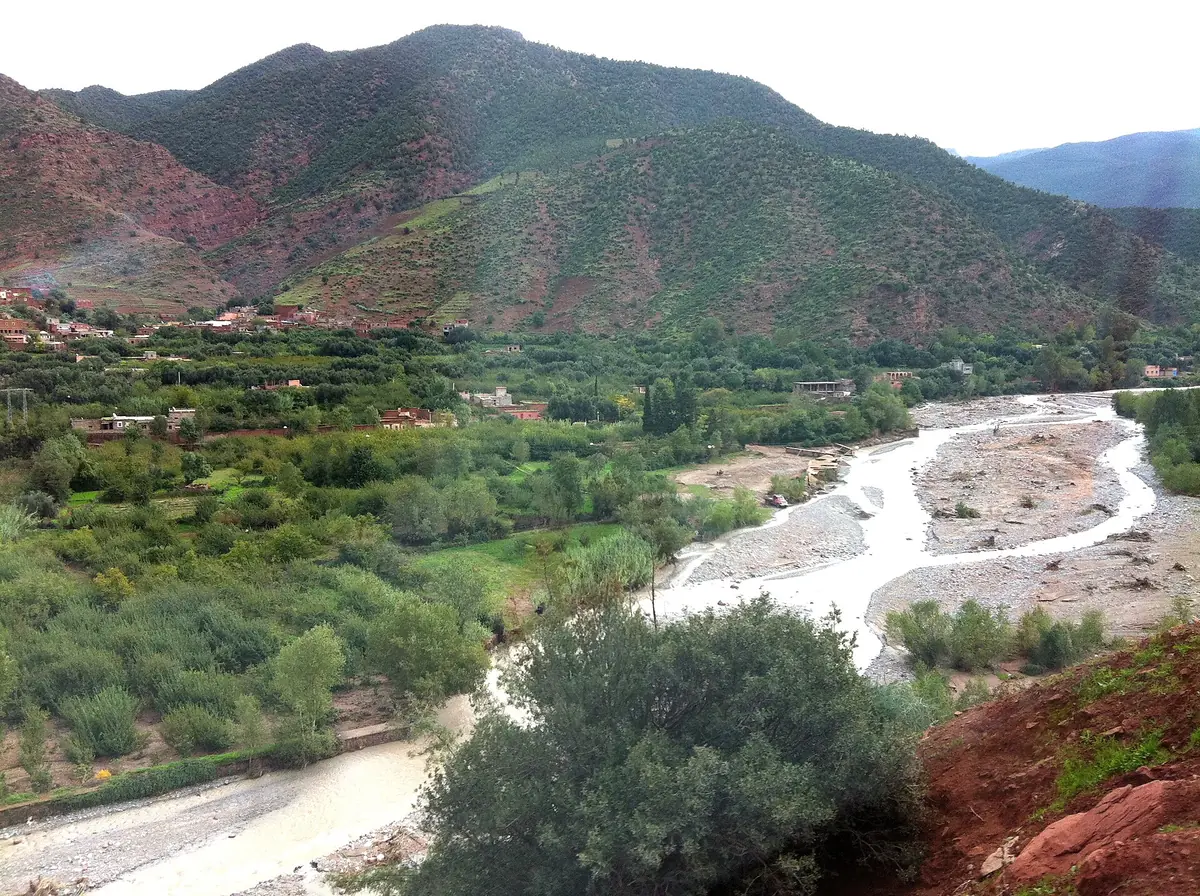
The Ourika Valley is the closest of the Atlas valleys, about an hour from Marrakech. The road leaves the city to the south-east, crosses the olive groves and orchards of the Haouz plain and climbs into the foothills, where a clear river runs between Berber villages, waterfalls and markets. People come for a riverside lunch and a short walk rather than for big mountains. It suits families and anyone who wants a gentle day.
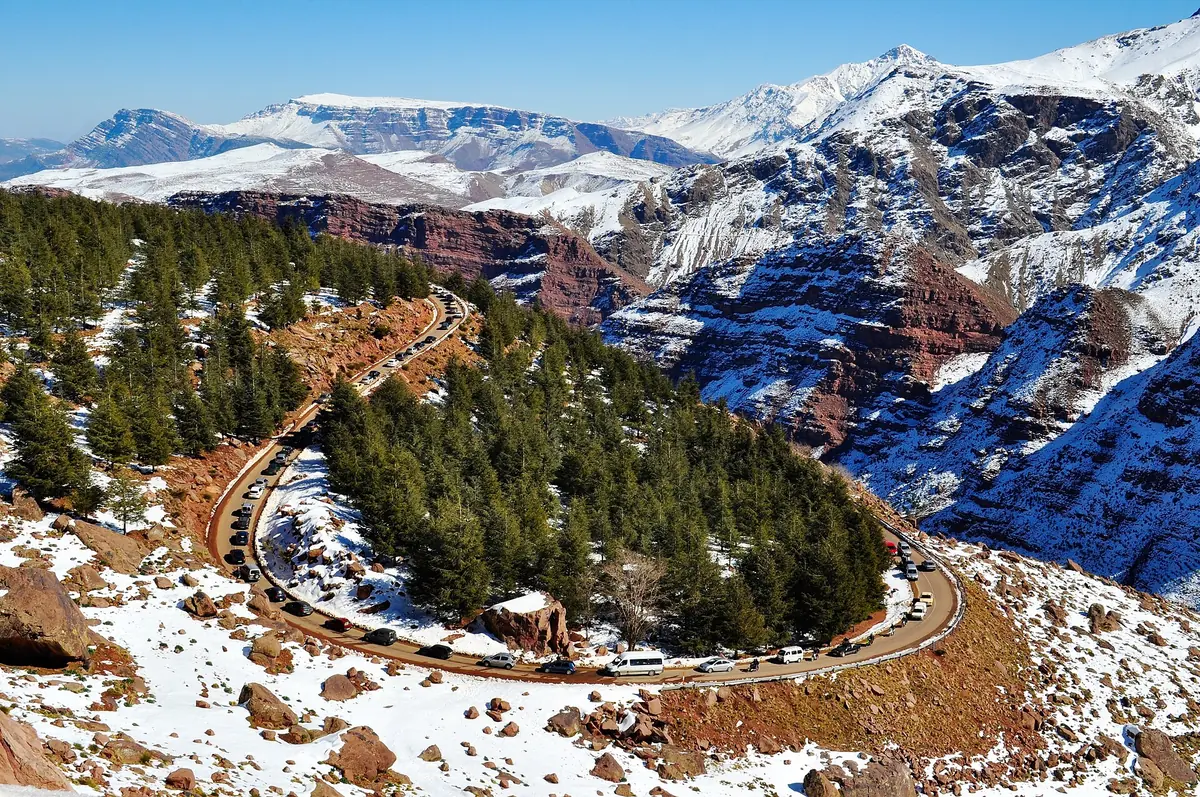
Oukaïmeden, above the valley, is Morocco's ski resort, with a ski area rising to 3,200 metres and a season from December to March. Outside the snow months it is a place for hiking paths and for the Bronze Age rock carvings near the entrance to the resort. Toubkal National Park lies between the Ourika and N'Fiss valleys, so the two fit one long day with a driver.
Getting there: the valley has no railway. Go by guided tour or with a driver arranged by your riad. Shared grands taxis link Marrakech with the surrounding towns and leave only when they are full; agree the fare per seat before you get in. With a driver, fix the day's stops and the price for the whole car, waiting time included, before you leave.
Prices and times checked 28 November 2026
Agafay and Lalla Takerkoust: desert and lake in half a day
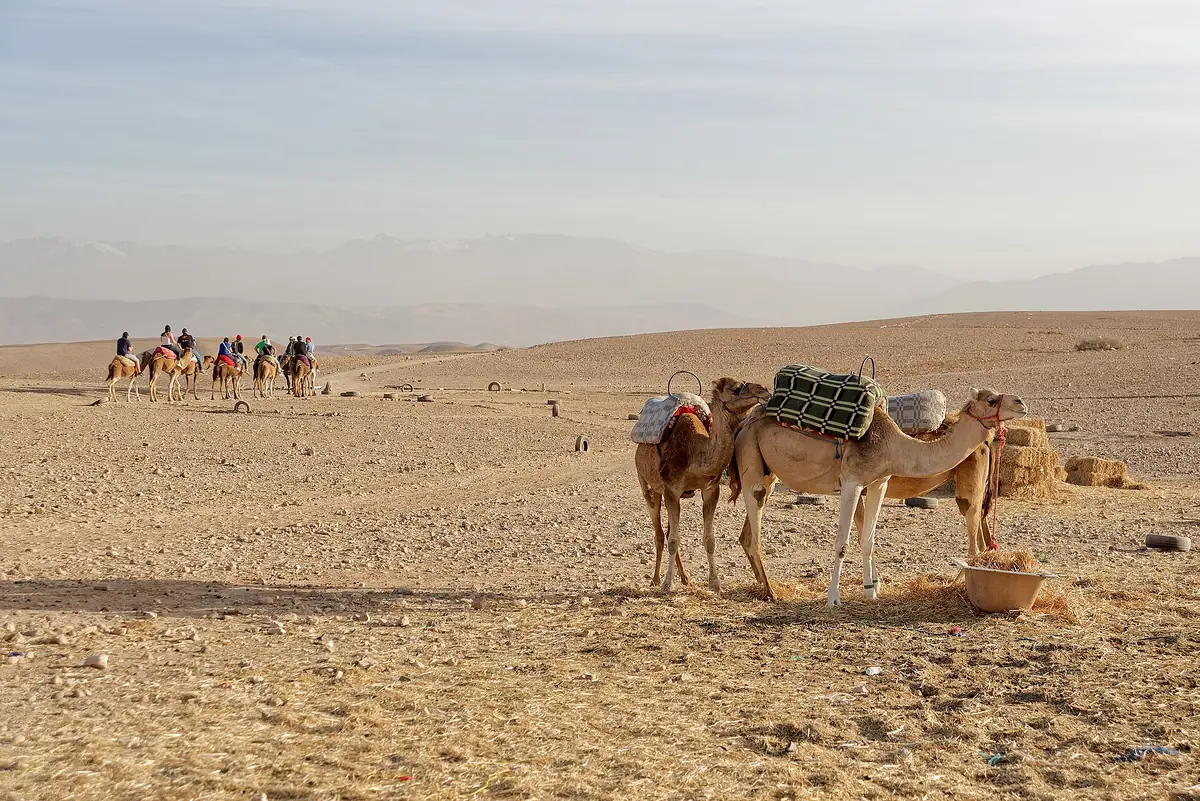
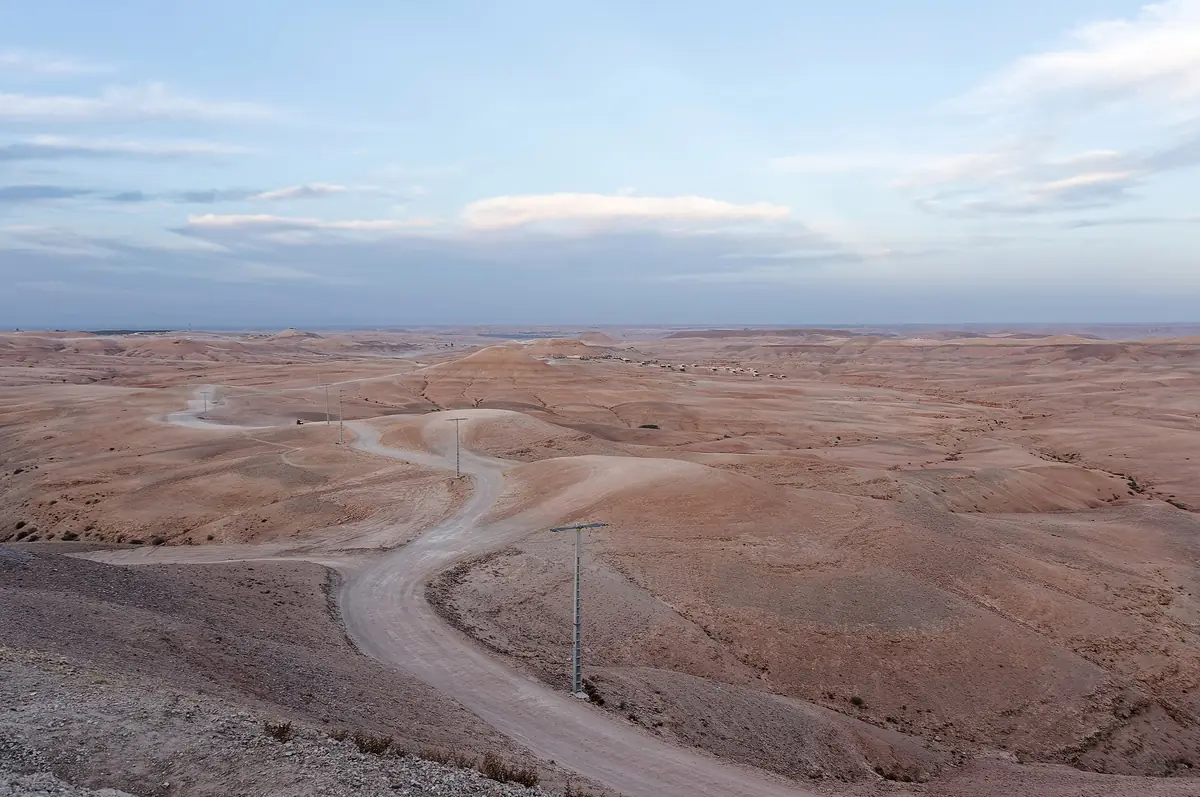
The Agafay desert begins 40 km from Marrakech, about 45 minutes by road. It is a desert of stone, not sand: bare, rolling hills and wide empty ground with the Atlas behind, where camps offer camel rides, dinner and a starry sky. It gives a taste of open desert to travellers with no time for the Sahara. Know the difference before you book: the high sand dunes of the photographs are at Merzouga, a full day's drive away.
Go in the late afternoon and stay for sunset and dinner; in summer the middle of the day is very hot. The simple way to go is a camp or a tour that includes the transfer from Marrakech. If you add quad biking, read your travel insurance first: the UK Foreign Office notes that some policies do not cover it.
The lake of Lalla Takerkoust, 40 km south of the city, lies in the same direction. It is a reservoir behind a dam, with the mountains reflected in the water. Jet skis, kayaks and quad rides are on offer, and restaurants along the shore look out over the lake.
Prices and times checked 28 November 2026
Essaouira: possible in a day, better with two nights
Essaouira is a walled Atlantic port with white and blue houses, a sea bastion you can walk along and a harbour full of blue wooden fishing boats. By car it is about two and a half hours from Marrakech each way, so a day trip means about five hours on the road for a few hours in town. That is enough for the ramparts of the Skala de la Ville, the lanes of the medina, the port and a plate of grilled sardines, but you arrive after the morning catch and leave before sunset on the walls.
Getting there: Essaouira has no railway. CTM runs about five coaches a day over the 191 km, with one-way fares from MAD 205; buy tickets on ctm.ma or at a CTM station. Tickets can be changed up to 12 hours before departure but are not refunded. CTM's search on ctm.ma shows each departure's arrival time, so look at it before you plan a day return by coach. Supratours also runs coaches: search its timetable on supratours.ma/recherche-horaires. For a single day, a tour or a driver is the simpler choice.
If you can spare the time, sleep there: two nights give you the port in the morning and the ramparts at sunset, as our Essaouira guide explains. In summer the coast is also the cool place to be, with an average maximum of 21.9°C in Essaouira against 36.3°C in Marrakech.
Prices and times checked 28 November 2026
Ouzoud waterfalls: the long green day
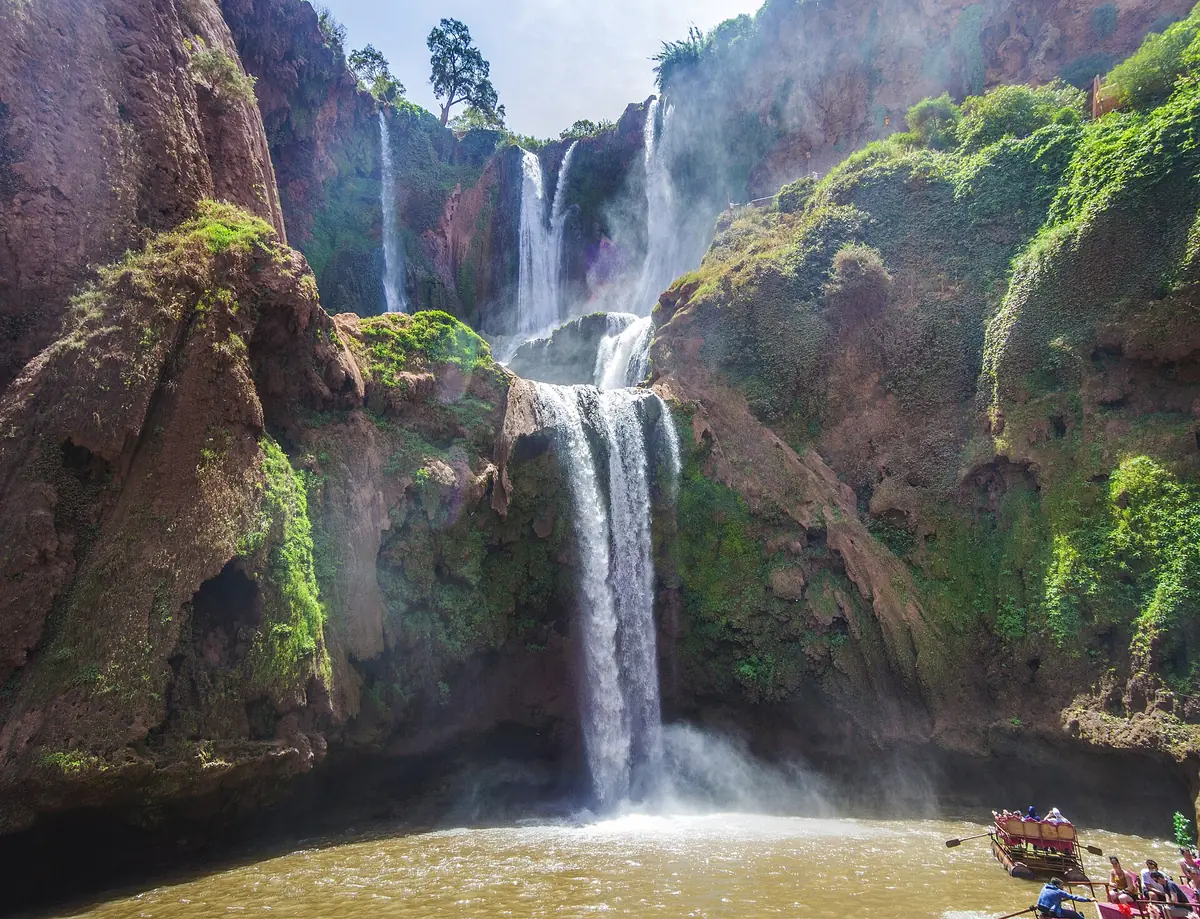
The Ouzoud waterfalls drop about 100 metres into a chasm in the Atlas foothills north-east of Marrakech, in Azilal province. Paths lead from the top of the falls down to the pool at their foot. The falls themselves are an easy family outing; the drive is the long part of the day.
Getting there: Azilal, the province's main town, is 162.3 km and about 2 h 36 from Marrakech by road, and the falls are about 40 minutes from Azilal. Leave early, and ask the tour or the driver how long the drive takes each way. Go with a guided day tour or a driver; from Marrakech this is a full day.
Wear shoes with grip for the paths near the water. In the rainy season, from about November to March, floods can hit the High Atlas, so skip the trip after heavy rain.
Prices and times checked 28 November 2026
Ait Ben Haddou and Merzouga: famous, but not day trips
Ait Ben Haddou is the fortified village of adobe houses on UNESCO's World Heritage List, on the far side of the High Atlas. Ouarzazate is 194 km from Marrakech, about 3 h 45 of driving over the Tizi n'Tichka pass, and the village is about 30 minutes from Ouarzazate, so a day trip spends most of its hours on the road. It can be done with a tour or a driver who leaves early. One night there is far better, and most travellers see the village on the way to the desert, as our Ouarzazate and Ait Ben Haddou guide explains. Whichever you choose, be back over the pass before dark: poor lighting makes night driving dangerous, and mountain roads are especially hazardous in bad weather.
Merzouga and the dunes of Erg Chebbi are sometimes advertised next to these trips. They are not one: a camp at Merzouga describes the drive to the desert as about nine hours and tells guests coming from Marrakech to leave at about 06:00. The classic way to go is a three-day tour from Marrakech that ends in Fes or returns to Marrakech, with a night in a desert camp. Our Merzouga and Sahara guide compares the tours. If you have a single day and want desert, choose Agafay and know that it is stone, not sand.
Prices and times checked 28 November 2026
Tour, driver, coach or shared taxi
A guided day tour is the simplest way to do any of these trips once: it includes the vehicle and the driver, and it collects you near your riad. Shared tours keep to a fixed plan; private ones let you set the stops. The offers below cover the main trips.
A car with a driver suits two or more people and anyone who wants to choose the stops. Riads arrange them; ask for the price for the whole car and the whole day before you agree.
Only a few of these costs are published ahead. The private car to Imlil is EUR 90 per car each way, so EUR 180 for the return, shared by up to four people. The CTM coach to Essaouira is from MAD 205 each way, so from MAD 410 for a day return, and the Skala of the port there costs MAD 60 for a foreign adult. Tours and drivers quote their own prices, so compare the price for the whole car and the whole day.
CTM coaches work for Essaouira and for Ouarzazate, which CTM serves from Marrakech at least once a day; both are better as overnight trips. Shared grands taxis reach Asni, on the way to Imlil; they leave only when they are full, and the fare is agreed at the rank. The trains from Marrakech station run north to Casablanca and Rabat and serve none of the places in this guide; our transport guide covers them.
Driving yourself is possible on all these roads, but plan to be back in daylight. From about November to March, heavy snow and floods in the High Atlas can disrupt traffic, so ask your riad about the road on the morning you leave.
Prices and times checked 28 November 2026
Choosing by season
The same trip is a different day in July and in January.
- March to May: the best months for every trip. The valleys are green, the Atlas still has snow on its peaks, and the city is warm rather than hot.
- June to August: Marrakech is very hot. Go up to Imlil or Ourika, or out to Essaouira, where the Atlantic wind keeps the days cool. Keep Agafay for sunset and dinner.
- September to November: the second good season, with clear days for the mountains and the coast.
- December to February: days are mild and evenings cool. Oukaïmeden has its ski season from December to March. Snow and heavy rain can close mountain roads, so keep the Tizi n'Tichka and the higher valleys for a settled day.
Prices and times checked 28 November 2026
Practical questions
What is the best day trip from Marrakech?
For a first visit, Imlil in the High Atlas: 65 km south, with easy valley walks under Toubkal. The Ourika Valley is the gentler alternative, and Agafay fits when you only have an afternoon and an evening.
Can I visit Essaouira in a day from Marrakech?
Yes, with a tour or a driver. The road takes about two and a half hours each way, which leaves a few hours in town. By coach it is better as a trip of two nights.
Can I see the Sahara on a day trip from Marrakech?
No. The dunes at Merzouga are about nine hours' drive away, and the usual trip is a three-day tour. The Agafay desert, 40 km from the city, is a stony desert without sand dunes.
Is Ait Ben Haddou worth it as a day trip?
Only if you have no other chance to go south. Ouarzazate is about 3 h 45 from Marrakech over the Tizi n'Tichka and the village about 30 minutes from Ouarzazate, so most of the day is spent in the car. One night there, or a stop on a desert tour, is better.
How do I get to Imlil without a tour?
By private car, EUR 90 per car one way at Kasbah du Toubkal's rate, or by shared grand taxi or local bus to Asni and a local taxi from there. The public route takes from two hours to half a day, with bargained fares.
Do I need a guide for walks in the Atlas?
The UK Foreign Office advises hiring a professional guide for any hike in the Atlas Mountains. A day tour includes one, or your riad can book one for the day.
Keep planning your trip
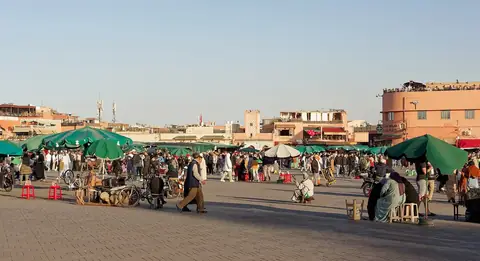
Marrakech
How many nights Marrakech needs, where to sleep in the medina, Jemaa el-Fnaa, the palaces and Majorelle, ticket prices and hours, and the day trips.
Read the guide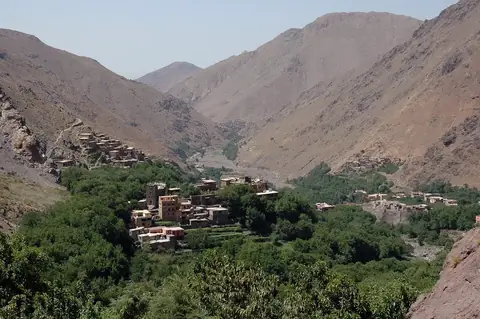
Imlil and the High Atlas
Whether Imlil is a day trip from Marrakech or worth a night, how to climb Toubkal with a guide in two days, the refuge, transfers, prices and seasons.
Read the guide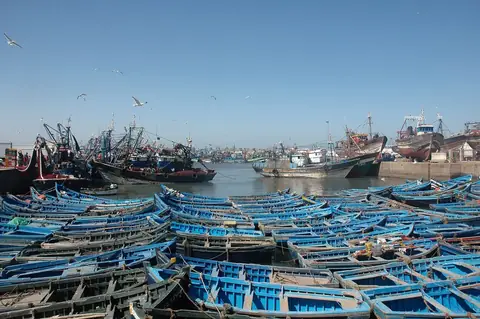
Essaouira
Day trip or two nights in Essaouira: the Skala ramparts, the port and its fish grills, the beach, the CTM coach from Marrakech, riads and costs.
Read the guide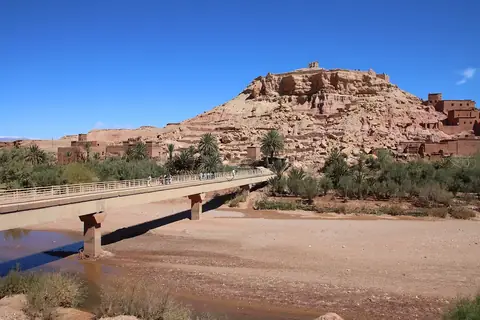
Ouarzazate and Ait Ben Haddou
Whether Ait Ben Haddou and Ouarzazate are a day trip from Marrakech or a night on the road to the Sahara: the ksar, the kasbahs, the film studios, buses and hotels.
Read the guide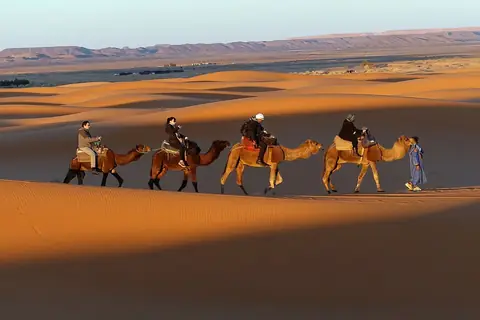
Merzouga and the Sahara
How to plan a night in the dunes of Erg Chebbi: tours from Marrakech or Fes, desert camps, the camel ride, Khamlia, Rissani and the best months for the Sahara.
Read the guide
Transport in Morocco
How to get around Morocco: Al Boraq and ONCF trains, CTM coaches to Chefchaouen and the south, grands taxis, drivers, car hire, flights and city trams.
Read the guideSources and checks before you travel
(25)
- Visit Morocco (Moroccan National Tourism Office): Marrakech ↗ — opens in a new tab
- Visit Morocco (Moroccan National Tourism Office): nature around Marrakech ↗ — opens in a new tab
- Visit Morocco (Moroccan National Tourism Office): sport around Marrakech ↗ — opens in a new tab
- Visit Morocco (Moroccan National Tourism Office): Azilal ↗ — opens in a new tab
- Visit Morocco (Moroccan National Tourism Office): nature in Azilal ↗ — opens in a new tab
- Visit Marrakech (Marrakech-Safi Regional Tourism Council): Agafay ↗ — opens in a new tab
- Visit Marrakech (Marrakech-Safi Regional Tourism Council): Ourika ↗ — opens in a new tab
- Visit Marrakech (Marrakech-Safi Regional Tourism Council): Oukaïmeden ↗ — opens in a new tab
- Kasbah du Toubkal: transfers and directions ↗ — opens in a new tab
- Kasbah du Toubkal: prices ↗ — opens in a new tab
- Kasbah du Toubkal: home page ↗ — opens in a new tab
- Kasbah du Toubkal: strolls and day treks ↗ — opens in a new tab
- CTM: Marrakech–Essaouira by coach ↗ — opens in a new tab
- CTM: help and FAQ ↗ — opens in a new tab
- CTM: tourism in Ouarzazate ↗ — opens in a new tab
- Visit Morocco (Moroccan National Tourism Office): Essaouira-Mogador ↗ — opens in a new tab
- Visit Morocco (Moroccan National Tourism Office): Ouarzazate, Zagora and Tinghir ↗ — opens in a new tab
- Merzouga Luxury Desert Camps: getting there ↗ — opens in a new tab
- UK Foreign Office: Morocco safety and security ↗ — opens in a new tab
- German Federal Foreign Office: Morocco travel and safety advice ↗ — opens in a new tab
- Direction Générale de la Météorologie: summer maximum temperature normals 1991–2020 (map) ↗ — opens in a new tab
- Visit Marrakech (Marrakech-Safi Regional Tourism Council): transport ↗ — opens in a new tab
- Visit Morocco (Moroccan National Tourist Office): Getting around Morocco ↗ — opens in a new tab
- Visit Marrakech (Marrakech-Safi Regional Tourism Council): Lalla Takerkoust ↗ — opens in a new tab
- Ministry of Youth, Culture and Communication e-services: La Sqala du Port, Essaouira ↗ — opens in a new tab
Reference sources for the version dated 28 November 2026. Confirm opening times, access, transport and conditions for your travel dates.
Photo credits
(5)
The Ouzoud waterfalls in spring, in Azilal province north-east of Marrakech.
Photograph: Kasmii — opens in a new tab · CC BY-SA 4.0 — opens in a new tab
Changes: Resized and converted to WebP; displayed with responsive crops. · Original photograph and licence details ↗ — opens in a new tab
The Ourika Valley, the closest Atlas valley to Marrakech.
Photograph: David Broad — opens in a new tab · CC BY 3.0 — opens in a new tab
Changes: Resized and converted to WebP; displayed with responsive crops. · Original photograph and licence details ↗ — opens in a new tab
Dromedaries in the Agafay desert, a desert of stone rather than sand.
Photograph: Jakub Hałun — opens in a new tab · CC BY 4.0 — opens in a new tab
Changes: Resized and converted to WebP; displayed with responsive crops. · Original photograph and licence details ↗ — opens in a new tab
Snow on the High Atlas near Oukaïmeden in winter.
Photograph: MED.BENALLA — opens in a new tab · CC BY-SA 3.0 — opens in a new tab
Changes: Resized and converted to WebP; displayed with responsive crops. · Original photograph and licence details ↗ — opens in a new tab
The bare hills of the Agafay desert near Marrakech.
Photograph: Jakub Hałun — opens in a new tab · CC BY 4.0 — opens in a new tab
Changes: Resized and converted to WebP; displayed with responsive crops. · Original photograph and licence details ↗ — opens in a new tab