Ras Al Khaimah: two nights for Jebel Jais, Dhayah Fort and the beach
Ras Al Khaimah is the emirate where the UAE runs out of flat ground. An hour and a half to two hours’ drive north of Dubai, the Hajar Mountains rise straight out of the coastal plain to Jebel Jais, the highest peak in the country, and a road of hairpin bends climbs to viewing decks, a zipline and restaurants that are usually about 10 °C cooler than the coast. Below the mountain stand Dhayah, the only hill fort left in the UAE, and Al Jazirah Al Hamra, a pearling village its people left between 1968 and 1971. Two nights are enough: one day for the mountain and the fort, one for the old town and the beach, and a hotel on the sand on Al Marjan Island to come back to.
In this guide
Find the location ↗ — opens in a new tabThe short answer
Book two nights in a beach hotel on Al Marjan Island. Come up from Dubai on the RAKTA bus from Union bus station to RAKTA's station in Al Dhait (AED 30, hourly from 07:30, about two to two and a half hours), then use metered taxis. Give one day to Jebel Jais and Dhayah Fort on the way down, and one to Al Jazirah Al Hamra, the National Museum (AED 5) and the beach. The Jais Flight zipline starts at AED 325 a person; if you want it, book it before the room. Two people sharing, with the zipline, every lunch and dinner, the buses and taxis, spend from about AED 2,800 over the two nights, from AED 1,410 each, plus the room.
- Suggested time
- 2 nights in Ras Al Khaimah
- Where to stay
- A beach hotel on Al Marjan Island, with day trips by taxi to Jebel Jais, Dhayah Fort and the old town
- Season and timing
- October to April is the best time to visit Jebel Jais, when the weather on the mountain is mild enough for a full day outside. In summer the main sights on the coast reach 35-38 °C, while the peak averages 31 °C by day, so a summer visit works best as a mountain day.
Al Marjan Island or Al Hamra: where to sleep
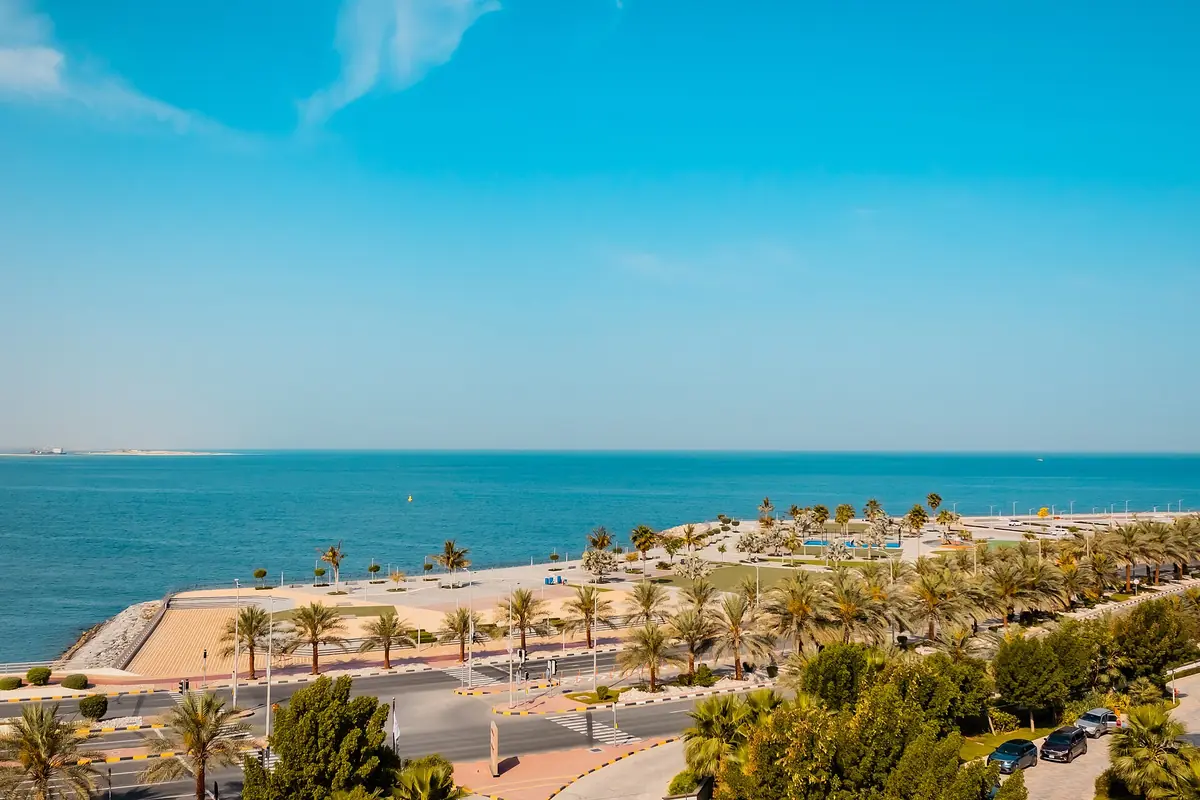
Sleep on the beach. Al Marjan Island, a cluster of man-made islands off the coast south-west of the city, is where most of the beach hotels stand, with white sand, beach clubs and a waterfront you can walk. The Al Hamra resorts stand along the coast beside the Al Hamra golf course. Both areas are on the Dubai side of the emirate: the old town is a short taxi ride away, and Jebel Jais is the long drive. Oil leaking from a tanker closed some beaches in Ras Al Khaimah, and several are still closed while the clean-up continues; follow the beach signs and the local authorities' announcements on reopening, as our health and safety guide explains.
The island's hotels range from mid-range beach hotels with direct beach access, a pool and family rooms to large resorts with their own sand and infinity pools. Rove Al Marjan Island, for example, quotes rates before a 10% service charge, a 7% municipality fee and 5% VAT, and Ras Al Khaimah's hotel tourism fee of AED 15 per room per night comes on top, so a rate quoted that way rises by more than a fifth at checkout.
For more bases across the country, see our where-to-stay guide.
Prices and times checked 28 November 2026
Jebel Jais: the road, the viewing decks and the zipline
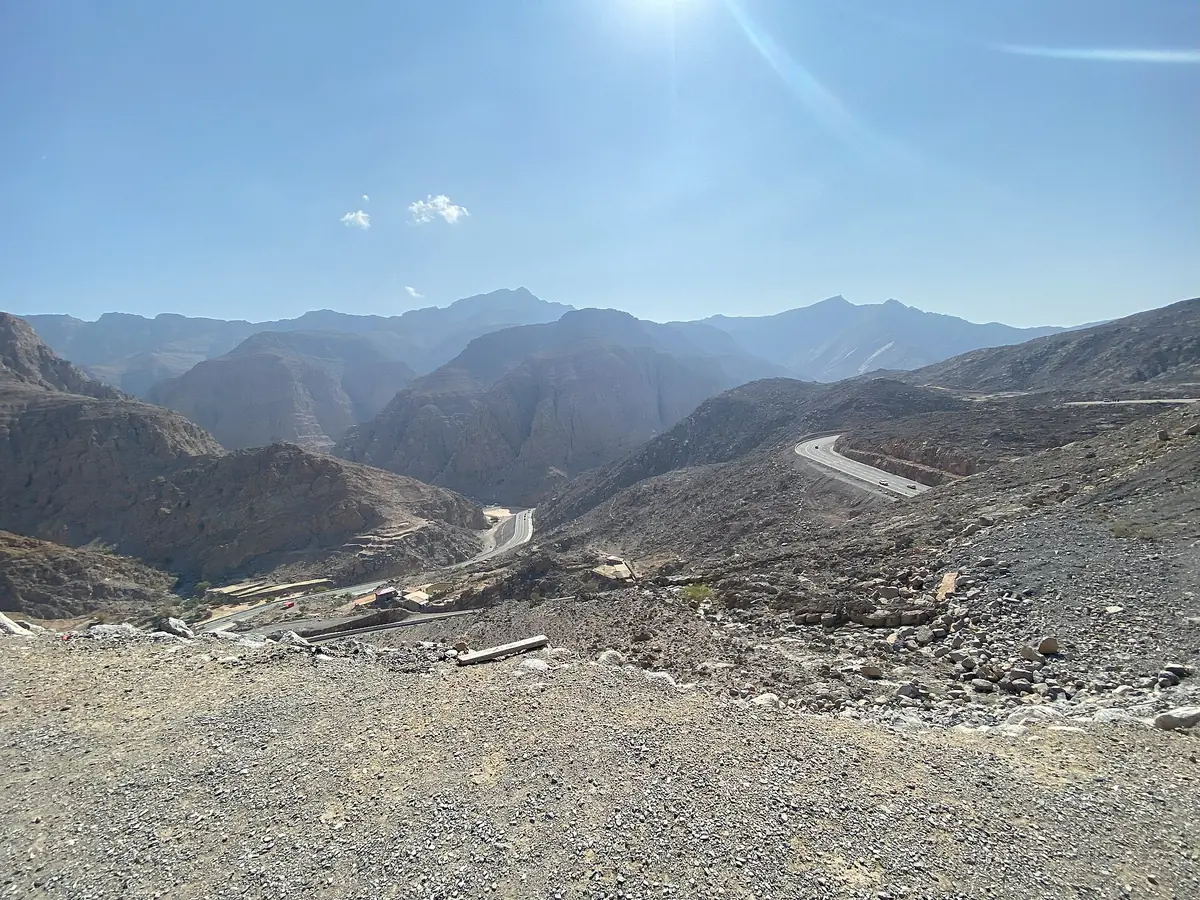
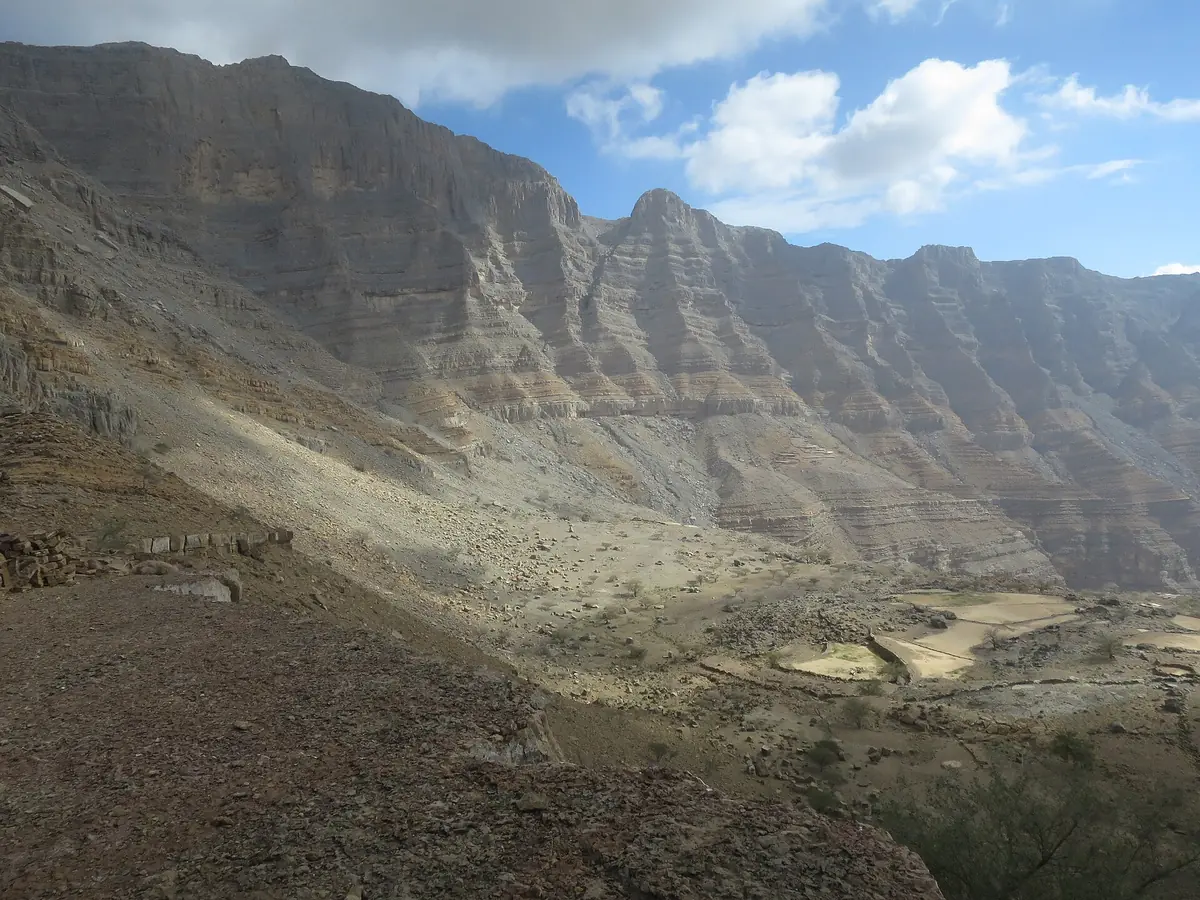
Jebel Jais rises to 1,934 metres, the highest point in the UAE, in the Hajar range that runs on into the Musandam peninsula of Oman. The road up is the experience in itself: hairpin bends through ruddy, barren rock, with views over the plains, the date palm farms and the wadis below, and regular pull-ins where you can stop for the view. The temperature is usually about 10 °C lower than on the coast, and in winter it can drop below zero at the top, so take a jacket.
Jais Viewing Deck Park, at 1,250 metres and almost 30 km into the mountains, is a ridge of seven viewing decks with 12 binoculars. One side looks over the zigzag road and the peaks, the other over the wadis to the Gulf. It is open from 08:00 to 20:00 Sunday to Thursday and from 08:00 to 23:00 on Friday and Saturday. The park charges a small entry fee. Puro Express and Muse Café at the park sell coffee and snacks. Stay for sunset over the Gulf.
Jais Flight, run by RAK Leisure, is a 2.83 km zipline, billed as the longest in the world. It sends riders about 1,680 metres above sea level across ravines and canyons at up to 150 km/h, and the ride takes about three minutes. From October to April flights run from 09:30 to 16:00; from May to September there are two, at 10:30 and 17:00. Times change in Ramadan and in bad weather. Visit Ras Al Khaimah lists rides from AED 325 a person, depending on the season. Book a ride date on the operator's site, Visit Jebel Jais, before you book the room, and plan the mountain day around it. Riders must weigh 40-120 kg. Riders must be at least 122 cm tall. Wear sports clothes (no dresses or skirts) and closed shoes with grip, and show a passport or Emirates ID. Under-18s need a parent or legal guardian and a signed waiver.
The same operator runs the Jais Sky Tour, the region’s longest zipline tour, and the Jais Via Ferrata. Its Jais Sledder toboggan ride is listed as temporarily closed. 1484 by Puro, at 1,484 metres, is the highest restaurant in the country. Red Rock, a restaurant on the mountain that cooks over open flames, opens for lunch and dinner from Tuesday to Sunday, 11:00 to 23:00, with a minimum spend of AED 150 a person from Friday to Sunday. Six marked hiking trails add up to 16 km on the upper and lower slopes.
Prices and times checked 28 November 2026
Dhayah Fort and its palm gardens
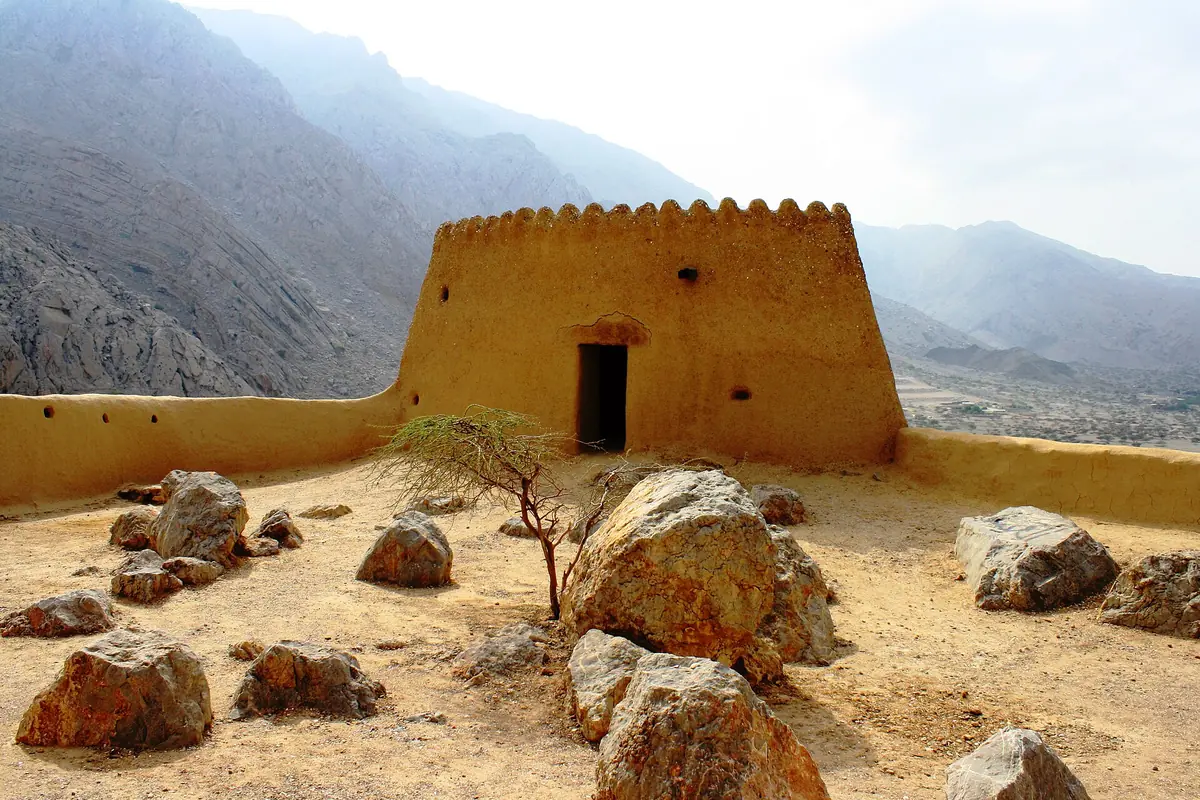
Dhayah Fort is the only hill fort left in the UAE, and the best stop on the way down from Jebel Jais. The twin-peaked mud-brick fortress on top of a 70-metre hill was built in the 19th century and restored in the late 1990s; this is where British troops fought the Qawasim in 1819, the battle that led to the treaty of 1820. The hill itself was settled and fortified as early as the Late Bronze Age, around 1600-1300 BC.
A zigzag path of 239 steps leads to the top, where the view runs across the palm gardens of the Dhayah oasis to Oman and down to the sea. At the foot of the hill are a larger fort where farmers sheltered with their animals and 12 large Wadi Suq tombs from about 2000-1300 BC. The fort is on the UNESCO World Heritage Tentative List. The path is uneven and rocky, unsuitable for prams and wheelchairs, and has no lighting, so go in daylight.
Al Jazirah Al Hamra and the old city
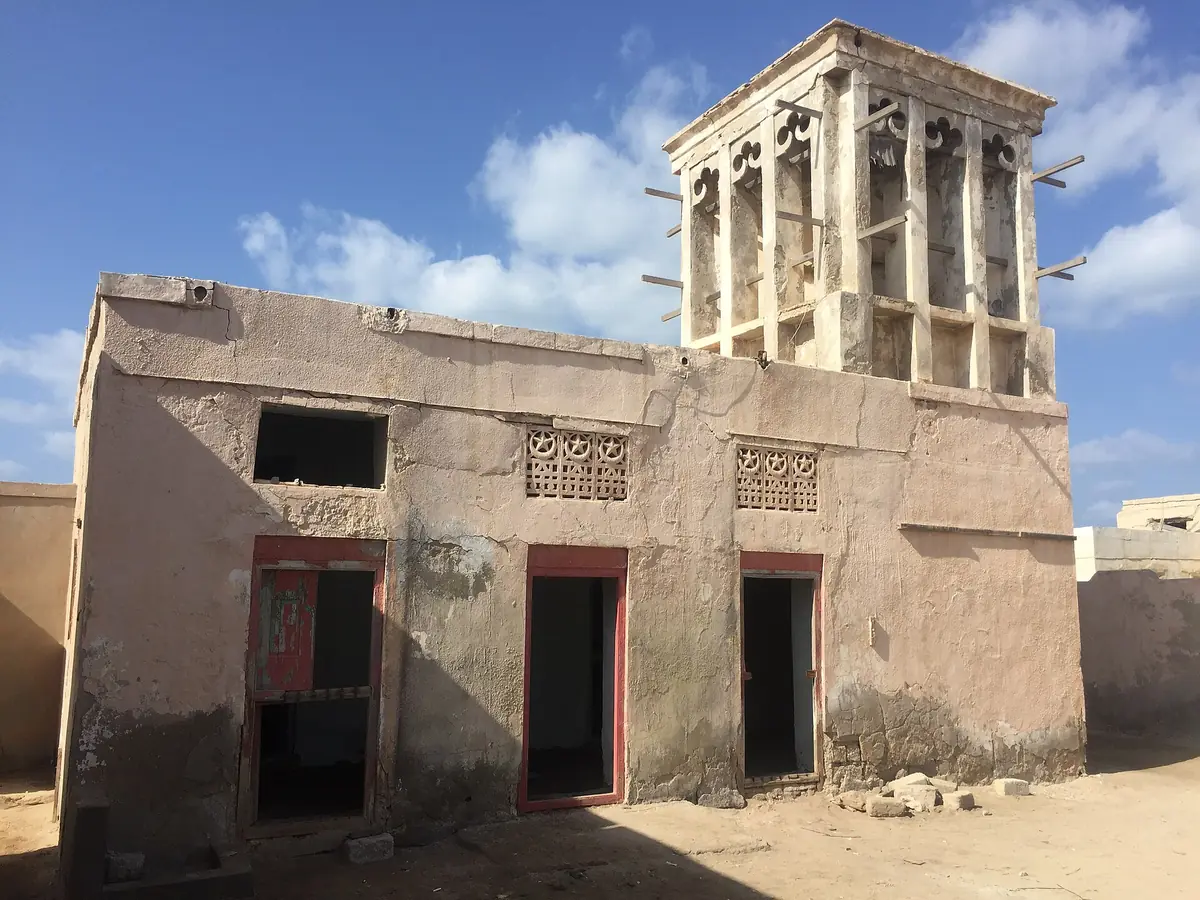
Al Jazirah Al Hamra, the Red Island, is the only historical pearling village left in the Gulf; the others were pulled down when oil arrived. Around 1900 it had some 500 houses, a fort and watchtowers, a mosque and a souq, all built of coral blocks and beach rock with mangrove beams, palm trunks and palm matting, and the Zaab tribe kept 25 pearling boats here until the pearl trade collapsed in the 1920s. Its people left between 1968 and 1971. Look for the wind-tower residence, a textbook example of the barjeel, the windcatcher that cooled the rooms below, and the large courtyard house of the wealthy pearl merchant.
The village is an open-air site with no fee and no staff. Many buildings may be unstable, so stay out of them and do not climb on walls. Go between 08:00 and 18:00, as there is little lighting after dark. For pearling today, Suwaidi Pearl Farm takes visitors from Al Rams Corniche, in the north of the emirate, on a traditional pearling boat to its floating farm, where you open an oyster yourself. Tours leave at 10:00, 12:30 and 15:00 and take about 2.5 hours; book ahead with the farm. The tour is not in the cost below.
In the old city, the National Museum of Ras Al Khaimah fills a fort that served as the ruling family's residence, with a tower that copies the original on the old city wall. Its galleries cover archaeology, the medieval port of Julfar, weapons and Emirati life; new galleries opened in November 2025. It is open from Tuesday to Sunday, 08:00 to 18:00 (last entry 17:30), closed on Mondays and on the first day of Eid, and tickets at the door cost AED 5 for adults and AED 2 for children. Hours may change on national holidays and in Ramadan.
Prices and times checked 28 November 2026
Two nights, day by day
The plan puts the mountain on the full middle day: you leave Al Marjan Island after breakfast and are back for sunset. The museum is closed on Mondays, so start the trip on another day if you want the museum on the first afternoon.
- Day 1 — Dubai to Al Marjan Island and the old town: take the 08:30 or 09:30 RAKTA bus from Union bus station, reach the RAKTA bus station in Al Dhait about two to two and a half hours later and take a taxi to the hotel to leave your bags. Have lunch at Skeek in the old city, then taxi to Al Jazirah Al Hamra for an hour in the lanes, then on to the National Museum before its 17:30 last entry, and back to the island for dinner.
- Day 2 — Jebel Jais and Dhayah Fort: leave by 09:00 with a taxi hired for the day. The top is about 45 minutes’ drive from Ras Al Khaimah city, and the city is 15 minutes from Al Marjan Island. Ride the zipline in the late morning, walk the viewing decks and have lunch on the mountain. Then come down to Dhayah Fort by mid-afternoon to climb the 239 steps in good light, and be back at the hotel for sunset on the beach.
- Day 3 — Beach morning and back to Dubai: a swim and a slow breakfast, then a taxi to the RAKTA bus station in Al Dhait and an early-afternoon bus to Union; the 15:30 and 17:30 departures run direct.
What to eat and where to look
Khameer and chibab
Two Emirati breakfast breads: khameer, a yeasted bread spiced with saffron and dipped in cream cheese or honey, and chibab, small Emirati pancakes, with karak tea alongside.
- Where to look
- Al Hish Farm, off Khatt Road about eight minutes from the airport, bakes them from wheat it grows and mills itself; its breakfast costs about AED 50 a person.
- Fit it into your day
- A slow breakfast on day 3 if you take a taxi inland before the bus.
Karak chai
Strong black tea boiled with milk, sugar and spices, the everyday drink of the Gulf; karak saoud adds crushed biscuits on a frothy top.
- Where to look
- Mandarin Cafeteria, a drive-up counter with branches in Al Dhait South and Sheikh Saqr City, at an average of AED 15-40 a person.
- Fit it into your day
- On the way back from Dhayah Fort on day 2.
Seafood platters and mixed grill
Gulf seafood and mixed grills on large platters, eaten family-style: Emiratis share several dishes at the table.
- Where to look
- Skeek Restaurant & Café, an Emirati restaurant in the old part of the city just off the beach road, with views over the Gulf.
- Fit it into your day
- Lunch on day 1, before Al Jazirah Al Hamra.
Mandi and madfoon
Yemeni-style rice dishes the whole Gulf eats: charcoal-grilled marinated chicken or lamb served on mandi or bukhari rice, with kunafa to follow.
- Where to look
- Madfoon Al Sadda near Emirates Market on Sheikh Mohamed Bin Salem Road, Sheikh Saqr City, at about AED 50-100 a person.
- Fit it into your day
- Dinner on day 1 after the museum.
Balaleet and gahwa
Balaleet, an Emirati breakfast of vermicelli sweetened with sugar, cardamom and saffron under an egg, with gahwa: bitter coffee served black and spiced with cardamom.
- Where to look
- Skeek, which opens at 08:00 for Emirati breakfast; its sweets use coconut, rosewater, honey syrup, nuts and dried fruit.
- Fit it into your day
- Breakfast at 08:00 on day 2, before the mountain taxi.
Many of these dishes and sweets contain nuts, dairy or wheat; ask before you order if you have an allergy.
Getting there from Dubai and around without a car
Bus from Dubai: RAKTA, the Ras Al Khaimah Transport Authority, runs 19 buses a day in each direction between Dubai's Union bus station and its bus station in Al Dhait. From Union they leave hourly from 07:30 to 23:30, with two direct runs at 18:00 and 20:00, for AED 30; the others go via Umm Al Quwain. Buses back to Union leave Al Dhait hourly from 05:00 to 21:00, with extra runs at 15:30 and 17:30, for AED 27. Six of them run direct, at 05:00, 06:00, 07:00, 08:00, 15:30 and 17:30, and most of the others go via Sharjah. The trip takes about two to two and a half hours. Bookings and times are in RAKTA's Sayr app.
By car or taxi: the drive from Dubai takes 1.5-2 hours on the E11, and a Dubai taxi costs about AED 250-350 one way. For our wider network of buses between the emirates, see the transport guide.
Taxis in Ras Al Khaimah: RAKTA taxis are metered: AED 4 flag fall by day (AED 5 from 22:00 to 05:59), AED 1.88 a kilometre, a AED 2 service fee per trip and AED 0.50 a minute of waiting after the first five minutes, with a minimum of AED 6. Book through the Sayr app or on 800 1700. For Jebel Jais, hire a taxi for a half or full day, so the driver waits for you at the top.
City buses: RAKTA's red line runs from Al Nakheel to Al Jazirah Al Hamra every day from 06:00 to 22:00, AED 8 a ride, paid with a Saqr card. RAKTA's weekend Yellow Route ran from the Al Hamra and Al Marjan hotels up Jebel Jais from November 2025 to April 2026. Look for a new season's timetable on RAKTA's website before you go; otherwise plan on a taxi or a tour.
Flying in: Ras Al Khaimah International Airport (RKT) is 18 km from the city; RAKTA's green line bus links it with Al Nakheel. Dubai International (DXB) is 85 km away.
Prices and times checked 28 November 2026
What two nights cost, all in
From about AED 2,800 for two, from AED 1,410 each, plus the room, for two nights on Al Marjan Island with the Jais Flight zipline, every lunch and dinner, the buses from and back to Dubai, the taxis and the museum, plus a 10% buffer. The zipline is counted at its AED 325 starting price, so a dearer season raises the total. Without the zipline, it comes to about AED 2,100 for two, plus the room.
| Level | Per person | For two |
|---|---|---|
| 2 nights with the zipline, before the room | from AED 1,410 | from AED 2,800 |
| 2 nights without the zipline, before the room | AED 1,050 | AED 2,100 |
The cost assumes two adults sharing one room for two nights from a Saturday to a Monday outside the holidays, with breakfast in the room rate, starting and ending at Union bus station in Dubai. The room is not in the total: add the rate for your dates. Lunch on the mountain is at Red Rock's AED 150 weekend minimum spend. The other four lunches and dinners are about AED 100 a person each, the top of the AED 50-100 a person the tourism board gives for Madfoon Al Sadda. Taxis are worked out on RAKTA's meter: a day hire for the mountain and Dhayah Fort with about three hours of waiting, three short runs for the old town, and the two station runs.
- Rooms: add your rate. Two nights at a beach hotel on Al Marjan Island with breakfast, plus any service charge, fees and VAT.
- Food, for two: about AED 1,100. One mountain lunch at AED 150 each and four other meals at about AED 100 each.
- Getting around, for two: about AED 800. Buses AED 114 (AED 30 and AED 27 each), the taxi day to Jebel Jais and Dhayah about AED 450, the old-town afternoon about AED 150, and two station transfers about AED 90.
- Sights, for two: from about AED 660. Jais Flight from AED 325 each and the National Museum AED 5 each; Al Jazirah Al Hamra and Dhayah Fort have no fee.
- Buffer, for two: about AED 260. Ten per cent for water, coffee, the viewing-deck fee and tips.
Prices and times checked 28 November 2026
Practical questions
How many nights should I spend in Ras Al Khaimah?
Two nights: one full day for Jebel Jais and Dhayah Fort, and an afternoon for Al Jazirah Al Hamra and the museum. A day trip from Dubai can cover the mountain alone, but you lose the beach and spend four hours on the road.
Can I get to Jebel Jais without a car?
Yes, by taxi: hire a RAKTA taxi for a half or full day from your hotel so it waits at the top, or book a tour. RAKTA's weekend Yellow Route bus ran up the mountain in the 2025-26 winter; look for a new timetable on RAKTA's website before you go.
How much is the Jebel Jais zipline?
Visit Ras Al Khaimah lists Jais Flight from AED 325 a person, depending on the season. Book a ride date on the operator's site, Visit Jebel Jais, before you book the room. Riders must weigh 40-120 kg, be at least 122 cm tall and bring a passport or Emirates ID.
How do I get from Dubai to Ras Al Khaimah by bus?
RAKTA buses leave Union bus station hourly from 07:30 to 23:30 for AED 30 and take about two to two and a half hours. The return costs AED 27.
Is Dhayah Fort free?
There is no ticket for Dhayah Fort. Go in daylight: the 239 steps are rocky and the hill has no lighting.
Keep planning your trip

Dubai
Three nights in Dubai: Al Fahidi and the creek abra, the Deira souks, the Burj Khalifa, the beach and Marina, a desert evening, the airport metro and costs.
Read the guide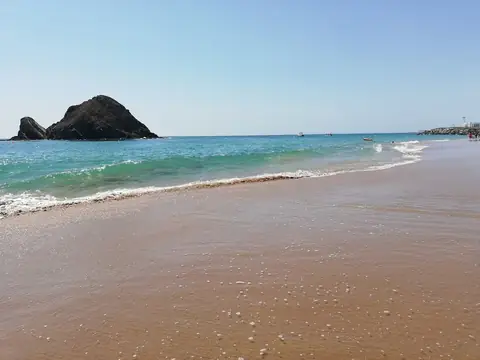
Fujairah and the east coast
Two nights on the UAE's Gulf of Oman coast: a beach base at Al Aqah, Snoopy Island snorkelling, Al Bidya Mosque, Fujairah Fort, Khor Fakkan and the Dubai bus.
Read the guide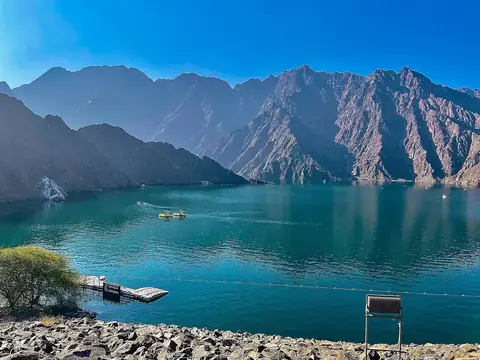
Hatta
Hatta as a day trip or a night from Dubai: the H02 express bus, kayaks on the dam lake, the heritage village and Wadi Hub, mountain lodges and what the day costs.
Read the guide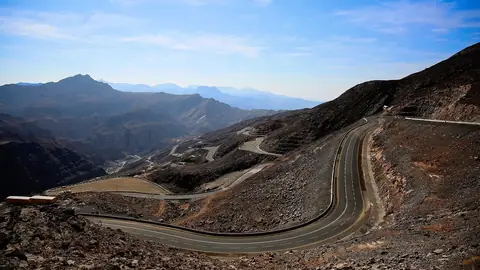
UAE in ten days
A ten-day UAE route by bus: four nights in Dubai, two in Ras Al Khaimah for Jebel Jais, two in Abu Dhabi and one in the oasis city of Al Ain.
Read the guide
Transport in the UAE
The Dubai Metro and nol cards, the new Etihad Rail trains, the AED 25 buses between Dubai and Abu Dhabi, airport taxis, and what to know before you hire a car in the UAE.
Read the guide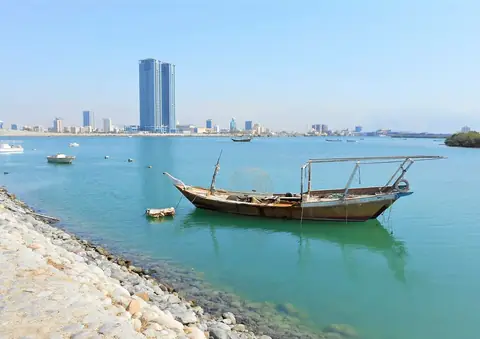
Where to stay in the UAE
Which part of Dubai to sleep in, the Abu Dhabi Corniche, the Ras Al Khaimah beach islands and Al Ain: nights for each and three hotels per area.
Read the guideSources and checks before you travel
(27)
- Visit Ras Al Khaimah: Jebel Jais ↗ — opens in a new tab
- Visit Ras Al Khaimah: Jais Flight ↗ — opens in a new tab
- Visit Ras Al Khaimah: Jais Viewing Deck Park ↗ — opens in a new tab
- Visit Jebel Jais: dining ↗ — opens in a new tab
- Visit Jebel Jais: FAQs ↗ — opens in a new tab
- Visit Jebel Jais: transport ↗ — opens in a new tab
- RAKTA: Yellow Route to Jebel Jais (news, 28 November 2025) ↗ — opens in a new tab
- Visit Ras Al Khaimah: Dhayah Fort ↗ — opens in a new tab
- Visit Ras Al Khaimah: Al Jazeera Al Hamra ↗ — opens in a new tab
- Visit Ras Al Khaimah: National Museum of Ras Al Khaimah ↗ — opens in a new tab
- RAKTA: public transport (intercity and city buses) ↗ — opens in a new tab
- RAKTA: taxi service and fares ↗ — opens in a new tab
- Visit Ras Al Khaimah: travel information ↗ — opens in a new tab
- Visit Ras Al Khaimah: cheap eats in Ras Al Khaimah ↗ — opens in a new tab
- Visit Ras Al Khaimah: Skeek Restaurant & Café ↗ — opens in a new tab
- Rove Hotels: Rove Al Marjan Island ↗ — opens in a new tab
- Rove Hotels: beach stay with breakfast offer ↗ — opens in a new tab
- Visit Ras Al Khaimah: Hampton by Hilton Marjan Island ↗ — opens in a new tab
- Visit Jebel Jais: play (activities) ↗ — opens in a new tab
- Visit Jebel Jais: online booking (Jais Flight category) ↗ — opens in a new tab
- Visit Jebel Jais: Dhayah Fort ↗ — opens in a new tab
- RAKTA: Ras Al Khaimah-Dubai bus service update (news, 24 August 2026) ↗ — opens in a new tab
- Visit Ras Al Khaimah: Suwaidi Pearl Farm ↗ — opens in a new tab
- Visit Ras Al Khaimah: intercity bus service ↗ — opens in a new tab
- Visit Ras Al Khaimah: traditional Emirati food ↗ — opens in a new tab
- Auswärtiges Amt: Vereinigte Arabische Emirate, Reise- und Sicherheitshinweise ↗ — opens in a new tab
- UAE government portal: where to stay (taxes at tourist facilities) ↗ — opens in a new tab
Reference sources for the version dated 28 November 2026. Confirm opening times, access, transport and conditions for your travel dates.
Photo credits
(5)
A wind-tower house in Al Jazirah Al Hamra, the old pearling village
Photograph: Slywire — opens in a new tab · CC BY-SA 4.0 — opens in a new tab
Changes: Resized and converted to WebP; displayed with responsive crops. · Original photograph and licence details ↗ — opens in a new tab
The Jebel Jais road climbing into the Hajar Mountains of Ras Al Khaimah
Photograph: Ginevrajocosa88 — opens in a new tab · CC0 — opens in a new tab
Changes: Resized and converted to WebP; displayed with responsive crops. · Original photograph and licence details ↗ — opens in a new tab
Dhayah Fort on its hilltop below the Hajar Mountains
Photograph: Fatima Alzaabi — opens in a new tab · CC BY-SA 4.0 — opens in a new tab
Changes: Resized and converted to WebP; displayed with responsive crops. · Original photograph and licence details ↗ — opens in a new tab
The waterfront on Al Marjan Island, where the beach hotels stand
Photograph: Tashmetova808 — opens in a new tab · CC BY-SA 4.0 — opens in a new tab
Changes: Resized and converted to WebP; displayed with responsive crops. · Original photograph and licence details ↗ — opens in a new tab
Mountain walls along the slopes of Jebel Jais
Photograph: Angela Manthorpe — opens in a new tab · CC BY-SA 4.0 — opens in a new tab
Changes: Resized and converted to WebP; displayed with responsive crops. · Original photograph and licence details ↗ — opens in a new tab