Istanbul in three nights: Hagia Sophia, Topkapı and the Bosphorus
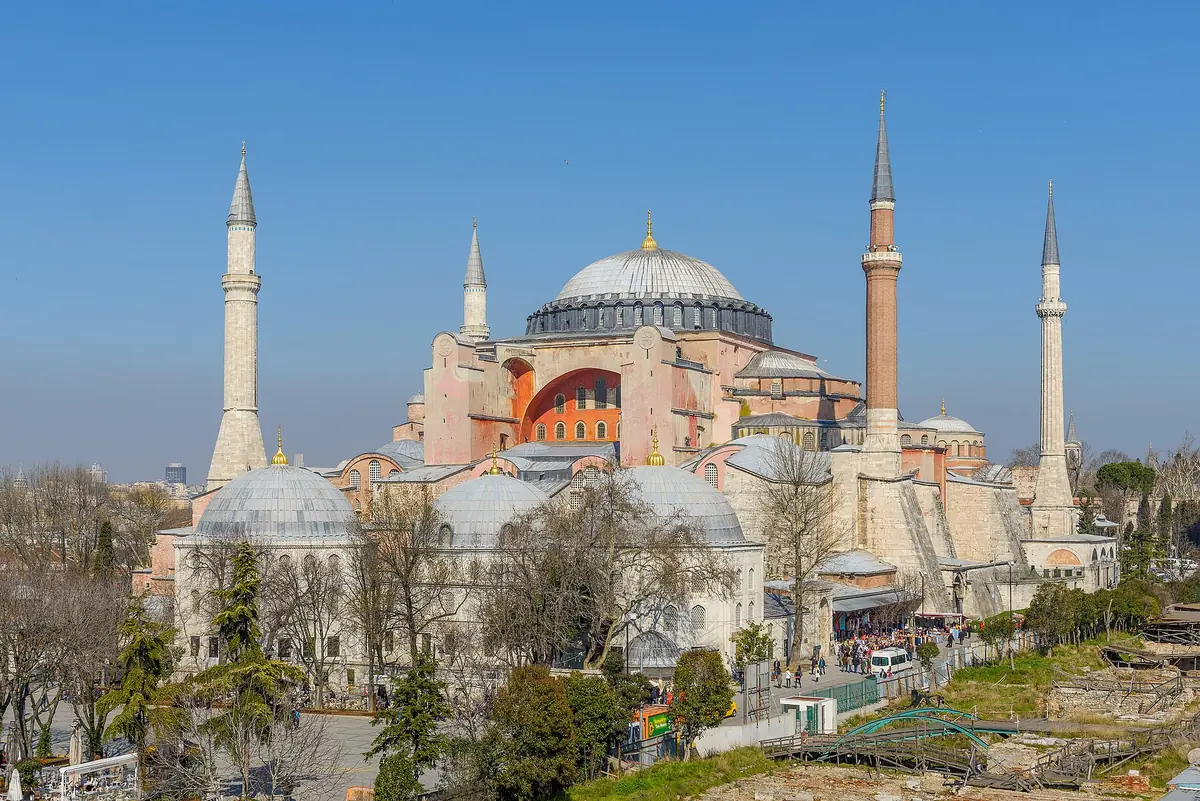
Istanbul is the city most trips to Turkey begin and end in, and three nights is the stay that lets it breathe. The old city on the Historic Peninsula holds the sights that fill the first two days: Hagia Sophia under its floating dome, the six minarets of the Blue Mosque, the courtyards and Harem of Topkapı Palace, the columned dark of the Basilica Cistern and the covered streets of the Grand Bazaar. The third day belongs to the water: a ferry on the Bosphorus, the Galata Tower above Karaköy and an evening across the strait in Kadıköy, on the Asian side.
In this guide
Find the location ↗ — opens in a new tabThe short answer
Book three nights, in Sultanahmet or Sirkeci if the old city is your priority, or in Karaköy or Galata if you want restaurants and the ferries on your doorstep. Give day one to Hagia Sophia, the Blue Mosque and the Basilica Cistern, day two to Topkapı Palace (closed on Tuesdays) and the Grand Bazaar, and day three to a Bosphorus ferry, the Galata Tower and Kadıköy. Topkapı's combined ticket with the Harem costs foreign visitors TRY 2,750, and foreign visitors pay €25 to visit Hagia Sophia's upper gallery. From Istanbul Airport (IST), Havaist's Sultanahmet bus costs €8; tickets and transport for the three days come to about TRY 9,500 (about €170) per person from 1 April 2027, when the Galata Tower ticket rises, or about TRY 9,200 before.
- Suggested time
- 3 nights in Istanbul
- Where to stay
- Sultanahmet or Sirkeci for the old city; Karaköy or Galata for food, nightlife and the ferries
- Season and timing
- April–May and September–October, with average highs of 17–26 °C, are the easiest months for walking the city; July and August are the hottest, with average highs of 29.7 °C.
Three nights: Sultanahmet, Sirkeci, Galata or Kadıköy
Three nights give two full days in the old city and a third on the water, with the arrival and departure evenings free. Keep one hotel for all three nights; the tram, the funicular and the ferries tie the districts together, so changing rooms buys you nothing.
Sultanahmet puts Hagia Sophia, the Blue Mosque, the cistern and Topkapı a few minutes' walk from your door, and Havaist's airport bus stops at its edge. It is quiet after dark and its restaurants mostly serve visitors. Sirkeci, just downhill towards the Golden Horn, has the same sights within walking distance uphill, the Gülhane tram stop, and Eminönü's ferry piers and Spice Bazaar beside it. Karaköy and Galata, across the Galata Bridge, are the choice for eating out: old banks and warehouses turned into cafés and restaurants on the waterfront, the Galata Tower on the hill above, and the ferry piers below. Beyoğlu, further up around İstiklal Avenue and Taksim, is the city's evening and nightlife district, a longer ride from the old city. Kadıköy on the Asian side suits a return visit or a longer stay, with the fish market, Moda's cafés and a ferry ride to every sight.
Our where-to-stay guide names hotels in each of these districts and compares them in more detail. The buttons below show rooms in Sultanahmet, Sirkeci and Galata for your dates.
Day one: Hagia Sophia, the Blue Mosque and the cistern
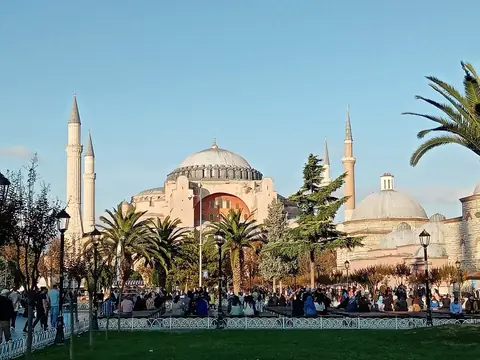
Hagia Sophia was built for the Emperor Justinian as the Church of Holy Wisdom and finished in 537. Its great dome seems to float above the nave on a ring of windows, and light falls across the restored gold mosaics and the huge round calligraphy panels hung in the Ottoman period. Mehmed II turned it into a mosque after 1453 and its mosaics were plastered over; it became a museum in 1935 and has been a mosque again since 2020.
Worshippers and visitors now enter separately. Foreign visitors pay €25 to visit the upper gallery, where the Byzantine mosaics are, under the arrangement the Ministry of Culture and Tourism introduced on 15 January 2024. Tickets are sold at the booth facing the Fountain of Ahmed III, and worshippers enter free. The visitor route is open every day from 09:00 to 19:30 outside prayer times, and closes on Fridays from 12:30 to 14:30 for the Friday prayer. Come at opening time or late in the afternoon, when the queue at the booth is shortest, and expect visits to pause for prayers. Dress as for any mosque: shoulders and knees covered, and a scarf for women's hair. The Hagia Sophia History and Experience Museum, in the old Defter-i Hakani building beside the mosque, is a separate place with its own ticket. This Ministry of Culture museum tells the building's Byzantine and Ottoman history in 13 halls. The museum is open every day from 09:00 to 20:00, and foreign visitors aged 9 and over pay €25, or €30 from 1 January 2027.
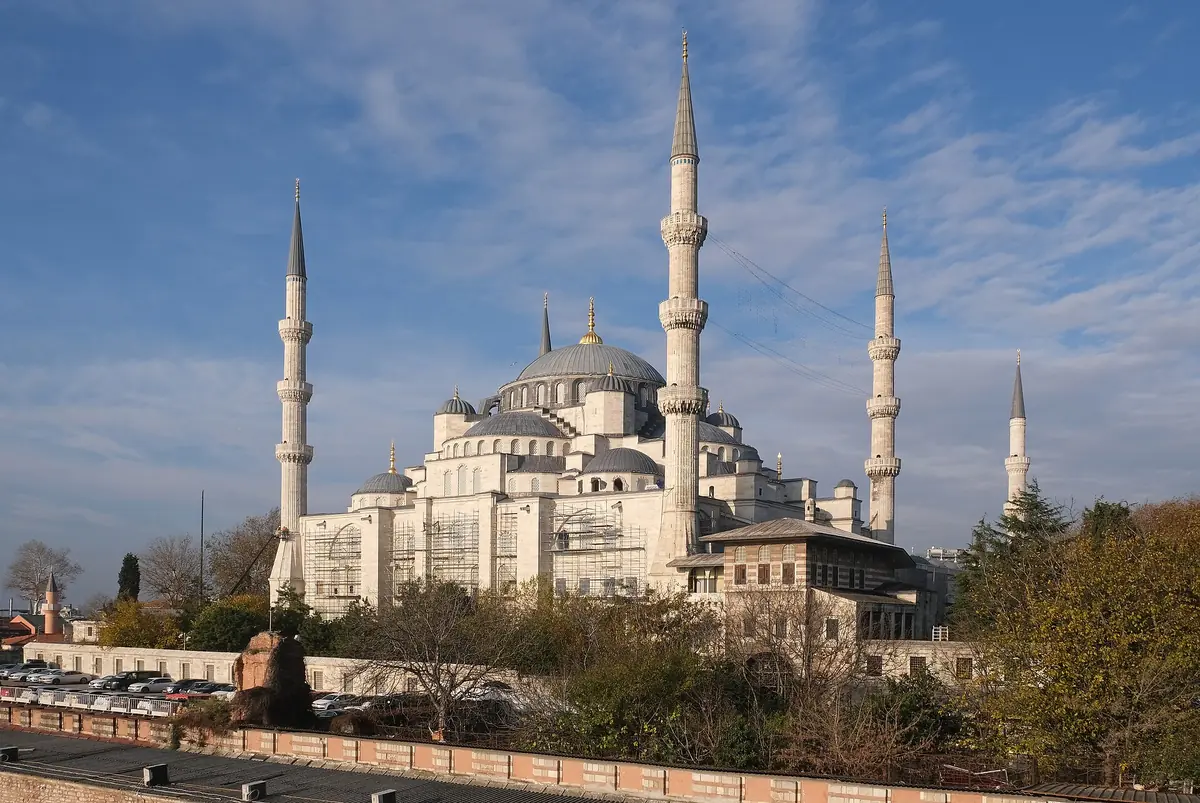
The Blue Mosque (Sultan Ahmed Mosque) faces Hagia Sophia across the gardens of Sultanahmet. Six minarets and a cascade of domes rise over a wide courtyard, and inside, the blue İznik tiles that give the mosque its name cover the walls, and the central prayer hall is lit through stained-glass windows. Sultan Ahmed I and Kösem Sultan are buried in the tomb beside the mosque. It is a working mosque, so time your visit around the five daily prayers. The prayer times move with the sun through the year, and Diyanet publishes them for Istanbul. The morning, before the midday prayer, is the easiest time to visit. On Fridays the midday prayer is the week's main service, and the mosque stays busy for longer.
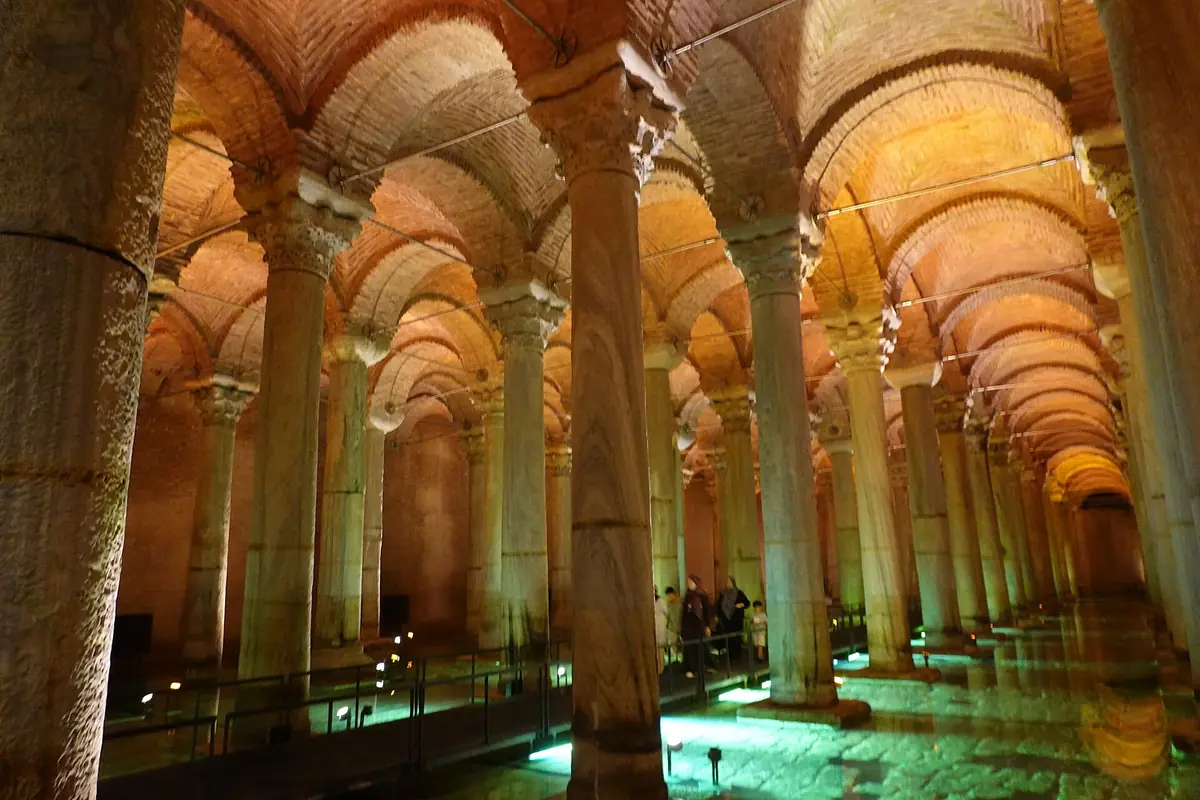
The Basilica Cistern (Yerebatan Sarnıcı), a few steps from Hagia Sophia, is a sixth-century reservoir built under Justinian. More than 300 marble columns rise from the water along wooden walkways, and two Roman-era columns carry carved heads of Medusa. The General Directorate of Foundations has run it since June 2026 and sets its current price. Its last published foreign-visitor price, under the municipality, was TRY 1,950 by day and TRY 3,000 in the evening. The cistern now opens daily from 09:00 to 18:00, sells tickets only at its office and on its own site, by card only, and admits MüzeKart holders free; check the current price there before you budget.
Prices and times checked 29 November 2026
Day two: Topkapı Palace, the Harem and the Grand Bazaar
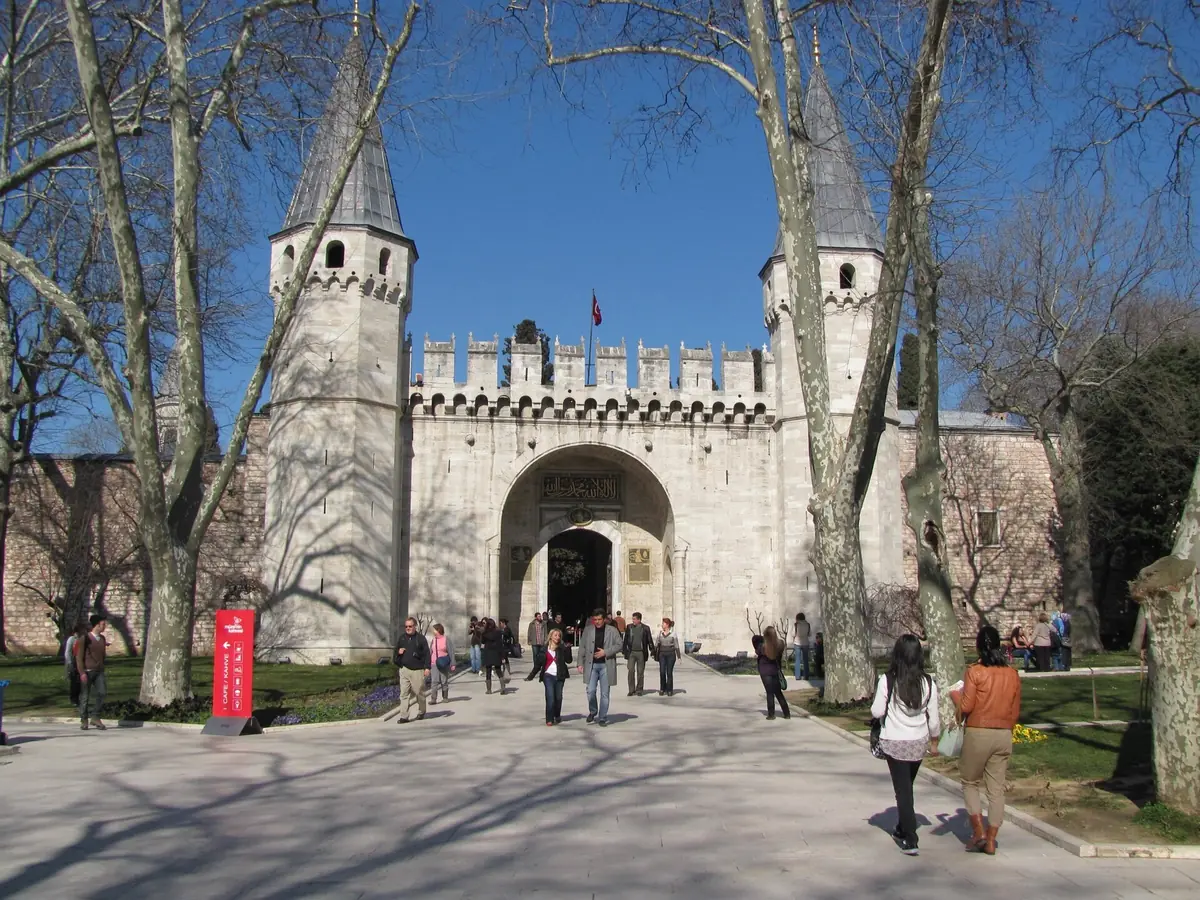
Topkapı Palace was the seat of the Ottoman sultans for about four centuries, built after 1453 on the old Byzantine acropolis at Sarayburnu, the point where the Golden Horn, the Bosphorus and the Sea of Marmara meet. It became the first museum of the Republic on 3 April 1924. You pass through three gates into four courtyards: the Gate of Salutation leads to the Divan courtyard, where the council met under the dome of the Kubbealtı beside the Tower of Justice; the Gate of Felicity opens on the inner palace, with the Audience Chamber, the Treasury and the Sacred Relics, among them the mantle of the Prophet. In the fourth courtyard, the Baghdad and Revan kiosks look out over the Bosphorus from hanging gardens.
The Harem, entered from the second courtyard, was the sultan's private quarters: tiled rooms, courtyards and apartments where the sultan's family lived. The Harem has its own ticket, so buy the combined ticket if you want to see both the palace and the Harem.
Topkapı is closed on Tuesdays, and its ticket office is open from 09:00 to 17:00. Foreign visitors pay TRY 2,750 for the combined ticket (palace, Hagia Irene and Harem), valid for one day; the Harem alone and Hagia Irene alone are TRY 1,050 each. Children under 7 enter free. Tickets are sold by National Palaces in lira. Museum Pass Istanbul (€105 for five days) covers only the Ministry of Culture's museums, so Topkapı is not on it. It does not pay on this plan: the Galata Tower (€30), the Archaeological Museums (€15) and the History and Experience Museum (€25) come to €70 on single tickets. The History and Experience Museum rises to €30 on 1 January 2027 and the other two to €35 and €16 on 1 April 2027, €81 in all, still less than the pass at its current price. Allow at least half a day, and arrive at 09:00 to reach the Treasury before the tour groups.
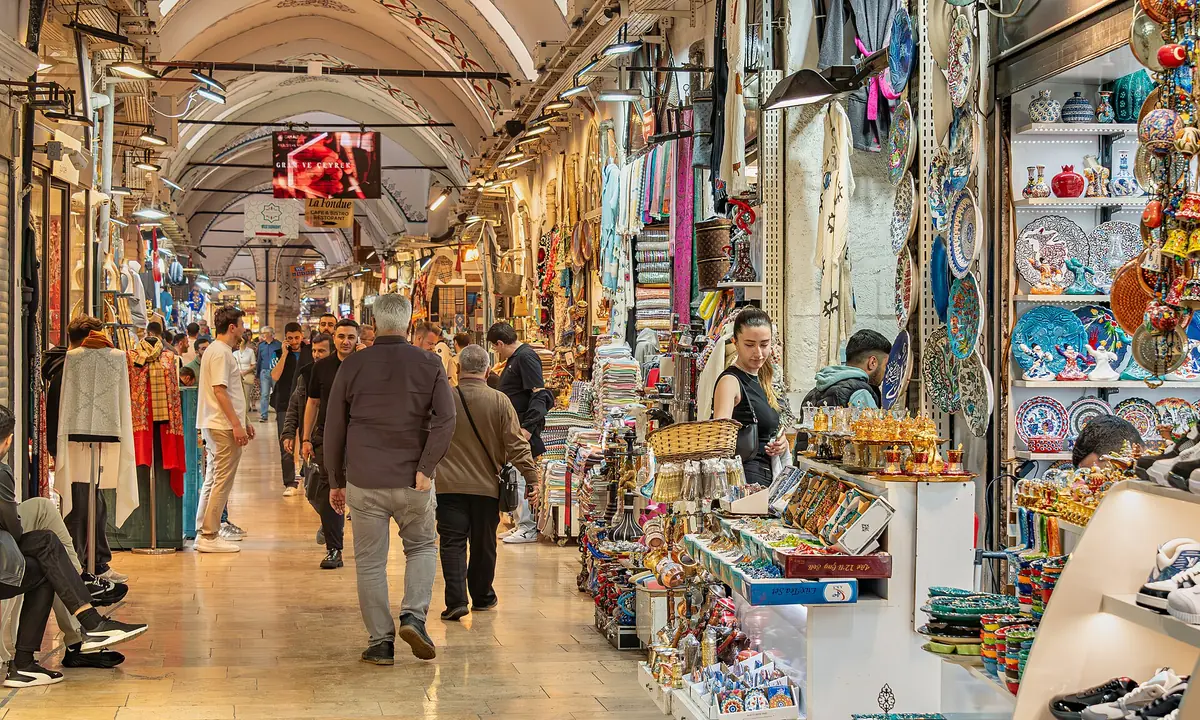
The Grand Bazaar (Kapalıçarşı) is a walk west along the tram line. Mehmed II had its first bedesten, a warehouse, built in the 15th century, and the market grew around it into some 61 covered streets with up to 4,000 shops: carpets, textiles, lamps, ceramics, copperware and antiques. It has 22 gates; the Beyazıt Gate carries the tuğra of Sultan Abdülhamid II. Bargaining is normal. The bazaar is open 08:30–19:00 every day except Sundays and religious holidays.
Walk down from the bazaar through the lanes of Mahmutpaşa to the Spice Bazaar at Eminönü, or climb to the Süleymaniye Mosque on the Third Hill, one of the largest mosques in the city. Its grey domes and four minarets rise over a wide courtyard; inside are carpets, great chandeliers, stained glass, a tiled mihrab and red-and-white striped arches, and the tombs of Süleyman the Magnificent and his wife stand in the garden in front. The terrace looks down over wooden Ottoman houses to the Golden Horn.
If you have a spare morning, visit the Istanbul Archaeological Museums on Osman Hamdi Bey Yokuşu at Gülhane. They are three museums (the Archaeological Museum, the Museum of the Ancient Orient and the Tiled Pavilion of 1472), founded as the Imperial Museum in 1869, and they hold the Alexander Sarcophagus from Sidon. They open from 09:00 to 18:30 (last tickets 17:30) for €15 (€16 from 1 April 2027).
Prices and times checked 29 November 2026
Day three: the Bosphorus, Galata and Kadıköy
The Bosphorus splits the city between Europe and Asia, in places only 500 metres wide, and its shores are lined with Ottoman palaces, the Rumeli Fortress and some 360 surviving waterside mansions (yalı). To sail up the strait past them, take a guided cruise, which runs up the Bosphorus and back with commentary. The municipal commuter ferry from Eminönü to Kadıköy or Üsküdar only crosses the mouth of the strait, but it gives the classic view back to the old city's domes. Pay with the Istanbulkart: from 20 July 2026 the city's tariff is TRY 65.21 for Kadıköy–Eminönü and TRY 58.52 for Üsküdar–Eminönü.
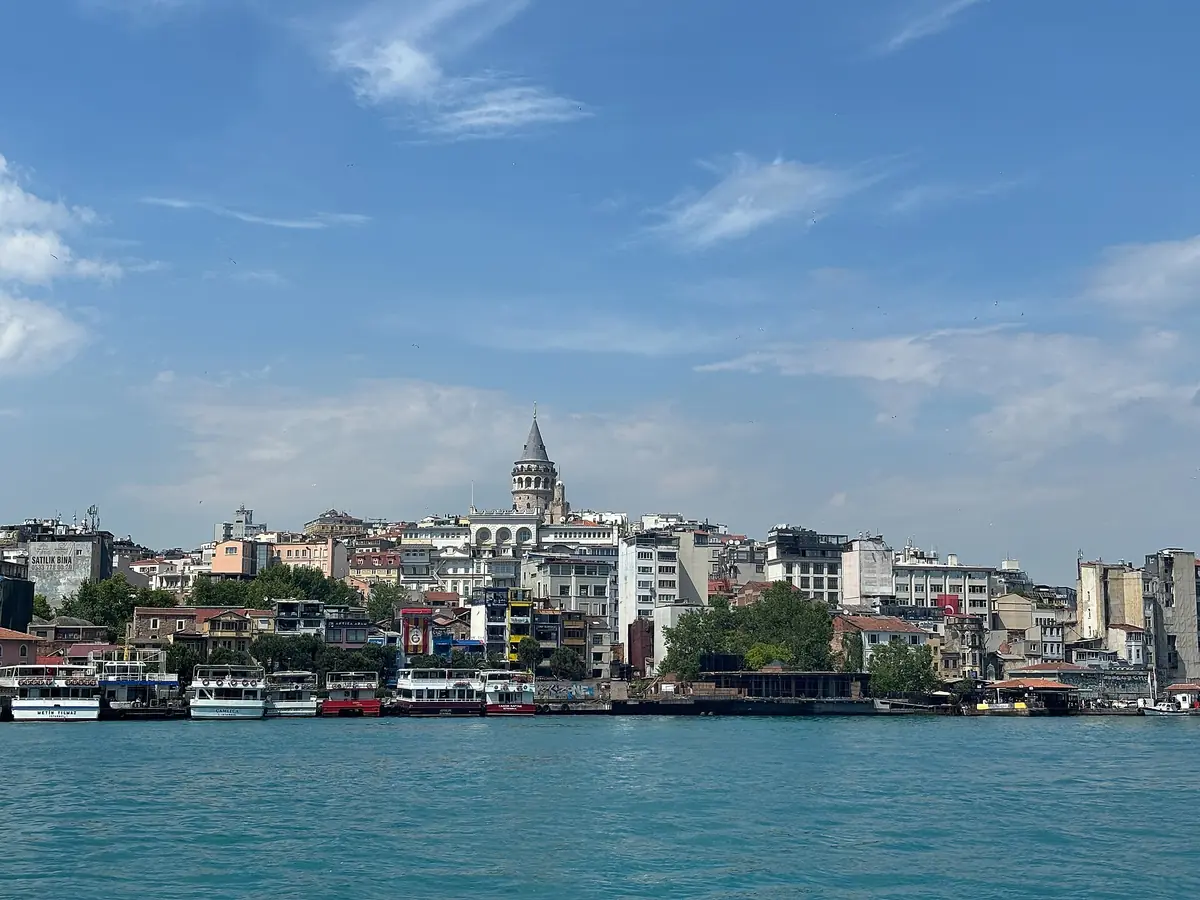
Back on land, walk across the Galata Bridge and climb to the Galata Tower. The Genoese built it in the mid-14th century as part of the walls of their colony at Galata; the Ottomans used it as a prison and then as a fire lookout, and it reopened as a museum in 2020 after a restoration that stripped out later concrete. The balcony at the top looks over the Golden Horn, the old city and the Bosphorus. It is open every day from 08:30 to 18:30 (box office until 18:14) for €30 (€35 from 1 April 2027), with an evening session from 18:30 to 22:00. The Galata Mevlevi Lodge, the city's first dervish lodge, is a short walk up the hill.
If you have a spare morning, take the tram up the shore to Beşiktaş for Dolmabahçe Palace, which replaced Topkapı as the sultans' home: Sultan Abdülmecid had it built on the filled-in bay of the old Beşiktaş shore palace, and six sultans and the last caliph lived there from 1856. The palace is closed on Mondays, its ticket office opens from 09:00 to 17:00, and foreign visitors pay TRY 2,000 for the Selamlık, the Harem and the Painting Museum together.
From the Galata Tower, walk up to İstiklal Avenue, a cobbled street of over a kilometre lined with passages such as the Çiçek Pasajı, churches and consulates, with the red nostalgic tram running along it to Taksim Square.
End the day on the Asian side. Kadıköy is a ferry ride from Eminönü and Karaköy, and the crossing itself is one of the best views of the old city's skyline. The streets behind the pier hold the fish market, cafés, bookshops and bars; Yeldeğirmeni to the north is the bohemian quarter, Moda to the south the established one. Stay for dinner and take the ferry back after dark.
For a hammam, the Hürrem Sultan Hamamı in Sultanahmet's Cankurtaran quarter dates from 1556 and is open from 08:00 to 22:00; its bath rituals cost from €110 for 45 minutes to €300 for 110 minutes. Book a slot for the evening of day one or two.
Prices and times checked 29 November 2026
What to eat and where to look
Balık ekmek
A fish sandwich: freshly grilled fish in bread with tomato, onion and salad, sold from the moored boats and stalls on the waterfront and even on the ferries.
- Where to look
- The moored boats at Eminönü and Karaköy, or the fish market in Kadıköy.
- Fit it into your day
- Lunch on day three, by the water before or after the Bosphorus ferry.
Midye dolması
Mussels stuffed with spiced rice and currants, served in the half shell from a street tray, with lemon squeezed over each one as you eat.
- Where to look
- Street vendors around Taksim and İstiklal Avenue after dark.
- Fit it into your day
- A late snack on the Galata and Beyoğlu evening.
Shellfish; skip it with a shellfish allergy.
Kahvaltı (Turkish breakfast)
Serpme kahvaltı is breakfast as many small plates: cheeses, olives, tomato and cucumber, honey with kaymak (clotted cream), jams, eggs as menemen or sucuk, simit and börek, with tea in tulip glasses.
- Where to look
- Cafés in Kadıköy, Karaköy and Galata serve the full spread; hotels serve a smaller version.
- Fit it into your day
- A long breakfast on day three before the ferry.
Köfte
Grilled meatballs served with bread, salad and piyaz (white-bean salad), a lunch the old city has eaten for a century.
- Where to look
- Tarihi Sultanahmet Köftecisi, serving köfte since 1920, or Meşhur Sultanahmet Köftecisi on Divan Yolu, which lists a portion at TRY 620.
- Fit it into your day
- Lunch on day one, between Hagia Sophia and the cistern.
Baklava
Thin layers of pastry with pistachio or walnut, soaked in syrup and cut into small squares.
- Where to look
- Karaköy Güllüoğlu on Kemankeş Caddesi in Karaköy, near the Galata Bridge.
- Fit it into your day
- An afternoon stop on day three, after the Galata Tower.
Arriving at IST or SAW, Istanbulkart and getting around
Istanbul Airport (IST), on the European side, is where most long-haul flights land. Havaist, the airport's bus service, leaves from the transport floor, level −2. Its Sultanahmet line runs via Şişhane and Eminönü Pier to the Çatladıkapı stop on the edge of Sultanahmet for €8; the journey time depends on traffic. Other Havaist lines run to Taksim, Beşiktaş and Kadıköy. The M11 metro runs from the airport through Gayrettepe, where you change to the city metro and tram for the old city, and since 20 June 2026 it also runs on to Halkalı. It charges by distance, up to TRY 73.19 for the longest trips on the city's tariff from 20 July 2026: the gate takes the full fare when you enter. The city refunds the difference only on a personalised Istanbulkart, so on a card bought at the airport, count on the full fare. Taxis wait outside the terminal.
Sabiha Gökçen Airport (SAW), on the Asian side, is used mainly by low-cost and domestic flights. Havabus runs from it to Kadıköy, 40 km away, for TRY 300 in about 60 minutes, and to Taksim, 50 km away, for TRY 485; the airport also has its own metro station on the M4 line to Kadıköy. Havabus's times vary with traffic, so the M4 is the predictable option.
In the city, buy an Istanbulkart, the card used on the metro, trams, buses and ferries. The standard card costs TRY 165; load it with credit and tap it on each ride. A full fare is TRY 46.20 from 20 July 2026, and the ONgeç ticket gives ten journeys for TRY 530. A tram runs from the old city to the Karaköy stop and on to Kabataş, and ferries sail from the docks at Eminönü.
For Cappadocia and the coast, most visitors fly from IST or SAW; our transport guide covers the domestic flights, and Cappadocia is the usual next stop.
None of the places in this guide is near the areas governments warn about; see health and safety before you book.
Prices and times checked 29 November 2026
What three days of tickets and transport cost
About TRY 9,500 (about €170) per person from 1 April 2027 (about TRY 9,200 before) for three days: every ticket in this guide's plan, the airport bus both ways, the Istanbulkart and its rides, and two ferry crossings. Rooms and meals are priced in our trip-cost guide.
| Item | Price per person |
|---|---|
| Topkapı Palace, Harem and Hagia Irene | TRY 2,750 |
| Hagia Sophia upper gallery | €25 (about TRY 1,390) |
| Galata Tower | €35 from 1 April 2027 (about TRY 1,940); €30 before |
| Basilica Cistern | about TRY 1,950 |
| Havaist IST–Sultanahmet and back | €16 (about TRY 890) |
| Istanbulkart, six rides and two Kadıköy ferries | about TRY 570 |
| Total | about TRY 9,500 (about TRY 9,200 before 1 April 2027) |
Euro prices are converted at the Central Bank of the Republic of Türkiye's forex buying rate of 27 November 2026 (€1 = TRY 55.5058). The cistern line uses its last published day price. Dolmabahçe (TRY 2,000) and a hammam (from €110) are extra; our money guide covers cards and cash.
Prices and times checked 29 November 2026
Practical questions
How many nights should I spend in Istanbul?
Three nights: one day for Hagia Sophia, the Blue Mosque and the cistern, one for Topkapı and the Grand Bazaar, and one for the Bosphorus, Galata and Kadıköy. A shorter stay means choosing between Topkapı and the Bosphorus.
Which district is best for a first visit to Istanbul?
Sultanahmet or Sirkeci, if you want to walk to the main sights; Karaköy or Galata, if you care more about restaurants, evenings and the ferries. Kadıköy suits a second visit.
How much does Hagia Sophia cost for foreign visitors?
Foreign visitors pay €25 to visit the upper gallery, under the arrangement introduced on 15 January 2024. Tickets are sold at the booth facing the Fountain of Ahmed III, and worshippers enter free. The Hagia Sophia History and Experience Museum next door is a separate €25 ticket, €30 from 1 January 2027.
Is Topkapı Palace open every day, and is the Harem included?
No: it is closed on Tuesdays. The combined ticket for foreign visitors, TRY 2,750, covers the palace, the Harem and Hagia Irene; the Harem alone is TRY 1,050.
When can I visit the Blue Mosque?
Between the prayers. Diyanet publishes Istanbul's prayer times for each day. A morning visit, before the midday prayer, is the easiest, especially on a Friday.
How do I get from Istanbul Airport to Sultanahmet?
Havaist's Sultanahmet line runs from level −2 of the terminal to Çatladıkapı, on the edge of Sultanahmet, via Eminönü Pier, for €8. The rail alternative is the M11 metro to Gayrettepe, then the city metro and tram.
Is the Grand Bazaar open on Sundays?
No. It is open 08:30–19:00 every day except Sundays and religious holidays, so go on another day, ideally in the morning, and combine it with Topkapı or the Süleymaniye Mosque.
How much do three days of sightseeing in Istanbul cost?
About TRY 9,500 (about €170) per person from 1 April 2027, or TRY 9,200 before, for the tickets and transport in this plan: Topkapı with the Harem, Hagia Sophia, the Galata Tower, the cistern, the airport bus both ways and the Istanbulkart. Rooms and meals are extra.
Keep planning your trip
First trip to Turkey
Seven days or ten for Istanbul, Cappadocia, Ephesus, Pamukkale and Fethiye: nights per stop, the flights, which Museum Pass pays off and a daily cost.
Read the guide
Where to stay in Turkey
Which Istanbul district, Göreme, Uçhisar or Ürgüp, Selçuk or Kuşadası, Fethiye or Ölüdeniz, and Kaş: nights, three hotels in each and room costs for two.
Read the guide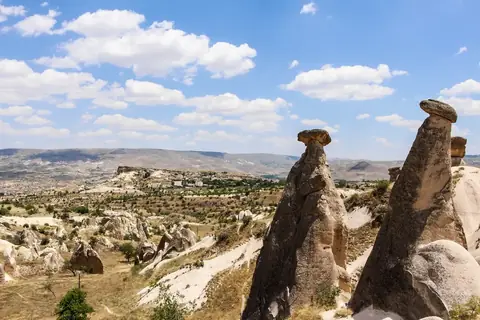
Cappadocia
Two nights in Cappadocia: Göreme, Ürgüp or Uçhisar as a base, balloon flights and cancellations, the Göreme Open Air Museum, underground cities and valley walks.
Read the guide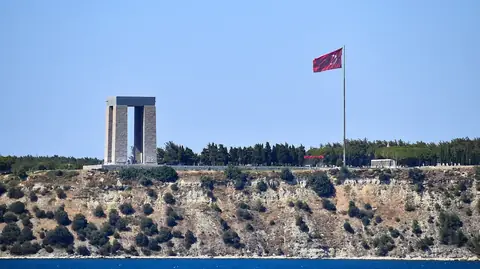
Çanakkale and Troy
Troy and Gallipoli from Çanakkale: the joint Troy site and museum ticket, the 1915 battlefields, the Eceabat ferry, buses and flights from Istanbul, and on to the Aegean.
Read the guide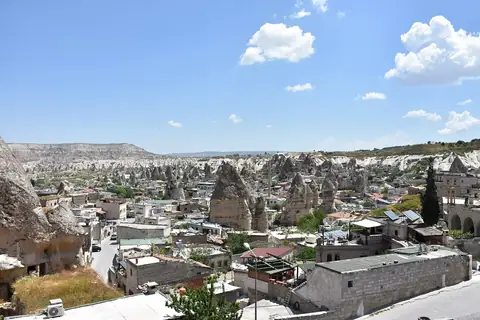
Turkey in seven days
A seven-day Turkey route with three nights in Istanbul, two in Göreme and one in Selçuk, two domestic flights, Ephesus on the last morning and an all-in cost for two.
Read the guide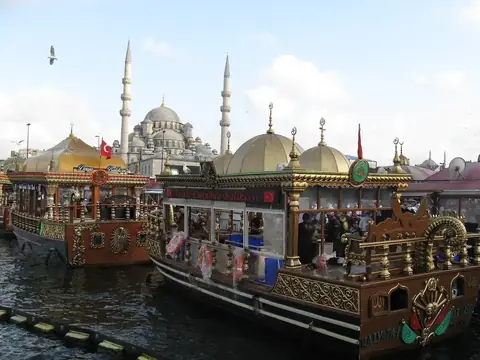
Turkey food
What to eat in Turkey by region: Istanbul's simit and fish sandwiches, Aegean olive-oil dishes and boyoz, Cappadocia's testi kebabı and mantı, Antalya piyazı.
Read the guideSources and checks before you travel
(47)
- National Palaces Administration (Milli Saraylar): Topkapı Palace ↗ — opens in a new tab
- Ministry of Culture and Tourism (muze.gov.tr): Galata Tower Museum ↗ — opens in a new tab
- Daily Sabah: Hagia Sophia Grand Mosque adopts new visitor system ↗ — opens in a new tab
- Go Türkiye (Ministry of Culture and Tourism): Hagia Sophia ↗ — opens in a new tab
- Go Türkiye: Blue Mosque ↗ — opens in a new tab
- Diyanet (Presidency of Religious Affairs): prayer times for Istanbul ↗ — opens in a new tab
- Go Türkiye: Basilica Cistern ↗ — opens in a new tab
- Habertürk: Basilica Cistern reopens ↗ — opens in a new tab
- Go Türkiye: Topkapı Palace ↗ — opens in a new tab
- Go Türkiye: Grand Bazaar ↗ — opens in a new tab
- Go Türkiye: historic bazaars and the Golden Horn ↗ — opens in a new tab
- Go Türkiye: the Bosphorus ↗ — opens in a new tab
- Go Türkiye: Beyoğlu ↗ — opens in a new tab
- Go Türkiye: Kadıköy ↗ — opens in a new tab
- Go Türkiye: street food in Istanbul ↗ — opens in a new tab
- Havaist: Sultanahmet line, updated route and fare ↗ — opens in a new tab
- Havaist: stops ↗ — opens in a new tab
- Istanbul Airport (iGA): airport transportation ↗ — opens in a new tab
- Havabus: Sabiha Gökçen lines ↗ — opens in a new tab
- İstanbulkart: fees and limits ↗ — opens in a new tab
- Ministry of Culture and Tourism (muze.gov.tr): Hagia Sophia History and Experience Museum ↗ — opens in a new tab
- Ministry of Culture and Tourism (muze.gov.tr): Istanbul Archaeological Museums ↗ — opens in a new tab
- National Palaces Administration (Milli Saraylar): Dolmabahçe Palace ↗ — opens in a new tab
- Go Türkiye: Süleymaniye Mosque ↗ — opens in a new tab
- Hürrem Sultan Hamamı ↗ — opens in a new tab
- İstanbul Metropolitan Municipality (İBB): public transport fare tariff from 20 July 2026 (PDF) ↗ — opens in a new tab
- Meşhur Sultanahmet Köftecisi: menu ↗ — opens in a new tab
- Milliyet: Basilica Cistern handover ↗ — opens in a new tab
- Go Türkiye: Turkish breakfast ↗ — opens in a new tab
- Tarihi Sultanahmet Köftecisi ↗ — opens in a new tab
- Karaköy Güllüoğlu ↗ — opens in a new tab
- Central Bank of the Republic of Türkiye: exchange rates ↗ — opens in a new tab
- DHA news agency: Hagia Sophia fee for foreign visitors ↗ — opens in a new tab
- Türkiye Gazetesi: Hagia Sophia gallery tickets ↗ — opens in a new tab
- Ministry of Culture and Tourism (muze.gov.tr): MuseumPass Istanbul ↗ — opens in a new tab
- Turkish State Meteorological Service (MGM): Istanbul climate statistics ↗ — opens in a new tab
- Sabiha Gökçen Airport: metro ↗ — opens in a new tab
- UK FCDO: Turkey travel advice ↗ — opens in a new tab
- German Federal Foreign Office: Turkey safety advice ↗ — opens in a new tab
- Ministry of Culture and Tourism (press release): new arrangement at Hagia Sophia from 15 January (Turkish) ↗ — opens in a new tab
- Ministry of Culture and Tourism (Kültür Portalı): Grand Bazaar (Turkish) ↗ — opens in a new tab
- Ministry of National Education (EBA out-of-school learning): Hagia Sophia Mosque ↗ — opens in a new tab
- Havabus: Kadıköy–Sabiha Gökçen line ↗ — opens in a new tab
- Havabus: Taksim–Sabiha Gökçen line ↗ — opens in a new tab
- Sabiha Gökçen Airport: transport (Turkish) ↗ — opens in a new tab
- Ministry of Culture and Tourism: 2027 ticket tariff (List I, via TÜRSAB) ↗ — opens in a new tab
- Basilica Cistern (official site): visitor rules and tickets ↗ — opens in a new tab
Reference sources for the version dated 29 November 2026. Confirm opening times, access, transport and conditions for your travel dates.
Photo credits
(7)
Hagia Sophia from above Sultanahmet
Photograph: Arild Vågen — opens in a new tab · CC BY-SA 3.0 — opens in a new tab
Changes: Resized and converted to WebP; displayed with responsive crops. · Original photograph and licence details ↗ — opens in a new tab
The Blue Mosque (Sultan Ahmed Mosque) in Sultanahmet
Photograph: kallerna — opens in a new tab · CC BY-SA 4.0 — opens in a new tab
Changes: Resized and converted to WebP; displayed with responsive crops. · Original photograph and licence details ↗ — opens in a new tab
The Gate of Salutation at Topkapı Palace
Photograph: Slyronit — opens in a new tab · CC BY-SA 4.0 — opens in a new tab
Changes: Resized and converted to WebP; displayed with responsive crops. · Original photograph and licence details ↗ — opens in a new tab
Columns and vaults inside the Basilica Cistern
Photograph: Joseolgon — opens in a new tab · CC BY 4.0 — opens in a new tab
Changes: Resized and converted to WebP; displayed with responsive crops. · Original photograph and licence details ↗ — opens in a new tab
Galata Tower above Karaköy, seen from the water
Photograph: Chromehoney — opens in a new tab · CC BY-SA 4.0 — opens in a new tab
Changes: Resized and converted to WebP; displayed with responsive crops. · Original photograph and licence details ↗ — opens in a new tab
A covered street of shops inside the Grand Bazaar
Photograph: Jorge Franganillo — opens in a new tab · CC BY 4.0 — opens in a new tab
Changes: Resized and converted to WebP; displayed with responsive crops. · Original photograph and licence details ↗ — opens in a new tab
The Blue Mosque in Istanbul with its domes and minarets under a grey sky, and visitors walking towards it
Photo: Yuki Ikemori