Plan your trip
Turkey entry: visa-free stays, the e-Visa and arriving in Istanbul
Entry to Turkey turns on three questions: whether your passport is on the visa-free list, whether it is valid for long enough, and whether your trip fits inside 90 days in any 180. This guide answers them in that order, then covers customs, the rules that apply once you are in the country, and the first ride from Istanbul Airport or Sabiha Gökçen into the city.
In this guide
Find the location ↗ — opens in a new tabThe short answer
UK, Irish, US, Canadian, Australian, New Zealand and EU passport holders (except Cyprus) need no visa for a tourist stay of up to 90 days; the ministry counts every stay, for every passport, within any 180-day period. Many other travellers apply at evisa.gov.tr, the foreign ministry’s own e-Visa site, and pay the fee for their nationality online; some passports can get a visa only from a Turkish embassy or consulate. Ordinary passport holders from India, Pakistan and Bangladesh who hold a valid Schengen, US, UK or Irish visa or residence permit may get a one-month, single-entry e-Visa, provided they meet certain conditions. Your passport must be valid for 150 days from arrival for a 90-day stay, unless your country is on the ministry's national identity card list, and the ministry advises six months. From Istanbul Airport the Havaist bus to Sultanahmet costs €8; from Sabiha Gökçen the M4 metro runs to Kadıköy for a full Istanbulkart fare of TRY 46.20.
- Key point
- Entry planning before you book; choose the length of your trip in the first-trip guide
- Where it applies
- Arrive at Istanbul Airport (IST) or Sabiha Gökçen (SAW); both connect to the city by metro and airport bus
- Timing
- The rules apply all year; count your days against the 90-in-180 limit before you choose dates
Compare country by country: Middle East entry requirements at a glance →
Who can enter without a visa
Ordinary passports from these countries need no visa for a stay of up to 90 days: the United Kingdom, Ireland, the United States, Canada, Australia, New Zealand, every EU country except Cyprus, Norway, Switzerland, Iceland, Japan, South Korea, Singapore, Malaysia, Argentina, Brazil and Chile. The ministry’s general rule binds every visitor: stays on a visa or an exemption cannot add up to more than 90 days in any 180, even where its country list names only 90 days. Australian ordinary passports have been visa-free for tourism and transit since 17 April 2026, and Chinese ordinary passports since 2 January 2026.
The exemption is for tourism; the UK says British citizens can also visit for business. Work and study need a visa from a Turkish embassy or consulate before you travel, and a stay beyond 90 days needs a residence permit.
Three exceptions catch people out. Cypriot passports (the Republic of Cyprus) need a visa, from evisa.gov.tr or a Turkish mission. British passports other than the full British citizen passport, such as British National Overseas, need a visa from a mission. And Indonesian and Thai passports allow 30 days per visit, Russian passports 60, always within the 90 days in any 180.
The e-Visa: who needs one and how to apply
If your passport is not visa-free, find your nationality on the ministry’s list first. Many passports can apply for the e-Visa at evisa.gov.tr, the foreign ministry’s own system. You enter your identity, passport and travel dates and pay the fee for your nationality online. The e-Visa is issued online in about three minutes. It covers tourism and business only; for work or study you apply at an embassy. Some passports can get a visa only from a Turkish embassy or consulate, booked through the ministry’s pre-application system at visa.gov.tr: Nauru’s ordinary passports, for example, get a 15-day visa that way. The ministry advises applying at least a month ahead.
Several large groups qualify only with a supporting document. Ordinary passport holders from India, Pakistan and Bangladesh can get a one-month, single-entry e-Visa if they hold a valid Schengen, US, UK or Irish visa or residence permit, provided they meet certain conditions; otherwise they apply at a Turkish mission. Egyptian passport holders under 15 or over 45 can get an e-Visa without that condition, while those aged 15 to 45 need the same visa or permit and a flight with Turkish Airlines, AJet, Pegasus, EgyptAir or Air Cairo. Mexican and Vietnamese ordinary passport holders can get a 30-day single-entry e-Visa without a supporting document.
South African ordinary passport holders are the one exception the ministry names. They get a 30-day multiple-entry e-Visa through dtvgroup.com.tr, or a 90-day multiple-entry visa from a Turkish mission. Apply only on the official site the ministry names for your nationality.
Passport validity and the 90-in-180 clock
Your passport must be valid for at least 60 days beyond the end of the stay your visa or exemption allows: 150 days from the day you arrive for a 90-day visa-free stay, and 90 days for a 30-day e-Visa. The ministry also advises six months from arrival, and the UK asks for at least one blank page, so renew a passport that falls short before you book.
Citizens of countries that may enter with a national identity card under the Council of Europe agreement are exempt from the 60-day rule. The ministry’s list of those countries has 21 names, among them Germany, France, Italy, Spain, the Netherlands, Belgium, Switzerland, Portugal, Greece, Poland, Hungary, Bulgaria and Romania; the UK and Ireland are not on it.
The ministry applies 90 days in any 180 to every visitor, whatever its country list says. The days are counted across that period and are not reset by each new entry, and two passports do not give two allowances. Canada notes that after 90 days in the country you must stay out for 90 days before you can enter visa-free again. Make sure the officer stamps your passport on arrival.
Customs: cash, medicines and antiques
Bring in as much cash for your trip as you like. Cash meant to repay a personal debt, or brought as a gift, donation, dowry or inheritance, may come in only through a bank, and customs can ask where your cash comes from. On the way out, declare it to the customs officer if you carry more than TRY 185,000 in lira or more than €10,000 or its equivalent in foreign cash. The lira limit was raised from TRY 25,000 in March 2025, but some customs pages still show the old figure; a declaration costs nothing. The two limits do not add up: customs counts your lira and foreign cash together against the limit and gives no separate figure for a mix, so if you carry both lira and foreign cash, the safe course is to declare it all on the way out. Cash above the limit that you do not declare brings a fine.
Bring medicines for your own treatment in reasonable quantities, with the prescription or medical report, which you must show to customs. Gifts and goods bought abroad are duty-free up to €430 per passenger, €150 for children under 15.
Leave antiques alone. Buying or exporting them is illegal, some items sold legally in shops cannot be taken out of the country, and the penalty can be a prison sentence of 5 to 12 years. Keep the receipt and the shop’s paperwork for any carpet or old-looking piece you buy.
Prices and times checked 29 November 2026
Rules that apply once you are in the country
Carry your passport at all times: Turkish law requires photographic ID, and police carry out ID checks in busy areas, especially in Istanbul, and at checkpoints on main roads.
Insulting the Turkish nation, the flag, the President or Mustafa Kemal Atatürk is a criminal offence, and the law applies to posts and images online, wherever and whenever they were made. Do not photograph military or official installations, and ask before you photograph people.
A phone you bring from home works on roaming. Canada notes that foreign phones must be registered within 120 days, or they lose access to local networks; a short trip ends well before that deadline. The money guide covers cards, cash machines and changing money.
Arriving at Istanbul Airport
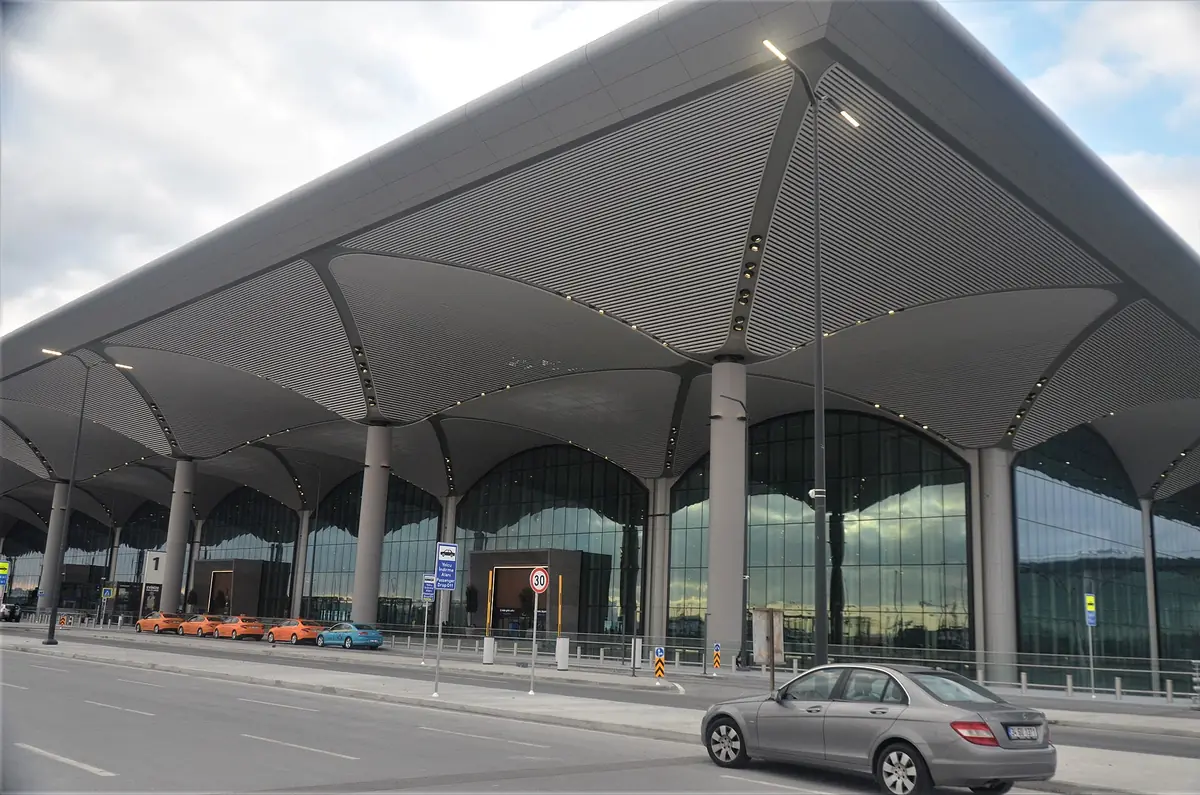
Most long-haul flights land at Istanbul Airport (IST), north-west of the city near the Black Sea. Three ways lead into town: the Havaist bus, the M11 metro and a metered taxi. The bus and the taxi have no fixed journey time, because both depend on traffic.
The Havaist airport bus is the simplest with luggage. It leaves from the transport floor, level −2, on 11 routes; the Sultanahmet line costs €8, paid by card on board, and runs by way of Şişhane and Eminönü Pier to Çatladıkapı on the edge of Sultanahmet. Other lines go to Taksim, Beşiktaş and Kadıköy.
The M11 metro leaves from below the terminal. Buy an Istanbulkart (TRY 165 for the card) and load it. Ride the M11 east to Gayrettepe and change there for the rest of the metro network; since 20 June 2026 the line also runs west from the airport to Halkalı. The M11 charges by the number of stations, from TRY 37.40 to TRY 73.19: the gate takes the top fare when you enter. The city refunds the difference only on a personalised Istanbulkart, so on a card bought at the airport, count on the top fare. On the rest of the network a full fare is TRY 46.20.
Taxis wait outside arrivals and run on the meter: on the city council’s tariff in force since 20 July 2026, an ordinary taxi starts at TRY 71.94 and adds TRY 47.92 a kilometre, with a TRY 230 minimum. The transport guide covers the domestic flights onward.
Prices and times checked 29 November 2026
Arriving at Sabiha Gökçen
Sabiha Gökçen Airport (SAW) is on the Asian side at Pendik/Kurtköy, about 40 km from Kadıköy and 50 km from Taksim.
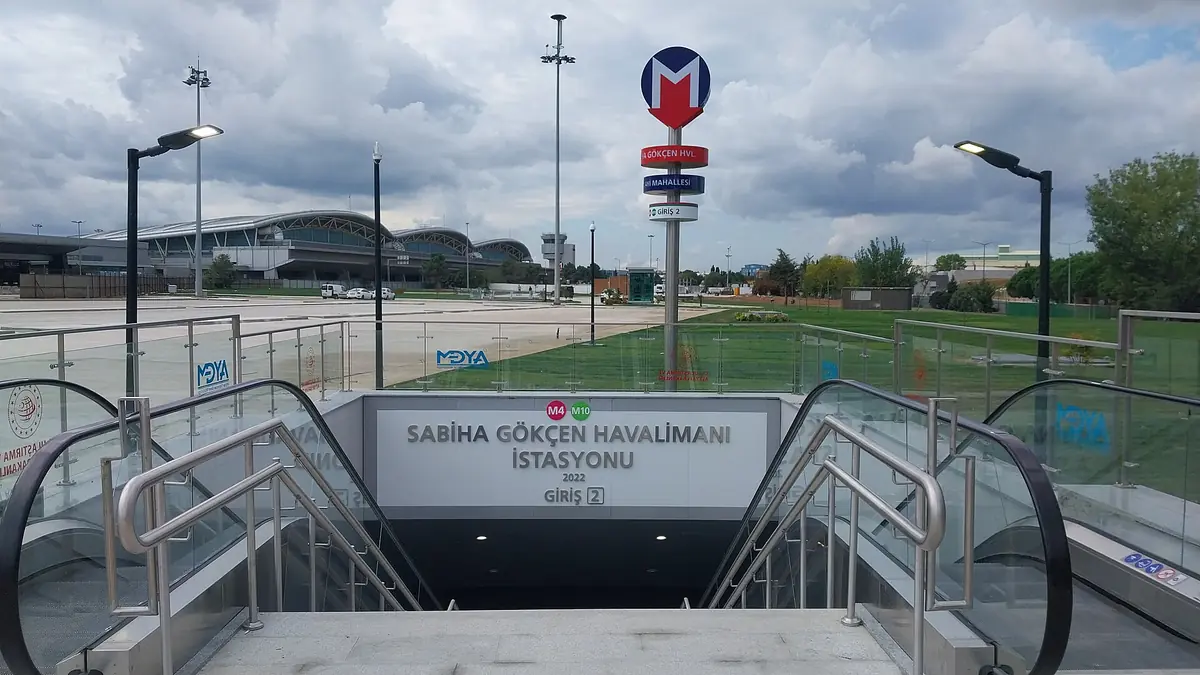
The M4 metro has its own station at the terminal. Ride it to Kadıköy, the end of the line, for a full Istanbulkart fare of TRY 46.20, then take a ferry across to Eminönü or Karaköy for the old city. Change at Ünalan for the Metrobüs, or at Pendik for a bus to Pendik station and the high-speed trains.
Havabus runs to Kadıköy for TRY 300 and to Taksim for TRY 485; its times vary with traffic. A metered taxi for the 40 km to Kadıköy comes to about TRY 2,000 on the city tariff (TRY 71.94 plus TRY 47.92 a kilometre), plus any time stuck in traffic. Our Istanbul guide helps you choose a district before you land.
Land borders, Greek islands and border advice
At a land border the same 90-in-180 rule applies, and the UK asks you to make sure officials stamp and date your passport there. British travellers crossing from Iran must contact the FCDO before they set off, to ask the British Embassy in Ankara for facilitation.
A day trip to a Greek island from the Aegean coast means leaving Turkey and entering the Schengen area, where non-EU travellers now register in the EU Entry/Exit System, so allow extra time at the port.
The areas that governments warn about lie along the borders with Syria and Iraq in the far south-east, far from Istanbul and the Aegean ports. Read health and safety and your own government’s advice before you book.
Practical questions
Do I need a visa for Turkey as a British, American or EU citizen?
No, not for a tourist stay of up to 90 days. For every passport, the ministry counts the 90 days within any 180-day period. The UK, the US, Canada, Ireland, Australia and every EU country except Cyprus are on the Turkish foreign ministry’s visa-free list.
Where do I apply for a Turkish e-Visa?
At evisa.gov.tr, the Turkish foreign ministry’s own system. You fill in the form and pay the fee for your nationality online; the e-Visa is issued in about three minutes. South African passport holders use dtvgroup.com.tr, the site the ministry names for them. Some passports cannot use the e-Visa and need a visa from a Turkish mission, so check the ministry’s list for yours first.
How long must my passport be valid for Turkey?
At least 60 days beyond the end of your permitted stay: 150 days from arrival for a 90-day visa-free stay. Citizens of the 21 countries on the ministry's national identity card list, such as Germany, France and Italy, are exempt from this rule. The ministry advises six months, and the UK asks for one blank page.
Can I enter Turkey with an Indian passport?
Yes, with an e-Visa or a visa. Ordinary passport holders can get a one-month, single-entry e-Visa at evisa.gov.tr if they hold a valid Schengen, US, UK or Irish visa or residence permit; otherwise they apply at a Turkish embassy or consulate.
Is there an arrival card for Turkey?
The foreign ministry’s visa page and the UK and Canadian advice mention no arrival card for visa-free visitors. Make sure the officer stamps your passport on arrival.
How much cash can I take out of Turkey?
Up to TRY 185,000 in lira or €10,000 or its equivalent in foreign cash without a declaration. Some customs pages still show the old lira limit of TRY 25,000. Above either amount, declare it to customs when you leave. The two limits do not add up: customs counts lira and foreign cash together, so if you carry both, the safe course is to declare.
How do I get from Istanbul Airport to Sultanahmet?
Take the Havaist Sultanahmet bus (€8) from level −2 to Çatladıkapı, or the M11 metro to Gayrettepe and change there for the city metro.
Keep planning your trip
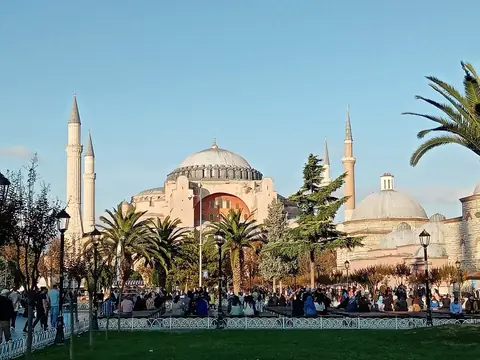
First trip to Turkey
Seven days or ten for Istanbul, Cappadocia, Ephesus, Pamukkale and Fethiye: nights per stop, the flights, which Museum Pass pays off and a daily cost.
Read the guide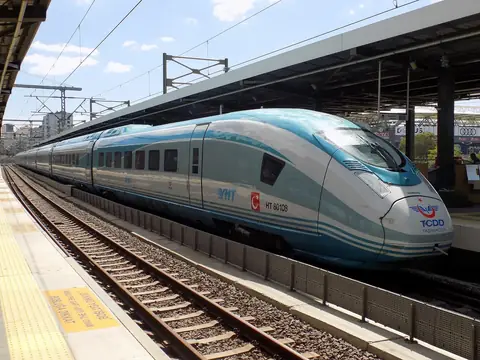
Transport in Turkey
How to cross Turkey on a first trip: which airlines fly to Cappadocia and Izmir, the İZBAN to Selçuk, overnight buses, fast trains, airport buses and car hire.
Read the guide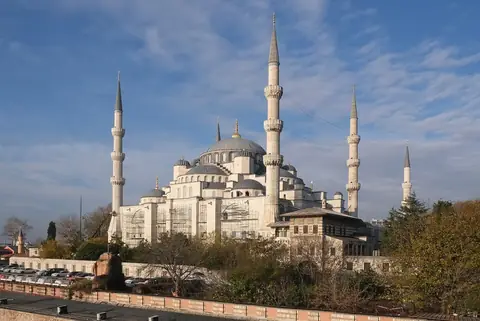
Istanbul
Three nights in Istanbul: where to stay, Hagia Sophia, the Blue Mosque, Topkapı and the Harem, the Bosphorus, Galata and Kadıköy, with tickets and airport buses.
Read the guide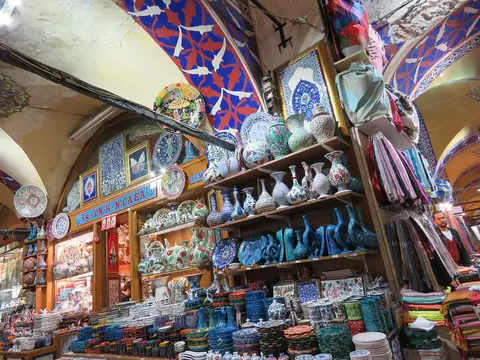
Money and payments in Turkey
Paying in Turkey: the lira and its rate, inflation, cards and ATM fees, home-currency conversion, euro-priced museums, the Istanbulkart, tipping and tax-free shopping.
Read the guide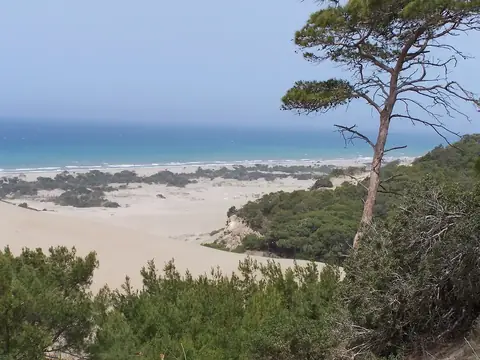
Health and safety in Turkey
Where the UK, German and Canadian governments draw lines in Turkey, plus 112, earthquakes, tap water, the sea, Istanbul scams, the laws and hospitals.
Read the guide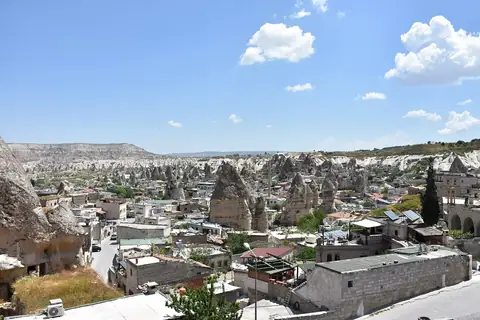
Turkey in seven days
A seven-day Turkey route with three nights in Istanbul, two in Göreme and one in Selçuk, two domestic flights, Ephesus on the last morning and an all-in cost for two.
Read the guideSources and checks before you travel
(22)
- Republic of Türkiye Ministry of Foreign Affairs: visa information for foreigners ↗ — opens in a new tab
- UK FCDO: Turkey entry requirements ↗ — opens in a new tab
- UK FCDO: Turkey safety and security ↗ — opens in a new tab
- UK FCDO: Turkey travel advice ↗ — opens in a new tab
- Government of Canada: travel advice for Türkiye ↗ — opens in a new tab
- Republic of Türkiye Ministry of Foreign Affairs: information on Turkish customs ↗ — opens in a new tab
- Istanbul Airport: urban public transportation ↗ — opens in a new tab
- Havaist: Sultanahmet line fare and route ↗ — opens in a new tab
- Havaist: stops ↗ — opens in a new tab
- Sabiha Gökçen Airport: transport (Turkish) ↗ — opens in a new tab
- Sabiha Gökçen Airport: metro (Turkish) ↗ — opens in a new tab
- Ministry of Trade, Customs Enforcement: frequently asked questions (Turkish) ↗ — opens in a new tab
- İstanbulkart: fees and limits (Turkish) ↗ — opens in a new tab
- İstanbul Metropolitan Municipality (İBB): public transport and taxi fares from 20 July 2026 (Turkish, PDF) ↗ — opens in a new tab
- Havabus: Kadıköy–Sabiha Gökçen line ↗ — opens in a new tab
- Havabus: Sabiha Gökçen lines ↗ — opens in a new tab
- Havabus: Taksim–Sabiha Gökçen line ↗ — opens in a new tab
- Auswärtiges Amt: Türkei, Reise- und Sicherheitshinweise (German) ↗ — opens in a new tab
- Ministry of Foreign Affairs: relations between Türkiye and Australia ↗ — opens in a new tab
- Republic of Türkiye Ministry of Foreign Affairs: countries whose citizens may enter Türkiye with their national identity cards ↗ — opens in a new tab
- Republic of Türkiye Ministry of Foreign Affairs: general information about Turkish visas ↗ — opens in a new tab
- Ministry of Treasury and Finance: Decision No. 32 on the Protection of the Value of Turkish Currency, consolidated text (Turkish, PDF) ↗ — opens in a new tab
Reference sources for the version dated 29 November 2026. Confirm opening times, access, transport and conditions for your travel dates.
Photo credits
(4)
The terminal of Istanbul Airport (IST), where most long-haul flights land
Photograph: CeeGee — opens in a new tab · CC BY-SA 4.0 — opens in a new tab
Changes: Resized and converted to WebP; displayed with responsive crops. · Original photograph and licence details ↗ — opens in a new tab
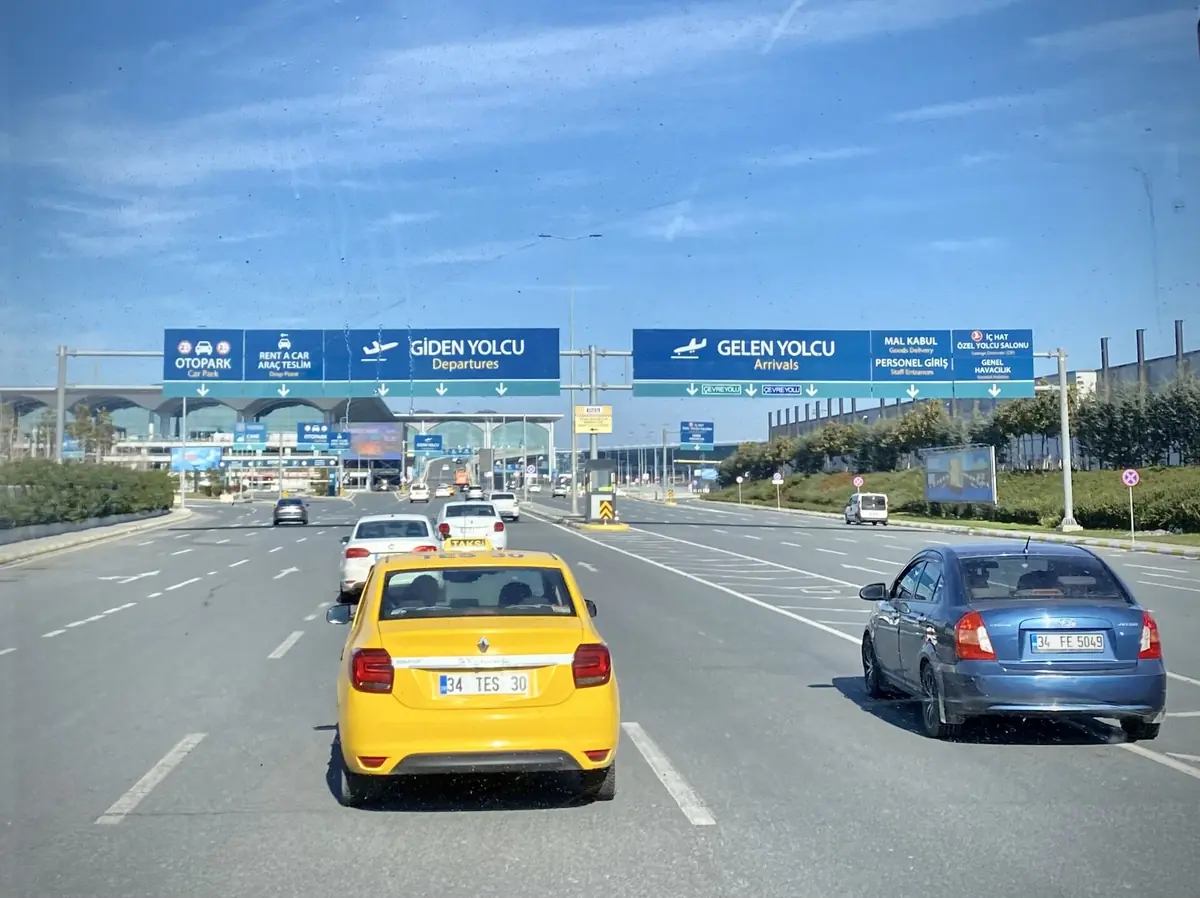
The road into Istanbul Airport (IST), with the signs for departures and arrivals
Photograph: Sharon Hahn Darlin — opens in a new tab · CC BY 2.0 — opens in a new tab
Changes: Resized and converted to WebP; displayed with responsive crops. · Original photograph and licence details ↗ — opens in a new tab
The open-air entrance to the M4 metro station at Sabiha Gökçen Airport (SAW)
Photograph: Alikam1896 — opens in a new tab · CC BY-SA 4.0 — opens in a new tab
Changes: Resized and converted to WebP; displayed with responsive crops. · Original photograph and licence details ↗ — opens in a new tab
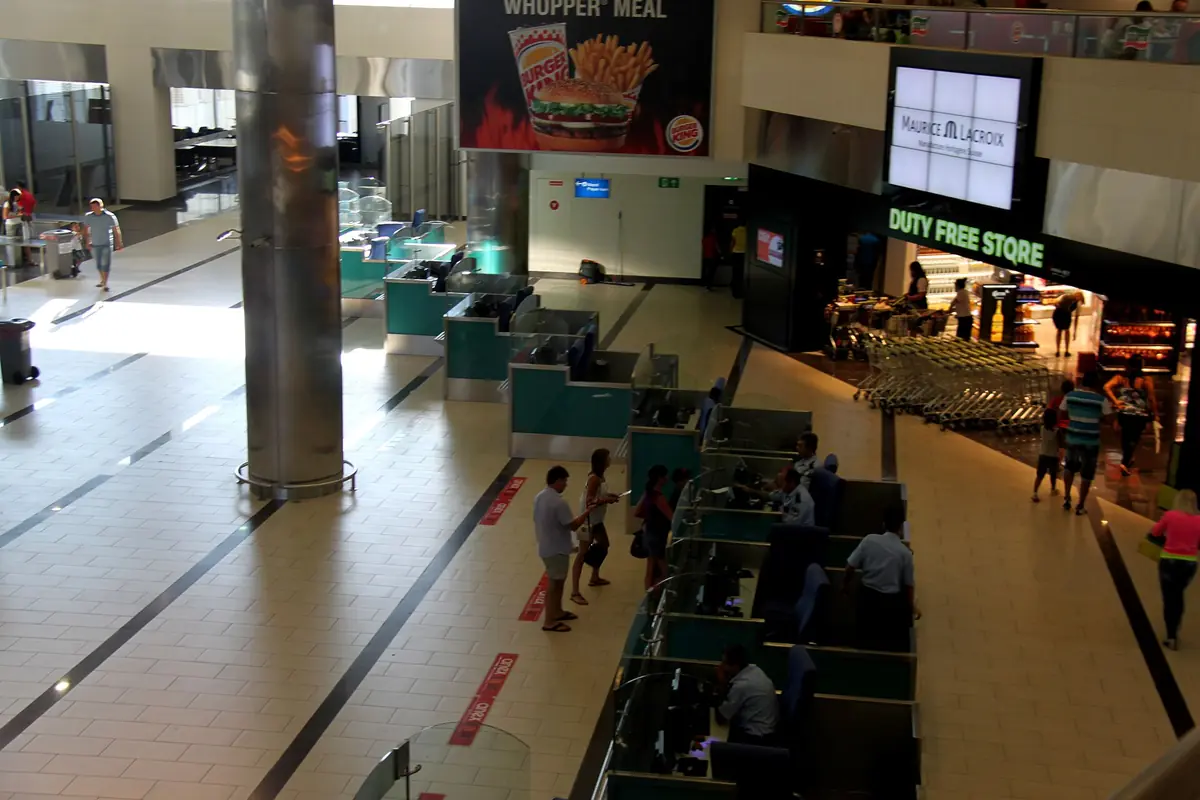
Passport control booths at Antalya Airport
Photograph: Барвенковский — opens in a new tab · CC BY-SA 3.0 — opens in a new tab
Changes: Resized and converted to WebP; displayed with responsive crops. · Original photograph and licence details ↗ — opens in a new tab