Denizli
Pamukkale and Hierapolis: one night or a day trip on the white terraces
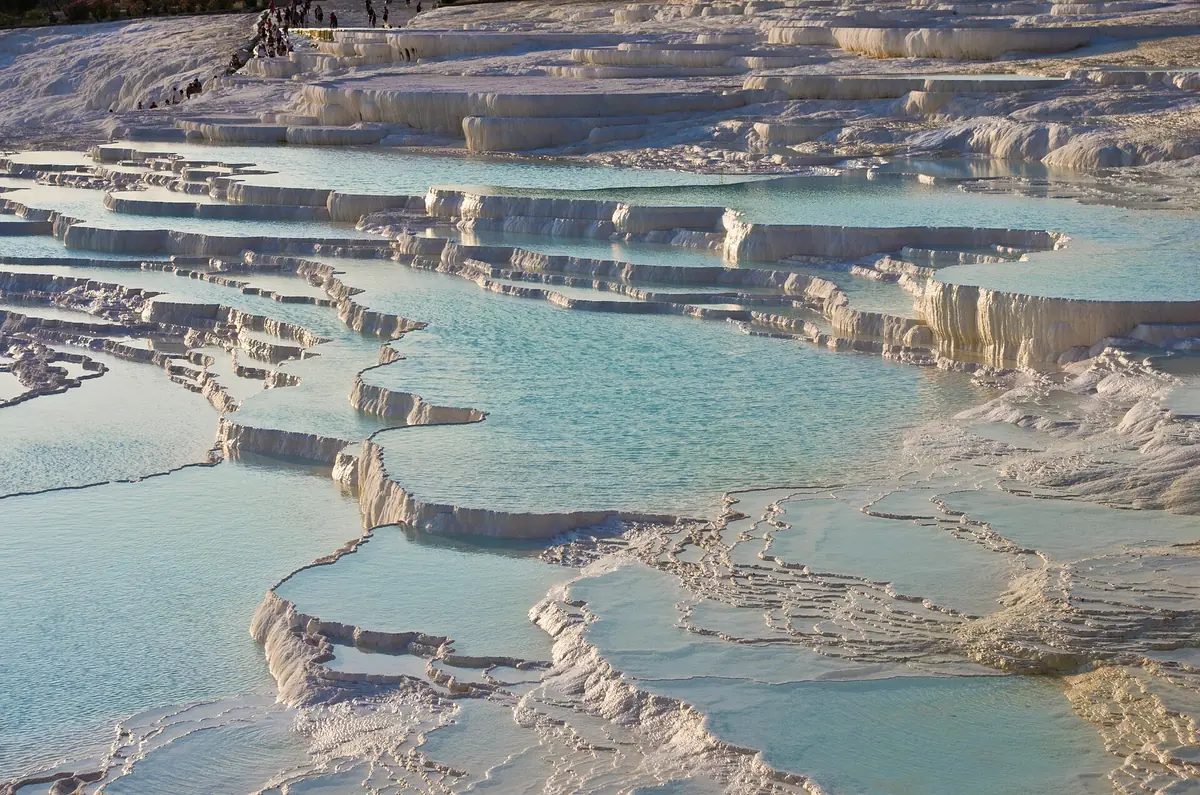
From the plain below, Pamukkale looks like a frozen waterfall: a white hillside of terraces and shallow pools, some steps up to 6 m high, laid down over thousands of years by warm, calcium-rich spring water. On the plateau above it stand the ruins of Hierapolis, a Roman spa city rebuilt after an earthquake in AD 60, with a great theatre, a colonnaded main street and the largest cemetery in south-west Anatolia. One ticket covers both, and the terraces and the ruins together are a UNESCO World Heritage site.
In this guide
Find the location ↗ — opens in a new tabThe short answer
Stay one night in Pamukkale village, at the foot of the travertines. Enter the site in the afternoon and stay until sunset: the €30 ticket for the travertines and Hierapolis (€35 from 1 April 2027) is good for one entry, so see everything in one visit. The Antique Pool inside has its own ticket at the pool. From Selçuk, take TCDD's regional train to Denizli, 3 h 18 to 3 h 33, with fares from TRY 265, then a minibus from Denizli bus station to the village, 18 km away. A day trip works only if you arrive by mid-morning.
- Suggested time
- 1 night in Pamukkale
- Where to stay
- Pamukkale village, at the foot of the travertines and the south gate
- Season and timing
- Spring and autumn are the best months for walking the ruins. Summer middays are hot on the white rock, which glares in the sun, so go early or late; in summer the site stays open into the evening. Winter is quiet, with shorter hours.
One night in the village or a day trip
Most visitors come on a day trip, and most of them arrive in the middle of the day. A night in Pamukkale village, at the foot of the travertines, lets you go up in the afternoon, as the day-trip coaches leave, and stay on the plateau for the sunset over the plain. The ticket is good for one entry, so a second walk on the terraces the next morning needs a second ticket. The village is small: a main street, a pond, family-run hotels with pools, and the minibus stop below the mosque.
Our where-to-stay guide compares rooms in the village. Choose a day trip only if you arrive by mid-morning and leave in the evening. On the 10-day itinerary, Pamukkale is the one-night stop between Selçuk and Fethiye.
Prices and times checked 28 November 2026
The travertines: white terraces and the barefoot path
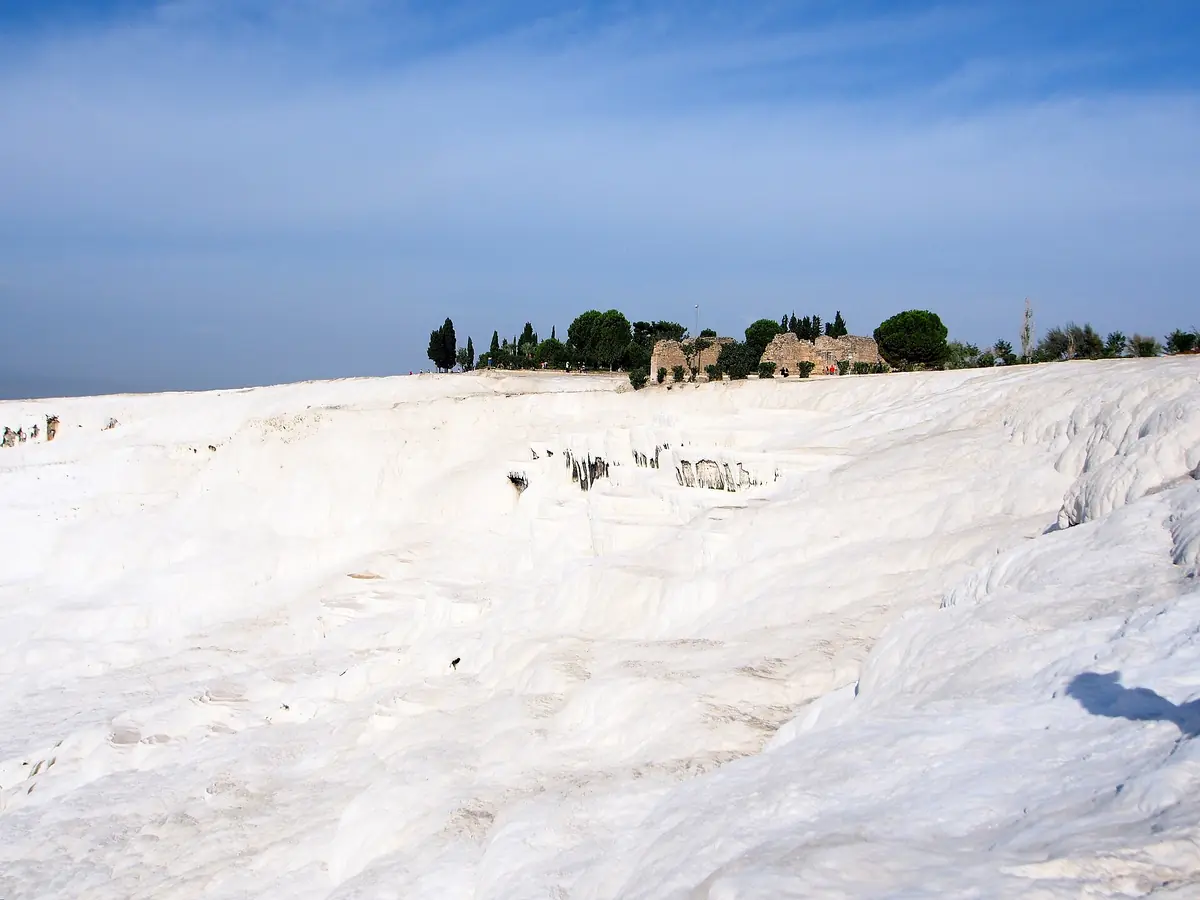
Warm water from the springs on the plateau runs over the edge of the hill. As the water meets the air, it leaves calcium carbonate behind, and over thousands of years this has built white steps up to 6 m high, with shallow pools between them. The pedestrian path starts in the village, at the foot of the slope, and climbs across the terraces to the plateau, through shallow pools of warm spring water. Guards ask everyone on the path to walk barefoot, in socks or in soft pool shoes, to protect the surface, so carry a bag for your shoes.
The climb from the village is short, but you will stop often. Going down on the wet, ridged surface is hard on the knees. The white rock glares and holds the heat, so bring sunglasses and water. If walking barefoot is a problem, take the minibus or a taxi up the road to the south or north gate and start from the ruins instead.
Hierapolis: theatre, main street and necropolis
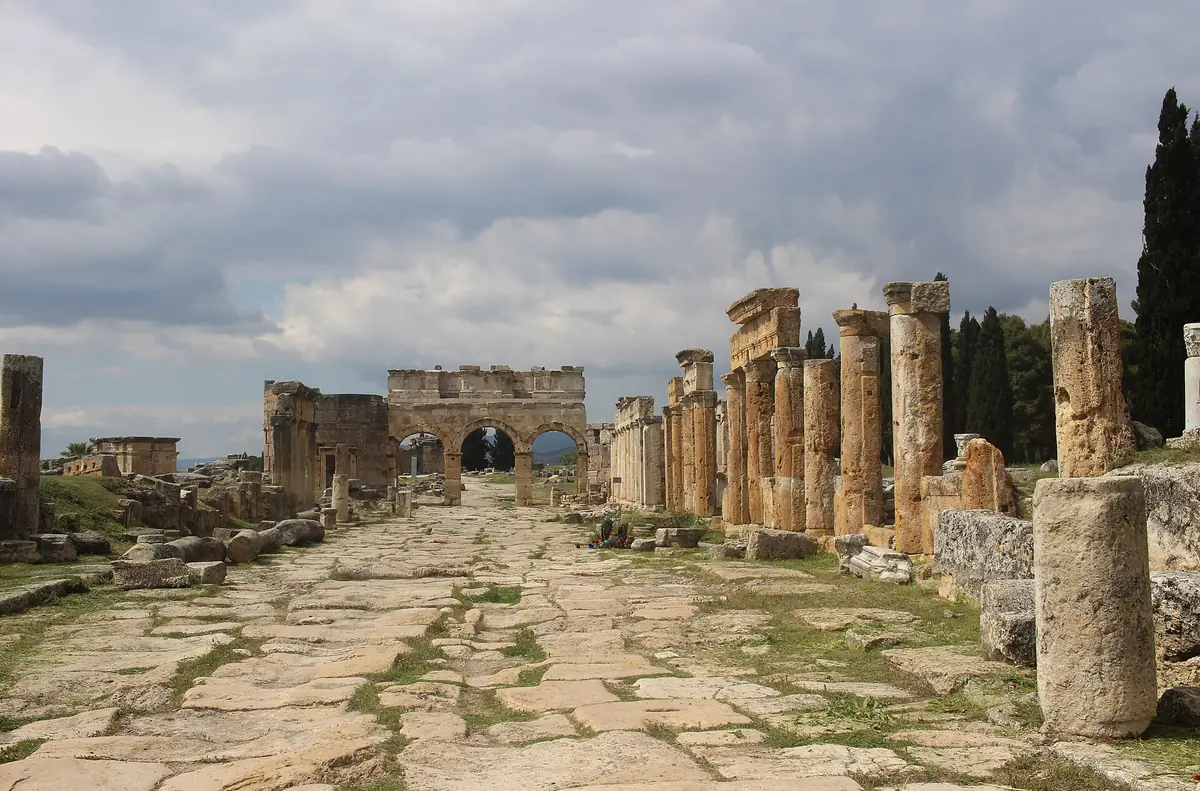
Hierapolis was founded in the 2nd century BC by Eumenes II, king of Pergamon, and rebuilt on a Roman grid after the great earthquake of AD 60. Its main street runs for about 1 km between two monumental gates, lined with arcades, shops and workshops; outside the walls to the north lies the North Necropolis, part of the largest cemetery in south-west Anatolia.
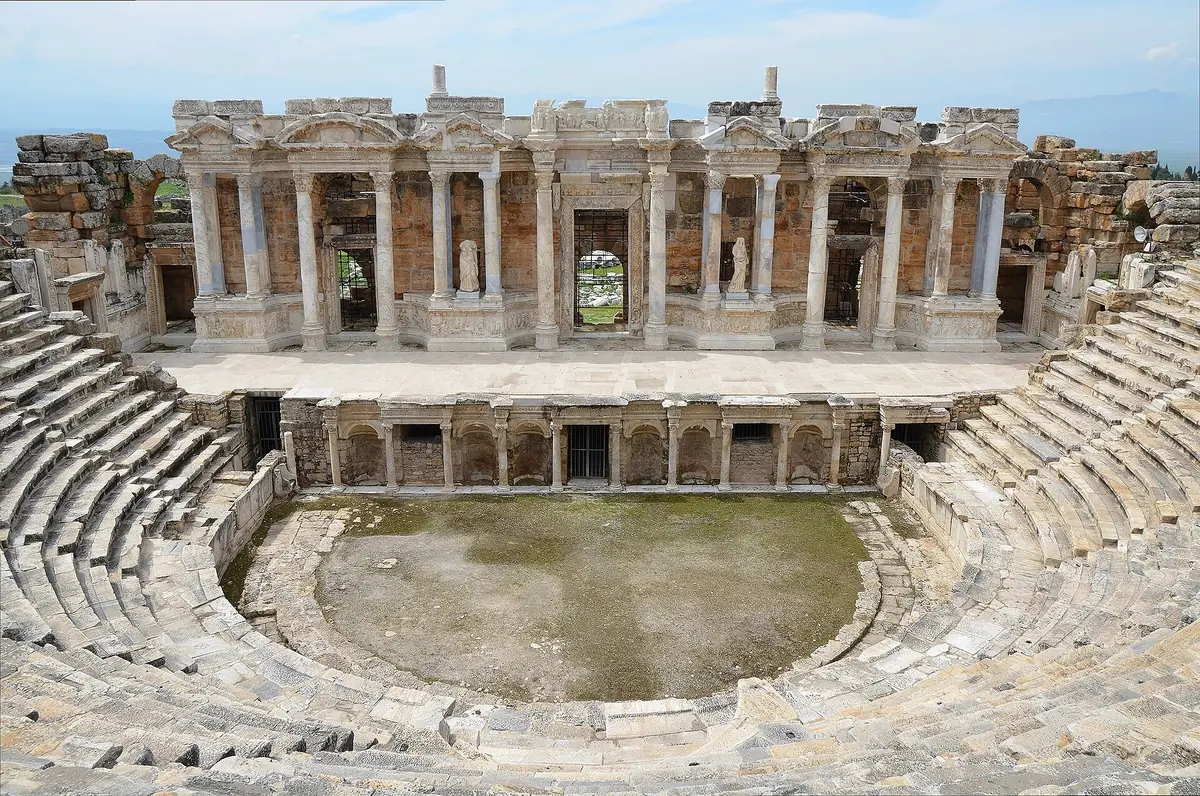
Above the pool, the theatre climbs the hillside; its stage building is decorated with reliefs of Dionysus and Apollo. Beside the Temple of Apollo is the Plutonium. Ancient visitors believed this cave was a gate to the underworld, because the gas leaking from it killed the animals that went in. Higher up stands the octagonal Martyrium of St Philip, built in memory of the apostle who was killed here. The walk up is steep, but the view is worth it.
The Hierapolis Archaeology Museum is set in the vaulted Roman baths near the pool and shows sarcophagi and statues from Hierapolis and Laodicea, coins, and the reliefs of the theatre's stage building, among them the legend of Marsyas and Apollo.
The Antique Pool (Cleopatra's Pool)
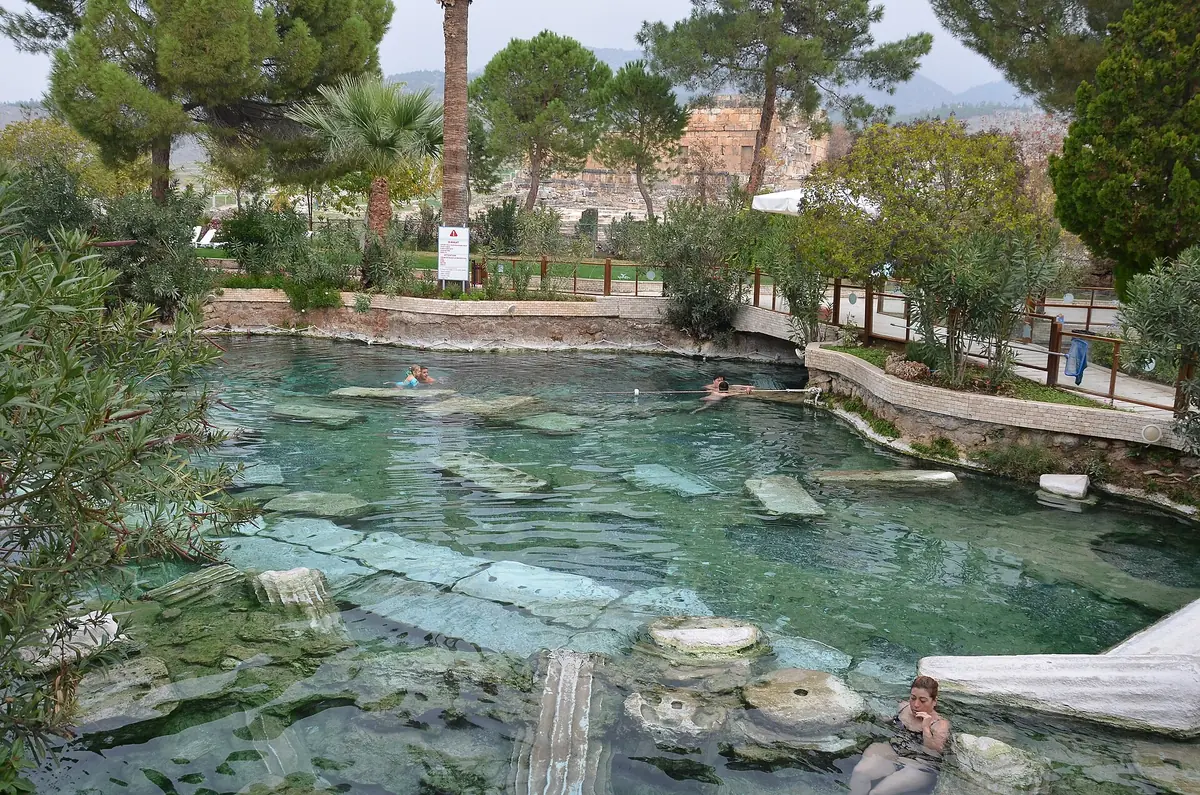
The Antique Pool, also called Cleopatra's Pool, is a warm spring-fed pool in the middle of the ruins, with fallen marble columns from the Temple of Apollo lying on its bottom.
The pool has its own ticket at the pool, and neither the site ticket nor the Museum Pass The Mediterranean covers it. The water stays at about 36°C, and jumping in is not allowed, because the bottom is covered with stone and ancient remains. Its hours are set apart from the site's: the Denizli culture directorate listed 08:00 to 19:00 for May 2026, so ask the price and the closing time at the pool's desk when you arrive. The pool area is open only temporarily, by the ministry's own page, so it may be shut on the day.
Prices and times checked 29 November 2026
A night and a day in Pamukkale
This plan fits the one-night stop between Selçuk and Fethiye, and uses the single-entry ticket in one long visit.
- Arrival day: the 08:40 train from Selçuk reaches Denizli at 12:02 (the 10:07 arrives at 13:40). Take the minibus to Pamukkale village and check in. At about 15:00, go in by the pedestrian path and walk up the travertines barefoot. Then see the theatre, the Plutonium, the main street as far as the North Necropolis and the museum, and see the Antique Pool (it has its own ticket and hours; ask at its desk whether swimming is open that day). Stay on the plateau for the sunset before the site closes. Sleep in Pamukkale.
- Next morning: take the minibus towards Denizli and stop at Laodicea (Laodikeia), home of one of the seven churches of Revelation. Antiochus II founded the city between 261 and 253 BC and named it after his wife Laodice. Its streets and theatres are far quieter than those of Hierapolis. The €40 combined ticket, bought at Hierapolis the day before, covers it within 72 hours; on its own the ticket is €12 (€13 from 1 April 2027). Or soak in the hot springs of Karahayıt, the spa village just north of the site.
- Afternoon: from Denizli bus station take the bus on towards Fethiye.
Prices and times checked 29 November 2026
What to eat and where to look
Denizli tandır kebabı
Milk-fed lamb, cut into four pieces on iron spits and cooked for at least two hours in its own fat, without marinade, in a brick tandır oven fired with mastic-tree wood; it is served on pide.
- Where to look
- The kebab houses of Bayramyeri in central Denizli, on the way through.
- Fit it into your day
- Lunch in Denizli before the bus to Fethiye.
Pide
Boat-shaped flatbread baked with minced meat, cheese or egg, the everyday meal of Turkish small towns.
- Where to look
- Pide ovens on Pamukkale's main street.
- Fit it into your day
- Dinner on the arrival evening.
Kuzu pirzola
Grilled lamb chops, the village grill's main dish, with salad and bread.
- Where to look
- The grill restaurants of Pamukkale village.
- Fit it into your day
- Dinner after the sunset.
Meze
Small plates to share: stuffed vine leaves, yoghurt with walnuts and mixed vegetable dishes.
- Where to look
- Village restaurants on Atatürk Caddesi.
- Fit it into your day
- With dinner.
Denizli leblebisi
Roasted chickpeas, a Denizli speciality registered as a geographical indication in 2010.
- Where to look
- Nut and dried-fruit shops in central Denizli.
- Fit it into your day
- A snack for the bus to Fethiye.
Tickets, gates and opening hours
One ticket covers the travertines and Hierapolis: €30 for foreign visitors aged 9 and over (€35 from 1 April 2027), and free for children aged 8 and under. Like other standard ministry tickets, it is good for a single entry, so do not leave and come back. Hours change with the season. In winter (October to April) the site is open from 08:00 to 18:00, and the ticket office closes at 17:00. In summer (May to September) the south gate is open from 06:30 to 21:00, the north gate from 08:00 to 21:00 and the pedestrian path from 08:00 to 19:00. For winter the ministry gives one set of hours for the whole site, with no separate time for the path. The site is open every day.
There are three ways in: the pedestrian path from the village, where the barefoot climb starts; the south gate, on the road up the hill above the village; and the north gate, on the Karahayıt road beside the North Necropolis. The museum is inside the site and has no ticket of its own. A combined ticket at €40 covers Hierapolis, Laodicea and the Denizli Archaeology Museum within 72 hours of the first entry. That is €2 less than the Hierapolis and Laodicea tickets bought separately. From 1 April 2027 those two single tickets come to €48, so check the combined ticket's price then. Both the Museum Pass The Aegean (€95, seven days) and the Museum Pass The Mediterranean (€90, seven days) cover Hierapolis, each site once; our first-trip guide explains which pass fits which route.
Prices and times checked 29 November 2026
Getting to Pamukkale from Denizli and Selçuk
Pamukkale is 18 km north of Denizli. Most intercity buses stop at the Denizli bus station (Denizli Otogar) in the centre of the city. Minibuses to Laodicea, Pamukkale and Karahayıt leave from gate 76, on the lower level of the bus station, every 15 to 20 minutes; pay the driver in cash. Stay on past the village if you want the north gate.
From Selçuk, take TCDD Taşımacılık's regional train on the İzmir–Denizli line. Several regional trains a day run from Selçuk to Denizli in 3 h 18 to 3 h 33, with fares from TRY 265. The 08:40 arrives at 12:02 and the 10:07 at 13:40. From Denizli station, take a taxi or walk to the bus station for the minibus, or take a taxi straight to the village. The train is the usual way to come from Ephesus and Selçuk; our transport guide has more on the trains.
On to Fethiye, Pamukkale Turizm's coaches from Denizli bus station take about 2 h 45, with fares from TRY 550. By air, Turkish Airlines flies from Istanbul Airport to Denizli Çardak (DNZ), and Denizli municipality's HavaUlaşım shuttle serves the airport.
Our health and safety guide covers the travel advice for Turkey.
Prices and times checked 28 November 2026
What the Pamukkale stop costs for two
About €80 and TRY 1,650 for two covers the combined ticket for Hierapolis and Laodicea, the train from Selçuk and the bus on to Fethiye. A day of meals adds about TRY 4,000 to 6,200 for two at the daily food estimates of our Turkey trip-cost guide, for about TRY 10,100 to 12,300 in all, with the euros at TRY 55.51. The Antique Pool has its own ticket at the pool, and the minibuses are paid in cash to the driver; ask the fare as you board. Rooms are extra: the where-to-stay guide has them.
| Item | For two |
|---|---|
| Combined ticket: Hierapolis, Laodicea and the Denizli museum (€40 each) | €80 |
| Train Selçuk–Denizli (TRY 265 to 280 each) | TRY 530 to 560 |
| Bus Denizli–Fethiye, Pamukkale Turizm (from TRY 550 each) | TRY 1,100 |
The model is two adults on the one-night plan, paying the listed ticket prices and the lowest listed fares. From 1 April 2027 Hierapolis alone costs €35 and Laodicea €13, so check the combined ticket's price before you budget a spring or summer trip.
Prices and times checked 29 November 2026
Practical questions
Is Pamukkale worth an overnight stay?
Yes, if you can: a night in the village lets you go up in the afternoon, after the midday crowds, and stay for the sunset. The ticket is good for one entry, so seeing the terraces again the next morning needs a second ticket. A day trip works if you arrive by mid-morning.
How much is the Pamukkale ticket?
€30 for foreign visitors aged 9 and over (€35 from 1 April 2027), for one entry to the travertines and Hierapolis.
Do I have to take my shoes off?
Yes, on the travertine path. Guards ask visitors to walk barefoot, in socks or in soft pool shoes, to protect the surface. Carry a bag for your shoes.
Is the Antique Pool included in the ticket?
No. The Antique Pool has its own ticket at the pool, and the Museum Pass The Mediterranean does not cover it either. Buy the ticket at the pool's own desk and ask the price and closing time there.
How do I get from Denizli to Pamukkale?
Minibuses leave from gate 76, on the lower level of Denizli bus station, every 15 to 20 minutes; pay the driver in cash. Pamukkale is 18 km north of Denizli.
How do I get from Selçuk to Pamukkale?
Take TCDD's regional train on the İzmir–Denizli line from Selçuk to Denizli, 3 h 18 to 3 h 33; the 08:40 arrives at 12:02. Then take the minibus from Denizli bus station, or a taxi, to the village, 18 km north of Denizli.
When is Pamukkale open?
Every day. In winter 08:00 to 18:00, with the ticket office closing at 17:00; in summer the south gate opens from 06:30 to 21:00.
Can I leave the site and come back on the same ticket?
No: the ticket (€30, or €35 from 1 April 2027) is a single entry, so plan one long visit from the afternoon to sunset, or from the morning opening.
Keep planning your trip
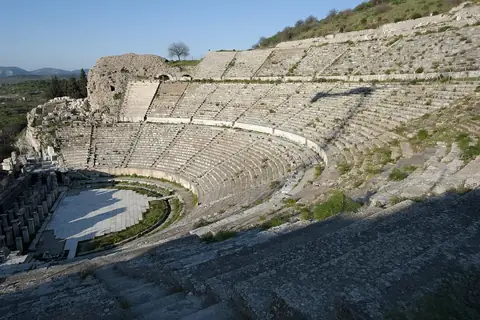
Ephesus and Selçuk
Two nights in Selçuk for Ephesus: tickets and the Terrace Houses, which gate to use, the museum, St John's Basilica, Şirince and the train from Izmir airport.
Read the guide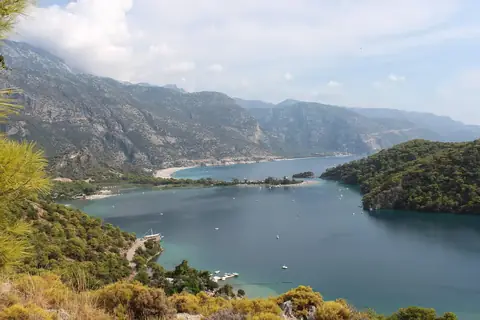
Fethiye and Ölüdeniz
Fethiye town, Ölüdeniz or Hisarönü as a base, then the lagoon, Babadağ cable car and tandem flights, island boats, Kayaköy, Saklıkent, Tlos and Dalaman transfers.
Read the guide
Turkey's coast in ten days
Ten days on Turkey's Aegean and Mediterranean coast, Izmir to Antalya: Ephesus, Pamukkale, Fethiye, Kaş, Kekova and Perge, nine nights, all-in cost.
Read the guide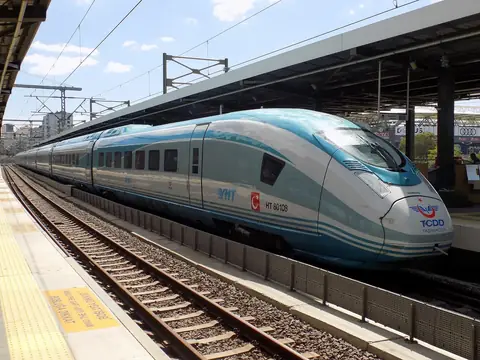
Transport in Turkey
How to cross Turkey on a first trip: which airlines fly to Cappadocia and Izmir, the İZBAN to Selçuk, overnight buses, fast trains, airport buses and car hire.
Read the guide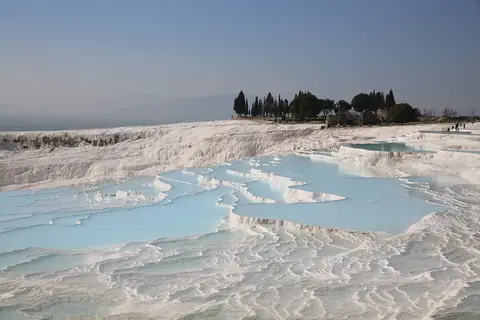
Turkey in ten days
A ten-day Turkey route: three nights in Istanbul, two in Göreme, two in Selçuk, one at Pamukkale and one in Fethiye, home from Dalaman, with an all-in cost.
Read the guide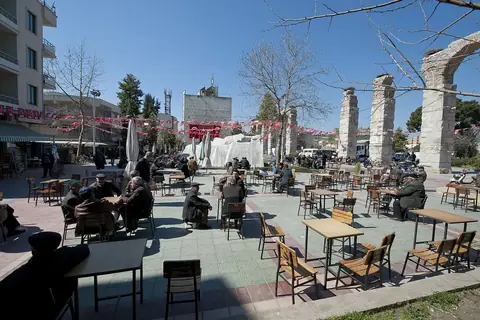
Where to stay in Turkey
Which Istanbul district, Göreme, Uçhisar or Ürgüp, Selçuk or Kuşadası, Fethiye or Ölüdeniz, and Kaş: nights, three hotels in each and room costs for two.
Read the guideSources and checks before you travel
(28)
- Ministry of Culture and Tourism (muze.gov.tr): Hierapolis Pamukkale Travertine Archaeological Site ↗ — opens in a new tab
- Turkish Museums (Ministry of Culture and Tourism): Denizli Hierapolis ↗ — opens in a new tab
- Turkish Museums (Ministry of Culture and Tourism): Hierapolis (Pamukkale) Archaeology Museum ↗ — opens in a new tab
- Ministry of Culture and Tourism, General Directorate for Cultural Assets and Museums: Hierapolis (Pamukkale) brochure ↗ — opens in a new tab
- GoTürkiye: Pamukkale ↗ — opens in a new tab
- Lonely Planet: Travertines, Pamukkale ↗ — opens in a new tab
- Turkey Travel Planner: Denizli to Laodicea and Pamukkale ↗ — opens in a new tab
- Turkey Travel Planner: Antique Pool, Pamukkale ↗ — opens in a new tab
- Rail Turkey: İzmir-Denizli regional train ↗ — opens in a new tab
- Ministry of Culture and Tourism: directive on admission to museums and archaeological sites (English, PDF) ↗ — opens in a new tab
- Ministry of Culture and Tourism (muze.gov.tr): MuseumPass The Mediterranean (and The Aegean, WEB-MSP01-26-009) ↗ — opens in a new tab
- Ministry of Culture and Tourism (muze.gov.tr): Laodikeia Archaeological Site ↗ — opens in a new tab
- My Turkey Adventure: Cleopatra's Pool review (licensed guide, reviewed September 2026) ↗ — opens in a new tab
- E-yaşamrehberi: Selçuk-Denizli regional train times (copy of the TCDD timetable, updated 3 October 2026) ↗ — opens in a new tab
- Airport Transfer Portal: Denizli Çardak (DNZ) ↗ — opens in a new tab
- E-yaşamrehberi: Denizli Çardak airport transport ↗ — opens in a new tab
- Pegasus: Denizli city transport guide ↗ — opens in a new tab
- DHMİ: domestic flight routes (Uçuş Noktaları) ↗ — opens in a new tab
- DHMİ: Denizli Çardak Airport transport (Ulaşım) ↗ — opens in a new tab
- Denizli Provincial Directorate of Culture and Tourism: Don't leave until you do these ↗ — opens in a new tab
- Denizli Provincial Directorate of Culture and Tourism: museums and sites visiting hours (May 2026) ↗ — opens in a new tab
- UK FCDO: Turkey travel advice ↗ — opens in a new tab
- Auswärtiges Amt: Türkei, Reise- und Sicherheitshinweise (as of 28 November 2026) ↗ — opens in a new tab
- TÜRKPATENT: Denizli Tandır Kebabı registration (traditional product name, PDF) ↗ — opens in a new tab
- TÜRKPATENT geographical indications: Denizli Leblebisi ↗ — opens in a new tab
- Pamukkale Turizm: Denizli–Fethiye bus (Turkish) ↗ — opens in a new tab
- Ministry of Culture and Tourism: 2027 ticket tariff (List I, via TÜRSAB) ↗ — opens in a new tab
- Ministry of Culture and Tourism (muze.gov.tr): Hierapolis Archaeological Site ↗ — opens in a new tab
Reference sources for the version dated 29 November 2026. Confirm opening times, access, transport and conditions for your travel dates.
Photo credits
(6)
The travertine terraces of Pamukkale
Photograph: Antoine Taveneaux — opens in a new tab · CC BY-SA 3.0 — opens in a new tab
Changes: Resized and converted to WebP; displayed with responsive crops. · Original photograph and licence details ↗ — opens in a new tab
The white slope of the travertines
Photograph: rheins — opens in a new tab · CC BY 3.0 — opens in a new tab
Changes: Resized and converted to WebP; displayed with responsive crops. · Original photograph and licence details ↗ — opens in a new tab
The theatre of Hierapolis
Photograph: Carole Raddato — opens in a new tab · CC BY-SA 2.0 — opens in a new tab
Changes: Resized and converted to WebP; displayed with responsive crops. · Original photograph and licence details ↗ — opens in a new tab
The Antique Pool, with column drums under the water
Photograph: shankar s. from Dubai, united arab emirates — opens in a new tab · CC BY 2.0 — opens in a new tab
Changes: Resized and converted to WebP; displayed with responsive crops. · Original photograph and licence details ↗ — opens in a new tab
Frontinus Street and the north gate of Hierapolis
Photograph: Blcksprt — opens in a new tab · CC BY-SA 4.0 — opens in a new tab
Changes: Resized and converted to WebP; displayed with responsive crops. · Original photograph and licence details ↗ — opens in a new tab
The white travertine terraces of Pamukkale above the village and the plain
Photo: Yuki Ikemori