Antalya: Kaleiçi, Perge, Aspendos and the beaches in three nights
Antalya is a big modern city with a small walled heart. Kaleiçi, the old town, is entered through Hadrian's Gate and runs down narrow lanes of bay-windowed houses to a harbour the Romans used. Outside the walls the city has two long beaches, a river that drops into the sea in a waterfall, and two of the finest Roman sites in Turkey a short drive east of the city: Perge, with its colonnaded street and stadium, and Aspendos, whose theatre still holds concerts. Three nights give one day to the old town and the falls, one to the ruins and one to the sea.
In this guide
Find the location ↗ — opens in a new tabThe short answer
Stay three nights in or beside Kaleiçi, the walled old town, about 20 minutes by car from Antalya Airport (AYT); the AntRay tram runs from the airport to the city centre. Give day one to Kaleiçi, its harbour and the Düden falls, day two to Perge and Aspendos, and day three to Konyaaltı or Lara beach. Book the ruins day first: a licensed agency's guided day from Antalya costs EUR 75 a person with both site tickets, or hire a car. Perge costs EUR 11 and Aspendos EUR 15 for foreign visitors aged 9 and over (EUR 12 and EUR 16 from 1 April 2027). Both sites open at 08:00 every day and close at 17:00 from November to April and at 19:00 in summer. The Antalya Museum, home to the Perge statues, has been closed since July 2025 while a new building goes up on its site.
- Suggested time
- 3 nights in Antalya
- Where to stay
- Kaleiçi, the old town inside the walls, or just outside Hadrian's Gate
- Season and timing
- May–June and September–October are the best months; in July and August the average daily high is 34.2°C and 34.1°C, so see Perge and Aspendos at opening time and keep the afternoon for the sea.
Three nights in or beside Kaleiçi
Sleep in Kaleiçi if you want the evenings in the old town, with its restaurants and live music, and the harbour at the bottom of the lanes; its lodgings range from small hostels to hotels converted from old mansions, and there are 5-star hotels close to the walls.
If the beach is the main reason for the trip, stay on Konyaaltı, the city's most popular beach, west of the centre, or at Lara, the wide sandy beach east of the city. Both need a bus or taxi to the old town. Our where-to-stay guide names hotels in Antalya and the other Turkish bases.
Day one: Kaleiçi, its harbour and the Düden falls
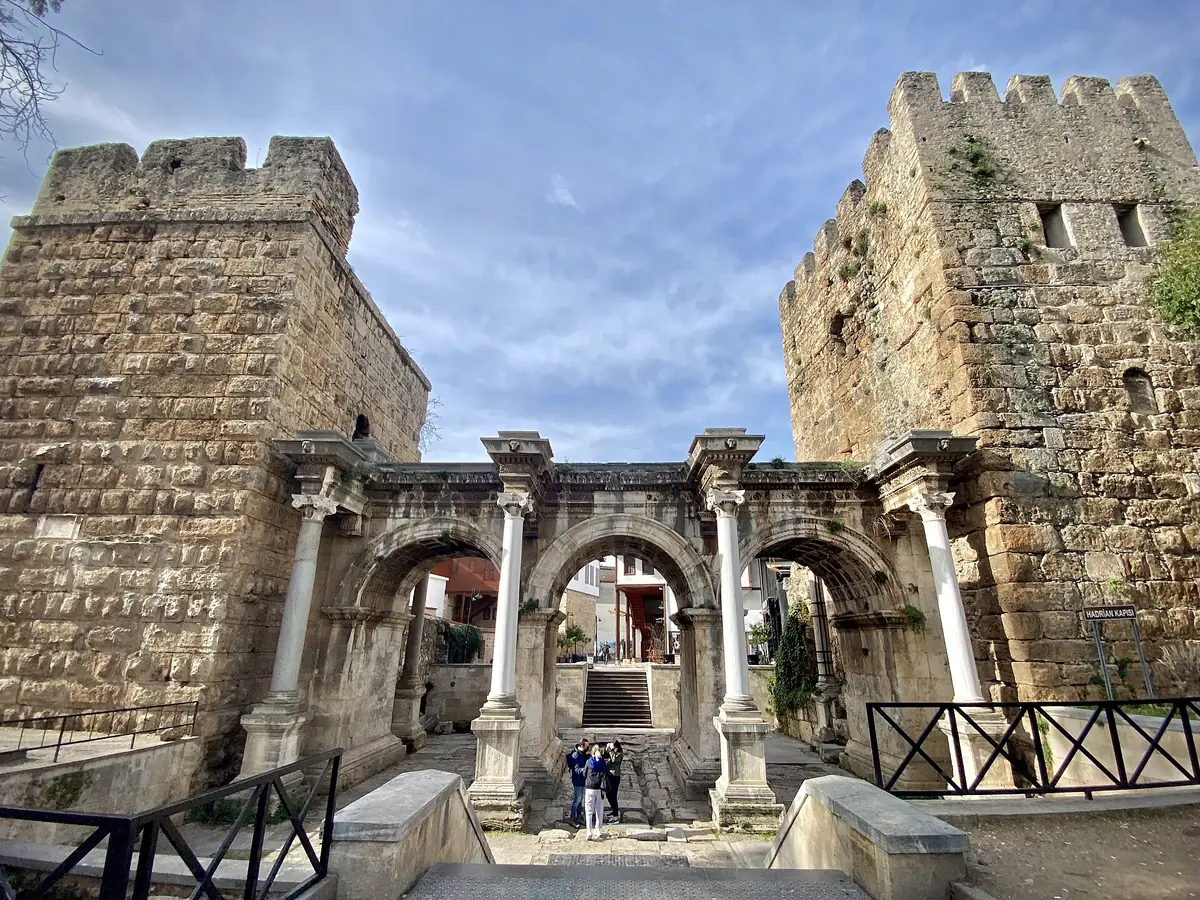
Enter the old town through Hadrian's Gate, also called Üçkapılar, the Three Gates: a triumphal arch built in AD 130 for the emperor Hadrian's visit, with three arched passages framed by carved marble columns between two towers of different periods. It once stood twice as high and is the best-preserved Roman building in the city.
Inside the walls, Kaleiçi is a maze of narrow lanes lined with restored Ottoman-era houses with bay windows, many now pensions, small hotels and shops. Its landmark is the Yivli Minare, the Fluted Minaret: a 38-metre brick tower of the 13th century, a masterpiece of Seljuk building with blue and turquoise tiles. The mosque beside it was first built in 1230 and rebuilt in the 14th century with six domes, one of the earliest many-domed mosques in Anatolia.
Further south stands the Kesik Minare, the Truncated Minaret. The building began as a church of the Panaghia, probably built as a basilica in early Christian times, and the Turks turned it into a mosque. The mosque burned in the 19th century and was left in ruins, which gave it its name. At the south-western corner of the walls, the 14-metre Hıdırlık Tower, square below and round above, dates from the 2nd century AD; nobody knows for certain whether it was a tomb, a watchtower or a lighthouse. It stands at the edge of Karaalioğlu Park, whose walkways end in terraces over the sea.
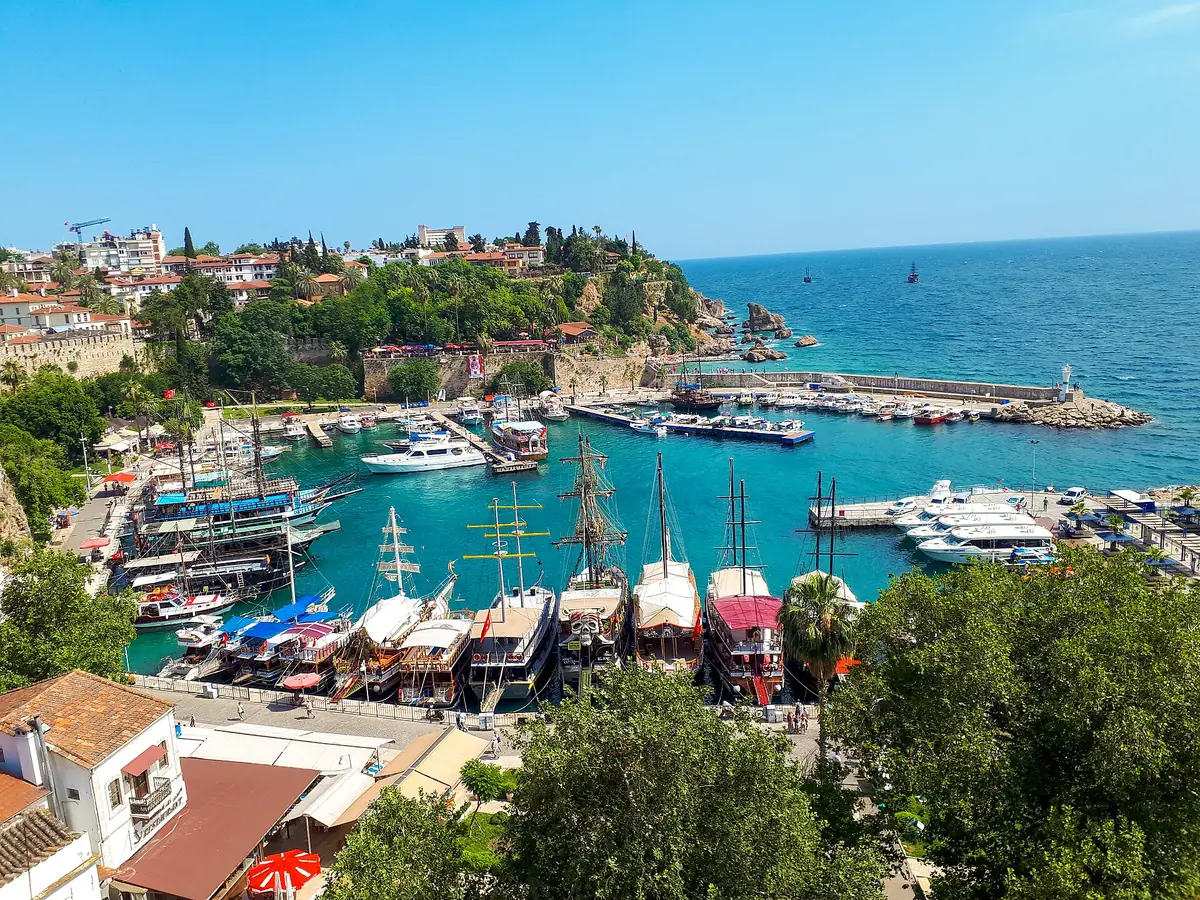
The lanes lead down to the old harbour, a semicircular port first built in the Hellenistic period and used by the Romans, Byzantines, Seljuks and Ottomans; tour boats and gulets now tie up beneath the cliffs, and a lift also runs down from the top of the walls. Come back after dark, when Kaleiçi's restaurants and bars fill up.
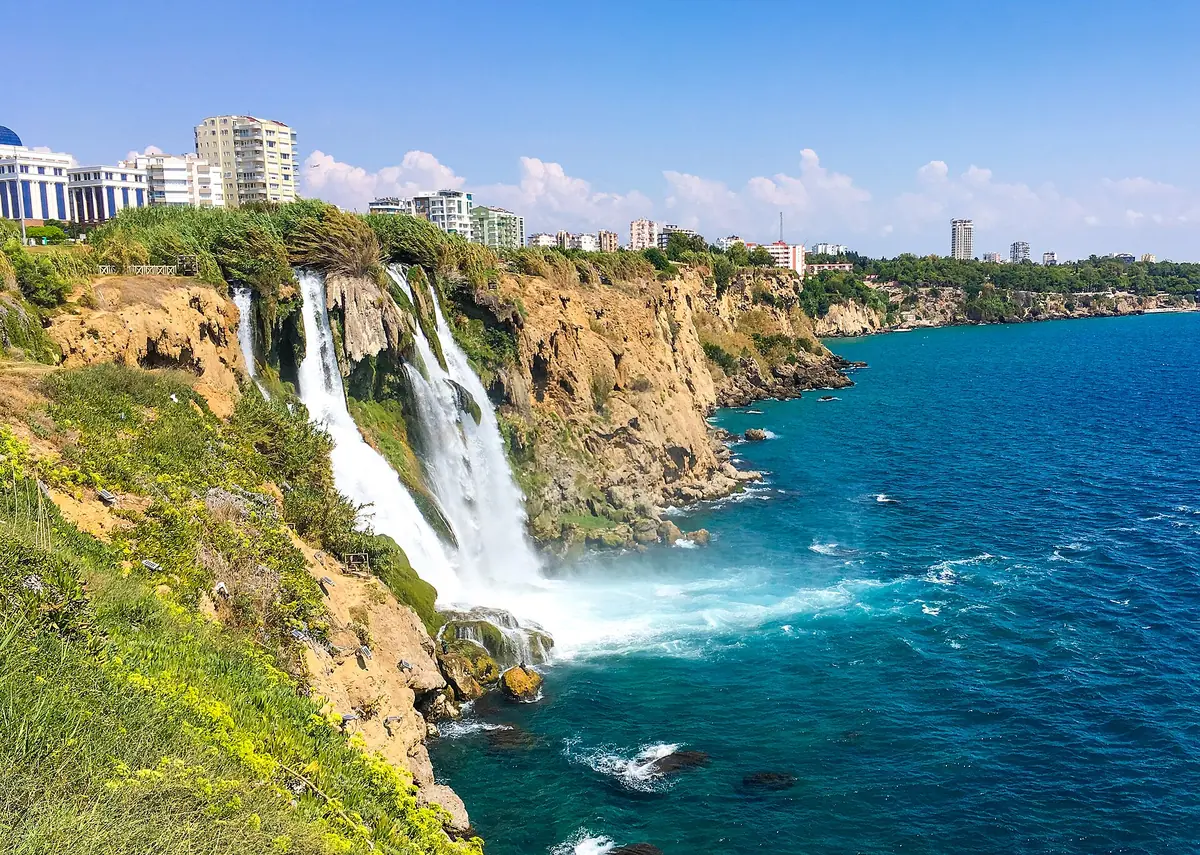
In the afternoon take a taxi or city bus out to the Düden falls. Upper Düden, close to the city centre, is a waterfall park run by Antalya Metropolitan Municipality and a favourite picnic spot. Lower Düden is where the same river spills into the sea, a postcard view from the cliffs above.
The Antalya Museum is closed for rebuilding
The Antalya Museum, on Konyaaltı Caddesi, was one of the great archaeological museums of Turkey. Its collection holds the statues of emperors and gods from Perge, the Weary Heracles, the sarcophagus carved with the twelve labours of Heracles and the hoard of Elmalı coins. The museum closed to visitors on 16 July 2025, after a seismic assessment found the 1972 building at high risk. The old building was demolished in September 2025 to make way for a new museum on the same site. The new building was due to be finished in late 2026, but the ministry still lists the museum as closed, so look at its page before you plan a morning around it.
Until it reopens, Perge itself is the place to see where the statues stood. In Kaleiçi, the Kaleiçi Museum of Koç University's research centre AKMED (Barbaros Mahallesi, Kocatepe Sokak No:22) tells the old town's history in a restored house and the former Church of Hagios Georgios.
Day two: Perge and Aspendos
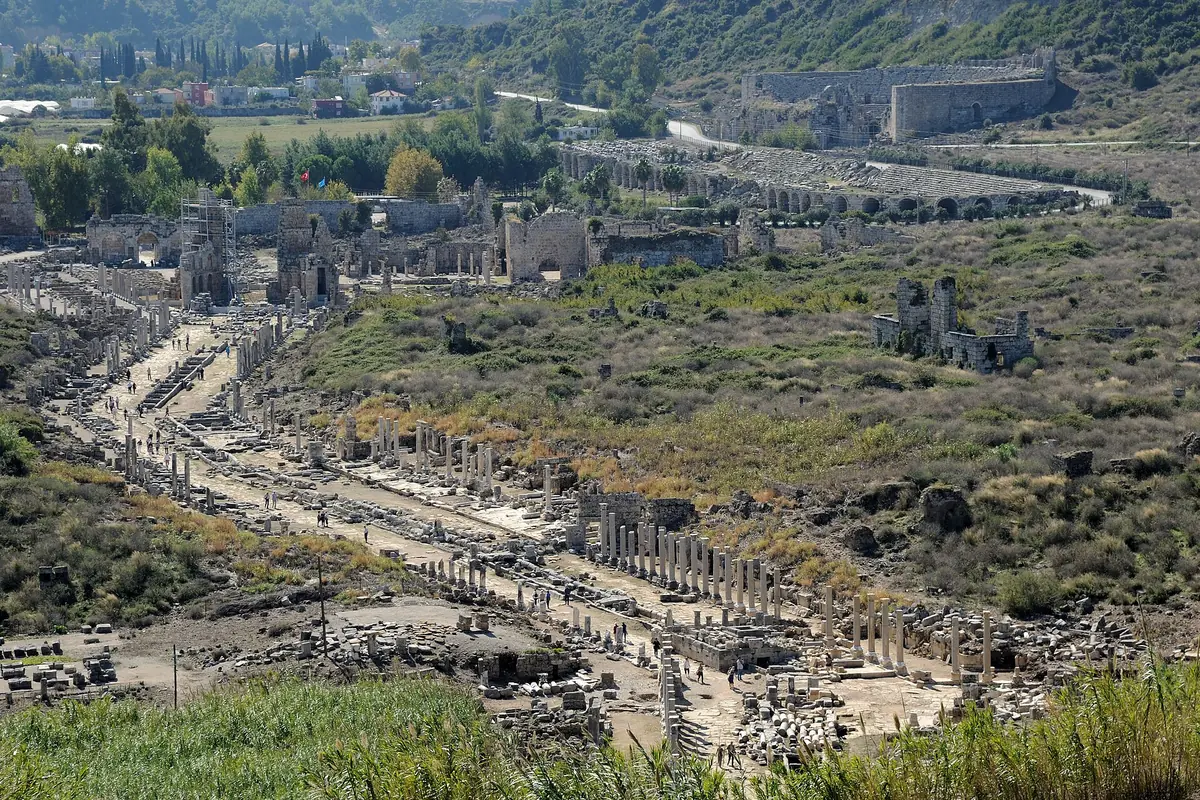
Perge, 17 km east of the city centre, is one of the most regular Roman cities to survive. You enter between two towers of the 3rd century BC, once the main gate, and follow a colonnaded street about 500 metres long, with a water channel down its middle that fed four monumental fountains and two baths, the largest in the region. The stadium, which held 12,000 people, is one of the best preserved of the ancient world. St Paul stopped in Perge on his travels, and the main street is the start of the St Paul's Way walking route.
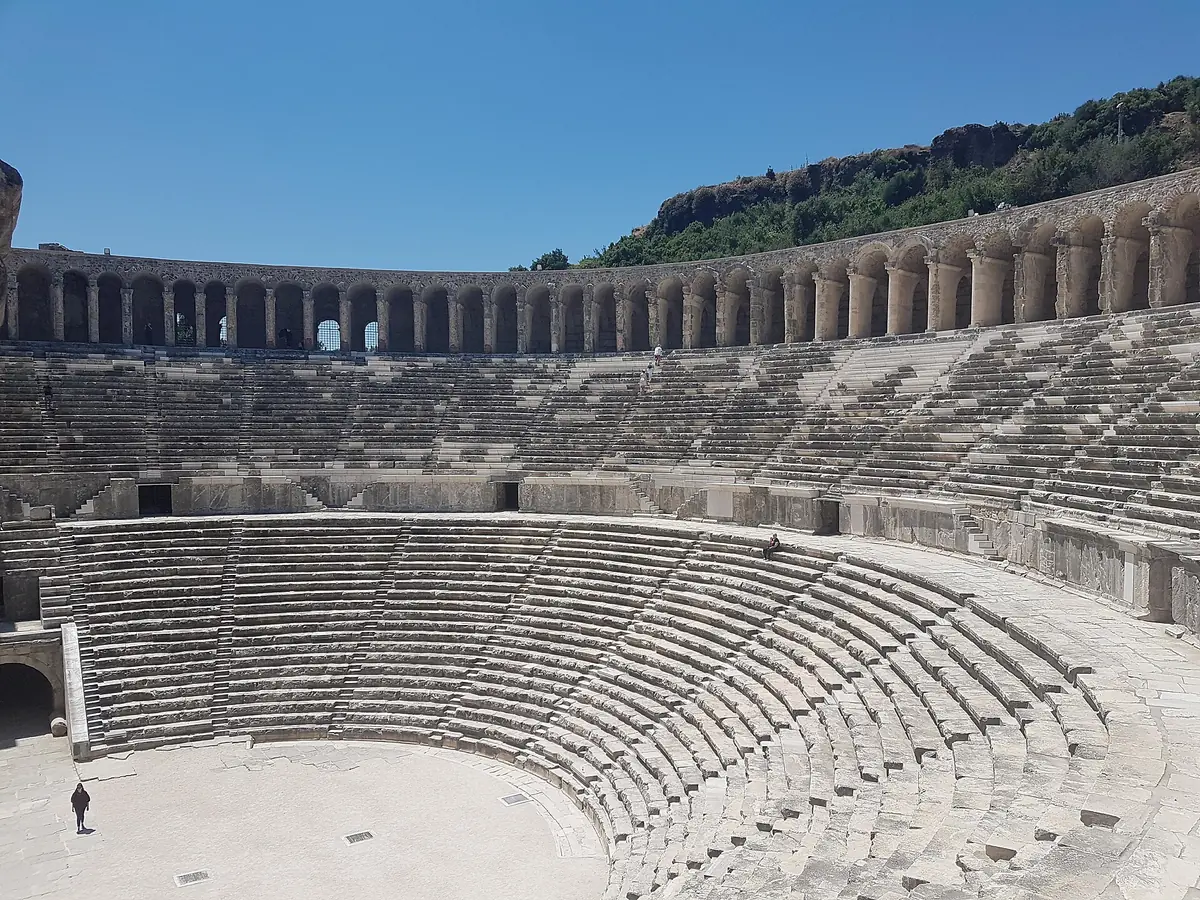
Aspendos, further east, is famous for its theatre: built by the architect Zenon between AD 138 and 164, it seated 15,000 and survived in remarkably good condition because the Seljuks used it as a palace. Even a coin dropped on the ground can be heard from the top rows, and the theatre still hosts the Aspendos Opera and Ballet Festival each September. On the hill above it the upper city has an agora, a 100-metre basilica and a monumental fountain, and a kilometre of aqueduct brought the city's water from the mountains to the north.
Do both in one day: Perge first, when it opens at 08:00, then Aspendos before the heat of the afternoon. A guided day from Antalya, such as the one below, is the easiest way; where a tour leaves out the site tickets, add EUR 26 a person at the gates (EUR 28 from 1 April 2027). Vigo Tours, licensed by the Ministry of Culture and Tourism (Group A, no. 4663), sells a 10-hour Perge, Aspendos and Side day for EUR 75 a person aged 7 and over and EUR 45 for children aged 4–6, through 2027, with hotel pickup, lunch, a waterfall stop and the Perge and Aspendos tickets, while the Side theatre and museum are extra. To go on your own, hire a car or take a taxi for the whole loop: Perge is 17 km east of the centre and Aspendos 48 km, so the round trip is about 100 km, about TRY 5,000 on the city's taxi meter before any waiting time, so agree a day price with the driver before you set off.
Prices and times checked 29 November 2026
Day three: Konyaaltı or Lara
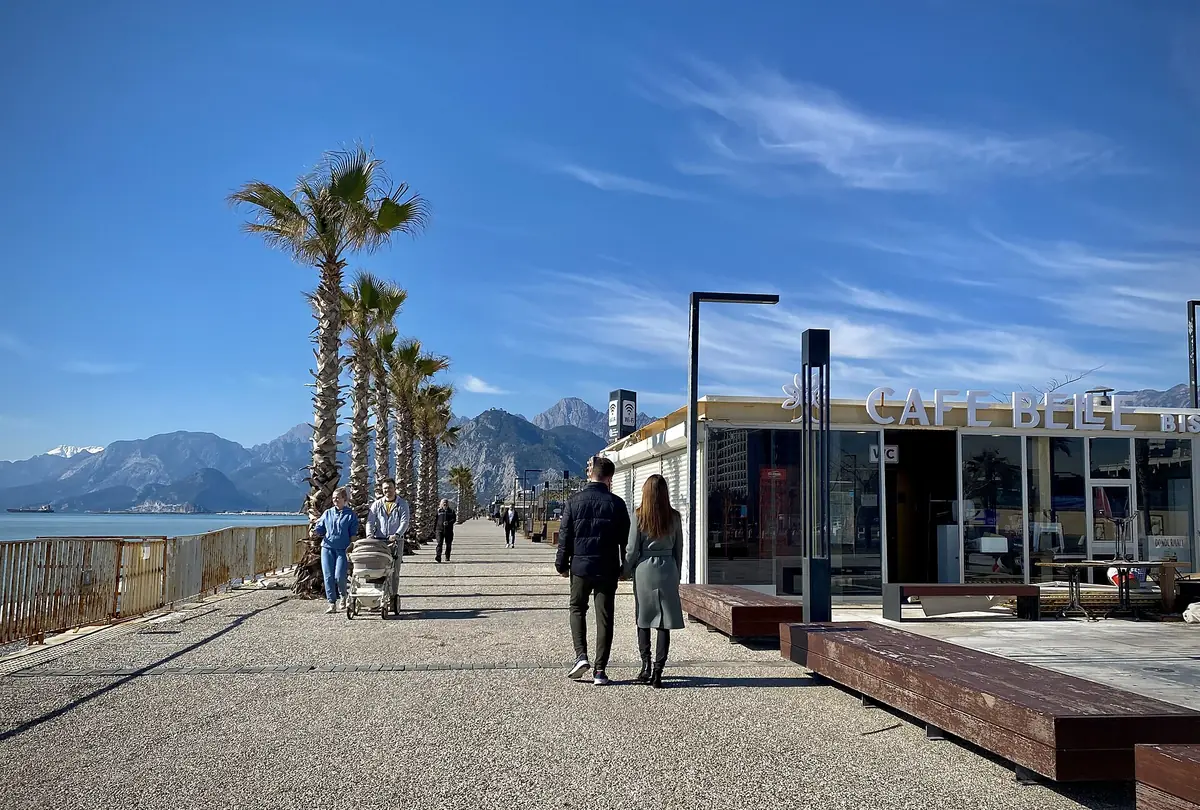
Konyaaltı is the city's most popular beach: a long Blue Flag strip of pebbles west of the centre, backed by a seaside park and promenade with the Beydağları mountains rising behind. Lara, also called Altınkum, has wide fine sand and shallow water to the east, and suits families; the big resort hotels line it.
City buses run from the centre to both beaches; plan the route in the Antalyakart app, and pay with an Antalyakart or a contactless bank card. In the hot months spend the morning on the beach and come back to the old town for the evening.
Tickets, the airport and getting around
Perge and Aspendos are state sites run by the Ministry of Culture and Tourism and open every day. Prices for foreign visitors aged 9 and over are set in euros and charged in lira at the Central Bank’s effective selling rate of the previous business day: Perge EUR 11 and Aspendos EUR 15, so EUR 26 per person for the day; from 1 April 2027, Perge EUR 12 and Aspendos EUR 16, so EUR 28; children aged 8 and under enter free with a passport. From 1 November to 30 April both open 08:00–17:00 with the box office closing at 16:30; in summer they open 08:00–19:00 with the box office closing at 18:30. Museum Pass The Mediterranean covers both sites: EUR 90 for seven days at over 40 state museums and sites in Antalya, Mersin, Adana and Denizli provinces. Our first-trip guide explains when a pass pays.
Antalya Airport (AYT) lies north-east of the city, about 20 minutes by car from the centre. The AntRay tram runs between the airport, the city centre (Meydan), the intercity bus terminal and Fatih. City buses also run from the airport to the centre and the bus terminal. The trip planner in the Antalyakart app shows the tram and bus times and the stop nearest your Kaleiçi hotel; from the tram, walk or take a taxi the last stretch into the lanes. International Terminal 1 and the domestic terminal are joined. International Terminal 2 is about 2.5 km away, linked by a free shuttle every 20 minutes and by public bus or taxi. A full fare on city transport is TRY 42 with an Antalyakart and TRY 54 paid by bank card; an Antalyakart costs TRY 100, and one card can be shared. The intercity bus terminal, 4 km north of the centre, has buses along the coast and to the rest of Turkey. Our transport guide covers the routes, including the coast road west to Fethiye and Kaş.
Our health and safety guide covers the travel advice for Turkey.
Prices and times checked 29 November 2026
What three days in Antalya cost for two
About TRY 8,900 for two covers the guided Perge and Aspendos day with its site tickets, an Antalyakart, the tram from and back to the airport and the city buses for three days. Rooms and meals are extra; our where-to-stay guide has the rooms.
| Item | For two |
|---|---|
| Guided Perge, Aspendos and Side day with both site tickets (EUR 75 each) | about TRY 8,300 |
| One Antalyakart, shared | TRY 100 |
| Tram and buses, 12 rides at TRY 42 | about TRY 500 |
On your own, the two site tickets are EUR 28 each from 1 April 2027, about TRY 3,100 for two (EUR 26 each, about TRY 2,900, before then), and a taxi for the 100 km loop adds about TRY 5,000 on the meter, plus waiting time. The Side theatre and museum and the meals are not counted. Euros are converted at EUR 1 = TRY 55.51.
Prices and times checked 29 November 2026
What to eat and where to look
Tahinli piyaz with şiş köfte
Antalya's own bean salad, white beans with onion, tomato, boiled egg and parsley under a dressing of tahini, vinegar and lemon, eaten with şiş köfte, long minced-meat skewers grilled over charcoal. Order the piyaz without egg for a vegetarian plate.
- Where to look
- Meşhur Aksu Şimşek Köfteci İsa, and the köfte houses around Kalekapısı.
- Fit it into your day
- Lunch on the old-town day.
Köfte is minced meat; the piyaz is meat-free and turns vegetarian when ordered without the egg.
Hibeş
A sharp dip of tahini, lemon, garlic, red pepper and cumin, served with bread or beside grilled meat.
- Where to look
- Hasan Antalya, in the city centre.
- Fit it into your day
- With dinner on the first evening.
Kabak çiçeği dolması
Squash blossoms stuffed with rice and fresh herbs, served warm or cool with olive oil, a summer dish of the Antalya coast.
- Where to look
- Meze counters of Kaleiçi restaurants in late spring and summer.
- Fit it into your day
- A starter at dinner.
Tahinli kabak tatlısı
Pumpkin cooked with sugar until soft, chilled, then covered in tahini and chopped walnuts.
- Where to look
- Dessert counters and köfte houses in the centre, mostly in autumn and winter.
- Fit it into your day
- After the köfte lunch.
Yanık dondurma
Antalya's 'burnt' ice cream, made with the bottom of the pan deliberately scorched to give a smoky caramel flavour.
- Where to look
- Ice-cream shops in Kaleiçi and around the Clock Tower.
- Fit it into your day
- An evening walk through the old town.
Practical questions
How many nights should I spend in Antalya?
Three nights: one day for Kaleiçi, the harbour and the Düden falls, one for Perge and Aspendos, and one for Konyaaltı or Lara beach.
Where should I stay in Antalya?
In Kaleiçi, the walled old town, or just outside Hadrian's Gate, if you want the evenings in the old lanes and the harbour. Choose Konyaaltı or Lara if the beach comes first; both need a bus or taxi to the old town.
Is the Antalya Museum open?
No. It closed on 16 July 2025 and its old building was demolished for a new museum on the same site; the ministry still lists it as closed. Visit Perge instead, where many of its statues were found.
How much do Perge and Aspendos cost?
Perge is EUR 11 and Aspendos EUR 15 for foreign visitors aged 9 and over, charged in lira at the Central Bank’s previous-day rate, rising to EUR 12 and EUR 16 on 1 April 2027; children aged 8 and under enter free. From 1 November to 30 April both open 08:00–17:00 every day, with the box office closing at 16:30; in summer they stay open until 19:00.
Can I see Perge and Aspendos in one day?
Yes. Start at Perge at 08:00, then go on east to Aspendos, 48 km from the city. A licensed agency's guided day from Antalya with both site tickets, lunch and Side costs EUR 75 a person aged 7 and over; on your own, the 100 km loop is about TRY 5,000 on the taxi meter before waiting time, so agree a day price first.
How do I get from Antalya Airport to the old town?
Take the AntRay tram from the airport to the city centre, or a city bus, then walk or take a taxi into Kaleiçi. From International Terminal 2, a free shuttle runs every 20 minutes to the domestic terminal and International Terminal 1, about 2.5 km away. The airport is about 20 minutes by car from the city centre.
Keep planning your trip
Fethiye and Ölüdeniz
Fethiye town, Ölüdeniz or Hisarönü as a base, then the lagoon, Babadağ cable car and tandem flights, island boats, Kayaköy, Saklıkent, Tlos and Dalaman transfers.
Read the guide
Kaş
Three nights in Kaş: the Kekova boat trip over the sunken city, Simena castle, Kaputaş beach, Patara, diving, the ferry to Kastellorizo and the airports.
Read the guide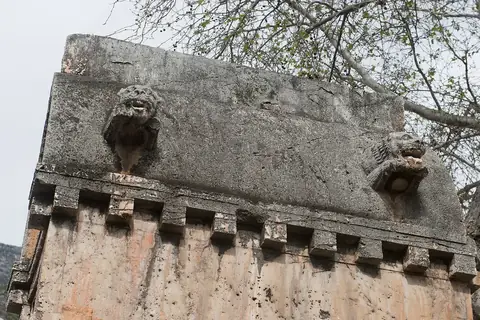
Turkey's coast in ten days
Ten days on Turkey's Aegean and Mediterranean coast, Izmir to Antalya: Ephesus, Pamukkale, Fethiye, Kaş, Kekova and Perge, nine nights, all-in cost.
Read the guide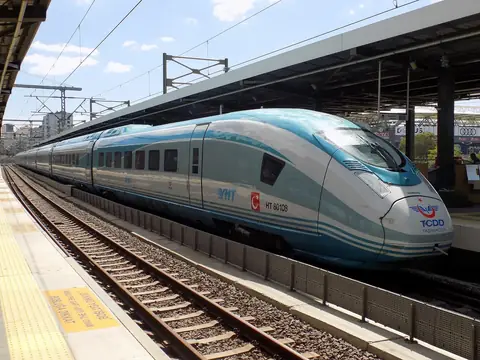
Transport in Turkey
How to cross Turkey on a first trip: which airlines fly to Cappadocia and Izmir, the İZBAN to Selçuk, overnight buses, fast trains, airport buses and car hire.
Read the guide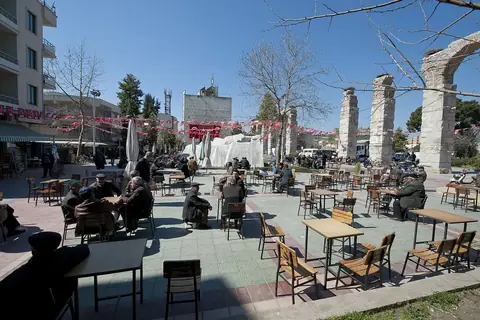
Where to stay in Turkey
Which Istanbul district, Göreme, Uçhisar or Ürgüp, Selçuk or Kuşadası, Fethiye or Ölüdeniz, and Kaş: nights, three hotels in each and room costs for two.
Read the guide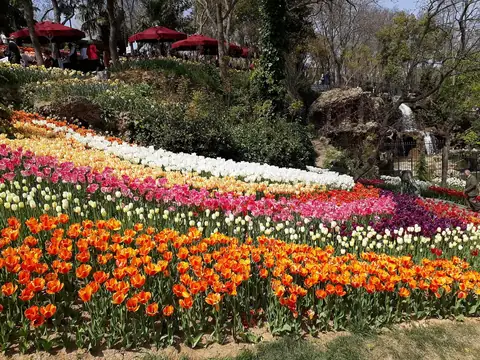
Best time to visit Turkey
When to go to Turkey: spring and autumn for Istanbul, Cappadocia and Ephesus, June to October for the sea, snow and balloon mornings in winter, and the 2027 holidays.
Read the guideSources and checks before you travel
(26)
- Ministry of Culture and Tourism (muze.gov.tr): Perge Archaeological Site ↗ — opens in a new tab
- Ministry of Culture and Tourism (muze.gov.tr): Aspendos Archaeological Site ↗ — opens in a new tab
- Ministry of Culture and Tourism (muze.gov.tr): Antalya Museum ↗ — opens in a new tab
- DHA: Antalya Museum demolished (18 September 2025) ↗ — opens in a new tab
- Hürriyet Daily News: Antalya Archaeological Museum closed for renovations (18 July 2025) ↗ — opens in a new tab
- GoTürkiye: Turkish Riviera, Historical Centre ↗ — opens in a new tab
- Antalya Airport (Fraport TAV): buses and mass transport ↗ — opens in a new tab
- GoTürkiye: Piyaz ↗ — opens in a new tab
- PATA Go Türkiye: Kaleiçi ↗ — opens in a new tab
- TDV İslâm Ansiklopedisi: Korkut Camii (Kesik Minare) ↗ — opens in a new tab
- CNN Türk: Düden Waterfall visitors in 2024 ↗ — opens in a new tab
- Eleman.net: Antalya transport and taxi fares 2026 (31 August 2026) ↗ — opens in a new tab
- Turkey Travel Planner: Antalya food ↗ — opens in a new tab
- Koç University AKMED: Kaleiçi Museum ↗ — opens in a new tab
- Turkish Museums (Ministry of Culture and Tourism): Perge Archaeological Site ↗ — opens in a new tab
- Turkish Museums (Ministry of Culture and Tourism): Aspendos Archaeological Site ↗ — opens in a new tab
- Antalya Airport (Fraport TAV): transportation ↗ — opens in a new tab
- Vigo Tours (licensed agency, Group A no. 4663): Perge, Aspendos and Side day tour from Antalya ↗ — opens in a new tab
- Antalyakart: card types ↗ — opens in a new tab
- Turkish State Meteorological Service (MGM): Antalya statistics ↗ — opens in a new tab
- UK FCDO: Turkey travel advice ↗ — opens in a new tab
- Ministry of Culture and Tourism: Aspendos ↗ — opens in a new tab
- Central Bank of the Republic of Türkiye: indicative exchange rates of 27 November 2026 ↗ — opens in a new tab
- Habertürk: Aspendos festival opens for the 33rd time, 18 August 2026 (Turkish) ↗ — opens in a new tab
- Ministry of Culture and Tourism: 2027 ticket tariff (List I, via TÜRSAB) ↗ — opens in a new tab
- Ministry of Culture and Tourism: directive on admission to museums and archaeological sites (English, PDF) ↗ — opens in a new tab
Reference sources for the version dated 29 November 2026. Confirm opening times, access, transport and conditions for your travel dates.
Photo credits
(6)
The old harbour below Kaleiçi, Antalya's walled old town
Photograph: REHBER0770 — opens in a new tab · CC BY-SA 4.0 — opens in a new tab
Changes: Resized and converted to WebP; displayed with responsive crops. · Original photograph and licence details ↗ — opens in a new tab
Hadrian's Gate, the entrance to Kaleiçi
Photograph: Sharon Hahn Darlin — opens in a new tab · CC BY 2.0 — opens in a new tab
Changes: Resized and converted to WebP; displayed with responsive crops. · Original photograph and licence details ↗ — opens in a new tab
The theatre at Aspendos, built between AD 138 and 164
Photograph: Lee Vilenski — opens in a new tab · CC BY-SA 4.0 — opens in a new tab
Changes: Resized and converted to WebP; displayed with responsive crops. · Original photograph and licence details ↗ — opens in a new tab
The colonnaded main street of Perge
Photograph: Saffron Blaze — opens in a new tab · CC BY-SA 3.0 — opens in a new tab
Changes: Resized and converted to WebP; displayed with responsive crops. · Original photograph and licence details ↗ — opens in a new tab
Lower Düden, where the river falls into the sea east of the centre
Photograph: Elshad — opens in a new tab · CC BY-SA 4.0 — opens in a new tab
Changes: Resized and converted to WebP; displayed with responsive crops. · Original photograph and licence details ↗ — opens in a new tab
The promenade at Konyaaltı beach
Photograph: Sharon Hahn Darlin — opens in a new tab · CC BY 2.0 — opens in a new tab
Changes: Resized and converted to WebP; displayed with responsive crops. · Original photograph and licence details ↗ — opens in a new tab